
Figure 1.
EGFR agents and compounds 4 and 5

Design, Synthesis and Antitumor Activity Evaluation of 4-Aminoquinazoline Derivatives Containing Urea Moiety
Erdong Li , Yaqi Meng , Luye Zhang , Yang Zhang , Jikuan Wang , Danqing Zhang , Panpan Song , Jingchao Xin , Na Li , Jiaxin Zheng , Yu Ke , Hongmin Liu , Qiurong Zhang


Currently, the cancer is the second major cause of human death after cardiovascular disease. Statistics showed that approximately 8.2 million people die from cancer each year.[1] Although the technology for diagnosis and treatment of cancer has made great progress, the survival rate of cancer patient is still low in the past 5 years. Quinazoline has a wide range of pharmacological activities such as antitumor, [2] antibacterial, [3] anti-inflammatory[4] and antimalarial activities.[5] In the past few years, quinazoline has been extensively studied as epidermal growth factor receptor (EGFR) tyrosine kinase inhibitors (TKIs) and many quinazolines have been approved for cancer therapy by US FDA as erlotinib (1), gefitinib (2) and lapatinib (3)[6~8] (Figure 1). They used to have a good effect on non-small cell lung cancer, but cancer cells have shown resistance to gefitinib and erlotinib due to the T790M mutation. Lapatinib was banned after one year of clinical treatment due to the discovery of fatal liver toxicity in clinical trials and post-marketing test. Therefore, it is urgent to develop targeted antitumor agents with lower toxicity and higher efficacy.
In addition, we found that the urea structure plays an important role in organic synthesis and antitumor during literature research.[9~12] In 2017, Keating[13] reported that sorafenib 4 containing a urea structure is a systemic agent approved for the treatment of hepatocellular carcinoma (HCC) with good tolerance and safety. In 2017 Kurt et al.[14] reported that compound 5 had strong cytotoxic effect against H4IIE with IC50 value of 2.07 μmol•L-1 and urea moiety was the key pharmacophore for the enhancement of antitumor activity. Therefore, we considered that the synthesis of quinazoline derivatives containing urea structures may result in more active antitumor inhibitors.
Based on previous studies, [15~17] 2-mercaptoquinazoline was selected as the core from gefitinib, erlotinib and lapatinib. The urea moiety and the sulfhydryl group were linked to obtain compound 8 by principle of molecular hybridization. After chlorination, 4-position of quinazoline was substituted by different anilines. Finally, the antitumor activity of these compounds was evaluated in vitro.
The synthetic procedure was shown in Scheme 1. In this study, compound 6 was prepared by the reaction of 2-aminobenzamide with carbon disulfide in the presence of potassium hydroxide in ethanol at 90 ℃ for 24 h. Then, compound 6 reacted with compound 7 to obtain compound 8 in an aqueous solution of potassium hydroxide at 90 ℃ for 1 h. Next, phosphorus oxychloride was added to compound 8 and the temperature was slowly raised to 70 ℃and kept for 4 h to obtained compound 9. Finally, compounds 10a~10r were synthesized using reaction of compound 9 with different substituted anilines in N, N-dimethylfor-mamide at 90 ℃ for 1 h. The structures of target compounds were confirmed by 1H NMR, 13C NMR and HRMS.

Reagents and conditions: (ⅰ) KOH, EtOH, 90 ℃, 24 h; (ⅱ) KOH, H2O, 90 ℃, 1 h; (ⅲ) POCl3, 70 ℃, 4 h; (ⅳ) different anilines, N, N-dimethylformamide, 90 ℃, 1 h
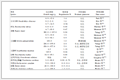
All compounds were tested for antiproliferative activity against MCF-7 (human breast cancer cell line), MGC-803 (human gastric cancer cell line), SW620 (human colon cancer cell line) and A549 (human lung cancer cell) through methyl thiazolyl tetrazolium (MTT) assay method.[18~20] Gefitinib was used as reference compounds. The results were summarized in Table 1.
 下载:
导出CSV
| Compd. | R | IC50a/(μmol•L-1) | |||
| MCF-7 | MGC-803 | SW620 | A549 | ||
| 8 | — | 17.23±0.85 | 18.02±0.98 | 23.25±1.91 | 25.67±1.78 |
| 9 | — | 18.83±1.07 | 26.40±1.42 | 22.02±1.54 | 25.19±1.20 |
| 10a | 4-Cl | 20.21±1.02 | 21.31±1.71 | 11.44±1.06 | 13.15±1.52 |
| 10b | 3-Cl | 18.04±1.04 | 17.34±1.48 | 8.22±0.95 | 10.76±1.31 |
| 10c | 2-Cl | 10.28±1.25 | 7.61±0.93 | 7.66±0.91 | 8.07±1.02 |
| 10d | 4-F | 25.21±1.35 | 27.09±1.32 | 29.89±1.16 | 21.54±1.93 |
| 10e | 3-F | 20.21±1.42 | 15.09±1.30 | 13.68±1.59 | 14.08±1.08 |
| 10f | 2-F | 15.02±1.21 | 16.27±1.03 | 19.92±1.12 | 18.76±1.94 |
| 10g | 4-Br | > 50 | 31.05±1.82 | 35.67±1.24 | > 50 |
| 10h | 3-Br | > 50 | 29.48±1.67 | 39.73±1.43 | > 50 |
| 10i | 2-Br | 16.24±1.46 | 17.24±1.51 | 22.23±0.97 | 23.20±1.96 |
| 10j | 4-CH3 | > 50 | > 50 | > 50 | > 50 |
| 10k | 3-CH3 | 21.06±1.45 | 23.82±1.80 | > 50 | 24.89±1.07 |
| 10l | 2-CH3 | 10.84±1.03 | 8.09±1.37 | 8.38±1.12 | 16.73±1.81 |
| 10m | 4-OCH3 | > 50 | > 50 | > 50 | > 50 |
| 10n | 3-OCH3 | 17.02±1.36 | 9.71±0.98 | 12.16±1.00 | 20.11±1.95 |
| 10o | 2-OCH3 | 7.88±0.84 | 5.90±0.69 | 7.45±0.82 | 7.92±1.44 |
| 10p | 3, 4, 5-(OCH3)3 | 7.62±0.63 | 7.02±0.46 | 6.00±0.78 | 7.04±1.11 |
| 10q | H | 27.05±1.62 | 25.07±1.96 | 15.51±1.13 | > 50 |
| 10r | 3-Cl-4-F | 25.51±1.35 | 20.08±1.31 | 34.53±1.21 | 14.64±1.27 |
| Gefitinibb | — | 7.34±0.86 | 8.82±0.63 | 10.79±0.69 | 9.28±1.00 |
| a Anti-tumor activity was assayed by exposure for 72 h to substances and expressed as concentration required to inhibit tumor cells proliferation by 50% (IC50).b Used as a positive control. | |||||
As shown in Table 1, the majority of the compounds exhibited moderate to potent antitumor activity against four cell lines. Comparing compounds 10a~10c with 10m~10o, it could be found that the activity of ortho-substitution was better than meta-substitution and para-substitution, whether it was an electron-withdrawing substituent or an electron donating substituent. From the biological data of compounds 10a~10c vs 10d~10f vs 10g~10i, it could be known that the contribution to enhance antitumor activity was Cl > F > Br, although the substituents were all halogen atoms. Compared compounds 10j~10l and 10m~10o, it could be concluded that the methoxy-substituted quinazoline activity was better than the methyl substitution, as a result of the methoxy group with stronger electron donating ability than the methyl group. It also be found that unsatisfied antitumor activity was given when substituents were at 4-position (compounds 10g, 10j and 10m). Among all the target compounds, compound 10p showed the best antitumor activity against MCF-7, MGC- 803, SW620 and A549 with IC50 values of (7.62±0.63), (7.02±0.46), (6.00±0.78) and (7.04±1.11) μmol•L-1, respectively. Also, compounds 10c and 10o had broad antitumor activity against MCF-7, MGC-803, SW620 and A549 cells and their activity is comparable to the positive control.
To predict the binding mode of target compound to the active site of EGFR, molecular docking was performed using MOE 2014. Based on the antitumor activity results, compound 10p was selected as ligand. 1xkk was selected as receptor due to the co-crystal structure of 1xkk is similar to compound 10p.[21] As shown in Figure 2A, compound 10p was able to be tightly embedded in the active pocket of EGFR in the given posture. From Figures 2B & 2C, it could be seen that both compound 10p and lapatinib could form hydrogen bonds with the residue Asp800 and the length of the hydrogen bond was similar. lapatinib formed a hydrogen bond with residue Leu718 (3.68 Å), while compounds 10p formed π-H interaction with it. In addition, lapatinib formed hydrogen bond with Met793 (2.96 Å) and π-H interaction with Phe856. Compound 10p formed hydrogen bonds with Ala743 (3.20 Å), Met1002 (3.66 Å) and P0481(3.14 Å). The results also suggest that compound 10p may be a potential EGFR inhibitor.

The hydrogen was illustrated as dashed lines and the length of hydrogen bonds was illustrated in numbers (unit in Å)
In summary, a series of 4-aminoquinazoline derivatives containing urea moiety were designed, synthesized and evaluated for anti-tumor activity against four human cancer cell lines. The cytotoxicity experiment results showed that compounds 10c, 10o and 10p had broad antitumor activity. Especially, compound 10p showed the most excellent activity against MGC-803, SW620 and A549 cancer cell lines and its activity was comparable to the positive control gefitinib. Molecular docking showed that compound 10p could bind well with EGFR protein, which indicated that compound 10p could be a potential antitumor agent.
All commercially available starting materials, reagents and solvents were used without further purification. Column chromatography silica gel, Shanghai May Fourth Chemical Reagent Factory. Anhydrous ethanol, Yantai Chemical Co., Ltd. N, N-dimethylformamide, Guangdong Guanghua Technology Co., Ltd. 1H NMR and 13C NMR spectra were measured using a DPX-DPX-400 superconducting nuclear magnetic resonance instrument, TMS as internal standard. High-resolution mass spectrometry using a Waters-Micromass Q-TofMicro high resolution Determination of tetragonal-flight time tandem mass spectrometer.
Compound 6 was synthesized according to the published literature [11] and the characterization data was consistent with the literature.
Compound 6 (1.12 mmol) was dissolved in 20 mL of an aqueous solution of KOH (1.23 mmol) at room temperature. Compound 7 (1.10 mmol) was dissolved in acetone (2 mL) and added to the above solution. After reacting at 90 ℃, the reaction was completed (TLC detection reaction). The re- action solution was cooled to room temperature. Then, the precipitate was collected by filtration, washed three times with water and acetone and dried in vacuo to give compound 8. White solid, yield 69.4%. m.p. 248.1~248.9 ℃; 1H NMR (400 MHz, DMSO-d6) δ: 12.76 (s, 1H), 11.04 (s, 1H), 10.29 (s, 1H), 8.08~8.01 (m, 1H), 7.82~7.74 (m, 1H), 7.44 (dd, J=15.3, 7.6 Hz, 2H), 6.92 (s, 2H), 4.24 (s, 2H), 3.75 (s, 6H), 3.62 (s, 3H); 13C NMR (101 MHz, DMSO-d6) δ: 170.55, 161.07, 156.15, 154.89, 152.85, 150.41, 148.06, 134.71, 133.67, 133.54, 126.06, 125.83, 119.85, 97.45, 60.03, 55.78, 34.53. HRMS (ESI) calcd for C20H20N4O6SNa [M+Na]+: 467.1001, found 467.1004.
Compound 8 (1.13 mmol) was added to a 25 mL round bottom flask, followed by addition of phosphorus oxychloride (8 mL). The reaction was completed after reacting at 70 ℃ for 4 h. The mixture was cooled to room temperature and added to the stirred ice water mixture. The precipitate was collected by filtration and washed three times with water. The filter cake was purified by column chromatography (VDCM:VEA=15:1) and the eluent was concentrated to give compound 9. White solid, yield 67.2%. m.p. 164.8~165.3 ℃; 1H NMR (400 MHz, DMSO-d6) δ: 11.04 (s, 1H), 10.35 (s, J=17.2 Hz, 1H), 8.07 (dd, J=20.7, 7.9 Hz, 1H), 7.81~7.73 (m, 1H), 7.47 (dd, J=8.6, 4.1 Hz, 2H), 6.91 (s, 2H), 4.28 (d, J=6.7 Hz, 2H), 3.86~3.78 (m, 3H), 3.75 (s, 6H); 13C NMR (101 MHz, DMSO-d6) δ: 170.42, 161.07, 154.96, 152.85, 150.41, 147.92, 134.66, 133.68, 133.61, 126.04, 125.79, 125.61, 119.84, 97.42, 60.02, 55.78, 34.59. HRMS (ESI) calcd for C20H19ClN4O5SNa [M+Na]+: 485.0622, found 485.0663.
Compound 9 (0.35 mmol) was dissolved in 4 mL of N, N-dimethylformamide at room temperature. Then, aniline (0.39 mmol) was added dropwise to the above system. The reaction was carried out at 90 ℃ for 1 h. After the reaction was completed (TLC detection reaction), the reaction mixture was cooled to room temperature. Then appropriate amount of water was added to the system to get white solid. The precipitate was collected by filtration. Next, crude compound was subjected to column chromatography (VPE:VEA=2:1), and the eluent was concentrated to give solid compound 10.
2-((4-((4-Chlorophenyl)amino)quinazolin-2-yl)thio)-N-((3, 4, 5-trimethoxyphenyl)carbamoyl)acetamide (10a): White solid, yield 83.1%. m.p. 243.3~244.3 ℃; 1H NMR (400 MHz, DMSO-d6) δ: 10.93 (s, 1H), 10.27 (s, 1H), 9.99 (s, 1H), 8.45 (d, J=8.3 Hz, 1H), 7.81 (d, J=8.7 Hz, 3H), 7.61 (d, J=8.3 Hz, 1H), 7.53 (t, J=7.6 Hz, 1H), 7.44 (d, J=8.8 Hz, 2H), 6.88 (s, 2H), 4.12 (s, 2H), 3.73 (s, 6H), 3.60 (s, 3H); 13C NMR (101 MHz, DMSO-d6) δ: 171.23, 165.04, 157.05, 152.84, 150.47, 149.94, 137.49, 133.76, 133.70, 133.51, 128.38, 127.85, 126.22, 125.32, 123.92, 123.22, 113.01, 97.52, 60.05, 55.78, 35.00. HRMS (ESI) calcd for C26H25ClN5O5S [M+H]+: 554.1265, found 554.1266.
2-((4-((3-Chlorophenyl)amino)quinazolin-2-yl)thio)-N-((3, 4, 5-trimethoxyphenyl)carbamoyl)acetamide (10b): White solid, yield 76.1%. m.p. 216.3~217.0 ℃; 1H NMR (400 MHz, DMSO-d6) δ: 10.95 (s, 1H), 10.32 (s, 1H), 10.00 (s, 1H), 8.49 (d, J=8.3 Hz, 1H), 7.99 (s, 1H), 7.83 (d, J=8.5 Hz, 1H), 7.63 (d, J=8.3 Hz, 1H), 7.56 (t, J=7.6 Hz, 1H), 7.44 (t, J=8.1 Hz, 1H), 7.37 (s, 1H), 7.21 (d, J=8.0 Hz, 1H), 6.90 (s, 2H), 4.16 (s, 2H), 3.74 (s, 6H), 3.62 (s, 3H); 13C NMR (101 MHz, DMSO-d6) δ: 171.36, 164.94, 158.19, 156.99, 152.87, 152.65, 150.46, 150.00, 140.23, 134.44, 132.78, 130.10, 126.33, 125.37, 123.60, 123.29, 121.66, 120.53, 113.11, 97.52, 60.04, 55.81, 34.90. HRMS (ESI) calcd for C26H25ClN5O5S [M+H]+: 554.1265, found 554.1265.
2-((4-((2-Chlorophenyl)amino)quinazolin-2-yl)thio)-N-((3, 4, 5-trimethoxyphenyl)carbamoyl)acetamide (10c): White solid, yield 76.5%. m.p. 208.2~209.0 ℃; 1H NMR (400 MHz, DMSO-d6) δ: 10.82 (s, 1H), 10.29 (s, 1H), 9.97 (s, 1H), 8.41 (d, J=8.2 Hz, 1H), 7.82 (t, J=7.6 Hz, 1H), 7.61 (d, J=8.3 Hz, 1H), 7.53 (t, J=7.6 Hz, 2H), 7.38~7.29 (m, 2H), 7.26 (t, J=6.5 Hz, 1H), 6.90 (s, 2H), 4.01 (s, 2H), 3.75 (s, 6H), 3.62 (s, 3H); 13C NMR (101 MHz, DMSO-d6) δ: 171.19, 165.29, 158.07, 155.60, 152.88, 150.45, 149.92, 133.72, 128.33, 127.81, 126.17, 125.52, 125.27, 124.38, 123.33, 116.07, 115.87, 112.77, 97.44, 90.65, 60.04, 55.81, 34.93. HRMS (ESI) calcd for C26H25ClN5O5S [M+H]+: 554.1265, found 554.1265.
2-((4-((4-Fluorophenyl)amino)quinazolin-2-yl)thio)-N-((3, 4, 5-trimethoxyphenyl)carbamoyl)acetamide (10d): White solid, yield 79.7%. m.p. 228.2~229.2 ℃; 1H NMR (400 MHz, DMSO-d6) δ: 10.94 (s, 1H), 10.30 (s, 1H), 9.98 (s, 1H), 8.48 (d, J=8.2 Hz, 1H), 7.84 (d, J=8.8 Hz, 2H), 7.63~7.60 (m, 1H), 7.54 (t, J=7.4 Hz, 1H), 7.46 (d, J=8.8 Hz, 2H), 7.16 (t, J=8.9 Hz, 1H), 6.90 (s, 2H), 4.13 (d, J=7.1 Hz, 2H), 3.74 (s, 6H), 3.62 (s, 3H); 13C NMR (101 MHz, DMSO-d6) δ: 171.24, 165.06, 159.41, 157.03, 152.86, 150.46, 149.98, 137.59, 133.56, 128.39, 127.78, 126.26, 125.25, 123.86, 123.30, 115.50, 113.07, 97.55, 60.04, 55.81, 35.03. HRMS (ESI) calcd for C26H25FN5O5S [M+H]+: 538.1560, found 538.1561.
2-((4-((3-Fluorophenyl)amino)quinazolin-2-yl)thio)-N-((3, 4, 5-trimethoxyphenyl)carbamoyl)acetamide (10e): White solid, yield 78.6%. m.p. 229.9~230.7 ℃; 1H NMR (400 MHz, DMSO-d6) δ: 10.97 (s, 1H), 10.32 (s, 1H), 10.02 (s, 1H), 8.50 (d, J=8.2 Hz, 1H), 7.87~7.78 (m, 2H), 7.65 (dd, J=16.6, 8.3 Hz, 2H), 7.56 (t, J=7.5 Hz, 1H), 7.44 (dd, J=15.3, 7.9 Hz, 1H), 6.99 (t, J=7.4 Hz, 1H), 6.90 (s, 2H), 4.16 (s, 2H), 3.74 (s, 6H), 3.61 (s, 3H); 13C NMR (101 MHz, DMSO-d6) δ: 171.35, 164.96, 156.99, 152.85, 150.47, 149.96, 140.45, 133.80, 133.67, 133.59, 130.07, 129.97, 126.32, 125.35, 123.32, 117.85, 113.11, 110.5, 109.00, 97.46, 60.03, 55.79, 34.96. HRMS (ESI) calcd for C26H25FN5O5S [M+H]+: 538.1560, found 538.1558.
2-((4-((2-Fluorophenyl)amino)quinazolin-2-yl)thio)-N-((3, 4, 5-trimethoxyphenyl)carbamoyl)acetamide (10f): White solid, yield 72.4%. m.p. 222.0~223.0 ℃; 1H NMR (400 MHz, DMSO-d6) δ: 10.82 (s, 1H), 10.29 (s, 1H), 9.97 (s, 1H), 8.41 (d, J=8.2 Hz, 1H), 7.82 (t, J=7.6 Hz, 1H), 7.61 (d, J=8.3 Hz, 1H), 7.53 (t, J=7.6 Hz, 2H), 7.33 (dd, J=5.9, 4.0 Hz, 2H), 7.26 (t, J=6.5 Hz, 1H), 6.90 (s, 2H), 4.01 (s, 2H), 3.75 (s, 6H), 3.62 (s, 3H); 13C NMR (101 MHz, DMSO-d6) δ: 171.19, 165.29, 158.07, 155.60, 152.88, 150.45, 149.92, 133.72, 133.63, 128.33, 127.74, 126.17, 125.64, 125.52, 125.27, 124.38, 123.33, 116.07, 112.77, 97.44, 60.04, 55.81, 34.93. HRMS (ESI) calcd for C26H25FN5O5S [M+H]+: 538.1560, found 538.1561.
2-((4-((4-Bromophenyl)amino)quinazolin-2-yl)thio)-N-((3, 4, 5-trimethoxyphenyl)carbamoyl)acetamide (10g): White solid, yield 69.2%. m.p. 237.8~238.4 ℃; 1H NMR (400 MHz, DMSO-d6) δ: 10.95 (s, 1H), 10.30 (s, 1H), 9.97 (s, 1H), 8.48 (d, J=8.2 Hz, 1H), 7.84 (d, J=7.4 Hz, 1H), 7.79 (d, J=8.9 Hz, 2H), 7.60 (t, J=9.5 Hz, 3H), 7.54 (t, J=7.5 Hz, 1H), 6.90 (s, 2H), 4.15 (s, 2H), 3.74 (s, 6H), 3.62 (s, 3H); 13C NMR (101 MHz, DMSO-d6) δ: 171.23, 165.05, 156.99, 152.86, 150.46, 149.97, 138.04, 133.74, 133.72, 133.56, 131.30, 126.26, 125.26, 124.17, 123.30, 115.87, 113.09, 97.55, 60.04, 55.82, 35.02. HRMS (ESI) calcd for C26H25BrN5O5S [M+H]+: 598.0760, found 598.0761.
2-((4-((3-Bromophenyl)amino)quinazolin-2-yl)thio)-N-((3, 4, 5-trimethoxyphenyl)carbamoyl)acetamide (10h): White solid, yield 80.1%. m.p. 227.9~228.9 ℃; 1H NMR (400 MHz, DMSO-d6) δ: 10.97 (s, 1H), 10.33 (s, 1H), 10.00 (s, 1H), 8.49 (d, J=8.3 Hz, 1H), 8.13 (s, 1H), 7.88 (d, J=8.0 Hz, 1H), 7.83 (d, J=7.2 Hz, 1H), 7.63 (d, J=8.2 Hz, 1H), 7.56 (t, J=7.6 Hz, 1H), 7.41~7.33 (m, 2H), 6.90 (s, 2H), 4.16 (s, 2H), 3.74 (s, 6H), 3.61 (s, 3H); 13C NMR (101 MHz, DMSO-d6) δ: 171.38, 164.92, 156.95, 152.86, 150.46, 149.99, 140.37, 133.80, 133.57, 131.68, 130.40, 128.62, 126.46, 125.38, 124.49, 123.29, 121.16, 120.90, 113.10, 97.46, 60.03, 55.79, 34.89. HRMS (ESI) calcd for C26H25BrN5O5S [M+H]+: 598.0760, found 598.0762.
2-((4-((2-Bromophenyl)amino)quinazolin-2-yl)thio)-N-((3, 4, 5-trimethoxyphenyl)carbamoyl)acetamide (10i): White solid, yield 81.4%. m.p. 207.7~208.7 ℃; 1H NMR (400 MHz, DMSO-d6) δ: 10.76 (s, 1H), 10.29 (s, 1H), 10.02 (s, 1H), 8.41 (d, J=8.2 Hz, 1H), 7.82 (t, J=7.5 Hz, 1H), 7.73 (d, J=7.5 Hz, 1H), 7.60 (d, J=8.3 Hz, 1H), 7.53 (dd, J=6.8, 4.1 Hz, 2H), 7.45 (t, J=7.5 Hz, 1H), 7.28 (t, J=7.0 Hz, 1H), 6.90 (s, 2H), 3.96 (s, 2H), 3.74 (s, 6H), 3.61 (s, 3H); 13C NMR (101 MHz, DMSO-d6) δ: 171.12, 165.29, 158.26, 152.87, 150.42, 149.92, 136.73, 133.74, 133.69, 133.65, 132.82, 129.92, 128.52, 128.21, 126.13, 125.21, 123.25, 121.97, 112.66, 97.40, 60.04, 55.81, 34.93. HRMS (ESI) calcd for C26H25BrN5O5S [M+H]+: 598.0760, found 598.0762.
2-((4-(p-Tolylamino)quinazolin-2-yl)thio)-N-((3, 4, 5-trim-ethoxyphenyl)carbamoyl)acetamide (10j): White solid, yield 69.8%. m.p. 243.8~244.8 ℃; 1H NMR (400 MHz, DMSO-d6) δ: 10.93 (s, 1H), 10.32 (s, 1H), 9.87 (s, 1H), 8.47 (d, J=8.2 Hz, 1H), 7.80 (t, J=7.3 Hz, 1H), 7.63 (d, J=8.3 Hz, 2H), 7.59 (d, J=8.2 Hz, 1H), 7.51 (t, J=7.5 Hz, 1H), 7.21 (d, J=8.3 Hz, 2H), 6.91 (s, 2H), 4.11 (s, 2H), 3.77 (d, J=19.5 Hz, 6H), 3.61 (s, 3H), 2.31 (s, 3H); 13C NMR (101 MHz, DMSO-d6) δ: 171.32, 165.19, 157.18, 152.86, 150.48, 149.89, 135.89, 133.66, 133.62, 133.50, 133.33, 128.92, 126.16, 125.07, 123.27, 122.69, 113.10, 97.43, 60.04, 55.79, 34.97, 20.54. HRMS (ESI) calcd for C27H28N5O5S [M+H]+: 534.1811, found 534.1812.
2-((4-(m-Tolylamino)quinazolin-2-yl)thio)-N-((3, 4, 5-tri-methoxyphenyl)carbamoyl)acetamide (10k): White solid, yield 75.1%. m.p. 231.4~232.4 ℃; 1H NMR (400 MHz, DMSO-d6) δ: 10.94 (s, 1H), 10.32 (s, 1H), 9.86 (s, 1H), 8.49 (d, J=8.3 Hz, 1H), 7.81 (t, J=7.6 Hz, 1H), 7.61 (t, J=9.5 Hz, 2H), 7.53 (dd, J=16.0, 8.4 Hz, 2H), 7.29 (t, J=7.8 Hz, 1H), 6.99 (d, J=7.5 Hz, 1H), 6.90 (s, 2H), 4.13 (s, 2H), 3.74 (s, 6H), 3.61 (s, 3H), 2.34 (s, 3H); 13C NMR (101 MHz, DMSO-d6) δ: 171.44, 165.11, 157.15, 152.86, 150.46, 149.94, 138.45, 137.70, 133.68, 133.59, 133.56, 128.31, 126.22, 125.15, 124.91, 123.28, 123.09, 119.79, 113.14, 97.46, 60.04, 55.80, 34.86, 21.08. HRMS (ESI) calcd for C27H28N5O5S [M+H]+: 534.1811, found 534.1812.
2-((4-(o-Tolylamino)quinazolin-2-yl)thio)-N-((3, 4, 5-trim-ethoxyphenyl)carbamoyl)acetamide (10l): White solid, yield 76.4%. m.p. 235.1~236.1 ℃; 1H NMR (400 MHz, DMSO-d6) δ: 10.81 (s, 1H), 10.31 (s, 1H), 9.83 (s, 1H), 8.42 (d, J=8.1 Hz, 1H), 7.80 (t, J=7.4 Hz, 1H), 7.58 (d, J=8.2 Hz, 1H), 7.51 (t, J=7.3 Hz, 1H), 7.32 (d, J=6.5 Hz, 2H), 7.28~7.20 (m, 2H), 6.91 (s, 2H), 3.97 (s, 2H), 3.75 (s, 6H), 3.62 (s, 3H), 2.19 (s, 3H); 13C NMR (101 MHz, DMSO-d6) δ: 171.33, 165.41, 158.16, 152.88, 150.44, 149.81, 136.45, 134.80, 133.65, 133.47, 130.42, 127.45, 126.65, 126.17, 126.11, 125.05, 123.27, 112.83, 97.40, 71.34, 60.04, 55.80, 34.88, 17.93. HRMS (ESI) calcd for C27H28N5O5S [M+ H]+: 534.1811, found 534.1810.
2-((4-((4-Methoxyphenyl)amino)quinazolin-2-yl)thio)-N-((3, 4, 5-trimethoxyphenyl)carbamoyl)acetamide (10m): White solid, yield 73.8%. m.p. 228.9~229.5 ℃; 1H NMR (400 MHz, DMSO-d6) δ: 10.93 (s, 1H), 10.32 (s, 1H), 9.84 (s, 1H), 8.45 (d, J=8.3 Hz, 1H), 7.79 (t, J=7.6 Hz, 1H), 7.63 (d, J=8.9 Hz, 2H), 7.58 (d, J=8.3 Hz, 1H), 7.50 (t, J=7.6 Hz, 1H), 6.98 (d, J=9.0 Hz, 2H), 6.91 (s, 2H), 4.09 (s, 2H), 3.78 (s, 3H), 3.74 (s, 6H), 3.61 (s, 3H); 13C NMR (101 MHz, DMSO-d6) δ: 171.32, 165.24, 157.21, 156.08, 152.86, 150.49, 149.85, 133.68, 133.42, 131.28, 128.63, 126.13, 124.99, 124.36, 123.20, 113.66, 113.05, 97.46, 60.04, 55.79, 55.12, 34.96. HRMS (ESI) calcd for C27H28N5O6S [M+H]+: 550.1760, found 550.1762.
2-((4-((3-Methoxyphenyl)amino)quinazolin-2-yl)thio)-N-((3, 4, 5-trimethoxyphenyl)carbamoyl)acetamide (10n): White solid, yield 68.3%. m.p. 230.5~230.9 ℃; 1H NMR (400 MHz, DMSO-d6) δ: 10.96 (s, 1H), 10.33 (s, 1H), 9.87 (s, 1H), 8.50 (d, J=8.2 Hz, 1H), 7.82 (t, J=7.5 Hz, 1H), 7.61 (d, J=8.2 Hz, 1H), 7.53 (dd, J=15.0, 7.3 Hz, 2H), 7.43 (d, J=8.1 Hz, 1H), 7.31 (t, J=8.1 Hz, 1H), 6.90 (s, 2H), 6.74 (d, J=6.6 Hz, 1H), 4.14 (s, 2H), 3.79 (s, 3H), 3.74 (s, 6H), 3.61 (s, 3H); 13C NMR (101 MHz, DMSO-d6) δ: 171.42, 165.07, 159.34, 157.05, 152.86, 150.48, 149.92, 139.82, 133.67, 133.61, 129.21, 126.27, 125.20, 123.31, 123.29, 114.52, 113.18, 109.57, 108.07, 97.44, 60.04, 55.79, 55.03, 34.96. HRMS (ESI) calcd for C27H28N5O6S [M+H]+: 550.1760, found 550.1762.
2-((4-((2-Methoxyphenyl)amino)quinazolin-2-yl)thio)-N-((3, 4, 5-trimethoxyphenyl)carbamoyl)acetamide (10o): White solid, yield 76.2%. m.p. 202.5~202.9 ℃; 1H NMR (400 MHz, DMSO-d6) δ: 10.84 (s, 1H), 10.29 (s, 1H), 9.55 (s, 1H), 8.39 (d, J=8.1 Hz, 1H), 7.80 (t, J=7.6 Hz, 1H), 7.60~.54 (m, 2H), 7.50 (t, J=7.6 Hz, 1H), 7.30~7.25 (m, 1H), 7.13 (d, J=7.5 Hz, 1H), 7.01 (t, J=7.6 Hz, 1H), 6.90 (s, 2H), 4.01 (s, 2H), 3.80 (s, 3H), 3.74 (s, 6H), 3.62 (s, 3H). 13C NMR (101 MHz, DMSO-d6) δ: 171.36, 165.31, 158.02, 153.42, 152.86, 150.44, 149.78, 133.65, 133.59, 133.50, 127.01, 126.41, 126.10, 125.19, 125.12, 123.16, 120.19, 112.95, 111.90, 97.42, 60.05, 55.80, 55.61, 34.90. HRMS (ESI) calcd for C27H28N5O6S [M+H]+: 550.1760, found 550.1758.
2-((4-((3, 4, 5-Trimethoxyphenyl)amino)quinazolin-2-yl)-thio)-N-((3, 4, 5-trimethoxyphenyl)carbamoyl)acetamide (10p): White solid, yield 70.4%. m.p. 217.3~218.3 ℃; 1H NMR (400 MHz, DMSO-d6) δ: 10.97 (s, 1H), 10.33 (s, 1H), 9.82 (s, 1H), 8.49 (d, J=8.3 Hz, 1H), 7.82 (t, J=7.6 Hz, 1H), 7.61 (d, J=8.2 Hz, 1H), 7.54 (t, J=7.6 Hz, 1H), 7.32 (s, 2H), 6.90 (s, 2H), 4.15 (s, 2H), 3.82 (s, 6H), 3.73 (d, J=7.7 Hz, 6H), 3.69 (s, 3H), 3.61 (s, 3H); 13C NMR (101 MHz, DMSO-d6) δ: 171.55, 164.97, 156.88, 152.86, 152.47, 150.44, 149.79, 134.67, 134.05, 133.69, 133.57, 126.32, 125.22, 123.15, 113.23, 100.12, 97.46, 60.13, 60.04, 55.79, 55.74, 34.90. HRMS (ESI) calcd for C29H32N5O8S [M+ H]+: 610.1972, found 610.1970.
2-((4-(Phenylamino)quinazolin-2-yl)thio)-N-((3, 4, 5-trimethoxyphenyl)carbamoyl)acetamide (10q): White solid, yield 78.4%. m.p. 224.7~225.7 ℃; 1H NMR (400 MHz, DMSO-d6) δ: 10.95 (s, 1H), 10.32 (s, 1H), 9.91 (s, 1H), 8.50 (d, J=8.3 Hz, 1H), 7.82~7.76 (m, 3H), 7.60 (d, J=8.3 Hz, 1H), 7.53 (t, J=7.6 Hz, 1H), 7.41 (t, J=7.8 Hz, 2H), 7.16 (t, J=7.4 Hz, 1H), 6.90 (s, 2H), 4.12 (s, 2H), 3.74 (s, 6H), 3.61 (s, 3H); 13C NMR (101 MHz, DMSO-d6) δ: 171.36, 165.13, 157.15, 152.86, 152.53, 150.48, 149.95, 138.56, 133.67, 133.59, 128.48, 126.22, 125.16, 124.16, 123.31, 122.51, 113.12, 97.46, 60.04, 55.80, 34.97. HRMS (ESI) calcd for C26H26N5O5S [M+H]+: 520.1655, found 520.1652.
2-((4-((3-Chloro-4-fluorophenyl)amino)quinazolin-2-yl)thio)-N-((3, 4, 5-trimethoxyphenyl)carbamoyl)acetamide (10r): White solid, yield 72.9%. m.p. 239.5~240.3 ℃; 1H NMR (400 MHz, DMSO-d6) δ: 10.94 (s, 1H), 10.30 (s, 1H), 10.03 (s, 1H), 8.46 (d, J=8.2 Hz, 1H), 8.06 (dd, J=6.8, 2.6 Hz, 1H), 7.84 (t, J=5.4 Hz, 1H), 7.80 (dd, J=5.2, 3.7 Hz, 1H), 7.62 (d, J=8.2 Hz, 1H), 7.55 (t, J=7.4 Hz, 1H), 7.46 (t, J=9.1 Hz, 1H), 6.90 (d, J=5.2 Hz, 2H), 4.14 (s, 2H), 3.74 (s, 6H), 3.61 (s, 3H); 13C NMR (101 MHz, DMSO-d6) δ: 171.30, 164.93, 157.02, 152.85, 150.45, 149.95, 135.84, 133.81, 133.68, 133.57, 126.30, 125.36, 123.98, 123.24, 122.83, 122.76, 118.99, 116.73, 112.97, 97.46, 60.03, 55.78, 34.91. HRMS (ESI) calcd for C26H24ClFN5O5S [M+H]+: 572.1171, found 572.1170.
Supporting Information 1H NMR and 13C NMR of compounds 8, 9 and 10a~10r are available for free down-load from our website (http://sioc-journal.cn/).
Vainshelboim, B.; Müller, J.; Lima, R. M.; Chester, C.; Chan, K.; Myers, J. Preventive Med. 2017, 100, 89. doi: 10.1016/j.ypmed.2017.04.014
Lin, S. W.; Li, Y. B.; Zheng, Y. Y.; Li, L. C.; Sun, Q.; Ge, Z. M.; Cheng, T. M.; Li, R. T.. Eur. J. Med. Chem. 2017, 127, 422.
Patel, T. S.; Vanparia, S. F.; Gandhi, S. A.; Patel, U. H.; Dixit, R. B.; Chudasama, C. J.; Dixit, B. C. New J. Chem. 2015, 39, 8638. doi: 10.1039/C5NJ01408E
Alafeefy, A. M.; Kadi, A. A.; Al-Deeb, O. A.; El-Tahir, K. E. H.; Al-Jaber, N. A. Eur. J. Med. Chem. 2010, 45, 4947. doi: 10.1016/j.ejmech.2010.07.067
Cesar, M. M.; Jose C. B.; Rocío, N. M.; Adrian, M. N.; Rocío, A. S.; Miriam, M. C.; Benjamín, N. T.; Erick, S. C.; Alejandro, R. L.; Francisco, H. L. Eur. J. Med. Chem. 2015, 96, 296. doi: 10.1016/j.ejmech.2015.04.028
Mathew, M. P.; Tan, E.; Saeui, C. T.; Bovonratwet, P.; Liu, L.; Bhattacharya, R.; Yarema, K. J. Bioorg. Med. Chem. Lett. 2015, 25, 1223. doi: 10.1016/j.bmcl.2015.01.060
Zhang, Y.; Chen, L.; Xu, H.; Li, X.; Zhao, L.; Wang, W.; Zhang, X. Eur. J. Med. Chem. 2018, 147, 77. doi: 10.1016/j.ejmech.2018.01.090
Zhang, H. Q.; Gong, F. H.; Ye, J. Q.; Zhang, C.; Yue, X. H.; Li, C. G.; Sun, L. P. Eur. J. Med. Chem. 2017, 125, 245. doi: 10.1016/j.ejmech.2016.09.039
Qin, M.; Yan, S.; Wang, L.; Zhang, H.; Zhao, Y.; Wu, S.; Gong, P. Eur. J. Med. Chem. 2016, 115, 1. doi: 10.1016/j.ejmech.2016.02.071
Rekunge, D. S., Khatri, C. K., Chaturbhuj, G. U. Tetrahedron Lett. 2017, 58, 4304. doi: 10.1016/j.tetlet.2017.10.001
Borovlev, I. V.; Demidov, O. P.; Amangasieva, G. A.; Avakyan, E. K. Tetrahedron Lett. 2016, 57, 3608. doi: 10.1016/j.tetlet.2016.06.103
Tokala, R.; Bale, S.; Janrao, I. P.; Vennela, A.; Kumar, N. P.; Senwar, K. R.; Shankaraiah, N. Bioorg. Med. Chem. Lett. 2018, 28, 1919. doi: 10.1016/j.bmcl.2018.03.074
Keating, G. M. Targeted Oncol. 2017, 12, 243. doi: 10.1007/s11523-017-0484-7
Kurt, B. Z.; Kandas, N. O.; Dag, A.; Sonmez, F.; Kucukislamoglu, M. Arabian J. Chem. 2017, 10.
栗娜, 辛景超, 马启胜, 李二冬, 孟娅琪, 包崇男, 杨鹏, 宋攀攀, 崔飞, 陈鹏举, 顾一飞, 赵培荣, 可钰, 刘宏民, 张秋荣, 有机化学, 2018, 38, 665. http://sioc-journal.cn/Jwk_yjhx/CN/abstract/abstract346361.shtmlLi, N.; Xin, J. C.; Ma, Q. S.; Li, E. D.; Meng, Y. Q.; Bao, C. N.; Yang, P.; Song, P. P.; Cui, F.; Cheng, P. J.; Gu, Y. F.; Zhao, P. R.; Ke, Y.; Liu, H. M.; Zhang, Q. R. Chin. J. Org. Chem. 2018, 38, 665(in Chinese). http://sioc-journal.cn/Jwk_yjhx/CN/abstract/abstract346361.shtml
宋攀攀, 崔飞, 栗娜, 辛景超, 马启胜, 孟祥川, 王超杰, 曹钦坡, 顾一飞, 可钰, 刘宏民, 张秋荣, 有机化学, 2017, 35, 1633.Song, P. P.; Cui, F.; Li, N.; Xin, J. C.; Ma, Q. S.; Meng, X. C.; Wang, C. J.; Cao, Q. P.; Gu, Y. F.; Ke, Y.; Zhang, Q. R.; Liu, H. M. Chin. J. Org Chem. 2017, 35, 1633(in Chinese).
孟祥川, 栗娜, 李二冬, 常通航, 刘梦, 柳晴怡, 袁文娟, 张晴晴, 张钰, 周智玉, 宋攀攀, 刘宏民, 张秋荣, 有机化学, 2018, 38, 3063. http://sioc-journal.cn/Jwk_yjhx/CN/abstract/abstract346673.shtmlMeng, X. C.; Li, N.; Li, E. D.; Chang, T. H.; Li, M.; Li, Q. Y.; Yuan, W. J.; Zhang, Q. Q.; Zhang, Y.; Zhou, Z. Y.; Song, P. P.; Liu, H. M.; Zhang, Q. R. Chin. J. Org. Chem. 2018, 38, 3063(in Chinese). http://sioc-journal.cn/Jwk_yjhx/CN/abstract/abstract346673.shtml
Raboisson, P.; Marugán, J. J.; Schubert, C.; Koblish, H. K.; Lu, T.; Zhao, S.; Lattanze, J. Bioorg. Med. Chem. Lett. 2005, 15, 1857. doi: 10.1016/j.bmcl.2005.02.018
Renata, M.; Tomasz, M.; Jakub, R. Cell. Mol. Biol. Lett. 2013, 18, 368.
Chang, J.; Ren, H.; Zhao, M.; Chong, Y.; Zhao, W.; He, Y.; Qi, C. Eur. J. Med. Chem. 2017, 138, 669. doi: 10.1016/j.ejmech.2017.07.005
Li, S. Y.; Guo, C. Y.; Sun, X. Q.; Li, Y. Z.; Zhao, H. L.; Zhan, D. M.; Lan, M. B. Eur. J. Med. Chem. 2012, 49, 271. doi: 10.1016/j.ejmech.2012.01.021

Scheme 1 Synthetic procedure of compounds 10a~10r
Reagents and conditions: (ⅰ) KOH, EtOH, 90 ℃, 24 h; (ⅱ) KOH, H2O, 90 ℃, 1 h; (ⅲ) POCl3, 70 ℃, 4 h; (ⅳ) different anilines, N, N-dimethylformamide, 90 ℃, 1 h

Figure 2 Molecular docking model of compound 10p with 1xkk (A & B), and binding model of Lapatinib with 1xkk (C)
The hydrogen was illustrated as dashed lines and the length of hydrogen bonds was illustrated in numbers (unit in Å)
Table 1. Anti-tumor activity of target compounds 8, 9 and 10a~10r against four cancer cell lines
| Compd. | R | IC50a/(μmol•L-1) | |||
| MCF-7 | MGC-803 | SW620 | A549 | ||
| 8 | — | 17.23±0.85 | 18.02±0.98 | 23.25±1.91 | 25.67±1.78 |
| 9 | — | 18.83±1.07 | 26.40±1.42 | 22.02±1.54 | 25.19±1.20 |
| 10a | 4-Cl | 20.21±1.02 | 21.31±1.71 | 11.44±1.06 | 13.15±1.52 |
| 10b | 3-Cl | 18.04±1.04 | 17.34±1.48 | 8.22±0.95 | 10.76±1.31 |
| 10c | 2-Cl | 10.28±1.25 | 7.61±0.93 | 7.66±0.91 | 8.07±1.02 |
| 10d | 4-F | 25.21±1.35 | 27.09±1.32 | 29.89±1.16 | 21.54±1.93 |
| 10e | 3-F | 20.21±1.42 | 15.09±1.30 | 13.68±1.59 | 14.08±1.08 |
| 10f | 2-F | 15.02±1.21 | 16.27±1.03 | 19.92±1.12 | 18.76±1.94 |
| 10g | 4-Br | > 50 | 31.05±1.82 | 35.67±1.24 | > 50 |
| 10h | 3-Br | > 50 | 29.48±1.67 | 39.73±1.43 | > 50 |
| 10i | 2-Br | 16.24±1.46 | 17.24±1.51 | 22.23±0.97 | 23.20±1.96 |
| 10j | 4-CH3 | > 50 | > 50 | > 50 | > 50 |
| 10k | 3-CH3 | 21.06±1.45 | 23.82±1.80 | > 50 | 24.89±1.07 |
| 10l | 2-CH3 | 10.84±1.03 | 8.09±1.37 | 8.38±1.12 | 16.73±1.81 |
| 10m | 4-OCH3 | > 50 | > 50 | > 50 | > 50 |
| 10n | 3-OCH3 | 17.02±1.36 | 9.71±0.98 | 12.16±1.00 | 20.11±1.95 |
| 10o | 2-OCH3 | 7.88±0.84 | 5.90±0.69 | 7.45±0.82 | 7.92±1.44 |
| 10p | 3, 4, 5-(OCH3)3 | 7.62±0.63 | 7.02±0.46 | 6.00±0.78 | 7.04±1.11 |
| 10q | H | 27.05±1.62 | 25.07±1.96 | 15.51±1.13 | > 50 |
| 10r | 3-Cl-4-F | 25.51±1.35 | 20.08±1.31 | 34.53±1.21 | 14.64±1.27 |
| Gefitinibb | — | 7.34±0.86 | 8.82±0.63 | 10.79±0.69 | 9.28±1.00 |
| a Anti-tumor activity was assayed by exposure for 72 h to substances and expressed as concentration required to inhibit tumor cells proliferation by 50% (IC50).b Used as a positive control. | |||||
 下载: 导出CSV

 扫一扫看文章


扫一扫关注我们

 下载: