
Figure 1.
Some examples of γ-alkylidene lactones frameworks

Efficent Synthesis of 5-(1-Phenyl-3-phenylprop-2-ynyl)-2, 2-pentylidene-1, 3-dioxane-4, 6-dione Derivatives
Naili Fan , Zhaohui Xu , Zhengbing Xiang , Qiang Xiao , Chuanwen Liao


β-Alkynyl Meldrum's acid analogues as an interesting building blocks, have exhibited a variety of biological effects, such as PDE Ⅳ inhibitors, TNF inhibitors, GPR40 receptor agonists, and GRP receptor antagonists.[1] The compounds are readily transformed to access diverse β-alkynyl carbonyl compounds[2] and γ-butyrolactones[3] distributed widely in a vast of natural bioactive molecules such as cyanobacterin, [4] atranone F, [5] growth regulating regent, [6] and goniobutenolides (Figure 1).[7]
The conjugate addition of 5-arylmethylene-1, 3-dioxane- 4, 6-dione to terminal alkynes is a clean and effective strategy for new C—C bond formation and the assembly of β-chiral carbonyl compounds. 5-(1-Phenyl-3-phenylprop- 2-ynyl)-2, 2-dimethyl-1, 3-dioxane-4, 6-diones are commonly synthesized employing two methods of metalated teminal alkynes and in situ generated metal alkynlides (Scheme 1). The first known method for the conjugate addition of alkynes includes the use of boron[8, 9] or aluminum alkynylides[10] in the presence of t-BuMe2SiOTf [11] as an activator under the conditions of rigorous exclusion of oxygen and moisture (Scheme 1a). From a practical point of view, the conjugate addition of in situ generated metal alkynylides is of great attraction, as it is accompolished in a single synthetic operation. In a series of elegant papers, Carreira[12] and Aponick et al.[13] reported the direct conjugate addition of in situ generated Cu-acetylides to Meldrum's acids (Scheme 1b). The method was optimal only for the addition of phenylacetylenes to γ-branched alkylidene acceptors. Fillion et al.[14] developed a Rh-catalyzed addition to benzylidene acceptors and the scope was limited to trimethylsilylacetylene as the nucleophile. Walker[15] and Johnson et al.[16] carried out the conjugate alkynylation of 5-benzylidene Meldrum's acid derivatives with alkynyl Grignard regents. Despite their many advantages, these processes have several unsatisfactories, such as harsh reaction conditions, low yields and the conditions of rigorous exclusion of oxygen and moisture. Carreira et al.[17] reported the diastereoselective alkynylation of chiral oxazepanedione acceptors with Zn(OTf)2 and amine base (Scheme 1c). The receptor substituents were also only limited to alkyl group. Hence, the development of some simple, wide substrates and efficient procedures is highly desirable.

Multicomponent reactions with the properties of easy operation, high efficiency, high selectivity and atomic economy are considered to be the closest to the ideal synthesis process and have been widely used in the fields of the total synthesis of natural products, heterocyclic compounds and combinatorial chemistry.[18] Design of novel MCRS has been becoming a challenging objective. Our group has successfully prepared many heterocyclic compounds containing indole, spiro or dispiro structure by Yonemitsu[19] and Biginelli-like reactions.[20] In continuation of our efforts toward the development of novel heterocyclic compounds, [21] herein we would explore the synthesis of 5-(1-phenyl-3-phenylprop-2-ynyl)-2, 2-pentyli- dene-1, 3-dioxane-4, 6-dionederivatives by a three-compo- nent reaction of aldehydes with 2, 2-pentylidene-1, 3-diox- ane-4, 6-dione and arylacetylene in the presence of Cu(OAc)2/Cu (Scheme 1d).
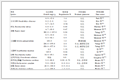
To date, in a series of reported literatures, it was only found that β-alkynyl Meldrum's acids were prepared from in situ generated Cu-catalyzed conjugate addition reaction of aromatic alkynes to Meldrum's acid derived accetors. In this paper, we document the example for the synthesis of 5-(1-phenyl-3-phenylprop-2-ynyl)-2, 2-pentylidene-1, 3-dio-xane-4, 6-dione derivatives by a three-component reaction. For optimization of conditions, 2, 2-pentylidene-1, 3-dio- xane-4, 6-dione (1), benzaldehyde (2a), and phenylacetylene (3a) were chosen as a model reaction (Eq. 1). The results are summarized in Table 1. In our initial screening experiments, the effects of the copper salts were examined. Different copper salts including CuSO4•5H2O, CuCl2• 2H2O, Cu(NH3)4SO4, Cu2(CO3)(OH)2, Cu(acac)2, CuI, in situ generated CuOAc and Cu(OAc)2•H2O were used (Table 1, Entries 1~8). Cu(OAc)2•H2O was found to be the most effective catalyst, leading to the desired product in 83% yield. In a blank experiment, the reaction did not occur in the absence of copper catalyst (Table 1, Entry 9). The influences of various reductants such as sodium ascorbate, NH2OH•HCl, Na2SO3 and Cu on the model rea- ction were investigated. It was found that Cu was the best choice (Table 1, Entries 10~12). The effect of reaction time on the reaction was also examined and it was found that 10 h gave the best result (Table 1, Entries 13, 14). Therefore the optimized conditions are the use of a combination of 20 mol% Cu(OAc)2•H2O as the catalyst and 60 mol% Cu as the reductant at room temperature for 10 h.
|
|
(1) |
 下载:
导出CSV
| Entry | Copper salt | Reductant | Time/h | Yieldb/% |
| 1 | CuSO4•5H2O | Cu | 24 | 51 |
| 2 | CuCl2•2H2O | Cu | 24 | 39 |
| 3 | Cu2(CO3)(OH)2 | Cu | 24 | 12 |
| 4 | Cu(acac)2 | Cu | 24 | 44 |
| 5 | Cu(NH3)4SO4 | Cu | 24 | 31 |
| 6c | CuI | — | 20 | 0 |
| 7d | CuOAc | — | 10 | 56 |
| 8 | Cu(OAc)2•H2O | Cu | 10 | 83 |
| 9c | Cu | 24 | 0 | |
| 10 | Cu(OAc)2•H2O | Sodium ascorbate | 6 | 75 |
| 11c | Cu(OAc)2•H2O | NH2OH•HCl | 6 | 0 |
| 12 | Cu(OAc)2•H2O | Na2SO3 | 6 | 53 |
| 13 | Cu(OAc)2•H2O | Cu | 8 | 71 |
| 14 | Cu(OAc)2•H2O | Cu | 12 | 83 |
| 15e | Cu(OAc)2•H2O | Cu (recycled) | 10 | 76 |
| a Reaction conditions: reactions were conducted using 20 mol% Cu(Ⅱ) salt, 1.5 equiv. of PhC=CH, and 60 mol% reductant in 4 mL of H2O at room temperature; b Isolated yield based on 2a; c The products were 5, 5-(phenylmethylene)- bis(2, 2-pentylidene-1, 3-dioxane-4, 6-dione); d the reaction conditions: CuOAc was synthesized from a solution of 20 mol% Cu(Ⅱ) salt and 60 mol% reductant in 4 mL of H2O, subsequently 1.5 equiv. of PhC=CH, 2.0 equiv. of benzaldehyde and 1 mmol of 2, 2-pentylidene-1, 3-dioxane-4, 6-dione were added; e the yield for the fifth time. | ||||
Our attention was then turned to the possibility of recycling excessive copper powder. After completion of the reaction, the reaction mixture was filtered. The residue treated with CH2Cl2 and washed by water, was recovered and then subjected to optimized conditions for the model reaction. The recycled copper powder as a reductant still showed a high activity and gave the corresponding product in high yield (Table 1, Entry 15).
Under the optimized reaction conditions, 2, 2-pentyli- dene-1, 3-dioxane-4, 6-dione and phenylacetylene were initially used as substrates for exploring the scope of aldehyde substrates. Reactions of aliphatic aldehydes (acetaldehyde, n-butyl aldehyde) and benzaldehyde provided good yields between 60%~83% (Table 2, Entries 1, 9, 10). And then, the substituent effects of aromatic aldehydes were tested to investigate the generality of the reaction. The results exhibited various para-substituted ben- zaldehydes with electron withdrawing groups (F, Cl, NO2) and electron donating groups (CH3, CH3O) have given good to excellent yields (Table 2, Entries 2~8).
下载:
导出CSV
 |
|||||
| Entry | R | Ar | Time/h | Product | Yieldb/% |
| 1 | C6H5 | C6H5 | 10.0 | 4a | 83 |
| 2 | 4-FC6H4 | C6H5 | 8.0 | 4b | 69 |
| 3 | 4-ClC6H4 | C6H5 | 8.0 | 4c | 70 |
| 4 | 4-CH3C6H4 | C6H5 | 6.0 | 4d | 75 |
| 5 | 4-NO2C6H4 | C6H5 | 12.0 | 4e | 71 |
| 6 | 4-CH3OC6H4 | C6H5 | 8.0 | 4f | 66 |
| 7 | 2-Furyl | C6H5 | 6.0 | 4g | 85 |
| 8 | PhCH=CH | C6H5 | 12.0 | 4h | 88 |
| 9 | CH3 | C6H5 | 20.0 | 4i | 60 |
| 10 | CH3CH2CH2 | C6H5 | 20.0 | 4j | 63 |
| 11 | C6H5 | 4-ClC6H4 | 8.0 | 4k | 76 |
| 12 | CH3CH2CH2 | 4-ClC6H4 | 20.0 | 4l | 70 |
| a Reaction conditions: reactions were conducted using 20 mol% Cu(OAc)2• H2O, 1.5 equiv. of ArC≡CH, and 60 mol% Cu in 4 mL of H2O at room temperature; b isolated yield. | |||||
In order to get further information on the intermediate form of the phenylethynyl-Cu(Ⅰ) 6, after reduction of Cu(OAc)2•H2O by Cu in water, phenylacetylene (1.5 equiv.) was added. The resulting mixture was stirred for 6 h, then the mixture was extracted with CH2Cl2, dried over Na2SO4, concentrated under reduced pressure. The yellow residue obtained was washed by absolute alcohol and dried by vacuum. The yellow powder was subjected to infrared and mass spectroscopic analysis. In the high-resolution MALDI-TOF mass spectrum, the major peak corresponded to (PhC≡CCu+Na)+ m/z 187.0. In infrared spectroscopy, the stretch frequencies of C≡C bond decrease from 2120 cm-1 for phenylacetylene to 1929 cm-1 for the copper alkynylide. From the above results and literatures, [22, 23] a reasonable mechanism for one-pot three-component synthesis of 5-(1-phenyl-3-phenylprop-2-ynyl)-2, 2-pentylide- ne-1, 3-dioxane-4, 6-dione (4a) is depicted in Scheme 2. Firstly, the Knoevenagel reaction of benzaldehyde with 2, 2-pentylidene-1, 3-dioxane- 4, 6-dione would easily form the intermediate 5-phenyl-methylene-2, 2-pentylidene-1, 3- dioxane-4, 6-dione (5) in polar protic solvent. The terminal C—H of phenylacetylene is activated by Cu(Ⅰ) prepared from Cu(OAc)2•H2O in the presence of Cu, and then the phenylethynyl-Cu(Ⅰ) 6 is formed. Subsequently, the product 4a is obtained by the conjugate addition reaction.
In summary, a combination of three-component synthesis of 5-(1-phenyl-3-phenylprop-2-ynyl)-2, 2-pentylidene- 1, 3-dioxane-4, 6-dione derivtives catalyzed by Cu(OAc)2• H2O and Cu has been developed. The operation and work- up procedures were very simple and nocolumn chrommatography purification was needed. This provides an effective method for the synthesis of β-alkynyl Meldrum's acid analogues.
2, 2-Pentylidene-1, 3-dioxane-4, 6-dione was prepared according to Ref. [24]. The other chemicals were purchased from Aladdin, Aldrich and Fluka Chemical Companies and without further purification. Melting points were measured on an XT-4 digital micro melting point apparatus and were uncorrected. 1H NMR and 13C NMR spectra were recorded on a Bruker AV-400 instrument with CDCl3 as solvent. The analytical MS of the compounds was performed on a Agilent LC-MS 6120.
To a 25 mL tube equiped with a stirring bar were added H2O (4.0 mL), Cu(OAc)2•H2O (0.2 mmol, 20 mol%), copper powder (0.6 mmol, 60 mol%), arylacetylene (3, 1.5 mmol), 2, 2-pentylidene-1, 3-dioxane-4, 6-dione (1, 1 mmol) and aldehydes (2a~2j, 1 mmol). The vessel was then sealed with a screw cap and the appropriate times were set at room temperature (Table 2). Upon completion of the reaction, the filtration residue was treated with CH2Cl2 and washed by water, and excessive copper was dried by under vacuum and then subjected to optimized conditions for the model reaction. The filtrate was treated with CH2Cl2 and saturated aqueous solution of NH4Cl. The organic layer was separated and the water phase was extracted with CH2Cl2 (15 mL×2). The combined organic layers were dried over Na2SO4 and concentrated under reduced pressure. The residue was purified by recrystallization from absolute ethanol and drying to afford the desired compounds 4a~4l.
(1-Phenyl-3-phenylprop-2-ynyl)-2, 2-pentylidene-1, 3-dio-xane-4, 6-dione (4a): White solid, m.p. 126~128 ℃. 1H NMR (400 MHz, CDCl3) δ: 1.42~1.48 (m, 2H), 1.64~1.71 (m, 4H), 1.80 (t, J=5.6, 6.4 Hz, 2H), 1.92 (t, J=5.6, 4.9 Hz, 2H), 4.01 (d, J=2.8 Hz, 1H), 5.15 (d, J=2.8 Hz, 1H), 7.27~7.38 (m, 6H), 7.45~7.50 (m, 2H), 7.62 (d, J=7.6 Hz, 2H); 13C NMR (100 MHz, CDCl3) δ: 21.79, 22.45, 23.99, 36.88, 36.96, 37.18, 53.25, 85.54, 86.34, 106.11, 122.81, 127.80, 128.24, 128.36, 128.53, 128.72, 131.90, 137.30, 163.22, 163.97; HRMS calcd for C24H22NaO4 [M+Na]+ 397.1416, found 397.1422.
5-[1-(4-Flurophenyl)-3-phenylprop-2-ynyl]-2, 2-pentyli-dene-1, 3-dioxane-4, 6-dione (4b): White solid, m.p. 119~121 ℃. 1H NMR (400 MHz, CDCl3) δ: 1.44~1.49 (m, 2H), 1.65~1.73 (m, 4H), 1.83 (t, J=5.6, 6.4 Hz, 2H), 1.93 (t, J=5.6, 6.4 Hz, 2H), 3.99 (d, J=2.8 Hz, 1H), 5.13 (d, J=2.8 Hz, 1H), 7.01~7.07 (m, 2H), 7.28~7.35 (m, 3H), 7.44~7.49 (m, 2H), 7.57~7.62 (m, 2H); 13C NMR (100 MHz, CDCl3) δ: 21.76, 22.47, 23.97, 36.37, 36.85, 36.90, 53.23, 85.54, 86.26, 106.16, 115.23, 115.44, 122.63, 128.28, 128.48, 130.65(d, J=32.8 Hz), 131.87, 132.90 (d, J=12.8 Hz), 161.10(d, J=246.5 Hz), 163.55, 163.69; HRMS calcd for C24H21FNaO4 [M+Na]+ 415.1322, found 415.1329.
5-[1-(4-Chlorophenyl)-3-phenyl-prop-2-ynyl]-2, 2-pent-ylidene-1, 3-dioxane-4, 6-dione (4c): White solid, m.p. 115~117 ℃. 1H NMR (400 MHz, CDCl3) δ: 1.43~1.49 (m, 2H), 1.64~1.73 (m, 4H), 1.86 (t, J=5.6, 6.4 Hz, 2H), 1.93 (t, J=5.6, 6.4 Hz, 2H), 3.99 (d, J=2.8 Hz, 1H), 5.12 (d, J=2.8 Hz, 1H), 7.28~7.33 (m, 5H), 7.44~7.48 (m, 2H), 7.56 (d, J=8.4 Hz, 2H); 13C NMR (100 MHz, CDCl3) δ: 21.76, 22.49, 23.97, 36.42, 36.80, 36.89, 53.12, 85.72, 85.90, 106.21, 122.56, 128.29, 128.53, 128.62, 130.26, 131.89, 133.74, 135.77, 163.15, 163.66; HRMS calcd for C24H21ClNaO4 [M+Na]+ 431.1026, found 431.1020.
5-[1-(4-Methylphenyl)-3-phenyl-prop-2-ynyl]-2, 2-pent-ylidene-1, 3-dioxane-4, 6-dione (4d): White solid, m.p. 115~117 ℃. 1H NMR (400 MHz, CDCl3) δ: 1.42~1.48 (m, 2H), 1.64~1.71 (m, 4H), 1.80 (t, J=5.6, 6.4 Hz, 2H), 1.91 (t, J=5.6, 6.4 Hz, 2H), 2.34 (s, 3H), 3.99 (d, J=2.8 Hz, 1H), 5.12 (d, J=2.8 Hz, 1H), 7.16 (d, J=7.6 Hz, 2H), 7.28~7.32 (m, 3H), 7.44~7.50 (m, 4H); 13C NMR (100 MHz, CDCl3) δ: 21.09, 21.79, 22.45, 24.00, 36.88, 36.95, 53.32, 85.34, 85.58, 106.05, 122.89, 128.22, 128.30, 128.59, 129.21, 131.89, 134.28, 137.55, 163.29, 164.01; HRMS calcd for C25H24NaO4 [M+Na]+ 411.1572, found 411.1580.
5-[1-(4-Nitrophenyl)-3-phenyl-prop-2-ynyl]-2, 2-pentyli-dene-1, 3-dioxane-4, 6-dione (4e): Light yellow solid, m.p. 125~126 ℃. 1H NMR (400 MHz, CDCl3) δ: 1.46~1.51 (m, 2H), 1.66~1.77 (m, 4H), 1.91~1.98 (m, 4H), 4.09 (d, J=2.8 Hz, 1H), 5.24 (d, J=2.8 Hz, 1H), 7.31~7.36 (m, 3H), 7.45~7.49 (m, 2H), 7.83(d, J=8.8 Hz, 2H), 8.20(d, J=8.8 Hz, 2H); 13C NMR (100 MHz, CDCl3) δ: 21.74, 22.53, 23.95, 36.54, 36.69, 36.84, 52.94, 84.73, 86.50, 106.49, 122.14, 123.59, 128.38, 128.82, 129.91, 131.92, 132.13, 144.65, 147.47, 162.87, 163.42; HRMS calcd for C24H21NNaO6 [M+Na]+ 442.1267, found 442.1259.
5-[1-(4-Methoxylphenyl)-3-phenyl-prop-2-ynyl]-2, 2-pe-ntylidene-1, 3-dioxane-4, 6-dione (4f): Light yellow solid, m.p. 90~92 ℃. 1H NMR (400 MHz, CDCl3) δ: 1.42~1.48 (m, 2H), 1.63~1.70 (m, 4H), 1.79 (t, J=5.6, 6.4 Hz, 2H), 1.91 (t, J=5.6, 6.4 Hz, 2H), 3.79(s, 3H), 3.98 (d, J=2.8 Hz, 1H), 5.10 (d, J=2.8 Hz, 1H), 6.86~6.90 (m, 2H), 7.28~7.32 (m, 3H), 7.44~7.49 (m, 2H), 7.51~7.55(m, 2H); 13C NMR (100 MHz, CDCl3) δ: 21.79, 22.45, 23.99, 36.54, 36.89, 36.93, 53.33, 55.30, 85.19, 86.86, 106.05, 113.86, 122.89, 128.24, 128.31, 129.20, 129.98, 131.87, 159.19, 163.46, 163.91; HRMS calcd for C25H24NaO5 [M+Na]+ 427.1521, found 427.1528.
5-(1-Furan-2-yl-3-phenyl-prop-2-ynyl)-2, 2-pentylidene-1, 3-dioxane-4, 6-dione (4g): Off-white solid, m.p. 128~130 ℃. 1H NMR (400 MHz, CDCl3) δ: 1.47~1.52 (m, 2H), 1.68~1.79 (m, 4H), 1.95~2.01(m, 4H), 4.21 (d, J=2.8 Hz, 1H), 5.15 (d, J=2.8 Hz, 1H), 6.38 (dd, J=2.0, 3.2 Hz, 1H), 6.52 (d, J=3.2 Hz, 1H), 7.27~7.34 (m, 4H), 7.43~7.47 (m, 2H); 13C NMR (100 MHz, CDCl3) δ: 21.78, 22.54, 24.03, 31.52, 36.72, 36.86, 49.96, 83.91, 84.43, 106.13, 108.47, 110.89, 122.43, 128.23, 128.55, 131.99, 141.90, 150.19, 162.65, 163.58; HRMS calcd for C22H20NaO5 [M+Na]+ 387.1208, found 387.1214.
5-(3-Phenyl-1-phenylethynyl-allyl)-2, 2-pentylidene-1, 3-dioxane-4, 6-dione (4h) Light yellow solid, m.p. 158~160 ℃. 1H NMR (400 MHz, CDCl3) δ: 1.46~1.55 (m, 2H), 1.67~1.78 (m, 4H), 1.96~2.00 (m, 4H), 3.90 (d, J=2.8 Hz, 1H), 4.58~4.60 (m, 1H), 6.52 (dd, J=8.0, 16.0 Hz, 1H), 6.82 (d, J=16.0 Hz, 1H), 7.23~7.33 (m, 6H), 7.41~7.46 (m, 4H); 13C NMR (100 MHz, CDCl3) δ: 21.77, 22.57, 24.04, 34.85, 36.55, 36.93, 52.00, 84.56, 86.31, 106.20, 122.81, 125.22, 126.73, 127.96, 128.20, 128.30, 128.56, 131.89, 133.89, 136.33, 163.32, 163.45; HRMS calcd for C26H24NaO4 [M+Na]+ 423.1572, found 423.1583.
5-(1-Methyl-3-phenyl-prop-2-ynyl)-2, 2-pentylidene-1, 3-dioxane-4, 6-dione (4i): White solid, m.p. 141~143 ℃. 1H NMR (400 MHz, CDCl3) δ: 1.47~1.53 (m, 2H), 1.56 (d, J=7.2 Hz, 3H), 1.68~1.79 (m, 4H), 1.95~2.02 (m, 4H), 3.69 (d, J=3.2 Hz, 1H), 3.83 (ddd, J=2.8, 7.2, 10.0 Hz, 1H), 7.24~7.29 (m, 3H), 7.37~7.41 (m, 2H); 13C NMR (100 MHz, CDCl3) δ: 18.55, 21.80, 26.54, 24.05, 26.50, 36.58, 37.06, 51.26, 82.59, 89.20, 106.01, 123.00, 128.08, 128.16, 131.79, 163.73, 163.97; HRMS calcd for C19H20NaO4 [M+Na]+ 335.1259, found 335.1268.
5-(1-Propyl-3-phenyl-prop-2-ynyl)-2, 2-pentylidene-1, 3-dioxane-4, 6-dione (4j): White solid, m.p.125~126 ℃. 1H NMR (400 MHz, CDCl3) δ: 0.99 (t, J=7.2 Hz, 3H), 1.46~1.52 (m, 3H), 1.60~1.78 (m, 6H), 1.96~2.01 (m, 4H), 2.10~2.22 (m, 1H), 3.62~3.75 (m, 2H), 7.23~7.28 (m, 3H), 7.36~7.42 (m, 2H); 13C NMR (100 MHz, CDCl3) δ: 13.60, 21.22, 21.81, 22.50, 24.01, 32.16, 34.81, 36.74, 37.10, 50.39, 83.62, 88.14, 106.02, 123.04, 128.05, 128.14, 131.80, 163.81, 164.54; HRMS calcd for C21H24NaO4 [M+Na]+ 363.1572, found 363.1556.
5-[1-Phenyl-3-(4-Chlorophenyl)-prop-2-ynyl)-2, 2-pent-ylidene-1, 3-dioxane-4, 6-dione (4k): Light yellow solid, m.p.129~130 ℃. 1H NMR (400 MHz, CDCl3) δ: 1.42~1.48 (m, 2H), 1.64~1.71 (m, 4H), 1.78 (t, J=5.6, 6.4 Hz, 2H), 1.92 (t, J=5.6, 4.9 Hz, 2H), 4.02 (d, J=2.8 Hz, 1H), 5.13 (d, J=2.8 Hz, 1H), 7.27~7.41 (m, 7H), 7.60 (d, J=7.2 Hz, 2H); 13C NMR (100 MHz, CDCl3) δ: 21.78, 22.47, 23.97, 36.76, 36.89, 53.14, 53.19, 84.29, 84.72, 106.19, 121.28, 127.92, 128.60, 128.73, 133.15, 134.41, 137.03, 163.142, 163.88; HRMS calcd for C24H21ClNaO4 [M+ Na]+ 431.1026, found m/z 431.1033.
5-[1-Propyl-3-(4-Chlorophenyl)-prop-2-ynyl]-2, 2-pent-ylidene-1, 3-dioxane-4, 6-dione (4l): White solid, m.p. 127~128 ℃. 1H NMR (400 MHz, CDCl3) δ: 0.99 (t, J=7.2 Hz, 3H), 1.42~1.51 (m, 3H), 1.58~1.78 (m, 6H), 1.97~1.99 (m, 4H), 2.08~2.19 (m, 1H), 3.64~3.70 (m, 2H), 7.24 (d, J=8.4 Hz, 2H), 7.31 (d, J=8.4 Hz, 2H); 13C NMR (100 MHz, CDCl3) δ: 13.63, 21.25, 21.79, 22.53, 24.03, 31.92, 34.60, 36.60, 36.99, 50.34, 82.41, 89.24, 106.07, 121.53, 128.49, 133.05, 134.05, 163.72, 164.40; HRMS calcd for C21H23ClNaO4 [M+Na]+ 397.1183, found 397.1175.
Supporting Information NMR spectra of 4a~4l is available free of charge via the Internet at http://sioc-journal.cn/.
(a) Bharate, S. B.; Nemmani, K. V. S.; Vishwakarma, R. A. Expert Opin. Ther. Pat. 2009, 19, 237.
(b) Nahm, S.; Weinreb, S. M. Tetrahedron Lett. 1981, 22, 3815.
Knopfel, T. F.; Carreira, E. M. J. Am. Chem. Soc. 2003, 125, 6054. doi: 10.1021/ja035311z
(a) Liu, S.; Fillion, E. Org. Lett. 2014, 16, 5748.
(b) Jia, W.; Li, S.; Yu, M.; Chen, M.; Jiao, N. Tetrahedron Lett. 2009, 50, 5406.
(c) Li, S.; Jia, W.; Jiao, N. Adv. Synth. Catal. 2009, 351, 569.
Lee, E. J.; Gleason, F. K. Plant Sci. 1994, 103, 155. doi: 10.1016/0168-9452(94)90203-8
Edwards, K. R. PCT Int. Appl. 1982, 19.
Huneck, S.; Schreiber, K. Phytochemistry 1972, 11, 2429. doi: 10.1016/S0031-9422(00)88510-6
Fang, X.; Anderson, J. E.; Chang, C.; McLaughlin, J. L. Tetrahedron 1991, 47, 9751. doi: 10.1016/S0040-4020(01)80715-8
(a) Puchot, C.; Samuel, O.; Dunach, E.; Zaho, S.; Agami, C.; Kagan, H. B. J. Am. Chem. Soc. 1986, 108, 2353.
(b) Sinclair, J. A.; Molander, G. A.; Brown, H. C. J. Am. Chem. Soc. 1977, 99, 954.
(a) Schwartz, J.; Carr, D. B.; Hansen, R. T.; Dayrit, F. M. J. Org. Chem. 1980, 45, 3053.
(b) Bruhn, M.; Brown, C. H.; Collins, P. W.; Palmer, J. R.; Dajani, E. Z.; Pappo, R. Tetrahedron Lett. 1976, 17, 235.
(a) Hooz, J.; Layton, R. B. J. Am. Chem. Soc. 1971, 93, 7320.
(b) Schwartz, J.; Hansen, R. T.; Dayrit, F. M. J. Org. Chem. 1980, 45, 3053.
(a) Kim, S.; Lee, J. M. Tetrahedron Lett. 1990, 31, 7627.
(b) Kim, S.; Park, J. H.; Jon, S. Y. Bull. Korean Chem. Soc. 1995, 16, 783.
(a) Knopfel, T. F.; Zarotti, P.; Ichikawa, T.; Carreira, E. M. J. Am. Chem. Soc. 2005, 127, 9682.
(b) Fujimori, S.; Knopfel, T. F.; Zarotti, P.; Ichikawa, T.; Carreira, E. M.; Boyall, D. Bull. Chem. Soc. Jpn. 2007, 80, 1635.
(c) Fujimori, S.; Carreira, E. M. Angew. Chem., Int. Ed. 2007, 46, 4964.
(d) Zarotti, P.; Knopfel, T F.; Aschwanden, P.; Carreira, E. M. ACS Catal. 2012, 2, 1232.
Mishra, S.; Liu, J.; Aponick, A. J. Am. Chem. Soc. 2017, 139:3353.
Fillion, E.; Zorzitto, A. K. J. Am. Chem. Soc. 2009, 131, 14608. doi: 10.1021/ja905336p
Cui, S.; Walker, S. D.; Woo, J. C. S.; Borths, C. J.; Mukherjee, H.; Chen, M. J.; Faul, M. M. J. Am. Chem. Soc. 2010, 132, 436. doi: 10.1021/ja909105s
Krabbe, S. W.; Do, D. T.; Johnson, J. S. Org. Lett. 2012, 14, 5932. doi: 10.1021/ol302848m
Knopfel, T. F.; Boyall, D.; Carreira, E. M. Org. Lett. 2004, 6, 2281. doi: 10.1021/ol0491585
(a) Xu, Z. H. Chin. J. Org. Chem. 2014, 34, 1687(in Chinese).许招会, 有机化学, 2014, 34, 1687.
(b) Yang, D. L.; Li, J. R.; Sun, K. N. Chin. J. Org. Chem. 2013, 33, 2341(in Chinese).(杨德利, 李加荣, 孙克宁, 路红燕, 刘明星, 史大昕, 有机化学, 2013, 33, 2341.)
(c) Francesco, E.; Salvatore, G.; Ornelio, R. Tetrahedron Lett. 2011, 59, 568.
林春花, 许招会, 廖维林, 邱曾烨, 夏剑辉, 有机化学, 2015, 35, 212. http://sioc-journal.cn/Jwk_yjhx/CN/abstract/abstract344650.shtmlLin, C. H.; Xu, Z. H.; Liao, W. L.; Qiu, Z. Y.; Xia, J. H. Chin. J. Org. Chem. 2015, 35, 212(in Chinese). http://sioc-journal.cn/Jwk_yjhx/CN/abstract/abstract344650.shtml
(a) Xu, Z. H.; Zhang, H. F.; Xiong, Y. K.; Liu, D. Y.; Huang, Q. S. Heterocycles 2016, 92, 2252.
(b) Xu, Z. H.; Zhang, H. F.; Lin, C. H.; Liu, D. Y. Heterocycles 2016, 92, 1031.
(c) Zhou, P.; Xu, Z. H. J. Jiangxi Normal Univ. (Nat. Sci.) 2019, 43, 167(in Chinese).(周鹏, 许招会, 江西师范大学学报(自然科学版), 2019, 43, 167.)
许招会, 陈飞彪, 李瑜钰, 黄清水, 廖传文, 有机化学, 2018, 38, 3101. http://sioc-journal.cn/Jwk_yjhx/CN/abstract/abstract346704.shtmlXu, Z. H.; Chen, F. B.; Li, Y. Y.; Huang, Q. S.; Liao, C. W. Chin. J. Org. Chem. 2018, 38, 3101(in Chinese). http://sioc-journal.cn/Jwk_yjhx/CN/abstract/abstract346704.shtml
Coates, G. E, Prakin, C. J. Inorg. Nucl. Chem. 1961, 22, 59. doi: 10.1016/0022-1902(61)80230-3
Manna, J.; John, K. D.; Hopkins, M. D. Adv. Organomet. Chem. 1995, 38, 79. doi: 10.1016/S0065-3055(08)60427-X
严楠, 熊斌, 廖维林, 许招会, 有机化学, 2010, 30, 1391. http://sioc-journal.cn/Jwk_yjhx/CN/abstract/abstract339308.shtmlYan, N.; Xiong, B.; Liao, W. L.; Xu, Z. H. Chin. J. Org. Chem. 2010, 30, 1391(in Chinese). http://sioc-journal.cn/Jwk_yjhx/CN/abstract/abstract339308.shtml

Scheme 1 Comparison between metalated teminal alkynes and in situ generated metal alkynlides
Table 1. Optimization of the reaction conditions for the synthesis of 5-(1-phenyl-3-phenylprop-2-ynyl)-2, 2-pentylidene-1, 3-dio- xane-4, 6-dione (4a)a
| Entry | Copper salt | Reductant | Time/h | Yieldb/% |
| 1 | CuSO4•5H2O | Cu | 24 | 51 |
| 2 | CuCl2•2H2O | Cu | 24 | 39 |
| 3 | Cu2(CO3)(OH)2 | Cu | 24 | 12 |
| 4 | Cu(acac)2 | Cu | 24 | 44 |
| 5 | Cu(NH3)4SO4 | Cu | 24 | 31 |
| 6c | CuI | — | 20 | 0 |
| 7d | CuOAc | — | 10 | 56 |
| 8 | Cu(OAc)2•H2O | Cu | 10 | 83 |
| 9c | Cu | 24 | 0 | |
| 10 | Cu(OAc)2•H2O | Sodium ascorbate | 6 | 75 |
| 11c | Cu(OAc)2•H2O | NH2OH•HCl | 6 | 0 |
| 12 | Cu(OAc)2•H2O | Na2SO3 | 6 | 53 |
| 13 | Cu(OAc)2•H2O | Cu | 8 | 71 |
| 14 | Cu(OAc)2•H2O | Cu | 12 | 83 |
| 15e | Cu(OAc)2•H2O | Cu (recycled) | 10 | 76 |
| a Reaction conditions: reactions were conducted using 20 mol% Cu(Ⅱ) salt, 1.5 equiv. of PhC=CH, and 60 mol% reductant in 4 mL of H2O at room temperature; b Isolated yield based on 2a; c The products were 5, 5-(phenylmethylene)- bis(2, 2-pentylidene-1, 3-dioxane-4, 6-dione); d the reaction conditions: CuOAc was synthesized from a solution of 20 mol% Cu(Ⅱ) salt and 60 mol% reductant in 4 mL of H2O, subsequently 1.5 equiv. of PhC=CH, 2.0 equiv. of benzaldehyde and 1 mmol of 2, 2-pentylidene-1, 3-dioxane-4, 6-dione were added; e the yield for the fifth time. | ||||
 下载: 导出CSV
Table 2. Substrate scope of aldehydes and arylacetylenea
|
|||||
| Entry | R | Ar | Time/h | Product | Yieldb/% |
| 1 | C6H5 | C6H5 | 10.0 | 4a | 83 |
| 2 | 4-FC6H4 | C6H5 | 8.0 | 4b | 69 |
| 3 | 4-ClC6H4 | C6H5 | 8.0 | 4c | 70 |
| 4 | 4-CH3C6H4 | C6H5 | 6.0 | 4d | 75 |
| 5 | 4-NO2C6H4 | C6H5 | 12.0 | 4e | 71 |
| 6 | 4-CH3OC6H4 | C6H5 | 8.0 | 4f | 66 |
| 7 | 2-Furyl | C6H5 | 6.0 | 4g | 85 |
| 8 | PhCH=CH | C6H5 | 12.0 | 4h | 88 |
| 9 | CH3 | C6H5 | 20.0 | 4i | 60 |
| 10 | CH3CH2CH2 | C6H5 | 20.0 | 4j | 63 |
| 11 | C6H5 | 4-ClC6H4 | 8.0 | 4k | 76 |
| 12 | CH3CH2CH2 | 4-ClC6H4 | 20.0 | 4l | 70 |
| a Reaction conditions: reactions were conducted using 20 mol% Cu(OAc)2• H2O, 1.5 equiv. of ArC≡CH, and 60 mol% Cu in 4 mL of H2O at room temperature; b isolated yield. | |||||
下载: 导出CSV

 扫一扫看文章


扫一扫关注我们


 下载: