
Figure 1.
Chidamide and the structure-activity relationship of benzamide class HDACs inhibitors

Design, Synthesis and Evaluation of Anti-tumor Activities of Chidamide Derivatives
Xiangna Zhang , Feng He , Qiuqiong Zhang , Jiahui Lü , A'na Xu , Chenggong Yu , Ying Qu , Jingde Wu


With the advances in molecular genetics and genomics studies, many promising biological targets related to tumor pathogenesis have been identified. Histone deacetylases (HDACs) have been extensively studied to develop effective antitumor therapeutics in recent years. Nucleosomes are the core of histone and include a spherical c-terminal structure and an amino acid residue n-termina.[1] Histone modification mainly includes acetylation and deacetylation, methylation and demethylation, phosphorylation and dephosphorylation, ubiquitination and deubiquitination, among which the acetylation and deacetylation modify the chromatin morphology by regulating the assembly of nucleosomes.[2] Functionally, HDACs remove acetyl moiety on 1-amino of N-terminal lysine residues by hydrolysis, thus increasing the electropositivity of the lysine residues. As a result, it binds tightly to electronegative DNA and hinders transcription factors, RNA polymerases and other transcription-regulatory proteins from binding to DNA, leading to gene transcription inhibition.[3, 4] To date, the HDACs can be classified into four subgroups and 18 subtypes. Accumulating evidences have demonstrated the pathological roles of the HDACs in many human diseases, such as cancer, inflammation, and neurodegenerative disorders. Cellular localization varies for different subtypes of HDACs, therefore, development of subtype selective HDACs inhibitors represents a strategy to develop disease specific therapeutics.[5, 6]
Chidamide has been approved as a subtype-selective histone deacetylase inhibitor for relapsed or refractory peripheral T-cell lymphoma.[7] Chidamide provides specific inhibition of class I HDACs that are associated with tumor genesis and are related to chromatin remodeling and gene transcriptional regulation (i.e., epigenetic regulation) (Figure 1). The compound affects the cell cycle of lymphatic, hematological tumors and induces apoptosis. Furthermore, it enhances the activity of natural killer (NK) and antigen-specific cytotoxic T-cells (CTL) to inhibit the inflammatory response of tumor tissue.[8] However, adverse reactions have been observed for chidamide, especially in hematology and gastrointestinal tract.[9, 10] Therefore, structural optimization of chidamide may provide novel analogs with reduced toxicity and improved potency.
The side effects of chidamide are mainly caused by the low selectivity within HDACs subtype. The structure-activity relationships have provided valuable information on the binding interactions with the HDACs (Figure 1).[11]
Studies of the benzamide-based HDACs inhibitors, as exemplified by MS275 and MGCD-0103, revealed that only HDAC1 and HDAC2 have a deep internal cavity in the bottom of Zn2+ chelating area. So introduction of aromatic ring or aromatic heterocyclic in the para-position of amino in B ring significantly improved the potency and selectivity against class I HDACs.[9] Based on these observations, we designed a series of chidamide derivatives to probe the influence of substitution on the analine moiety of Chidamide (Figure 2).
The synthesis of compound 7 was shown in Scheme 1. Briefly, intermediate 2a was obtained by the bromination of 1 in the para-position of the amine with N-bromo-suc- cinimide (NBS) and azobisisobutyronitrile, azodiisobutyronitrile (AIBN).[12] Boc protection yielded 3a, which was reduced with Zn powder to give 4a.[13, 14] Condensation of 4a with 5 afforded 6. Finally, reaction of 6a with various aromatic borates under Suzuki reaction conditions provided the target compounds.

Reagents and conditions: (a) NBS, AcOH, 100 ℃, 2 h; (b) (Boc)2O, TEA, DMAP, DCM, r.t., 2 h; (c) Zn, NH4Cl, H2O, MeOH, 80 ℃, 2 h; (d) (i) TBTU, TEA, THF, 70 ℃, 3 h; (ii) HCl, EtOAc, r.t., 1 h; (e) corresponding boronic acid derivatives, Pd(Ph3P)4, toluene, EtOH, K2CO3, NaF, H2O, Ar, 100 ℃, 5 h.
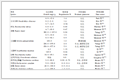
HeLa nuclear extracts (mainly including HDAC1 and HDAC2) were employed to evaluate the inhibition of these analogs on enzymatic activity. chidamide and MS275 were used as positive controls. As shown in Table 1, the only analogs 7h and 7i showed moderate inhibitory activity with IC50 of 13.46 and 18.82 μmol/L, respectively while the other analogs showed no inhibition. The results suggest that fluorine atom is essential to the activity of chidamide and aromatic derivation at the para-position of amino moiety does not improve the inhibitory activity.
Three tumor cell lines, K562, Jurkat and HeLa, were selected to conduct a preliminary evaluation of the anti-proliferative activities for the compounds at 25 μmol/L. As shown in Table 2, surprisingly, all the tested compounds showed comparable antiproliferative activities as Chidamide, although most of them did not show inhibitory activity in the enzymatic assay. Compounds 7h and 7i, the ones that showed moderate anti-HDACs enzyme activity, exhibited improved inhibition on the proliferation of tested cancer cell lines when compared to Chidamide. Further characterization established the IC50 of 5.28 and 3.29 μmol/L for 7h and 7i, respectively.
 下载:
导出CSV
| Compd. | Antiproliferative activity (%) at 25 μmol/L | ||
| K562 | Jurkat | HeLa | |
| 7a | 56.20 | 47.48 | 43.22 |
| 7b | 61.76 | 38.96 | 49.45 |
| 7c | 50.48 | 34.16 | 47.36 |
| 7d | 29.86 | 52.24 | 28.48 |
| 7e | 58.02 | 80.55 | 37.86 |
| 7f | 42.21 | 65.79 | 41.00 |
| Chidamide | 65.20 | 78.96 | 55.76 |
| 7g | 43.51 | 69.12 | 34.40 |
| 7h | 71.16 | 86.43 | 39.27 |
| 7i | 83.45 | 89.01 | 45.13 |
| 7j | 47.22 | 65.93 | 40.80 |
| 7k | 73.49 | 72.78 | 32.73 |
| 7l | 79.65 | 67.00 | 39.72 |
| a Assay were performed in replicate (n≥2), the SD values are < 20% of the mean. | |||
A series of Chidamide derivatives have been designed and synthesized to understand the SAR of benzamide based class I HDACs inhibitors. Our studies demonstrated that derivatization on the para-position of the B ring does not improve its HDACs inhibitory activity. It may hint that the para-position of amino moiety does not occupy the inner cavity and this may guide the design of next generation of benzamide based HDACs inhibitors.
All commercially available starting materials reagents and solvents were used without further purification unless otherwise stated. All reactions were monitored by TLC with 0.25 mm silica gel plates (60GF-254). UV light and ferric chloride were used to visualize the spots. Silica gel was used for column chromatography purification. 1H NMR and 13C NMR spectra were obtained on a Bruker DRX spectrometer at 400 MHz. High resolution mass spectra were conducted by Shandong Analysis and Test Centre in Jinan, China. Melting points were determined on an uncorrected electrothermal melting point apparatus.
4-Bromo-2-nitroaniline (2a):[12] NBS (1.29 g, 7.24 mmol) was added to a solution of 1a (1 g, 7.24 mmol) in 15 mL glacial acetic acid. The reaction was stirred at 100 ℃ for 2 h. After cooling to room temperature, 50 mL of water was added and under ultraphonic for 5 min. The mixture was filtered, dried over anhydrous sodium sulfate and 4-bromo-2-nitroaniline (2a) was obtained as yellow cold (1.29 g, 82% yield). 1H NMR (400 MHz, CDCl3) δ: 8.25 (s, J=2.4 Hz, 1H), 7.41 (dd, J = 8.8 , 2.3 Hz, 1H), 6.72 (d, J = 8.8 Hz, 1H), 6.10 (s, 2H)
5-Bromo-5-fluoro-2-nitroaniline (2b):[15] The synthesis is the same as intermediate 2a (76% yield). 1H NMR (400 MHz, DMSO-d6) δ: 8.26 (d, J=7.4 Hz, 1H), 7.71 (s, 2H), 6.94 (d, J=11.0 Hz, 1H).
tert-Butyl (4-bromo-2-nitrophenyl)carbamate (3a): TEA (1.71 g, 16.95 mmol), DMAP (0.28 g, 2.26 mmol) were added to the solution of 2a (2.45 g, 11.3 mmol) in CH2Cl2 (30 mL) under the ice bath. Then (Boc)2O (2.45 g, 11.30 mmol) was added and the reaction was stirred for 30 min at 0 ℃. The reaction was wash with water (30 mL×2) and brine (30 mL). The organic phase was dried with anhydrous magnesium sulfate for 30 min, filtered and the solvent removed under reduced pressure. tert-Butyl (4-bromo-2-nitrophenyl)carbamate (3a) was obtained with- out purification as yellow solid (2.13 g, 59% yield). 1H NMR (400 MHz, DMSO-d6) δ: 9.68 (s, 1H), 8.13 (d, J=2.3 Hz, 1H), 7.87 (dd, J=8.8, 2.4 Hz, 1H), 7.60 (d, J=8.8 Hz, 1H), 1.45 (s, 9H).
下载:
导出CSV
| Compd. | 7h | 7i | 7j | 7k | 7l | Chidamide |
| K562 | 22.18 | 32.54 | 18.70 | 20.67 | 30.10 | 11.97 |
| Jurkat | 5.28 | 3.29 | 2.59 | 12.78 | 6.72 | 1.12 |
| a Assay were performed in replicate (n≥2), the SD values are < 20% of the mean. | ||||||
tert-Butyl (4-bromo-5-fluoro-2-nitrophenyl)carbamate (3b): The synthesis is the same as intermediate 2a and the product was yellow solid (79% yield). m.p. 100~103 ℃; 1H NMR (600 MHz, DMSO-d6) δ: 9.78 (s, 1H), 8.39 (d, J=7.0 Hz, 1H), 7.79 (d, J=10.5 Hz, 1H), 1.47 (s, 9H); 13C NMR (151 MHz, DMSO) δ: 161.24 (d, J=252.1 Hz), 152.30, 137.40, 135.28 (d, J=11.9 Hz), 130.96 (d, J=3.0 Hz), 110.68 (d, J=28.5 Hz), 102.05 (d, J=23.5 Hz), 81.92, 28.26.
tert-Butyl(2-amino-4-bromophenyl)carbamate (4a):[14] The intermediate 3a (1 g, 3.15 mmol) was dissolved in 20 mL of methanol and 10 mL of sat. aq. NH4Cl, then zinc powder (1.02 g, 15.75 mmol) was added. The reaction was stirred at 80 ℃ for 30 min and then kept at room temperature for 2h. Zinc powder was filtered out by diatomite and methanol was removed under reduced pressure. Then 10 mL of water was added. The reaction was extracted with ethylacetate (20 mL×3) and the organic phase was dried with anhydrous magnesium sulfate. Then the solvent was removed under reduced pressure to provide pale yellow solid (0.89 g, 98% yield). 1H NMR (400 MHz, DMSO-d6) δ: 8.30 (s, 1H), 7.16 (d, J=8.4 Hz, 1H), 6.85 (d, J=2.3 Hz, 1H), 6.64 (dd, J=8.5, 2.3 Hz, 1H), 5.14 (s, 2H), 1.45 (s, 9H).
tert-Butyl (2-amino-4-bromo-5-fluorophenyl)carbamate (4b): The synthesis is the same as intermediate (4a). Pale yellow solid (96% yield). m.p. 114~118 ℃; 1H NMR (600 MHz, DMSO-d6) δ: 8.50 (s, 1H), 7.39 (d, J=10.9 Hz, 1H), 6.93 (d, J=7.1 Hz, 1H), 5.05 (s, 2H), 1.47 (s, 9H); 13C NMR (151 MHz, DMSO-d6) δ: 153.54, 150.11 (d, J=231.2 Hz), 138.28, 124.87 (d, J=9.0 Hz), 118.24, 110.86, 101.82 (d, J=22.8 Hz), 80.02, 28.54; HRMS (ESI) calcd for C11H15BrFN2O2 ([M+H]+) 305.0295, found 305.0299.
(E)-N-(2-Amino-5-bromophenyl)-4-((3-(pyridin-3-yl)ac-rylamido)methyl)benzamide (6a): Triethylamine (TEA) (2.09 g, 20.73 mmol) and O-(benzotriazol-1-yl)-N, N, N', N'- tetramethyluronium tetrafluoroborate (TBTU) (4.44 g, 13.82 mmol) were added to a solution of intermediate 5 in methylene chloride and were stirred for 1 h at room temperature. Then TEA (2.09 g, 20.73 mmol) and intermediate 4a (4.00 g, 13.82 mmol) were added. The mixture was stirred at room temperature for 2 h. The organic phase was washed with water, brine and dried with anhydrous magnesium sulfate. The solvent was removed under reduced pressure. The crude product was purified by Flash chromatography (FC) as a grey solid. The product was added to sat. aq. HCl-ethyl acetate and stirred at room temperature for 1 h. The mixture was filtered to give a white solid. Added the solid in water and tuned to alkaline (pH=8~9). The solvent was filtered and (E)-N-(2-amino-5-bromo- phenyl)-4-((3-(pyridin-3-yl)acrylamido) methyl)benzamide (6a) was obtained. 1.75 g, yield 29%. 1H NMR (400 MHz, DMSO-d6) δ: 9.65 (s, 1H), 8.78 (d, J=2.0 Hz, 2H), 8.56 (dd, J=4.7, 1.3 Hz, 1H), 8.01 (d, J=8.0 Hz, 1H), 7.95 (d, J=8.2 Hz, 2H), 7.53 (d, J=15.9 Hz, 1H), 7.48~7.40 (m, 3H), 7.39 (d, J=2.2 Hz, 1H), 7.11 (dd, J=8.6, 2.3 Hz, 1H), 6.83 (d, J=15.9 Hz, 1H), 6.74 (d, J=8.6 Hz, 1H), 5.14 (s, 2H), 4.50 (d, J=5.9 Hz, 2H).
(E)-N-(2-Amino-5-bromo-4-fluorophenyl)-4-((3-(pyrid-in-3-yl)acrylamido)methyl)benzamide (6b): The synthesis is the same as 6a. Grey solid and yield 42%. m.p. 117~120 ℃; 1H NMR (600 MHz, DMSO-d6) δ: 9.69 (s, 1H), 8.85 (t, J=6.0 Hz, 1H), 8.78 (d, J=2.3 Hz, 1H), 8.56 (d, J=4.7 Hz, 1H), 8.02 (dt, J=8.0, 2.0 Hz, 2H), 7.96 (d, J=7.9 Hz, 2H), 7.53 (d, J=15.9 Hz, 1H), 7.42 (q, J=9.1, 8.2 Hz, 3H), 6.85 (d, J=15.9 Hz, 1H), 6.71 (d, J=11.1 Hz, 1H), 5.47 (s, 2H), 4.49 (d, J=6.0 Hz, 2H); 13C NMR (151 MHz, DMSO) δ: 166.00, 165.15, 157.16 (d, J=239.9 Hz), 150.65, 149.64, 145.52 (d, J=10.7 Hz), 143.52, 136.23, 134.44, 133.32, 131.14 (d, J=7.2 Hz), 128.45, 127.49, 124.44 (d, J=2.3 Hz), 120.96, 102.74 (d, J=25.6 Hz), 91.32 (d, J=22.4 Hz), 42.56; HRMS (ESI) calcd for C22H19BrFN4O2 [M+H]+ 469.0670, found 469.0672.
Potassium carbonate (0.46 g, 3.33 mmol), sodium fluoride (47 mg, 1.11 mmol), water (5 mL), tetrakis(triphenyl- phosphine) palladium (64 mg, 0.056 mmol) were added to the solvent of 6a (0.5 g, 1.11 mmol) in toluene (20 mL). The mixture was reaction at 100 ℃ under argon gas. Catalyst was filtered by diatomaceous earth and the solvent was removed under reduced pressure. The crude product was dissolved in methylene chloride and washed with water (30 mL×2), and brine (30 mL×2). The organic phase was dried and removed under reduced pressure. The product was purified by silica gel chromatography to give intermediate (E)-N-(4-Amino-4'-methyl-[1, 1'-biphenyl]-3- yl)-4-((3-(pyridin-3-yl)acrylamido)methyl)benzamide (7a) 0.29 g, yield 56%. m.p. 220~222 ℃; 1H NMR (400 MHz, DMSO-d6) δ: 9.72 (s, 1H), 8.79 (s, 2H), 8.57 (d, J=3.5 Hz, 1H), 8.07~7.93 (m, 3H), 7.61~7.39 (m, 7H), 7.33~7.26 (m, 1H), 7.20 (d, J=7.9 Hz, 2H), 6.85 (dd, J=12.0, 9.3 Hz, 2H), 5.05 (s, 2H), 4.51 (d, J=5.6 Hz, 2H), 2.31 (s, 3H); 13C NMR (151 MHz, DMSO-d6) δ: 165.7, 165.2, 150.7, 149.6, 143.4, 142.9, 137.8, 136.3, 135.6, 134.5, 133.7, 131.1, 129.9, 128.7, 128.4, 127.6, 125.8, 125.0, 124.9, 124.5, 124.4, 124.1, 17.0, 42.6, 21.1; HRMS (ESI) calcd for C29H27N4O2 [M+H]+ 463.2129, found 463.2126.
(E)-N-(4-Amino-[1, 1'-biphenyl]-3-yl)-4-((3-(pyridin-3-yl) acrylamido)methyl)benzamide (7b): Pale yellow solid, yield 53%. m.p. 178~182 ℃; 1H NMR (400 MHz, DMSO-d6) δ: 9.72 (s, 1H), 8.87~8.72 (m, 2H), 8.56 (dd, J=4.7, 1.4 Hz, 1H), 8.07~7.90 (m, 3H), 7.58~7.50 (m, 4H), 7.48~7.42 (m, 3H), 7.39 (t, J=7.8 Hz, 2H), 7.33 (dd, J=8.3, 2.2 Hz, 1H), 7.24 (t, J=6.1 Hz, 1H), 6.90~6.79 (m, 2H), 5.09 (s, 2H), 4.51 (d, J=5.9 Hz, 2H); 13C NMR (151 MHz, DMSO-d6) δ: 165.7, 165.2, 150.7, 149.6, 143.4, 143.2, 140.7, 136.3, 134.5, 133.7, 131.1, 129.3, 128.6, 128.4, 127.6, 126.5, 126.0, 125.2, 125.2, 124.5, 124.4, 124.1, 117.0, 42.6; HRMS (ESI) calcd for C28H25N4O2 [M+H]+ 449.1972, found 449.1972.
(E)-N-(2-Amino-5-(thiophen-2-yl)phenyl)-4-((3-(pyrid-in-3-yl)acrylamido)methyl)benzamide (7c): White solid, yield 33%. m.p. 168~172 ℃; 1H NMR (600 MHz, DMSO-d6) δ: 9.73 (s, 1H), 8.80 (dd, J=12.2, 3.9 Hz, 2H), 8.57 (dd, J=4.7, 1.4 Hz, 1H), 8.06~7.94 (m, 3H), 7.54 (d, J=15.9 Hz, 1H), 7.49 (d, J=1.4 Hz, 1H), 7.48~7.42 (m, 3H), 7.36 (dd, J=5.0, 0.8 Hz, 1H), 7.31 (dd, J=8.3, 2.1 Hz, 1H), 7.25 (d, J=2.7 Hz, 1H), 7.06 (dd, J=5.0, 3.6 Hz, 1H), 6.89~6.80 (m, 2H), 5.16 (s, 2H), 4.51 (d, J=5.8 Hz, 2H); 13C NMR (151 MHz, DMSO-d6) δ: 165.8, 165.2, 150.7, 149.7, 144.7, 143.5, 143.5, 136.3, 134.5, 133.6, 131.1, 128.7, 128.4, 127.5, 124.5, 124.4, 123.9, 123.7, 122.7, 121.5, 116.9, 42.6; HRMS (ESI) calcd for C26H23- N4O2S [M+H]+ 455.1536, found 455.1535.
(E)-N-(2-Amino-5-(furan-2-yl)phenyl)-4-((3-(pyridin-3-yl)acrylamido)methyl)benzamide (7d): Pale yellow solid, yield 37%. m.p. 270~274 ℃; 1H NMR (400 MHz, DMSO-d6) δ: 9.68 (s, 1H), 8.83~8.73 (m, 2H), 8.56 (dd, J=4.7, 1.5 Hz, 1H), 8.07~7.91 (m, 3H), 7.60 (d, J=1.2 Hz, 1H), 7.57~7.50 (m, 2H), 7.49~7.40 (m, 3H), 7.33 (dd, J=8.3, 2.0 Hz, 1H), 6.87~6.77 (m, 2H), 6.61 (d, J=3.1 Hz, 1H), 6.50 (dd, J=3.3, 1.8 Hz, 1H), 5.14 (s, 2H), 4.50 (d, J=5.9 Hz, 2H); 13C NMR (151 MHz, DMSO-d6) δ: 165.8, 165.2, 154.3, 150.7, 149.6, 143.4, 141.7, 136.3, 134.5, 133.6, 131.1, 128.4, 127.6, 124.5, 124.4, 123.7, 122.8, 119.7, 116.7, 112.3, 102.9, 42.6; HRMS (ESI) calcd for C26H23N4O3 [M+H]+ 439.1765, found 439.1765.
(E)-N-(4-Amino-4'-fluoro-[1, 1'-biphenyl]-3-yl)-4-((3-(pyridin-3-yl)acrylamido)methyl)benzamide (7e): White solid, yield 36%. m.p. 212~214 ℃; 1H NMR (600 MHz, DMSO-d6) δ: 9.74 (s, 1H), 8.82 (t, J=5.9 Hz, 1H), 8.79 (d, J=2.1 Hz, 1H), 8.56 (dd, J=4.8, 1.5 Hz, 1H), 8.05~8.00 (m, 1H), 7.99 (d, J=8.1 Hz, 2H), 7.58 (dt, J=10.7, 5.4 Hz, 2H), 7.54 (d, J=15.9 Hz, 1H), 7.51 (d, J=1.4 Hz, 1H), 7.47~7.42 (m, 3H), 7.30 (dd, J=8.3, 2.2 Hz, 1H), 7.24~7.18 (m, 2H), 6.85 (dt, J=15.4, 8.2 Hz, 2H), 5.11 (s, 2H), 4.51 (d, J=5.7 Hz, 2H); 13C NMR (151 MHz, DMSO-d6) δ: 165.7, 165.2, 161.5 (d, J=242.7 Hz), 150.7, 149.7, 143.4, 143.2, 137.2 (d, J=3.2 Hz), 136.3, 134.5, 133.7, 131.1, 128.4, 127.8 (d, J=8.1 Hz), 127.6, 127.6, 125.3, 125.1, 124.5, 124.4, 124.1, 117.0, 116.0 (d, J=21.3 Hz), 42.6; HRMS (ESI) calcd for C28H24FN4O2 [M+H]+ 467.1878, found 467.1876
(E)-N-(2-Amino-5-(pyridin-4-yl)phenyl)-4-((3-(pyridin-3-yl)acrylamido)methyl)benzamide (7f): Tan solid, yield 28%. m.p. 98~100 ℃; 1H NMR (600 MHz, DMSO-d6) δ: 9.76 (s, 1H), 8.83 (t, J=5.8 Hz, 1H), 8.79 (s, 1H), 8.57 (d, J=3.8 Hz, 1H), 8.52 (d, J=5.7 Hz, 2H), 8.05~7.96 (m, 3H), 7.70 (s, 1H), 7.59 (d, J=5.6 Hz, 2H), 7.56~7.49 (m, 2H), 7.48~7.42 (m, 3H), 6.90 (d, J=8.4 Hz, 1H), 6.85 (d, J=15.9 Hz, 1H), 5.39 (s, 2H), 4.51 (d, J=5.7 Hz, 2H); 13C NMR (151 MHz, DMSO-d6) δ: 165.9, 165.2, 150.7, 150.5, 149.7, 147.2, 145.3, 143.5, 136.3, 134.5, 133.6, 131.1, 128.5, 127.5, 125.7, 125.5, 124.6, 124.5, 124.4, 123.9, 120.1, 116.7, 42.6; HRMS (ESI) calcd for C27H24N5O2 [M+H]+ 450.1925, found 450.1930.
(E)-N-(2-Amino-5-(furan-3-yl)phenyl)-4-((3-(pyridin-3-yl)acrylamido)methyl)benzamide (7g): Light grey solid, yield 21%. m.p. 188~192 ℃; 1H NMR (600 MHz, DMSO-d6) δ: 9.74 (s, 1H), 8.82 (t, J=5.9 Hz, 1H), 8.79 (d, J=2.0 Hz, 1H), 8.57 (dd, J=4.7, 1.5 Hz, 1H), 8.04~7.95 (m, 4H), 7.67 (t, J=1.6 Hz, 1H), 7.55 (d, J=16.2 Hz, 1H), 7.48~7.42 (m, 3H), 7.41 (d, J=1.4 Hz, 1H), 7.25 (dd, J=8.2, 2.0 Hz, 1H), 6.87~6.79 (m, 3H), 4.99 (s, 2H), 4.51 (d, J=5.7 Hz, 2H); 13C NMR (151 MHz, DMSO-d6) δ: 165.6, 165.2, 150.7, 149.7, 144.3, 143.4, 142.9, 137.8, 136.3, 134.5, 133.6, 131.1, 128.4, 127.5, 126.4, 124.7, 124.6, 124.5, 124.4, 124.0, 120.7, 116.8, 109.0, 42.6; HRMS (ESI) calcd for C26H23N4O3 [M+H]+ 439.439.1765, found 439.1766.
(E)-N-(4-Amino-6-fluoro-4'-methyl-[1, 1'-biphenyl]-3-yl)-4-((3-(pyridin-3-yl)acrylamido)methyl)benzamide (7h): Reddish brown solid, yield 31%. m.p. 106~108 ℃; 1H NMR (400 MHz, DMSO-d6) δ: 9.67 (s, 1H), 8.80 (s, 2H), 8.57 (d, J=3.9 Hz, 1H), 8.00 (t, J=8.3 Hz, 3H), 7.55 (d, J=15.9 Hz, 1H), 7.51~7.40 (m, 3H), 7.36 (d, J=7.4 Hz, 2H), 7.31 (d, J=8.5 Hz, 1H), 7.22 (d, J=7.9 Hz, 2H), 6.85 (d, J=15.9 Hz, 1H), 6.66 (d, J=13.1 Hz, 1H), 5.35 (s, 2H), 4.51 (d, J=5.7 Hz, 2H), 2.32 (s, 3H); 13C NMR (151 MHz, DMSO-d6) δ: 165.9, 165.2, 158.3 (d, J=242.2 Hz, ), 150.7, 149.7, 145.1 (d, J=11.9 Hz), 143.4, 136.3, 136.2, 134.5, 133.6 133.2, 131.1, 129.6, 128.7 (d, J=5.7 Hz), 128.4, 128.4, 127.5, 124.5, 124.4, 120.2 (d, J=1.7 Hz), 115.7 (d, J=14.6 Hz), 102.7 (d, J=26.8 Hz), 42.6, 21.2; HRMS (ESI) calcd for C29H26FN4O2 [M+H]+ 481.2034, found 481.2034.
(E)-N-(4-Amino-6-fluoro-[1, 1'-biphenyl]-3-yl)-4-((3-(pyridin-3-yl)acrylamido)methyl)benzamide (7i): Pale yellow solid, yield 41%. m.p. 220~222 ℃; 1H NMR (400 MHz, DMSO-d6) δ: 9.65 (s, 1H), 8.82~8.74 (m, 2H), 8.56 (dd, J=4.7, 1.5 Hz, 1H), 8.03~7.94 (m, 3H), 7.53 (d, J=15.9 Hz, 1H), 7.48~7.38 (m, 7H), 7.34~7.24 (m, 2H), 6.83 (d, J=15.9 Hz, 1H), 6.65 (d, J=13.1 Hz, 1H), 5.38 (s, 2H), 4.50 (d, J=5.9 Hz, 2H); 13C NMR (151 MHz, DMSO-d6) δ: 166.0, 165.2, 158.2 (d, J=243.6 Hz), 150.7, 149.6, 145.3 (d, J=12.0 Hz) 143.4, 136.3, 134.5, 133.6, 131.1, 129.1 (d, J=1.4 Hz), 129.0, 128.6, 128.5, 128.4, 127.5, 127.0, 124.5, 124.4, 120.2 (d, J=2.1 Hz), 115.7 (d, J=14.2 Hz), 102.8 (d, J=26.9 Hz), 42.6; HRMS (ESI) calcd for C28H24FN4O2 [M+H]+ 467.1878, found 467.1874.
(E)-N-(2-Amino-4-fluoro-5-(thiophen-2-yl)phenyl)-4-((3-(pyridin-3-yl)acrylamido)methyl)benzamide (7j): Yellow solid, yield 37%. m.p. 134~138 ℃; 1H NMR (400 MHz, DMSO-d6) δ: 9.69 (s, 1H), 8.82 (t, J=6.0 Hz, 1H), 8.78 (d, J=1.6 Hz, 1H), 8.56 (dd, J=4.7, 1.3 Hz, 1H), 8.04~7.92 (m, 3H), 7.57~7.38 (m, 6H), 7.29 (d, J=3.6 Hz, 1H), 7.12~7.06 (m, 1H), 6.84 (d, J=15.6, 1H), 6.65 (d, J=13.4 Hz, 1H), 5.48 (s, 2H), 4.50 (d, J=5.9 Hz, 2H); 13C NMR (151 MHz, DMSO-d6) δ: 166.0, 165.2, 157.5 (d, J=244.0 Hz), 150.7, 149.6, 145.4 (d, J=12.0 Hz), 143.5, 137.6 (d, J=3.9 Hz), 136.3, 134.5, 133.5, 131.1, 128.5, 128.2, 127.5, 127.3 (d, J=5.6 Hz), 124.8 (d, J=4.2 Hz), 124.5, 124.4, 124.2 (d, J=4.9 Hz), 120.2, 109.3 (d, J=14.5 Hz), 102.4 (d, J=25.8 Hz), 42.6; HRMS (ESI) calcd for C26H22FN4O2S [M+H]+ 473.1442, found 473.1437.
(E)-N-(2-Amino-4-fluoro-5-(pyridin-4-yl)phenyl)-4-((3-(pyridin-3-yl)acrylamido)methyl)benzamide (7k): White solid, yield 36%. m.p. 202~204 ℃; 1H NMR (600 MHz, DMSO-d6) δ: 9.70 (s, 1H), 8.87~8.74 (m, 2H), 8.61~8.50 (m, 3H), 8.05~7.92 (m, 3H), 7.57~7.52 (m, 1H), 7.51~7.41 (m, 6H), 6.84 (d, J=13.6 Hz, 1H), 6.67 (d, J=13.6 Hz, 1H), 5.67 (s, 2H), 4.51 (d, J=5.9 Hz, 2H); 13C NMR (151 MHz, DMSO-d6) δ: 166.1, 165.2, 158.9 (d, J=245.1 Hz), 150.7, 150.3, 149.7, 147.1 (d, J=12.5 Hz), 143.4, 136.3, 134.5, 133.6, 131.1, 128.9 (d, J=5.4 Hz), 128.5, 127.5, 124.5, 124.4, 122.8, 122.7, 120.4, 112.0 (d, J=13.3 Hz), 102.3 (d, J=26.5 Hz), 42.6; HRMS (ESI) calcd for C27H23FN5O2 [M+H]+ 468.1830, found 468.1828.
(E)-N-(2-Amino-4-fluoro-5-(furan-3-yl)phenyl)-4-((3-(pyridin-3-yl)acrylamido)methyl)benzamide (7l): Grayish-brown solid, yield 19%. m.p. 106~108 ℃; 1H NMR (600 MHz, DMSO-d6) δ: 9.69 (s, 1H), 8.82 (t, J=6.0 Hz, 1H), 8.79 (d, J=2.1 Hz, 1H), 8.57 (dd, J=4.8, 1.6 Hz, 1H), 8.04~8.00 (m, 1H), 7.99 (d, J=8.2 Hz, 2H), 7.90 (s, 1H), 7.71 (t, J=1.7 Hz, 1H), 7.54 (d, J=12.0 Hz, 1H), 7.48~7.40 (m, 4H), 6.87~6.82 (m, 2H), 6.64 (d, J=13.1 Hz, 1H), 5.31 (s, 2H), 4.51 (d, J=6.0 Hz, 2H); 13C NMR (151 MHz, DMSO-d6) δ: 165.9, 165.2, 158.5 (d, J=243.6 Hz), 150.7, 149.6, 144.9 (d, J=12.2 Hz), 143.9, 143.4, 139.6 (d, J=11.0 Hz), 136.3, 134.5, 133.5, 131.1, 128.4, 127.5, 127.3 (d, J=7.0 Hz), 124.5, 124.4, 120.4 (d, J=2.3 Hz), 120.0, 109.4, 107.2 (d, J=15.8 Hz), 102.46 (d, J=26.1 Hz), 42.6; HRMS (ESI) calcd for C26H22FN4O3 [M+H]+ 457.1670, found 457.1672.
In vitro HDAC inhibition assays were conducted as previously described.[16] First, HeLa nuclear extract (mainly containing HDAC1 and HDAC2) was used to be the enzyme source, and all the target compounds were preliminarily screened for HDACs inhibition activity. Blank group, 100% control group, compound group and positive drug group were set up in the experiment. Each group was parallel to three times. 10 μL of enzyme solution (HeLa nuclear extracts) was mixed with various concentrations of target compounds and reference compounds Chidamide and MS275 (50 μL), with 100% and none HDACs groups being control group. The mixture were then incubated at 37 ℃ for 5 min, followed by adding 40 μL of fluorogenic substrate (Boc-Lys (Ac)-AMC for HeLa nuclear extracts; After incubation at 37 ℃ for 30 min, the mixture was quenched by addition of 100 μL of developer containing trypsin and TSA. Over another incubation at 37 ℃ for 20 min, fluorescence intensity was measured by a microplate reader at excitation and emission wavelengths of 390 and 460 nmol/L, respectively. The inhibition ratios were calculated from the fluorescence intensity readings of tested wells relative to those of control wells, and the IC50 values were calculated using a regression analysis of the concentration inhibition data.
In vitro antiproliferative assays were determined by the MTT (3-[4, 5-dimethyl-2-thiazolyl]-2, 5-diphenyl-2h-tetra- zolium bromide) method as previously described.[17] In general, all cell lines were preserved in liquid nitrogen and recovered before use. All the cell lines were maintained in RPMI1640 medium containing 10% FBS at 37 ℃ in 5% CO2 humidified incubator. Cells were passaged the day before dosing into a 96-well plate, allowed to grow for 4 h, and then treated with different concentrations of tested compound. The plated were incubated for an additional 48 h afterwards, and then a 0.5% MTT solution was added to each well. After incubation for another 4 h, formazan formed from MTT was extracted by addition of 150 μL of DMSO and the plate was rocked for 15 min. Absorbance was then determined using an ELISA reader at 570 nm.
Supporting Information 1H NMR and 13C NMR spectra of compounds 7a~7l and intermediates 3b, 4b, 6b. The Supporting Information is available free of charge via the Internet at http://siocjournal.cn/.
Khorasanizadeh, S. Cell 2004, 116, 259. doi: 10.1016/S0092-8674(04)00044-3
Kouzarides, T. Cell 2007, 128, 693. doi: 10.1016/j.cell.2007.02.005
Brownell, J. E.; Zhou, J.; Ranalli, T.; Kobayashi, R.; Edmondson, D. G.; Roth, S. Y.; Allis, C. D. Cell 1996, 84, 843. doi: 10.1016/S0092-8674(00)81063-6
Saha, R. N.; Pahan, K. Cell Death Differ. 2005, 13, 539.
Zhang, J.; Zhong, Q. Cell. Mol. Life Sci. 2014, 71, 3885. doi: 10.1007/s00018-014-1656-6
Omar, K.; Thangue, N. B. L. Immunol. Cell Biol. 2012, 90, 85. doi: 10.1038/icb.2011.100
Qiao, Z.; Ren, S.; Li, W.; Wang, X.; He, M.; Guo, Y.; Sun, L.; He, Y.; Ge, Y.; Yu, Q. Biochem. Biophys. Res. Commun. 2013, 434, 95. doi: 10.1016/j.bbrc.2013.03.059
Ning, Z. Q.; Li, Z. B.; Newman, M. J.; Shan, S.; Wang, X. H.; Pan, D. S.; Zhang, J.; Dong, M.; Du, X.; Lu, X. P. Cancer Chemother. Pharmacol. 2012, 69, 901. doi: 10.1007/s00280-011-1766-x
Zhou, J.; Xie, H.; Liu, Z.; Luo, H. B.; Wu, R. J. Chem. Inf. Model. 2014, 54, 3162. doi: 10.1021/ci500513n
Hu, X. S.; Wang, L.; Lin, L.; Han, X. H.; Dou, G. F.; Meng, Z. Y.; Shi, Y. K. Chin. J. Cancer Res. 2016, 28, 444. doi: 10.21147/j.issn.1000-9604.2016.04.08
焦杰, 胡建强, 方浩, 中国新药杂志, 2010, 386. http://www.cnki.com.cn/Article/CJFDTotal-ZXYZ201005006.htmJiao, J.; Hu, J. Q.; Fang, H. Chin. J. New Drug 2010, 386(in Chinese). http://www.cnki.com.cn/Article/CJFDTotal-ZXYZ201005006.htm
Zhu, H. F.; Tong, H.; Gong, Y. Y.; Shao, S. Y.; Deng, C. M.; Yuan, W. Z.; Zhang, Y. M. J. Polym. Sci., Part A:Polym. Chem. 2012, 50, 2172. doi: 10.1002/pola.25984
Zhao, W. N.; Ghosh, B.; Tyler, M.; Lalonde, J.; Joseph, N. F.; Kosaric, N.; Fass, D. M.; Tsai, L. H.; Mazitschek, R.; Haggarty, S. J. ACS Chem. Neurosci. 2018, 9, 2262. doi: 10.1021/acschemneuro.8b00116
Yoon, H. J.; Yang, S. J.; Gong, Y. D. ACS Comb. Sci. 2017, 19, 738. doi: 10.1021/acscombsci.7b00106
Hornberger, K. R.; Badiang, J. G.; Salovich, J. M.; Kuntz, K. W.; Emmitte, K. A.; Cheung, M. Tetrahedron Lett. 2008, 49, 6348. doi: 10.1016/j.tetlet.2008.08.077
Li, X. Y.; Inks, E. S.; Li, X. G; Hou, J. N.; Chou, C. J.; Zhang, J.; Jiang, Y. Q.; Zhang, Y. J.; Xu, W. F. J. Med. Chem. 2014, 57, 3324. doi: 10.1021/jm401877m
Yu, C. G.; He, F.; Qu, Y.; Zhang, Q. Q.; Lv, J. H.; Zhang, X. N.; Xu, A. N.; Miao, P. N.; Wu, J. D. Bioorg. Med. Chem. 2018, 26, 1859. doi: 10.1016/j.bmc.2018.02.033

Figure 1 Chidamide and the structure-activity relationship of benzamide class HDACs inhibitors

Scheme 1 Synthesis of the chidamide derivatives
Reagents and conditions: (a) NBS, AcOH, 100 ℃, 2 h; (b) (Boc)2O, TEA, DMAP, DCM, r.t., 2 h; (c) Zn, NH4Cl, H2O, MeOH, 80 ℃, 2 h; (d) (i) TBTU, TEA, THF, 70 ℃, 3 h; (ii) HCl, EtOAc, r.t., 1 h; (e) corresponding boronic acid derivatives, Pd(Ph3P)4, toluene, EtOH, K2CO3, NaF, H2O, Ar, 100 ℃, 5 h.
Table 2. Preliminary screening of anti-proliferative activity of chidamide derivatives on four tumor cellsa
| Compd. | Antiproliferative activity (%) at 25 μmol/L | ||
| K562 | Jurkat | HeLa | |
| 7a | 56.20 | 47.48 | 43.22 |
| 7b | 61.76 | 38.96 | 49.45 |
| 7c | 50.48 | 34.16 | 47.36 |
| 7d | 29.86 | 52.24 | 28.48 |
| 7e | 58.02 | 80.55 | 37.86 |
| 7f | 42.21 | 65.79 | 41.00 |
| Chidamide | 65.20 | 78.96 | 55.76 |
| 7g | 43.51 | 69.12 | 34.40 |
| 7h | 71.16 | 86.43 | 39.27 |
| 7i | 83.45 | 89.01 | 45.13 |
| 7j | 47.22 | 65.93 | 40.80 |
| 7k | 73.49 | 72.78 | 32.73 |
| 7l | 79.65 | 67.00 | 39.72 |
| a Assay were performed in replicate (n≥2), the SD values are < 20% of the mean. | |||
 下载: 导出CSV
Table 3. Anti-proliferation IC50 values (μmol•L-1) of derivatives 7h~7l and chidamide against K562 and Jurkat cell linesa
| Compd. | 7h | 7i | 7j | 7k | 7l | Chidamide |
| K562 | 22.18 | 32.54 | 18.70 | 20.67 | 30.10 | 11.97 |
| Jurkat | 5.28 | 3.29 | 2.59 | 12.78 | 6.72 | 1.12 |
| a Assay were performed in replicate (n≥2), the SD values are < 20% of the mean. | ||||||
下载: 导出CSV

 扫一扫看文章


扫一扫关注我们


 下载: