
Scheme 1.
Preparation of substrates 1 and reactions of 1 with aldehydes 4

Chemoselective Synthesis of Substituted Benzoxazines and Imidazolidines by Reactions of Hydroxyl Substituted Ethylenediamine Derivatives with Aldehydes
Zilong Tang , Ming Wang , Yuan Yao , Jingzhao Tan , Ningning Dai , Xinxing Li , Lifen Peng , Yinchun Jiao


It is well known that reactions of 2-aminomethyl phenol with aldehydes or ketones generate 1, 3-benzoxazines.[1~4] It has been a more frequently used and important method to access these chemicals although many other ways have been reported in the past few decades.[5~9] The importance of the synthesis of 1, 3-benzoxazine derivatives attributes to their broad biological activities.[2, 10~18] Similarly, condensation reactions of 2-aminobenzyl alcohol with aldehydes or ketones give 3, 1-benzoxazine derivatives.[19, 20] These compounds also possess many biological activities like herbicidal, [21] fungicidal, [22] anticancer, [23] anti-proliferative activity, [24] potent progesterone receptor (PR) agonists, [19] DNA-binding antitumor agents[25] and α-chymotrypsin inhibitors.[26] On the other hand, reactions of 1, 2-ethylene- diamine or its derivatives with aldehydes produce 1, 3- imidazolidines, [27~30] and provide a useful route to these biologically important compounds.[31, 32] However, there is few reports[33] about the reactions of aldehydes with 2-((amino- ethyl)aminomethyl)phenols or 2-((aminoethyl)-amino)- benzyl alcohols, which are also named as hydroxyl substituted ethylenediamines. Hence, we were interested in studying the reaction of aldehydes with 2-((aminoethyl)amino- methyl)phenol (1) derived from 2-aminomethyl- phenol, or with 2-((aminoethyl)amino)benzyl alcohol (2) derived from 2-aminobenzyl alcohol. In theory, the reaction should give two products of benzoxazine and imidazolidine. But, interestingly, it was found that the reactions of 1 with aldehydes proceeded through a formal [4+1] cyclization manner, [34, 35] giving 1, 3-imidazolidines instead (Scheme 1). It demonstrated that the hydroxyl group did not take part in the reaction, since no benzoxazine was detected. Recently, Kim and Chin et al.[33] reported that 1, 2-bis(2-hydroxy- phenyl)-1, 2-diaminoethene could react with aldehydes to furnish imidazolidines.
In contrast, when we used similar type of compound, 2-((aminoethyl)amino)benzyl alcohol (2), to react with aldehydes, the reactions proceeded via a formal [5+1] annulation fashion to give 3, 1-benzoxazines rather than 1, 3-imidazolidines with excellent chemoselectivity under identical conditions. Notably, to our best knowledge, this work represents the first example of preparation of 3, 1-benzoxazines and 1, 3-imidazolidines that can be controlled by adjusting the position of the methylene group within hydroxyl substituted ethylenediamine derivatives. Herein, we wish to report these interesting findings in detail.
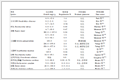
Initially, we carried out the reaction of 2-(((4-metho- xyphenyl)aminoethyl)aminomethyl)phenol (1a)[36] and 4-nitrobenzldehydes (4a). Surprisingly, the reaction gave 1, 3-imidazolidine 5aa in 18% yield at 80 ℃ in chloroform/cyclohexane (V:V=1:4) without catalyst, and no 1, 3-benzoxazine 6aa was observed (Entry 1, Table 1). Fortunately, the yield was enhanced to 54% when using TsOH (10 mol%) as the catalyst (Entry 2, Table 1). Encouraged by this result, we also tried TMSCl, BF3·OEt2, SnCl4, and La(OTf)3 as catalyst, and found that La(OTf)3 was the best one, increasing the yield to 60% (Entry 6). Variation of the catalyst loading diminished the reaction yield (Entries 7 and 8). The yield was further raised to 76% by shortening the reaction time from 4 h to 3 h when the reaction was performed at 80 ℃ (Entry 12). A brief screen of solvents demonstrated that a mixture of chloroform/ cyclohexane (V:V=1:4) is suitable for the reaction, and other solvents such as toluene, chloroform, THF or Et2O resulted in obvious decrease of the yield.
 下载:
导出CSV
 | |||
| Entry | Conditions | n(1a)/n(4a) | Yieldb/% |
| 1 | No catalyst, 80 ℃, 5 h | 1/1.4 | 18 |
| 2 | TsOH (10 mol%), 80 ℃, 5 h | 1/1.4 | 54 |
| 3 | TMSCl (10 mol%), 80 ℃, 5 h | 1/1.4 | 57 |
| 4 | BF3•OEt2 (10 mol%), 80 ℃, 5 h | 1/1.4 | 56 |
| 5 | SnCl4 (10 mol%), 80 ℃, 5 h | 1/1.4 | 58 |
| 6 | La(OTf)3 (10 mol%), 80 ℃, 5 h | 1/1.4 | 60 |
| 7 | La(OTf)3 (15 mol%), 80 ℃, 5 h | 1/1.4 | 51 |
| 8 | La(OTf)3 (5 mol%), 80 ℃, 5 h | 1/1.4 | 44 |
| 9 | La(OTf)3 (10 mol%), 90 ℃, 5 h | 1/1.4 | 39 |
| 10 | La(OTf)3 (10 mol%), 70 ℃, 5 h | 1/1.4 | 47 |
| 11 | La(OTf)3 (10 mol%), 80 ℃, 4 h | 1/1.4 | 67 |
| 12 | La(OTf)3 (10 mol%), 80 ℃, 3 h | 1/1.4 | 76 |
| 13 | La(OTf)3 (10 mol%), 80 ℃, 1.5 h | 1/1.4 | 46 |
| 14 | La(OTf)3 (10 mol%), 80 ℃, 3 h | 1/1.2 | 41 |
| 15 | La(OTf)3 (10 mol%), 80 ℃, 3 h | 1/1.3 | 64 |
| 16 | La(OTf)3 (10 mol%), 80 ℃, 3 h | 1/1.5 | 43 |
| 17c | La(OTf)3 (10 mol%), 80 ℃, 3 h | 1/1.4 | 66 |
| 18d | La(OTf)3 (10 mol%), 80 ℃, 3 h | 1/1.4 | 60 |
| 19e | La(OTf)3 (10 mol%), 80 ℃, 3 h | 1/1.4 | 59 |
| 20f | La(OTf)3 (10 mol%), 80 ℃, 3 h | 1/1.4 | 34 |
| 21g | La(OTf)3 (10 mol%), 80 ℃, 3 h | 1/1.4 | 52 |
| a Unless otherwise mentioned, solvent: chloroform/cyclohexane (V:V=1:4). Catalyst load based on 1a. b Isolated yield. c Solvent: chloroform/cyclo- hexane (V:V=1:2). d Solvent: CHCl3.e Solvent: toluene. f Solvent: THF. g Solvent: Et2O. | |||
Under the above optimized reaction conditions, compound 1a also reacted with 3- and 2-nitrobenzaldehydes giving 1, 3-imidazolidines 5ab and 5ac in moderate yields (Entries 2, 3, Table 2). Then, we continued investigation into the substrate scope of 2-((arylaminoethyl)aminome- thyl)phenols (1) by the reactions with nitrobenzaldehyde, and the substrate scope of aldehydes 4 by the reactions with compound 1b (R=4-CH3). As shown in Entries 4~12, the catalytic system was applicable to a wide range of compounds 1 bearing different R substituents, affording 1, 3-imidazolidines 5 in moderate to good yields. It seems that the electronic nature and the position of the R substituent exhibit no apparent effect on the yields. Also, the results indicated that the reaction was suitable for aromatic and aliphatic aldehydes, and the reaction of aromatic aldehydes gave higher yields than those of aliphatic aldehydes. It should be noted that all reactions only gave rise to 1, 3-imidazolidines 5, and no 1, 3-benzoxazines 6 was detected, providing efficient access to 1, 2, 3-trisubstituted 1, 3-imidazolidines.
下载:
导出CSV
 | ||||
| Entry | R (1) | R1(4) | 5 | Yieldb/% |
| 1 | 4-CH3O (1a) | 4-O2NC6H4 (4a) | 5aa | 76 |
| 2 | 4-CH3O (1a) | 3-O2NC6H4 (4b) | 5ab | 50 |
| 3 | 4-CH3O (1a) | 2-O2NC6H4 (4c) | 5ac | 69 |
| 4 | 4-CH3 (1b) | 4-O2NC6H4 (4a) | 5ba | 78 |
| 5 | 4-CH3 (1b) | 3-O2NC6H4 (4b) | 5bb | 65 |
| 6 | 4-CH3 (1b) | 2-O2NC6H4 (4c) | 5bc | 72 |
| 7 | 3-CH3 (1c) | 4-O2NC6H4 (4a) | 5ca | 80 |
| 8 | 3-CH3 (1c) | 3-O2NC6H4 (4b) | 5cb | 85 |
| 9 | 3-CH3 (1c) | 2-O2NC6H4 (4c) | 5cc | 69 |
| 10 | 4-Cl (1d) | 4-O2NC6H4 (4a) | 5da | 81 |
| 11 | 4-Cl (1d) | 3-O2NC6H4 (4b) | 5db | 71 |
| 12 | 4-Cl (1d) | 2-O2NC6H4 (4c) | 5dc | 88 |
| 13 | 4-CH3 (1b) | H (4d) | 5bd | 63 |
| 14c | 4-CH3 (1b) | CH3 (4e) | 5be | 58 |
| 15 | 4-CH3 (1b) | CH3CH2 (4f) | 5bf | 55 |
| 16 | 4-CH3 (1b) | 2-Furyl (4g) | 5bg | 68 |
| a Reaction conditions: The molar ratio of 1 to 4 is 1:1.4 for all reactions. La(OTf)3: 10 mol% based on 2-((arylaminoethyl)aminomethyl)phenol (1). Solvent: chloroform/cyclohexane (V:V=1:4). Reaction time: 3 h. Temperature: 80 ℃. b Isolated yield. c Temperature: 25 ℃, solvent: CHCl3. | ||||
The structures of 1, 3-imidazolidines 5 were all fully characterized by IR, 1H NMR, 13C NMR and HRMS. This can be illustrated with compound 5ba. In 1H NMR spectrum, a typical singlet at δ 5.17 corresponds to the proton of NCHN moiety incorporated within the imidazolidine ring.[33] A singlet peak at δ 2.22 corresponds to the proton of CH3. In 13C NMR, the carbon of NCHN shows signal at δ 80.9, and signal at δ 20.4 for CH3. The structure of 5bawas further confirmed by X-ray diffraction analysis (Figure 1).[37]
We considered that the formation of 1, 3-imidazolidines 5 was probably due to the stronger nucleophilicity of the nitrogen atom compared with the oxygen atom in compound 1. To verify this, reactions of 2-((N-substituted car-bamoylmethylamino)methyl)phenols 3a~3c with 4-nitro- benzaldehyde (4a) were performed in the presence of La(OTf)3 under 80 ℃ in chloroform/cyclohexane (V:V=1:4). As expected, the reaction indeed worked smoothly to give 1, 3-benzoxazines 7aa~7ca in 57%~71% yields (Scheme 2). The results showed that the nitrogen atom of the amide did not take part in the cyclization reaction because of its weaker nucleophilicity, which is reduced by the strong electronegativity of the acyl group.

Reaction conditions: La(OTf)3 (5 mol%), n(3)/n(4)=1:1.1, solvent: chloroform/cyclohexane (V:V=1:4), 80 ℃, 3 h.
However, in sharp contrast to the reaction as shown in Scheme 1, it was found that the reaction of 2-(((2-methyl- phenyl)aminoethyl)amino)benzyl alcohol (2a)[36] with 4-nitrobenzaldehyde 4a gave no 1, 3-imidazolidines 8aa but 3, 1-benzoxazine 9aa in 46% yield in the presence of TMSCl (20 mol%) (Entry 2, Table 3). Though Lewis acids BF3•OEt2 and SnCl4 could also catalyze the reaction to afford 9aa in good yields, La(OTf)3 gave the highest yield of 82% under the same reaction conditions (Entry 5). The yield was further improved to 87% with decreasing the amount of La(OTf)3 to 10 mol%, but diminished to 85% when the catalyst loading was reduced to 5 mol% (Entry 8). Modification of the molar ratio of compound 2a and 4a to 1:1.4 gave 92% yield (Entry 10). Prolonging the reaction time did not improve the yield (Entry 13). It should be pointed out that the reaction did not work without any catalyst (Entry 1).
下载:
导出CSV
 | |||
| Entry | Conditions | n(2a)/n(4a) | Yield/% of 9aa |
| 1 | No catalyst | 1/1.2 | 0 |
| 2 | TMSCl (20 mol%) | 1/1.2 | 46 |
| 3 | BF3•OEt2 (20mol%) | 1/1.2 | 51 |
| 4 | SnCl4 (20 mol%) | 1/1.2 | 73 |
| 5 | La(OTf)3 (20 mol%) | 1/1.2 | 82 |
| 6 | La(OTf)3 (15 mol%) | 1/1.2 | 83 |
| 7 | La(OTf)3 (10 mol%) | 1/1.2 | 87 |
| 8 | La(OTf)3 (5 mol%) | 1/1.2 | 85 |
| 9 | La(OTf)3 (10 mol%) | 1/1.3 | 88 |
| 10 | La(OTf)3 (10 mol%) | 1/1.4 | 92 |
| 11 | La(OTf)3 (10 mol%) | 1/1.5 | 88 |
| 12b | La(OTf)3 (10 mol%) | 1/1.4 | 89 |
| 13c | La(OTf)3 (10 mol%) | 1/1.4 | 88 |
| a Solvent: chloroform/cyclohexane (V:V=1:4), 65 ℃, [38] 5 h. b 3 h. c 7 h. | |||
With the optimized reaction conditions in hand, we then explored the substrate scope of compounds 2 and aldehydes 4. As shown in Table 4, the catalytic system is applicable to a wide range of R substituent and various aldehydes. It is noteworthy that in all cases 1, 3-imidazolidines 8 were not observed, even when R is higher electron-releasing groups of 4-methylbenzyl and 2-methoxybenzyl. Moreover, the reactions of nitrobenzaldehydes gave higher yields than aliphatic aldehydes. The position of the nitro group affected the yields in the order of para > metra > ortho probably due to the steric hindrance. These results clearly indicated that the reaction of 2-((aminoethyl)amino)benzyl alcohol (2) with aldehydes gave 3, 1-benzoxazines with high chemoselectivity. This is also the first example of using La(OTf)3 as catalyst to prepare 3, 1-benzoxazines.
下载:
导出CSV
 | ||||
| Entry | R (2) | R1 (4) | 9 | Yieldb/% |
| 1 | 2-CH3C6H4 (2a) | 4-NO2C6H4(4a) | 9aa | 92 |
| 2 | 2-CH3C6H4 (2a) | 3-NO2C6H4(4b) | 9ab | 81 |
| 3 | 2-CH3C6H4 (2a) | 2-NO2C6H4(4c) | 9ac | 77 |
| 4 | 4-CH3C6H4 (2b) | 4-NO2C6H4(4a) | 9ba | 82 |
| 5 | 4-CH3C6H4 (2b) | 3-NO2C6H4(4b) | 9bb | 72 |
| 6 | 4-CH3C6H4 (2b) | 2-NO2C6H4(4c) | 9bc | 71 |
| 7 | 4-ClC6H4 (2c) | 4-NO2C6H4(4a) | 9ca | 90 |
| 8 | 4-ClC6H4 (2c) | 3-NO2C6H4(4b) | 9cb | 86 |
| 9 | 4-ClC6H4 (2c) | 2-NO2C6H4(4c) | 9cc | 66 |
| 10 | C6H5 (2d) | 4-NO2C6H4(4a) | 9da | 86 |
| 11 | C6H5 (2d) | 3-NO2C6H4(4b) | 9db | 85 |
| 12 | C6H5 (2d) | 2-NO2C6H4(4c) | 9dc | 68 |
| 13c | 2-CH3C6H4 (2a) | H (4d) | 9ad | 60 |
| 14 | 2-CH3C6H4 (2a) | CH3(4e) | 9ae | 56 |
| 15 | 2-CH3C6H4 (2a) | CH3CH2 (4f) | 9af | 58 |
| 16 | 2-CH3C6H4 (2a) | 2-furyl (4g) | 9ag | 79 |
| 17 | 4-CH3C6H4CH2 (2e) | H (4d) | 9ed | 48 |
| 18 | 2-CH3OC6H4CH2 (2f) | H (4d) | 9fd | 45 |
| a Reaction conditions: The molar ratio of n(2): n(4)=1:1.4 for all reactions. La(OTf)3: 10 mol% based on 2-((aminoethyl)amino) benzyl alcohol 2. Solvent: chloroform/cyclohexane (V:V=1:4). Reaction time: 5 h. Temperature: 65 ℃. b Isolated yield. c Formaldehyde used. Temperature: 90 ℃. | ||||
The structures of 3, 1-benzoxazines 9 were also characterized by IR, 1H NMR, 13C NMR and HRMS. As illustrated with compound 9aa in 1H NMR spectrum, a characteristic singlet at δ 5.83 corresponds to the proton of OCHN moiety incorporated within the benzoxazine ring. Particularly, the OCH2Ph proton absorbs as two doublets at δ 4.79 and 4.53 instead of a singlet peak. These signals are the characteristic indicator of the formation of benzoxazine ring.[2] In 13C NMR, the carbon of OCHN shows signal at δ 87.2, and signal at δ 63.1 for OCH2Ph.
Based on the above results, we proposed a plausible mechanism for the formation of 1, 3-imidazolidine and 3, 1-benzoxazine (Scheme 3). Compound 1 react with the catalyzed-activated aldehyde, followed by an elimination to give imine A. Because of relatively higher nucleophilicity of the nitrogen atom than oxygen, an intramolecular addition of the nitrogen to the activated N=C double bond delivers compound B. Finally, 1, 3-imidazolidine 5 is produced by deprotonation. Similarly, imine C is generated from the reaction of compounds 2 with activated aldehyde after by elimination (path a). In compound C, the nucleophilicity of the oxygen is probably higher than N-2 due to the electron-releasing nature of the methylene group. So, the oxygen attacks the activated N=C bond leading to compound D. At last, elimination of a proton affords 3, 1-benzoxazine 9. Alternatively, because the nucleophilicity of the oxygen atom is close to that of N-1, the oxygen can also attack the aldehyde to form active intermediate E (path b). Then, nucleophilic attack by N-1 atom gives compound F, which undergoes deprotonation to deliver 3, 1-benzoxazine 9.
In summary, we have developed Lewis acid La(OTf)3- catalyzed chemoselective cyclizations of hydroxyl substituted ethylenediamine derivatives with aldehydes for the first time. This protocol shows broad substrate scope and high functional group tolerance with respect to both reaction partners, providing efficient access to diversely functionalized 1, 3-imidazolidines and 3, 1-benzoxazines in generally good yields. Plausible mechanisms for the formation of 1, 3-imidazolidine and 3, 1-benzoxazine derivatives were also proposed, and the high chemoselectivity of the reactions could be attributed to the different nucleophilicity of nitrogen and oxygen atoms in the substrates. This is also the first example of application of La(OTf)3 as a catalyst towards preparation of substituted 1, 3-imidazoli- dine and 3, 1-benzoxazine derivatives.
Infrared spectra were recorded on a Nicolet-6700 FT-IR. 1H NMR and 13C NMR spectra were recorded on a Bruker Avance-500 MHz spectrometer (500 MHz for 1H and 125 MHz for 13C), using TMS as an internal standard. HRMS were recorded on a Waters UPLC/XEVOQ-TOF LC/MS instrument. Melting points were determined on a WRS-1B digital melting point instrument and were uncorrected. All solvents were dried by standard procedure. Commercially available reagents were used as received without further purification. Compounds 1 and 2 were prepared according to the Ref. [36].
Under nitrogen atmosphere, into a 50 mL three-necked round botton flask equipped with a condenser, 2-(((4-meth- oxyphenyl)aminoethyl)aminomethyl)phenol (1a) (0.27 g, 1.0 mmol), 4-nitrobenzaldehyde (0.211 g, 1.4 mmol), La(OTf)3 (0.059 g, 0.1 mmol), chloroform/cyclohexane (20 mL, V:V=1:4) were added with stirring bar. The solution was heated at 80 ℃ for 3 h (checked by TLC). Then, the solvent was evaporated under reduced pressure. Ethyl acetate (30 mL) was added to the residue, and the solution washed sequentially with saturated NaHSO3 (20 mL×3), water (30 mL×3) and saturated brine (30 mL×3). The organic phase was dried over Na2SO4, and filtered. The filtrate was evaporated under reduced pressure, and the obtained residue was purified by silica gel flash chromatography (ethyl acetate/petroleum ether as eluents) to give red viscous oily product 5aa.
1-(2-Hydroxbenzyl)-2-(4-nitrophenyl)-3-(4-methoxyp-henyl)-1, 3-imidazolidine (5aa): 310 mg, yield 76%. Red viscous oil; 1H NMR (500 MHz, CDCl3) δ: 9.63 (s, 1H), 8.19 (d, J=8.7 Hz, 2H), 7.50 (d, J=8.6 Hz, 2H), 7.20~7.23 (m, 1H), 6.95 (d, J=7.3 Hz, 1H), 6.85 (d, J=8.1 Hz, 1H), 6.81 (t, J=7.4 Hz, 1H), 6.77 (d, J=9.0 Hz, 2H), 6.40 (d, J=8.9 Hz, 2H), 5.12 (s, 1H), 4.00 (d, J=13.5 Hz, 1H), 3.82~3.83 (m, 1H), 3.77 (d, J=13.5 Hz, 1H), 3.69~3.73 (m, 4H), 3.28~3.33 (m, 1H), 3.05~3.09 (m, 1H); 13C NMR (125 MHz, CDCl3) δ: 157.2, 152.2, 148.21, 147.4, 139.9, 129.7, 128.9, 128.6 (2C), 124.1 (2C), 121.4, 119.8, 116.6, 115.1 (2C), 113.5 (2C), 81.3, 56.9, 55.8, 50.2, 47.0; IR (KBr) ν: 3453, 3086, 1617, 1514, 1486, 1457, 1349, 1243, 1179, 813, 757 cm-1; HRMS (ESI) calcd for C23H24N3O4 [M+H]+ 406.1767, found 406.1764.
1-(2-Hydroxbenzyl)-2-(3-nitrophenyl)-3-(4-methoxyph-enyl)-1, 3-imidazolidine (5ab): 200 mg, yield 50%. Red solid, m.p. 135.7~135.9 ℃; 1H NMR (500 MHz, CDCl3) δ: 9.63 (s, 1H), 8.18~8.18 (m, 2H), 7.67 (d, J=7.7 Hz, 1H), 7.51~7.55 (m, 1H), 7.19~7.22 (m, 1H), 6.95 (d, J=6.6 Hz, 1H), 6.79~6.84 (m, 2H), 6.75~6.77 (m, 2H), 6.39~6.42 (m, 2H), 5.09 (s, 1H), 4.00 (d, J=13.5 Hz, 1H), 3.86~3.89 (m, 1H), 3.76 (d, J=13.5 Hz, 1H), 3.67~3.71 (m, 4H), 3.31~3.34 (m, 1H), 3.04~3.08 (m, 1H); 13C NMR (125 MHz, CDCl3) δ: 157.2, 152.2, 148.6, 142.5, 139.9, 133.6, 130.0, 129.6, 128.9, 123.9, 122.7, 121.3, 119.8, 116.6, 115.0 (2C), 113.6 (2C), 81.5, 56.8, 55.8, 50.2, 47.3; IR (KBr) ν: 3451, 3089, 1619, 1530, 1458, 1400, 1348, 1244, 1116, 815, 796 cm-1; HRMS (ESI) calcd for C23H24N3O4 [M+H]+ 406.1767, found 406.1762.
1-(2-Hydroxbenzyl)-2-(2-nitrophenyl)-3-(4-methoxy-phenyl)-1, 3-imidazolidine (5ac): 280 mg, yield 69%. Red solid, m.p. 143.1~143.3 ℃; 1H NMR (500 MHz, CDCl3) δ: 9.30 (s, 1H), 8.01 (d, J=7.9 Hz, 1H), 7.47~7.54 (m, 3H), 7.17 (t, J=7.5 Hz, 1H), 6.97 (d, J=7.2 Hz, 1H), 6.78~6.82 (m, 4H), 6.47 (d, J=8.6 Hz, 2H), 5.98 (s, 1H), 4.36 (d, J=13.4 Hz, 1H), 3.71~3.75 (m, 6H), 3.07~3.12 (m, 1H), 3.01 (d, J=4.8 Hz, 1H); 13C NMR (125 MHz, CDCl3) δ: 157.3, 152.1, 149.3, 139.9, 135.2, 133.6, 129.7, 129.4, 129.2, 129.1, 125.6, 121.4, 119.5, 116.5, 115.2 (2C), 113.2 (2C), 79.2, 57.5, 55.9, 47.8, 45.9; IR (KBr) ν: 3449, 3011, 1617, 1587, 1587, 1462, 1441, 1351, 1281, 1185, 810, 792 cm-1; HRMS (ESI) calcd for C23H24N3O4 [M+H]+406.1767, found 406.1771.
1-(2-Hydroxbenzyl)-2-(4-nitrophenyl)-3-(4-methylphen-yl)-1, 3-imidazolidine (5ba): 300 mg, yield 78%. Red solid, m.p. 124.0~124.5 ℃; 1H NMR (500 MHz, CDCl3) δ: 9.65 (s, 1H), 8.20 (d, J=8.7 Hz, 2H), 7.48 (d, J=8.7 Hz, 2H), 7.21~7.23 (m, 1H), 6.99 (d, J=8.4 Hz, 2H), 6.95 (d, J=7.4 Hz, 1H), 6.86 (d, J=8.1 Hz, 1H), 6.82 (t, J=7.4 Hz, 1H), 6.36 (d, J=8.4 Hz, 2H), 5.17 (s, 1H), 4.01 (d, J=13.5 Hz, 1H), 3.74~3.81 (m, 3H), 3.29~3.31 (m, 1H), 3.09~3.10 (m, 1H), 2.22 (s, 3H); 13C NMR (125 MHz, CDCl3) δ: 157.2, 148.1, 147.2, 143.2, 129.9 (2C), 129.7, 129.0, 128.5 (2C), 127.1, 124.1 (2C), 121.4, 119.8, 116.7, 112.5 (2C), 80.9, 57.1, 50.0, 46.5, 20.4; IR (KBr) ν: 3450, 3077, 1617, 1520, 1484, 1345, 1272, 1249, 1177, 833, 761 cm-1; HRMS (ESI) calcd for C23H24N3O3 [M+H]+ 390.1818, found 390.1815.
1-(2-Hydroxbenzyl)-2-(3-nitrophenyl)-3-(4-methylphen-yl)-1, 3-imidazolidine (5bb): 250 mg, yield 65%. Red viscous oil; 1H NMR (500 MHz, CDCl3) δ: 9.65 (s, 1H), 8.17 (d, J=7.3 Hz, 2H), 7.67 (d, J=7.3 Hz, 1H), 7.52~7.55 (m, J=11.9, 4.5 Hz, 1H), 7.22 (t, J=7.7 Hz, 1H), 6.96~7.00 (m, 3H), 6.80~6.86 (m, 2H), 6.39 (d, J=8.3 Hz, 2H), 5.17 (s, 1H), 4.01 (d, J=13.5 Hz, 1H), 3.81~3.90 (m, 1H), 3.74~3.78 (m, 2H), 3.31~3.36 (m, 1H), 3.06~3.10 (m, 1H), 2.23 (s, 3H); 13C NMR (125 MHz, CDCl3) δ: 157.1, 148.5, 143.2, 142.3, 133.5, 129.9, 129.9 (2C), 129.6, 128.9, 127.0, 123.8, 122.6, 121.3, 119.8, 116.6, 112.6 (2C), 81.1, 56.8, 50.0, 46.8, 20.3; IR (KBr) ν: 3419, 3084, 2925, 1614, 1528, 1487, 1274, 1094, 893, 763 cm-1; HRMS (ESI) calcd for C23H24N3O3 [M+H]+ 390.1818, found 390.1813.
1-(2-Hydroxbenzyl)-2-(2-nitrophenyl)-3-(4-methylphen-yl)-1, 3-imidazolidine (5bc): 280 mg, yield 72%. Orange solid, m.p. 169.5~170.0 ℃; 1H NMR (500 MHz, CDCl3) δ: 9.33 (s, 1H), 8.04 (d, J=8.0 Hz, 1H), 7.55 (t, J=7.5 Hz, 1H), 7.49 (t, J=8.0 Hz, 2H), 7.18 (t, J=7.7 Hz, 1H), 7.05 (d, J=8.1 Hz, 2H), 6.97 (d, J=7.4 Hz, 1H), 6.80 (dd, J=17.4, 8.2 Hz, 2H), 6.46 (d, J=8.1 Hz, 2H), 6.07 (s, 1H), 4.39 (d, J=13.5 Hz, 1H), 3.74~3.76 (m, 2H), 3.63~3.65 (m, 1H), 3.02~3.06 (m, 2H), 2.26 (s, 3H); 13C NMR (125 MHz, CDCl3) δ: 157.3, 149.1, 143.2, 135.1, 133.6, 130.1 (2C), 129.7, 129.4, 129.1, 129.1, 126.9, 125.7, 121.4, 119.5, 116.5, 112.3 (2C), 79.1, 57.6, 47.4, 45.5, 20.4; IR (KBr) ν: 3142, 3014, 1617, 1589, 1483, 1353, 1255, 1127, 837, 798 cm-1; HRMS (ESI) calcd for C23H24N3O3 [M+H]+390.1818, found 390.1822.
1-(2-Hydroxbenzyl)-2-(4-nitrophenyl)-3-(3-methylphen-yl)-1, 3-imidazolidine (5ca): 310 mg, yield 80%. Orange solid, m.p. 162.5~163.5 ℃; 1H NMR (500 MHz, CDCl3) δ: 9.65 (s, 1H), 8.20 (d, J=8.7 Hz, 2H), 7.47 (d, J=8.7 Hz, 2H), 7.21~7.24 (m, 1H), 7.05 (t, J=7.8 Hz, 1H), 6.96 (d, J=7.4 Hz, 1H), 6.87 (d, J=8.1 Hz, 1H), 6.82 (t, J=7.4 Hz, 1H), 6.58 (d, J=7.4 Hz, 1H), 6.28 (s, 1H), 6.22 (d, J=8.2 Hz, 1H), 5.22 (s, 1H), 4.00 (d, J=13.5 Hz, 1H), 3.77~3.81 (m, 3H), 3.27~3.30 (m, 1H), 3.08~3.11 (m, 1H), 2.25 (s, 3H); 13C NMR (125 MHz, CDCl3) δ: 157.2, 148.2, 147.1, 145.4, 139.4, 129.7, 129.4, 129.1, 128.4 (2C), 124.2 (2C), 121.4, 119.9, 118.8, 116.7, 113.3, 109.7, 80.7, 57.2, 49.9, 46.3, 21.9; IR (KBr) ν: 3136, 3098, 1603, 1514, 1450, 1346, 1253, 1187, 852, 766 cm-1; HRMS (ESI) calcd for C23H24N3O3 [M+H]+ 390.1818, found 390.1821.
1-(2-Hydroxbenzyl)-2-(3-nitrophenyl)-3-(3-methylphen-yl)-1, 3-imidazolidine (5cb): 330 mg, yield 85%. Yellow solid, m.p. 112.3~113.8 ℃; 1H NMR (500 MHz, CDCl3) δ: 9.64 (s, 1H), 8.16~8.19 (m, 2H), 7.66 (d, J=7.6 Hz, 1H), 7.54 (t, J=7.8 Hz, 1H), 7.23 (t, J=7.7 Hz, 1H), 7.06 (t, J=7.8 Hz, 1H), 6.96 (d, J=7.4 Hz, 1H), 6.87 (d, J=8.1 Hz, 1H), 6.82 (t, J=7.3 Hz, 1H), 6.59 (d, J=7.4 Hz, 1H), 6.32 (s, 1H), 6.25 (d, J=8.1 Hz, 1H), 5.21 (s, 1H), 4.01 (d, J=13.5 Hz, 1H), 3.85~3.87 (m, 1H), 3.75~3.81 (m, 2H), 3.31~3.33 (m, 1H), 3.08~3.10 (m, 1H), 2.26 (s, 3H); 13C NMR (125 MHz, CDCl3) δ: 157.2, 148.6, 145.4, 142.3, 139.3, 133.5, 130.0, 129.7, 129.3, 129.0, 123.9, 122.5, 121.3, 119.8, 118.9, 116.7, 113.4, 109.8, 80.9, 56.9, 49.9, 46.6, 21.9; IR (KBr) ν: 3451, 1604, 1524, 1489, 1359, 1206, 1191, 873, 771 cm-1; HRMS (ESI) calcd for C23H24N3O3 [M+H]+ 390.1818, found 390.1814.
1-(2-Hydroxbenzyl)-2-(2-nitrophenyl)-3-(3-methylphen-yl)-1, 3-imidazolidine (5cc): 270 mg, yield 69%. Red viscous oil; 1H NMR (500 MHz, CDCl3) δ: 9.29 (s, 1H), 8.05~8.07 (m, 1H), 7.54~7.56 (m, 1H), 7.50~7.52 (m, 1H), 7.46 (d, J=7.6 Hz, 1H), 7.18 (t, J=7.2 Hz, 1H), 7.11 (t, J=7.8 Hz, 1H), 6.97 (d, J=7.3 Hz, 1H), 6.82 (d, J=8.1 Hz, 1H), 6.79 (t, J=7.4 Hz, 1H), 6.61 (d, J=7.4 Hz, 1H), 6.37 (s, 1H), 6.34 (d, J=8.1 Hz, 1H), 6.12 (s, 1H), 4.40 (d, J=13.5 Hz, 1H), 3.74~3.80 (m, 2H), 3.63~3.66 (m, 1H), 3.02~3.06 (m, 2H), 2.29 (s, 3H); 13C NMR (125 MHz, CDCl3) δ: 157.2, 149.0, 145.3, 139.4, 134.9, 133.5, 129.6, 129.4, 129.3, 129.1, 128.9, 125.6, 121.3, 119.4, 118.7, 116.5, 112.9, 109.5, 78.9, 57.58, 47.2, 45.2, 21.8; IR (KBr) ν: 3447, 3110, 1604, 1560, 1457, 1400, 1356, 1249, 1185, 854, 755 cm-1; HRMS (ESI) calcd for C23H24N3O3 [M+ H]+ 390.1818, found 390.1815.
1-(2-Hydroxbenzyl)-2-(4-nitrophenyl)-3-(4-chlorophen-yl)-1, 3-imidazolidine (5da): 330 mg, yield 81%. Yellow solid, m.p. 126.1~126.7 ℃; 1H NMR (500 MHz, CDCl3) δ: 8.20 (d, J=8.6 Hz, 2H), 7.44 (d, J=8.6 Hz, 2H), 7.23 (t, J=7.2 Hz, 1H), 7.10 (d, J=8.9 Hz, 2H), 6.95 (d, J=7.4 Hz, 1H), 6.86 (d, J=8.0 Hz, 1H), 6.82 (t, J=7.4 Hz, 1H), 6.34 (d, J=8.9 Hz, 2H), 5.17 (s, 1H), 3.98 (d, J=13.4 Hz, 1H), 3.78~3.81 (m, 2H), 3.73~3.76 (m, 1H), 3.28~3.33 (m, 1H), 3.09~3.14 (m, 1H); 13C NMR (125 MHz, CDCl3) δ: 157.1, 148.3, 146.5, 143.8, 129.8, 129.3 (2C), 129.1, 128.4 (2C), 124.2 (2C), 122.9, 121.2, 119.9, 116.7, 113.6 (2C), 80.8, 56.9, 49.9, 46.5; IR (KBr) ν: 3448, 3101, 1599, 1466, 1347, 1269, 1187, 832, 761 cm-1; HRMS (ESI) calcd for C22H21ClN3O3 [M+H]+ 410.1271, found 410.1268.
1-(2-Hydroxbenzyl)-2-(3-nitrophenyl)-3-(4-chlorophen-yl)-1, 3-imidazolidine (5db): 290 mg, yield 71%. Yellow solid, m.p. 111.1~112.0℃; 1H NMR (500 MHz, CDCl3) δ: 9.47 (s, 1H), 8.16~8.19 (m, 1H), 8.12 (s, 1H), 7.62 (d, J=7.7 Hz, 1H), 7.54 (t, J=7.9 Hz, 1H), 7.22 (t, J=7.8 Hz, 1H), 7.10 (d, J=8.8 Hz, 2H), 6.95 (d, J=7.3 Hz, 1H), 6.85 (d, J=8.1 Hz, 1H), 6.82 (t, J=7.4 Hz, 1H), 6.36 (d, J=8.9 Hz, 2H), 5.15 (s, 1H), 3.99 (d, J=13.5 Hz, 1H), 3.83~3.88 (m, 1H), 3.79 (d, J=13.5 Hz, 1H), 3.73 (dd, J=15.5, 7.1 Hz, 1H), 3.31~3.36 (m, 1H), 3.08~3.12 (m, 1H); 13C NMR (125 MHz, CDCl3) δ: 157.1, 148.6, 143.9, 141.6, 133.5, 130.2, 129.8, 129.3 (2C), 129.0, 124.0, 122.9, 122.5, 121.2, 119.9, 116.7, 113.7 (2C), 80.9, 56.8, 50.0, 46.8; IR (KBr) ν: 3447, 3098, 1591, 1369, 1270, 1207, 1156, 1124, 892, 757 cm-1; HRMS (ESI) calcd for C22H21ClN3O3 [M+H]+ 410.1271, found 410.1264.
1-(2-Hydroxbenzyl)-2-(2-nitrophenyl)-3-(4-chlorophen-yl)-1, 3-imidazolidine (5dc): 360 mg, yield 88%. Yellow solid, m.p. 152.2~152.7℃; 1H NMR (500 MHz, CDCl3) δ: 9.14 (s, 1H), 8.04 (d, J=7.7 Hz, 1H), 7.56 (d, J=7.2 Hz, 1H), 7.52 (d, J=7.5 Hz, 1H), 7.40 (d, J=7.0 Hz, 1H), 7.15~7.18 (m, 3H), 6.98 (d, J=6.3 Hz, 1H), 6.81 (d, J=6.8 Hz, 2H), 6.44 (d, J=7.6 Hz, 2H), 6.05 (s, 1H), 4.37 (d, J=13.1 Hz, 1H), 3.74 (d, J=12.5 Hz, 2H), 3.64 (s, 1H), 3.06 (d, J=8.8 Hz, 2H); 13C NMR (125 MHz, CDCl3) δ: 157.2, 149.2, 143.8, 134.4, 133.6, 129.9, 129.5, 129.4 (2C), 129.2, 128.8, 125.8, 122.8, 121.2, 119.6, 116.6, 113.5 (2C), 78.9, 57.5, 47.5, 45.7; IR (KBr) ν: 3452, 3012, 1596, 1483, 1349, 1226, 1187, 884, 792 cm-1; HRMS (ESI) calcd for C22H21ClN3O3 [M+H]+ 410.1271, found 410.1274.
1-(2-Hydroxbenzyl)-3-(4-methylphenyl)-1, 3-imidazol-idine (5bd): 170 mg, yield 63%. Yellow solid, m.p. 118.7~119.1 ℃; 1H NMR (500 MHz, CDCl3) δ: 7.21 (td, J=7.9, 1.6 Hz, 1H), 7.00~7.05 (m, 3H), 6.87 (dd, J=8.1, 0.8 Hz, 1H), 6.81 (td, J=7.4, 1.1 Hz, 1H), 6.41~6.43 (m, 2H), 4.08 (s, 2H), 3.95 (s, 2H), 3.46 (t, J=6.4 Hz, 2H), 3.12 (t, J=6.4 Hz, 2H), 2.25 (s, 3H); 13C NMR (125 MHz, CDCl3) δ: 157.6, 144.1, 129.8 (2C), 129.2, 128.5, 126.2, 121.4, 119.3, 116.4, 111.9 (2C), 69.8, 57.7, 52.1, 46.1, 20.3; IR (KBr) ν: 3422, 3020, 1618, 1585, 1489, 1379, 1245, 1187, 893, 753 cm-1; HRMS (ESI) calcd for C17H21N2O [M+H]+269.1654, found 269.1642.
1-(2-Hydroxbenzyl)-2-methyl-3-(4-methylphenyl)-1, 3-imid-azolidine (5be): 160 mg, yield 58%. Yellow viscous oil; 1H NMR (500 MHz, CDCl3) δ: 7.20 (td, J=7.9, 1.6 Hz, 1H), 7.05 (d, J=8.4 Hz, 2H), 6.93 (dd, J=7.4, 1.1 Hz, 1H), 6.87 (dd, J=8.1, 1.0 Hz, 1H), 6.78 (td, J=7.4, 1.1 Hz, 1H), 6.45~6.47 (m, 2H), 4.47 (q, J=5.7 Hz, 1H), 3.99 (d, J=13.7 Hz, 1H), 3.78 (d, J=13.7 Hz, 1H), 3.44~3.46 (m, 2H), 3.34~3.38 (m, 1H), 2.99~3.02 (m, 1H), 2.26 (s, 3H), 1.34 (d, J=5.8 Hz, 3H); 13C NMR (125 MHz, CDCl3) δ: 157.8, 143.7, 129.8 (2C), 129.0, 128.6, 125.8, 121.6, 119.2, 116.4, 112.2 (2C), 74.9, 57.6, 49.4, 45.1, 20.2, 18.0; IR (KBr) ν: 3421, 3039, 2921, 1618, 1590, 1487, 1382, 1254, 1188, 870, 719 cm-1; HRMS (ESI) calcd for C18H23N2O [M+H]+ 283.1810, found 283.1816.
1-(2-Hydroxbenzyl)-2-ethyl-3-(4-methylphenyl)-1, 3-im-ida-zolidine (5bf): 150 mg, yield 55%. Yellow viscous oil; 1H NMR (500 MHz, CDCl3) δ: 7.20~7.24 (m, 1H), 7.08 (d, J=8.3 Hz, 2H), 6.91 (dd, J=14.8, 7.7 Hz, 2H), 6.79 (t, J=7.4 Hz, 1H), 6.49 (d, J=8.5 Hz, 2H), 4.28 (dd, J=8.1, 3.0 Hz, 1H), 3.97 (d, J=13.6 Hz, 1H), 3.73 (d, J=13.6 Hz, 1H), 3.45~3.48 (m, 1H), 3.37~3.39 (m, 1H), 3.31~3.35 (m, 1H), 3.01~3.03 (m, 1H), 2.28 (s, 3H), 1.74~1.80 (m, 1H), 1.65 (td, J=14.8, 7.4 Hz, 1H), 0.98 (t, J=7.4 Hz, 3H); 13C NMR (125 MHz, CDCl3) δ: 157.7, 143.9, 129.8 (2C), 129.1, 128.7, 125.6, 121.8, 119.2, 116.3, 111.9 (2C), 81.6, 59.0, 48.9, 44.5, 25.4, 20.2, 9.4; IR (KBr) ν: 3413, 3113, 2956, 1618, 1590, 1487, 1356, 1254, 1185, 895, 719 cm-1; HRMS (ESI) calcd for C19H25N2O [M+H]+ 297.1967, found 297.1962.
1-(2-Hydroxbenzyl)-2-(furan-2-yl)-3-(4-methylphenyl)-1, 3-imidazolidine (5bg): 230 mg, yield 68%. Yellow viscous oil; 1H NMR (500 MHz, CDCl3) δ: 7.43 (s, 1H), 7.20 (t, J=7.7 Hz, 1H), 7.01 (d, J=8.3 Hz, 2H), 6.92 (d, J=7.3 Hz, 1H), 6.87 (d, J=8.1 Hz, 1H), 6.79 (t, J=7.4 Hz, 1H), 6.47 (d, J=8.4 Hz, 2H), 6.32~6.33 (m, 1H), 6.29 (d, J=3.2 Hz, 1H), 5.33 (s, 1H), 3.86 (d, J=13.7 Hz, 1H), 3.78 (d, J=13.7 Hz, 1H), 3.63~3.66 (m, 1H), 3.59 (dd, J=15.2, 8.1 Hz, 1H), 3.24~3.27 (m, 1H), 3.10~3.13 (m, 1H), 2.24 (s, 3H); 13C NMR (125 MHz, CDCl3) δ: 157.6, 151.9, 143.4, 142.9, 129.7 (2C), 129.1, 128.7, 126.4, 121.4, 119.3, 116.4, 112.1 (2C), 110.2, 109.6, 74.5, 55.6, 49.2, 45.7, 20.3; IR (KBr) ν: 3420, 3033, 2923, 1618, 1589, 1487, 1358, 1251, 1188, 874, 755 cm-1; HRMS (ESI) calcd for C21H23N2O2 [M+H]+ 335.1760, found 335.1752.
Under nitrogen atmosphere, into a 100 mL three-necked round botton flask equipped with a condenser, 2-(((4- methylphenyl)carbamoylmethylamino)methyl)phenol (3a) (0.810 g, 3.0 mmol), 4-nitrobenzaldehyde (0.498 g, 3.3 mmol), La(OTf)3 (0.088 g, 0.15 mmol), chloroform/cy- clohexane (30 mL, V:V=1:4) were added. The solution was heated at 80 ℃ for 3 h (checked by TLC). Then, the solvent was evaporated under reduced pressure. Ethyl acetate (50 mL) was added to the residue, and the solution washed sequentially with saturated NaHSO3 (40 mL×3), water (40 mL×2) and saturated brine (40 mL×2). The organic phase was dried over Na2SO4, and filtered. The filtrate was evaporated under reduced pressure. The obtained residue was crystallized with ethyl acetate/petroleum ether to give yellow solid product 7aa.
3-((4-Methylphenyl)carbamoylmethyl)-2-(4-nitrophen-yl)-1, 3-benzoxazine (7aa): 780 mg, yield 64%. Yellow solid, m.p. 126.1~127.2 ℃; 1H NMR (500 MHz, CDCl3) δ: 8.55 (s, 1H), 8.24 (d, J=8.7 Hz, 2H), 7.66 (d, J=8.7 Hz, 2H), 7.33 (d, J=8.3 Hz, 2H), 7.23~7.25 (m, 1H), 7.12 (d, J=8.3 Hz, 2H), 6.95~6.97 (m, 3H), 5.87 (s, 1H), 5.02 (d, J=15.0 Hz, 1H), 4.77 (d, J=15.0 Hz, 1H), 4.05 (d, J=18.0 Hz, 1H), 3.87 (d, J=18.0 Hz, 1H), 2.32 (s, 3H); 13C NMR (125 MHz, CDCl3) δ: 167.4, 148.4, 144.0, 142.3, 134.5, 134.5, 129.6 (2C), 128.7 (2C), 128.6, 125.0, 124.1 (2C), 122.8, 121.3, 119.8 (2C), 115.8, 88.7, 64.9, 55.3, 20.9; IR (KBr) ν: 3406, 3021, 2922, 1667, 1609, 1521, 1459, 1346, 1254, 853, 787 cm-1; HRMS (ESI) calcd for C23H22N3O4 [M+H]+ 404.1610, found 404.1613.
3-((4-Methoxyphenyl)carbamoylmethyl)-2-(4-nitrophen-yl)-1, 3-benzoxazine (7ba): 890 mg, yield 71%. Yellow solid, m.p. 118.2~119.4 ℃; 1H NMR (500 MHz, CDCl3) δ: 8.49 (s, 1H), 8.23 (d, J=8.6 Hz, 2H), 7.64 (d, J=8.6 Hz, 2H), 7.33 (d, J=8.9 Hz, 2H), 7.24 (dd, J=8.4, 3.4 Hz, 1H), 6.93~6.95 (m, 3H), 6.84 (d, J=8.9 Hz, 2H), 5.85 (s, 1H), 4.99 (d, J=15.0 Hz, 1H), 4.74 (d, J=15.0 Hz, 1H), 4.04 (d, J=18.0 Hz, 1H), 3.85 (d, J=18.0 Hz, 1H), 3.78 (s, 3H); 13C NMR (125 MHz, CDCl3) δ: 167.2, 156.8, 148.4, 144.0, 142.3, 130.6, 130.2, 128.7 (2C), 125.1, 124.2 (2C), 122.7, 121.6 (2C), 121.2, 115.7, 114.3 (2C), 88.7, 64.9, 55.5, 55.3; IR (KBr) ν: 3353, 3037, 2964, 1664, 1603, 1527, 1487, 1460, 1350, 1225, 752 cm-1; HRMS (ESI) calcd for C23H22N3O5 [M+H]+ 420.1559, found 420.1555.
3-(Phenylcarbamoylmethyl)-2-(4-nitrophenyl)-1, 3-ben-zoxazine (7ca). 670 mg, yield 57%. Yellow solid, m.p. 124.6~125.3 ℃; 1H NMR (500 MHz, CDCl3) δ: 8.67 (s, 1H), 8.23 (d, J=8.7 Hz, 2H), 7.65 (d, J=8.6 Hz, 2H), 7.46 (d, J=7.7 Hz, 2H), 7.32 (t, J=7.9 Hz, 2H), 7.23~7.25 (m, 1H), 7.13 (t, J=7.4 Hz, 1H), 6.93~6.97 (m, 3H), 5.88 (s, 1H), 5.01 (d, J=15.0 Hz, 1H), 4.76 (d, J=15.0 Hz, 1H), 4.06 (d, J=18.0 Hz, 1H), 3.88 (d, J=18.1 Hz, 1H); 13C NMR (125 MHz, CDCl3) δ: 167.5, 148.4, 143.9, 142.3, 137.1, 129.2 (2C), 128.7, 128.7 (2C), 125.1, 124.8, 124.2 (2C), 122.8, 121.5, 119.8 (2C), 115.9, 88.7, 64.9, 55.5; IR (KBr) ν: 3365, 3053, 2922, 1666, 1600, 1519, 1466, 1350, 1263, 853, 747 cm-1; HRMS (ESI) calcd for C22H20N3O4 [M+H]+ 390.1454, found 390.1450.
Under nitrogen atmosphere, into a 100 mL three-necked round botton flask equipped with a condenser, 2-(((2-me- thylphenyl)aminoethyl)amino)benzyl alcohol (2a) (0.512 g, 2.0 mmol), 4-nitrobenzaldehyde (0.423 g, 2.8 mmol), La(OTf)3 (0.117 g, 0.2 mmol), chloroform/cyclohexane (30 mL, V:V=1:4) were added with stirring bar. The solution was heated at 65 ℃ for 5 h (checked by TLC). Then, the solvent was evaporated under reduced pressure. Ethyl acetate (50 mL) was added to the residue, and the solution washed sequentially with saturated NaHSO3 (40 mL×3), water (40 mL×2) and saturated brine (40 mL×2). The organic phase was dried over Na2SO4, and filtered. The filtrate was evaporated under reduced pressure, and the obtained residue purified by silica gel flash chromatography (ethyl acetate/petroleum ether as eluents) to give yellow solid product 9aa.
1-((2-Methylphenyl)aminoethyl)-2-(4-nitrophenyl)-3, 1-benzoxazine (9aa): 720 mg, yield 92%. Yellow solid, m.p. 108.3~110.1℃; 1H NMR (500 MHz, CDCl3) δ: 8.14 (d, J=8.7 Hz, 2H), 7.57 (d, J=8.6 Hz, 2H), 7.19~7.22 (m, 1H), 7.06 (dd, J=16.2, 8.1 Hz, 3H), 6.82~6.86 (m, 2H), 6.65 (t, J=7.3 Hz, 1H), 6.50 (d, J=8.0 Hz, 1H), 5.83 (s, 1H), 4.79 (d, J=14.9 Hz, 1H), 4.53 (d, J=14.9 Hz, 1H), 3.85 (dt, J=13.9, 3.7 Hz, 1H), 3.44~3.50 (m, 1H), 3.35~3.42 (m, 2H), 2.06 (s, 3H); 13C NMR (125 MHz, CDCl3) δ: 147.9, 145.7, 145.6, 141.9, 130.3, 128.8 (2C), 128.1, 127.2, 125.1, 123.8 (2C), 123.5, 122.4, 120.2, 117.3, 116.9, 109.6, 87.7, 63.1, 51.1, 41.7, 17.4; IR (KBr) ν: 3423, 3062, 2930, 1604, 1519, 1457, 1346, 1316, 1264, 1229, 1193, 1163, 853, 788 cm-1; HRMS (ESI) calcd for C23H24N3O3 [M+H]+390.1818, found 390.1815.
1-((2-Methylphenyl)aminoethyl)-2-(3-nitrophenyl)-3, 1-benzoxazine (9ab): 630 mg, yield 81%. Yellow oil; 1H NMR (500 MHz, CDCl3) δ: 8.29 (s, 1H), 8.14 (d, J=8.1 Hz, 1H), 7.76 (d, J=7.7 Hz, 1H), 7.49 (t, J=7.9 Hz, 1H), 7.21~7.24 (m, 1H), 7.08 (dt, J=12.1, 6.1 Hz, 3H), 6.84~6.86 (m, 2H), 6.67 (t, J=7.3 Hz, 1H), 6.52 (d, J=8.0 Hz, 1H), 5.85 (s, 1H), 4.82 (d, J=15.0 Hz, 1H), 4.58 (d, J=13.9 Hz, 1H), 3.88 (dt, J=13.4, 3.8 Hz, 1H), 3.48~3.54 (m, 1H), 3.37~3.44 (m, 2H), 2.11 (s, 3H); 13C NMR (125 MHz, CDCl3) δ: 148.6, 145.6, 141.9, 140.9, 133.9, 130.4, 129.7, 128.1, 127.1, 125.0, 123.5, 123.4, 122.9, 122.5, 120.3, 117.3, 117.3, 109.6, 87.5, 63.1, 51.2, 41.7, 17.4; IR (KBr) ν: 3407, 3063, 2921, 1608, 1521, 1459, 1346, 1317, 1255, 1191, 853, 747 cm-1; HRMS (ESI) calcd for C23H24N3O3 [M+H]+ 390.1818, found 390.1813.
1-((2-Methylphenyl)aminoethyl)-2-(2-nitrophenyl)-3, 1-benzoxazine (9ac): 600 mg, yield 77%. Yellow oil; 1H NMR (500 MHz, CDCl3) δ: 7.68~7.70 (m, 1H), 7.42~7.44 (m, 1H), 7.34~7.36 (m, 2H), 7.15 (t, J=9.0 Hz, 1H), 7.04 (t, J=7.7 Hz, 1H), 6.99 (t, J=7.0 Hz, 2H), 6.74~6.76 (m, 2H), 6.61 (t, J=7.3 Hz, 1H), 6.51 (d, J=8.0 Hz, 1H), 6.44 (s, 1H), 4.66 (d, J=15.0 Hz, 1H), 4.29 (d, J=15.0 Hz, 1H), 3.84 (dt, J=13.6, 5.0 Hz, 1H), 3.45~3.50 (m, 1H), 3.36~3.39 (m, 2H), 2.02 (s, 3H); 13C NMR (125 MHz, CDCl3) δ: 149.5, 145.6, 141.7, 132.1, 132.1, 130.4, 129.8, 129.6, 128.1, 127.1, 124.9, 124.6, 122.9, 122.7, 119.8, 117.3, 116.0, 109.6, 84.7, 63.1, 51.2, 41.7, 17.4; IR (KBr) ν: 3420, 3058, 2923, 1605, 1583, 1529, 1454, 1362, 1316, 1258, 1189, 1162, 785 cm-1; HRMS (ESI) calcd for C23H24N3O3 [M+H]+ 390.1818, found 390.1822.
1-((4-Methylphenyl)aminoethyl)-2-(4-nitrophenyl)-3, 1-benzoxazine (9ba): 640 mg, yield 82%. Yellow oil; 1H NMR (500 MHz, CDCl3) δ: 8.13 (d, J=8.7 Hz, 2H), 7.55 (d, J=8.6 Hz, 2H), 7.19 (dd, J=8.4, 3.4 Hz, 1H), 7.01 (d, J=8.2 Hz, 1H), 6.95 (d, J=8.1 Hz, 2H), 6.82 (d, J=3.4 Hz, 2H), 6.46 (d, J=8.2 Hz, 2H), 5.80 (s, 1H), 4.78 (d, J=14.9 Hz, 1H), 4.52 (d, J=14.9 Hz, 1H), 3.75 (dt, J=13.9, 3.8 Hz, 1H), 3.37~3.42 (m, 1H), 3.29~3.34 (m, 2H), 2.22 (s, 3H); 13C NMR (125 MHz, CDCl3) δ: 147.9, 145.8, 145.4, 141.9, 129.9 (2C), 128.8 (2C), 128.0, 127.1, 124.9, 123.8 (2C), 123.3, 120.0, 116.7, 113.2 (2C), 87.7, 63.1, 51.0, 42.2, 20.4; IR (KBr) ν: 3406, 3060, 2922, 1609, 1521, 1459, 1346, 1317, 1254, 1191, 853, 787 cm-1; HRMS(ESI) calcd for C23H24N3O3 [M+H]+ 390.1818, found 390.1821.
1-((4-Methylphenyl)aminoethyl)-2-(3-nitrophenyl)-3, 1-benzoxazine (9bb): 560 mg, yield 72%. Yellow oil; 1H NMR (500 MHz, CDCl3) δ: 8.20~8.26 (m, 1H), 8.13 (d, J=8.0 Hz, 1H), 7.73 (d, J=8.1 Hz, 1H), 7.48 (t, J=7.9 Hz, 1H), 7.20 (dt, J=8.5, 3.3 Hz, 1H), 7.03 (d, J=8.2 Hz, 1H), 6.95 (d, J=8.1 Hz, 2H), 6.83 (d, J=3.3 Hz, 2H), 6.48 (d, J=8.3 Hz, 2H), 5.81 (s, 1H), 4.80 (d, J=14.9 Hz, 1H), 4.55 (d, J=14.9 Hz, 1H), 3.77 (dt, J=13.3, 3.8 Hz, 1H), 3.39~3.44 (m, 1H), 3.28~3.35 (m, 2H), 2.22 (s, 3H); 13C NMR (125 MHz, CDCl3) δ: 148.6, 145.3, 141.8, 140.9, 133.8, 129.9 (2C), 129.6, 128.0, 127.1, 124.9, 123.4, 123.2, 122.9, 120.0, 116.9, 113.2 (2C), 87.6, 63.1, 50.9, 42.1, 20.4; IR (KBr) ν: 3402, 3055, 2923, 1611, 1582, 1527, 1459, 1349, 1256, 1200, 807, 755 cm-1; HRMS (ESI) calcd for C23H24N3O3 [M+H]+ 390.1818, found 390.1812.
1-((4-Methylphenyl)aminoethyl)-2-(2-nitrophenyl)-3, 1-benzoxazine (9bc): 550 mg, yield 71%. Yellow oil; 1H NMR (500 MHz, CDCl3) δ: 7.66 (dd, J=8.4, 3.3 Hz, 1H), 7.37~7.39 (m, 1H), 7.32~7.34 (m, 2H), 7.08~7.12 (m, 1H), 6.85~6.91 (m, 3H), 6.71 (t, J=6.0 Hz, 2H), 6.43 (d, J=8.3 Hz, 2H), 6.33 (s, 1H), 4.64 (d, J=15.0 Hz, 1H), 4.27 (d, J=15.0 Hz, 1H), 3.69 (dt, J=13.5, 5.1 Hz, 1H), 3.32~3.38 (m, 1H), 3.21~3.29 (m, 2H), 2.14 (s, 3H); 13C NMR (125 MHz, CDCl3) δ: 149.5, 145.4, 141.6, 132.2, 132.1, 129.7 (2C), 129.8, 129.5, 128.0, 127.0, 124.9, 124.5, 122.9, 119.7, 116.1, 113.4 (2C), 84.7, 63.2, 51.1, 42.2, 20.4; IR (KBr) ν: 3409, 3061, 2922, 1610, 1581, 1526, 1456, 1361, 1253, 1187, 787 cm-1; HRMS (ESI) calcd for C23H24N3O3 [M+H]+ 390.1818, found 390.1823.
1-((4-Chlorophenyl)aminoethyl)-2-(4-nitrophenyl)-3, 1-benzoxazine (9ca): 740 mg, yield 90%. Yellow oil; 1H NMR (500 MHz, CDCl3) δ: 8.16 (d, J=8.6 Hz, 2H), 7.57 (d, J=8.6 Hz, 2H), 7.20 (t, J=7.4 Hz, 1H), 7.09 (d, J=8.7 Hz, 2H), 7.01 (d, J=8.2 Hz, 1H), 6.79~6.88 (m, 2H), 6.46 (d, J=8.7 Hz, 2H), 5.79 (s, 1H), 4.79 (d, J=15.0 Hz, 1H), 4.53 (d, J=13.9 Hz, 1H), 3.79 (dt, J=13.2, 3.7 Hz, 1H), 3.38~3.44 (m, 1H), 3.26~3.37 (m, 2H); 13C NMR (125 MHz, CDCl3) δ: 147.82, 146.14, 145.50, 141.55, 129.09 (2C), 128.6 (2C), 127.9, 124.9, 123.7 (2C), 123.4, 122.2, 120.2, 116.9, 113.9 (2C), 87.6, 62.9, 50.9, 41.8; IR (KBr) ν: 3421, 3055, 2925, 1600, 1520, 1498, 1460, 1346, 1316, 813, 749 cm-1; HRMS (ESI) calcd for C22H21ClN3O3 [M+H]+410.1271, found 410.1267.
1-((4-Chlorophenyl)aminoethyl)-2-(3-nitrophenyl)-3, 1-benzoxazine (9cb): 710 mg, yield 86%. Yellow oil; 1H NMR (500 MHz, CDCl3) δ: 8.23 (s, 1H), 8.04 (d, J=7.8 Hz, 1H), 7.70 (d, J=7.7 Hz, 1H), 7.41 (t, J=7.9 Hz, 1H), 7.16 (dd, J=8.3, 3.3 Hz, 1H), 7.00 (t, J=8.6 Hz, 3H), 6.79 (d, J=3.3 Hz, 2H), 6.40 (d, J=8.7 Hz, 2H), 5.77 (s, 1H), 4.76 (d, J=14.9 Hz, 1H), 4.53 (d, J=14.9 Hz, 1H), 3.73 (dt, J=13.1, 3.8 Hz, 1H), 3.32~3.37 (m, 1H), 3.20~3.31 (m, 2H); 13C NMR (125 MHz, CDCl3) δ: 148.6, 146.4, 141.8, 140.9, 133.9, 129.8, 129.2 (2C), 128.1, 125.1, 123.5, 123.4, 122.9, 122.0, 120.3, 116.9, 114.1 (2C), 87.7, 63.2, 50.8, 41.9; IR (KBr) ν: 3416, 3056, 2933, 1601, 1529, 1499, 1460, 1396, 1348, 1254, 791 cm-1; HRMS (ESI) calcd for C22H21ClN3O3 [M+H]+ 410.1271, found 410.1266.1-((4-Chlorophenyl)aminoethyl)-2-(2-nitrophenyl)-3, 1-
benzoxazine (9cc): 540 mg, yield 66%. Yellow oil; 1H NMR (500 MHz, CDCl3) δ: 7.69 (dd, J=5.9, 3.3 Hz, 1H), 7.43~7.45 (m, 1H), 7.38 (dd, J=5.5, 3.5 Hz, 2H), 7.16 (t, J=7.0 Hz, 1H), 7.05 (d, J=8.7 Hz, 2H), 6.96 (d, J=8.2 Hz, 1H), 6.74~6.83 (m, 2H), 6.45 (d, J=8.7 Hz, 2H), 6.38 (s, 1H), 4.69 (d, J=15.0 Hz, 1H), 4.35 (d, J=15.0 Hz, 1H), 3.74 (dt, J=13.3, 5.0 Hz, 1H), 3.35~3.39 (m, 1H), 3.23~3.32 (m, 2H); 13C NMR (125 MHz, CDCl3) δ: 149.4, 146.4, 141.6, 132.2, 131.9, 129.8, 129.6, 129.2 (2C), 128.1, 125.0, 123.5, 123.0, 122.1, 120.0, 116.3, 114.3 (2C), 84.8, 63.3, 50.8, 41.9; IR (KBr) ν: 3413, 3061, 2950, 1601, 1530, 1499, 1397, 1362, 1253, 1184, 817, 792 cm-1; HRMS (ESI) calcd for C22H21ClN3O3 [M+H]+ 410.1271, found 410.1275.
1-(Phenylaminoethyl)-2-(4-nitrophenyl)-3, 1-benzoxazine(9da): 580 mg, yield 86%. Yellow oil; 1H NMR (500 MHz, CDCl3) δ: 8.10 (d, J=8.8 Hz, 2H), 7.52 (d, J=8.5 Hz, 2H), 7.17 (dt, J=8.5, 3.3 Hz, 1H), 7.11 (t, J=7.9 Hz, 2H), 6.98 (d, J=8.2 Hz, 1H), 6.80 (d, J=6.0 Hz, 2H), 6.66 (t, J=7.3 Hz, 1H), 6.50 (d, J=7.8 Hz, 2H), 5.78 (s, 1H), 4.76 (d, J=14.9 Hz, 1H), 4.50 (d, J=14.9 Hz, 1H), 3.73 (dt, J=13.1, 5.3 Hz, 1H), 3.36~3.41 (m, 1H), 3.26~3.34 (m, 2H); 13C NMR (125 MHz, CDCl3) δ: 147.9, 147.7, 145.8, 141.9, 129.4 (2C), 128.8 (2C), 128.0, 125.0, 123.8 (2C), 123.3, 120.1, 117.8, 116.8, 113.0 (2C), 87.7, 63.1, 50.9, 41.8; IR (KBr) ν: 3413, 3027, 1603, 1520, 1400, 1346, 1190, 794 cm-1; HRMS (ESI) calcd for C22H22N3O3 [M+H]+376.1661, found 376.1656.
1-(Phenylaminoethyl)-2-(3-nitrophenyl)-3, 1-benzoxazine(9db): 570 mg, yield 85%. Yellow oil; 1H NMR (500 MHz, CDCl3) δ: 8.26 (s, 1H), 8.11 (ddd, J=8.1, 5.6, 1.7 Hz, 1H), 7.72 (dd, J=7.8, 0.7 Hz, 1H), 7.46 (t, J=7.9 Hz, 1H), 7.19 (dt, J=8.6, 3.3 Hz, 1H), 7.11~7.14 (m, 2H), 7.02 (d, J=8.2 Hz, 1H), 6.82 (d, J=3.2 Hz, 2H), 6.68 (t, J=7.3 Hz, 1H), 6.52 (dd, J=8.5, 0.9 Hz, 2H), 5.80 (s, 1H), 4.79 (d, J=14.9 Hz, 1H), 4.55 (d, J=14.9 Hz, 1H), 3.76 (dt, J=8.7, 3.7 Hz, 1H), 3.38~3.42 (m, 1H), 3.29~3.36 (m, 2H); 13C NMR (125 MHz, CDCl3) δ: 148.6, 147.7, 141.9, 140.9, 133.9, 129.7, 129.4 (2C), 128.1, 125.0, 123.5, 123.3, 122.9, 120.1, 117.8, 116.9, 113.0 (2C), 87.6, 63.2, 50.9, 41.8; IR (KBr) ν: 3413, 3018, 1604, 1529, 1500, 1459, 1399, 1349, 1089, 790 cm-1; HRMS (ESI) calcd for C22H22N3O3 [M+H]+ 376.1661, found 376.1657.
1-(Phenylaminoethyl)-2-(2-nitrophenyl)-3, 1-benzoxazine (9dc): 460 mg, yield 68%. Yellow oil; 1H NMR (500 MHz, CDCl3) δ: 7.72~7.74 (m, 1H), 7.45~7.47 (m, 1H), 7.39~7.41 (m, 2H), 7.14~7.22 (m, 3H), 6.98 (d, J=8.2 Hz, 1H), 6.75~6.80 (m, 2H), 6.70 (t, J=7.3 Hz, 1H), 6.57 (d, J=8.2 Hz, 2H), 6.41 (s, 1H), 4.72 (d, J=15.0 Hz, 1H), 4.36 (d, J=15.0 Hz, 1H), 3.77 (dt, J=13.3, 5.1 Hz, 1H), 3.40~3.46 (m, 1H), 3.32~3.38 (m, 2H); 13C NMR (125 MHz, CDCl3) δ: 149.5, 147.7, 141.6, 132.1, 132.1, 129.8, 129.5, 129.4 (2C), 128.0, 124.9, 124.5, 122.9, 119.8, 117.8, 116.1, 113.2 (2C), 83.7, 63.3, 51.0, 41.8; IR (KBr) ν: 3414, 3014, 1617, 1529, 1501, 1400, 794 cm-1; HRMS (ESI) calcd for C22H22N3O3 [M+H]+ 376.1661, found 376.1667.
1-((2-Methylphenyl)aminoethyl)-3, 1-benzoxazine (9ad): 320 mg, yield 60%. Yellow oil; 1H NMR (500 MHz, CDCl3) δ: 7.06 (dd, J=13.7, 6.7 Hz, 2H), 6.98 (d, J=7.2 Hz, 1H), 6.82 (d, J=7.9 Hz, 2H), 6.77 (t, J=7.4 Hz, 1H), 6.60 (t, J=7.3 Hz, 1H), 6.54 (d, J=8.0 Hz, 1H), 4.79 (s, 2H), 4.60 (s, 2H), 3.51 (t, J=5.7 Hz, 2H), 3.25 (t, J=5.7 Hz, 2H), 2.03 (s, 3H); 13C NMR (125 MHz, CDCl3) δ: 146.1, 143.9, 130.3, 127.6, 127.2, 125.3, 124.5, 122.7, 120.3, 117.5, 117.3, 109.9, 81.0, 67.9, 52.1, 41.9, 17.6; IR (KBr) ν: 3414, 3021, 1607, 1584, 1510, 1454, 1400, 1334, 1263, 794 cm-1; HRMS (ESI) calcd for C17H21N2O [M+ H]+ 269.1654, found 269.1651.
1-((2-Methylphenyl)aminoethyl)-2-methyl-3, 1-benzox-azine (9ae): 320 mg, yield 56%. Yellow oil; 1H NMR (500 MHz, CDCl3) δ: 7.08~7.13 (m, 2H), 7.02 (d, J=7.2 Hz, 1H), 6.89 (dd, J=9.5, 4.1 Hz, 1H), 6.80 (td, J=7.5, 0.8 Hz, 1H), 6.64 (td, J=7.4, 0.7 Hz, 1H), 6.57 (d, J=8.0 Hz, 1H), 4.85 (s, 2H), 4.80 (q, J=6.0 Hz, 1H), 3.62 (dt, J=15.0, 5.9 Hz, 1H), 3.53 (dt, J=15.0, 6.1 Hz, 1H), 3.29 (td, J=6.0, 1.7 Hz, 2H), 2.07 (s, 3H), 1.43 (d, J=6.0 Hz, 3H); 13C NMR (125 MHz, CDCl3) δ: 145.9, 143.1, 130.1, 127.4, 126.9, 124.7, 123.7, 122.4, 119.4, 116.9, 116.8, 109.5, 84.3, 64.5, 48.5, 41.7, 18.5, 17.4; IR (KBr) ν: 3419, 2928, 2850, 1605, 1584, 1499, 1457, 1402, 1368, 1322, 1261, 1230, 1176, 1135, 748 cm-1; HRMS (ESI) calcd for C18H23N2O [M+ H]+ 283.1810, found 283.1801.
1-((2-Methylphenyl)aminoethyl)-2-ethyl-3, 1-benzoxaz-ine (9af): 340 mg, yield 58%. Yellow oil; 1H NMR (500 MHz, CDCl3) δ: 7.09~7.15 (m, 2H), 7.04 (d, J=7.2 Hz, 1H), 6.91~6.93 (m, 2H), 6.82 (t, J=7.4 Hz, 1H), 6.65 (t, J=7.3 Hz, 1H), 6.59 (d, J=8.0 Hz, 1H), 4.86 (dd, J=35.7, 14.9 Hz, 2H), 4.54 (t, J=6.6 Hz, 1H), 4.12 (s, 1H), 3.71 (dt, J=14.7, 5.1 Hz, 1H), 3.47~3.52 (m, 1H), 3.31 (d, J=5.4 Hz, 2H), 2.08 (s, 3H), 1.70~1.81 (m, 2H), 0.97 (t, J=7.3 Hz, 3H); 13C NMR (125 MHz, CDCl3) δ: 145.9, 142.7, 130.0, 127.3, 126.9, 124.7, 123.9, 122.4, 119.5, 117.5, 116.9, 109.6, 89.2, 63.2, 50.2, 41.6, 24.6, 17.3, 9.4; IR (KBr) ν: 3378, 2965, 1605, 1585, 1511, 1458, 1321, 1261, 1226, 749 cm-1; HRMS (ESI) calcd for C19H25N2O [M+ H]+ 297.1967, found 297.1960.
1-((2-Methylphenyl)aminoethyl)-2-(furan-2-yl)-3, 1-ben-zoxazine (9ag): 530 mg, yield 79%. Yellow oil; 1H NMR (500 MHz, CDCl3) δ: 7.34 (d, J=1.0 Hz, 1H), 7.06~7.11 (m, 2H), 7.01 (d, J=7.2 Hz, 1H), 6.88 (d, J=8.1 Hz, 1H), 6.75~6.79 (m, 2H), 6.63 (td, J=7.4, 0.8 Hz, 1H), 6.54 (d, J=7.8 Hz, 1H), 6.22 (dd, J=3.2, 1.8 Hz, 1H), 6.18 (d, J=3.3 Hz, 1H), 5.74 (s, 1H), 4.71 (d, J=14.7 Hz, 1H), 4.57 (d, J=14.7 Hz, 1H), 3.71 (dt, J=14.7, 5.0 Hz, 1H), 3.42~3.45 (m, 1H), 3.30~3.33 (m, 2H), 2.03 (s, 3H); 13C NMR (125 MHz, CDCl3) δ: 150.9, 145.5, 142.9, 141.9, 130.0, 127.5, 126.9, 124.5, 122.5, 122.3, 118.9, 116.9, 115.0, 110.1, 109.9, 109.5, 83.0, 63.1, 50.3, 41.5, 17.2; IR (KBr) ν: 3419, 2926, 2852, 1605, 1585, 1503, 1456, 1365, 1322, 1261, 1227, 1143, 747 cm-1; HRMS (ESI) calcd for C21H23N2O2 [M+H]+ 335.1760, found 335.1751.
1-((4-Methylbenzyl)aminoethyl)-3, 1-benzoxazine (9ed): 270 mg, yield 48%. Yellow oil; 1H NMR (500 MHz, CDCl3) δ: 7.22 (d, J=7.8 Hz, 2H), 7.11~7.17 (m, 3H), 6.90 (d, J=7.5 Hz, 1H), 6.79 (dd, J=12.3, 7.8 Hz, 2H), 4.87 (s, 2H), 4.72 (s, 2H), 3.53 (s, 2H), 3.45 (t, J=7.1 Hz, 2H), 2.64 (t, J=7.1 Hz, 2H), 2.36 (s, 3H); 13C NMR (125 MHz, CDCl3) δ: 143.8, 136.4, 135.6, 128.8 (2C), 128.8 (2C), 127.3, 124.7, 122.9, 118.7, 115.3, 80.8, 67.8, 55.4, 49.9, 42.5, 21.0; IR (KBr) ν: 3415, 1612, 1501, 1456, 1400, 794 cm-1; HRMS (ESI) calcd for C18H23N2O [M+H]+283.1810, found 283.1818.
1-((2-Methoxybenzyl)aminoethyl)-3, 1-benzoxazine (9fd): 270 mg, yield 45%. Yellow oil; 1H NMR (500 MHz, CDCl3) δ: 7.30 (dd, J=7.4, 1.5 Hz, 1H), 7.20~7.23 (m, 1H), 7.09 (dd, J=11.5, 3.9 Hz, 1H), 6.84~6.92 (m, 3H), 6.76~6.80 (m, 2H), 4.84 (s, 2H), 4.70 (s, 2H), 3.80 (s, 3H), 3.56 (s, 2H), 3.46 (t, J=7.1 Hz, 2H), 2.65 (t, J=7.1 Hz, 2H); 13C NMR (125 MHz, CDCl3) δ: 157.6, 143.8, 130.5, 128.1, 127.3, 126.6, 124.8, 122.9, 120.1, 118.6, 115.3, 110.2, 80.9, 67.9, 55.8, 55.2, 49.9, 42.9; IR (KBr) ν: 3414, 3009, 1609, 1494, 1400, 1242, 1107, 753 cm-1; HRMS (ESI) calcd for C18H23N2O2 [M+H]+ 299.1760, found 299.1751.
Supporting Information 1H NMR and 13C NMR spectra of compounds. The Supporting Information is available free of charge via the Internet at http://sioc-journal.cn.
Neuvonen, K.; Pihlaja, K. J. Chem. Soc., Perkin Trans 2 1988, 461. https://www.researchgate.net/publication/230443048_Studies_on_the_benzoxazine_series_Part_3-Preparation_and_13C_NMR_structural_Study_of_g_Effects_of_Some_N-substituted_34-dihydro-2H-13-benzoxazines
Tang, Z.; Chen, W.; Zhu, Z.; Liu, H. J. Heterocycl. Chem. 2011, 48, 255. doi: 10.1002/jhet.533
Mangion, K.; Chen, C.; Li, H.; Maligres, P.; Chen, Y.; Christensen, M.; Cohen, R.; Jeon, I.; Klapars, A.; Krska, S.; Nguyen, H.; Reamer, R. A.; Sherry, B. D.; Zavialov, I. Org. Lett. 2014, 16, 2310. doi: 10.1021/ol500971c
Tang, Z.; Chen, W.; Zhu, Z.; Liu, H. Synth. Commun. 2012, 42, 1372. doi: 10.1080/00397911.2010.540691
Mathew, B. P.; Nath, M. J. Heterocycl. Chem. 2009, 46, 1003. doi: 10.1002/jhet.v46:5
Colin, J. L.; Loubinoux, B. Tetrahedron Lett. 1982, 23, 4245. doi: 10.1016/S0040-4039(00)88715-8
Richers, M. T.; Breugst, M.; Platonova, A. Y.; Ullrich, A.; Dieckmann, A.; Houk, K. N.; Seidel, D. J. Am. Chem. Soc. 2014, 136, 6123. doi: 10.1021/ja501988b
Xu, F.; Qian, X.-Y.; Li, Y.-J.; Xu, H.-C. Org. Lett. 2017, 19, 6332. doi: 10.1021/acs.orglett.7b03152
Chen, X.; Hao, W.; Liu, Y. Org. Biomol. Chem. 2017, 15, 3423. doi: 10.1039/C7OB00625J
Garg, V.; Kumar, A.; Chaudhary, A.; Agrawal, S.; Tomar, P.; Sreenivasan, K. K. Med. Chem. Res. 2013; 22, 5256. doi: 10.1007/s00044-013-0534-3
Chen, Y.; Cass, S. L.; Kutty, S. K.; Yee, E. M. H.; Chan, D. S. H.; Gardner, C. R.; Vittorio, O.; Pasquier, E.; Black, D. S.; Kumar, N.; Bioorg. Med. Chem. Lett. 2015, 25, 5377. doi: 10.1016/j.bmcl.2015.09.027
Morrison, R.; Al-Rawi, J. M. A.; Jennings, I.; Thompson, P. E. Eur. J. Med. Chem. 2016, 110, 326. doi: 10.1016/j.ejmech.2016.01.042
Ihmaid, S. K.; Ai-Rawi, J. M. A.; Bradley, C. J.; Angove, M. J.; Robertson, M. N. Eur. J. Med. Chem. 2012, 57, 85. doi: 10.1016/j.ejmech.2012.08.035
Nemecek. P.; Mocak, J.; Lehotay, J.; Waisser, K. Chem. Papers 2013, 67, 305. doi: 10.2478/s11696-012-0278-4
Pastemak, A.; Goble, S. D.; Struters, M.; Vicario, P. P.; Ayala, J. M.; Salvo, J. D.; Kilbum, R.; Wisniewski, T.; Demartino, J. A.; Mills, S. G.; Yang, L. ACS Med. Chem. Lett. 2010, 1, 14. doi: 10.1021/ml900009d
Tong, L.; Yu, W.; Chen, L.; Selyutin, O.; Dwyer, M. P.; Nair, A. G.; Mazzola, R.; Kim, J.; Sha, D.; Yin, J.; Ruck, R. T.; Davies, I. W.; Hu, B.; Zhong B.; Hao, J.; Ji, T.; Zan, S.; Liu, R.; Agrawal, S.; Xia, E.; Curry, S.; McMonagle, P.; Bystol, K.; Lahser, F.; Carr, D.; Rokosz, L.; Ingravallo, P.; Chen, S.; Feng, K.; Cartwright, M.; Asante-Appiah, E.; Kozlowski, J. A. J. Med. Chem. 2017, 60, 290. doi: 10.1021/acs.jmedchem.6b01310
Ihmaid, S.; Ahmed, H. E. A.; Ali, A. A.; Sherif, Y. E.; Tarazi, H. M.; Riyadh, S. M.; Zayed, M. F.; Abulkhair, H. S.; Rateb, H. S. Bioorg. Chem. 2017, 72, 234. doi: 10.1016/j.bioorg.2017.04.014
Sharma, V.; Amarnath, N.; Shukla, S.; Ayana, R.; Kumar, N.; Yadav, N.; Kannan, D.; Sehrawat, S.; Pati, S.; Lochab, B.; Singh, S.; Bioorg. Med. Chem. Lett. 2018, 28, 1629. doi: 10.1016/j.bmcl.2018.03.047
Zhang, P.; Terefenko, E. A.; Fensome, A.; Zhang, Z.; Zhu, Y.; Cohen, J.; Winneker, R.; Wrobel, J.; Yardley, J. Bioorg. Med. Chem. Lett. 2002, 12, 787. doi: 10.1016/S0960-894X(02)00025-2
Nguyen, T. T.; Amey, R. L.; Martin, J. C. J. Org. Chem. 1982, 47, 1024. doi: 10.1021/jo00345a026
Kobzina, J. W.; Creek, W. US 4030906, 1977.
Sugiyama, H.; Hosoda, K.; Kumagai, Y.; Takeuchi, M.; Okada, M. U. US 4596801, 1986.
Charmantray, F.; Demeunynck, M.; Carrez, D.; Croisy, A.; Lansiaux, A.; Bailly, C.; Colson, P. J. Med. Chem. 2003, 46, 967. doi: 10.1021/jm020389w
Badolato, M.; Carullo, G.; Armentano, B.; Panza, S.; Malivindi, R. Bioorg. Med. Chem. Lett. 2017, 27, 3092. doi: 10.1016/j.bmcl.2017.05.046
Dias, N.; Goossens, J.; Baldeyrou, B.; Lansiaux, A.; Colson, P.; Di Salvo, A.; Bernal, J.; Turnbull, A.; Mincher, D. J.; Bailly, C. Bioconjugate Chem. 2005, 16, 949. doi: 10.1021/bc050065x
Marasini, B. P.; Rahim, F.; Perveen, S.; Karim, A.; Khan, K. M.; Rahman, A.; Choudhary, M. L. Bioorg. Chem. 2017, 70, 210. doi: 10.1016/j.bioorg.2017.01.001
Braga, A. L.; Vargas, F.; Silveira, C. C.; de Andrade, L. H. Tetrahedron Lett. 2002, 43, 2335. doi: 10.1016/S0040-4039(02)00300-3
Lee, E.; Kim, S.; Jung, B.; Ahn, W.; Kim, G. Tetrahedron Lett. 2003, 44, 1971. doi: 10.1016/S0040-4039(03)00069-8
Arai, T.; Mishiro, A.; Yokoyama, N.; Suzuki, K.; Sato, H. J. Am. Chem. Soc. 2010, 132, 5338. doi: 10.1021/ja100265j
Wang, Y.; Zhang, H.; Li, C.; Fan, T.; Shi, F. Chem. Commun. 2016, 52, 1804. doi: 10.1039/C5CC07924A
Matosiuk, D.; Fidecka, S.; Antkiewicz-Michaluk, L.; Dybala, I.; Koziol, A. E. Eur. J. Med. Chem. 2001, 36, 783. doi: 10.1016/S0223-5234(01)01267-3
Byrtus, H.; Obniska, J.; Czopek, A.; Kaminski, K.; Pawlowski, M. Bioorg. Med. Chem. 2011, 19, 6149. doi: 10.1016/j.bmc.2011.08.017
Kim, M.; Kim, H.; Kim, H.; Chin, J. J. Org. Chem. 2017, 82, 12050. doi: 10.1021/acs.joc.7b01751
Chen, J. R.; Hu, X. Q.; Lu, L. Q.; Xiao, W. J. Chem. Rev. 2015, 115, 5301. doi: 10.1021/cr5006974
Chen, D. Z.; Xiao, W. J.; Chen, J. R. Org. Chem. Front. 2017, 4, 1289. doi: 10.1039/C7QO00163K
Tang, Z.; Tan, J.; Cai, L.; Li, X.; Liu, W. Chin. J. Appl. Chem. 2017, 34, 345. http://www.en.cnki.com.cn/Article_en/CJFDTotal-YYHX201703013.htm
CCDC 1823294 for compound 5ba, see the Supporting Information for detail.
Tang, Z.; Wang, L.; Tan, J.; Yao, Y.; Peng, L. Chin. J. Appl. Chem. 2018 35, 1190.

Scheme 2 Reaction of 3 with 4 to synthesize 1, 3-benzoxazine 7
Reaction conditions: La(OTf)3 (5 mol%), n(3)/n(4)=1:1.1, solvent: chloroform/cyclohexane (V:V=1:4), 80 ℃, 3 h.
Table 1. Optimization of the reaction conditions for cyclization of 1a and 4aa
| |||
| Entry | Conditions | n(1a)/n(4a) | Yieldb/% |
| 1 | No catalyst, 80 ℃, 5 h | 1/1.4 | 18 |
| 2 | TsOH (10 mol%), 80 ℃, 5 h | 1/1.4 | 54 |
| 3 | TMSCl (10 mol%), 80 ℃, 5 h | 1/1.4 | 57 |
| 4 | BF3•OEt2 (10 mol%), 80 ℃, 5 h | 1/1.4 | 56 |
| 5 | SnCl4 (10 mol%), 80 ℃, 5 h | 1/1.4 | 58 |
| 6 | La(OTf)3 (10 mol%), 80 ℃, 5 h | 1/1.4 | 60 |
| 7 | La(OTf)3 (15 mol%), 80 ℃, 5 h | 1/1.4 | 51 |
| 8 | La(OTf)3 (5 mol%), 80 ℃, 5 h | 1/1.4 | 44 |
| 9 | La(OTf)3 (10 mol%), 90 ℃, 5 h | 1/1.4 | 39 |
| 10 | La(OTf)3 (10 mol%), 70 ℃, 5 h | 1/1.4 | 47 |
| 11 | La(OTf)3 (10 mol%), 80 ℃, 4 h | 1/1.4 | 67 |
| 12 | La(OTf)3 (10 mol%), 80 ℃, 3 h | 1/1.4 | 76 |
| 13 | La(OTf)3 (10 mol%), 80 ℃, 1.5 h | 1/1.4 | 46 |
| 14 | La(OTf)3 (10 mol%), 80 ℃, 3 h | 1/1.2 | 41 |
| 15 | La(OTf)3 (10 mol%), 80 ℃, 3 h | 1/1.3 | 64 |
| 16 | La(OTf)3 (10 mol%), 80 ℃, 3 h | 1/1.5 | 43 |
| 17c | La(OTf)3 (10 mol%), 80 ℃, 3 h | 1/1.4 | 66 |
| 18d | La(OTf)3 (10 mol%), 80 ℃, 3 h | 1/1.4 | 60 |
| 19e | La(OTf)3 (10 mol%), 80 ℃, 3 h | 1/1.4 | 59 |
| 20f | La(OTf)3 (10 mol%), 80 ℃, 3 h | 1/1.4 | 34 |
| 21g | La(OTf)3 (10 mol%), 80 ℃, 3 h | 1/1.4 | 52 |
| a Unless otherwise mentioned, solvent: chloroform/cyclohexane (V:V=1:4). Catalyst load based on 1a. b Isolated yield. c Solvent: chloroform/cyclo- hexane (V:V=1:2). d Solvent: CHCl3.e Solvent: toluene. f Solvent: THF. g Solvent: Et2O. | |||
 下载: 导出CSV
Table 2. Substrate scope for the preparation of compounds 5a
| ||||
| Entry | R (1) | R1(4) | 5 | Yieldb/% |
| 1 | 4-CH3O (1a) | 4-O2NC6H4 (4a) | 5aa | 76 |
| 2 | 4-CH3O (1a) | 3-O2NC6H4 (4b) | 5ab | 50 |
| 3 | 4-CH3O (1a) | 2-O2NC6H4 (4c) | 5ac | 69 |
| 4 | 4-CH3 (1b) | 4-O2NC6H4 (4a) | 5ba | 78 |
| 5 | 4-CH3 (1b) | 3-O2NC6H4 (4b) | 5bb | 65 |
| 6 | 4-CH3 (1b) | 2-O2NC6H4 (4c) | 5bc | 72 |
| 7 | 3-CH3 (1c) | 4-O2NC6H4 (4a) | 5ca | 80 |
| 8 | 3-CH3 (1c) | 3-O2NC6H4 (4b) | 5cb | 85 |
| 9 | 3-CH3 (1c) | 2-O2NC6H4 (4c) | 5cc | 69 |
| 10 | 4-Cl (1d) | 4-O2NC6H4 (4a) | 5da | 81 |
| 11 | 4-Cl (1d) | 3-O2NC6H4 (4b) | 5db | 71 |
| 12 | 4-Cl (1d) | 2-O2NC6H4 (4c) | 5dc | 88 |
| 13 | 4-CH3 (1b) | H (4d) | 5bd | 63 |
| 14c | 4-CH3 (1b) | CH3 (4e) | 5be | 58 |
| 15 | 4-CH3 (1b) | CH3CH2 (4f) | 5bf | 55 |
| 16 | 4-CH3 (1b) | 2-Furyl (4g) | 5bg | 68 |
| a Reaction conditions: The molar ratio of 1 to 4 is 1:1.4 for all reactions. La(OTf)3: 10 mol% based on 2-((arylaminoethyl)aminomethyl)phenol (1). Solvent: chloroform/cyclohexane (V:V=1:4). Reaction time: 3 h. Temperature: 80 ℃. b Isolated yield. c Temperature: 25 ℃, solvent: CHCl3. | ||||
下载: 导出CSV
Table 3. Optimization of the conditions for cyclization of 2a and 4aa
| |||
| Entry | Conditions | n(2a)/n(4a) | Yield/% of 9aa |
| 1 | No catalyst | 1/1.2 | 0 |
| 2 | TMSCl (20 mol%) | 1/1.2 | 46 |
| 3 | BF3•OEt2 (20mol%) | 1/1.2 | 51 |
| 4 | SnCl4 (20 mol%) | 1/1.2 | 73 |
| 5 | La(OTf)3 (20 mol%) | 1/1.2 | 82 |
| 6 | La(OTf)3 (15 mol%) | 1/1.2 | 83 |
| 7 | La(OTf)3 (10 mol%) | 1/1.2 | 87 |
| 8 | La(OTf)3 (5 mol%) | 1/1.2 | 85 |
| 9 | La(OTf)3 (10 mol%) | 1/1.3 | 88 |
| 10 | La(OTf)3 (10 mol%) | 1/1.4 | 92 |
| 11 | La(OTf)3 (10 mol%) | 1/1.5 | 88 |
| 12b | La(OTf)3 (10 mol%) | 1/1.4 | 89 |
| 13c | La(OTf)3 (10 mol%) | 1/1.4 | 88 |
| a Solvent: chloroform/cyclohexane (V:V=1:4), 65 ℃, [38] 5 h. b 3 h. c 7 h. | |||
下载: 导出CSV
Table 4. Substrate scope for the preparation of compounds 9a
| ||||
| Entry | R (2) | R1 (4) | 9 | Yieldb/% |
| 1 | 2-CH3C6H4 (2a) | 4-NO2C6H4(4a) | 9aa | 92 |
| 2 | 2-CH3C6H4 (2a) | 3-NO2C6H4(4b) | 9ab | 81 |
| 3 | 2-CH3C6H4 (2a) | 2-NO2C6H4(4c) | 9ac | 77 |
| 4 | 4-CH3C6H4 (2b) | 4-NO2C6H4(4a) | 9ba | 82 |
| 5 | 4-CH3C6H4 (2b) | 3-NO2C6H4(4b) | 9bb | 72 |
| 6 | 4-CH3C6H4 (2b) | 2-NO2C6H4(4c) | 9bc | 71 |
| 7 | 4-ClC6H4 (2c) | 4-NO2C6H4(4a) | 9ca | 90 |
| 8 | 4-ClC6H4 (2c) | 3-NO2C6H4(4b) | 9cb | 86 |
| 9 | 4-ClC6H4 (2c) | 2-NO2C6H4(4c) | 9cc | 66 |
| 10 | C6H5 (2d) | 4-NO2C6H4(4a) | 9da | 86 |
| 11 | C6H5 (2d) | 3-NO2C6H4(4b) | 9db | 85 |
| 12 | C6H5 (2d) | 2-NO2C6H4(4c) | 9dc | 68 |
| 13c | 2-CH3C6H4 (2a) | H (4d) | 9ad | 60 |
| 14 | 2-CH3C6H4 (2a) | CH3(4e) | 9ae | 56 |
| 15 | 2-CH3C6H4 (2a) | CH3CH2 (4f) | 9af | 58 |
| 16 | 2-CH3C6H4 (2a) | 2-furyl (4g) | 9ag | 79 |
| 17 | 4-CH3C6H4CH2 (2e) | H (4d) | 9ed | 48 |
| 18 | 2-CH3OC6H4CH2 (2f) | H (4d) | 9fd | 45 |
| a Reaction conditions: The molar ratio of n(2): n(4)=1:1.4 for all reactions. La(OTf)3: 10 mol% based on 2-((aminoethyl)amino) benzyl alcohol 2. Solvent: chloroform/cyclohexane (V:V=1:4). Reaction time: 5 h. Temperature: 65 ℃. b Isolated yield. c Formaldehyde used. Temperature: 90 ℃. | ||||
下载: 导出CSV

 扫一扫看文章


扫一扫关注我们


 下载: