

 图式 1
醛的不对称羰基烯丙基化反应的研究
Scheme1.
Studies on asymmetric carbonyl allylation of aldehydes
引用本文:
张子競, 陶忠林, 阿拉法特·阿地力, 龚流柱. 钯配合物和手性磷酸连续催化的烯丙醇和醛的不对称羰基烯丙基化反应[J]. 化学学报,
2017, 75(12): 1196-1201.
doi:
10.6023/A17080372

Citation: Zhang Zi-Jing, Tao Zhong-Lin, Arafate Adele, Gong Liu-Zhu. Asymmetric Carbonyl Allylation of Aldehydes with Allylic Alcohols under the Sequential Catalysis of Palladium Complex and Chiral Phosphoric Acid[J]. Acta Chimica Sinica, 2017, 75(12): 1196-1201. doi: 10.6023/A17080372
Citation: Zhang Zi-Jing, Tao Zhong-Lin, Arafate Adele, Gong Liu-Zhu. Asymmetric Carbonyl Allylation of Aldehydes with Allylic Alcohols under the Sequential Catalysis of Palladium Complex and Chiral Phosphoric Acid[J]. Acta Chimica Sinica, 2017, 75(12): 1196-1201. doi: 10.6023/A17080372
钯配合物和手性磷酸连续催化的烯丙醇和醛的不对称羰基烯丙基化反应
English
Asymmetric Carbonyl Allylation of Aldehydes with Allylic Alcohols under the Sequential Catalysis of Palladium Complex and Chiral Phosphoric Acid
Abstract:
The asymmetric carbonyl allylation of aldehydes with allylmetal reagents presents one of the most efficient and straightforward methods for the synthesis of optically active homoallylic alcohols, which have found widespread applications in organic synthesis. As such, a wide range of chiral catalysts, including Lewis acids, Lewis bases and Br nsted acids have been reported to enable highly stereoselective carbonyl allylation of aldehydes with allylmetal reagents. Among them, chiral phosphoric acid-catalyzed carbonyl allylation of aldehydes with pinacol allylboronates represents a promising method, whereas an additional operations required for the preparation of allylboronates from allyl halides or highly active allylmetallics impose some constraints on the carbonyl allylation process. In this context, the asymmetric addition of allylboronates, in situ generated from palladium-catalyzed allylborylation, to aldehydes has been reported, while stoichiometric amounts of chiral diboronate reagents are basically required. Allylic alcohols are readily available feedstock. The direct use of allylic alcohols as starting materials in asymmetric allylborylation of carbonyls is highly valuable. Herein, we will report an asymmetric carbonyl allylation of aldehydes with allylic alcohols in the presence of octamethyl-2, 2'-bi(1, 3, 2-dioxaborolane) under the sequential catalysis of a palladium complex and chiral phosphoric acid. The presence of 2.5 mol% (η3-C3H5)2Pd2Cl2, 5 mol% P(OPh)3 and 10 mol% chiral phosphoric acid B*H-1 enabled 4-nitrobenzaldehyde 2a to smoothly undergo the asymmetric carbonyl allylation reaction with 2-buten-1-ol 1a and octamethyl-2, 2'-bi(1, 3, 2-dioxaborolane), giving rise to the desired homoallylic alcohol product 3aa in a 99% yield and with >20:1 dr and 92% ee. Under the optimal conditions, the generality for allylic alcohol substrates was investigated to reveal that the installation of either of saturated alkyl substituents, carbon-carbon double bond or heteroatom group in the allylic alcohols allowed the target products (3ca~3fa, 3ha~3ja) to be obtained in high yields and with excellent stereoselectivities. A (Z)-allylic alcohol and branched allylic alcohols were also able to generate the target products (3ba, 3ga), successfully. Although cinnamic alcohols participated in a clean reaction, relatively lower yields and stereoselectivity were delivered (3ka and 3la). The examination of aldehydes suggested that the introduction of either electronically deficient or rich substituents to the benzene ring of benzaldehydes was tolerant and led to corresponding homoallylic alcohols in excellent yields and stereoselectivities (3ab~3ak and 3m), with the exception of o-anisaldehyde (3al). In addition, 2-naphthaldehyde, aliphatic aldehydes and enals are all good substrates and provide high yields and enantiomeric excesses as exemplified by 3-phenylpropanal and 4-methoxycinnamaldehyde (3an~3ap).
-
1 引言
手性高烯丙醇是一类重要的有机合成中间体, 被广泛应用于天然产物和医药分子的合成中[1].羰基化合物与烯丙基金属试剂的不对称加成反应是制备手性高烯丙醇的最有效方法之一[2].因此, 羰基化合物的不对称羰基烯丙基加成反应受到了合成化学家的广泛关注.已报道的用于催化不对称羰基烯丙基加成反应的有效手性催化剂主要有路易斯酸[3], 路易斯碱[4]和布朗斯特酸[5]等[6].在这些反应中, 通常需要提前制备烯丙基金属试剂, 但由于许多官能化的烯丙基硼酸频哪醇酯的稳定性较差, 且分离纯化难度大, 使得烯丙基硼酸频哪醇酯底物的使用受到了一定的限制.为了克服上述缺陷, Szabó小组[7]报道了从烯丙醇或烯丙基乙酸酯出发, 通过钯催化的方法原位产生烯丙基硼酸酯, 之后与醛发生烯丙基加成反应.随后他们尝试使用当量的手性硼酸酯控制反应的立体选择性, 但未得到很好的结果(图式 1, Eq. 2)[8].还有一些课题组报道了手性钯配合物催化的烯丙醇或烯丙基乙酸酯与醛的直接不对称羰基烯丙基加成反应(Eq. 3)[9], 但反应的对映选择性大多中等.周其林小组[10a]发现手性螺环二酚衍生的亚磷酸酯的手性钯配合物可以高立体选择性地催化烯丙醇参与的极性反转的醛的不对称烯丙基化反应.随后, Tsukamoto小组[10b]使用甲酸盐作为还原剂, 在钯配合物的作用下, 实现了极性反转的分子内不对称羰基烯丙基化反应.最近我们基于“双手性诱导”策略[11], 发展了钯和手性磷酸联合催化的手性二硼酸酯参与的烯丙基苯衍生物和醛的高立体选择性的不对称羰基烯丙基化反应[12]. Antilla等小组先后报道了手性磷酸催化的烯丙基硼和醛的不对称烯丙基化反应, 高对映选择性地形成高烯丙醇(Eq. 1)[5d, 5e, 13].在这些工作的基础上, 我们报道钯配合物和手性磷酸连续催化[14]的烯丙醇和醛的“一锅法”不对称羰基烯丙基化反应(Eq. 4).
图式 1
醛的不对称羰基烯丙基化反应的研究
Scheme1.
Studies on asymmetric carbonyl allylation of aldehydes
2 结果和讨论
2.1 反应条件的优化
我们首先尝试了巴豆醇(1a)、联硼酸频哪醇酯和对硝基苯甲醛(2a)的反应, 希望可以通过“一锅法”连续催化实现醛的不对称羰基烯丙基化反应.我们发现当使用烯丙基氯化钯(Ⅱ)二聚体作为金属催化剂前体, 以亚磷酸三苯酯作为配体, 并在3, 3'-二取代BINOL衍生的手性磷酸(B*H-1)存在下, 该反应可以顺利地发生, 以几乎定量的产率和优秀的立体选择性得到目标产物(3aa) (99% yield, d.r.>20:1, 92% ee) (表 1, Entry 1).钯催化剂前体的结构对反应的影响很大, 虽然所筛选的钯配合物都能有效地催化反应, 但是烯丙基氯化钯(Ⅱ)二聚体的催化活性最高, 可以使反应的产率达到99% (Entries 1~5).考虑到钯配合物的结构对反应有显著的影响, 我们对钯催化剂前体和配体的比例以及配体的种类进行了研究(Entries 6~9), 发现无论是钯还是配体过量, 反应都不能很好地进行(Entries 6~7), 只有当钯与配体的比例为1:1时, 才能得到最好的结果(Entry 1).膦配体的结构对钯的催化活性影响很大, 当使用相对富电子的三苯基膦作为配体时反应难以发生(Entry 8), 只有提高配体用量时, 才能以很低的产率得到目标产物(Entry 9).然后我们对不同的反应溶剂进行了尝试, 发现非极性的甲苯是最适合的反应溶剂(Entry 1 vs 10~13).当使用四氢呋喃或乙醚作溶剂时, 可能因为它们的氧原子可以和手性磷酸形成氢键, 使得烯丙醇难以通过氢键得到活化, 导致反应难以发生或速度很慢(Entries 10和11);当使用比甲苯极性更大的溶剂时, 反应的产率和立体选择性都会有所降低(Entries 11~13).最后, 我们对手性磷酸催化剂进行了筛选, 发现使用3, 3'-二(2, 4, 6-三异丙基苯基)取代的SPINOL衍生的手性磷酸(B*H-3)时, 高烯丙醇3aa的对映选择性高达98% ee, 但是反应的产率和非对映选择性都较低(Entry 15).综合考虑产率和立体选择性, 3, 3'-二(2, 4, 6-三异丙基苯基)取代的联二萘酚衍生的手性磷酸, 即(S)-TRIP-PA (B*H-1), 成为反应的最优催化剂(Entry 1).
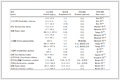 表 1
反应条件的优化及催化剂的筛选a
Table 1.
Optimization of reaction conditions and evaluation of catalyst systems

Entry [Pd] Ligand B*H Solvent Yieldb/% d.r.c eed/% 1 ((η3-C3H5)PdCl)2 P(OPh)3 B*H-1 Toluene 99 >20:1 92 2e Pd(OAc)2 P(OPh)3 B*H-1 Toluene 65 >20:1 92 3e Pd(dba)2 P(OPh)3 B*H-1 Toluene 55 >20:1 97 4e Pd(TFA)2 P(OPh)3 B*H-1 Toluene 64 >20:1 85 5e PdCl2 P(OPh)3 B*H-1 Toluene 20 >20:1 88 6f ((η3-C3H5)PdCl)2 P(OPh)3 B*H-1 Toluene 12 >20:1 70 7e ((η3-C3H5)PdCl)2 P(OPh)3 B*H-1 Toluene 25 13:1 82 8 ((η3-C3H5)PdCl)2 PPh3 B*H-1 Toluene trace — — 9f ((η3-C3H5)PdCl)2 PPh3 B*H-1 Toluene 18 >20:1 94 10 ((η3-C3H5)PdCl)2 P(OPh)3 B*H-1 THF trace — — 11 ((η3-C3H5)PdCl)2 P(OPh)3 B*H-1 Et2O 19 18:1 24 12 ((η3-C3H5)PdCl)2 P(OPh)3 B*H-1 DCM 22 17:1 48 13 ((η3-C3H5)PdCl)2 P(OPh)3 B*H-1 DCE 95 17:1 82 14 ((η3-C3H5)PdCl)2 P(OPh)3 B*H-2 Toluene 93 >20:1 88 15 ((η3-C3H5)PdCl)2 P(OPh)3 B*H-3 Toluene 71 13:1 98g 16 ((η3-C3H5)PdCl)2 P(OPh)3 B*H-4 Toluene 86 >20:1 84g a Unless indicated otherwise, reactions of 1a (0.12 mmol), B2(pin)2 (0.12 mmol), [Pd] (0.0025 mmol), ligand (0.005 mmol) and B*H (0.01 mmol) were carried out in solvent (1.0 mL) at 50 ℃ under nitrogen for 16 h, and then 2a (0.10 mmol) in solvent (0.5 mL) was added at -70 ℃, the resulting mixture was stirred at -70 ℃ under nitrogen for an additional 24 h. b Isolated yield. c The diastereomeric ratios were determined by 1H NMR spectroscopic analysis. d Determined by HPLC analysis. e [Pd] (0.005 mmol) was added. f Ligand (0.01 mmol) was added. g An opposite enantiomer of 3aa was obtained.  图1
手性磷酸的筛选
Figure1.
Screening of chiral phosphoric acids
2.2 不对称羰基烯丙基化反应的适用范围
在上述最优的反应条件下, 我们研究了该不对称羰基烯丙基化反应对烯丙醇底物的适用范围(表 2).含有长链饱和、不饱和烷基取代基的烯丙醇底物都能够顺利地发生反应, 以很高的产率和优秀的立体选择性得到目标产物(3ca~3fa).使用顺式烯丙醇和支链烯丙醇进行反应时, 仍能以优良的立体选择性得到目标产物(3ba, 3ga).肉桂醇衍生物也能顺利和对硝基苯甲醛发生反应, 高产率地得到手性高烯丙醇(3ka~3la), 但对映选择性较低.值得注意的是, 在烷基取代的烯丙醇底物中引入杂原子官能团, 如: -OTs、-OTBS、-NTs等, 对反应影响不大, 仍能以很高的产率及立体选择性得到高烯丙醇(3ha~3ja).由于这些官能团可以参与很多化学反应, 使得这些多官能化的高烯丙醇在有机合成中具有更为广泛的用途.
表 2
烯丙醇底物1的扩展a
Table 2.
Substrate scope of allylic alcohols 1

a Unless indicated otherwise, reactions of 1 (0.12 mmol, E-configured allylic alcohols was used), B2(pin)2 (0.12 mmol), (η3-C3H5)2Pd2Cl2 (0.0025 mmol), P(OPh)3 (0.005 mmol) and B*H-1 (0.01 mmol) were carried out in toluene (1.0 mL) at 50 ℃ under nitrogen for 16 h, and then 2a (0.1 mmol) in toluene (0.5 mL) was added at -70 ℃, the resulting mixture was stirred at -70 ℃ under nitrogen for an additional 24 h; isolated yield; the diastereomeric ratios were determined by 1H NMR spectroscopic analysis, the ee was determined by HPLC analysis. b(Z)-2-penten-1-ol was used. c5-phenyl-1-penten-3-ol was used. 随后我们考察了各种醛与巴豆醇(1a)的连续催化不对称羰基烯丙基化反应(表 3).对于苯甲醛衍生物, 取代基的位置对反应的影响很大, 例如:在苯甲醛衍生物的对位和间位引入给电子、电中性或吸电子取代基, 都能以良好的收率, 优秀的对映选择性和非对映选择性得到目标产物(3ab~3ak和3m); 而当在苯环的邻位引入甲氧基取代基时, 可能由于位阻的影响, 反应的立体选择性有所下降(3al). 2-萘甲醛、脂肪醛和对甲氧基肉桂醛都能很顺利地参与不对称羰基烯丙基化反应, 并且都能够以优良的产率和立体选择性得到相应的高烯丙醇产物(3an~3ap).
表 3
醛底物2的扩展a
Table 3.
Substrate scope of aldehydes 2

a Unless indicated otherwise, reactions of 1a (0.12 mmol), B2(pin)2 (0.12 mmol), (η3-C3H5)2Pd2Cl2 (0.0025 mmol), P(OPh)3 (0.005 mmol) and B*H-1 (0.01 mmol) were carried out in toluene (1.0 mL) at 50 ℃ under nitrogen for 16 h, and then 2 (0.1 mmol) in toluene (0.5 mL) was added at -70 ℃, the resulting mixture was stirred at -70 ℃ under nitrogen for an additional 24 h; isolated yield; the diastereomeric ratios were determined by 1H NMR spectroscopic analysis, the ee was determined by HPLC analysis. 2.3 可能的反应机理
基于文献报道的结论[13, 15, 16], 我们提出了可能的反应机理(图式 2).二价钯首先和配体反应形成二价钯配合物I, 然后与联硼酸频哪醇酯发生转金属化反应, 形成配合物Ⅱ, 随后经还原消除生成零价钯配合物Ⅲ.零价钯配合物Ⅲ与手性磷酸和烯丙醇1通过氢键形成的中间体1'发生氧化加成反应, 形成烯丙基钯中间体Ⅳ[15, 16], 接着继续和联硼酸频哪醇酯发生转金属化反应产生中间体Ⅴ[12], 最后经还原消除生成烯丙基硼中间体Ⅵ和零价钯配合物, 完成催化循环.烯丙基硼中间体Ⅵ则与醛2在手性磷酸的催化下发生高对映选择性的羰基烯丙基加成反应, 生成目标产物3[5d, 5e, 13].
 图式 2
烯丙醇和醛的不对称羰基烯丙基化反应的可能机理
Scheme2.
Proposed mechanism for the asymmetric carbonyl allylation of aldehydes with allylic alcohols
3 结论
我们利用钯配合物与手性磷酸组成的双组分催化体系, 发展了不对称连续催化的烯丙醇和醛的不对称羰基烯丙基化反应, 以优良的产率和立体选择性得到了结构多样的手性高烯丙醇化合物.该反应具有底物易制备, 反应串联进行, 无需分离中间产物和仅需要使用催化量的手性催化剂等诸多优点.另外, 该反应适用于各种类型的烯丙醇和醛类底物, 为广泛应用于天然产物和药物分子合成的高烯丙醇中间体提供了有效的制备方法.但目前该反应仍存在反应温度较为苛刻和需要分步加反应底物等缺点, 我们将会在后续研究中予以改进.
-
-
[1]
(a) Chemler, S. R.; Roush, W. R. In Modern Carbonyl Chemistry, Ed.: Otera, J., Wiley-VCH, Weinheim, Germany, 2000, pp. 403~490; (b) Elford, T. G.; Hall, D. G. Synthesis 2010, 893;(c) Yus, M.; González-Gómez, J. C.; Foubelo, F. Chem. Rev. 2013, 113, 5595.
-
[2]
(a) Yamamoto, Y.; Asao, N. Chem. Rev. 1993, 93, 2207;(b) Denmark, S. E.; Fu, J. Chem. Rev. 2003, 103, 2763;(c) Yus, M.; González-Gómez, J. C.; Foubelo, F. Chem. Rev. 2011, 111, 7774.
-
[3]
For examples with chiral Lewis acids as catalysts, see:(a) Furuta, K.; Mouri, M.; Yamamoto, H. Synlett 1991, 561;(b) Costa, A. L.; Piazza, M. G.; Tagliavini, E.; Trombini, C.; Umani-Ronchi, A. J. Am. Chem. Soc. 1993, 115, 7001;(c) Keck, G. E.; Tarbet, K. H.; Geraci, L. S. J. Am. Chem. Soc. 1993, 115, 8467;(d) Ishiyama, T.; Ahiko, T.-A.; Miyaura, N. J. Am. Chem. Soc. 2002, 124, 12414;(e) Wada, R.; Oisaki, K.; Kanai, M.; Shibasaki, M. J. Am. Chem. Soc. 2004, 126, 8910.
-
[4]
For examples with chiral Lewis bases as catalysts, see: (a) Denmark, S. E. ; Fu, J. J. Am. Chem. Soc. 2001, 123, 9488;(b) Malkov, A. ; Orsini, M. ; Pernazza, D. ; Muir, K. W. ; Langer, V. ; Meghani, P. ; Kocovsky, P. Org. Lett. 2002, 4, 1047;(c) Denmark, S. E. ; Fu, J. J. Am. Chem. Soc. 2003, 125, 2208;(d) Malkov, A. V. ; Bell, M. ; Castelluzzo, F. ; Kocovsky, P. Org. Lett. 2005, 7, 3219;(e) Denmark, S. E. ; Fu, J. ; Coe, D. M. ; Su, X. ; Pratt, N. E. ; Griedel, B. D. J. Org. Chem. 2006, 71, 1513;(f) Malkov, A. V. ; Ramirez-Lopez, P. ; Biedermannova, L. ; Rulisek, L. ; Dufkova, L. ; Kotora, M. ; Zhu, F. ; Kocovsky, P. J. Am. Chem. Soc. 2008, 130, 5341;(g) Bai, B. ; Yang, J. ; Zhang, G. -H. ; Mao, D. -B. Chin. J. Org. Chem. 2015, 35, 975(in Chinese). (白冰, 杨静, 张改红, 毛多斌, 有机化学, 2015, 35, 975. )
-
[5]
For examples with chiral Br nsted acids as catalysts, see:(a) Rauniyar, V.; Hall, D. G. Angew. Chem., Int. Ed. 2006, 45, 2426;(b) Rauniyar, V.; Zhai, H.; Hall, D. G. J. Am. Chem. Soc. 2008, 130, 8481;(c) Rauniyar, V.; Hall, D. G. J. Org. Chem. 2009, 74, 4236;(d) Jain, P.; Antilla, J. C. J. Am. Chem. Soc. 2010, 132, 11884;(e) Xing, C.-H.; Liao, Y.-X.; Zhang, Y.; Sabarova, D.; Bassous, M.; Hu, Q.-S. Eur. J. Org. Chem. 2012, 1115.
-
[6]
For other examples of asymmetric carbonyl allylation reactions, see:(a) Kim, I. S.; Ngai, M.; Krische, M. J. J. Am. Chem. Soc. 2008, 130, 14891;(b) Lou, S.; Moquist, P. N.; Schaus, S. E. J. Am. Chem. Soc. 2006, 128, 12660;(c) Barnett, D. S.; Moquist, P. N.; Schaus, S. E. Angew. Chem., Int. Ed. 2009, 48, 8679.
-
[7]
For the selected achiral examples, see:(a) Sebelius, S.; Wallner, O. A.; Szabó, K. J. Org. Lett. 2003, 5, 3065;(b) Selander, N.; Sebelius, S.; Estay, C.; Szabó, K. J. Eur. J. Org. Chem. 2006, 4085;(c) Se-lander, N.; Kipke, A.; Sebelius, S.; Szabó, K. J. J. Am. Chem. Soc. 2007, 129, 13723;(d) Olsson, V. J.; Szabó, K. J. Angew. Chem., Int. Ed. 2007, 46, 6891;(e) Selander, N.; Szabó, K. J. Chem. Commun. 2008, 3420;(f) Zhou, Y.-H.; Wang, H.; Liu, Y.; Zhao, Y.-L.; Zhang, C.-X.; Qu, J.-P. Org. Chem. Front. 2017, 4, 1580.
-
[8]
For the examples of using chiral diboronates, see:(a) Sebelius, S.; Szabó, K. J. Eur. J. Org. Chem. 2005, 2539;(b) Vogt, M.; Ceylan, S.; Kirschning, A. Tetrahedron 2010, 66, 6450.
-
[9]
(a) Zanoni, G. ; Gladiali, S. ; Marchetti, A. ; Piccinini, P. ; Tredici, I. ; Vidari, G. Angew. Chem., Int. Ed. 2004, 43, 846;(b) Zhu, S. -F. ; Yang, Y. ; Wang, L. -X. ; Liu, B. ; Zhou, Q. -L. Org. Lett. 2005, 7, 2333;(c) Howell, G. P. ; Minnaard, A. J. ; Feringa, B. L. Org. Biomol. Chem. 2006, 4, 1278;(d) Yu, Y. -N. ; Xu, M. -H. Acta Chim. Sinica 2017, 75, 655(in Chinese). (于月娜, 徐明华, 化学学报, 2017, 75, 655. )
-
[10]
(a) Zhu, S.-F.; Qiao, X.-C.; Zhang, Y.-Z.; Wang, L.-X.; Zhou, Q.-L. Chem. Sci. 2011, 2, 1135;(b) Tsukamoto, H.; Kawase, A.; Doi, T. Chem. Commun. 2015, 51, 8027.
-
[11]
Yatagai, M.; Yamagishi, T.; Hida, M. Bull. Chem. Soc. Jpn. 1984, 57, 823.(b) McIntosh, J. M.; Leavitt, R. K. Tetrahedron Lett. 1986, 27, 3839.(c) Jiang, Y. Z.; Liu, G.; Zhou, C. Y.; Piao, H. R.; Wu, L. J.; Mi, A. Q. Synth. Commun. 1991, 21, 1087.
-
[12]
(a) Li, L. -L. ; Tao, Z. -L. ; Han, Z. -Y. ; Gong, L. -Z. Org. Lett. 2017, 19, 102;(b) Tang, H. -M. ; Huo, X. -H. ; Meng, Q. -H. ; Zhang, W. -B. Acta Chim. Sinica 2016, 74, 219(in Chinese). (汤淏溟, 霍小红, 孟庆华, 张万斌, 化学学报, 2016, 74, 219. )
-
[13]
(a) Grayson, M. N.; Pellegrinet, S. C.; Goodman, J. M. J. Am. Chem. Soc. 2012, 134, 2716.(b) Wang, H.; Jain, P.; Antilla, J. C.; Houk, K. N. J. Org. Chem. 2013, 78, 1208.(c) Incerti-Pradillos, C. A.; Kabeshov, M. A.; Malkov, A. V. Angew. Chem., Int. Ed. 2013, 52, 5338.
-
[14]
(a) Chen, G. ; Deng, Y. ; Gong, L. ; Mi, A. ; Cui, X. ; Jiang, Y. ; Choi, M. C. K. ; Chan, A. S. C. Tetrahedron: Asymmetry 2001, 12, 1567. (b) Nakoji, M. ; Kanayama, T. ; Okino, T. ; Takemoto, Y. Org. Lett. 2001, 3, 3329. (c) Park, Y. J. ; Park, J. -W. ; Jun, C. -H. Acc. Chem. Res. 2008, 41, 222. (d) Shao, Z. ; Zhang, H. Chem. Soc. Rev. 2009, 38, 2745. (e) Du, Z. ; Shao, Z. Chem. Soc. Rev. 2013, 42, 1337. (f) Wu, X. ; Li, M. -L. ; Gong, L. -Z. Acta Chim. Sinica 2013, 71, 1091(in Chinese). (吴祥, 李明丽, 龚流柱, 化学学报, 2013, 71, 1091. )(g) Chen, D. -F. ; Han, Z. -Y. ; Zhou, X. -L. ; Gong, L. -Z. Acc. Chem. Res. 2014, 47, 2365. (h) Yang, Z. -P. ; Zhang, W. ; You, S. -L. J. Org. Chem. 2014, 79, 7785.
-
[15]
Jiang, G.-X.; List, B. Angew. Chem., Int. Ed. 2011, 50, 9471. doi: 10.1002/anie.v50.40
-
[16]
Tao, Z.-L.; Zhang, W.-Q.; Chen, D.-F.; Arafate Adele; Gong, L.-Z. J. Am. Chem. Soc. 2013, 135, 9255. doi: 10.1021/ja402740q
-
[1]
-

图式 2 烯丙醇和醛的不对称羰基烯丙基化反应的可能机理
Scheme 2 Proposed mechanism for the asymmetric carbonyl allylation of aldehydes with allylic alcohols
表 1 反应条件的优化及催化剂的筛选a
Table 1. Optimization of reaction conditions and evaluation of catalyst systems
Entry [Pd] Ligand B*H Solvent Yieldb/% d.r.c eed/% 1 ((η3-C3H5)PdCl)2 P(OPh)3 B*H-1 Toluene 99 >20:1 92 2e Pd(OAc)2 P(OPh)3 B*H-1 Toluene 65 >20:1 92 3e Pd(dba)2 P(OPh)3 B*H-1 Toluene 55 >20:1 97 4e Pd(TFA)2 P(OPh)3 B*H-1 Toluene 64 >20:1 85 5e PdCl2 P(OPh)3 B*H-1 Toluene 20 >20:1 88 6f ((η3-C3H5)PdCl)2 P(OPh)3 B*H-1 Toluene 12 >20:1 70 7e ((η3-C3H5)PdCl)2 P(OPh)3 B*H-1 Toluene 25 13:1 82 8 ((η3-C3H5)PdCl)2 PPh3 B*H-1 Toluene trace — — 9f ((η3-C3H5)PdCl)2 PPh3 B*H-1 Toluene 18 >20:1 94 10 ((η3-C3H5)PdCl)2 P(OPh)3 B*H-1 THF trace — — 11 ((η3-C3H5)PdCl)2 P(OPh)3 B*H-1 Et2O 19 18:1 24 12 ((η3-C3H5)PdCl)2 P(OPh)3 B*H-1 DCM 22 17:1 48 13 ((η3-C3H5)PdCl)2 P(OPh)3 B*H-1 DCE 95 17:1 82 14 ((η3-C3H5)PdCl)2 P(OPh)3 B*H-2 Toluene 93 >20:1 88 15 ((η3-C3H5)PdCl)2 P(OPh)3 B*H-3 Toluene 71 13:1 98g 16 ((η3-C3H5)PdCl)2 P(OPh)3 B*H-4 Toluene 86 >20:1 84g a Unless indicated otherwise, reactions of 1a (0.12 mmol), B2(pin)2 (0.12 mmol), [Pd] (0.0025 mmol), ligand (0.005 mmol) and B*H (0.01 mmol) were carried out in solvent (1.0 mL) at 50 ℃ under nitrogen for 16 h, and then 2a (0.10 mmol) in solvent (0.5 mL) was added at -70 ℃, the resulting mixture was stirred at -70 ℃ under nitrogen for an additional 24 h. b Isolated yield. c The diastereomeric ratios were determined by 1H NMR spectroscopic analysis. d Determined by HPLC analysis. e [Pd] (0.005 mmol) was added. f Ligand (0.01 mmol) was added. g An opposite enantiomer of 3aa was obtained.  下载: 导出CSV
表 2 烯丙醇底物1的扩展a
Table 2. Substrate scope of allylic alcohols 1
a Unless indicated otherwise, reactions of 1 (0.12 mmol, E-configured allylic alcohols was used), B2(pin)2 (0.12 mmol), (η3-C3H5)2Pd2Cl2 (0.0025 mmol), P(OPh)3 (0.005 mmol) and B*H-1 (0.01 mmol) were carried out in toluene (1.0 mL) at 50 ℃ under nitrogen for 16 h, and then 2a (0.1 mmol) in toluene (0.5 mL) was added at -70 ℃, the resulting mixture was stirred at -70 ℃ under nitrogen for an additional 24 h; isolated yield; the diastereomeric ratios were determined by 1H NMR spectroscopic analysis, the ee was determined by HPLC analysis. b(Z)-2-penten-1-ol was used. c5-phenyl-1-penten-3-ol was used.
下载: 导出CSV
表 3 醛底物2的扩展a
Table 3. Substrate scope of aldehydes 2
a Unless indicated otherwise, reactions of 1a (0.12 mmol), B2(pin)2 (0.12 mmol), (η3-C3H5)2Pd2Cl2 (0.0025 mmol), P(OPh)3 (0.005 mmol) and B*H-1 (0.01 mmol) were carried out in toluene (1.0 mL) at 50 ℃ under nitrogen for 16 h, and then 2 (0.1 mmol) in toluene (0.5 mL) was added at -70 ℃, the resulting mixture was stirred at -70 ℃ under nitrogen for an additional 24 h; isolated yield; the diastereomeric ratios were determined by 1H NMR spectroscopic analysis, the ee was determined by HPLC analysis.
下载: 导出CSV
-


 扫一扫看文章
计量
- PDF下载量: 15
- 文章访问数: 1780
- HTML全文浏览量: 277
 下载:

