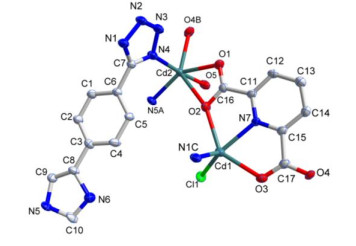
Figure 1.
Coordination environment of Cd(II) in complex 1 with ellipsoids drawn at 30% probability level. Hydrogen atoms were omitted for clarity (Symmetry codes: (A) –x, 2–y, –z; (B) −1+x, y, z; (c) –x, 1–y, –z)

Synthesis, Crystal Structure and Luminescent/magnetic Properties of Two Metal-organic Frameworks Based on Multi-N/O-donor Mixed Ligands
Zhi-Qiang LU , Yan-Zhi LI , Chu HAO , Yi RU , Shu-Jian YANG , Ning-Dan ZHANG , Yu-Qin FU , Wei-Long WU , Yan ZHOU


Metal-organic frameworks (MOFs), as a class of crystalline materials, have received great attention in recent years, not only due to their intriguing architectures and intricate topologies, but also because of their interesting properties and possible applications as functional materials in numerous areas in fluorescence, gas adsorption/separation, electrochemistry, magnetic properties, catalysis, and so on[1-5]. The crystalline materials of ZIFs and IRMOFs possess permanently porous structures with high surface area and can be used to store energy gas and capture exhaust gases or toxic pollutants. Generally, the organic linkers and inorganic metal units have great effect on the properties of MOFs[6, 7]. However, the appropriate selection of solvents, pH, organic ligands, metal ions, and reaction time as well as the reaction temperature may play an important role in the self-assembly process of MOFs[8, 9]. The organic ligands including multi-N donor or carboxylate ligands are two most employed building units to construct desired MOFs. Particularly, the proper selection of organic ligands with N-heterocyle and carboxylate groups, or mixed multi-N donor and carboxylate ligands would be a suitable route to modulate novel structures with expected properties[10, 11]. For example, the MOFs consisting of d10 metal centers and conjugated organic molecules have excellent luminescence emission properties to be employed as photoluminescent materials to sense guest molecules[12, 13]. Meanwhile, the MOFs comprised from paramagnetic Cu2+, Co2+, Mn2+ and Ni2+ ions and bridging carboxylate organic ligands have magnetic properties[14, 15]. Recently, some interesting MOFs have been successfully generated by the employment of mixed multi-N donor and carboxylate ligands, and this has gradually become an effective method to construct supramolecular frameworks with specific and anticipated physical properties[16, 17]. As an extension of our previous work[18, 19], we use the multi-N donor organic compound 1-(1H-imidazol-4-yl)-4-(4H-tetrazol-5-yl)benzene (HL), 2, 6-pyridinedicarboxylic acid (H2pycy) and 1, 2, 4, 5-benzenetetracarboxylic acid (H4btac) as mixed ligand to react with metal salts, aiming to build a new metal-organic framework. Here, we report the synthesis and crystal structure of two new coordination polymers [Cd2(L)(pycy)(Cl)]·2H2O (1) and [Cu(HL)(H2btac)]·2H2O (2) obtained by the reaction of HL, H2pycy, H4btac and corresponding metal salts under hydrothermal condition.
All the commercially available chemicals and solvents were of reagent grade and used as received without further purification. Elemental analyses were performed on a Perkin-Elmer 240C Elemental Analyzer. IR spectra were recorded on a Bruker Vector 22 FT-IR spectrophotometer using KBr pellets. Power X-ray diffraction (PXRD) patterns were measured on a Shimadzu XRD-6000 X-ray diffractometer with CuKα (λ = 1.5418 Å) radiation at room temperature. The fluorescent spectra were measured using a Perkin Elmer LS-55B fluorescence spectrometer. A Quantum Design SQUID MPMS-5 magnetometer was used to test the temperature-dependent magnetic property.
A mixture of HL (21.2 mg, 0.1 mmol), H2pycy (16.7 mg, 0.1 mmol), CdCl2·2.5H2O (0.023 g, 0.1 mmol) and NaOH (0.008 g, 0.2 mmol) in 12 mL H2O was sealed in a 25 mL Teflon-lined stainless-steel container and heated at 140 ℃ for 3 d. Colorless block crystals of 1 were collected with a yield of 62% by filtration and washed with water and ethanol for several times. Anal. calcd. (%) for C17H12Cd2ClN7O6: C, 30.45; H, 1.80; N, 14.62. Found (%): C, 30.23; H, 1.71; N, 14.75. IR(KBr): 3445~2818(m), 1629(m), 1605(s), 1569(m), 1532(vs), 1508(m), 1409(vs), 1192(w), 1115(w), 871(s), 839(m), 861(s), 778(s), 719(m), 696(w), 618(m), 515(m).
A mixture of L (21.2 mg, 0.1 mmol), H4btac (25.4 mg, 0.1 mmol), Cu(NO3)2⋅3H2O (24.1 mg, 0.1 mmol), and NaOH (16.0 mg, 0.4 mmol) in 10 mL H2O was sealed in a 16 mL Teflon-lined stainless-steel container and heated at 120 ℃ for 3 d. Green block crystals of 2 were collected in 62% yield. Anal. calcd. for C20H16CuN6O10 (%): C, 42.60; H, 2.86; N, 14.90. Found: C, 42.36; H, 2.93; N, 15.03. IR (KBr pellet, cm-1): 3403(m), 1609(s), 1541(s), 1450(s), 1371(vs), 1198(vs), 1139(s), 1069(m), 1041(s), 948(m), 829(s), 810(m), 781(m), 722(m), 650(s), 619(s), 523(w), 449(w), 419(w).
The colorless crystals of complexes 1 and green 2 were selected for diffraction data collection at 296(2) K on a Bruker Smart Apex II CCD diffractometer equipped with a graphite-monochromatic MoKα radiation (λ = 0.71073 Å). A total of 12156 reflections were collected for 1 and 3564 for 2, of which 4154 (Rint = 0.0209) and 2378 (Rint = 0.0125) were independent in the ranges of 1.74≤θ≤25.50º and 1.97≤θ≤27.64º for 1 and 2 by using a φ-ω scan mode. The structure was solved by direct methods with SHELXS-97[20] program and refined by full-matrix least-squares techniques on F2 with SHELXL-97[21]. All non-hydrogen atoms were refined anisotropically. Hydrogen atoms of 1 and 2 were generated geometrically. The final R = 0.0523, wR = 0.1651 (w = 1/[σ(Fo) + (0.1138P)2 + 4.9551P], where P = (Fo2 + 2Fc2)/3), Rint = 0.0209, (Δ/σ)max = 0.000, S = 1.062, (Δρ)max = 2.907 and (Δρ)min = –0.733 e/Å3 for 1. The final R = 0.0314, wR = 0.0807 (w = 1/[σ(Fo) + (0.0172P)2 + 0.7359P], where P = (Fo2 + 2Fc2)/3), Rint = 0.0125, (Δ/σ)max = 0.003, S = 1.187, (Δρ)max = 0.43 and (Δρ)min = –0.48 e/Å3 for 2. The selected bond distances and bond angles for complexes 1 and 2 are listed in Tables 1 and 2.
The result of X-ray diffraction analysis revealed that complex 1 crystallizes in triclinic P

 DownLoad:
CSV
DownLoad:
CSV
| Complex 1 | |||||||
| Bond | Dist. | Bond | Dist. | Bond | Dist. | ||
| Cd(1)–N(1)#A | 2.211(6) | Cd(1)–N(7) | 2.232(6) | Cd(1)–O(3) | 2.364(5) | ||
| Cd(1)–O(2) | 2.393(5) | Cd(1)–Cl(1) | 2.461(2) | Cd(2)–N(5)#B | 2.216(6) | ||
| Cd(2)–O(4)#C | 2.277(6) | Cd(2)–O(5) | 2.316(7) | Cd(2)–O(1) | 2.321(5) | ||
| Cd(2)–N(4) | 2.331(6) | Cd(2)–O(2) | 2.635(5) | ||||
| Angle | (°) | Angle | (°) | Angle | (°) | ||
| N(1)#A–Cd(1)–N(7) | 109.2(2) | N(1)#A–Cd(1)–O(3) | 94.5(2) | N(7)–Cd(1)–O(3) | 70.5(2) | ||
| N(1)#A–Cd(1)–O(2) | 101.6(2) | N(7)–Cd(1)–O(2) | 70.5(2) | O(3)–Cd(1)–O(2) | 140.8(2) | ||
| N(1)#A–Cd(1)–Cl(1) | 114.5(2) | N(7)–Cd(1)–Cl(1) | 136.3(2) | O(3)–Cd(1)–Cl(1) | 106.8(2) | ||
| O(2)–Cd(1)–Cl(1) | 98.7(2) | N(5)#B–Cd(2)–O(4)#C | 131.9(2) | N(5)#B–Cd(2)–O(5) | 88.2(3) | ||
| O(4)#C–Cd(2)–O(5) | 84.4(2) | N(5)#B–Cd(2)–O(1) | 146.5(2) | O(4)#C–Cd(2)–O(1) | 80.7(2) | ||
| O(5)–Cd(2)–O(1) | 87.8(3) | N(5)#B–Cd(2)–N(4) | 94.5(2) | O(4)#C–Cd(2)–N(4) | 91.7(2) | ||
| O(5)–Cd(2)–N(4) | 176.0(2) | O(1)–Cd(2)–N(4) | 91.6(2) | N(5)#B–Cd(2)–O(2) | 94.7(2) | ||
| O(4)#C–Cd(2)–O(2) | 132.6(2) | O(5)–Cd(2)–O(2) | 89.6(3) | O(1)–Cd(2)–O(2) | 52.0(2) | ||
| N(4)–Cd(2)–O(2) | 93.1(2) | ||||||
| Complex 2 | |||||||
| Bond | Dist. | Bond | Dist. | Bond | Dist. | ||
| Cu(1)–O(3) | 1.984(1) | Cu(1)–N(1) | 2.000(2) | Cu(1)–O(5) | 2.540(2) | ||
| Angle | (°) | Angle | (°) | Angle | (°) | ||
| O(3)#D–Cu(1)–O(3) | 180.0 | O(3)#D–Cu(1)–N(1)#D | 90.15(7) | O(3)#D–Cu(1)–N(1) | 89.85(7) | ||
| O(3)#D–Cu(1)–O(5)#D | 91.62(6) | O(3)#D–Cu(1)–O(5) | 88.38(6) | N(1)–Cu(1)–N(1)#D | 180.0 | ||
| N(1)–Cu(1)–O(5) | 93.19(7) | N(1)–Cu(1)–O(5)#D | 86.81(7) | O(5)#D–Cu(1)–O(5) | 180.0 | ||
| Symmetry transformation: A: –x, –y+1, –z; B: –x, –y+2, –z; C: x–1, y, z. D: 1–x, 2–y, –z | |||||||
 DownLoad:
CSV
DownLoad:
CSV
| Complex 1 | ||||
| D–H···A | d(D–H) | d(H···A) | d(D···A) | ∠DHA |
| N(6)–H(6A)···O(6)a | 0.86 | 1.94 | 2.72(3) | 149 |
| O(6)–H(6B)···Cl(1)b | 0.85 | 2.40 | 3.23(13) | 166 |
| O(6)–H(6C)···N(3)c | 0.85 | 2.09 | 2.92(15) | 166 |
| C(10)–H(10B)···O(3)d | 0.93 | 2.54 | 3.17(2) | 126 |
| Complex 2 | ||||
| D–H···A | d(D–H) | d(H···A) | d(D···A) | ∠DHA |
| O(1)–H(1)···O(4)e | 0.82 | 1.900 | 2.657(3) | 152 |
| N(2)–H(2A)···O(5)f | 0.86 | 1.90 | 2.738(3) | 165 |
| N(2)–H(2B)···O(5)f | 0.86 | 1.90 | 2.738(3) | 165 |
| O(5)–H(5A)···O(4) | 0.85 | 1.92 | 2.691(2) | 150 |
| O(5)–H(5B)···O(2)g | 0.85 | 1.95 | 2.795(3) | 177 |
| N(3)–H(11)···O(2)g | 0.93 | 2.55 | 3.250(3) | 133 |
| N(3)–H(11)···O(3)g | 0.93 | 2.47 | 2.903(3) | 109 |
| C(1)–H(1A)···O(1)h | 0.93 | 2.39 | 3.225(3) | 150 |
| Symmetry codes: (a) 1–x, 1–y, –z; (b) x, –1+y, z; (c) 1+x, y, z; (d) 1–x, 2–y, –z; (e) –1+x, y, z; (f) 2–x, 2–y, –z; (g) 1–x, 2–y, –z; (h) 1+x, y, z | ||||
Complex 2 crystallizes in the same triclinic P
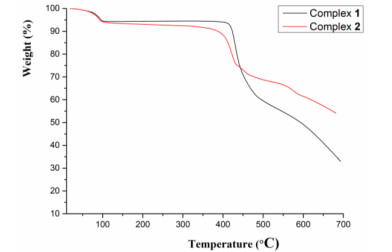
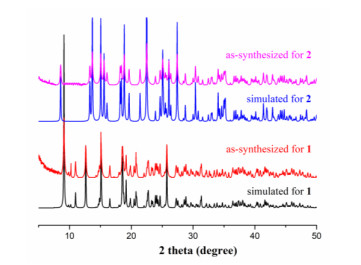
Complex 1 was subjected to thermogravimetric analysis (TGA) to ascertain the stability of the supramolecular architecture, and the result is shown in Fig. 8. A total weight loss of 5.72% was observed for 1 in the temperature range of 55~105 ºC, which is attributed to the loss of coordinated and lattice water molecules (calcd. 5.41%), and the residue is stable up to about 405 ºC. A loss of 6.19% (calcd. 6.32%) was found for 2 ranging from 65 to 125 ℃ for the loss of coordinated water molecules and then it reaches a continual collapse. Powder XRD experiment was recorded to investigate the phase purity of bulk sample, and the experimental patterns of the as-synthesized samples are considered to be well consistent with the corresponding simulated one calculated from the single-crystal diffraction data, indicating the phase purity of the sample (Fig. 9).
The infrared spectra of complexes 1 and 2 have been recorded between 4000 and 450 cm-1 and some important assignments are shown in the experimental section. IR spectra exhibit strong absorption centered at 3445~2818 or broad peak around 3403 cm−1 for 1 and 2, corresponding to the N−H/O−H stretching vibration of ligand or water molecule (see experimental section). Strong characteristic bands of carboxylate group are respectively observed in the ranges of 1629~1532 and 1609~1541 cm−1 for 1 and 2 arising from asymmetric vibrations. Therefore, the complete deprotonation of the carboxylic acid to give the corresponding carboxylate ligand for two complexes was confirmed by crystal structural analysis (vide post) as well as the IR spectral data since no vibrational bands in the range of 1760~1680 cm-1 were observed in the IR spectra of 1 and 2.
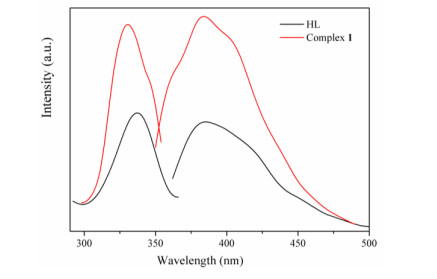
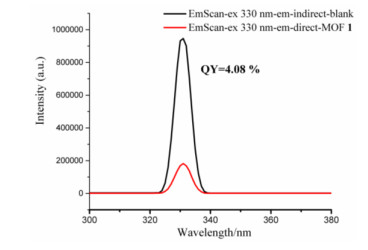
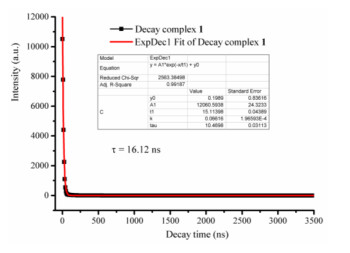
As is well known, the coordination compounds with rational selection and design of conjugated organic spacers and metal centers can be employed as new luminescent materials for potential applications in photochemistry and chemical sensors[23, 24]. In this study, the solid state photoluminescent properties of the free HL ligand and complex 1 have been investigated at ambient temperature (Fig. 10). The free ligand HL exhibits a blue fluorescence emission band at 385 nm upon excitation at 336 nm, which can be assigned to ligand-centered electronic transitions, that is, the n → π* or π → π* transition in nature according to the literature report[25]. Upon excitation with 330 nm light, complex 1 displays fluorescence emission bands at 384 nm. The result reveals that the peaks of the emission spectra for 1 are very close to that of the corresponding free ligand HL, which can probably be attributed to the intraligand fluorescence originating from ligand-centered emission (Fig. 10)[26, 27]. The studies of corresponding quantum yield (QY) and decay lifetimes were investigated for the crystalline material of 1, in order to further study the luminescence properties (Figs. 11 and 12). The QY value of complex 1 is 4.08%. In addition, the exponential function as I(t) = Aexp(−t/τ) can be employed to fit the luminescence decay curve. The luminescence lifetime of complex 1 is 16.12 ns, much shorter than the ones resulting from a triplet state (> 10−3 s), so the emissions should arise from a singlet state[23]. Therefore, the good photoluminescence property of 1 indicates that compound 1 could be potentially used as a luminescent material.
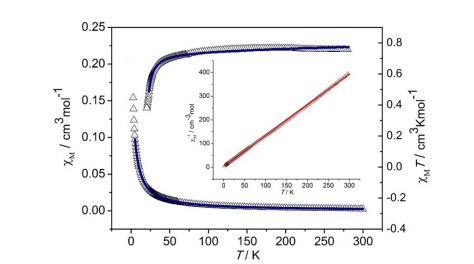
The MOFs consisting of paramagnetic ions Cu(II) and carboxylate or N-heterocyclic ligands may exhibit meaningful magnetic coupling properties. Therefore, the magnetic susceptibility (χM) of complex 2 was measured at a field of 2 kOe, ranging from 1.8 to 300 K. As shown in Fig. 13, the experimental χMT value is 0.76 cm3·K·mol−1 close to the normal temperature, which agrees well with the expected one (0.75 cm3·K·mol−1) calculated for two noninteracting Cu(II) spin carriers (S = 1/2) with g = 2, and remains almost constant as the temperature decreases until ca. 60 K, and then rapidly drops down to 0.36 cm3·K·mol−1[28]. The Curie-Weiss fitting for the 1/χM vs. T data in the full temperature range explored gives Curie constant (C) = 0.76 cm3·K·mol−1 and Weiss constant (θ) = –2.71 K (Fig. 13, inset). Therefore, this demonstrates a weak antiferromagnetic interaction existing between the Cu(II) ions within the structure of 2 due to the small negative Weiss constant.
Zhang, Y. M.; Yuan, S.; Day, G.; Wang, X.; Yang, X. Y.; Zhou, H. C. Luminescent sensors based on metal-organic frameworks. Coord. Chem. Rev. 2018, 354, 28–45. doi: 10.1016/j.ccr.2017.06.007
Li, B.; Zang, S. Q.; Wang, L. Y.; Mak, T. C. W. Halogen bonding: a powerful, emerging tool for constructing high-dimensional metal-containing supramolecular networks. Coordin. Chem. Rev. 2016, 308, 1–21. doi: 10.1016/j.ccr.2015.09.005
Zhao, J. P.; Han, S. D.; Jiang, X.; Xu, J.; Chang, Z.; Bu, X. H. A three dimensional magnetically frustrated metal-organic framework via the vertices augmentation of underlying net. Chem. Commun. 2015, 51, 4627−4630. doi: 10.1039/C4CC09547B
Hu, Z. C.; Deibert, B. J.; Li, J. Luminescent metal-organic frameworks for chemical sensing and explosive detection. Chem. Soc. Rev. 2014, 43, 5815–5840. doi: 10.1039/C4CS00010B
Lustig, W. P.; Mukherjee, S.; Mukherjee, N. D.; Rudd, A. V.; Desai, J.; Li, S. K. Ghosh, metal-organic frameworks: functional luminescent and photonic materials for sensing applications. Chem. Soc. Rev. 2017, 46, 3242–3285. doi: 10.1039/C6CS00930A
Chen, S. S. The roles of imidazole ligands in coordination supramolecular systems. CrystEngComm. 2016, 18, 6543–6565. doi: 10.1039/C6CE01258B
Dong, X. Y.; Zhang, M.; Pei, R. B.; Wang, Q.; Wei, D. H.; Zang, S. Q.; Fan, Y. T.; Mak, T. C. W. A crystalline copper(II) coordination polymer for the efficient visible-light-driven generation of hydrogen. Angew. Chem. Int. Ed. 2016, 55, 2073–2077. doi: 10.1002/anie.201509744
Hall, G. S.; Angeles, M. J.; Hicks, J.; Turner, D. R. Centric and acentric networks using low symmetry heterotopic carboxylate/pyridyl ligands. CrystEngComm. 2016, 18, 6614–6623. doi: 10.1039/C6CE01000H
Wang, F.; Fu, H. R.; Kang, Y.; Zhang, J. A new approach towards zeolitic tetrazolate-imidazolate frameworks (ZTIFs) with uncoordinated N-heteroatom sites for high CO2 uptake. Chem. Commun. 2014, 50, 2065–12068. doi: 10.1039/c4cc90030h
Mei, Y. X.; Xu, F.; Wei, Z. H.; Cai, H. pH dependent supramolecules based on co-crystallization of pyrazine-2, 3, 5, 6-tetracarboxylic acid with 4, 4΄-bipyridine through intermolecular hydrogen bonds. Chin. J. Struct. Chem. 2016, 35, 1031–1037.
Li, X. M.; Sun, M.; Pan, Y. R. Synthesis, crystal structure and theoretical calculations of a nickel(II) coordination polymer assembled by 4, 4΄-oxydibenzoicacid and 1, 3-bis(imidazol-1-ylmethyl)-benzene ligands. Chin. J. Struct. Chem. 2015, 34, 710–718.
Guo, X. Z.; Chen, S. S.; Li, W. D.; Han, S. S.; Deng, F.; Qiao, R.; Zhao, Y. Series of cadmium(II) coordination polymers based on a versatile multi-N-donor tecton or mixed carboxylate ligands: synthesis, structure, and selectively sensing property. ACS Omega 2019, 4, 11540−11553. doi: 10.1021/acsomega.9b01108
Hua, J. A.; Zhao, Y.; Kang, Y. S.; Lu, Y.; Sun, W. Y. Solvent dependent zinc(II) coordination polymers with mixed ligands: selective sorption and fluorescence sensing. Dalton Trans. 2015, 44, 11524−11532. doi: 10.1039/C5DT01386K
Zhang, C.; Liu, Z. Y.; Liu, N.; Zhao, H.; Yang, E. C.; Zhao, X. J. Different magnetic responses observed in Co4II, Co3II and Co1II based MOFs. Dalton Trans. 2016, 45, 11864−11875. doi: 10.1039/C6DT01587E
Wang, W.; Wang, R.; Liu, L.; Wu, B. Coordination frameworks containing magnetic single chain of imidazoledicarboxylate-bridged cobalt(II)/nickel(II): syntheses, structures, and magnetic properties. Cryst. Growth Des. 2018, 18, 3449−3457. doi: 10.1021/acs.cgd.8b00174
Hao, X. N.; Zheng, B. H.; Hu, T. P. Syntheses and characterizations of Cd(II) and Pr(III) complexes based on 5-(tetrazol-5-yl) isophthalic acid. Chin. J. Struct. Chem. 2016, 35, 1186–1194.
Yang, Y.; Jiang, F.; Liu, C.; Chen, L.; Gai, Y.; Pang, J.; Su, K.; Wan, X.; Hong, M. Self-assembly syntheses, structural characterization, and luminescent properties of lanthanide coordination polymers constructed by three triazole-carboxylate ligands. Cryst. Growth Des. 2016, 16, 2266−2276. doi: 10.1021/acs.cgd.6b00060
Chen, S. S.; Sheng, L. Q.; Zhao, Y.; Liu, Z. D.; Qiao, R.; Yang, S. Syntheses, structures, and properties of a series of polyazaheteroaromatic core-based Zn(II) coordination polymers together with carboxylate auxiliary ligands. Cryst. Growth Des. 2016, 16, 229–241. doi: 10.1021/acs.cgd.5b01133
Chen, S. S.; Qiao, R.; Sheng, L. Q.; Zhao, Y.; Yang, S.; Chen, M. M.; Liu, Z. D.; Wang, D. H. Cadmium(II) and zinc(II) complexes with rigid 1-(1H-imidazol-4-yl)-3-(4H-tetrazol-5-yl)benzene and varied carboxylate ligands. CrystEngComm. 2013, 15, 5713–5725. doi: 10.1039/c3ce40150b
Sheldrick, G. M. SHELXS-97, Programm for the Solution of Crystal Structure. University of Göttingen 1997.
Sheldrick, G. M. SHELXL-97, Programm for the Refinement of Crystal Structure. University of Göttingen 1997.
Liang, X. Q.; Wu, T.; Fan, Z. L. An 8-connected chiral lanthanide metal-organic framework constructed from naturally camphoric acid: crystal structure, vibrational circular dichroism spectroscopy and second-order nonlinear optical effect. Chin. J. Struct. Chem. 2016, 35, 1736–1744.
Wang, D. Z.; Fan, J. Z.; Jia, D.; Du, C. C. Zinc and cadmium complexes based on bis-(1H-tetrazol-5-ylmethyl/ylethyl)-amine ligands: structures and photoluminescence properties. CrystEngComm. 2016, 18, 6708–6723. doi: 10.1039/C6CE01311B
Chen, S. S.; Qiao, R.; Sheng, L. Q.; Yang, S.; Liu, Z. D. Four complexes with the rigid ligand 1, 4-bis(1H-imidazol-4-yl)benzene and varied carboxylate ligands. Z. Anorg. Allg. Chem. 2013, 639, 1808–1814. doi: 10.1002/zaac.201300189
Liu, K.; Ma, B. H.; Guo, X. L.; Ma, D. X.; Meng, L. K.; Zeng, G.; Yang, F.; Li, G. H.; Shi, Z.; Feng, S. H. Syntheses, structures, luminescence and magnetic properties of eleven coordination polymers constructed by a N, N΄-sulfuryldiimidazole ligand. CrystEngComm. 2015, 17, 5054. doi: 10.1039/C5CE00807G
Cui, Y. J.; Yue, Y. F.; Qian, G. D.; Chen, B. L. Luminescent functional metal-organic frameworks. Chem. Rev. 2012, 112, 1126–1162.
Zhang, K. Y.; Yu, Q.; Wei, H. J.; Liu, S. J.; Zhao, Q.; Huang, W. Long-lived emissive probes for time-resolved photoluminescence bioimaging and biosensing. Chem. Rev. 2018, 118, 1770–1839. doi: 10.1021/acs.chemrev.7b00425
Yang, L.; Li, X.; Qin, C.; Zhao, L.; Shao, K. Z.; Su, Z. M. Metal-organic frameworks constructed from tib and carboxylate acid ligands: selective sensing of nitro explosives and magnetic properties. Dalton Trans. 2017, 46, 7567–7576.

Figure 1 Coordination environment of Cd(II) in complex 1 with ellipsoids drawn at 30% probability level. Hydrogen atoms were omitted for clarity (Symmetry codes: (A) –x, 2–y, –z; (B) −1+x, y, z; (c) –x, 1–y, –z)

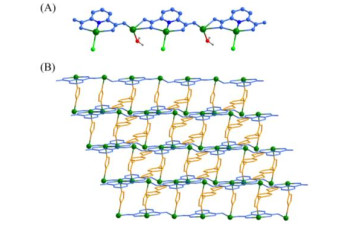
Figure 2 (A) 1D chain built from [Cd(pycy)(Cl)]n. (B) 2D net layer of [Cd2(L)(pycy)(Cl)]

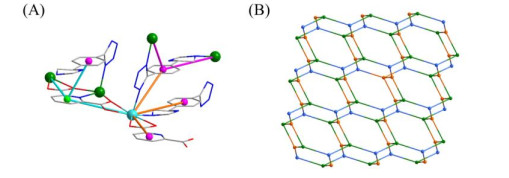
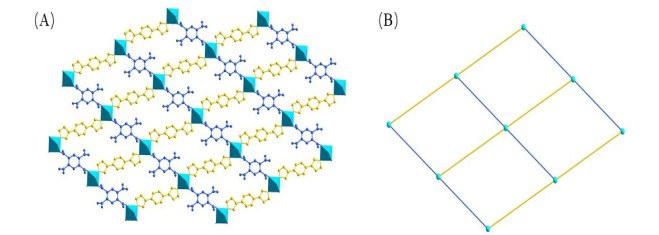
Figure 3 (A) 3, 3, 4-nodes for L-, pycy2- and Cd(2) atom, respectively. (B) Schematic representation of the trinodal (3, 3, 4)-connected 2D net layer of 1 with Schläfli symbol (4·6·8)(4·62·83)(62·8)

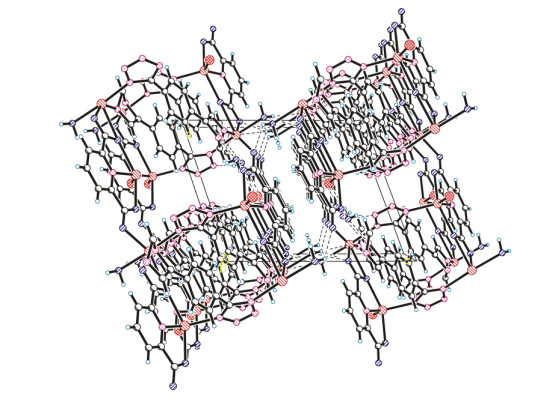
Figure 4 View of the 3D supramolecular structure of 1 formed by hydrogen-bonding interactions

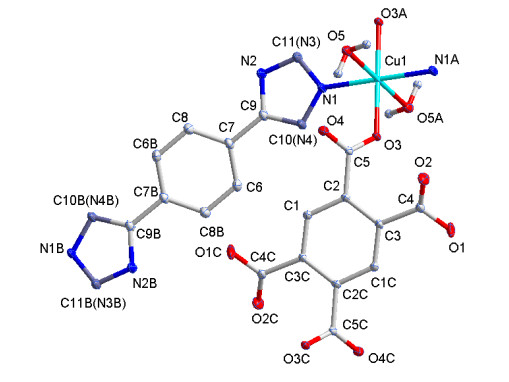
Figure 5 Coordination environment of Cu(II) in complex 2 with ellipsoids drawn at 30% probability level. Hydrogen atoms were omitted for clarity (Symmetry codes: (A) 1–x, 2–y, –z; (B) 2–x, 2–y, 1–z; (C) 1–x, 1–y, 1–z)

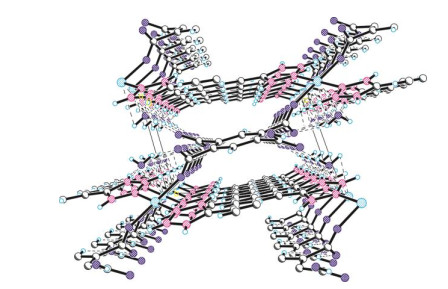
Figure 7 View of the 3D supramolecular structure of 2 formed by hydrogen-bonding interactions

Figure 13 Plot of χMT vs. T for 2. Inset shows 1/χM vs. T data, in which the red solid line represents a fit of the data to the Curie-Weiss expression
Table 1. Selected Bond Lengths (Å) and Bond Angles (°) of [Cd2(L)(pycy)(Cl)]·2H2O and [Cu(HL)(H2btac)]·2H2O
| Complex 1 | |||||||
| Bond | Dist. | Bond | Dist. | Bond | Dist. | ||
| Cd(1)–N(1)#A | 2.211(6) | Cd(1)–N(7) | 2.232(6) | Cd(1)–O(3) | 2.364(5) | ||
| Cd(1)–O(2) | 2.393(5) | Cd(1)–Cl(1) | 2.461(2) | Cd(2)–N(5)#B | 2.216(6) | ||
| Cd(2)–O(4)#C | 2.277(6) | Cd(2)–O(5) | 2.316(7) | Cd(2)–O(1) | 2.321(5) | ||
| Cd(2)–N(4) | 2.331(6) | Cd(2)–O(2) | 2.635(5) | ||||
| Angle | (°) | Angle | (°) | Angle | (°) | ||
| N(1)#A–Cd(1)–N(7) | 109.2(2) | N(1)#A–Cd(1)–O(3) | 94.5(2) | N(7)–Cd(1)–O(3) | 70.5(2) | ||
| N(1)#A–Cd(1)–O(2) | 101.6(2) | N(7)–Cd(1)–O(2) | 70.5(2) | O(3)–Cd(1)–O(2) | 140.8(2) | ||
| N(1)#A–Cd(1)–Cl(1) | 114.5(2) | N(7)–Cd(1)–Cl(1) | 136.3(2) | O(3)–Cd(1)–Cl(1) | 106.8(2) | ||
| O(2)–Cd(1)–Cl(1) | 98.7(2) | N(5)#B–Cd(2)–O(4)#C | 131.9(2) | N(5)#B–Cd(2)–O(5) | 88.2(3) | ||
| O(4)#C–Cd(2)–O(5) | 84.4(2) | N(5)#B–Cd(2)–O(1) | 146.5(2) | O(4)#C–Cd(2)–O(1) | 80.7(2) | ||
| O(5)–Cd(2)–O(1) | 87.8(3) | N(5)#B–Cd(2)–N(4) | 94.5(2) | O(4)#C–Cd(2)–N(4) | 91.7(2) | ||
| O(5)–Cd(2)–N(4) | 176.0(2) | O(1)–Cd(2)–N(4) | 91.6(2) | N(5)#B–Cd(2)–O(2) | 94.7(2) | ||
| O(4)#C–Cd(2)–O(2) | 132.6(2) | O(5)–Cd(2)–O(2) | 89.6(3) | O(1)–Cd(2)–O(2) | 52.0(2) | ||
| N(4)–Cd(2)–O(2) | 93.1(2) | ||||||
| Complex 2 | |||||||
| Bond | Dist. | Bond | Dist. | Bond | Dist. | ||
| Cu(1)–O(3) | 1.984(1) | Cu(1)–N(1) | 2.000(2) | Cu(1)–O(5) | 2.540(2) | ||
| Angle | (°) | Angle | (°) | Angle | (°) | ||
| O(3)#D–Cu(1)–O(3) | 180.0 | O(3)#D–Cu(1)–N(1)#D | 90.15(7) | O(3)#D–Cu(1)–N(1) | 89.85(7) | ||
| O(3)#D–Cu(1)–O(5)#D | 91.62(6) | O(3)#D–Cu(1)–O(5) | 88.38(6) | N(1)–Cu(1)–N(1)#D | 180.0 | ||
| N(1)–Cu(1)–O(5) | 93.19(7) | N(1)–Cu(1)–O(5)#D | 86.81(7) | O(5)#D–Cu(1)–O(5) | 180.0 | ||
| Symmetry transformation: A: –x, –y+1, –z; B: –x, –y+2, –z; C: x–1, y, z. D: 1–x, 2–y, –z | |||||||
 下载: 导出CSV
Table 2. Hydrogen Bond Lengths (Å) and Bond Angles (°) for [Cd2(L)(pycy)(Cl)]·2H2O and [Cu(HL)(H2btac)]·2H2O
| Complex 1 | ||||
| D–H···A | d(D–H) | d(H···A) | d(D···A) | ∠DHA |
| N(6)–H(6A)···O(6)a | 0.86 | 1.94 | 2.72(3) | 149 |
| O(6)–H(6B)···Cl(1)b | 0.85 | 2.40 | 3.23(13) | 166 |
| O(6)–H(6C)···N(3)c | 0.85 | 2.09 | 2.92(15) | 166 |
| C(10)–H(10B)···O(3)d | 0.93 | 2.54 | 3.17(2) | 126 |
| Complex 2 | ||||
| D–H···A | d(D–H) | d(H···A) | d(D···A) | ∠DHA |
| O(1)–H(1)···O(4)e | 0.82 | 1.900 | 2.657(3) | 152 |
| N(2)–H(2A)···O(5)f | 0.86 | 1.90 | 2.738(3) | 165 |
| N(2)–H(2B)···O(5)f | 0.86 | 1.90 | 2.738(3) | 165 |
| O(5)–H(5A)···O(4) | 0.85 | 1.92 | 2.691(2) | 150 |
| O(5)–H(5B)···O(2)g | 0.85 | 1.95 | 2.795(3) | 177 |
| N(3)–H(11)···O(2)g | 0.93 | 2.55 | 3.250(3) | 133 |
| N(3)–H(11)···O(3)g | 0.93 | 2.47 | 2.903(3) | 109 |
| C(1)–H(1A)···O(1)h | 0.93 | 2.39 | 3.225(3) | 150 |
| Symmetry codes: (a) 1–x, 1–y, –z; (b) x, –1+y, z; (c) 1+x, y, z; (d) 1–x, 2–y, –z; (e) –1+x, y, z; (f) 2–x, 2–y, –z; (g) 1–x, 2–y, –z; (h) 1+x, y, z | ||||
下载: 导出CSV

 扫一扫看文章


扫一扫关注我们


 下载:
下载: