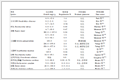
Table 1.
Crystal data and structure refinement parameters of compound 1

Synthesis and magnetic properties of one-dimensional chain rare-earth borates Cd4LnO(BO3)3 (Ln=Yb, Dy)
Hui LI , Shuang LI , Yanhong WANG , Yun LÜ , Hongcheng LU


Low-dimensional magnetic materials have been a hot topic in materials chemistry and condensed matter physics due to their reduced dimensionality, which often gives rise to magnetic behaviors that are absent in conventional three-dimensional systems[1-2]. In 1D spin chains, strong intrachain interactions combined with much weaker interchain coupling enhance quantum fluctuations and suppress the establishment of long-range magnetic order (LRO)[3-5]. Such characteristics make 1D magnets ideal platforms for investigating unusual magnetic ground states and quantum phenomena[6]. For example, spinon excitation in spin-1/2 Heisenberg antiferromagnetic chain is observed in classic compounds such as KCuF3[7], the Haldane gap in integer-spin antiferromagnetic chains appears in typical S=1 systems such as CsNiCl3[8] and Ni(C2H8N2)2NO2(ClO4)[9], and spin-Peierls transition occurs in a 1D S= 1/2 chain CuGeO3[10], while field-induced magnetic phase transitions[11-13] and pronounced short-range magnetic ordering[14-15] are also commonly found in many 1D magnetic systems. Compared with transition-metal-based 1D magnets, the rare-earth-based magnetic systems exhibit significantly richer magnetic behaviors owing to the strong spin-orbit coupling, large unquenched orbital angular momentum, and pronounced crystal-field splitting of rare-earth ions[16-17]. These intrinsic characteristics often result in strong single-ion anisotropy[18-19], anisotropic exchange interactions[20-21], and enhanced magnetocaloric effects[22-23].
To date, extensive efforts have been devoted to 1D magnetic chains constructed from 3d transition-metal ions, but 1D magnetic chains based on rare-earth ions remain comparatively underexplored[24]. Nevertheless, rare-earth 1D magnetic systems mainly include oxyborates[25], hydroxyl-bridged chains[26], carboxylate-based coordination polymers[27], halide chains[28], and so on[29]. Depending on the bridging mode and chain geometry, these systems exhibit diverse magnetic properties. Among various rare-earth magnetic systems, rare-earth borate compounds have attracted considerable attention due to their rich structural diversity[30-31]. Recently, the Zou and Chen groups have reported the interesting luminescence properties of Cd4YbO(BO3)3 (1) and Cd4DyO(BO3)3 (2)[32-33], which have a 1D chain structure. However, their magnetic properties have not yet been investigated. Herein, to further study the magnetic properties of this system, we synthesize 1 and 2 by the high-temperature solid-state method. Magnetic susceptibility results indicate dominant antiferromagnetic exchange interactions and the absence of LRO down to 2 K for 1 and 2.
Ytterbium oxide (Yb2O3, 99.99%, Adamas, Titan Scientific Co., Ltd.), dysprosium oxide (Dy2O3, 99.99%, Anhui Senrise Technologies Co., Ltd.), cadmium oxide (CdO, 99.99%, Shanghai Aladdin Biochemical Technology Co., Ltd.), boric acid (H3BO3, AR, Energy Chemical, Titan Scientific Co., Ltd.), sodium fluoride (NaF, 99%, Adamas, Titan Scientific Co., Ltd.), sodium tetraborate decahydrate (Na2B4O7·10H2O, 99%, Bide Pharmatech Co., Ltd.) and anhydrous ethanol (C2H5OH, AR, Sinopharm Chemical Reagent Co., Ltd.) were used as received. Powder X-ray diffraction (PXRD) patterns were recorded on a Rigaku SmartLab SE powder X-ray diffractometer using Cu Kα radiation (λ=0.154 059 3 nm) at room temperature in the 2θ range of 10°-70°, in which the X-ray tube was operated at 40 kV and 45 mA. The FTIR spectra were collected on a Bruker INVENIO-R FT-IR Spectrometer in the range of 400-4 000 cm-1 with the use of a KBr pellet. Thermogravimetric analysis (TGA) was carried out on a Diamond TG-DTA thermal analyzer instrument with a heating rate of 10 ℃·min-1 in an atmosphere of flowing N2 in the temperature range from ambient temperature to 1 000 ℃. The UV-Vis-NIR optical diffuse reflectance spectra were measured at room temperature with a UV-2600 Shimadzu spectrometer. A BaSO4 plate was used as a standard (100% reflectance). The magnetization data were recorded using a superconducting quantum interference device (SQUID). Powder samples 1 and 2 were individually wrapped in a preservative film and placed in a sample holder. Magnetic susceptibilities were measured under an applied field of 1 000 Oe between 2 and 300 K. Magnetization was measured at 2 K in an applied field from -7 to 7 T. The diamagnetic contribution was subtracted by using Pascal′s constants[34].
White powder samples of 1 and 2 were prepared by the solid-state method. Stoichiometric amounts of CdO (0.256 8 g, 2.00 mmol), Yb2O3 (0.098 5 g, 0.25 mmol) or Dy2O3 (0.093 2 g, 0.25 mmol), and H3BO3 (0.092 7 g, 1.50 mmol) were weighed and ground thoroughly with 3-4 mL of anhydrous ethanol. After the anhydrous ethanol was removed by evaporation in an oven at 60 ℃, the powder sample was transferred to the alumina crucible. Then, the mixtures were heated to 950 ℃ (for 1) or 900 ℃ (for 2), held for 120 h (for 1) or 72 h (for 2), and cooled to ambient temperature at a rate of 1.5 ℃·min-1.
For the growth of single crystal samples of 1, CdO (0.719 1 g, 5.60 mmol), Yb2O3 (0.275 9 g, 0.70 mmol), H3BO3 (0.346 3 g, 5.60 mmol), Na2B4O7·10H2O (1.067 8 g, 2.80 mmol), and NaF (0.117 6 g, 2.80 mmol) were ground and then loaded into a platinum crucible. The sample was heated to 600 ℃ and kept at this temperature for one day, followed by heating at 950 ℃ for 6 h, then cooled slowly to 700 ℃ at 1.5 ℃·h-1, to 400 ℃ at 5 ℃·h-1, and finally rapidly to room temperature at 20 ℃·h-1. Excess flux was washed away with hot water, and then the transparent prism-like crystals of 1 were obtained.
Crystallographic data of 1 were collected on a Rigaku XtaLAB mini Ⅱ with Mo Kα radiation (λ=0.071 073 nm) at 293.15 K. The cell refinement, data collection, and reduction were run by the CrysAlisPro software package. The structure was solved by intrinsic phasing using the program SHELXT[35] and subsequently refined by the full-matrix least squares method on F 2 with anisotropic thermal parameters for all non-hydrogen atoms using the program SHELXL[36] with the Olex2 package[37]. No higher symmetry was found by using the PLATON program[38]. The crystallographic data of 1 are shown in Table 1.
 下载:
导出CSV
| Parameter | 1 | Parameter | 1 | |
| Formula weight | 815.07 | Dc / (g·cm-3) | 6.409 | |
| Temperature / K | 293.15 | μ / mm-1 | 20.914 | |
| Crystal system | Monoclinic | F(000) | 714 | |
| Space group | Cm | 2θ range/(°) | 5.166-59.988 | |
| a / nm | 0.792 22(4) | Reflection collected | 2 656 | |
| b / nm | 1.576 85(6) | Goodness-of-fit on F 2 | 1.095 | |
| c / nm | 0.343 46(2) | R1, wR2 [I≥2σ(I)]* | 0.033 7, 0.092 4 | |
| β / (°) | 100.144(4) | R1, wR2 (all data) | 0.033 8, 0.092 5 | |
| V / nm3 | 0.422 35(4) | Rint | 0.038 1 | |
| Z | 2 | Flack parameter | 0.50(3) | |
| * R1=∑||Fo|-|Fc||/∑|Fo|, wR2={∑[w(Fo2-Fc2)2]/∑w(Fo2)2}1/2. | ||||
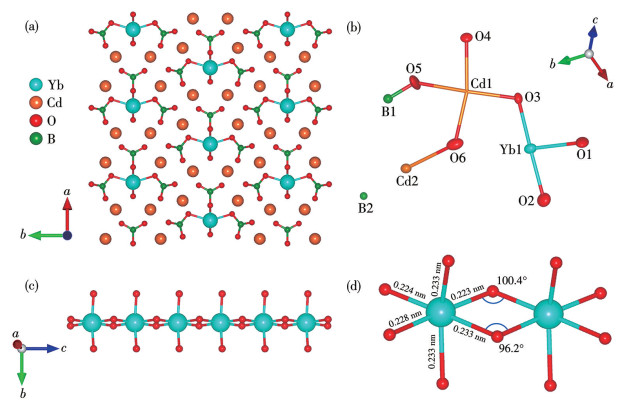
The obtained structural parameters are consistent with those reported previously[32]. Because 1 and 2 are isostructural, only the crystal structure of 1 is described below. 1 crystallizes in the monoclinic space group Cm, and in its asymmetric unit (Fig. 1b), there are two Cd2+ ions, one Yb3+ ion, six O atoms, and two B atoms. As shown in Fig. 1a, 1 consists of isolated 1D Yb3+-based chains along the c-axis separated by nonmagnetic Cd2+ ions and BO33- groups, which are nearly parallel to the ab plane. The B—O distances within the BO33- groups are in the range of 0.133-0.143 nm, and the Cd2+ centers are coordinated by oxygen atoms with Cd—O bond lengths of 0.223-0.240 nm. Fig. 1c clearly illustrates that the adjacent Yb3+ centers are linked through two bridging oxygen atoms from BO33- and [CdO6] groups to form an infinite linear chain. The Yb3+ ions form a uniform magnetic chain along the c-axis, and the nearest-neighbor Yb…Yb distance within the chain is 0.343 nm (Fig. 1c). In the ab plane, the nearest interchain Yb…Yb separation is 0.792 nm, which is significantly longer than the intrachain Yb…Yb distance, suggesting that the magnetic exchange is predominantly confined along the chain direction. Moreover, as shown in Fig. 1d, each Yb3+ ion is coordinated by oxygen atoms in a distorted polyhedral environment, with Yb—O bond lengths ranging from 0.223 to 0.233 nm. The Yb—O—Yb bond angles are 96.2° and 100.4°.
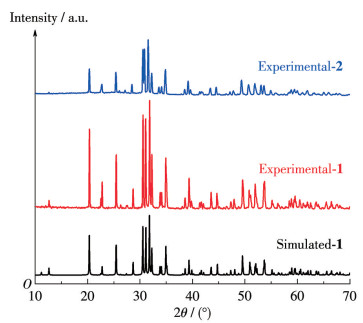
The phase purities of 1 and 2 were confirmed by the PXRD measurement (Fig. 2). The peak positions of 1 and 2 were consistent with the simulated patterns of 1, indicating that they are pure phases.
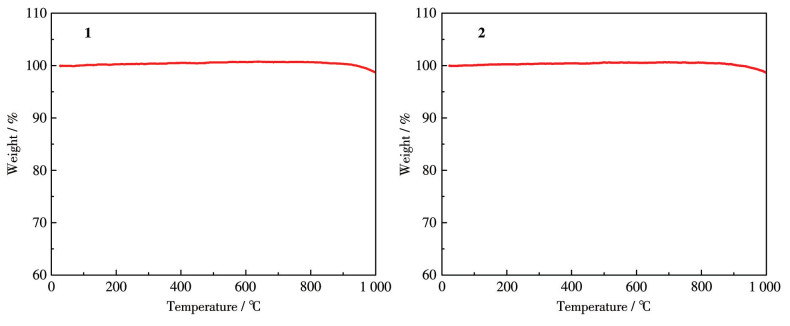
To investigate the thermal stabilities of 1 and 2, thermogravimetric measurements were performed. It can be found that the TGA curves of 1 and 2 were similar. The TGA results show that 1 and 2 had thermal stability up to 930 ℃ (for 1) and 900 ℃ (for 2) (Fig. 3). These decomposition temperatures were higher than those of other borates[39-40], indicating that the compounds have good thermal stability and a wide range of applicable temperatures.
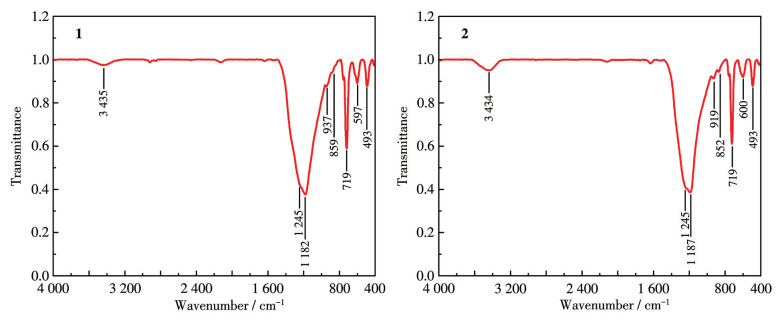
The FTIR spectra of 1 and 2 are shown in Fig. 4. The strong absorption bands located at ca. 1 245 cm-1 and ca. 1 182 cm-1 are assigned to the asymmetric stretching vibrations of the trigonal planar BO33- units[41]. The band at ca. 719 cm-1 can be attributed to the in-plane bending vibration of the B—O bonds within the BO3 groups[41]. Additional peaks at ca. 597 cm-1 and ca. 493 cm-1 are associated with out-of-plane bending modes of the borate units[41]. A broad band centered at around 3 434-3 435 cm-1 was observed in both samples, which is attributed to the O—H stretching vibration from water molecules absorbed on the sample surface from air[42].
The optical band gap analysis based on the UV-Vis-NIR diffuse reflectance data (Fig. 5) reveals that 1 and 2 are wide-band-gap semiconductors with optical band gaps of 3.74 and 3.57 eV, respectively. These values were close to those of Cd4YO(BO3)3 (3.78 eV)[43], Cd4GdO(BO3)3 (3.80 eV)[43], and Cd4LuO(BO3)3 (3.70 eV)[43].
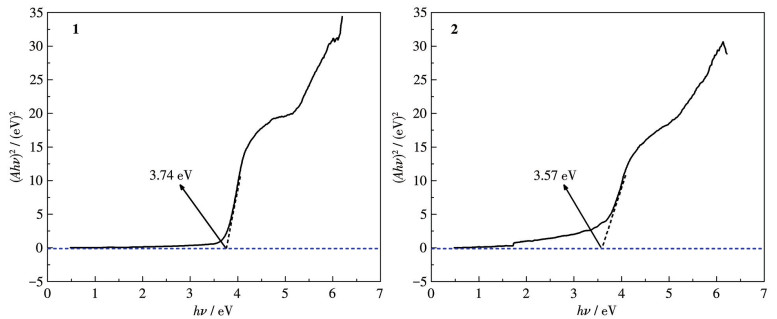
Fig. 6a and 7a show the temperature-dependent magnetic susceptibilities of compounds 1 and 2, measured at 1 000 Oe between 2 and 300 K. Both magnetic susceptibilities increased monotonically, with no divergence between zero-field cooling (ZFC) and field-cooling (FC) curves, ruling out spin-canting behavior as the temperature decreased. No anomaly for LRO was observed down to 2 K. Considering that crystal-field effects can influence the temperature dependence of magnetic susceptibility in Ln3+ compounds, Curie-Weiss fittings were performed in different temperature ranges to evaluate the magnetic behavior.
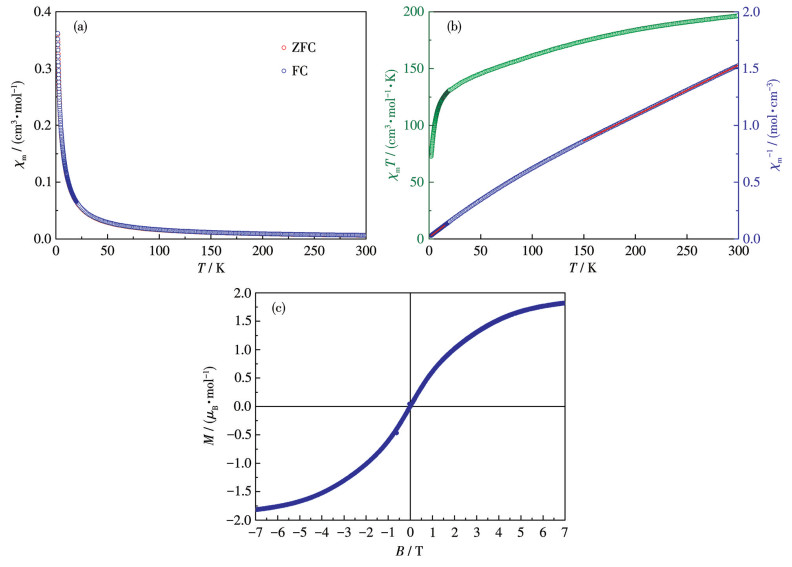
As shown in Fig. 6b, a high-temperature Curie-Weiss fit (150-300 K) applied to inverse susceptibility χm-1 resulted in values of C=2.13 cm3·mol-1·K and μeff(HT)=4.13μB (per mole of Yb3+, the same hereinafter), which are in good agreement with the expected value of 4.53μB (g=8/7, J=7/2). The Weiss temperature θHT was found to be -37.80 K, suggesting that the dominant exchange interaction in 1 is antiferromagnetic. In contrast, a low-temperature Curie-Weiss fit (2-15 K) resulted in values of C=1.45 cm3·mol-1·K, μeff(LT)=3.41μB, and θLT=-2.34 K. The difference between the Curie-Weiss parameters may be related to the crystal-field splitting of Yb3+ ions and the associated thermal depopulation of excited Stark levels upon cooling. The χmT value at room temperature was 1.9 cm3·mol-1·K and gradually decreased upon cooling. This behavior is commonly observed in anisotropic Yb3+ compounds and may be related to crystal-field effects and the progressive depopulation of excited Stark levels. Compared with related six-coordinate mononuclear Yb3+ compounds[44-45], the lower χmT value of 1 supports the presence of weak antiferromagnetic correlations between Yb3+ ions. Fig. 6c shows the isothermal magnetization curve of 1 at 2 K. Below 1 T, the magnetization increased linearly with the increase of the magnetic field, and when the field reached 7 T, the magnetization of 1 was 1.8μB without reaching full saturation, compared to the theoretical saturation magnetization of 4.0μB per mole of Yb3+. The non-saturating magnetisation behaviour may be attributed to anisotropic effective moments and crystal-field effects of the Yb3+ ions. At the same time, there was no hysteresis, indicating the absence of significant ferromagnetic order or magnetic hysteresis behavior in 1.
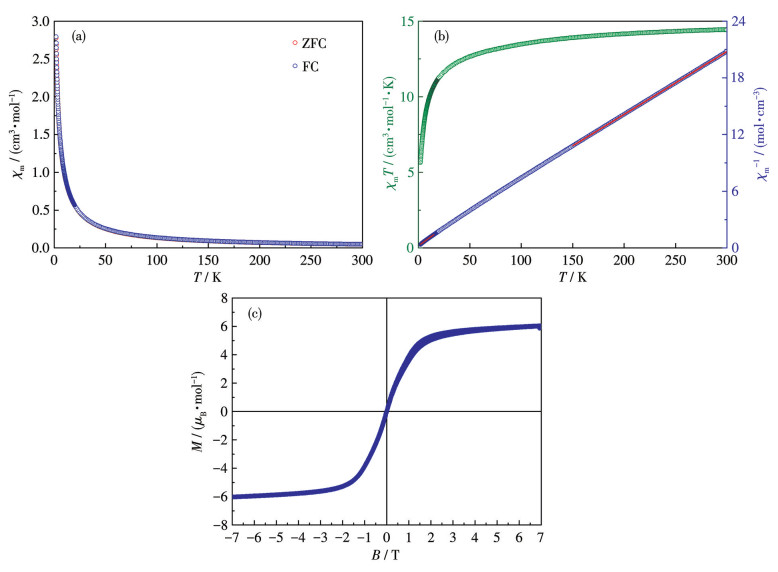
As shown in Fig. 7a, a high-temperature Curie-Weiss fit (150-300 K) applied to inverse susceptibility χm-1 resulted in values of C=14.91 cm3·mol-1·K and μeff(HT)=10.92μB (per mole of Dy3+, the same hereinafter), which is in good agreement with the expected value of 10.65μB (g=4/3, J=15/2) for free Dy3+. The Weiss temperature θHT was found to be -11.46 K, suggesting that the dominant exchange interaction in 2 is antiferromagnetic. In contrast, a low-temperature Curie-Weiss fit (2-15 K) resulted in values of C=12.70 cm3·mol-1·K, μeff=10.08μB, and θLT=-2.93 K, and the pronounced reduction of the effective moment upon cooling may be related to the progressive depopulation of excited Stark levels arising from crystal-field splitting. The χmT value at room temperature was 14.35 cm3·mol-1·K and then decreased upon cooling. This behavior may be associated with the strong crystal-field effects of Dy3+ ions. Compared with related six-coordinate mononuclear Dy3+ compounds[46-47], the reduced low-temperature χmT value of 2 supports the presence of weak antiferromagnetic correlations between Dy3+ ions. Fig. 7c shows the field-dependent magnetization of 2 at 2 K. The M-B plot initially increased linearly with the increase in field strength in the range of 0-2 T and then gradually approached saturation upon further increasing the magnetic field. At 7 T, the magnetization reached 6.04μB. The theoretical saturation magnetization per mole of Dy3+ is 10μB, and the measured magnetization is approximately half of the theoretical saturation magnetization, which can be attributed to the strong magnetic anisotropy of Dy3+ ions and the powder-averaging effect. This phenomenon also occurs in Dy(BaBO3)3[48], KBaDy(BO3)2[49], Dy2Be2GeO7[50], and so on[51-52]. At the same time, similar to 1, no hysteresis was observed on the curve, indicating the absence of significant ferromagnetic order or magnetic hysteresis behavior in 2.
In summary, two isostructural 1D chain rare-earth borate compounds Cd4LnO(BO3)3 [Ln=Yb (1), Dy (2)] were successfully synthesized via the high-temperature solid-state method. Magnetic data analysis reveals that antiferromagnetic interactions dominate in both compounds, and no long-range magnetic order occurs down to 2 K. These Ln-based magnetic compounds with a 1D structure provide a platform for exploring more physical phenomena in rare-earth-based low-dimensional materials.
CLIFFE M J, LEE J, PADDISON J A M, SCHOTT S, MUKHERJEE P, GAULTOIS M W, MANUEL P, SIRRINGHAUS H, DUTTON S E, GREY C P. Low-dimensional quantum magnetism in Cu(NCS)2: A molecular framework material[J]. Phys. Rev. B, 2018, 97: 144421 doi: 10.1103/PhysRevB.97.144421
CLARK L, ABDELDAIM A H. Quantum spin liquids from a materials perspective[J]. Annu. Rev. Mater. Res., 2021, 51: 495-519 doi: 10.1146/annurev-matsci-080819-011453
KATSUMATA K. Low-dimensional magnetic materials[J]. Curr. Opin. Solid State Mater. Sci., 1997, 2: 226-230 doi: 10.1016/S1359-0286(97)80070-8
SCHÖNHAMMER K. Physics in one dimension: Theoretical concepts for quantum many-body systems[J]. J. Phys.‒Condens. Matter, 2013, 25: 014001 doi: 10.1088/0953-8984/25/1/014001
VASILIEV A, VOLKOVA O, ZVEREVA E, MARKINA M. Milestones of low-D quantum magnetism[J]. NPJ Quantum Mater., 2018, 3: 18 doi: 10.1038/s41535-018-0090-7
LI A, WANG Y, TIAN H, YALIKUN A, JOURNAUX Y, LUO M, LU H. Multifunctional properties of a polar spin chain compound [N(C3H7)4][Cu(C8H4NO4)]·H2O exhibiting both one-dimensional magnetism and nonlinear optical activity[J]. Chin. Chem. Lett., 2024, 35: 108780 doi: 10.1016/j.cclet.2023.108780
COWLEY R A, TENNANT D A, NAGLER S E, PERRING T. Spinons and spin waves in one-dimensional Heisenberg antiferromagnets[J]. J. Magn. Magn. Mater., 1995, 140-144: 1651-1652 doi: 10.1016/0304-8853(94)00535-4
KENZELMANN M, COWLEY R A, BUYERS W J L, TUN Z, COLDEA R, ENDERLE M. Properties of Haldane excitations and multiparticle states in the antiferromagnetic spin-1 chain compound CsNiCl3[J]. Phys. Rev. B, 2002, 66: 024407 doi: 10.1103/PhysRevB.66.024407
RENARD J P, GADET V, REGNAULT L P, VERDAGUER M. Experiments on Haldane gap in quasi-one-dimensional antiferromagnets[J]. J. Magn. Magn. Mater., 1990, 90-91: 213-216 doi: 10.1016/S0304-8853(10)80074-5
HASE M. Spin-Peierls transition in CuGeO3[J]. Physica B, 1997, 237-238: 123-123 doi: 10.1016/S0921-4526(97)00071-9
MUKHERJEE C J, COLDEA R, TENNANT D A, KOZA M, ENDERLE M, HABICHT K, SMEIBIDL P, TYLCZYNSKI Z. Field-induced quantum phase transition in the quasi 1D XY-like antiferromagnet Cs2CoCl4[J]. J. Magn. Magn. Mater., 2004, 272-276: 920-921 doi: 10.1016/j.jmmm.2003.12.1115
LI S, WU Z L, WANG Y H, LUO J, DU K F, XU X Y, HU Z, CHEN Y, YANG J, LIU Z X, YU R, CUI Y, ZHOU R, LU H C, YU W Q. Haldane phase, field-induced magnetic ordering, and Tomonaga-Luttinger liquid behavior in the spin-one chain compound NiC2O4·2NH3[J]. Phys. Rev. B, 2025, 111: 195164 doi: 10.1103/PhysRevB.111.195164
ZHANG X W, HE Z, HAO Y Q, SHEN Y, SHEN S D, FENG Y, XU G Y, BUTCH N P, NILSEN G J, WANG W B, ZHAO J. Quantum phase transitions in a quasi-one-dimensional Ising quantum magnet in transverse fields[J]. Phys. Rev. B, 2021, 103: 144405 doi: 10.1103/PhysRevB.103.144405
LU H C, YAMAMOTO T, YOSHIMUNE W, HAYASHI N, KOBAYASHI Y, AJIRO Y, KAGEYAMA H. A nearly ideal one-dimensional S=5/2 antiferromagnet FeF3(4,4′-bpy)(4,4′-bpy=4,4′-bipyridyl) with strong intrachain interactions[J]. J. Am. Chem. Soc., 2015, 137: 9804-9807 doi: 10.1021/jacs.5b06120
WANG Y, DOU Y, TAKASTU H, WANG T, KOO H-J, WHANGBO M-H, KAGEYAMA H, LU H. Single-step synthesis of an ideal chain antiferromagnet [H2(4,4′-bipyridyl)](H3O)2Fe2F10 with spin S=5/2[J]. Angew. Chem.‒Int. Edit., 2025, 64: e202415700 doi: 10.1002/anie.202415700
WOODRUFF D N, WINPENNY R E P, LAYFIELD R A. Lanthanide single-molecule magnets[J]. Chem. Rev., 2013, 113: 5110-5148 doi: 10.1021/cr400018q
SESSOLI R, POWELL A K. Strategies towards single molecule magnets based on lanthanide ions[J]. Coord. Chem. Rev., 2009, 253: 2328-2341 doi: 10.1016/j.ccr.2008.12.014
RINEHART J D, LONG J R. Exploiting single-ion anisotropy in the design of f-element single-molecule magnets[J]. Chem. Sci., 2011, 2: 2078-2085 doi: 10.1039/c1sc00513h
LIU J L, CHEN Y C, TONG M L. Symmetry strategies for high performance lanthanide-based single-molecule magnets[J]. Chem. Soc. Rev., 2018, 47: 2431-2453 doi: 10.1039/C7CS00266A
VIERU V, IWAHARA N, UNGUR L, CHIBOTARU L F. Giant exchange interaction in mixed lanthanides[J]. Sci. Rep., 2016, 6: 24046 doi: 10.1038/srep24046
TANGOULIS V, ESTRADER M, FIGUEROLA A, RIBAS J, DIAZ C. Anisotropic exchange interactions in hetero-one-dimensional Ln3+-M3+ systems (Ln3+=Er, Yb; M3+=Cr, FeLS): Magnetometry and dual mode X-band electron paramagnetic resonance spectroscopic studies[J]. Chem. Phys., 2007, 336: 74-82 doi: 10.1016/j.chemphys.2007.05.016
EVANGELISTI M, CANDINI A, AFFRONTE M, PASCA E, DE JONGH L J, SCOTT R T W, BRECHIN E K. Magnetocaloric effect in spin-degenerated molecular nanomagnets[J]. Phys. Rev. B, 2009, 79: 104414 doi: 10.1103/PhysRevB.79.104414
VISINESCU D, VOICESCU M, SHOVA S, POPESCU D L, STOICA A C, STIRIBA S E, SHCHEGOLIKHIN A, JULVE M, LLORET F, ALEXANDRU M G. Magnetocaloric efficiency in a luminescent gadolinium(Ⅲ) field-induced single-ion magnet[J]. Inorg. Chem. Commun., 2026, 188: 116482 doi: 10.1016/j.inoche.2026.116482
ZHOU J, SHI T, HUANG R T, LIU A D, GONG G S, WANG Y Q, LING L S, LI J X, HAN Y Y, TONG W, XIA Z C, TIAN Z M. A family of quasi-one-dimensional zigzag spin-chain Ba2REV3O11 (RE=Pr, Nd, and Gd-Ho) compounds[J]. J. Mater. Chem. C, 2025, 13: 16040-16051 doi: 10.1039/D5TC00766F
KELLY N D, DUTTON S E. Magnetic properties of quasi-one-dimensional lanthanide calcium oxyborates Ca4LnO(BO3)3[J]. Inorg. Chem., 2020, 59: 9188-9195 doi: 10.1021/acs.inorgchem.0c01098
SONG Y S, YAN B, WENG L H. Four distinctive 1-D lanthanide carboxylate coordination polymers: Synthesis, crystal structures and spectral properties[J]. Polyhedron, 2007, 26: 4591-4601 doi: 10.1016/j.poly.2007.06.018
HAZRA D K, SEN R, KONER S, HELLIWELL M, MUKHERJEE M. Self-assembly of 1D coordination polymers of two rare-earth complexes with carboxylate linkages: Synthesis, crystal structure and DFT studies[J]. Polyhedron, 2011, 30: 2195-2202 doi: 10.1016/j.poly.2011.05.040
CASTELLANOS E, BENNER F, DESHAPRIYA S, DEMIR S. Magnetic hysteresis in 1D organometallic lanthanide chain compounds containing 4,4′-bipyridine[J]. Chem. Sci., 2025, 16: 18616-18631 doi: 10.1039/D5SC05460E
ACZEL A A, LI L, GARLEA V O, YAN J Q, WEICKERT F, JAIME M, MAIOROV B, MOVSHOVICH R, CIVALE L, KEPPENS V, MANDRUS D. Magnetic ordering in the frustrated J1-J2 Ising chain candidate BaNd2O4[J]. Phys. Rev. B, 2014, 90: 134403 doi: 10.1103/PhysRevB.90.134403
MUTAILIPU M, POEPPELMEIER K R, PAN S. Borates: A rich source for optical materials[J]. Chem. Rev., 2021, 121: 1130-1202 doi: 10.1021/acs.chemrev.0c00796
CHEN P Y, WANG G R. Syntheses, structure determination and characterization of two novel non-centrosymmetric mixed alkali rare-earth orthoborates: K3Li3RE7(BO3)9 (RE=Dy, Tb)[J]. Solid State Sci., 2020, 108: 106442 doi: 10.1016/j.solidstatesciences.2020.106442
ZOU G H, HUANG L, CAI H Q, WANG S C, YE N. Synthesis and characterization of Cd4YbO(BO3)3-A congruent melting cadmium-ytterbium oxyborate with large nonlinear optical properties[J]. New J. Chem., 2014, 38: 6186-6192 doi: 10.1039/C4NJ01421A
CHEN X A, AN Y, CHANG X A, XIAO W Q. A new cadmium rare-earth oxyborate Cd4DyO(BO3)3 and luminescent properties of the Cd4Dy1-xSmxO(BO3)3 (0≤x≤0.8) phosphors[J]. J. Solid State Chem., 2021, 295: 121944 doi: 10.1016/j.jssc.2020.121944
BAIN G A, BERRY J F. Diamagnetic corrections and Pascal's constants[J]. J. Chem. Educ., 2008, 85: 532 doi: 10.1021/ed085p532
SHELDRICK G M. SHELXT-Integrated space-group and crystal-structure determination[J]. Acta Crystallogr. Sect. A, 2015, A71: 3-8
SHELDRICK G M. Crystal structure refinement with SHELXL[J]. Acta Crystallogr. Sect. C, 2015, C71: 3-8
DOLOMANOV O V, BOURHIS L J, GILDEA R J, HOWARD J A K, PUSCHMANN H. OLEX2: A complete structure solution, refinement and analysis program[J]. J. Appl. Crystallogr., 2009, 42: 339-341 doi: 10.1107/S0021889808042726
SPEK A L. Single-crystal structure validation with the program PLATON[J]. J. Appl. Crystallogr., 2003, 36: 7-13 doi: 10.1107/S0021889802022112
KRZHIZHANOVSKAYA M G, BUBNOVA R S, EGORYSHEVA A V, KOZIN M S, VOLODIN V D, FILATOV S K. Synthesis, crystal structure and thermal behavior of a novel oxoborate SrBi2B4O10[J]. J. Solid State Chem., 2009, 182: 1260-1264 doi: 10.1016/j.jssc.2009.02.011
N′FAOUI F E, ARIDE J, BOUKHARI A, TAIBI M, SAADAOUI H, ROUZIÉRES M, SAADI M, EL AMMARI L. Crystal structure, spectroscopic, optical, thermal and magnetic studies of new orthoborate Sr2Co(BO3)2[J]. J. Solid State Chem., 2020, 283: 121167 doi: 10.1016/j.jssc.2019.121167
FROST R L, LÓPEZ A, XI Y, GRAÇA L M, SCHOLZ R. A vibrational spectroscopic study of the borate mineral takedaite Ca3(BO3)2[J]. Spectrochim. Acta Part A, 2014, 132: 833-7 doi: 10.1016/j.saa.2014.06.004
NGNIE G, ATANGANA R A, TOMOU-MBAHIM G I, SAMBANG L M, DEDZO G K, TCHAKOUTE H K, RÜSCHER C H, NGAMENI E. Effect of NaOH-treated sawdust incorporated in geopolymer matrix on compressive strength and adsorption property[J]. RSC Appl. Interfaces, 2024, 1: 1241-1251 doi: 10.1039/D4LF00176A
ZOU G H, MA Z J, WU K C, YE N. Cadmium-rare earth oxyborates Cd4ReO(BO3)3 (Re=Y, Gd, Lu): Congruently melting compounds with large SHG responses[J]. J. Mater. Chem., 2012, 22: 19911-19918 doi: 10.1039/c2jm33029f
BAKALI G P, VIPANCHI, ARMENIS A S, BAKA K H, VIGNESH K R, ALEXANDROPOULOS D I, STAMATATOS T C. A rare octahedral Yb(Ⅲ) complex exhibiting field-induced single-molecule magnet behavior[J]. ACS Omega, 2026, 11: 5937-5946 doi: 10.1021/acsomega.5c10236
LIU J L, YUAN K, LENG J D, UNGUR L, WERNSDORFER W, GUO F S, CHIBOTARU L F, TONG M L. A six-coordinate ytterbium complex exhibiting easy-plane anisotropy and field-induced single-ion magnet behavior[J]. Inorg. Chem., 2012, 51: 8538-8544 doi: 10.1021/ic301115b
ZHANG C, LIU M, CAI X, CHEN L, LIU Y Z, CUI H, ZHANG S L, YUAN A. Observation of field-induced single-ion magnet behavior in an octahedral dysprosium complex with a strong ligand field[J]. New J. Chem., 2021, 45: 2404-2409 doi: 10.1039/D0NJ05398H
VIGNESH K R, ALEXANDROPOULOS D I, XIE H, DUNBAR K R. Six-coordinate mononuclear dysprosium(Ⅲ) single-molecule magnets with the triphenylphosphine oxide ligand[J]. Dalton Trans., 2020, 49: 4694-4698 doi: 10.1039/D0DT00801J
GAO Y X, XU L M, TIAN Z M, YUAN S L. Synthesis and magnetism of RE(BaBO3)3 (RE=Dy, Ho, Er, Tm, Yb) series with rare earth ions on a two dimensional triangle-lattice[J]. J. Alloy. Compd., 2018, 745: 396-400 doi: 10.1016/j.jallcom.2018.02.110
SANDERS M B, CEVALLOS F A, CAVA R J. Magnetism in the KBaRE(BO3)2 (RE=Sm, Eu, Gd, Tb, Dy, Ho, Er, Tm, Yb, Lu) series: Materials with a triangular rare earth lattice[J]. Mater. Res. Express, 2017, 4: 036102 doi: 10.1088/2053-1591/aa60a2
ASHTAR M, BAI Y, XU L, WAN Z, WEI Z, LIU Y, MARWAT M A, TIAN Z. Structure and magnetic properties of melilite-type compounds RE2Be2GeO7 (RE=Pr, Nd, Gd-Yb) with rare-earth ions on Shastry-Sutherland lattice[J]. Inorg. Chem., 2021, 60: 3626-3634 doi: 10.1021/acs.inorgchem.0c03131
LV Y, WANG Y H, DOU Y L, LI A, TANG J K, VOLKOVA O S, VASILIEV A N, LU H C. Synthesis and characterizations of two-dimensional rare-earth magnetic compounds RE2O2CN2 (RE=Nd, Dy, Gd) with a frustrated triangular spin-lattice[J]. Cryst. Growth Des., 2025, 25: 2446-2455 doi: 10.1021/acs.cgd.4c01670
LV Y, WANG Y H, SHI N, HUANG K K, TANG J K, LU H C. Ba3BiPbREO(BO3)4 (RE=Pr, Nd, Gd, and Dy): Two-dimensional rare-earth antiferromagnets with a geometrically-perfect triangular lattice directed by a triangular BO3 unit[J]. Dalton Trans., 2026, 55: 3786-3794 doi: 10.1039/D5DT03066H

Figure 1 (a) Crystal structure of compound 1 along the c-axis; (b) Asymmetric unit of 1 with 80% probability displacement ellipsoids; (c) Yb3+-based chain; (d) Bond lengths of Yb—O and bond angles of Yb—O—Yb

Figure 5 Tauc plots for direct optical band gap estimation of compounds 1 and 2 based on the UV-Vis-NIR diffuse reflectance data

Figure 6 (a) Temperature-dependent magnetic susceptibilities of compound 1 measured at 0.1 T; (b) χm-1-T plot (blue) and χmT-T plot (green) of 1; (c) Magnetic field-dependent magnetization of 1 measured at 2 K

Figure 7 (a) Temperature-dependent magnetic susceptibilities of compound 2 measured at 0.1 T; (b) χm-1-T plot (blue) and χmT-T plot (green) of 2; (c) Magnetic field-dependent magnetization of 2 measured at 2 K
Table 1. Crystal data and structure refinement parameters of compound 1
| Parameter | 1 | Parameter | 1 | |
| Formula weight | 815.07 | Dc / (g·cm-3) | 6.409 | |
| Temperature / K | 293.15 | μ / mm-1 | 20.914 | |
| Crystal system | Monoclinic | F(000) | 714 | |
| Space group | Cm | 2θ range/(°) | 5.166-59.988 | |
| a / nm | 0.792 22(4) | Reflection collected | 2 656 | |
| b / nm | 1.576 85(6) | Goodness-of-fit on F 2 | 1.095 | |
| c / nm | 0.343 46(2) | R1, wR2 [I≥2σ(I)]* | 0.033 7, 0.092 4 | |
| β / (°) | 100.144(4) | R1, wR2 (all data) | 0.033 8, 0.092 5 | |
| V / nm3 | 0.422 35(4) | Rint | 0.038 1 | |
| Z | 2 | Flack parameter | 0.50(3) | |
| * R1=∑||Fo|-|Fc||/∑|Fo|, wR2={∑[w(Fo2-Fc2)2]/∑w(Fo2)2}1/2. | ||||
 下载: 导出CSV

 扫一扫看文章


扫一扫关注我们


 下载: