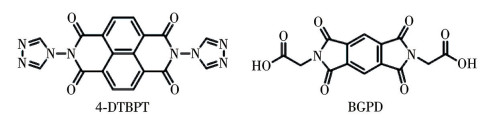
Figure 1.
Structural formulas of 4-DTBPT and BGPD

A one-dimensional cadmium-based coordination polymer as cathode material of lithium-ion battery
Lihang LAN , Yanyong SHA , Lina YANG , Wentao DAI , Daozhen SHEN , Wenlong LIU , Hongjiang LIU , Qi LIU


In recent decades, lithium-ion batteries (LIBs) have been widely used in daily life because of their high working voltage, large specific energy, small total volume, light weight, long service life, safety, and environmental friendliness[1-4]. However, with the development of the social economy, LIBs also need to improve energy density, cycle life, safety, and reduce costs to meet the energy storage needs of emerging electric vehicles and smart grids in the future[5-7]. The research on cathode materials of LIBs lags compared with the research progress of anode materials, and the capacity of LIBs is mainly limited by cathode materials[8-9]. It is difficult to further improve the actual specific capacity of commonly used inorganic cathode materials, owing to the incomplete delithiation of their structures, which cannot fulfill the demand of modern society for LIBs. Therefore, the research and development of high-performance cathode materials has become the focus of LIB research[10-12]. As inorganic electrode materials cannot meet the requirements of future development, for the sustainable development of society, many researchers have turned their attention to other alternative types of electrode materials, such as organic electrode materials[13-15]. Organic compounds as electrode materials for LIBs have attracted extensive attention owing to their advantages of being environmentally friendly, having a flexible structure, and being low-cost[16-17]. However, because they have serious dissolution issues in electrolytes, the electrochemical performance of many organic electrode materials reported is not ideal. To address this issue, several methods have been employed, including adding rigid groups[18-21], the use of solid electrolytes[22], doped graphene oxide[23-25], and constructing carbon-supported organic composites[26], constructing metal-organic frameworks (MOFs)/coordination polymers (CPs) by using organic materials and transition metal ions[27-28], etc.
CPs are organic-inorganic materials formed by the interaction of metal ions and organic ligands. Among them, 2D and 3D porous CPs are commonly known as MOFs. MOF/CP materials have become one of the materials with rapid development in recent decades due to their high porosity, low density, large specific surface area, regular pores, adjustable pore size, diversity of topological structure and tailorability, and it has been widely applied in various fields, such as catalysis, energy storage, and separation[29-40]. In 2007, Tarascon et al.[41] first used MOF-based material ([FeⅢ(OH)0.8F0.2(O2CC6H4CO2)]·H2O) as a cathode electrode material for LIBs, having an excellent cycling stability and a low capacity of 70 mA·g-1. Since then, a lot of 3D and 2D MOFs/CPs as cathode materials applied in LIBs have been reported[42-55]. But so far, there have been few reports on 1D CPs as cathode materials for LIBs. Recently, we reported two 1D CPs, namely Cu-CP and Co-DTBPT, which show excellent cycling performance but low capacity[27-28]. To advance the application of 1D CP-based cathode materials in lithium batteries, further developing new high-performance CP-based cathode materials and investigating the relationship between their structure and performance is a meaningful endeavor. As a continuation of our previous research work, in this work, we firstly designed and synthesized two kinds of organic ligands 4-DTBPT (2,7-di(4H-1,2,4-triazol-4yl)benzo[lmn][3,8]phenanthroline-1,3,6,8-(2H, 7H)-tetraone) and BGPD (N,N′-bis(glycinyl)pyromellitic diimide), containing redox active groups (C=O) (Fig. 1), and then used them to react with cadmium nitrate under hydrothermal conditions to form 1D CP: [Cd(4-DTBPT)(DMF)2(H2O)2](C10H4O8)·4-DTBPT·3H2O (Cd-CP, DMF=N,N-′dimethylformamide), where C10H4O82-=2,5-dicarboxyterephthalate, which originates from the decomposition of BGPD. When the Cd-CP electrode was used as the cathode for LIBs, the first discharge specific capacity was 78.3 mAh·g-1 at 0.05 mA·g-1, and the capacity retention was 85.7% after 50 cycles, showing better cycle stability.
BGPD and 4-DTBPT were synthesized according to the literature[27, 56]. All chemical reagents are analytical pure reagents provided by Shanghai Chemical Reagent Company.
4-DTBPT (0.05 mmol, 0.02 g) and BGPD (0.1 mmol, 0.033 2 g) were ultrasonically dissolved in 4 mL of DMF and 2 mL of distilled water, and transferred to a 15 mL Teflon-lined stainless-steel autoclave; then, Cd(NO3)2·4H2O (0.1 mmol, 0.030 8 g) was added into the autoclave. The autoclave was heated in an oven at 80 ℃ for 24 h, then cooled to room temperature at a rate of 5 ℃·h-1. The light yellow striped crystals of Cd-CP were collected by filtration. Yield: 65% (based on Cd). Anal. Calcd. for C52H44CdN18O23(%): C, 44.56; H, 3.14; N, 17.99. Found(%): C, 44. 13; H, 3.45; N, 17.42. IR (KBr, cm-1): 3 471 (s), 1 718 (s), 1 627 (s), 1 419 (w), 1 287 (m), 966 (m).
In a range of 4 000-400 cm-1, a Nicolai 460 spectrometer was employed to measure the Fourier transform infrared (FTIR) spectra of Cd-CP with potassium bromide pellets. Under an N2 atmosphere, with a heating rate of 10 ℃·min-1 and a temperature range from room temperature to 800 ℃, thermogravimetric analysis (TGA) was performed using a thermal analyzer (TG 209 F3). JEOL JEM-200CX transmission electron microscope (TEM, acceleration voltage: 200 kV) was used to analyze the morphology and microstructure of the sample. An X-ray diffractometer with Cu Kα radiation (D/Max 2500 PC, Rigaku, λ=0.154 06 nm) was used to record powder X-ray diffraction (PXRD) patterns of samples; the tube current was 300 mA, the tube voltage was 60 kV, and the scanning range was 2θ=5°-80°. A Shimadzu AXIS Ultra DLD X-ray photoelectron spectrometer was used to record X-ray photoelectron spectra (XPS). The N2 adsorption-desorption isotherm of the sample was measured by a surface area and pore analyzer (Micromeritics ASAP 2460) at 77 K. The specific surface area was calculated by the Brunauer-Emmett-Teller (BET) method, and the pore diameter and pore volume were obtained by the Barrett-Joyner-Halenda (BJH) method.
Bruker APEX-Ⅱ CCD diffractometer was used to collect single-crystal X-ray diffraction data of Cd-CP. The intensity reflections were collected by Mo Kα radiation (λ=0.071 073 nm) in a range of 2.32°-27.24°. Its structure was analyzed by the direct method using the SHELXL-97 program[57]. All non-hydrogen atoms were refined using anisotropic parameters. The disordered solvent molecules were treated using the PLATON/SQUEEZE procedure. The crystallographic data of Cd-CP are shown in Table 1.

 下载:
导出CSV
下载:
导出CSV
| Parameter | Cd-CP | Parameter | Cd-CP | |
| Empirical formula | C52H44CdN18O23 | Dc / (g·cm-3) | 1.386 | |
| Formula weight | 1 401.41 | μ(Mo Kα) / mm-1 | 0.442 | |
| T / K | 296(2) | F(000) | 684 | |
| Crystal system | Triclinic | Crystal size / mm | 0.1×0.08×0.06 | |
| Space group | P1 | θ range for data collection / (°) | 2.32-27.24 | |
| a / nm | 0.920 46(6) | Index ranges | -11 ≤ h ≤ 11, -13 ≤ k ≤ 13, -23 ≤ l ≤ 23 | |
| b / nm | 1.040 67(7) | Number of total reflections | 25 550 | |
| c / nm | 1.831 30(10) | Unique reflections | 7 421 (Rint=0.034 6) | |
| α / (°) | 74.529(2) | Data, Nres, Npar* | 7 474, 407, 21 | |
| β / (°) | 86.990(2) | Goodness-of-fit on F2 | 1.063 | |
| γ / (°) | 72.771(2) | R1, wR2 [I > 2σ(I)] | 0.048 2, 0.123 7 | |
| V / nm3 | 1.614 10(18) | R1, wR2 (all data) | 0.062 3, 0.130 0 | |
| Z | 1 | Largest diff. peak and hole / (e·nm-3) | 1 106 and -1 134 | |
| *Nres=Number of restraints, Npar=Number of parameters. | ||||
To study the electrochemical performance of Cd-CP, CR2032 coin-type half cells were fabricated in the Ar-filled glovebox. The preparation procedure of the Cd-CP electrode was as follows: 30% Cd-CP, 60% acetylene black, and 10% poly(tetrafluoroethylene) were evenly mixed in N-methylpyrrolidone (NMP); the resulting slurry was coated on 1 cm2 aluminum foil and dried in a vacuum at 80 ℃ for 12 h, with an average of about 1 mg of active material Cd-CP. Porous polypropylene and lithium foil were used as separator and counter electrode, respectively. 1 mol·L-1 LiPF6 solution in dimethyl carbonate (DMC), ethylene carbonate (EC), and diethyl carbonate (DEC) with a volume ratio of 1∶1∶1 as the electrolyte. An electrochemical workstation (Beijing Huake, CHI600E) was utilized to test the cyclic voltammetry (CV) curve and electrochemical impedance spectroscopy (EIS). The CV test was conducted between 1.5 and 4.0 V (vs Li+/Li) at 0.1 mV·s-1. In the frequency range of 10-2-105 Hz, the EIS test was performed at an amplitude of 5 mV. The cycle performance of galvanostatic charge/discharge (GCD) and the rate performance of the battery were employed by the Newwell cell test system (Newwell CT 3008 W). When the long cycle stability test was carried out at 0.05 A·g-1, the battery was first activated by five cycles at a low current density. When calculating the specific capacity of the Cd-CP electrode, only the mass of the active material Cd-CP was considered.
The coordination environment diagram of Cd-CP depicted in Fig. 2a shows that each Cd(Ⅱ) ion coordinates with two oxygen atoms from DMF molecules, two nitrogen atoms from two 4-DTBPT ligands, and two oxygen atoms from water molecules to form an octahedral coordination configuration, where N1 and N1#1 locate at the axial positions, and O5, O5#1, O6, and O6#1 atoms are at the equator plane positions. The data for the bond angles (Table S1) demonstrate that the central ion Cd2+ occupies an octahedral coordination environment. The Cd—N bond length is 0.231 9 nm, which is longer than those of the Cd—O bonds in Cd-TIB and [Cd(BGPD)(H2O)2][33, 58]. From Fig.2b, it can be observed that 4-DTBPT ligands bridge adjacent Cd(Ⅱ) ions to produce a 1D chain structure. The formation of the 3D supramolecular network structure originates from the interaction between the free 4-DTBPT ligands and the C10H4O82- anion with 1D chains through hydrogen bonds (O—H…N and C—H…O, Table S2) and electrostatic forces, respectively, as presented in Fig.2c.
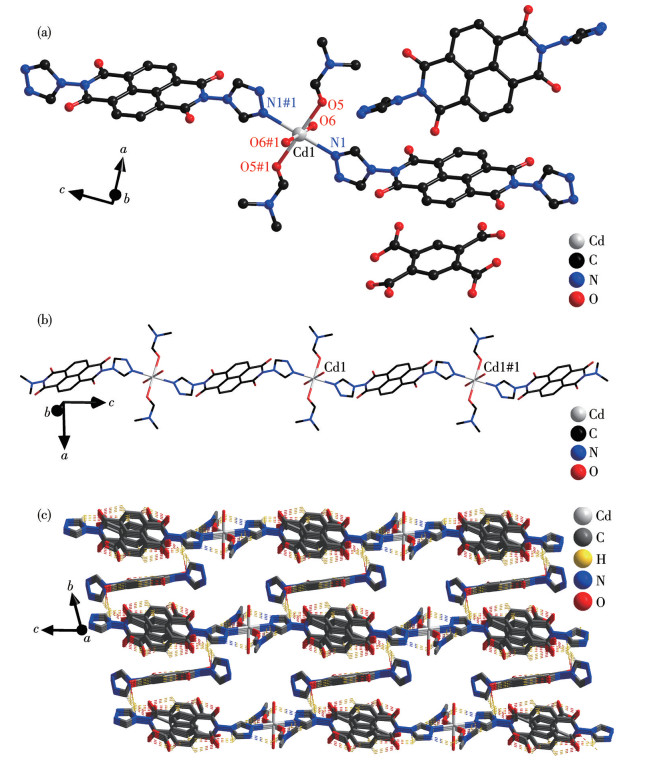
In panel a, H atoms are omitted for clarity; Symmetry code: #1: -1+x, y, z.
[Cd(4-DTBPT)(DMF)2(H2O)2](C10H4O8)·4-DTBPT·3H2O (Cd-CP) can be obtained via the solvothermal reaction of Cd(NO3)2·4H2O, BGPD, and 4-DTBPT. In the solvothermal process, BGPD is decomposed into the C10H4O82- (2,5-dicarboxyterephthalate) anion. Interestingly, C10H4O82- itself does not coordinate with the Cd(Ⅱ) ion, but is embedded between 1D chains through electrostatic attraction (Fig. 2c). Fig. 3a depicts the FTIR spectra of Cd-CP and 4-DTBPT. As shown in Fig.3a, the main absorption peaks of Cd-CP originate from the ligand 4-DTBPT and the C10H4O82- anion. For Cd-CP, a strong and wide absorption peak appeared at 3 471 cm-1, which is attributed to the stretching vibration peak of O—H from the carboxyl group of the free C10H4O82- anion. The strong peak located at 1 718 cm-1 should belong to the stretching vibration peak of C=O from 4-DTBPT in Cd-CP. Compared with the C=O stretching vibration peak of free 4-DTBPT, which appeared at around 1 725 cm-1, the position of the peak has shifted to the blue, revealing that 4-DTBPT has coordinated with Cd2+ ions. Moreover, the peak at 1 384 cm-1 is ascribed to the C-N stretching vibration peak of 4-DTBPT and DMF in Cd-CP, and the two peaks at 1 618 and 1 426 cm-1 belong to the C=N stretching vibration peak of 4-DTBPT and the C—H stretching vibration peak of —CH3 on DMF, respectively. The FTIR analysis results further confirm the single-crystal structure analysis results. Additionally, to determine the purity of as-synthesized Cd-CP, its PXRD pattern was measured (Fig. 3b). It can be found that the PXRD peak positions for as-synthesized Cd-CP are basically the same with that of the simulated peaks, demonstrating that as-synthesized Cd-CP has a pure single phase.
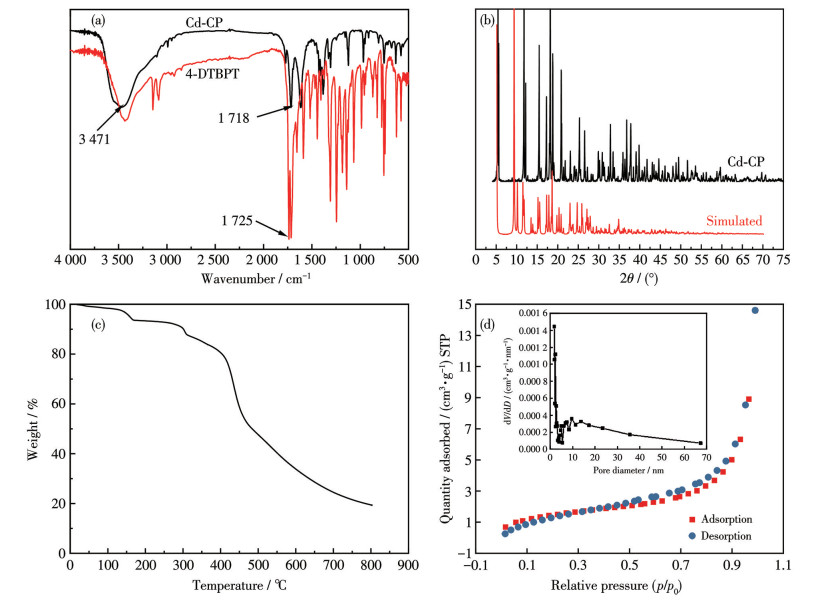
Inset: pore size distribution curve.
The TGA results showed that the main structure of Cd-CP was stable below 260 ℃ (Fig.3c), indicating the safety of Cd-CP as an active electrochemical material in LIBs. As found in Fig. 3c, the weight loss of 3.72% happened between 18 and 150 ℃, which should be attributed to the loss of three crystalline water molecules (Calcd. 3.85%), the weight loss of 2.91% from 150 to 200 ℃ may be ascribed to the loss of two coordinated water molecules (Calcd. 2.57%), while the weight loss of 17.43% from 200 to 420 ℃ may be attributed to the disintegration of a C10H4O82- anion (Calcd. 17.98%). The remaining substance decomposed gradually as the temperature increased. Fig.3d presents the N2 adsorption-desorption isotherms for as-synthesized Cd-CP, which belongs to type Ⅲ. The specific surface area was 5 m2·g-1, and the total pore volume of single-point adsorption was 0.022 4 cm3·g-1. The inset in Fig. 3d presents the pore size distribution curve and the average pore size of 14.78 nm calculated using the BJH method. Aggregation of the nanoparticles and nanosheets results in the production of mesoporous materials. Hierarchical pores are beneficial to the diffusion and transfer of electrolyte ions and the enhancement of electrochemical performance.
TEM was used to measure the microstructure and morphology of the Cd-CP sample (Fig. 4a). It can be observed from Fig. 4a that the Cd-CP sample was stacked by nanoparticles and nanosheets. The crystal of Cd-CP was easily destroyed under the irradiation of a strong electron beam, resulting in the absence of lattice stripes in its high-resolution transmission electron microscope (Fig.4b)[27].
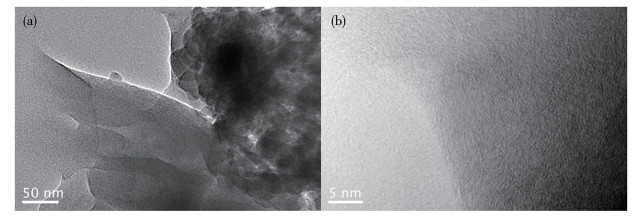
Fig. 5 shows the electrochemical performance of Cd-CP as the cathode material for LIBs. The GCD curves of the Cd-CP electrode at 50 mA·g-1 presented in Fig. 5a show that the discharge curve displayed a gentle plateau at around 2.5 V, and the first discharge specific capacity of the Cd-CP electrode was 78.3 mAh·g-1, and the initial Coulombic efficiency was 81.2%. Such a lower initial Coulombic efficiency may be ascribed to the decomposition of the electrolyte and the solid electrolyte interface (SEI) film produced on the electrode material surface[27-28]. After two cycles, the discharge capacity and charge capacity were almost the same, and the Coulombic efficiency increased to nearly 100%. After 10 cycles, the discharge specific capacity remained at 55.7 mAh·g-1. As seen from Fig. 5b, an obvious charge/discharge platform appeared on each GCD curve for the Cd-CP electrode at various densities. According to the calculation of the GCD curve at 0.05 A·g-1, the average discharge potential was 2.45 V.
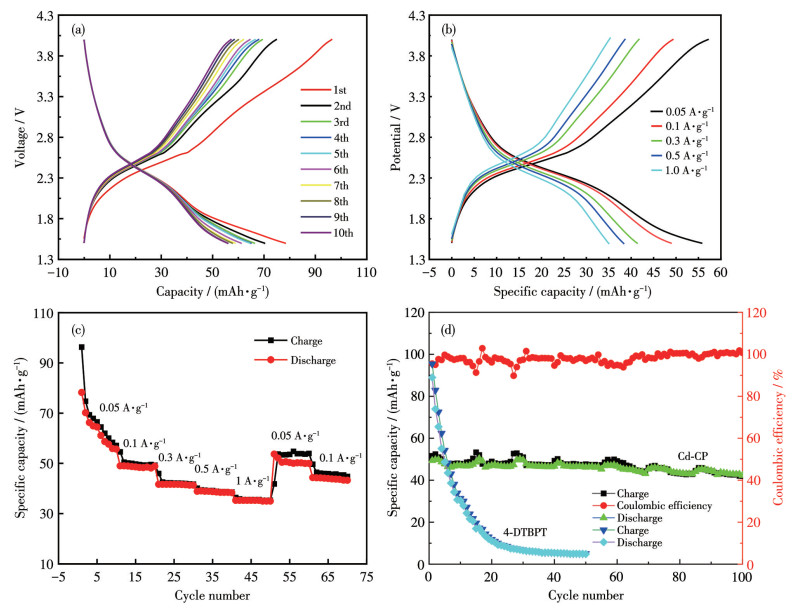
Fig. 5c shows the rate performance of the Cd-CP electrode. As the current density increased from 0.05 A·g-1 to 0.1, 0.3, 0.5, and 1 A·g-1, the discharge specific capacities were 57.1, 49.3, 42.1, 38.7, and 35.1 mAh·g-1, respectively. As the current density returned to 0.05 and 0.1 A·g-1, the capacities of the electrode also returned to 53.7 and 44.5 mAh·g-1, respectively, showing that the Cd-CP electrode has better rate performance and electrochemical reversibility. The cycle performance of Cd-CP and 4-DTBPT electrodes at 0.05 mA·g-1 is shown in Fig. 5d.
After 100 cycles, the discharge specific capacity of the Cd-CP electrode was still maintained at 42.3 mAh·g-1, which was comparable to that of some reported CP/MOF based cathodes (Table S3), and the capacity retention of the Cd-CP electrode was 85.7%, revealing it possesses better cycle stability. For the 4-DTBPT electrode, due to its dissolution in the electrolyte, the discharge specific capacity reduced to 4.8 mAh·g-1 after 50 cycles. This fact fully demonstrates that constructing a coordination polymer is an effective route to solve the problem of poor cycling performance of organic electrode materials.
Fig. 6a shows the CV curves of the Cd-CP electrode at a scan rate of 0.1 mV·s-1. The reduction peak at 2.5 V is due to the embedding of Li+ into Cd-CP. The oxidation peak at 2.2 V is due to the separation of Li+ from Cd-CP material. Furthermore, apart from the initial two cycles, the peak potentials on other CV curves stayed almost unchanged during cycling, suggesting that the redox reaction of the electrode was reversible, and the electrode has outstanding cycling stability.
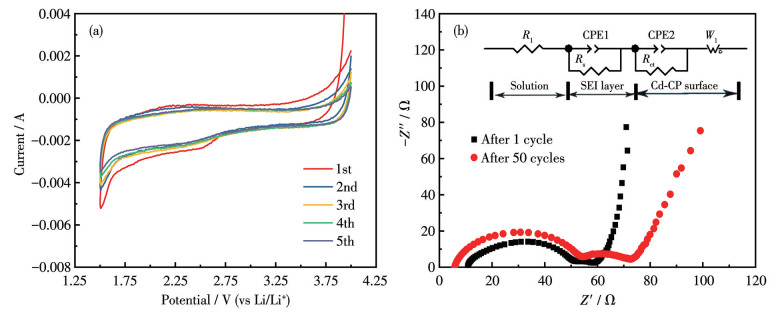
The EIS spectra of the Cd-CP electrode after 1 and 50 cycles are depicted in Fig.6b. As observed from Fig. 6b, each Nyquist plot had two semicircles in the high-frequency region and a tilted straight line in the low-frequency region. The first semicircle in the highest frequency region is caused by the SEI passivation film, and the second semicircle is due to the charge transfer resistance (Rct) generated in the charge transfer process. By using the Zview software, the equivalent circuit depicted in the inset of Fig. 6b was utilized to simulate the EIS data of the first cycle and the fiftieth cycle; the obtained results are displayed in Table S4. Rs, W1, and CPE represent the SEI film resistance, Warburg impedance, and constant phase element, respectively. R1 stands for the resistance of the electrolyte and the internal resistance of the battery. From Table S4, it can be found that R1 values after 1 and 50 cycles remained basically unchanged, which were 5.73 and 5.87 Ω, respectively, indicating the Cd-CP cathode has good stability. The Rs value (46.1 Ω) after 50 cycles was slightly higher than the value after 1 cycle (42.4 Ω), indicating that the SEI film thickness has hardly changed after 50 cycles. The value of Rct (21.5 Ω) after 50 cycles was higher than the value after 1 cycle (3.83 Ω), which may be ascribed to the dropping of some Cd-CP and acetylene black. The tilted straight lines with the phase angles greater than 45° indicate a faster migration rate of electrolyte ions[33].
Based on the following formula, the value of the lithium-ion diffusion coefficient for Cd-CP was calculated:
|
|
(1) |
where F is the Faraday constant, A is the surface area of the electrode, Vm stands for the molar volume of the Cd-CP, σ is the Warburg coefficient and is the slope of the linear fit line for the plot of Z′-ω-1/2, as shown in Fig.S1, and dE/dx is the slope of the electrode potential (E) in function of the composition (x). During the first discharge, DLi of the Cd-CP electrode was 6.3×10⁻¹² cm2·s-1, which was higher than that of the reported Cd-based electrode[59].
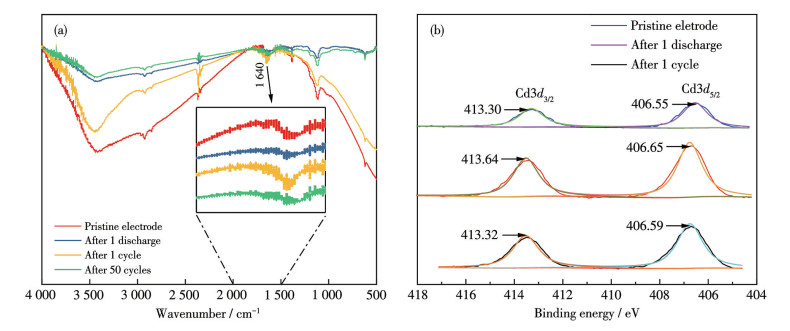
The electrochemical reaction mechanism of the Cd-CP electrode was studied by XPS and FTIR spectroscopy under different states. Fig. 7a displays the FTIR spectra of the pristine Cd-CP electrode, the Cd-CP electrode after the first discharge, the Cd-CP electrodes after 1 cycle and 50 cycles. As found in Fig. 7a, a stretching vibration peak of C=O appeared at 1 640 cm-1 in each FTIR spectrum. The strength of the C=O characteristic peak for the electrode after the first discharge was weaker than that of the pristine electrode, meaning Li+ ions have combined with C=O groups. While the strength of the C=O characteristic peak for the electrode after 1 cycle and 50 cycles was restored, revealing the removal of Li+ ions from the Cd-CP electrode and the C=O groups reversibly participating in cycle of charge-discharge. Fig. 7b is the XPS spectra of Cd2p for the pristine Cd-CP cathode, the Cd-CP cathode after the first discharge, and the Cd-CP electrode after one cycle. There were two obvious peaks at 413.30 and 406.55 eV for the pristine electrode, which belong to Cd3d3/2 and Cd3d5/2 from Cd(Ⅱ) ions, respectively, and the difference of 6.75 eV can be calculated according to the two binding energy values. The two binding energies increased to 413.64 and 406.65 eV after the first discharge, respectively, and the difference calculated increased to 6.99 eV. The increase in this difference may be due to the formation of Cd(Ⅰ) ions during discharge[60]. The two binding energies after one cycle were 413.32 and 406.59 eV, respectively, moving to the original values (413.64 and 406.65 eV), which means that after the Cd-CP electrode was charged at 4.0 V, some Cd(Ⅰ) ions have been transformed into Cd(Ⅱ); a similar transformation has been observed in Cu-CP and Co-DTBPT electrode materials for LIBs[27-28].
Based on the experimental facts mentioned above, a probable electrochemical reaction mechanism for the Cd-CP electrode proposed by us is as follows:
|
|
(2) |
As seen in equation 2 above, theoretically, 5 mol of Li+ ions can be intercalated into 1 mol of Cd-CP molecules. Among 5 mol of Li+ ions, 1 mol of Li+ ions results in the reduction of 1 mol of Cd(Ⅱ) ions to 1 mol of Cd(Ⅰ) ions, while during the first discharge process, 4 mol of Li+ ions can coordinate with 2 mol of 4-DTBPT molecules. Fig. 8 demonstrates the possible process of 2 mol of Li+ ions insertion into 1 mol of 4-DTBPT molecules. Therefore, considering 1 mol of Cd-CP molecules obtaining 5 mol of electrons, the theoretical capacity of Cd-CP is calculated to be 99.5 mAh·g-1, which is close to the initial discharge capacity (78.3 mAh·g-1). More research work is needed to deeply elucidate the Cd-CP electrode reaction mechanism.

A novel 1D cadmium-based CP, [Cd(4-DTBPT)(DMF)2(H2O)2](C10H4O8)·4-DTBPT·3H2O, was first synthesized, and its electrochemical performance as the cathode material of LIBs was evaluated. The Cd-CP electrode delivered the first discharge specific capacity of 78.3 mAh·g-1, with a capacity retention of 85.7% after 50 cycles at 0.05 A·g-1, showing higher cycle stability. Such higher stability should be ascribed to the insolubility of Cd-CP in the electrolyte. The mechanism research according to ex-situ FTIR and XPS spectra at different states reveals that Cd(Ⅱ) ions and 4-DTBPT ligands may both be involved in the charge and discharge process of the Cd-CP electrode. Compared with other CPs-based cathode materials, although the discharge capacity of the Cd-CP electrode is not high, it possesses potential application prospects in electronic products that do not require high energy density. Moreover, studying the relationship between the electrochemical performance of Cd-CP and its structure and composition will provide reference for the design and synthesis of new high-performance CPs-based cathode materials of LIBs in the future. Relevant research work is currently being carried out in our laboratory.
ARMAND M, TARASCON J M. Building better batteries[J]. Nature, 2008, 451(7179): 652-657 doi: 10.1038/451652a
GU W, HE D, QIN Y T, FU C C, LU J H, WANG T Y, WANG G X, SUN B. From efficiency to sustainability: Organic additives for interfacial regulation in lithium metal batteries[J]. Chem. Sci., 2025, 16(39): 18050-18091 doi: 10.1039/D5SC03975D
WEISS M, RUESS R, KASNATSCHEEW J, LEVARTOVSKY Y, LEVY N R, MINNMANN P, STOLZ L, WALDMANN T, WOHLFAHRT-MEHRENS M, AURBACH D, WINTER M, EIN-ELI Y, JANEK J. Fast charging of lithium-ion batteries: A review of materials aspects[J]. Adv. Energy Mater., 2021, 11(33): 2101126 doi: 10.1002/aenm.202101126
HE Y B, QIAO Y, CHANG Z, CAO X, JIA M, HE P, ZHOU H S. Developing a "polysulfide-phobic" strategy to restrain shuttle effect in lithium-sulfur batteries[J]. Angew. Chem.‒Int. Edit., 2019, 58(34): 11774-11778 doi: 10.1002/anie.201906055
MANTHIRAM A. An outlook on lithium ion battery technology[J]. ACS Cent. Sci., 2017, 3(10): 1063-1069 doi: 10.1021/acscentsci.7b00288
GOODENOUGH J B, PARK K S. The Li-ion rechargeable battery: A perspective[J]. J. Am. Chem. Soc., 2013, 135(4): 1167-1176 doi: 10.1021/ja3091438
CHOI J W, AURBACH D. Promise and reality of post-lithium-ion batteries with high energy densities[J]. Nat. Rev. Mater., 2016, 1(4): 2101126
BARBOSA J C, GONÇALVES R, COSTA C M, LANCEROS-MENDEZ S. Recent advances on materials for lithium-ion batteries[J]. Energies, 2021, 14(11): 3145 doi: 10.3390/en14113145
UDDIN M J, ALABOINA P K, CHO S J. Nanostructured cathode materials synthesis for lithium-ion batteries[J]. Mater. Today Energy, 2017, 5: 138-157 doi: 10.1016/j.mtener.2017.06.008
BAI Q S, HUANG J L, TANG K H, ZHU Y L, WU D C. Arylamine-linked porous organic polymers with abundant redox-active sites as high-capacity and high-rate organic cathodes for lithium-ion batteries[J]. Adv. Mater., 2025, 37(14): 2416661 doi: 10.1002/adma.202416661
REDDY R C K, LIN X M, ZEB A, SU C Y. Metal-organic frameworks and their derivatives as cathodes for lithium-ion battery applications: A review[J]. Electrochem. Energy Rev., 2021, 5(2): 312-347
YUAN L X, WANG Z H, ZHANG W X, HU X L, CHEN J T, HUANG Y H, GOODENOUGH J B. Development and challenges of LiFePO4 cathode material for lithium-ion batteries[J]. Energy Environ. Sci., 2011, 4(2): 269-284 doi: 10.1039/C0EE00029A
SONG Z P, ZHOU H S. Towards sustainable and versatile energy storage devices: An overview of organic electrode materials[J]. Energy Environ. Sci., 2013, 6(8): 2280-2301 doi: 10.1039/c3ee40709h
WANG J D, LAKRAYCHI A E, LIU X L, SIEUW L, MORARI C, POIZOT P, VLAD A. Conjugated sulfonamides as a class of organic lithium-ion positive electrodes[J]. Nat. Mater., 2021, 20(5): 665-673 doi: 10.1038/s41563-020-00869-1
POIZOT P, GAUBICHER J, RENAULT S, DUBOIS L, LIANG Y L, YAO Y. Opportunities and challenges for organic electrodes in electrochemical energy storage[J]. Chem. Rev., 2020, 120(14): 6490-6557 doi: 10.1021/acs.chemrev.9b00482
LU Y, CHEN J. Prospects of organic electrode materials for practical lithium batteries. Prospects of organic electrode materials for practical lithium batteries[J]. Nat. Rev. Chem., 2020, 4(3): 127-142 doi: 10.1038/s41570-020-0160-9
JIN Z X, CHENG Q, BAO S T, ZHANG R W, EVANS A M, NG F, XU Y Y, STEIGERWALD M L, MCDERMOTT A E, YANG Y, NUCKOLLS C. Iterative synthesis of contorted macromolecular ladders for fast-charging and long-life lithium batteries[J]. J. Am. Chem. Soc., 2022, 144(30): 13973-13980 doi: 10.1021/jacs.2c06527
SUN G C, HU Y, SHA Y Y, SHI C D, YIN G, ZHANG H P, LIU H J, LIU Q. An insoluble naphthalenediimide derivative as a highly stable cathode material for lithium-ion batteries[J]. Mater. Chem. Phys., 2019, 236: 121815 doi: 10.1016/j.matchemphys.2019.121815
LUO Z Q, LIU L J, ZHAO Q, LI F J, CHEN J. An insoluble benzoquinone-based organic cathode for use in rechargeable lithium-ion batteries[J]. Angew. Chem.‒Int. Edit., 2017, 56(41): 12561-12565 doi: 10.1002/anie.201706604
SHEN D Z, CHEN X J, CHEN C, YANG B Z, JIANG Q Y, SU L X, ZHANG H P, LIU H J, LIU Q. Building a high-performance organic cathode material containing electron-withdrawing groups for lithium-ion batteries[J]. J. Energy Storage, 2023, 64: 107241 doi: 10.1016/j.est.2023.107241
LI Q L, ZHAO Y X, SHEN X F, XIA S B, LIU J J. Robust microporous naphthalenediimide-based hydrogen-bonded organic framework for high-performance lithium-ion storage[J]. Cryst. Growth Des., 2025, 25(19): 8002-8009 doi: 10.1021/acs.cgd.5c00582
CHEN H W, TU H Y, HU C J, LIU Y, DONG D R, SUN Y F, DAI Y F, WANG S L, QIAN H, LIN Z Y, CHEN L W. Cationic covalent organic framework nanosheets for fast Li-ion conduction[J]. J. Am. Chem. Soc., 2018, 140(3): 896-899 doi: 10.1021/jacs.7b12292
WANG Y F, POLDORN P, WONGNONGWA Y, JUNGSUTTIWONG S, CHEN C, YU L, WANG Z Y, SHI L Y, ZHAO Y, YUAN S. Cobalt(Ⅱ)-hexaazatriphenylene hexacarbonitrile coordination compounds based cathode materials with high capacity and long cycle stability[J]. Adv. Funct. Mater., 2022, 32(16): 2111043 doi: 10.1002/adfm.202111043
SONG Y D, GAOY R, RONG H R, WEN H, SHA Y Y, ZHANG H P, LIU H J, LIU Q. Functionalization of graphene oxide with naphthalenediimide diamine for high-performance cathode materials of lithium-ion batteries[J]. Sustain. Energy Fuels, 2018, 2(4): 803-810 doi: 10.1039/C7SE00543A
SONG Y D, HU Y, SHA Y Y, RONG H R, WEN H, LIU H J, LIU Q. Graphene oxide linked with N, N-diamino-1,4,5,8-naphthalenetetra-carboxylic bisimide as a stable cathode material for lithium-ion batteries[J]. Ionics, 2019, 25(7): 2987-2995 doi: 10.1007/s11581-019-02868-y
AI W, ZHOU W W, DU Z Z, SUN C C, YANG J, CHEN Y, SUN Z P, FENG S, ZHAO J F, DONG X C, HUANG W, YU T. Toward high energy organic cathodes for Li-ion batteries: A case study of vat dye/graphene composites[J]. Adv. Funct. Mater., 2017, 27(19): 1603603 doi: 10.1002/adfm.201603603
SU H Q, SONG Y D, HU Y, MA Y W, LIU W L, LIU H J, LIU Q. A copper-based polycarbonyl coordination polymer as a cathode for Li ion batteries[J]. Cryst. Growth Des., 2021, 21(7): 3668-3676 doi: 10.1021/acs.cgd.0c01578
SHEN D Z, SHA Y Y, CHEN C, CHEN X J, JIANG Q Y, LIU H J, LIU W L, LIU Q. A one-dimensional cobalt-based coordination polymer as a cathode material of lithium-ion batteries[J]. Dalton Trans., 2023, 52(21): 7079-7087 doi: 10.1039/D3DT00398A
DU M, LI Q, ZHAO Y, LIU C S, PANG H. A review of electrochemical energy storage behaviors based on pristine metal-organic frameworks and their composites[J]. Coord. Chem. Rev., 2020, 416: 213341 doi: 10.1016/j.ccr.2020.213341
ZHENG S S, LI Q, XUE H G, PANG H, XU Q. A highly alkaline-stable metal oxide@metal-organic framework composite for high-performance electrochemical energy storage[J]. Natl. Sci. Rev., 2020, 7(2): 305-314 doi: 10.1093/nsr/nwz137
RONG H R, LIU Z W, GAO G X, CHENG Y, LAN L H, HUANG H, LIU W L, LIU Q. High-performance asymmetric supercapacitor enabled by three-dimensional zinc-based metal-organic framework[J]. J. Energy Storage, 2026, 152: 120779 doi: 10.1016/j.est.2026.120779
YANG Z M, ZHAO S P, ZHANG M H, ZHANG Z D, MA T R, YUAN S, SU J, LI C H, ZUO J L. Coordination-modulated metal tetrathiaful-valene octacarboxylate frameworks for high-performance lithium-ion battery anodes[J]. Angew. Chem.‒Int. Edit., 2023, 62: e202304183 doi: 10.1002/anie.202304183
RONG H R, LIU Z W, GAO G X, SU L X, CHEN X J, HUANG H, LIU W L, LIU Q. Realizing higher-performance supercapacitor using three-dimensional cadmium-based coordination polymer[J]. J. Alloy. Compd., 2025, 1010: 177894 doi: 10.1016/j.jallcom.2024.177894
WANG J, KONG M, SONG X J, JING Y, ZHAO Y, SONG Y. Synergetic spin-crossover and luminescent properties in a multifunctional 2D iron(Ⅱ) coordination polymer[J]. Inorg. Chem., 2022, 61(51): 20923-20930 doi: 10.1021/acs.inorgchem.2c03350
LIU X X, SHI C D, ZHAI C W, CHENG M L, LIU Q, WANG G X. Cobalt-based layered metal-organic framework as an ultrahigh capacity supercapacitor electrode material[J]. ACS Appl. Mater. Interfaces, 2016, 8(7): 4585-4591 doi: 10.1021/acsami.5b10781
RONG H R, SONG P, GAO G X, JIANG Q Y, CHEN X J, SU L X, LIU W L, LIU Q. A three-dimensional Mn-based MOF as a high-performance supercapacitor electrode[J]. Dalton Trans., 2023, 52(7): 1962-1969 doi: 10.1039/D2DT02857C
KE S W, WANG Y D, SU J, LIAO K, LV S, SONG X M, MA T R, YUAN S, JIN Z, ZUO J L. Redox-active covalent organic frameworks with nickel-bis(dithiolene) units as guiding layers for high-performance lithium metal batteries[J]. J. Am. Chem. Soc., 2022, 144(18): 8267-8277 doi: 10.1021/jacs.2c01996
PANDEY H, WANG H, FENG L, WANG KU Y, ZHOU H C, LI J, THONHAUSER T, TAN K. Revisiting competitive adsorption of small molecules in the metal-organic framework Ni-MOF-74[J]. Inorg. Chem., 2023, 62(2): 950-956 doi: 10.1021/acs.inorgchem.2c03751
苏莉鑫, 王先梅, 姜清艳, 张慧敏, 陆逸雯, 刘琦. 一种基于二维钴基配位聚合物[KCo(pa)(OH)]n的高容量超级电容器电极材料[J]. 无机化学学报, 2023, 39(8): 1481-1488 doi: 10.11862/CJIC.2023.099SU L X, WANG X M, JIANG Q Y, ZHANG H M, LU Y W, LIU Q. A two-dimensional Co-based coordination polymer [KCo(pa)(OH)]n as the electrode material of supercapacitors with higher-capacity[J]. Chinese J. Inorg. Chem., 2023, 39(8): 1481-14788 doi: 10.11862/CJIC.2023.099
KOMISSAROVA E A, KRAEVAYA O A, ZHIDKOV I S, KUKHARENKO A I, DREMOVA N N, BASKAKOVA Y V, SHESTAKOV A F, TROSHIN P A. Ni(Ⅱ) and Cu(Ⅱ) coordination polymers with rubeanic acid ligands as promising electrode materials for lithium and potassium batteries[J]. Synth. Met., 2023, 293: 117300 doi: 10.1016/j.synthmet.2023.117300
FÉREY G, MILLANGE F, MORCRETTE M, SERRE C, DOUBLET M L, GRENÈCHE J M, TARASCON J M. Mixed-valence Li/Fe-based metal-organic frameworks with both reversible redox and sorption properties[J]. Angew. Chem.‒Int. Edit., 2007, 46(18): 3259-3263 doi: 10.1002/anie.200605163
JIANG Q, XIONG P X, LIU J J, XIE Z, WANG Q C, YANG X Q, HU E Y, CAO Y, SUN J, XU Y H, CHEN L. A redox-active 2D metal-organic framework for efficient lithium storage with extraordinary high capacity[J]. Angew. Chem.‒Int. Edit., 2020, 59(13): 5273-5277 doi: 10.1002/anie.201914395
MURATA T, KOIDE T, NOBUKUNI H, TSUJI R, MORITA Y. 2D coordination network of trioxotriangulene with multiple redox abilities and its rechargeable battery performance[J]. Int. J. Mol. Sci., 2020, 21(13): 4723 doi: 10.3390/ijms21134723
ZIEBEL M E, GAGGIOLI C A, TURKIEWICZ A B, RYU W, GAGLIARDI L, LONG J R. Effects of covalency on anionic redox chemistry in semiquinoid-based metal-organic frameworks[J]. J. Am. Chem. Soc., 2020, 142(5): 2653-2664 doi: 10.1021/jacs.9b13050
SHIMIZU T, WANG H, MATSUMURA D, MITSUHARA K, OHTA T, YOSHIKAWA H. Porous metal-organic frameworks containing reversible disulfide linkages as cathode materials for lithium-ion batteries[J]. ChemSusChem, 2020, 13(9): 2256-2263 doi: 10.1002/cssc.201903471
KONG L J, LIU M, HUANG H, XU Y H, BU X H. Metal/covalent-organic framework based cathodes for metal-ion batteries[J]. Adv. Energy Mater., 2022, 12(4): 2100172 doi: 10.1002/aenm.202100172
ZHANG Z Y, YOSHIKAWA H, AWAGA K. Monitoring the solid-state electrochemistry of Cu(2,7-AQDC) (AQDC=anthraquinone dicarboxylate) in a lithium battery: Coexistence of metal and ligand redox activities in a metal-organic framework[J]. J. Am. Chem. Soc., 2014, 136(46): 16112-16115 doi: 10.1021/ja508197w
NAGARATHINAM M, SARAVANAN K, PHUA E J H, REDDY M V, CHOWDARI B V R, VITTAL J J. Redox-active metal-centered oxalato phosphate open framework cathode materials for lithium ion batteries[J]. Angew. Chem.‒Int. Edit., 2012, 51(24): 5866-5870 doi: 10.1002/anie.201200210
SHARMA V, SINGH A D, MAJUMDER M, SENGUPTA S, METRE R K. Redox-active bis-catecholaldimine Cu(Ⅱ)-salen complex with hydroxyl functionality as cathode material in Li-ion battery[J]. ChemPlusChem, 2026, 91(1): e202500571 doi: 10.1002/cplu.202500571
PENG Z, YI X H, LIU Z X, SHANG J, WANG D Y. Triphenylamine-based metal-organic frameworks as cathode materials in lithium-ion batteries with coexistence of redox active Sites, high working voltage, and high rate stability[J]. ACS Appl. Mater. Interfaces, 2016, 8(23): 14578-14585 doi: 10.1021/acsami.6b03418
WANG J, LIU H C, DU C Y, ZHANG X Y, LIU Y, YAO H Y, SUN Z H, GUAN S W. Conjugated diketone-linked polyimide cathode material for organic lithium-ion batteries[J]. Chem. Eng. J., 2022, 444: 136598 doi: 10.1016/j.cej.2022.136598
WADA K, SAKAUSHI K, SASAKI S, NISHIHARA H. Multielectron-transfer-based rechargeable energy storage of two-dimensional coordination frameworks with non-innocent ligands[J]. Angew. Chem.‒Int. Edit., 2018, 57(29): 8886-8890 doi: 10.1002/anie.201802521
LI C, ZHANG C, XIE J, WANG K B, LI J Z, ZHANG Q C. Ferrocene-based metal-organic framework as a promising cathode in lithium-ion battery[J]. Chem. Eng. J., 2021, 404: 126463 doi: 10.1016/j.cej.2020.126463
DU J, REN J, SHU M, XU X F, NIU Z Q, SHI W, SI R, CHENG P. Insights into the capacity and rate performance of transition-metal coordination compounds for reversible lithium storage[J]. Angew. Chem.‒Int. Edit., 2021, 60(8): 4142-4149 doi: 10.1002/anie.202013912
姜清艳, 沙彦勇, 陈晨, 陈晓娟, 刘文龙, 黄浩, 刘洪江, 刘琦. 构建一维铜基配位聚合物作为锂离子电池正极材料[J]. 无机化学学报, 2024, 40(4): 657-668JIANG Q Y, SHA Y Y, CHEN C, CHEN X J, LIU W L, HUANG H, LIU H J, LIU Q. Constructing a 1D Cu-coordination polymer-based cathode material for Li-ion batteries[J]. Chinese J. Inorg. Chem., 2024, 40(4): 657-668
GE C H, ZHANG X D, ZHANG H D, ZHAO Y, LI X Q, ZHANG R. Color variety of organic salt of N,N′-bis(glycinyl)pyromellitic diimide and N-containing base[J]. Mol. Cryst. Liq. Cryst., 2011, 534(1): 114-123 doi: 10.1080/15421406.2010.526532
SHELDRICK G M. SHELXS-97, Program for the solution of crystal structures[CP]. University of Göttingen, Germany, 1997.
陈晓娟, 戎红仁, 于丽丽, 程美令, 孙光池, 刘琦. 一种作为锂离子电池负极材料的不含溶剂分子的镉配位聚合物[J]. 无机化学学报, 2022, 38(7): 1367-1374 doi: 10.11862/CJIC.2022.140CHEN X J, RONG H R, YU L L, CHENG M L, SUN G C, LIU Q. A cadmium-based coordination polymer including no solvent as an anode material for Li-ion batteries[J]. Chinese J. Inorg. Chem., 2022, 38(7): 1367-1374 doi: 10.11862/CJIC.2022.140
TIAN B B, NING G H, GAO Q, TAN L M, TANG W, CHEN Z X, SU C L, LOH K P. Crystal engineering of naphthalenediimide-based metal-organic frameworks: Structure-dependent lithium storage[J]. ACS Appl. Mater. Interfaces, 2016, 8(45): 31067-31075 doi: 10.1021/acsami.6b11772
SONG Y D, YU L L, GAO Y R, SHI C D, CHENG M L, WANG X M, LIU H J, LIU Q. One-dimensional zinc-based coordination polymer as a higher capacity anode material for lithium ion batteries[J]. Inorg. Chem., 2017, 56(19): 11603-11609 doi: 10.1021/acs.inorgchem.7b01441

Figure 2 (a) Coordination environment diagram of Cd-CP; (b) 1D structure diagram of Cd-CP; (c) 3D stacking diagram of Cd-CP (hydrogen bonds are drawn with dotted lines, and hydrogen atoms without hydrogen bonds are not drawn)
In panel a, H atoms are omitted for clarity; Symmetry code: #1: -1+x, y, z.

Figure 3 (a) FTIR spectra of Cd-CP and 4-DTBPT; (b) PXRD patterns of as-synthesized Cd-CP and the simulation based on Cd-CP single-crystal data; (c) TG curve of Cd-CP; (d) Nitrogen adsorption-desorption isotherm for as-synthesized Cd-CP
Inset: pore size distribution curve.

Figure 4 (a) TEM image and (b) high-resolution TEM image of as-synthesized Cd-CP after grinding

Figure 5 (a) GCD curves of the Cd-CP electrode at 0.05 A·g-1; (b) GCD curves of the Cd-CP electrode at different current densities; (c) Rate performance of the Cd-CP electrode; (d) Cycle performance of the Cd-CP electrode and the 4-DTBPT electrode at 0.05 A·g-1

Figure 6 (a) CV curves of the Cd-CP electrode and (b) Nyquist plots of the Cd-CP electrode after 1 cycle and 50 cycles (The inset is the equivalent circuit)

Figure 7 (a) FTIR spectra of the Cd-CP: pristine electrode, after one discharge, after one cycle, and after 50 cycles; (b) XPS spectra of Cd3d: the pristine electrode, the electrode after one discharge, and the electrode after one cycle
Table 1. Crystallographic data of Cd-CP
| Parameter | Cd-CP | Parameter | Cd-CP | |
| Empirical formula | C52H44CdN18O23 | Dc / (g·cm-3) | 1.386 | |
| Formula weight | 1 401.41 | μ(Mo Kα) / mm-1 | 0.442 | |
| T / K | 296(2) | F(000) | 684 | |
| Crystal system | Triclinic | Crystal size / mm | 0.1×0.08×0.06 | |
| Space group | P1 | θ range for data collection / (°) | 2.32-27.24 | |
| a / nm | 0.920 46(6) | Index ranges | -11 ≤ h ≤ 11, -13 ≤ k ≤ 13, -23 ≤ l ≤ 23 | |
| b / nm | 1.040 67(7) | Number of total reflections | 25 550 | |
| c / nm | 1.831 30(10) | Unique reflections | 7 421 (Rint=0.034 6) | |
| α / (°) | 74.529(2) | Data, Nres, Npar* | 7 474, 407, 21 | |
| β / (°) | 86.990(2) | Goodness-of-fit on F2 | 1.063 | |
| γ / (°) | 72.771(2) | R1, wR2 [I > 2σ(I)] | 0.048 2, 0.123 7 | |
| V / nm3 | 1.614 10(18) | R1, wR2 (all data) | 0.062 3, 0.130 0 | |
| Z | 1 | Largest diff. peak and hole / (e·nm-3) | 1 106 and -1 134 | |
| *Nres=Number of restraints, Npar=Number of parameters. | ||||
 下载: 导出CSV

 扫一扫看文章


扫一扫关注我们

