
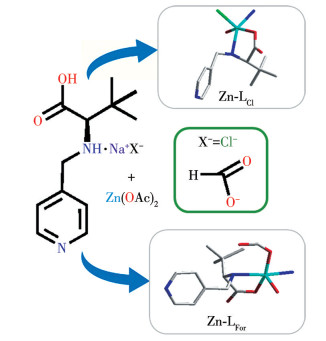
Figure 1.
Systematic scheme of Zn-LFor and Zn-LCl


Coordination chemistry of transition-metal complexes containing halide or pseudohalide ions X- (Cl-, HCOO-, NO3-, N3-, etc.) is interesting from the structural point of view because of different coordination modes of the ligands to the metal ions[1-5]. Many anions can link the metal center either in an end-to-end or in an end-on mode, both possibilities being structurally characterized for metal complexes[6-8]. Such variable structures provide never-ending opportunities and challenges to install them into crystalline frameworks with unique topologies and properties, such as magnetism[9-10], catalysis[11-12], and luminescence[13-14]. Usually, a traditional synthetic strategy is to control the anion species of the metal salt or select suitable ligands[15-16]. In our previous research, we report a series of transition-metal complexes (Zn-LX, X=Cl-, N3-, NO3-) suitably designed from amino acid-derived links[17-18]. However, compared with the largely explored anions of metal salt-based complex systems, the anions of ligands have rarely been observed in complexes, possibly due to limitations for the synthesis complication of ligands[19-20]. Only a handful of isostructural complexes with anions of ligands have been reported in the literature. The ligand's backbone and coordinated anions greatly modulate the crystallization of the complexes[21]. In other words, transition-metal complexes functionalization accomplished via ligands or anions has imparted stability as well as other abilities[22-23].
Recently, the extremely toxic heavy metal ions released into the ecological environment from industrial wastewater or other pathways have brought about severe global environmental problems and biological health problems due to their toxic effects that may accumulate in the food chain[24-25]. Specifically, Cr(Ⅵ) ion is a carcinogenic pollutant that can also give rise to environmental pollution and human diseases: lung cancer, liver, kidney, and gastric damage, and DNA mutagenesis[26-27]. For this reason, Cr(Ⅵ) ion, which has been classified as extremely toxic pollution by the United States Environmental Protection Agency[28]. Up to now, various methods have been introduced for the removal or recognition of Cr(Ⅵ) ion via separation[29], adsorbents[30], and photocatalytic degradation[31], of which, the effective detection of Cr(Ⅵ) ion has attracted extensive attention, and several chemical sensors of Cr(Ⅵ) ion have been reported[32]. Nevertheless, some flaws remain in these materials, for example, poor sensing performance, time-consuming, and poor chemical stability. Therefore, it is necessary and important to design and synthesize novel materials with high solvent stability that can detect Cr(Ⅵ) ion in aqueous solution[33].
Based on the aforementioned contents, we have successfully synthesized two novel isostructural Zn(Ⅱ) complexes [Zn(L)(HCOO)]n (Zn-LFor) and [Zn(L)Cl]n (Zn-LCl) under hydrothermal reaction conditions (Fig.1), where HL=2-{[(pyridin-4-yl)methyl]amino}-3, 3-dimethylbutanoic acid. Single-crystal X-ray diffraction, FTIR, elemental analyses, and powder X-ray diffraction (PXRD) were employed for characterizing the synthesized products. The fluorescence sensing performance of Zn-LFor was further discussed, and it was found that Zn-LFor showed special sensing and recognition to Cr(Ⅵ) ion in aqueous solution.
All of the chemicals were purchased and used without purification. Distilled water was prepared in the laboratory and was used throughout the work. FTIR spectra were measured in a range of 4 000-400 cm-1 using KBr pellets on a PerkinElmer spectrometer. PXRD patterns were obtained using crushed single crystals on an Empyrean Panalytical apparatus with Cu Kα radiation (λ=0.154 178 nm, 40 kV, 30 mA, 2θ=5°-50°). Elemental analysis (C, H, N) was performed on an Elementar Vario EL Ⅲ elemental analyzer. The fluorescence spectra were measured on a Hitachi F-4600 fluorescence spectrometer at room temperature. The UV-Vis absorption spectra were measured using a spectrophotometer (Agilent Technologies Cary5000) in a range of 200-800 nm. NMR spectra of the ligands were recorded on a Bruker Avance Ⅲ after being dissolved in D2O.
To an aqueous solution (20.00 mL) of L-tert-leucine (15 mmol) and Na2CO3 (9.4 mmol), 4-pyridinecarboxaldehyde (15 mmol) was added slowly in MeOH (10 mL). The solution was stirred for 10 min at 80 ℃. The mixture was spontaneously cooled to room temperature and then subjected to an ice bath. NaBH4 was added slowly to the reaction mixture at 0 ℃ and stirred for 7 h. Formic acid (98%) was then added to neutralize the excess of sodium carbonate until pH=5.0-6.0. The reaction mixture was further stirred for 1 h and then evaporated to dryness. The solid was extracted in hot and dry MeOH (100 mL×3), and the filtrate was evaporated to get a white powder (HL·Na(HCOO)). Yield: 2.60 g, 72.83%. IR (KBr, cm-1): 3 551 (vs), 3 087 (m), 2 965 (w), 2 832 (w), 2 792 (w), 1 627 (s), 1 436 (m), 1 361 (s), 1 233 (w), 1 176 (m), 996 (w), 810 (w), 758 (m), 648 (w), 561 (w), 504 (w) (Fig. S1, Supporting information). Then, the ligand HL was crystallized from the aqueous solution of the white powder. Crystals were collected and utilized for their characterization. Anal. Calcd. for C12H18N2O2(%): C, 64.86; H, 8.11; N, 12.62. Found(%): C, 64.71; H, 8.22; N, 11.66. 1H NMR (D2O, 400 MHz): δ 8.57 (d, J=6.2 Hz, 2H), 7.50 (d, J=6.2 Hz, 2H), 4.34 (d, J=13.7 Hz, 1H), 4.17 (d, J=13.8 Hz, 1H), 3.13 (s, 1H), 0.99 (s, 9H). 13C NMR (101 MHz, D2O): δ 171.85, 149.30, 140.36, 125.40, 71.26, 49.62, 32.18, 25.96 (Fig.S2 and S3).
HL·NaCl was prepared exactly as HL·Na(HCOO), except HCl was used instead of HCOOH for pH adjustment. Yield: 2.80 g, 78.43%. IR (KBr, cm-1): 3 412 (vs), 3 267 (m), 2 954 (m), 2 908 (m), 2 861 (w), 2 722 (w), 2 595 (w), 1 594 (s), 1 477 (m), 1 419 (w), 1 390 (s), 1 332 (w), 1 227 (w), 1 176 (w), 1 065 (m), 1 002 (m), 864 (w), 793 (m), 723 (m), 637 (m), 619 (m), 561 (s), 515 (m).
To an aqueous solution (2 mL) of HL·Na(HCOO) (0.2 mmol), Zn(CH3COO)2·2H2O (0.1 mmol) was added and sonicated for 2 min. The clear solution was heated at 90 ℃ for 40 h, and then cooled down to room temperature at a rate of 2 ℃·h-1. Rod-shaped transparent crystals, which were insoluble in water or common organic solvents, were collected by filtration, washing with deionized water, and finally dried at ambient temperature. Yield of Zn-LFor: 18 mg (64%, based on metal salt). Elemental analysis Calcd. for C13H18N2O4Zn(%): C, 47.13, H, 5.44, N, 8.46; Found(%): C, 47.03, H, 5.38, N, 8.43. IR (KBr, cm-1): 3 452 (vs), 3 145 (m), 2 960 (m), 2 849 (w), 1 616 (s), 1 569 (s), 1 477 (m), 1 430 (m), 1 315 (s), 1 287 (w), 1 222 (m), 1 065 (w), 1 025 (m), 984 (m), 926 (m), 805 (m), 735 (m), 631 (w), 567 (w).
A similar synthetic protocol was adopted, like Zn-LFor, only HL·NaCl was used instead of HL· Na(HCOO). Yield: 23 mg (69%, based on metal salt). Elemental analysis Calcd. for C12H17ClN2O2Zn(%): C, 44.72, H, 5.28, N, 8.70; Found(%): C, 44.69, H, 5.23, N, 8.63. IR (KBr, cm-1): 3 365 (vs), 3 261 (s), 3 174 (m), 3 070 (m), 3 035 (m), 2 960 (s), 2 902 (m), 2 809 (w), 1 604 (s), 1 477 (m), 1 430 (m), 1 372 (m), 1 297 (m), 1 268 (w), 1 222 (m), 1 060 (w), 1 019 (m), 972 (m), 915 (m), 799 (s), 741 (m), 619 (m), 579 (w).
Crystallographic data were collected at a temperature of 293(2) K on a Bruker Apex Ⅱ CCD diffractometer with graphite monochromated Mo Kα radiation (λ=0.071 073 nm). The structures were solved by direct methods and refined using the SHELXTL suite of programs[34-35]. All non-hydrogen atoms were refined anisotropically. The H atoms were introduced in calculated positions and refined with fixed geometry with respect to their carrier atoms. The details of crystal data and refinement for Zn-LFor and Zn-LCl are given in Table 1. Selected bond lengths and angles for Zn-LFor and Zn-LCl are listed in Table 2, S1, and S2.
 下载:
导出CSV
下载:
导出CSV
| Parameter | Zn-LFor | Zn-LCl |
| Empirical formula | C13H18N2O4Zn | C12H17Cl N2O2Zn |
| Formula weight | 331.66 | 322.10 |
| Crystal system | Orthorhombic | Orthorhombic |
| Space group | P212121 | P212121 |
| a / nm | 0.920 50(10) | 0.919 56(4) |
| b / nm | 0.943 73(10) | 1.036 02(7) |
| c / nm | 1.624 50(17) | 1.491 90(6) |
| Volume / nm3 | 1.411 2(3) | 1.421 31(13) |
| Z | 4 | 4 |
| Dc / (g·cm-3) | 1.561 | 1.505 |
| Absorption coefficient / mm-1 | 1.755 | 1.911 |
| F(000) | 688.0 | 664.0 |
| θ range for data collection / (°) | 3.09-25.01 | 2.96-28.40 |
| Reflection collected | 43 843 | 88 824 |
| Independent reflection | 2 476 (Rint=0.031 7) | 3 550 (Rint=0.021 9) |
| Completeness to θ=25.00° / % | 99.4 | 99.4 |
| Data, Nres, Npar* | 2 476, 0, 184 | 3 552, 0, 166 |
| Goodness-of-fit on F 2 | 1.100 | 1.129 |
| Flack parameter | 0.037(12) | 0.018(7) |
| Final R indices [I > 2σ(I)] | R1=0.020 6, wR2=0.051 4 | R1=0.017 9, wR2=0.047 5 |
| R indices (all data) | R1=0.021 4, wR2=0.052 2 | R1=0.018 2, wR2=0.047 7 |
| * Nres=number of restraints, Npar=number of parameters. | ||
下载:
导出CSV
| Complex | Bond length / nm | Trigonality index (τ5) | ||||
| Zn—Namine | Zn—Npyridine | Zn—Cl/OHCOO | Zn—O1carboxylate | Zn—O2carboxylate | ||
| Zn-LFor | 0.212 30(2) | 0.209 44(19) | 0.202 02(17) | 0.215 02(17) | 0.200 24(17) | 0.089 |
| Zn-LCl | 0.214 74(11) | 0.209 17(12) | 0.225 43(4) | 0.206 19(11) | 0.216 57(11) | 0.144 |
Detailed procedures of fluorescence experiments can be found in the Supporting information.
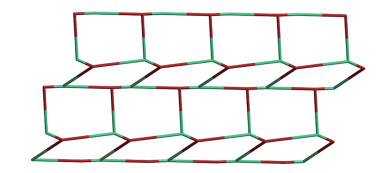
As shown in Fig.2a and 2b, two complexes were essentially isomorphous, having distorted square pyramidal structures, and they mainly differ in the terminal ligands (HCOO-, Cl-) around the Zn(Ⅱ) ions. In the representative molecular structure of Zn-LFor, which consists of one crystallographically Zn(Ⅱ) ion, one L- ligand and one HCOO- ligand, forming an open channel with side chains in space. The Zn(Ⅱ) center is five-coordinated by two nitrogen (Npyridyl, Namine) atoms from the L- ligand, two oxygen (O3, O4) atoms deriving from carboxyl atoms of the L- ligand, and one oxygen atom (O1) from the HCOO- ligand, and the trigonality factor (τ5) is 0.089. The average bond distance of Zn—N is 0.210 9 nm, and the average bond distance of Zn—O is 0.205 8 nm; the O—Zn—O and N—Zn—N angles are 157.738° and 152.454°. The adjacent Zn(Ⅱ) ions are bridged by one carboxylate group, one pyridyl group, and one Namine atom of the bridging ligand L-, extending the structure into a 2D framework (Fig.2c and 2d).
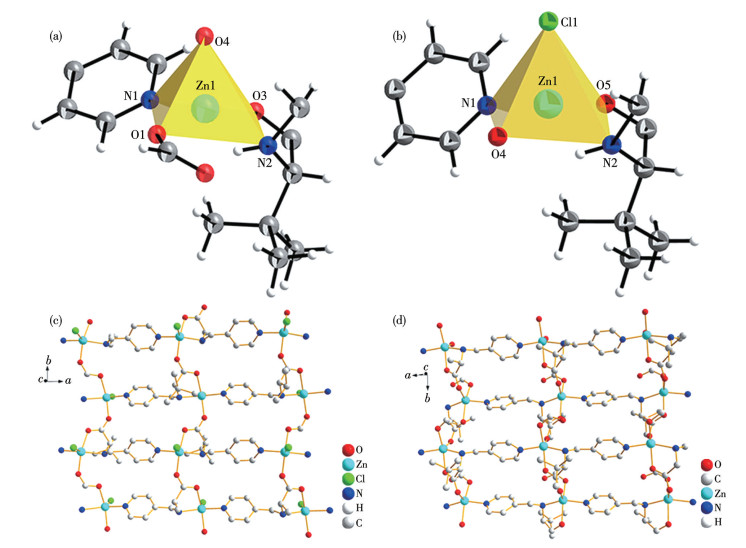
Compared with the crystal structure of Zn-LFor, in the asymmetric unit of Zn-LCl, the Zn(Ⅱ) center is five-coordinated by Ocarboxylate, Namine, Npyridyl, and Cl-. The τ5 value (0.144) is different from that of Zn-LFor. The average bond distance of Zn—N is 0.212 0 nm, and the average bond distance of Zn—O is 0.211 4 nm; the O—Zn—O and N—Zn—N angles are 155.718° and 147.107°, respectively.
Based on the simplification principle, the Zn(Ⅱ) center is simplified to a 3-connected node, the L- ligands act as 3-connected linkers, and the whole network can be simplified as a {63} topology, as shown in Fig.3.
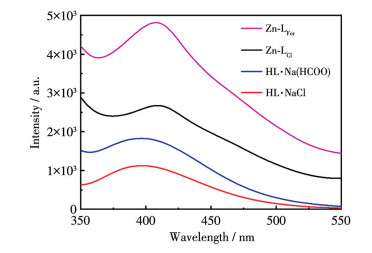
The fluorescence properties of two complexes and free ligands were investigated in aqueous solution at room temperature, as given in Fig.4. It was found that HL·Na(HCOO) and HL·NaCl displayed a broad emission band at 397 nm upon excitation at 294 nm. Interestingly, complex Zn-LFor exhibited fluorescence with the maximum emission at 406 nm under the same experimental conditions. Compared to the ligands, the complex indeed gave rise to much higher emission energy and a red shift of 9 nm for maximum emission, which can be derived from the charge transition between the ligands and Zn2+ metal ion[27, 36]. Therefore, complex Zn-LFor is suitable for fluorescence sensor applications.
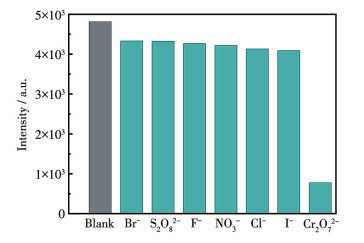
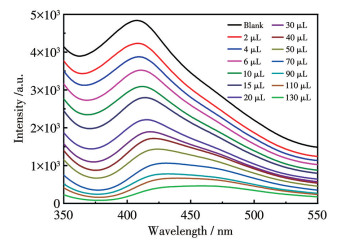
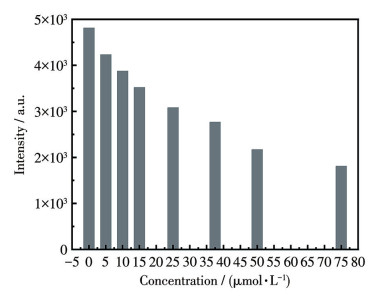
To explore the influence of various anions on the fluorescence of Zn-LFor, 4.8 mg sample of Zn-LFor was dispersed in 2.0 mL of aqueous solution to form a suspension by ultrasound method, and 70 μL of potassium salts solution (5 mmol·L-1) (KnX, Xn-=Br-, S2O82-, F-, NO3-, Cl-, I-, Cr2O72-, respectively) was lowly dropped into the above solutions to form suspension. Interestingly, the fluorescence of Zn-LFor was reduced vastly in the case of Cr2O72-, leading to the fluorescence quenching, while other anions had no obvious effect on the emission (Fig.5). This fluorescence exhibited by Zn-LFor motivates us to explore its potential utility in the detection of Cr2O72-. Then, concentration titration experiments were carried out, and it was observed that the fluorescence emission intensity was quenched with the increase of Cr2O72- concentration. Upon the addition of 130 μL of a 5 mmol·L-1 Cr2O72- solution to the suspension of Zn-LFor in aqueous solution (2 mL), the fluorescence was quenched by 94.92% (Fig.6).
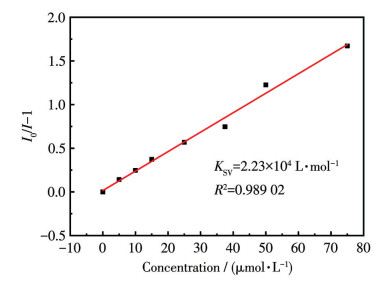
The fluorescence quenching efficiency of Cr2O72- can be quantitatively investigated using the Stern-Volmer (SV) equation: I0/I=1+KSVc, where I0 and I are the maximum luminescent intensity of Zn-LFor before and after addition of the analyte, c is the molar concentration of analyte, and KSV is the Stern-Volmer quenching constant. By calculation, the KSV value was 2.23×10⁴ L·mol-1, which was comparable to those of reported complexes for detecting Cr2O72- (Table 3). Zn-LFor exhibited an excellent linear relationship with a linear correlation coefficient of 0.989 02, suggesting that Zn-LFor is a potential quantitative sensor for Cr2O72-. Accordingly, the detection limit (LOD) was calculated to be 1.03 μmol·L-1 (at 3σ/k level, where σ is the standard deviation, k is the slope) (Fig.7 and 8).
下载:
导出CSV
| Complex | KSV / (L·mol-1) | LOD / (μmol·L-1) | Solvent | Ref. |
| Zn-LFor | 2.23×10⁴ | 1.03 | H2O | This work |
| [Cd(PLIA)(TIB)]n | 1.92×10⁴ | 0.463 | H2O | [37] |
| [Zn(tpbpc)2] | 1.13×10⁴ | 0.676 | H2O | [27] |
| [Zn7(TPPE)2(SO4)7](DMF·H2O) | 1.09×10⁴ | n.d.* | H2O | [38] |
| [Zn(btz)]n | 3.19×10³ | 10 | H2O | [33] |
| [Zn2(ttz)H2O]n | 2.35×10³ | 20 | H2O | [33] |
| {[Eu2L1.5(H2O)2EtOH]·DMF}n | 1.53×10³ | 10 | DMF | [39] |
| {[Tb4(BPDC)4(μ3-OH)4(H2O)8]·11H2O}n | 1.13×10⁴ | 0.1 | H2O | [40] |
| {[Tb4Mn-(BPDC)3(μ3-OH)4(HCOO)1.5(H2O)4]·2.5OH·8H2O}n | 5.0×10³ | 0.1 | H2O | [40] |
| {[Cd(TIPE)(Cl)2·Cd(TIPE)(Cl)2]·5H2O}n | 6.40×10⁴ | 3.1 | H2O | [41] |
| Zr-MOF | 4.32×10⁴ | n.d. | H2O | [42] |
| {[Cd2(2F-bpdc)2(tib)]}n | 7.23×10³ | n.d. | H2O | [43] |
| [Th6(OH)4(O)4(H2O)6](BCTPE)6·(DMF)18·(H2O)9 | 4.63×10⁵ | 0.004 6 | H2O | [44] |
| [Th6(OH)4(O)4(H2O)6](BCTPE)5(HCOO)2·(DMF)26·(H2O)32 | 2.22×10⁵ | 0.094 | H2O | [44] |
| {[(CH3)2NH2]3(In3L4)}·(solvent)x | 1.32×10⁴ | n.d. | H2O | [45] |
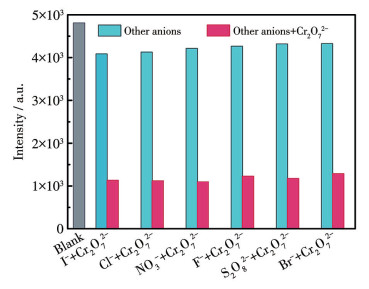
What is more, to further find out the unique selective detection of Cr2O72-, the anion interference experiments were conducted under the same conditions. As shown in Fig.9, the fluorescence intensity in the anions except for Cr2O72- has no significant change; nevertheless, it was nearly quenched upon adding Cr2O72-. The fluorescence measurements demonstrated that most anions had no marked effects on the fluorescence spectra of Zn-LFor, while it experienced a significant luminescent response in the presence of the Cr2O72- ion.
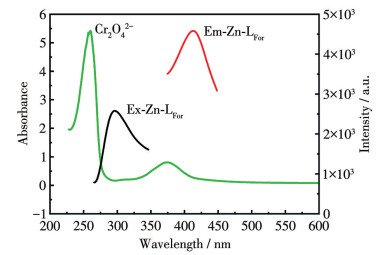
Based on all the above observations, the fluorescence quenching mechanism was further studied by testing the UV-Vis absorption spectra of Cr2O72- in aqueous solution (Fig.10). PXRD analysis revealed that the crystallinity and frameworks of Zn-LFor can essentially remain unchanged after soaking in Cr(Ⅵ) for 24 h (Fig.S4). The fluorescence excitation spectrum of Zn-LFor showed a strong overlap with the absorption spectrum of Cr2O72-. This appearance indicates that during Zn-LFor excitation, the detected anions (Cr2O72-) competitively absorb the excitation wavelength of light, resulting in the fluorescence quenching of Zn-LFor, which belongs to the energy competition absorption mechanism.
In summary, two isostructural coordination polymers have been synthesized and characterized. It is confirmed that they have the square pyramidal units and high-purity phases through various characterizations. The luminescent investigations suggest that Zn-LFor can sensitively detect Cr2O72- in aqueous solution by luminescent quenching effect. The mechanisms of Zn-LFor for detecting Cr2O72- have been preliminarily elucidated. The results show that Zn-LFor can be used as a chemical sensor with high sensitivity for detecting Cr2O72-.
KARAK S, KUMAR S, BERA S, DIAZ D D, BANERJEE S, VANKA K, BANERJEE R. Interplaying anions in a supramolecular metallohydrogel to form metal organic frameworks[J]. Chem. Commun., 2017, 53: 3705-3708 doi: 10.1039/C7CC00539C
KUNDU T, SAHOO S C, BANERJEE R. Variable water adsorption in amino acid derivative based homochiral metal organic frameworks[J]. Cryst. Growth Des., 2012, 12: 4633-4640 doi: 10.1021/cg3008443
SAHOO S C, KUNDU T, BANERJEE R. Helical water chain mediated proton conductivity in homochiral metal-organic frameworks with unprecedented zeolitic unh-topology[J]. J. Am. Chem. Soc., 2011, 133: 17950-17958 doi: 10.1021/ja2078637
ZHANG Z Y, LI Y J, YUAN Z S, WU L X, MA J P, TAN W Q, SUN Y J, ZHANG G Y, CHAI H N. MOF nanozymes: Active sites and sensing applications[J]. Inorg. Chem. Front., 2025, 12: 400-429 doi: 10.1039/D4QI02555E
BARTHEL S, ALEXANDROV E V, PROSERPIO D M, SMIT B. Distinguishing metal-organic frameworks[J]. Cryst. Growth Des., 2018, 18: 1738-1747 doi: 10.1021/acs.cgd.7b01663
SIKDAR Y, GOSWAMI R, MODAK R, BASAK M, OJEA M J H, MURRIE M, GOSWAMI S. Diazine based ligand supported Co3Ⅱ and Co4Ⅱ coordination complexes: Role of the anions[J]. New J. Chem., 2018, 42: 17587-17596 doi: 10.1039/C8NJ02955E
BIAN H D, GU W, YU Q, YAN S P, LIAO D Z, JIANG Z H, CHENG P. Synthesis, crystal structure, and magnetic properties of three nickel(Ⅱ) complexes with the tridentate ligand N, N-dimethyl-N′-(pyrid-2-ylmethyl)-ethylenediamine[J]. Polyhedron, 2005, 24(15): 2002-2008 doi: 10.1016/j.poly.2005.06.011
QIAN J P, YUE H D, QIU P X, LIANG Q, HUANG M T, HE M Y, BU Y F, CHEN Q, ZHANG Z H. Anions mediated amino-type Cd-MOFs catalysts for efficient photocatalytic hydrogen evolution[J]. J. Solid State Chem., 2021, 304: 122632 doi: 10.1016/j.jssc.2021.122632
VIGNESH K R, ALEXANDROPOULOS D I, XIE H M, DUNBAR K R. Six-coordinate mononuclear dysprosium(Ⅲ) single-molecule magnets with the triphenylphosphine oxide ligand[J]. Dalton Trans., 2020, 49: 4694-4698 doi: 10.1039/D0DT00801J
YANG J, DENG Y F, ZHANG Y Z. Two azido-bridged homospin Fe(Ⅱ)/Co(Ⅱ) coordination polymers featuring single-chain magnet behavior[J]. Dalton Trans., 2020, 49: 4805-4810 doi: 10.1039/D0DT00181C
STEENHAUT T, GREGOIRE N, BAROZZINO-CONSIGLIO G, FILINCHUK Y, HERMANS S. Mechanochemical defect engineering of HKUST-1 and impact of the resulting defects on carbon dioxide sorption and catalytic cyclopropanation[J]. RSC Adv., 2020, 10: 19822-19831 doi: 10.1039/C9RA10412G
SMOLDERS S, WILLHAMMAR T, KRAJNC A, SENTOSUN K, WHARMBY M T, LOMACHENKO K A, BALS S, GAO M L, ROEFFAERS M B J, VOS D E D, BUEKEN B. A titanium(Ⅳ)-based metal-organic framework featuring defect-rich Ti-O sheets as an oxidative desulfurization catalyst[J]. Angew. Chem.‒Int. Edit., 2019, 58: 9160-9165 doi: 10.1002/anie.201904347
CHEN X, HUANG Z, CHEN S Y, LI K, YU X Q, PU L. Enantioselective gel collapsing: A new means of visual chiral sensing[J]. J. Am. Chem. Soc., 2010, 132: 7297-7299 doi: 10.1021/ja102480t
YANG E C, CHAN Y N, LIU H, WANG Z C, ZHAO X J. Unusual polymeric ZnⅡ/CdⅡ complexes with 2, 6-diaminopurine by synergistic coordination of nucleobases and polycarboxylate anions: Binding behavior, self-assembled pattern of the nucleobase, and luminescent properties[J]. Cryst. Growth Des., 2009, 9: 4933-4944 doi: 10.1021/cg9007119
WANG Z, LI X Y, LIU L W, YU S Q, FENG Z Y, TUNG C H, SUN D. Beyond clusters: Supramolecular networks self-assembled from nanosized silver clusters and inorganic anions[J]. Chem.‒Eur. J., 2016, 22: 6830-6836 doi: 10.1002/chem.201504728
ZHAO J L, BAI W T, AN W T, MA L, HAN Z G. Structural modulation of Cu(Ⅱ)-based coordination polymers by Schiff base ligands and electrochemical sensing for heavy-metal ions[J]. Inorg. Chem., 2025, 64: 18144-18154 doi: 10.1021/acs.inorgchem.5c01890
XU X B, XIAO J N, LIU M Y, LIU Z L. A multi-stimuli-responsive metallohydrogel applied in chiral recognition, adsorption of poisonous anions, and construction of various chiral metal-organic frameworks[J]. Chem. Commun., 2019, 55: 14178-14181 doi: 10.1039/C9CC07621B
XU X B, LIU M Y, LIU Z L. Crystal structures and the ferroelectric properties of homochiral metal-organic frameworks constructed from a single chiral ligand[J]. Dalton Trans., 2020, 49: 10402-10406 doi: 10.1039/D0DT01323D
KUNDU T, SAHOO S C, SAHA S, BANERJEE R. Salt metathesis in three dimensional metal-organic frameworks (MOFs) with unprecedented hydrolytic regenerability[J]. Chem. Commun., 2013, 49: 5262-5264 doi: 10.1039/c3cc41842a
SINGH U P, NARANG S, PACHFULE P, BANERJEE R. Variation of CO2 adsorption in isostructural Cd(Ⅱ)/Co(Ⅱ) based MOFs by anion modulation[J]. CrystEngComm, 2014, 16: 5012-5020 doi: 10.1039/c4ce00058g
MA J X, FANG X, XUE M, YANG Y. Synthesis, structure, and anion binding of functional oxacalix[4]arenes[J]. Org. Biomol. Chem., 2019, 17: 5075-5085 doi: 10.1039/C9OB00613C
FEI H, BRESLER M R, OLIVER S R J. A new paradigm for anion trapping in high capacity and selectivity: Crystal-to-crystal transformation of cationic materials[J]. J. Am. Chem. Soc., 2011, 133: 11110-11113 doi: 10.1021/ja204577p
王高峰, 孙述文, 赵燕飞, 孟莉新, 卫博慧. 基于双(4-(1H-咪唑-1-基)苯基)甲酮的三个锌配位聚合物的结构多样性和发光性质[J]. 无机化学学报, 2024, 40(5): 849-856WANG G F, SUN S W, ZHAO Y F, MENG L X, WEI B H. Structural diversity and luminescence properties of three zinc coordination polymers based on bis(4-(1H-imidazol-1-yl)phenyl)methanone[J]. Chinese J. Inorg. Chem., 2024, 40(5): 849-856
AHMAD I, SIDDIQUI W A, QADIR S, AHMAD T. Synthesis and characterization of molecular imprinted nanomaterials for the removal of heavy metals from water[J]. J. Mater. Res. Technol., 2018, 7(3): 270-282 doi: 10.1016/j.jmrt.2017.04.010
HE M L, SHI S, LIU Z, WU Y N, WANG L. Design, synthesis, and applications of defective metal-organic frameworks in water treatment[J]. Chem. Commun., 2025, 61: 5072-5083 doi: 10.1039/D4CC06812B
HUANG R F, MA X G, LI X, GUO L H, XIE X W, ZHANG M Y, LI J. A novel ion-imprinted polymer based on graphene oxide-mesoporous silica nanosheet for fast and efficient removal of chromium(Ⅵ) from aqueous solution[J]. J. Colloid Interface Sci., 2018, 514: 544-553 doi: 10.1016/j.jcis.2017.12.065
XIAO J N, LIU J J, GAO X C, JI G F, WANG D B, LIU Z L. A multi-chemosensor based on Zn-MOF: Ratio-dependent color transition detection of Hg(Ⅱ) and highly sensitive sensor of Cr(Ⅵ)[J]. Sens. Actuator B‒Chem., 2018, 269: 164-172 doi: 10.1016/j.snb.2018.04.129
ZHANG N Q, FANG Z Q, ZHANG R Y. Comparison of several amendments for in-site remediating chromium-contaminated farmland soil[J]. Water Air Soil Pollut., 2017, 228: 400 doi: 10.1007/s11270-017-3571-6
ZHU H, YANG X, CRANSTON E D, ZHU S P. Flexible and porous nanocellulose aerogels with high loadings of metal-organic-framework particles for separations applications[J]. Adv. Mater., 2016, 28(35): 7652-7657 doi: 10.1002/adma.201601351
AHMAD I, SIDDIQUI W A, AHMAD T. Synthesis and characterization of molecularly imprinted magnetite nanomaterials as a novel adsorbent for the removal of heavy metals from aqueous solution[J]. J. Mater. Res. Technol., 2019, 8(5): 4239-4252 doi: 10.1016/j.jmrt.2019.07.034
YANG L X, ZHENG X T, LIU M, LUO S L, LUO Y, LI G F. Fast photoelectro-reduction of CrⅥ over MoS2@TiO2 nanotubes on Ti wire[J]. J. Hazard. Mater., 2017, 329: 230-240 doi: 10.1016/j.jhazmat.2017.01.045
JIA C, HE T, WANG G M. Zirconium-based metal-organic frameworks for fluorescent sensing[J]. Coord. Chem. Rev., 2023, 476: 214930 doi: 10.1016/j.ccr.2022.214930
CAO C S, HU H C, XU H, QIAO W Z, ZHAO B. Two solvent-stable MOFs as a recyclable luminescent probe for detecting dichromate or chromate anions[J]. CrystEngComm, 2016, 18: 4445-4451 doi: 10.1039/C5CE02568K
SHELDRICK G M. Crystal structure refinement with SHELXL[J]. Acta Crystallogr. Sect. C, 2015, C71: 3-8
SHELDRICK G M. A short history of SHELX[J]. Acta Crystallogr. Sect. A, 2008, A64: 112-122
HAN J M, XU M, WANG B, WU N, YANG X M, YANG H R, SALTER B J, ZANG L. Low dose detection of γ radiation via solvent assisted fluorescence quenching[J]. J. Am. Chem. Soc., 2014, 136: 5090-5096 doi: 10.1021/ja500262n
张成, 贺珍珍, 王文莉, 高文静, 张凤凤, 王潇, 唐龙, 岳二林, 王记江, 侯向阳. MOF-1和Tb@MOF-1荧光探针的设计、合成及对痕量Cr2O72-、S2O82-离子的识别[J]. 无机化学学报, 2023, 39(9): 1832-1840ZHANG C, HE Z Z, WANG W L, GAO W J, ZHANG F F, WANG X, TANG L, YUE E L, WANG J J, HOU X Y. Design and synthesis of MOF-1 and Tb@MOF-1 as fluorescent probes for recognizing trace amounts of Cr2O72- and S2O82- ions[J]. Chinese J. Inorg. Chem., 2023, 39(9): 1832-1840
WU X X, FU H R, HAN M L, ZHOU Z, MA L F. Tetraphenylethylene immobilized metal-organic frameworks: Highly sensitive fluorescent sensor for the detection of Cr2O72- and nitroaromatic explosives[J]. Cryst. Growth Des., 2017, 17: 6041-6048
LIU W, HUANG X, XU C, CHEN C Y, YANG L Z, DOU W, CHEN W M, YANG H, LIU W S. A multiresponsive regenerable europium-organic framework luminescent sensor for Fe3+, CrⅥ anions and picric acid[J]. Chem.‒Eur. J., 2016, 22(52): 18769-18776
DONG J, XU H, HOU S L, WU Z L, ZHAO B. Metal-organic frameworks with Tb4 clusters as nodes: Luminescent detection of chromium(Ⅵ) and chemical fixation of CO2[J]. Inorg. Chem., 2017, 56: 6244-6250
ZHAO X H, WANG R D, MAN J F, MA Z Q, WANG L, WEI W M, LIU H, ZHANG W Q, DU L, ZHAO Q H. Interaction of Congo red with MOFs facilitates specific detection of Cr(Ⅵ) in water[J]. Inorg. Chem., 2025, 64: 19732-19743
WANG Y, ZHAI W L, LIU J, QIN Y T, YE Z C, DUAN J, CAI X B, WANG Z G, LI Q, ZHU W. A novel Zr-MOF and its In2S3/Zr-MOF heterojunction materials for decontamination of Cr(Ⅵ) and reactive blue 13 via fluorescence sensing detection and photochemical redox[J]. New J. Chem., 2024, 48: 19842-19852
FANG H, HAN J P, ZHANG B, LIU D B, LI X W, LI J Y, HE Y T, YU M H. A versatile luminescent metal-organic framework for selective detection of Fe(Ⅲ) cations and Cr(Ⅵ) anions[J]. CrystEngComm, 2025, 27: 1139-1145
LI Z J, JU Y, WU X L, LI X Y, QIU J, LI Y X, ZHANG Z H, HE M Y, ZHANG L J, WANG J Q, LIN J. Topological control of metal-organic frameworks toward highly sensitive and selective detection of chromate and dichromate[J]. Inorg. Chem. Front., 2023, 10: 1721-1730
YIN H Y, LI Q, LIU T H, LIU J, QIN Y T, WANG Y, ZHAI W L, CAI X B, WANG Z G, ZHU W. Multifunctional In-MOF and its S-scheme heterojunction toward pollutant decontamination via fluorescence detection, physical adsorption, and photocatalytic REDOX[J]. Inorg. Chem., 2024, 63: 1816-1827

Figure 2 (a, b) Structures of square pyramidal geometries of complexes Zn-LFor (a) and Zn-LCl (b); View of the layer structures of Zn-LFor (c) and Zn-LCl (d)

Figure 5 Intensities of the fluorescence (406 nm) of Zn-LFor dispersed in different anion aqueous solutions

Figure 6 Fluorescence spectra of Zn-LFor upon the gradual addition of 5 mmol·L-1 Cr2O72- solution

Figure 7 Stern-Volmer plot for the sensing of Cr2O72- with Zn-LFor in aqueous solution

Figure 9 Comparison of the quenching efficiency of Zn-LFor for different interference anions

Figure 10 UV-Vis spectrum of Cr2O72- solution with the excitation and emission spectra of Zn-LFor
Table 1. Crystallographic data and refinement parameters of Zn-LFor and Zn-LCl
| Parameter | Zn-LFor | Zn-LCl |
| Empirical formula | C13H18N2O4Zn | C12H17Cl N2O2Zn |
| Formula weight | 331.66 | 322.10 |
| Crystal system | Orthorhombic | Orthorhombic |
| Space group | P212121 | P212121 |
| a / nm | 0.920 50(10) | 0.919 56(4) |
| b / nm | 0.943 73(10) | 1.036 02(7) |
| c / nm | 1.624 50(17) | 1.491 90(6) |
| Volume / nm3 | 1.411 2(3) | 1.421 31(13) |
| Z | 4 | 4 |
| Dc / (g·cm-3) | 1.561 | 1.505 |
| Absorption coefficient / mm-1 | 1.755 | 1.911 |
| F(000) | 688.0 | 664.0 |
| θ range for data collection / (°) | 3.09-25.01 | 2.96-28.40 |
| Reflection collected | 43 843 | 88 824 |
| Independent reflection | 2 476 (Rint=0.031 7) | 3 550 (Rint=0.021 9) |
| Completeness to θ=25.00° / % | 99.4 | 99.4 |
| Data, Nres, Npar* | 2 476, 0, 184 | 3 552, 0, 166 |
| Goodness-of-fit on F 2 | 1.100 | 1.129 |
| Flack parameter | 0.037(12) | 0.018(7) |
| Final R indices [I > 2σ(I)] | R1=0.020 6, wR2=0.051 4 | R1=0.017 9, wR2=0.047 5 |
| R indices (all data) | R1=0.021 4, wR2=0.052 2 | R1=0.018 2, wR2=0.047 7 |
| * Nres=number of restraints, Npar=number of parameters. | ||
 下载: 导出CSV
Table 2. Selected bond lengths (nm) and trigonality index values of Zn-LFor and Zn-LCl
| Complex | Bond length / nm | Trigonality index (τ5) | ||||
| Zn—Namine | Zn—Npyridine | Zn—Cl/OHCOO | Zn—O1carboxylate | Zn—O2carboxylate | ||
| Zn-LFor | 0.212 30(2) | 0.209 44(19) | 0.202 02(17) | 0.215 02(17) | 0.200 24(17) | 0.089 |
| Zn-LCl | 0.214 74(11) | 0.209 17(12) | 0.225 43(4) | 0.206 19(11) | 0.216 57(11) | 0.144 |
下载: 导出CSV
Table 3. KSV values and LOD values of the reported complexes for detecting Cr2O72- in H2O and DMF suspension
| Complex | KSV / (L·mol-1) | LOD / (μmol·L-1) | Solvent | Ref. |
| Zn-LFor | 2.23×10⁴ | 1.03 | H2O | This work |
| [Cd(PLIA)(TIB)]n | 1.92×10⁴ | 0.463 | H2O | [37] |
| [Zn(tpbpc)2] | 1.13×10⁴ | 0.676 | H2O | [27] |
| [Zn7(TPPE)2(SO4)7](DMF·H2O) | 1.09×10⁴ | n.d.* | H2O | [38] |
| [Zn(btz)]n | 3.19×10³ | 10 | H2O | [33] |
| [Zn2(ttz)H2O]n | 2.35×10³ | 20 | H2O | [33] |
| {[Eu2L1.5(H2O)2EtOH]·DMF}n | 1.53×10³ | 10 | DMF | [39] |
| {[Tb4(BPDC)4(μ3-OH)4(H2O)8]·11H2O}n | 1.13×10⁴ | 0.1 | H2O | [40] |
| {[Tb4Mn-(BPDC)3(μ3-OH)4(HCOO)1.5(H2O)4]·2.5OH·8H2O}n | 5.0×10³ | 0.1 | H2O | [40] |
| {[Cd(TIPE)(Cl)2·Cd(TIPE)(Cl)2]·5H2O}n | 6.40×10⁴ | 3.1 | H2O | [41] |
| Zr-MOF | 4.32×10⁴ | n.d. | H2O | [42] |
| {[Cd2(2F-bpdc)2(tib)]}n | 7.23×10³ | n.d. | H2O | [43] |
| [Th6(OH)4(O)4(H2O)6](BCTPE)6·(DMF)18·(H2O)9 | 4.63×10⁵ | 0.004 6 | H2O | [44] |
| [Th6(OH)4(O)4(H2O)6](BCTPE)5(HCOO)2·(DMF)26·(H2O)32 | 2.22×10⁵ | 0.094 | H2O | [44] |
| {[(CH3)2NH2]3(In3L4)}·(solvent)x | 1.32×10⁴ | n.d. | H2O | [45] |
下载: 导出CSV

 扫一扫看文章


扫一扫关注我们


 下载:
下载: