
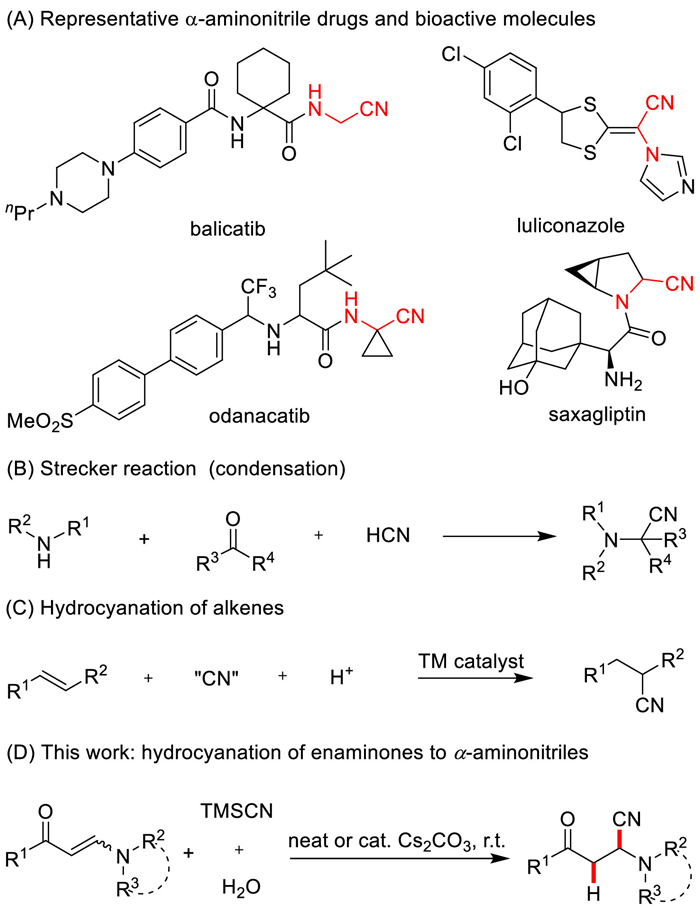
Scheme 1.
Typical backgrounds.


α-Aminonitrile structure presents widely in diverse pharmaceutical molecules, natural products and bioactive molecules [1-7]. For example, the cathepsin K inhibitors balicatib [8], odancatib [7], the antidiabetic saxagliptin [3,5], and the antifungal luliconazole [9,10] all contain α-aminonitrile motif (Scheme 1A). Furthermore, as important synthetic intermediates, α-aminonitriles can be readily converted into corresponding α-amino acids, β-amino alcohols, 1,2-diamines and more other high-value compounds [11-14]. In addition, α-aminonitriles have been identified as useful organocatalysts for organic reactions [15]. Therefore, the synthesis of α-aminonitrile compounds occupies crucial position in organic synthesis and related applications. Since the landmark Strecker reaction reported in 1850 (Scheme 1B) [16], such three-component reaction of aldehydes/ketones, amines and cyanides has become a major tactic for constructing α-aminonitriles [17-20]. Meanwhile, other methods such as the oxidative cyanation of α-C-H bonds in tertiary amines has also shown important application in the synthesis of these scaffolds [21-27]. However, the employment of highly toxic HCN and its salts, expensive metal catalysts, reliance on stoichiometric oxidant or additive etc. are restricting the advances and expanded application of α-aminonitriles. Consequently, developing mild and environmentally friendly new synthetic methods for α-aminonitriles remains as a key issue.
On the other hand, the hydrocyanation reactions represent a fundamental prototype in the transformation of alkenes by providing access from raw chemicals to diverse organocyanates. The typical features of alkene hydrocyanation are the employment of transition metals, proving cyano alkane derivatives as products, and mostly relying on toxic or sensitive isocyanide, HCN or other cyano sources (Scheme 1C) [28-34]. New methods featuring mild and safe operation with expanded product diversity leading to the products possessing functional groups beyond the cyano structure, therefore, is highly urgent.
Enaminones are easily accessible and stable alkene derivatives exhibiting dramatic application in current organic synthesis by undergoing divergent transformations [35-39]. According to the reported modes, the cascade annulation [40-47], the straightforward coupling of C—H bond [48-54] and the C═C double bond cleavage [55-58] constitute the mainstream transformations in the vinyl fragment in enaminones. On the other hand, the difunctionalization and hydrofunctionalization on the vinyl π-bond, remain scarce [59-61]. Wan et al. have disclosed in 2021 the trifunctionalization mode by reacting enaminone with TMSCN and diaryl phosphine oxide to provide discrete and proximal phosphoryl nitriles, showcasing the potential of enaminones in high-order functionalization reactions toward poly-substituted ketone derivatives [62]. Herein, being inspired by the trifunctionalization, we present the new advances in the tunable hydrocyanation reaction of enaminones, leading to the synthesis of useful α-aminonitriles under rather mild and simple conditions featuring advantages of transition metal condition [63-67], multicomponent operation [68-71] and water as medium for the tertiary enaminones' reaction [72,73] (Scheme 1D).
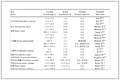
We initiated the optimization of reaction conditions with tertiary enaminone 1a and TMSCN 2 as substrates. First, H2O was employed as the additive with MeCN as the solvent, and the reaction was carried out at 50 ℃. Gratifyingly, α-aminonitrile 3a was obtained in 41% yield (Table 1, entry 1). Subsequent screening of reaction temperatures revealed that lowering the temperature improved the outcome, with room temperature as the optimal parameter (Table 1, entries 2 and 3). Next, solvent comparison was performed, and the highest yield was achieved in the entry without using a solvent (Table 1, entries 4–9). The entry using pure water as medium gave lower yield due to the formation of heterogeneous mixture (entry 7). Finally, the optimization on the H2O loading revealed that 15.0 equiv. was most favored by affording 3a in 84% yield (Table 1, entries 10–12). Control experiments confirmed that H2O was essential for the reaction, as no product was detected in its absence (Table 1, entry 13).
 DownLoad:
CSV
 |
||||
| Entry | Additive | Solvent | T | Yield (%) b |
| 1 | H2O | MeCN | 50 ℃ | 41 |
| 2 | H2O | MeCN | 30 ℃ | 57 |
| 3 | H2O | MeCN | r.t. | 60 |
| 4 | H2O | EtOH | r.t. | 26 |
| 5 | H2O | DCM | r.t. | Trace |
| 6 | H2O | DMF | r.t. | 72 |
| 7 | H2O | H2O | r.t. | 22 |
| 8 | H2O | DMSO | r.t. | 60 |
| 9 | H2O | Neat | r.t. | 76 |
| 10 c | H2O | Neat | r.t. | 81 |
| 11 d | H2O | Neat | r.t. | 84 |
| 12 e | H2O | Neat | r.t. | 80 |
| 13 | - | Neat | r.t. | ND |
| a Reaction conditions: 1a (0.2 mmol), TMSCN 2 (4.0 equiv.), additive (2.0 equiv.), solvent (2 mL), stirred for 4 h. b Isolated yields based on 1. c H2O (12.0 equiv.). d H2O (15.0 equiv.). e H2O (18.0 equiv.). |
||||
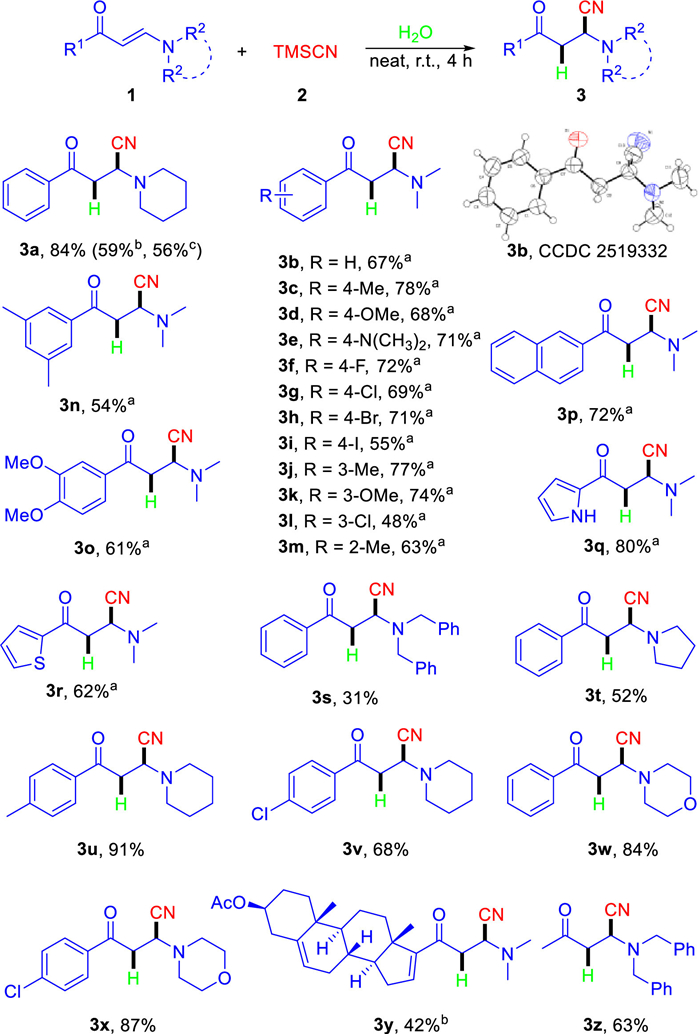
Under the optimal conditions, we explored the substrate scope of the hydrocyanation in tertiary enaminones under the ambient solvent-free conditions (Scheme 2). Delightfully, this reaction displayed remarkable tolerance toward various aryl-substituted enaminones. A range of valuable functional groups at the para-position of the benzene ring, including methyl, methoxy, amino and halo-atoms (F, Cl, Br, I), were well tolerated (3b-3i). The meta- and ortho-substituted as well as disubstituted substrates were also compatible, giving target products in moderate to good yields (3j-3o). Notably, enaminone bearing fused aryl ring and heterocyclic enaminones reacted also smoothly to afford the desired products in good to excellent yields (3p-3r). Furthermore, this protocol was proven effective for the reactions of other acyclic and cyclic tertiary enaminones, such as those containing N,N-dibenzyl amino, pyrrolidine, and morpholine derived enaminones to provide products with sound amino diversity (3s-3x). It was worth emphasizing that the enaminone derived from the natural product 16-dehydropregnenolone acetate and a simple alkyl-based enaminone were also amenable to this reaction, providing the hydrocyanated product in 42% and 63% yield (3y and 3z), respectively. Besides the spectral analysis, the structure of 3b was further confirmed by X-ray crystallographic analysis. Finally, the scale up synthesis of 3a at 2 mmol scale reaction led to 59% yield, and a continuous flow method for the same compound gave also practical result of 56% yield (see Supporting information for details). The aliphatic acyl-based enaminone was more efficient in the synthesis than equivalent aroyl-based enaminone (3s vs. 3z). On the other hand, the enaminones featuring six-membered secondary amino group (3a, 3u-3x) gave evidently higher product yield than the reactions from acyclic secondary amino and five-membered cyclic amino group functionalized enaminones (3b-3t, 3y-3z).
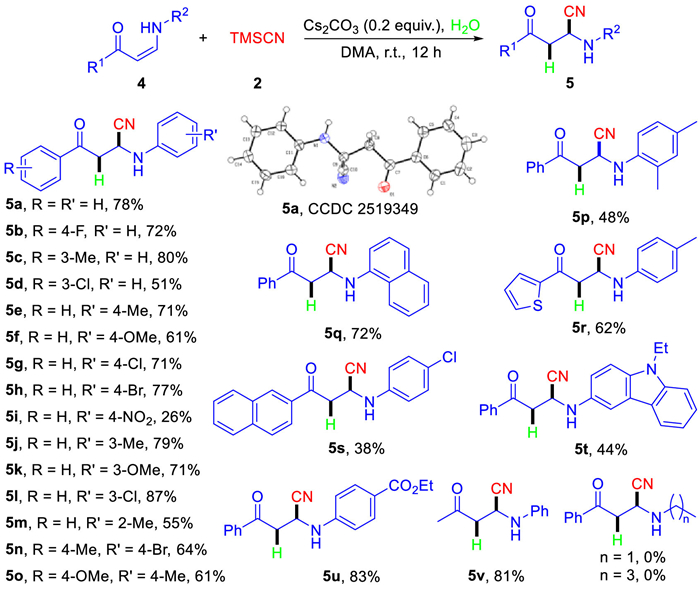
Encouraged by the studies on the synthesis of tertiary α-aminonitriles, the synthesis of secondary α-aminonitriles was later attempted. To achieve the practical result, the conditions in this section was slightly modified by which a base catalyst (Cs2CO3) was found to be beneficial. After establishing the reaction conditions, the application scope of the secondary enaminones' hydrocyanation was studied (Scheme 3). Experimental findings demonstrated that for secondary enaminones, regardless of electronic property of the substituents in their two benzene rings, the reaction proceeded smoothly to provide the corresponding products with moderate to excellent yields (5a-5o). Additionally, the enaminones featuring disubstituted (5p), fused (5q, 5s), and heterocyclic (5r) aryl could also be smoothly converted into the corresponding products. The enaminone derived from the pharmaceutical benzocaine could undergo the reaction to practically give the product (5u). Satisfactory result was also obtained from the reaction using alkyl ketone-derived NH-enaminone (5v). An ortho-substituent in the N-phenyl group undermined the product yield due to their steric hindrance to the cyanation (5m, 5p). However, the reactions failed to take place when N-alkyl enaminone were used as substrates. The reaction of enaminoester such as ethyl (Z)-3-(phenylamino)acrylate with TMSCN did not afford the titled product, either.
As expanded efforts, the reactions using TMSN3 and TMSCF3 as the alternative nucleophiles of TMSCN to react with enaminone 1a and 4a were performed under corresponding standard conditions, respectively. However, none of the reaction gave the expected hydro-functionalized product.
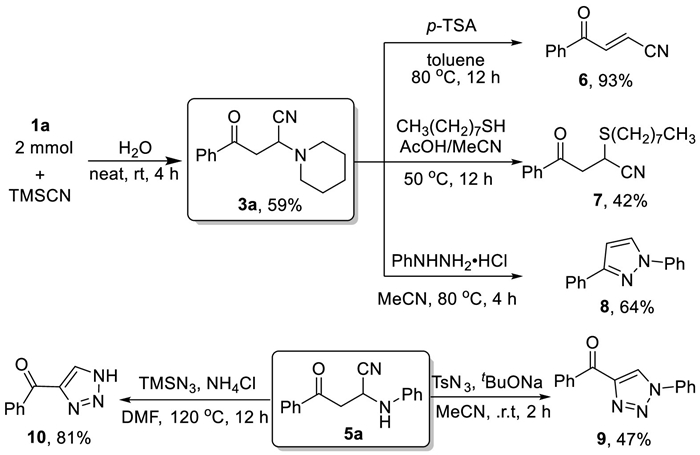
To verify the utility of the current synthetic method, we carried out a series of transformation reactions on 3a and 5a for different compounds synthesis (Scheme 4). Treatment of 3a with p-TSA in toluene resulted in an elimination reaction to generate cyanoenone 6. On the other hand, the substitution reaction of 3a with octanethiol under AcOH produced α-cyanosulfide 7. In addition, reaction of 3a with PhNHNH2·HCl afforded 1,3-diphenylpyrazole 8. Finally, 5a could react with TsN3 and TMSN3 to form N-phenyl triazole 9 and NH-triazole 10, respectively.
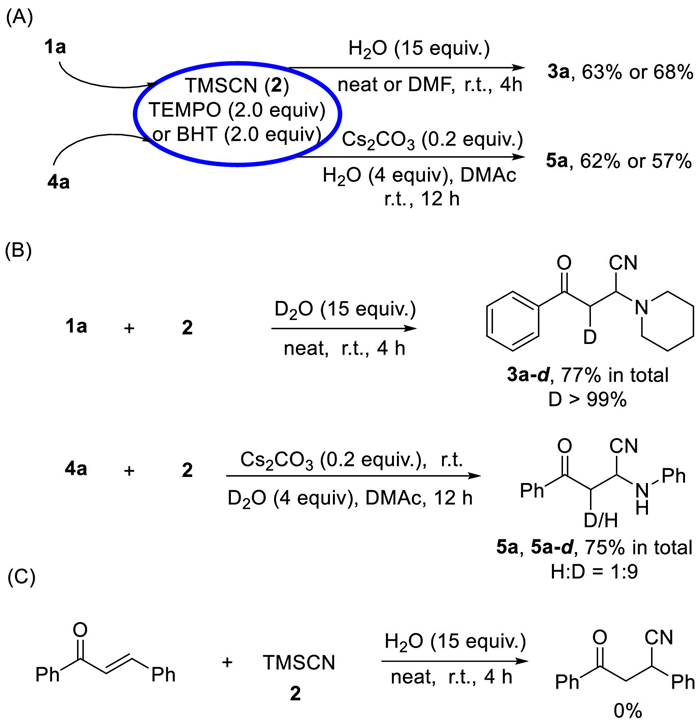
Afterwards, a series of control experiments were conducted to investigate the reaction mechanism. Initially, TEMPO and BHT were separately added to the two standard reaction systems toward 3a and 5a by which no inhibition to the titled reactions was observed (Scheme 5A), indicating that free radical pathway might not be involved. Furthermore, using D2O to replace H2O led to high extent deuteration at the α-site to form 3a-d and 5a-d (Scheme 5B), demonstrating that H2O acted as the hydrogen atom donor. Notably, replacing enaminone 1a with chalcone resulted in no reaction under the standard conditions (Scheme 5C), confirming that the amino group in enaminones played a crucial role.
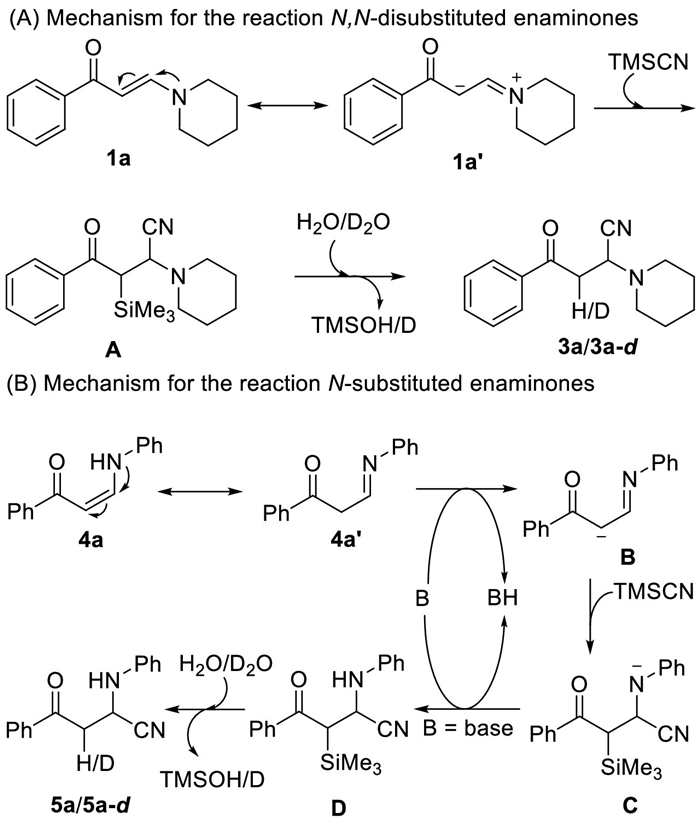
Based on the above results, the mechanisms for the reactions were postulated (Scheme 6). For the reactions of N,N-disubstituted enaminones (Scheme 6A), enaminone 1a first undergoes the nucleophilic corporation of the TMSCN to generate silyl aminonitrile intermediate A via the resonance form 1a'. The rapid protonation in the C-Si bond in A provides product 3a. As for the reactions of N-substituted enaminones (Scheme 6B), enaminone 4a undergoes tautomerization to form imine 4a' which proceeds to carbon anion B in the presence of base. The addition of TMSCN to B gives rise to intermediate C. By abstracting a proton from the BH (B = base), the silyl aminonitrile intermediate D is generated. Finally, the C-Si protonation of D in the presence of water produces 5a.
In conclusion, we have included herein the ambient hydrocyanation reactions of enaminones with TMSCN and water as the reaction partners. Comparing with the hydrocyanation of unfunctionalized alkenes, the current hydrocyanation of enaminones not only proceeds under mild and metal-free conditions, but also features distinctive advantages in providing α-aminonitriles, the valuable precursors of α-amino acids. The work thus discloses significant new application of enaminones in the synthesis of diverse compounds via enriched transformation modes.
Zhongrong Xu: Investigation. Yunyun Liu: Investigation. Kai Cheng: Writing – original draft, Supervision, Investigation. Jieping Wan: Writing – review & editing, Supervision, Funding acquisition, Conceptualization.
The authors declare that they have no known competing financial interests or personal relationships that could have appeared to influence the work reported in this paper.
This work is financially supported by the National Natural Science Foundation of China (No. 22561026).
Supplementary material associated with this article can be found, in the online version, at doi:
D. Enders, J.P. Shilvock, Chem. Soc. Rev. 29 (2000) 359–373. doi: 10.1039/a908290e
P. Merino, E. Marques-Lopez, T. Tejero, R.P. Herrera, Tetrahedron 65 (2009) 1219–1234. doi: 10.1016/j.tet.2008.11.020
V.V. Kouznetsov, C.E.P. Galvis, Tetrahedron 74 (2018) 773–810. doi: 10.1016/j.tet.2018.01.005
C. Grundke, N. Vierengel, T. Opatz, Chem. Rec. 20 (2020) 989–1016. doi: 10.1002/tcr.202000066
B. Ullah, N.K. Gupta, Q. Ke, et al., Catalysts 12 (2022) 1149. doi: 10.3390/catal12101149
Q. Xia, Y. Li, L. Cheng, et al., Org. Lett. 22 (2020) 9638–9643. doi: 10.1021/acs.orglett.0c03703
S. Duan, Y. Du, L. Wang, et al., Angew. Chem. Int. Ed. 62 (2023) e202300605. doi: 10.1002/anie.202300605
O. Koleda, K. Prane, E. Suna, Org. Lett. 25 (2023) 7958–7962. doi: 10.1021/acs.orglett.3c02687
M. Zargaran, S. Taghipour, N. Kiasat, et al., J. Med. Mycol. 27 (2017) 351–356. doi: 10.1016/j.mycmed.2017.04.011
T.D.S. Fonseca, L.D. Lima, M.D.C.F.D. Oliveira, et al., Eur. J. Org. Chem. 18 (2018) 2110–2116.
T. Opatz, Synthesis 12 (2009) 1941–1959.
Z.Y. He, H.C. Jang, L.S. Teng, Z.L. Wei, W.W. Liao, Synthesis 53 (2021) 1833–1841. doi: 10.1055/a-1337-4684
Z. Chen, Y. Wang, Y. Zhou, et al., Chin. Chem. Lett. 37 (2026) 111718. doi: 10.1016/j.cclet.2025.111718
J. Renault, C. Bouvry, J.F. Cupif, J.P. Hurvois, J. Org. Chem. 88 (2023) 3582–3598. doi: 10.1021/acs.joc.2c02795
A.M. Steer, N. Bia, D.K. Smith, P.A. Clarke, Chem. Commun. 53 (2017) 10362–10365. doi: 10.1039/C7CC06083A
A. Strecker, Justus Liebigs Ann. Chem. 75 (1850) 27–45. doi: 10.1002/jlac.18500750103
C. Grundke, T. Opatz, Green Chem. 21 (2019) 2362–2366. doi: 10.1039/C9GC00720B
R.V. Fauziev, R.E. Ivanov, I.V. Kuchurov, S.G. Zlotin, Green Chem. 23 (2021) 10137–10144. doi: 10.1039/D1GC03161A
X. Wang, B. Zhao, L. Xu, et al., Org. Chem. Front. 10 (2023) 1009–1014. doi: 10.1039/D2QO01692C
J. Jarusiewicz, Y. Choe, K.S. Yoo, C.P. Park, K.W. Jung, J. Org. Chem. 74 (2009) 2873–2876. doi: 10.1021/jo900163w
S.I. Murahashi, N. Komiya, H. Terai, Angew. Chem. Int. Ed. 44 (2005) 6931–6933. doi: 10.1002/anie.200501496
S.I. Murahashi, T. Nakae, H. Terai, N. Komiya, J. Am. Chem. Soc. 130 (2008) 11005–11012. doi: 10.1021/ja8017362
W. Han, A.R. Ofial, Chem. Commun. (2009) 5024–5026.
J.M. Allen, T.H. Lambert, J. Am. Chem. Soc. 133 (2011) 1260–1262. doi: 10.1021/ja109617y
Y. Zhang, H. Peng, M. Zhang, Y. Cheng, C. Zhu, Chem. Commun. 47 (2011) 2354–2356. doi: 10.1039/C0CC03844J
L. Liu, Z. Wang, X. Fu, C.H. Yan, Org. Lett. 14 (2012) 5692–5695. doi: 10.1021/ol302708r
S.B. Kim, G. Park, E.S. Park, S. Maiti, J. Kim, J. Org. Chem. 89 (2024) 14543–14548. doi: 10.1021/acs.joc.4c01609
H. Zhang, X. Shu, K. Dong, Org. Biomol. Chem. 18 (2020) 391–399. doi: 10.1039/C9OB02374G
L. Bini, C. Muller, D. Vogt, Chem. Commun. 46 (2010) 8325–8334. doi: 10.1039/c0cc01452d
L. Song, N. Fu, B.G. Ernst, et al., Nat. Chem. 12 (2020) 747–754. doi: 10.1038/s41557-020-0469-5
C. Fan, Q.L. Zhou, Chem Catal. 1 (2021) 117–128.
J. Goa, M. Jiao, J. Ni, et al., Angew. Chem. Int. Ed. 60 (2021) 1883–1890. doi: 10.1002/anie.202011231
X. Li, C. You, J. Yang, et al., Angew. Chem. Int. Ed. 58 (2019) 10928–10931. doi: 10.1002/anie.201906111
A. Bhunia, K. Bergander, A. Studer, J. Am. Chem. Soc. 140 (2018) 16353–16359. doi: 10.1021/jacs.8b10651
B. Zhao, J. Liu, J.P. Wan, Chem. Commun. 61 (2025) 13852–13863. doi: 10.1039/D5CC04020E
C. Wang, J. Liu, J.P. Wan, Adv. Synth. Catal. 367 (2025) e9583. doi: 10.1002/adsc.9583
L.L. Mao, Y. Liu, J.P. Wan, Chin. Chem. Lett. 36 (2025) 110784. doi: 10.1016/j.cclet.2024.110784
Y. Han, L. Zhou, C. Wang, et al., Chin. Chem. Lett. 35 (2024) 108977. doi: 10.1016/j.cclet.2023.108977
S. Mondal, ChemistrySelect 10 (2025) e202501194. doi: 10.1002/slct.202501194
Y. Zhao, D. Cao, J.P. Wan, Y. Liu, Chin. Chem. Lett. 37 (2026) 111740. doi: 10.1016/j.cclet.2025.111740
J. Liu, W. Liang, C. Wan, J.P. Wan, Chin. Chem. Lett. 37 (2026) 112202. doi: 10.1016/j.cclet.2025.112202
Y. Han, M. Liu, Y. Qu, et al., Org. Lett. 27 (2025) 10168–10173. doi: 10.1021/acs.orglett.5c03269
Z. Zhang, Y. Xu, M. Peng, et al., Chem. Commun. 60 (2024) 14968–14971. doi: 10.1039/D4CC05895J
X. Yang, Y. Xu, S. Ye, X. Zhang, X. Fan, Chin. J. Chem. 43 (2025) 2307–2312. doi: 10.1002/cjoc.70111
Y. Zhou, L.S. Wang, S.G. Lei, et al., Chin. Chem. Lett. 36 (2025) 109799. doi: 10.1016/j.cclet.2024.109799
W. Zuo, L. Zuo, X. Geng, Z. Li, L. Wang, Org. Chem. Front. 10 (2023) 6112–6116. doi: 10.1039/D3QO01474F
C. Nong, K. He, Y. Jiang, et al., Org. Chem. Front. 12 (2025) 5430–5437. doi: 10.1039/D5QO00677E
P. Roy, K. Mahato, D. Shrestha, et al., Org. Biomol. Chem. 23 (2025) 36–58. doi: 10.1039/D4OB01612B
D. Chen, J.P. Wan, Y. Liu, Org. Lett. 27 (2025) 2371–2376. doi: 10.1021/acs.orglett.5c00213
A. Arman, N. Nowrouzi, M. Abbasi, Tetrahedron Lett. 151 (2024) 155320. doi: 10.1016/j.tetlet.2024.155320
J. Ying, T. Zhou, Y. Liu, L. Zhou, J.P. Wan, J. Org. Chem. 89 (2024) 9078–9085. doi: 10.1021/acs.joc.4c00704
D. Li, S. Li, C. Peng, et al., Chem. Sci. 10 (2019) 2791–2795. doi: 10.1039/C8SC05143G
F. Wang, W. Sun, Y. Wang, Y. Jiang, T.P. Loh, Org. Lett. 20 (2018) 1256–1260. doi: 10.1021/acs.orglett.8b00222
Y. Yuan, W. Hou, D. Zhang-Negrerie, K. Zhao, Y. Du, Org. Lett. 16 (2014) 5410–5413. doi: 10.1021/ol5026525
Y. Liu, T. Zhang, J.P. Wan, J. Org. Chem. 87 (2022) 8248–8255. doi: 10.1021/acs.joc.2c00708
Q. Yu, Y. Zhang, J.P. Wan, Green Chem. 21 (2019) 3436–3441. doi: 10.1039/C9GC01357A
P. Zhao, Y. Zhou, C. Wang, A.X. Wu, J. Org. Chem. 89 (2024) 2505–2515. doi: 10.1021/acs.joc.3c02539
B. Ge, Y. Peng, J. Liu, et al., Tetrahedron 76 (2020) 130818. doi: 10.1016/j.tet.2019.130818
D. Cao, C. Wang, J.P. Wan, C. Wen, Y. Liu, Chem. Commun. 59 (2023) 6383–6386. doi: 10.1039/D3CC01427D
Q. Huang, X. Jin, H. Wang, et al., J. Org. Chem. 90 (2025) 3862–3876. doi: 10.1021/acs.joc.4c02768
D. Cao, J.P. Wan, Y. Liu, Org. Biomol. Chem. 23 (2025) 799–802. doi: 10.1039/D4OB01779J
Z. Xu, L. Fu, X. Fang, et al., Org. Lett. 23 (2021) 5049–5053. doi: 10.1021/acs.orglett.1c01581
S. Cao, H. Guo, Z. Zhong, et al., Sci. Adv. 11 (2025) eaea4120. doi: 10.1126/sciadv.aea4120
L. Song, X. Tian, K. Farshadfar, et al., Nat. Commun. 14 (2023) 831. doi: 10.1038/s41467-023-36190-z
J.L. Yan, Z. Zhang, Z. Li, J. Am. Chem. Soc. 146 (2024) 8839–8846. doi: 10.1021/jacs.4c00426
W. Tong, H. Gao, W. Yao, J. Liu, J.P. Wan, Org. Lett. 28 (2026) 4234–4239. doi: 10.1021/acs.orglett.6c00813
V.R. Vulupala, D. Gunasekera, N.R. Mallampudi, et al., Angew. Chem. Int. Ed. 65 (2026) e20969. doi: 10.1002/anie.202520969
F. Zhao, H. Ding, T. Sun, et al., Chin. Chem. Lett. 37 (2026) 111834. doi: 10.1016/j.cclet.2025.111834
Q.H. Peng, N.B. Li, J.C. Hou, et al., Chin. Chem. Lett. 36 (2025) 111402. doi: 10.1016/j.cclet.2025.111402
Q. Feng, J. Hao, Y. Hu, et al., Chin. Chem. Lett. 36 (2025) 110582. doi: 10.1016/j.cclet.2024.110582
H.T. Ji, K.L. Wang, W.T. Ouyang, et al., Green Chem. 25 (2023) 7983–7987. doi: 10.1039/D3GC02575F
X.Y. Huang, X.X. Mao, C. Dai, et al., JACS Au 6 (2026) 1602–1616. doi: 10.1021/jacsau.5c01460
Y.Y. Ren, X.X. Mao, M.H. Feng, Z.L. Shen, X.Q. Chu, J. Org. Chem. 90 (2025) 16749–16761. doi: 10.1021/acs.joc.5c01993

Scheme 2 Substrate scope of tertiary enaminones. Reaction conditions: 1 (0.2 mmol), TMSCN 2 (4.0 equiv.), H2O (15.0 equiv.), stirred for 4 h. a The reaction time was 12 h. b The yield from 2 mmol scale reaction. c The yield from continuous flow reactor.

Scheme 3 Substrate scope of secondary enaminones. Reaction conditions: 4 (0.2 mmol), TMSCN 2 (2.0 equiv.), H2O (4.0 equiv.), Cs2CO3 (0.2 equiv.), DMA (2 mL), stirred for 12 h.
Table 1. Optimization of reaction conditions.a
|
||||
| Entry | Additive | Solvent | T | Yield (%) b |
| 1 | H2O | MeCN | 50 ℃ | 41 |
| 2 | H2O | MeCN | 30 ℃ | 57 |
| 3 | H2O | MeCN | r.t. | 60 |
| 4 | H2O | EtOH | r.t. | 26 |
| 5 | H2O | DCM | r.t. | Trace |
| 6 | H2O | DMF | r.t. | 72 |
| 7 | H2O | H2O | r.t. | 22 |
| 8 | H2O | DMSO | r.t. | 60 |
| 9 | H2O | Neat | r.t. | 76 |
| 10 c | H2O | Neat | r.t. | 81 |
| 11 d | H2O | Neat | r.t. | 84 |
| 12 e | H2O | Neat | r.t. | 80 |
| 13 | - | Neat | r.t. | ND |
| a Reaction conditions: 1a (0.2 mmol), TMSCN 2 (4.0 equiv.), additive (2.0 equiv.), solvent (2 mL), stirred for 4 h. b Isolated yields based on 1. c H2O (12.0 equiv.). d H2O (15.0 equiv.). e H2O (18.0 equiv.). |
||||
 下载: 导出CSV

 扫一扫看文章


扫一扫关注我们


 下载: