
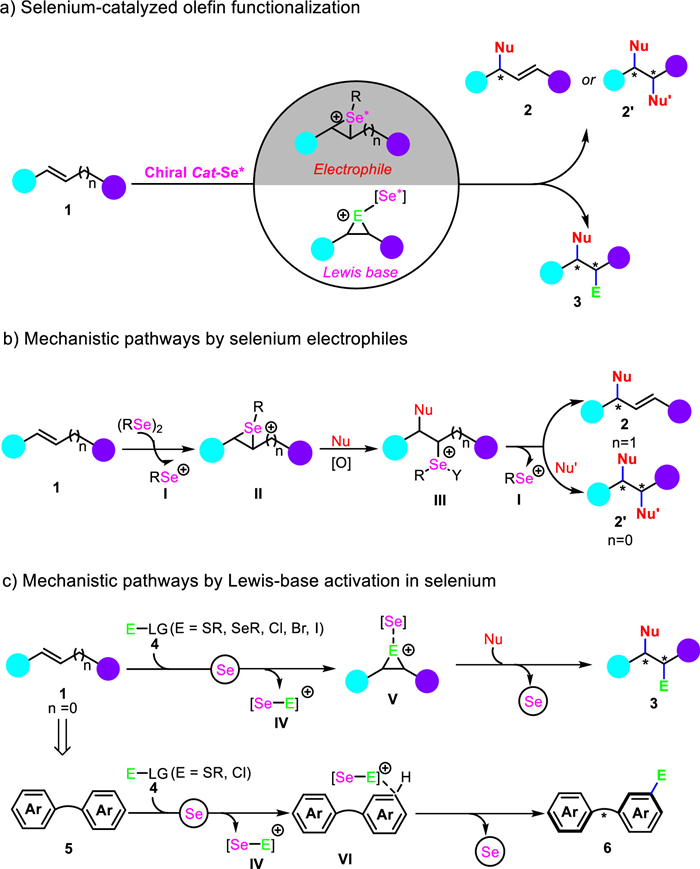
Scheme 1.
The asymmetric transformation of alkenes.


Selenium, first identified by the Swedish chemist Berzelius in 1817, is an essential trace element for humans and animals [1-3]. Although selenium and its compounds were extensively studied throughout the 19th and early 20th centuries, their applications in organic synthesis received limited attention, primarily due to their toxicity and instability. In the late 20th century, chemists discovered that selenium compounds could catalyze oxidative elimination reactions under mild conditions, facilitating the formation of double bonds. This discovery initiated the exploration of selenium's potential in organic synthesis [4-6]. With the rapid advancements in asymmetric synthesis, chemists increasingly explored the use of chiral selenium catalysts, rendering their design and synthesis a research focus. In the 21st century, the applications of selenium catalysts further expanded, encompassing various organic reactions [7-11], particularly with the development of asymmetric reactions exploiting selenium's electrophilic nature and Lewis basicity [12-14]. Concurrently, the development of chiral organoselenium catalysts garnered widespread attention. With further research, selenium catalysts derived from natural chiral compounds as foundational scaffolds, followed by modifications and synthesis, have emerged as a prominent trend [15-18]. This approach not only mitigates the complexity and cost of catalyst synthesis but also improves the feasibility and efficiency of practical applications.
In the domain of selenium-catalyzed alkene asymmetric functionalization, two distinct activation patterns can be identified (Scheme 1a). The first involves the electrophilic selenium-π-acid catalyzed transformation of alkenes with nucleophiles. The introduction of RSeX (X = Cl, Br, OTs, OTf, PF6, SbF6) species as electrophilic selenium in the late 1950s allowed for stereoaddition to simple alkenes. This activation principle relies on the enhancement of reactivity of electrophilic partners by non-metallic oxidants present in the catalytic system [19,20]. Electrophilic selenium catalysis (ESC) enables the selenylation-deselenylation of alkenes, facilitating the functionalization of non-activated alkenes (Scheme 1a, top) [21,22]. The conventional reaction pathway involves the oxidative cleavage of the Se-Se bond in the diselane catalyst, leading to the formation of a seleniranium ion Ⅱ. Subsequent nucleophilic attack results in the formation of Markovnikov selenoamination products, which are further transformed into Se(Ⅳ) intermediates Ⅲ considered good leaving groups. The regeneration of electrophilic selenenylating reagents allows for the use of catalytic amounts of the selenium-containing reagent, leading to the production of various products 2, 2′ through α,β-elimination or nucleophilic substitution processes (Scheme 1b).
The second activation principle involves the Lewis base-catalyzed reaction of alkenes with selenium (Scheme 1a, bottom). In this type of reaction, two functional groups, usually an electrophilic reagent and a nucleophilic reagent, can simultaneously react with the double bond of olefins, adding complexity to the reaction. The practicality of obtaining asymmetric products through this approach has made it increasingly popular among researchers, leading to the development of more chiral selenium catalysts such as Denmark [23,24], Yeung [25,26], Zhao [27,28] and Shirakawa [29,30]. The conventional catalytic cycle operates as follows (Scheme 1c): The inert electrophilic reagent 4 is initially activated by a Lewis-base selenium catalyst, resulting in the removal of a leaving group and the formation of the highly electrophilic E-cation intermediate Ⅳ. During this phase, the chiral selenium engages in a complex interaction with E+, providing the foundation for asymmetric catalysis. Subsequent reaction with olefins generates ternary ring E-onium ions Ⅴ, which upon interaction with nucleophilic reagents, produce the difunctionalization product 3 of the olefin. This reaction cycle, compared to that catalyzed by electrophilic selenium, is more straightforward. Nonetheless, it is important to ensure that the reactivity of electrophilic or electrophilic-derived E ions is appropriate to prevent quenching by nucleophiles during the reaction. After years of development, the reaction substrates have been extended from alkenes 1 to aryl compounds 5. Electrophile 4 combines with the chiral selenium catalyst to form the highly reactive intermediate Ⅳ, which then undergoes a sulfenylation reaction with the 5 to afford the axially chiral or phosphorus-stereogenic product 6.
While significant advancements have been made in transition metal catalysis [31-33], organic selenium compounds have emerged as potent catalysts for the oxidation of unactivated alkenes in recent years. The pioneering work of Sharpless and Tunge introduced selenium-catalyzed allylic halogenation reactions [34-36]. Building on this, Breder developed a groundbreaking selenium-catalyzed reaction mechanism enabling analogous aminations on alkenes [37]. Subsequent research expanded the application of selenium-catalyzed oxidative allylic reactions to intramolecular processes and extended beyond amination reactions to encompass esterification, etherification, and other transformations [38,39]. The choice of oxidants plays a vital role in method development, with both traditional and novel non-metallic oxidants like NFSI, PyF+TfO−, and PIFA demonstrating effectiveness in these reactions. Recognizing the demand for chiral products containing chiral carbon atoms, researchers have successfully executed asymmetric reactions using chiral selenium reagents and developed various chiral electrophilic selenium catalysts in the past three decades (Scheme 2) [40,41]. By incorporating diverse chiral groups onto the aromatic ring, such as tertiary carbon stereochemical centers, chiral tert‑butyl sulfinyl groups, chiral oxazolines, and menthol, researchers have applied chiral electrophilic selenium catalysts to catalyze the asymmetric transformation of alkenes. Despite these advancements, achieving high stereoselectivity and broad substrate versatility remains a significant challenge.
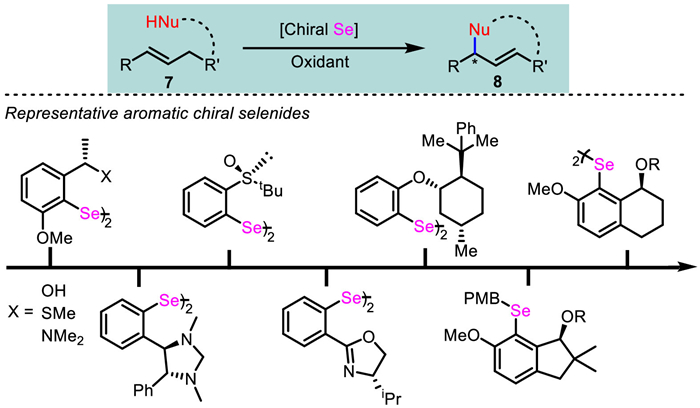
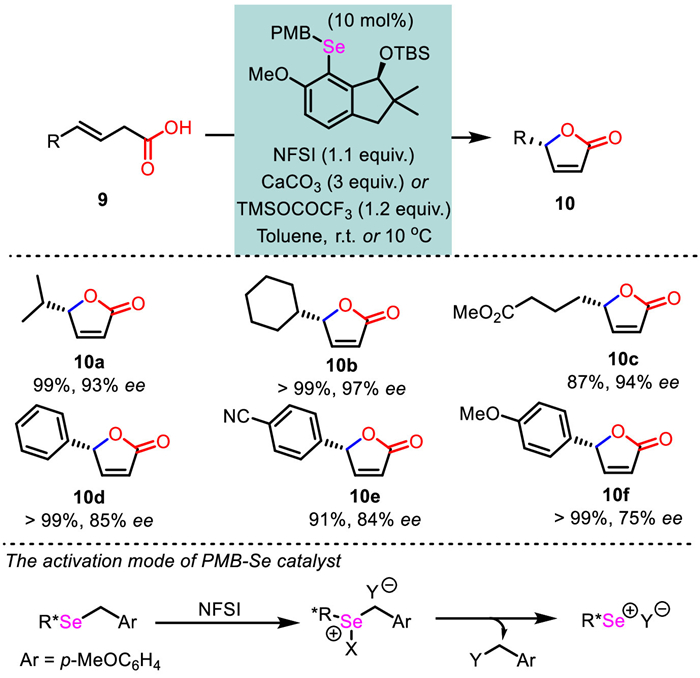
In 2016, Maruoka and colleagues made a groundbreaking discovery by developing a selenium catalyst based on an indanol scaffold to achieve highly enantioselective intramolecular oxidative cyclization of β,γ-unsaturated carboxylic acid, a pioneering success (Scheme 3) [42]. Instead of a strict diselenide structure, the catalyst ingeniously incorporated a PMB functional group that could be easily oxidized in the reaction environment, thereby forming electrophilic selenium species [43]. This innovative approach facilitated the efficient conversion of a diverse range of aliphatic and alicyclic 3-alkenoic acids 9 into their corresponding γ-butyrolactones 10 with outstanding yields and high enantioselectivities under mild reaction conditions. Regarding γ-aryl substrates, the substitution of TMSOCOCF3 for CaCO3 and the reduction of the reaction temperature from room temperature to 10 ℃ were necessary to enhance enantioselectivity, albeit resulting in slightly lower ee values. The authors postulated that, in the presence of TMSOCOCF3, highly unstable arylselenium(Ⅱ) fluorides would lead to the formation of a catalyst with a trifluoroacetate counterion.
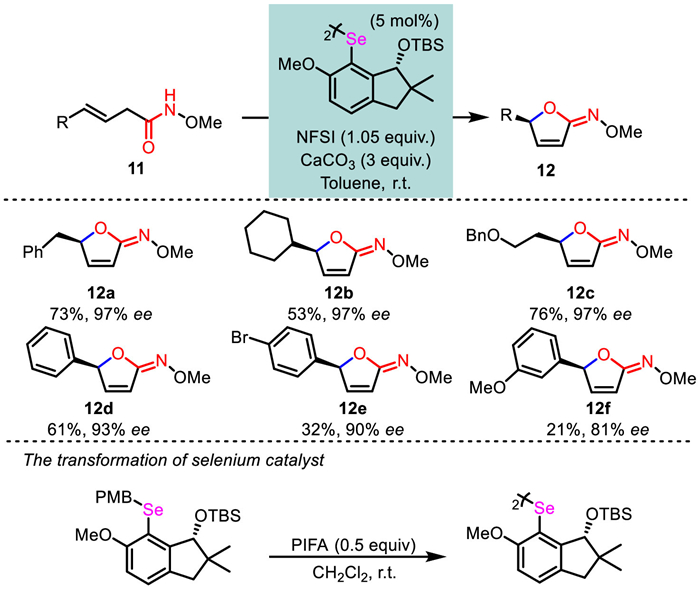
Furthermore, in 2019, Maruoka and colleagues enhanced the synthesis of a selenium catalyst to broaden the applicability of the reaction (Scheme 4) [44]. The diselenide was acquired through the oxidation of the PMB-selenide catalyst using PIFA (bis(trifluoroacetoxy)iodo)benzene. This refined catalyst was effectively utilized in the intramolecular cyclization of N‑methoxy β,γ-unsaturated amides, yielding iminolactones with moderate yield and high enantioselectivities. The addition of CaCO3 as an additive was essential to counteract the generation of HF during the reaction and facilitate the regeneration of the catalyst. When utilizing different substituent groups on the olefin, be it alkyl or aryl, satisfactory outcomes were achieved. The reactions were compatible with functional groups such as bromo (12e) and methoxy (12f), although the yield decreased significantly in these instances.
To advance the field of selenium-π-acid catalyzed aza-Wacker-type oxidations, our research team unveiled the pioneering intramolecular desymmetrizing cyclization of alkenes to access phosphorus-stereogenic heterocycles in 2023 (Scheme 5) [45]. This innovative approach involved the preparation of phosphine oxide substrate 13 to enable enantioselective cyclization, which could proceed in either a 5-exo-trig or 6-endo-trig manner, yielding five-membered or six-membered P-stereogenic heterocycles 14 or 15 [46]. The study focused on (E)-bis(2-hydroxyphenyl) (styryl)phosphine oxide 16 as the substrates, evaluating diselenide catalysts with distinct protecting groups on the indanol scaffold and 6-membered tetrahydronaphthalen-1-ol backbones. Our investigation revealed that the phosphine oxide substrate 16 readily underwent 6-endo-trig cyclization by attacking the seleniranium intermediate, where the 6-membered heterocycle 15 offered a more sterically favorable chair conformation transitioning state and enhanced electronic stabilization to furnish chiral P-stereogenic heterocycles 17 using 10 mol% of diselenide catalysts.
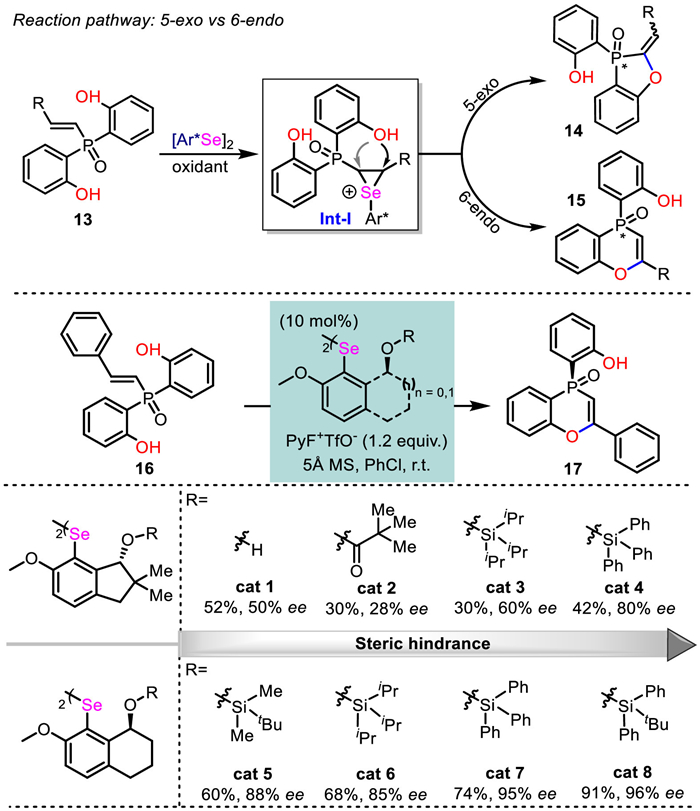
Among a series of screened catalysts, the SiPh2tBu-substituted example, cat 8, demonstrated superior performance with the model reaction achieving a yield of 91% and high enantiocontrol of 96% ee. Furthermore, the compatibility screening of oxidants with the selenium catalyst highlighted the superior performance of PyF+TfO−, outperforming NFSI and hypervalent iodine(Ⅲ) reagent. Addition of 5 Å MS enhanced the yield substantially, likely due to its sensitivity to the presence of water in the system, with enantioselectivity remaining consistent. The combination of 10 mol% of cat 8 with 1.2 equiv. of PyF+TfO− and 5 Å MS in chlorobenzene under mild conditions resulted in excellent conversion rates (64%−95%) and high enantioselectivities (91%−98% ee).
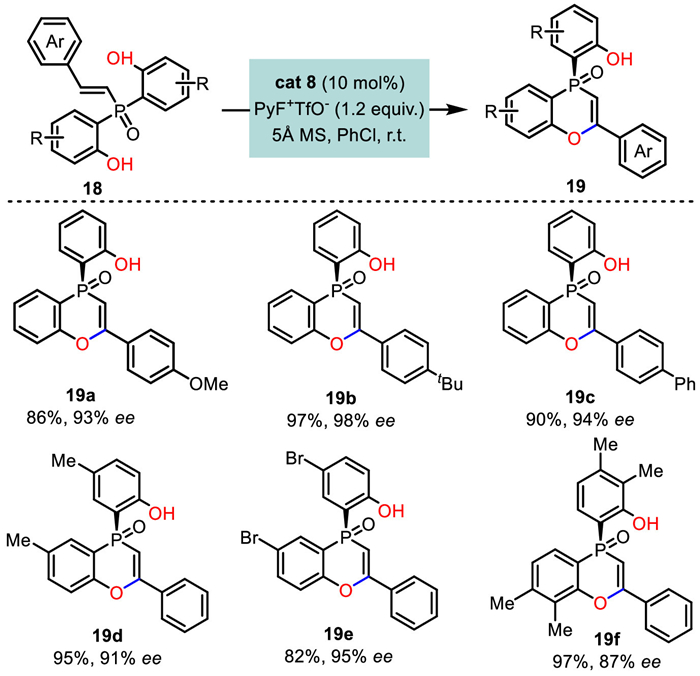
Further exploration into the scope and limitations of the aryl alkene and bisphenol unit on the phosphine oxide substrate under the optimized reaction conditions uncovered a broad range of electron-donating and electron-withdrawing groups that could be converted into the desired products 19a-19f, demonstrating high yield and excellent enantiocontrol (Scheme 6). Notably, the tolerance of bromide functionalities in this reaction, such as observed in product 19e with 82% yield and 95% ee, offered a valuable expansion of the reaction scope compared to traditional transition metal catalytic methods. The resulting chiral products bearing synthetically versatile phenol groups exhibited utility in various transformations.
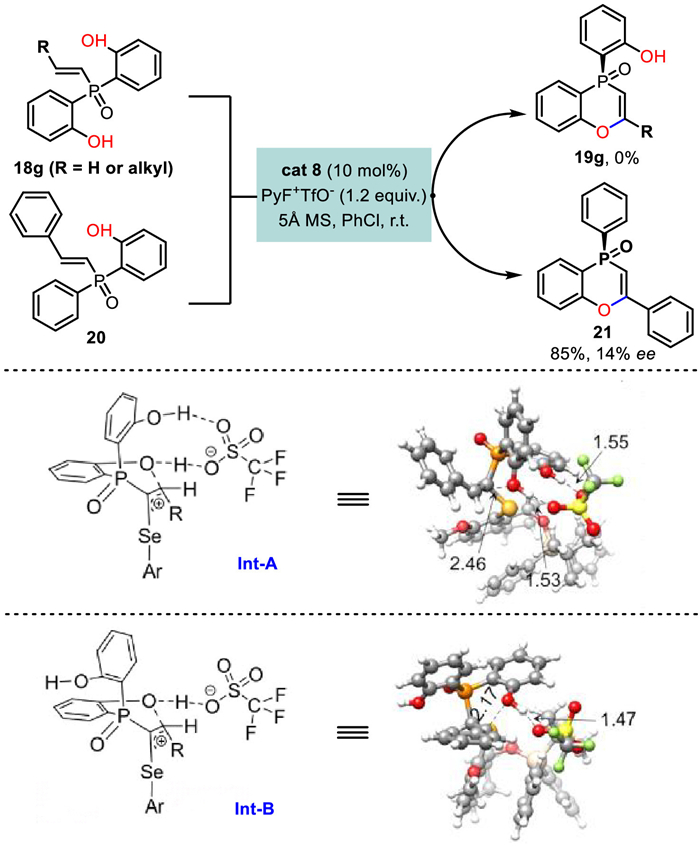
Control experiments and density functional theory (DFT) calculations were conducted to elucidate the reaction mechanism (Scheme 7). When applying substrates with an unsubstituted or alkyl-substituted olefin 18g under standard conditions, no corresponding product was observed. This observation underscores the critical role of the conjugated olefin unit in the seleniranium intermediate or nucleophilic substitution process. Utilizing substrate 20 with a mono-phenol resulted in the desired product 21 with high yield but reduced stereoselectivity. This outcome highlights the importance of unreacted phenolic hydroxyl groups in governing the enantioselectivity of the transformation [47]. DFT calculations were employed to validate this finding, revealing the formation of a dual-hydrogen-bonding bridge between the TfO− anion (Int-A), which significantly influenced the selectivity of the enantiodetermining step.
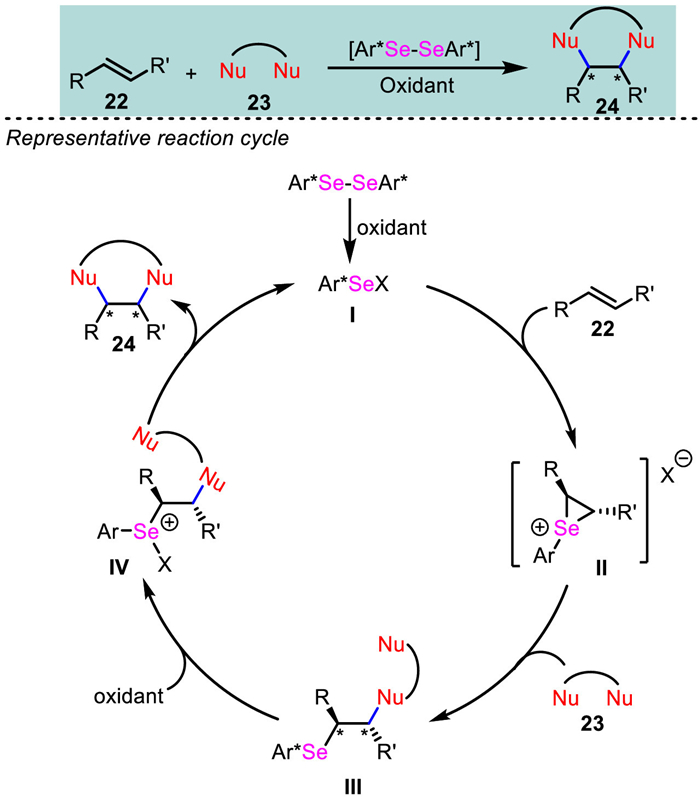
Olefins are crucial raw materials in synthetic chemistry, known for their diverse substitution patterns, wide availability, and ease of preparation. The enantioselective difunctionalization of olefins, involving the simultaneous addition of two functional groups to the C—C double bond, offers an efficient approach for the rapid synthesis of valuable enantiomeric compounds. This method has garnered significant attention and interest among chemists, aiming to expand the repertoire of chirally diverse compounds. While significant advancements have been made in metal chemistry, photochemistry, and electrochemistry, the quest for novel methodologies to achieve such difunctionalization has remained a longstanding objective in organic synthesis [48-50]. As selenium is recognized for its eco-friendliness and biocompatibility, selenium catalysis has been explored for these olefin reactions. In a pivotal study, Denmark and colleagues utilized a potent nucleophile as a bifunctional reagent to achieve enantioselective difunctionalization through selenium-π-acid catalysis.
Building on insights from previous Se(Ⅱ/Ⅳ) catalysis studies (Scheme 8), diphenyl diselenide undergoes oxidation to generate active Se(Ⅱ) species Int-Ⅰ at the initiation of the reaction. The electrophilic arylselenium(Ⅱ) species Ⅰ then form a seleniranium ion Int-Ⅱ with alkene 22 in a concerted manner. Subsequently, Ⅱ can be opened through enantioselective intermolecular attack by the first part of the bifunctional nucleophile 23, leading to the formation of Int-Ⅲ. Ⅲ undergoes oxidation to Se(Ⅳ) Int-Ⅳ, enabling intramolecular displacement of selenium by the second part of the difunctional nucleophile, resulting in the formation of chiral difunctional product 24 and the regeneration of the electrophilic selenium species Ⅰ. During this reaction, careful control of factors such as the pKa of the nucleophile and additional base, as well as the redox potential of the stoichiometric oxidant, is crucial to the success of the process.
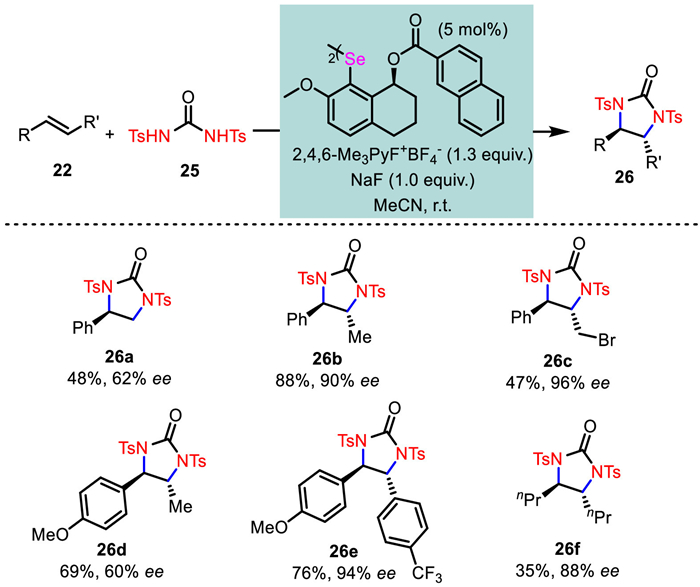
Building upon previous research [51,52], Denmark and collaborators tackled challenges with the groundbreaking development of the first enantioselective, syn-diamination of simple alkenes utilizing a chiral enantioenriched diselenide catalyst based on 6-membered tetrahydronaphthalen-1-ol backbones, combined with a N,N'-bistosyl urea as the difunctional nucleophile (Scheme 9) [53]. The oxidant 1-fluoro-2,4,6-trimethylpyridinium tetrafluoroborate (2,4,6-Me3PyF+BF4−) was identified as the ideal choice for the diamination reaction, surpassing the yields obtained with unsubstituted 1-fluoropyridinium tetrafluoroborate (PyF+BF4−) and 1-fluoro-2,6-dichloropyridinium tetrafluoroborate (2,6-Cl2PyF+BF4−), which yielded lower results. The optimized reaction conditions consisted of 5 mol% of the catalyst, 1.0 equiv. of sodium fluoride, acting to enhance yield without being a strict necessity for reaction progression, and acetonitrile as the solvent. These conditions facilitated the conversion of trans 1,2-bisubstituted olefins 22 into imidazolidin-2-one products 26 with consistently high enantioselectivities and variable yields. Noteworthy is the broad scope of the transformation, accommodating not just aryl-alkyl olefins but also diaryl and alkyl-alkyl olefins.
Subsequently, Denmark and colleagues advanced their work by developing the chemo-, regio-, diastereo-, and enantioselective syn-stereospecific oxyamination of alkenes using N-tosylbenzamides as the bifunctional nucleophile and the same chiral diselenide catalyst in 2021 (Scheme 10) [54]. This reaction displayed tolerance towards a wide array of alkenes and pendant functional groups, offering good yields under mild conditions.
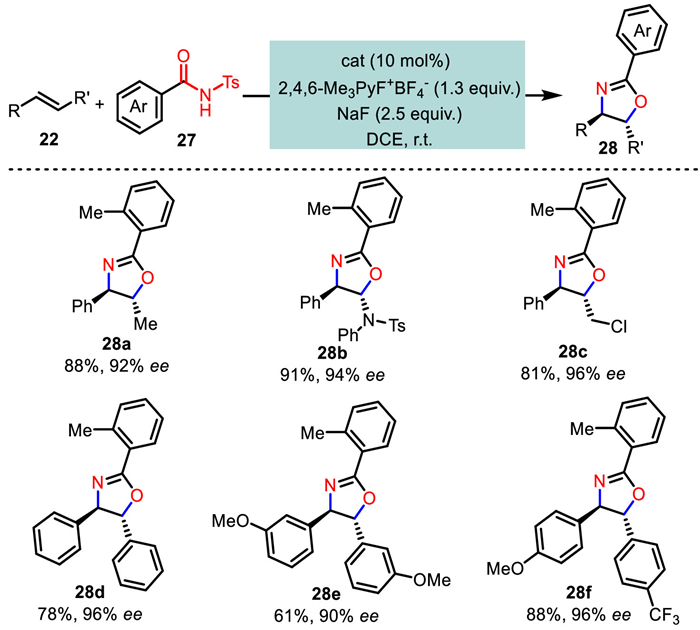
Furthermore, the swift generation of a series of oxazoline products contributed to the synthesis of chiral PHOX ligands. Notably, when utilizing a substrate with a functional group like N-tosylaniline, the targeted product 28b was obtained in a 91% yield with 94% ee. Under the optimized reaction conditions, the presence of primary alkyl chloride was compatible, yielding product 28c with high yield and excellent enantioselectivity. Extending the study, various aromatic rings were explored on the alkene substrate, revealing that substrates with electron-donating groups produced 28e with moderate yield and high enantioselectivity. A significant finding emerged with the testing of unsymmetrically substituted 4‑methoxy‑4′-trifluoromethylstilbene 28f, yielding a single diastereoisomer with exceptional yield and enantioselectivity.
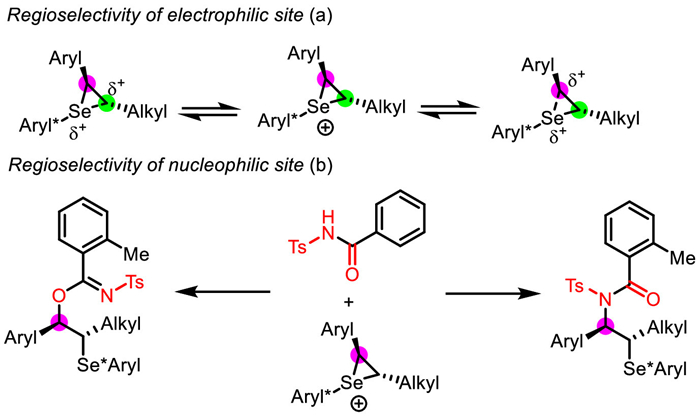
Compared to the 1,2-diamination of alkenes, a significant distinction in 1,2-oxyamination lies in the regioselectivity of the oxygen and nitrogen nucleophile addition. While symmetrical nucleophiles tend to add to olefins without selectivity in diamination, oxyamination presents two potential constitutional isomers. The electronic properties of the seleniranium ion intermediate are crucial in determining the regioselectivity of this addition (Scheme 11a). For an aryl-alkyl alkene, the aryl substituent's stabilizing effect results in greater electrophilicity at that site compared to the alkyl site. In the case of an unsymmetrical aromatic ring-containing alkene, the electron-donating nature of the 4‑methoxy group enhances stability, leading to the nitrogen atom positioning next to this substituent. In evaluating the relative nucleophilicity of oxygen and nitrogen nucleophiles on N-tosylbenzamides (Scheme 11b), the tosyl group's electron-withdrawing properties diminish the nitrogen non-bonded electron pairs' tendency to delocalize to the carbonyl group. Additionally, the predicted pKa value of the N—H bond (~5) facilitates its deprotonation by 2,4,6-phenylamine, elevating its nucleophilicity. Consequently, the nitrogen on N-tosylbenzamide is expected to act as the initial nucleophile, targeting the more supportive positive charge position on the seleniranium ion.
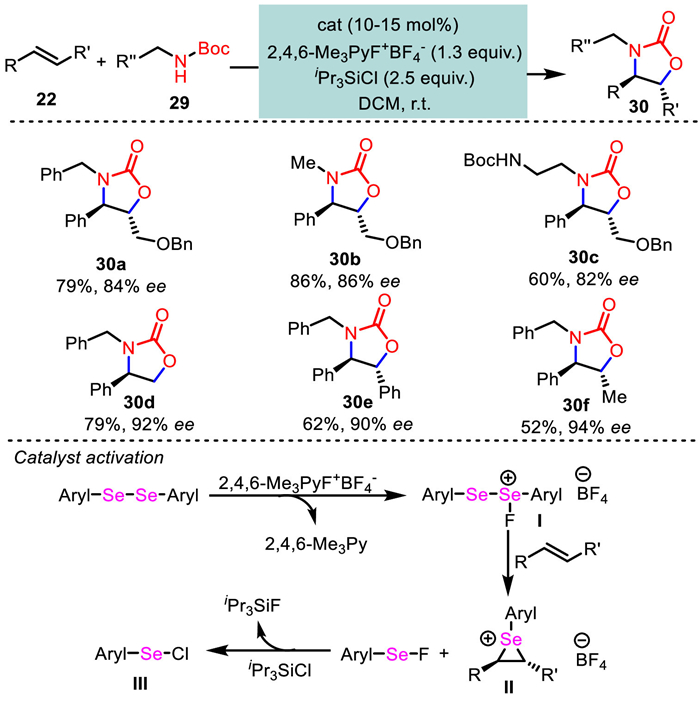
In their recent work, Denmark and colleagues devised a novel method to produce 2-oxazolidinones from N-Boc amines and mono- or trans-disubstituted alkenes using chiral organoselenium catalysis (Scheme 12) [55]. Compared to earlier endeavors, the pivotal inclusion of excess triisopropylsilyl chloride (TIPSCl) in the reaction system underpinned the success of the transformation. Various N-substituents of the carbamate nucleophile and aryl-/alkyl-substituents of the alkene were explored to yield the product with modest to high yields and high enantioselectivity. The reactivity of the nucleophilic reagents was influenced by the steric hindrance of substituents on the N-Boc-protected amines (30a-c). Notably, the monosubstituted alkene 22d with aromatic substituents exhibited remarkable reactivity, yielding the desired product 30d in a 79% yield with 92% ee. Furthermore, both (E)-stilbene 22e and (E)-2-methylstyrene 22f produced their respective products with modest yields but high enantioselectivity. The putative Se(Ⅱ/Ⅳ) catalytic cycle, derived from earlier studies, involves the initial oxidation of the catalyst to generate an activated selenium(Ⅱ) electrophile species Int-Ⅰ. This species can react with the olefin to form selenium ion Int-Ⅱ and 1 equiv. of arylselenium(Ⅱ) fluoride [56,57]. However, TIPSCl is essential for the completion of the reaction, as the highly reactive arylselenium(Ⅱ) fluorides are unstable and prone to hydrolysis or disproportionation to arylselenium(Ⅳ) trifluorides. It can be inferred that TIPSCl plays a key role in mitigating the formation of off-recycling catalytic species, such as arylselenium fluoride or trifluorides.
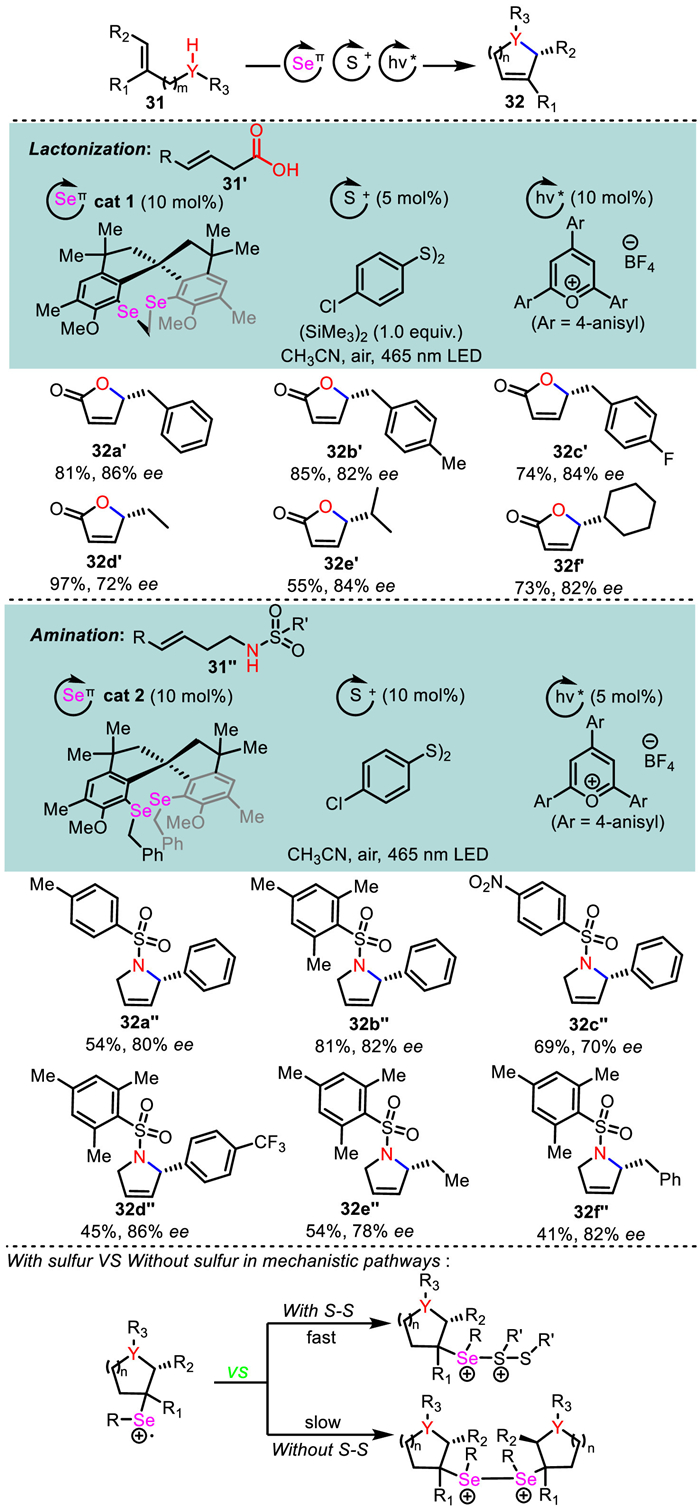
In recent years, Breder and colleagues have been dedicated to integrating light and selenium catalytic modes to promote more environmentally friendly reactions [58-60]. This innovative approach offers the benefit of reducing reliance on conventional oxidizers, although achieving successful application in asymmetric reactions has posed a significant challenge. A milestone was reached in 2023 when the Breder group introduced an effective sulfur-accelerated photo-aerobic selenium-π-acid ternary catalyst system for the allylic cyclofunctionalization of unactivated alkenes with exceptional enantioselectivity and reactivity (Scheme 13) [61]. Notably, the researchers synthesized novel selenium catalysts with enhanced rigidity and electronic adjustability derived from 1,1′-spirobiindane. By employing chiral, spirocyclic selenium-π-acid catalysts alongside racemic sulfur cocatalysts, the team successfully conducted photocatalytic, enantioselective lactonization and amination of internal alkenes. The investigation commenced by examining a series of alkenoic acid 31′ substrates under optimal reaction conditions with cat 1. Various substrates with benzyl groups, including electron-rich and electron-deficient alkenoic acids, yielded high yields and ee values (32a’-c’). Notably, cyclofunctionalization of 2-substituted 3-pyrrolines was explored, wherein different chiral selenium catalysts, particularly cat 2, exhibited superior reaction outcomes compared to the acid cyclization. Aryl or alkyl substituted substrates demonstrated good to high ee values, with highly sterically hindered groups offering improved stereoselectivity albeit at slightly lower yields. Mechanistically, the combinatorial role of sulfur in the catalyst system is critical. The disulfide serves dual roles by potentially acting as an electron-transferring catalyst in synergy with the photo-oxidative catalysts and also expediting the rate-limiting final step of the catalytic cycle under the specified conditions.
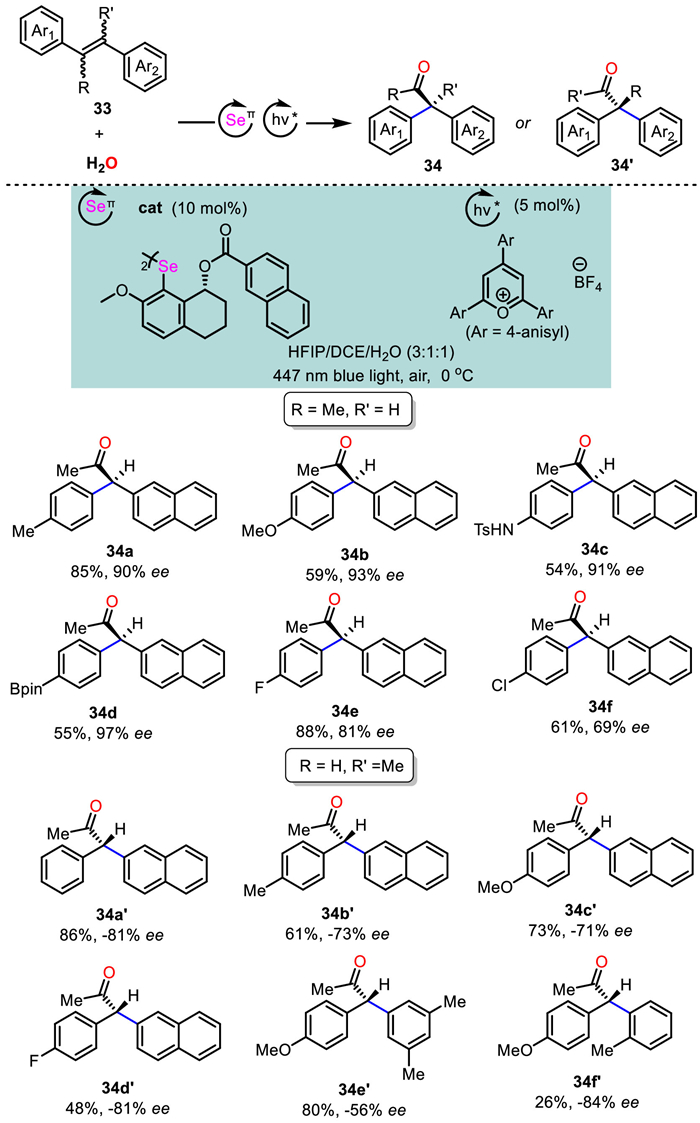
In this study, Breder and co-workers developed a general method for the synthesis of chiral diarylmethanes through the asymmetric migration of simple stilbenes via Tsuji-Wacker oxidation, which did not require the activation of olefins and was highly tolerant of functional groups (Scheme 14) [62]. Through substrate investigation, it was found that steric effects had little impact on stereoselectivity, whereas electronic effects had a significant influence (34d-e). The authors explained that small differences in the activation energy barriers (ΔΔG‡) for the migration of electron-withdrawing aromatic rings led to a lower degree of enantiomeric product differentiation. Notably, the migration of the methyl group from the vinyl position α to position β resulted in the formation of the opposite enantiomer (34a’-f’). Chiral selenium catalysts perfectly controlled the distinction of the π-face and regioselectivity with the assistance of light. On the one hand, it ensured that the Z/E or mixture configurations of the olefins had no effect on the reaction; on the other hand, by altering the position of the methyl group on the trisubstituted alkene, both product stereoisomers with opposite configurations could be obtained. The study successfully integrated computational and experimental methods to elucidate the reaction mechanism. The findings demonstrated the complex catalytic cycle's reliance on radical intermediates, selective bond rotations, and unique interactions to achieve the observed stereoselectivity. The experimental alignment with computational predictions underscored the robustness of the proposed mechanism.
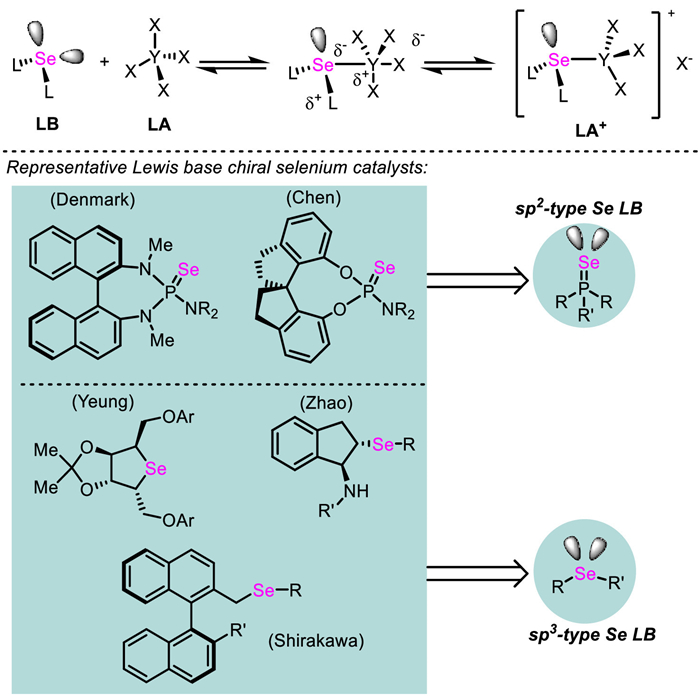
An emerging trend in selenium compounds in catalysis is Lewis base catalysis, involving the activation of Lewis acids and the widespread utilization of chiral selenium catalysts. The resultant adducts formed between the organoselenium Lewis base (LB) donor and the Lewis acid (LA) acceptor establishes a three-center, four-electron hypervalent bonded cationic entity, the Lewis acid LA+ (Scheme 15) [63]. This cationic LA+ species exhibits heightened electrophilicity compared to the precursor Lewis acid. Noteworthy attributes of selenium catalysts in comparison to chiral tertiary amines and tertiary phosphines include improved flexibility due to possessing two lone electron pairs and reduced basicity, making them a focal point of interest among researchers. These selenium catalysts can be broadly categorised into two groups: sp2-type selenium catalysts, exemplified by chiral phosphine selenides incorporating BINAM backbones, initially developed by Denmark [64] and later refined by Chen's team for these applications [65]; and sp3-type selenium catalysts, existing in two distinct forms: One being a cyclic form, represented by the mannitol-based catalyst introduced by Yeung [66]; the other, a linear form, exemplified by the catalyst containing an indane base proposed by Zhao [67] and the catalyst featuring a BINOL framework developed by Shirakawa [68]. This section will examine recent methodological advancements and offer insights into the mechanistic aspects of catalytic, enantioselective functionalisation using these catalysts.
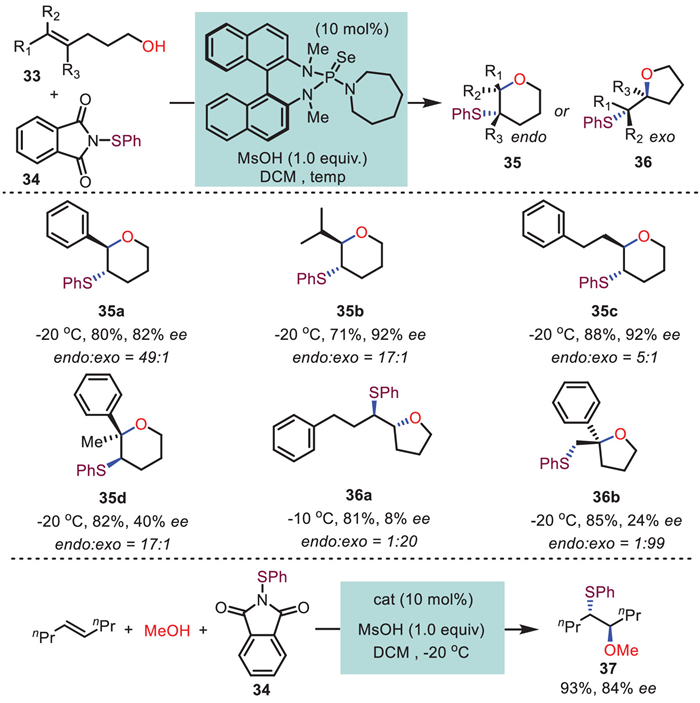
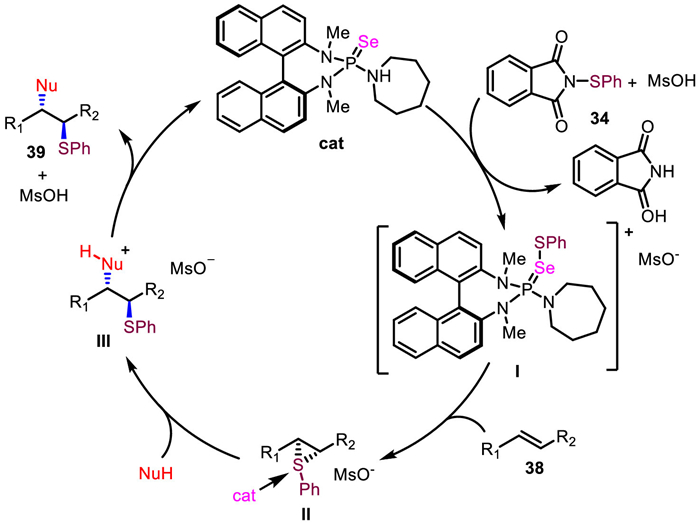
In 2011, Denmark and co-workers introduced the first catalytic asymmetric thiofunctionalization of unactivated alkenes using a BINAM-derived selenophosphoramide catalyst (Scheme 16) [69]. For Lewis base activation, the weakly electrophilic sulfur(Ⅱ) source, N-phenylsulfenyl-phthalimide 34, is activated by the catalyst in the presence of MsOH as a Brønsted acid to generate a cationic donor-acceptor complex, enhancing the electrophilic nature of sulfur. While this strategy is effective for straightforward olefins with diverse substituents, it resulted in the formation of two types of products: Pyran (endo) 35 and furan (exo) 36. The six-membered pyran 35a was synthesized in 80% yield with excellent enantioselectivity from substrate 33a. Alkyl alkenes were also suitable substrates. Substrates with trans alkenes bearing a bulky isopropyl group and a phenyl ether group, 35b and 35c demonstrated high yield and enantiocontrol but with limited site selectivity (endo:exo = 5:1). The use of cis alkenes produced the targeted furan product 36a in 81% yield with 1:20 endo:exo selectivity but almost racemic form. Absolute furan product 36b was achieved in 85% yield, albeit with only 24% ee from a disubstituted alkene. Subsequently, Denmark successfully applied this approach to the intermolecular capture of thiiranium ions by oxygen nucleophiles, yielding methoxyphenyl sulfide 37 in a 93% yield with 84% ee by combining trans-4-octene with MeOH.
Through a series of experimental analyses involving 31P NMR spectroscopy of intermediate Ⅰ and previous reports, Denmark proposed a mechanistic pathway for enantioselective sulfenylation (Scheme 17), where the Lewis base catalyst undergoes sulfonation with 34 mediated by MsOH to generate active Int-Ⅰ, leading to the formation of sulfenium ion Int-Ⅱ upon transfer to olefin 38 and followed by stereodetermination. Int-Ⅱ undergoes intramolecular or intermolecular nucleophilic attack to yield enantioenriched thioether product 39, with the liberation of the catalyst.
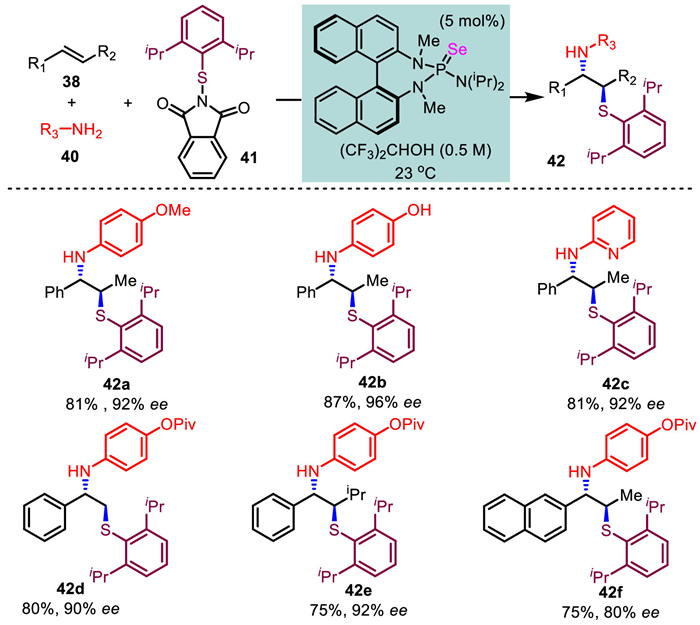
In a subsequent breakthrough in 2019, Denmark and co-workers revealed the catalytic, enantioselective, intermolecular 1,2-sulfenoamination of alkenes using a selenophosphoramide catalyst under mild conditions (Scheme 18) [70]. Notably, it was demonstrated that HFIP (1,1,1,3,3,3-hexafluoro-2-propanol) not only served as the reaction solvent but also participated in activating the sulfenylating agent through protonation without acting as a nucleophilic reagent in the reaction. Various anilines and benzylamines 40 reacted with diverse styrenes 38, yielding products with good yield and stereoselectivity. For instance, 4‑methoxy‑1-aminobenzene was efficiently converted to the target product 42a in an 81% yield with 92% ee. The reaction's mild conditions enabled the inclusion of functional groups such as hydroxyl 42b, pyridine 42c, and acid-labile protecting groups. Styrene proved to be a competent substrate in the reaction, delivering the desired product 42d in an 80% yield with 90% ee. Substrates with sterically demanding isopropyl and methyl groups at the alkene unit produced the target products 42e and 42f in satisfactory yield with slightly reduced enantioselectivity.
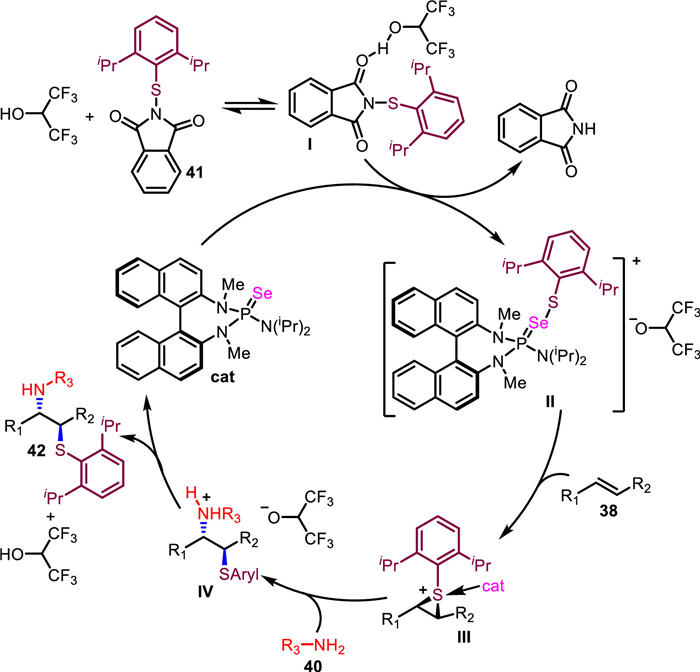
According to Denmark's proposal, a catalytic cycle for enantioselective sulfenylation was presented (Scheme 19). Initially, the sulfenylating agent 41 facilitates the transfer of sulfur to the selenophosphoramidite catalyst through protonation activation with HFIP to generate the cationic species Int-Ⅱ. Subsequently, selenite groups are transferred to olefins 38 to form enantioselective thiotitanium ions Int-Ⅲ. The final step involves an intermolecular stereospecific nucleophilic capture, leading to the formation of Int-Ⅳ and consequent deprotonation to yield vicinal functionalization products 42 and regenerate the catalyst.
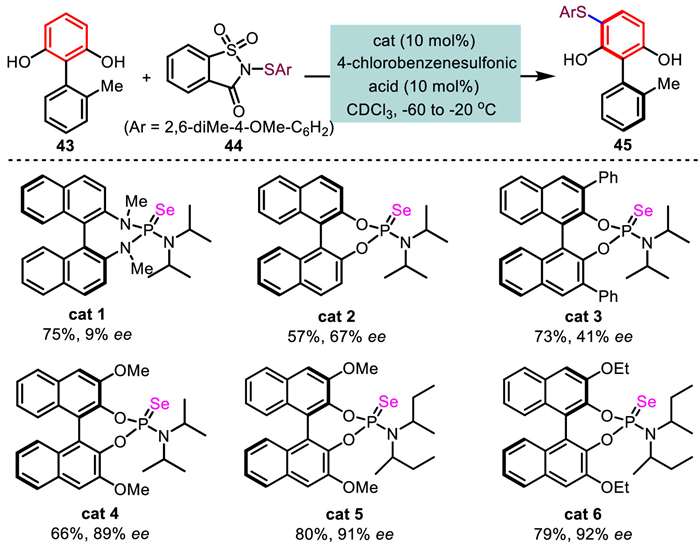
Furthermore, beyond the difunctionalization of alkenes, the Lewis base properties of the selenophosphoramide catalyst have been harnessed for functionalization of the aromatic ring and chiral construction. In 2022, Chen and collaborators introduced a successful selenophosphoramide reaction regime for the practical synthesis of axially chiral sulfur-containing biaryl derivatives via desymmetrization sequence [71]. A pivotal aspect in achieving high enantioselectivity and reactivity was the intricate network of hydrogen bond interactions between the cocatalysts and the substrate. During optimization, several chiral catalysts were evaluated for the reaction involving bisphenol 43 and sulfenylating reagent 44 in the presence of p-chlorobenzenesulfonic acid as an acid catalyst (Scheme 20). While the BINAM-derived selenide cat 1 provided the desired product with enantioselectivity, the level of enantioselectivity was few. Using the BINOL-derived selenide cat 2 enhanced the enantioselectivity to 67% ee. Subsequent investigations into the effects of 3,3′-substituents on the BINOL framework revealed that increased steric hindrance with cat 3 (phenyl moieties) reduced enantioselectivity to 41% ee, whereas the methoxy group in cat 4 had a positive effect, achieving 89% ee. Substituting the diisopropylamine group in cat 5 with disec-butylamine boosted enantioselectivity to 91% ee in an 80% yield, with a slight improvement in stereoselectivity by substituting ethoxy for methoxy with cat 6.
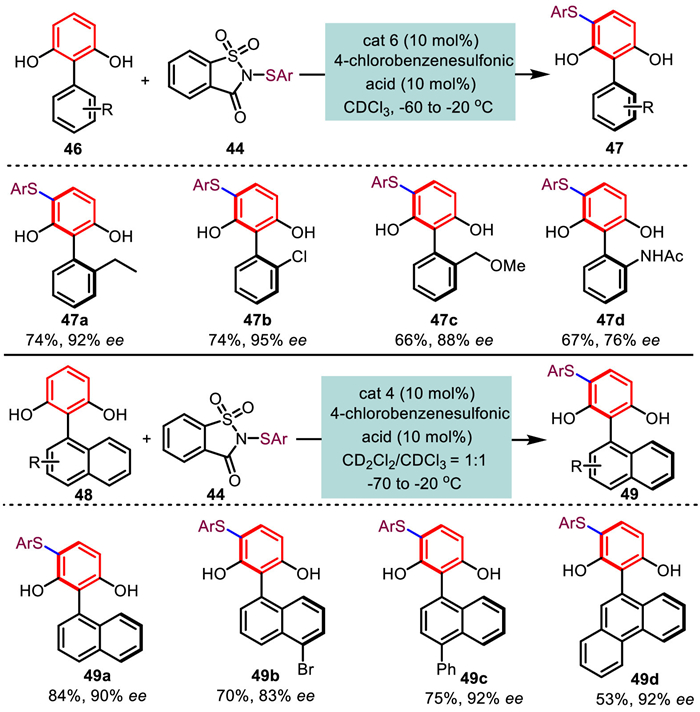
Under these optimized conditions, various biaryl phenols 46, including alkyl- and chlorophenyl-substituted aryl, underwent sulfenylation to yield the desired products 47a-c (Scheme 21). However, the substrate with an acetyl-protected amino group was not compatible within this system, yielding product 47d in 67% yield with 76% ee. Further tests with a series of naphthyl moieties 48 determined that cat 4 was the ideal catalyst for this substrate instead of cat 6. By adjusting the reaction solvent and temperature, the optimal stereoselectivity was achieved. Under the new conditions, product 49a was obtained in 84% yield with 90% ee. Evaluating the tolerance for substituents included incorporating bromine 48b and phenyl groups 48c at the 4-position of the naphthyl group, which resulted in the targeted product with good yield and high enantioselectivity. A substrate bearing a phenanthrene moiety was converted to the desired product 49d in a moderate yield with consistently excellent enantiocontrol.
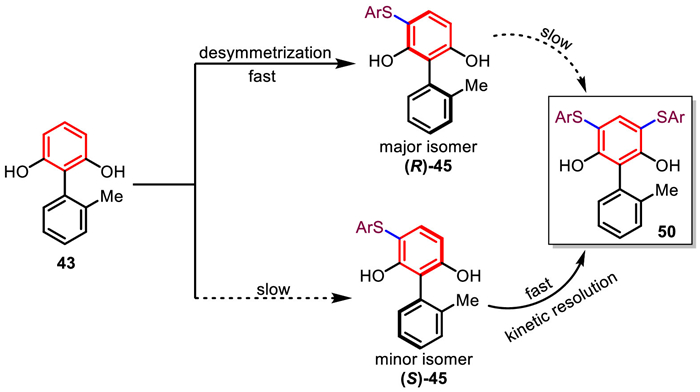
Through a series of control experiments and computational studies, the Chen group proposed a mechanistic scenario for the sulfenylation of biaryl phenols via a desymmetrization/kinetic resolution sequence (Scheme 22), revealing that the major enantiomer was consistent with those produced during the desymmetrization process. The disulfenylated product 50 was consistently obtained in the system, indicating that significant enantioselectivity was achieved through tandem desymmetrization/kinetic resolution processes. Furthermore, multiple noncovalent interactions between the cocatalysts and the substrate contributed to the high enantioselectivity and reactivity achieved.
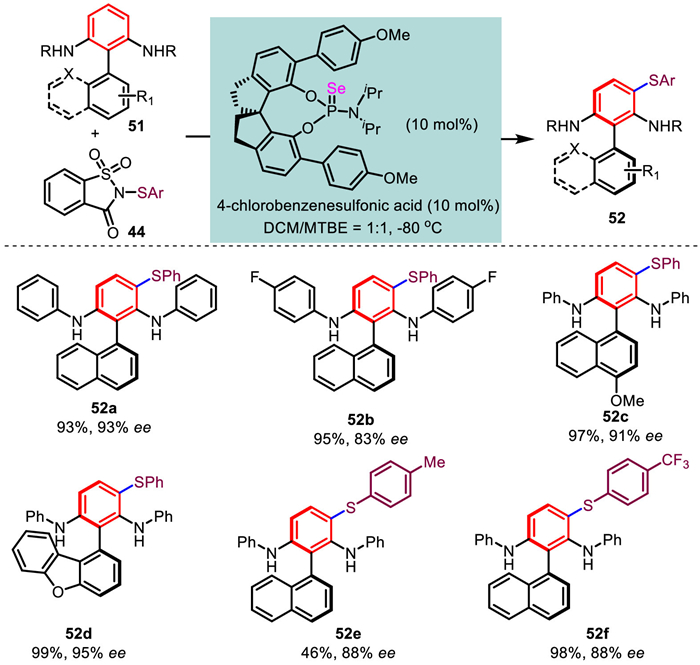
In 2023, Chen and colleagues successfully introduced a method for the atroposelective electrophilic sulfenylation of biaryl anilines, a groundbreaking accomplishment. Contrastingly to BINAM or BIMOL-derived selenide catalysts, the use of a novel 6,6′-dianisole substituted SPINOL-derived selenide facilitated these transformative eactions (Scheme 23) [72]. A range of axially chiral sulfur-containing biaryl anilines were efficiently synthesized with impressive yields and outstanding enantioselectivities. Following the optimization of reaction conditions, Chen delved into exploring the broad scope and constraints of the reaction by assessing diverse substrates featuring various amine functionalities, aryl group substitutions, and sulfenylating reagents, leading to gratifying outcomes. Substrates with different amine moieties yielded the desired products (52a-b) in excellent yields with moderate to excellent enantioselectivities. A substrate incorporating a potent electron-donating group, such as methoxy at the 4-position of the naphthalene, produced the corresponding products 52c in a 97% yield with 91% ee. Even substrates containing dibenzo[b,d]furan groups, such as 51d, were shown to be compatible with the catalytic system. Variations in the sulfenylating reagent (44e-f) with distinct substituents on the phenyl moiety only minimally affected the enantioselectivity, but notably impacted the yield.
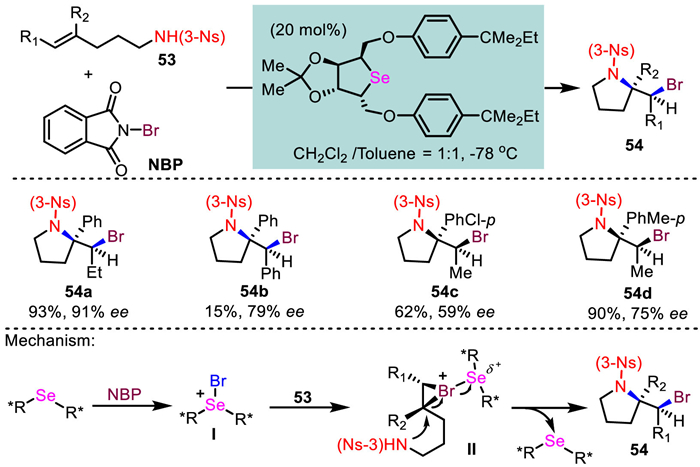
Except for phosphoselenide catalysts with axial chirality or helical skeleton, in 2013, Yeung and colleagues innovatively utilized inexpensive and readily available mannitol as a starting material to synthesize stable C2-symmetric monofunctional cyclic selenium species with Lewis basic properties. This was achieved through a multistep synthesis process. They further demonstrated the application of this selenium catalyst in the asymmetric bromocyclization of trisubstituted olefinic amides using stoichiometric amounts of NBP (N-bromophthalimide) as a catalyst (Scheme 24) [73]. Various substrates displayed good yield and ee values, with the exception of reactions involving R1 = R2 = Ph, which yielded the exo-cyclized product 54b with 79% ee despite a low reaction rate (15% yield). Substrates containing different R2 aryl substituents exhibited moderate to good stereoselectivity outcomes (54c-d). Yeung's group proposed a mechanism for this transformation, in which Lewis basic selenium coordinates with NBP to form an activated electrophilic bromide Int-Ⅰ, followed by the formation of a selenium bromide intermediate Int-Ⅱ through coordination with the olefin substrate 53, ultimately resulting in the desired product 54 undergoing SN2 reaction with sulfonamide after catalyst regeneration.
Contrary to the traditional belief that asymmetric selenium functionalization of unactivated olefins is challenging due to rapid cation exchange between olefin partners, Yeung and co-workers successfully achieved desymmetrizing enantio‑ and diastereoselective selenoetherification of olefinic diols using C2-symmetric cyclic selenide as a Lewis base and chiral BINOL-derived phosphoric acid as a Brønsted acid (Scheme 25) [74]. Under optimized conditions, a series of phenyl selenium-functionalized tetrahydrofurans were synthesized from olefin diol 55, with substrates bearing electron-withdrawing aryl substituents (55b-c) exhibiting high yield and diastereomeric ratio (dr) values alongside excellent ee values. Although substrates with electron-rich substitutions (55d-e) demonstrated high yields and dr values, the enantioselectivity was diminished due to increased racemization of the selenium titanium intermediate. Simple alkyl substituent 55f displayed good reactivity and dr but lower enantioselectivities. Through a combination of experimental and computational analyses, Yeung postulated that the reaction proceeds via a supramolecular catalytic pathway facilitated by hydrogen bonding.
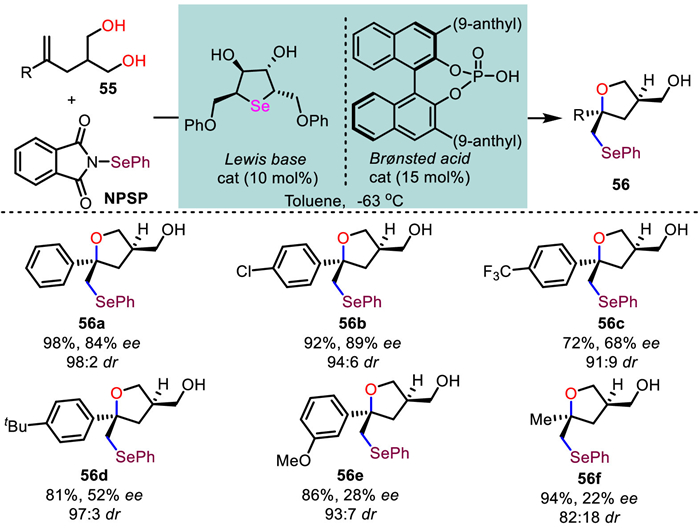
In 2023, Yeung and colleagues successfully developed a bifunctional catalytic system that integrated achiral selenium catalyst with chiral phosphoric acid catalyst via non-covalent interactions for asymmetric halogenation reactions [75]. This bifunctional catalytic system was not limited to alkene substrates and exhibits significant breakthroughs in selenium-based catalysis.
In 2018, Zhao and colleagues developed a variety of chiral amino aryl selenide catalysts based on indane structures. These catalysts could be easily synthesized using specific chiral indane frameworks, which allowed for the modification of amino protecting groups to enhance H-bonding effects, as well as the adjustment of Lewis basicity and steric hindrance by changing substituents on the selenide aryl. Additionally, they featured two carbon chiral centers that facilitated enantioselective control. Zhao effectively utilized these chiral catalysts to conduct various asymmetric electrophilic reactions, such as developing a method for enantioselective allylic reactions without nucleophilic reagents (Scheme 26) [76].
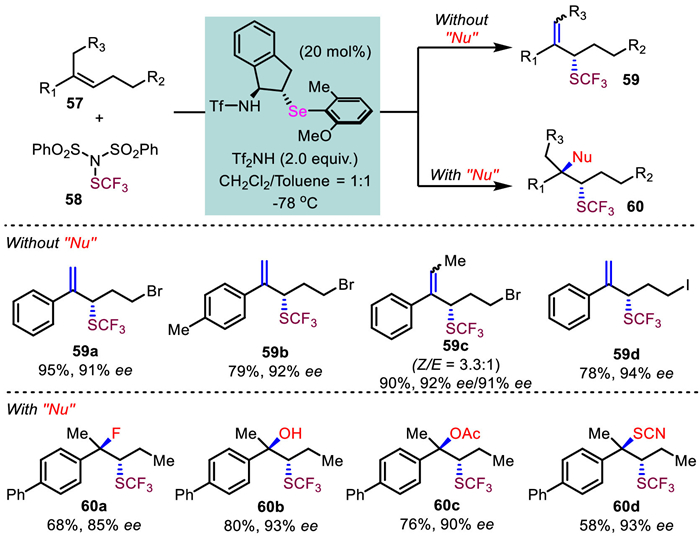
This method involved intermolecular difunctionalization of unactivated alkenes using external nucleophilic reagents like Et3N.3HF, H2O, AcOH, TMSNCS, with chiral selenide catalysts. Functional groups exhibited excellent tolerance during these reactions, resulting in desired products with high yield and exceptional chemical, enantiomeric, and diastereomeric selectivity. For instance, treating alkene 57 with electrophilic (PhSO2)2NSCF3 58 using a Tf-protected chiral aryl selenium catalyst led to allylic reactions yielding products 59 or 60, with optimal results in the presence of Tf2NH. Bromo-substituted substrates with para-Me-substituent on the phenyl ring efficiently underwent trifluoromethylthiolation to form products 59b in 79% yield and 92% ee. When R3 was methyl, isomer product 59c was obtained, with a ratio of 3.3:1 (Z/E), but with excellent enantioselectivity for both products. Substituting iodo for bromo resulted in the targeted product 59d in 78% yield with 94% ee. Zhao later investigated the generation of difunctionalization products under nucleophile conditions, demonstrating that various nucleophilic reagents could yield corresponding products with moderate to good yields and exceptional enantio‑ and stereoselectivities (60a-d, 58%−80% yield, 85%−93% ee).
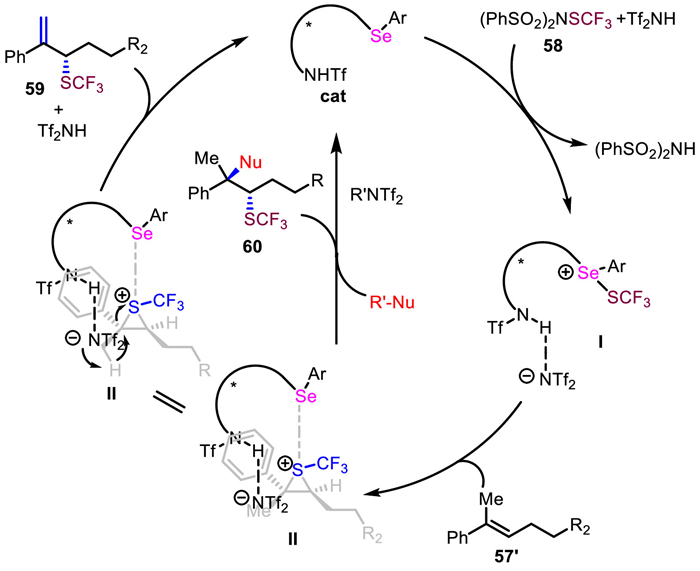
A plausible mechanism is proposed in Scheme 27. Initially, the chiral selenium catalyst reacts with compound 58 in the presence of Tf2NH to form the ion pair Int-Ⅰ, which then interacts with olefin 57′ to generate the thiiranium ion Int-Ⅱ. The relatively stable Int-Ⅱ undergoes deprotonation by a base anion to yield the allylic product 59. Furthermore, the difunctionalization product 60 is obtained in the presence of nucleophilic reagents. Notably, trisubstituted olefins serve as more favorable substrates for the formation of thiiranium ion intermediates compared to disubstituted olefins.
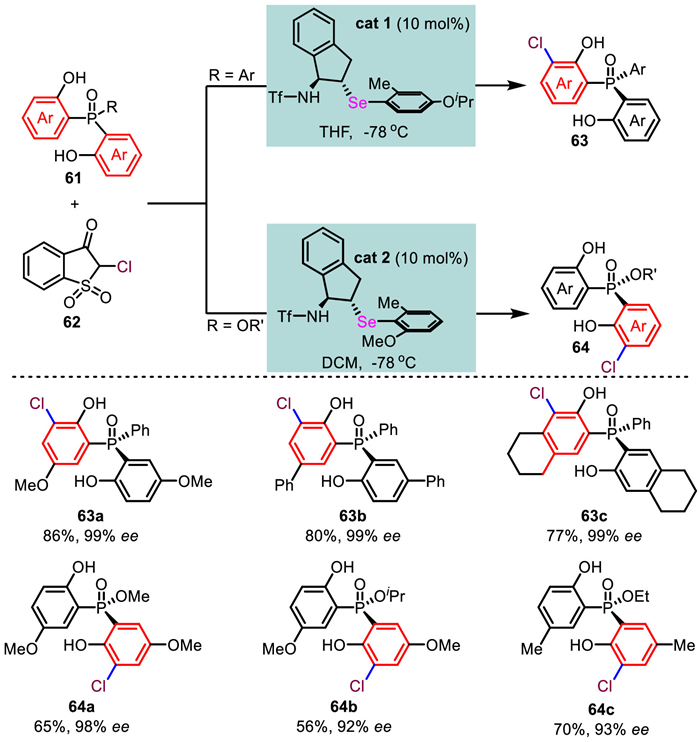
The Zhao research group also developed a convenient method for synthesizing phosphorus-stereogenic triaryl phosphine oxides through selenide-catalyzed enantioselective electrophilic aromatic chlorination, showcasing high yields and exceptional enantioselectivities. Given the significance of P-stereogenic compounds in pharmaceuticals and agrochemicals, this method represents a valuable advancement (Scheme 28) [77]. Through an intermolecular desymmetrizing approach, a variety of P-stereogenic products bearing chlorinated groups were obtained, serving as synthetic handles for further diversification. The presence of a hydroxy group on the substrates plays a dual role in facilitating the chlorination reaction by enhancing electron density in the aromatic ring and serving as a hydrogen bond donor to interact with chiral catalysts for precise stereoselectivity control. Catalyst screening revealed that efficient chlorination occurred using chiral indane-derived selenide catalyst cat 1 in triaryl phosphine oxides, while a more sterically hindered catalyst cat 2 was ideal for diaryl phosphinates. Both catalysts exhibited minimal differences, with varying substituents on the aromatic ring to which the selenium was attached, without the need for an activation reagent. The reaction accommodated phenol molecules with different electron-donating groups, yielding the desired products with high yields and exceptional enantioselectivity (63a-c, 77%−86% yield, 99% ee). Slight modifications in reaction conditions effectively controlled stereoselectivity for diaryl phosphinates, albeit with lower yields for certain substrates (64a-c, 56%−70% yield, 92%−98% ee).
In recent years, Shirakawa research group has developed a series of chiral bifunctional selenides, derived from a BINOL framework and incorporating hydroxy or thiourea groups. These catalysts have proven to be highly effective in difunctionalization reactions of olefins. In 2020, Seiji Shirakawa reported the synthesis of chiral selenium catalysts bearing a hydroxy group, which were successfully applied to asymmetric bromolactonisation reactions (Scheme 29) [29]. The study also provided a detailed discussion of the key features of the bifunctional design of the selenium catalysts in asymmetric reactions. First, the author employed a desymmetrisation strategy, using chiral selenium catalysts to react with NBS to synthesise optically active γ-butyrolactones with a quaternary carbon centre. During catalyst screening, it was found that when the phenolic hydroxyl group was methylated for protection, the product was obtained in moderate yield, but with no enantiomeric selectivity. However, when a bifunctional reagent was used instead, the target product was obtained with good stereoselectivity. When the substrate carries an electron-donating group, the product's ee value is moderate (66b). When an electron-withdrawing group is present, the ee value slightly decreases (66c). After modifying the substrate, the bifunctional selenium catalyst remained effective. When the bromine source was changed to DBH, the target product was obtained with an 85% yield and 82% ee (66d). Substituents on the aromatic ring had little impact on this reaction (66e-f).
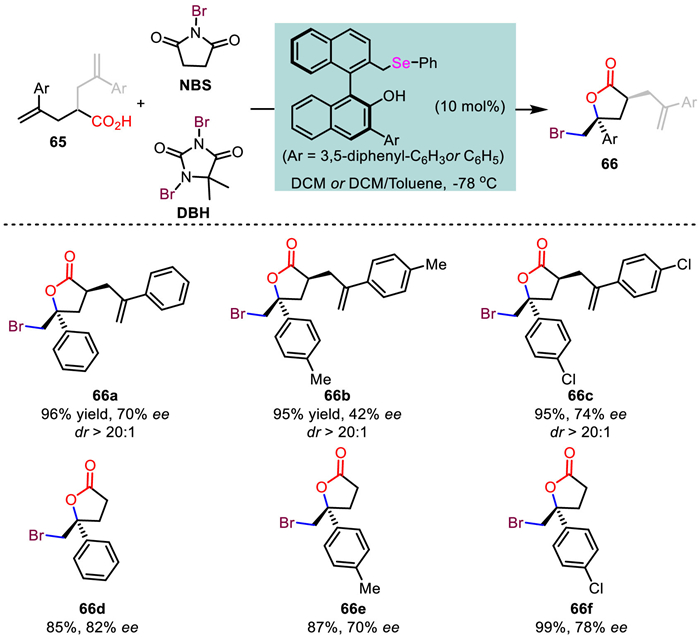
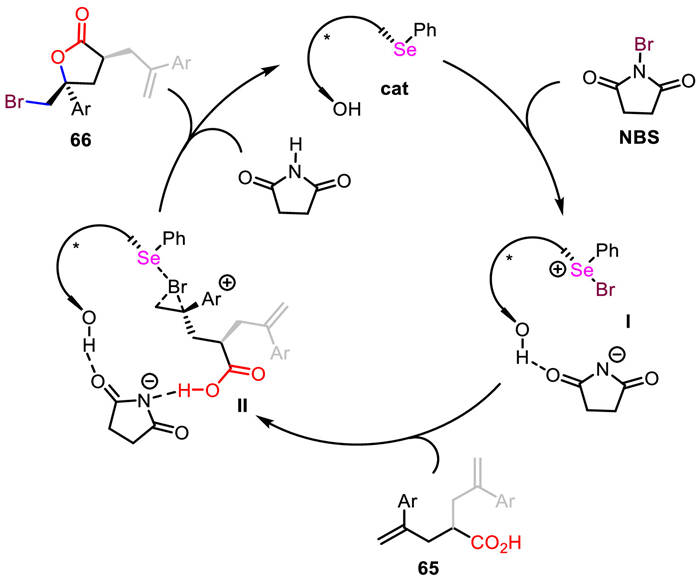
A proposed reaction mechanism is illustrated in Scheme 30. Initially, the chiral bifunctional selenium catalyst reacts with NBS to form the bromoselenonium succinimide intermediate Ⅰ. In intermediate Ⅰ, the carbonyl group of the succinimide anion interacts with the hydroxyl group of the catalyst. Subsequently, the alkene of substrate 65 is activated by the bromoselenyl group, forming the bromonium ion intermediate Ⅱ. Simultaneously, the nucleophilic carboxylic acid group in the substrate is activated by the succinimide anion, undergoing dehydrogenation. A selective lactonisation then occurs, leading to the formation of the bromolactone product 66, with the released selenium catalyst participating in the subsequent catalytic cycle.
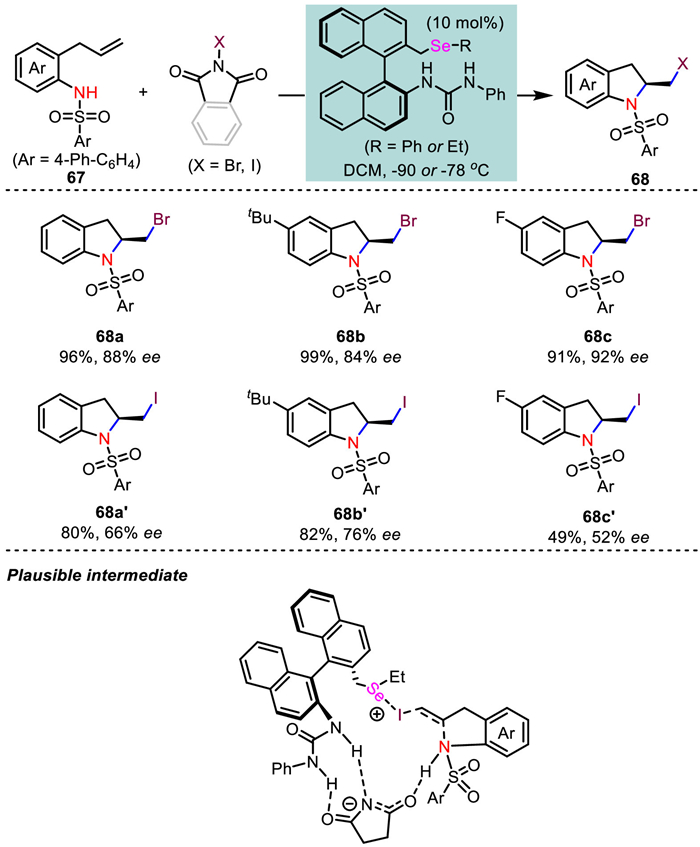
Subsequently, building upon their previous achievements, the research group led by Seiji embarked on a novel modification of the chiral selenium catalysts based on the BINOL framework. They reported the synthesis of a new class of chiral bifunctional selenium catalysts incorporating urea moieties. These catalysts were successfully applied to asymmetric halo-cyclization reactions, yielding halo-amine cyclic compounds with excellent yields and high stereoselectivity (Scheme 31) [30]. The authors employed two distinct halogenating reagents, successfully obtaining chiral products with bromo and iodo substituents, respectively. In the bromination reaction, the chiral products were achieved with high ee values (64a-c, 91%−96% yield, 84%−92% ee). Conversely, the iodo cyclization products generally exhibited lower stereoselectivity (64a’-c’, 52%−76% ee). The authors proposed potential reaction intermediates, suggesting that the urea moiety on the chiral bifunctional selenium catalyst facilitates the asymmetric haloamination reaction via hydrogen bonding interactions.
In the past two decades, remarkable advancements have been achieved in the enantioselective functionalization of olefins or aromatic rings catalyzed by organoselenium, despite its primarily single catalytic mode. The review emphasizes various activation modes, such as electrophilic selenium catalysis, photo-aerobic selenium-π-acid catalysis, Lewis base selenium catalysis, and selenium with Brønsted acid synergistic catalysis, which have been utilized to attain stereocontrol in reactions. Furthermore, the synthesis of novel chiral selenium catalysts has led to favorable reaction outcomes, paving the way for the advancement of asymmetric transformations. Based on the aforementioned chiral selenium activation mode, a series of chiral molecules featuring carbon-centered, phosphorus-stereogenic, and axially chiral frameworks were efficiently synthesized.
While substantial progress has been realized in this rapidly evolving research domain, the review identifies key challenges and opportunities within the field: (1) Many organoselenium catalytic asymmetric reactions are tailored for specific alkene positions, thus restricting the range of applicable substrates. (2) Unlike transition-metal-catalyzed reactions, organoselenium catalyzed reactions are limited to soft nucleophilic reagents, while conventional carbon nucleophilic reagents are considered hard. (3) The exploration of constructing chiral compounds via organoselenium enantioselective reactions with alkynes remains underdeveloped, presenting a promising avenue for future exploration.
Therefore, significant research efforts remain essential in the field of chiral selenium catalysis for highly stereoselective synthesis. For instance, the development of novel chiral selenium catalysts featuring broadly applicable and cost-effective scaffolds will represent a crucial strategy for achieving stereoselective functionalization. Exploring new activation modes and expanding reaction types continue to be central challenges in this research area. Through innovative paradigms such as cooperative catalysis and relay activation involving multiple types of catalysts, breakthrough advances in chiral construction can be anticipated.
With the evolution of new selenium catalysts, there is an optimistic outlook for the more efficient construction of chiral molecules.
Zhi-Chao Qi: Writing – original draft. Qian-Min Zuo: Writing – review & editing. Wenjin Yan: Writing – review & editing, Project administration. Shang-Dong Yang: Writing – review & editing, Project administration.
All of authors declare that they are not the competing interest.
We are grateful to the National Natural Science Foundation of China (Nos. 22171119 and 22371105) and The Science and Technology Major Program of Gansu Province of China (Nos. 22ZD6FA006, 23ZDFA015, 24ZD13FA017) for financial support.
W. Ding, S. Wang, J. Gu, L. Yu, Chin. Chem. Lett. 34 (2023) 108043. doi: 10.1016/j.cclet.2022.108043
J. Li, Q. Shi, Y. Xue, et al., Chin. Chem. Lett. 35 (2024) 109239. doi: 10.1016/j.cclet.2023.109239
J. Gu, J. Gu, L. Yu, Chin. Chem. Lett. 36 (2025) 110727. doi: 10.1016/j.cclet.2024.110727
D. Yong, T. Zuo, R. Qian, Z. Wei, J. Tian, X. Zhang, New J. Chem. 48 (2024) 19530–19535. doi: 10.1039/d4nj03725a
X. Li, H. Zhou, R. Qian, X. Zhang, L. Yu, Chin. Chem. Lett. 36 (2025) 110036. doi: 10.1016/j.cclet.2024.110036
K. Cao, S. Chu, Y. Ding, et al., Chin. Chem. Lett. 37 (2026) 111486. doi: 10.1016/j.cclet.2025.111486
W. Yan, M. Zheng, C. Xu, F.E. Chen, Green Synth. Catal. 2 (2021) 329–336.
K. Cao, G. Yuan, M. Liu, et al., Sustain. Eng. Novit. 1 (2025) 1–30.
G. Yuan, X. Zhang, L. Yu, J. Org. Chem. 90 (2025) 3117–3122. doi: 10.1021/acs.joc.4c03035
D. Yong, G. Yuan, Y. Liu, X. Zhang, Chin. J. Org. Chem. 45 (2025) 2767–2772. doi: 10.6023/cjoc202501008
M. Ge, T. Ju, Y. Zhang, D. Yong, React. Chem. Eng. 10 (2025) 1730–1735. doi: 10.1039/d5re00066a
M. Wilken, S. Ortgies, A. Breder, I. Siewert, ACS Catal. 8 (2018) 10901–10912. doi: 10.1021/acscatal.8b01236
L. Liao, X. Zhao, Acc. Chem. Res. 55 (2022) 2439–2453. doi: 10.1021/acs.accounts.2c00201
A. Matviitsuk, J.L. Panger, S.E. Denmark, Angew. Chem. Int. Ed. 59 (2020) 19796–19819. doi: 10.1002/anie.202005920
S. Lai, X. Zhang, Q. Zeng, Chem. Eur. J. 30 (2024) e202304067. doi: 10.1002/chem.202304067
F. Krätzschmar, S. Ortgies, R.Y.N. Willing, A. Breder, Catalysts 9 (2019) 153–164. doi: 10.3390/catal9020153
R. Nishiyori, K. Okuno, B. Chan, S. Shirakawa, Chem. Pharm. Bull. 70 (2022) 599–604. doi: 10.1248/cpb.c22-00049
A. Matviitsuk, J.L. Panger, S.E. Denmark, ACS Catal. 12 (2022) 7377–7385. doi: 10.1021/acscatal.2c01232
S. Ortgies, A. Breder, ACS Catal. 7 (2017) 5828–5840. doi: 10.1021/acscatal.7b01216
R. Guo, J. Huang, H. Huang, X. Zhao, Org. Lett. 18 (2016) 504–507. doi: 10.1021/acs.orglett.5b03543
S. Ortgies, A. Breder, Org. Lett. 17 (2015) 2748–2751. doi: 10.1021/acs.orglett.5b01156
X. Zhang, R. Guo, X. Zhao, Org. Chem. Front. 2 (2015) 1334–1337. doi: 10.1039/C5QO00179J
K.M. Hilby, S.E. Denmark, J. Org. Chem. 86 (2021) 14250–14289. doi: 10.1021/acs.joc.1c02271
J.L. Panger, S.E. Denmark, Org. Lett. 22 (2020) 2501–2505. doi: 10.1021/acs.orglett.9b04347
Y.Y. Yeung, Synlett 30 (2019) 1643–1645. doi: 10.1055/s-0039-1690021
Y.A. Cheng, W.Z. Yu, Y.Y. Yeung, Org. Biomol. Chem. 12 (2014) 2333–2343. doi: 10.1039/C3OB42335B
X. Xu, T. Qin, N. Huang, L. Liao, X. Zhao, Org. Lett. 26 (2024) 4514–4519. doi: 10.1021/acs.orglett.4c01380
Y. Zhang, Y. Liang, X. Zhao, ACS Catal. 11 (2021) 3755–3716. doi: 10.1021/acscatal.1c00296
R. Nishiyori, J.R.J. Maynard, S. Shirakawa, Asian J. Org. Chem. 9 (2020) 192–196. doi: 10.1002/ajoc.201900688
K. Okuno, T. Nakamura, S. Shirakawa, Asian J. Org. Chem. 10 (2021) 655–659. doi: 10.1002/ajoc.202100001
F. Panahi, F. Bauer, B. Breit, Acc. Chem. Res. 56 (2023) 3676–3693. doi: 10.1021/acs.accounts.3c00322
P.S. Wang, L.Z. Gong, Acc. Chem. Res. 53 (2020) 2841–2854. doi: 10.1021/acs.accounts.0c00477
C.X. Zhuo, C. Zheng, S.L. You, Acc. Chem. Res. 47 (2014) 2558–2573. doi: 10.1021/ar500167f
T. Hori, K.B. Sharpless, J. Org. Chem. 44 (1979) 4204–4208. doi: 10.1021/jo01337a046
T. Hori, K.B. Sharpless, J. Org. Chem. 44 (1979) 4208–4210. doi: 10.1021/jo01337a047
J.A. Tunge, S.R. Mellegaard, Org. Lett. 6 (2004) 1205–1207. doi: 10.1021/ol036525o
J. Trenner, C. Depken, T. Weber, A. Breder, Angew. Chem. Int. Ed. 52 (2013) 8952–8956. doi: 10.1002/anie.201303662
Z. Deng, J. Wei, L. Liao, X. Zhao, Org. Lett. 17 (2015) 1834–1837. doi: 10.1021/acs.orglett.5b00213
L. Liao, R. Guo, X. Zhao, Angew. Chem. Int. Ed. 56 (2017) 3201–3205. doi: 10.1002/anie.201610657
M. Spichty, G. Fragal, T. Wirth, J. Am. Chem. Soc. 122 (2000) 10914–10916. doi: 10.1021/ja001602l
A.J. Mukherjee, S.S. Zade, H.B. Singh, R.B. Singh, Chem. Rev. 110 (2010) 4357–4416. doi: 10.1021/cr900352j
Y. Kawamata, T. Hashimoto, K. Maruoka, J. Am. Chem. Soc. 138 (2016) 5206–5209. doi: 10.1021/jacs.6b01462
T. Hashimoto, Y. Kawamata, K. Maruoka, Nat. Chem. 6 (2014) 702–705. doi: 10.1038/nchem.1998
Y. Otsuka, Y. Shimazaki, H. Nagaoka, K. Maruoka, T. Hashimoto, Synlett 30 (2019) 1679–1682. doi: 10.1055/s-0039-1690109
Z.C. Qi, Y. Li, J. Wang, L. Ma, G.W. Wang, S.D. Yang, ACS Catal. 13 (2023) 13301–13309. doi: 10.1021/acscatal.3c03524
K. Gilmore, I.V. Alabugin, Chem. Rev. 111 (2011) 6513–6556. doi: 10.1021/cr200164y
X. Xiong, T. Zheng, X. Wang, Y.L.S. Tse, Y.Y. Yeung, Chem 6 (2020) 919–932. doi: 10.1016/j.chempr.2020.01.009
L.M. Wickham, R. Giri, Acc. Chem. Res. 54 (2021) 3415–3437. doi: 10.1021/acs.accounts.1c00329
J.C. Siu, N. Fu, S. Lin, Acc. Chem. Res. 53 (2020) 547–560. doi: 10.1021/acs.accounts.9b00529
G.M. Cao, S.S. Yan, L. Song, et al., Chem. Soc. Rev. 54 (2025) 6726–6806. doi: 10.1039/d5cs00181a
A.J. Cresswell, S.T.C. Eey, S.E. Denmark, Nat. Chem. 7 (2015) 146–152. doi: 10.1038/nchem.2141
B.B. Gilbert, S.T.C. Eey, P. Ryabchuk, O. Garry, S.E. Denmark, Tetrahedron 75 (2019) 4086–4098. doi: 10.1016/j.tet.2019.05.054
Z. Tao, B.B. Gilbert, S.E. Denmark, J. Am. Chem. Soc. 141 (2019) 19161–19170. doi: 10.1021/jacs.9b11261
E.M. Mumford, B.N. Hemric, S.E. Denmark, J. Am. Chem. Soc. 143 (2021) 13408–13417. doi: 10.1021/jacs.1c06750
C.C. Cunningham, J.L. Panger, M. Lupi, S.E. Denmark, Org. Lett. 26 (2024) 6703–6708. doi: 10.1021/acs.orglett.4c02377
H. Poleschner, K. Seppelt, Chem. Eur. J. 10 (2004) 6565–6574. doi: 10.1002/chem.200400596
H. Poleschner, S. Ellrodt, M. Malischewski, et al., Angew. Chem. Int. Ed. 51 (2012) 419–422. doi: 10.1002/anie.201106708
S. Ortgies, R. Rieger, K. Rode, et al., ACS Catal. 7 (2017) 7578–7586. doi: 10.1021/acscatal.7b02729
C. Depken, F. Krätzschmar, R. Rieger, K. Rode, A. Breder, Angew. Chem. Int. Ed. 57 (2018) 2459–2463. doi: 10.1002/anie.201711599
A. Breder, C. Depken, Angew. Chem. Int. Ed. 58 (2019) 17130–17147. doi: 10.1002/anie.201812486
T. Lei, S. Graf, C. Schöll, et al., ACS Catal. 13 (2023) 16240–16248. doi: 10.1021/acscatal.3c04443
E. Frank, S. Park, E. Harrer, et al., J. Am. Chem. Soc. 146 (2024) 34383–34393. doi: 10.1021/jacs.4c09405
S.E. Denmark, G.L. Beutner, Angew. Chem. Int. Ed. 47 (2008) 1560–1638. doi: 10.1002/anie.200604943
S.E. Denmark, W.E. Kuester, M.T. Burk, Angew. Chem. Int. Ed. 51 (2012) 10938–10953. doi: 10.1002/anie.201204347
R.F. Cao, Z.M. Chen, Sci. China Chem. 66 (2023) 3331–3346. doi: 10.1007/s11426-023-1811-1
C.K. Tan, Y.Y. Yeung, Chem. Commum. 49 (2013) 7985–7996. doi: 10.1039/c3cc43950j
L. Liao, X. Zhao, Synlett 32 (2021) 1262–1268. doi: 10.1055/a-1506-5532
R. Nishiyori, T. Mori, K. Okuno, S. Shirakawa, Org. Biomol. Chem. 21 (2023) 3263–3275. doi: 10.1039/d3ob00292f
S.E. Denmark, D.J.P. Kornfilt, T. Vogler, J. Am. Chem. Soc. 133 (2011) 15308–15311. doi: 10.1021/ja2064395
A. Roth, S.E. Denmark, J. Am. Chem. Soc. 141 (2019) 13767–13771. doi: 10.1021/jacs.9b07019
H.Y. Luo, Z.H. Li, D. Zhu, et al., J. Am. Chem. Soc. 144 (2022) 2943–2952. doi: 10.1021/jacs.1c09635
X.Y. Zhang, D. Zhu, Y.X. Huo, L.L. Chen, Z.M. Chen, Org. Lett. 25 (2023) 3445–3450. doi: 10.1021/acs.orglett.3c01002
F. Chen, C.K. Tan, Y.Y. Yeung, J. Am. Chem. Soc. 135 (2013) 1232–1235. doi: 10.1021/ja311202e
J.Y. See, H. Yang, Y. Zhao, et al., ACS Catal. 8 (2018) 850–858. doi: 10.1021/acscatal.7b03510
Z. Tian, R. Chen, J. Huang, et al., Chem 9 (2023) 1255–1269. doi: 10.1016/j.chempr.2023.01.016
X. Liu, Y. Liang, Y. Ji, J. Luo, X. Zhao, J. Am. Chem. Soc. 140 (2018) 4782–4786. doi: 10.1021/jacs.8b01513
R. Guo, Z. Liu, X. Zhao, CCS Chem. 3 (2021) 2617–2628. doi: 10.31635/ccschem.020.202000530

Scheme 2 The reactivity of chiral selenium catalyst in oxidative vinylic reaction of alkenes.

Scheme 3 Highly enantioselective oxidative cyclization of alkenoic acids by a chiral electrophilic selenium catalyst.

Scheme 4 Highly enantioselective iminolactonization of β,γ-unsaturated amides by new electrophilic selenium catalyst.

Scheme 8 The reactivity of chiral selenium catalyst in difunctionalization of alkenes.

Scheme 24 Catalytic, enantioselective bromocyclization of trisubstituted olefinic amides.

Scheme 26 Catalytic, enantioselective allylic reaction and intermolecular difunctionalization of alkene.

Scheme 27 Proposed mechanism of allylic reaction and intermolecular difunctionalization of alkenes.

 扫一扫看文章


扫一扫关注我们
 DownLoad:

 下载:
下载:


 下载:
下载: