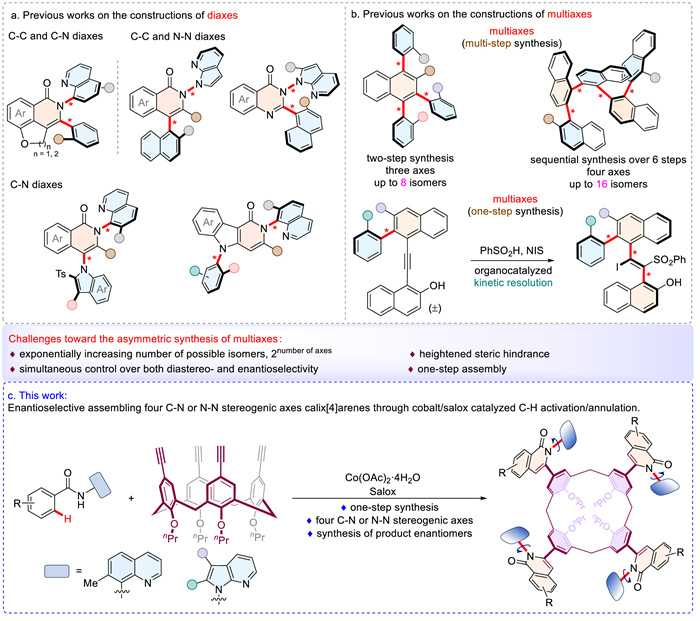
Figure 1.
Enantioselective assemblings of multiple stereogenic axes systems.

Atropisomeric synthesis of multiple C–N or N–N axially chiral calix[4]arenes through cobalt-catalyzed multisite C–H activation/annulation
Taixin Yang , Yuanyuan Huang , Yingchao Dou , Yanbo Zhang , Baohe Yang , Dandan Yang , Jun-Long Niu


Over the past decades, catalytic enantioselective synthesis of axially chiral frameworks has attracted growing interest within the synthetic community and advanced rapidly, driven by the versatile functions and potential applications of atropisomers in pharmaceuticals, asymmetric catalysis, and functional materials. Significant progress has been made to afford a diverse array of atropisomers with C–C, C–N, and N–N stereogenic axes [1-7]. Notably, the existing methods predominantly focus on synthesizing atropisomers with a single stereogenic axis. When it comes to the catalytic asymmetric synthesis of multiaxial frameworks [8], this area remains in its infancy and poses a formidable challenge due to the exponentially increasing number of possible isomers and heightened steric hindrance. As the assembly of multiple stereogenic axes with synchronously controlled diastereo- and enantioselectivity requires precise regulation over the configuration of each stereogenic axis to ensure topological geometric fidelity. In the past few years, several innovative strategies have emerged toward the synthesis of biaxial molecules, featuring two vicinal [9-16] or distal [17-28] stereogenic axes (Fig. 1a). The majority focus on the atropisomeric synthesis of C–C diaxial terphenyls through catalytic C–H activation/functionaliation [11,14], catalytic de novo construction [13,25] strategy, or catalytic dynamic kinetic resolution [21]. Notably, a pioneer synthesis of atropisomers with vicinal C–C and C–N diaxes was disclosed [10] through cobalt-catalyzed intramolecular asymmetric C–H activation/annulation of benzamides and alkyne motifs, which subsequently inspired several intermolecular approaches through rhodium- [19] or cobalt- [17,18,28-30] catalyzed asymmetric annulation from carboxamides and alkynes, or chiral phosphoric acid-catalyzed [31] formal cycloaddition/oxidation of α-amino-benzamides with aldehydes, producing a wide range of atropisomeric C–C/N–N diaxes or dual C–N axes.
Although remarkable advances have been made in the synthesis of biaxial frameworks in recent years, the efficient enantioselective construction of multi-axis systems with more than two stereogenic axes remains underdeveloped and poses a significant provocation. Only few ingeniously designed synthetic strategies [32-35] have been reported for synthesizing multiaxial molecules (Fig. 1b), most of which rely on multi-step synthetic sequence to instal multiple C–C stereogenic axes. For instance, the Shibata group [32] developed an enantioselective synthesis of helical polyaryls with axially-chiral sequence through an Ir-catalyzed [2+2+2] cycloaddition of tetraynes or an octayne with monoalkynes. Sparr [33] demonstrated a catalyst-stereocontrolled divergent synthesis of atropisomeric multiaxis systems. By employing a monoaxial atropisomer as the starting material and a sequence of chiral quaternary ammonium salt catalyzed arene-forming condensations, they achieved the stereodivergent synthesis of atropisomeric two-, three-, and four-axis systems. Recently, Cai [34] reported the enantioselective construction of triaxially chiral polysubstituted naphthalene scaffolds through sequential Diels-Alder reaction and dehydrative aromatization. Notably, the Yan group [35] achieved a highly diastereo- and enantioselective synthesis of multiaxes system through cinchona derivative catalyzed functionalization of internal alkynes. The triple-axis molecules were furnished from a rationally designed rotating hindered biaryl axis, undergoing a kinetic resolution process. Despite these achievements, given that the N-containing atropisomeric axes are important scaffold in bioactive and optical molecules, the development of efficient asymmetric catalytic systems capable of constructing atropisomeric frameworks with more than two stereogenic axes–particularly nitrogenous C–N or N–N axes, in a single step rather than via sequential assembly strategies, remains both a formidable hurdle and an intriguing goal.
The calix[4]arene [36-42] is a distinct subset of macrocycles [43,44] with tantalizing potential applications in molecular recognition, asymmetric catalysis, and material science due to privileged macrocycle structures. The transition metal- [45-53] and organo-catalyzed [54-56] enantioselective synthesis of chiral calix[4]arenes has advanced rapidly and emerged as a powerful strategy in the past five years. Recently, the earth-abundant cobalt/chiral salicyl-oxazoline (Salox) ligand catalyzed asymmetric C–H activation/functionalization strategies have witnessed the constructions of dual chiral elements, including inherent/axial chirality [47,48], and biaxes systems [10,18,28-30], highlighting the potential of the cobalt/salox catalytic system [4,57] in achieving stereoselective control over multiple chiral elements. However, achieving the diastereo- and enantioselective assembly of multiple stereogenic axes (beyond two) on the macrocycle scaffolds remains a captivating objective upon us.
We commenced our study with the template reaction of benzamide 1a and calix[4]arenes tethered with four terminal alkynes 2a. Initially, the construction of multiple C–N axes calix[4]arenes was investigated by using 7-methyl-8-aminoquinoline as the directing group. Various chiral Salox liangds (20 mol%) were firstly evaluated for verifying this continuous multiple C−H activation/annulation protocol, with Co(OAc)2·4H2O (10 mol%) as catalyst in dioxane (0.15 mol/L) under O2 atmosphere at 100 ℃ for 9 h. We were delighted to find that the desired product 3a could be obtained in 26% yield with an excellent ee value (99%) in the presence of L1. Meanwhile, other by-products arising from the C–H activation/annulation of two or three alkynes were also detected through HRMS analysis. Subsequently, the steric and electronic effects were evaluated by examining a series of ligands with different substituents at ortho- or para-positions. The employment of para-MeO-substituted L4 gave a superior result of the desired product 3a with 68% yield and 99% ee. Subsequently, after the evaluation of other paremeters, including the dosages of catalyst and ligand (Table 1, entries 1-4), reaction time (Table 1, entries 5-8), temperature (Table 1, entries 9 and 10), reaction concentration (Table 1, entries 11-13), and solvent (Table 1, entries 14-17), an improved result was obtained as shown in Table 1, entry 16. The desired product 3a could be obtained with excellent yield and enantioselectivity (95% yield, 99% ee) under cobalt/L4 catalysis with O2 as the benign oxidant at 100 ℃ within 4 h. Aiming to investigate the chiroptical propertity of the synthesized multiple stereogenic axes, we were urged to prepare both products enantiomers. Fortunately, the use of ent-L4 gave ent-3a in 95% yield with 99% ee value under optimal conditions, whose absolute configuration was identified by X-ray crystallographic diffraction analysis (Fig. 2, CCDC: 2425606). The results demonstrated the remarkable efficacy of the cobalt/Salox system in controlling over both diastereoselectivity and enantioselectivity.
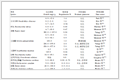
 DownLoad:
CSV
 |
||||||
| Entry | Co/L (x mol%/y mol%) | Solvent (mL) | t (h) | T (℃) | Yield (%) | ee (%) |
| 1 | 20/20 | Dioxane (1) | 9 | 100 | 60 | 99 |
| 2 | 10/20 | Dioxane (1) | 9 | 100 | 68 | 99 |
| 3 | 10/10 | Dioxane (1) | 9 | 100 | 87 | 99 |
| 4 | 5/10 | Dioxane (1) | 9 | 100 | 50 | 99 |
| 5 | 10/10 | Dioxane (1) | 5 | 100 | 87 | 99 |
| 6 | 10/10 | Dioxane (1) | 4 | 100 | 88 | 99 |
| 7 | 10/10 | Dioxane (1) | 3 | 100 | 84 | 99 |
| 8 | 10/10 | Dioxane (1) | 2 | 100 | 70 | 99 |
| 9 | 10/10 | Dioxane (1) | 4 | 90 | 73 | 99 |
| 10 | 10/10 | Dioxane (1) | 4 | 80 | 54 | 99 |
| 11 | 10/10 | Dioxane (0.5) | 4 | 100 | 85 | 99 |
| 12 | 10/10 | Dioxane (1.5) | 4 | 100 | 92 | 99 |
| 13 | 10/10 | Dioxane (2.0) | 4 | 100 | 89 | 99 |
| 14 | 10/10 | Toluene (1.5) | 4 | 100 | 74 | 99 |
| 15 | 10/10 | PhCl (1.5) | 4 | 100 | 75 | 99 |
| 16 | 10/10 | PhOMe (1.5) | 4 | 100 | 95 | 99 |
| 17 | 10/10 | Mesitylene (1.5) | 4 | 100 | 77 | 99 |
| a Reaction conditions: compound A (0.025 mmol), 1a (0.15 mmol), Co(OAc)2·4H2O (x mmol%), L (y mmol%), isolated yields are indicated; the ee values were measured by chiral HPLC. | ||||||
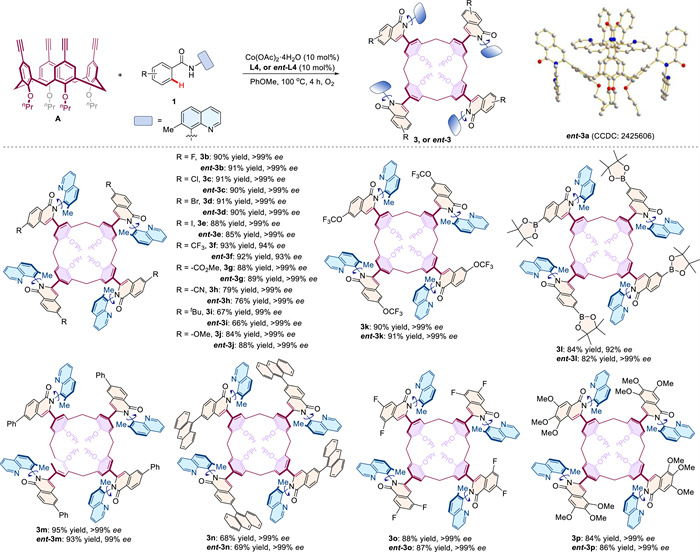
With the optimized reaction conditions in hand, we evaluated the generality of construction of multiple C−N axes calix[4]arenes. A series of substrates underwent smooth transformations (Fig. 2), furnishing the corresponding products in good yields (up to 95%) with excellent enantioselectivities (>99% ee values) in most cases. Initially, the compatibility of benzamides with diverse functionalities was examined carefully. The use of monohalogen-substituted substrates including F/Cl/Br gave the corresponding macrocycle products in excellent yields and ee values (3b-3e, ent-3b-3e, up to 91% yield, up to >99% ee). Subsequently, the electronic effect on the reaction efficiency and stereoselectivity was evaluated by installing different substitution patterns at the para-position of benzamides. Both electron-withdrawing and enectron-donating functional groups were smoothly tolerated. The p-trifluoromethyl benzamide reacted well to give 3f and ent-3f in 92%–93% yields with 93%–94% ee values. The substrates with p-methyl ester and p-cyano substituents were also compatible to give products (3g-3h, ent-3g-3h) in 76%–89% yields and >99% ee values. The use of p-tert-butylbenzamide led to 3i in depressed yields (66%–67%), meanwhile maintaining excellent enantioselectivity (99% ee). The monomethoxy-substituted benzamide reacted well to give corresponding products (3j, ent-3j) in good yields (84%–88%) and >99% ee. The OCF3 substituted benzamide afforded 3k in 90% yield and ent-3k in 91% yield with >99% ee. Pinacolborate derived products 3l and ent-3l could also be obtained in 82%–84% yields with good ee values (92%–>99%). Subsequently, the benzamides with extended aromatic substitutions (phenyl, and anthryl groups) were subjected to the optimal reaction conditions to give the corresponding products (3m, ent-3m; 3n, ent-3n) in good yields (68%–95%) and >99% ee. Meanwhile, the difluoro- and trimethoxy-substituted benzamides were also compatible with the reaction conditions, affording the desired products (3o, ent-3o; 3p, ent-3p) in good yields (84%–88%) with excellent ee values (>99%).
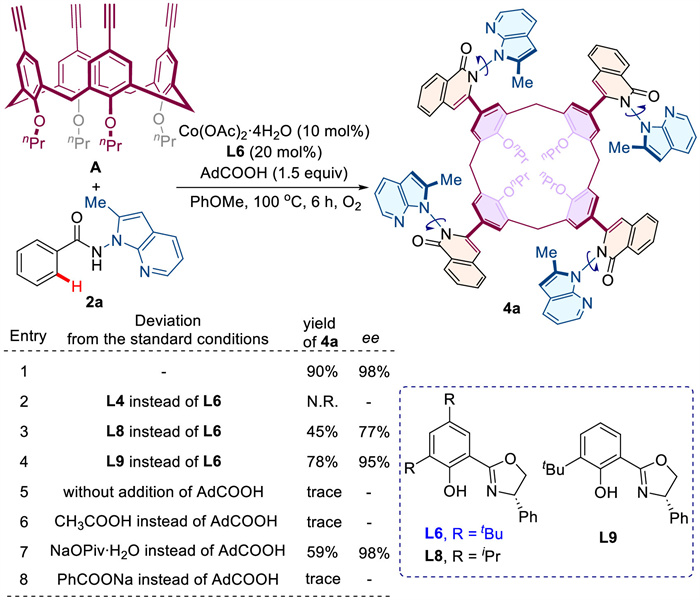
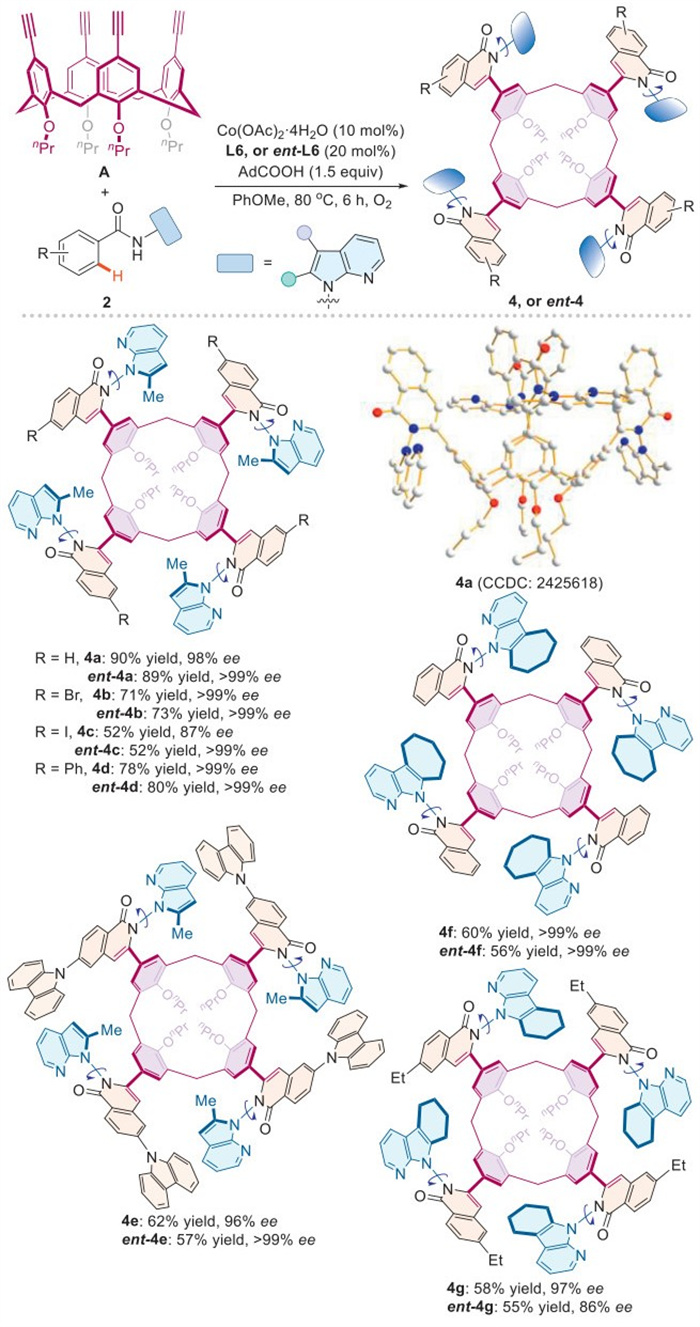
After demonstrating the one-step assembling of multiple C–N axes frameworks, we were urged to investigate the more challenging cobalt-catalyzed one-step synthesis of multiple N-N axes. It is delighted to find that the desired product 4a could be obtained in 90% yield with 98% ee starting with calix[4]arenes bearing four terminal alkynes A and benzamide 2a with N-amino-2-methyl-7-azaindole as the directing group under slightly adjusted conditions (see Supporting information for details): Co(OAc)2·4H2O (10 mol%) as the catalyst, L6 as the ligand (20 mol%), and AdCOOH (1.5 equiv.) as the additive in PhOMe (0.15 mol/L) under O2 atmosphere at 80 ℃ for 6 h (Fig. 3, entry 1). Meanwhile, no formation of other compounds arising from annulations of one, two or three alkynes was observed. The absolute configuration of 4a was determined based on X-ray crystallographic diffraction analysis (CCDC: 2425618). The employment of other ligands led to poor results (Fig. 3, entries 2-4). In the absence of AdCOOH, only a trace amount of 4a was produced. Similar result was obtained when CH3COOH was used in place of AdCOOH. Significantly lower yield was obtained with NaOPiv·H2O instead of AdCOOH. These results (Fig. 3, entries 5-8) underscored the essential role of AdCOOH, which is consistent with the previously reported cobalt-catalyzed atroposelective synthesis of mono-N−N axially chiral frameworks by our group [58]. The AdCOOH could stabilize the reactive octahedral Co(Ⅲ) species through coordination, meanwhile it can serve as proton shuttles, participating in the C–H activation via the concerted metalation-deprotonation process, thus ensuring the reaction efficacy of this protocol.
Subsequently, the generality of the constructions of multiple N-N axes calix[4]arenes was examined (Fig. 4). The ent-4a was obtained in 89% yield with >99% ee value by employing ent-L6 under optimal conditions. The bromo- and iodo-substituted benzamides reacted smoothly to give corresponding products (4b, ent-4b; 4c, ent-4c) in good yields and excellent ee values. The products with extended aromatic substituents (4d, ent-4d; 4e, ent-4e) could also be yielded smoothly starting from phenyl or carbazole groups substituted benzamides. Meanwhile, the effect of the directing group was also evaluated. When the seven- and six-membered ring fused aza-indoles were employed as the directing group, the desired products could also be obtained (4f, ent-4f; 4g, ent-4g) in moderate yields (55%-60%) with excellent enantioselectivities (up to >99% ee).
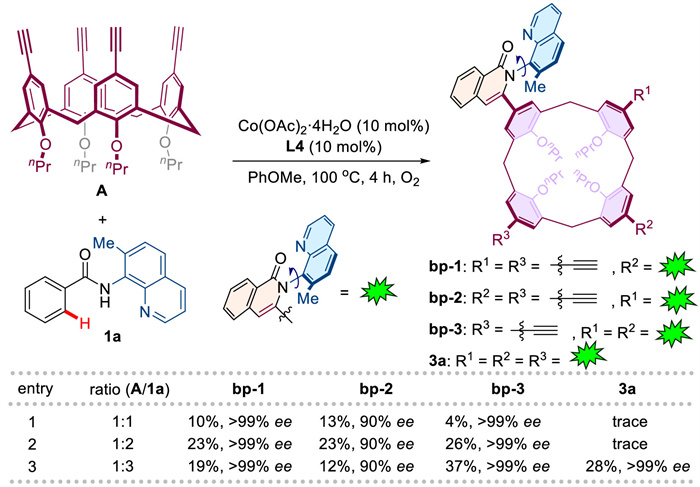
Furthermore, the reactions of compound A with different dosages of compound 1a (1, 2, 3 equiv.) were conducted under the optimal reaction conditions (Fig. 5), affording other three by-products arising from the C–H activation/annulation of two or three alkynes identified through HRMS, 1H NMR, and 13C NMR analysis. Only trace amount of product 3a could be obtained when 1-2 equiv. of benzamide 1a were used. Superior results could be obtained upon increasing the dosage of 1a to 3 equiv. The mono-alkyne cyclized compound was not isolated during the investigations.
In order to further manifest the synthetic utility of this protocol, we performed the scale-up synthesis of multiple C–N and N–N axes calix[4]arenes (Tables S7 and S14 in Supporting information). The excellent enantioselevtivities were maintained though slight loss of yield was observed. Compound 3a could be obtained in 93% yield with 99% ee (0.1 mmol scale, 0.161 g), and 85% yield with 99% ee (1.0 mmol scale, 1.470 g). Compound 4a was obtained in 86% yield with 98% ee (0.1 mmol scale, 0.145 g). To investigate whether the incorporation of multiple axes and calix[4]arenes leads to intriguing characteristics, chiral recognition, 1H NMR titration, and optical properties of several representative compounds were examined, respectively. As depicted in Fig. 6a, the intensity of UV-visible absorption increased significantly when extended aromatic substitutions were introduced for compounds 3 (3a, 3m, 3n) in acetonitrile (concentration: 1 × 10⁻⁵ mol/L). The fluorescence emission spectra of compound 3m was influenced by the solvent, exhibiting a blueshift that correlated with the increasing dipole moment of the solvents (Fig. 6b). Then the influence of substituents on the emission wavelength and fluorescence intensity of the multiple C-N axes calix[4]arenes were further tested (Fig. 6c). The non-substituted product 3a displayed weak emission intensity (410 nm) compared with other products with different substituents. A blueshift of 20 nm was observed when para-anthracenyl group (3n) was installed, which could due to the extension of the conjugated system. The introductions of other functional groups, including -Ph (3m, 20 nm), -CF3 (3f, 30 nm), -CO2Me (3g, 56 nm), and -CN (3h, 60 nm), might perturb the conjugated system of the macrocycles, promote the intramolecular charge transfer of π-electrons, resulting in redshift [59-61]. Subsequently, the fluorescence quantum yields for several compounds (Fig. 6d) were measured in acetonitrile (concentration: 1 × 10⁻⁵ mol/L). The -CF3 substituted 3f has a quantum yield of 8.1% at excitation wavelength of 298 nm (Fig. S4 in Supporting information). The -CO2Me substituted 3g exhibited a comparable value of 9.1% at excitation wavelength of 296 nm (Fig. S5 in Supporting information). A higher value of 9.9% was obtained for -CN substituted 3h at excitation wavelength of 302 nm (Fig. S6 in Supporting information). Notably, compound 3n bearing a 9-anthracenyl group gave a higher quantum yield of 32.2% at excitation wavelength of 302 nm (Fig. 6d). Meanwhile, we also examined the quantum yield of multiple N–N axes calix[4]arenes. Comparable results were obtained when compounds 4a and 4d were tested (9.8%, 292 nm, Fig. 6d; 8.8%, 300 nm, Fig. S7). Compound 4e with a carbazole group (Fig. 6d) led to a quantum yield of 23.8% at excitation wavelength of 295 nm.
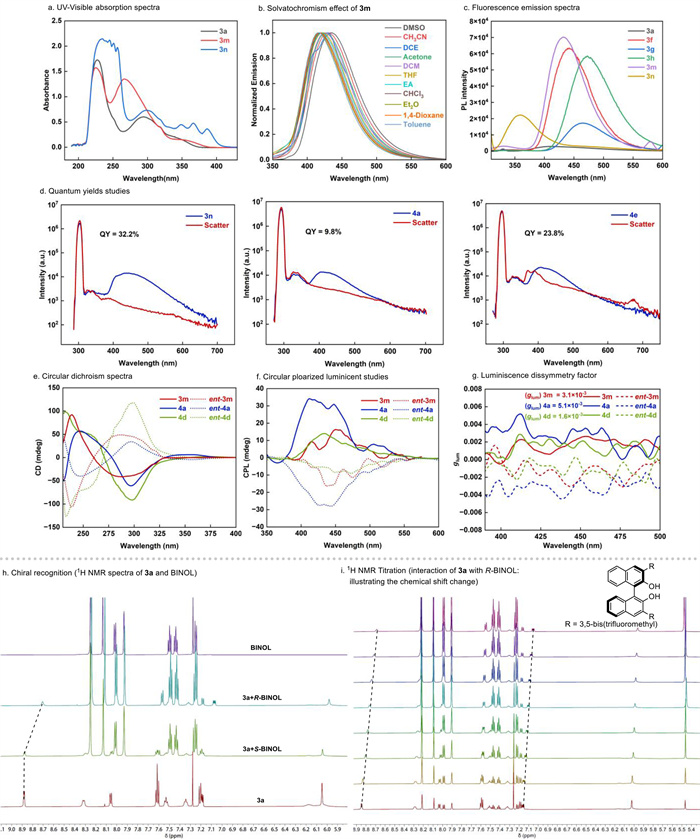
For the chiroptical properties, circular dichroism (Fig. 6e) and circular polarized luminescence (Fig. 6f) of several prepared macrocycles were tested. Under the maximun ultraviolet absorption wavelength (265, 295, 270 nm, respectively), the CD spectra of compounds 3m, 4a and 4d were measured in an acetonitrile solution (concentration: 1 × 10⁻⁵ mol/L), which display mirror image signals relative to their corresponding enantiomers and indicate significant Cotton effect. Specifically, the CD spectra of 3m and ent-3m display mirror images with two bands at 239 and 287 nm. Compounds 4a and ent-4a display mirror images with four bands at 247 and 296 nm. Compounds 4d and ent-4d display mirror images with two bands at 233 and 298 nm. The CPL experiments demonstrated that both multiple C-N and N-N axes calix[4]arenes are CPL-active, including compounds 3m/ent-3m, 4a/ent-4a, and 4d/ent-4d, with a strong band at 450, 417, and 433 nm in a mirror-image relationship, respectively. The corresponding luminescence dissymmetry factor |glum| for those compounds were calculated to be 3.1 × 10⁻³ (3m), 5.1 × 10⁻³ (4a), and 1.6 × 10⁻³ (4d), respectively (Fig. 6g), which are apparently higher compared with mono-stereogenic axis calix[4]arene (2 × 10⁻⁴) reported in the recent work [48]. These finding of property studies underscored the potential applications of the synthesized multiple C–N and N–N stereogenic axes macrocycles in the fields of chiroptical functional materials. By using compound 3a as the host and chiral binaphthols as the guest, the chiral recognition studies were conducted (Fig. 6h). A upfield chemical shift of the C-H proton signal (in CDCl3) at 8.88 ppm was observed when 3a was treated with R-BINOL, indicating interaction between them, while the use of S-BINOL has no effect on the 1H NMR of 3a. Meanwhile, we also performed a 1H NMR titration experiment (in CDCl3) of 3a and R-BINOL, which displays a significant change of the signals along side the increasing concentration of guest (Fig. 6i).
In conclusion, we have developed an efficient method for synthesizing atropisomeric multiaxes calix[4]arenes featuring four C–N or N–N stereogenic axes. This C–H activation/annulation transformation proceeds smoothly under a Co(OAc)2·H2O/Salox catalytic system with O2 as the oxidant, selectively yielding a single stereoisomer in moderate to good yields with excellent enantioselectivities (up to >99% ee). The exceptional stereocontrol of this protocol was achieved by employing different enantiomers of ligand, enabling the synthesis of both products enantiomers. Scalability was confirmed through gram-scale synthesis, further underscoring the practical utility of this approach. Moreover, the synthesized macrocycles exhibit remarkable optical properties, as evidenced by chiral recognition, fluorescence emission, circular dichroism, and circularly polarized luminescence studies. These findings highlight their potential as promising candidates for developing novel chiral functional materials.
This work was supported by the National Natural Science Foundation of China (No. 22271260 to J.-L. Niu, No. 22401266 to Y. Dou) and Natural Science Foundation of Henan Province (Nos. 232301420007 and 242300421033 to J.-L. Niu; Nos. 242301420059, and 252300421178 to D. Yang).
Taixin Yang: Project administration, Investigation, Formal analysis, Data curation. Yuanyuan Huang: Project administration, Investigation, Formal analysis, Data curation. Yingchao Dou: Writing – review & editing, Writing – original draft, Methodology, Funding acquisition, Conceptualization. Yanbo Zhang: Methodology, Formal analysis, Data curation. Baohe Yang: Methodology, Formal analysis. Dandan Yang: Writing – review & editing, Writing – original draft, Methodology, Investigation, Funding acquisition, Conceptualization. Jun-Long Niu: Writing – review & editing, Writing – original draft, Project administration, Methodology, Funding acquisition, Conceptualization.
The authors declare that they have no known competing financial interests or personal relationships that could have appeared to influence the work reported in this paper.
Supplementary material associated with this article can be found, in the online version, at doi:
T.A. Schmidt, C. Sparr, Acc. Chem. Res. 54 (2021) 2764–2774. doi: 10.1021/acs.accounts.1c00178
D. Liang, W. Xiao, S. Lakhdar, et al., Green Synth. Catal. 3 (2022) 212–218.
G.J. Mei, W.L. Koay, C.Y. Guan, et al., Chem 8 (2022) 1855–1893. doi: 10.1016/j.chempr.2022.04.011
G. Liao, B.F. Shi, Acc. Chem. Res. 58 (2025) 1562–1579. doi: 10.1021/acs.accounts.5c00173
J. Feng, C.J. Lu, R.R. Liu, Acc. Chem. Res. 56 (2023) 2537–2554. doi: 10.1021/acs.accounts.3c00419
D. Moser, T.A. Schmidt, C. Sparr, JACS Au 3 (2023) 2612–2630. doi: 10.1021/jacsau.3c00216
H.H. Zhang, T.Z. Li, S.J. Liu, F. Shi, Angew. Chem. Int. Ed. 63 (2024) e202311053. doi: 10.1002/anie.202311053
X. Bao, J. Rodriguez, D. Bonne, Angew. Chem. Int. Ed. 59 (2020) 12623–12634. doi: 10.1002/anie.202002518
Q. Dherbassy, J.P. Djukic, J. Wencel-Delord, et al., Angew. Chem. Int. Ed. 57 (2018) 4668–4672. doi: 10.1002/anie.201801130
B.J. Wang, G.X. Xu, Z.W. Huang, et al., Angew. Chem. Int. Ed. 61 (2022) e202208912. doi: 10.1002/anie.202208912
Q. Gao, C. Wu, S. Deng, et al., J. Am. Chem. Soc. 143 (2021) 7253–7260. doi: 10.1021/jacs.1c02405
Y. Yang, C. Yang, X. Zhang, et al., ACS Catal. 15 (2025) 3442–3450. doi: 10.1021/acscatal.4c07592
S. Zhang, X. Wang, L.L. Han, et al., Angew. Chem. Int. Ed. 61 (2022) e202212005. doi: 10.1002/anie.202212005
A. Luc, J.C.A. Oliveira, P. Boos, et al., Chem. Catal. 3 (2023) 100765.
S.C. Zhang, S. Liu, X. Wang, et al., ACS Catal. 13 (2023) 2565–2575. doi: 10.1021/acscatal.2c05570
T. Xu, Y. Wang, S. Jin, et al., Research 7 (2024) 0474. doi: 10.34133/research.0474
P. Boos, N.K. Pandit, S. Dana, et al., ChemistryEurope 3 (2025) e202500071. doi: 10.1002/ceur.202500071
Y. Zhang, C. Yang, X. Meng, et al., Org. Lett. 27 (2025) 6067–6081. doi: 10.1007/s00371-024-03772-x
Y. Wang, X. Zhu, D. Pan, et al., Nat. Commun. 14 (2023) 4661. doi: 10.1038/s41467-023-39968-3
X. Bao, J. Rodriguez, D. Bonne, Chem. Sci. 11 (2020) 403–408. doi: 10.1039/c9sc04378k
O.M. Beleh, E. Miller, F.D. Toste, et al., J. Am. Chem. Soc. 142 (2020) 16461–16470. doi: 10.1021/jacs.0c08057
H. Takano, N. Shiozawa, Y. Imai, et al., J. Am. Chem. Soc. 142 (2020) 4714–4722. doi: 10.1021/jacs.9b12205
W. Xia, Q.J. An, S.H. Xiang, et al., Angew. Chem. Int. Ed. 59 (2020) 6775–6779. doi: 10.1002/anie.202000585
S. Huang, H. Wen, Y. Tian, et al., Angew. Chem. Int. Ed. 60 (2021) 21486–21493. doi: 10.1002/anie.202108040
Y. Ren, C. Lin, H. Zhang, et al., Chem. Sci. 16 (2025) 7876–7883. doi: 10.1039/d5sc00452g
M. Barday, J. Rodrigues, P. Bouillac, et al., Adv. Synth. Catal. 365 (2023) 148–155. doi: 10.1002/adsc.202201175
P. Zhang, C.Q. Guo, W. Yao, et al., ACS Catal. 13 (2023) 7680–7690. doi: 10.1021/acscatal.3c00732
P.F. Qian, Y.X. Wu, J.H. Hu, et al., J. Am. Chem. Soc. 147 (2025) 10791–10802. doi: 10.1021/jacs.5c02428
A. Das, S. Kumaran, P. Maity, et al., J. Am. Chem. Soc. 147 (2025) 26226–26237. doi: 10.1021/jacs.5c03776
X. Wu, Q. Tian, J. Ge, et al., Chin. J. Chem. 43 (2025) 2669–2676. doi: 10.1002/cjoc.70174
N.Y. Wang, S. Gao, Z.D. Shu, et al., Sci. China Chem. 68 (2025) 3130–3137. doi: 10.1007/s11426-024-2472-2
T. Shibata, K. Tsuchikama, Chem. Commun. 48 (2005) 6017–6019. doi: 10.1039/b513124c
D. Lotter, A. Castrogiovanni, M. Neuburger, et al., ACS Cent. Sci. 4 (2018) 656–660. doi: 10.1021/acscentsci.8b00204
Y.B. Du, Q.T. Lu, Y.S. Cui, et al., Angew. Chem. Int. Ed. 64 (2025) e202421060. doi: 10.1002/anie.202421060
Y. Tan, S. Jia, F. Hu, et al., J. Am. Chem. Soc. 140 (2018) 16893–16898. doi: 10.1021/jacs.8b09893
V. Böhmer, D. Kraft, M. Tabatabai, J. Inclusion Phenom. Mol. Recognit. Chem. 19 (1994) 17–39. doi: 10.1007/978-94-011-0267-4_2
A.D. Cort, L. Mandolini, C. Pasquini, et al., New J. Chem. 28 (2004) 1198–1199. doi: 10.1039/B404388J
A. Szumna, Chem. Soc. Rev. 39 (2010) 4274–4285. doi: 10.1039/b919527k
G.E. Arnott, Chem. Eur. J. 24 (2018) 1744–1754. doi: 10.1002/chem.201703367
M. Tang, X. Yang, Eur. J. Org. Chem. 26 (2023) e202300738. doi: 10.1002/ejoc.202300738
Y. Sun, F. Zhang, L. Zhang, et al., Chin. Chem. Lett. 25 (2014) 226–228. doi: 10.1016/j.cclet.2013.10.019
Z.Y. Li, T. Li, Z. Wang, et al., Chin. Chem. Lett. 37 (2026) 111352. doi: 10.1016/j.cclet.2025.111352
Y.E. Zhang, Y. Jiang, Y. Zhang, et al., Chin. Chem. Lett. 36 (2025) 111201. doi: 10.1016/j.cclet.2025.111201
K.L. Zhu, Z.A. Li, J. Liang, et al., Chin. Chem. Lett. 37 (2026) 111629. doi: 10.1016/j.cclet.2025.111629
X.H. Zhou, X. Zhang, Y.R. Song, et al., Angew. Chem. Int. Ed. 64 (2025) e202415190. doi: 10.1002/anie.202415190
M. Li, C.K.S. Ho, I.K.W. On, et al., Chem 10 (2024) 3323–3341. doi: 10.1016/j.chempr.2024.06.012
T. Li, Y. Zhang, C. Du, et al., Nat. Commun. 15 (2024) 7673. doi: 10.1038/s41467-024-52133-8
P.F. Qian, G. Zhou, J.H. Hu, et al., Angew. Chem. Int. Ed. 63 (2024) e202412459. doi: 10.1002/anie.202412459
X. Zhang, S. Tong, J. Zhu, et al., Chem. Sci. 14 (2023) 827–832. doi: 10.1039/d2sc06234h
G. Giovanardi, G. Scarica, V. Pirovano, et al., Org. Biomol. Chem. 21 (2023) 4072–4083. doi: 10.1039/d3ob00603d
Y.Z. Zhang, M.M. Xu, X.G. Si, et al., J. Am. Chem. Soc. 144 (2022) 22858–22864. doi: 10.1021/jacs.2c10606
S. Tong, J.T. Li, D.D. Liang, et al., J. Am. Chem. Soc. 142 (2020) 14432–14436. doi: 10.1021/jacs.0c05369
L. Zhang, C. Yang, X. Wang, et al., Green Chem. 26 (2024) 10232–10239. doi: 10.1039/d4gc02877e
Y.K. Jiang, Y.L. Tian, J. Feng, et al., Angew. Chem. Int. Ed. 63 (2024) e202407752. doi: 10.1002/anie.202407752
M. Yuan, W. Xie, S. Yu, et al., Nat. Commun. 16 (2025) 3943. doi: 10.1038/s41467-025-59221-3
S. Yu, M. Yuan, W. Xie, et al., Angew. Chem. Int. Ed. 63 (2024) e202410628. doi: 10.1002/anie.202410628
Q.J. Yao, B.F. Shi, Acc. Chem. Res. 58 (2025) 971–990. doi: 10.1021/acs.accounts.5c00013
T. Li, L. Shi, X. Wang, et al., Nat. Commun. 14 (2023) 5271. doi: 10.1038/s41467-023-40978-4
H. Yan, X. Meng, B. Li, et al., Dyes Pigm. 146 (2017) 479–490. doi: 10.1016/j.dyepig.2017.07.046
H.R. Memarian, N. Rejali, M. Soltani, Luminescence 39 (2024) e4631. doi: 10.1002/bio.4631
Y. Tsuji, C. Goto, S. Katao, Chem. Eur. J. 31 (2025) e202500762. doi: 10.1002/chem.202500762

Figure 2 Scope of cobalt/Salox catalyzed one-step synthesis of multiple C–N stereogenic axes systems. See details in Supporting information.

Figure 3 Optimization of assembling multiple N-N axes. Reaction conditions: compound A (0.025 mmol), 2a (0.15 mmol), Co(OAc)2·4H2O (10 mmol%), L6 (20 mmol%), AdCOOH (1.5 equiv.), PhOMe (1.5 mL), 80 ℃, 6 h, O2; isolated yields are indicated; the ee values were measured by chiral HPLC. N.R., No reaction.

Figure 4 Scope of cobalt/Salox catalyzed one-step synthesis of multiple N-N stereogenic axes systems, please find details in Supporting information.
Table 1. Optimization of assembling multiple C-N axes.a
|
||||||
| Entry | Co/L (x mol%/y mol%) | Solvent (mL) | t (h) | T (℃) | Yield (%) | ee (%) |
| 1 | 20/20 | Dioxane (1) | 9 | 100 | 60 | 99 |
| 2 | 10/20 | Dioxane (1) | 9 | 100 | 68 | 99 |
| 3 | 10/10 | Dioxane (1) | 9 | 100 | 87 | 99 |
| 4 | 5/10 | Dioxane (1) | 9 | 100 | 50 | 99 |
| 5 | 10/10 | Dioxane (1) | 5 | 100 | 87 | 99 |
| 6 | 10/10 | Dioxane (1) | 4 | 100 | 88 | 99 |
| 7 | 10/10 | Dioxane (1) | 3 | 100 | 84 | 99 |
| 8 | 10/10 | Dioxane (1) | 2 | 100 | 70 | 99 |
| 9 | 10/10 | Dioxane (1) | 4 | 90 | 73 | 99 |
| 10 | 10/10 | Dioxane (1) | 4 | 80 | 54 | 99 |
| 11 | 10/10 | Dioxane (0.5) | 4 | 100 | 85 | 99 |
| 12 | 10/10 | Dioxane (1.5) | 4 | 100 | 92 | 99 |
| 13 | 10/10 | Dioxane (2.0) | 4 | 100 | 89 | 99 |
| 14 | 10/10 | Toluene (1.5) | 4 | 100 | 74 | 99 |
| 15 | 10/10 | PhCl (1.5) | 4 | 100 | 75 | 99 |
| 16 | 10/10 | PhOMe (1.5) | 4 | 100 | 95 | 99 |
| 17 | 10/10 | Mesitylene (1.5) | 4 | 100 | 77 | 99 |
| a Reaction conditions: compound A (0.025 mmol), 1a (0.15 mmol), Co(OAc)2·4H2O (x mmol%), L (y mmol%), isolated yields are indicated; the ee values were measured by chiral HPLC. | ||||||
 下载: 导出CSV

 扫一扫看文章


扫一扫关注我们


 下载: