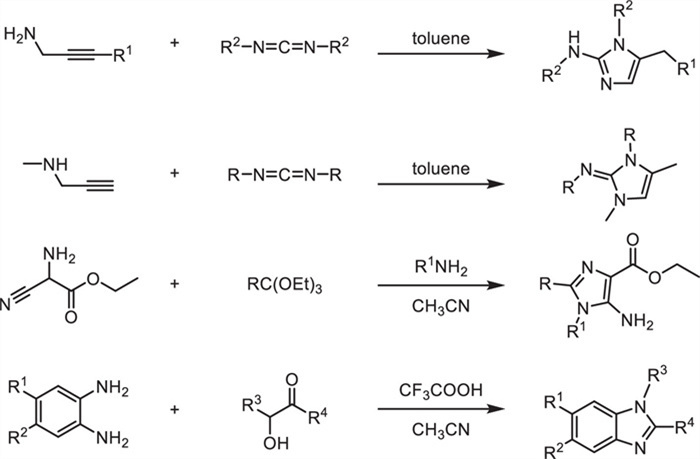
Figure 1.
Classic synthesis methods of imidazole rings.

Recent advances of imidazole derivatives in pesticide chemistry
Tingting Du , Siyu Lu , Dong Wang , Jian Zhang , Jixiang Chen


Imidazole is an important nitrogen-containing five-membered heterocyclic compound, consisting of three carbon atoms and two nitrogen atoms, exhibiting the stability and reactivity characteristics of an aromatic ring [1]. Imidazole plays a vital role in pesticide chemistry and medicinal chemistry. In the discovery of novel pesticides, imidazole derivatives have become a key core skeleton for herbicides and fungicides due to high efficiency and broad-spectrum biological activities [2-5]. The irrational use of pesticide chemicals has resulted in significant economic losses to global agriculture and severe impacts on the ecological environment. Consequently, the development of new pesticides places stringent demands on a comprehensive profile that must encompass high efficacy, crop safety, and environmental sustainability [6-13]. Nevertheless, the imidazole structure possesses characteristics such as flexible modifiability and diverse mechanisms of action, making it a promising direction for developing novel agricultural chemicals in the future. The research on imidazole structures has achieved considerable progress in areas including biological activity, synthetic derivatives, and mechanisms of action [14-18].
Imidazole compounds exhibit broad-spectrum and excellent activities in herbicidal, fungicidal, antiviral, insecticidal, nematicidal, and antibacterial applications [19-24]. Imidazole compounds have achieved considerable achievements in the discovery of fungicides and herbicides. For instance, imazamethabenz-methyl, imazapyr, imazapic, carbendazim, thiabendazole, and imazalil [25-30]. The classical and most widely adopted synthetic routes to imidazole rings (Fig. 1) involves the condensation of 1,2-diamines with acids, as well as the cyclization of N-propyne amine derivatives. These reactions continue to serve as cornerstone methodologies for imidazole ring formation in organic synthesis [31-33]. Structural optimization of imidazole rings is pursued to investigate the biological activity of imidazole derivatives.
In recent years, the discovery and application of imidazole derivatives in pesticides have achieved remarkable progress. To further investigate the potential of imidazole derivatives in the development of novel pesticides, we have updated the latest research advancements regarding imidazole compounds in pesticide discovery and application. We systematically reviewed the discovery and application of imidazole compounds in novel pesticides over the past decade, summarized their herbicidal, fungicidal, antiviral, insecticidal, nematicidal, and antibacterial activities. We discussed representative synthetic approaches for imidazole compounds, active moiety analysis, and studies on potential mechanisms of action. This review aims to provide new insights and inspiration for discovering novel imidazole-based pesticides.
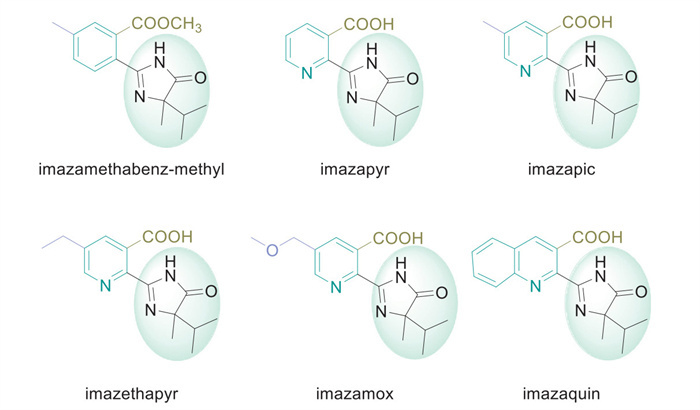
Currently, imidazole-based herbicides have been successively discovered by researchers, and commercialized imidazole compounds (Fig. 2) have achieved significant progress in herbicide discovery. Several imidazole herbicides, for example, imazamethabenz-methyl, imazapyr, imazapic, imazethapyr, imazamox, and imazaquin, which are all acetolactate synthase (ALS) inhibitors [34-36]. Its mechanism of action involves absorption by weed roots, stems, and leaves, followed by translocation through the xylem and phloem. These compounds accumulate in the meristematic tissues of weeds, inhibiting acetolactate synthase. This blocks the biosynthesis of branched-chain amino acids (such as valine, leucine, isoleucine) and disrupting protein synthesis. They also interfere with normal DNA synthesis, cell division, and growth, ultimately inhibiting weed growth and development to achieve excellent herbicidal activity [37-39].
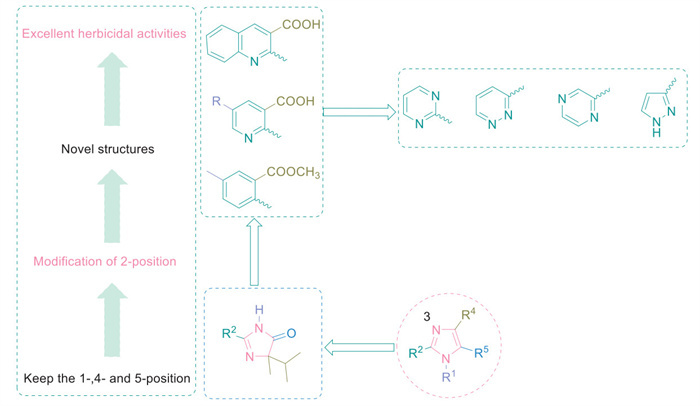
The structural analysis of commercially available imidazole herbicides (Fig. 3) reveals the following active moieties: (1) Retaining a hydrogen atom at the R1 position, an isopropyl group at the R4 position, and a ketone group at the R5 position of the imidazole ring is crucial for the excellent herbicidal activity of imidazole compounds. (2) The imidazole ring exhibits outstanding herbicidal activity when structurally modified by attaching a benzene ring, pyridine ring, or quinoline ring at the R2 position. Perhaps introducing aromatic heterocycles such as pyrimidine, pyridazine, pyrazine, or pyrazole rings at the R2 position could lead to the discovery of highly effective herbicidal compounds in the future. (3) Maintaining the parent scaffold with an isopropyl group at the R4 position and a ketone group at the R5 position of the imidazole ring for structural optimization holds promising prospects for future herbicide development.
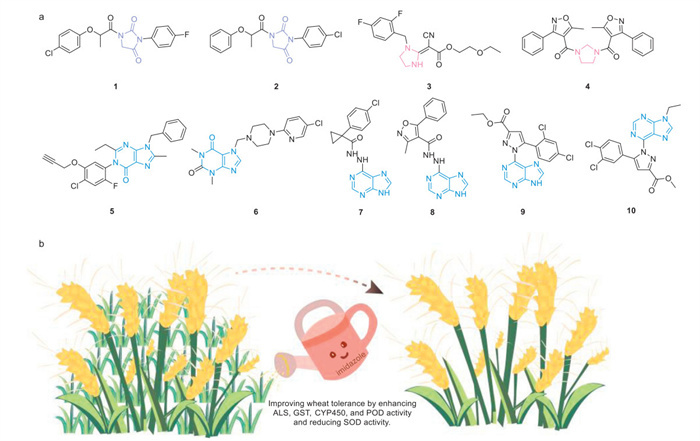
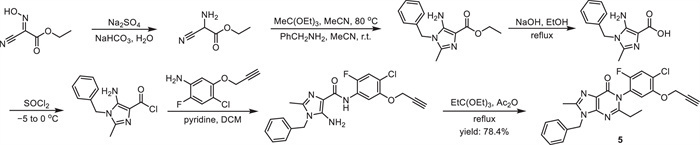
Some imidazoles exhibit favorable herbicidal activity (Fig. 4). For instance, at 10 mg/L, compounds 1 and 2 demonstrated excellent inhibitory effects on the roots and stems of barnyard grass (inhibition rates of 97.5% and 64.3%, and 95.0% and 73.8%, respectively) [40]. The imidazoles exhibit excellent inhibitory effects on weed seeds. For instance, at 100 mg/L, compound 3 suppressed Brassica napus seeds by 72.5% [41]. Compound 4 demonstrated favorable herbicide safety activity in maize, significantly reducing weed root length, plant height, fresh root and stem weight, and chlorophyll content. Molecular docking results indicated that compound 4 could bind to ALS, thus implying imidazole derivatives may serve as promising candidates for developing novel herbicides with enhanced safety profiles [42]. The imidazo-heterocyclic derivatives also exhibit excellent herbicidal activity. At 1500 g/ha, compound 5 achieved a 70.4% post-emergence inhibition rate against Amaranthus retroflexus (A. retroflexus) [43]. At 100 mg/L, compound 6 achieved a 31.5% inhibition rate against Brassica campestris (B. campestris) [44]. Some imidazo-heterocyclic derivatives also exhibit potential herbicide safety. Compounds 7 and 8 enhance wheat tolerance by increasing ALS, GST, CYP450, and POD activities while decreasing SOD activity. Molecular docking results indicate that compound 8 competitively binds to the active site of ALS enzyme, thereby weakening the herbicidal activity of mesosulfuron-methyl and rendering it ineffective, thus leading to herbicide antagonism [45]. Furthermore, compounds 9 and 10 also enhanced wheat tolerance by increasing GST, ALS, CYP450, and POD activities, restoring GSH content, and reducing SOD activity [46]. The synthesis of representative compound 5 (Fig. 5). Compound 5 was synthesized from ethyl (hydroxyimino) acetate through a sequence of reactions comprising: reduction of the imino moiety to an amino group, cyclization to construct the imidazole ring, hydrolysis of the ester group to the corresponding carboxylic acid, conversion to the acid chloride via chlorination, and finally nucleophilic acyl substitution with an amine to furnish the amide compound 5.
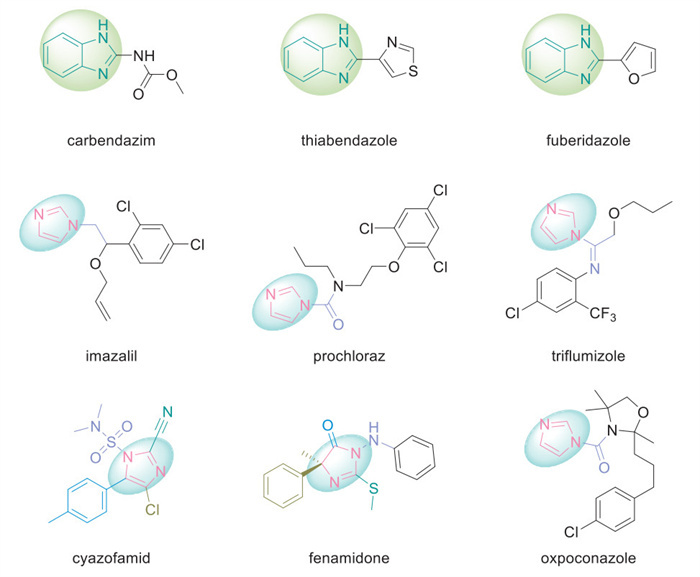
The plant fungi primarily reproduce through spores. Inhibiting spore formation disrupts fungal growth and activity, preventing them from re-infecting crops and thereby achieving disease control. Imidazole derivatives have yielded significant achievements in the discovery of novel fungicides, for instance, the identification of several imidazole-based fungicides (Fig. 6). Among these, carbendazim is a highly effective, low-toxicity fungicide. Its mechanism of action involves interfering with the formation of the mitotic spindle in plant fungi, thereby inhibiting normal fungal cell division and exhibiting outstanding fungicidal activity [47]. Thiabendazole primarily functions by inhibiting the formation of microtubulin during fungal mitosis, further suppressing mitochondrial respiration and cell proliferation in fungi. This ultimately inhibits fungal cell multiplication and growth, leading to cell death [48]. Imazalil demonstrates outstanding efficacy in inhibiting fungal spore formation. Imazalil exerts fungicidal activity by disrupting physiological functions of fungal cell membranes, such as permeability and lipid synthesis, thereby preventing normal cell proliferation [49]. Prochloraz and triflumizole function by inhibiting sterol formation in fungal cell walls, thereby disrupting normal cell wall formation and new spore development to achieve fungicidal effects [50,51]. Cyazofamid and fenamidone primarily function as mitochondrial inhibitors. They disrupt the electron transport chain in fungal mitochondrial cytochrome complexes, thereby effectively starving the fungi of the energy required for growth and reproduction, which ultimately leads to pathogen death [52,53].
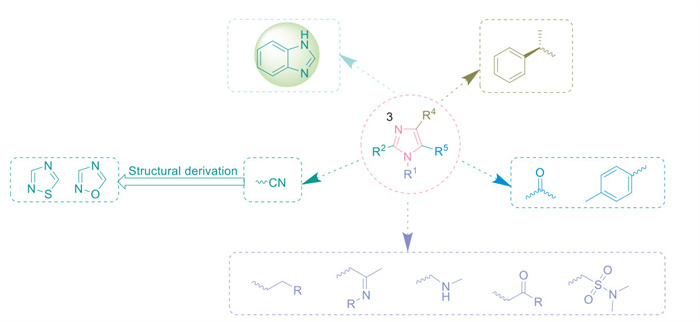
The analysis of the active moieties and structural features of imidazole fungicides facilitates further structural optimization and modification (Fig. 7). The main characteristics are: (1) The introduction of alkyl flexible chains, amino substituents, carbonyl groups, and sulfonyl groups at the R1 position of the imidazole ring. (2) The introduction of -CN at the R2 position of the imidazole ring is representative, as seen in cyazofamid. (3) Aromatic rings, such as benzene rings, are primarily introduced at the R4 position of the imidazole ring. (4) Carbonyl groups and substituted benzene rings are primarily introduced at the R5 position of the imidazole ring. (5) Notably, benzimidazole serves as an excellent antifungal structural skeleton, exemplified by carbendazim, thiabendazole, and fuberidazole. It is possible that future research may discover additional imidazole antifungal drugs with superior activity based on this skeleton.
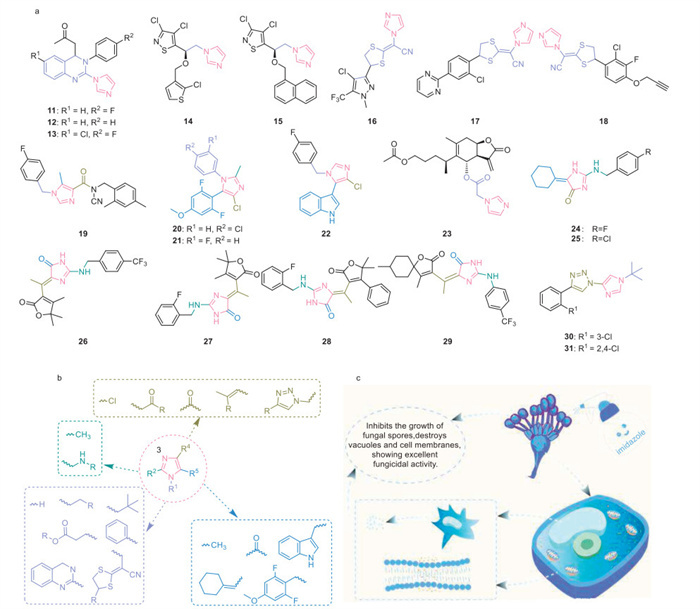
Imidazole compounds exhibit excellent antifungal activity. For instance, compounds 11–13 (Fig. 8) demonstrate strong inhibitory effects against Penicillium digitatum (P. digitatum), with median inhibition concentration (IC50) values of 4.14, 5.06, and 7.12 mg/L, respectively. SAR analysis indicates that the R1 position-substituted quinazoline moiety of imidazole exhibits favorable fungicidal activity. Maintaining a phenyl group at the R3 position within the quinazoline structure further enhances fungicidal potency [54]. The chiral isomeric imidazole compounds 14 and 15 exhibit excellent broad-spectrum antifungal activities against Botrytis cinerea (B. cinerea), Rhizoctonia cerealis (R. cerealis), and Sclerotinia sclerotiorum (S. sclerotiorum) with median effective concentration (EC50) values of 14 (4.65, 0.50, and 3.99 mg/L) and 15 (3.14, 0.31, and 0.33 mg/L), respectively. Compound 15 exhibits potent fungicidal activity by inhibiting B. cinerea mycelial growth and spore germination, as well as disrupting cell structure through impaired cell wall formation [55]. Several imidazoles exhibit excellent in vivo activity. In plant bioassays experiments, compounds 16, 17, and 18 demonstrated superior efficacy against Alternaria solani (A. solani), Botryotinia fuckeliana (B. fuckeliana), Erysiphe necator (E. necator) at 60 mg/L (inhibition rates exceeding 90%) [56]. Methyl substitution at the R5 position of the imidazole ring confers potent fungicidal activity; for instance, compound 19 exhibits fungicidal activity against Rhizoctonia solani (R. solani) with an EC50 of 2.63 mg/L [57]. Furthermore, when the imidazole R5 position is methylated, the introduction of fluorine or chlorine atoms onto the benzene ring attached to the imidazole R1 position simultaneously exhibits good fungicidal activity. For instance, compounds 20 and 21 exhibited outstanding activity against B. cinerea and Uncinula necator (U. necator) (with EC80 values of 2, 1 and 1, 1 mg/L, respectively). Tubulin polymerization assays revealed that compounds 20 and 21 exert their potent fungicidal activity by promoting fungal tubulin polymerization and subsequently disrupting microtubule dynamics [58]. When a chlorine atom is introduced at the R4 position of the imidazole ring, it exhibits good fungicidal activity against R. solani. At a concentration of 50 mg/L, compound 22 demonstrated a 90.3% inhibition rate against R. solani [59]. Interestingly, when an ester group substitution is introduced at the R1 position of the imidazole ring, good in vivo activity is observed. For example, compound 23 exhibited good in vivo activity against B. cinerea on tomato at a concentration of 200 mg/L (with protective and curative activities of 58.4% and 48.7%, respectively) [60]. Imidazolone compounds exhibit excellent and broad-spectrum fungicidal activities. For instance, compound 24 demonstrated good fungicidal activity against S. sclerotiorum (EC50 = 24.37 mg/L), and compound 25 showed good fungicidal activity against Phytophthora capsici (P. capsici) (EC50 = 28.68 mg/L) [61]. Additionally, compounds 26 and 27 exhibited favorable fungicidal activity against A. solani (EC50 values of 4.14 and 3.27 mg/L, respectively), while compound 28 demonstrated an EC50 value of 3.23 mg/L against S. sclerotiorum [62]. The introduction of trifluoromethyl groups on the benzene ring connected to the imidazole ring at the R2 position enhances fungicidal activity. Compound 29 exhibited good inhibitory activity against S. sclerotiorum and P. capsici (EC50 values of 6.50 and 7.51 mg/L, respectively). Scanning electron microscopy revealed that compound 29 impaired the cell walls and vacuoles of P. capsici hyphae, leading to altered membrane structures and thereby demonstrating its excellent fungicidal activity [63]. The introduction of a triazole group at the R4 position of imidazole demonstrated good fungicidal activity. For example, compounds 30 and 31 exhibited inhibitory activity against R. solani at 30 mg/L (inhibition rates of 78% and 88%, respectively) [64]. SAR analysis indicates that maintaining the imidazolidone skeleton while introducing a benzylamine substitution at the R2 position of the imidazole ring yields excellent fungicidal activity. In the future, retaining this core structure while introducing different substituents at the R1 and R4 positions of the imidazole ring may lead to the discovery of superior novel fungicides.
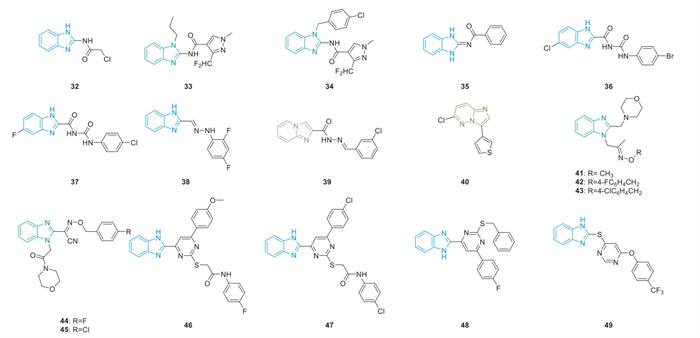
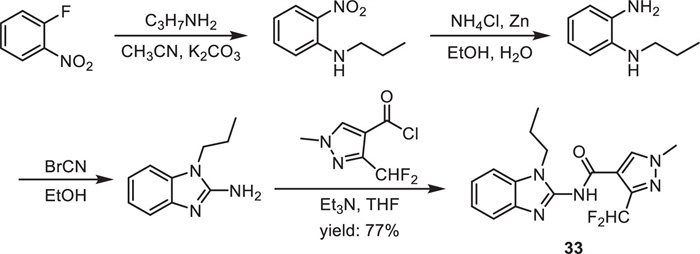
Benzimidazole derivatives exhibit excellent fungicidal activity. For instance, compound 32 (Fig. 9) demonstrated 100% inhibition rates against both Phytophthora nicotianae (P. nicotianae) and Botrytis elliptica (B. elliptica) at a concentration of 50 mg/L [65]. Compounds 33 and 34 exhibited EC50 values of 0.79 and 0.56 mg/L, respectively, against B. cinerea. Scanning electron microscopy revealed that compound 34 exerts fungicidal activity by impairing hyphal morphology in B. cinerea. Furthermore, molecular docking studies indicated that compound 34 interacts with succinate dehydrogenase (SDH) [66]. Compound 35 exhibits broad-spectrum fungicidal activities, demonstrating good efficacy against Colletotrichum coccodes (C. coccodes), Phytophthora infestans (P. infestans), and R. solani (EC50 values of 2.8, 3.4, and 34.9 mg/L, respectively) [67]. The introduction of a diamide group on the benzimidazole ring confers favorable activity. For instance, compounds 36 and 37 exhibit potent inhibitory activity against B. cinerea (EC50 values of 3.94 and 4.65 mg/L, respectively) [68]. Additionally, compound 38 exhibited good activity against R. solani and Magnaporthe oryzae (M. oryzae) (EC50 values of 1.20 and 1.85 mg/L, respectively) [69]. Compound 39 exhibits broad-spectrum fungicidal activities, demonstrating favorable activity against B. cinerea and Fusarium solani (F. solani) with EC50 values of 13.04 and 8.16 mg/L, respectively [70]. Imidazolidinodiazines also exhibit good fungicidal activity. For example, compound 40 displays broad-spectrum fungicidal activities against F. solani, Fusarium oxysporum f. sp. vasinfectum (Fov), and Fusarium bulbigenum (F. bulbigenum) (EC50 values of 5.1, 8.4, and 7.5 mg/L, respectively) [71]. Compounds 41–43 exhibited excellent and broad-spectrum activities against Beans sclerotia (B. sclerotia), B. cinerea, and S. sclerotiorum (EC50 values: 41: 5.98, 0.16, 5.86 mg/L; 42: 8.37, 8.69, 1.18 mg/L; 43: 9.21, 4.27, 1.75 mg/L) [72]. Compounds 44 and 45 exhibited good activity against B. cinerea and S. sclerotiorum, with EC50 values of 10.78 and 10.82 mg/L, and 11.14 and 10.46 mg/L, respectively. Preliminary SAR analysis indicates that when the alkyl group attached to the oxime ether bond in these compounds is methyl, 4-chlorobenzyl, or 4-fluorobenzyl, their fungicidal activity surpasses that of structurally similar compounds [73]. Compounds 46 and 47 exhibited good inhibitory activity against B. cinerea, with EC50 values of 0.13 and 0.15 mg/L, respectively [74]. Compound 48 demonstrated excellent activity against both B. cinerea and S. sclerotiorum, with EC50 values of 0.14 and 4.65 mg/L, respectively [75]. Compound 49 exhibited excellent fungicidal activity against S. sclerotiorum (EC50 = 0.158 mg/L). In vivo experiments demonstrated that compound 49 exhibited good activity at 200 mg/L (84.7% protective activity and 78.1% curative activity). Molecular docking results indicated that compound 49 could form multiple hydrogen bonds and π-π interactions with β-tubulin [76]. Imidazole derivatives exhibit excellent antiviral activity, with their structure-activity characteristics primarily centered on benzimidazole and pyrimidimidazole derivatives. It may be worthwhile to explore the introduction of pyridimidazole, pyridazinimidazole, pyrazino-1,2-diazine derivatives to investigate their antiviral activity against plant viruses in future research. The representative compound 33 was synthesized (Fig. 10). Compound 33 was synthesized via substitution reaction using 1-fluoro-2-nitrobenzene and propylamine as starting materials. Subsequently, the nitro group on the benzene ring was reduced to an amino group using zinc powder to yield an intermediate. This intermediate reacted with cyanogen bromide in ethanol to form a benzimidazole ring via cyclization. Finally, the amino group undergoes substitution with an acyl chloride to yield the target compound 33, a benzimidazole amide in 77% yield.
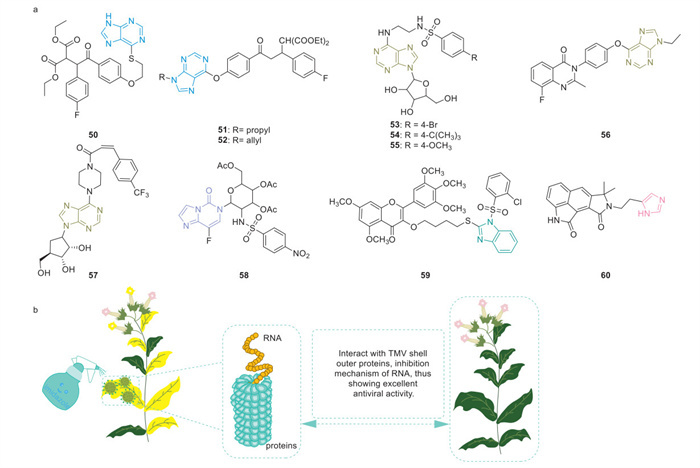
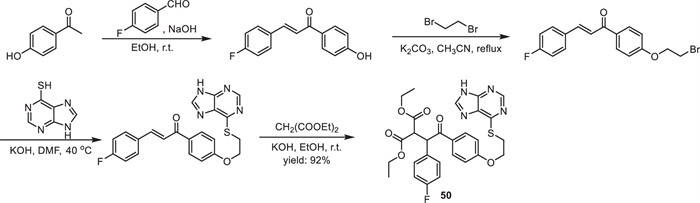
Currently, plant viruses remain one of the unresolved agricultural challenges [77,78]. The direct chemical elimination of plant viruses poses a major challenge, owing to their dependence on host cellular functions and coat protein synthesis [79,80]. Therefore, discovering antiviral agents with unique mechanisms of action and high efficacy is an urgent priority. There are several imidazole compounds that exhibit excellent antiviral activity. For example, compound 50 (Fig. 11) demonstrates remarkable activity against tobacco mosaic virus (TMV) by binding to the TMV coat protein (at 500 mg/L: curative activity: 41.3%, protective activity: 47.6%, inactivation activity: 89.5%). Additionally, at 500 mg/L, compounds 51 and 52 also exhibited good anti-TMV activity (51: curative activity 45.0%, protective activity 46.4%, inactivation activity 81.7%; 52: curative activity 41.8%, protective activity 56.3%, inactivation activity 72.4%) [81]. Pyrimidine-imidazole compounds exhibit excellent inhibitory activity against plant viruses. For example, at 500 mg/L, compound 53 demonstrated outstanding protective activity against potato virus Y (PVY), cucumber mosaic virus (CMV), and TMV (63%, 70%, and 59%, respectively). Compound 53 exhibits potent antiviral activity by disrupting the structural integrity of TMV and interfering with its coat protein interactions. The presence of a benzene ring with an electron-donating group at the para position enhances the compound's inactivating activity against TMV. For instance, compounds 54 and 55 both exhibit EC50 values below 100 mg/L for TMV inactivation [82]. Additionally, compound 56 also exhibited good activity against TMV (at 500 mg/L: curative activity 65.2%, protective activity 60.2%, inactivation activity 74.6%) [83]. Compound 57 demonstrated outstanding activity by interacting with TMV coat proteins and inhibiting TMV systemic movement and biosynthesis within plants (at 500 mg/L: curative activity against TMV: 59.15%, protective activity: 43.14%, inactivation activity: 72.03%) [84]. Compound 58, optimized using a three-dimensional quantitative structure-activity relationship (3D-QSAR) model, exhibits good inactivation activity against pepper mild mottle virus (PMMoV) with an EC50 of 11.4 mg/L. Transmission electron microscopy results indicate that compound 58 demonstrates excellent antiviral activity by causing severe fragmentation of viral particles [85]. Benzimidazole compounds also exhibit favorable antiviral activity. For instance, compound 59 demonstrated good curative, protective, and inactivating activities against TMV (54.1%, 57.6%, and 75.3% at 500 mg/L, respectively) [86]. Compound 60, an imidazole derivative extracted from fungal fermentation, demonstrated potent antiviral activity. At a concentration of 20 mg/L, compound 60 inhibited TMV activity in nepenthes by 56.8% [87]. In summary, compounds containing pyrimidine and imidazole or benzimidazole moieties exhibit outstanding antiviral activity. Structural exploration based on these compounds is a highly promising direction for discovering superior antiviral agents. The representative compound 50 was synthesized (Fig. 12). Compound 50 was synthesized from p–hydroxy acetophenone via condensation, substitution, and addition reactions. The optimal addition reaction for compound 50 yielded 92% under conditions using anhydrous ethanol as solvent and potassium hydroxide as catalyst.
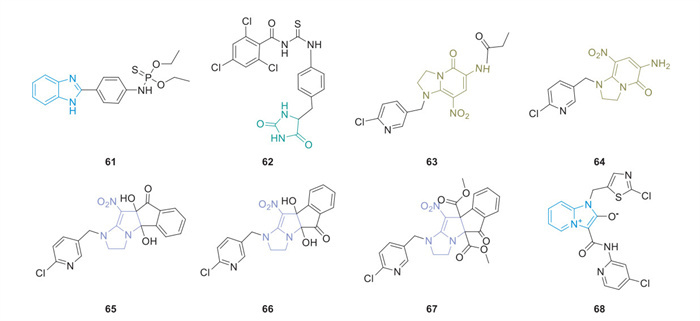
The agricultural pest population is diverse and reproduces rapidly. The excessive use of chemical insecticides has led to the development of insecticide resistance in pests [88-91]. Therefore, discovering novel insecticides with high efficacy and unique mechanisms of action is of critical importance at present [92,93]. In recent years, imidazole compounds have shown remarkable progress in pesticide discovery. For example, compound 61 (Fig. 13) exhibits excellent insecticidal activity against Aedes albopictus (A. albopictus) and Culex quinquefasciatus (C. quinquefasciatus) (lethal medium concentration (LC50) values of 6.42 and 7.01 mg/L, respectively) [94]. The imidazoline compound 62 exhibits broad-spectrum insecticidal activities. At the concentration of 600 mg/L, compound 62 demonstrated inhibition rates of 85%, 90%, and 100% against Helicoverpa armigera (H. armigera), Ostrinia nubilalis (O. nubilalis), and Plutella xylostella (P. xylostella), respectively [95]. Additionally, compound 63 exhibited good inhibitory activity against Aphis craccivora (A. craccivora) and Nilaparvata lugens (N. lugens) (100% at 500 mg/L). Compound 64 also demonstrated good inhibitory activity against A. craccivora and N. lugens (70% and 100% at 4 mg/L) [96]. Compounds 65 and 66 exhibited superior insecticidal activity against A. craccivora and N. lugens (both at 100% efficacy at 4 mg/L). Furthermore, the LC50 values for N. lugens were 0.132 mg/L and 1.06 mg/L, respectively. Notably, compound 67 exhibited excellent activity not only against the two pests but also against Mythimna separata (M. separata) (LC50 value: 4.337 mg/L) [97]. Pyridine-imidazole compound 68 exhibited good insecticidal activity against Sogatella furcifera (S. furcifera) and A. craccivora (LC50 values of 10.5 and 2.09 mg/L, respectively). Proteomic profiling identified that the alterations in protein expression induced by compound 68 were predominantly enriched in nervous system-related pathways. Enzyme activity assays demonstrated that compound 68 inhibits acetylcholinesterase [98]. It is perhaps feasible to retain the pyridine-imidazole scaffold as a parent structure for developing novel insecticides with superior activity. The synthetic approach for the representative compound 61 (Fig. 14). Compound 61 was synthesized from 1,2-benzenediamine and 4-nitrobenzaldehyde via a sequence involving benzimidazole ring formation by cyclization, reduction of the nitro group to an amino group, and final substitution with a halogen atom, ultimately yielding the product in 64% yield.

Plant pathogenic nematodes are a group of highly prolific, microscopic worms with a wide host range [99-101]. These nematodes parasitize vegetable root systems, causing stunted growth and yellowing of leaves and branches. Annual economic losses in vegetable production due to nematode diseases exceed 70% of total output, severely compromising both yield and quality [102-105]. Among these, root-knot nematode disease inflicts the most devastating damage, inducing root gall formation and root nodules that cause yellowing and necrosis of root tissues, ultimately leading to crop death [106,107]. Additionally, pine wood nematode disease is termed the "cancer" of pine trees. Pine trees infected with pine wood nematode rapidly wither and spread extensively, severely impacting ecological security and forestry economic development [108-110]. Therefore, developing highly effective nematicides with unique mechanisms of action is an urgent priority.
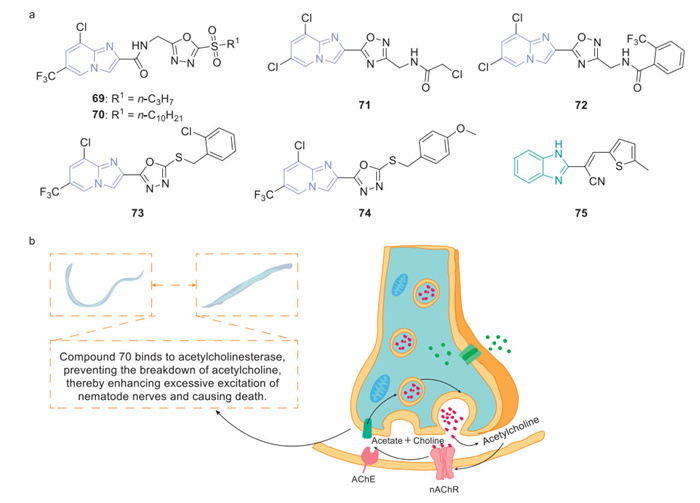
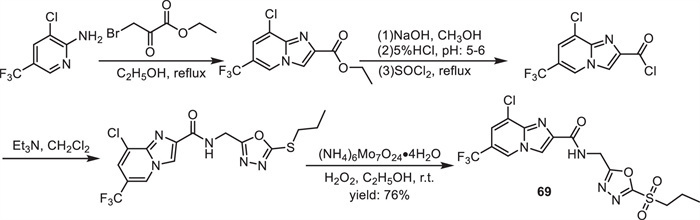
Pyridine-fused imidazole compounds exhibit promising nematicidal activity. For instance, compounds 69 and 70 (Fig. 15) demonstrate effective nematicidal activity against Aphelenchoides besseyi (A. besseyi) with LC50 values of 27.3 and 35.9 mg/L, respectively. Concurrently, compound 70 exhibited an LC50 value of 5.7 mg/L against Caenorhabditis elegans (C. elegans). Enzyme activity assays indicated that compound 70 not only bound effectively to the nematode's acetylcholinesterase (AChE) but also demonstrated potent inhibitory activity against AChE. Compound 70 binds to AChE, inhibiting the breakdown of acetylcholine, thereby enhancing excessive excitation of nematode nerves and causing death. Consequently, it exhibits excellent nematicidal activity [111]. The 1,2,4-oxadiazoleamide moiety was identified as a key structural determinant for nematicidal activity on the pyridine-imidazole scaffold. For instance, at 200 mg/L, compounds 71 and 72 exhibited 70.1% and 11.8% activity against Bursaphelenchus xylophilus (B. xylophilus) [112]. Compounds containing oxadiazole thioether groups introduced onto the pyridine-imidazole ring exhibit good nematicidal activity against C. elegans. For example, compounds 73 and 74 had LC50 values of 34.94 and 37.62 mg/L, respectively, against C. elegans [113]. The benzimidazoles also exhibit good nematicidal activity. For example, at 500 mg/L, compound 75 showed 61% and 69% activity against Meloidogyne incognita (M. incognita) after 24 h and 48 h, respectively [114]. The synthetic route for the representative compound 69 (Fig. 16). Compound 69 was synthesized from 2-amino-3–chloro–5-trifluoromethylpyridine via a sequence involving cyclization to construct the pyridine-imidazole core, followed by basic hydrolysis of an ester to the sodium carboxylate. Acidification with dilute HCl afforded the carboxylic acid, which subsequently underwent acyl chlorination, amidation, and final oxidation to yield compound 69 in 76% overall yield.
The bacterial diseases of plants are characterized by widespread transmission, prolonged damage cycles, and severe losses [115-117]. They commonly occur in field crops, vegetables, and fruit trees. Pathogenic bacteria primarily infect host cells by absorbing nutrients from them, ultimately killing the cells or tissues [118-120]. Common bacterial plant pathogens include Xanthomonas oryzae pv. oryzae (Xoo) and Xanthomonas axonopodis pv. citri (Xac). Rice bacterial blight caused by Xoo ranks among the most severe bacterial diseases affecting rice, reducing yields by 20%–40% or even causing total crop failure, significantly impacting both rice production and quality [121-123]. Additionally, citrus canker, a bacterial disease caused by Xac, induces ulcerative lesions on citrus leaves, shoots, and fruits. This leads to reduced fruit quality and yield, severely hindering the development of the citrus industry [124,125].
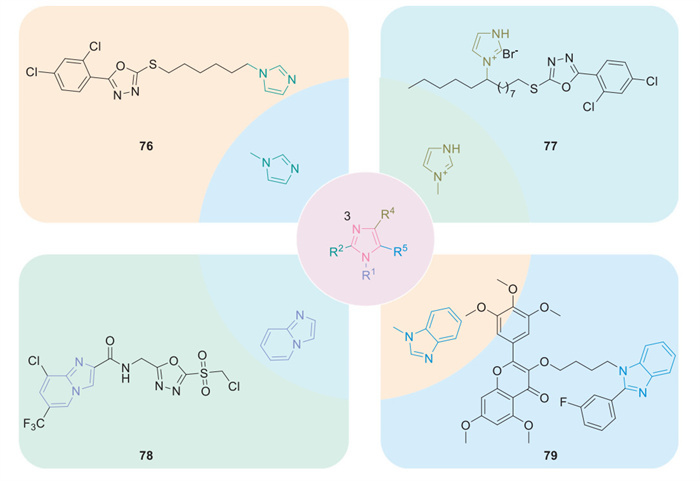
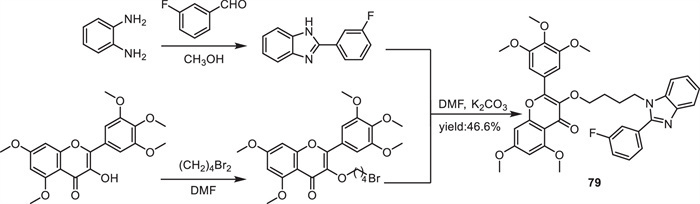
Imidazole compounds exhibit outstanding antibacterial activity. For instance, compound 76 (Fig. 17) demonstrates excellent activity against Xoo and Xac (EC50 values of 0.734 and 1.79 mg/L, respectively). Structural optimization of compound 76 yielded compound 77, which exhibits even superior activity against both bacteria (EC50 values of 0.295 and 0.611 mg/L, respectively) [126]. Additionally, compound 78 exhibits good inhibitory activity against Xoo and Xanthomonas oryzae pv. oryzicola (Xoc) (EC50 values of 1.2 and 3.1 mg/L, respectively). At 50 mg/L, compound 78 also exhibited good curative and protective activities against rice bacterial leaf blight, with rates of 37.0% and 36.8%, respectively. Physiological and biochemical studies suggested that this compound may inhibit Xoo growth by affecting cell membranes and extracellular polysaccharide production [111]. Benzimidazole compounds exhibit excellent antibacterial activity. For instance, compound 79 exhibits significant activity against Xoo (EC50 value of 8.2 mg/L). Furthermore, at a concentration of 200 mg/L, compound 79 demonstrates excellent curative and protective in vivo activity (45.2% and 48.6%, respectively) against rice bacterial leaf blight. Scanning electron microscopy results indicate that the compound causes deformation or rupture of Xoo cell membranes, thereby exhibiting potent antibacterial activity [127]. Although there are less research reports on the antibacterial activity of imidazole derivatives, it is well known from the available literature that imidazole derivatives showed promising antibacterial activity. the retention of the benzimidazole ring, pyridine-imidazole ring, and the introduction of flexible chains on the imidazole ring demonstrated favorable antibacterial activity. The synthesis of representative compound 79 (Fig. 18). Compound 79 was synthesized from 1,2-benzenediamine and 3-fluorobenzaldehyde via sequence involving cyclization to form the benzimidazole core, which was then subjected to halogen substitution, yielding the final product in 46.6% overall yield.
Imidazole compounds have achieved remarkable success in the discovery of new pesticides, becoming a crucial molecular skeleton for herbicides and fungicides. The imidazole ring possesses four modifiable sites, allowing the introduction of different functional groups at these sites to investigate their impact on biological activity. This approach will lead to the discovery of more highly active imidazole compounds in the future. In recent years, the research on imidazole compounds has made tremendous progress. Therefore, it is necessary to promptly update the latest advances in imidazole compounds for pesticide discovery. We systematically reviewed the discovery and application of imidazole compounds in novel pesticides over the past decade, analyzed their herbicidal, fungicidal, antiviral, insecticidal, nematicidal, and antibacterial activities of imidazole compounds. We discussed representative synthetic approaches for imidazole derivatives, summarized their bioactive moieties and mechanisms of action, aiming to provide new insights and inspiration for the discovery of highly effective novel imidazole pesticides. However, the imidazole derivatives currently encounter serious challenges in the study of mechanisms of action. The research on target identification, resistance and environmental safety assessment requires further investigation. Combining computer-aided design to analyze target proteins, identifying specific key genes through RNA interference technology, and integrating with intelligent pesticide application techniques may facilitate the discovery of novel imidazole pesticides that are highly effective, possess unique mechanisms of action, and are environmentally friendly in the future.
The authors declare that they have no known competing financial interests or personal relationships that could have appeared to influence the work reported in this paper.
Tingting Du: Writing – original draft, Investigation, Data curation. Siyu Lu: Investigation, Data curation. Dong Wang: Writing – review & editing, Formal analysis. Jian Zhang: Writing – review & editing, Formal analysis. Jixiang Chen: Writing – review & editing, Project administration, Conceptualization.
The authors are grateful to the National Key R & D Program of China (No. 2023YFD1400400), the National Natural Science Foundation of China (No. 32360687), and the Central Government Guidance Funds for Local Science and Technology Development Projects (No. 2025ZY0160) for supporting the project.
T. Cosby, A. Holt, P.J. Griffin, et al., J. Phys. Chem. Lett. 6 (2015) 3961–3965. doi: 10.1021/acs.jpclett.5b01887
F. Ali, Z.C. Tang, G.A. Mo, et al., Environ. Res. 262 (2024) 119726. doi: 10.1016/j.envres.2024.119726
R. Unan, O. Azapoglu, I. Deligoz, et al., Pest. Biochem. Physiol. 198 (2024) 105746. doi: 10.1016/j.pestbp.2023.105746
M. Tippannanavar, A. Verma, R. Kumar, et al., J. Agric. Food Chem. 68 (2020) 4566–4578. doi: 10.1021/acs.jafc.9b06387
M.S. Salahuddin, A. Mazumder, Arab. J. Chem. 10 (2017) S157–S173. doi: 10.1016/j.arabjc.2012.07.017
A.T. Shah, M. Nazari, M. Antar, et al., Front. Sustain. Food Syst. 5 (2021) 667546. doi: 10.3389/fsufs.2021.667546
C. Gazzurelli, A. Migliori, P.P. Mazzeo, et al., ACS Sustain. Chem. Eng. 8 (2020) 14886–14895. doi: 10.1021/acssuschemeng.0c04645
S. Walia, S. Saha, V. Tripathi, et al., Phytochem. Rev. 16 (2017) 989–1007. doi: 10.1007/s11101-017-9512-6
A.P.B. Balaji, T.P. Sastry, S. Manigandan, et al., Sci. Total Environ. 579 (2017) 190–201. doi: 10.1016/j.scitotenv.2016.10.240
Y. Zhang, Z.M. Li, H.B. Song, et al., Chin. J. Chem. 36 (2018) 635–638. doi: 10.1002/cjoc.201800110
A.J. Liao, W. Sun, Y.M. Liu, et al., Chin. Chem. Lett. 36 (2025) 110094. doi: 10.1016/j.cclet.2024.110094
C. Chen, W. Geng, K. Li, et al., Chin. Chem. Lett. 36 (2025) 110902. doi: 10.1016/j.cclet.2025.110902
H.K. Yuan, A.J. Liao, S.H. Chen, et al., Chin. Chem. Lett. 36 (2025) 111305.
M.J. Chu, M. Li, Y.D. Zhao, Bioorg. Chem. 133 (2023) 106332. doi: 10.1016/j.bioorg.2022.106332
Z.R. Banoon, R.S. Mahmood, A.R. Hamad, et al., J. Mol. Struct. 1322 (2024) 140701.
Z.B. Zhu, X. Lv, J.E. Anesini, et al., Org. Lett. 19 (2017) 6424–6427. doi: 10.1021/acs.orglett.7b03309
L.L. Chu, X. Kang, D.P. Li, et al., Chemosphere 275 (2021) 130042. doi: 10.1016/j.chemosphere.2021.130042
K. Skrzyniarz, S. Takvor-Mena, K. Lach, et al., J. Colloid Interface Sci. 665 (2024) 814–824. doi: 10.1016/j.jcis.2024.03.130
W.L. Zhang, X.D. Jin, W.W. Chen, et al., RSC Adv. 15 (2025) 16088–16096. doi: 10.1039/d5ra02377g
Y. Zhang, S.Y. Lu, Z.N. Zhu, et al., Physiol. Mol. Plant Pathol. 139 (2025) 102798. doi: 10.1016/j.pmpp.2025.102798
K.K. Gong, X.L. Tang, Y.S. Liu, et al., Molecules 21 (2016) 150. doi: 10.3390/molecules21020150
D. Osmaniye, B.K. Cavusoglu, B.N. Saglik, et al., Molecules 23 (2018) 831. doi: 10.3390/molecules23040831
R. Kumar, P. Kaushik, K. Tripathi, et al., BMC Chem. 19 (2025) 113. doi: 10.1186/s13065-025-01451-z
M. El-Shahat, W. El-Sofany, A.G.A. Soliman, et al., J. Mol. Struct. 1250 (2022) 131727. doi: 10.1016/j.molstruc.2021.131727
E.E. Burns, B.K. Keith, M.Y. Refai, et al., Pest. Biochem. Physiol. 140 (2017) 69–78. doi: 10.1016/j.pestbp.2017.06.007
V.K. Aralappanavar, B. Sarkar, C.L. Doolette, et al., Talanta 295 (2025) 128350. doi: 10.1016/j.talanta.2025.128350
C.R. Maruyama, M. Guilger, M. Pascoli, et al., Sci. Rep. 6 (2016) 19768. doi: 10.1038/srep19768
J.A. Torres-Rodriguez, J.J. Reyes-Pérez, M.S. Carranza-Patiño, et al., Plants 14 (2025) 431. doi: 10.3390/plants14030431
Q. Chen, J.F. Zuo, X. He, et al., Talanta 162 (2017) 540–546. doi: 10.1016/j.talanta.2016.10.036
H.Q. Dong, Y.K. He, C. Fan, et al., Nanomaterials 12 (2022) 3879. doi: 10.3390/nano12213879
A.K. Bagdi, A. Hajra, Chem. Rec. 16 (2016) 1868–1885. doi: 10.1002/tcr.201600057
L.D. Zhang, K. Xiao, Y. Qiao, et al., Eur. J. Org. Chem. 48 (2018) 6913–6918. doi: 10.1002/ejoc.201801351
E. Vessally, S. Soleimani-Amiri, A. Hosseinian, et al., RSC Adv. 7 (2017) 7079–7091. doi: 10.1039/C6RA25816F
M.V. Pinna, A. Pusino, Chemosphere 91 (2013) 265–268. doi: 10.1016/j.chemosphere.2012.11.023
S. Yavari, M. Abualqumboz, N. Sapari, et al., Int. J. Environ. Sci. Technol. 17 (2020) 3341–3350. doi: 10.1007/s13762-020-02629-9
J.B. Rushing, M.T. Thornton, Agron. J. 109 (2017) 1849–1855. doi: 10.2134/agronj2016.12.0711
Y.Q. Zhou, Y.H. Yang, M.H. Ma, et al., J. Anal. Methods Chem. 2018 (2018) 7535417.
M. Anastassiadou, G. Bernasconi, A. Brancato, et al., EFSA J. 18 (2020) 5952.
R. López-Cabeza, B. Gámiz, J. Cornejo, et al., Geoderma 293 (2017) 64–72. doi: 10.1016/j.geoderma.2017.01.024
K. Li, D.Q. Shi, J. Heterocycl. Chem. 46 (2009) 544–547. doi: 10.1002/jhet.114
Y.Q. Zhu, C. Liu, J. Zhang, et al., Chin. J. Org. Chem. 30 (2010) 1088–1092.
T. Kang, S. Gao, L.X. Zhao, et al., J. Agric. Food Chem. 69 (2021) 45–54. doi: 10.1021/acs.jafc.0c04436
W.J. Liu, Z.C. Wang, F.B. Xu, et al., ACS Omega 4 (2019) 15742–15753. doi: 10.1021/acsomega.9b02495
W.Q. Fan, S.Y. Zhang, N. Yang, et al., Mol. Divers. 29 (2025) 2129–2142. doi: 10.1007/s11030-024-10972-z
J. Peng, S. Gao, J.H. Bi, et al., J. Agric. Food Chem. 72 (2024) 8933–8943.
W.Q. Yu, L.X. Zhao, Y. Bian, et al., J. Agric. Food Chem. 73 (2025) 3341– 3352. doi: 10.1021/acs.jafc.4c07027
S. Chauhan, T. Fatima, A. Dubey, et al., J. Soil Sci. Plant Nutr. 23 (2023) 3373–3380. doi: 10.1007/s42729-023-01254-y
J.Y. Feng, Y.X. Hu, E. Grant, et al., Food Chem. 239 (2018) 816–822. doi: 10.1016/j.foodchem.2017.07.014
X.X. Xu, A.H. Wu, L.L. Guo, et al., Nanoscale Horiz. 9 (2023) 123–131.
J. Lundqvist, B. Hellman, A. Oskarsson, Food Chem. Toxicol. 91 (2016) 36–41. doi: 10.1016/j.fct.2016.03.002
K. Kawada, Y. Uchida, I. Takahashi, et al., Molecules 25 (2020) 5525. doi: 10.3390/molecules25235525
I.S. Song, H.U. Jeong, M.K. Choi, et al., J. Biochem. Mol. Toxicol. 34 (2020) e22459. doi: 10.1002/jbt.22459
A.K. Kort, H. Lorenz, A. Seidel-Morgenstern, Chirality 28 (2016) 514–520. doi: 10.1002/chir.22608
W.J. Li, Q. Li, D.L. Liu, et al., J. Agric. Food Chem. 61 (2013) 1419–1426. doi: 10.1021/jf305355u
L. Chen, B. Zhao, Z.J. Fan, et al., J. Agric. Food Chem. 66 (2018) 7319–7327. doi: 10.1021/acs.jafc.8b02332
S. Jeanmart, J. Gagnepain, P. Maity, et al., Bioorg. Med. Chem. 26 (2018) 2009–2016. doi: 10.1016/j.bmc.2018.02.051
W.C. Yang, J. Li, J. Li, et al., Bioorg. Med. Chem. Lett. 22 (2012) 1455–1458. doi: 10.1016/j.bmcl.2011.11.115
C. Lamberth, R. Dumeunier, S. Trah, et al., Bioorg. Med. Chem. 21 (2013) 127–134. doi: 10.1016/j.bmc.2012.10.052
Y. Gao, D.C. Huang, C. Liu, et al., Bioorg. Med. Chem. 35 (2021) 116073. doi: 10.1016/j.bmc.2021.116073
X.Y. Zhi, Y. Zhang, Y.F. Li, et al., J. Agric. Food Chem. 10 (2020) 24483–24490.
J.P. Lei, J.T. Han, Z.H. Xu, et al., Chin. J. Org. Chem. 32 (2012) 1993–1998. doi: 10.6023/cjoc201204026
B. Tang, M.Y. Yang, Y. Zhao, et al., Molecules 20 (2015) 13740–13752. doi: 10.3390/molecules200813740
B. Tang, A.Y. Guan, Y. Zhao, et al., Chin. J. Chem. 35 (2017) 1133–1140. doi: 10.1002/cjoc.201600794
M.V. Dubovis, G.F. Rudakov, A.S. Kulagin, et al., Tetrahedron 74 (2018) 672–683. doi: 10.1016/j.tet.2017.12.043
A. Mobinikhaledi, N. Foroughifar, M. Kalhor, et al., J. Heterocycl. Chem. 47 (2010) 77–80. doi: 10.1002/jhet.264
F. Jin, F. Peng, X.Y. Kong, et al., Mol. Divers. 29 (2025) 2033–2047. doi: 10.1007/s11030-024-10957-y
K.L. Obydennov, T.A. Kalinina, N.A. Galieva, et al., J. Agric. Food Chem. 69 (2021) 12048–12062. doi: 10.1021/acs.jafc.1c03325
L. Jiang, F. Liu, D.K. Zhang, et al., J. Pestic. Sci 35 (2010) 33–35. doi: 10.1584/jpestics.G09-30
X. Wang, Y.F. Chen, W. Yan, et al., Molecules 21 (2016) 1574. doi: 10.3390/molecules21111574
X.F. Yao, R.R. Zhang, B. Lv, et al., Adv. Agrochem. 2 (2023) 154–162. doi: 10.1016/j.aac.2023.04.001
L.L. Fan, Z.F. Luo, Y. Li, et al., Bioorg. Med. Chem. Lett. 30 (2020) 127139. doi: 10.1016/j.bmcl.2020.127139
S.F. Zhou, F.B. Li, P.Z. Zhang, et al., Res. Chem. Intermed. 39 (2013) 1735–1743. doi: 10.1007/s11164-012-0708-5
Z.Q. Qu, F.B. Li, C.Y. Xing, et al., Chin. J. Org. Chem. 35 (2015) 2229–2233. doi: 10.6023/cjoc201504018
C.X. Sun, S. Zhang, P. Qian, et al., Pest Manag. Sci. 77 (2021) 5529–5536. doi: 10.1002/ps.6593
C.X. Sun, S. Zhang, P. Qian, et al., Bioorg. Med. Chem. Lett. 47 (2021) 128210. doi: 10.1016/j.bmcl.2021.128210
S. Yang, J.R. Zhang, M. Li, et al., J. Agric. Food Chem. 72 (2024) 15541–15551. doi: 10.1021/acs.jafc.4c01578
Z.M. Yin, B. Zieniuk, M. Pawelkowicz, Agriculture 14 (2024) 1999. doi: 10.3390/agriculture14111999
A. Ibrahim, V. Odon, R. Kormelink, Front. Plant Sci. 10 (2019) 803. doi: 10.3389/fpls.2019.00803
F. Weis, M. Beckers, I. von Der Hocht, et al., EMBO Rep. 20 (2019) e48451.
Y.M. Chen, X.P. Zu, D. Li, Front. Genet. 11 (2020) 569100. doi: 10.3389/fgene.2020.569100
Y. Fu, D. Liu, H.N. Zeng, et al., RSC Adv. 10 (2020) 24483–24490. doi: 10.1039/d0ra03684f
J. Zhang, F.C. He, J.X. Chen, et al., J. Agric. Food Chem. 69 (2020) 5575–5582. doi: 10.2147/dddt.s276972
Y. Deng, M.H. Chen, J.M. Yi, et al., Phytochem. Lett. 59 (2024) 10–14. doi: 10.1016/j.phytol.2023.11.003
L. Cheng, X. Zhou, Y.W. Huang, et al., Pest Manag. Sci. 81 (2025) 4501–4514. doi: 10.1002/ps.8808
Y.Y. Yang, R.J. Song, L.M. Yin, et al., J. Agric. Food Chem. 71 (2023) 7977–7987. doi: 10.1021/acs.jafc.2c08129
M. Chen, S.J. Su, Q. Zhou, et al., J. Saudi Chem. Soc. 25 (2021) 101194. doi: 10.1016/j.jscs.2020.101194
G.Y. Yang, J.M. Dai, Q.L. Mi, et al., Phytochemistry 198 (2022) 113137. doi: 10.1016/j.phytochem.2022.113137
D.W. Wang, L.M. Deng, J.G. Ni, et al., J. Sci. Food Agric. 99 (2019) 4524–4531. doi: 10.1088/1361-6544/ab32d7
S. Riaz, J.B. Johnson, M. Ahmad, et al., J. Appl. Entomol. 145 (2021) 467–498. doi: 10.1111/jen.12880
D.P. Wei, J.Q. Chen, T. Luo, et al., Comput. Electron. Agric. 194 (2022) 106736. doi: 10.1016/j.compag.2022.106736
M.C. Reid, F.E. McKenzie, Malar. J. 15 (2016) 107. doi: 10.1186/s12936-016-1162-4
X. He, L.D. Lu, P. Huang, et al., Insects 14 (2023) 104. doi: 10.3390/insects14020104
T.C. Sparks, R.J. Bryant, Pest Manag. Sci. 78 (2022) 3226–3247. doi: 10.1002/ps.6942
P. Bandyopadhyay, M. Sathe, S.N. Tikar, et al., Bioorg. Med. Chem. Lett. 24 (2014) 2934–2939. doi: 10.1016/j.bmcl.2014.04.082
Z.H. Xu, B. Liu, H.B. Dong, et al., Chin. J. Org. Chem. 34 (2014) 2517–2522. doi: 10.6023/cjoc201407030
L.T. Zhang, K. Liu, X.S. Shao, et al., Chin. Chem. Lett. 30 (2019) 340–344. doi: 10.1016/j.cclet.2018.09.012
N.Y. Chen, X.Q. Meng, F.J. Zhu, et al., J. Agric. Food Chem. 63 (2015) 1360–1369. doi: 10.1021/jf505281p
Z.J. Liu, R.J. Song, D.S. Zhang, et al., Pest Manag. Sci. 78 (2022) 4983–4993. doi: 10.1002/ps.7121
H.Y. Song, Q.X. Yang, S. Wang, et al., Pest. Biochem. Physiol. 208 (2025) 106298. doi: 10.1016/j.pestbp.2025.106298
S. Wang, T.T. Du, H.Y. Song, et al., Physiol. Mol. Plant Pathol. 134 (2024) 102433. doi: 10.1016/j.pmpp.2024.102433
M. Manohar, F. Tenjo-Castano, S.Y. Chen, et al., Nat. Commun. 11 (2020) 208. doi: 10.1038/s41467-019-14104-2
Y. Wang, H.Y. Song, S. Wang, et al., Pest. Biochem. Physiol. 189 (2023) 105310. doi: 10.1016/j.pestbp.2022.105310
J.X. Chen, B.A. Song, J. Integr. Agric. 20 (2021) 2015–2031. doi: 10.1016/S2095-3119(21)63617-1
L.M. Taning, L. Chann, S. Fleerakkers, et al., Eur. J. Plant Pathol. 167 (2023) 323–333. doi: 10.1007/s10658-023-02714-y
S.Y. Lu, Z.N. Zhu, T.T. Du, et al., Physiol. Mol. Plant Pathol. 139 (2025) 102836. doi: 10.1016/j.pmpp.2025.102836
J.X. Chen, Q.X. Li, B.A. Song, J. Agric. Food Chem. 68 (2020) 12175–12188. doi: 10.1021/acs.jafc.0c02871
L.J. Wu, Y. Ren, X.S. Zhang, et al., Agronomy 13 (2023) 1803. doi: 10.3390/agronomy13071803
J.X. Chen, Y. Wang, X. Luo, et al., Pest. Biochem. Physiol. 184 (2022) 105122. doi: 10.1016/j.pestbp.2022.105122
J.J. Kuang, L.F. Yu, Q. Zhou, et al., Forests 15 (2024) 596. doi: 10.3390/f15040596
T.T. Du, S.Y. Lu, Z.N. Zhu, et al., Chin. Chem. Lett. 36 (2025) 110912. doi: 10.1016/j.cclet.2025.110912
C.Q. Wei, J.J. Huang, Y.Q. Luo, et al., Pest. Biochem. Physiol. 175 (2021) 104857. doi: 10.1016/j.pestbp.2021.104857
X.B. Chen, S. Wang, T.T. Du, et al., J. Agric. Food Chem. 73 (2025) 7166– 7178.
Q.N. Guo, S. Huang, W. Zhao, et al., Chin. J. Org. Chem. 44 (2024) 1620–1629. doi: 10.6023/cjoc202311024
M. Parveen, M. Azeem, A. Aslam, et al., Curr. Org. Synth. 20 (2023) 458–469. doi: 10.2174/1570179419666220912090458
J. Xiang, D.Y. Liu, J.X. Chen, et al., Pest. Biochem. Physiol. 170 (2020) 104695. doi: 10.1016/j.pestbp.2020.104695
J. Singh, B. Chhabra, A. Raza, et al., Front. Plant Sci. 13 (2023) 1010191. doi: 10.3389/fpls.2022.1010191
Z.Y. Ji, H.D. Sun, Y.N. Wei, et al., Int. J. Mol. Sci. 23 (2022) 6545. doi: 10.3390/ijms23126545
J. Peng, Y. Zhang, X. Liu, et al., Pest. Biochem. Physiol. 193 (2023) 105457. doi: 10.1016/j.pestbp.2023.105457
D. Figaj, P. Ambroziak, T. Przepiora, et al., Int. J. Mol. Sci. 20 (2019) 672. doi: 10.3390/ijms20030672
N. Heiden, K.A. Broders, M. Hutin, et al., Phytopathology 113 (2023) 2048–2055. doi: 10.1094/phyto-05-23-0155-ia
C.F. Yi, J.X. Chen, D.Y. Hu, et al., Pest. Biochem. Physiol. 169 (2020) 104645. doi: 10.1016/j.pestbp.2020.104645
J. Hausner, M. Jordan, C. Otten, et al., ACS Synth. Biol. 8 (2019) 532–547. doi: 10.1021/acssynbio.8b00434
R.A. Cernadas, L.R. Camillo, C.E. Benedetti, Mol. Plant Pathol. 9 (2008) 609–631. doi: 10.1111/j.1364-3703.2008.00486.x
J. Fu, J. Fan, C.X. Zhang, et al., J. Integr. Agric. 23 (2024) 155–165. doi: 10.1016/j.jia.2023.11.011
M.D. Andrade, J.C. da Silva, A.S. Soprano, et al., Mol. Plant Pathol. 24 (2023) 331–345. doi: 10.1111/mpp.13300
P.Y. Wang, M.W. Wang, D. Zeng, J. Agric. Food Chem. 67 (2019) 3535–3545. doi: 10.1021/acs.jafc.8b06242
M. Chen, X.M. Tang, T.T. Liu, et al., Fitoterapia 149 (2021) 104804. doi: 10.1016/j.fitote.2020.104804

Figure 3 Chemical structure modification and analysis of imidazole-containing herbicides.

Figure 4 (a) Chemical structures of imidazole-containing herbicidal compounds 1–10. (b) Schematic diagram illustrating the herbicidal activity of imidazole compounds on wheat.

Figure 7 The chemical structural characteristics and active moiety analysis of imidazole-containing fungicides.

Figure 8 (a) Chemical structures of imidazole-containing antifungal active compounds 11–31. (b) Active fragment analysis of compound 11–31. (c) Schematic diagram of the antifungal mechanism of imidazole compounds.

Figure 9 Chemical structures and active fragment analysis of imidazole-containing antifungal compounds 32–49.

Figure 11 (a) Chemical structures and active site analysis of imidazole-containing antiviral compounds 50–60. (b) Schematic representation of the mechanism of action of imidazole compounds against TMV.

Figure 13 Chemical structures and active fragment analysis of imidazole-containing insecticidal compounds 61–68.

Figure 15 (a) Chemical structures of imidazole-containing nematicidal compounds 69–75. (b) Schematic representation of the mechanism of action of compound 70 against nematodes.

Figure 17 Chemical structures and active fragment analysis of imidazole-containing antibacterial compounds 76–79.

 扫一扫看文章


扫一扫关注我们
 DownLoad:

 下载:
下载:


 下载:
下载: