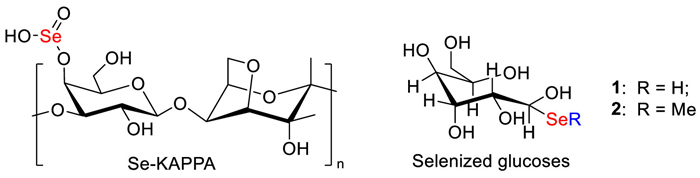
Figure 1.
Comparison of the chemical structure of Se-KAPPA and low-valence-selenium-substituted glucoses 1 and 2.

The bio-applications of low-valence-selenium-substituted glucoses
Hongen Cao , Xinrui Xiao , Xu Zhang , Lei Yu


Selenium is an essential trace element for human beings. It is crucial for the healthy functioning of tissues and organs in the human body, including cardiovascular system, nervous system, thyroid gland, liver, gallbladder [1–3]. The World Health Organization recommends that the everyday intake of selenium for adult should be 50–400 μg [4]. Unfortunately, although China has abundant selenium mineral resources, about 70% of the country is still selenium-deficient areas, with over one billion residents in need of selenium supplementation [4]. Selenium supplementation can enhance human immunity, thereby improving the population's ability to fight infectious diseases. It may help slow down the spread of infectious diseases, gaining time for prevention and control measures. Therefore, from a public health perspective, targeted selenium supplementation for populations in selenium-deficient areas is not only significant for improving people's health, but also a strategic measure to build a national "immune Great Wall" and ward off infectious diseases [5].
Developing selenium-enriched agriculture as a means of selenium supplementation is aligned with the traditional dietary habits of Chinese residents, a factor that supports its large-scale promotion. As early as the 1990s, researchers and farmers began to enhance the selenium content in crops by incorporating selenium-rich coal particles into farmland soils [4]. This method can significantly increase the selenium content in agricultural products. However, it also introduces other elements present in coal—such as lead, arsenic, and chromium—thereby posing a risk of heavy metal pollution in the final products [4]. Sodium selenite is an inexpensive inorganic selenium compound. Selenium supplementation with sodium selenite can be achieved by foliar spray, which reduces the required amount of fertilizer and does not introduce harmful elements. However, the toxicity of sodium selenite is high. Modern agriculture emphasizes the construction of ecological systems and develops diversified integrated breeding models based on this, such as rice-duck, rice-crab and rice-fish co-culture systems. However, due to the high toxicity, sodium selenite is difficult to adapt to such comprehensive agricultural production systems and is gradually being phased out.
During the past 20 years, many low-toxicity, safe and efficient selenium fertilizers have been developed, such as nano selenium and selenium-containing amino acids. However, nano-selenium is prone to agglomeration during long-term storage. This phenomenon not only compromises the stability of nano-selenium itself but also leads to inconsistent quality in downstream agricultural products, posing potential risks to both product efficacy and agricultural production reliability [6]. Selenium-containing amino acids are expensive due to the complicated synthesis steps, and the organic chlorides introduced during synthesis will remain in the products, thereby posing certain health and environmental risks [7]. The added value of the agricultural industry is generally low. Therefore, reducing the cost of selenium fertilizers is a crucial issue that determines whether they can be promoted and applied on a large scale. Recently, we developed low-valence-selenium-substituted glucoses, which are efficient foliar fertilizers for crop selenium fortification and can be synthesized via a simplified process with low cost. Further investigations show that these materials can also be used for producing feeds, pesticides and medicines. This article provides a review and outlook on the bio-applications of them.
Compared with inorganic selenium compounds, many organoselenium compounds exhibit relatively lower toxicity. This makes them more conducive to developing safe, stable, and efficient, low-toxicity selenium sources for the advancement of selenium-rich agriculture. However, the synthesis of selenium-containing organic compounds typically involves multiple reaction steps, and the release of malodorous gases during the process significantly restricts their large-scale application. From the perspective of element transfer reaction (ETR) theory [8], selenium-enriched planting essentially represents a selenium element transfer process, where the selenium sources used are comprised of a carrier and selenium species, rather than requiring specific organoselenium compounds. Selecting common organic molecules in the biosphere as carriers can significantly enhance their biological compatibility. Guided by this design concept, we propose an innovative approach using carbohydrates as carriers. Carbohydrates not only exhibit excellent water solubility, but the hydroxyl groups in their molecules also form strong binding forces with crop leaves, enabling the development of high-efficiency selenium-enriched foliar fertilizers.
Indeed, selenized carbohydrates are not new materials and they have been widely used in food industry and health care products. For example, kappa-selenocarrageenan (Se-KAPPA, see GB1903.23—2016) is a commonly used food additive. In the molecule, selenium exists in its high-valence form of selenite, which is attached to the carrageenan parent molecule by ester bond (Fig. 1). Selenium in Se-KAPPA may easily fall off under acidic or basic conditions, releasing the free selenite or its salt which are highly toxic. To prevent the safety risks brought about by the dropping of selenium, we proposed an alternative design protocol, i.e., binding selenium with C-Se bond to produce the low-valence-selenium-substituted carbohydrates.
Se2- compounds are strong nucleophilic reagents and they can attack the electro-positivity carbon in carbohydrates to form C-Se bond. For example, sodium selenium hydride (NaHSe) can be prepared by reducing selenium powder with NaBH4. Its selenium hydrogen anion (HSe-) can react with the glycoside in glucose to prepare low-valence-selenium-substituted glucose 1 (Fig. 1) [9]. Similarly, MeSeMgCl, prepared via the selenium-insertion reaction of Grignard reagent MeMgCl with selenium powder, can be employed to introduce MeSe-group. The reaction of glucose with MeSeMgCl led to methylselenized glucose (MSG) 2 (Fig. 1) [10]. Both 1 and 2 are low-valence-selenium-substituted glucoses. Methylselenized glucose 2 is more stable than 1, and its aqueous solution shows no changes after being exposed in air for one month. X-ray photoelectron spectroscopy (XPS) studies indicated that Se2- in 2 was not oxidized during the process [10]. Comparatively, when exposed in air, the color of the aqueous solution of 1 rapidly turned red within 3 h and then faded with the black precipitation generated, which was confirmed to be the elemental selenium [9]. In the process, the oxidation of sensitive -SeH resulted in the decomposition of 1 and afforded selenium nanoparticles as the red colloid, which then aggregated into the selenium powder and precipitated from the suspension. Thus, product 1 needs to be packaged as a powder and stored under vacuum, whereas product 2 can be stored directly as an aqueous solution in simple bottles from the production line without solvent evaporation step. From an application perspective, the stability of the product represents a critical metric. Notably, the technical improvement of eliminating solvent evaporation step reduces production energy consumption. As a result, methylselenized glucose 2 has supplanted 1 as the primary product in the low-valence selenium-substituted glucose series.
Selenium, as a beneficial element for plants, is found in nature in its organic or inorganic forms. Organic forms of selenium usually include selenocysteine (SeCys), selenocystathionine (SeCysth) and selenomethionine (SeMet). Inorganic selenium mainly exists in the form of elemental selenium, selenide (Se2−), selenite (Se4+) and selenate (Se6+) [11]. As an antioxidant, selenium can improve the tolerance of plants to drought and salt stress [12,13], reduce the absorption and accumulation of toxic metal elements and reduce the oxidation of plants [14], and promote the growth and development of plants [15,16]. In addition, selenium fertilizer is the most direct and effective way to grow selenium-enriched crops. Therefore, the development and application of selenium-rich fertilizers have become more and more extensive in recent years. There are several types of selenium fertilizers: inorganic selenium fertilizers (sodium selenite and sodium selenate), nano selenium fertilizers, slow-release-selenium-rich fertilizers, organic selenium fertilizers and biological selenium-rich fertilizers (humic acid selenium fertilizers, amino acid selenium fertilizers). Inorganic selenium fertilizer can be used as foliar fertilizer, but it is ecotoxic. Using organoselenium compounds as selenium fertilizer can reduce the toxicity, but the high cost restrains its large-scale applications. To address the need for safe, stable, and low-toxicity selenium fertilizers that enhance crop yield/quality and promote selenium-enriched agriculture, we designed a low-valence-selenium-substituted glucose-based foliar fertilizer. This formulation is low-cost yet highly effective in boosting selenium accumulation in crops, overcoming the toxicity of inorganic selenium and cost constraints of organoselenium fertilizers [17]. Since glucose itself is a nutrient required by living organisms, the fertilizer is bio-compatible and is friendly to the environments.
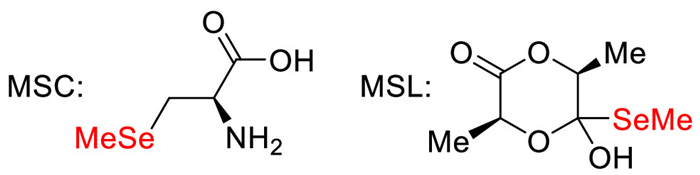
At present, MSG (2) has become the mainstream product in low-valence-selenium-substituted glucoses for its good stability. Recent studies indicated that using MSG as the foliar fertilizer could enhance the selenium content in wheat grain to 6 mg/kg, which was 4−5 times (or more) than that using Na2SeO3, methylselenocysteine (MSC) or methylselenolactide (MSL) as fertilizers (Fig. 2) [18]. The order of selenium-enriching efficiency of the four tested selenium fertilizers was: MSG ≫ Na2SeO3 > MSC > MSL. In MSG, selenium exists in its low valence state, which likes the form of selenium in living organisms and is readily absorbed. Moreover, there are numerous hydroxyl groups in MSG, and these hydroxyls may interact with the cellulose hydroxyls on the foliar surface via hydrogen bonds, endowing the molecules with adhesion forces to prevent the fall of the fertilizer drops. Besides wheat, the low-valence-selenium-substituted glucoses have been widely employed as the selenium fertilizers in a variety of plants such as rice, fruits, mushrooms and other agricultural products [17].
Selenium can protect plants from certain diseases by restraining the growth of pathogenic bacteria such as Fusarium, Alternaria spp, Aspergillus, Botrytis cineris and Sclerotinia. Selenium can also enhance the antioxidant capacity of plants and activate the plant immune system to induce the establishment of the disease resistance system, thereby improving the resistance of crops to pathogenic bacteria and reducing their incidence [19]. Thus, the low-valence-selenium-substituted glucoses and their derivatives may also serve as the reagents for plant protection. For example, calcining the selenized glucose 1 at 500–600 ℃ produces Se/C. The material can adhere to plant leaves and restrain the growth of Xanthomonas campestris pv. campestris (Xcc) [20]. The EC50 value of Se/C against Xcc was determined to be 4.74 mg/L. It exerted antibacterial effect by interfering with the formation of cell membranes of pathogenic bacteria and increasing the production of ROS in pathogenic bacteria.
Wheat scab disease was caused by Fusarium graminearum (F.g.), and it leads to the production of mycotoxin deoxynivalenol (DON) in wheat products, which can cause acute poisoning symptoms, seriously affect immunity, and pose a direct threat to the health and safety of humans and animals. To prevent this disease, a variety of fungicides have been developed and applied, such as Carbendazim, Thiophanate methyl, Thiram. Although some fungicides can inhibit the growth of F.g., long term use of them may result in the drug resistance, lead to residual fungicide pollution, stimulate the production of toxins, and seriously endanger food safety. In 2020, Mao et al. reported a novel non-fungicide method to inhibit the growth of DON [21]. They found that although low-valence-selenium-substituted glucoses could not restrain the growth of F.g., they could effectively restrain the production of DON. This finding provides a new idea for wheat scab disease prevention and control.
Starch in flour is also a kind of carbohydrate bearing electropositive glycoside. Thus, it can react with the nucleophilic Se2- reagents and get selenized. Selenized flour could be prepared through this principle (Eq. 1) [22].
|
|
(1) |
Selenized starch is a yellow powder in appearance, but the selenization reaction does not affect its micro morphology [22]. It was found that the selenized flour could well inhibit the growth of Xanthomonas oryzae pv. oryzae (Xoo), the pathogen causing rice bacterial blight disease. The EC50 value of selenized flour against Xoo was determined to be 3.77 mg/L. In practical applications, expired and uneatable flour could be employed to produce the selenized flour to reduce the cost. As flour is a natural product, using it as the carrier for selenium is an environmentally friendly design. Besides, recently investigations found that poly lactic acid (PLA), a biodegradable material, could also be employed to support selenium to prepare the reagent (Se@PLA) against Xoo [23]. The EC50 of Se@PLA was determined to be 13.38 mg/L.
Low-valence-selenium-substituted glucose has been employed in feeding to produce selenium-enriched eggs which represent a highly effective and bioavailable source for selenium supplementation. The selenium in eggs is in the organic selenium form, and the absorption rate of it is as high as 80%. Supplementing selenium-containing additives in the diet of laying hens can not only produce selenium-rich eggs and provide humans with selenium-fortified food, but also enhance the antioxidant capacity and immune levels of hens and improve their production performances [24,25]. In animal husbandry production, selenium deficiency can also lead to problems such as nutritional leukomyopathy and exudative diathesis in chickens, and other issues [26]. Therefore, selenium supplementation is of great significance to meet animal nutritional needs, enhance disease resistance, protect health, and improve the output value of animal husbandry. For animals, inorganic selenium has low absorption and high toxicity, while organic selenium has high absorption and low toxicity. Moreover, organic selenium is more effective than inorganic selenium in improving antioxidant capacity, anti-stress and immune function.
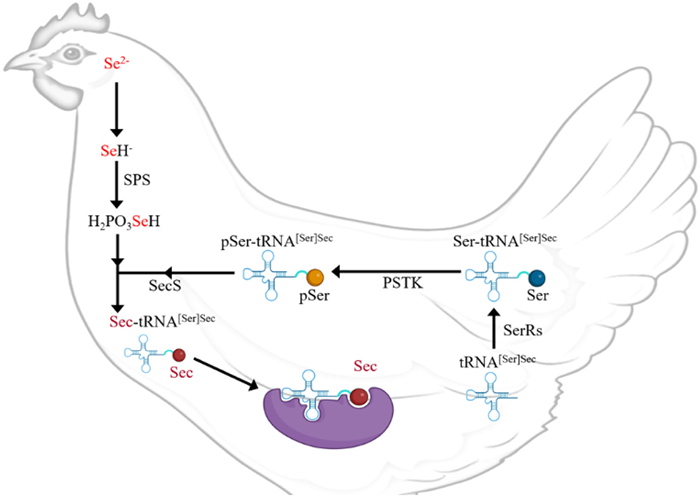
Se2- is easily absorbed and metabolized in organism, as being supported by the selenium metabolism process in the body illustrated in Fig. 3 [27–31]. In the process, Se2- sources are initially converted into HSe-, which is a water-soluble species for absorption. The yeast selenium has been commonly utilized as the selenium feed additive. However, it has the drawbacks of poor stability in content and chemical form. Additionally, the high production cost due to the expensive price of amino acid-based selenium is also one of the key factors restricting the popularization and application of organic selenium in production. Thus, we have designed a new type of organic selenium feed additive by using low-valence-selenium-substituted glucoses, a more cost-effective selenium source. The water-soluble feature of low-valence-selenium-substituted glucoses makes them more easily digested and absorbed.
Studies have found that adding low-valence-selenium-substituted glucose to the diet of laying hens can significantly improve the selenium concentration and antioxidant capacity of the liver, fallopian tubes and spleen of laying hens [32]. It is not only beneficial to improve the health level of laying hens, enrich the selenium content in eggs, but also improve the egg production rate and egg protein index, yolk proportion and egg shell thickness, increase the Haugh unit and antioxidant capacity of eggs, so as to prolong the shelf life of eggs [33,34]. These results indicated that supplementing layer feed with low-valence selenium-substituted glucose could not only increase selenium content in eggs but also improve egg quality.
Embryonic egg injection delivers various exogenous nutrients into the egg through the amniotic cavity, because avian embryos can swallow amniotic fluid via the beak during the later stages of embryonic development. Therefore, after the nutrients are injected into the amniotic cavity, they can be directly absorbed and utilized by the embryo with the amniotic fluid, so as to improve the growth and development of poultry in the late hatching stage and after hatching [35]. There has been a lot of researches on embryo egg injection technique in the past. Some of the most recent studies have shown that the injection of low-valence selenium-substituted glucose into embryonic eggs promotes selenium deposition in the liver of newborn chicks. At the same time, low-valence-selenium-substituted glucose injection into embryonic eggs could significantly enhanced the activities of enzymes such as T-SOD and GSH-Px, increased the glutathione content and decreased the malondialdehyde content to improve the hepatic antioxidant capacity of newborn chicks [36]. In addition, Zhao et al. found that low-valence-selenium-substituted glucose injection into embryonic eggs could increase the selenium content in the pectoral muscle of newborn chicks, and improve the antioxidant capacity of the pectoral muscle of newborn chicks by upregulating the mRNA expression of genes such as GSH-Px1 and thioredoxin reductase 1 [37].
As discussed above, the utilization of low-valence-selenium-substituted glucose as a selenium-rich feed additive can facilitate selenium deposition, thereby enhancing the body's antioxidant capacity. These discoveries offer reference and data support for the research on new organic selenium feed additives for livestock and poultry. Despite the considerable progress achieved in the study, numerous issues remain to be addressed. The application of these materials as feed additives requires further assessment in terms of safety and exploration of their potential for additional applications, with an aim to ensure better development and utilization.
Selenium-containing compounds and materials are the cornerstones of organic synthesis because of their unique chemical activities [38–40]. They can be used as catalysts for fine chemical production and environmental protection [41–46], and this feature can be applied in medicine synthesis. Calcining low-valence-selenium-substituted glucose at over 500 ℃ can lead to selenium-doped carbon (Se/C), a catalyst for the selective epoxidation of β-ionone (3) to produce the (E)-4-(2,2,6-trimethyl-7-oxabicycloij[4.1.0]heptan-1-yl)but‑3-en-2-one (4), which is an antagonistic drug of the antibiotic phorbol-12-myristate-13-acetate (Eq. 2) [47]. Calcining methylselenized glucose (2) with KBr could produce highly crystalline K-intercalated Se/C, which was more active and could catalyse the epoxidation reaction using molecular oxygen (O2) as the oxidant [48]. Doping iron into Se/C was also found to be an efficient method for improving the catalytic activity of the material [49].
|
|
(2) |
Moreover, it has been reported that Se/C could catalyze the Beckmann rearrangement reaction of ethyl 2-(2-aminothiazole-4-yl)-2-hydroxyiminoacetate (5) to produce ethyl (2-aminothiazole-4-carbonyl)carbamate (6), which was a derivative of Cefixime (Eq. 3) [50]. In the reaction, unique steric hindrance of carbon support restrained the side reactions through nucleophilic reaction paths. The oxidation of selenium in Se/C led to selenic acid sites, endowing the material solid acid catalyst properties. The catalyst turnover number (TON) was as high as 1.1 × 10⁴.
|
|
(3) |
Besides, the low-valence-selenium-substituted glucoses can be employed as the selenium source endowing the material catalytic activities for oxidation reactions. For example, calcining selenized glucose 1 with melamine can lead to Se-doped polymeric carbon nitride (Se/PCN), which may be employed as the photo catalyst for β-ionone epoxidation (Eq. 4) [51]. In the material, the support PCN serves as a photocatalyst for water splitting to generate H2O2, while the involved selenium sites act as the oxygen carrier facilitating the oxidation of β-ionone with H2O2 to produce its epoxide 4.
|
|
(4) |
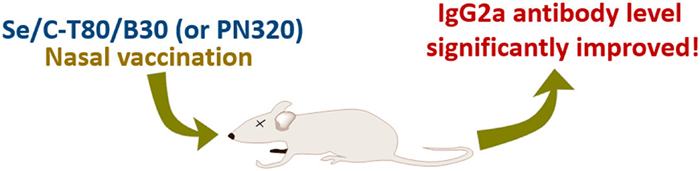
Low-valence-selenium-substituted glucoses serve as key raw materials for the Se/C synthesis, and they are important components for bioactive reagent production. Recently, Se/C was added into ovalbumin (OVA) model vaccine with 2% T80/B30 (12:5) vesicles or 1% T80/PN320 (3:5) mixed micelles, combined nasal drop immunized mice, which might have a good synergistic immune effect (Fig. 4) [52]. Selenium nanoparticles can enhance the activity of immune cells, increase the level of IFN-γ and its ratio to IL-4, and induce Th1-biased cellular immune response [53]. The addition of Se/C induced significantly higher levels of OVA-specific antibodies in both the T80/B30 and T80/PN320 groups than in the control OVA group (P < 0.001). Moreover, the T80/PN320 group had a stronger immune response. The level of OVA-specific sIgA antibody stimulated by T80/PN320 was close to that of the positive control CTB, and the titer of serum IgG2a antibody was significantly increased, which mediated a Th1-biased mixed immune response. T80/B30 and T80/PN320 are used as surfactant compounds to promote nasal drug delivery, which can increase the permeability of the nasal mucosa, make antigens and Se/C pass through the mucosa smoothly, reduce the activity of nasal mucosal proteolytic enzymes, and protect antigens from destruction. Therefore, the combination of Se/C with T80/B30 and T80/PN320 can promote the absorption of antigens and Se/C, induce high-level cellular immune, humoral immune and mucosal immune response, thus exert the synergistic immune effect of adjuvants.
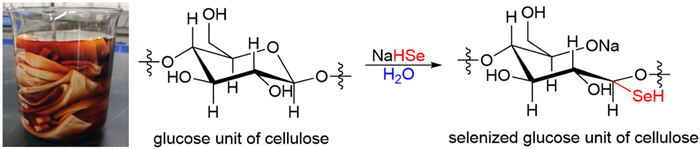
Glucose is the structural unit of cellulose, which is the major component of cotton textiles. Therefore, cotton textiles can be selenized via similar method to upload selenium, endowing them the antibacterial properties (Fig. 5) [54]. After selenization, micro morphology of the material did not change obviously, and the mechanical properties did not deteriorate. The antibacterial tests revealed that the selenized cotton possessed a certain degree of antimicrobial effect against both Gram-positive S. aureus and Gram-negative Escherichia coli bacteria. Compared with unselenized socks, the bacterial inhibition rates of selenized socks against S. aureus and E. coli were enhanced to 52.15% and 40%, respectively. The difference in antibacterial activity of selenized socks against Gram-positive bacteria and Gram-negative bacteria is related to the difference in cell wall structure and composition. The cell wall of Gram-positive S. aureus is composed of multi-layer peptidoglycan, without lipopolysaccharide, and may be susceptible to selenized materials. On the other hand, Gram-negative E. coli is composed of a lipopolysaccharide-lipoprotein layer, which is covered with a thin peptidoglycan layer. The protective effect of lipopolysaccharide-lipoprotein complex on E. coli may downgrade the antibacterial activity of selenized socks. This invention may provide a concise method for the preparation of antibacterial materials that can be applied in medical consumables.
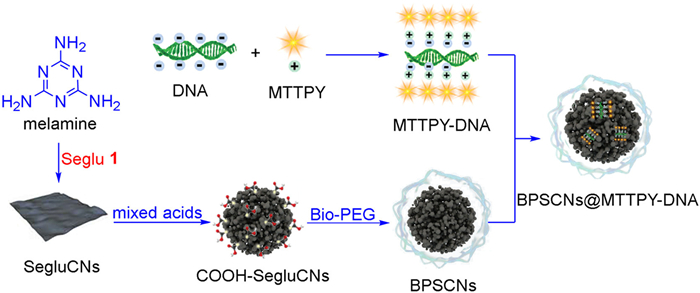
Low-valence-selenium-substituted glucose was recently successfully applied in the preparation of anticancer materials BPSCNs@MTTPY-DNA (Fig. 6) [55]. Hypoxia can severely aggravate the occurrence, progression, invasion, and metastasis of tumors, and exert a significant inhibitory effect on the outcome of photodynamic therapy (PDT). In this regard, carbon nitride (CNs)-based DNA and photosensitizer co-delivery systems (BPSCNs) endowed with oxygen-producing functions were meticulously developed to overcome this challenging problem. In our case, selenized glucose 1 (Seglu) was ingeniously employed as the dopant to meticulously prepare red/NIR-active CNs (SegluCNs). The tumor-targeting unit Bio-PEG2000 is strategically utilized to construct BPSCNs nanoparticles through intricate esterification reactions. Moreover, DNA hydrophobization is skillfully realized by expertly mixing the P53 gene with a positively charged mitochondrial-targeted near-infrared (NIR) emitting photosensitizer (MTTPY), which is then expertly encapsulated in non-cationic BPSCNs for highly synergistic delivery. The ester bonds within the BPSCNs@MTTPY-P53 complexes can be precisely disrupted by lipase present in the liver, thereby facilitating the efficient release of P53, significantly upregulating the expression of P53, and actively promoting the degradation of HIF-1α within mitochondria. Moreover, the oxygen produced by these complexes effectively improved the hypoxic microenvironment of hepatocellular carcinoma (HCC), synergistically downregulated the expression of HIF-1α in mitochondria, powerfully promoted mitochondrial-derived ferroptosis, and significantly enhanced the PDT effect of the MTTPY unit. Both in vivo and in vitro experiments have clearly indicated that the transfected P53-DNA, along with the oxygen (O2) and reactive oxygen species (ROS) produced by these complexes, synergistically induced mitochondrial-derived ferroptosis in hepatoma cells through the HIF-1α/SLC7A11 pathway, completely circumventing PDT resistance caused by hypoxia and exerting an extremely significant therapeutic role in the treatment of HCC.
In conclusion, the unique chemical and biological properties of selenium enable its extensive application in multiple fields. Selenium sources serve as key raw materials for the development of the selenium industry. Low-valence-selenium-substituted glucoses, as the biocompatible organic low-valent selenium materials, demonstrate remarkable application potential. They are relatively safe, with the LD50 over 246 mg/kg [18,21]. These materials have been widely used in the production of fertilizers, feed additives, medicines and medical materials. Notably, the attribute of low-valent selenium is of critical importance. On the one hand, low-valent selenium is more conducive to the absorption by animals and plants. On the other hand, it exhibits superior antioxidant properties, enabling its application in related drug development. These advantages are difficult to achieve with traditional selenium compounds such as Na2SeO3 and Se-KAPPA. Since the symptoms of many diseases are caused by oxidative stress, the antioxidant properties of low-valent organic selenium can contribute to their treatment. Based on this principle, our group is leveraging low-valence selenium-substituted glucoses as selenium sources for the research and development of related pharmaceuticals.
The authors declare that they have no known competing financial interests or personal relationships that could have appeared to influence the work reported in this paper.
Hongen Cao: Writing – original draft. Xinrui Xiao: Writing – review & editing, Funding acquisition. Xu Zhang: Writing – review & editing. Lei Yu: Supervision, Funding acquisition, Conceptualization.
We thank the Postgraduate Research & Practice Innovation Program of Jiangsu Province (Yangzhou University) (No. SJCX25_2352), Yangzhou Key Research and Development Program: Industry Foresight and Key Core Technology (No. YZ2023019), Cooperation Project of Yangzhou City with Yangzhou University (No. YZ2023209) and Priority Academic Program Development of Jiangsu Higher Education Institutions (PAPD) for financial support.
M.P. Rayman, Lancet 379 (2012) 1256–1278. doi: 10.1016/S0140-6736(11)61452-9
W. Ding, S. Wang, J. Gu, L. Yu, Chin. Chem. Lett. 34 (2023) 108043. doi: 10.1016/j.cclet.2022.108043
J. Gu, J. Gu, L. Yu, Chin. Chem. Lett. 36 (2025) 110727. doi: 10.1016/j.cclet.2024.110727
Z. Peng, J. Huang, World Selenium Capital-An Introduction to Enshi Selenium Studies, Tsinghua University Press, Beijing, 2012.
S. Khatiwada, A. Subedi, Curr. Nutr. Rep. 10 (2021) 125–136. doi: 10.1007/s13668-021-00354-4
R. Liao, Y. Sun, X. Liu, et al., Chin. Agric. Sci. Bull. 39 (2023) 17.
P.J. White, Ann. Bot. 117 (2016) 217–235.
H. Cao, X. Xiao, X. Zhang, Y. Zhang, L. Yu, Chin. Chem. Lett. 36 (2025) 110924. doi: 10.1016/j.cclet.2025.110924
W. Zhou, P. Li, J. Liu, L. Yu, Ind. Eng. Chem. Res. 59 (2020) 10763–10767. doi: 10.1021/acs.iecr.0c01147
Q. Wang, P. Li, T. Li, et al., Ind. Eng. Chem. Res. 60 (2021) 8659–8663. doi: 10.1021/acs.iecr.1c01437
M. Bodnar, P. Konieczka, J. Namiesnik, J. Environ. Sci. Heal. C 30 (2012) 225–252. doi: 10.1080/10590501.2012.705164
L. Regni, C.A. Palmerini, A.M. Del Pino, et al., Scientia Hortic 278 (2021) 109866. doi: 10.1016/j.scienta.2020.109866
F. Nawaz, B. Zul, K.S. Ahmad, et al., South Afr. J. Bot. 138 (2021) 209–216. doi: 10.1016/j.sajb.2020.12.016
H. Jiang, W. Lin, H. Jiao, et al., Metallomics 13 (2021) mfab040.
T. Feng, S.S. Chen, D.Q. Gao, et al., Photosynthetica 53 (2015) 609–612. doi: 10.1007/s11099-015-0118-1
F.R. Andrade, G.N. Da Silva, K.C. Guimaraes, et al., Ecotoxicol. Environ. Saf. 164 (2018) 562–570. doi: 10.1016/j.ecoenv.2018.08.022
X. Xiao, Z. Shao, L. Yu, Chin. Chem. Lett. 32 (2021) 2933–2938. doi: 10.1016/j.cclet.2021.03.047
L. Xian, Q. Li, T. Li, L. Yu, Chin. Chem. Lett. 34 (2023) 107878. doi: 10.1016/j.cclet.2022.107878
W. Jia, J. Ming, Y. Zheng, et al., Curr. Biotech. 7 (2017) 457. doi: 10.1007/s11069-017-2974-4
H. Cao, Y. Yang, X. Chen, et al., Chin. Chem. Lett. 31 (2020) 1887–1889. doi: 10.1016/j.cclet.2020.01.027
X. Mao, P. Li, T. Li, et al., Chin. Chem. Lett. 31 (2020) 3276–3278. doi: 10.1016/j.cclet.2020.06.033
H. Sun, H. Cao, X. Chen, Mater. Lett. 335 (2023) 133720. doi: 10.1016/j.matlet.2022.133720
X. Chen, S. Zhuang, W. Yan, et al., Chin. Chem. Lett. 35 (2024) 109635. doi: 10.1016/j.cclet.2024.109635
X. Han, M. Shi, K. Di, Shandong, J. Anim. Sci. Vet. Med. 44 (2023) 30–33.
J. Wu, Chin. Contemp. Anim. Husband. 3 (2022) 16–17. doi: 10.6023/cjoc202108043
Z. Li, Z. Li, Chin. J. Anim. Sci. Vet. Med. 7 (2020) 169.
J.F. Scortecci, V.H.B. Serrão, A.F. Fernandes, et al., Int. J. Biol. Macromol. 156 (2020) 18–26. doi: 10.1016/j.ijbiomac.2020.03.241
X.M. Xu, B.A. Carlson, H. Mix, et al., PLoS Biol. 5 (2007) 96. doi: 10.1371/journal.pbio.0050096
K.H. Winther, M.P. Rayman, S.J. Bonnema, et al., Nat. Rev. Endocrinol. 16 (2020) 165–176. doi: 10.1038/s41574-019-0311-6
M.P. Rayman, H.G. Infante, M. Sargent, Br. J. Nutr. 100 (2008) 238. doi: 10.1017/s0007114508922522
B.W. Minich, Biochemistry 87 (2022) 168–177.
M. Zhao, Q. Sun, K. Khogali, et al., Biol. Trace Elem. Res. 199 (2021) 1–8.
M. Zhao, K. Wen, Y. Xue, et al., Animal 15 (2021) 100374. doi: 10.1016/j.animal.2021.100374
F. Mohammadsadeghi, M. Afsharmanesh, M. Salarmoini, M. Bami, Poult. Sci. 103 (2024) 103615. doi: 10.1016/j.psj.2024.103615
M. El-Deep, K. Amber, S. Elgendy, et al., J. Anim. Physiol. Anim. Nutr. 104 (2020) 1392–1400. doi: 10.1111/jpn.13379
J. Li, Q. Shi, Y. Xue, et al., Chin. Chem. Lett. 35 (2024) 109239. doi: 10.1016/j.cclet.2023.109239
M. Zhao, J. Li, Q. Shi, et al., Biol. Trace Elem. Res. 201 (2023) 5764–5773. doi: 10.1007/s12011-023-03611-5
Z. Zhang, S. Wang, P. Tan, et al., Org. Lett. 24 (2022) 2288–2293. doi: 10.1021/acs.orglett.2c00387
D. Yong, J. Tian, R. Yang, Q. Wu, X. Zhang, Chin. J. Org. Chem. 44 (2024) 1343–1347. doi: 10.6023/cjoc202310020
H.-T. Ji, J. Jiang, W.-B. He, et al., J. Org. Chem. 89 (2024) 4113–4119. doi: 10.1021/acs.joc.3c02946
M. Ge, T. Ju, Y. Zhang, D. Yong, React. Chem. Eng. 10 (2025) 1730–1735. doi: 10.1039/d5re00066a
G. Yuan, X. Zhang, L. Yu, J. Org. Chem. 90 (2025) 3117–3122. doi: 10.1021/acs.joc.4c03035
X. Xiao, C. Guan, J. Xu, et al., Green Chem. 23 (2021) 4647–4655. doi: 10.1039/d1gc00961c
H. Cao, R. Qian, L. Yu, Catal. Sci. Technol. 10 (2020) 3113–3121. doi: 10.1039/d0cy00400f
L. Shao, Y. Li, J. Lu, X. Jiang, Org. Chem. Front. 6 (2019) 2999–3041. doi: 10.1039/c9qo00620f
R. Guo, L. Liao, X. Zhao, Molecules 22 (2017) 835. doi: 10.3390/molecules22050835
Y. Yang, X. Fan, H. Cao, et al., Catal. Sci. Technol. 8 (2018) 5017–5023. doi: 10.1039/c8cy01413b
P. Li, Z. Qi, L. Yu, H. Zhou, Catal. Sci. Technol. 12 (2022) 2241–2247. doi: 10.1039/d1cy02274a
H. Cao, P. Li, X. Jing, H. Zhou, Chin. J. Org. Chem. 42 (2022) 3890–3895. doi: 10.6023/cjoc202205005
S. Chu, H. Cao, T. Chen, et al., Catal. Commun. 129 (2019) 105730. doi: 10.1016/j.catcom.2019.105730
H. Li, H. Cao, T. Chen, et al., Mol. Catal. 483 (2020) 110715.
Q. Chen, T. Liu, S. Chen, et al., ACS Appl. Mater. Interfaces 11 (2019) 45404–45415. doi: 10.1021/acsami.9b15774
H. Cao, R. Ma, S. Chu, et al., Chin. Chem. Lett. 32 (2021) 2761–2764. doi: 10.1016/j.cclet.2021.03.029
M. Liu, X. Zhang, S. Chu, et al., Chin. Chem. Lett. 33 (2022) 205–208. doi: 10.1016/j.cclet.2021.05.061
M. Liu, Y. Liu, Y. Cai, et al., Adv. Healthc. Mater. (2024) 2402110.

Figure 1 Comparison of the chemical structure of Se-KAPPA and low-valence-selenium-substituted glucoses 1 and 2.

Figure 4 Se/C as an adjuvant promoting the immune effect of Tween 80/Brij 30 vesicles and Tween 80/Polymer cationic surfactant PN320 mixed micelles.

 扫一扫看文章


扫一扫关注我们
 DownLoad:
 下载:
下载:


 下载:
下载: