
Scheme 1.
Transition-metal-catalyzed arylations of 1,3-dienes.

Dinuclear Ni enabled reductive diarylation of dienes: Intramolecular comproportionation as the key mechanistic driver
Xiaolong Qi , Xueli Lv , Lin Gao , Jiwen Jiao , Minyan Wang , Xiaoming Wang


Inspired from multinuclear metal assemblies in the active sites of metalloenzymes [1,2], bi- (multi-) nuclear metallic catalysis with the potential cooperativity between metal sites within multimetallic catalysts has attracted great attention [3–13]. A prominent example is catalysis by mononuclear nickel complexes, which is featured by unique mechanistic manifolds via facile catalyst speciation among Ni0, NiⅠ, NiⅡ, and NiⅢ oxidation states. Notably, recent studies have revealed the involvement of in-situ generated dinuclear Ni species or di-Ni-mediated catalytic processes in several catalytic transformations [14–25]. In this context, Uyeda [26,27], Schoenebeck [28–30], our group [31,32] and others have independently demonstrated that dinuclear Ni catalysts, supported by various sophisticated ligands, can exhibit reactivity differing fundamentally from their mononuclear counterparts. These findings highlight the underestimated potential of dinuclear Ni architectures in developing new catalytic paradigms.
Fine-control of the valence states of the catalytic nickel species is crucial for directing reaction pathways and avoiding side reactions. For instance, various reduction strategies have been developed to promote the formation of NiⅠ species [33–42]. Notably, it has been recognized that in some Ni-catalyzed reactions the comproportionation between Ni0 and NiⅡ intermediates can generate NiⅠ species, which might be catalytic or off-cycle depending on the reactions studied (Scheme 1a) [43–55]. Inspired by such a spontaneous comproportionation pathway, we envisioned that integrating two bidentate ligand motifs into a single tetradentate framework might enable dual coordination of two metal nuclei in close proximity, which in turn can facilitate an intramolecular comproportionation process that can be favorable for reactions involving NiⅠ as the catalytic species. Since bipyridine-ligated mononuclear nickel complexes have been established as a class of privileged catalysts in a diverse set of Ni-catalyzed transformations [56–63], we envisaged that the tetradentate dppn ligand (dipyrido[3,2-a:2′,3′-c]phenazine), with two bipyridine units fused via a pyridazine linker in its structure, might constitute a promising candidate for our purpose. First synthesized in 1961 [64], dppn has been known to generate mono-, di-, or even polynuclear complexes with diverse metals (Ir, Ru, Rh, Pd, Ni, Cu, etc.) [65–71].
Recent development of Ni-catalyzed reductive dicarbofunctionalization of alkenes enables the formation of two new C—C bonds using abundant organic halides [72–88]. Mechanistically [57,74,89–94], one of the most commonly proposed catalytic cycles hinges on the NiⅠ species as a pivotal intermediate [15,95–102], as demonstrated in the pioneering work by Diao's group [103,104]. Typically, oxidative addition of an electrophile to low-valent Ni0 can generate high-valent NiⅡ intermediate, which can be reduced to NiⅠ by a reductant prior to olefin insertion. In such events, the reduction of high-valent NiⅡ intermediates to NiⅠ governs both catalytic turnover and reaction efficiency, which is generally achieved by exploiting a metal reductant (Zn or Mn) [33], photoredox [34–39] or an electrochemical process [39–44]. Recent advances in reductive diarylation of terminal dienes indeed highlighted the necessity of extra reduction strategies in controlling Ni redox states. Chen's Ni/Cr dual catalysis utilized CrⅡ as a reductive medium to generate NiⅠ and aryl radicals for 1,2-diarylation of dienes [105], whereas Wang's electrochemical Ni catalysis achieved real-time reduction of NiⅡ or NiⅢ intermediates to sustain NiⅠ species [106]. Notably, Chen's later work revealed that NiⅡ intermediates underwent β-H elimination, favoring Heck products over diarylation, even in the presence of the classic Mn reductant [107]. These cases collectively demonstrated that Ni-catalyzed reductive diarylation of dienes relies critically on the reducing NiⅡ to NiⅠ, typically via external reductive methods, to enable olefin insertion and suppress undesired β-H elimination pathways.
To continue our studies on the development of dinuclear metallic catalysis [31,32,108–112], we disclose herein a binuclear nickel-catalyzed reductive diarylation of 1,3-dienes using a dppn-type tetradentate ligand, exhibiting exceptional generality for both aryl halides and dienes using Mn as the terminal reductant (Scheme 1b). Mechanistic investigations reveal that the dppn ligand facilitates the assembly of a dinuclear Ni complex, and in the catalytic cycle one Ni center acts as the catalytic site for both oxidative addition and C—C coupling, while the second Ni atom serves as an electron reservoir to turn the oxidation states by intramolecular comproportionation. Crucially, this synergy for the redox event between adjacent Ni centers (Ni0/NiⅡ) achieves the generation of the key NiⅠ intermediate timely, which controls the reaction pathways to diarylation of dienes. The results from this work reveals that the use of polydentate nitrogen ligands to develop dinuclear nickel catalysts could open new avenues for advancing nickel-based catalysis.
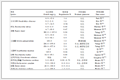
Firstly, we conducted a screening of the conditions for the template reaction between 1,3-diene 1a and aryl iodide 2a, with some commonly used bidentate and tridentate polypyridines as the ligands, and the results were summarized in Table 1. The reactions were typically carried out in THF at room temperature for 12 h, using 10 mol% of Ni(COD)2 and 10 mol% of the specified ligand as the catalyst and 3.0 equiv. of Mn powder as the external reductant, with the yields of the desired diarylation product 3aa being evaluated by GC determination. Under these conditions, the reaction using bipyridine ligand L1 afforded only 17% yield of the desired product 3aa, and the use of phenanthroline ligand L2, Phox ligand L3, or Box ligand L4 even delivered poorer results (<8% yield). The reaction using the tridentate Pybox ligand L5 afforded a slightly enhanced yield of 3aa (21%). Further survey was conducted on a series of tetradentate ligands, all featured by the presence of a pyridazine ring moiety in the ligand skeleton. To our delight, the yield of 3aa for the reaction using ligand dppn L6 boomed up to 75% under otherwise identical conditions, whereas the reaction using L7 ligand, with ortho methyl substitution on the pyridine of dppn, furnished an excellent GC yield of 93% and isolated yield of 85% for 3aa. However, using ligand L8 with a bulk ortho-t-Bu group, the reaction gave very poor yield (3%), probably due to the large steric hinderance. Due to the similarity in structure between the tetrazine ligand L9 and the dppn ligand, we also investigated ligand L9. However, the target product 3aa cannot be obtained. The tetradentate nitrogen ligands dppn L6 and L7 exhibited excellent reaction performance in this reaction, which may be due to the coordination of two nickel metals with the four coordination sites of the ligand. The reason for the poor reactivity of ligand L9 may be that several possible complexes can be formed, and the dinuclear nickel complexes located on opposite sides are more likely to be generated, thus failing to catalyze the reaction. Further, a ligand L10 was synthesized, by removing a methyl substituted pyridine structure from L7. In this case, 57% yield of 3aa was obtained along with 1,4-diarylated isomer in a ratio of 5:2 as contrast with the excellent regioselectivity observed using L7, hence highlighting the importance of the second pyridyl ring in L7 for the selectivity control. Although the pyridazine core in L10 may form a bimetallic Ni catalyst, the instability of the binuclear core likely compromised both activity and selectivity. We have also examined the reaction using ligand L11, wherein two pyridine units of dppn have been replaced by two chiral oxazolines. Unfortunately, only trace amount of the desired product was detected in this case. Finally, no 3aa was detected in the absence of a ligand. Following the successful identification of L7 as the optimal ligand, additional reaction parameters were also screened in the reaction. While using Zn powder as a reducing agent in the reaction resulted in a decrease in the yield (59% vs. 93%), using NiCl2·DME as the catalyst precursor afforded a slightly lower yield (83% vs. 93%).
 DownLoad:
CSV
DownLoad:
CSV
 |
||||
| Entry | Cat. | Ligand | Solvent | 3aa (%)b |
| 1 | Ni(COD)2 | L1 | THF | 17 |
| 2 | Ni(COD)2 | L2 | THF | 5 |
| 3 | Ni(COD)2 | L3 | THF | 5 |
| 4 | Ni(COD)2 | L4 | THF | 8 |
| 5 | Ni(COD)2 | L5 | THF | 21 |
| 6 | Ni(COD)2 | L6 | THF | 75 |
| 7 | Ni(COD)2 | L7 | THF | 93 |
| 8 | Ni(COD)2 | L8 | THF | 3 |
| 9 | Ni(COD)2 | L9 | THF | 2 |
| 10 | Ni(COD)2 | L10 | THF | 57 |
| 11 | Ni(COD)2 | L11 | THF | 1 |
| 12 | Ni(COD)2 | / | THF | 5 |
| a Reaction conditions: The mixture of 1a (0.1 mmol), 2a (0.2 mmol), Mn powder (3.0 equiv.), Ni(COD)2 (10 mol%), Na 2SO 4 (2.1 equiv.) and L (L1-L5, L10, 10 mol%) or (L6-L9, L11, 5 mol%) was stirred at room temperature for 12 h. b GC yield. |
||||
With the optimized conditions in hand, we proceeded to explore the substrate scope with respect to both dienes and aryl halides. As shown in Scheme 2, a wide range of 1,3-butadienes (1a-n) with different steric and electronic natures reacted smoothly with iodobenzene 2a, affording almost exclusively the 3,4-diarylated E-alkene products 3a-n (regioisomeric ratio > 99:1, E/Z > 99:1) in moderate to high yields (33%−85%), with good functional group compatibility of this protocol. Both electron-donating (methoxy 1b and 1c, methyl 1d−1f, ethyl 1g, isopropyl 1h, and phenyl 1i) and electron-withdrawing (fluoro 1j, chloro 1k) groups were all tolerated well in the reactions with 2a, to generate the corresponding products 3ba−3ka in 33%−74% yields. 1,3-Diene substrate 1l where multiple positions on the benzene ring (OMe, F) are substituted was also investigated and the reaction also worked smoothly in the reaction, giving the desired product 3la in 76% yield. Moreover, the reaction of 1,3-butadiene bearing a naphthyl substituent (1m) proceeded smoothly, yielding the corresponding diarylated product 3ma in 46% yield. In addition, 1,3-butadiene with a fluoronaphthyl substituent (1n) also exhibited good reactivity, providing the corresponding diarylation product 3na in 36% yield.

Subsequent substrate scope studies were performed on a variety of substituted aryl iodides using diene 1a as the coupling partner. Aryl iodides with electron-donating substituents, such as para-substituted tert–butyl (3ab, 64%), phenyl (3ac, 68%), OCF3 (3ad, 30%), OBn (3ae, 62%), were found to be compatible with the reaction, affording the corresponding products in good to high yields (30%−68%). For aryl iodides with meta-substituted methyl groups, the diarylation product 3af can also be obtained with a yield of 53%. Diarylation products can also be obtained with moderate to good yields for aryl iodides with ortho-substituted groups (3ag-3ah, 69%−84%). Aryl iodides containing multiple electron donating groups can also perform well in this diarylation reaction (3ai-3aj, 55%−75%). Diarylation products can also be obtained with moderate to excellent yields for reactions of aryl iodides with electron withdrawing groups (3ak-3al, 36%−81%). Of practical significance is that various synthetically useful functional groups including F (3ak-3al, 36%−81%) remain intact during the diarylation reaction. Additionally, substrates containing polycyclic aromatic hydrocarbons can also be well compatible with the protocol (3am-3ao, 58%−95%). We also attempted to use heteroaryl or alkyl 1,3-butadienes, other alkenes (such as styrene derivatives), as well as aryl bromides and heteroaryl iodides. Unfortunately, these substrates were not applicable to this reaction. In addition, functional groups containing acidic protons (such as -OH, -NH2, -NHBoc) were incompatible with this reaction. The reductive coupling reactions of diene 1a with two different aryl iodides under the standard conditions afforded a mixture of homo- and cross-coupling products with poor selectivity.
To further showcase the synthetic utility of the protocol, the late-stage diarylation using the aryl iodides derived from some drugs or bioactive molecules was examined in their reactions with 1a (Scheme 3). A series of aryl iodides derived from acetylsalicylic acid, menthol, benzenebutanoic acid, naproxen D3 and fenchol, respectively, reacted smoothly with 1a under the standard conditions to afford the corresponding 3,4-diarylation products 4a-e in 38%−61% yields. Moreover, 1,3-dienes derived from hymecromone was also found to be amenable to the procedure, giving the diarylation products 4f in 85% yields, respectively, further attesting the synthetic potential of this method. Furthermore, a gram-scale reaction was performed with 1,3-diene 1a and aryl iodide 2a under slightly modified conditions, and the product 3aa was obtained in 82% isolated yield (2.3 g) in this case.

Unraveling the identity of catalytically active species and their operative mechanisms poses significant challenges, particularly in the current system employing tetradentate nitrogen ligands like L7. We firstly investigated the reaction kinetics of the standard reaction under varying metal/ligand ratios by tracking the quantities of product 3aa at specified time intervals (Scheme 4a). Under standard conditions (10 mol% [Ni], 5 mol% ligand L7), the reaction exhibited a pronounced 4-h induction phase, followed by an accelerated product formation phase that achieved substantial conversion within the subsequent 2 h (Schemes 4a, ⅰ). The reaction performance under different ligand to metal molar ratios is much likely an indication of the nature of active species in action, at least to some extent. Therefore, doubling the ligand loading (10 mol% L7) while maintaining nickel concentration (10 mol%) was investigated, leading to two critical changes, i.e., the induction period was extended to 5 h and the overall reaction rate diminished significantly (Scheme 4a, ⅱ). More strikingly, when both catalyst components were halfly reduced ([Ni] = L7 = 5 mol%), the system displayed severely reduced catalytic efficiency, with little product formation even after prolonged 10-h reaction (Scheme 4a, ⅲ). Notably, halving the ligand loading (2.5 mol% L7) while keeping 10 mol% [Ni] resulted in a sharply reduced induction time (Scheme 4a, ⅳ, 2 h vs. original 4 h) and a higher yield than those employing ligand-excessive conditions (10 mol% [Ni], 10 mol% L7). The improved performance under nickel-rich conditions strongly indicates that metal availability critically governs the thermodynamic driving force for dinuclear (or multi-nuclear) intermediate assembly, which might be the catalytically active species.

In the aforementioned kinetic studies, it was found that combining L7 with 2.0 equiv. of NiBr2·DME in CH2Cl2 produced a green slurry mixture, which upon recrystallization in MeOH yielded a dinuclear complex A as characterized by X-ray crystallographic analysis (Scheme 4b). The structure is featured by a coplanar arrangement of two NiⅡ centers with the ligand backbone. Each NiⅡ center engages in bidentate coordination with L7, via binding with one nitrogen atom from pyridazine and another from pyridine, and the two NiⅡ centers are bridged by an H2O-ligand with the rest of the octahedral coordination sites being occupied by the bromide anion or water molecules. Conversely, reacting L7 with 2.0 equiv. of NiI2 generated a brown slurry that crystallized into a mononuclear Ni complex B, featuring an octahedral NiⅡ center coordinated by four nitrogen donors from two L7. Both the reaction and crystallization of the two metal complexes were carried out under air conditions, and the water in the complexes originated from atmospheric moisture. Despite these well-defined structures, neither complex A nor B exhibited catalytic activity under standard conditions, leaving substrate 1a full recovered (Scheme 4c). Intriguingly, when 2.0 equiv. of MgCl2 was introduced as an additive, the reaction using complex A as catalyst in DMA solvent led to the formation of product 3aa in 18% yield. The role of additive MgCl2 is likely to remove the water ligand from the complex, activate complex A, and lower its reduction potential, thereby facilitating the reduction of complex A to Ni0 by Mn powder [113]. This outcome implies that dinuclear nickel species might serve as the active catalytic entities in this transformation. The limited efficiency of complex A is likely to arise from the resistance of NiⅡ centers in methylated pyridine ligand systems to reduction into catalytically active Ni0 states [62]. Treatment of 1a with a stoichiometric amount of Ni0/Mn/L7 (2:6:1 ratio) resulted in almost no conversion of 1,3-diene. By contrast, the combination of Ni0/Mn/L7 and PhI delivered a homocoupling product biphenyl in 85% GC yield (Scheme 4d). These results suggested that in the titled reaction Ni0/L7 would react with PhI first to initiate the reaction, and then the resulting Ni species may undergo coupling events with 1,3-diene in the diarylation process. Besides, radical clock experiment between 11, 13, 15 and 2a under the current catalysis failed to obtain the ring-opening diarylation products 12, 14 and 3aa (Scheme 4e), indicating that the reaction might not be a single-electron transfer process. In addition, identical stereoselectivity (E/Z > 99:1) and yields from (Z)-/(E)-1a mixtures versus pure (E)-1a (82% yield, Scheme 4f) strongly implicate that an allyl-Ni intermediate might be formed during the catalysis. In the absence of substrate 2a, the E/Z isomer mixture of 1a reacted under standard conditions, and the ratio of E/Z isomers of the substrate remained unchanged after the reaction (Scheme 4g). This indicates that the alkene isomerization occurs after the migratory insertion of the Ph group into the terminal C=C double bond of the alkene. In the absence of Mn, the stoichiometric reaction of 1a, 2a, and Ni0/L7 afforded product 3aa in 23% yield, indicating that it was a Ni0/L7 mediated process. The addition of Mn significantly increased the conversion of 1,3-diene, leading to the formation of 3aa in 60% yield (Scheme 4h). These results suggested that Mn may act as a terminal reductant to reactivate the catalyst.
We also conducted deuterium labelling experiments to probe the potential substitution on the ligand backbone under the reaction conditions (Scheme 4i). After reacting the ligand with Ni(COD)2 and quenching it with D2O, it was found that the ligand was not deuterated. This result indicated that there was no activation of the ligand's carbon hydrogen bond during the formation of the active catalyst.
In addition to the stable NiⅡ complexes A and B, efforts were also devoted to synthesizing dinuclear Ni0 or NiⅠ complexes supported by L7, as such species could provide valuable mechanistic insight (for details, see Supporting information). However, neither informative NMR or EPR signals nor crystalline products were obtained, likely due to the inherent instability of these complexes. We hypothesize that the reason for the undetectable EPR signal may be the mutual cancellation of the EPR signals from the two NiⅠ centers in the dinuclear intermediate [62]. Therefore, to better understand the distinctive role played by dinuclear nickel catalysts, density functional theory (DFT) investigations was carried out at M06/6–311+G(d, p)-SDD/IEFPCM(THF)//PBE0-D3BJ/6–31G(d)-SDD level of theory. Various complexes with diverse spin multiplicities were initially calculated, and among them, the spin state of the dinuclear nickel complex characterized by a spin multiplicity of 3 emerged as the most energetically favorable, possessing the lowest energy. The intermediate INT1A-triplet, formed via the coordination of dinuclear Ni0 with iodobenzene 2a, was designated as the reference point for Gibbs free energy. The calculated energy profile for the catalytic cycle is presented in Scheme 5. Initially, the Ni0 center of INT1A-triplet engages in an oxidative addition reaction with the C-I bond. This transformation occurs through the transition state TS2A-triplet, surmounting an energy barrier of 1.7 kcal/mol. The resulting intermediate, INT2A-triplet, then undergoes an intramolecular comproportionation step via the transition state TS3A-triplet, with an energy barrier of 4.8 kcal/mol, leading to the formation of a dinuclear NiⅠ intermediate INT3A-triplet with the coordination of diene 1a. Subsequently, the terminal double bond of diene 1a undergoes migratory insertion into the Ni-Ph bond of INT3A-triplet, generating a η3-allyl intermediate INT4A-triplet. The reversible tautomerization process of the INT4A-triplet, which involves the transition from η3-allyl to η1-allyl, effectively normalizes the initially E/Z configurations of the substrates into the most thermodynamically stable trans-η3-allyl configuration (See Supporting information for details). Structural analysis of the transition state TS4A-triplet reveals a pronounced coordination interaction between the middle double bond of the diene and another nickel center. This coordination interaction disrupts the conjugated system of 2a, effectively lowering the activation energy required for the terminal double bond insertion step (17.3 kcal/mol). In contrast, when the bipyridine ligand L1 is employed, the mononuclear nickel-catalyzed migratory insertion process encounters a substantially higher energy barrier of 27.5 kcal/mol, highlighting the importance of the di-Ni diene coordination. Mulliken charge analysis provides insights into the electronic properties of INT4A-triplet. The nickel atom bonded to the allyl group exhibits a significantly higher electron cloud density (−0.630 e vs. −0.325 e), rendering it more susceptible to oxidative addition step with the second iodobenzene. Thus, the intermediate INT4A-triplet undergoes the second oxidative addition step with iodobenzene through the transition state TS5A-triplet. This step necessitates the overcoming of a free energy barrier of 22.9 kcal/mol, which represents the highest energy hurdle in the catalytic cycle and serves as the rate-determining step of the reaction. The intermediate INT5A-triplet undergoes a reductive elimination reaction via the transition state TS6A-triplet, with an energy barrier of 12.3 kcal/mol. This process results in the formation of the dinuclear nickel complex INT6A-triplet and the liberation of the diaryl-substituted product 3aa. Alternatively, INT5A-triplet can generate a dinuclear NiⅡ species INT6B-triplet through an intramolecular comproportionation between NiⅠ and NiⅢ. Subsequently, the reductive elimination of the NiⅡ occurs through the transition state TS7B-triplet, yielding the desired product 3aa and INT6A-triplet. In the presence of Mn powder as the terminal reductant, INT6A-triplet is reduced back to the zero-valent state, thereby completing the catalytic cycle. The intermediate INT6B-triplet is capable of reversibly forming the 1,4-diarylated precursor INT6C-triplet. Subsequently INT6C-triplet engages in a reductive elimination event, culminating in the generation of the 1,4-arylated by-product. This process proceeds through a transition state TS7C-triplet with an energy barrier of 14.2 kcal/mol. Significantly, this energy barrier exceeds that of the 1,2-diarylation process by 1.6 kcal/mol (TS7C-triplet vs. TS6A-triplet). Such a disparity in energy barriers serves as a pivotal determinant in ensuring the exceptional regioselectivity of the entire reaction system.

Finally, based on the mechanistic experiments and theoretical calculations, a possible reaction mechanism was proposed in Scheme 6. The dinuclear nickel intermediate Ⅰ undergoes oxidative addition on a single Ni0 site with iodobenzene to yield the (Ni0, NiⅡ)-intermediate Ⅱ, which can then undergo a rapid intramolecular single-electron transfer process accompanied by an iodide transfer to afford comproportionation product (NiⅠ, NiⅠ)-Ⅲ. Intermediate Ⅲ coordinates with the double bonds of 1,3-diene using both NiⅠ centers to form intermediate Ⅳ, followed by the migratory insertion of the terminal carbon-carbon double bond into the Ph—NiⅠ moiety, thus resulting in the formation of the NiⅠ allylic intermediate Ⅴ. The allylic-bearing NiⅠ in intermediate Ⅴ, by virtue of its enhanced nucleophilicity, can preferentialy undergo another oxidative addition with iodobenzene to generate (NiⅠ, NiⅢ)-intermediate Ⅵ, wherein both the phenyl and allyl groups have been loaded on a single NiⅢ site. Intermediate Ⅵ rapidly undergoes an intramolecular single-electron transfer to produce (NiⅡ, NiⅡ)-intermediate Ⅶ [114,115], which undergoes reductive elimination to give the desired diarylated product and simultaneously generates (NiⅡ, Ni0)-intermediate Ⅷ. Intermediate Ⅷ further undergoes an intramolecular single-electron transfer to yield intermediate Ⅸ, which is then reduced by manganese powder to regenerate the dinuclear nickel intermeidate Ⅰ, thus completing the catalytic cycle. An alternative pathway to yield the diarylated product is through the direct reductive elimination of intermediate Ⅵ to form intermediate Ⅸ. In the catalytic cycle, manganese powder acts as the terminal reductant to reduce intermediate Ⅸ and regenerate catalyst Ⅰ. Additionally, the catalytic cycle involves rapid intramolecular nickel comproportionation processes, which are crucial for controlling the reaction pathway. Despite the proposal of a reasonable mechanistic explanation for the complex binuclear metallic system, other reaction pathways cannot be excluded.

In summary, we have developed an efficient dinuclear nickel-catalyzed diarylation of 1,3-dienes using aryl iodides. This methodology demonstrates broad substrate compatibility across a diverse range of aryl iodides and diene substrates. Mechanistic investigations reveal that a series of redox events facilitated by intramolecular comproportionation between adjacent nickel centers within the bimetallic complex framework, which plays a pivotal role in forging the two new C–C bonds in the process. The elucidated mechanism and identified cooperative effects would provide a rational basis for future catalyst development and discovery of using related transformation modes in organometallic catalysis.
Xiaolong Qi: Writing – original draft, Methodology. Xueli Lv: Writing – original draft, Methodology. Lin Gao: Methodology, Investigation. Jiwen Jiao: Methodology, Data curation. Minyan Wang: Writing – review & editing, Writing – original draft, Project administration. Xiaoming Wang: Writing – review & editing, Writing – original draft, Supervision, Project administration.
The authors declare that they have no known competing financial interests or personal relationships that could have appeared to influence the work reported in this paper.
The authors acknowledge financial support from the National Key R&D Program of China (No. 2022YFA1503200), the Strategic Priority Research Program of the Chinese Academy of Sciences (No. XDB1180000), the Research Funds of Hangzhou Institute for Advanced Study, UCAS (No. 2024HIAS-p003), the National Natural Science Foundation of China (Nos. 92256303, 22171278), the Shanghai Science and Technology Committee (No. 23ZR1482400), the Natural Science Foundation of Ningbo (No. 2023J034) and Open Research Fund of School of Chemistry and Chemical Engineering, Henan Normal University. We are also grateful to the High-Performance Computing Center of Nanjing University for performing the numerical calculations in this paper on its blade cluster system.
Supplementary material associated with this article can be found, in the online version, at doi:
N. Strater, W.N. Lipscomb, T. Klabunde, B. Krebs, Angew. Chem. Int. Ed. 35 (1996) 2024–2055. doi: 10.1002/anie.199620241
P.A. Lindahl, J. Inorg. Biochem. 106 (2012) 172–178. doi: 10.1016/j.jinorgbio.2011.08.012
D.C. Powers, T. Ritter, Acc. Chem. Res. 45 (2012) 840–850. doi: 10.1021/ar2001974
W.X. Zhang, Z.F. Xi, Org. Chem. Front. 1 (2014) 1132–1139. doi: 10.1039/C4QO00231H
P. Buchwalter, J. Rosé, P. Braunstein, Chem. Rev. 115 (2015) 28–126. doi: 10.1021/cr500208k
R.J. Eisenhart, L.J. Clouston, C.C. Lu, Acc. Chem. Res. 48 (2015) 2885–2894. doi: 10.1021/acs.accounts.5b00336
N.P. Mankad, Chem. Eur. J. 22 (2016) 5822–5829. doi: 10.1002/chem.201505002
C.M. Farley, C. Uyeda, Trends Chem. 1 (2019) 497–509. doi: 10.1016/j.trechm.2019.04.002
J. Campos, Nat. Rev. Chem. 4 (2020) 696–702. doi: 10.1038/s41570-020-00226-5
B.D. Nath, K. Takaishi, T. Ema, Catal. Sci. Technol. 10 (2020) 12–34. doi: 10.1039/C9CY01894H
W. Xu, M. Li, L. Qiao, J. Xie, Chem. Commun. 56 (2020) 8524–8536. doi: 10.1039/D0CC02542A
C. Fricke, T. Sperger, M. Mendel, F. Schoenebeck, Angew. Chem. Int. Ed. 60 (2021) 3355–3366. doi: 10.1002/anie.202011825
J.A. Hueffel, T. Sperger, I. Funes-Ardoiz, et al., Science 1979 374 (2021) 1134–1140.
J. Torres-Nieto, W.W. Brennessel, W.D. Jones, J.J. Garcia, J. Am. Chem. Soc. 131 (2009) 4120–4126. doi: 10.1021/ja809457s
J. Cornella, E. Gomez-Bengoa ´, R. Martin, J. Am. Chem. Soc. 135 (2013) 1997–2009. doi: 10.1021/ja311940s
A.H. Christian, P. Müller, S. Monfette, Organometallics 33 (2014) 2134–2137. doi: 10.1021/om5001327
H.X. Xu, J.B. Diccianni, J. Katigbak, et al., J. Am. Chem. Soc. 138 (2016) 4779–4786. doi: 10.1021/jacs.6b00016
J.B. Diccianni, C. Hu, T.N. Diao, Angew. Chem. Int. Ed. 55 (2016) 7534–7538. doi: 10.1002/anie.201602566
K. Matsubara, Y. Fukahori, T. Inatomi, et al., Organometallics 35 (2016) 3281–3287. doi: 10.1021/acs.organomet.6b00419
J.B. Diccianni, C. Hu, T.N. Diao, Angew. Chem. Int. Ed. 56 (2017) 3635–3639. doi: 10.1002/anie.201611572
K. Matsubara, H. Yamamoto, S. Miyazaki, et al., Organometallics 36 (2017) 255–265. doi: 10.1021/acs.organomet.6b00451
R.J. Somerville, L.V.A. Hale, E. Gomez-Bengoa ´, J. Bures ´, R. Martin, J. Am. Chem. Soc. 140 (2018) 8771–8780. doi: 10.1021/jacs.8b04479
R. Sun, Y.Z. Qin, S. Ruccolo, et al., J. Am. Chem. Soc. 141 (2019) 89–93. doi: 10.1021/jacs.8b11262
C.S. Day, R.J. Somerville, R. Martin, Nat. Catal. 4 (2021) 124–133. doi: 10.1038/s41929-020-00560-3
A.M. Borys, E. E Hevia, Chem. Commun. 60 (2024) 11052–11067. doi: 10.1039/D4CC03548H
Y.Y. Zhou, C. Uyeda, Science 1979 363 (2019) 857–862.
C. Uyeda, C.M. Farley, Acc. Chem. Res. 54 (2021) 3710–3719. doi: 10.1021/acs.accounts.1c00424
A.B. Dürr, H.C. Fisher, I. Kalvet, K.N. Truong, F. Schoenebeck, Angew. Chem. Int. Ed. 56 (2017) 13431–13435. doi: 10.1002/anie.201706423
A. Kapat, T. Sperger, S. Guven, F. Schoenebeck, Science 1979 363 (2019) 391–396.
M. Mendel, T.M. Karl, J. Hamm, et al., Nature 631 (2024) 80–86. doi: 10.1038/s41586-024-07555-1
K. Chen, H. Zhu, S. Liu, et al., J. Am. Chem. Soc. 145 (2023) 24877–24888.
K. Chen, H.D. Zhu, S.X. Jiang, et al., Nat. Comm. 16 (2025) 3077. doi: 10.1038/s41467-025-58398-x
E. RIchmond, J. Moran, Synthesis 50 (2018) 499–513. doi: 10.1055/s-0036-1591853
M.D. Levin, S. Kim, F.D. Toste, ACS Cent. Sci. 2 (2016) 293–301. doi: 10.1021/acscentsci.6b00090
J. Twilton, C. Le, P. Zhang, et al., Nat. Rev. Chem. 1 (2017) 52. doi: 10.1038/s41570-017-0052
C. Zhu, H. Yue, L. Chu, M. Rueping, Chem. Sci. 11 (2020) 4051–4064. doi: 10.1039/D0SC00712A
S.O. Badir, G.A. Molander, Chem 6 (2020) 1327–1339. doi: 10.1016/j.chempr.2020.05.013
A. Kommoju, K. Snehita, K. Sowjanya, S.B. Mukkamala, K. Padala, Chem. Commun. 60 (2024) 8946. doi: 10.1039/D4CC02914C
Y. Xu, W. Zu, H. Huo, ChemCatChem 17 (2025) e202500061. doi: 10.1002/cctc.202500061
J. Lu, Y. Wang, T. McCallum, N. Fu, iScience 23 (2020) 101796. doi: 10.1016/j.isci.2020.101796
C. Ma, P. Fang, D. Liu, et al., Chem. Sci. 12 (2021) 12866. doi: 10.1039/D1SC04011A
C. Ma, J.F. Guo, S.S. Xu, T.S. Mei, Acc. Chem. Res. 58 (2025) 399–414. doi: 10.1021/acs.accounts.4c00656
C.Y. Lin, P.P. Power, Chem. Soc. Rev. 46 (2017) 5347–5399. doi: 10.1039/C7CS00216E
C.S. Day, R. Martin, Chem. Soc. Rev. 52 (2023) 6601–6616. doi: 10.1039/D2CS00494A
C.S. Day, Pure Appl. Chem. 96 (2024) 437–446. doi: 10.1515/pac-2024-0106
R. Beck, S.A. Johnson, Organometallics 32 (2013) 2944–2951. doi: 10.1021/om4001633
G.Y. Yin, I. Kalvet, U. Englert, F. Schoenebeck, J. Am. Chem. Soc. 137 (2015) 4164–4172. doi: 10.1021/jacs.5b00538
L.M. Guard, M.M. Beromi, G.W. Brudvig, N. Hazari, D.J. Vinyard, Angew. Chem. Int. Ed. 54 (2015) 13352–13356. doi: 10.1002/anie.201505699
I. Kalvet, Q.Q. Guo, G.J. Tizzard, F. Schoenebeck, ACS Catal. 7 (2017) 2126–2132. doi: 10.1021/acscatal.6b03344
D. Balcells, A. Nova, ACS Catal. 8 (2018) 3499–3515. doi: 10.1021/acscatal.8b00230
M.M. Beromi, G.W. Brudvig, N. Hazari, H.M.C. Lant, B.Q. Mercado, Angew. Chem. Int. Ed. 58 (2019) 6094–6098. doi: 10.1002/anie.201901866
N.A. Till, S. Oh, D.W.C. MacMillan, M.J. Bird, J. Am. Chem. Soc. 143 (2021) 9332–9337. doi: 10.1021/jacs.1c04652
A. Bismuto, P. Finkelstein, P. Müller, B. Morandi, Helv. Chim. Acta 104 (2021) e2100177. doi: 10.1002/hlca.202100177
C.S. Day, A. Rentería-Gómez, S.J. Ton, et al., Nat. Catal. 6 (2023) 244–253. doi: 10.1038/s41929-023-00925-4
S.H. Newman-Stonebraker, T.J. Raab, H. Roshandel, A.G. Doyle, J. Am. Chem. Soc. 145 (2023) 19368–19377. doi: 10.1021/jacs.3c06233
D.C. Powers, B.L. Anderson, D.G. Nocera, J. Am. Chem. Soc. 135 (2013) 18876–18883. doi: 10.1021/ja408787k
S.Z. Tasker, E.A. Standley, T.F. Jamison, Nature 509 (2014) 299–309. doi: 10.1038/nature13274
E.C. Hansen, D.J. Pedro, A.C. Wotal, et al., Nat. Chem. 8 (2016) 1126–1130. doi: 10.1038/nchem.2587
R.J. Somerville, C. Odena, M.F. Obst, et al., J. Am. Chem. Soc. 142 (2020) 10936–10941. doi: 10.1021/jacs.0c04695
A.L. Aguirre, N.L. Loud, K.A. Johnson, D.J. Weix, Y. Wang, Chem. Eur. J. 27 (2021) 12981–12986. doi: 10.1002/chem.202102347
S.I. Ting, W.L. Williams, A.G. Doyle, J. Am. Chem. Soc. 144 (2022) 5575–5582. doi: 10.1021/jacs.2c00462
H.T. Huang, J.L. Alvarez-Hernandez, N. Hazari, B.Q. Mercado, M.R. Uehling, ACS Catal. 14 (2024) 6897–6914. doi: 10.1021/acscatal.4c00827
M.E. Akana, S. Tcyrulnikov, B.D. Akana-Schneider, et al., J. Am. Chem. Soc. 146 (2024) 3043–3051. doi: 10.1021/jacs.3c09554
W.A. Butte, F.H. Case, Notes 26 (1961) 4690–4692.
A. Tiripicchio, A.M.M. Lanfredi, M. Ghedini, F. Neve, Chem. Commun. (1983) 1134.
A.M.M. Lanfredi, A. Tiripicchio, F. Ugozzoli, Dalton Trans. 1988 (1988) 651–656.
N. Tsukada, T. Sato, H. Mori, et al., J. Org. Chem. 627 (2001) 121–126. doi: 10.1016/S0022-328X(01)00729-X
R. Dorta, L. Konstantinovski, L.J.W. Shimon, Y. Ben-David, D. Milstein, Eur. J. Inorg. Chem. (2003) 70–76.
M. Zhou, K.R. Jain, A. Günyar, et al., Eur. J. Inorg. Chem. 2009 (2009) 2907–2914. doi: 10.1002/ejic.200900260
M.R. McDevitt, F.L. Urbach, Polyhedron 67 (2014) 405–409. doi: 10.1016/j.poly.2013.09.020
N. Marino, R. Bruno, A. Bentama, et al., CrystEngComm 21 (2019) 917. doi: 10.1039/C8CE01894D
C.E.I. Knappke, S. Grupe, D. Grtner, et al., Chem. Eur. J. 20 (2014) 6828–6842. doi: 10.1002/chem.201402302
T. Moragas, A. Correa, R. Martin, Chem. Eur. J. 20 (2014) 8242–8258. doi: 10.1002/chem.201402509
D.A. Everson, D.J. Weix, J. Org. Chem. 79 (2014) 4793–4798. doi: 10.1021/jo500507s
D.J. Weix, Acc. Chem. Res. 48 (2015) 1767–1775. doi: 10.1021/acs.accounts.5b00057
J. Gu, X. Wang, W.C. Xue, H.G. Gong, Org. Chem. Front. 2 (2015) 1411–1421. doi: 10.1039/C5QO00224A
X. Wang, Y.J. Dai, H.G. Gong, Top. Curr. Chem. 374 (2016) 43. doi: 10.1007/s41061-016-0042-2
E.L. Lucas, E.R. Jarvo, Nature Rev. Chem. 1 (2017) 1–7.
M.E. Greaves, E.L.B.J. Humphreya, D.J. Nelson, Catal. Sci. Technol. 11 (2021) 2980–2996. doi: 10.1039/D1CY00374G
S.S. Geng, C.Q. Shi, B.H. Guo, et al., ACS Catal. 13 (2023) 15469–15480. doi: 10.1021/acscatal.3c04342
Z.Z. Zhao, P. Guo, X.B. Pang, X.Z. Shu, Acc. Chem. Res. 57 (2024) 3356–3374. doi: 10.1021/acs.accounts.4c00614
Y.X. Gong, J. Hu, C.B. Qiu, H.G. Gong, Acc. Chem. Res. 57 (2024) 1149–1162. doi: 10.1021/acs.accounts.3c00810
J. Derosa, O. Apolinar, T. Kang, V.T. Tran, K.M. Engle, Chem. Sci. 11 (2020) 4287. doi: 10.1039/C9SC06006E
Y.C. Luo, C. Xu, X.G. Zhang, Chin. J. Chem. 38 (2020) 1371–1394. doi: 10.1002/cjoc.202000224
H.Y. Tu, S.Q. Zhu, F.L. Qing, L.L. Chu, Synthesis 52 (2020) 1346–1356. doi: 10.1055/s-0039-1690842
L.M. Wickham, R. Giri, Acc. Chem. Res. 54 (2021) 3415–3437. doi: 10.1021/acs.accounts.1c00329
Y. Wei, L.Q.H. Lin, B.C. Lee, M. Koh, J. Acc. Chem. Res. 56 (2023) 3292–3312. doi: 10.1021/acs.accounts.3c00531
Y.C. Liu, F.Y. Li, M.U.S. Bhat, L. Tian, et al., Chin. J. Chem. 43 (2025) 3637–3658. doi: 10.1002/cjoc.70231
Z. Li, L. Liu, Chin. J. Catal. 36 (2015) 3–14. doi: 10.1016/S1872-2067(14)60217-5
Q. Lin, T.N. Diao, J. Am. Chem. Soc. 141 (2019) 17937–17948. doi: 10.1021/jacs.9b10026
J.B. Diccianni, T.N. Diao, Trends Chem. 45 (2019) 1–15.
J. Diccianni, Q. Lin, T.N. Diao, Acc. Chem. Res. 53 (2020) 906–919. doi: 10.1021/acs.accounts.0c00032
T. Yanagi, R.J. Somerville, K. Nogi, R. Martin, H. Yorimitsu, ACS Catal. 10 (2020) 2117–2123. doi: 10.1021/acscatal.9b05141
L.E. Ehehalt, O.M. Beleh, I.C. Priest, et al., Chem. Rev. 124 (2024) 13397–13569. doi: 10.1021/acs.chemrev.4c00524
T.J. Anderson, G.D. Jones, D.A. Vicic, J. Am. Chem. Soc. 126 (2004) 8100–8101. doi: 10.1021/ja0483903
G.D. Jones, C. McFarland, T.J. Anderson, D.A. Vicic, Chem. Commun. (2005) 4211–4213.
G.D. Jones, J.L. Martin, C. McFarland, et al., J. Am. Chem. Soc. 128 (2006) 13175–13183. doi: 10.1021/ja063334i
K. Zhang, M. Conda-Sheridan, S.R. Cooke, J. Louie, Organometallics 30 (2011) 2546–2552. doi: 10.1021/om200090d
Z. Li, Y.Y. Jiang, Y. Fu, Chem. Eur. J. 18 (2012) 4345–4357. doi: 10.1002/chem.201103882
J. Breitenfeld, M.D. Wodrich, X. Hu, Organometallics 33 (2014) 5708–5715. doi: 10.1021/om500506y
M.M. Beromi, A. Nova, D. Balcells, et al., J. Am. Chem. Soc. 139 (2017) 922–936. doi: 10.1021/jacs.6b11412
M.M. Beromi, G. Banerjee, G.W. Brudvig, N. Hazari, B.Q. Mercado, ACS Catal. 8 (2018) 2526–2533. doi: 10.1021/acscatal.8b00546
D. Anthony, Q. Lin, J. Baudet, T.N. Diao, Angew. Chem. Int. Ed. 58 (2019) 3198. doi: 10.1002/anie.201900228
D. Anthony, T.N. Diao, Synlett 31 (2020) 1443–1447. doi: 10.1055/s-0040-1707900
W. Zhang, D. Ji, Y. Li, et al., ACS Catal. 12 (2022) 2158–2165. doi: 10.1021/acscatal.1c05441
W. Chen, L. Yu, Y. Pan, S. Ni, Y. Wang, Org. Lett. 25 (2023) 9225–9230. doi: 10.1021/acs.orglett.3c03936
W.S. Zhang, D.W. Ji, Y. Li, et al., Nat. Comm. 14 (2023) 651. doi: 10.1038/s41467-023-36237-1
B. Lu, X. Liang, J. Zhang, et al., J. Am. Chem. Soc. 143 (2021) 11799–11810. doi: 10.1021/jacs.1c05701
K. Chen, H. Zhu, Y. Li, et al., ACS Catal. 11 (2021) 13696–13705. doi: 10.1021/acscatal.1c04141
Y. Yang, B. Lu, G. Xu, X.M. Wang, ACS Cent. Sci. 8 (2022) 581–589. doi: 10.1021/acscentsci.2c00004
Q.L. Cai, H. Rao, S.J. Li, et al., Chem 10 (2024) 265–282. doi: 10.1016/j.chempr.2023.09.006
Y. Lan, P. Liu, Z. Fang, et al., Org. Chem. Front. 11 (2024) 6319–6326. doi: 10.1039/D4QO01368A
Y. Ye, H. Chen, J.L. Sessler, H. Gong, J. Am. Chem. Soc. 141 (2019) 820–824. doi: 10.1021/jacs.8b12801
D.A. Cagan, D. Bím, N.P. Kazmierczak, R.G. Hadt, ACS Catal. 14 (2024) 9055–9076. doi: 10.1021/acscatal.4c02036
J.W. Sun, Á. Péter, J.Y. He, et al., Science 387 (2025) 1377–1383. doi: 10.1126/science.adu6406

Scheme 5 DFT-computed reaction pathways for the dinuclear Ni enabled reductive diarylation of dienes.
Table 1. Optimization of diarylation of 1,3-dienes 1a.a
|
||||
| Entry | Cat. | Ligand | Solvent | 3aa (%)b |
| 1 | Ni(COD)2 | L1 | THF | 17 |
| 2 | Ni(COD)2 | L2 | THF | 5 |
| 3 | Ni(COD)2 | L3 | THF | 5 |
| 4 | Ni(COD)2 | L4 | THF | 8 |
| 5 | Ni(COD)2 | L5 | THF | 21 |
| 6 | Ni(COD)2 | L6 | THF | 75 |
| 7 | Ni(COD)2 | L7 | THF | 93 |
| 8 | Ni(COD)2 | L8 | THF | 3 |
| 9 | Ni(COD)2 | L9 | THF | 2 |
| 10 | Ni(COD)2 | L10 | THF | 57 |
| 11 | Ni(COD)2 | L11 | THF | 1 |
| 12 | Ni(COD)2 | / | THF | 5 |
| a Reaction conditions: The mixture of 1a (0.1 mmol), 2a (0.2 mmol), Mn powder (3.0 equiv.), Ni(COD)2 (10 mol%), Na 2SO 4 (2.1 equiv.) and L (L1-L5, L10, 10 mol%) or (L6-L9, L11, 5 mol%) was stirred at room temperature for 12 h. b GC yield. |
||||
 下载: 导出CSV

 扫一扫看文章


扫一扫关注我们


 下载:
下载: