Received Date:
15 May 2025 Accepted Date:
17 July 2025 Revised Date:
15 July 2025 Available Online:
15 October 2026
Abstract:
In response to the increasing societal demand for efficient power and energy storage solutions, the development of novel battery technologies to complement existing lithium-ion batteries (LIBs) has emerged as a pivotal area of research. Sodium-ion batteries (SIBs), owing to the similarities in the physicochemical properties of sodium and lithium, have interpreted as promising candidates for next-generation secondary batteries. However, current research predominantly concentrates on the optimization of cathode and anode materials, as well as electrolytes, with insufficient attention paid to the critical role of inactive materials, such as binders, conductive agents, and separators. While electrode and electrolyte materials are undeniably crucial in determining the electrochemical behavior of batteries, the presence of these inactive components exerts a significant influence on factors including cost, performance and safety. This review aims to offer a comprehensive overview of the development, classification, and challenges associated with these key inactive components, with particular focus on cross-material synergies on battery performance. It is anticipated that this review will provide valuable insights to facilitate the enhancement of SIB performance and contribute to the optimization of battery systems as a whole.
With the acceleration of the global energy transition and the rapid development of electric vehicles, renewable energy storage systems, and portable electronic devices, the demand for high-performance, low-cost power and energy storage batteries is surging [1–3]. Lithium-ion batteries (LIBs), as the dominant technology on the market, have achieved significant success due to their high energy density, long cycle life and good safety [4,5]. However, the limited and uneven distribution of lithium resources, have driven both the scientific research community and industry to seek alternative or supplementary battery technologies. Sodium-ion batteries (SIBs), with abundant sodium resources, similar physicochemical properties to lithium, and potentially lower cost [6–13], have become a highly promising next-generation secondary battery technology.
The development of SIBs is of great scientific and practical importance. Sodium is abundant and widely distributed, addressing issues related to the uneven distribution of lithium and offering cost reductions. Additionally, SIBs can adopt low-cost materials (such as aluminum foil collector) and manufacturing processes compatible with LIBs, providing economic advantages. Moreover, SIBs exhibit superior thermal stability and safety with a reduced risk of thermal runaway. From an environmental perspective, the extraction and recycling of sodium have less environmental impact, supporting sustainable development. In terms of applications, SIBs are particularly suitable for large-scale energy storage, renewable energy storage and low-speed electric vehicles. While their energy density currently lags behind that of LIBs, advancements in material innovations and process optimization are expected to enhance their performance.
The working principle of SIBs is analogous to LIBs, where electrical energy is stored and released through the reversible embedding and detachment of ions between the cathode and anode [14–18]. A frequently neglected yet critical aspect of SIBs development is the role of inactive substances, such as binders, conductive agents, and separators. Although these materials do not directly participate in the electrochemical reactions of the battery, they are crucial to the overall battery functionality, stability, and efficiency [19–23].
In this review, we redefine the role of inactive materials, proposing that they are not merely auxiliary components, but key drivers of battery performance optimization, especially for SIBs anode materials. While current research has been focused on cathode and anode materials, which directly determine the energy density and cycle life of batteries, inactive components have often been overlooked by researchers despite their significant influence on battery performance. We examine the working mechanisms and research progress of inactive materials in SIBs systems, proposing new approaches for their design and optimization, and provides ideas on cross-material synergies on battery performance. We believe that our review can provide valuable insights for advancing the commercialization of SIBs.
2.
Inactive materials for SIBs
2.1
Cost impact of inactives on SIBs
SIBs are considered as an important alternative technology to LIBs due to their abundance of resources and cost advantages. However, its commercialization is still limited by the cost of inactive materials such as binders, conductive agents and separators. Although these materials are not directly involved in the electrochemical reaction, they account for as much as 20%−30% of the total battery cost and play a key role in the battery performance and the economics of large-scale production (Fig. 1a) [24].
Figure 1
Figure 1.
(a) Cost share of inactive substances of SIBs. (b) Role of inactive substances. (c) Hotspots for inactives in batteries from 2012 to December 2024. (d) Development of keywords for inactives (data collected via Web of Science, December 2024).
Binder: Binders account for about 3%−5% of the total cost of electrode materials, but their solvent system and production process significantly affect the overall cost. Traditional oil-based binder relies on N-methyl-2-pyrrolidone (NMP) solvent, which shows high material cost and requires additional expenditure for solvent recovery equipment. The use of aqueous binder can effectively reduce the cost of battery preparation, and without solvent recovery, the electrode production cost can be reduced by 10%−15%. However, long-term stability of aqueous binders in hard carbon anodes still needs to be optimized, especially the performance degradation under high rate charge/discharge conditions that may be caused by dissolution leading to structural relaxation.
Conductive agent: The cost of conductive agent accounts for 5%−8% of the total cost of the electrode material, and its selection directly affects the battery energy density and multiplier performance. Traditional carbon black is low cost, but requires high loading, and the dispersion process is complicated, so the conductivity cannot be given full play. Through the compounding technology (e.g., carbon black with 0.2% carbon nanotubes), it can improve the rate performance by about 20% under the premise of 5% increase in cost, which is the current mainstream optimization direction.
Separator: Separator accounts for 15%−20% of the total cost of the battery, and its technology route needs to match the application scenario. Polyolefin separators (PE/PP) is low cost, but poor temperature resistance, need to add electrolyte flame retardant. The cost of emerging cellulose-based separators has been reduced, but the mechanical strength is insufficient, need to be enhanced by composite coating.
Inactive material is the key link in cost reduction of SIBs. Through material innovation and process optimization, its cost share can be reduced from 15%−25% to < 10%, significantly improving the economic competitiveness of SIBs. In the future, with the breakthroughs in multifunctional materials, recycling technology and special design of SIBs, the cost and performance of inactives will be further optimized, which will promote the large-scale application of SIBs in the fields of energy storage and low-speed electric vehicles.
2.2
Role of inactive substances
Current research focuses on cathode and anode materials, but the "barrel effect" of battery performance shows that the "invisible link" of inactive materials has a significant impact on the overall performance of the battery, which should not be ignored. Although inactive substances do not participate in electrochemical reactions, they are decisive factors for the structural integrity of electrodes, the construction of conductive networks, the efficiency of ion transport and safety (Fig. 1b). Binder to maintain the mechanical stability of the electrode, affecting the electrode, the electrode/the collector interface contact, indirectly determines the battery life; conductive agent to build a "highway", reduce the electrode polarization, and enhance the rate performance, especially for low-conductivity SIBs materials; the separators acts as the "gatekeeper" for ion transport, and needs to balance porosity, electrolyte wettability and thermal stability to prevent short-circuiting while guaranteeing efficient ion migration. Although inactive substances account for a small proportion of battery mass/volume, their configuration, ratio and process suitability directly affect the battery energy density, cost and safety, which is a key detail that "a minor adjustment can have far-reaching consequences". With the development of energy storage systems, further attention has been paid to the study of inactive materials, which are closely related to battery performance (Figs. 1c and d). The rational selection and optimization of these inactive substances must be fully considered and valued in the design and manufacturing process of battery systems. A detailed introduction to these three important parts will be provided in the following section.
3.
Analysis of binder characteristics and optimization features
The binder's role in the electrode preparation process is to combine the active substance with the conductive agent and the collector. During bonding, it is essential that the active substance dispersion remains uniform and is not introduced into other impurities to prevent adverse effects on battery performance [25–27]. In the initial stage of battery slurry preparation, the binder solution controls the dispersion quality and stability of solid particles such as conductive nanoparticles and active substance particles. In addition, the binder should also facilitate the formation of interfacial film on the anode surface to enhance the wettability with the electrolyte; during the drying process, the binder not only determines the drying conditions, but also controls the agglomeration of the solid particles, and thus controls the microscopic morphology [16,28]. The specific requirements for the binder are as follows: it must be safe and non-toxic, minimal environmental pollution, cost-effective, excellent bonding effect, certain degree of thermal stability, good electrochemical stability, pH-neutral to prevent corrosion of the collector material, and certain degree of elasticity to resist the volume changes that occur in the charge and discharge process [29]. The adhesion effect of the binder originates from its physical and chemical interactions with the components of the electrode (active material, conductive agent, and current collector) [30]. These interactions work together to maintain the structural integrity and functional stability of the electrode. The following analysis is presented from these two dimensions: (1) Physical interactions typically rely on weak intermolecular forces, which are reversible and non-specific, and are the primary adhesion mechanisms for traditional binders. Non-polar molecules can generate weak attractive forces with the surface of the active material through instantaneous dipole induction. Additionally, through a mechanical interlocking effect, molecules can penetrate into the pores or rough structures on the surface of the active material and form physical anchoring after curing. Hydrogen bonding between the binder and hydroxyl groups or oxides on the surface of active material can also achieve good adhesion. Electrostatic interactions involve the binding of charged binders with oppositely charged particles through Coulombic forces. (2) Chemical interactions involve the sharing or transferring of electrons, forming stronger bonds, which usually require specific functional groups or reaction conditions. The active groups of the binder can undergo condensation reactions with the surface groups of the active material to form covalent bonds. These bonds not only provide strong adhesion but can also effectively suppress volume expansion. Additionally, the coordination bonds formed between electron-rich atoms in the binder and transition metals have strong bonding effects (for example -OH, -O-(C═O)-OH, -O-(C═O)R, -C≡N, -COOH, -NH2, O═C—NH2) (Fig. 2) [31,32]. The present modification of binders is oriented towards two primary areas: the modification of conventional binders and the development and preparation of customized functional binders. In concrete terms, traditional binders are mainly used for the mechanical fixation of electrode materials and the maintenance of conductive networks, with limited functionality that is suitable for conventional battery systems. In contrast, customized functional binders, through molecular design, are endowed with multiple properties, such as enhanced conductivity, improved interfacial stability, and self-healing capabilities, making them suitable for high-performance batteries and special application scenarios [33,34]. A detailed examination of various types of binders is warranted due to the differences between them. This article will delve into the intricacies of each binders type.
Figure 2
Figure 2.
(a) Development of binders, (b) bonding mechanisms, and (c) relative properties of different binders.
As with LIBs, SIBs and LIBs were both the important subject of research about energy storage system at the same time in the 1980s, both cases used the PVDF as binder, which is commonly employed as an oil-based binder is selected due to its weak polarity, strong oxidation–reduction ability, good thermal stability, and ease of dispersion. In general, it is used in conjunction with NMP as a solvent. However, the volatilization temperature of this type of solvent is higher than that of water-based solvents, which shows detrimental influence on the environment. Furthermore, it has an inadequate bonding strength and poor mechanical properties as a binder. And compared to crystalline carbon, amorphous carbon exhibits higher adhesion due to the formation of stronger C-F bonds [35]. However, its application in high mass loading and high energy density batteries is hindered by the weaker interactions between electrode particles. Additionally, when the battery is cycled at high rates, the insufficient conductivity to accommodate rapid ion transfer can lead to the deposition of metal ions on the electrode surface, resulting in performance degradation [36,37]. Moreover, the dehydrofluorination reaction of PVDF in certain carbonate electrolytes can cause a sharp decline in battery capacity, while the released ethanol can dissolve the organic components in the SEI layer, compromising interface stability [38]. Consequently, the bonding mechanism of PVDF was analyzed and modified to improve its bonding effect and impact on capacity. Zhong et al. investigated the bonding mechanism of PVDF using density functional theory and other means, and elaborated the interaction between PVDF and active substances. The results show that the bonding ability of PVDF exhibits great differences using different actives, which suggests a guideline for electrode actives stripping [39,40]. In addition, Sung et al. illustrated the role of PVDF in slurry systems in terms of the effect of the binder on the rheology of the suspension using different models. It was found that PVDF exhibited poor adhesion to the actives and carbon black in the slurry [41]. Therefore, in order to obtain a binder with better adhesion properties and environmental sustainability, Roberta et al. introduced a new aqueous dispersion fluorinated binder through a proprietary chemical modification. Unlike conventional PVDF, such as-prepared PVDF latex binder can still exhibit good adhesion ability when using water as a solvent [42].
Different binders play different roles in batteries, and in addition to providing good bonding, they can also enhance the performance of batteries from other perspectives. For example, EOM et al. compared the difference between styrene-butadiene rubber/sodium carboxymethyl cellulose (SBR/CMC) and PVDF in the anode on the low-temperature performance and the cycling performance, and found that the batteries could obtain better capacity and cycling performance with the PVDF binder under such circumstances [43]. However, due to the poor flexibility of PVDF as binder after coating, the grade sheet may have irreversible results on the structure after several charge/discharge cycles in the actual test, and the change of the structure of the grade sheet directly affects the long cycling performance of the battery [44]. Considering the long-term success of PVDF binders for a battery system, the modification of PVDF binders is a very important and urgent task. Inspired by chaperonins in biology, Jing et al. synthesized a polymeric chaperonin binder, which can effectively improve the microstructure of anodes. The polymer chaperone binder (F7E3-DMF) was prepared by reacting PVDF with ultra-high molecular weight poly(ethylene oxide) (PEO), which employed DMF as an organic solvent. Using this binder, a high-quality thick anode (60 mg/cm2) with a loading approximately twice the commercial level was prepared. And a thick anode with a high area capacity of 8 mAh/cm2 and excellent cycling performance was realized at a multiplication rate of 0.1 C. After bending test and peel strength test (Fig. 3a), compared with the pure PVDF-NMP system, the anode with new polymer binder was very stable with an increase in resistance of about 176 Ω, while the conventional PVDF grades presented an increase in resistance of about 441 Ω (Fig. 3b). Meanwhile, a substantial number of cracks were visible on the PVDF-NMP grade sheet, whereas no discernible cracks were observed on the anodes with F7E3-DMF binder (Figs. 3c-e). Furthermore, the F7E3-DMF anodes exhibited excellent adhesion, confirming the superior stability and processability of this polymer binder in production processing. The low boiling point of DMF allows for a significant reduction in drying time when compared to NMP. At a drying temperature of 70 ℃, the drying time for DMF is only 15 min, whereas NMP requires 90 min. As demonstrated in Fig. 3f, this reduction in drying time has a significant impact on energy consumption, thereby contributing to enhanced energy efficiency [45]. In addition, F7E3-DMF exhibits a peel strength of up to 60 N/m compared to 2 N/m for PVDF (Fig. 3g). This efficient preparation process and excellent mechanical properties exhibit the potential to reduce the time required for electrode preparation while ensuring enhanced stability, thus providing novel solutions for the development of binders in battery systems.
Figure 3
Figure 3.
(a) Microenvironmental engineering testing of composite electrodes. (b) Bending composite electrode surface crack microenvironmental stability test, Comparison of F7E3 electrodes and PVDF electrodes. (c-e) Surface cracking after bending, (f) energy consumption for drying of graded flakes, and (g) peel strength of active substances. Reproduced with permission [45]. Copyright 2022, Elsevier.
In comparison to oil-based binders, the water-based binders have been demonstrated to be more environmentally friendly. PAA, due to its rich content of carboxyl groups, can form strong hydrogen bonds and chemical bonds with the surface of active materials, providing high adhesion strength. Moreover, after drying, PAA forms a flexible polymer network with a certain ability for elastic deformation, which can accommodate the local expansion/contraction of active particles, reduce stress concentration within the electrode, and effectively buffer the volume changes during the charge/discharge process [46–48]. Additionally, the good water solubility of PAA enables it to uniformly coat active particles, reducing the friction and agglomeration between particles during charge/discharge procedure, thereby indirectly alleviating electrode pulverization caused by volume expansion [49,50]. However, it cannot be ignored that the stability of PAA in strongly alkaline environments is a key issue, especially in high-pH electrolyte systems. Since the PAA molecular chain contains a large number of carboxyl groups, these groups will deprotonate to form carboxylate anions under alkaline conditions [51,52]. This leads to an increase in the electrostatic repulsion between the molecular chains, thereby reducing the mechanical strength and adhesion properties of the binder. Moreover, the water solubility of deprotonated PAA is enhanced, which may lead to partially dissolve or swell in the electrolyte [53]. This, in turn, weakens the integrity of the electrode structure and affects cycling stability. At the same time, under high-pH conditions, the deprotonation of carboxyl groups reduces the formation of hydrogen bonds, decreases the adhesion force, and makes the electrode structure more susceptible to cracking or delamination, thereby accelerating capacity fade [54]. Meanwhile, the aqueous PAA contains a high proportion of strong polar groups, such as sodium carboxylate, which has been demonstrated to have a superior bonding effect on the collector. PAA was first applied as a binder in carbon-based anodes for LIBs by Lee et al. [55]. The effectiveness of PAA as a binder was evaluated through experimentation, which demonstrated that PAA markedly enhances the adhesion strength of graphite anodes on copper foils. Additionally, it was observed that PAA improves the cycling life of the anodes, retaining 90% of the initial capacity after 500 cycles. It provides a new path for the application of binder in the direction of SIBs.
In 2010, Shinichi et al. explored the effect of PAA versus PVDF in carbon materials on the performance of battery system [56]. Compared to PVDF, the PAA polymer can inhibit the embedding of solvated structures between the graphite layers, thus selectively controlling the reversible embedding of metal ions (Fig. 4a). In addition, the PAA anode can provide a capacity of > 300 mAh/g at 20 mA/g compared to the PVDF anode with only a capacity of 140 mAh/g delivered (Fig. 4b). After that, Fan et al. compared the effect of using PVDF and sodium polyacrylate (Na-PAA) binders on the electrochemical performance based on the prepared nitrogen-doped hollow carbon nanotubes (N—CNTs) as anode materials for SIBs. Figs. 4c and d show that the PAA-grade sheets have a smoother surface, which were tested and found to possess lower internal resistance (Figs. 4e and f). The water-soluble Na-PAA binder exhibited higher electrochemical activity, improved initial Coulombic efficiency (ICE) (61.2% for Na-PAA anodes, 45.3% for PVDF anodes), cycling stability, and multiplicative performance when compared to conventional PVDF anodes. It possessed a reversible capacity of 175.5 mAh/g after 300 cycles at 200 mA/g, and still delivered a reversible capacity of 127.7 mAh/g at 5 A/g (Figs. 4g and h) [57]. Darjazi et al. synthesized hard carbon materials from a diverse range of biowastes and subsequently assembled a SIBs. They then focused on the impact of varying binders on the electrochemical behavior of the hard carbon. Some electrochemical results demonstrated that, although the hard carbon anode with a CMC binder exhibited the highest discharge capacity, the capacity retention and ICE of the anode with PAA were superior to those of the anodes with other binders. To enhance the electrochemical performance, other aqueous binders have been employed in the field of SIBs. The current work suggests that water-soluble Na-PAA binders are attractive alternatives to conventional PVDF binders as carbon-based anode materials in SIBs. Laying the groundwork for the realization of aqueous binders with improved electrochemical properties [58]. However, the modification of PAA binders is still the focus of current research. In a previous study, Wen et al. prepared an aqueous binder using blended PAA and polyvinyl alcohol (PVA). A comparison was made between this new binder and a conventional binder. It was found that the grades with the new binder had lower internal resistance and good compaction density [59]. This study demonstrates that this ingenious combination significantly optimizes the electrochemical properties of the grades, with higher compaction densities resulting in higher energy densities. It offers a superior option as a binder for battery and energy storage materials, and demonstrates considerable application potential and technological innovation value.
Figure 4
Figure 4.
PAA and PVDF electrodes: (a) Schematic of desolventised structure. (b) First charge/discharge performance. Reproduced with permission [56]. Copyright 2010, Elsevier. (c, d) Electrode surface flatness, (e, f) Electrochemical impedance variation at different number of cycle turns. (g, h) Long cycle performance. Reproduced with permission [57]. Copyright 2015, Elsevier.
In order to obtain enhanced bonding properties, researchers have intensified the development of water-based binders. CMC is a carboxymethylated derivative of cellulose. The presence of hydrophilic functional groups makes CMC readily soluble in water, which greatly facilitates its subsequent processing. This not only makes the process more environmentally friendly, but also allows for easy separation of the active materials from the binder at the end of their service life, enabling convenient recycling through simple pyrolysis. Additionally, CMC can provide extra sodium ions, which help to improve the ICE of the battery [60,61]. The advantages of lower price and easier handling of CMC compared to PVDF make it one of the most suitable binders for LIBs/SIBs [62–65]. Li et al. prepared optimized binders by reacting CMC with sulfobetaine methacrylate (SBMA), which were effective in lowering the electrical resistance and increasing the electrical conductivity. The surface of the prepared grades was flatter (Figs. 5a-c) [66]. Escher et al. compared the effects of using CMC and PVDF as binders on the performance of carbon-based anode materials for SIBs. Examination of the graded sheets after cycling showed that the anode using CMC as the binder swelled by 142%, while the anode using PVDF as the binder swelled by 175% (Figs. 5d and e). The SEM images in Figs. 5f-i show the cross-sectional information of the two binders, and it can be clearly seen that the graphite particles are bonded together. In the presence of PVDF, the presence of binder can be observed on the surface of the anode and there is no obvious presence of binder in the main part of the anode. In the case of CMC, the distribution of the binder within the anode is much more uniform, which would generate more benefits for the electrode: Firstly, the distribution of CMC on the anode is more uniform, which can better maintain the structural integrity of the active substance on the anode. Secondly, CMC shows a higher Young's modulus, so its mechanical properties are better than those of PVDF, and the active substance can be more firmly attached to the collector. Thirdly, the interactions between CMC and the carbon-based materials are stronger, and the skeleton of CMC interacts with graphite and forms a stable structure, while the interactions between hydrogen and fluoride in PVDF are stable, and thus the interactions with the active substance are weaker. It is evident that CMC, functioning as a binder, exhibits notable advantages over PVDF in anode applications [67]. The uniform distribution of CMC, with its high mechanical properties, and its strong interaction with the carbon base material ensure the stability of the anode structure and the effective attachment of the active substance [63,68]. Further, due to the common issues of low ICE and poor cycling stability in current SIB anodes, the solutions are not only determined by the active materials, but binder modification can also effectively enhance the battery performance to a certain extent. To this end, Jiao et al. synthesized a water-soluble CMC/LS binder. Its 3D structure enables the uniform dispersion of active materials, passivates surface defects, and improves the stability and composition of the SEI, thereby significantly enhancing the electrochemical performance of the battery [69]. Similarly, the regulation of interface stability through binders has become an important research direction at present [70,71]. This provides a robust foundation for enhancing battery performance and cycle life.
Figure 5
Figure 5.
SEM image of electrode with binder (a) PVDF, (b) CMC, (c) CMC-SBMA. Reproduced with permission [66]. Copyright 2022, Elsevier. CMC electrodes with PVDF electrodes for (d, e) in situ ECD tests, (f-i) Cross-sectional SEM images. Reproduced with permission [67]. Copyright 2020, Wiley-VCH.
In recent years, there has been a notable increase in the development of novel water-based binders. These binders are expected to enhance the electrochemical performance of batteries, thereby facilitating their application in energy storage and management. SA is a naturally occurring polysaccharide extracted from aquatic plants of the brown alga family through a chemical reaction. As an aqueous binder, SA is slightly soluble in water and insoluble in most organic solvents. It undergoes a slow hydration reaction in contact with water, resulting in a viscous solution. Generally speaking, aqueous binders are typically environmentally friendly, inexpensive, and have low drying temperatures. It presents a better bonding effect for the use of carbon-based anode in SIBs, and SA has been widely used as an alternative to CMC in recent years [72,73]. Xu et al. pyrolyzed coconut fibers at different temperatures to produce hard carbon materials, and then evaluated the performance of the assembled SIBs using SA as well as several other binders. The results show that the anode with SA demonstrated a high plateau capacity (~197.4 mAh/g) and an ICE of up to 86% at a current density of 0.1 C, whereas the PVDF-grade sheet showed a lower plateau capacity (~103.5 mAh/g) and lower ICE (~66.3%), while the anode with SA binder also exhibited the best cycling performance with multiplicity performance (Figs. 6a-c). The article speculates from the ICE results that the SA binder possesses the effect of sealing the micropores in the material, thus reducing the irreversible capacity loss during the initial sodding process. As shown in Figs. 6d and e, a thinner and more uniform SEI film was formed on the grades when using SA as binder. The SEM images demonstrated that the SA binder fused with the NPHC during the cycling process, which could more effectively ensure the structure of the NPHC anode (Figs. 6f-h) [74].
Figure 6
Figure 6.
(a-c) Cycling, rate performances and first charge/discharge performances among investigated binders. (d) The diagram of SEI forming without SA particles. (e) The diagram of SEI forming with SA particles. (f-h) A series of ex-situ SEM patterns in the process of a prolonged cycles, respectively representing stabilization, attenuation and collapse. Reproduced with permission [74]. Copyright 2019, Elsevier.
Furthermore, many modification investigations have been performed recently. Ling et al. esterified naturally occurring SA with 3, 4-propenyldioxythiophene-2, 5-dicarboxylic acid (ProDOT) in a single step in cyclohexane/dodecylbenzenesulfonic acid (DBSA) to obtain the multifunctional polymer binder SA-ProDOT. With functional groups (e.g., carboxyl, hydroxyl, and ester functional groups), such as-prepared binder not only maintain high bonding properties, but also can enhance the ion diffusion rate, and the batteries can deliver good electrochemical performance without the need to add conductive agents [75]. Tridifunctional SA/(PEO) binders with a large number of hydrophilic functional groups and an abundance of Na+ were synthesized using esterification reactions by Xia et al. In the subsequent tests, glucose-derived hard carbon (GC) was used as the active substance to evaluate the physicochemical properties of the novel binders. The binder formed a passivation film on the GC anode, which could effectively inhibit electrolyte decomposition and also provided stronger bond strength. By analyzing the SEM images of several binders (Figs. 7a-d), the surface of the grades with SA/PEO binder was flatter and formed a uniform passivation film, which effectively prevented the side reaction between the electrolyte and the surface of the active material, inhibited the formation of SEI film, and reduced the irreversible capacity loss. In addition, the binder provides a large number of ion transfer channels, which effectively improves the slow kinetic process of Na+, while the Na+-containing binder displays a Na+ compensation effect on the GC anode and enhances the interfacial ion transfer. Compared with the conventional binder, SA/PEO demonstrated excellent sodium storage performance, as shown in Figs. 7e-g, which exhibited a high capacity of 335.5 mAh/g at a current density of 20 mA/g, as well as excellent multiplicity performance and high ICE (~87%). Figs. 7h-j shows the preparation process of the novel binder and analyzes its cross-linking mechanism to illustrate its effect on the formation of the SEI layer [76]. In order to combine high adhesive and conductive properties, Mao et al. prepared a new binder by cross-linking SA with graphene oxide (GO). Thanks to the crosslinked continuous network structure and high hydrophilicity, the SA-GO binder shows a high tensile strength of 197.7 MPa and a high conductivity of 0.135 mS/cm, which maximizes the structural stability during the battery cycling process [77]. This new functional binder greatly improves the electrochemical performance of the battery and paves the way for the realization of ultra-high capacity SIBs.
Figure 7
Figure 7.
SEM images of (a) GC-PVDF, (b) GC-SA, (c) GC-PEO, and (d) GC-SA/PEO. (e-g) First charge/discharge performances, rate performances and long cycle performances among investigated binders. (h) Synthesis process, (i) XRD pattern, (j) FTIR spectral analysis of SA/PEO binder. Reproduced with permission [76]. Copyright 2021, Wiley-VCH.
In the context of the current standard binders, the use of polymer binders, including PVDF, PAA, CMC, SA, and so forth, has been demonstrated to be of significant value in the anode preparation process. In the most recent research, numerous scholars have successively prepared a range of new binders that exhibit enhanced bonding effects in comparison to conventional binders, with the potential to exert a substantial influence on the future trajectory of the industry [78]. For example, Sun et al. used reduced graphene oxide (rGO) as a multifunctional binder, which, due to its unique two-dimensional structure and flexible skeleton, the electrode does not require the presence of a collector in the application process. And because of its excellent electrical conductivity, fast electron transport can be realized and excellent electrochemical properties can be achieved [79]. In addition, given the lack of electronic and ionic conductivity of the conventional binder, Dong et al. prepared a novel organic/inorganic conductive binder to solve this essential issue, which can be applied in the field of LIB/SIB systems. Consisting of two-dimensional reduced graphene oxide flakes with anchored long alkane chains, such binder unfolds high electrical conductivity with excellent mechanical properties (Fig. 8a). Figs. 8b and c demonstrate the peel strength of the binder with PVDF after different drying temperatures of the graded sheets, and combined with the nano-scratch test (Fig. 8d), it confirms that the new binder has a high bond strength, and also illustrates that a certain degree of adhesion can still be guaranteed when drying at low temperatures, which gives a feasible solution for future practical production [80]. In contrast, Amarshi et al. synthesized diethyl fumarate (PFA) binder using fumaric acid contained in plants and fungi as a precursor for waste utilization. With a large number of carboxyl functional groups, PFA can form a hydrogen bond with the oxygen-containing functional groups on the surface of the hard carbon, thus reducing the defects of the material, inhibiting the ability of the electrolyte to form SEI and reducing the electrolyte consumption [81].
Figure 8
Figure 8.
Mechanical properties of the slurry and microscopic images of the LAP-rGO-based and PVDF-based electrodes. (a) Schematic of the peeling tests. Pull-off force of electrodes dried in (b) 80 ℃ and (c) 120 ℃. (d) Friction coefficient results and atomic force microscope (AFM) images of rGO and PVDF electrodes. Reproduced with permission [80]. Copyright 2021, Wiley-VCH. (e) Conductivity measurements, (f) contact angle measurements and (g) folding tests for PAA and APA/CNT electrodes. Reproduced with permission [82]. Copyright 2024, Royal Society of Chemistry.
In order to further enhance the adhesion effect of the binder, Zhang et al. synthesized a new type of binder APA/CNT by reacting it with the use of carboxylated carbon nanotubes and PAA in 6-amino-1-ethanol. The binder can effectively improve the mechanical properties and bonding effect of the grades through esterification enhancement, and builds a continuous skeleton that can capture the active substance particles and enhance the conductivity of the grades (Fig. 8e). Through the contact angle test, it is found that the APA/CNT grades also possesses a better wettability in the electrolyte, which effectively increases the contact with the electrolyte and improves the conductivity (Fig. 8f). Moreover, after the bending test of the grade sheet, no obvious active substance shedding was produced on the APA/CNT electrode, indicating that the excellent mechanical properties of the binder greatly satisfy the complex processing situation in actual production and reduce the risk of active substance shedding (Fig. 8g) [82]. The novel binder has been customized to address the variegated requirements of contemporary SIBs, offering supplementary concepts while preserving the fundamental mechanical properties that have been evaluated and verified. To illustrate, the components have been engineered to counterbalance the diminution of capacity during the initial cycle, thereby enhancing the ICE of the battery. Additionally, the ionic conductivity of the electrode has been augmented to mitigate the impact of polarization. Additionally, the development of traditional hard carbon is impeded by their relatively low ICE and suboptimal rate performance. To overcome these limitations, Fan et al. proposed a novel approach by designing an alkali lignin binder (AL) to optimize the SEI layer. The AL binder is capable of modifying the surface defects of hard carbon through π-π interactions with the aromatic rings of hard carbon. Simultaneously, it ingeniously grafts abundant active functional groups, such as -OH and -COOH groups, onto the material surface. This modification effectively enhances the ramp capacity of the material. Furthermore, the strong affinity between AL and the electrolyte salt facilitates the formation of an ultrathin SEI layer with a thickness of approximately 10 nm, which in turn achieves an exceptional ICE of 91% [83]. Additionally, due to the presence of surface defects and irreversible functional groups on hard carbon, a relatively thick SEI layer is formed during the cycling process, which severely affects the electrochemical performance of the battery. To address this issue, Li et al. designed a novel composite binder composed of the polar polymer chondroitin sulfate A and polyethylene oxide through hydrogen bonding. This binder reduces the occurrence of side reactions by combining with the oxygen-containing functional groups on the surface of hard carbon and results in the formation of an ultrathin SEI layer [16]. This strategy of improving interfacial interaction through binders provides ideas for the development of SIBs [30,62,84]. The evolution of multifunctional binders holds considerable promise for the advancement of SIBs. The relevant data comparison is displayed in Table 1.
Table 1
Table 1.
Relative comparison of performance and physicochemical properties of different binders.
4.
Analysis of conductive agent characteristics and optimization features
In the design process of SIBs electrodes, although the functional optimization of binders can improve the structural integrity and interfacial stability, their enhancement of electrochemical performance is still limited by the bottleneck of electron conduction efficiency within the electrodes. To further reduce electrode polarization and improve rate performance, the introduction of conductive agents becomes crucial. Conductive agents, by constructing a three-dimensional (3D) electron transport network, can effectively compensate for the insufficient intrinsic conductivity of active materials. Their synergistic effect with binders directly determines the charge transport kinetics of the electrodes. Current research focuses on the evolution of conductive agents from traditional carbon materials to novel nanostructures, in order to meet the needs of high-capacity electrode systems.
During the charge/discharge process, the difference in conductivity between the cathode and anode sheets will result in the polarization in the battery [85,86]. Polarization potential is a crucial parameter in the electrochemical reaction of the battery. If the polarization potential is unstable over an extended period, it can result in the precipitation of sodium metal on the surface of the anode. Ultimately, this will lead to the separator being pierced, causing a short circuit, which shows a significant impact on safety of battery application. In order to enhance the safety and electrochemical performance, a specific proportion of a conductive agent is typically incorporated during the preparation of the electric grade sheet. The conductive agent will accumulate between the active substances and the collector, facilitating the flow of electric current and reducing contact resistance, thereby enhancing electronic conductivity [87]. At the meantime, due to the larger surface area of the conductive agent material, it can also increase the flexibility of the grade sheet to a certain extent [88,89]. Traditional conductive agents, with their large specific surface areas, are theoretically capable of contributing pseudocapacitance to the battery capacity. However, due to their relatively small mass fraction, their contribution to the electrochemical performance is very limited. Their primary function is to construct a conductive network to improve the electronic conductivity of the electrode [90]. Additionally, studies have shown that functional groups present on the surface of some conductive agents can have a negative impact on interface stability [91]. Therefore, by analyzing the physicochemical properties of different conductive agents and selecting the appropriate conductive agent based on the active material, their positive impact on battery performance can be enhanced. Currently, the commonly used conductive agent materials are mainly some carbon materials, including acetylene black (ACET), super P (SP), conductive graphite KS (KS), conductive graphite SFG (SFG), carbon black (CB), carbon nanotubes (CNT), carbon nanofiber (CNF), graphene. And the performance of the conductive agent depends largely on its contact mode with the active material, through the difference between different contact modes, the type of conductive agent can be categorized into point-contact conductive network, line-contact conductive network and surface-contact conductive network, and the comparison of the relative performance of different conductive agents is shown in Fig. 9.
Figure 9
Figure 9.
Different types of conductive agents, including (a) point-to-point, (b) line-to-point, (c) plane-to-point type, and (e) the history of development of different types of conductive agents and their relative performance.
Conductive graphite as a traditional conductive agent, its microscopic morphology is generally irregular spherical or flaky, and generally speaking, its own particle size is smaller than the active material, connecting the active material is generally through the point-point contact or point-surface contact. But it cannot fill the gap in the material well, so it is less used in cathode materials. While for anode materials, conductive graphite can not only enhance the conductive network of the material and improve the electrical conductivity, but also can act as an active substance to make up for part of the capacity loss. The common conductive graphite are KS and SFG series, of which SFG is a non-equiaxed scaled graphite, which is commonly used as a conductive agent for anodes. In additional, conductive carbon black, as another conventional conductive agent for point contact, has a large specific surface area (700 m2/g). SEM shows that it has a chain-like or grape-like structure and is tightly packed with each other [92]. Due to its large specific surface area and agglomeration, it is found to be unevenly dispersed in actual production, which requires the addition of dispersants such as sulfonating agents, polyvinyl alcohol, phosphoric acid and carboxylic acid to promote the dispersion of conductive carbon black. It is also necessary to control the carbon black within a certain range (usually below 5%). As a representative of electrically conductive carbon blacks, Cortex Black provides more contact sites and pathways due to its unique branched chain structure. Among them, ECP and EC-600JD were once used in large capacity, high rate of LIBs, and in order to achieve the same conductive effect, only need to add the ordinary conductive agent 1/3–1/6. Oh et al. used small particle size porous carbon spheres as the conductive agent, and after comparing several conductive agents currently in mainstream use, they found that the introduction of CB with rich pore structure and large specific surface area (Fig. 10a) facilitates the formation of a well-developed conductive network, which, in turn, enhances the ionic and electronic conductivity of the graded sheets. The Raman pattern of Fig. 10b compares the disorder of several conductive agents. Upon comparison, it was found that the anodes prepared using CB conductive agents with high porosity and large specific surface with reasonable disorder achieved a surface capacity density of up to 20 mAh/cm2 with low interfacial impedance (Figs. 10d and e), which facilitates the preparation of thick anodes [93]. Lu et al. compared five conductive CB with different physical properties, and found that the anodes exhibited the best electrochemical performance when the specific surface area of the conductive carbon black was in the range of 130–200 m2/g and the ID/IG value was between 0.93 and 0.95 [94]. The reasonable structural design of the conductive agent has been demonstrated to effectively improve the performance of the electrode, thereby ensuring the normal operation of the battery and enhancing its stability. This provides guidance for practical production.
Figure 10
Figure 10.
Characterization of 0D, 1D and 2D conductors. (a) Internal pore volume measurements and inverse fold product analyzed by BET. (b) Raman spectroscopy and corresponding ID/IG ratios. (c) Determination of conductivity by powder resistivity measurements. (d) Nyquist plot and (e) discharge rate capability of a half-cell. Reproduced with permission [93]. Copyright 2024, Royal Society of Chemistry.
In comparison to the operational methodology of a point contact conductive agent, the operational methodology of a line contact conductive agent is analogous to a "bridge" between the active substances, whereby the active substances are arranged in a series with one another and the enhancement of contact are enabled. The area between the active substances and the conductive agent serves to enhance conductivity, while simultaneously reducing the proportion of conductive agent in the overall slurry and ultimately improves the energy density of the battery [95]. Common line contact conductive agents include conductive NF and conductive CNT. CNF can bring better mechanical properties to the grade due to its high bending modulus and low coefficient of expansion, which has a certain enhancement on the stability of the battery. CNT is a one-dimensional tubular structure, mainly with hexagonal arrangement of carbon atoms curled into the type of single-walled carbon nanotubes (SWCNT) and coaxial multi-walled carbon nanotubes (MWCNT), the length of the micrometer scale, the diameter of 2–100 nm varies [96]. The role of CNTs as a conductive agent in the grades is not only to play a conductive effect, but its special tubular structure also has a bilayer effect, which improves the multiplicity performance of the battery to a certain extent [97]. Moreover, compared with the traditional conductive agent, the impedance of CNT is only half of that of conductive carbon black, which improves the polarization problem and effectively enhances the cycle stability of the battery [98]. In addition, due to its good conductivity, only 0.8%−1.5% needs to be added in the slurry mixing process, which is much smaller than the addition of conductive carbon black, and improves the energy density of the battery [99,100].
Further, CNTs with different aspect ratios have different effects on the kinetic process of the battery. Song et al. compared the electrochemical performance of the battery when Super P and CNT were used as the conductive agent and explored the effects from different lengths of CNTs, and the results showed that the use of CNTs with large aspect ratios could obtain better electrochemical performance at high currents, which was conducive to the preparation of high-power ion batteries [101]. However, CNTs have the problem of not being easily dispersed, and the industry generally adopts processes such as high-speed shear, addition of dispersant, and electrostatic dispersion to solve this problem [102]. In solving the CNT dispersion, De Fang Nano prepares CNTs by chemical vapor phase method, and uses ultrasonic dispersion technology to effectively break the agglomeration problem of carbon nanotubes. In subsequent phases of development, the preparation process of CNF and CNT will undergo further optimization to facilitate the large-scale application of high-conductivity conductive agents. This initiative is expected to significantly advance research efforts in the field of high-performance batteries.
4.3
Surface contacting conductive network
Graphene, a novel two-dimensional flexible planar carbon material, can be conceptualized as a "single-layer graphite sheet", representing the fundamental structural unit of graphite. Its two-dimensional crystal structure endows it with remarkable electrical and thermal conductivity, facilitating the encapsulation of graphene flakes on active substance particles. This configuration enables direct face-to-face contact and a vast array of conductive contact sites for the active substance [103]. It facilitates electrons to conduct in two-dimensional space, constituting an ultra-large-area conductive network, so it is regarded as the most ideal conductive agent at present. However, there is a very serious problem when graphene is used alone as a conductive agent, because graphene itself is a sheet structure, when the sheet layer is thicker, it will hinder the diffusion of sodium ions, thus reducing the ionic conductivity of the pole piece [104–106]. And graphene does not completely cover all the active substances. Accordingly, the prevailing research trajectory is the multifaceted composite utilization of graphene, encompassing surface-dot coverage, the integration of carbon nanotubes as line-dots between the particles of the active substance, and the remaining gap is connected with carbon black dots. The objective is to achieve comprehensive conductivity of the active substance. For example, Wang et al. investigated the conductivity of a composite comprising carbon black and graphene. Additionally, they examined the electrochemical performance of the battery at different stirring speeds and times. The findings indicate that the binary conductive paste, which is obtained by subjecting graphene and CB to a mixing process at a velocity of 1200 rpm and an agitation time of 50 min, establishes an optimal conductive network [107]. Wen et al. mixed CNT and graphene with each other to realize a point-line-plane 3D conductive network, and the assembled batteries were tested and found to have the best electrochemical performance when the mixing ratio of graphene and CNT was 1:3, and also had a higher compaction density. This provides an idea for the production preparation, and the higher compaction density can ensure a higher surface capacity, which is conducive to improving the energy density of the battery. The utilization of graphene and CNT in conjunction with the conductive network has been demonstrated to enhance the conductivity of the electrode and reduce the additive amount. However, the substantial specific surface area of these materials results in a greater irreversible capacity during cycling. In future studies, researchers may explore the preparation of a high-performance conductive agent with a reduced specific surface area, higher ICE, and optimal graphitization based on rational structural design. This approach aims to further enhance the capacity and energy density of the battery.
5.
Analysis of separator characteristics and optimization features
Although the binder and conductive agent work synergistically to optimize the mechanical stability and conductive network of the electrode, the performance of SIBs also relies on the separator, a non-active component. The separator as a "wall" between cathodes and anodes is an extremely important part of the battery composition, and the selection of the separator should not only ensure that there is a suitable channel to enable the transmission of ions, but also assure that there is a certain degree of mechanical properties, so that it will not be easily destroyed in the cycling process [108,109]. In previous studies, researchers have focused on the development of cathode and anode materials, but neglected the exploration of separators in inactive materials. Considering the differences between sodium ion and lithium ion, research and development of new types of separators is an important part of realizing the scale application of SIBs. Fig. 11 shows a comparison of the basic properties that need to be achieved by separators in current research and the relative performance of different types of separators. The superior separator should possess the following properties:
Figure 11
Figure 11.
Properties to be achieved by the separators, including (a) wettability, (b) pore size distribution, (c) mechanical properties, (d) thermal stability, (e) thickness and (f) ionic conductivity, and (g) the relative performance of different types of separators.
(1) Wettability. Currently, the mainstream electrolytes in the field of SIBs are ester electrolytes and ether electrolytes. They show different degrees of wettability for different types of separators. Good wettability can improve the ionic conductivity, reduce the internal resistance, and improve the energy conversion rate of the battery. At the same time, the reduction of internal resistance can further reduce the gathering of heat to avoid thermal runaway and ensure the safe operation of the battery [110]. (2) Pore distribution. Uniform pore distribution can provide uniform channels for sodium ion diffusion and transfer, so that sodium ions are uniformly deposited at the anode, avoiding localized deposition and producing dendrites growth [111]. (3) Mechanical strength. During battery operation, the uneven deposition of sodium ions leads to the formation of dendrites on the surface of cathodes or anodes, resulting in the puncture of the separator and short circuit of the battery. Therefore, the research of separator with high strength is also an important direction of the current research [112]. (4) Thermal stability. In charge/discharge process, the battery itself will generate a certain amount of heat [113]. This requires the separator to have good thermal stability to ensure the integrity of the separator when the battery works with self-exothermic heat. (5) Thickness. In commercial applications, the thickness of the separator exhibits a meaningful influence on the performance of the battery. For example, in portable electronics, the thickness of the separator needs to be < 25 µm, while for large, high-power storage and power batteries, the thickness of the separator needs to be greater than 40 µm [114]. It is also necessary to pledge that the ionic conductivity and wettability are still good under the thickness of the thicker separator. In addition, a thinner separator can reduce the occupied volume in the battery, providing more space for the active material, thus increasing the energy density [115]. (6) Ionic conductivity. The ability of a separator to conduct ions is a fundamental property that must be considered in the design of a battery. During high-current charge/discharge process, a separator with poor ionic conductivity may result in the polarization, which can in turn lead to the formation of dendrites. This will exhibit a detrimental impact on the lifespan and safety of the battery [116].
Current research on separators focuses on polymer-based, inorganic-based, cellulose-based, and composite-based separators. Polymer-based separators (polypropylene (PP), polyethylene (PE), polyimide (PI), etc.) show successful application in the field of LIBs due to low cost, good mechanical properties and excellent chemical stability [117–120]. However, for SIBs, the larger ionic diameter gives the sodium ions a greater resistance in the diffusion process. Meanwhile, the poor wettability and thermal stability of the polymer separator itself further limit its application in the field of SIBs.
5.1
Polymer-based separators
Polymer-based separators are currently the most widely used separator materials. They are the preferred choice due to their excellent mechanical strength and chemical stability, which can effectively enhance battery safety. However, they also have some drawbacks, such as lower conductivity and poor electrolyte wettability [121,122]. Given the larger ionic radius of sodium ions, traditional polymer separators need to optimize their pore structure and electrolyte wettability to ensure efficient ion transport. In order to design a separator with various properties, Niu et al. prepared a new type of multi-hollow polyetherimide (PEI) separator with high thermal stability and ionic conductivity, and added polyvinylpyrrolidone (PVP) as a high-molecular-weight pore-forming agent into it to make it high porosity. The mechanical properties, thermal stability, porosity and wettability of the resulting PEI/PVP separator were studied and found to outperform commercial PP and glass fiber separators [123]. Besides, Zhang et al. synthesized a separator (CSSA) with high pore density by using chitosan (CS) and SA via electrostatic interaction in an acidic medium, which possessed a higher ionic conductivity, higher capacity and chemical stability compared to glass fiber [124].
5.2
Inorganic-based separator
Inorganic separators are commonly composed of glass fiber (GF). GF is a highly stable material with uniform pore structure and excellent thermal stability, which makes it a popular choice in SIB research [125–127]. However, its thickness and mechanical properties limit its scalability for commercialization. Ma and coworker prepared a new type of composite separator (G1F1) by a simple sieving process in order to solve the problems of high cost of preparation and poor mechanical properties of traditional GFs. The optimized composite separator possesses a tensile strength of > 15 MPa, and the good thermal and electrochemical stability and low preparation price make it commercially viable [125]. After that, Ma et al. prepared a composite separator using GF as the matrix and dispersed cellulose as the dispersant, and through the tests related to its mechanical properties, the new composite separator shows a tensile strength of 29.5 MPa and a thickness of about 73.9 µm, which meets the current demand for separators in high-power energy storage batteries and power batteries [128].
5.3
Cellulose-based (CP) separators
CP separators have found extensive and successful use in LIBs, largely due to their excellent wettability and thermal stability. Nevertheless, much like GF separators, their poor mechanical properties remain a significant limitation [129–131]. And cellulose has problems with incompatibility with some electrolytes, such as cellulose acetate separators can dissolve in the electrolyte (EC/PC), resulting in failure of such battery system. To address the issue of the class problem, Chen et al. employed electrostatic spinning technology to modify the functional groups on the surface of acetate fibers and enhance interfacial chemical stability. The resulting modified cellulose acetate (MCA) separator can not only exhibit robust chemical stability and exceptional ionic conductivity, but also an enhanced affinity with the electrolyte can be realized, as evidenced by a contact angle of nearly 0°, confirming its potential for commercialization [132]. Another flexible CP@PPC separator, prepared by Yang et al. via the impregnation curing method, exhibits enhanced affinity to the electrolyte while maintaining good stability under high temperatures and high voltage windows [133]. This provides a novel option for the advancement of both SIBs and LIBs separators.
5.4
Composite separator
Additionally, in order to achieve a high-performance separator with both wettability, ionic conductivity, and excellent mechanical properties, there are numerous researchers who have strengthened the research on composite separators [134–138]. For the PE separator, which suffers from poor thermal stability and low ionic conductivity, Mun et al. used a special nano-SiO2 impregnation to distribute the nano-SiO2 into the PE separator through a simple chemical modification. The ionic conductivity and wettability of the PE separator to the electrolyte were improved while maintaining the advantage of thinner PE separator, and the separator still maintained good stability at 120 ℃ due to the successful introduction of SiO2, showing excellent prospects for energy storage systems [139]. The use of SiO2 to modify the separator is well documented in the current study [139–142]. Meanwhile, Qin et al. prepared a composite material (mPG) consisting of polydopamine and multilayer graphene (Figs. 12a and b), the rich pore structure of such separator can facilitate the uniform deposition of Na+ (Figs. 12c-e), avoiding the occurrence of "tip effect". When mPG slurry was coated on the surface of PP separator, the rich polar molecules at mPG interface resulted in excellent wettability of the modified separator (Fig. 12f), and the electrochemical performance of the assembled half-cells were significantly improved compared with the unmodified separator (Fig. 12g) [143]. Besides, in the composite modification of cellulose-based separator, Zhu et al. used in-situ chemical precipitation method to cover the surface of modified cellulose acetate (MCA) with a ZrO2 reinforced membrane, and the wettability of the resultant composite separator was significantly improved, and the contact angle was reduced from 26.8° to 7.4°. And the reinforced separator did not undergo significant dimensional changes at 250 ℃, which proved its good thermal stability. After a series of tests, it was found that ZrO2@MCA possessed excellent wettability and better mechanical strength compared with MCA separator, and the assembled half-cells with ZrO2@MCA separator were found to have an electrochemical performance enhancement of about 44%, which was attributed to its unique structural improvement [144]. For the research on composite separators, on the basis of maintaining the original performance, specific adjustments are made for the shortcomings existing in various separators themselves, and the prepared composite separators have the advantages common to many kinds of separators, which lays a solid foundation for the realization of high-performance SIBs.
Figure 12
Figure 12.
(a) Schematic representation of s-2D mPG heterostructure preparation. (b) Schematic representation of Na behavior deposited by bare PP separator and coated PP separator. (c) Top-view SEM images and photographs of the bare PP separator. (d) Top view SEM images and photographs of the mPG-12@PP separator. (e) SEM cross-section of the mPG-12@PP separator. (f) Contact angle of electrolyte on bare PP and mPG-12@PP separators. (g) Coulombic efficiency tests of Na//Cu cells with mPG-12@PP, nPG@PP and PP separators at 0.5 mA/cm2, 0.5 mAh/cm2, respectively. Reproduced with permission [143]. Copyright 2021, Springer Nature.
In the SIBs system, the binder, conductive agent and separators can also build a 3D functional network together, and this network is the core support of electrode performance. The 3D functional network composed of the three components not only alleviates the volume expansion problem of the electrode, but also improves the cycle life and energy density of the battery system by optimizing the interfacial dynamics (Fig. 13a). Through innovation and structural design of the material (e.g., gradient electrodes, biomimetic networks), 3D functional networks are expected to further break through the performance bottleneck of SIBs, and their synergistic effect directly affects electrode structural stability and interface dynamics. This synergy stems from the following aspects. (1) Mechanical stress redistribution: gradient matching between elastic modulus of the binder and the stiffness of conductive agent effectively disperses volumetric stresses of the hard carbon particles during the sodiation/desodiation process. (2) Ion/electron dual-pathway coupling: the electronic channels constructed by the conductive agent need to form an osmotic synergy with the ion channels regulated by the separators to avoid local current density polarization. (3) Interfacial chemical compatibility: binder functional groups (e.g., -COOH), conductive agent surface modifications (e.g., N-doping) and separators coatings (e.g., Al2O3) work together to modulate the SEI component and inhibit electrolyte decomposition.
Figure 13
Figure 13.
(a) The synergistic effect of the binder, conductive agent and separators. (b) Schematic representation of the mechanism of action of conventional adhesives, conductive adhesives and LP adhesives. Reproduced with permission [145]. Copyright 2024, Elsevier. (c) Introduction of borane molecules into polyethylene separator polymer chains by a γ-ray co-irradiation grafting process and associated electrochemical properties. Reproduced with permission [147]. Copyright 2021, American Chemical Society.
Under the influence of this synergistic effect, not only the high adhesion and electrical conductivity can be achieved, but also the amount of inactive substances added is further reduced, thereby enhancing the energy density of the battery. For instance, Geng et al. synthesized a multifunctional binder of LP19 and applied in LIB system, by assembling PAA with highly conductive poly(3, 4-ethylenedioxythiophene): poly(styrenesul-fonate) (PEDOT: PSS) molecules (Fig. 13b). This binder exhibits high electronic conductivity, high ionic conductivity, and superior mechanical properties. Moreover, it optimizes the electrode structure, thereby improving the stability of the battery [145]. Joseph et al. synthesized a functional separator (PC@GCN) by combining porous activated carbon with graphitic carbon nitride. The high specific surface area (822 m2/g), high porosity, conductive carbon framework, surface functional groups, and enriched nitrogen doping of PC@GCN collectively provide a robust foundation for enhanced battery performance and safety [146]. Ma et al. functionalized porous polyolefin separators via γ-ray grafting, thereby generating active sites on the polymer surface that facilitate ion transport (Fig. 13c). This strategy is effective in enhancing both ionic and electronic conductivity while reducing the amount of conductive additives, thereby improving the energy density of the whole batteries [147].
Cross-material synergistic optimization, through the integration of functional characteristics of binders, conductive agents, and separators, can significantly enhance electrochemical performance of the whole battery system. The core advantages of this approach include: (1) Performance enhancement: Multifunctional materials reduce the amount of inactive components, thereby increasing energy density. Simultaneously, they suppress interfacial side reactions, and extend the cycle life. (2) Cost-effectiveness: Integrated design simplifies the manufacturing process and reduces material redundancy. (3) Safety optimization: Functionalized separators in conjunction with electrolytes inhibit dendrite growth and enhance thermal stability. (4) Sustainability: Aqueous binders and biobased materials reduce environmental impact. Future efforts should focus on addressing issues related to interfacial compatibility and scalable manufacturing processes, as well as advancing the development of standardized evaluation systems, which can provide a new paradigm for the development of high-performance, cost-effective, and safe SIBs.
7.
Summary and outlook
In previous studies, significant attention has been devoted to the research of active materials, while the role of inactive materials has largely been overlooked. In fact, binders, conductive agents and separators are crucial components in the manufacturing of batteries. The proper selection and design of these inactive materials can significantly extend the service life of SIBs and ensure their reliability during cycling. The development of inactive materials is a complex process, considering various factors, and its core principles should be closely focused on the following key points for in-depth optimization (Fig. 14):
Figure 14
Figure 14.
Desired directions for future SIBs inactives.
(1) Ease of preparation and synthesis: In an ideal scenario, inactive materials should possess the characteristic of being capable of large-scale preparation through simple, expeditious, and replicable methodologies. This attribute not only contributes to a reduction in production expenses but also expedites the commercialization of these materials. This encompasses, but is not limited to, the utilization of conventional chemical synthesis methodologies, physical processing techniques, or advanced biotechnology, ensuring the swift transition from laboratory research to practical applications.
(2) Green and sustainable use: In the contemporary global context of a green economy and sustainable development, the development of inactive materials is required to adhere to stringent environmental standards. This necessitates a comprehensive consideration of the entire life cycle, encompassing the selection of raw materials and the subsequent disposal of the final product, with the objective of minimizing environmental impact. Achieving sustainability requires the development of recyclable materials that are safe for long-term use, in addition to the reduction of emissions of hazardous substances.
(3) Diversification of types: In order to meet the needs of different fields and specific applications, the development of inactive materials should pursue diversification. This includes the adaptation of the material's application scenarios, composition, physicochemical properties, and customized design for different functions. By integrating the physicochemical properties of different inactive materials and leveraging their synergistic effects, high-performance battery systems can be constructed from the cross-scale synergistic design.
(4) Excellent mechanical properties, electrochemical properties and stability: Despite being designated as "inactive", these materials must still demonstrate specific performance advantages in practical applications. The mechanical properties of the materials ensure their strength and toughness when subjected to external forces, while their electrochemical properties are related to their performance in the electrochemical environment, including corrosion resistance and electrical conductivity. Long-term stability is a critical factor in assessing the durability of the materials and the cycle life of the battery. Optimization of these properties will enhance the overall value of the materials and enable their use in extreme or special conditions.
(5) Machine learning assisted material screening: In recent years, machine learning (ML) has shown great potential in the development of battery materials, especially in the optimization design of inactive substances. Traditional screening of binders and conductive agents relies on trial-and-error methods, which are time-consuming and inefficient. In contrast, ML can quickly predict the optimal combinations by analyzing the structure–property relationships of materials. For example, through high-throughput calculations and database training, ML models can identify key factors that affect adhesion, ionic conductivity, and mechanical stability, thereby accelerating the development of high-performance binders. Additionally, ML can also optimize the network structure of conductive agents to improve the uniformity of electronic conduction in electrodes. In the future, combined with first-principles calculations and multi-objective optimization algorithms, ML is expected to achieve more precise "materials genome" engineering in the design of inactive substances for SIBs, significantly shortening the research and development cycle.
(6) Integrated polymer electrolyte design: Integrated polymer electrolytes (IPE) represent an emerging direction for enhancing the safety and energy density of SIBs, and their synergistic design with inactive substances deserves attention. The leakage and side-reaction issues associated with traditional liquid electrolytes can be addressed by IPEs, while the choice of binder directly affects the stability of the IPE-electrode interface. For example, polyether-based binders with self-healing capabilities can alleviate interfacial stress during charge/discharge processes, and cross-linked polymer networks can enhance mechanical strength and facilitate Na+ transport. Future research could explore the following strategies: Multifunctional integration, such as incorporating binders, electrolytes, and interfacial modifiers into a single polymer system; Biomimetic structures to optimize ion diffusion pathways; In-situ polymerization techniques to achieve seamless integration between electrodes and electrolytes. These strategies will provide new ideas for developing high-safety, long-life SIBs.
The authors declare that they have no known competing financial interests or personal relationships that could have appeared to influence the work reported in this paper.
Acknowledgments
This work was supported by the Natural Science Foundation of Changsha (No. kq2402017), National Natural Science Foundation of China (Nos. 52402302, 22478205), Natural Science Foundation of Hunan Province (No. 2023JJ30034), Scientific Research Fund of Hunan Provincial Education Department (No. 23B0295), Natural Science Foundation of Zhejiang Provincial (No. LQ24E020001), and the Ningbo Yongjiang Talent Introduction Programme (No. 2022A-227-G).
[1]
Y. Feng, L. Tao, Z. Zheng, et al., Energy Storage Mater. 31 (2020) 274–309. doi: 10.1016/j.ensm.2020.06.017
L. Zhang, G. Feng, X. Li, et al., J. Membr. Sci. 577 (2019) 137–144.
[142]
Y. Lei, X. Li, F. Ding, et al., J. Power Sources 623 (2024) 235494.
[143]
J. Qin, H. Shi, K. Huang, et al., Nat. Commun. 12 (2021) 5786.
[144]
T. Zhu, X. Zuo, Y. Li, et al., J. Membr. Sci. 620 (2021) 118917.
[145]
W. Geng, X. Hu, Q. Zhou, et al., J. Power Sources 601 (2024) 234285.
[146]
J. Joseph, S.K. Kannan, K.K. Surendran, M.G. Joseph, J. Energy Storage 102 (2024) 113998.
[147]
H. Ma, J. Liu, H. Hua, et al., ACS Appl. Mater. Interfaces 13 (2021) 27663–27673. doi: 10.1021/acsami.1c06460
Figure 1
(a) Cost share of inactive substances of SIBs. (b) Role of inactive substances. (c) Hotspots for inactives in batteries from 2012 to December 2024. (d) Development of keywords for inactives (data collected via Web of Science, December 2024).
Figure 3
(a) Microenvironmental engineering testing of composite electrodes. (b) Bending composite electrode surface crack microenvironmental stability test, Comparison of F7E3 electrodes and PVDF electrodes. (c-e) Surface cracking after bending, (f) energy consumption for drying of graded flakes, and (g) peel strength of active substances. Reproduced with permission [45]. Copyright 2022, Elsevier.
Figure 4
PAA and PVDF electrodes: (a) Schematic of desolventised structure. (b) First charge/discharge performance. Reproduced with permission [56]. Copyright 2010, Elsevier. (c, d) Electrode surface flatness, (e, f) Electrochemical impedance variation at different number of cycle turns. (g, h) Long cycle performance. Reproduced with permission [57]. Copyright 2015, Elsevier.
Figure 5
SEM image of electrode with binder (a) PVDF, (b) CMC, (c) CMC-SBMA. Reproduced with permission [66]. Copyright 2022, Elsevier. CMC electrodes with PVDF electrodes for (d, e) in situ ECD tests, (f-i) Cross-sectional SEM images. Reproduced with permission [67]. Copyright 2020, Wiley-VCH.
Figure 6
(a-c) Cycling, rate performances and first charge/discharge performances among investigated binders. (d) The diagram of SEI forming without SA particles. (e) The diagram of SEI forming with SA particles. (f-h) A series of ex-situ SEM patterns in the process of a prolonged cycles, respectively representing stabilization, attenuation and collapse. Reproduced with permission [74]. Copyright 2019, Elsevier.
Figure 8
Mechanical properties of the slurry and microscopic images of the LAP-rGO-based and PVDF-based electrodes. (a) Schematic of the peeling tests. Pull-off force of electrodes dried in (b) 80 ℃ and (c) 120 ℃. (d) Friction coefficient results and atomic force microscope (AFM) images of rGO and PVDF electrodes. Reproduced with permission [80]. Copyright 2021, Wiley-VCH. (e) Conductivity measurements, (f) contact angle measurements and (g) folding tests for PAA and APA/CNT electrodes. Reproduced with permission [82]. Copyright 2024, Royal Society of Chemistry.
Figure 9
Different types of conductive agents, including (a) point-to-point, (b) line-to-point, (c) plane-to-point type, and (e) the history of development of different types of conductive agents and their relative performance.
Figure 10
Characterization of 0D, 1D and 2D conductors. (a) Internal pore volume measurements and inverse fold product analyzed by BET. (b) Raman spectroscopy and corresponding ID/IG ratios. (c) Determination of conductivity by powder resistivity measurements. (d) Nyquist plot and (e) discharge rate capability of a half-cell. Reproduced with permission [93]. Copyright 2024, Royal Society of Chemistry.
Figure 11
Properties to be achieved by the separators, including (a) wettability, (b) pore size distribution, (c) mechanical properties, (d) thermal stability, (e) thickness and (f) ionic conductivity, and (g) the relative performance of different types of separators.
Figure 12
(a) Schematic representation of s-2D mPG heterostructure preparation. (b) Schematic representation of Na behavior deposited by bare PP separator and coated PP separator. (c) Top-view SEM images and photographs of the bare PP separator. (d) Top view SEM images and photographs of the mPG-12@PP separator. (e) SEM cross-section of the mPG-12@PP separator. (f) Contact angle of electrolyte on bare PP and mPG-12@PP separators. (g) Coulombic efficiency tests of Na//Cu cells with mPG-12@PP, nPG@PP and PP separators at 0.5 mA/cm2, 0.5 mAh/cm2, respectively. Reproduced with permission [143]. Copyright 2021, Springer Nature.
Figure 13
(a) The synergistic effect of the binder, conductive agent and separators. (b) Schematic representation of the mechanism of action of conventional adhesives, conductive adhesives and LP adhesives. Reproduced with permission [145]. Copyright 2024, Elsevier. (c) Introduction of borane molecules into polyethylene separator polymer chains by a γ-ray co-irradiation grafting process and associated electrochemical properties. Reproduced with permission [147]. Copyright 2021, American Chemical Society.


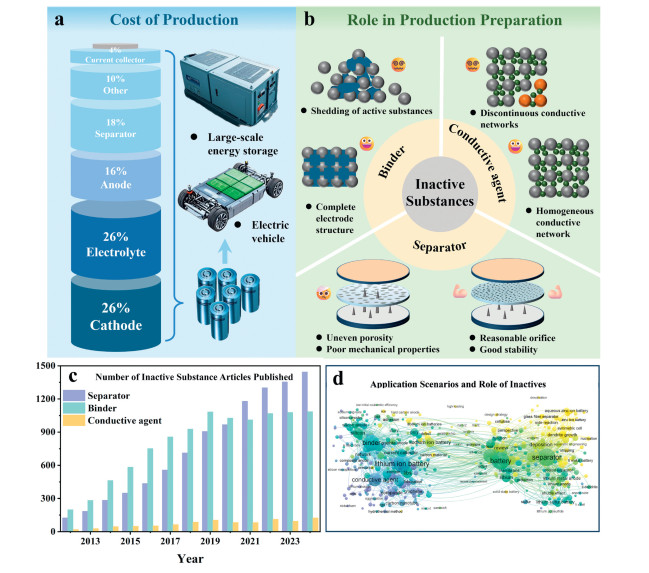
 DownLoad:
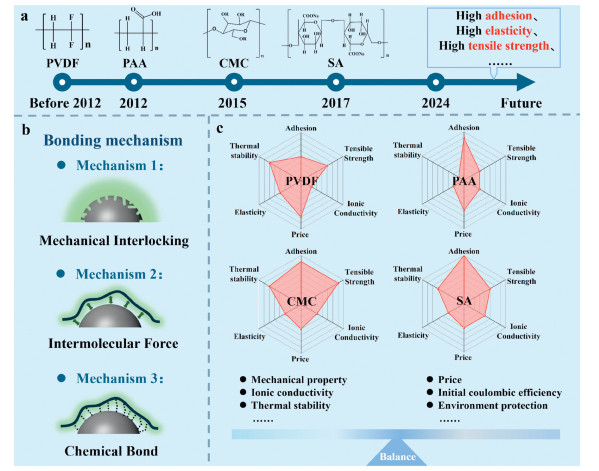
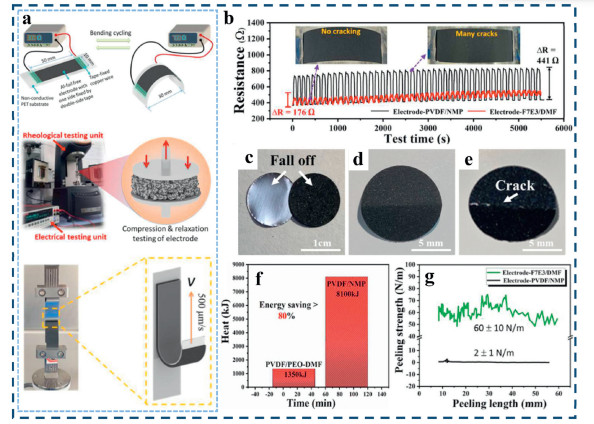
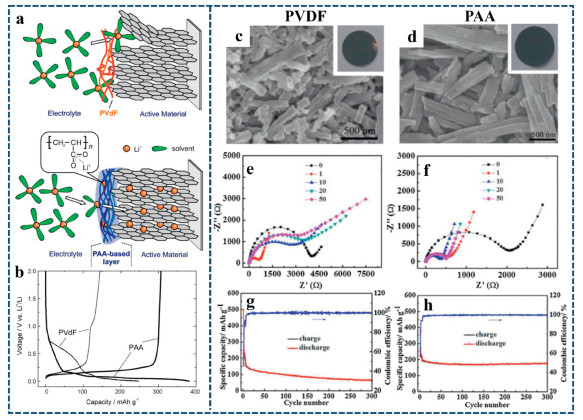
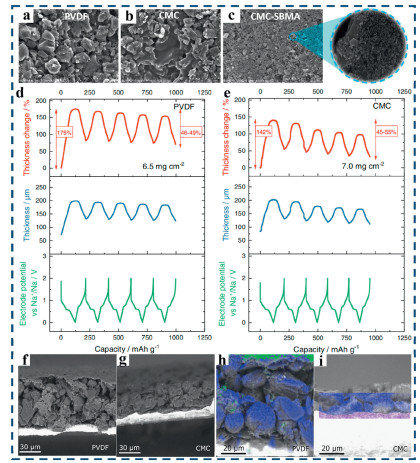
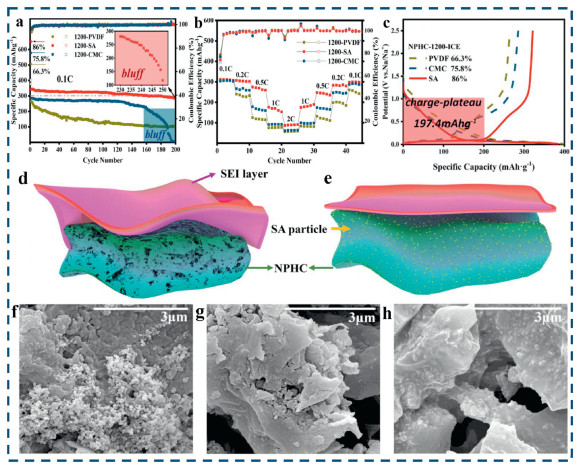
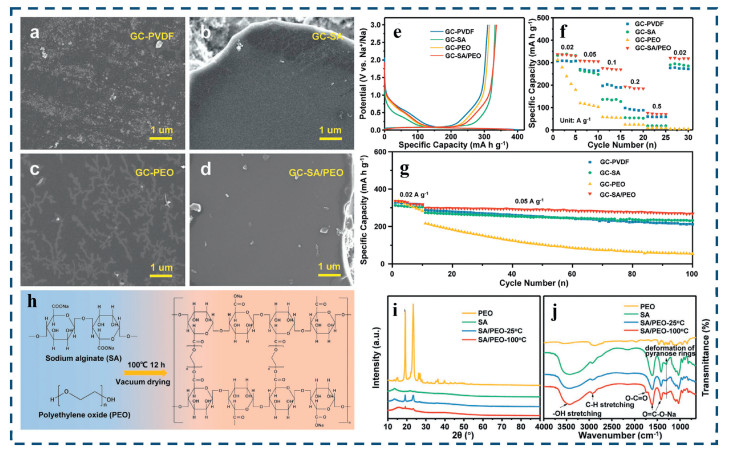
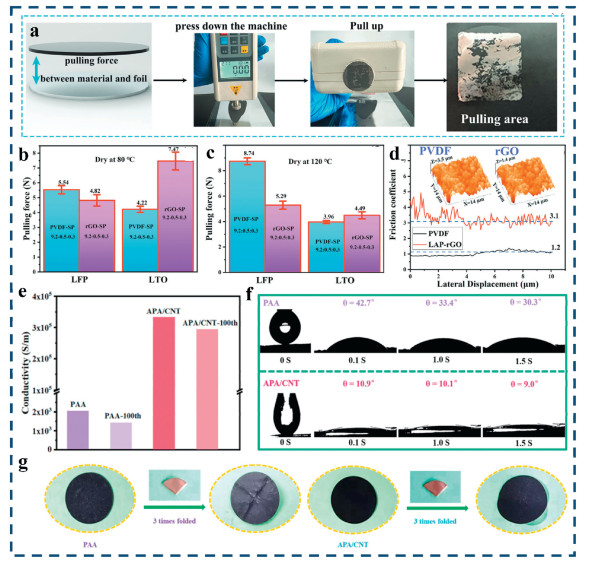

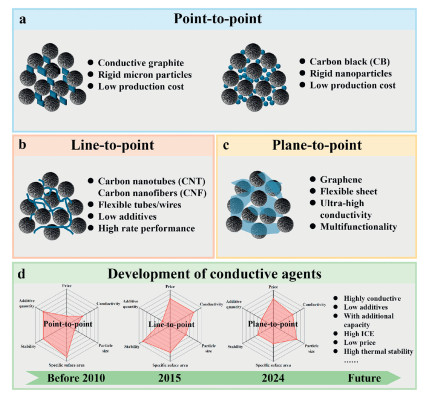
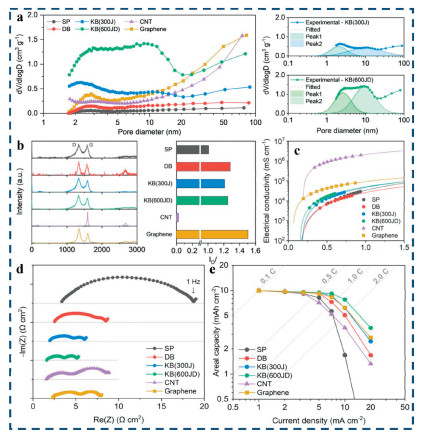
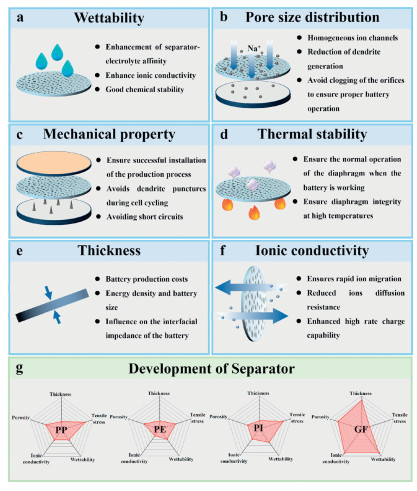
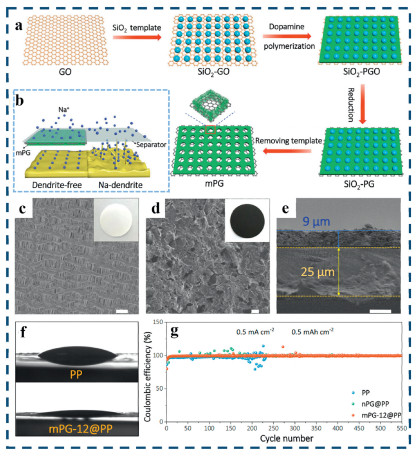
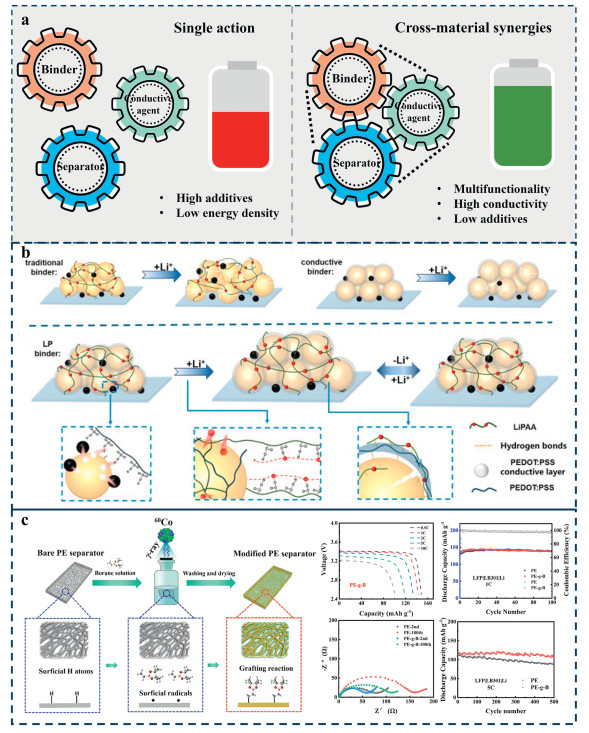
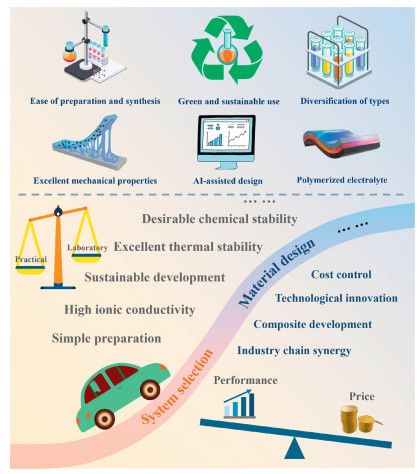

 下载:
下载:


 下载:
下载:

