
Table 1.
Bond energy and directionality of covalent bonds and weak interactions.

Advances in weak-bonded assembly as materials in catalysis and friction applications
Bi-Jun Geng , Dong-Yang Su , Shu-Xin Li , Ming Zhang , Dong Qi , Fan Lai , Xinfeng Tan , Yang Yang


Inter- and intra-molecular weak interactions play a crucial role in chemistry, materials science, life science, and other fields [1-5]. In the supramolecular field, weak interactions typically refer to the non-covalent forces that drive the aggregation of atoms and molecules, including hydrogen bondings, van der Waals forces, halogen bonds, π-π stacking. It is distinguished by the absence of bond formation and breakage, and the small bond energy. As shown in Table 1, the bond energies of weak interactions typically amount to a few tens of kilojoule per mole, giving them the unique advantages of being dynamic and reversible [6]. Furthermore, the additive nature of weak interactions enables them to generate cohesive forces through the synergistic effects of multiple species and sites, and to drive the assembly process and stabilize the assemblies with forces comparable to those of covalent bonds. By now, the assembly process based on weak interactions has developed as an important section of materials science and is one of the effective means of creating new substrates and realizing new functions [7-11]. Researchers have constructed many assemblies using either single or multiple subunits driven by weak interactions, investigated their particular structures, properties, and functions, and made them potentially applicable in energy conversion, information storage, and electronic materials [12-15]. To facilitate the design and modulation of functionalized supramolecular assemblies, it is crucial to clarify the relationship between their structure and properties, which requires detection methods at the atomic or molecular level to achieve precise characterization of supramolecular assemblies and modelling of assembly dynamics [16,17].
 DownLoad:
CSV
| Interaction | Bond energy (kJ/mol) | Directionality | |
| Covalent bonds | 100–1000 | Directed | |
| Weak interactions | van der Waals | 0.4–4 | Undirected |
| Hydrophilicity | 1–10 | Undirected | |
| Hydrogen bond | 5–50 | Directed | |
| Halogen bond | 5–50 | Directed | |
| π conjugation | 1–20 | Directed | |
| Ion-dipole | 10–60 | Directed | |
| Dipole-dipole | 1–10 | Directed | |
The birth and development of scanning probe microscopy (SPM) provide a powerful tool for visually characterizing the morphology and structure of supramolecular assemblies and investigating the relationship between structure and function. Based on the quantum tunneling effect, scanning tunneling microscopy (STM) is widely used for characterizing two-dimensional (2D) materials, driven by the weak interactions of π-π stacking and metal-organic coordination [18]. It is capable of characterizing the morphology and localized state density with atomic resolution, and manipulating single atom or molecule to change the structures and properties of materials. However, since it is the tunneling current between the tip and the sample that is being detected, it restricts STM to only characterizing conductive samples, greatly limiting its application. To solve this, atomic force microscopy (AFM) was subsequent invented and further extended the scope to more disciplines and complex systems, such as biology and polymer films [19,20]. AFM imaging relies on the forces between the cantilever and the sample, thus eliminating the requirement for conductive materials. AFM is able to satisfy the characterization of mechanical, electrical, optical, magnetic and other properties of materials by expanding its functions, and has good compatibility with gas or liquid environments. The recent qPlus technique led to an impressive improvement in the spatial resolution of AFM, with the first imaging of hydrogen bonding in real space achieved in 2013 [21]. In terms of temporal resolution, high-speed AFM has achieved the millisecond level and has been utilized to characterize dynamic processes [22]. SPM techniques have been widely used to manipulate atoms, molecules, and 2D structures, tailoring the morphology and properties of assembled materials. Additionally, SPM-based coupling techniques have been applied for simultaneous detection, enabling the in-situ identification and analysis of chemical information in assembled materials [23,24].
This review focuses on recent advances in the design and application of weak-bonded assemblies, particularly those achieved by scanning probe microscopy. It is organized into four sections. First, we summarize the design and modulation methods in weak-bonded systems, and discuss the influence of structural features of subunits and external fields on the structure and properties of weak-bonded assemblies. The importance of considering the synergetic effects and their balance is emphasized. The second part explores recent advances in the field of catalysis, discussing both catalysis applications and catassembly applications. The next section reviews the application of weak-bonded materials in friction, summarizing lubrication strategies in progressive scale perspectives. Finally, we provide a summary and outline prospective challenges for weak-bonded assemblies in application scenarios, as well as possible directions for developing the next-generation scanning probe microscopy. This review aims to provide valuable insights and references on the application of weak-bonded assemblies, thereby bridging the design principle for weak interactions and advanced weak-bonded materials engineering using SPM techniques.
The properties of supramolecular assemblies are closely related to their structures. The dynamic and reversible characteristics of weak interactions provide the possibility for the modulation and transformation of the structures of supramolecular assemblies. The current modulation methods mainly focus on structural modulation of the assembly subunit and external field modulation. The former influences the spatial structural ordering of the assembly through multi-site and multi-level interactions, while the latter helps to achieve the switching of the structure and properties of the supramolecular assembly by regulating the strength and direction of weak interactions (Fig. 1a). The synergistic regulation of both enables precise control over weak interactions and drives the structural evolution and property emergence of supramolecular assemblies.
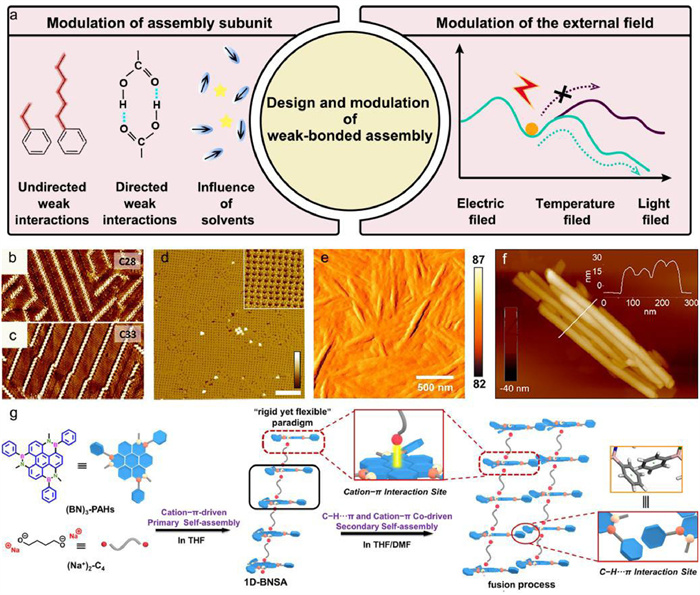
Undirected weak interactions typically include van der Waals forces and hydrophobic-hydrophilic interactions. Their range and intensity are closely related to the molecular structure of the assembly subunits [25].
The long-range nature of van der Waals forces makes them highly sensitive to the alkyl chain structure [26]. In recent studies, Berrocal et al. compared the assembly patterns of naphthalenediimides (NDIs) containing C28 and C33 chains, respectively [27]. It was found that saturated chains exhibited both chains exhibited both interdigitated and non-interdigitated stacking due to the insufficient anisotropy of van der Waals forces, with disordered regions accounting for 26% ± 5%. In contrast, unsaturated chains with internal double bonds formed only interdigitated stacking by enhanced interchain van der Waals interactions, with ordered domain exceeding 15,000 nm2 (Figs. 1b and c). This indicates the role of van der Waals interactions in enhancing the ordering of systems characterized by long alkyl chains.
Hydrophobic-hydrophilic interaction dominates the assembly of amphiphilic molecules through solvent-solute interactions. For instance, when assembling C98RhuA protein on mica, high concentrations of K+ could shield the negative charge of the substrate. It promoted the stacking of the hydrophobic ends of the protein to form an ordered 2D lattice. At low ionic strengths, however, disordered aggregation dominated by hydrophilic interactions accounts for over 60% (Fig. 1d) [28]. Similarly, studies on mussel-inspired systems and supramolecular hydrophilicity regulation have confirmed that, the precise control of hydrophobic-hydrophilic balance can be achieved by adjusting solvent polarity and ionic strength, which in turn controls the morphology of the assembly [25,29].
Directional weak interactions primarily involve hydrogen bonds, halogen bonds, and π-π stacking. They endow a well-defined geometrical conformation to the assembly through directional interactions, and their specificity is usually determined by the species, position, and quantity of functional groups [30-32].
Hydrogen bonding is the most prevalent interaction employed in the design of supramolecular self-assembly. Although some atypical interactions, such as Mn–H···H–Mn, Zr–H···H–Zr [33], have been involved in the category of hydrogen bond named as "dihydrogen contacts" in recent years [34], classically, when a H atom covalently bonded to an atom X with large electronegativity but a small atomic radius is close to that of another atom Y with similar properties (generally is N, O, or F), a hydrogen bonding-mediated interaction –X–H···Y– occurs. The directionality of hydrogen bonds makes them ideal tools for designing and constructing highly ordered structures. For instance, the intermolecular hydrogen bonds formed between the amino group of carbenes (NHC) and the thiol group of thiols could result in the construction of N-heterocyclic NHC-thiol assemblies. By deenergizing with Ag–S bonds, the assembly therefore formed densely packed monolayers on Ag surfaces in combination, which significantly improved the corrosion resistance of the material surface [26]. Additionally, some molecular assemblies driven by hydrogen bond have shown good performance in regulating the order of undoped hole transport and enhancing device performance, suggesting it promising potential applications (Fig. 1e) [35].
Generally, halogen bonding interactions (R–X···Y–) are established when a halogen atom (X) covalently bonded with a R group tends to attract nucleophilic regions of molecules (Y, Lewis base), where X acts as a donor of electrons and Y as an acceptor. The intrinsic nature of the electrophilic region of the halogen atom [36], the directionality of the bond, and the fact that more than one halogen bond can be developed with the same halogen atom, gives the halogen bonding interaction an important place in the field of designing supramolecular self-assemblies. Halogen bond customizes the structure and property of weak-bonded assembly through the directional interaction between σ-holes and electron donors [37]. An et al. designed and synthesized cholesterol-cyanodiphenylene derivatives and triiodofluorobenzene (IFB) [38]. They were proved to form C3-symmetric complexes through C–I···N halogen bonds (Fig. 1f), with a binding constant of 2.5 × 10¹¹ L/mol. The circular dichroism signal of the assembly was reversed compared to that of the individual components, confirming the significant influence of the directionality of halogen bonds on the chiral transmission of assembled materials.
π conjugation is widespread in aromatic systems, and the stacking orientation of the π conjugation determines the type of weak interactions. When two π planes are stacked face to face with offset, π···π interaction emerges, and its strength can be regulated by the electron density of the conjugated system [39]. Ju et al. found that the π···π-hole interaction between benzene and hexafluorobenzene is significantly higher than the homogeneous π···π interaction [40]; Zhang et al. revealed that B-N dipoles can regulate π-electron distribution and optimize stacking orientation in BN-embedded polycyclic aromatic hydrocarbons (Fig. 1g) [41]; Chen et al. reported a 3D stacked structures formed through π-π stacking of anti-aromatic dioxaphorphyrins, which exhibited unique photoelectric properties [42]. These studies show the importance the central parameter, the electronic properties of π systems, in modulating the stacking ordering. In addition to π···π interaction, C–H···π interactions are also prevalent in π-conjugated systems when two π planes are stacked in an edge-to-face manner. Qiu et al. demonstrated the C–H···π interactions in cycloparaphenylenes (CPP) system [43]. It was shown that, in the cocrystal of anthracene-C60 and CPP, the anthracene moiety was able to form additional C–H···π interactions with the benzene of the CPP, which further increased the stability of the supramolecular complexes.
In addition, ion-dipole interactions and dipole-dipole interactions also play important roles in the design of supramolecular materials. Ion-dipole interactions could regulate the ion transport properties of polymer conductors [44,45], and dipole-dipole interactions could stabilize channel structures in synergy with hydrogen bonds [46]. In some ionic liquid systems, ion-dipole interaction plays a role in influencing the distribution of ions and the formation of aggregates. By altering the structures of cations and anions in ionic liquids and the environmental conditions, the strength of ion-dipole interactions can be regulated, thereby influencing the performance of materials [41].
Some weak bonding concepts are integrated interactions that involve directed and undirected weak interactions, a typical example being the host-guest interactions. For example, in bipyridine (guest)-aromatic macrocycle (host) system, it was demonstrated that the enhanced host-guest binding was activated by the synergy of three directed weak interactions including C–H···O hydrogen bonding, N+···O ion-dipole interaction and π···π interaction [47]. In another study, it has proven that the design of the hydrophilic nature of the host enables the recognition and selection of guest molecules [48]. The former host-guest system is dominated by directed weak interactions, while the latter case is driven by undirected weak interactions.
In addition to the structural characteristics of the assembly subunits, solvent molecules are also capable of interacting with the assembly units, which affects their thermodynamic stability and the strength of weak interactions [49]. In some cases, they may even participate in the construction of supramolecular materials, thereby influencing the thermodynamic stability of the assemblies [50]. For example, low-polarity solvents have been demonstrated to enable molecular diffusion and assembly on conductive substrates, such as metals and HOPG. Berrocal et al. found that non-polar 1-octylphenyl allowed NDIs to freely diffuse on the HOPG surface, forming large-scale ordered structures [27]; the study on Ag surfaces of Ren et al. showed that low-polarity toluene promoted the co-assembly of NHC and thiol, while high-polarity ethanol caused phase separation due to strong adsorption [26]. The case is different when it comes to non-conductive substrates such as MoS2 and mica. The dielectric constant of the solvent reflects the ion shielding effect. An example is that n-hexane retained the intermolecular Coulomb interaction when assembling pentene fluoride on MoS2, inducing the directional elongation of the assembly [51]. In mica system, the ratio of water to THF in the mixed solvent regulated the hydrophilic-hydrophobic interaction of proteins. When THF was more than 30%, the proportion of the crystalline state exceeded 80% [28]. Generally, weak-polar solvents benefit the synergy of weak interactions and long-range ordered assembly by minimizing the competition between solvents and molecules, while high-polar solvents tend to disrupt intermolecular interactions and form kinetically stable structures. The volatility of solvents may also affect the assembly kinetics, with low-volatile solvents more likely to reach thermodynamic equilibrium.
However, it is also limited to explain the assembly mechanism through the polarity parameter of the solvent effect alone, and other factors are need to be introduced for a comprehensive consideration [52]. In some systems, the continuous solvent model may fail in weak-polar solvents, requiring the introduction of explicit solvent molecules to describe interactions [53]. In contrast, special effects such as charge transfer in high-polar solvents may reverse the conventional polarity-dependent relationship [54]. Nagaoka and Huang et al. found that specific interactions can be generated to dominate the assembly beyond the simple influence of polarity, such as donor/acceptor matching of hydrogen bonding and metal coordination between solvent molecules and assembly subunits [29,55]. It was also demonstrated that intramolecular hydrogen bondings could weaken the interaction between assembly subunits and the solvent molecules by adjusting the charge distribution, indicating the competition between the solvent effects and weak interactions among subunits [56]. In conclusion, the limitations of the solvent effect stem from the synergy and competition of multiple parameters, making it difficult to achieve precise modulation.
Electric field modulation is an effective method to modulate weak-bonded assemblies. It is capable of altering the magnitude and direction of the dipole moments of the assembly subunits, thereby affecting the direction and strength of the weak interactions [57]. The basic principle of STM allows it to apply a localized electric field to the detected object and thus to modulate the structure of weak-bonded assemblies [58]. An extremely high electric field intensity can be realized despite a small voltage, since the distance between the tip and the substrate is usually a few nanometers during the detection process, and even lower to the angstrom level when perform manipulation. The electric intensity is typically between 107 V/m to 1010 V/m, and it has also been shown that a mild electric field, whose electric field intensity is approximately 105 V/m, could trigger the formation of a bilayer assembly [59].
A typical example is that the assembly pattern shows ability to change in response to the switch in polarity of the electric field. For example, Mahmood et al. realized electrically triggered phase transition of 1,3,5-benzenetricarboxylic acid (TMA) at the octanoic acid/HOPG solid-liquid interface [60]. The assembly mode switched between chicken-wire motif under negative bias and zigzag motif under positive bias. It was also found that the polarity of solvent additives could influence the phase transition process, with high polarity additives being more likely to induce the phase transition. Lingenfelder’s group achieved the design and switching of 2D supramolecular networks based on hydrogen bonding using an external electric field (Figs. 2a-d), and systematically investigated the energy contribution of the assembly subunits, substrate polarization, and other factors to the switching of assembly modes [61]. These studies demonstrate that the electric field synergistically affects the properties of the assembly subunits with factors such as solvents and substrates, thereby influencing the overall structure and function of the weak-bonded assemblies.
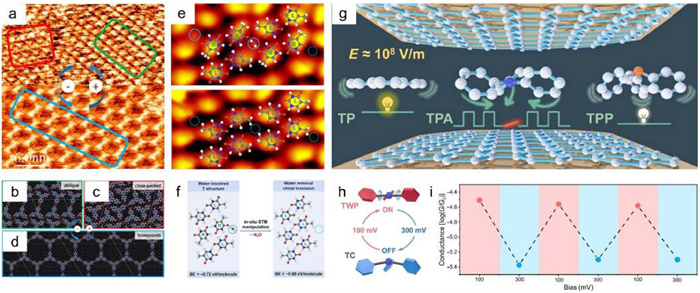
In addition to the ability to achieve overall modulation of the assembly, the STM approach has been developed into a means for atomic/molecular manipulation to achieve accurate structural customization. Xie et al. introduced water molecules into the self-assembled structure of thymine (T) on the Au(111) surface and achieved in-situ reversible inversion of the structure of the T molecule by precise manipulation of the H2O molecule [62]. The H2O molecules were irregularly distributed at the vacancies of the T-molecule assemblies. The H2O molecule connected with two T molecules of R-configuration through hydrogen bonding and interacted with two T molecules of L-configuration through van der Waals forces to form a stable adsorption pattern. Subsequent application of a pulsed voltage via the STM tip precisely triggered the departure of a H2O molecule from the vacancy (Figs. 2e and f). It was found that when both H2O molecules at opposite ends of the T molecule were removed, the R-conformation could be immediately converted to the L-conformation. This finding suggests that the manipulation of assembly subunits using an electric field enables the fine-tuning of the structure of weak-bonded assembly at the molecular level, which is conducive to the customization of their properties. Further, the coupling means based on the STM technique can also be used to study the response of weak-bonded assemblies to an electric field [63]. Recently we fabricated the single-molecule 2D van der Waals heterojunctions (M-2D-vdWHs) by stacking a single molecule with two graphene sheets via the scanning tunnelling microscope-break junction technique (Fig. 2g) [64]. The electric field is used to induce the electronic rearrangement of the benzene ring of the triphenylamine (TPA) molecule, generating a dipole moment component perpendicular to the electrode. The interaction between the dipole moment and the electric field generated a torque, which led to the transition of TPA from the low-resistance to the high-resistance conformation, thus realizing the function of a molecular switch (Figs. 2h and i).
The temperature field alters the energy balance and kinetic processes in weak-bonded assemblies by changing the thermal motion of the assembly subunits. Previous studies have shown the temperature dependence of some assembly systems [65], and recent investigations have reported a nonlinear relationship of the strength of the weak interactions as a function of temperature [66,67]. The study of the temperature response helps to investigate the mechanism of the surface reaction. For example, Fan et al. provided direct experimental evidence for the mechanism of the Ullmann reaction by studying the assembly modes between metal atoms and halogen-containing molecules at different annealing temperatures [68]. On the Ag(111) surface, 4,4′′-dibromo-m-terphenyl (DMTP) exhibited a trilobal adsorption relying on three halogen bonds at lower annealing temperatures. Higher annealing temperatures resulted in the surface adsorption of metal atoms. The atom coordinated with DMTP, changing the assembly mode to a corner motif. Further increasing the annealing temperature, the DMTP molecule was then converted to a staple-type adsorption, attributed to the breaking of the C–Br bond and the formation of the C–Ag bond. In another example, Meusel et al. compared the assembly of ionic liquid on Au(111) under room temperature and low temperature conditions. Both STM and AFM characterizations showed that the room temperature led to a hexagonal homogeneous phase, while the low temperature induced the coexistence of hexagonal and striped phases (Figs. 3a and b). It was found that annealing conditions could influence the domination of different phases, showing the effect of temperature on the ability of anions in ionic liquids to overcome the rotational energy barrier [69]. In a recent study, Liu et al. observed the transition of radialene to cumulene on the Ag(111) surface (Fig. 3c) [70]. Triaza[3]radialene formed periodic snowflake patterns on the Ag(111) surface through C–H···Cl interactions. After annealing at 373 K, the assembly density decreases and a periodic triangular porous structure was formed. At a higher annealing temperature, disordered structures were observed. In addition to irregular products formed by subunits, small areas of parallel-arranged domains were present. Such configurations consisted of Z-shaped molecules attributed to the cumulene molecule that lost one of its branched chains after annealing (Figs. 3d-f). With the refinement of characterization tools, temperature modulation is evolving from a response process to a design process, providing a crucial driving force for clarifying assembly and reaction kinetics.
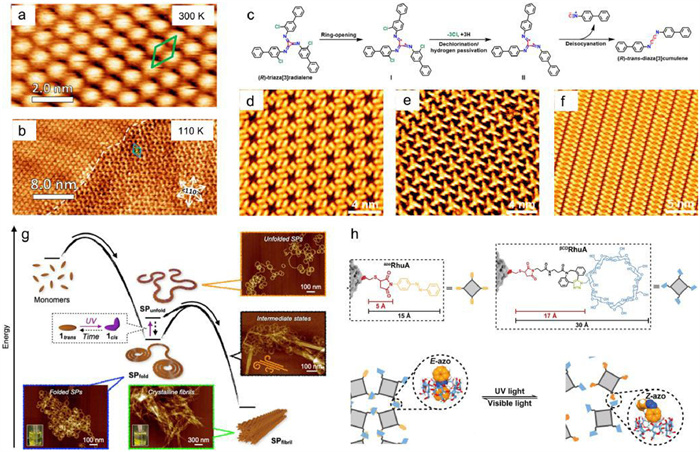
For systems capable of producing photoisomerization effects, light field modulation can have an impact on their molecular structure and optical properties. Typical families include molecules containing functional moieties such as azobenzene, spiropyran, and stilbene. Tamaki et al. achieved structural changes in supramolecular polymers by introducing azobenzene units into the assembly subunits [71]. Under UV irradiation, the folded supramolecular polymers gradually unfolded into chains within a few hours and spontaneously aggregated into fibrils through interchain van der Waals interactions (Fig. 3g). Moreover, Zhang et al. reported the modulation of host-guest interactions through photoisomerization of azobenzene [72]. Azobenzene shifted to a cis structure after the UV irradiation, weakening the binding to β-cyclodextrin and leading to the disassembly of protein nanotubes. Reversibly, the structure could be reassembled when visible light irradiation caused the assembly subunits to revert to the trans structure (Fig. 3h). Tang et al. found that spiropyran derivatives exhibited reversible hydrophilic-hydrophobic properties with UV light and visible light switching, which promoted the assembly and disassembly of disulfide bonds [73]. Based on this, they realized AND logic control that enabled it to be used as a photocontrol switch to realize its application in devices. Light field modulation relies on the reversible isomerization of photosensitive molecules to achieve on-off modulation of material properties. It is featured by fast response and high cyclic stability. However, there are remaining challenges in light fatigue and the effect of spatial potential resistance [74,75].
Overall, structural modulation of the assembly subunits can provide available functional groups for weak-bonded assembly. However, the non-interfering process usually leads to disordered assemblies or fixed assembly patterns, which are deficient in the abundance of assembled structures. External field modulation represents an effective strategy to complement it. External field modulation influences the dynamic formation-dissociation equilibrium of weak interactions through a non-invasive pathway, thus achieving the purpose of modulating the structure and properties of weak-bonded assembly [76]. The synergistic effects therein provide an important strategy for the functionalization of weak-bonded assembly and offer a feasible approach for designing intelligent materials.
It is of great importance to improve reaction selectivity in chemical research, which places high demands on precise modulation of reaction pathways [77]. The comprehension of reaction mechanisms at the molecular and even atomic levels helps researchers find energetically favourable reaction routes [78]. Benefiting from their dynamic and reversible characteristics, weak interactions provide weak-bonded assembly with structural tunability and diversity, making them promising materials in the field of catalysis. The modulation of weak interactions drives the structural and functional evolution of assembled materials. It not only provides the possibility to optimize the catalytic processes, but also enables researchers to selectively activate functional groups, modulate their diffusion behaviour, and guide basic processes of intermolecular coupling and intramolecular reactions, and ultimately achieve precise control over the target reaction pathway [79]. SPM can serve as an in-situ technique to modulate weak interactions and visualize intermediate states and final products at the atomic level [80-82]. In this section, we summarize the latest progress in weak-bonded assembly in the fields of catalysis and catassembly, highlighting the great potential of weak-bonded materials.
Nano- and micro-sized assemblies driven by weak interactions exhibit unique advantages in catalytic reactions. The ordered structure, composed of assembly subunits, enables the precise arrangement of catalytic sites, thereby improving catalytic efficiency [83]. The response of the assembly to external stimuli greatly broadens its tolerance to the environment [84].
Oliver Dumele et al. constructed supramolecular entangled nanofibers by the self-assembly of amphiphilic diareno-fused ullazine monomers via π-π stacking (Figs. 4a-c) [85]. At 450 nm visible light irradiation, the photoexcited state of the assembled fibers accepted electrons from the sacrificial donor through a reductive quenching cycle. Strongly reducing anionic radicals were generated in this process, which in turn transferred electrons to the Co catalyst and drove the multi-electron reduction of CO2. Compared with unassembled monomers, the supramolecular fibers exhibited a redshift absorption spectrum and a broadened visible light capture range. Their ordered π-stacking structure promoted prolonged charge separation, resulting in an improved CO and CH4 yields by more than 20-fold (Fig. 4d). Qin et al. proposed a molecular assembly strategy for preparing photocatalysts with high charge separation and migration performance [86]. The interlayer charge transfer channels (CTCs) were established during the material assembly process by grafting tert-butyl group onto the assembly subunit based on σ-π hyperconjugation (Figs. 4e and f). Under light excitation, the charge separation rate of hyperconjugated CTCs increased by 2.7 times compared to the control group. The assembled materials exhibited a surface photovoltage of 21.1 mV (Fig. 4g), implying more effective charge separation and photogenerated electron accumulation. In the application of photocatalytic hydrogen evolution, a H2 yield of 369.9 μmol g-1 h-1 was ultimately achieved, proving the feasibility of the σ-π hyperconjugation strategy (Fig. 4h).
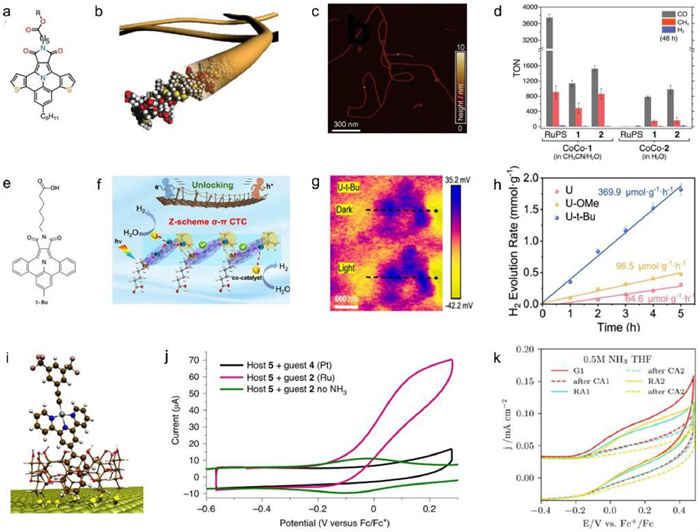
To reduce the loss of assembled materials during operation, it is essential to develop proper immobilization methods on surface [87]. It helps maintain the utilization of active-sites [88], and also enables the recycling of catalytic materials [89]. S. David Tilley’s group recently developed a molecular immobilization strategy suitable for various electrode surfaces [90]. The substrate surface is modified with the derivative of β-cyclodextrin (β-CD) as the host molecule, and naphthyl-substituted electrocatalyst as the guest to embed in β-CD to achieve immobilization (Fig. 4i). Electrocatalytic ammonia oxidation tests revealed that the stability of the host-guest catalyst was better than those physically adsorbed on electrode surface. The catalytic activity still retained by 70% after 30 min of testing. After several desorption-reabsorption cycles, the host-guest catalyst still exhibited good catalytic effects, proving the reversibility of the molecular immobilization strategy based on host-guest interaction (Fig. 4j). Similarly, Roithmeyer et al. employed the host-guest oriented assembly strategy to achieve precise immobilization of catalyst on the electrode surface [91]. The adamantane-substituted catalysts were immobilized on ITO surface by β-CD. They exhibited good stability for the electrocatalytic oxidation of ammonia (Fig. 4k). These studies demonstrate that the rational immobilisation strategy has the potential to overcome the bottleneck of the "activity-stability trade-off" in traditional electrodes, and achieve dynamic anchoring of assembled catalysts [92]. It offers a promising paradigm for high-current-density and long-life electrochemical synthesis systems.
The performance of weak-bonded materials and traditional catalysts are compared as shown in Table 2 [93-100]. It suggests the exciting promise for weak-bonded materials in catalysis application. Despite that, the inherent dynamic nature of weak-bonded materials also brings challenges to their large-scale application. In practical scenarios, the central requirements are to maintain the structural stability of the assembly, the activity of the catalytic sites, the selectivity of the reaction pathways, and the immunity in a complex reaction environment. Moreover, there is a demand for in-situ characterization and prediction tools for dynamic nonequilibrium systems [101]. To overcome this gap, interdisciplinary studies are required to bridge the scientific presentations and weak-bonded materials engineering.
DownLoad:
CSV
| Reaction | Catalyst | Evolution rate | Stability | Other parameters | Ref. |
| HER | U-t-Bua | 369.9 μmol g–1 h–1 (H2) | 20 h | 1.46% (apparent) | [86] |
| NC-15%b | 310.0 μmol g–1 h–1 (H2) | / | 6.8% (apparent) | [93] | |
| OER | CoTMPyP-CB[7] HGCsa | / | 20 h | TOF = 5.30 s-1 (600 mV) | [94] |
| Mo–Co PBA NFsb | / | 20 h | TOF = 0.589 s-1 (300 mV) | [95] | |
| CO2RR | NiAl-Fe-TCPP complexa | 2470 μmol g–1 h−1 (C2H4) | / | Selectivity = 93.4% | [96] |
| Ag-Cu2O-0.10b | 1334 μmol g–1 h−1 (C2H4) | 20 h | FE = 66% | [97] | |
| AOR | Ru(bpy-NMe2)(tpada)(Cl)](PF6)a | / | / | FE = 105% | [91] |
| Cu2Ob | 134.6 μmol cm–2 h–1 (NOx-) | 100 h | FE = 90.8% | [98] | |
| NRR | 2D CNQDa | 150.14 μg h–1 cm–2 (NH3) | / | FE = 12.85% | [99] |
| Au/CPb | 50.14 μg h–1 cm–2 (NH3) | / | FE = 34% | [100] | |
| a Weak-bonded material. b Traditional catalyst. |
|||||
Catassembly is a novel concept developed in recent years, which focuses on the utilization of catassembler to mediate supramolecular assembly. Catassembler plays the role of the catalyst in chemical reactions. It can significantly reduce the energy barrier, accelerate assembly kinetics, and open a new avenue for building complex and precise architectures [102-104].
Typical cases of catassembly are generally found in biological systems. For example, Tian’s group demonstrated the process of catalysing the replacement of DNA strand using the positively charged polymer poly(lysine)-graft-poly(ethylene glycol) (PLL-g-PEG) as catassembler [105]. The catassembly process followed a dynamic binding-dissociation mechanism, and the catalytic effect of PLL-g-PEG was influenced by the strength of its non-covalent interaction with DNA chains. As the charge of PLL-g-PEG changed, the catalytic rate exhibited a volcanic relationship, highlighting the importance of maintaining the weak interaction in the appropriate range for catassembly (Figs. 5a-c). Based on the similar principles, Chi’s team used STM to study the catassembly process of small-molecule systems at the liquid-solid interface [106]. In the copper phthalocyanine/1,3,5-tris(4-carboxyphenyl)-benzene (CuPc/BTB) system, BTB molecules are more likely assembled into individual domains in a densely packed manner, making it difficult to form co-assemblies with CuPc. The addition of coronene benzene (COR) molecules changed the assembly mode of BTB. COR promoted the formation of BTB porous supramolecular network, and was embedded into the cavities through host-guest interactions to maintain the stability of the network (Fig. 5d). This contributed to the subsequent CuPc substitution of COR to form thermodynamically stable co-assemblies of BTB-CuPc. Apparently, COR acts as a catassembler in this process, with the energy barrier of the assembly process reduced. It also shares similar characteristics of a catalyst of small dosage and absence from the final assembled product (Fig. 5e).
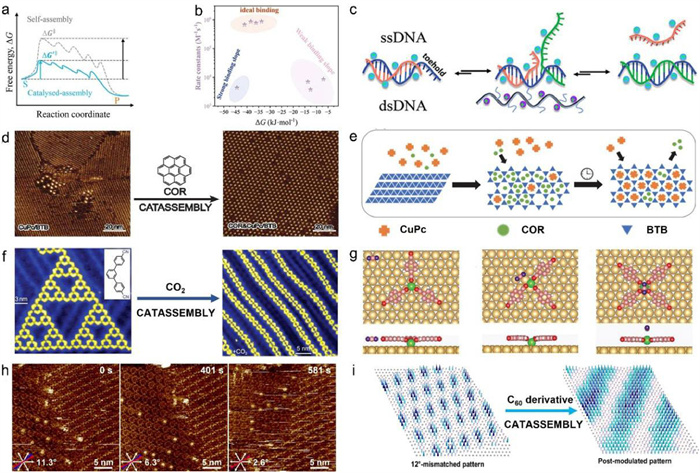
The introduction of catassembler can also achieve dynamic modulation of assembly, which is beneficial for the constructions of complex and precise assembly systems. Recent study has found that the introduction of CO2 molecule as catassembler to the surface covered by Fe(4,4′′-dicyano-1,1′:3′,1′′-terphenyl)3 (Fe(C3PC)3) trimeric structure could trigger the transition of Sierpiński triangles (STs) to a 1D coordination chain at room temperature (Fig. 5f) [107]. STM images revealed that CO2 initially adsorbed near the Fe node, thereby disrupting the stability of STs. As the CO2 dose increased, CO2 and Fe coordinated and drove the recombination of the node into the Fe (C3PC)x(CO2)4-x intermediate state. Subsequently, the diffused C3PC molecules replaced the weakly adsorbed CO2, ultimately formed a stable Fe(C3PC)4 chain structure (Fig. 5g). Moreover, Geng et al. employed fullerene and its derivatives as catassembler to achieve the post-modulation of the layered structures through a full-weak-bonded strategy [108]. For the layer-by-layer assembly with 12° interlayer mismatch, a small amount of fullerene derivatives was introduced by a microfluidic-STM coupling setup. It was found that fullerene derivatives embedded into the cavities of the bilayer network through host-guest interactions. The evolution of STM images over time showed that the angular mismatch gradually decreased within 10 min, until it disappeared (Figs. 5h and i). Fullerene derivatives underwent a dynamic embedding-leaving process, and ultimately left the final assembly like catalyst. Compared to the angular modulation that proceeded spontaneously, the fullerene-mediated pathway resulted in a lower free energy barrier, which promoted the post-modulation of angular mismatches. This work established an effective post-modulation strategy for the assembled structure, providing a new solution for the preparation of atomic-precise materials.
In conclusion of the above study, catassembly possesses unique characteristics that are distinct from regular molecular assembly. One is that the catassembler plays an important role in the process, and it has the basic profiles of a catalyst. Specifically, the number of catassemblers is much smaller than that of assembly subunits, and the catassemblers will leave the final assemblies with the properties of catassemblers remaining unchanged after the catassembly process. The other feature is reflected in the assembly routes and energies. Catassemblers can alter the assembly dynamics through multi-site weak interactions, and the energy barriers of each pathway in catassembly are modulated, resulting in a high selectivity and high efficiency of the assembly process. Weak-bonded materials provide dynamic and reversible advantages for the realization of catassembly, giving it great potential for constructing unusual assembled architectures.
When two contact surfaces are about to or already in relative motion, friction is generated to impede the movement. Its essence is related to the microscopic roughness and intermolecular interactions on contact surfaces [109]. The coefficient of friction (COF) is an important parameter that reflects the friction properties between contact surfaces. It is defined as the ratio of the friction force to the normal force, and the calculation formula is expressed as:
|
|
(1) |
where Ff is the friction force, and FN is the normal force. It is demonstrated that the COF can be influenced by the material properties and surface conditions [110,111]. Superlubricity refers to a state in which the COF is less than 0.01 [112]. In this state, there is almost no heat loss, and the energy conversion efficiency is extremely high. Therefore, it is of great practical significance to reduce the COF and increase surface lubricity or even realize superlubricity in the fields of mechanical engineering, micro/nano-devices, biomedicine, etc. [113-116]. Weak-bonded assembly offers unique advantages in the field of friction. The resistance during the movement can be greatly reduced due to the atomically flat surface constructed by the bottom-up strategy and the low bond energy of weak interaction. In addition, the dynamic property of weak interaction introduces reparability to the lubricating materials, which can extend their service life [117]. In terms of the characterization, AFM enables the testing of mechanical properties, which supports the in-depth understanding of the mechanisms and energy dissipation of friction processes [118]. In this section, we introduce three main strategies for reducing the COF and review the recent progress in this field.
For two contact surfaces in relative motion, it is demonstrated that increasing the surface smoothness and designing incommensurate interfaces are effective ways to reduce friction.
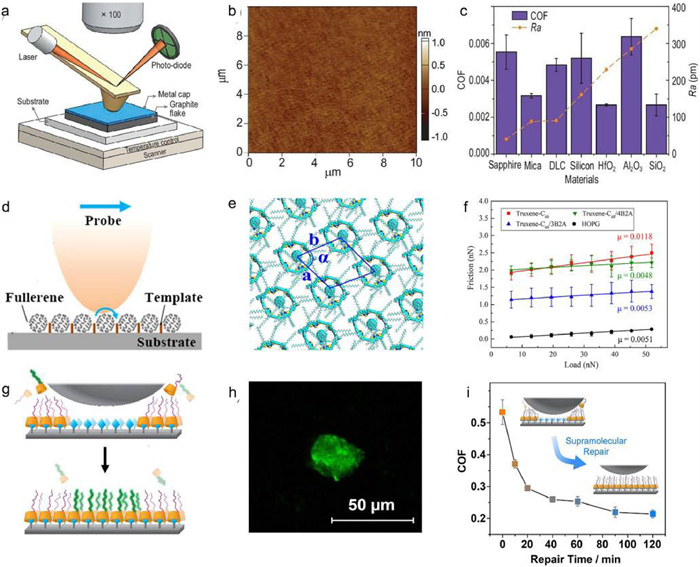
One of the primary sources of friction is the microscopic roughness of the contact surfaces. If the topography can be refined to the atomic level, the lubricity of contact surfaces will be greatly improved [119]. Peng et al. deposited a diamond-like-carbon (DLC) film on a disk and investigated its sliding process when in contact with a graphite flake (Fig. 6a) [120]. It was found that the COF of the material was as low as 0.0048, because of the atomic-level flatness of the DLC film and the graphite flake and the weak van der Waals forces between the two surfaces (Figs. 6b and c). In the long-distance testing, the friction system showed the ability to achieve over 100 km of wear-free sliding under superlubricated conditions.
Based on the atomically flat surfaces, incommensurate van der Waals interfaces have also been demonstrated to be ideal systems for achieving superlubricity. A recent study showed that the COF of MoS2/graphite and MoS2/h-BN van der Waals interfaces with large lattice mismatch could be lower than 10-6 [121]. In this case, the friction within the surfaces was close to zero, and the friction arose mainly from the pinning-effect of the boundaries due to the significant increase in the potential energy of the boundary atoms. That is, it shows an effective strategy to achieve superlubricity through avoiding lattice boundaries, terraces, and defects.
For most weak-bonded assemblies, however, it remains challenging to achieve atomic-level flatness. For this, the alternatives can come from the employment of the sliding process and surface modification [122]. Tan et al. constructed a highly ordered molecular network formed by weak interactions on the surface of highly oriented pyrolytic graphite (HOPG), and embedded fullerene derivatives into the cavities as rolling bearings through host-guest interactions (Figs. 6d and e) [123].
During the friction process, the fullerene derivatives were confined to the cavities and underwent in-situ rotation, avoiding additional molecular-substrate friction introduced by their migration on the surface. This resulted in a reduction of the energy barrier and therefore achieved microscale superlubricity with the COF of 0.003–0.008 (Fig. 6f). As for surface modification, it is been demonstrated to be effective solutions to material wear problems by employing weak-bonded self-assembly to construct dynamically reparable layers on material surfaces [124,125]. Recent research reported the functionalized modification of Ti wafer using cyclodextrin-adamantane host-guest complexes [126]. Friction testing in a liquid environment showed a low COF of 0.024, which is attributed to the formation of hydrated layer on the surface formed by the functional groups at the ends of the cyclodextrin through ion-dipole interactions and hydrogen bonding. The fluorescein-tagged analogue demonstrated that the friction-induced deconstruction of the host-guest complexes could be reassembled after the pressure was removed, thereby establishing a reparable lubricating layer (Figs. 6g-i).
As a traditional method, the liquid lubricant allows it to migrate to the wear surface and repair the lubrication layer due to its fluidity. Zhang et al. recently developed an improved method for polyalphaolefin liquid lubricants [127]. The addition of 2-ethylhexylamine iso-stearate ionic liquid and its combination with graphene oxide (GO) resulted in the exfoliation of GO, thereby ensuring its long-term dispersion stability (Fig. 7a). Friction and wear tests revealed that, the COF and the wear scar diameter were decreased by about 34% and 40% under high-load conditions. It was thought that hydrogen bonding, van der Waals forces, and electrostatic interactions between the ionic liquid and GO were able to form a stable protective tribofilm on the material surface. The structure of GO underwent dynamic changes during the friction process, which further ensured the uniform distribution and stability of the lubricating layer, thereby significantly improving the overall performance of the liquid lubricant.
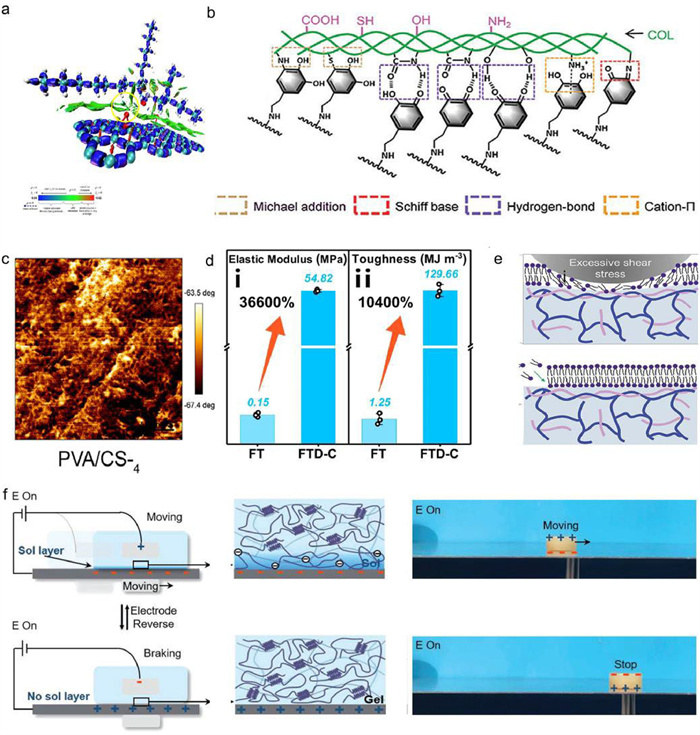
In the context of improving lubrication, supramolecular assembly alone may yield unsatisfactory wear resistance and structural brittleness. The integration of covalent bonds as structural supports has been demonstrated to be an attractive way to enhance structural elasticity and fatigue resistance (Fig. 7b) [128]. Among them, hydrogels are often utilized in the design of lubricating materials due to their unique advantages. One reason is that the water molecules in hydrogels can form a hydrated lubricating layer with the assembled subunits, which serves to reduce direct contact between friction surfaces. Another advantage arises from the elastic covalent network of hydrogels, which can dissipate the damage caused by stress and extend the material’s lifetime. For example, Pabois et al. achieved superlubricity by self-assembling plant protein protofilaments into hydrogels [129]. They found that the protofilaments were encapsulated into patches by polysaccharides in the hydrogel. By reducing direct surface contact and lowering shear through the formation of hydrated layer, it was able to reduce the COF to 7 × 10⁻⁵ at high contact pressure. On the other hand, it is also an effective strategy for reducing direct contact to apply scrolling motion instead of sliding [130]. In the recent study, Hu et al. proposed a strategy for preparing polyvinyl alcohol/chitosan hydrogels with high mechanical performance [131]. By optimizing the proportion of the two components and the annealing process, there was a notable enhancement in both mechanical and lubricating properties (Fig. 7c). Zhang et al., on the other hand, realized the combination of the rigid characteristics of a covalent network and the dynamic advantages of weak interaction [132]. With dynamic bonding and breaking of metal-ion coordination bonds, the hydrogel allowed for energy dissipation and enhanced mechanical properties (Fig. 7d).
For some systems, the dynamic reparability of weak interactions and the responsiveness to external stimuli can still be reflected after introducing covalent networks. Such as the PHEMA/ε-PL10 polyelectrolyte hydrogel developed by Wang et al. After being subjected to compressive strain, it exhibited the capacity for continuous lipid attraction to replenish the lubricating layer through hydrogen bonds, charge-dipole interactions, and hydrophobic interactions [133]. The material maintained a COF of 0.022 after nearly 20,000 friction cycles (Fig. 7e). Furthermore, Kang et al. studied the response of supramolecular covalent hydrogel to the electric field by introducing charged moieties [134]. Stimulated by an electric stimulus, hydrogels exhibited a partial gel-sol transition, resulting in the liquid secretion for lubrication (Fig. 7f). Table 3 summarizes some of the weak-bonded materials developed for friction applications, demonstrating enhanced lubrication performance [120,123,126-129,131,133-137]. The frictional properties can be significantly improved by applying covalent bonds and external stimuli, enabling weak-bonded assembly to expand their potential applications in fields of biomedicine, additive manufacturing, and soft robotics [138,139].
DownLoad:
CSV
| No. | Weak-bonded systems | COF | Refs. |
| 1 | Bis(2-ethylhexyl) sulfosuccinate and aromatic acid derivatives | 0.12 | [135] |
| 2 | Gallium-based liquid metal-based nano-oleogels | 0.108 | [136] |
| 3 | Ionic assembly of [EHA][ISA]-GO complex | 0.08 | [127] |
| 4 | Hyaluronic acid with dopamine | < 0.08 | [128] |
| 5 | Silk fibroin supramolecular hydrogel and covalent PAAm and PVA polymer network | 0.062 ± 0.003 | [134] |
| 6 | Polyvinyl alcohol/chitosan hydrogels | 0.034 | [131] |
| 7 | Ti wafer and cyclodextrin adamantane host-guest complexes | 0.024 | [126] |
| 8 | PHEMA/ε-PL10 polyelectrolyte hydrogel | 0.022 | [133] |
| 9a | Polyethylene glycol–phytic acid | 0.006 | [137] |
| 10a | Diamond-like-carbon | 0.0048 | [120] |
| 11a | Highly oriented pyrolytic graphite | 0.003–0.008 | [123] |
| 12a | Self-assembled plant protein protofilaments hydrogels | 0.00007 | [129] |
| a Superlubricity. | |||
In practical friction application scenarios, weak-bonded materials have demonstrated significant potential due to their dynamic response and self-healing mechanisms. For example, their integration into braking systems and engine sliding components is anticipated to develop into a pivotal technology. It has the potential to improve energy conservation, extend service life, and reduce weight in automotive friction systems. Moreover, it can be applied in aerospace industry bearings, nozzles, and other applications [140,141], as some advanced weak-bonded materials have met the requirements of extreme temperatures and vacuum conditions [142].
To conclude, the assembly process based on weak interactions is a versatile approach for organizing diverse subunits into complex, ordered and functional materials for various applications. The development and continuous progress of the SPM technique provide a promising solution for studying assembly design and structure-property relationships at the atomic/molecular level. We presented an overview of design and modulation methods for supramolecular systems, as well as recent achievements in applying supramolecular assemblies to catalysis and friction, based on the SPM technique. Despite numerous advances, supramolecular assembly remains in its infancy, and many challenges still need to be addressed.
Controllability of synergetic effects in assembly. Since the subunits in supramolecular assembly are not truly "bonded" to each other, the low bonding energies bring a double-edged influence in terms of dynamic, reversible advantages and easy to disassemble, difficult to control disadvantages. The introduction of multiple subunits complicates the synergetic effects and competition among the numerous weak interactions. In the process of finding the optimal assembly pathways, there may be multiple intermediates or even incorrect assemblies coexist in the assembly environment. To solve this problem, a rational sequence of external fields may be an effective solution [143,144].
Scale-up and transfer of assembly. To realise the application of supramolecular assemblies in practical scenarios, scale-up material preparation is a fundamental requirement [145,146]. However, most current supramolecular assemblies are limited in size, ranging from hundred square nanometers to several square micrometres, and have relatively low material preparation efficiency, which makes it difficult to meet the demands of practical applications. Specifically, for assemblies formed at the interface, the maintenance of their consistency during the transfer process is still worth investigating, which relies on the refinement of transfer technology [147].
Technical updates of SPM. Multiple weak interactions contribute to the complexity of assembly processes. It is particularly important to develop high spatial-temporal resolution characterization. For spatial resolution, the SPM technique allows researchers to "see" the organisation of subunits at each stage. Nevertheless, in terms of temporal resolution, current tools only allow for the study of millisecond-level processes at a specific location in line-scan mode. Therefore, it is worth investigating further to improve the temporal resolution, with possible routes such as increasing the probe resonance frequency, utilising low creep piezoelectric materials, and introducing disciplinary tools like optical circuits or microfluidic systems [148,149].
Employment of artificial intelligence. The performance of supramolecular assembly is closely related to its structure [150]. Real-time testing poses high requirements for in-situ and parallel detection in characterisation methods [151]. In addition, the general rules for assembled systems based on weak interactions need to be generalised and summarised based on a large number of experiments. In this regard, artificial intelligence may offer new opportunities through the analysis and screening of reported data, as well as the simulation and prediction of properties of supramolecular materials for potential applications [152,153].
Bi-Jun Geng: Writing – review & editing, Writing – original draft. Dong-Yang Su: Writing – original draft. Shu-Xin Li: Writing – original draft. Ming Zhang: Writing – original draft. Dong Qi: Writing – original draft. Fan Lai: Writing – original draft. Xinfeng Tan: Writing – review & editing, Supervision. Yang Yang: Writing – review & editing, Writing – original draft, Supervision, Funding acquisition.
The authors declare that they have no known competing financial interests or personal relationships that could have appeared to influence the work reported in this paper.
This work was supported by the National Natural Science Foundation of China (Nos. T2222002 and 22032004), the Fundamental Research Funds for the Central Universities in China (No. 20720240053), the Natural Science Foundation of Fujian Province (No. 2025J011008), State Key Laboratory of Vaccines for Infectious Diseases, Xiang An Biomedicine Laboratory (No. 2023XAKJ0103074).
X. Guo, S. Zhang, S. Patel, et al., Sci. Adv. 11 (2025) eadv8523. doi: 10.1126/sciadv.adv8523
R. Guo, Y. Zhou, W. Wang, et al., Sci. Adv. 11 (2025) eadr5374. doi: 10.1126/sciadv.adr5374
Q. Du, Y. Chang, J. Du, et al., CCS Chem. 8 (2026) 1964–1974. doi: 10.31635/ccschem.025.202505977
S. Song, Y. Shi, L. Zhu, B. Yue, Sci. China Chem. 67 (2024) 1865–1880. doi: 10.1007/s11426-023-1967-9
Z. Qi, Q. Wang, D.H. Qu, Sci. China Mater. 68 (2025) 962–978. doi: 10.1007/s40843-024-3265-2
C. Wang, B. Gao, K. Xue, et al., Sci. Adv. 11 (2025) eadt8262. doi: 10.1126/sciadv.adt8262
Y. Ou, C. Li, H. Zhou, et al., CCS Chem. 7 (2025) 2864–2898. doi: 10.31635/ccschem.025.202506033
H. Fan, R. Wang, L. Zhang, M. Liu, Sci. China Chem. 68 (2025) 4415–4424. doi: 10.1007/s11426-024-2571-3
S. Wang, J. Ma, N. Zhang, et al., Sci. China Chem. 68 (2025) 3034–3040. doi: 10.1007/s11426-024-2490-x
Y. Tian, R. Su, J. Liu, et al., Sci. China Mater. 67 (2024) 2311–2318. doi: 10.1007/s40843-024-2927-6
S. He, Y. Zhang, S. Baddi, et al., Sci. China Mater. 67 (2024) 2532–2539. doi: 10.1007/s40843-023-2806-8
C. Xiong, P. Wang, Y. Ma, et al., Nat. Commun. 16 (2025) 6140. doi: 10.1038/s41467-025-61451-4
C. Hao, J. Wang, H. Shi, et al., Angew. Chem. Int. Ed. 64 (2025) e202508683. doi: 10.1002/anie.202508683
Y.N. Gong, D.C. Zhong, T.B. Lu, Angew. Chem. Int. Ed. 64 (2025) e202424452. doi: 10.1002/anie.202424452
W. Jiang, B. Fan, L. Kong, et al., Angew. Chem. Int. Ed. 64 (2025) e202507273. doi: 10.1002/anie.202507273
W.J. Guo, T. Peng, W. Zhu, et al., Aggregate 4 (2023) e297. doi: 10.1002/agt2.297
L.J. White, C. Wark, L. Croucher, E.R. Draper, J.R. Hiscock, Chem. Commun. 56 (2020) 9557–9560. doi: 10.1039/d0cc04033a
X. Li, Z. Xu, D. Bu, et al., Chin. Chem. Lett. 36 (2025) 110100. doi: 10.1016/j.cclet.2024.110100
A.F. Payam, A. Passian, Sci. Adv. 9 (2023) eadg8292. doi: 10.1126/sciadv.adg8292
A. Yurtsever, P.X. Wang, F. Priante, et al., Sci. Adv. 8 (2022) eabq0160. doi: 10.1126/sciadv.abq0160
J. Zhang, P. Chen, B. Yuan, et al., Science 342 (2013) 611–614. doi: 10.1126/science.1242603
Y. Pan, J. Zhan, Y. Jiang, D. Xia, S. Scheuring, Nat. Commun. 14 (2023) 6369. doi: 10.1038/s41467-023-41806-5
H. Imada, M.I. Imada, K. Miwa, et al., Science 373 (2021) 95–98. doi: 10.1126/science.abg8790
D. Civita, M. Kolmer, G.J. Simpson, et al., Science 370 (2020) 957–960. doi: 10.1126/science.abd0696
J. Zhou, Y. Ma, J. Chen, et al., Adv. Mater. 37 (2025) 2415313. doi: 10.1002/adma.202415313
J. Ren, M. Das, Y. Gao, et al., J. Am. Chem. Soc. 146 (2024) 32558–32566. doi: 10.1021/jacs.4c10521
J.A. Berrocal, G.H. Heideman, B.F.M. de Waal, et al., J. Am. Chem. Soc. 142 (2020) 4070–4078. doi: 10.1021/jacs.0c00765
S. Zhang, R.G. Alberstein, J.J. De Yoreo, F.A. Tezcan, Nat. Commun. 11 (2020) 3770. doi: 10.1038/s41467-020-17562-1
P. Huang, H. Zhang, H. Zeng, Adv. Mater. 37 (2025) 2501542. doi: 10.1002/adma.202501542
P. Li, E.C. Vik, K.D. Shimizu, Acc. Chem. Res. 53 (2020) 2705–2714. doi: 10.1021/acs.accounts.0c00519
H. Mou, Y. Yin, H. Chen, et al., J. Am. Chem. Soc. 147 (2025) 21241–21251. doi: 10.1021/jacs.5c08124
H.N. Zhang, X. Huang, G.X. Jin, Angew. Chem. Int. Ed. 63 (2024) e202405399. doi: 10.1002/anie.202405399
M.J. Calhorda, Chem. Commun. (2000) 801–809.
J. Echeverría, G. Aullón, D. Danovich, S. Shaik, S. Alvarez, Nat. Chem. 3 (2011) 323–330. doi: 10.1038/nchem.1004
Q. Cheng, H. Chen, F. Yang, et al., Angew. Chem. Int. Ed. 61 (2022) e202210613. doi: 10.1002/anie.202210613
Z. Zhu, G. Wang, Z. Xu, et al., Phys. Chem. Chem. Phys. 21 (2019) 15106–15119. doi: 10.1039/c9cp01379b
Y.J. Wang, X.Y. Shi, Y. Guo, et al., J. Am. Chem. Soc. 147 (2025) 5408–5416. doi: 10.1021/jacs.4c17800
S. An, A. Hao, P. Xing, ACS Nano 15 (2021) 15306–15315. doi: 10.1021/acsnano.1c06178
Y. Yao, X. Zhang, Y. Cao, et al., J. Am. Chem. Soc. 146 (2024) 31053–31061. doi: 10.1021/jacs.4c10860
H. Ju, B. Wang, M. Li, et al., J. Am. Chem. Soc. 146 (2024) 25290–25298. doi: 10.1021/jacs.4c09504
Z. Zhang, X. Hu, S. Qiu, et al., J. Am. Chem. Soc. 146 (2024) 11328–11341. doi: 10.1021/acs.jpclett.4c02383
T.W.M. Chen, Y. Tanaka, Y. Kametani, et al., Angew. Chem. Int. Ed. 61 (2022) e202212726. doi: 10.1002/anie.202212726
Z.L. Qiu, C. Tang, X.R. Wang, et al., Angew. Chem. Int. Ed. 59 (2020) 20868–20872. doi: 10.1002/anie.202008505
K. Wen, C. Xin, S. Guan, et al., Adv. Mater. 34 (2022) 2202143. doi: 10.1002/adma.202202143
M. Wu, Y. Sun, Z. Yang, et al., Angew. Chem. Int. Ed. 63 (2024) e202407439.
S. Censor, J.V. Martin, O. Silberbush, et al., Adv. Mater. 36 (2024) 2409248. doi: 10.1002/adma.202409248
T.A. Sobiech, Y. Zhong, D.P. Miller, et al., Angew. Chem. Int. Ed. 61 (2022) e202213467. doi: 10.1002/anie.202213467
T.H. Shi, D.H. Tuo, S. Azuma, et al., J. Am. Chem. Soc. 147 (2025) 8433–8443. doi: 10.1021/jacs.4c16440
Q.Y. Hong, B. Huang, M.X. Wu, et al., Nat. Commun. 16 (2025) 2484. doi: 10.1038/s41467-025-57876-6
A.M. Bragança, A. Minoia, R. Steeno, et al., J. Am. Chem. Soc. 143 (2021) 11080–11087. doi: 10.1021/jacs.1c04445
M. Dreher, P.M. Dombrowski, M.W. Tripp, et al., Nat. Commun. 14 (2023) 1554. doi: 10.1038/s41467-023-37203-7
M.F.J. Mabesoone, A.R.A. Palmans, E.W. Meijer, J. Am. Chem. Soc. 142 (2020) 19781–19798. doi: 10.1021/jacs.0c09293
D. Manna, R. Lo, J. Vacek, et al., Angew. Chem. Int. Ed. 63 (2024) e202403218. doi: 10.1002/anie.202403218
Y. Dan, Z.A. Arnon, Y. Tang, et al., Nat. Commun. 16 (2025) 6106. doi: 10.1038/s41467-025-61331-x
Y. Nagaoka, J. Schneider, N. Jin, et al., J. Am. Chem. Soc. 146 (2024) 13093–13104. doi: 10.1021/jacs.3c14603
T. Sun, W. Zhang, M. Shi, et al., Angew. Chem. Int. Ed. 64 (2025) e202416845. doi: 10.1002/anie.202416845
C. Yang, Y. Guo, H. Zhang, X. Guo, Chem. Rev. 125 (2024) 223–293. doi: 10.3390/catal14040223
J.D. Cojal González, M. Iyoda, J.P. Rabe, Nat. Commun. 8 (2017) 14717. doi: 10.1038/ncomms14717
Q.N. Zheng, X.H. Liu, X.R. Liu, et al., Angew. Chem. Int. Ed. 53 (2014) 13395–13399. doi: 10.1002/anie.201406523
A. Mahmood, X. Zeng, A.S. Saleemi, K.Y. Cheng, S.L. Lee, Chem. Commun. 56 (2020) 8790–8793. doi: 10.1039/d0cc01670e
F.P. Cometto, N. Arisnabarreta, R. Vanta, et al., ACS Nano 18 (2024) 4287–4296. doi: 10.1021/acsnano.3c09775
L. Xie, Y. Ding, D. Li, et al., J. Am. Chem. Soc. 144 (2022) 5023–5028. doi: 10.1021/jacs.1c13344
J. Xun, J.X. Chen, T.R. Diao, et al., Angew. Chem. Int. Ed. 64 (2025) e202502724. doi: 10.1002/anie.202502724
Y.L. Zou, Q.M. Liang, T. Lu, et al., Sci. Adv. 9 (2023) eadf0425. doi: 10.1126/sciadv.adf0425
C. Chen, H. Sang, P. Ding, et al., J. Am. Chem. Soc. 140 (2017) 54–57.
A. Bhattarai, U. Mazur, K.W. Hipps, J. Am. Chem. Soc. 136 (2014) 2142–2148. doi: 10.1021/ja412648x
M. Hu, J. Zhou, L. Jiang, et al., J. Phys. Chem. B 129 (2025) 4547–4557. doi: 10.1021/acs.jpcb.5c00962
Q. Fan, L. Liu, J. Dai, et al., ACS Nano 12 (2018) 2267–2274. doi: 10.1021/acsnano.7b06787
M. Meusel, M. Lexow, A. Gezmis, et al., ACS Nano 14 (2020) 9000–9010. doi: 10.1021/acsnano.0c03841
J.W. Liu, Y. Wang, L.X. Kang, et al., J. Am. Chem. Soc. 145 (2023) 13048–13058. doi: 10.1021/jacs.3c00962
K. Tamaki, S. Datta, H. Hanayama, et al., J. Am. Chem. Soc. 146 (2024) 22166–22171. doi: 10.1021/jacs.4c07878
Z. Zhang, H.T. Chiang, Y. Xia, et al., Chemistry 11 (2025) 102407. doi: 10.1016/j.chempr.2024.102407
Y. Tang, L. Gao, J. Fei, Colloids Surf. B 238 (2024) 113885. doi: 10.1016/j.colsurfb.2024.113885
C. Li, X. Zhao, H. Wei, et al., ACS Appl. Polym. Mater. 7 (2025) 8718–8730. doi: 10.1021/acsapm.5c01418
Y. Shi, R. Zhao, W. Yang, et al., J. Alloys Compd. 1018 (2025) 179252. doi: 10.1016/j.jallcom.2025.179252
M. Zeng, Y. Xiao, J. Liu, K. Yang, L. Fu, Chem. Rev. 118 (2018) 6236–6296. doi: 10.1021/acs.chemrev.7b00633
W. Zhou, K. Cheng, J. Kang, et al., Chem. Soc. Rev. 48 (2019) 3193–3228. doi: 10.1039/c8cs00502h
G.A. Somorjai, J.Y. Park, Angew. Chem. Int. Ed. 47 (2008) 9212–9228. doi: 10.1002/anie.200803181
L. Dong, Z.A. Gao, N. Lin, Prog. Surf. Sci. 91 (2016) 101–135. doi: 10.1016/j.progsurf.2016.08.001
L. Grill, S. Hecht, Nat. Chem. 12 (2020) 115–130. doi: 10.1038/s41557-019-0392-9
Q. Shen, H.Y. Gao, H. Fuchs, Nano Today 13 (2017) 77–96. doi: 10.1016/j.nantod.2017.02.007
C. Zhang, Z. Yi, W. Xu, Mater. Futures 1 (2022) 032301. doi: 10.1088/2752-5724/ac8a63
M.O. Guler, S.I. Stupp, J. Am. Chem. Soc. 129 (2007) 12082–12083. doi: 10.1021/ja075044n
Y. Chen, Y. Wang, X. Shi, et al., Carbon 111 (2017) 38–47. doi: 10.1016/j.carbon.2016.09.059
O. Dumele, L. Đorđević, H. Sai, et al., J. Am. Chem. Soc. 144 (2022) 3127–3136. doi: 10.1021/jacs.1c12155
Q. Yang, W. Li, Y. Wang, et al., ACS Catal. 15 (2025) 3267–3275. doi: 10.1021/acscatal.4c07058
M. Sugiyama, A. Yurtsever, N. Uenodan, et al., ACS Nano 19 (2025) 13760–13767. doi: 10.1021/acsnano.4c15373
C.S. Diercks, Y. Liu, K.E. Cordova, O.M. Yaghi, Nat. Mater. 17 (2018) 301–307. doi: 10.1038/s41563-018-0033-5
E. Mattia, S. Otto, Nat. Nanotechnol. 10 (2015) 111–119. doi: 10.1038/nnano.2014.337
L. Sévery, J. Szczerbiński, M. Taskin, et al., Nat. Chem. 13 (2021) 523–529. doi: 10.1038/s41557-021-00652-y
H. Roithmeyer, L. Sévery, T. Moehl, et al., J. Am. Chem. Soc. 146 (2023) 430–436.
Z.J. Guan, R.L. He, S.F. Yuan, et al., Angew. Chem. Int. Ed. 61 (2022) e202116965. doi: 10.1002/anie.202116965
K. Li, J. Hong, N. Song, Z. Guo, M. Liang, Nano Res. 17 (2024) 6888–6894. doi: 10.1007/s12274-024-6666-6
S. Jiang, K. Zhang, X. Yin, et al., Adv. Funct. Mater. 35 (2024) 2419705.
T. Wang, P. Wang, W. Zang, et al., Adv. Funct. Mater. 32 (2021) 2107382.
C. Ning, J. Yang, S. Bai, et al., Adv. Funct. Mater. 33 (2023) 2300365. doi: 10.1002/adfm.202300365
Z. Wei, W. Wang, T. Shao, et al., Angew. Chem. Int. Ed. 64 (2025) e202417066. doi: 10.1002/anie.202417066
L. Yang, Y. Liang, H. Jiang, et al., Adv. Funct. Mater. 36 (2026) e08286. doi: 10.1002/adfm.202508286
F. Wang, Q. Wang, S. Wang, et al., ACS Nano 16 (2022) 9049–9061. doi: 10.1021/acsnano.2c00507
L.F. Gao, Y. Cao, C. Wang, et al., Angew. Chem. Int. Ed. 60 (2021) 5257–5261. doi: 10.1002/anie.202015496
T.R. Diao, Z.B. Chen, Z.R. Wang, et al., J. Chem. Educ. 102 (2025) 2137–2143. doi: 10.1021/acs.jchemed.5c00148
H. Qu, T. Tong, Z.C. Lei, et al., Sci. Sin. Chim. 53 (2022) 145–173.
Z. Tian, S. Ding, F. Fan, et al., Sci. Sin. Chim. 42 (2012) 525–547. doi: 10.1360/032011-828
L. Yang, X. Wang, C. Zhou, et al., Sci. Sin. Chim. 50 (2020) 1781–1800. doi: 10.1360/ssc-2020-0127
J. Hu, T. Tong, P. Shi, et al., Cell Rep. Phys. Sci. 5 (2024) 101937. doi: 10.1016/j.xcrp.2024.101937
R. Xue, C. Ma, J. He, et al., Acta Phys. Chim. Sin. 40 (2024) 2309011. doi: 10.3866/PKU.WHXB202309011
C. Li, Z. Xu, Y. Zhang, et al., Natl. Sci. Rev. 10 (2023) nwad088. doi: 10.1093/nsr/nwad088
B.J. Geng, Y.F. Li, L.L. Deng, et al., Nat. Commun. 16 (2025) 2276. doi: 10.1038/s41467-025-57626-8
H. Dai, Y. Wang, Z. Liu, et al., Sci. Adv. 11 (2025) eadu2880. doi: 10.1126/sciadv.adu2880
J. Gao, W.D. Luedtke, D. Gourdon, et al., J. Phys. Chem. B 108 (2004) 3410–3425. doi: 10.1021/jp036362l
S.H. Mukhtar, A. Gulzar, S. Saleem, et al., Tribol. Int. 192 (2024) 109194. doi: 10.1016/j.triboint.2023.109194
Y. Meng, J. Xu, Z. Jin, B. Prakash, Y. Hu, Friction 8 (2020) 221–300. doi: 10.1007/s40544-020-0367-2
S. Yuan, X. Chen, C. Zhang, Adv. Mater. Interfaces 7 (2020) 2000485. doi: 10.1002/admi.202000485
J. Seror, L. Zhu, R. Goldberg, A.J. Day, J. Klein, Nat. Commun. 6 (2015) 6497. doi: 10.1038/ncomms7497
Z. Zhou, X. Zhou, Q. Huang, et al., Sci. Rep. 14 (2024) 31478. doi: 10.1038/s41598-024-83253-2
X. Huang, X. Xiang, J. Nie, et al., Nat. Commun. 12 (2021) 2268. doi: 10.1038/s41467-021-22371-1
A. Campanella, D. Döhler, W.H. Binder, Macromol. Rapid Commun. 39 (2018) 1700739. doi: 10.1002/marc.201700739
S. Huang, Y. Song, A. Hinaut, et al., ACS Nano 19 (2025) 17365–17373. doi: 10.1021/acsnano.4c16817
M. Khadem, O.V. Penkov, J. Jais, et al., Sci. Adv. 7 (2021) eabk1224. doi: 10.1126/sciadv.abk1224
D. Peng, J. Wang, H. Jiang, et al., Natl. Sci. Rev. 9 (2022) nwab109. doi: 10.1093/nsr/nwab109
M. Liao, P. Nicolini, L. Du, et al., Nat. Mater. 21 (2021) 47–53. doi: 10.26689/jcer.v5i12.2844
R. Li, X. Yang, J. Zhao, et al., Adv. Funct. Mater. 32 (2022) 2111365. doi: 10.1002/adfm.202111365
S. Tan, H. Shi, L. Fu, et al., ACS Appl. Mater. Interfaces 12 (2020) 18924–18933. doi: 10.1021/acsami.0c02726
O. Hod, E. Meyer, Q. Zheng, M. Urbakh, Nature 563 (2018) 485–492. doi: 10.1038/s41586-018-0704-z
W. Song, C. Zeng, X. Ma, et al., Nat. Commun. 16 (2025) 2919. doi: 10.1038/s41467-025-58292-6
Y. Wang, Y. Sun, A.J. Avestro, P.R. McGonigal, H. Zhang, Chemistry 8 (2022) 480–493. doi: 10.3390/axioms11090480
X. Zhang, X. Zhao, H. Yuan, Z. Wang, Y. Liu, Carbon 241 (2025) 120396. doi: 10.1016/j.carbon.2025.120396
H. Yuan, P. Xiao, B. Sarmento, G. Chen, W. Cui, Adv. Funct. Mater. 34 (2024) 2406668. doi: 10.1002/adfm.202406668
O. Pabois, Y. Dong, N. Kampf, et al., Commun. Mater. 5 (2024) 158. doi: 10.1038/s43246-024-00590-5
S. Tan, H. Shi, X. Du, et al., Nano Res. 16 (2022) 583–588.
D. Hu, Y. Yan, W. Wei, et al., Adv. Funct. Mater. 35 (2025) 2508450. doi: 10.1002/adfm.202508450
J. Zhang, M. Zhang, H. Wan, J. Zhou, A. Lu, Nat. Commun. 16 (2025) 320. doi: 10.1038/s41467-024-55245-3
Z. Wang, P. Li, B. Li, et al., Adv. Funct. Mater. 35 (2024) 2413712.
J. Kang, X. Zhang, X. Yang, et al., Adv. Mater. 35 (2023) 2307705. doi: 10.1002/adma.202307705
J. Zhang, Y. Bai, Q. Yu, et al., Adv. Mater. Interfaces 6 (2018) 1801391.
T. Wang, S. Xue, B. He, et al., Chem. Mater. 36 (2024) 5110–5119. doi: 10.1021/acs.chemmater.4c00325
C. Du, T. Yu, L. Zhang, et al., ACS Appl. Mater. Interfaces 15 (2023) 10302–10314. doi: 10.1021/acsami.2c22402
T. Han, W. Cao, Z. Xu, et al., Sci. Adv. 9 (2023) eadf3902. doi: 10.1126/sciadv.adf3902
H. Wang, C.N. Zhu, H. Zeng, et al., Adv. Mater. 31 (2019) 1807328. doi: 10.1002/adma.201807328
Y. Bai, C. Zhang, Q. Yu, et al., Chem. Eng. J. 409 (2021) 128120. doi: 10.1016/j.cej.2020.128120
Q. Yu, Y. Wu, D. Li, et al., J. Colloid. Interface. Sci. 487 (2017) 130–140. doi: 10.1016/j.jcis.2016.10.020
J. Li, P. Guo, C. Hu, et al., ACS Nano 16 (2022) 6565–6577. doi: 10.1021/acsnano.2c00943
D. Alessi, L. Morgan, E. Pelorosso, et al., Nat. Commun. 16 (2025) 4316. doi: 10.1038/s41467-025-58890-4
A. Combe, S. Chen, G. Pacella, et al., Nat. Commun. 16 (2025) 3897. doi: 10.1038/s41467-025-58468-0
K. Xie, Q. Fu, F. Chen, et al., Adv. Funct. Mater. 34 (2024) 2315495. doi: 10.1002/adfm.202315495
G. Bolla, B. Sarma, A.K. Nangia, Chem. Rev. 122 (2022) 11514–11603. doi: 10.1021/acs.chemrev.1c00987
J.K. Park, Y. Zhang, B. Xu, S. Kim, Nat. Commun. 12 (2021) 6882. doi: 10.1038/s41467-021-27208-5
B. Alldritt, P. Hapala, N. Oinonen, et al., Sci. Adv. 6 (2020) eaay6913. doi: 10.1126/sciadv.aay6913
H. Du, R. Qiu, X. Lou, et al., Nat. Commun. 16 (2025) 4837. doi: 10.1038/s41467-025-60138-0
Y. Li, G.J. Stec, H.K. Kim, et al., Nat. Chem. 17 (2025) 169–176. doi: 10.1038/s41557-024-01696-6
Y. Liu, L. Wang, L. Zhao, et al., Chem. Soc. Rev. 53 (2024) 1592–1623. doi: 10.1039/d3cs00705g
S. Tretiakov, A. Nigam, R. Pollice, Chem. Rev. 125 (2025) 5776–5829. doi: 10.1021/acs.chemrev.4c00893
H.C. Duan, L.X. Lin, J.C. Wang, et al., Nano-Micro Lett. 17 (2025) 295. doi: 10.1007/s40820-025-01807-z

Figure 1 (a) Schematic of modulation strategies of weak-bonded assembly. (b, c) STM images of assemblies with alkyl chains of C28 and C33. Reproduced with permission [27]. Copyright 2020, American Chemical Society. (d) STM image of monolayer C98RhuA crystals on mica. Copied with permission [28]. Copyright 2020, The Author(s). (e) AFM image of the BDT-DPA-F film. Copied with permission [35]. Copyright 2022, Wiley‐VCH GmbH. (f) AFM image of CS3 assembled through halogen bonding. Copied with permission [38]. Copyright 2021, American Chemical Society. (g) Schematic diagram of the formation of 1D-BNSA through cation-π interaction and its fusion process driven by cooperative C–H···π and cation-π interaction. Copied with permission [41]. Copyright 2024, American Chemical Society.

Figure 2 (a) STM image of BTB monolayer in response to applied bias. (b-d) Optimized modelling of oblique, close-packed, and honeycomb patterns, respectively. Copied with permission [61]. Copyright 2024, The Authors. (e) R-L conformational inversion of the T molecule driven by the pulsed voltage. (f) Binding energies of T structures before and after the removal of H2O molecule. Reproduced with permission [62]. Copyright 2022, American Chemical Society. (g) Schematic diagram of the conformational evolution of M-2D-vdWHs. (h) Schematic of the layer-by-layer single-molecular switch. (i) Switching performance of the layer-by-layer single-molecular switch. Copied with permission [64]. Copyright 2023, The American Association for the Advancement of Science.

Figure 3 (a, b) AFM images of the assembly of ionic liquid ([C1C1Im][Tf2N]) on Au(111) under 300 K and 110 K. Reproduced with permission [69]. Copyright 2020, American Chemical Society. (c) Reaction pathway from radialene to cumulene on the Ag(111) surface. (d-f) STM images of the assemblies of reactants and products at increasing annealing temperatures. Reproduced with permission [70]. Copyright 2023, American Chemical Society. (g) Structural changes in supramolecular polymers from folded to unfolded in response to the light. Copied with permission [71]. Copyright 2024, American Chemical Society. (h) Mechanism of assembling and disassembling cycle based on azobenzene moiety in response to the light conditions. Copied with permission [72]. Copyright 2024, Elsevier Inc.

Figure 4 (a) Molecular structure of ullazine monoamide amphiphiles. (b) Schematic of the self-assembled diareno-fused ullazines supramolecular fibrous structure. (c) AFM image of self-assembled ullazine supramolecular polymers. (d) Photocatalytic performance of supramolecular polymers for CO2 reduction. Copied with permission [85]. Copyright 2022, American Chemical Society. (e) Molecular structure of ullazine-tert-butyl. (f) Schematic of the mechanism for hydrogen evolution catalyzed through interlayer charge transfer channels. (g) KPFM characterization of U-t-Bu under irradiated conditions. (h) The photocatalytic HER activities of aggregated U, U-OMe and U-t-Bu. Copied with permission [86]. Copyright 2025, American Chemical Society. (i) DFT-optimized structure of host-guest complex bounded on gold surface. (j) CV scans of different host-guest complexes with host on ITO. Images adopted with permission [90]. Copyright 2021, The Authors. (k) CV curves of self-assembled host-guest system in 0.5 mol/L NH3 THF solution. Copied with permission [91]. Copyright 2024, American Chemical Society.

Figure 5 (a) Free energy diagram of self-assembly and catassembly mediated by catassembler PLL-g-PEG. (b) The volcano plot of rate constants. (c) Schematic diagram of the replacement of DNA stain mediated by catassembler PLL-g-PEG. Copied with permission [105]. Copyright 2024, The Authors. (d) STM images before and after the COR-catalysed co-assembly system. (e) Process of the catassembly of the COR&CuPc/BTB system. Copied with permission [106]. Copyright 2024, Elsevier. (f) STM images of structural transition from STs into chains induced by CO2. (g) Modelling of the mechanism of catassembly using CO2 as catassembler. Copied with permission [107]. Copyright 2023, The Author(s). (h) STM images of angular modulation process coordinated with TS-C60. (i) Changes in moiré pattern of the full-weak-bonded layer-by-layer assembly before and after the angular modulation. Reproduced with permission [108]. Copyright 2025, The Author(s).

Figure 6 (a) The experimental setup for the measurement of friction between the graphite sheet and DLC film. (b) AFM image of the DLC film after long-distance testing. (c) COF and arithmetic mean roughness of graphite flakes and seven non-van der Waals materials. Copied with permission [120]. Copyright 2021, The Authors(s). (d) Schematic of the host-guest assembly for lubrication utilizing a scrolling strategy. (e) Molecular modelling of the Truxene-C60/4B2A host-guest assembly. (f) Friction profile for different host-guest assemblies as a function of applied load. Reproduced with permission [123]. Copyright 2020, American Chemical Society. (g) Schematic of the dynamic repair of the lubricating layer based on host-guest complexes after friction. (h) Confocal laser scanning microscope images of the worn area after reparable process. The self-healing area is fluorescently labelled. (i) Changes in COF of contact surfaces as repair process proceeded. Copied with permission [126]. Copyright 2021, Elsevier Inc.

Figure 7 (a) NCI analysis of IL4-GO in single-side adsorption model. Copied with permission [127]. Copyright 2025, Elsevier Ltd. (b) Chemical structure of the hydrated lubricant assembled by HADA and COL Ⅱ. Copied with permission [128]. Copyright 2024, Wiley‐VCH GmbH. (c) AFM image of the R-PVA/CS hydrogels with PVA/CS mass ratios of 4. Copied with permission [131]. Copyright 2025, Wiley‐VCH GmbH. (d) The improvement of the elastic modulus and toughness of FTD-C gel by via the synergy of crystal domain cross-linking and chelation crosslinking. Copied with permission [132]. Copyright 2025, The Authors(s). (e) Schematic of a self-assembled PHEMA/ε-PL10 polyelectrolyte hydrogel continuously attracting new lipids to replenish the lubrication layer. Copied with permission [133]. Copyright 2024, Wiley‐VCH GmbH. (f) Schematic of the changes in gel-sol transition and COF of an electrically responsive hydrogel as a function of electric field. Copied with permission [134]. Copyright 2023, Wiley‐VCH GmbH.
Table 1. Bond energy and directionality of covalent bonds and weak interactions.
| Interaction | Bond energy (kJ/mol) | Directionality | |
| Covalent bonds | 100–1000 | Directed | |
| Weak interactions | van der Waals | 0.4–4 | Undirected |
| Hydrophilicity | 1–10 | Undirected | |
| Hydrogen bond | 5–50 | Directed | |
| Halogen bond | 5–50 | Directed | |
| π conjugation | 1–20 | Directed | |
| Ion-dipole | 10–60 | Directed | |
| Dipole-dipole | 1–10 | Directed | |
 下载: 导出CSV
Table 2. Catalytic performance of weak-bonded materials and traditional catalysts.
| Reaction | Catalyst | Evolution rate | Stability | Other parameters | Ref. |
| HER | U-t-Bua | 369.9 μmol g–1 h–1 (H2) | 20 h | 1.46% (apparent) | [86] |
| NC-15%b | 310.0 μmol g–1 h–1 (H2) | / | 6.8% (apparent) | [93] | |
| OER | CoTMPyP-CB[7] HGCsa | / | 20 h | TOF = 5.30 s-1 (600 mV) | [94] |
| Mo–Co PBA NFsb | / | 20 h | TOF = 0.589 s-1 (300 mV) | [95] | |
| CO2RR | NiAl-Fe-TCPP complexa | 2470 μmol g–1 h−1 (C2H4) | / | Selectivity = 93.4% | [96] |
| Ag-Cu2O-0.10b | 1334 μmol g–1 h−1 (C2H4) | 20 h | FE = 66% | [97] | |
| AOR | Ru(bpy-NMe2)(tpada)(Cl)](PF6)a | / | / | FE = 105% | [91] |
| Cu2Ob | 134.6 μmol cm–2 h–1 (NOx-) | 100 h | FE = 90.8% | [98] | |
| NRR | 2D CNQDa | 150.14 μg h–1 cm–2 (NH3) | / | FE = 12.85% | [99] |
| Au/CPb | 50.14 μg h–1 cm–2 (NH3) | / | FE = 34% | [100] | |
| a Weak-bonded material. b Traditional catalyst. |
|||||
下载: 导出CSV
Table 3. Comparison of COF of different weak-bonded systems.
| No. | Weak-bonded systems | COF | Refs. |
| 1 | Bis(2-ethylhexyl) sulfosuccinate and aromatic acid derivatives | 0.12 | [135] |
| 2 | Gallium-based liquid metal-based nano-oleogels | 0.108 | [136] |
| 3 | Ionic assembly of [EHA][ISA]-GO complex | 0.08 | [127] |
| 4 | Hyaluronic acid with dopamine | < 0.08 | [128] |
| 5 | Silk fibroin supramolecular hydrogel and covalent PAAm and PVA polymer network | 0.062 ± 0.003 | [134] |
| 6 | Polyvinyl alcohol/chitosan hydrogels | 0.034 | [131] |
| 7 | Ti wafer and cyclodextrin adamantane host-guest complexes | 0.024 | [126] |
| 8 | PHEMA/ε-PL10 polyelectrolyte hydrogel | 0.022 | [133] |
| 9a | Polyethylene glycol–phytic acid | 0.006 | [137] |
| 10a | Diamond-like-carbon | 0.0048 | [120] |
| 11a | Highly oriented pyrolytic graphite | 0.003–0.008 | [123] |
| 12a | Self-assembled plant protein protofilaments hydrogels | 0.00007 | [129] |
| a Superlubricity. | |||
下载: 导出CSV

 扫一扫看文章


扫一扫关注我们
 下载: