Citation:
Hu Qiaoqiao, Bai Lan, Zhu Zejiang, Su Zhengying, Bai Peng, Tang Minghai, Dou Caixia, Yan Junfeng, Tong Rongsheng, Zhang Wuyu, Chen Lijuan, Cai Lulu. β-Elemene-loaded polymeric micelles intensify anti-carcinoma efficacy and alleviate side effects[J]. Chinese Chemical Letters,
2020, 31(3): 915-918.
doi:
10.1016/j.cclet.2020.01.008
β-Elemene-loaded polymeric micelles intensify anti-carcinoma efficacy and alleviate side effects
English
β-Elemene-loaded polymeric micelles intensify anti-carcinoma efficacy and alleviate side effects
Personalized Drug Therapy Key Laboratory of Sichuan Province, Department of Pharmacy, Sichuan Provincial People's Hospital, School of Medicine, University of Electronic Science and Technology of China, Chengdu 610072, China
b.
State Key Laboratory of Biotherapy and Cancer Center, West China Hospital, Sichuan University and Collaborative Innovation Center, Chengdu 610041, China
c.
Department of Chemistry, University of Louisville, Louisville, KY 40292, United States
Received Date:
08 November 2019 Accepted Date:
03 January 2020 Revised Date:
03 January 2020 Available Online:
22 March 2020
Abstract:β-Elemene is a volatile oil used for the treatment of cancer, but poor solubility, low bioavailability, and various adverse reactions limit its application. For ameliorating risks of the venous toxicity of β-elemene, intravenously injectable micelle of β-elemene was prepared using the thin-film hydration method. The results pointed out the micelles were uniformly spherical with about 20.96 ± 0.1966 nm in average diameter and exhibited high entrapment efficiency (99.02% ± 0.88%). As revealed by drug release studies in vitro, β-elemene micelles had sustained drug release. Compared with free β-elemene, the micelles increased the drug cellular uptake and enhanced the anti-tumor effect in vitro through retarding cell cycle and inducing apoptosis. Meanwhile, the elevated serum stability of β-elemene micelles implied less drug leakage and reduced toxicity. The wound healing and tube formation assay in vitro demonstrated the anti-metastasis and anti-angiogenesis effects of β-elemene micelles. Moreover, the pharmacokinetics study showed the AUC and T1/2 of β-elemene in micelle group were 1.79 and 1.62 times of that in free β-elemene group, suggesting the circulation time of β-elemene in the blood had been prolonged. In addition, β-elemene micelles showed a favorable antitumor response compared with the β-elemene solution on C26 colon cancer-bearing mice model. Local irritation study investigated in rabbits indicated that the β-elemene micelles strikingly mitigated the irritation to the injection sites compared with free β-elemene. These results proved that the micelle could be a good candidate as an auspicious drug delivery system of β-elemene for the prospective clinical treatment of carcinoma.
Anticancer drugs derived from natural products have been universally used in the clinic in recent decades [1, 2]. β-Elemene is a volatile oil extracted from the traditional Chinese medicine,
Curcuma wenyujin [3]. By curbing proliferation of cancer cells, potentiating immune system, retarding cell cycle, inducing apoptosis of cancer cells, anti-metastasis and anti-angiogenesis,
β-elemene can produce certain anti-neoplastic effect [4-10].
β-Elemene solution and emulsion have been widely applied in the medicinal treatment of multifarious tumors over 20 years, including cancer of the lung, breast, liver, brain, ovary, prostate and colon [11-13]. Nevertheless, the poor solubility, low bioavailability and various adverse reactions (eg., phlebitis, fever, pain, drug extravasation resulting in necrosis and local inflammation) limited the clinical application of β-elemene solution and emulsion [14-16]. Hence it is pivotal to improve its safety as well as bioavailability.
To ameliorate risks of the venous toxicity, the nano-sized drug delivery systems have been widely developed, including solid lipid nanoparticles (SLNs), nanostructured lipid carriers (NLCs), liposomes, microemulsions, self-emulsion drug delivery systems (SEDDSs) and so on [4, 17]. Biodegradable polymer micelle, as a nano-sized drug delivery system, surmounts many defects of hydrophobic chemotherapy drugs [18-20], for instance, micelle prevents immediate contact of the drug with the venous endothelium tissue, and thus remit the venous toxicity [21, 22]. Meanwhile, biodegradable polymer micelle can increase drug accumulation in tumor sites through enhanced permeability and retention (EPR) [23] and promote the release of the drug in tumor sites to reinforce anti-tumor effect [24, 25]. Therefore, the purpose of this paper is to develop a β-elemene-loaded polymer micelle system for potentiating the anti-carcinoma effectiveness and attenuating the side effects.
In this study, mPEG-PCL polymers and β-elemene-loaded micelles have been prepared. Then the properties of micelles, including morphology, particle size, encapsulation efficiency, release profiles, as well as anti-tumor, anti-metastasis and antiangiogenesis effects in vitro has been comprehensively assessed. Moverover, the pharmacokinetics, irritation to injection sites, and anti-carcinoma response were also systematically evaluated in vivo.
By means of the thin-film hydration method, mPEG-PCL was firstly self-assembled into micelles with core-shell structure, then the hydrophobic part of micelles encased the β-elemene (Fig. 1A). The influence of β-elemene/mPEG-PCL feed weight ratio on the properties of resultant micelles was shown in Table S1 (Supporting information). The β-elemene micelles were homogeneous with a narrow particle size distribution (20.96 ± 0.20 nm, PDI = 0.10 ± 0.01) (Fig. 1B), which could promote the passive accumulation in tumors through the EPR effect. The DL and EE were 4.71% ± 0.04% and 99.02% ± 0.88%, respectively. The superior DL and EE were mainly due to the hydrophobic interaction between β-elemene and hydrophobic segments of mPEG-PCL.
Figure 1
Figure 1.
Preparation and characterization of β-elemene micelles. (A) Preparation scheme of β-elemene. (B) Particle size distribution and TEM image of β-elemene micelles (Scale bar: 200 nm). (C) In vitro drug release profiles of free β-elemene and β-elemene micelles.
Compared with the rapid release of free β-elemene, the micellar cumulative release rate was comparatively slowed (Fig. 1C). 27% of the β-elemene was released in free β-elemene group, yet, only 5% of the β-elemene was released from micelles in 2 h, suggesting a sustained drug release property.
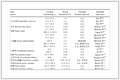
The stability of β-elemene micelles in serum was assessed and shown in Fig. 2A. After 24 h of incubation, no palpable increase of turbidity was observed. The superior stability of β-elemene micelles in serum suggested the safety for in vivo application. In the pharmacokinetic study, the circulation time of β-elemene in blood after being loaded into polymeric micelles was prolonged and the drug concentration in blood was also increased compared with the free drug (Fig. 2B and Table 1). The AUC and T1/2 in micelle group were 1.79 times and 1.62 times of that in the free β-elemene group (92.50 ± 16.98 vs. 51.72 ± 6.56 μg L-1 h, P < 0.001; 1.62 ± 0.57 vs. 1.00 ± 0.14 h, P < 0.05).
Figure 2
Figure 2.
(A) In vitro serum stability of prepared micelles in fetal bovine serum. (B) Plasma concentration-time profiles of β-elemene after i.v. administration of free β-elemene or β-elemene micelles.
Free β-elemene and β-elemene micelles had a dose-dependent inhibitory effect on the growth of C26 (Fig. S1A in Supporting information), and the IC50 of the β-elemene micelles (8.34 μg/mL) was lower than that of the free β-elemene (12.41 μg/mL). Micelles could induce more tumor cell apoptosis (Fig. S1B in Supporting information). The apoptosis percentage of tumor cells treated with 50 μg/mL micelles (32.69% ± 0.72%) was higher than those treated with 50 μg/mL free β-elemene (68.97% ± 0.57%, P < 0.0001), suggested the micelles could induce more tumor cell apoptosis compare with free β-elemene (Fig. S1B). The similar results were observed in the 10 μg/mL concentration groups. Also, the β-elemene arrested the cell cycle in G2/M phase, and the micelles were more effective than the free β-elemene (Fig. S1D in Supporting information).
In the wound healing study, the β-elemene micelles (87.83% ± 2.19%) showed better inhibitory effect on the migration of HUVEC cells than free drugs (61.46% ± 4.72%) (Fig. S2A in Supporting information). Moreover, 20 μg/mL β-elemene micelles virtually blocked all the formation of blood tube, while 20 μg/mL free β-elemene blocked only 62.16% (Fig. S2C in Supporting information).
The study of cellular uptake clarified the mechanism of the enhanced cytotoxic activity. Cells in the coumarin micelle group showed a much brighter green fluorescence than that in the free coumarin group (Fig. 3A), indicating the increased cellular uptake of drugs in the micelle group, which was further quantified by FCM analysis (Fig. 3B) and HPLC (Fig. 3C).
Figure 3
Figure 3.
Cell uptake of different formulations. (A) Fluorescent images of C26 cells treated with medium, free coumarin, and coumarin micelles under a confocal microscope at the indicated time intervals (Scale bar: 5 nm). (B) Flow cytometric histograms for the blank micelles, free coumarin and coumarin micelles in C26 cells.
(C) The total intake of β-elemene in C26 cells detected by the HPLC.
In anti-tumor study on C26 tumor-bearing mouse model, the growth of tumors (Fig. 4A) was significantly curtailed by β-elemene micelle (100 mg/kg) therapy. However, β-elemene solution (100 mg/kg) did not show palpable inhibitory effect on C26 tumor growth, indicating a poor tumor selectivity and potential side effects. Body weight changes (Fig. 4B) depicted somewhat systemic toxicity in β-elemene solution group (100 mg/kg). Since therewas no palpable difference between the control groupand the β-elemene micelle groups, indicated that micelles had no obvious toxicity to mice. Mean tumor weight (Fig. 4C) in 100 mg/kg micelle group (0.61 ±0.23 g) decreased by 46.16% (P < 0.05) and 42.45% (P < 0.01) compared with the β-elemene solution group (1.13 ± 0.28 g) and normal saline group (1.06 ± 0.40 g), respectively. The photograph of subcutaneous tumors in each group (Fig. 4D) further proved the enhanced anti-tumor efficacy of β-elemene micelles. In summary, the above results implied that the micelles enhanced the anti-tumor effect and alleviated the systemic toxicity of β-elemene.
Figure 4
Figure 4.In vivo anti-tumor effect in a subcutaneous C26 tumor model. (A) Volume of tumors in each group. (B) Body weight of C26 tumor-bearing mice in each group. (C) Weight of tumors in each group. (D) Tumor photographs in each group.
β-Elemene micelle-treated tumors presented more necrosis areas (black arrow) compared with β-elemene solution-treated tumors(Fig.S3A in Supporting information). β-Elemenemicelle was also more effective than free β-elemene on suppressing tumor cell proliferation in vivo (Fig. S3B in Supporting information). More Ki-67 positive cells were found in the control group and free β-elemene group than in the β-elemene micelle group in tumor tissues. Compared with the control group, tumor tissues treated with β-elemene micelles or β-elemene solution showed significantly decreased microvessel density(Fig.S3C in Supporting information).
The irritation through intravenous injection was assessed by H & E staining (Fig. 5A). The tissue necrosis (blue arrow), bleeding (black arrow), blood clot (red arrow) and inflammatory cells (yellow arrow) were observed at the injection sites of β-elemene solution group, while above phenomena were not observed in the normal saline or β-elemene micelle groups. Therefore, β-elemene micelles reduced the irritation of β-elemene to injection sites. The irritation of β-elemene through intramuscular injection was also studied (Fig. 5B). As same as the normal saline group, muscle fiber was closely aligned around the injection sites after intramuscular injection of β-elemene micelles. However, severe irritation was observed in the free β-elemene group, such as muscle cell necrosis (blue arrow) and inflammatory cell infiltration (yellow arrow). These results further indicated that β-elemene micelles produced less irritation to mice than free β-elemene.
Figure 5
Figure 5.
(A) The histopathological examination of rabbit ear veins injected with normal saline free β-elemene (100 mg/kg) and β-elemene micelles (100 mg/kg) (Scale bar: 100 μm). (B) The histopathological examination of muscles injected with normal saline, free β-elemene (100 mg/kg) and β-elemene micelles (100 mg/kg) (Scale bar: 100 μm).
In conclusion, β-elemene-loaded mPEG-PCL micelles were prepared to enhance the water solubility and anti-tumor efficacy, as well as to mitigate the side effects of β-elemene. The micelles with narrow size distribution and high encapsulation efficiency improved the cytotoxicity, cellular uptake, apoptosis-inducing, anti-metastasis, and anti-angiogenesis effects compared with the free drug in vitro. Moreover, the micelles showed better pharmacokinetics and anti-tumor effect on C26 tumor model. Most importantly, the micelles alleviated the local irritation and systemic toxicity of β-elemene in vivo. Therefore, the prepared β-elemene micelles could be a potential superior formulation for clinical use.
Declaration of competing interest
The authors declare that they have no known competing financial interests or personal relationships that could have appeared to influence the work reported in this paper.
Acknowledgments
This research was supported by the Key Research and Development Program of Science and Technology Department of Sichuan Province (No. 2019YFS0514), the Research Funding of Sichuan provincial administration of traditional Chinese medicine (No. 2018QN004), and the Research Funding of Sichuan Provincial People's Hospital (No. 2017LY08).
Figure 1
Preparation and characterization of β-elemene micelles. (A) Preparation scheme of β-elemene. (B) Particle size distribution and TEM image of β-elemene micelles (Scale bar: 200 nm). (C) In vitro drug release profiles of free β-elemene and β-elemene micelles.
Figure 2
(A) In vitro serum stability of prepared micelles in fetal bovine serum. (B) Plasma concentration-time profiles of β-elemene after i.v. administration of free β-elemene or β-elemene micelles.
Figure 3
Cell uptake of different formulations. (A) Fluorescent images of C26 cells treated with medium, free coumarin, and coumarin micelles under a confocal microscope at the indicated time intervals (Scale bar: 5 nm). (B) Flow cytometric histograms for the blank micelles, free coumarin and coumarin micelles in C26 cells.
(C) The total intake of β-elemene in C26 cells detected by the HPLC.
Figure 4In vivo anti-tumor effect in a subcutaneous C26 tumor model. (A) Volume of tumors in each group. (B) Body weight of C26 tumor-bearing mice in each group. (C) Weight of tumors in each group. (D) Tumor photographs in each group.
Figure 5
(A) The histopathological examination of rabbit ear veins injected with normal saline free β-elemene (100 mg/kg) and β-elemene micelles (100 mg/kg) (Scale bar: 100 μm). (B) The histopathological examination of muscles injected with normal saline, free β-elemene (100 mg/kg) and β-elemene micelles (100 mg/kg) (Scale bar: 100 μm).


 DownLoad:



 下载:
下载:


 下载:
下载:

