
Scheme 1.
Synthetic route of the target compounds FTRZ, pTFTRZ and mTFTRZ

Synthesis and Applications of Excimer Host Materials Based on 2, 4, 6-Triphenyl-1, 3, 5-triazine and Fluorene Moieties
Xu He , Yuping Xiao , Xinlei Yuan , Shanghui Ye , Hongji Jiang


Organic light-emitting diodes (OLEDs) have attracted considerable attention owning to their intriguing applications in the next generation flat-panel displays and lighting techniques. According to the spin statistics, singlet excitons and triplet excitons are generated in a ratio of 1:3 under electric excitation.[1~3] As a result of the fact that 75% of the electrically generated triplet excitons is dissipated, the internal quantum efficiency (IQE) of fluorescence-based OLEDs is limited to 25%.[4] In order to achieve 100% IQE of OLED devices, many efforts have been devoted to employing the triplet excitons for light emission. Compared to conventional fluorescent devices, organic phosphorescent devices incorporating the heavy metal complexes are successful to utilize singlet and triplet excitons, then the theoretical IQE of the device can reach 100%.[5~7] However, the high cost and unknown toxicity of rare metal phosphorescent materials have limited their practical applications.[8] Moreover, due to the short operational lifetime, poor stability and low color purity, phosphorescent OLEDs are difficult to make a significant progress.[9] In recent years, thermally activated delayed fluorescence (TADF) based on pure organic materials without rare metal phosphorescent materials has been proposed to prepare the highly efficient OLEDs through successfully utilizing both singlet and triplet excitons.[10, 11]
Generally, the TADF emitters are doped in the host material to avoid the concentration quenching resulted from strong intermolecular interactions. A suitable host material should satisfy the following characteristics: firstly, higher triplet energy (ET) level than guest to prohibit reverse energy transfer from the guest to the host; [12] secondly, balanced charge carrier injecting and transporting ability in term of confining excitons in dopant emitters.[13] The typical strategies to increase the ET level of host materials can be to distort the conjugated structure of the molecular skeleton, [14] to control the interconnecting position of the donor and acceptor moieties, [15] and to use the sp3 silicon or carbon atom to constrain conjugation structure.[16~18] On the other hand, the bipolar host materials containing the electron-donating and electron-accepting moieties are able to simultaneously transport electrons and holes, which can facilitate balanced carrier recombination. Thus, triplet-triplet annihilation and triplet polaron quenching can be suppressed when the device is operating at a higher voltage.[19] In general, bipolar molecules are obtained by chemically bonding electron-donating and electron-with- drawing moieties within a single molecule.[20] Electron donor moieties used usually in bipolar host materials are carbazole, [21, 22] triphenylamine, [23, 24] fluorene[25, 26] and phenoxazine, [27] while electron acceptor moieties are pyrimidine, [28, 29] cyano, [30, 31] 2, 4, 6-triphenyl-1, 3, 5-tria- zine[32~34] and pyridine.[25] Especially, fluorene and 2, 4, 6- triphenyl-1, 3, 5-triazine moieties have been used widely to synthesize suitable bipolar host materials due to their favorable hole and electron-transporting capabilities.[35, 36]
The acid-catalyzed Friedel-Crafts reactions are utilized widely in the synthesis of asymmetric diarylfluorenes for high performance electroluminescent materials, but this reaction possesses some disadvantages, for example the reaction condition is tough and the precise control of the substitution position can not be easily realized.[37, 38] Fortunately, a novel Pd-catalyzed C—H functionalization reaction was developed by Song to construct a quaternary carbon center.[39] It has overcome the above weakness, and the substitution position is strictly determined by the position of bromine, which can afford some molecular frameworks unavailable from the traditional Friedel-Crafts reaction. As far as we know, this reaction has not been used in the construction of bipolar host materials. Herein, three novel bipolar host materials, 2-(4-(9-(4-(hexyloxy)phenyl)-9H- fluoren-9-yl)phenyl)-4, 6-diphenyl-1, 3, 5-triazine (FTRZ), 2, 4, 6-tris(4-(9-(4-(hexyloxy)phenyl)-9H-fluoren-9-yl)phenyl)-1, 3, 5-triazine (pTFTRZ) and 2, 4, 6-tris(3-(9-(4-(hexylo- xy)phenyl)-9H-fluoren-9-yl) phenyl)-1, 3, 5-triazine (mTFTRZ) have been designed and synthesized by using 2, 4, 6-tri- phenyl-1, 3, 5-triazine and fluorene as electron and donor moieties. The thermal decomposition temperatures at 5% weight loss of three compounds are over 400 ℃, which indicates that all the compounds possess good thermal stability. Due to the highly sterically hindered structure, the ET value of three host materials is almost 3.05 eV. The OLEDs with compounds FTRZ, pTFTRZ and mTFTRZ as the host materials for green TADF emitter of 2, 4, 5, 6-tetrakis(carbazol-9-yl)-1, 3-dicyanobenzene (4CzIPN) were prepared by using spin coating method. The green OLED of compound FTRZ as host material shows a peak emission at 510 nm with a maximum current efficiency of 6.7 cd/A, a maximum external quantum efficiency of 2.07% and a maximum brightness of 35718 cd/m2, which is much better than those of the same device hosted by compounds mTFTRZ and pTFTRZ. In addition, the efficiency roll-offs of the OLEDs hosted by compounds FTRZ and pTFTRZ at 20000 cd/m2 are 3% and 2%, respectively.
As sketched in Scheme 1, compounds FTRZ, pTFTRZ and mTFTRZ were synthesized by using 9-(4-(hexyl- oxy)phenyl)-9H-fluorene, 2-(4-bromophenyl)-4, 6-diphen- yl-1, 3, 5-triazine, 2, 4, 6-tris(4-bromophenyl)-1, 3, 5-tri- azine, 2, 4, 6-tris(3-bromophenyl)-1, 3, 5-triazine through palladium-catalyzed cross-coupling reaction. The 1H NMR, 13C NMR and MALDI-TOF-MS spectra were used to characterize the chemical structure of compounds FTRZ, pTFTRZ and mTFTRZ. Compounds FTRZ, pTFTRZ and mTFTRZ exhibit good solubility and can completely dissolve in common organic solvents.
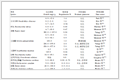
The thermogravimetric analysis (TGA) and differential scanning calorimetry (DSC) measurements were conducted for compounds FTRZ, pTFTRZ and mTFTRZ solid to measure the thermal decomposition (Td) and glass transition temperatures (Tg), and the details are illustrated in Table 1 and Figure 1. As shown in Figure 1, the Td values are 427, 446 and 424 ℃ for compounds FTRZ, pTFTRZ and mTFTRZ, respectively, showing good thermal stability. It can also be seen from Figure 1 that Tg values of 120 and 103 ℃ are observed for compounds pTFTRZ and mTFTRZ. The Tg value is not obviously observed in the DCS curve for FTRZ, but the melting point (Tm) is found at 186 ℃. The high Td values can be attributed to the relatively high molecular weight of these compounds and their rigid aromatic carbon structure.[40] When compared with that of pTFTRZ, the much lower Tg value of mTFTRZ is resulted from its more twisted structure. Based on these results, we expect that all of the three compounds can form morphologically stable films for OLED manufacturing and remain stable during operation.[41] Crystal of FTRZ was prepared by putting equal volume of n-hexane into the dichloromethane solution of FTRZ (3 mL, 10−3 mol/L) at room temperature. Molecule stacking mode for the dimer of FTRZ in crystal is illustrated in Figure 2. As shown in Figure 2, compound FTRZ form a monoclinic system with unit cell parameters a, b, c and α, β and γ of 15.355, 12.357, 19.791 Å and 90°, 108° and 90°, respectively. The structure details of the single crystal are summarized in Table S1. As a result of the significant crystalline behavior of compound FTRZ, an obvious melting point temperature of 186 ℃ appeared during the DSC test. Due to the very small distance between dimer planes (3.8908 Å), there is a very strong π…π stacking interaction between 2, 4, 6-tri- phenyl-1, 3, 5-triazine plane of the dimers within the crystal.[42]
 下载:
导出CSV
| Compd. | λabsa/nm | λemb/nm | S1c/eV | T1d/eV | Ege/eV | HOMO/eV | LUMO/eV | Tg/℃ | Td /℃ |
| FTRZ | 286 | 506 | 3.29 | 3.04 | 3.24 | -5.34 | -2.90 | * | 434 |
| pTFTRZ | 289, 312 | 514 | 3.43 | 3.11 | 3.29 | -5.40 | -2.85 | 120 | 446 |
| mTFTRZ | 289 | 511 | 3.43 | 3.05 | 3.24 | -5.34 | -2.93 | 103 | 424 |
| a In toluene solution. b In thin solid film states. c Measured in toluene solution at room temperature. d Measured in tetrahydrofuran at 77 K. e Calculated from the onset of UV-Vis absorption spectra in toluene solution. | |||||||||

Room-temperature UV-Vis absorption and photoluminescent emission spectra of compounds FTRZ, pTFTRZ and mTFTRZ are shown in Figure 3. As shown in Figure 3, the maximum UV-Vis absorptions of compounds FTRZ, pTFTRZ and mTFTRZ in toluene are 286, 289 and 289 nm. The maximum UV-Vis absorption of the three compounds is the typical absorbance of π-π* transition of the fluorene-based back bone. Because their strong steric hindrance significantly reduces the interaction between donor and acceptor moieties, no charge transfer absorption band appears in the long wavelength region of their UV-Vis spectra.[20] The maximum emissions of compounds FTRZ, pTFTRZ and mTFTRZ in toluene show maximum deep blue emission of 400, 350 and 350 nm, respectively. In addition, FTRZ exhibits a locally excited state emission at 350 nm.[43] When compared with those of compounds pTFTRZ and mTFTRZ, the photoluminescent emission spectrum of compound FTRZ is bathochromically shifted for 50 nm. It might be due to the increase of the number of fluorene groups, which strengthens the steric hindrance between 2, 4, 6-triphenyl-1, 3, 5-triazine and fluorene moieties. The energy band gaps (Eg) of these compounds obtained from their absorption spectra in toluene solution are 3.24, 3.29 and 3.24 eV for compounds FTRZ, pTFTRZ and mTFTRZ. The singlet energy levels of compounds FTRZ, pTFTRZ and mTFTRZ calculated from the onset of fluorescence emission spectra measured in toluene solution are 3.29, 3.43 and 3.43 eV, respectively. The low temperature phosphorescent spectra of compounds FTRZ, pTFTRZ and mTFTRZ in tetrahydrofuran at 77 K are showed in Figure 3. The ET values of compounds FTRZ, pTFTRZ and mTFTRZ determined by taking the highest energy peak of phosphorescent spectra are 3.04, 3.11 and 3.05 eV, respectively. In recent years, excimer host materials have been used widely in the OLED.[44, 45] The fluorescence emission band of the three compounds in the solid film state shows a large red shift compared to those in the diluted toluene solution, which can be ascribed to the strong intermolecular π···π stacking interactions and intermolecular charge transfer that would induce the formation of excimer in the film state. Therefore, the three compounds are expected to be used as excimer host materials. In order to further verify the above speculation, the thin film photoluminescent emission spectra of the three compounds doped in 1, 3-bis(9H-carbazol- 9-yl)benzene (mCP) with a molar ratio of 10:1 and pure mCP film were tested. It could be seen that the photoluminescent spectra of the three compounds doped in mCP showed significant blue shift, and the mCP molecules diluted the guest molecules and weakened the intermolecular charge transfer interaction among them. Furthermore, to get a deep insight into the forming mechanism of the excimer, we characterized the highest occupied molecular orbital (HOMO) and lowest unoccupied molecular orbital (LUMO) energy levels of 9-(4-hexyloxy-phen- yl)-9-phen- yl-9H-fluorene and 2, 4, 6-triphenyl-1, 3, 5-tria- zine in solution, and the corresponding LUMO and HOMO energy levels are -2.19/-6.07 and -2.48/-6.52 eV, which verified that the energy structure of electron-donor and accepter moieties met the general requirements of intramolecular excimer formation.[46, 47] In order to investigate the solvate chromaticity of compounds FTRZ, pTFTRZ and mTFTRZ, their photoluminescent spectra were measured in a series of solvents with different polarities. It showed that all of the three compounds displayed a strong solvate chromaticity and the photoluminescence spectra exhibited apparent red shift from low polar hexane to higher polar acetone. We also recorded the photoluminescent spectra of compounds TFTRZ, pTFTRZ and mTFTRZ in tetrahydrofuran/H2O mixture solvents with different water volume fractions. It can be seen that the photoluminescent emission spectra of the three compounds become much stronger with a higher water volume fraction, which is a typical aggregation-induced emission active phenomenon.[48]

The cyclic voltammetry (CV) measurements are used to investigate the electrochemical properties of the three compounds. The oxidation and reduction potentials were calculated from the onset of oxidation and reduction curves obtained from the dichloromethane and tetrahydrofuran solution, respectively. Figure 4 illustrates the CV curves in detail. The HOMO energy levels of compounds FTRZ, pTFTRZ and mTFTRZ are measured to be -5.34, -5.40 and -5.34 eV, and the LUMO energy levels of compounds FTRZ, pTFTRZ and mTFTRZ are measured to be -2.90, -2.85 and -2.93 eV. The nearly equal HOMO and LUMO energy levels of these structurally distorted compounds indicate that the HOMO and LUMO levels of these bipolar hybrid compounds are only related to the electronic characteristic of the electron-donating and electron-accepting moieties.[20]

In view of their relatively high ET levels and unique green light emission of compounds FTRZ, pTFTRZ and mTFTRZ in the thin solid film state, the green TADF OLEDs with a simple architecture of indium tin oxide (ITO)/poly(3, 4-ethylenedioxythiophene)-poly(styrenesulf- onate) (PEDOT:PSS)(40 nm)/host:4CZIPN (16mg/mL, 15% in weight) (35 nm)/1, 3, 5-tris(1-phenyl-1H-benzim- idazol-2-yl)benzene (TPBI) (35 nm)/Ca(100 nm):Ag(15 nm), in which PEDOT:PSS was used as the anode buffer layer and the mixture of hosts doped with 4CZIPN was spin coated onto the PEDOT:PSS layer without inserting any hole-transporting layer, were fabricated. Figure 5 shows the current density-voltage curves, luminance- voltage curves, current efficiency-voltage curves, electroluminescent spectra at 14 V and external quantum efficiency-luminance curves of the devices. It can be seen from the electroluminescent spectra of devices in Figure 5(d) that all the devices show the green emission spectra peaking at 510 nm. It can also be seen from Figure 5 that the turn-on voltages, maximum brightness, maximum current efficiencies and external quantum efficiencies of compounds FTRZ, pTFTRZ and mTFTRZ are 6.8, 6.8 and 8.2 V, 35718, 28195 and 17147 cd/m2, 6.7, 6.4 and 4.5 cd/A, 2.07%, 1.97% and 1.38%, respectively. Furthermore, the efficiency roll-offs of the OLEDs hosted by compounds FTRZ and pTFTRZ at 20000 cd/m2 are 3% and 2%, respectively. The electroluminescent properties of the green devices hosted by compounds FTRZ, pTFTRZ and mTFTRZ are illustrated in Table 2. The three compounds possess the analogous HOMO and LUMO energy levels as well as ET levels, the more excellent electroluminescent performance of green OLEDs hosted by compound FTRZ can be attributed to the relatively high oscillator strength that results from the moderate quantity of the donor moieties and the suitable linkage mode between the donor and acceptor moieties.[49]
 下载:
导出CSV
| Host | Vona/V | Lmaxb/[cd·m-2] | CEc/[cd·A-1] | EQEd |
| FTRZ | 6.8 | 35718 | 6.7 | 2.07% |
| pTFTRZ | 6.8 | 28195 | 6.4 | 1.97% |
| mTFTRZ | 8.2 | 17147 | 4.5 | 3.05% |
| a The turn-on voltage. b The maximum brightness. c The maximum current efficiency. d The maximum external quantum efficiency. | ||||
In summary, by employing fluorene as electron donors and 2, 4, 6-triphenyl-1, 3, 5-triazine as electron acceptors, three host materials FTRZ, pTFTRZ and mTFTRZ were synthesized and characterized. All the compounds exhibit good thermal stability with thermal decomposition temperatures at 5% weight loss in a range of 424~446 ℃. Due to the large sterically hindered structures, all the hosts have a similar ET value as high as 3.05 eV, which is sufficiently high for green TADF emitters. Due to the intermolecular π-π interactions, the three compounds formed excimer in the thin film state. The OLEDs with compounds FTRZ, pTFTRZ and mTFTRZ as host materials for green TADF emitter 4CzIPN were prepared by using spin coating method. The maximum brightness, maximum current efficiency and external quantum efficiency of green OLED with FTRZ as host material are determined to be 35718 cd/m2, 6.7 cd/A and 2.07%, which are much better than those of the same devices hosted by compounds pTFTRZ and mTFTRZ. In addition, the efficiency roll-offs of the OLEDs hosted by compounds FTRZ and pTFTRZ at 20000 cd/m2 are 3% and 2%, respectively.
The chemicals and reagents used were purchased from Aladdin Chemical and Energy Chemical without further purification. Tetrahydrofuran and toluene are used after distillation to remove water under nitrogen atmosphere. The 1H NMR and 13C NMR spectra were recorded on a Varian Mercury Plus 400 spectrometer with tetramethylsilane as an internal standard. Chemical shifts of CHCl3 and DMSO-d6 were set as δ 7.26 and 2.5, 3.4. The molecular weights were measured on a Bruker Daltonics flex Analysis. The UV-Vis absorption spectra were obtained with a UV-3600 SHIMADZU UV-Vis-NIR spectrophotometer. Photoluminescence spectra were obtained with an RF-5301PC spectro fluorophotometer. The concentration of the toluene solution used was adjusted to be 10-5 mol/L. The thin solid film was obtained after a drop of dichloromethane solution (10-3 mol/L) on a quartz substrate evaporated naturally. The DSC analysis was performed on a PerkineElmer Diamond DSC with a heating rate of 10 ℃/min from room temperature to 220 ℃ under nitrogen. The TGA were carried out on a SEIKO EXSTAR 6000 TG/DTA 6200 unit by measuring weight loss of samples with a heating rate of 10 ℃/min under nitrogen atmosphere.[48] The X-ray diffraction data of the single crystal was obtained on a Bruker Smart Apex CCD area detector diffractometer (Germany) by using graphite-monochromatic Mo-Kα radiation (λ=0.71073 Å). The CV experiments were performed using a Chi660e system in a conventional three-electrode configuration with a glassy carbon working electrode, a Pt wire counter electrode and an Ag/Ag+ reference electrode referenced against ferrocene/ferrocenium. The oxidation and reduction potentials were measured in dichloromethane and tetrahydrofuran solution containing of tetrabutyl hexafluorophosphate (0.10 mol/L) as the supporting electrolyte at a scan rate of 50 mV/s. The HOMO energy levels of these compounds were obtained by using the formula: EHOMO= -Eoxi+0.0041-4.8). The LUMO energy levels of these compounds were obtained by using the formula: ELUMO=-Ered-0.059-4.8. The values of 0.0041 and 0.059 are the oxidation and reduction potential of ferrocene. Eoxi and Ered are the oxidation and reduction potentials of compounds.[48]
The hole injection material of PEDOT and PSS, the electron-transporting material of TPBI and the fluorescence dopant of 4CzIPN are commercially purchased. Firstly, the ITO substrates were cleaned by some routine solvent. Then, the pretreated ITO glass substrates were treated with UV-ozone for 5 min. PEDOT:PSS was then spin-coated onto the prepared ITO substrate. The emitting layers (16 mg/mL, in chlorobenzene) were spin-coated onto the PEDOT:PSS film to form a 35 nm thick emissive layer and then annealed at 80 ℃. The 35 nm electron-transporting layer of TPBI was then deposited on the emitting layer under vacuum, and a cathode is obtained by sequentially depositing 100 nm of calcium and 15 nm of silver onto the substrate with a pressure of 10-6 Torr. The current-voltage-brightness characteristics were obtained with a computer-controlled Keithley source measurement unit (Keithley 2400 and Keithley 2000) and a calibrated silicon photodiode. The electroluminescent spectra were obtained by using a spectra-scan PR655 spectrophotometer. All the measurements were carried out at room temperature under ambient conditions.[50]
2-(4-Aminophenyl)-4, 6-diphenyl-1, 3, 5-triazine:[51] A solution of 2-chloro-4, 6-diphenyl-1, 3, 5-triazine (0.27 g, 1 mmol), 4-(4, 4, 5, 5-tetramethyl-1, 3, 2-dioxaborolan-2-yl)- aniline (0.20 g, 0.9 mmol), tetrakis(triphenylphosphine) palladium(0) (0.03 g, 0.26 mmol), potassium carbonate aqueous solution (5 mL, 2 mol/L) and 5 mL of tetrahydrofuran was stirred at 65 ℃ for 48 h under nitrogen. The resulting mixture was extracted by 50 mL of dichloromethane and 50 mL of water for 3 times, then the dichloromethane layer was dried over magnesium sulfate, filtered, and concentrated under reduced pressure. The resulting organic solid was then added to chloroform (5 mL) and brown precipitate was gathered by filtering. After drying in vacuum, 0.13 g of 2-amino-4, 6-diphenyl-1, 3, 5-tria- zine was obtained in a yield over 43%. Yellow solid. 1H NMR (CDCl3, 400 MHz) δ: 4.11 (s, 2H), 6.80 (d, J=8 Hz, 2H), 7.54~7.60 (m, 6H), 8.61 (d, J=8 Hz, 2H), 8.74 (m, 4H).
2-(4-Bromophenyl)-4, 6-diphenyl-1, 3, 5-triazine:[51] A solution of 2-amino-4, 6-diphenyl-1, 3, 5-triazine (0.094 g, 0.24 mmol) and hydrobromic acid (2 mL, 48%) was stirred at 0 ℃ for 5 min. Then a solution of 0.096 g of NaNO2 in 2 mL of water was put into the above solution at 0 ℃. The mixture was stirred at 0 ℃ for 1 h, a solution of copper bromide(I) (0.16 g, 0.9 mmol) and hydrobromic acid (0.9 mL, 48%) was added slowly and stirred at 30 ℃ for 5 min. The resulting mixture was stirred at 120 ℃ for 12 h. Subsequently, the resulting mixture was extracted by 50 mL of dichloromethane and 50 mL of water for 3 times, then the dichloromethane layer was dried over magnesium sulfate, filtered, and concentrated under reduced pressure. The residue solid was purified by silica gel column chromatograph [eluent: V(dichloromethane)/V(petroleum ether)=1/10 in volume] and afforded 0.06 g of 2-bromo- 4, 6-diphenyl-1, 3, 5-triazine in a yield over 60%. White solid. 1H NMR (CDCl3, 400 MHz) δ: 7.55~7.65 (m, 6H), 7.70 (d, J=8 Hz, 2H), 8.64 (d, J=8 Hz, 2H), 8.76 (dd, J=4, 4 Hz, 4H).
1-Bromo-4-(hexyloxy)benzene:[52] A mixture of 4-bro- mophenol (7.8 g, 45 mmol), 1-bromohexane (4.95 g, 30.0 mmol), potassium carbonate (10.35 g, 75 mmol) and N, N-dimethylformamide (40 mL) were stirred at 60 ℃ for 12 h. The resulting mixture was extracted by 50 mL of dichloromethane and 50 mL of water for 3 times, then the dichloromethane layer was dried over magnesium sulfate, filtered, and concentrated under reduced pressure. The residue solid was purified by silica gel column chromatograph [eluent: V(dichloromethane)/V(petroleum ether)=1/10] and afforded 5.13 g of 1-bromo-4-(hexyloxy)benzene in a yield of 66%. Colorless liquid. 1H NMR (CDCl3, 400 MHz) δ: 0.9~0.94 (m, 3H), 1.27~1.49 (m, 6H), 1.74~1.81 (m, 2H), 3.9 (t, J=12 Hz, 2H), 6.76~6.8 (m, 2H), 7.34~7.38 (m, 2H).
9-(4-(Hexyloxy)phenyl)-9H-fluoren-9-ol:[53] A solution of 1-bromo-4-(hexyloxy)benzene (2.57 g, 10.0 mmol) in dry tetrahydrofuran (10 mL) was dropwise added to a stirring and heating mixture of magnesium ribbon (0.34 g, 14.0 mmol) in dry tetrahydrofuran (2 mL) including a small amount of iodine under nitrogen to prepare the active reaction solution. A solution of 9-fluorenone (2.7 g, 15 mmol) in dry tetrahydrofuran (20 mL) was added slowly to the above reaction solution and refluxed overnight at 65 ℃. The resulting mixture was extracted by 50 mL of dichloromethane and 50 mL of water for 3 times, then the dichloromethane layer was dried over magnesium sulfate, filtered, and concentrated under reduced pressure. The residue solid was purified by silica gel column chromatograph [eluent: V(ethyl acetate)/V(petroleum ether)=1/10] and afforded 2.15 g of 9-(4-(hexyloxy)phenyl)-9H-flu- oren-9-ol in a yield of 60%. Yellow solid. 1H NMR (DMSO-d6, 400 MHz) δ: 0.8 (t, 3H), 1.18~1.31 (m, 6H), 1.60~1.67 (m, 2H), 3.9 (t, J=12 Hz, 2H), 6.2 (s, 1H), 6.74~6.77 (m, 2H), 7.09~7.13 (m, 2H), 7.21~7.26 (m, 2H), 7.30~7.36 (m, 2H), 7.76 (d, J=8 Hz, 2H).
9-(4-(Hexyloxy)phenyl)-9H-fluorene:[39] A solution of 9-(4-(hexyloxy)phenyl)-9H-fluoren-9-ol (0.53 g, 1.48 mmol) in 15 mL of dichloromethane, 0.6 mL of triethylsilane and 0.45 mL of boron trifluoride etherate were added successively with stirring. Subsequently, the mixture was stirred at 0 ℃ for 4 h. The resulting mixture was extracted by 50 mL of dichloromethane and 50 mL of water for 3 times, then the dichloromethane layer was dried over magnesium sulfate, filtered, and concentrated under reduced pressure. The residue solid was purified by silica gel column chromatograph [eluent: V(dichloromethane)/ V(petroleum ether)=1/10] and afforded 0.35 g of 9-(4- (hexyloxy)phenyl)-9H-fluorene in a yield of 70%. W hite solid. 1H NMR (CDCl3, 400 MHz) δ: 0.88~0.91 (m, 3H), 1.29~1.36 (m, 4H), 1.38~1.47 (m, 2H), 1.71~1.79 (m, 2H), 3.9 (t, J=16 Hz, 2H), 5.00 (s, 1H), 6.78~6.81 (m, 2H), 6.97~7.01 (m, 2H), 7.23~7.27 (m, 2H), 7.30 (d, J=8 Hz, 2H), 7.35~7.39 (m, 2H), 7.78 (d, J=8 Hz, 2H).
Compound FTRZ:[39] A solution of 2-(4-bromophen- yl)-4, 6-diphenyl-1, 3, 5-triazine (0.344 g, 0.89 mmol), tris(dibenzylideneacetone)dipalladium(0) (21.1 mg, 0.036 mmol), tert-butyldiphenylphosphine (17.9 mg, 0.074 mmol), 9-(4-(hexyloxy)phenyl)-9H-fluorene (0.253 g, 0.74 mmol) and potassium tert-butoxide (0.103 g, 0.88 mmol) in 3 mL of toluene was stirred at 110 ℃ for 12 h under nitrogen atmosphere. The resulting mixture was extracted by 50 mL of dichloromethane and 50 mL of water for 3 times, then the dichloromethane layer was dried over magnesium sulfate, filtered and concentrated under reduced pressure. The residue solid was purified by silica gel column chromatograph [eluent: V(dichloromethane)/V(petroleum ether)=1/5] and afforded 0.32 g of FTRZ in a yield over 67%. White solid, m.p. 180~188 ℃. 1H NMR (CDCl3, 400 MHz) δ: 0.88~0.91 (m, 3H), 1.29~1.34 (m, 4H), 1.40~1.46 (m, 2H), 1.72~1.79(m, 2H), 3.9 (t, J=8 Hz, 2H), 6.76~6.79 (m, 2H), 7.13~7.17 (m, 2H), 7.29~7.31 (m, 2H), 7.36~7.46 (m, 6H), 7.53~7.62 (m, 6H), 7.79~7.81 (d, J=8 Hz, 2H), 8.59~8.61 (m, 2H), 8.72~8.75 (m, 4H); 13C NMR (CDCl3, 100 MHz) δ: 1.1, 14.1, 22.7, 25.8, 29.3, 31.6, 65.0, 68.0, 76.7, 77.1, 77.4, 114.3, 120.3, 126.2, 127.6, 127.9, 128.5, 128.6, 128.9, 129.2, 132.5, 134.7, 136.3, 137.2, 140.2, 151.2, 151.2, 158.1, 171.5, 171.6; MALDI-TOF m/z: 649.62. Anal. calcd for C36H39N3O: C 85.02, H 6.05, N 6.47; found C 85.13, H 6.02, N 6.39.
Compound pTFTRZ:[39] Following the above process for FTRZ, 0.12 g of pTFTRZ (white solid) in a yield of 45% was obtained from a solution of 2, 4, 6-tris(4-bromo- phenyl)-1, 3, 5-triazine (0.11 g, 0.2 mmol), tris(dibenzyl- ideneacetone)dipalladium(0) (17.1 mg, 0.03 mmol), tert- butyldiphenylphosphine (14.5 mg, 0.06 mmol), potassium tert-butoxide (84 mg, 0.6 mmol) and 9-(4-(hexyloxy)phen- yl)-9H-fluorene (0.274 g, 0.8 mmol) in 2 mL of toluene at 110 ℃ for 24 h under nitrogen atmosphere [eluent: V(dichloromethane)/V(petroleum ether)=1/3]. m.p. 155~160 ℃; 1H NMR (CDCl3, 400 MHz) δ: 0.87~0.90 (m, 9H), 1.30~1.32 (m, 12H), 1.38~1.44 (m, 6H), 1.70~1.77 (m, 6H), 3.90 (t, J=12 Hz, 6H), 6.72~6.78 (m, 6H), 7.09~7.14 (m, 6H), 7.25~7.29 (m, 6H), 7.34~7.42 (m, 18H), 7.76 (d, J=8 Hz, 6H), 8.47 (d, J=8 Hz, 6H); 13C NMR (CDCl3, 100 MHz) δ: 1.1, 14.1, 22.7, 25.8, 29.3, 31.6, 65.0, 68.0, 76.8, 77.1, 77.4, 114.2, 120.3, 126.1, 127.6, 127.9, 128.4, 128.9, 129.2, 134.7, 137.2, 140.2, 151.1, 158.1, 171.3; MALDI-TOF m/z: 1329.65. Anal. calcd for C396H87N3O3: C 86.65; H 6.59; N 3.16; found C 86.71, H 6.52, N 3.25.
Compound mTFTRZ:[39] Following the above process for FTRZ, 0.32 g of mTFTRZ (yellow solid) in a yield of 39% was obtained from a solution of 2, 4, 6-tris(3-bromo- phenyl)-1, 3, 5-triazine (0.33 g, 0.6 mmol), tris(dibenzyli- deneacetone)dipalladium(0) (51.5 mg, 0.09 mmol), tert- butyldiphenylphosphine (43.6 mg, 0.18 mmol), 9-(4-(hex- yloxy)phenyl)-9H-fluorene (1.026 g, 3 mmol) and potassium tert-butoxide (0.21 g, 0.8 mmol) in 2 mL of toluene at 110 ℃ for 24 h under nitrogen atmosphere [eluent: V(dichloromethane)/V(petroleum ether)=1/2]. m.p. 150~158 ℃; 1H NMR (CDCl3, 400 MHz) δ: 0.86~0.89 (m, 9H), 1.29~1.32 (m, 12H), 1.37~44 (m, 6H), 1.69~1.76 (m, 6H), 3.86~3.90 (m, 6H), 6.76~6.79 (m, 6H), 7.03~7.14 (m, 6H), 7.24~7.50 (m, 24H), 7.77 (d, J=4 Hz, 6H), 8.18~8.20 (m, 3H), 8.50 (t, J=4 Hz, 3H); 13C NMR (CDCl3, 100 MHz) δ: 1.1, 14.1, 22.6, 25.8, 29.3, 31.6, 64.8, 67.9, 76.7, 77.1, 77.4, 114.2, 120.3, 126.2, 127.3, 127.5, 127.8, 128.4, 128.5, 129.2, 132.2, 136.1, 137.3, 140.2, 146.7, 151.4, 158.0, 171.4; MALDI-TOF m/z: 1329.96. Anal. calcd for C96H87N3O3: C 86.65, H 6.59, N 3.16; found C 86.61, H 6.63, N 3.07.
Supporting Information 1H NMR, 13C NMR, MALDI-TOF spectra for target compounds, structure data of compounds FTRZ, pTFTRZ and mTFTRZ, emission spectra of target compounds doped in mCP, emission spectra of target compounds in solution with different polarity or tetrahydrofuran/H2O solution with different water volume fractions. The Supporting Information is available free of charge via the Internet at http://sioc-journal.cn/.
Baldo, M. A.; O'Brien, D. F.; You, Y.; Shoustikov, A.; Sibley, S.; Thompson, M. E.; Forrest, S. R. Nature 1998, 395, 151. doi: 10.1038/25954
Xiao, L. X.; Chen, Z. J.; Qu, B.; Luo, J. X.; Kong, S.; Gong, Q. H.; Kido, J. J. Adv. Mater. 2011, 23, 926. doi: 10.1002/adma.v23.8
Baldo, M. A.; O'Brien, D. F.; Thompson, M. E.; Forrest, S. R. Phys. Rev. B. 1999, 60, 14422. doi: 10.1103/PhysRevB.60.14422
Chen, L.; Jiang, Y.; Nie, H.; Hu, R.; Kwok, H. S.; Huang, F.; Qin, A.; Zhao, Z.; Tang, B. Z. ACS Appl. Mater. Interfaces 2014, 6, 17215. doi: 10.1021/am505036a
Lee, C. W.; Kim, J.; Joo, S. H.; Lee, J. Y. ACS Appl. Mater. Interfaces 2013, 5, 2169. doi: 10.1021/am303256c
Jeon, Y. P.; Kim, K. S.; Lee, K. K.; Moon, I. K.; Choo, D. C.; Lee, J. Y.; Kim, T. W. J. Mater. Chem. C. 2015, 3, 6192. doi: 10.1039/C5TC00279F
Xiang, C. Y.; Fu, X.; Wei, W.; Liu, R.; Zhang, Y.; Balema, V.; Nelson, B.; So, F. Adv. Funct. Mater. 2016, 26, 1463. doi: 10.1002/adfm.201504357
Huang, J.; Leung, M.; Chiu, T.; Chuang, Y.; Chou, P.; Hung, Y. Org. Lett. 2014, 16, 5398. doi: 10.1021/ol502602t
谭继华, 霍延平, 蔡宁, 籍少敏, 李宗植, 张力, 有机化学, 2017, 37, 2457. http://manu19.magtech.com.cn/Jwk_yjhx/CN/abstract/abstract346145.shtmlTan, J.-H.; Huo, Y.-P.; Cai, N.; Ji, S.-M.; Li, Z.-Z.; Zhang, L. Chin. J. Org. Chem. 2017, 37, 2457(in Chinese). http://manu19.magtech.com.cn/Jwk_yjhx/CN/abstract/abstract346145.shtml
Tanaka, H.; Shizu, K.; Nakanotani, H.; Adachi, C. J. Phys. Chem. C. 2014, 118, 15985. doi: 10.1021/jp501017f
Tanaka, H.; Shizu, K.; Nakanotani, H.; Adachi, C. Chem. Mater. 2013, 25, 3766. doi: 10.1021/cm402428a
黄斌, 唐霁楠, 蒋伟, 杨文, 班鑫鑫, 孙岳明, 有机化学, 2013, 33, 1395. http://manu19.magtech.com.cn/Jwk_yjhx/CN/abstract/abstract341930.shtmlHuang, B.; Tang, J.-N; Jiang, W.; Yang, W.; Ban, X.-X.; Sun, Y.-M. Chin. J. Org. Chem. 2013, 33, 1395(in Chinese). http://manu19.magtech.com.cn/Jwk_yjhx/CN/abstract/abstract341930.shtml
Tao, Y. T.; Wang, Q.; Yang, C. L.; Wang, Q.; Zhang, Z. Q.; Zou, T. T.; Qin, J. G.; Ma, D. G. Angew. Chem., Int. Ed. 2008, 47, 8104. doi: 10.1002/anie.v47:42
Li, W.; Li, J.; Liu, D.; Wang, F.; Zhang, S. J. Mater. Chem. C 2015, 3, 12529. doi: 10.1039/C5TC02997J
Lee, C. W.; Lee, J. Y. ACS Appl. Mater. Interfaces 2015, 7, 2899. doi: 10.1021/am508259u
Yang, R.; Li, D.; Bai, Y.; Zhang, L.; Liu, Z.; Hao, J.; Wei, Q.; Liao, L.; Peng, R.; Ge, Z. Org. Electron. 2018, 55, 117. doi: 10.1016/j.orgel.2018.01.026
Wong, K. T.; Chen, Y. M.; Lin, Y. T.; Su, H. C.; Wu, C. C. Org. Lett. 2005, 7, 5361. doi: 10.1021/ol051977h
Li, H.; Xu, L.; Tang, Y.; Tao, Y.; Xu, S.; Zheng, C.; Xing, G.; Zhou, X.; Huang, W. Chen, R. J. Mater. Chem. C 2016, 4, 10047. doi: 10.1039/C6TC03877H
Ting, H. C.; Chen, Y. M.; You, H. W.; Hung, W. Y.; Lin, S. H.; Chaskar, A.; Chou, S. H.; Chi, Y.; Liu, R. H.; Wong, K. T. J. Mater. Chem. 2012, 22, 8399. doi: 10.1039/c2jm30207a
Wu, C.; Guo, Q. X.; Ma, W. J.; Li, X. P.; Qiu, P. L.; Hu, J. Y.; Wang, Q.; Chen, J. S.; Ma, D. G. Phys. Chem. Chem. Phys. 2017, 19, 5177. doi: 10.1039/C6CP08334J
Cheng, S.; Hung, W.; Cheng, M.; Chen, H.; Chaskar, A.; Lee, G.; Chou, S.; Wong, K. J. Mater. Chem. C 2014, 2, 8554. doi: 10.1039/C4TC01463D
Gong, S.; Zhao, Y.; Yang, C.; Zhong, C.; Qin, J.; Ma, D. J. Phys. Chem. C 2010, 114, 5193. doi: 10.1021/jp100034r
Chen, K.; Zhao, H.; Fan, Z.; Yin, G.; Chen, Q.; Quan, Y.; Li, S.; Ye, S. Org. Lett. 2015, 17, 1413. doi: 10.1021/acs.orglett.5b00292
Fan, Z.; Zhao, H.; Li, N.; Quan, Y.; Chen, Q.; Ye, S.; Li, S.; Wang, Y.; Fan, Q.; Huang, W. ACS Appl. Mater. Interfaces 2015, 7, 9445. doi: 10.1021/am509014v
Ye, S.; Li, L.; Zhang, M.; Zhou, Z.; Quan, M.; Guo, L.; Wang, Y.; Yang, M.; Lai, W.; Huang, W. J. Phys. Chem. C 2017, 5, 11937.
Mondal, E.; Hung, W.; Dai, H.; Wong, K. Adv. Funct. Mater. 2013, 23, 3096. doi: 10.1002/adfm.v23.24
Li, J.; Li, Y.; Zhao, Y.; Liu, X.; Fung, M.; Fan, J. Org. Electron. 2018, 54, 140. doi: 10.1016/j.orgel.2017.12.033
Kim, G. H.; Lampande, R.; Park, M. J.; Bae, H. W.; Kong, J. H.; Kwon, J. H.; Park, J. H.; Park, Y. W.; Song, C. E. J. Phys. Chem. C 2014, 118, 28757. doi: 10.1021/jp507036h
Yu, J.; Zang, C.; Yu, Z.; Wang, H.; Liu, S.; Zhang, L.; Xie, W.; Zhao, H. Org. Electron. 2016, 38, 301. doi: 10.1016/j.orgel.2016.09.002
Lin, W. C.; Lin, H. W.; Mondal, E.; Wong, K. T. Org. Electron. 2015, 17, 1. doi: 10.1016/j.orgel.2014.11.002
Li, W.; Li, J.; Liu, D.; Li, D.; Wang, F. ACS Appl. Mater. Interfaces 2016, 8, 21497. doi: 10.1021/acsami.6b04395
Guo, K.; Wang, H.; Wang, Z.; Si, C.; Peng, C.; Chen, G.; Zhang, J.; Wang, G.; Wei, B. Chem. Sci. 2017, 8, 1259. doi: 10.1039/C6SC03008D
Chang, C.; Kuo, M.; Lin, W.; Chen, Y.; Wong, K.; Chou, S.; Mondal, E.; Kwong, R. C.; Xia, S.; Nakagawa, T.; Adachi, C. J. Mater. Chem. 2012, 22, 3832. doi: 10.1039/c2jm14686j
Rothmann, M. M.; Haneder, S.; Da Como, E.; Lennartz, C.; Schildknecht, C.; Strohriegl, P. Chem. Mater. 2010, 22, 2403. doi: 10.1021/cm9033879
Wen, G. A.; Xin, Y.; Zhu, X. R.; Zeng, W. J.; Zhu, R.; Feng, J. C.; Cao, Y.; Zhao, L.; Wang, L. H.; Wei, W.; Peng, B.; Huang, W. Polymer 2007, 48, 1824. doi: 10.1016/j.polymer.2006.10.032
Rothmann, M. M.; Fuchs, E.; Schildknecht, C.; Langer, N.; Lennartz, C.; Munster, I.; Strohriegl, P. Org. Electron. 2011, 12, 1192. doi: 10.1016/j.orgel.2011.03.038
Xie, L. H.; Hou, X. Y.; Hua, Y. R.; Tang, C.; Liu, F.; Fan, Q. L.; Huang, W. Org. Lett. 2006, 8, 3701. doi: 10.1021/ol061268j
Ego, C.; Grimsdale, A. C.; Uckert, F.; Yu, G.; Srdanov, G.; Müllen, K. Adv. Mater. 2002, 14, 809. doi: 10.1002/1521-4095(20020605)14:11<809::AID-ADMA809>3.0.CO;2-8
Cao, X.; Yang, W. D.; Liu, C.; Wei, F. L.; Wu, K.; Sun, W.; Song, J.; Xie, L. H.; Huang, W. Org. Lett. 2013, 15, 3102. doi: 10.1021/ol4013052
Wang, F. F.; Hu, J.; Cao, X. D.; Yang, T.; Tao, Y. T.; Mei, L.; Zhang, X. W.; Huang, W. J. Mater. Chem. C 2015, 3, 5533. doi: 10.1039/C5TC00350D
Zhang, Q.; Fang, D.; Jiang, H.; Zhang, X.; Zhang, H. Org. Electron. 2015, 27, 173. doi: 10.1016/j.orgel.2015.09.002
Zhang, Y. W.; Ma, H. L.; Wang, S. P.; Li, Z. Q.; Ye, K. Q.; Zhang, J. Y.; Liu, Y.; Peng, Q.; Wang, Y. J. Phys. Chem. C 2016, 120, 19759. doi: 10.1021/acs.jpcc.6b05537
Zhang, Q. S.; Li, B.; Huang, S. P.; Nomura, H.; Tanaka, H.; Adachi, C. Nat. Photonics 2014, 8, 326. doi: 10.1038/nphoton.2014.12
Bagnich, S. A.; Athanasopoulos, S.; Rudnick, A.; Schroegel, P.; Bauer, I.; Greenham, N. C.; Strohriegl, P.; Köhler, A. J. Phys. Chem. C 2015, 119, 2380. doi: 10.1021/jp512772j
Jeong, S. J.; Lee, Y. N.; Kim, J. K.; Jang, D. J.; Hong, J. I. J. Mater. Chem. C 2018, 6, 9049.
Tanaka, H.; Shizu, K.; Nakanotani, H.; Adachi, C. J. Phys. Chem. C 2014, 118, 15985. doi: 10.1021/jp501017f
Rudnick, A. A.; Bagnich, S.; Wagner, D.; Athanasopoulos, S.; Strohriegl, P.; Köhler, A. J. Chem. Phys. 2016, 144, 1.
Xie, Z. L.; Chen, C. J.; Xu, S. D.; Li, J.; Zhang, Y.; Liu, S. W.; Xu, J. R.; Chi, Z. G. Angew. Chem., Int. Ed. 2015, 54, 7181. doi: 10.1002/anie.201502180
Hirata, S.; Sakai, Y.; Masui, K.; Tanaka, H.; Lee, S. Y.; Nomura, H.; Nakamura, N.; Yasumatsu, M.; Nakanotani, H.; Zhang, Q. S.; Shizu, K.; Miyazaki, H.; Adachi, C. Nat. Mater. 2015, 14, 330. doi: 10.1038/nmat4154
Jiang, H. J.; Zhang, Q. W.; He, X.; Zhang, X. L.; Zhang, X. W. Chin. J. Polym. Sci. 2017, 35, 611. doi: 10.1007/s10118-017-1926-5
Tanaka, H.; Shizu, K.; Miyazaki, H.; Adachi, C. Chem. Commun. 2012, 48, 11392. doi: 10.1039/c2cc36237f
Grisorio, R.; Allegretta, G.; Mastrorilli, P.; Surana, G. P. Macromolecules 2011, 44, 7977. doi: 10.1021/ma2015003
An, Z. F.; Chen, R, F.; Yin, J.; Xie, G. H.; Shi, H. F.; Tsuboi, T.; Huang, W. Chem.-Eur. J. 2011. 17. 10871. doi: 10.1002/chem.v17.39

Figure 2 Crystal structure and molecular stacking mode for the dimer of FTRZ in single crystal state

Figure 3 Normalized UV-vis absorption and photoluminescent emission spectra of compounds FTRZ (a), pTFTRZ (b) and mTFTRZ (c) in toluene solution and thin solid film state and the phosphorescent spectra of compounds FTRZ, pTFTRZ and mTFTRZ in tetrahydrofuran at 77 K

Figure 4 Oxidation curves of compounds FTRZ, pTFTRZ and mTFTRZ in dichloromethane solution and the reduction curves of compounds FTRZ, pTFTRZ and mTFTRZ in tetrahydrofuran solution

Figure 5 Current density-voltage curves (a), luminance-voltage curves (b), current efficiency-voltage curves (c), electroluminescent spectra (d) at 14 V and external quantum efficiency-luminance curves (e) for green devices hosted by compounds FTRZ, pTFTRZ and mTFTRZ
Table 1. Thermal, optical and electrochemical properties of compounds FTRZ, pTFTRZ and mTFTRZ
| Compd. | λabsa/nm | λemb/nm | S1c/eV | T1d/eV | Ege/eV | HOMO/eV | LUMO/eV | Tg/℃ | Td /℃ |
| FTRZ | 286 | 506 | 3.29 | 3.04 | 3.24 | -5.34 | -2.90 | * | 434 |
| pTFTRZ | 289, 312 | 514 | 3.43 | 3.11 | 3.29 | -5.40 | -2.85 | 120 | 446 |
| mTFTRZ | 289 | 511 | 3.43 | 3.05 | 3.24 | -5.34 | -2.93 | 103 | 424 |
| a In toluene solution. b In thin solid film states. c Measured in toluene solution at room temperature. d Measured in tetrahydrofuran at 77 K. e Calculated from the onset of UV-Vis absorption spectra in toluene solution. | |||||||||
 下载: 导出CSV
Table 2. The electroluminescent properties of the green devices hosted by compounds FTRZ, pTFTRZ and mTFTRZ
| Host | Vona/V | Lmaxb/[cd·m-2] | CEc/[cd·A-1] | EQEd |
| FTRZ | 6.8 | 35718 | 6.7 | 2.07% |
| pTFTRZ | 6.8 | 28195 | 6.4 | 1.97% |
| mTFTRZ | 8.2 | 17147 | 4.5 | 3.05% |
| a The turn-on voltage. b The maximum brightness. c The maximum current efficiency. d The maximum external quantum efficiency. | ||||
下载: 导出CSV

 扫一扫看文章


扫一扫关注我们


 下载: