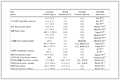
Table 1.
Optimization of the reaction conditionsa

One-Pot, Two-Step Reductive Amination of Boronate Ester Containing Aromatic Amines and Aldehydes Using B2pin2 as Reductant
Xueying Liu , Zhenwei Liu , Yuanyuan Guo , Jingya Li , Dapeng Zou , Yusheng Wu , Yangjie Wu


The aromatic amine functionality occupies a very important role in organic chemistry due to its prominence in biological and naturally occurring molecules.[1] Reductive amination is one of the most efficient approaches to obtain highly substituted amines.[2] Various strategies have been developed to achieve this transformation. Reductive amination has been generally accomplished by two protocols according to the nature of the reducing agent. (1) Metal-based catalytic hydrogenation: Both heterogeneous hydrogenation and homogeneous reductive amination use Ir, [3] Rh, [4] Fe, [5] Ag, [6] Ni[7] and Pd[8] complexes as catalysts. These methods have been applied in industry because of their economical and effective property.[9] There are still some drawbacks, such as lack of chemoselectivity and not compatible with reducible groups.[10] (2) Hydride reducing agents[11-14] involved reductive amination:[11] Borohydrides reagents have been employed in these methods, such as NaBH3CN[12] and NaBH(OAc)3[13] etc. The selectivity of these reagents allows for a convenient access to reductive amination. Although various reductive amination systems have been well developed and applied, it is still necessary to develop economical and efficient methods for the highly chemoselective reduction amination under user-friendly conditions.
Bis(pinacolato)diboron (B2pin2), which is an air stable, green and inexpensive borylation reagent, has been frequently used in organic synthesis.[15] The new reactivities of B2pin2 which are used for reduction reaction have been developed in recent years.[16~21] A number of elegent works disclosed their abilities to reduce the C—C, [17] C—O, [18] N—O[19] and S—O[20] unsaturated bonds. Nevertheless, the reduction of C—N unsaturated bonds using B2pin2 as reductant is rarely reported. The only one research about Pd-catalyzed transfer hydrogenation of various N-hetero- aromatic compounds using B2pin2 as a mediator was reported by Song group.[21] As a part of our ongoing efforts on the synthesis of organoborane reagents, as well as synthesis of various valuable compounds by using organoborane reagents.[23] Herein, we report a novel one-pot, two-step reductive amination protocol for the synthesis of boron- containing secondary aromatic amines using B2pin2 as reductant. In addition, the synthesized secondary aromatic amines with pendant boronate ester are versatile intermediates in several organic transformations.[24]
The model reaction of 3-aminophenylboronic acid pinacol ester (1a, 1.0 equiv.) and benzaldehyde (2a, 1.0 equiv.) was chosen to optimize the reaction parameters and the results are summarized in Table 1. Firstly, the reaction was kept in iPrOH at 25 ℃ for 1 h under argon to obtain the intermediate (E)-N-benzylidene-3-(4, 4, 5, 5-tetramethyl-1, 3, 2-dioxaborolan-2-yl)aniline. Secondly, B2pin2 (3.0 equiv.) and tBuOK (2.0 equiv.) were added to the reaction and the mixture was stirred for 4 h at 110 ℃ under argon (Table 1, Entry 1). The desired reductive amination product 3a was observed in 32% yield in HPLC detection. Encouraged by this preliminary result, various reaction parameters, including bases, solvents and temperature were screened to optimize the reaction conditions. When a series of bases were studied, NaOH was found to be the best choice (Table 1, Entries 1~6). The reaction did not work without base. It indicated that the base is essential for the reaction (Table 1, Entry 7). When the solvent was changed to EtOH, the yield improved to 77%. Whereas, other solvents such as MeOH, nPrOH, THF, dioxane and H2O were found to be less effective for the reaction (Table 1, Entries 8~13). The effect of temperature was also studied, and the best yield was obtained under 110 ℃ (Table 1, Entries 14, 15). When the amount of B2pin2 decreased to 2.0 equiv., the yield of the desired product reduced to 66% (Table 1, Entry 16). Increasing the amount of 2a to 1.2 equiv., the yield of the target product 3a improved to 82% (Table 1, Entry 17). Under air atmosphere, the desired product 3a was obtained in 76% yield (Table 1, Entry 18). Lowering the amount of base, the yield of 3a was slightly decreased (Table 1, Entries 19, 20). Consequently, the optimized reaction conditions for the one-pot, two-step reductive amination were determined as follows: firstly, 3-(4, 4, 5, 5-tetramethyl- 1, 3, 2-dioxaborolan-2-yl)aniline (1a, 1.0 equiv.) and benzaldehyde (2a, 1.2 equiv.) were kept in EtOH at 25 ℃ for 1 h under argon. Secondly, B2pin2 (3.0 equiv.) and NaOH (2.0 equiv.) were added to the reaction and the mixture was stirred for 4 h at 110 ℃ oil bath under argon.
 下载:
导出CSV
 |
||||
| Entry | Base | Solvent | Temp./℃ | Yield b/% |
| 1 | tBuOK | iPrOH | 25/110 | 32 |
| 2 | CH3ONa | iPrOH | 25/110 | 40 |
| 3 | Cs2CO3 | iPrOH | 25/110 | 20 |
| 4 | KOH | iPrOH | 25/110 | 50 |
| 5 | NaOH | iPrOH | 25/110 | 71 |
| 6 | Et3N | iPrOH | 25/110 | nr |
| 7 | — | iPrOH | 25/110 | nr |
| 8 | NaOH | MeOH | 25/110 | 35 |
| 9 | NaOH | nPrOH | 25/110 | 47 |
| 10 | NaOH | EtOH | 25/110 | 77 |
| 11 | NaOH | THF | 25/110 | 4 |
| 12 | NaOH | Dioxane | 25/110 | 8 |
| 13 | NaOH | H2O | 25/110 | 8 |
| 14 | NaOH | EtOH | 25/80 | 73 |
| 15 | NaOH | EtOH | 25/r.t. | nr |
| 16c | NaOH | EtOH | 25/110 | 66 |
| 17d | NaOH | EtOH | 25/110 | 82/75e |
| 18f | NaOH | EtOH | 25/110 | 76 |
| 19d, g | NaOH | EtOH | 25/110 | 75 |
| 20d, h | NaOH | EtOH | 25/110 | 78 |
| a Reaction conditions: (1) 1a (0.5 mmol) and 2a (0.5 mmol), solvent (5.0 mL), r.t., 1 h. (2) B2pin2 (1.5 mmol), base (1.0 mmol), at 110 ℃ oil bath for 4 h, under Ar. b HPLC yield. c 2.0 equiv. of B2pin2. d 1.2 equiv. of 2a. e Isolated yield. f Under air. n.r. = no reaction. g 1.0 equiv. of base. h 1.5 equiv. of base. | ||||
With the optimal reaction conditions in hand, the scope of substrates were examined (Table 2). Initially, a variety of benzaldehyde derivatives were investigated. It was found that benzaldehydes with electron-donating groups worked comparatively well (3ab~3ag) except for (3af). Benzaldehyde possessing a strong electron-withdrawing group resulted in slightly lower yields (3ah~3ai). Trace amount of the desired product was observed when 4-nitrobenz- aldehyde was employed (3aj). The halogen-containing benzaldehydes were also compatible and gave the corresponding products in good yields (3ak~3as). When benzaldehyde bearing a meta- or para-substitute boronate ester group was checked, the desired products 3at and 3au were obtained in 83% and 60% yields, respectively. Moreover, the reaction seemed to be sensitive to steric effects. When acetophenone was used as substrate, only trace amount of target product was obtained (3av). Generally, arylamine proceeded well in the optimal reaction conditions (3aa~3au). In comparison, aliphatic amine gave the desired product in lower yields (3aw~3ax). The possible reason is about volatilization of acetaldehyde or propionaldehyde, as well as the difference of reactivities between arylamine and aliphatic amine.
To establish the scope of this reductive amination protocol, we subsequently tested the ortho- and para-boronate ester group substitute anilines (Table 3). The reaction of 4-aminophenylboronic acid pinacol ester and substituted benzaldehydes gave the desired products (4a, 4b, 4d and 4e) in satisfactory yields except for 4c due to volatilization of 4-(trifluoromethyl)benzaldehyde. Whereas, 2-amino-phenylboronic acid pinacol ester gave the target products in lower yields, indicated that the steric hindrance possibly had a negative effect on this reaction (4f, 4g). Only trace amount of the desired product was obtained when 2-aminopyridine- 4-boronic acid pinacol ester was used as substrate (4h). The results indicated that the property of the aromatic ring in the substrates might influence the reaction.
Based on previous reports[18d, 25] and the data presented here, a reaction pathway was proposed as shown in Scheme 1. Initially, the aromatic amine 1 reacted with aldehyde 2 to generate imine 3 and water.[25] Next, B—B bond in B2pin chelated with H2O in the presence of base, forming species A under the electronic field effect.[18d] In the species A, the O atom of H2O was inserted into the polarized B—B bond, forcing H-atom to leave as a hydride species. C=N bond in imine 3 chelated with the polarized B—B bond to form species B, Then, species B was attacked by the newly generated hydride to obtain compound C.[18d] Finally, compound C was protonated to give the desired product 4.
a Reaction conditions: (1) 1a (0.5 mmol) and 2 (0.6 mmol), EtOH (5.0 mL), r.t., 1 h. (2) B2pin2 (1.5 mmol), NaOH (1.0 mmol), at 110 ℃ oil bath for 4 h, under Ar. b Determined by LC-MS analysis of the crude reaction mixture, with the isolated yield in parentheses. c The yield was determined by LC-MS analysis of the crude reaction mixture.
a Reaction conditions: (1) 1 (0.5 mmol) and 2 (0.6 mmol), EtOH (5.0 mL), r.t., 1 h. (2) B2pin2 (1.5 mmol), NaOH (1.0 mmol), at 110 ℃ oil bath for 4 h, under Ar. b Determined by LC-MS analysis of the crude reaction mixture, with the isolated yield in parentheses. c The yield was determined by LC-MS analysis of the crude reaction mixture. d Isolated yield.
To further investigate the importance and practical utility of this method, a gram-scale reaction of 3-(4, 4, 5, 5-tetramethyl-1, 3, 2-dioxaborolan-2-yl)aniline (1a, 1.1 g, 5.0 mmol) and benzaldehyde (2a, 0.6 g, 6.0 mmol) was performed under the optimal reaction conditions. As a result, the reductive amination reaction proceeded smoothly to afford N-benzyl-3-(4, 4, 5, 5-tetramethyl-1, 3, 2-dioxaborolan- 2-yl)aniline (3a) in 70% isolated yield (Scheme 2).
In summary, a simple and highly efficient protocol for the synthesis of various boron-containing secondary aromatic amines was developed using commercially available B2pin2 as reductant. This system features generally high yields and broad functional group tolerance. The boronate ester substituent is a very good handle to be further functionalized. We believe that this method will be practical for further explorations in synthetic applications.
All reactions were performed in dried glass reaction tube equipped with a magnetic stir bar under argon atmosphere. Unless otherwise noted, solvents and reagents were purchased from commercial sources and used as received. Flash column chromatography was performed using silica gel (60- pore size, 32~63 µm, standard grade). Analytical thin-layer chromatography was performed using glass plates pre-coated with 0.25 mm of 230~400 mesh silica gel impregnated with a fluorescent indicator (254 nm). Thin layer chromatography plates were visualized by exposure to ultraviolet light. Mass spectra and HPLC yields were measured on a LC-MSD-Trap-XCT instrument. NMR spectra were obtained on a Bruker AVANCE III systems using CDCl3 or (CD3)2SO as solvent, TMS as internal standard substance at 400 MHz for 1H NMR, 100 MHz for 13C NMR, and 376 MHz for 19F NMR. Melting points were measured with an XT4A microscopic apparatus. The high resolution mass spectrum was received via an Agilent Technologies 6540 UHD Accurate-mass Q-Tof LC/MS, with ESI as ion source. Preparative TLC was performed on silica gel plates and developed with ethyl acetate/hexane.
A glass reaction tube equipped with a magnetic stir bar was charged with compound 1 (0.5 mmol, 1.0 equiv.), compound 2 (0.6 mmol, 1.2 equiv.), EtOH (5 mL). The reaction mixture was stirred at 25 ℃ under argon atmosphere for 1 h. B2pin2 (1.5 mmol, 3.0 equiv.), and NaOH (1.0 mmol, 2.0 equiv.) were added and then reacted at 110 ℃ oil bath under argon atmosphere for 4 h. The reaction progress was monitored by TLC. The reaction mixture was concentrated in vacuo, and then extracted with ethyl acetate three times. The combined organic layers were washed with brine, dried over anhydrous MgSO4 and concentrated under reduced pressure. The residue was purified by silica gel flash chromatography to produce the desired product.
N-Benzyl-3-(4, 4, 5, 5-tetramethyl-1, 3, 2-dioxaborolan-2-yl)aniline (3aa):[26] 115.9 mg, yield 75%. White solid, m.p. 87~88 ℃; 1H NMR (400 MHz, CDCl3) δ: 7.38~7.27 (m, 5H), 7.19~7.14 (m, 3H), 6.73~6.70 (m, 1H), 4.35 (s, 2H), 4.00 (s, 1H), 1.33 (s, 12H); 13C NMR (100 MHz, CDCl3) δ: 147.6, 139.5, 128.8, 128.6, 127.6, 127.2, 124.0, 119.3, 115.5, 83.7, 48.4, 24.9; GC-MS (EI) m/z: 309.1 [M]+.
N-(2-Methylbenzyl)-3-(4, 4, 5, 5-tetramethyl-1, 3, 2-dio-xaborolan-2-yl)aniline (3ab): 134.0 mg, yield 83%. White solid, m.p. 89~90 ℃; 1H NMR (400 MHz, CDCl3) δ: 7.33~7.31 (m, 1H), 7.21~7.16 (m, 6H), 6.74 (s, 1H), 4.29 (s, 2H), 2.36 (s, 3H), 1.34 (s, 12H); 13C NMR (100 MHz, CDCl3) δ: 147.7, 137.1, 136.5, 130.4, 128.8, 128.5, 127.5, 126.2, 124.0, 119.0, 115.4, 83.7, 46.5, 24.9, 19.0. HRMS (ESI) calcd for C20H27O2BN [M+H]+ 324.2129, found: 324.2134.
N-(3-Methylbenzyl)-3-(4, 4, 5, 5-tetramethyl-1, 3, 2-dioxaborolan-2-yl)aniline (3ac): 130.8 mg, yield 81%. White solid, m.p. 88~89 ℃; 1H NMR (400 MHz, CDCl3) δ: 7.25~7.21 (m, 1H), 7.20~7.14 (m, 5H), 7.10~7.08 (m, 1H), 6.74~6.71 (m, 1H), 4.31 (s, 2H), 4.00 (s, 1H), 2.35 (s, 3 H), 1.34 (s, 12 H); 13C NMR (100 MHz, CDCl3) δ: 147.7, 139.4, 138.3, 128.8, 128.6, 128.4, 128.0, 124.7, 124.0, 119.3, 115.5, 83.7, 48.4, 24.9, 21.5. HRMS (ESI) calcd for C20H27O2BN [M+H]+ 324.2129, found 324.2134.
N-(4-Methylbenzyl)-3-(4, 4, 5, 5-tetramethyl-1, 3, 2-dioxaborolan-2-yl)aniline (3ad): 138.9 mg, yield 86%. White solid, m.p. 85~86 ℃; 1H NMR (400 MHz, DMSO) δ: 7.23~7.21 (m, 2H), 7.12~7.10 (m, 2H), 7.04~7.01 (m, 1H), 6.97~6.96 (m, 1H), 6.84~6.82 (m, 1H), 6.63~6.61 (m, 1H), 6.20~6.17 (m, 1H), 4.21~4.20 (m, 2H), 2.26 (s, 3H), 1.26 (s, 12H); 13C NMR (100 MHz, CDCl3) δ: 147.6, 136.9, 136.4, 129.3, 128.8, 127.6, 124.0, 119.3, 115.5, 83.7, 48.1, 24.9, 21.1; HRMS (ESI) calcd for C20H27O2BN [M+H]+ 324.2129, found 324.2136.
N-(4-Methoxybenzyl)-3-(4, 4, 5, 5-tetramethyl-1, 3, 2-dioxaborolan-2-yl)aniline (3ae): 135.6 mg, yield 80%. White solid, m.p. 97~98 ℃ (lit.[26] 105 ℃); 1H NMR (400 MHz, CDCl3) δ: 7.29~7.27 (m, 2H), 7.21~7.16 (m, 2H), 7.13~7.12 (m, 1H), 6.89~6.85 (m, 2H), 6.74~6.71 (m, 1H), 4.27 (s, 2H), 3.80 (s, 3H), 1.33 (s, 12H); 13C NMR (100 MHz, CDCl3) δ: 159.0, 147.7, 131.6, 129.0, 128.9, 124.1, 119.4, 115.7, 114.1, 83.8, 55.4, 48.0, 25.0; LC-MS (ESI) m/z: 340.2 [M+H]+.
2-(((3-(4, 4, 5, 5-Tetramethyl-1, 3, 2-dioxaborolan-2-yl)-phenyl)amino)methyl)phenol (3af): 81.3 mg, yield 50%. White solid, m.p. 90~91 ℃; 1H NMR (400 MHz, CDCl3) δ: 7.40~7.38 (m, 1H), 7.35~7.34 (m, 1H), 7.29~7.27 (m, 1H), 7.25~7.20 (m, 1H), 7.16~7.14 (m, 1H), 6.98~6.96 (m, 1H), 6.93~6.91 (m, 1H), 6.88~6.84 (m, 1H), 4.43 (s, 2H), 1.34 (s, 12H); 13C NMR (100 MHz, CDCl3) δ: 156.7, 146.5, 129.2, 128.9, 127.2, 123.0, 122.2, 122.1, 120.0, 118.7, 116.6, 83.9, 48.7, 24.9; HRMS (ESI) calcd for C19H25O3BN [M+H]+ 326.1922, found 326.1933.
N, N-Dimethyl-4-(((3-(4, 4, 5, 5-tetramethyl-1, 3, 2-dio-xaborolan-2-yl)phenyl)amino)methyl)aniline (3ag): 114.4 mg, yield 65%. White solid, m.p. 112~114 ℃; 1H NMR (400 MHz, CDCl3) δ: 7.25~7.22 (m, 2H), 7.21~7.15 (m, 2H), 7.13~7.12 (m, 1H), 6.74~6.72 (m, 3H), 4.22 (s, 2H), 3.84 (s, 1H), 2.94 (s, 6H), 1.34 (s, 12H); 13C NMR (100 MHz, CDCl3) δ: 150.0, 147.9, 128.8, 128.7, 127.2, 123.8, 119.1, 115.6, 112.8, 83.7, 48.0, 40.8, 24.9; HRMS (ESI) calcd for C21H30O2BN2 [M+H]+ 353.2395, found 353.2394.
3-(4, 4, 5, 5-Tetramethyl-1, 3, 2-dioxaborolan-2-yl)-N-(4-(trifluoromethyl)benzyl)aniline (3ah): 43.4 mg, yield 23%. White solid, m.p. 71~72 ℃; 1H NMR (400 MHz, CDCl3) δ: 7.59~7.57 (m, 2H), 7.48~7.46 (m, 2H), 7.21~7.16 (m, 2H), 7.14~7.13 (m, 1H), 6.69~6.66 (m, 1H), 4.43 (s, 2H), 1.33 (s, 12H); 19F NMR (376 MHz, CDCl3) δ: -62.4 (s); 13C NMR (100 MHz, CDCl3) δ: 147.1, 143.8, 129.5 (q, J=32.0 Hz), 128.8, 127.7, 125.5 (q, J=3.8 Hz), 124.5, 124.3 (q, J=270.3 Hz), 119.4, 115.4, 83.7, 47.8, 24.9; HRMS (ESI) calcd for C20H24O2BF3N [M+H]+ 378.1847, found 378.1850.
4-(((3-(4, 4, 5, 5-Tetramethyl-1, 3, 2-dioxaborolan-2-yl)-phenyl)amino)methyl)benzonitrile (3ai): 93.5 mg, yield 56%. White solid, m.p. 128~129 ℃; 1H NMR (400 MHz, CDCl3) δ: 7.63~7.61 (m, 2H), 7.48~7.46 (m, 2H), 7.21~7.15 (m, 2H), 7.11~7.10 (m, 1H), 6.64~6.61 (m, 1H), 4.44 (s, 2 H), 4.13 (s, 1 H), 1.33 (s, 12 H); 13C NMR (100 MHz, CDCl3) δ: 146.8, 145.4, 132.4, 128.9, 127.8, 124.6, 119.4, 118.9, 115.3, 110.9, 83.8, 47.8, 24.9; HRMS (ESI) calcd for C20H24O2BN2 [M+H]+ 335.1926, found 335.1931.
N-(2-Bromobenzyl)-3-(4, 4, 5, 5-tetramethyl-1, 3, 2-dioxaborolan-2-yl)aniline (3ak): 150.9 mg, yield 78%. White solid, m.p. 133~134 ℃; 1H NMR (400 MHz, DMSO) δ: 7.63~7.61 (m, 1H), 7.37~7.30 (m, 2H), 7.21~7.17 (m, 1H), 7.08~7.04 (m, 1H), 6.98~6.97 (m, 1H), 6.88~6.86 (m, 1H), 6.58~6.55 (m, 1H), 6.34~6.31 (m, 1H), 4.29~4.27 (m, 2H), 1.26 (s, 12H); 13C NMR (100 MHz, CDCl3) δ: 147.1, 138.3, 132.8, 129.4, 128.8, 128.7, 127.6, 124.2, 123.4, 119.7, 115.3, 83.7, 48.4, 24.9; HRMS (ESI) calcd for C19H24O2BBrN [M+H]+ 388.1078, found 388.1087.
N-(3-Bromobenzyl)-3-(4, 4, 5, 5-tetramethyl-1, 3, 2-dioxaborolan-2-yl)aniline (3al): 160.6 mg, yield 83%. White solid, m.p. 73~74 ℃; 1H NMR (400 MHz, CDCl3) δ: 7.52 (s, 1H), 7.40~7.39 (m, 1H), 7.30~7.28 (m, 1H), 7.21~7.18 (m, 3H), 7.13~7.12 (m, 1H), 6.70~6.67 (m, 1H), 4.34 (s, 2H), 4.10 (s, 1H), 1.34 (s, 12H); 13C NMR (100 MHz, CDCl3) δ: 147.2, 142.0, 130.5, 130.3, 130.2, 128.8, 126.0, 124.3, 122.7, 119.4, 115.4, 83.7, 47.7, 24.9; HRMS (ESI) calcd for C19H24O2BBrN [M+H]+ 388.1078, found 388.1087.
N-(4-Bromobenzyl)-3-(4, 4, 5, 5-tetramethyl-1, 3, 2-dioxaborolan-2-yl)aniline (3am): 90.9 mg, yield 47%. White solid, m.p. 92~93 ℃; 1H NMR (400 MHz, CDCl3) δ: 7.46~7.44 (m, 2H), 7.24~7.22 (m, 2H), 7.19~7.17 (m, 2H), 7.12~7.11 (m, 1H), 6.70~6.65 (m, 1H), 4.31 (s, 2H), 1.33 (s, 12H); 13C NMR (100 MHz, CDCl3) δ: 147.2, 138.6, 131.7, 129.2, 128.8, 124.3, 120.9, 119.4, 115.5, 83.7, 47.7, 24.9; HRMS (ESI) calcd for C19H24O2BBrN [M+H]+ 388.1078, found 388.1089.
N-(2-Fluorobenzyl)-3-(4, 4, 5, 5-tetramethyl-1, 3, 2-dioxaborolan-2-yl)aniline (3an): 137.3 mg, yield 84%. White solid, m.p. 67~68 ℃; 1H NMR (400 MHz, CDCl3) δ: 7.40~7.36 (m, 1H), 7.25~7.21 (m, 1H), 7.20~7.16 (m, 3H), 7.10~7.02 (m, 2H), 6.77~6.74 (m, 1H), 4.42 (s, 2H), 1.33 (s, 12H); 19F NMR (376 MHz, CDCl3) δ: -119.0 (s). 13C NMR (100 MHz, CDCl3) δ: 161.0 (d, J=244.4 Hz), 147.2, 129.5 (d, J=4.4 Hz), 128.9, 128.8, 126.3 (d, J=14.6 Hz), 124.3, 124.2 (d, J=3.6 Hz), 119.6, 115.5, 115.3 (d, J=21.2 Hz), 83.7, 41.9 (d, J=4.2 Hz), 24.9. HRMS (ESI) calcd for C19H24O2BFN [M+H]+ 328.1879, found 328.1885.
N-(3-Fluorobenzyl)-3-(4, 4, 5, 5-tetramethyl-1, 3, 2-dioxaborolan-2-yl)aniline (3ao): 145.5 mg, yield 89%. White solid, m.p. 79~80 ℃; 1H NMR (400 MHz, CDCl3) δ: 7.31~7.27 (m, 1 H), 7.20~7.18 (m, 2H), 7.15~7.13 (m, 2 H), 7.09~7.06 (m, 1H), 6.97~6.92 (m, 1H), 6.71~6.69 (m, 1H), 4.36 (s, 2H), 1.33 (s, 12H); 19F NMR (376 MHz, CDCl3) δ: -113.0 (s); 13C NMR (100 MHz, CDCl3) δ: 163.1 (d, J=244.6 Hz), 147.2, 142.3 (d, J=6.7 Hz), 130.1 (d, J=8.2 Hz), 128.8, 124.3, 122.9 (d, J=2.7 Hz), 119.4, 115.5, 114.3 (d, J=22.5 Hz), 114.1 (d, J=21.4 Hz), 83.7, 47.8 (d, J=1.4 Hz), 24.9; HRMS (ESI) calcd for C19H24O2BFN [M+H]+ 328.1879, found 328.1886.
N-(2-Chlorobenzyl)-3-(4, 4, 5, 5-tetramethyl-1, 3, 2-dioxaborolan-2-yl)aniline (3ap): 128.6 mg, yield 75%. White solid, m.p. 115~116 ℃; 1H NMR (400 MHz, CDCl3) δ: 7.42~7.35 (m, 2H), 7.22~7.17 (m, 4H), 7.15~7.14 (m, 1H), 6.70~6.67 (m, 1H), 4.46 (s, 2H), 1.34 (s, 12H); 13C NMR (100 MHz, CDCl3) δ: 147.1, 136.7, 133.4, 129.5, 129.2, 128.8, 128.4, 126.9, 124.3, 119.7, 115.3, 83.7, 45.9, 24.9; HRMS (ESI) calcd for C19H24O2BClN [M+H]+ 344.1583, found 344.1590.
N-(4-Chlorobenzyl)-3-(4, 4, 5, 5-tetramethyl-1, 3, 2-dioxaborolan-2-yl)aniline (3aq): 137.2 mg, yield 80%. White solid, m.p. 90~91 ℃; 1H NMR (400 MHz, CDCl3) δ: 7.29 (s, 4H), 7.21~7.16 (m, 2H), 7.14~7.13 (m, 1H), 6.72~6.69 (m, 1H), 4.33 (s, 2H), 1.33 (s, 12H); 13C NMR (100 MHz, CDCl3) δ: 147.3, 138.0, 132.9, 128.8, 128.7, 124.3, 119.4, 119.3, 115.5, 83.7, 47.6, 24.9; HRMS (ESI) calcd for C19H24O2BClN [M+H]+ 344.1583, found 344.1593.
N-(3-Chloro-4-fluorobenzyl)-3-(4, 4, 5, 5-tetramethyl-1, 3, 2-dioxaborolan-2-yl)aniline (3ar): 169.7 mg, yield 94%. White solid, m.p. 125~126 ℃; 1H NMR (400 MHz, CDCl3) δ: 7.42~7.40 (m, 1H), 7.24~7.16 (m, 3H), 7.12~7.07 (m, 2H), 6.68~6.65 (m, 1H), 4.31 (s, 2H), 1.33 (s, 12H); 19F NMR (376 MHz, CDCl3) δ: -117.9 (s); 13C NMR (100 MHz, CDCl3) δ: 157.2 (d, J=246.5 Hz), 146.9, 136.6 (d, J=3.7 Hz), 129.5, 128.8, 127.0 (d, J=7.0 Hz), 124.5, 121.1 (d, J=17.9 Hz), 119.4, 116.6 (d, J=21.0 Hz), 115.5, 83.7, 47.2, 24.9; HRMS (ESI) calcd for C19H23O2BClFN [M+H]+ 362.1489, found 362.1498.
N-(4-Chloro-3-(trifluoromethyl)benzyl)-3-(4, 4, 5, 5-tetra-methyl-1, 3, 2-dioxaborolan-2-yl)aniline (3as): 168.5 mg, yield 82%. White solid, m.p. 91~92 ℃; 1H NMR (400 MHz, CDCl3) δ: 7.69 (s, 1H), 7.49~7.44 (m, 2H), 7.21~7.16 (m, 2H), 7.12~7.11 (m, 1H), 6.67~6.64 (m, 1H), 4.39 (s, 2H), 4.17 (s, 1H), 1.33 (s, 12H); 19F NMR (376 MHz, CDCl3) δ: -62.6 (s); 13C NMR (100 MHz, CDCl3 CDCl3) δ: 146.8, 139.0, 131.7, 130.8, 128.8, 128.5 (q, J=31.1 Hz), 126.5 (q, J=5.1 Hz), 124.6, 122.8 (q, J=271.7 Hz), 119.4, 115.5, 83.8, 47.4, 24.9. HRMS (ESI) calcd for C20H24O2BF3ClN [M+H]+ 412.1457, found 412.1465.
3-(4, 4, 5, 5-Tetramethyl-1, 3, 2-dioxaborolan-2-yl)-N-(3-(4, 4, 5, 5-tetramethyl-1, 3, 2-dioxaborolan-2-yl)benzyl)-aniline (3at): 130.5 mg, yield 60%. White solid, m.p. 165~166 ℃ (lit.[26] 166 ℃); 1H NMR (400 MHz, CDCl3) δ: 7.80 (s, 1 H), 7.73~7.71 (m, 1H), 7.48~7.46 (m, 1H), 7.35~7.32 (m, 1H), 7.20~7.14 (m, 3H), 6.73~6.71 (m, 1H), 4.34 (s, 2H), 4.01 (s, 1H), 1.35 (s, 12H), 1.33 (s, 12H). 13C NMR (100 MHz, CDCl3) δ: 147.6, 138.7, 134.0, 133.7, 130.6, 128.7, 128.0, 123.9, 119.3, 115.5, 83.9, 83.7, 48.3, 24.9, 24.8; MS (ESI) m/z: 436.4 [M+ H]+.
3-(4, 4, 5, 5-Tetramethyl-1, 3, 2-dioxaborolan-2-yl)-N-(4-(4, 4, 5, 5-tetramethyl-1, 3, 2-dioxaborolan-2-yl)benzyl)-aniline (3au): 180.5 mg, yield 83%. White solid, m.p. 128~129 ℃ (lit.[26] 131 ℃); 1H NMR (400 MHz, CDCl3) δ: 7.79~7.77 (m, 2H), 7.38~7.36 (m, 2H), 7.18~7.13 (m, 3H), 6.71~6.68 (m, 1H), 4.37 (s, 2H), 4.02 (s, 1H), 1.34 (s, 12H), 1.33 (s, 12H); 13C NMR (100 MHz, CDCl3) δ: 147.4, 142.7, 135.1, 128.8, 126.9, 124.2, 119.4, 115.5, 83.8, 83.7, 48.5, 24.9; MS (ESI) m/z: 436.4 [M+H]+.
N-Propyl-3-(4, 4, 5, 5-tetramethyl-1, 3, 2-dioxaborolan-2-yl)aniline (3ax): 11.7 mg, yield 9%. Brown oil. 1H NMR (400 MHz, CDCl3) δ: 7.23~7.16 (m, 2H), 7.08 (d, J=2.3 Hz, 1H), 6.74~6.72 (m, 1H), 3.30 (s, 1H), 3.11 (t, J=7.0 Hz, 2H), 1.64 (q, J=7.3 Hz, 2H), 1.35 (s, 12H), 1.00 (t, J=7.4 Hz, 3 H); 13C NMR (100 MHz, CDCl3) δ: 147.9, 128.7, 123.7, 119.1, 115.6, 83.6, 45.9, 24.9, 22.8, 11.7. HRMS (ESI) calcd for C15H25O2BN [M+H]+ 262.1973, found 262.1985.
N-(4-Methylbenzyl)-4-(4, 4, 5, 5-tetramethyl-1, 3, 2-dioxaborolan-2-yl)aniline (4a): 121.1 mg, yield 75%. White solid, m.p. 101~102 ℃; 1H NMR (400 MHz, CDCl3) δ: 7.64 (d, J=8.5 Hz, 2H), 7.25 (d, J=8.0 Hz, 2H), 7.15 (d, J=7.9 Hz, 2H), 6.62 (d, J=8.5 Hz, 2H), 4.31 (s, 2H), 2.34 (s, 3H), 1.31 (s, 12H); 13C NMR (100 MHz, CDCl3) δ: 150.7, 137.0, 136.4, 136.0, 129.3, 127.5, 111.9, 83.2, 47.5, 24.9, 21.1; HRMS (ESI) calcd for C20H27O2BN [M+H]+ 324.2129, found 324.2137.
N-(4-Methoxybenzyl)-4-(4, 4, 5, 5-tetramethyl-1, 3, 2-dioxaborolan-2-yl)aniline (4b): 149.2 mg, yield 88%. White solid, m.p. 119~120 ℃ (lit.[27] 116~118 ℃); 1H NMR (400 MHz, CDCl3) δ: 7.64 (d, J=8.5 Hz, 2H), 7.28 (d, J=7.4 Hz, 2H), 6.89~6.85 (m, 2H), 6.62 (d, J=8.5 Hz, 2H), 4.28 (s, 2H), 3.80 (s, 3H), 1.31 (s, 12H); 13C NMR (100 MHz, CDCl3) δ: 158.9, 150.7, 136.4, 131.0, 128.8, 114.1, 111.9, 83.2, 55.3, 47.2, 24.9; LC-MS (ESI) m/z: 340.2 [M+H]+.
4-(4, 4, 5, 5-Tetramethyl-1, 3, 2-dioxaborolan-2-yl)-N-(4-(trifluoromethyl)benzyl)aniline (4c): 41.5 mg, yield 22%. White solid, m.p. 153~154 ℃; 1H NMR (400 MHz, CDCl3) δ: 7.64 (d, J=8.5 Hz, 2H), 7.59 (d, J=8.1 Hz, 2H), 7.47 (d, J=8.1 Hz, 2H), 6.59 (d, J=8.6 Hz, 2H), 4.45 (s, 2H), 4.38 (s, 1H), 1.31 (s, 12H); 19F NMR (376 MHz, CDCl3) δ: -62.4 (s); 13C NMR (100 MHz, CDCl3) δ: 150.1, 143.4, 136.4, 129.5 (q, J=32.2 Hz), 127.4, 125.6 (q, J=3.7 Hz), 124.2 (q, J=270.4 Hz), 112.0, 83.3, 47.2, 24.8; HRMS (ESI) calcd for C20H24O2BF3N [M+H]+ 378.1847, found 378.1850.
4-(((4-(4, 4, 5, 5-Tetramethyl-1, 3, 2-dioxaborolan-2-yl)phenyl)amino)methyl)benzonitrile (4d): 116.9 mg, yield 70%. White solid, m.p. 157~158 ℃; 1H NMR (400 MHz, CDCl3) δ: 7.63~7.60 (m, 4H), 7.46~7.44 (m, 2H), 6.56~6.54 (m, 2H), 4.47~4.46 (m, 2H), 4.39 (s, 1H), 1.31 (s, 12H). 13C NMR (100 MHz, CDCl3) δ: 149.8, 145.0, 136.4, 132.5, 127.7, 118.8, 112.0, 110.0, 83.3, 47.2, 24.8; HRMS (ESI) calcd for C20H24O2BN2 [M+H]+ 335.1925, found 335.1936.
N-(3-Fluorobenzyl)-4-(4, 4, 5, 5-tetramethyl-1, 3, 2-dioxaborolan-2-yl)aniline (4e): 130.8 mg, yield 80%. White solid, m.p. 99~100 ℃; 1H NMR (400 MHz, CDCl3) δ: 7.63~7.61 (m, 2H), 7.24~7.19 (m, 1H), 7.07~7.05 (m, 1H), 7.01~6.99 (m, 1H), 6.93~6.88 (m, 1H), 6.55~6.53 (m, 2H), 4.30 (s, 2H), 1.28 (s, 12H); 19F NMR (376 MHz, CDCl3) δ: -112.9 (s); 13C NMR (100 MHz, CDCl3) δ: 163.2 (d, J=244.6 Hz), 150.5, 142.2 (d, J=6.6 Hz), 136.5, 130.2 (d, J=8.2 Hz), 122.8 (d, J=2.5 Hz), 114.2, 114.0, 112.1, 83.4, 47.1 (d, J=1.5 Hz), 24.9; HRMS (ESI) calcd for C19H24O2BFN [M+H]+ 328.1879, found 328.1883.
Supporting Information Optimization of the reaction conditions. The LC-MS data of the products 3aw, 4f~4g. Copies of 1H NMR, 13C NMR and 19F NMR spectra of the products. The Supporting Information is available free of charge via the Internet at http://sioc-journal.cn/.
Pham, P. D.; Bertus, P.; Legoupy, S. Chem. Commun. 2009, 6207. http://www.ncbi.nlm.nih.gov/pubmed/19826670
For literature pertaining to the origins and definition of reductive amination, see:(a) Emerson, W. S. Org. React. 1948, 4, 174.
(b) Moore, M. L. Org. React. 1949, 5, 301.
(c) Nugenta, T. C.; El-Shazly, M. Adv. Synth. Catal. 2010, 352, 753.
Chi, Y.; Zhou, Y.; Zhang, X. J. Org. Chem. 2003, 68, 4120. doi: 10.1021/jo026856z
(a) Skucas, E.; Kong, J.; Krische, M. J. J. Am. Chem. Soc. 2007, 129, 7242.
(b) Park, J. W.; Chung, Y. K. ACS Catal. 2015, 5, 4846.
Pagnoux-Ozherelyeva, A.; Pannetier, N.; Mbaye, M. D.; Gaillard, S.; Renaud, J.-L. Angew. Chem., Int. Ed. 2012, 51, 4976. doi: 10.1002/anie.201201360
Nasrollahzadeh, M. New J. Chem. 2014, 38, 5544. doi: 10.1039/C4NJ01440E
Huang, L.; Wang, Z.; Geng, L.; Chen, R.; Xing, W.; Wang, Y.; Huang, J. RSC Adv. 2015, 5, 56936. doi: 10.1039/C5RA05243B
Gao, G.; Sun, P.; Li, Y.; Wang, F.; Zhao, Z.; Qin, Y.; Li, F. ACS Catal. 2017, 7, 4927. doi: 10.1021/acscatal.7b01786
Abdel-Magid, A. F.; Carson, K. G.; Harris, B. D.; Maryanoff, C. A.; Shah, R. D. J. Org. Chem. 1996, 61, 3849. doi: 10.1021/jo960057x
Roe, A.; Montgomery, J. A. J. Am. Chem. Soc. 1953, 75, 910. doi: 10.1021/ja01100a040
Tripathi, R. P.; Verma, S. S.; Pandey, J.; Tiwari, V. K. Curr. Org. Chem. 2008, 12, 1093. doi: 10.2174/138527208785740283
(a) Borch, R. F.; Bernstein, M. D.; Durst, H. D. J. Am. Chem. Soc. 1971, 93, 2897.
(b) Borch, R. F.; Hassid, A. I. J. Org. Chem. 1972, 37, 1673.
(c) Marchini, P.; Liso, G.; Reho, A.; Liberatone, F.; Moracci, F. M. J. Org. Chem. 1975, 40, 3453.
(d) Lane, C. F. Synthesis 1975, 135.
(a) Abdel-Magid, A. F.; Maryanoff, C. A.; Carson, K. G. Tetrahedron Lett. 1990, 31, 5595.
(b) Kim, H. O.; Carrol, B.; Lee, M. S. Synth. Commun. 1997, 27, 2505.
(c) Tarasevich, V. A.; Kozlov, N. G. Russ. Chem. Rev. 1999, 68, 55.
Borch, R. F.; Durst, H. D. J. Am. Chem. Soc. 1969, 91, 3996. doi: 10.1021/ja01042a078
(a) Ros, A.; Fernandez, R.; Lassaletta, J. M. Chem. Soc. Rev. 2014, 43, 3229.
(b) Hartwig, J. F. Acc. Chem. Res. 2012, 45, 864.
(c) Hartwig, J. F. Chem. Soc. Rev. 2011, 40, 1992.
(d) Mkhalid, I. A. I.; Barnard, J. H.; Marder, T. B.; Murphy, J. M.; Hartwig, J. F. Chem. Rev. 2010, 110, 890.
(a) Xu, H.; Zhao, C.; Qian, Q.; Deng, W.; Gong, H. Chem. Sci. 2013, 4, 4022.
(b) Yu, X.; Wang, S.; Xu, H.; Gong, H. Org. Lett. 2011, 13, 2138.
(c) Liang, Z.; Xue, W.; Lin, K.; Gong, H. Org. Lett. 2014, 16, 5620.
(d) Zhang, G.; Xie, Y.; Wang, Z.; Liu, Y.; Huang, H. Chem. Commun. 2015, 51, 1850.
(e) Ke, M.; Song, Q. J. Org. Chem. 2016, 81, 3654.
(f) Doi, R.; Ohashi, M.; Ogoshi, S. Angew. Chem., Int. Ed. 2016, 55, 341.
(g) Ke, M.; Song, Q. Chem. Commun. 2017, 53, 2222.
(h) Chen, Z.; Wang, X. Org. Biomol. Chem. 2017, 15, 5790.
(i) Ke, M.; Song, Q. Adv. Synth. Catal. 2017, 359, 384.
(j) Lu, X.; Wang, Y.; Zhang, B.; Pi, J.; Wang, X.; Gong, T.; Xiao, B.; Fu, Y. J. Am. Chem. Soc. 2017, 139, 12632.
(k) Kuang, Z.; Li, B.; Song, Q. Chem. Commun. 2018, 54, 34.
(a) Ojha, D. P.; Gadde, K.; Prabhu, K. R. Org. Lett. 2016, 18, 5062.
(b) Ding, W.; Song, Q. Org. Chem. Front. 2016, 3, 14.
(c) Wang, Q.; Yang, J.; Fang, D.; Ren, J.; Dong, B.; Zhou, B.; Zeng, B. Tetrahedron Lett. 2016, 57, 2587.
(a) Laitar, D. S.; Müller, P.; Sadighi, J. P. J. Am. Chem. Soc. 2005, 127, 17196.
(b) Bae, S.; Lakshman, M. K. J. Org. Chem. 2008, 73, 1311.
(c) Kokatla, H. P.; Thomson, P. F.; Bae, S.; Doddi, V. R.; Lakshman, M. K. J. Org. Chem. 2011, 76, 7842.
(d) Xuan, Q.; Zhao, C.; Song, Q. Org. Biomol. Chem. 2017, 15, 5140.
(a) Lu, H.; Geng, Z.; Li, J.; Zou, D.; Wu, Y. S.; W, Y. J. Org. Lett. 2016, 18, 2774.
(b) Yang, K.; Zhou, F.; Kuang, Z.; Gao, G.; Driver, T. Org. Lett. 2016, 18, 4088.
Enthaler, S. Catal. Lett. 2012, 142, 1306. doi: 10.1007/s10562-012-0897-y
Xuan, Q.; Song Q. Org. Lett. 2016, 18, 4250. doi: 10.1021/acs.orglett.6b01999
(a) Lu, H.; Wang, S.; Li, J.; Zou, D.; Wu, Y. S.; Wu, Y. J. Tetrahedron Lett. 2017, 58, 839.
(b) Zhi, W.; Li, J.; Zou, D.; Wu, Y.; Wu, Y. J. Org. Chem. 2017, 82, 12286.
(c) Ren, X.; Han, S.; Gao, X.; Li, J.; Zou, D.; Wu, Y.; Wu, Y. Tetrahedron Lett. 2018, 59, 1065.
(d) Zhi, W.; Li, J.; Zou, D.; Wu, Y.; Wu, Y. Tetrahedron Lett. 2018, 59, 537.
(e) Zhi, W.; Li, J.; Zou, D.; Wu, Y.; Wu, Y. Tetrahedron Lett. 2018, 59, 2736.
(a) Geng, Z.; Zhang, Y.; Zheng, L.; Li, J.; Zou, D.; Wu, Y. J.; Wu, Y. S. Tetrahedron Lett. 2016, 57, 3063.
(b) Zhang, Y.; Geng, Z.; Li, J.; Zou, D.; Wu, Y.; Wu, Y. Adv. Synth. Catal. 2017, 359, 390.
(c) Zhu, M.; Qiu, Z.; Zhang, Y.; Du, H.; Li, J.; Zou, D.; Wu, Y.; Wu, Y. Tetrahedron Lett. 2017, 58, 2255.
(d) Zhu, M.; Du, H.; Li, J.; Zou, D.; Wu, Y.; Wu, Y. Tetrahedron Lett. 2018, 59, 1352.
(a) Menet, C. J. M.; Blanc, J.; Hodges, A. J.; Burli, R. W.; Breccia, P.; Blackaby, W. P.; Van Rompaey, L. J. C.; Fletcher, S. R. WO 2010/010184, 2010.
(b) Liu, B.; Huang, J.; Zheng, C.; Zhang, Y.; Ouyang, L.; Mao, H.; Nie, B.; Xu, J.; Chen, H. CN 2015/10402418, 2015.
Chen, Y.; Liu, S.; Cui, P.; Zhang, J.; Liu, Q.; Zhou, H. Tetrahedron Lett. 2019, 60, 327. doi: 10.1016/j.tetlet.2018.12.041
Christopher, M. V.; Liliya, G. N.; David, W. N.; Heather, A. S.; Andreas, D.; Mark, O. B.; Felix, J. B.; Stephen, A. W. Can. J. Chem. 2001, 79, 1115. doi: 10.1139/v01-090
Wheaton, S. L.; Humanayun Kabir, S. M.; Zhang, H.; Vogels1, C. M.; Decken, A.; Westcott, S. Cent. Eur. J. Chem. 2010, 8, 725. doi: 10.2478/s11532-010-0076-1
Table 1. Optimization of the reaction conditionsa
|
|
||||
| Entry | Base | Solvent | Temp./℃ | Yield b/% |
| 1 | tBuOK | iPrOH | 25/110 | 32 |
| 2 | CH3ONa | iPrOH | 25/110 | 40 |
| 3 | Cs2CO3 | iPrOH | 25/110 | 20 |
| 4 | KOH | iPrOH | 25/110 | 50 |
| 5 | NaOH | iPrOH | 25/110 | 71 |
| 6 | Et3N | iPrOH | 25/110 | nr |
| 7 | — | iPrOH | 25/110 | nr |
| 8 | NaOH | MeOH | 25/110 | 35 |
| 9 | NaOH | nPrOH | 25/110 | 47 |
| 10 | NaOH | EtOH | 25/110 | 77 |
| 11 | NaOH | THF | 25/110 | 4 |
| 12 | NaOH | Dioxane | 25/110 | 8 |
| 13 | NaOH | H2O | 25/110 | 8 |
| 14 | NaOH | EtOH | 25/80 | 73 |
| 15 | NaOH | EtOH | 25/r.t. | nr |
| 16c | NaOH | EtOH | 25/110 | 66 |
| 17d | NaOH | EtOH | 25/110 | 82/75e |
| 18f | NaOH | EtOH | 25/110 | 76 |
| 19d, g | NaOH | EtOH | 25/110 | 75 |
| 20d, h | NaOH | EtOH | 25/110 | 78 |
| a Reaction conditions: (1) 1a (0.5 mmol) and 2a (0.5 mmol), solvent (5.0 mL), r.t., 1 h. (2) B2pin2 (1.5 mmol), base (1.0 mmol), at 110 ℃ oil bath for 4 h, under Ar. b HPLC yield. c 2.0 equiv. of B2pin2. d 1.2 equiv. of 2a. e Isolated yield. f Under air. n.r. = no reaction. g 1.0 equiv. of base. h 1.5 equiv. of base. | ||||
 下载: 导出CSV

 扫一扫看文章


扫一扫关注我们


 下载: