Citation:
Ziwang Liu, Xiaoqian Wang, Honglin Qin, Yan Chen, Ling Xia, Xuanjing Wang, Yanhua Lai, Gongke Li. Research progress of the Maillard reaction process monitoring[J]. Chinese Chemical Letters,
2026, 37(4): 111742.
doi:
10.1016/j.cclet.2025.111742
Research progress of the Maillard reaction process monitoring
English
Research progress of the Maillard reaction process monitoring
Received Date:
22 March 2025 Accepted Date:
19 August 2025 Revised Date:
26 June 2025 Available Online:
15 April 2026
Abstract:
The Maillard reaction (non-enzymatic browning reaction) is a complex reaction between carbonyl compounds such as reducing sugars, aldehydes and ketones and compounds containing free amino groups such as amino acids, peptides and proteins. This reaction not only affects product sensory qualities, but may also generate harmful substances such as acrylamide, polycyclic aromatic hydrocarbons, and advanced glycation end-products. These substances pose various health risks to humans, including carcinogenicity, neurotoxicity and diabetes mellitus. Therefore, monitoring the Maillard reaction process and precisely controlling reaction conditions are crucial for understanding its mechanism, optimizing product quality and ensuring product safety. This review systematically summarizes recent advancements in Maillard reaction research, outlining its fundamental processes and key influencing conditions, laying a foundation for the study of the monitoring methods of Maillard reaction process. Additionally, this review takes a cross-industry perspective to explore the applications of Maillard reaction monitoring methods (spectroscopic methods, chromatography/chromatography-mass spectrometry, electrochemical methods and nuclear magnetic resonance and enzyme linked immunosorbent assay) in various fields, including food industry, tobacco processing, biopharmaceuticals, materials science and textile dyeing. Through cross-industry applications, the challenges of monitoring the Maillard reaction process are analyzed, including the diversity of reaction products, complexity of sample preparation, and real-time monitoring. Future prospects are proposed through the challenges, including the development of advanced nanomaterials and biosensors, and the integration of machine learning into predictive modeling of reaction kinetics for application in industrial processes. The review aiming to provide valuable references and guidance for industrial safety production and process condition optimization.
The Maillard reaction (non-enzymatic browning reaction) was discovered in 1912 by the French chemist Louis-Camille Maillard while studying the heating of glucose and glycine [1]. This reaction involves complex chemical processes such as condensation and polymerization between carbonyl compounds including reducing sugars, aldehydes and ketones, and compounds with free amino groups such as amino acids, peptides and proteins. And this reaction forms a series of flavor and coloring substances [2]. The formation of Maillard reaction products on a variety of interacting factors, which can be divided into physical conditions and chemical conditions [3]. Physical conditions include reaction temperature and reaction time. Chemical conditions include reactant substrates, pH value, moisture content, metal ions and radiation. Precisely controlling the conditions of Maillard reaction has dual significance. On one hand, the reaction affects the sensory characteristics of the product significantly, and the conditions of the reaction need to be precisely controlled to achieve the desired product characteristics [4,5]. For example, in bread baking, controlling Maillard reaction can enhance the golden-brown color and aroma of bread, improving consumer acceptance [6]; in meat processing, it helps prevent over-browning and ensures a balance of color and taste [7]. On the other hand, the Maillard reaction process may produce potentially harmful substances, such as acrylamide [8], polycyclic aromatic hydrocarbons (PAHs) [9] and advanced glycation end-products (AGEs) [10,11]. Acrylamide is considered to be a carcinogen, and long-term exposure may increase cancer risk [8]. PAHs are strong carcinogens, potentially causing various cancers and affecting the immune system [9]. AGEs promote the development of chronic diseases such as diabetes by activating inflammation and oxidative stress responses [10]. These risks underscore the necessity for monitoring the Maillard reaction process and precisely controlling its conditions. Aljahdali et al. [12] found that the Maillard reaction significantly impacts the appearance, flavor, nutritional value, and even safety of products. Therefore, effective monitoring of the Maillard reaction process and control of reaction conditions are essential to ensure product safety and optimize process conditions.
In recent years, a series of efficient monitoring methods have been developed and applied for effective monitoring of Maillard reaction processes and control of reaction conditions, including spectroscopic methods [13,14] such as Fourier-transform infrared spectroscopy (FTIR), ultraviolet-visible spectroscopy (UV–vis) and fluorescence (FL), chromatography/chromatography-mass spectrometry [15,16] such as high-performance liquid chromatography-tandem mass spectrometry (HPLC-MS/MS), gas chromatography-tandem mass spectrometry (GC–MS/MS) and capillary electrophoresis (CE), electrochemical methods [17,18] such as electrochemistry (EC), electronic nose (E-nose) and electronic tongue (E-tongue), nuclear magnetic resonance technology (NMR) [19] and enzyme linked immunosorbent assay (ELISA) [20]. These methods can provide detailed molecular structure information and quantitative data of reaction products, which helps to accurately monitor the Maillard reaction process and provide support for the control of reaction conditions [21]. These methods demonstrate high sensitivity and accuracy, meeting the needs for precise monitoring of the Maillard reaction process in fields such as the food industry [4], tobacco processing [22], biopharmaceuticals [23], materials science [1] and textile dyeing [24]. By monitoring the dynamic changes of target substances in the Maillard reaction process, it not only helps to understand the reaction mechanism, but also provides basis for more effectively control on the reaction conditions. This is conducive to reducing the generation of harmful by-product, thereby enhancing the safety and quality of products.
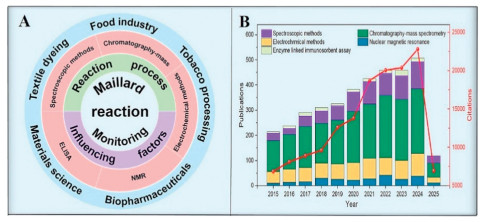
Currently, the existing reviews often emphasize specific industry applications or provide limited analysis of Maillard reaction monitoring methods, leading to a lack of a comprehensive understanding of Maillard reaction process monitoring across multiple industries. This review fills this gap by providing a detailed comparison with previously reported reviews and offering cross-industry applications. This review focuses on the basic process of the Maillard reaction, key influencing conditions, and a range of precise monitoring methods to meet the needs of monitoring across multiple industries such as food industry, tobacco processing, biopharmaceuticals, materials science and textile dyeing (Fig. 1). Additionally, this review discusses the challenges in monitoring the Maillard reaction process and controlling reaction conditions, while offering forward-looking views on future prospects. With continuous technological advancements, the future of Maillard reaction process monitoring holds great promise for enhancing industrial safety, optimizing process conditions, and improving product quality.
Figure 1
Figure 1.
(A) Summary of reaction process, influence conditions, monitoring methods and application fields of the Maillard reaction. (B) The publications and citations of Maillard reaction process monitoring methods from 2015 to 2025 show an overall increasing trend. The publication and citation data are sourced from Web of Science. The data from Web of Science using keywords of Maillard reaction and spectroscopic methods (FTIR/UV–vis/FL)/chromatography/chromatography-mass spectrometry (HPLC/HPLC-MS/GC/GC–MS/CE)/electrochemical methods (EC/E-nose/E-tongue)/NMR/ELISA.
2.
The process and influencing conditions of the maillard reaction
Through in-depth understanding of the basic Maillard reaction process and reaction influence conditions, it is possible to accurately assess the reaction progress and the dynamics of key intermediate products, thereby enabling the monitoring of the Maillard reaction process and control of the reaction conditions. This ensures the synergistic enhancement of product quality, safety and functionality.
2.1
The process of the maillard reaction
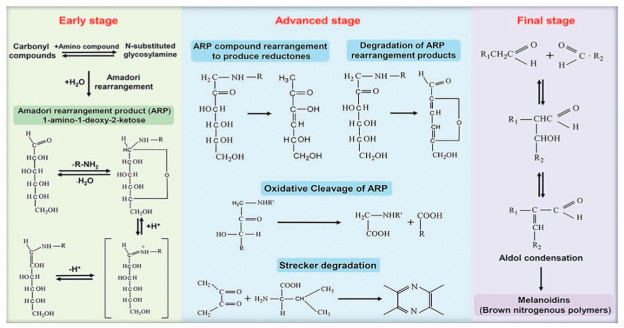
The complex Maillard reaction process between carbonyl-containing compounds and free amino groups can be divided into three stages: early stage, advanced stage and final stage [25]. The specific reaction pathway and chemical structure of Maillard reaction are shown in Fig. 2.
Figure 2
Figure 2.
The specific reaction pathway and chemical structure of the Maillard reaction.
The early stage of the Maillard reaction begins with the formation of a covalent bond between carbonyl groups and free amino groups, generating Schiff bases and releasing water molecules. The Schiff bases undergo cyclization to form the unstable N-substituted glycosylamines. This process is relatively simple and rapid, usually occurring at lower temperatures. Subsequently, the glycosylamines rearrange into the more sTable 1-amino-1-deoxy-2-ketose, known as amadori rearrangement products (ARPs) [26]. ARPs sever as key intermediates in the early stage, not only affect the sensory properties of food but also closely related to the formation of AGEs in the human body [27]. The primary products generated in the early stage of the Maillard reaction do not show significant changes in taste, color, metal chelation or toxicity. However, these intermediates are unstable, possess strong reducing power, and easily decompose, driving the Maillard reaction to continue [28].
2.1.2
The advanced stage
In the advanced stage, ARPs degrade into intermediate compounds through 1,2-enolization and 2,3-enolization pathways depending on the initial pH value [29]. When pH ≤ 7.0, the primary compounds mainly undergo 1,2-enolization reactions, deamination and dehydration, forming hydroxymethylfurfural from hexoses or furfural from pentose. When pH > 7.0, the primary compounds undergo 2,3-enolization to form reduction products, such as 4–hydroxy-5-methyl-2,3-dihydrofuran and various fission products like acetaldehyde, diacetyl and acetone aldehyde [30]. These highly reactive compounds react with amino acids through the Strecker degradation pathway to form aldehydes and aminoketones. The aldehydes produced by degradation are the primary sources of aldehydic compounds in Maillard reaction products. Aminoketones provide the necessary conditions for the formation of various heterocyclic compounds [31]. The advanced stage of the Maillard reaction is a complex and highly variable chemical process, involving transformation of ARPs into variety flavors, pigments and aroma compounds.
2.1.3
The final stage
In the final stage, various low-molecular-weight intermediates such as reduction products, cleavage products and Strecker degradation products undergo aldehyde-alcohol and aldehyde-amine condensation to form high-molecular-weight brown nitrogenous polymers known as melanoidins, as well as complex flavor compounds and AGEs [32]. Besides its role in food processing, melanoidins have also garnered attention in biopharmaceutical research due to their antioxidant and potential anti-inflammatory properties. Studies have shown that melanoidins can capture free radicals and help reduce the risk of diseases associated with oxidative stress [33]. The accumulation of AGEs affects cell proliferation and repair ability, accelerating tissue aging and damage accumulation. AGEs bind to specific receptors on cell surfaces, activating intracellular signaling pathways, leading to increased inflammation and oxidative stress. This process contributes to diabetes complications and cardiovascular diseases, making it a significant condition in the development of various diseases [34].
In conclusion, monitoring the Maillard reaction process helps reduce the formation of harmful substances and ensures product safety and quality.
2.2
Influence conditions of maillard reaction progress
The progress of Maillard reaction is influenced by various conditions, including physical conditions such as reaction temperature and time, as well as chemical conditions such as reactant substrates, pH value, moisture content, metal ions and radiation [35]. The influencing conditions and monitoring instrument of Maillard reaction were listed in Table S1 (Supporting information).
2.2.1
Physical conditions
Physical conditions include reaction temperature and time. These do not directly participate in the chemical reaction but influence the Maillard reaction pathway and process by altering external conditions. For example, Yan et al. [36] investigated the changes in the structure, functional properties, and volatile compounds of Maillard reaction products formed from Cinnamomum camphora seed kernel protein isolate and dextran under different reaction temperatures (70–100 ℃) and times (1–4 h) by UV–vis. The results showed that with the increase of temperature and time, more high molecular weight Maillard reaction products were formed, and the degree of glycation significantly increased.
Reaction temperature influences the Maillard reaction pathways and the types of final products. At low temperatures, the reaction is controlled by kinetics, and lower activation energy pathways are more accessible, leading to the formation of aroma compounds and other unstable intermediates. At high temperatures, the reaction is controlled by thermodynamics, forming cyclic or polymer products. However, excessively high temperatures may produce carcinogens [37]. Generally, for every 10 ℃ increase in temperature, the reaction rate increases by 3 to 5 times [38]. Therefore, it is of great significance to control the reaction temperature to reduce the formation of harmful substances.
Reaction time directly affects the progress of the Maillard reaction and the types and characteristics of the final products. In the early stages, shorter reaction times mainly form Schiff bases and ARPs, which have a relatively minor impact on the sensory properties of product. As time progresses, the reaction gradually enters the advanced stage, accumulating more flavor and pigment compounds, thus enriching the color and flavor of the product [37]. However, excessive reaction time may lead to over-browning of the product, negatively affecting sensory quality. Additionally, reasonable control of reaction time can reduce the formation of harmful substances such as acrylamide and AGEs [31].
Temperature and time being two interacting factors, their equilibrium is crucial for the Maillard reaction products. Higher temperatures can accelerate the reaction rate, but a very short reaction time may result in incomplete reactions and the formation of by-products or undesirable flavor changes. On the other hand, lower temperatures allow the reaction to proceed more smoothly, but a longer time is required to achieve similar effects [31]. For example, during baking, high temperatures can quickly produce a golden-brown surface, but may cause some areas to burn or become overly dry and hard. Lower temperatures require a longer time to ensure the full development of flavor, but may not achieve the desired color [6]. Reasonable regulation of these factors can optimize the Maillard reaction, prevent the generation of adverse by-products, and achieve the desired flavor and quality.
2.2.2
Chemical conditions
Chemical conditions include reactant substrates, pH, moisture, metal ions and radiation. These directly participate in or influence the chemical reaction, thereby affecting the products and reaction process.
The types and concentrations of reaction substrates influence the rate and products of the Maillard reaction. Generally, the reaction rate of monosaccharides is higher than that of disaccharides. Aldoses react more quickly than ketoses because the terminal group of aldoses has less steric hindrance, making it easier to react with amino acids. Basic amino acids have higher reactivity than acidic amino acids, while non-polar amino acids have higher reactivity between basic and acidic amino acids [25]. Different combinations of reducing sugars and amino compounds lead to various unique reaction products, determining the quality of the product. Additionally, higher substrate concentrations can accelerate the reaction process but may also increase the formation of by-products [10].
The ionization degree of carbonyl and amino groups varies under different pH environments, affecting the reaction pathways and product types. For example, Ma et al. [39] used LC-MS and NMR to characterize the structures of the prepared xylose-glycine Amadori rearrangement (XGG-ARP) and cross-linking product (XGG-CP). The results showed that the different of molar ratio of reactants and the lower the pH value, the higher the generation rate of XGG-CP. The efficient and selective preparation of XGG-ARP and XGG-CP could be controlled by adjusting the reaction conditions. More aromatic compounds tend to be produced under acidic conditions. Under neutral to weakly alkaline conditions, roasted flavoring compounds are usually produced [7]. The pH value also regulates the Maillard reaction rate. When pH < 3.0, the Maillard reaction is inhibited and proceeds at a slower rate; in alkaline conditions, the reaction rate increases sharply, possibly due to the favorable conditions for decarboxylation reactions [40].
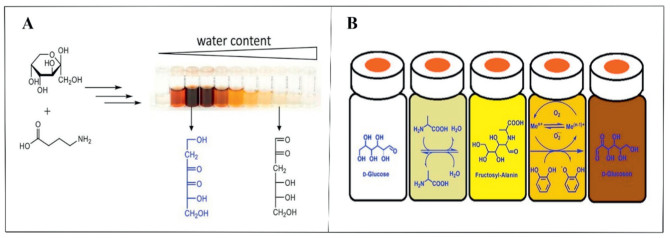
Moisture content has multiple impacts on the Maillard reaction. Firstly, water facilitates as a medium and solvent for the reaction, aiding in the dissolution and reaction of substrates. Secondly, moisture content regulates the reaction rate and selectivity. Different Maillard reaction systems have different critical water activity levels for the maximum browning rate [41]. When water activity is below the critical water activity levels, the browning rate is influenced by molecules mobility and increases with higher water activity. Conversely, when it exceeds the critical water activity levels, the substrates become diluted, thereby inhibiting browning. The Maillard reaction is faster when the moisture content of the material is 10%−15%. Excessively high or low moisture content may lead to instability in reaction rates or reduced selectivity of products. For example, Bruhns et al. [42] investigated the effect of moisture content on product formation in the Maillard reaction using HPLC and found that different water levels significantly changed the type and composition of reaction products. Specifically, a α-dicarbonyl compound 2-deoxyd-manno-3,4–dione (2-deoxyglucosone) was generated when the moisture content was below 50%. However, the properties and types of reaction products changed significantly under higher moisture conditions (Fig. 3A). Additionally, moisture content can adjust the reaction temperature and pH, further influencing the reaction process and product formation [41]. High moisture content slows down the effect of temperature on the reaction rate and reduces the influence of pH, while low moisture content enhances the effects of temperature and pH, promoting the reaction to proceed more quickly.
Figure 3
Figure 3.
(A) The HPLC method was used to study the effect of controlling moisture content on the formation of Maillard reaction products. Reproduced with permission [42]. Copyright 2018, American Chemical Society. (B) The HPLC method was used to investigate the effect of different polyphenolic compounds on the Maillard reaction in a D-glucose and L-alanine model system with or without metal ions. Reproduced with permission [44]. Copyright 2015, American Chemical Society.
Metal ions can both catalyze and inhibit the Maillard reaction depending on their type, concentration and form. On one hand, certain metal ions like Cu2+, Zn2+, Fe2+ and Fe3+ can act as catalysts, accelerating the reaction rate between substrates, helping to form more Maillard reaction products, thus enhancing aroma and improving flavor. Among them, Fe3+ facilitates the reaction faster than Fe2+ because the reaction process Fe2+ needs to be oxidized to Fe3+ in order to facilitate the reaction. On the other hand, metal ions like Ca2+ and Mg2+ may act as inhibitors, reducing the reaction rate, limiting product formation, and even leading to undesirable reaction outcomes. The strong inhibition of Mg2+ over Ca2+ is a result of the greater stability of compounds in which Mg2+ binds to amino acids than compounds in which Ca2+ binds to amino acids [43]. For example, Wilker et al. [44] explored the effect of different polyphenol compounds on the Maillard reaction in D-glucose and L-alanine model systems with or without metal ions by HPLC. The results showed that at 100 ℃, polyphenol compounds exhibit a pro-oxidation effect on metal ions, which promotes the oxidation process of the Maillard reaction through the red oxygen cycle mechanism between metals and polyphenols (Fig. 3B). Metal ions may form complexes with other components, further altering reaction kinetics and product distribution [43].
Radiation also affects the progress of the Maillard reaction. X-rays and γ-ray radiation sterilization are commonly used methods in the processing industry. Non-reducing disaccharides such as sucrose, do not form brown substances under heating conditions, but under radiation conditions, brown substances are formed, indicating that sucrose exhibits reducing properties under radiation. During radiation, the reaction rate of sugars is as follows: sucrose > fructose > arabinose > xylose > glucose. However, during thermal reactions, the reaction rate of sugars is pentose > heptose > hexose > disaccharides. This may be because the energy released by radiation breaks the glycosidic bond, thereby releasing carbonyl groups, which further react with amino compounds [25]. In addition, radiation has potential in the biopharmaceutical field. For example, radiation can be used to treat drugs, accelerating the reaction process and synthesizing Maillard reaction products with specific structures and functions in a shorter time. This process can be used to study and control the formation of AGEs [34]. In practical applications, parameters such as the type, intensity and time of radiation must be precisely adjusted to achieve the goal of optimizing product quality and improving production efficiency, while avoiding the formation of harmful substances.
In summary, comprehensively considering and control the conditions influencing the Maillard reaction can not only optimize product quality and improve reaction efficiency, but also reduce the generation of undesirable by-products and improve the nutritional value of the product.
3.
Maillard reaction process monitoring methods
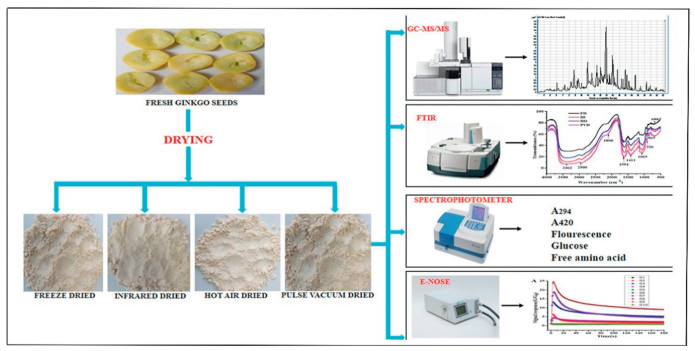
By controlling the conditions of Maillard reaction and monitoring the Maillard reaction process, the product quality can be ensured. In recent years, a series of advanced methods, including spectroscopic methods (FTIR, UV–vis and FL), chromatography/chromatography-mass spectrometry (HPLC, HPLC-MS, GC, GC–MS and CE), electrochemical methods (EC, E-nose and E-tongue), NMR and ELISA, have been developed to conduct in-depth analysis and monitoring of the Maillard reaction process [15]. For example, Boateng et al. [45] used FTIR, UV–vis, FL, GC–MS/MS and E-nose to monitor the Maillard reaction process, and studied the effects of different drying methods on Maillard reaction products, flavor, and phytochemical components. It provides important information for the processing conditions of ginkgo seeds and the selection of suitable drying methods for nutritious foods. The results show that FTIR, UV–vis, FL, GC–MS/MS and E-nose can accurately monitor the Maillard reaction process and provide in-depth insights into the Maillard reaction mechanism (Fig. 4). The characteristics of relevant monitoring methods are listed in Table S2 (Supporting information).
Figure 4
Figure 4.
The Maillard reaction products of ginkgo under different drying conditions were monitored by using techniques such as UV–vis, FL, FTIR, GC–MS/MS and E-nose, providing important information for the processing conditions of ginkgo seeds and the selection of suitable drying methods for nutritious food. Reproduced with permission [45]. Copyright 2021, Elsevier.
3.1
Spectroscopic methods of the maillard reaction process monitoring
In the monitoring of the Maillard reaction process, commonly used spectroscopic methods are FTIR, UV–vis and FL. FTIR measures changes in molecular vibration frequencies, providing detailed information on specific chemical bonds and functional groups in reactants and products. This technique tracks the consumption of substrates and the formation of products to understand the reaction mechanism. Mellado-Carretero et al. [46] used attenuated total reflectance-FTIR (ATR-FTIR) combined with multivariate analysis to monitor the Maillard reaction between proteins and polysaccharides. ATR-FTIR captures spectral changes at different reaction stages, tracking cross-linking reactions, such as the formation of Schiff bases and pyridine compounds. This method evaluates the formation and stability of protein-polysaccharide conjugates quickly and accurately, providing a scientific basis for developing new emulsifiers in the food industry. Hwang et al. [47] demonstrated the combination of differential scanning calorimetry and FTIR for the rapid monitoring the Maillard reaction pathway of solid-state glucose and aspartic acid. This one-step technique continuously heats samples within a fixed temperature range, recording FTIR changes in real-time, observing the transition from Schiff base intermediates to ARPs and their decarboxylation products effectively. This method is suitable for food processing and quality control scenarios requiring solid-state reaction monitoring.
UV–vis monitors the Maillard reaction by measuring changes in the intensity and position of absorption peaks at specific wavelengths. It provides quantitative information on the concentration of reaction products for controlling reaction conditions. Jiang et al. [14] used UV–vis spectroscopy to monitor the Maillard reaction between glucose and histamine, finding that histamine concentration significantly decreased during the reaction, especially within the 240–340 nm wavelength range. This change provides experimental evidence for reducing allergens by controlling heating conditions in food processing. Khoder et al. [48] used UV–vis to monitor the Maillard reaction between sodium alginate and albumin in drug carrier preparation, tracking chemical reactions in the drug release system in real-time and adjusting formulations to optimize drug release curves. This provides an efficient analytical tool for controlling Maillard reaction-based drug release systems.
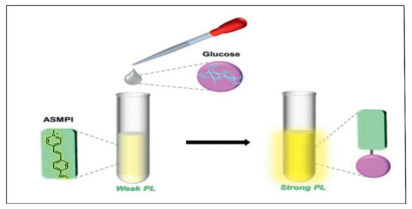
FL uses fluorescent signals from certain intermediates and products in the Maillard reaction to monitor the reaction process. It is used to study protein glycation and the formation of AGEs. Ma et al. [49] developed a fluorescent glucose sensor using fluorescence produced by the reaction of 4-(4-aminostyryl)-1-methylpyridinium iodide (ASMPI) with glucose (Fig. 5). FL recorded the shift in ASMPI absorption peaks due to the reaction, reflecting intramolecular charge transfer changes. This spectral data validated the effectiveness of sensor design and provided insights into the kinetics of Maillard reaction intermediates, offering an efficient and economical tool for diabetes monitoring. Xia et al. [50] used FL to monitor the changes in fluorescent intermediates during the thermal reaction between peptides and glucose, studying the dynamic process of the Maillard reaction. By tracking changes in fluorescence intensity, the study revealed the transformation of fluorescent substances into non-fluorescent high molecular weight browning products over time. This monitoring helps our understanding on the intrinsic mechanisms of protein-sugar Maillard reactions. FL also have important applications in monitoring non-fluorescent structural substances in the Maillard reaction. Through fluorescence induction and fluorescence labeling techniques, it is possible to indirectly analyze originally non-fluorescent substances, particularly by reacting with fluorescent probes to generate fluorescent products, thus enabling the monitoring of non-fluorescent intermediates [33]. For example, Li et al. [13] synthesized melanoidins through the Maillard reaction using glucose and lysine and converted them into fluorescent nanoparticles by fluorescence labeling, demonstrating their application prospects in the food industry. This fluorescent nanoparticle exhibits excellent fluorescence and water solubility, serving as biomarkers for monitoring chemical changes during food processing.
Figure 5
Figure 5.
Schematic of a fluorescent glucose sensor developed using the fluorescent substance produced by the reaction of ASMPI with glucose. Reproduced with permission [49]. Copyright 2022, Elsevier.
These spectroscopic methods provide detailed information about the Maillard reaction process, such as the formation, transformation, and kinetics of reactants and products. Through these methods, the mechanism of the Maillard reaction can be understood more deeply, and reaction conditions can be controlled and optimized to achieve the desired reaction outcomes.
3.2
Chromatography/chromatography-mass spectrometry of the maillard reaction process monitoring
Chromatographic techniques and their combination with MS play a crucial role in monitoring the Maillard reaction process. These techniques can effectively separate complex mixtures in the Maillard reaction, allowing for detailed identification and quantitative analysis of reactants, intermediates and final products. Chromatography/chromatography-mass spectrometry methods include HPLC, HPLC-MS, GC, GC–MS and CE.
HPLC is suitable for separating polar substances and macromolecules in the Maillard reaction, such as amino acids, reducing sugars, and AGEs. Wang et al. [51] used HPLC to study the rate of the Maillard reaction of polyphenolic compounds and other antioxidants in Ophiopogon japonicus roots under different storage conditions. By sampling regularly and analyzing with HPLC, they found that lowering the storage temperature to 4 ℃ and humidity to 30% can slow down the Maillard reaction significantly. HPLC can be used to control the Maillard reaction storage conditions by accurately analyzing and monitoring the content of Maillard reaction products. Zhang et al. [52] used HPLC to quantitatively analyze HMF generated from the Maillard reaction, providing a precise method for assessing the safety of processed foods. By monitoring the concentration changes of HMF using HPLC, they found that heating vinegar and soy sauce samples to 80 ℃ resulting increasement of HMF concentration by 20% within 30 min. This provides direct information for the generation of HMF by controlling reaction conditions.
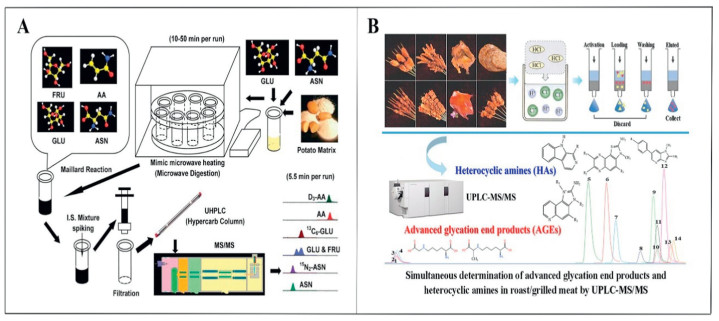
HPLC-MS/MS provides powerful support for the precise identification and quantification of compounds, in-depth exploration of the complex mechanisms of Maillard reactions, and monitoring of their dynamic changes, such as the formation of ARPs, protein-sugar binding reactions, and the generation of AGEs [53]. Zhang et al. [54] employed UPLC-MS/MS to rapidly monitor key compounds such as malondialdehyde, sugars and acrylamide during the Maillard reaction (Fig. 6A). Their results showed that UPLC-MS/MS could accurately monitor the target compounds in potato samples within a short time, providing an effective technology for quickly monitoring key compounds in the Maillard reaction. Furthermore, this method combined with simple sample treatment procedures and UPLC-MS/MS analysis reduce sample analysis time and labor in the kinetic study. Li et al. [16] developed a UPLC-MS/MS method to rapidly and accurately monitor AGEs and heterocyclic amines (HAs) during the Maillard reaction in roasted meat products (Fig. 6B). This method can simultaneously monitor AGEs and HAs produced by the Maillard reaction. It not only has good selectivity and sensitivity, but also can quickly analyze a large number of samples, providing an effective tool for food safety evaluation based on the Maillard reaction. Derivatization and ion-pair reagents play a crucial role in enhancing the detection sensitivity, selectivity, and accuracy in HPLC-MS/MS monitoring of the Maillard reaction. Derivatization enhances the signal intensity and dissociation performance of target compounds, while ion-pair reagents help improve separation and increase signal strength. The combination of these two techniques provides strong support for product analysis in Maillard reactions, which is conducive to in-depth understanding of the reaction process and control of reaction conditions [55]. Cui et al. [55] confirmed the structure and molecular weight of Maillard reaction intermediates (MRI) through UPLC-MS/MS and demonstrated the significant potential of MRI as a stable precursor for generating fresh flavors. The study also examined how different ions pair and derivatization reagents, such as cysteine, influence the reactivity and flavor formation in the Maillard reaction. Compared to traditional Maillard reaction products, MRI offers a more controllable and sustainable method for flavor production.
Figure 6
Figure 6.
(A) Schematic diagram of UPLC-MS/MS for the rapid monitoring of key compounds in the Maillard reaction process. Reproduced with permission [54]. Copyright 2011, American Chemical Society. (B) Schematic diagram of the simultaneous rapid and accurate monitoring of AGEs and HAs in roasted meat products by UPLC-MS/MS method. Reproduced with permission [16]. Copyright 2024, Elsevier.
GC is more suitable for analyzing volatile small molecular products [56], such as various flavor compounds generated by the Maillard reaction. GC–MS can be used to monitor and quantify aroma compounds produced in the Maillard reaction, such as pyrazines, thiophenes and furans. Subsequent regulation of reaction conditions through monitoring data feedback, which can precisely adjust the flavor characteristics of the product. By analyzing chromatograms and mass spectra at different time points during the reaction, the Maillard reaction kinetics can be understood, and reaction conditions can be controlled to achieve desired results. Wieczorek et al. [57] used GCMS– to monitor 4-methylimidazole (4-MeI) in the Maillard reaction with high sensitivity and specificity. Through optimized ion pair extraction and derivatization steps, GC effectively separated 4-MeI, and the accuracy of the analysis was enhanced through selective monitoring 4-MeI by tandem mass spectrometry. This method can handle complex sample matrices and monitor low concentrations of 4-MeI generated by the Maillard reaction accurately, helping to control reaction conditions and ensure food safety. Shakoor et al. [58] explored the impact of glucose treatment on the flavor of fried chicken and revealed its Maillard reaction mechanism using GC–MS technology. The study found that glucose treatment significantly enhanced the meaty flavor of fried chicken and introduced other improved flavor characteristics. Using the high sensitivity and accuracy of GC-MS, many key compounds related to fried chicken flavor, such as 2-methyl-3-pentanone and 2-methylpyrazine, were successfully monitored and quantified. By combining GC–MS with gas chromatography-olfactory (GC—O) technology, this study provided valuable insights into the Maillard reaction mechanism that improves fried chicken flavor with glucose treatment and offered guidance for future food processing condition control. Yin et al. [59] used GC–MS to investigate the impact of Maillard reaction products generated by protein-based attractants on the taste and flavor of dog food. By monitoring and quantifying key aroma compounds with GC–MS, the study further validated their impact on dog food flavor through acceptability and preference tests, demonstrating the key role of GC-MS in monitoring the Maillard reaction process.
CE separates charged particles under the influence of an electric field, and can separate reactants and products in the Maillard reaction based on differences in molecular size, charge, and shape, while monitoring their changes in real-time [60]. It can precisely measure the consumption of sugars and amino acids during the reaction, as well as the formation of Maillard products, offering in-depth exploration of the Maillard reaction mechanism. Leiva et al. [60] used CE to monitor the Maillard reaction in whey protein systems with lactose or glucose under different storage conditions. The glycation (lactosylation) of proteins in the early stages of the Maillard reaction, even when there was minimal loss of lysine, allowing changes in the protein to be observed through CE. CE has been proven to be a sensitive method for assessing the degree of glycation in natural proteins, providing valuable information even when lysine loss is not significant. This method offers an effective approach for studying the mechanism of the early stages of the Maillard reaction.
Chromatography/chromatography-mass spectrometry technology in the monitoring of Maillard reaction process not only promotes the progress of food chemistry and science, but also provides technical support for the control of production conditions, making them indispensable analytical tools in modern analytical science.
3.3
Electrochemical methods of the maillard reaction process monitoring
Electrochemical methods are widely used to monitor the Maillard reaction process. By monitoring the physical and chemical changes in the reaction mixture and analyzing the output signals, information about the reaction dynamics can be obtained, helping to control the reaction conditions.
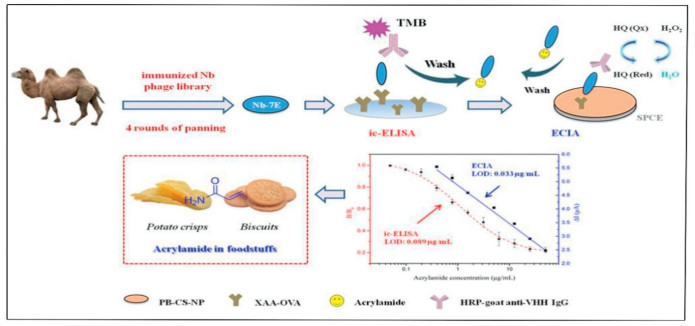
EC provide sensitive and non-destructive means of monitoring the Maillard reaction process by real-time measurement of current, potential, or charge changes in the reaction mixture. Rizzi et al. [17] monitored the voltage changes in the Maillard reaction between different sugars and β-alanine to assess the ability of various sugars to generate reducing ketones. The study found that ribose exhibited the strongest negative potential shift (−192 mV), indicating its highest capability to generate highly active reductones in the Maillard reaction. This research deepened the understanding of the reactivity of sugars in the Maillard reaction. Navarro et al. [61] developed a low-cost electrochemical sensor based on hemoglobin-iron magnetic nanoparticles-chitosan-modified carbon paste electrode for monitoring of acrylamide form the Maillard reaction in processed foods. The experimental results showed that the sensor exhibited extremely high sensitivity and good reproducibility in the low concentration range, highlighting its potential application in food safety monitoring and control. Liang et al. [62] successfully isolated a specific nanobody Nb-7E through phage display technology for monitoring acrylamide derivative xanthyl acrylamide (XAA) (Fig. 7). By establishing an indirect competitive enzyme-linked immunosorbent assay (ic-ELISA) and further optimizing it into an enhanced electrochemical immunoassay, the detection limit was reduced to 0.033 µg/mL. This demonstrates that nanobody technology can develop highly sensitive immunoassays for monitoring acrylamide formation in the Maillard reaction systems.
Figure 7
Figure 7.
Schematic diagram of an ic-ELISA method for the monitoring of XAA. Reproduced with permission [62]. Copyright 2022, American Chemical Society.
The E-nose is based on the principles of the human olfactory system. It uses chemical sensors, data processing units, and pattern recognition algorithms to respond specifically to different volatile compounds, thereby identifying and distinguishing various odors [63]. In the Maillard reaction, the E-nose can monitor the aromatic characteristics of volatile compounds, providing accurate information for controlling reaction conditions by recording and analyzing changes in the aroma profile in real-time. Cao et al. [64] used an E-nose to monitor the odor changes in carp samples treated with different concentrations of Maillard reaction products. The E-nose captured odor changes accurately caused by lipid oxidation. In particular, in high-concentration treatments, the detected odor changes were significantly reduced, demonstrating the effectiveness of Maillard reaction products in inhibiting myoglobin-mediated lipid oxidation, which is crucial for extending the shelf life of carp. Wu et al. [65] utilized E-nose to analyze the effect of adding lotus seed oligomeric proanthocyanidins (LSOPC) during the baking process on cookie flavor, monitoring changes in volatile components during AGEs formation in the Maillard reaction. Using the multi-sensor array of the E-nose, the study showed that cookies containing LSOPC inhibited specific odors produced by the Maillard reaction between sugars and proteins during baking. This real-time monitoring provided a scientific basis for controlling the impact of LSOPC on improving the sensory quality and health attributes of the biscuits. Raigar et al. [66] used an E-nose to monitor and record odor changes throughout the microwave roasting of peanuts, particularly those caused by the Maillard reaction. This method enabled the identification of optimal roasting conditions through aroma profiling, which not only optimized the sensory quality of the peanuts but also maximized the retention of their nutritional value. The E-nose can rapidly and non-destructively monitor the Maillard reaction process, providing data support for precise control and optimization of the production conditions.
The E-tongue simulates the human gustatory system by monitoring different taste characteristics such as sweetness, bitterness, sourness and saltiness through a series of selective sensors [67]. By analyzing the response patterns of these sensors, the presence and changes of different taste characteristics in the reaction mixture can be identified. For example, Zeng et al. [68] used E-tongue to comprehensively monitor the flavor changes of Maillard reaction products from egg white and sugar under the influence of different antioxidants and drying processes. The study found that adding antioxidants such as NaCl, l-cysteine and l-ascorbic acid effectively controlled the browning intensity during the Maillard reaction. In particular, freeze-dried samples exhibited lower browning and better flavor retention in the multidimensional taste analysis of the E-tongue compared to spray-dried samples. This technology provided scientific evidence for controlling the impact of different drying conditions on the Maillard reaction progress. Yan et al. [69] used E-tongue to monitor the flavor improvement effects of pea protein-derived peptides and their Maillard reaction products in foods. The E-tongue detected that the addition of these peptides significantly enhanced saltiness, umami and mouthfeel. This method provides reliable analytical support for developing more natural and healthier food additives. Zhou et al. [70] studied the impact of pea protein hydrolysates and their Maillard reaction intermediates on the flavor of meat products using E-tongue. The E-tongue was able to finely monitor the performance of these intermediates in enhancing meat flavor, including increasing umami and improving mouthfeel.
The electrochemical methods have the advantages of speed, accuracy, and automation, making it suitable for online monitoring of the Maillard reaction in industrial production. It provides a convenient method to track the progress of the reaction and assess the quality and sensory characteristics of the reaction products, offering the potential for controlling reaction conditions and improve product quality in fields of food processing and biomedicine.
3.4
NMR method of the maillard reaction process monitoring
NMR obtains information about molecular structure and chemical environment by analyzing the resonance absorption of atomic nuclei in an external magnetic field. Particularly in the Maillard reaction, NMR can precisely identify substrates, intermediates, and products in the mixture, and analyze their molecular structures and concentrations through the position and intensity of resonance peaks. This high resolution and sensitivity make NMR an ideal tool for monitoring compounds at low concentrations in the Maillard reaction. Kaspchak et al. [71] utilized NMR to determine the Maillard reaction process and structures between ε-polylysine and dextran. NMR monitoring revealed the specific structure of the conjugates and their mechanism in improving chicken gel texture and microbial stability, helping to optimize food additives. Kaewtathip et al. [19] used NMR to monitor the Maillard reaction products formed during drying processes, accurately assessing the impact of different drying techniques on food quality. By monitoring the chemical composition changes in the Maillard reaction, the study revealed the optimal drying conditions for preserving the color, flavor, and nutritional value of tomato skins, thereby controlling and optimizing food processing conditions.
Additionally, NMR can track the dynamic changes of compounds during the Maillard reaction, including the consumption rate of substrates and the formation rate of products. Through quantitative analysis of NMR spectra, the progress of the Maillard reaction can be determined, providing relative concentration information of the reaction products. This is crucial for understanding the mechanism of the Maillard reaction and controlling reaction conditions. Yu et al. [72] explored the interaction between (-)-epigallocatechin gallate (EGCG) and ARPs in a Maillard reaction system using NMR, revealing the structure of the addition products formed by EGCG and ARPs. NMR analysis accurately parsed the molecular structure of the addition products, including covalent binding sites and interactions between atoms, showing that EGCG forms stable structures with ARPs, influencing the reaction pathway and slowing or inhibiting the Maillard reaction. This provides potential applications for controlling browning and improving food quality. Xia et al. [73] in their study of encapsulating Maillard reaction products between chitosan and corn syrup solids, used NMR to track the dynamic progress of the Maillard reaction and evaluate structural changes of products under different pH conditions. Utilizing NMR to precisely monitor the Maillard reaction to optimize the antioxidant properties is crucial for the development of food packaging and preservation technologies.
In summary, NMR technology not only provides in-depth exploration methods for studying the mechanisms, kinetics and product distribution of the Maillard reaction, but also offers guidance and support for controlling and optimizing the reaction conditions and developing new products.
3.5
ELISA method of the maillard reaction process monitoring
AGEs produced during the Maillard reaction are closely associated with the occurrence and progression of various chronic diseases, such as diabetes, cardiovascular diseases and Alzheimer disease. Through the use of monoclonal or polyclonal antibodies, ELISA technology enables highly specific and sensitive quantitative detection. This makes ELISA particularly effective in detecting low concentrations of reaction products, which is crucial for identifying trace amounts of AGEs and other products that may form in the Maillard reaction [20]. Wang et al. [20] used a model system to simulate the Maillard reaction of food during a long period of high temperature and screened for unknown estrogen-like compounds produced during the Maillard reaction process through ELISA. This is the first study to screen and identify unknown estrogen-like compounds produced in the Maillard reaction. Furthermore, a strategy of controlling estrogen formation by adding vitamin B6 in the Maillard reaction was proposed, providing effective suggestions for safety control in actual food processing. Musa et al. [74] investigated the effects of different dosages of asparaginase, incubation times and temperatures on reducing acrylamide in wheat and rye biscuits through ELISA. Acrylamide was quantified using ELISA, and its color, texture and sensory properties were evaluated. The results show that, compared with the incubation temperature of 60 ℃, the acrylamide concentration at the incubation temperature of 90 ℃ is on average 78 µg/kg higher. The results show that ELISA can well determine the acrylamide content in the Maillard reaction system.
ELISA offers advantages of high sensitivity, specificity, and high throughput, making it an indispensable tool in food safety, disease research, and drug development. By combining with other analytical techniques, ELISA provides strong support for the in-depth study and control of the Maillard reaction.
4.
Different fields of maillard reaction process monitoring
The Maillard reaction occurs not only in the food industry, but also widely applied in fields such as tobacco processing, biopharmaceuticals, materials science and textile dyeing [12]. Maillard reaction products are typically present in complex matrices, so effective sample pretreatment techniques are crucial for isolating and concentrating these products. Common sample pretreatment techniques for Maillard reaction matrices include solid-phase extraction, liquid-liquid extraction, derivatization, ultrafiltration and microfiltration, enzymatic hydrolysis, high-speed centrifugation, as well as sample filtration and dilution [34,75-77]. These techniques can effectively remove interfering components from the matrix, concentrate Maillard reaction products, and improve the sensitivity and accuracy of subsequent analysis. By selecting the appropriate pretreatment techniques, reliable analysis of Maillard reaction products can be ensured, providing important data support for food safety, pharmaceutical research, and other fields. Table S3 (Supporting information) lists the common monitoring methods and representative compounds of Maillard reaction process in various fields. These compounds are widely present in the Maillard reaction products of various industries, and they are of great significance in indicating specific stages of the Maillard reaction, such as the formation of early, advanced and final Maillard products.
4.1
Food industry
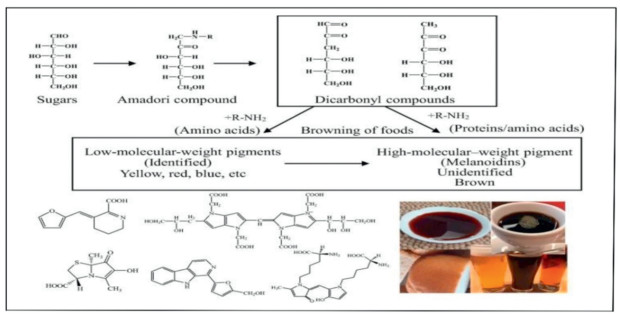
In food processing, the Maillard reaction occurs between carbonyl compounds in food and free amino compounds, causing a series of chemical changes such as the production of brown substances and flavor compounds. This reaction not only effectively improves the color, taste, and nutritional value of food, but also has certain preservative effects. Fig. 8 displays the products of the three stages of the Maillard reaction in food in the form of chemical structures [78]. However, excessive or improper Maillard reactions during food processing may lead to the production of harmful substances in food. For example, during the intermediate stages of the Maillard reaction, amino acid degradation produces PAHs, the content of which in food is associated with cancer, posing a threat to human health [10]. Research has found that amino acids such as aspartic acid, glutamine, methionine, and cysteine release acrylamide when subjected to Maillard reaction with equimolar amounts of fructose, d-galactose, lactose, or sucrose [23]. Song et al. [79] found through HPLC-MS that acrylamide inhibits the autophagy pathway and increases the accumulation of reactive oxygen species, leading to cell apoptosis and increased secretion of inflammatory factors. Additionally, acrylamide reduces the levels of glycolytic intermediates and decreases the rate of the tricarboxylic acid cycle, leading to toxic reactions in the body. By monitoring the Maillard reaction process, the extent of the reaction can be effectively assessed and controlled, thereby preventing food spoilage and safety issues by excessive reactions. Li et al. [24] discovered through LC-MS/MS that adding exogenous sugars to mature potato freeze-thaw enzyme hydrolysis juice in the Maillard reaction improved aroma components, free amino acid content, and antioxidant activity, providing a reference for the development of new seasonings. Liang et al. [80] found through GC–MS that after Maillard reaction treatment, the types of volatile components in shellfish hydrolysates did not change significantly, but their quantity increased substantially, with aldehydes, ketones and esters increasing. This reaction eliminated the unpleasant fishy smell of oysters and produced pleasant milk, nut, and meat aromas. Monitoring the Maillard reaction process provides important data for developing new food products. Xie et al. [81] prepared pea protein hydrolysate through the Maillard reaction and found through UV–vis that it significantly enhanced the meaty aroma of plant-based meat while delaying the oxidation of fats and proteins, thereby improving storage performance. The study indicates that adding pea protein hydrolysate as a natural reactive flavor compensator and altering the Maillard reaction pathway is an effective method to enhance storage performance.
Figure 8
Figure 8.
The products structures of the three stages of the Maillard reaction in food. Reproduced with permission [78]. Copyright 2020, Springer Nature.
Nevertheless, real-time monitoring of the Maillard reaction process still faces technical challenges in large-scale food production, especially in terms of sensor integration. For example, achieving sensor integration in the oven for real-time monitoring of the reaction process is difficult, and existing sensors often face issues with insufficient sensitivity and stability in high-temperature environments. Developing sensors with better heat resistance and integrating them with automated control systems is of great significance for enhancing the real-time monitoring capabilities of the Maillard reaction process in the food industry.
4.2
Tobacco processing
In the tobacco industry, the Maillard reaction is widespread in the processes of curing, smoking, and thermal processing of tobacco leaves. The complex Maillard reaction between sugars and amino acids in tobacco produces various flavor compounds, significantly impacting the aroma and taste of tobacco [82]. Li et al. [83] studied the changes in humidity of 20 important aroma compounds in burley tobacco after modulation using GC–MS and found that non-enzymatic browning reaction products of pyrazine compounds increased significantly. These basic aroma substances play an essential role in the characteristic aroma of burley tobacco. By monitoring the Maillard reaction process, reference parameters for drying conditions in flue-cured tobacco-producing areas in China were determined. Huang et al. [84] combined biocatalysis hydrolysis technology with enhanced Maillard reaction modification. They performed the Maillard reaction by adding amino acids, short peptides and fructose to the concentrated tobacco extract hydrolyzed by the complex enzyme of pectinase and laccase. The reaction process was then monitored by GC–MS to optimize the preparation of slices. The results showed that beneficial aroma components in the slices increased, harmful components decreased, the aroma became richer and more harmonious, the roasted aroma intensified, and the smoking quality significantly improved.
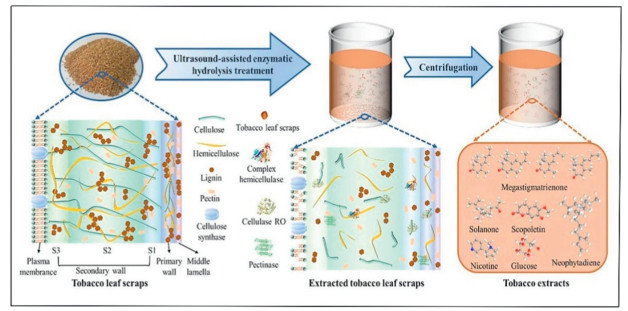
Additionally, the Maillard reaction is applied in the preparation of reconstituted tobacco leaves and flavorings to enhance the quality and flavor of tobacco products [85]. By monitoring this reaction process, it is possible to understand the types and concentration changes of Maillard reaction products under different conditions, thus controlling and optimizing parameters such as temperature, humidity, and time to improve the quality of tobacco products and enhance the consumer experience. Tong et al. [86] studied the effect of typical acidic and basic aroma additives on the release characteristics of aroma components in reconstituted tobacco leaves using GC-MS. The results showed that adding an appropriate amount of acidic aroma components in reconstituted tobacco promotes the release of aroma components. However, excessive acidic aroma additives inhibit the Maillard reaction, reducing the formation of additional aromatic components during pyrolysis. Extracting tobacco extracts from tobacco waste not only fully utilizes the waste, but also provides the reaction conditions to control and improve the quality and rich flavor of cigarettes. Zhao et al. [22] used ultrasound-assisted enzymatic hydrolysis to change the Maillard reaction rate and pathway in tobacco leaves (Fig. 9). GC–MS monitoring showed that the total aroma content of tobacco extract increased fivefold, and the total extraction rate increased by 51.57% after ultrasound-assisted enzymatic hydrolysis. Nitrogen compounds (such as alkaloids) can also be extracted from tobacco waste through thermal treatment.
Figure 9
Figure 9.
Schematic diagram of improving the aroma of tobacco extract in tobacco leaves by ultrasonic assisted enzymatic hydrolysis. Reproduced with permission [22]. Copyright 2022, Springer Nature.
However, in some traditional tobacco drying lines, due to significant fluctuations in temperature and humidity, the response time of monitoring sensors cannot synchronize with the reaction process, thereby affecting the generation of aroma substances. Strengthening the automatic temperature and humidity control system in tobacco production and adjusting reaction conditions in real-time by combining with gas sensors can better meet consumer demands and enhance competitiveness.
4.3
Biopharmaceuticals
The Maillard reaction also plays an important role in the biopharmaceutical field. During drug manufacturing, the Maillard reaction can occur between drug components and reducing sugars in excipients or packaging materials, affecting efficacy and safety. Feng et al. [87] prepared ovalbumin-dextran nanogels through the Maillard reaction and thermal gelation method to improve the oral bioavailability of curcumin, showing good pH stability, storage stability, and redispersibility. Controlling the Maillard reaction conditions to synthesize ovalbumin-dextran nanogels can serve as a delivery system for curcumin, enhancing its functionality. In the development of biopharmaceutical materials, the Maillard reaction is used to design new biocompatible materials. By monitoring the degree of the Maillard reaction on drug carriers or implant surfaces, their interaction with tissues can be improved, enhancing cell adhesion and bioactivity, thereby promoting therapeutic effects. Khoder et al. [48] synthesized bovine serum albumin and alginate conjugates through the Maillard reaction to prepare CIP gastro-retentive microbeads. The UV–vis results indicate that CIP gastro-retentive microspheres have good buoyancy and the ability to alter the drug release rate and sequence. The experiments demonstrated that Maillard reaction-controlled protein-polysaccharide conjugates have potential applications in drug controlled release systems. Xiang et al. [88] studied the effect and mechanism of cyclodextrin on the Maillard reaction in a lysine-lactose solid preparation model for the first time. The results showed that embedding lysine in cyclodextrin can inhibit Maillard reaction to some extent, potentially addressing Maillard reaction issues in pharmaceutical industry.
The application research of the Maillard reaction in traditional Chinese medicine mainly focuses on aspects such as herbal processing, efficacy evaluation, flavor optimization and quality control. During the traditional preparation of Chinese herbal medicines, processes such as heating, roasting and boiling are commonly used [25]. During these processes, sugars and amino acids undergo the Maillard reaction, generating AGEs and other chemical substances. These Maillard products not only affect the biological activity of the medicine but also alter its flavor, thus having a significant impact on the preparation and storage of traditional Chinese medicine [89]. Cordyceps sinensis is a traditional Chinese medicine with a variety of biological activities and pharmacological functions. Xiao et al. [90] determined the metabolites of Cordyceps sinensis under different drying methods by LC-MS/MS. Studies have shown that different drying methods affect the content of amino acid metabolites in Cordyceps sinensis through varying degrees of Maillard reaction. Therefore, the selection of drying methods should be customized according to specific requirements.
Due to the complex interactions between various components in formulations, it is difficult to effectively monitor the Maillard reaction process with a single monitoring method. The use of a multi-sensor system (such as combining HPLC-MS/MS and NMR) to achieve real-time monitoring of AGEs in drugs can ensure the quality and safety of the drugs, as well as enable personalized drug preparation control.
4.4
Material science
The application of the Maillard reaction has extended beyond the fields of food, tobacco and biopharmaceuticals, reaching into material science. For example, in materials science, Ma et al. [49] developed a fluorescent glucose sensor using fluorescent substances produced by the Maillard reaction between ASMPI and glucose. By adjusting solvent polarity and reaction temperature to control the Maillard reaction conditions, they enhanced the fluorescence emission of the ASMPI-glucose Maillard system, thus creating a simple and sensitive glucose fluorescent sensor. Fan et al. [75] studied the different reaction behaviors of active substances in licorice during the hydrothermal extraction process by controlling the Maillard reaction of these active substances. Using HPLC to analyze the reaction kinetics parameters, they monitored the overall antioxidant capacity during the hydrolysis reaction. The results showed that new compounds generated by the Maillard reaction help improve the antioxidant activity of the extracts, and provide new methods for the hydrothermal extraction processes and the controlled production of glycyrrhizin.
In large-scale production, improper solvent and temperature control lead to unstable material performance, making it difficult to meet industrial application requirements. Therefore, future development should focus on more precise temperature control systems and online monitoring technologies for reaction conditions to ensure consistency and efficiency in material production.
4.5
Textile dyeing
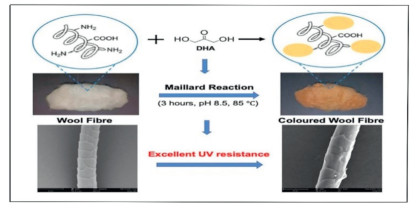
In textile dyeing industries, monitoring the Maillard reaction process is also crucial. Cui et al. [77] used non-toxic 6-phosphogluconic acid to phosphorylate wool through the Maillard reaction. UV–vis results showed that by controlling the reaction conditions, they improved the dyeing performance of wool fabric under cationic dyes, promoting the development of safer, more environmentally friendly, effective, and economical wool dyeing processes. Zhang et al. [91] developed dioxyacetone as a new dye. By controlling the Maillard reaction conditions and using UV–vis monitoring results, they found that the dye enabled rapid and sustainable dyeing of wool fibers, which not only minimized damage to the wool fiber cuticle, but also provided good UV resistance for the dyed fibers (Fig. 10). Le et al. [92] designed and synthesized water-soluble chitosan (CTS)-glucosamine (GA) powder using gamma-ray-induced Maillard reaction. Studies showed that the CTS-GA powder has good solubility, high antibacterial activity, and low cytotoxicity, making it an excellent dye.
Figure 10
Figure 10.
Schematic illustration of sustainable dyeing of wool fibers by controlling the Maillard reaction conditions. Reproduced with permission [91]. Copyright 2024, Elsevier.
Although it is possible to control dyeing reactions under laboratory conditions, dyeing effects are unstable in large-scale dyeing processes due to fluctuations in temperature and humidity. Strengthening the automation of dyeing processes and introducing real-time reaction monitoring systems will ensure the stability and environmental friendliness of the dyeing process.
Monitoring of the Maillard reaction process is used to improve the organoleptic quality of the product, extend the shelf life, explore its potential in health and medicine, and provide a scientific basis for the production of new products and the control and optimization of production conditions.
5.
Conclusion and future prospects
The review provides a detailed summary of three fundamental stages of the Maillard reaction and the chemical processes involved. It also discusses various factors affecting the reaction, including physical factors such as reaction temperature and time, as well as chemical factors such as reactant substrates, pH value, moisture content, metal ions and radiation. The current monitoring methods, including spectroscopic methods, chromatography/chromatography-mass spectrometry, electrochemical methods, NMR and ELISA, have made certain advancements in monitoring the Maillard reaction process. These methods can track and analyze the key intermediates and final products within the reaction. The application of these monitoring methods has significantly enhanced the understanding of the Maillard reaction kinetics, mechanisms and influencing factors, offering possibilities for controlling reaction conditions and improving product quality in areas such as food processing, tobacco processing, biopharmaceuticals, materials science and textile dyeing. However, due to the complexity of the Maillard reaction itself and the influence of various conditions on the reaction process, the existing methods still face several challenges in accurately, real-time and comprehensively monitoring the Maillard reaction process. The challenges of monitoring of the Maillard reaction process are summarized from four aspects: Maillard reaction, sample preparation, real-time monitoring and data processing:
(1) Complexity of the Maillard reaction itself: The Maillard reaction involves a wide variety of chemical reaction types, including condensation reactions, dehydration reactions, and redox reactions, which can occur at different stages and along different pathways. The same conditions may produce a variety of different compounds, increasing the difficulty of monitoring specific products. The Maillard reaction can produce hundreds of different compounds, with substantial variations in structure and properties ranging from low molecular weight volatile substances to high molecular weight browning products. Monitoring and quantifying these compounds require a range of different analytical methods, each of which needs specific optimization and calibration. Additionally, reaction conditions such as temperature, time and pH during the reaction can affect the Maillard reaction products, increasing the complexity of monitoring. Furthermore, some intermediates in the Maillard reaction are highly unstable and may rapidly convert into other compounds after formation. This rapid change demands monitoring methods that not only require high sensitivity but also the ability to capture these transient species, presenting significant challenges for analytical techniques.
(2) Complexity of sample preparation: For complex samples, appropriate sample preparation is necessary to remove interfering components and enrich target compounds. This process not only increases analysis time but may also introduce additional variability and loss, affecting the accuracy and reliability of the final results.
(3) Real-time monitoring: Real-time monitoring of the Maillard reaction and intervention at different reaction stages require analytical methods that not only need high sensitivity but also sufficient temporal and spatial resolution. This means that analytical techniques need to quickly respond to changes in the reaction and, when necessary, allow localized analysis at specific locations within the reaction system.
(4) Complex data processing: With the advancement of analytical technology, especially the rapid development of high-throughput analytical techniques and high-resolution mass spectrometry, it is possible to obtain a large amount of detailed data about Maillard reaction in a shorter time. Extracting valuable information from a vast and complex dataset has become a challenge.
In view of the challenges faced by the monitoring of Maillard reaction process, the following prospects can be developed:
(1) Nanotechnology for specific product monitoring: Nanotechnology holds great promise for advancing Maillard reaction monitoring, especially through the development of highly selective sensors. For instance, molecularly imprinted polymers can be engineered to create sensors that specifically detect key Maillard reaction intermediates, such as AGEs or acrylamide. These sensors can significantly reduce sample processing complexity and improve sensitivity, enabling precise tracking of the reaction in real-time. Further research could focus on developing multifunctional nanomaterials to simultaneously detect multiple Maillard products, improving overall monitoring efficiency.
(2) Biosensors combined with microfluidic systems: Biotechnology offers the potential for designing biomolecules (such as enzymes, antibodies and aptamers) that specifically recognize Maillard reaction products. The integration of these biomolecules into biosensors, combined with microfluidic systems, enables real-time, precise monitoring and control of the Maillard reaction process at the microscopic level. For example, enzyme-based sensors could track the formation of AGEs or the breakdown of reducing sugars during the reaction. These biosensors, integrated within a microfluidic chip, would allow researchers to monitor real-time changes in reaction conditions, such as temperature, pH and reactant concentrations, optimizing the Maillard reaction in industrial processes. Future research could focus on enhancing the stability and selectivity of these biosensors for industrial applications, especially for monitoring protein glycation in biopharmaceuticals.
(3) AI-driven real-time monitoring systems: The application of machine learning and advanced data analysis techniques to Maillard reaction monitoring could revolutionize the optimization of production processes. AI algorithms, such as support vector machines or neural networks, can be trained on real-time data to predict reaction outcomes, enabling dynamic adjustment of reaction parameters. For example, AI-driven systems could optimize the conditions for minimizing harmful by-products like acrylamide or maximize the production of desirable Maillard products in food processing. Future research should focus on developing standardized AI models that can integrate real-time data from multiple sensors, including those measuring temperature, pH and product concentrations, ensuring the consistent quality and safety of products.
(4) Standardization of AGEs detection protocols in pharmaceuticals: A specific research direction could involve the development of standardized protocols for detecting AGEs in the pharmaceutical industry. AGEs are crucial biomarkers for aging and various chronic diseases, and their formation during the Maillard reaction in drug formulation needs precise monitoring. Future work could focus on improving detection methods, such as developing more sensitive ELISA techniques or integrating them with other analytical methods like HPLC-MS/MS for comprehensive AGEs profiling. This would contribute to the safe design of pharmaceutical products, ensuring the prevention of unwanted glycation reactions during drug production.
These measures will not only enhance the accuracy and real-time monitoring of the Maillard reaction process, but also promote innovation and development of monitoring and control technologies, providing a solid scientific foundation and technical support for product safety and quality control.
Declaration of competing interest
The authors declare that they have no known competing financial interests or personal relationships that could have appeared to influence the work reported in this paper.
The work was financially supported by the State Key Program of National Natural Science of China (No. 22134007) and the Guangdong Basic and Applied Basic Research Foundation of China (No. 2024A1515011077), the Science and Technology Project of China Tobacco Guangdong Industrial Limited Corporation (No. 2024440000340031), respectively.
Supplementary materials
Supplementary material associated with this article can be
found, in the online version, at doi:10.1016/j.cclet.2025.111742.
Figure 1
(A) Summary of reaction process, influence conditions, monitoring methods and application fields of the Maillard reaction. (B) The publications and citations of Maillard reaction process monitoring methods from 2015 to 2025 show an overall increasing trend. The publication and citation data are sourced from Web of Science. The data from Web of Science using keywords of Maillard reaction and spectroscopic methods (FTIR/UV–vis/FL)/chromatography/chromatography-mass spectrometry (HPLC/HPLC-MS/GC/GC–MS/CE)/electrochemical methods (EC/E-nose/E-tongue)/NMR/ELISA.
Figure 3
(A) The HPLC method was used to study the effect of controlling moisture content on the formation of Maillard reaction products. Reproduced with permission [42]. Copyright 2018, American Chemical Society. (B) The HPLC method was used to investigate the effect of different polyphenolic compounds on the Maillard reaction in a D-glucose and L-alanine model system with or without metal ions. Reproduced with permission [44]. Copyright 2015, American Chemical Society.
Figure 4
The Maillard reaction products of ginkgo under different drying conditions were monitored by using techniques such as UV–vis, FL, FTIR, GC–MS/MS and E-nose, providing important information for the processing conditions of ginkgo seeds and the selection of suitable drying methods for nutritious food. Reproduced with permission [45]. Copyright 2021, Elsevier.
Figure 5
Schematic of a fluorescent glucose sensor developed using the fluorescent substance produced by the reaction of ASMPI with glucose. Reproduced with permission [49]. Copyright 2022, Elsevier.
Figure 6
(A) Schematic diagram of UPLC-MS/MS for the rapid monitoring of key compounds in the Maillard reaction process. Reproduced with permission [54]. Copyright 2011, American Chemical Society. (B) Schematic diagram of the simultaneous rapid and accurate monitoring of AGEs and HAs in roasted meat products by UPLC-MS/MS method. Reproduced with permission [16]. Copyright 2024, Elsevier.
Figure 7
Schematic diagram of an ic-ELISA method for the monitoring of XAA. Reproduced with permission [62]. Copyright 2022, American Chemical Society.
Figure 8
The products structures of the three stages of the Maillard reaction in food. Reproduced with permission [78]. Copyright 2020, Springer Nature.
Figure 9
Schematic diagram of improving the aroma of tobacco extract in tobacco leaves by ultrasonic assisted enzymatic hydrolysis. Reproduced with permission [22]. Copyright 2022, Springer Nature.
Figure 10
Schematic illustration of sustainable dyeing of wool fibers by controlling the Maillard reaction conditions. Reproduced with permission [91]. Copyright 2024, Elsevier.


 DownLoad:

 下载:
下载:


 下载:
下载:

