
Figure 1.
Structures of compounds 1~3

Synthesis and Biological Evaluation of Novel Phenylpropenoyl-amino Acid Derivatives
Sufan Gao , Yanchun Zhang , Jiaming Li , Bin Zhang , Yu Yang , Mengqi Hu


TNF-α is an important pro-inflammatory cytokine that plays a key role in many physiological immune processes and with a wide range of biological activities.[1] Over-expression of TNF-α is correlated with many pathological conditions, such as Crohn's disease, diabetes, [2] atherosclerosis, [3] rheumatoid arthritis and psoriatic. The TNF-α inhibition has been identified as one of the attractive targets for the design and development of anti-inflammatory agents. Nowadays, TNF-α inhibitors in clinical trials are protein-based drugs (infliximab, adalimumab and golimumab) that have been demonstrated with significant efficacy in the treatment of related diseases. However, proteins used to inhibit TNF-α also present problems, such as poor oral availability, the high cost and correlated side effects.[4~9] Therefore the development of small molecule inhibitors of TNF-α and other inflammatory regulatory cytokines might be of great interest to avoid these problems. In spite of the great effort has been made, none of the reliable small molecule inhibitors of this cytokine has been approved.
Amongst the pro-inflammatory cytokines, IL-6 is a pleiotropic cytokine synthesized and released by a variety of cells, which induces a broad range of cellular and physiological responses during the inflammation reaction.[10] In addition to playing a very important role in rheumatoid arthritis (RA), systemic lupus erythematosus (SLE) and Crohn's disease, IL-6 is also involved in brain neurological diseases, such as Alzheimer's disease, Parkinson's disease. Furthermore, it is significantly over expressed in some metabolic diseases such as obesity and type 2 diabetes. Currently, IL-6-targeted biologics have been marketed with great success and the chemical drugs such as CLX-0921 (Figure 1, 1) and RO-3201195 (Figure 1, 2) have been in clinically trials to treat rheumatoid arthritis, type 2 diabetes, xerophthalmia and other diseases. Till-date, developing the IL-6 inhibitors is the great hope in the mainstream of drug development.
Rebamipide (Figure 1, 3) is a conventional drug, used to treat gastritis and gastric ulcer. It is reported that rebamipide can significantly inhibit TNF-α and IL-6 produced by lipopolysaccharide (LPS)-stimulated mouse peritoneal macrophages.[11] As a multifunctional compound, rebamipide has been proved for potential pharmacological uses, for example, glycolipid metabolism, [11] dermatitis, [12] arthritis, [13] and xerophthalmia.[14]
In order to maintain the potential IL-6 and TNF-α inhibitory activities of rebamipide, the structure of rebamipide was modified by the pharmacophore-combination strategy and vinylogy principle. A number of novel phenylpropenoyl-amino acid derivatives of interest bearing various substituted groups on aryl rings were designed and synthesized. Further, in order to investigate the biological activity of structure of the quinolinone, we replaced it with other potentially active amino acid fragment[15, 16](Figure 2). And the biological activities of inhibiting TNF-α and IL-6 of the target compounds were evaluated.[17]
The general synthetic route used to synthesize target compounds 8a~8w was outlined in Scheme 1. Triethylamine (Et3N) was taken as an acid scavenger, 1-(3-dimethy- laminopropyl)-3-ethylcarbodiimide (EDCI) and 1-hydroxy- benzotriazole (HOBT) as condensation agent. The carboxylic acid group was activated by EDCI, then a stable active intermediate was formed by HOBT, which reacted with the amino acid ester to obtain intermediates 7a~7w. The ester was hydrolyzed to give the target compound 8a~8w. The reaction conditions were mild and the experimental treatment was convenient. All of the target compounds were structurally determined by 1H NMR, 13C NMR and MS.

Reagents and conditions: (ⅰ) SOCl2, CH3OH, reflux; (ⅱ) SOCl2, CH3OH, reflux; (ⅲ) NaH, DMF, r.t.; (ⅳ) NaOH, CH3OH, reflux; (ⅴ) HOBT, EDCl, Et3N, DMF, r.t.; (ⅵ) NaOH, CH3OH, reflux.
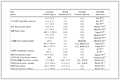
In vitro anti-inflammatory activities of synthetic phenylpropenoyl-amino acid derivatives were investigated in LPS-induced RAW 264.7 on the generation of IL-6 and TNF-α. Table 1 demonstrated that rebamipide and its derivatives were screened at concentrations of 100, 50, 10, 5 and 1 μmol·L-1 for their ability to regulate TNF-α and IL-6 production. The results exhibited that all synthetic compounds inhibited the LPS-induced production of IL-6 and TNF-α in a concentration-dependent manner. Among these compounds, 8d, 8h, 8j, 8m, 8o, 8q and 8t were more potent than rebamipide in inhibiting LPS-induced TNF-α expression. Particularly, compounds 8d, 8h, 8j and 8q exhibited better IL-6 inhibitory activity than lead compound. Among all synthetic compounds, 8q was found to be the most potent IL-6 inhibitor (IC50=22.77±1.53 μmol/L) and TNF-α inhibitor (IC50=29.55±2.13 μmol/L).
 下载:
导出CSV
| Compd. | IC50/(μmol·L-1) | |
| IL-6 | TNF-α | |
| 8a | 54.03±4.27## | 60.72±6.37## |
| 8b | 68.1±3.91## | 88.86±9.39## |
| 8c | 36.45±3.46 | 43.12±4.66## |
| 8d | 28.23±2.43## | 29.64±2.84## |
| 8e | 55.98±5.39## | 62.63±5.67## |
| 8f | 58.62±7.27## | 61.06±6.34## |
| 8g | 79.04±8.56## | 93.22±8.29## |
| 8h | 24.98±3.64## | 30.59±2.31## |
| 8i | 40.85±3.35## | 51.3±4.39## |
| 8j | 25.17±2.86## | 32.79±3.97## |
| 8k | 45.11±5.12## | 66.87±7.24## |
| 8l | 41.83±3.87## | 50.98±4.85 |
| 8m | 44.84±3.49## | 41.90±3.17## |
| 8n | 48.83±4.18## | 50.04±4.76 |
| 8o | 34.31±2.27 | 26.34±1.72## |
| 8p | 32.26±1.95 | 51.39±4.24## |
| 8q | 22.77±1.53## | 29.55±2.13## |
| 8r | 51.79±3.14## | 79.32±4.15## |
| 8s | 58.04±3.91## | 46.68±4.26 |
| 8t | 45.55±4.71## | 31.88±2.51## |
| 8u | 56.31±3.62## | 71.81±3.64## |
| 8v | 44.17±2.76## | 45.21±2.83 |
| 8w | 29.01±1.69 | 49.22±1.79 |
| Rebamipide | 37.39±4.36 | 48.21±5.06 |
| a Compared with rebamipide ## p < 0.01. | ||
The pro-inflammatory mediator NO plays an important role in inflammation-related diseases. We investigated the effect of 8q on LPS-induced NO production in RAW264.7 cells. As shown in Figure 3, the LPS (200 ng/mL) could markedly stimulate NO releasing. By stimulating of different concentration of 8q on RAW264.7, the 8q can inhibit the NO generation induced by LPS in concentration dependent manner. This results preliminary demonstrated that title compound could prevent inflammatory response in RAW264.7 cells LPS-induced.
The data analysis indicated no clear SAR for these compounds, however, the compound with the structure of quinolin-2(1H)-one exhibited improved inhibitory activity than other amino acid compounds. It suggested that the structure of quinolin-2(1H)-one might be an appropriate pharmacophore.
The phenylpropenoyl-amino acid derivatives were designed and synthesized, and the inhibition abilities of TNF-α and IL-6 production were evaluated by induced RAW264.7 cells. The results displayed promising activities of most of the compounds as inhibitor of both cytokines. Compounds 8d, 8h, 8j, 8m, 8o, 8q and 8t were able to significantly inhibit IL-6, while compounds 8d, 8h, 8j and 8q presented simultaneously good levels of inhibition of the two cytokines tested. Especially, compound 8q presented the highest level of inhibition of TNF-α and IL-6. Our results showed the possibility of these new compounds as potential candidates to inhibit the production of the pro-inflammatory cytokines TNF-α and IL-6. The phenylpropenoyl-amino acid moiety can be considered as one of the scaffolds for the design and development of anti-inflammatory agents targeting TNF-α and IL-6. Based on this research, we hope to successfully develop small organic molecules as TNF-α and IL-6 inhibitors for anti-inflammatory in the near future.
Melting points were determined on SGWX-4 melting point apparatus (Precision Science Inc., Shanghai, China), which were uncorrected. NMR spectra were measured at 400 or 300 MHz for 1H NMR, and 100 or 75 MHz for 13C NMR, respectively, on a Bruker DRX-400 (Bruker Inc, CH) in DMSO-d6, using TMS as internal standard. ESI- MS was collected on an LCQ Advantage MAX spectro-meter (Finnigan Inc. USA). Column chromatography was performed with silica gel (200 mesh, Qingdao Marine Chemical Inc., Qingdao, China). TLC was carried out on glass pre-coated silica gel GF 254 plates (Qingdao Marine Chemical Inc.). Unless otherwise noted, all chemicals were purchased from commercially available sources. If necessary, purification was carried out prior to use.
In a three-neck flask, 2-amino-3-(2-oxo-1, 2-dihydro- quinolin-4-yl)propanoic acid (4.64 g, 20.0 mmol), and methanol (20 mL) were added. Thionyl chloride (SOCl2) (5.6 mL, 77.09 mmol) was added dropwise under ice-cooling. After the addition was complete, The reaction mixture was heated to 70 ℃ for 4 h with stirring (TLC, ethyl acetate/methanol, V:V=15:1) and then evaporated with toluene under reduced pressure to remove excess SOCl2 to give compound 2 (5.48 g), [18] yield 97.1%. m.p. 206.9~209.2 ℃; 1H NMR (400 MHz, DMSO-d6) δ: 11.96 (s, 1H, ArNHCO), 9.09~8.96 (m, 2H, NH2), 8.77 (d, J=5.3 Hz, 1H, HCl), 7.94~7.80 (m, 1H, ArH), 7.58~7.48 (m, 1H, ArH), 7.42 (d, J=8.3 Hz, 1H, ArH), 7.23 (t, J=7.8 Hz, 1H, ArH), 6.53 (s, 1H, CH2C=CHCO), 4.28~4.16 (m, 1H, NH2CHCOOH), 3.62 (s, 3H, OCH3), 3.57~3.40 (m, 1H, CH2CHNH2), 3.39~3.27 (m, 1H, CH2CH- NH2); 13C NMR (101 MHz, DMSO-d6) δ: 170.32, 169.36, 161.67, 145.22, 139.46, 131.06, 124.59, 123.41, 122.53, 118.77, 116.48, 53.15, 52.00, 32.78; ESI-MS m/z: 247.10 [M+H]+.
In a three-neck flask, 5-chloro-1H-indole-2-carboxylic acid (5 g, 25.6 mmol), and methanol (20 mL) were added. Thionyl chloride (11.74 g, 98.7 mmol) was added dropwise under ice-cooling. After the addition was complete, the reaction mixture was heated to 70 ℃ for 6 h with stirring (TLC, ethyl acetate/petroleum ether, V:V=15:1) and then evaporated under reduced pressure. The residues were dissolved in ethyl acetate (20 mL), then washed with water (20 mL×3), saturated sodium bicarbonate (20 mL×3) and saturated sodium chloride solution (20 mL×3), dried with sodium sulfate after washing separately and evaporated in vacuo to afford compound 4j (5.15 g), [19] yield 96.3%. m.p. 208.1~210.0 ℃; 1H NMR (400 MHz, DMSO-d6) δ: 12.20 (s, 1H, ArNHC=CH), 7.72 (s, 1H, ArH), 7.48 (d, J=8.8 1H, ArH), 7.26 (d, J=8.8 Hz, 1H, ArH), 7.13 (s, 1H, ArCH=), 3.88 (s, 3H, OCH3); 13C NMR (101 MHz, DMSO-d6) δ: 161.90, 136.20, 128.94, 128.12, 125.24, 125.13, 121.54, 114.74, 107.70, 52.42; ESI-MS m/z: 208.1 [M+H]-.
A solution of 4j (0.71 g, 3.4 mmol) and NaH (0.16 g, 4.0 mmol, 60%) in DMF solvent was stirred for 30 min. To the reaction mixture, the solution of 1-(chloromethyl)-4- methylbenzene (0.56 g, 4.0 mmol) in DMF (5 mL) was added dropwise. The mixture was then stirred at room temperature for 4 h and monitored by TLC (TLC, ethyl acetate/petroleum ether, V:V=1:5). The reaction solution was poured into 40 mL of ice water when a large amount of solid was precipitated, and then filtered. The residue was recrystallized with methanol to give 5 directly used in the next reaction.
Methyl 5-chloro-1-(4-methylbenzyl)-1H-indole-2-carbo- xylate (5o) as an example. White solid, 0.821 g, yield 76.7%. m.p. 109.4~112.2 ℃; 1H NMR (400 MHz, DMSO-d6) δ: 7.79 (s, 1H, ArH), 7.62 (d, J=9.0 Hz, 1H, ArH), 7.37~7.28 (m, 2H, ArH, ArCH=), 7.06 (d, J=7.8 Hz, 2H, ArH), 6.98~6.88 (m, 2H, ArH), 5.80 (s, 2H, ArCH2N), 3.83 (s, 3H, OCH3), 2.21 (s, 3H, ArCH3); 13C NMR (101 MHz, DMSO-d6) δ: 161.83, 137.83, 136.79, 135.51, 129.52, 128.62, 126.93, 126.70, 125.83, 125.73, 121.95, 113.68, 110.52, 52.42, 47.49, 21.05; ESI-MS m/z: 314.2 [M+H]+. HRMS calcd for C18H17ClNO2 [M+H]+ 314.0948, found 314.0944.
To a mixture of 5 (2.5 mmol) in methanol, 10 mL of NaOH (0.3 g, 7.5 mmol) in aqueous methanol was added. The reaction mixture was stirred at room temperature for 2 h and monitored by TLC, then evaporated (TLC, ethyl acetate/petroleum ether, V:V=1:5). The residue diluted with 5% HCl (liq.) was slowly added dropwise to pH=4~5, filtrated and dried to give 6 directly used in the next reaction.
5-Chloro-1-(4-methylbenzyl)-1H-indole-2-carboxylic acid (6o) as an example. White solid, 0.48 g, yield 62.3%. m.p. 225.9~227.4 ℃; 1H NMR (400 MHz, DMSO-d6) δ: 13.22 (s, 1H, COOH), 7.77 (s, 1H. ArH), 7.57 (d, J=8.9 Hz, 1H, ArH), 7.33~7.24 (m, 2H, ArH, ArCH=), 7.06 (d, J=7.8 Hz, 2H, ArH), 6.92 (d, J=7.8 Hz, 2H, ArH), 5.83 (s, 2H, ArCH2N), 2.21 (s, 3H, ArCH3); 13C NMR (101 MHz, DMSO-d6) δ: 163.10, 137.72, 136.71, 135.73, 129.99, 129.49, 127.02, 126.72, 125.60, 125.30, 121.80, 113.58, 110.24, 47.30, 21.05; ESI-MS m/z: 298.02 [M+ H]-. HRMS calcd for C17H14ClNO2Na [M+Na]+ 322.0611, found 322.0608.
To a solution of 6 (2 mmol), EDC·HCl (0.422 g, 2.2 mmol), HOBt (0.297 g, 2.2 mmol) and 2 (0.564 g, 2 mmol.) in DMF (20 mL), was added Et3N (0.83 mL). The reaction mixture was stirred overnight at room temperature (TLC, ethyl acetate/methanol, V:V=15:1). The reaction mixture was added 10% citric acid (30 mL) and filtered. The residue was purified via silica using methanol/CH2Cl2 (V:V=1:20) to provide the title compounds 7 directly used in the next reaction.
Methyl 2-(5-chloro-1-(4-methylbenzyl)-1H-indole-2-carboxamido)-3-(2-oxo-1, 2-dihydroquinolin-4-yl) propan- oate (7o) as an example. White solid, 0.44 g, yield 41.7%. m.p. 260.2~262.7 ℃; 1H NMR (400 MHz, DMSO-d6) δ: 11.75 (s, 1H, ArNHC=CH), 9.22 (s, 1H, CONH), 7.85~7.79 (m, 1H, ArH), 7.77 (s, 1H, ArH), 7.56 (d, J=8.9 Hz, 1H, ArH), 7.55~7.47 (m, 1H, ArH), 7.40~7.30 (m, 1H, ArH), 7.28~7.20 (m, 2H, ArH), 7.13 (s, 1H, ArCH=), 7.01 (d, J=7.9 Hz, 2H, ArH), 6.94 (d, J=7.8 Hz, 2H, ArH), 6.52 (s, 1H, CH2C=CHCO), 5.69 (s, 2H, ArCH2N), 4.86~4.77 (m, 1H, NHCHCOOCH3), 3.70 (s, 3H, OCH3), 3.57~3.47 (m, 1H, CH2CHNH), 3.34~3.22 (m, 1H, CH2CHNH), 2.20 (s, 3H, ArCH3); 13C NMR (101 MHz, DMSO-d6) δ: 171.94, 162.21, 161.79, 147.46, 139.44, 136.80, 136.77, 135.51, 132.55, 130.82, 129.39, 127.26, 127.23, 125.47, 124.45, 122.38, 122.35, 121.34, 118.94, 116.31, 113.42, 105.96, 52.82, 51.94, 47.08, 32.95, 21.06; ESI-MS m/z: 528.14 [M+H]+. HRMS calcd for C30H26ClN3O4 [M+H]+ 528.1690, found 528.1681.
To a mixture of 7o (0.8 mmol) in methanol, 8 mL of NaOH (0.128 g, 3.2 mmol) in aqueous methanol was added. The reaction mixture was stirred at room temperature for 4 h and then evaporated. The residue diluted with 5% HCl (liq.) was slowly added dropwise to pH=4~5, filtrated and dried to give a white solid 2-(5-chloro-1- (4-methylbenzyl)-1H-indole-2-carboxamido)-3-(2-oxo-1, 2-dihydroquinolin-4-yl)propanoic acid (8o) (0.21 g), yield 50.8%. m.p. 295.8~297.4 ℃; 1H NMR (400 MHz, DMSO-d6) δ: 13.13 (s, 1H, COOH), 11.72 (s, 1H, ArNHCO), 9.08 (s, 1H, CONH), 7.85 (d, J=8.1 Hz, 1H, ArH), 7.77 (s, 1H, ArH), 7.61~7.47 (m, 2H, ArH), 7.34 (d, J=8.2 Hz, 1H, ArH), 7.28~7.18 (m, 2H, ArH), 7.13 (s, 1H, ArCH=), 7.04~6.92 (m, 4H, ArH), 6.52 (s, 1H, CH2C=CHCO), 5.68 (s, 2H, ArCH2N), 4.84~4.68 (m, 1H, NHCHCOOH), 3.62~3.47 (m, 1H, CH2CHNH), 3.31~3.13 (m, 1H, CH2CHNH), 2.20 (s, 3H, ArCH3); 13C NMR (101 MHz, DMSO-d6) δ: 173.14, 162.17, 161.83, 147.89, 139.43, 136.72, 136.70, 135.49, 132.87, 130.78, 129.37, 127.36, 127.27, 125.39, 124.48, 124.31, 122.40, 122.21, 121.29, 118.99, 116.30, 113.41, 105.73, 52.04, 47.07, 33.30, 21.08; ESI-MS m/z: 514.15 [M+H]+. HRMS calcd for C29H24ClN3O4 [M+H]+ 514.1534, found 514.1532.
Other target compounds 8 were synthesized in the same way.
2-Cinnamamido-3-(2-oxo-1, 2-dihydroquinolin-4-yl)pro-panoic acid (8a): White solid, yield 58.3%. m.p. 270.2~271.4 ℃; 1H NMR (DMSO-d6, 300 MHz) δ: 13.04 (s, 1H, COOH), 11.71 (s, 1H, ArNHCO), 8.63 (s, CONH), 7.85 (d, J=9.0 Hz, 1H, ArH), 7.57 (d, J=9.0 Hz, 2H, ArH), 7.51 (d, J=9.0 Hz, 1H, ArH), 7.30~7.47 (m, 5H, ArH), 7.31~7.19 (m, 1H, ArCH=), 6.69 (d, J=15.6 Hz, 1H, COCH=), 6.44 (s, 1H, CH2C=CHCO), 4.60~4.80 (m, 1H, NHCHCOOH), 3.35~3.45 (m, 1H, CH2CHNH), 3.05~3.25 (m, 1H, CH2CHNH); 13C NMR (DMSO-d6, 75 MHz) δ: 172.6, 165.0, 161.3, 146.9, 139.5, 138.9, 134.6, 130.3, 129.6, 128.9, 127.6, 124.0, 121.8, 121.8, 121.3, 118.4, 115.8, 51.5, 33.5; ESI-MS m/z: 361.12 [M-H]+. HRMS calcd for C21H18N2O4 [M+H]+ 363.1345; found 363.1329.
3-(2-Oxo-1, 2-dihydroquinolin-4-yl)-2-(3-(p-tolyl)acryl-amido)propanoic acid (8b): White solid, yield 56.7%. m.p. 278.2~279.5 ℃; 1H NMR (400 MHz, DMSO-d6) δ: 13.04 (s, 1H, COOH), 11.71 (s, 1H, ArNHCO), 8.58 (s, 1H, CONH), 7.85 (d, J=8.2, 1.3 Hz, 1H, ArH), 7.52 (d, J=7.7 Hz, 1H, ArH), 7.46 (d, J=8.1 Hz, 2H, ArH), 7.41~7.30 (m, 2H, ArH), 7.28~7.17 (m, 3H, ArCH=, ArH), 6.62 (d, J=15.8 Hz, 1H, COCH=), 6.43 (s, 1H, CH2C=CHCO), 4.75~4.66 (m, NHCHCOOH), 3.48~3.38 (m, 1H, CH2CHNH), 3.16~3.05 (m, 1H, CH2CHNH), 2.32 (s, 3H, ArCH3); 13C NMR (101 MHz, DMSO-d6) δ: 173.16, 165.67, 161.78, 147.43, 139.99, 139.88, 139.41, 132.37, 130.78, 130.01, 128.06, 124.53, 122.36, 122.26, 120.72, 118.98, 116.29, 52.01, 34.04, 21.42; ESI-MS m/z: 375.15 [M-H]+. HRMS calcd for C22H20N2O4 [M+H]+ 377.1501; found 377.1489.
2-(3-(4-Methoxyphenyl)acrylamido)-3-(2-oxo-1, 2-dihy-droquinolin-4-yl)propanoic acid (8c): White solid, yield 62.1%. m.p. 258.8~260.4 ℃; 1H NMR (400 MHz, DMSO-d6) δ: 13.03 (s, 1H, COOH), 11.69 (s, 1H, ArNHCO), 8.50 (s, 1H, CONH), 7.84 (d, J=8.2 Hz, 1H, ArH), 7.56~7.48 (m, , 3H, ArH), 7.38~7.30 (m, 2H, ArH), 7.28~7.20 (m, 1H, ArCH=), 7.00~6.95 (m, 2H, ArH), 6.52 (d, J=15.8 Hz, 1H, COCH=), 6.41 (s, 1H, CH2C=CHCO), 4.60~4.67 (m, 1H, NHCHCOOH), 3.79 (s, 3H, OCH3), 3.35~3.42 (m, CH2CHNH), 3.0~3.10 (m, 1H, CH2CHNH); 13C NMR (101 MHz, DMSO-d6) δ: 173.21, 165.80, 161.77, 160.90, 147.46, 139.72, 139.41, 130.77, 129.69, 127.69, 124.55, 122.35, 122.25, 119.26, 118.99, 116.28, 114.86, 55.72, 52.00, 34.07; ESI-MS m/z: 391.05 [M-H]+. HRMS calcd for C22H20N2O5 [M+H]+ 393.1450; found 393.1432.
3-(2-Oxo-1, 2-dihydroquinolin-4-yl)-2-(3-(3, 4, 5-trimeth-oxyphenyl)acrylamido)propanoic acid (8d): Yellow solid, yield 55.3%. m.p. 251.3~253.4 ℃; 1H NMR (300 MHz, DMSO-d6) δ: 13.04 (s, 1H, COOH) 11.70 (s, 1H, ArNHCO), 8.51 (s, CONH), 7.84 (d, J=9.0 Hz, 1H, ArH), 7.52 (t, J=9.0, 6.0 Hz, 1H, ArH), 7.29~7.38 (m, 2H, ArH), 7.25 (t, J=9.0 Hz, 1H, ArCH=), 6.90 (s, 2H, ArH), 6.63 (d, J=15.0 Hz, 1H, COCH=), 6.42 (s, 1H, CH2C=CHCO), 4.60~4.75 (m, 1H, NHCHCOOH), 3.81 (s, 6H, OCH3), 3.68 (s, 3H, OCH3), 3.40~3.47 (m, 1H, CH2CHNH), 3.00~3.17 (m, 1H, CH2CHNH); 13C NMR (101 MHz, DMSO-d6) δ: 173.15, 165.63, 161.80, 153.51, 147.44, 140.12, 139.41, 139.18, 130.79, 130.75, 124.51, 122.38, 122.21, 121.18, 118.98, 116.31, 105.45, 60.54, 56.31, 51.97, 40.36, 33.98; ESI-MS m/z: 451.03 [M-H]+. HRMS calcd for C24H24N2O7 [M+H]+453.1662; found 453.1648.
2-(3-(4-Chlorophenyl)acrylamido)-3-(2-oxo-1, 2-dihydr-oquinolin-4-yl)propanoic acid (8e): White solid, yield 65.7%. m.p. 268.2~270.8 ℃; 1H NMR (300 MHz, DMSO-d6) δ: 11.72 (s, 1H, ArNHCO), 8.66 (s, CONH), 7.86 (d, J=8.1 Hz, 1H, ArH), 7.86 (d, J=8.4 Hz, 2H, ArH), 7.45~7.57 (m, 3H, ArH), 7.41 (d, J=15.6 Hz, 1H, ArH), 7.35 (d, J=8.1 Hz, 1H, ArH), 7.25 (t, J=7.5 Hz, 1H, ArCH=), 6.70 (d, J=15.6 Hz, 1H, COCH=), 6.44 (s, 1H, CH2C=CHCO), 4.66~4.82 (m, 1H, NHCHCOOH), 3.45~3.54 (m, 1H, CH2CHNH), 3.06~3.20 (m, 1H, CH2CHNH); 13C NMR (75 MHz, DMSO-d6) δ: 172.5, 164.8, 161.3, 146.9, 138.9, 138.2, 134.0, 133.6, 130.3, 129.3, 128.9, 124.0, 122.1, 121.8, 121.7, 118.5, 115.8, 51.5, 33.5; ESI-MS m/z: 395.15 [M-H]+. HRMS calcd for C21H17ClN2O4 [M+H]+ 397.0955; found 397.0944.
2-(3-(4-Nitrophenyl)acrylamido)-3-(2-oxo-1, 2-dihydro-quinolin-4-yl)propanoic acid (8f): Yellow solid, yield 49.1%. m.p. 280.1~282.1 ℃; 1H NMR (300 MHz, DMSO-d6) δ: 13.12 (s, 1H, COOH), 11.72 (s, 1H, CONH), 8.80 (s, CONH), 8.26 (s, J=8.7 Hz, 2H, ArH), 7.75~8.01 (m, 3H, ArH), 7.43~7.65 (m, 2H, ArH), 7.19~7.42 (m, 2H, ArCH=, ArH), 6.88 (d, J=15.9 Hz, 1H, COCH=), 6.44 (s, 1H, CH2C=CHCO), 4.61~4.84 (m, 1H, NHCHCOOH), 3.45~3.55 (m, 1H, CH2CHNH), 3.02~3.25 (m, 1H, CH2CHNH); 13C NMR (75 MHz, DMSO-d6) δ: 172.4, 164.3, 161.3, 147.5, 146.8, 141.2, 138.9, 137.2, 130.3, 128.8, 125.5, 124.0, 123.9, 121.8, 121.7, 118.5, 115.8, 51.6, 33.5; ESI-MS m/z: 406.07 [M-H]+. HRMS calcd for C21H17N3O6 [M+H]+ 408.1196; found 408.1183.
2-(3-(4-Hydroxyphenyl)acrylamido)-3-(2-oxo-1, 2-dihy-droquinolin-4-yl)propanoic acid (8g): White solid, yield 61.8%. m.p. 240.7~242.1 ℃; 1H NMR (300 MHz, DMSO-d6) δ: 11.74 (s, 1H, ArNHCO), 9.97 (s, 1H, OH), 8.53 (s, 1H, CONH), 7.86 (d, J=8.7 Hz, 1H, ArH), 7.53 (t, J=7.2 Hz, 1H, ArH), 7.43 (d, J=8.4 Hz, 2H, ArH), 7.29~7.39 (m, 2H, ArH), 7.25 (t, J=7.2 Hz, 1H, ArCH=), 6.83 (d, J=8.7 Hz, 2H, ArH), 6.41~6.59 (m, 2H, COCH=, CH2C=CHCO), 4.63~4.82 (m, 1H, NHCHCOOH), 3.44~3.51 (m, 1H, CH2CHNH), 3.05~3.21 (m, 1H, CH2CHNH); 13C NMR (75 MHz, DMSO-d6) δ: 172.7, 165.5, 161.3, 159.0, 147.0, 139.7, 138.9, 130.3, 129.3, 125.6, 124.0, 121.9, 121.7, 118.5, 117.7, 115.7, 51.49, 33.54; ESI-MS m/z: 377.30 [M-H]+. HRMS calcd for C21H18N2O5 [M+H]+ 379.1294; found 379.1284.
2-(3-(4-Hydroxy-3-methoxyphenyl)acrylamido)-3-(2-oxo-1, 2-dihydroquinolin-4-yl)propanoic acid (8h): White solid, yield 51.9%. m.p. 241.7~243.7 ℃; 1H NMR (300 MHz, DMSO-d6) δ: 11.70 (s, 1H, ArNHCO), 9.49 (s, 1H, OH), 8.44 (s, 1H, CONH), 7.85 (d, J=8.4 Hz, 1H, ArH), 7.52 (t, J=7.5 Hz, 1H, ArH), 7.21~7.37 (m, J=6.3 Hz, 3H, ArH), 7.13 (s, 1H, ArCH=), 7.00 (d, J=8.4 Hz, 1H, ArH), 6.80 (d, J=8.4 Hz, 1H, ArH), 6.49 (d, J=15.9 Hz, 1H, COCH=), 6.43 (s, 1H, CH2C=CHCO), 4.64~4.75 (m, 1H, NHCHCOOH), 3.81 (s, 3H, OCH3), 3.44~3.53 (m, 1H, CH2CHNH), 3.03~3.15 (m, 1H, CH2CHNH); 13C NMR (75 MHz, DMSO-d6) δ: 172.73, 165.47, 161.28, 148.41, 147.77, 146.96, 139.89, 138.89, 130.26, 126.10, 124.01, 121.85, 121.80, 121.71, 118.48, 117.98, 115.78, 115.57, 110.61, 55.44, 51.45, 33.55; ESI-MS m/z: 407.05 [M-H]+. HRMS calcd for C22H20N2O6 [M+H]+ 409.1400; found 409.1390.
2-(1H-Indole-2-carboxamido)-3-(2-oxo-1, 2-dihydroqui-nolin-4-yl)propanoic acid (8i): White solid, yield 65.6%. m.p. 209.3~211.8 ℃; 1H NMR (400 MHz, DMSO-d6) δ: 13.09 (s, 1H, COOH), 11.67 (s, 1H, ArNHCO), 11.57 (s, 1H, ArNHC=CH), 8.85 (s, 1H, CONH), 7.88 (d, J=8.2 Hz, 1H, ArH), 7.64 (d, J=8.0 Hz, 1H, ArH), 7.56~7.48 (m, 1H, ArH), 7.43~7.39 (m, 1H, ArH), 7.36~7.29 (m, 1H, ArH), 7.28~7.22 (m, 1H, ArH), 7.21~7.13 (m, 2H, ArH, ArCH=), 7.09~7.01 (m, 1H, ArH), 6.50 (s, 1H, CH2C=CHCO), 4.89~4.75 (m, 1H, NHCHCOOH), 3.65~3.21 (m, 2H, CH2CHNH); 13C NMR (101 MHz, DMSO-d6) δ: 173.25, 161.78, 161.64, 147.74, 139.42, 136.96, 131.31, 130.76, 127.39, 124.49, 123.98, 122.37, 122.26, 122.08, 120.25, 118.99, 116.31, 112.76, 103.71, 51.86, 33.51; ESI-MS m/z: 374.02 [M-H]+. HRMS calcd for C21H17N3O4 [M+H]+ 376.1297; found 376.1284.
2-(5-Chloro-1H-indole-2-carboxamido)-3-(2-oxo-1, 2-di-hydroquinolin-4-yl)propanoic acid (8j): White solid, yield 53.6%. m.p. 238.3~240.7 ℃; 1H NMR (300 MHz, DMSO-d6) δ: 11.81 (s, 1H, ArNHC=CH), 11.70 (s, 1H, ArNHCO), 8.98 (s, 1H, CONH), 7.89 (d, J=8.1 Hz, 1H, ArH), 7.76 (s, 1H, ArH), 7.52 (t, J=7.5 Hz, 1H, ArH), 7.43 (d, J=8.7 Hz, 1H, ArH), 7.34 (d, J=7.2 Hz, 1H, ArH), 7.16~7.31 (m, 3H, ArH, ArCH=), 6.52 (s, 1H, CH2C=CHCO), 4.71~4.90 (m, 1H, NHCHCOOH), 3.57~3.64 (m, 1H, CH2CHNH), 3.12~3.40 (m, 1H, CH2CHNH); 13C NMR (75 MHz, DMSO-d6) δ: 172.6, 161.3, 160.8, 147.2, 138.9, 134.9, 132.3, 130.3, 127.9, 124.3, 124.0, 123.6, 121.9, 121.7, 120.7, 118.5, 115.8, 113.9, 102.8, 51.4, 33.0; ESI-MS m/z: 408.14 [M-H]+. HRMS calcd for C21H16ClN3O4 [M+H]+ 410.0908; found 410.0986.
2-(6-Chloro-1H-indole-2-carboxamido)-3-(2-oxo-1, 2-di-hydroquinolin-4-yl)propanoic acid (8k): White solid, yield 70.2%. m.p. 235.7~237.8 ℃; 1H NMR (400 MHz, DMSO-d6) δ: 13.08 (s, 1H, COOH), 11.78 (s, 1H, ArNHC=CH), 11.68 (s, 1H, ArNHCO), 8.95 (s, 1H, CONH), 7.88 (d, J=7.8 Hz, 1H, ArH), 7.75 (s, 1H, ArH), 7.51 (t, J=7.5 Hz, 1H, ArH), 7.42 (d, J=8.4 Hz, 1H, ArH), 7.32 (d, J=8.1 Hz, 1H, ArH), 7.15~7.24 (m, 3H, ArH, ArCH=), 6.49 (s, 1H, CH2C=CHCO), 4.73~4.90 (m, 1H, NHCHCOOH), 3.47~3.62 (m, 1H, CH2CHNH), 3.16~3.32 (m, 1H, CH2CHNH); 13C NMR (75 MHz, DMSO-d6) δ: 172.6, 161.3, 160.8, 147.2, 138.9, 134.9, 132.3, 130.2, 127.9, 124.2, 124.0, 123.6, 121.8, 121.7, 120.7, 118.5, 115.8, 113.9, 102.8, 51.4, 33.0; ESI-MS m/z: 407.94 [M-H]+. HRMS calcd for C21H16ClN3O4 [M+ H]+ 410.0908; found 410.0896.
2-(5-Chloro-1-(4-fluorobenzyl)-1H-indole-2-carboxami-do)-3-(2-oxo-1, 2-dihydroquinolin-4-yl)propanoic acid (8l): White solid, yield 46.7%. m.p. 277.6~278.9 ℃; 1H NMR (400 MHz, DMSO-d6) δ: 11.72 (s, 1H, ArNHCO), 9.11 (s, 1H, CONH), 7.85 (d, J=8.2 Hz, 1H, ArH), 7.78 (s, 1H, ArH), 7.60 (d, J=9.0 Hz, 1H, ArH), 7.56~7.48 (m, 1H, ArH), 7.33 (d, J=8.2 Hz, 1H, ArH), 7.29~7.21 (m, 2H, ArH), 7.18~7.08 (m, 3H, ArH, ArCH=), 7.08~7.00 (m, 2H, ArH), 6.51 (s, 1H, CH2C=CHCO), 5.80~5.64 (m, 2H, ArCH2N), 4.81~4.70 (m, 1H, NHCHCOOH), 3.59~3.48 (m, 1H, CH2CHNH), 3.28~3.18 (m, 1H, CH2CH- NH); 13C NMR (101 MHz, DMSO-d6) δ: 172.97, 162.92, 162.13, 161.83, 160.51, 147.84, 139.41, 136.68, 134.70 (JC—F=3.15 Hz), 132.65, 130.80, 129.41 (JC—F=8.24 Hz), 127.29, 125.54, 124.50, 124.46, 122.30 (JC—F=25.47 Hz), 120.18 (JC—F=240.3 Hz), 116.32, 115.70, 115.49, 113.30, 105.94, 51.88, 46.63, 33.20; ESI-MS m/z: 518.16 [M+ H]+. HRMS calcd for C28H21ClFN3O4 [M+H]+ 518.1283; found 518.1284.
2-(5-Chloro-1-(4-chlorobenzyl)-1H-indole-2-carboxami-do)-3-(2-oxo-1, 2-dihydroquinolin-4-yl)propanoic acid (8m): White solid, yield 52.3%. m.p. 286.5~286.8 ℃; 1H NMR (400 MHz, DMSO-d6) δ: 13.04 (s, 1H, COOH), 11.72 (s, 1H, ArNHCO), 9.11 (s, 1H, CONH), 7.91~7.75 (m, 2H, ArH), 7.61~7.46 (m, 2H, ArH), 7.33 (d, J=8.3 Hz, 1H, ArH), 7.30~7.21 (m, 4H, ArH), 7.17 (s, 1H, ArCH=), 7.11~7.05 (m, 2H, ArH), 6.51 (s, 1H, CH2C=CHCO), 5.72 (s, 2H, ArCH2N), 4.82~4.68 (m, 1H, NHCHCOOH), 3.56~3.47 (m, 1H, CH2CHNH), 3.29~3.19 (m, 1H, CH2CHNH); 13C NMR (101 MHz, DMSO- d6) δ: 173.06, 162.06, 161.83, 147.87, 139.42, 137.55, 136.70, 132.60, 132.23, 130.80, 129.19, 128.83, 127.27, 125.59, 124.55, 124.46, 122.41, 122.16, 121.43, 118.97, 116.31, 113.28, 105.98, 51.95, 46.73, 33.23; ESI-MS m/z: 533.92 [M+H]+. HRMS calcd for C28H21Cl2N3O4 [M+ H]+ 534.0987; found 535.0987.
(1-(4-Bromobenzyl)-5-chloro-1H-indole-2-carboxamido)-3-(2-oxo-1, 2-dihydroquinolin-4-yl)propanoic acid (8n): White solid, yield 49.0%. m.p. 294.7~296.3 ℃; 1H NMR (400 MHz, DMSO-d6) δ: 11.72 (s, 1H, ArNHCO), 9.11 (s, 1H, CONH), 7.84 (d, J=7.9 Hz, 1H, ArH), 7.80 (s, 1H, ArH), 7.56 (d, J=8.9 Hz, 1H, ArH), 7.54~7.49 (m, 1H, ArH), 7.45~7.39 (m, 2H, ArH), 7.33 (d, J=8.3 Hz, 1H, ArH), 7.28~7.22 (m, 2H, ArH), 7.17 (s, 1H, ArCH=), 7.05~6.99 (m, 2H, ArH), 6.51 (s, 1H, CH2C=CHCO), 5.71 (s, 2H, ArCH2N), 4.80~4.70 (m, 1H, NHCHCOOH), 3.58~3.47 (m, 1H, CH2CHNH), 3.29~3.18 (m, 1H, CH2CHNH); 13C NMR (101 MHz, DMSO-d6) δ: 173.04, 162.06, 161.82, 147.85, 139.42, 137.98, 136.70, 132.58, 131.75, 130.80, 129.53, 127.27, 125.59, 124.56, 124.46, 122.41, 122.15, 121.43, 120.76, 118.97, 116.30, 113.28, 105.98, 51.93, 46.80, 33.20; ESI-MS m/z: 577.96 [M+ H]+. HRMS calcd for C28H21BrClN3O4 [M+H]+ 578.0482; found 578.0497
2-(5-Chloro-1-(4-cyanobenzyl)-1H-indole-2-carboxami-do)-3-(2-oxo-1, 2-dihydroquinolin-4-yl)propanoic acid (8p): White solid, yield 48.8%. m.p. 284.4~286.1 ℃; 1H NMR (400 MHz, DMSO-d6) δ: 13.16 (s, 1H, COOH), 11.72 (s, 1H, ArNHCO), 9.11 (s, 1H, CONH), 7.89~7.78 (m, 2H, ArH), 7.74~7.66 (m, 2H, ArH), 7.58~7.48 (m, 2H, ArH), 7.35~7.29 (m, 1H, ArH), 7.28~7.18 (m, 3H, ArH), 7.18~7.08 (m, 2H, ArH, ArCH=), 6.49 (s, 1H, CH2C=CHCO), 5.84 (s, 2H, ArCH2N), 4.80~4.66 (m, 1H, NHCHCOOH), 3.56~3.48 (m, 1H, CH2CHNH), 3.27~3.19 (m, 1H, CH2CHNH); 13C NMR (101 MHz, DMSO-d6) δ: 172.99, 161.90, 161.81, 147.85, 144.37, 139.40, 136.79, 132.84, 132.49, 130.80, 127.89, 127.27, 125.73, 124.73, 124.45, 122.40, 122.17, 121.53, 119.18, 118.96, 116.30, 113.13, 110.36, 106.10, 51.92, 47.27, 33.24; ESI-MS m/z: 524.92 [M+H]+. HRMS calcd for C29H21ClN4O4 [M+H]+ 525.1330; found 525.1331.
2-(5-Chloro-1-(4-(trifluoromethyl)benzyl)-1H-indole-2-carboxamido)-3-(2-oxo-1, 2-dihydroquinolin-4-yl)propa-noic acid (8q): White solid, yield 54.1%. m.p. 287.6~289.1 ℃; 1H NMR (400 MHz, DMSO-d6) δ: 13.09 (s, 1H, COOH), 11.72 (s, 1H, ArNHCO), 9.12 (s, CONH), 7.91~7.79 (m, 2H, ArH), 7.60 (d, J=8.2 Hz, 2H, ArH), 7.56 (d, J=8.9 Hz, 1H, ArH), 7.54~7.48 (m, 1H, ArH), 7.32 (d, J=8.3 Hz, 1H, ArH), 7.28~7.20 (m, 5H, ArH, ArCH=), 6.51 (s, 1H, CH2C=CHCO), 5.84 (s, 2H, ArCH2N), 4.79~4.68 (m, 1H, NHCHCOOH), 3.60~3.48 (m, 1H, CH2CHNH), 3.32~3.21 (m, 1H, CH2CHNH); 13C NMR (101 MHz, DMSO-d6) δ: 173.03, 162.00, 161.8 2, 147.84, 143.40, 139.41, 136.77, 132.58, 130.79, 128.16 (JC—F=31.82 Hz), 127.82, 127.28, 125.80 (JC—F=3.82 Hz) 125.68, 124.69, 124.62 (JC—F=272.78Hz), 124.46, 122.39, 122.14, 121.50, 118.97, 116.29, 113.19, 106.06, 51.96, 47.11, 33.19; ESI-MS m/z: 567.81 [M+H]+. HRMS calcd for C29H21ClF3N3O4 [M+H]+ 568.1251; found 568.1257.
(5-Chloro-1-(4-methoxybenzyl)-1H-indole-2-carboxam-ido)-3-(2-oxo-1, 2-dihydroquinolin-4-yl)propanoic acid (8r): White solid, yield 46.8%. m.p. 270.2~271.4 ℃; 1H NMR (400 MHz, DMSO-d6) δ: 13.17 (s, 1H, COOH), 11.72 (s, 1H, ArNHCO), 9.06 (s, CONH), 7.86 (d, J=8.2 Hz, 1H, ArH), 7.75 (s, 1H, ArH), 7.60 (d, J=8.9 Hz, 1H, ArH), 7.55~7.49 (m, 1H, ArH), 7.33 (d, J=8.3 Hz, 1H, ArH), 7.28~7.20 (m, 2H, ArH), 7.10 (s, 1H, ArCH=), 7.08~7.02 (m, 2H, ArH), 6.80~6.73 (m, 2H, ArH), 6.53 (s, 1H, CH2C=CHCO), 5.65 (s, 2H, ArCH2N), 4.82~4.70 (m, 1H, NHCHCOOH), 3.66 (s, 3H, OCH3), 3.57~3.49 (m, 1H, CH2CHNH), 3.28~3.19 (m, 1H, CH2CHNH); 13C NMR (101 MHz, DMSO-d6) δ: 173.18, 162.24, 161.88, 158.81, 147.99, 139.41, 136.62, 132.86, 130.79, 130.44, 128.91, 127.30, 125.38, 124.50, 124.27, 122.43, 122.15, 121.26, 119.03, 116.32, 114.18, 113.43, 105.76, 55.41, 52.06, 46.70, 33.34; ESI-MS m/z: 529.85 [M+H]+. HRMS calcd for C29H24ClN3O5 [M+H]+ 530.1483; found 530.1482.
2-(5-Chlorobenzofuran-2-carboxamido)-3-(2-oxo-1, 2-dihydroquinolin-4-yl)propanoic acid (8s): White solid, yield 64.8%. m.p. 186.6~188.2 ℃; 1H NMR (400 MHz, DMSO-d6) δ: 13.16 (s, 1H, COOH), 11.69 (s, 1H, ArNHCO), 9.21 (s, 1H, CONH), 7.89 (s, 1H, ArH), 7.84 (d, J=8.2 Hz, 1H, ArH), 7.72 (d, J=8.8 Hz, 1H, ArH), 7.55 (s, 1H, ArH), 7.54~7.47 (m, 2H, ArH), 7.32 (d, J=8.3 Hz, 1H, ArH), 7.28~7.20 (m, 1H, ArCH=), 6.46 (s, 1H, CH2C=CHCO), 4.83~4.73 (m, 1H, NHCHCOOH), 3.57~3.47 (m, 1H, CH2CHNH), 3.33~3.25 (m, 1H, CH2CHNH); 13C NMR (101 MHz, DMSO-d6) δ: 172.75, 161.78, 158.32, 153.19, 150.10, 147.71, 139.40, 130.80, 129.04, 128.57, 127.50, 124.46, 122.76, 122.39, 122.11, 118.94, 116.31, 114.02, 110.17, 51.85, 33.08; ESI-MS m/z: 410.82 [M+H]+. HRMS calcd for C21H15ClN2O5 [M+ H]+ 411.0748; found 411.0731.
Chloro-1H-indole-2-carbonyl)phenylalanine (8t): White solid, yield 60.3%. m.p. 266.1~267.5 ℃; 1H NMR (400 MHz, DMSO-d6) δ: 12.87 (s, 1H, COOH), 11.75 (s, 1H, ArNHC=CH), 8.85 (s, 1H, CONH), 7.73 (s, 1H, ArH), 7.40 (d, J=8.7 Hz, 1H, ArH), 7.35~7.31 (m, 2H, ArH), 7.26 (d, J=8.4 Hz, 2H, ArH), 7.22~7.18 (m, 2H, ArH), 7.18~7.14 (m, 1H, ArCH=), 4.71~4.60 (m, , 1H, NHCHCOOH), 3.27~3.18 (m, 1H, CH2CHNH), 3.12~3.01 (m, 1H, CH2CHNH); 13C NMR (101 MHz, DMSO- d6) δ: 173.25, 161.78, 161.64, 147.74, 139.42, 136.96, 131.31, 130.76, 127.39, 124.49, 123.98, 122.37, 122.26, 122.08, 120.25, 118.99, 116.31, 112.76, 103.71, 51.86, 33.51; ESI-MS m/z: 343.14 [M+H]+. HRMS calcd for C18H15ClN2O3 [M+H]+ 343.0849; found 343.0844.
(6-Chloro-1H-indole-2-carbonyl)tyrosine (8u): White solid, yield 57.9%. m.p. 270.2~271.4 ℃; 1H NMR (400 MHz, DMSO-d6) δ: 12.79 (s, 1H, COOH), 11.74 (s, 1H, ArNHC=CH), 9.19 (s, 1H, CONH), 8.76 (d, J=8.3 Hz, 1H, ArH), 7.73 (s, 1H, ArH), 7.44~7.40 (m, 1H, ArH), 7.22~7.16 (m, 2H, ArH), 7.13~7.09 (m, 2H, ArH, ArCH=), 6.67~6.61 (m, 2H, ArH, ArOH), 4.63~4.50 (m, 1H, NHCHCOOH), 3.12~3.05 (m, 1H, CH2CHNH), 2.99~2.90 (m, 1H, CH2CHNH); 13C NMR (101 MHz, DMSO-d6) δ: 173.72, 161.16, 156.29, 135.28, 133.07, 130.46, 128.49, 124.67, 123.97, 121.14, 115.44, 114.34, 103.16, 54.71, 36.04; ESI-MS m/z: 358.97 [M+H]+. HRMS calcd for C18H15ClN2O4 [M+H]+ 359.0799; found 359.0786.
(5-Chloro-1H-indole-2-carbonyl)tryptophan (8v): White solid, yield 66.3%. m.p. 270.2~271.4 ℃; 1H NMR (400 MHz, DMSO-d6) δ: 12.80 (s, 1H, COOH), 11.75 (s, 1H, ArNHC=CH), 10.83 (s, 1H, ArNHCH=C), 8.78 (s, 1H, CONH), 7.72 (s, 1H, ArH), 7.62 (d, J=7.8 Hz, 1H, ArH), 7.41 (d, J=8.7 Hz, 1H, ArH), 7.35~7.30 (m, 1H, ArH), 7.22 (d, J=2.2 Hz, 2H, ArH), 7.18 (d, J=8.7 Hz, 1H, ArH), 7.10~7.03 (m, 1H, ArNHCH=C), 7.02~6.96 (m, 1H, ArCH=), 4.73~4.65 (m, 1H, NHCHCOOH), 3.34~3.29 (m, 1H, CH2CHNH), 3.26~3.17 (m, 1H, CH2CH- NH); 13C NMR (101 MHz, DMSO-d6) δ: 173.97, 161.20, 136.52, 135.27, 133.12, 128.49, 127.52, 124.67, 124.08, 123.97, 121.41, 121.11, 118.87, 118.59, 114.34, 111.89, 110.75, 103.19, 53.77, 27.19; ESI-MS m/z: 381.82 [M+ H]+. HRMS calcd for C20H16ClN3O3 [M+H]+ 382.0958; found 382.0953.
(5-Chloro-1H-indole-2-carbonyl)histidine (8w): White solid, yield61.1%. m.p. 270.2~271.4 ℃; 1H NMR (400 MHz, DMSO-d6) δ: 11.86 (s, 1H, ArNHC=CH), 8.78 (d, J=7.8 Hz, 1H, ArH), 7.71 (d, J=2.1 Hz, 1H, NHCH=C), 7.58 (s, 1H, ArH), 7.43 (d, J=8.7 Hz, 1H, CHNHCH), 7.18 (d, J=8.7 Hz, 1H, ArH), 7.14 (d, J=2.1 Hz, 1H, NHCH=N), 6.85 (s, 1H, ArCH=), 4.66~4.56 (m, 1H, NHCHCOOH), 3.16~3.00 (m, 2H, CH2CHNH); 13C NMR (101 MHz, DMSO-d6) δ: 173.72, 160.93, 135.30, 135.10, 133.92, 133.39, 128.49, 124.63, 123.90, 121.05, 117.52, 114.35, 103.05, 53.40, 29.00; ESI-MS m/z: 332.98 [M+H]+. HRMS calcd for C15H13ClN4O3 [M+H]+ 333.0754; found 333.0742.
RAW264.7 cells (ATCC, Rockville, MD, USA) were maintained in RPMI 1640 medium supplemented with 100 U/mL of penicillin, 100 μg/mL of streptomycin, and 10% FBS. Cells were grown at 37 ℃ and 5% CO2 in humidified air.
TNF-α and IL-6 productions were measured by Enzyme-Linked Immuno-Sorbent Assay (ELISA). In brief, RAW264.7 macrophage cells (1×10⁵ cells/well) were plated in 96-well plates, until the 90% cells fusion, then cells were starved by being cultured in serum free medium for another 2 h to eliminate FBS influence. The cells were then treated with compounds for 2 h before exposure to 200 ng/ml LPS for 8 h. The culture medium was used to assay the cytokine production with mouse ELISA kit (TNF-α, IL-6; BOSTER Biological Technology co.ltd, China) according to manufacturer instructions.
NO production was quantified by nitrite accumulation in the culture medium using the Griess reaction. Briefly, RAW264.7 cells were pretreated with compounds for 2 h, and then stimulated with or without LPS (200 ng/ml) for 8 h. At the indicated time points, the cells were harvested and washed, and cell lysates were prepared. The lysates were mixed with Griess reagent for 30 min measured at 540 nm. The cells treated with diluent were used as negative controls for the background levels of nitrite production, while sodium nitrite at different concentrations was used as the positive controls for the establishment of a standard curve.
Supporting Information The 1H NMR, 13C NMR and MS spectra of compounds. The Supporting Information is available free of charge via the Internet at http://sioc-journal.cn.
Balkwill F. Nat. Rev. Cancer. 1992, 4(2), 121.
Hotamisligil, G. S.; Arner, P.; Caro, J. F. J. Clin. Invest. 1995, 95(5), 2409. doi: 10.1172/JCI117936
Rus H. G.; Niculescu, F.; Vlaicu, R. Atherosclerosis 1991, 89(2~3), 247.
Guirado, A.; López Sánchez, J. I.; Ruiz-Alcaraz, A. J. Eur. J. Med. Chem. 2012, 54(50), 87.
Hauwermeiren, F. V.; Vandenbroucke, R. E.; Libert, C. Cytokine Growth Factor. Rev. 2011, 22(5), 311.
Gómez-Reino, J. J.; Carmona, L.; Valverde, V. R. Arthritis Rheum-US 2003, 48(8), 2122. doi: 10.1002/art.11137
Wei, T.; Lu, Y.; Zhang, Y. Science 2011, 332(6028), 478. doi: 10.1126/science.1199214
Koike, T.; Harigai, M.; Inokuma, S. Ann. Rheum. Dis. 2011, 70(12), 2148. doi: 10.1136/ard.2011.151092
Desai, S. B.; Furst, D. E. Best Pract. Res., Clin. Rheumatol. 2006, 20(4), 757. doi: 10.1016/j.berh.2006.06.002
Bandgarab, B. P.; Korbad, B. L.; Nile, S. H. Eur. J. Med. Chem. 2010, 45(6), 2629. doi: 10.1016/j.ejmech.2010.01.050
La, M. I.; Jun, K. I.; Jhun KR 20140016848, 2014.
Li, W. W.; Zhao, Y. P.; Xu, X. L. FEBS J. 2015, 282(12), 2317. doi: 10.1111/febs.13278
Moon, S. J.; Park, J. S.; Woo, Y. J. Arthritis Rheumatol. 2014, 66(4), 874.
Cho, E. H.; Choi, S. J.; Lee, S. W. EP2987491, 2016.
Li, X. M.; Zhao, M.; Tang, Y. R. Eur. J. Med. Chem. 2008, 43(1), 8. doi: 10.1016/j.ejmech.2007.03.015
Leite, A. C. L.; Barbosa, F. F.; Moreira, D. R. M. Med. Chem. Res. 2013, 23(4), 1701.
Papadakis, K. A.; Targan, S. R. Annu. Rev. Med. 2000, 51(1), 289. doi: 10.1146/annurev.med.51.1.289
Uchida, M.; Tabusa, F.; Komatsu, M.; Morita, S.; Kanbe, T.; Nakagawa, K. Chem. Pharm. Bull. 1986, 34, 4821. doi: 10.1248/cpb.34.4821
Bashiardes, G.; Safir, I.; Barbot, F. Synlett 2007, 1707.

Scheme 1 Synthetic route of target compounds
Reagents and conditions: (ⅰ) SOCl2, CH3OH, reflux; (ⅱ) SOCl2, CH3OH, reflux; (ⅲ) NaH, DMF, r.t.; (ⅳ) NaOH, CH3OH, reflux; (ⅴ) HOBT, EDCl, Et3N, DMF, r.t.; (ⅵ) NaOH, CH3OH, reflux.
Table 1. Potency of Inhibitors among the LPS induced RAW264.7 cells to secrete TNF-α and IL-6a
| Compd. | IC50/(μmol·L-1) | |
| IL-6 | TNF-α | |
| 8a | 54.03±4.27## | 60.72±6.37## |
| 8b | 68.1±3.91## | 88.86±9.39## |
| 8c | 36.45±3.46 | 43.12±4.66## |
| 8d | 28.23±2.43## | 29.64±2.84## |
| 8e | 55.98±5.39## | 62.63±5.67## |
| 8f | 58.62±7.27## | 61.06±6.34## |
| 8g | 79.04±8.56## | 93.22±8.29## |
| 8h | 24.98±3.64## | 30.59±2.31## |
| 8i | 40.85±3.35## | 51.3±4.39## |
| 8j | 25.17±2.86## | 32.79±3.97## |
| 8k | 45.11±5.12## | 66.87±7.24## |
| 8l | 41.83±3.87## | 50.98±4.85 |
| 8m | 44.84±3.49## | 41.90±3.17## |
| 8n | 48.83±4.18## | 50.04±4.76 |
| 8o | 34.31±2.27 | 26.34±1.72## |
| 8p | 32.26±1.95 | 51.39±4.24## |
| 8q | 22.77±1.53## | 29.55±2.13## |
| 8r | 51.79±3.14## | 79.32±4.15## |
| 8s | 58.04±3.91## | 46.68±4.26 |
| 8t | 45.55±4.71## | 31.88±2.51## |
| 8u | 56.31±3.62## | 71.81±3.64## |
| 8v | 44.17±2.76## | 45.21±2.83 |
| 8w | 29.01±1.69 | 49.22±1.79 |
| Rebamipide | 37.39±4.36 | 48.21±5.06 |
| a Compared with rebamipide ## p < 0.01. | ||
 下载: 导出CSV

 扫一扫看文章


扫一扫关注我们


 下载: