

Scheme 1.
AuNPs catalyzed oxidative esterification and C—O activation of Aryl esters


Gold can be deposited as nanoparticles (NPs) with diameters of 2~5 nm and clusters with diameters less than 2 nm on a variety of materials such as oxides, carbides, and sulfides of transition metals, carbons, and organic polymers.[1] Gold catalysts have been shown to catalyze many types of reactions, including oxidation, hydrogenation, the water-gas shift, coupling reactions, etc.[2] Catalysis by nano-gold in the presence of liquid-phase reactants had not been investigated as intensively as that in the presence of gas-phase reactants. However, in the preceding decade, nano-gold catalysts have been fruitfully introduced in the liquid phase reactions because that gold exhibits unique and excellent product selectivity different from those of palladium and platinum.[3] Supported AuNPs are considered as one of the most active and general catalysts for liquid-phase oxidation of alcohols, [4] aldehydes, [5] amines[6] and hydrocarbons[7] with high product selectivity (Scheme 1a). These oxidation reactions have received significant attention, and rightfully so since these reactions satisfy most of the demands for a modern, sustainable, and "green" reaction.[8]
Recently, aryl esters have gained significant interest as new aryl-coupling partners in biaryl synthesis since aryl esters are inexpensive and readily available both synthetically and commercially.[9] It has been reported that some Ni and Pd catalysts can oxidatively add to robust aryl esters, generating an acyl-metal intermediate.[10] But gold catalyzed C—O activation of aryl ester is a challenging and underdeveloped transformation. Our previous work has confirmed that aryl esters can generate an activated acyl intermediate Ⅰ via Cacyl—O activation and perform an amidation reaction with tertiary amines to form amides under AuNPs catalyzed conditions (Scheme 1b).[11] We consider that under the right catalytic circumstances its acyl part can be taken on to further chemical transformations with other nucleophilic or electrophilic reagents.
Here, we report that the first example of AuNPs catalyzed transesterification of aryl ester with alkyl halides via C—O activation. In a series of supported AuNPs and PdNPs, the Au/γ-Al2O3 catalyst with an AuNP mean diameter of 3.63 nm and 3 wt% Au loading exhibited the best catalytic performance and it could be used five times without significant loss in catalytic activity. The XPS analysis of the catalyst before and after the reaction suggested that the reaction might be performed via a catalytic cycle that began with Au0.
To have a good knowledge of the information for the catalyst, the fresh and used (recovered after 5 cycles) AuNPs on γ-Al2O3 catalysts were studied by X-ray photoelectron spectroscopy (XPS), X-ray diffraction (XRD), and transmission electron microscopy (TEM) and so on. The XPS analysis of the fresh and used catalysts was showed that AuNPs on the support exists in the metallic state before and after reaction, which was confirmed by XPS signal appeared energies for 83.36 eV of Au 4f5/2 and 87.03 eV of Au 4f7/2 over fresh catalyst and 83.52 eV of Au 4f5/2 and 87.18 eV of Au 4f7/2 over used catalyst (Figure 1). It is shown that Au0 as the active center completes the catalyst cycle.
Generally, the catalytic properties of Au strongly depend on the particle size, which can be controlled by the preparation method and the catalyst support.[12] The transmission electron microscope (TEM) analysis of the fresh and the used (after 5 cycles) catalysts was represented in Figure 2. The AuNPs are distributed evenly on the γ-Al2O3 surface, and the mean diameters of the AuNPs are 3.86 nm of fresh catalyst and 5.02 nm of used catalyst, respectively. The used catalyst had a slightly larger Au particle size, but AuNPs still distributed evenly on the γ-Al2O3 surface.

X-ray diffraction (XRD) patterns of fresh and used (after 5 cycles) Au/γ-Al2O3 catalysts are shown in Figure 3, the peaks around 2θ 38.18°, 44.41°, 64.64° and 77.64° are observed and assigned to the characteristic peaks of the (111), (200), (220) and (311) planes of the AuNPs in the samples, respectively.[13] More evident peaks from gold crystals were observed in the used catalyst than fresh catalyst because that the reflection peaks strengthen as the sizes of the AuNPs increase.

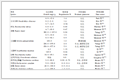
The Brauner-Emmet-Teller (BET) specific surface areas of the samples were derived from N2 physical sorption data of the samples using the BET method, which are similar to that of the γ-Al2O3 support (Table 1). The γ-Al2O3 support has a large specific surface area, and loading a small amount of the AuNPs, ca. 3 wt% as shown below, does not cause significant change in the specific surface area of samples. The amounts of Au loading in the samples were determined by atomic absorption spectrophotometer (AAS), and the Au content of the fresh catalyst is approximately 3 wt%. We did note a slight decrease in the Au content after being cycled 5 times (2.79%, Table 1).
 下载:
导出CSV
| Sample | SBET/(m2·g-1) | Au loading/wt% |
| γ-Al2O3 | 101 | — |
| 3 wt% Au/γ-Al2O3 (fresh) | 109 | 3.02 |
| 3 wt% Au/γ-Al2O3 (used) | 103 | 2.79 |
Our initial attempt was executed toward C—O activation reaction of pyridin-2-yl 4-methylbenzoate (1a) using 1-bromobutane (2a) as both the alkyl-donor and solvent, 3 wt% Au/γ-Al2O3 as catalyst in the presence of different bases such as K3PO4, Na2CO3, KOtBu and K2CO3 (Table 2, Entries 1~4). To our delight, the combination of the 3 wt% Au/γ-Al2O3 and K2CO3 give the best performance. After 24 h of refluxing, the desired transesterification product n-butyl 4-methylbezoate (3aa) was isolated in 99% yield. Moreover, the catalytic performance of AuNPs was superior to that of PdNPs in the model reaction (Entry 5). Other AuNPs on different supports including α-Al2O3, TiO2, ZrO2 and ZnO were also evaluated (Entries 6~9). These catalysts exhibited much lower catalytic activity compared with Au/γ-Al2O3. The higher activity of AuNPs on γ-Al2O3 was that γ-Al2O3 had a large surface area and open porosity which could enable a high dispersion of the AuNPs catalyst.[14] Moreover, we also examined the effect of different Au loadings on the reaction, and 3 wt% Au/γ-Al2O3 was the most effective catalyst (Entries 10, 11). Both a decrease and increase in the reaction temperature reduced the yields of 3aa (Entries 12~14). It was noteworthy that the product ester was isolated about 20% yield in the absence of gold under otherwise identical conditions (Entries 15, 16). So the possibility of K2CO3 independent catalyzing the reaction could not be rule out.[15] Furthermore, no desired ester 3aa was obtained without any base (Entry 17).
下载:
导出CSV
 |
||||
| Entry | Catalyst | Base | Temp./℃ | Yield/% |
| 1 | 3 wt% Au/γ-Al2O3 | K3PO4 | 100 | 62 |
| 2 | 3 wt% Au/γ-Al2O3 | Na2CO3 | 100 | 20 |
| 3 | 3 wt% Au/γ-Al2O3 | KOtBu | 100 | 40 |
| 4 | 3 wt% Au/γ-Al2O3 | K2CO3 | 100 | 99 |
| 5 | 3 wt% Pd/γ-Al2O3 | K2CO3 | 100 | 78 |
| 6 | 3 wt% Au/α-Al2O3 | K2CO3 | 100 | 70 |
| 7 | 3 wt% Au/TiO2 | K2CO3 | 100 | 31 |
| 8 | 3 wt% Au/ZrO2 | K2CO3 | 100 | 40 |
| 9 | 3 wt% Au/ZnO | K2CO3 | 100 | 60 |
| 10 | 1 wt% Au/γ-Al2O3 | K2CO3 | 100 | 60 |
| 11 | 5 wt% Au/γ-Al2O3 | K2CO3 | 100 | 41 |
| 12 | 3 wt% Au/γ-Al2O3 | K2CO3 | 60 | Trace |
| 13 | 3 wt% Au/γ-Al2O3 | K2CO3 | 80 | 52 |
| 14 | 3 wt% Au/γ-Al2O3 | K2CO3 | 120 | 70 |
| 15 | — | K2CO3 | 100 | 19 |
| 16 | γ-Al2O3 | K2CO3 | 100 | 20 |
| 17 | 3 wt% Au/γ-Al2O3 | — | 100 | NP |
| a Reaction conditions: 1a (0.10 mmol), catalyst (1 wt%, 75 mg; 3wt%, 25 mg; 5 wt%, 15 mg), 1-bromobutane 2a (2.00 mL), K2CO3 (1.5 euqiv.), 100 ℃, 24 h. | ||||
After optimizing the catalyst system, we tested the generality of the reaction with regard to various pyridin-2-yl esters (Table 3). It was found that both electron-rich and electron-poor pyridin-2-yl benzoates can be successfully converted across a range of functional groups (including alkyl, fluoro, chloro, iodo, nitro, cynao). Importantly, ortho- and meta-substitution can be tolerated in the transformation (3fa, 3ga, 3ja, 3ka, 3la) and apparent steric effect was not detected. In addition to the benzoates, naphthoate (3pa), thiophene-2-carboxylate (3qa), 1H-indole-2-car- boxylate (3ra) and cinnamate (3sa) performed the transesterification reaction smoothly give the corresponding product in moderate yields. But the experiment results showed that saturated aliphatic acid ester, pyridin-2-yl 3-phenylpeopanoate (1t), could not perform the transesterification reaction.
下载:
导出CSV
 |
 |
| a Reaction conditions: 1 (0.10 mmol), 3 wt% Au/γ-Al2O3 (25 mg), 2a (2.00 mL), K2CO3 (1.5 euqiv.), 100 ℃, 24 h. |
A variety of alkyl halides, including bromoalkanes, chloroalkanes and iodoalkanes, were subjected to the optimized conditions. As shown in Table 4, the desired products 3ab~3am were obtained in moderate to good yields. The methodology was successful in converting various alkyl halides with short-chain, long-chain or cycloalkyl with various haloalkane to the corresponding products, in which n-octyl bromide (2e) showed the best activity affording n-octyl 4-methylbenzoate (3ae) in 90% yield (Entries 1~5). Compared with bromoalkanes, the chloroalkanes and iodoalkanes showed lower activity for this transesterification reaction (Entries 6~12). Additionally, by the comparisons between 1-chlorobutane (2g) and 1-chloro-2-methylpropane (2h), 1-idopropane (2k) and 2-iodopropane (2m), as will be readily to seen that the effect of steric hindrance on the reaction is seldom. Interestingly, epoxide bond was also tolerated in the new transesterification reaction, so it may be applicable for epoxide-containing drug synthesis (Entry 8). Aromatic haloalkane (2j) as well as aliphatic haloalkane reaction efficiently with (1a) to afford the homologous product in moderate yield (Entry 9). The dihalides, including 1, 2-dichloro- ethane (DCE), 1, 3-dichloropropane and 1, 4-dichlorobut- ane, showed the better activity and mono-selectivity and afford the chloro-esters (Entries 13~15). The mono-selec- tivity is possibly because the far excessive amount of dihalide was used in the reaction. Moreover, it was found that the reaction site of bromine is much more active than the reaction site of chlorine through the reaction of pyridin-2-yl 4-methylbenzoate (1a) and 1-bromo-4-chlorobut- ane (2q) (Entry 16).
下载:
导出CSV
 |
|||
| Entry | Haloalkane | Product | Yield/% |
| 1 |  |
 |
89 |
| 2 |  |
 |
66 |
| 3 |  |
 |
76 |
| 4 |  |
 |
90 |
| 5 |  |
 |
89 |
| 6 |  |
3aa | 72 |
| 7 |  |
 |
73 |
| 8 |  |
 |
40 |
| 9 |  |
 |
48 |
| 10 |  |
3ac | 47 |
| 11 |  |
3aa | 69 |
| 12 |  |
 |
36 |
| 13 |  |
 |
45 |
| 14 |  |
 |
65 |
| 15 |  |
 |
96 |
| 16 |  |
3ap | 71 |
| a Reaction conditions: 1a (0.10 mmol), 3 wt% Au/γ-Al2O3 (25 mg), 2 (2.00 mL), K2CO3 (1.5 euqiv.), 100 ℃, 24 h. | |||
To investigate the role of the pyridyl group and whether it works only as good leaving group[16] or also functions as a directing group, control experiments were carried out. Compared with pyridin-2-yl 2-methylbenzoate (1l), pyridin-3-yl 2-methylbenzoate (1a') and pyridin-4-yl 2-methyl- benzoate (1b') which are nearly equal in electronic nature as a leaving group but extremely different in coordination ability of the nitrogen atom were chosen to react with 1-bromobutane 2a (Table 5, Entries 1, 2). Under the same reaction, desired product 3la was isolated in yields of 53% and 41%, respectively. These results indicated that without the chelating effect of the nitrogen with AuNPs the yield decreased apparently. What is more exciting is that, catalyzed by AuNPs, various perfluorophenyl esters 1c'~1g' performed the transesterification reaction with 2a to give the desired esters in excellent yields (Entries 3~7). But perfluorophenyl 3-phenylpropanoate (1h') as well as 1t could not perform the transesterification reaction (Entry 8). These examples further confirmed that the acyl fragment of the aryl ester strongly influenced the reaction outcome and saturated aliphatic acid esters are not suitable for Cacyl—O bond activation. Various aryl picolinates 1i'~1o' were also tested, and the results demonstrated that the electron effect of substitution groups on the (O—Ar) part of picolinates showed less of an effect on the yields (Entries 9~14). Interestingly, when 4-acetylphenyl piconlin- ate (1n') was used as substrate, along with desired ester 66% yield of byproduct 1-(4-butoxyphenyl)ethane-1-one (4n'a) was isolated. This result confirmed the hypothesis that catalyzed by AuNPs, aryl esters 1 generate an activated acyl intermediate Ⅰ via Cacyl—O activation and the alkoxyl part also coupled with alkyl group of 2. Further, using quinolin-6-yl piconlinate (1o') as heteroaromatic ester resulted in desired product in moderate yield (Entry 15). It is noted that ethyl piconlinate (1p') could not perform the reaction (Entry 16). This was also the case in our earlier studies.[11]
下载:
导出CSV
 |
|||
| Entry | Ester | Product | Yield/% |
| 1 |  |
3la | 53 |
| 2 |  |
3la | 41 |
| 3 |  |
3ha | 57 |
| 4 |  |
3ia | 81 |
| 5 |  |
 |
45 |
| 6 |  |
 |
76 |
| 7 |  |
3sa | 50 |
| 8 |  |
― | NP |
| 9 |  |
3f'a | 41 |
| 10 |  |
3f'a | 62 |
| 11 |  |
3f'a | 65 |
| 12 |  |
3f'a | 72 |
| 13 |  |
3f'a | 61 |
| 14 |  |
 |
42 + 66 |
| 15 |  |
3f'a | 70 |
| 16 |  |
― | NP |
| a Reaction conditions: 1 (0.10 mmol), 3 wt% Au/γ-Al2O3 (25 mg), 2a (2.00 mL), K2CO3 (1.5 euqiv.), 100 ℃, 24 h. | |||
We also examined the possibility of recycling AuNPs catalyst in the reaction of pyridin-2-yl 4-methylbenzoate (1a) with 1-bromobutane (2a). As shown in Figure 4, the catalyst can be reused for five cycles with only 14% decline of activity after the 5th recycle. The decreased catalytic activity of the AuNPs may result from the slight increase in the average size of the particles and slight decrease in the Au content recovered after the 5th cycle.
Further investigations on the mechanism were performed. One could imagine that the ester 1 is first decomposed to the corresponding carbroxylic acid, which then performed nucleophilic substitution with alkyl halide under the presence of base. However, no sign of ester formation was observed when the reaction was carried out with 4-methylbenzoic acid in the presence of K2CO3 (Scheme 2). Furthermore, 4-methylbenzoic acid was not detected in the GCMS data of model reaction solution after the end of the reaction (see Supporting Information). And the GC data showed that along with desired product 3aa, a relatively few 2-butoxypyridine was obtained. Not only that, along with desired ester, a similar amount of ether was detected in the GCMS spectra of reaction solution of 1d' with 2a (see Supporting Information). These results indicated that alkoxyl group of aryl ester 1 eliminated to ether in this reaction. Therefore, we infer that the transesterification does not proceed via a carboxylic acid but via intermediate Ⅰ. Aim to confirm if the participation of molecular oxygen in this transformation, isotope labeling experiment was performed. The experiment results ruled out the possibility of oxygen gas participation.
On the basis of the experiments and previously reported literature, the possible mechanism and intermediates Ⅰ~Ⅳ in the transesterification pathway are postulated as follows (Scheme 3). Initially, Au0 undergo an oxidative addition with the Cacyl—O bond in aryl ester 1, generating intermediate Ⅰ. On the other hand, alkyl halides 2 undergo an oxidative addition with Au0 to generate intermediate Ⅱ. Subsequently, the intermediates Ⅰ and Ⅱ performed transmetalation to generate intermediates Ⅲ and Ⅳ. The reductive elimination of Ⅲ results in acyl halide, with regenerating Au0. The acyl halide performed esterification reaction with alcohol, which was formed by basic hydrolysis of alkyl halides 2, generating the desired ester 3. The reductive elimination of Ⅳ results in ether, with regenerating Au0.
In this work, we expand the scope of gold nanoparticles as catalysts for C—O activation by showing that they are general catalysts to perform the transesterification of aryl esters with alkyl halides. By using AuNPs as a catalyst, under air atmosphere, various (hetero)aryl esters, including pyridinyl esters, phenyl esters and quinolin-6-yl esters, could undergo transesterification with various bromoalkanes, chloroalkanes and iodoalkanes to furnish versatile alkyl esters 3 in up to 99% yield. The XPS analysis of the catalyst before and after the reaction suggested that Au0 as the active center completes the catalyst cycle. Additionally, the nano-gold catalysis can be reused for five cycles with only 14% decline of activity after the 5th recycle. Therefore, nano-gold catalysis can play a significant role in the development of green chemistry and green technology. It offers new opportunities in developing sustainable chemical industry.
The AuNPs on γ-Al2O3 and other supports were prepared by an impregnation-reduction method.[17] For example, 3 wt% Au/Al2O3 catalyst was prepared by the following procedure: 0.97 g of γ-Al2O3 powder was dispersed into 100 mL of deionized water, followed by adding 16.8 mL of 0.01 mol/L HAuCl4 aqueous solution while magnetically stirring. One milliliter of 0.03 mol/L L-lysine was added with vigorous stirring. Then 0.1 mol/L NaOH aqueous solution was added into the mixture to adjust pH to 7. To this suspension, 4.5 mL of 0.35 mol/L NaBH4 solution was added dropwise in 10 min. The mixture was aged for 24 h. The solid was separated, washed with water (4 times) and ethanol (once), and dried at 80 ℃. The dried solid was used directly as the catalyst.
The transmission electron microscope (TEM) images were recorded on a JEM-2100 transmission electron microscope employing an accelerating voltage of 200 kV. The samples were suspended in ethanol and dried on holey carbon-coated Cu grids. The X-ray photoelectron spectroscopy (XPS) was recorded on a Kratos Amicus of British equipped with taper anode Mg Kα radiation. The C1s hydrocarbon peak at 284.60 eV was used as an internal standard for the correction of binding energies. The X-ray diffraction (XRD) patterns of all samples were tested on a Rigaku Ultimal Ⅳ X-ray diffractometer using Cu Kα radiation (λ=1.5406 Å) from 2θ=10° to 80°, at a scan rate of 8 (°)·min−1, with the beam voltage and beam current of 40 kV and 40 mA, respectively. The specific surface areas of all samples were obtained on an ASAP-2020 accelerated surface area and porosity analyzer of American Micromeritics Company, resulted from the nitrogen sorption data of the samples using the Brunauer-Emmett-Teller (BET) model in a relative pressure (p/p0) range between 0.06 and 0.30. The Pd content was determined by the Z-8000-type polarized Zeeman atomic absorption spectrophotometer (AAS) of Hitachi company. The Au sensitive wavelength is 242.8 nm. GC-MS analysis was detected on a Thermo DSQ-Ⅱ with a DB-5 column. Thin layer chromatography (TLC) was performed on pre-coated silica gel GF254 plates. The 1H NMR and 13C NMR spectra were measured on a 600 MHz Bruker Avance Ⅲ nuclear magnetic resonance spectrometer, using CDCl3 as the solvent with tetramethylsilane (TMS) as the internal standard. The structures of known compounds were further corroborated by comparing their 1H NMR and 13C NMR data with those of literature. The reaction was conducted in a 35 mL oven-dried reaction tube.
The reaction was conducted in 25 mL over-dried reaction tube. The transetserification between pyridin-2-yl 4-methylbenzoate (1a) and 1-bromobutane (2a) was used as the model reaction. In a typical reaction catalyst (25mg), pyridin-2-yl 4-methylbenzoate (21.3 mg, 0.10 mmol) and 1-bromobutane (2 mL), K2CO3 (20.7 mg, 0.15 mmol) were added into the reaction tube. The resulting solution was stirred at 100 ℃ for 24 h in the magnetic heating agitator with a parallel reaction porous heating module. All products were confirmed by comparison with the previously reported 1H NMR and 13C NMR data.
n-Butyl 4-methylbenzoate (3aa):[18] Yield 99% (19.0 mg); 1H NMR (600 MHz, CDCl3) δ: 7.95 (d, J=8.2 Hz, 2H), 7.31~7.23 (m, 2H), 4.33 (t, J=6.6 Hz, 2H), 2.43 (s, 3H), 1.83~1.71 (m, 2H), 1.57~1.45 (m, 2H), 1.00 (t, J=7.4 Hz, 3H); 13C NMR (126 MHz, CDCl3) δ: 166.8, 143.4, 129.6, 129.0, 127.8, 64.7, 30.8, 21.7, 19.3, 13.8.
n-Butyl benzoate (3ba):[18] Yield 86% (15.3 mg); 1H NMR (600 MHz, CDCl3) δ: 8.05 (d, J=7.7 Hz, 2H), 7.61~7.49 (m, 1H), 7.47~7.39 (m, 2H), 4.33 (t, J=6.6 Hz, 2H), 1.82~1.71 (m, 2H), 1.54~1.40 (m, 2H), 0.98 (t, J=7.3 Hz, 3H); 13C NMR (151 MHz, CDCl3) δ: 166.7, 132.8, 130.6, 129.5, 128.3, 64.8, 30.8, 19.3, 13.8.
n-Butyl 4-fluorobenzoate (3ca):[19] Yield 68% (13.3 mg); 1H NMR (600 MHz, CDCl3) δ: 8.15~7.97 (m, 2H), 7.10 (t, J=8.0 Hz, 2H), 4.32 (t, J=6.4 Hz, 2H), 1.82~1.69 (m, 2H), 1.55~1.39 (m, 1H), 0.98 (t, J=7.2 Hz, 3H); 13C NMR (151 MHz, CDCl3) δ: 166.5, 165.7, 164.9, 132.1, 132.0, 126.8, 126.8, 115.5, 115.4, 65.0, 30.8, 19.3, 13.8.
n-Butyl 4-chlorobenzoate (3da):[19] Yield 66% (14.0 mg); 1H NMR (600 MHz, CDCl3) δ: 8.03~7.91 (m, 2H), 7.49~7.32 (m, 2H), 4.32 (t, J=6.6 Hz, 2H), 1.81~1.65 (m, 2H), 1.54~1.40 (m, 2H), 0.98 (t, J=7.4 Hz, 3H); 13C NMR (151 MHz, CDCl3) δ: 165.8, 139.2, 130.9, 129.0, 128.7, 65.1, 30.7, 19.3, 13.8.
n-Butyl 3-chlorobenzoate (3ea):[19] Yield 67% (14.2 mg); 1H NMR (600 MHz, CDCl3) δ: 8.01 (t, J=1.7 Hz, 1H), 7.93 (d, J=7.8 Hz, 1H), 7.59~7.47 (m, 1H), 7.38 (t, J=7.9 Hz, 1H), 4.33 (t, J=6.6 Hz, 2H), 1.83~1.69 (m, 2H), 1.55~1.39 (m, 2H), 0.99 (t, J=7.4 Hz, 3H); 13C NMR (151 MHz, CDCl3) δ: 165.5, 134.5, 132.8, 132.3, 129.7, 129.6, 127.7, 65.3, 30.7, 19.2, 13.7.
n-Butyl 3-iodobenzoate (3fa):[20] Yield 91% (27.7 mg); 1H NMR (600 MHz, CDCl3) δ: 8.37 (s, 1H), 8.00 (d, J=7.8 Hz, 1H), 7.87 (d, J=7.8 Hz, 1H), 7.18 (t, J=7.8 Hz, 1H), 4.32 (t, J=6.6 Hz, 2H), 1.82~1.67 (m, 2H), 1.55~1.42 (m, 2H), 0.98 (t, J=7.3 Hz, 3H). 13C NMR (151 MHz, CDCl3) δ: 165.2, 141.6, 138.4, 132.4, 130.0, 128.7, 93.8, 65.3, 30.7, 19.2, 13.8.
n-Butyl 2-iodobenzoate (3ga):[21] Yield 91% (27.6 mg); 1H NMR (600 MHz, CDCl3) δ: 7.98 (d, J=7.9 Hz, 1H), 7.78 (d, J=7.7 Hz, 1H), 7.40 (t, J=7.5 Hz, 1H), 7.14 (t, J=7.6 Hz, 1H), 4.34 (t, J=6.6 Hz, 2H), 1.82~1.72 (m, 2H), 1.56~1.39 (m, 2H), 0.98 (t, J=7.4 Hz, 3H); 13C NMR (151 MHz, CDCl3) δ: 166.7, 141.3, 135.6, 132.5, 130.8, 127.9, 94.0, 65.6, 30.6, 19.3, 13.7.
n-Butyl 4-cyanobenzoate (3ha):[19] Yield 60% (12.2 mg); 1H NMR (600 MHz, CDCl3) δ: 8.14 (d, J=8.1 Hz, 2H), 7.75 (d, J=8.1 Hz, 2H), 4.36 (t, J=6.5 Hz, 2H), 1.85~1.73 (m, 2H), 1.56~1.44 (m, 2H), 0.99 (t, J=7.3 Hz, 3H); 13C NMR (151 MHz, CDCl3) δ: 165.0, 134.3, 132.2, 130.1, 118.0, 116.3, 65.7, 30.6, 19.2, 13.7.
n-Butyl 4-nitrobenzoate (3ia):[19] Yield 82% (18.3 mg); 1H NMR (600 MHz, CDCl3) δ: 8.29 (d, J=8.8 Hz, 2H), 8.21 (d, J=8.8 Hz, 2H), 4.38 (t, J=6.7 Hz, 2H), 1.86~1.73 (m, 2H), 1.58~1.44 (m, 2H), 1.00 (t, J=7.4 Hz, 3H); 13C NMR (151 MHz, CDCl3) δ: 164.8, 150.5, 135.9, 130.7, 123.5, 65.8, 30.6, 19.2, 13.7.
n-Butyl 3-nitrobenzoate (3ja):[19] Yield 69% (15.4 mg); 1H NMR (600 MHz, CDCl3) δ: 8.88~8.83 (m, 1H), 8.42 (ddd, J=8.2, 2.3, 1.1 Hz, 1H), 8.39~8.35 (m, 1H), 7.66 (t, J=8.0 Hz, 1H), 4.40 (t, J=6.7 Hz, 2H), 1.87~1.70 (m, 2H), 1.57~1.43 (m, 2H), 1.00 (t, J=7.4 Hz, 3H); 13C NMR (151 MHz, CDCl3) δ: 164.6, 148.3, 135.3, 132.3 129.6, 127.3, 124.5, 65.8, 30.7, 19.2, 13.7.
n-Butyl 3-methylbenzoate (3ka):[19] Yield 70% (13.4 mg); 1H NMR (600 MHz, CDCl3) δ: 7.96~7.74 (m, 2H), 7.38~7.34 (m, 1H), 7.32 (t, J=7.5 Hz, 1H), 4.32 (t, J=6.6 Hz, 2H), 2.40 (s, 3H), 1.89~1.63 (m, 2H), 1.53~1.39 (m, 2H), 0.98 (t, J=7.4 Hz, 3H); 13C NMR (151 MHz, CDCl3) δ: 166.9, 138.1, 133.6, 130.5, 130.1, 128.2, 126.7, 64.8, 30.8, 21.3, 19.3, 13.8.
n-Butyl 2-methylbenzoate (3la):[19] Yield 82% (15.8 mg); 1H NMR (600 MHz, CDCl3) δ: 7.90 (d, J=7.9 Hz, 1H), 7.38 (t, J=7.3 Hz, 1H), 7.28~7.20 (m, 2H), 4.30 (t, J=6.6 Hz, 2H), 2.60 (s, 3H), 1.85~1.70 (m, 2H), 1.56~1.42 (m, 2H), 0.98 (t, J=7.4 Hz, 3H); 13C NMR (151 MHz, CDCl3) δ: 167.8, 140.0, 131.8, 131.7, 130.5, 130.0, 125.7, 64.6, 30.8, 21.8, 19.4, 13.8.
n-Butyl 4-butylbenzoate (3ma):[22] Yield 81% (19.0 mg); 1H NMR (600 MHz, CDCl3) δ: 7.95 (d, J=8.2 Hz, 2H), 7.23 (d, J=8.2 Hz, 2H), 4.31 (t, J=6.6 Hz, 2H), 2.66 (t, J=7.8 Hz, 2H), 1.81~1.69 (m, 2H), 1.64~1.57 (m, 2H), 1.53~1.42 (m, 2H), 1.41~1.31 (m, 2H), 0.98 (t, J=7.4 Hz, 3H), 0.93 (t, J=7.4 Hz, 3H); 13C NMR (151 MHz, CDCl3) δ: 166.8, 148.4, 129.6, 128.4, 128.0, 64.6, 35.7, 33.3, 30.8, 22.3, 19.3, 13.9, 13.8.
n-Butyl 4-tert-butylbenzoate (3na):[23] Yield 78% (18.3 mg); 1H NMR (600 MHz, CDCl3) δ: 8.05~7.90 (m, 2H), 7.51~7.38 (m, 2H), 4.31 (t, J=6.6 Hz, 2H), 1.84~1.67 (m, 2H), 1.56~1.43 (m, 2H), 1.34 (s, 9H), 0.98 (t, J=7.4 Hz, 3H); 13C NMR (151 MHz, CDCl3) δ: 166.7, 156.4, 129.4, 127.8, 125.3, 64.6, 35.1, 31.1, 30.8, 19.3, 13.8.
n-Butyl 2-chloro-4-nitrobenzoate (3oa):[24] Yield 73% (18.8 mg); 1H NMR (600 MHz, CDCl3) δ: 8.32 (d, J=1.4 Hz, 1H), 8.16 (dd, J=8.5, 1.5 Hz, 1H), 7.95 (d, J=8.5 Hz, 1H), 4.40 (t, J=6.6 Hz, 2H), 1.86~1.75 (m, 2H), 1.51~1.44 (m, 2H), 0.99 (t, J=7.4 Hz, 3H); 13C NMR (151 MHz, CDCl3) δ: 164.4, 149.4, 136.3, 131.9, 126.0, 121.5, 66.4, 30.5, 19.2, 13.7.
n-Butyl 1-naphthoate (3pa):[23] Yield 74% (16.9 mg); 1H NMR (600 MHz, CDCl3) δ: 8.91 (d, J=8.7 Hz, 1H), 8.18 (d, J=7.2 Hz, 1H), 8.01 (d, J=8.2 Hz, 1H), 7.88 (d, J=8.1 Hz, 1H), 7.64~7.58 (m, 1H), 7.53 (t, J=7.5 Hz, 1H), 7.52~7.47 (m, 1H), 4.43 (t, J=6.7 Hz, 2H), 1.96~1.71 (m, 2H), 1.66~1.38 (m, 2H), 1.01 (t, J=7.4 Hz, 3H); 13C NMR (151 MHz, CDCl3) δ: 167.7, 133.9, 133.2, 131.4, 130.0, 128.5, 127.7, 127.6, 126.2, 125.9, 124.5, 65.0, 30.9, 19.4, 13.8.
n-Butyl thiophene-2-carboxylate (3qa):[25] Yield 53% (9.8mg); 1H NMR (600 MHz, CDCl3) δ: 7.80 (dd, J=3.7, 1.2 Hz, 1H), 7.54 (dd, J=5.0, 1.2 Hz, 1H), 7.10 (dd, J=4.9, 3.8 Hz, 1H), 4.30 (t, J=6.6 Hz, 2H), 1.80~1.67 (m, 2H), 1.54~1.37 (m, 2H), 0.97 (t, J=7.4 Hz, 3H). 13C NMR (151 MHz, CDCl3) δ: 162.4, 134.1, 133.2, 132.2, 127.7, 65.0, 30.8, 19.2, 13.8.
n-Butyl 1H-indole-2-carboxylate (3ra):[26] Yield 76% (16.5 mg); 1H NMR (600 MHz, CDCl3) δ: 9.06 (s, 1H), 7.69 (d, J=8.0 Hz, 1H), 7.42 (d, J=8.3 Hz, 1H), 7.32 (t, J=7.6 Hz, 1H), 7.23 (s, 1H), 7.15 (t, J=7.5 Hz, 1H), 4.37 (t, J=6.5 Hz, 2H), 1.88~1.71 (m, 2H), 1.55~1.41 (m, 2H), 0.99 (t, J=7.3 Hz, 3H); 13C NMR (151 MHz, CDCl3) δ: 162.2, 136.9, 127.5, 125.3, 122.6, 120.8, 111.9, 108.6, 64.9, 30.8, 19.2, 13.8.
(E)-n-Butyl cinnamate (3sa):[27] Yield 70% (14.3 mg); 1H NMR (600 MHz, CDCl3) δ: 7.68 (d, J=16.0 Hz, 1H), 7.59~7.47 (m, 2H), 7.46~7.33 (m, 3H), 6.44 (d, J=16.0 Hz, 1H), 4.21 (t, J=6.6 Hz, 2H), 1.76~1.66 (m, 2H), 1.50~1.40 (m, 2H), 0.97 (t, J=7.4 Hz, 3H); 13C NMR (151 MHz, CDCl3) δ: 167.1, 144.6, 134.5, 130.2, 128.9, 128.1, 118.3, 64.5, 30.8, 19.2, 13.8.
Ethyl 4-methylbenzoate (3ab):[28] Yield 89% (14.6 mg); 1H NMR (600 MHz, CDCl3) δ: 7.93 (d, J=8.1 Hz, 2H), 7.23 (d, J=8.0 Hz, 2H), 4.36 (q, J=7.1 Hz, 2H), 2.41 (s, 3H), 1.39 (t, J=7.1 Hz, 3H); 13C NMR (151 MHz, CDCl3) δ: 166.7, 143.4, 129.6, 129.0, 127.8, 60.8, 21.7, 14.4.
n-Propyl 4-methylbenzoate (3ac):[29] Yield 66% (11.8 mg); 1H NMR (600 MHz, CDCl3) δ: 7.94 (d, J=8.0 Hz, 2H), 7.23 (d, J=7.8 Hz, 2H), 4.26 (t, J=6.6 Hz, 2H), 2.41 (s, 3H), 1.86~1.74 (m, 2H), 1.03 (t, J=7.4 Hz, 3H); 13C NMR (151 MHz, CDCl3) δ: 166.8, 143.4, 1296, 129.0, 127.8, 66.4 22.1, 21.7, 10.5.
n-Pentyl 4-methylbenzoate (3ad):[30] Yield 76% (15.7 mg); 1H NMR (600 MHz, CDCl3) δ: 7.93 (d, J=7.9 Hz, 2H), 7.23 (d, J=7.8 Hz, 1H), 4.30 (t, J=6.6 Hz, 2H), 2.41 (s, 3H), 1.84~1.66 (m, 2H), 1.50~1.35 (m, 4H), 0.93 (t, J=6.9 Hz, 3H); 13C NMR (151 MHz, CDCl3) δ: 166.8, 143.4, 129.6, 129.0, 127.8, 65.0, 28.5, 28.2, 22.4, 21.6, 14.0.
n-Octyl 4-methylbenzoate (3ae):[31] Yield 90% (22.3 mg); 1H NMR (600 MHz, CDCl3) δ: 7.93 (d, J=8.2 Hz, 2H), 7.23 (d, J=8.0 Hz, 2H), 4.29 (t, J=6.7 Hz, 2H), 2.40 (s, 3H), 1.86~1.69 (m, 2H), 1.47~1.40 (m, 2H), 1.38~1.24 (m, 8H), 0.88 (t, J=7.0 Hz, 3H); 13C NMR (151 MHz, CDCl3) δ: 166.8, 143.4, 129.6, 129.0, 127.8, 65.0, 31.8, 29.3, 29.2, 28.8, 26.1, 22.7, 21.7, 14.1.
Cyclopentyl 4-methylbenzoate (3af):[31] Yield 89% (18.2 mg); 1H NMR (600 MHz, CDCl3) δ: 7.91 (d, J=8.2 Hz, 2H), 7.22 (d, J=8.0 Hz, 2H), 5.49~5.32 (m, 1H), 2.40 (s, 3H), 2.01~1.90 (m, 2H), 1.88~1.75 (m, 4H), 1.71~1.60 (m, 2H); 13C NMR (151 MHz, CDCl3) δ: 166.5, 143.3, 129.5, 129.0, 128.2, 77.45, 32.8, 23.8, 21.6.
Isobutyl 4-methylbenzoate (3ah):[30] Yield 73% (14.0 mg); 1H NMR (600 MHz, CDCl3) δ: 7.94 (d, J=7.8 Hz, 2H), 7.24 (d, J=7.7 Hz, 2H), 4.09 (d, J=6.4 Hz, 2H), 2.41 (s, 3H), 2.12~2.05 (m, 1H), 1.02 (d, J=6.6 Hz, 6H); 13C NMR (151 MHz, CDCl3) δ: 166.8, 143.5, 129.6, 129.1, 127.8, 70.8, 27.9, 21.7, 19.2.
2-(Oxiran-2-yl)ethyl 4-methylbenzoate (3ai):[32] Yield 40% (8.2 mg); 1H NMR (600 MHz, CDCl3) δ: 7.96 (d, J=8.0 Hz, 2H), 7.25 (d, J=7.9 Hz, 2H), 4.64 (dd, J=12.3, 2.9 Hz, 1H), 4.16 (dd, J=12.2, 6.2 Hz, 1H), 3.40~3.27 (m, 1H), 2.90 (t, J=4.4 Hz, 1H), 2.79~2.67 (m, 1H), 2.42 (s, 3H); 13C NMR (151 MHz, CDCl3) δ: 166.4, 144, 0, 129.8, 129.1, 126.9, 65.3, 49.6, 44.7, 21.7.
Phenethyl 4-methylbenzoate (3aj):[33] Yield 48% (11.5 mg); 1H NMR (600 MHz, CDCl3) δ: 7.90 (d, J=8.1 Hz, 2H), 7.34~7.26 (m, 4H), 7.26~7.20 (m, 3H), 4.51 (t, J=7.0 Hz, 2H), 3.07 (t, J=7.0 Hz, 2H), 2.40 (s, 3H). 13C NMR (151 MHz, CDCl3) δ: 166.6, 143.6, 138.0, 129.6, 129.1, 129.0, 128.5, 127.6, 126.6, 65.3, 35.3, 21.6.
Isopropyl 4-methylbenzoate (3am):[28] Yield 36% (6.4 mg); 1H NMR (600 MHz, CDCl3) δ: 8.02~7.86 (m, 2H), 7.25~7.16 (m, 2H), 5.33~5.14 (m, 1H), 2.40 (s, 3H), 1.40~1.34 (m, 6H); 13C NMR (151 MHz, CDCl3) δ: 166.2, 143.3, 129.5, 128.9, 128.2, 68.1, 22.0, 21.6.
2-Chloroethyl 4-methylbenzoate (3an):[34] Yield 45% (8.9 mg); 1H NMR (600 MHz, CDCl3) δ: 7.96 (d, J=8.0 Hz, 2H), 7.26 (d, J=8.6 Hz, 2H), 4.56 (t, J=5.7 Hz, 2H), 3.81 (t, J=5.8 Hz, 2H), 2.42 (s, 3H). 13C NMR (151 MHz, CDCl3) δ: 166.3, 144.0, 129.8, 129.2, 126.9, 64.3, 41.7, 21.7.
3-Chloropropyl 4-methylbenzoate (3ao):[35] Yield 65% (13.8 mg); 1H NMR (600 MHz, CDCl3) δ: 7.92 (d, J=8.2 Hz, 2H), 7.24 (d, J=8.0 Hz, 1H), 4.46 (t, J=6.0 Hz, 2H), 3.70 (t, J=6.5 Hz, 2H), 2.41 (s, 3H), 2.28~2.20 (m, 2H). 13C NMR (151 MHz, CDCl3) δ: 166.5, 143.8, 129.6, 129.1, 127.3, 61.5, 41.3, 31.8, 21.7.
4-Chlorobutyl 4-methylbenzoate (3ap):[36] Yield 96% (21.8 mg); 1H NMR (600 MHz, CDCl3) δ: 7.92 (d, J=7.6 Hz, 2H), 7.24 (d, J=7.9 Hz, 2H), 4.34 (t, J=5.4 Hz, 2H), 3.61 (t, J=5.6 Hz, 2H), 2.41 (s, 3H), 1.98~1.90 (m, 4H). 13C NMR (151 MHz, CDCl3) δ: 166.6, 143.7, 129.6, 129.1, 127.5, 63.9, 44.5, 29.3, 26.2, 217.
n-Butyl furan-2-carboxylate (3e'a):[37] Yield 45% (7.6 mg); 1H NMR (500 MHz, CDCl3) δ: 7.58 (d, J=0.7 Hz, 1H), 7.17 (d, J=3.5 Hz, 1H), 6.51 (dd, J=3.4, 1.7 Hz, 1H), 4.31 (t, J=6.7 Hz, 2H), 1.80~1.68 (m, 2H), 1.51~1.38 (m, 2H), 0.97 (t, J=7.4 Hz, 3H); 13C NMR (126 MHz, CDCl3) δ: 158.9, 146.2, 144.9, 117.7, 111.8, 64.8, 30.7, 19.2, 13.7.
n-Butyl picolinate (3f'a):[25] Yield 76% (13.6 mg); 1H NMR (600 MHz, CDCl3) δ: 8.78 (d, J=4.5 Hz, 1H), 8.14 (d, J=7.8 Hz, 1H), 7.86 (td, J=7.7, 1.6 Hz, 1H), 7.55~7.43 (m, 1H), 4.43 (t, J=6.9 Hz, 2H), 1.88~1.75 (m, 2H), 1.55~1.40 (m, 2H), 0.98 (t, J=7.4 Hz, 3H); 13C NMR (151 MHz, CDCl3) δ: 165.1, 149.8, 148.1, 137.2, 126.9, 125.2, 65.9, 30.7, 19.2, 13.7.
1-(4-Butoxyphenyl)ethenone (4o'a):[38] Yield 66% (12.7 mg); 1H NMR (600 MHz, CDCl3) δ: 7.94 (d, J=8.8 Hz, 2H), 6.94 (d, J=8.8 Hz, 2H), 4.04 (t, J=6.5 Hz, 2H), 2.57 (s, 2H), 1.86~1.76 (m, 2H), 1.56~1.49 (m, 2H), 1.00 (t, J=7.4 Hz, 4H).
After each reaction recycle, the solvent, substrate, and products were removed by centrifugation. The separated catalyst was washed thoroughly with distilled water (3 times), and then washed twice with ethanol followed by centrifugal separation and drying at 80 ℃ for 12 h. The recovered catalyst was used for next work.
(a) Otera, J.; Nishikido, J. Esterification: Methods, Reactions, and Application, Wiley, Hoboken, NJ, 2009, p. 1.
(b) Larock, R. C. Comprehensive Organic Transformation: A Guide to Functional Group Preparations, Wile-VCH, New York, 1999, Vol. 1, pp. 1~2640.
(c) Nguyen, J. D.; D'Amato, E. M.; Narayanam, J. M.; Stephenson, C. R. Nat. Chem. 2012, 4, 854.
(d) Takei, T. Advances in Catalysis, Elsevier, Tokyo, 2012, 55, pp. 1~126.
(a) Haruta, M. Gold Bull. 2004, 37, 27.
(b) Hughes, M. D.; Xu, Y. J.; Jenkins, P.; McMorn, P.; Landon, P.; Enache, D. I.; Carley, A. F.; Attard, G. A.; Hutchings, G. J.; King, F.; Stitt, E. H.; Johnston, P.; Griffin, K.; Kiely, C. J. Nature 2005, 437, 1132.
(c) Haruta, M.; Ueda, A.; Tsubota, S.; Sanchez, R. M. T. Catal. Today 1996, 29, 443.
(d) Deng, X. Y.; Friend, C. M. J. Am. Chem. Soc. 2005, 127, 17178.
(e) Valden, M.; Lai, X.; Goodman, D. W. Science 1998, 281, 1647.
(f) Fu, Q.; Saltsburg, H.; Flytzani-Stephanopoulos, M. Science 2003, 301, 935.
(g) Hutchings, G. J. J. Catal. 1985, 96, 292.
(h) Hayashi, T.; Tanaka, K.; Haruta, M. J. Catal. 1998, 178, 566.
(i) Prati, L.; Rossi, M. J. Catal. 1998, 176, 552.
(j) Santra, A. K.; Kolmakov, A.; Yang, F.; Goodman, D. W. Science 1998, 281, 1647.
(a) Mallat, T.; Baiker, A. Chem. Rev. 2004, 104, 3037.
(b) Prati, L.; Rossi, M. J. Catal. 1998, 176, 552.
(a) Abad, A.; Concepción, P.; Corma, A.; García, H. Angew. Chem., Int. Ed. 2005, 44, 4066.
(b) Su, F. Z.; Liu, Y. M.; Wang, L. C.; Cao, Y.; He, H. Y.; Fan, K. N. Angew. Chem., Int. Ed. 2008, 47, 334.
(c) Abad, C. A.; Corma, A. A.; Garcia, H. Chem. Commun. 2006, 3178.
(d) Choudhary, V. R.; Dhar, A.; Jana, P.; Jha, R.; Uphade, B. S. Green Chem. 2005, 7, 768.
(e) Choudhary, V. R.; Dhar, A.; Jana, P. Green Chem. 2007, 9, 267.
(f) Wang, L. C.; Liu, Y. M.; Chen, M.; Cao, Y.; He, H. Y.; Fan, K. N. J. Phys. Chem. C 2008, 112, 6981.
(g) Wang, L.-C.; He, L.; Liu, Q.; Liu, Y.-M.; Chen, M.; Cao, Y.; He, H.-Y.; Fan, K.-N. Appl. Catal., A: Chem. 2008, 344, 150.
(h) Su, F. Z.; Chen, M.; Wang, L. C.; Huang, X. S.; Liu, Y. M.; Cao, Y.; He, H. Y.; Fan, K. N. Catal. Commun. 2008, 9, 1027.
(a) Biella, S.; Prati, L.; Rossi, M. J. Mol. Catal. A: Chem. 2003, 197, 207.
(b) Corma, A.; Domine, M. E. Chem. Commun. 2005, 4042.
(c) Marsden, C.; Taarning, E.; Hansen, D.; Johansen, L.; Klitgaard, S. K.; Egeblad, K.; Christensen, C. H. Green Chem. 2008, 10, 168.
(d) Fristrup, P.; Johansen, L. B.; Christensen, C. H. Chem. Commun. 2008, 2750.
(e) Laursen, A. B.; Hojholt, K. T.; Lundegaard, L. F.; Simonsen, S. B.; Helveg, S.; Schuth, F.; Paul, M.; Grunwaldt, J. D.; Kegnoes, S.; Christensen, C. H.; Egeblad, K. Angew. Chem., Int. Ed. 2010, 49, 3504.
(f) Xu, B.; Liu, X.; Haubrich, J.; Friend, C. M. Nat. Chem. 2011, 2, 61.
(a) Grirrane, A.; Corma, A.; García, H. Science 2008, 322, 1661.
(b) Zhu, B.; Lazar, M.; Trewyn, B. G.; Angelici, R. J. J. Catal. 2008, 260, 1.
(c) Grirrane, A.; Corma, A.; García, H. J. Catal. 2009, 264, 138-144.
(d) Aschwanden, L.; Mallat, T.; Grunwaldt, J.-D.; Krumeich, F.; Baiker, A. J. Mol. Catal. A Chem. 2009, 300, 111.
(e) Ishida, T.; Kawakita, N.; Akita, T.; Haruta, M. Gold Bull. 2009, 42, 267-274.
(f) Zhu, B. Angelici, R. J. Chem. Commun. 2007, 2157.
(a) Zhao, R.; Ji, D.; Lv, G.; Qian, G.; Yan, L.; Wang, X.; Suo, J. Chem. Commun. 2004, 904.
(b) Chen, L.; Hu, J.; Richards, R. J. Am. Chem. Soc. 2009, 131, 914.
(c) Wu, P.; Bai, P.; Loh, K. P.; Zhao, X. S. Catal. Today 2010, 158, 220.
(d) Wu, P.; Xiong, Z.; Loh, K. P.; Zhao, X. S. Catal. Sci. Technol. 2011, 1, 285.
(e) Lu, G.; Zhao, R.; Qian, G. Catal. Lett. 2004, 97, 115.
(f) Dapurkar, S. E.; Shervani, Z.; Yokoyama, T.; Ikushima, Y.; Kawanami, H. Catal. Lett. 2009, 130, 42.
Fristrup, P.; Johansen, L. B.; Christensen, C. H. Chem. Commun. 2008, 2750.
(a) Rodríguez, N.; Gooß en, J. L. Chem. Soc. Rev. 2011, 40, 5030.
(b) Correa, A.; Cornella, J.; Martin, R. Angew. Chem., Int. Ed. 2013, 52, 1878.
(c) Zarate, C.; Martin, R. J. Am. Chem. Soc. 2014, 136, 2236.
(d) Quasdorf, K. W.; Tian, X.; Garg, N. K. J. Am. Chem. Soc. 2008, 130, 14422.
(e) Guan, B. T.; Wang, Y.; Li, B. J.; Yu, D. J.; Shi, Z. J. J. Am. Chem. Soc. 2008, 130, 14468.
(f) Yu, D. G.; Li, B. J.; Shi, Z. J. Acc. Chem. Res. 2010, 43, 1486.
(g) Takise, R.; Muto, K.; Yamaguchi, J.; Itami, K. Angew. Chem., Int. Ed. 2014, 53, 6791.
(h) Cornella, J.; Jackson, E. P.; Martin, R. Angew. Chem., Int. Ed. 2015, 54, 4075.
(i) Yang, J.; Chen, T.; Han, H. B. J. Am. Chem. Soc. 2015, 137, 1782.
(j) Gu, Y.; Martin, R. Angew. Chem., Int. Ed. 2017, 56, 3187.
(k) Tobisu, M.; Yamakawa, K.; Shimasaki, T.; Chatani, N. Chem. Commun. 2011, 47, 2946.
(l) Guo, L.; Hsiao, C. C.; Yue, H.; Liu, X.; Rueping, M. ACS Catal. 2016, 6, 4438.
(a) Muto, K.; Yamaguchi, J.; Musaev, D. G.; Itami, K. Nat. Commun. 2015, 6, 7508.
(b) Ben Halima, T.; Zhang, W.; Yalaoui, I.; Hong, X.; Yang, Y.-F.; Houk, K. N.; Newman, S. G. J. Am. Chem. Soc. 2017, 139, 1311.
(c) Pu, X.; Hu, J.; Zhao, Y.; Shi, Z. ACS Catal. 2016, 6, 6692.
(d) Amaike, K.; Muto, K.; Yamaguchi, J.; Itami, K. J. Am. Chem. Soc. 2012, 134, 13573.
(e) Guo, L.; Chatupheeraphat, A.; Rueping, M. Angew. Chem., Int. Ed. 2016, 55, 11810.
(f) Yamamoto, T.; Ishizu, J.; Kohara, T.; Komiya, S.; Yamamoto, A. J. Am. Chem. Soc. 1980, 102, 3758.
Bao, Y. S.; Baiyin, M.; Agula, B.; Jia, M. L.; Bao, Z. J. Org. Chem. 2014, 79, 6715.
(a) Bianchi, C.; Porta, F.; Prati, L.; Rossi, M. Top. Catal. 2000, 13, 231.
(b) Porta, F.; Prati, L.; Rossi, M.; Coluccia, S.; Martra, G. Catal. Today 2000, 61, 165.
(c) Haruta, M.; Date, M. Appl. Catal., A 2001, 222, 427.
(d) Porta, F.; Prati, L.; Rossi, M.; Scari, G. J. Catal. 2002, 211, 464.
(e) Seker, E.; Gulari, E. Appl. Catal., A 2002, 232, 203.
(f) Xu, Q.; Kharas, K. C. C.; Datye, A. K. Catal. Lett. 2003, 85, 229.
(g) Grunwaldt, J. D.; Kiener, C.; Wogerbauer, C.; Baiker, A. J. Catal. 1999, 181, 223.
(h) Porta, F.; Rossi, M. J. Mol. Catal., A 2003, 204, 553.
(i) Biella, S.; Porta, F.; Prati, L.; Rossi, M. Catal. Lett. 2003, 90, 23.
Chen, Y.; Somsen, C.; Milenkovic, S.; Hassel, A. W. J. Mater. Chem. 2009, 19, 924.
Rozita, Y.; Brydson, R.; Comyn, T. P.; Scott, A, J.; Hammond, C.; Brown, A.; Chauruka, S.; Hassanpour, A.; Young, N. P.; Kirkland, A. I. ChemCatChem 2013, 5, 2695.
Chen, J.; Namila, E.; Bai, C.; Baiyin, M.; Agula, B.; Bao, Y. S. RSC Adv. 2018, 8, 25168.
Tatamidani, H.; Kakiuchi, F.; Chatani, N. Org. Lett. 2004, 6, 3597. doi: 10.1021/ol048513o
Zhu, H. Y.; Ke, X. B.; Yang, X. Z.; Sarina, S.; Liu, H. W. Angew. Chem., Int. Ed. 2010, 49, 9657. doi: 10.1002/anie.201003908
Hu, Y.; Li, B. Tetrahedron 2017, 73, 7301. doi: 10.1016/j.tet.2017.11.025
Kong, W.; Li, B.; Xu, X.; Song, Q. J. Org. Chem. 2016, 81, 8436. doi: 10.1021/acs.joc.6b01594
Farid, S. Y.; Robello, D. R.; Dinnocenzo, J. P.; Merkel, P. B.; Ferrar, L.; Roh, Y.; Mis, M. R. US 20050136357, 2005.
Hosangadi, B.; Dave, R. H. Tetrahedron Lett. 1996, 37, 6375.
Lee, P. H.; Lee, S. W.; Lee, K. Org. Lett. 2003, 5, 1103. doi: 10.1021/ol034167j
Nakatani, Y.; Koizumi, Y.; Yamasaki, R.; Saito, S. Org. Lett. 2008, 10, 2067.
Fel'dman, I. K.; Eidlin, A. M.; Sbornik, S. O. K. 1953, 1, 504.
Wang, L.; Neumann, H.; Spannenberg, A.; Beller, M. Chem. Commun. 2017, 53, 7469.
CAS NUMBER: 1481434-06-3.
Wang, G., Xu, Y., Zhang, S., Li, Z., Li, C. Green. Chem. 2017, 19, 4838. doi: 10.1039/C7GC02265D
Koziakov, D., Jacobi von Wangelin, A. Org. Biom. Chem. 2017, 15, 6715.
Ray, R.; Jana, R. D.; Bhadra, M.; Maiti, D.; Lahiri, G. K. Chem.-Eur. J. 2014, 20, 15618. doi: 10.1002/chem.v20.47
Gao, M.; Chen, M.; Li, Y.; Tang, H.; Ding, H.; Wang, K.; Yang, L.; Li, C.; Lei, A. Asian J. Org. Chem. 2017, 6, 1566. doi: 10.1002/ajoc.v6.11
CAS NUMBER: 500344-32-1.
Terakado, D.; Koutaka, H.; Oriyama, T. Tetrahedron:Asymmetry 2005, 16, 1157. doi: 10.1016/j.tetasy.2005.01.034
Pathak, G.; Das, D.; Rokhum, L. RSC Adv. 2016, 6, 93729. doi: 10.1039/C6RA22558F
Ren, L.; Wang, L.; Lv, Y.; Li, G.; Gao, S. Org. Lett. 2015, 17, 5172. doi: 10.1021/acs.orglett.5b02479
Ayala, C. E.; Villalpando, A.; Nguyen, A. L.; McCandless, G. T.; Kartika, R. Org. Lett. 2012, 14, 3676. doi: 10.1021/ol301520d
Chen, H.; Wang, G.; Han, J.; Xu, M.; Zhao, Y.; Xu, H. Tetrahedron 2014, 70, 212. doi: 10.1016/j.tet.2013.11.085
Wang, Q.; Wang, Z.; Xu, Y.; Zhang, X.; Fan, X. Asian J. Org. Chem. 2016, 5, 1304. doi: 10.1002/ajoc.v5.11
Zhang, X.; Xu, X.; Li, N.; Liang, Z.; Tang, Z. Tetrahedron 2018, 74, 1926. doi: 10.1016/j.tet.2018.02.057

Figure 2 (a, b) TEM images of fresh 3 wt% Au/γ-Al2O3 and used (after 5 cycles) 3 wt% Au/γ-Al2O3, respectively; (c, d) AuNP size distribution of fresh and used catalysts, respectively.

Figure 3 X-ray diffraction (XRD) patterns of fresh 3 wt% Au/γ-Al2O3, used (after 5 cycles) 3 wt% Au/γ-Al2O3 and γ-Al2O3
Table 1. Characterization results of BET, AAS of catalysis
| Sample | SBET/(m2·g-1) | Au loading/wt% |
| γ-Al2O3 | 101 | — |
| 3 wt% Au/γ-Al2O3 (fresh) | 109 | 3.02 |
| 3 wt% Au/γ-Al2O3 (used) | 103 | 2.79 |
 下载: 导出CSV
Table 2. Optimization of reaction conditionsa
|
||||
| Entry | Catalyst | Base | Temp./℃ | Yield/% |
| 1 | 3 wt% Au/γ-Al2O3 | K3PO4 | 100 | 62 |
| 2 | 3 wt% Au/γ-Al2O3 | Na2CO3 | 100 | 20 |
| 3 | 3 wt% Au/γ-Al2O3 | KOtBu | 100 | 40 |
| 4 | 3 wt% Au/γ-Al2O3 | K2CO3 | 100 | 99 |
| 5 | 3 wt% Pd/γ-Al2O3 | K2CO3 | 100 | 78 |
| 6 | 3 wt% Au/α-Al2O3 | K2CO3 | 100 | 70 |
| 7 | 3 wt% Au/TiO2 | K2CO3 | 100 | 31 |
| 8 | 3 wt% Au/ZrO2 | K2CO3 | 100 | 40 |
| 9 | 3 wt% Au/ZnO | K2CO3 | 100 | 60 |
| 10 | 1 wt% Au/γ-Al2O3 | K2CO3 | 100 | 60 |
| 11 | 5 wt% Au/γ-Al2O3 | K2CO3 | 100 | 41 |
| 12 | 3 wt% Au/γ-Al2O3 | K2CO3 | 60 | Trace |
| 13 | 3 wt% Au/γ-Al2O3 | K2CO3 | 80 | 52 |
| 14 | 3 wt% Au/γ-Al2O3 | K2CO3 | 120 | 70 |
| 15 | — | K2CO3 | 100 | 19 |
| 16 | γ-Al2O3 | K2CO3 | 100 | 20 |
| 17 | 3 wt% Au/γ-Al2O3 | — | 100 | NP |
| a Reaction conditions: 1a (0.10 mmol), catalyst (1 wt%, 75 mg; 3wt%, 25 mg; 5 wt%, 15 mg), 1-bromobutane 2a (2.00 mL), K2CO3 (1.5 euqiv.), 100 ℃, 24 h. | ||||
下载: 导出CSV
Table 3. Scope of pyridyl estersa
|
|
| a Reaction conditions: 1 (0.10 mmol), 3 wt% Au/γ-Al2O3 (25 mg), 2a (2.00 mL), K2CO3 (1.5 euqiv.), 100 ℃, 24 h. |
下载: 导出CSV
Table 4. Catalytic coupling of 2-pyridyl-4-methyl benzoatea
|
|||
| Entry | Haloalkane | Product | Yield/% |
| 1 | |
|
89 |
| 2 | |
|
66 |
| 3 | |
|
76 |
| 4 | |
|
90 |
| 5 | |
|
89 |
| 6 | |
3aa | 72 |
| 7 | |
|
73 |
| 8 | |
|
40 |
| 9 | |
|
48 |
| 10 | |
3ac | 47 |
| 11 | |
3aa | 69 |
| 12 | |
|
36 |
| 13 | |
|
45 |
| 14 | |
|
65 |
| 15 | |
|
96 |
| 16 | |
3ap | 71 |
| a Reaction conditions: 1a (0.10 mmol), 3 wt% Au/γ-Al2O3 (25 mg), 2 (2.00 mL), K2CO3 (1.5 euqiv.), 100 ℃, 24 h. | |||
下载: 导出CSV
Table 5. Scope of other aryl esters
|
|||
| Entry | Ester | Product | Yield/% |
| 1 | |
3la | 53 |
| 2 | |
3la | 41 |
| 3 | |
3ha | 57 |
| 4 | |
3ia | 81 |
| 5 | |
|
45 |
| 6 | |
|
76 |
| 7 | |
3sa | 50 |
| 8 | |
― | NP |
| 9 | |
3f'a | 41 |
| 10 | |
3f'a | 62 |
| 11 | |
3f'a | 65 |
| 12 | |
3f'a | 72 |
| 13 | |
3f'a | 61 |
| 14 | |
|
42 + 66 |
| 15 | |
3f'a | 70 |
| 16 | |
― | NP |
| a Reaction conditions: 1 (0.10 mmol), 3 wt% Au/γ-Al2O3 (25 mg), 2a (2.00 mL), K2CO3 (1.5 euqiv.), 100 ℃, 24 h. | |||
下载: 导出CSV

 扫一扫看文章


扫一扫关注我们


 下载: