
Figure 1.
X-ray crystal structure of compound 3e.

Synthesis and Antitumor Activity of Novel Isolongifolic-Alkyl Dihydropyrimidinethione Derivatives
Chonghui Ma , Chenliang Wu , Yunyun Wang , Zhenzhen Huang , Qiangjian Zhang , Fuhao Dong , Wen Gu , Yu Shan , Shifa Wang


Cancer is considered as a major health problem worldwide because of the high rate of mortality. In 2012 alone, 14 million cancer cases and 8.2 million cancer-related deaths have occurred.[1] Moreover, cancer cases is expected to rise to almost 20 million by 2025.[2] Cancer characterized by uncontrolled and abnormal growth of cells, which is considered as the second cause of mortality after cardiovascular diseases. Therefore, it remains important to screening for new anticancer agents and which is one of the major goals in medicinal chemistry.
Pyrimidines, an important component of nucleic acids, have been used as framework in pharmaceuticals for the synthesis of antineoplastic, [3] antiviral, [4] antibacterial and antifungal agents.[5] Thiouracils are a vital class of revised nucleobases derived from uracil, and their derivatives are potential therapeutical agents with anticancer, antiviral, and microbial activities.[6~8] For example, 6-methyl-2- thiouracil, a typical thiouracil derivative which has good biological and antifungal activities. It is an active pharmaceutical ingredient which containing active (HN-CS-NH) and pyrimidine heterocyclic group.[9~16] In addition, thiouracils and their derivatives are used as hyperthyroidism inhibitors. The inhibitors which induce emendations in the thyroid. Scilicet, when they exist in blood or dietary products, thiouracils and their derivatives will impair thyroid activity.[17]
Turpentine is an abundant renewable resource, and the main components of turpentine are α-pinene, β-pinene and longifolene. Isolongifolene is a tricyclic sesquiterpene which can be obtained from longifolene by isomerization reaction.[18, 19] Isolongifolene is oxidized to generate isolongifolanone, which is also extensively used in pharmaceutical and perfumery industries due to its woody amber odor.[20, 21] Isolongifolanone can convert to other derivatives which have amazing applications as bactericidal and antibacterial, [22] anti-tumor, [22, 23] anti-tuberculosis, [22] anti-cancer[22, 24] anti-inflammatory, [22] analgesic, [22] anti-depressant, [22] anti-diabetic[22] and antimicrobial.[24, 25]
In the past several years, our laboratory has been conducting many researches on the applications of isolongifolanone, such as anti-inflammatory, [26] anticancer, [26] and fluorescent dyes.[27, 28] However, the synthesis of isolongifolanone-based dihydropyrimidinethione derivatives have been reported in few literatures. The above discoveries offer us a direction to design and synthesize dihydropyrimidinethione derivatives of isolongifolanone and probe into their possible values as anticancer drugs.
The synthesis of designed dihydropyrimidinethione derivatives were outlined in Scheme 1. Compounds 2a~2l were prepared according to our previously reported methods.[27, 29] Compounds 2a~2l were converted into com-pounds 3a~3l by reacting with thiourea using potassium tert-butoxide in ethanol and tert-butyl alcohol. The target compounds 3a~3l were characterized by NMR and HRMS. Moreover, compound 3e was determined by single-crystal X-ray diffraction (Table 1, Figure 1).
Reagents and conditions: (a) substituted benzaldehyde, potassium tert-butoxide, tert-butanol/ethanol, reflux, 4~12 h; (b) thiourea, potassium tert-butoxide, tert-butanol and ethanol, reflux, 30 h
 下载:
导出CSV
| Moiety formula | CHCl3, C24H32N2OS |
| Mr | 515.94 |
| Bond precision/ | C—C 0.0063 |
| Wavelength/ | 0.71076 |
| a/ | 13.3915(8) |
| b/ | 8.8877(5) |
| c/ | 22.5152(14) |
| α/(°) | 90 |
| β/(°) | 105.765(2) |
| γ/(°) | 90 |
| T/K | 283 |
| Volume | 2578.9(3) |
| Space group | P 1 21/n 1 |
| Hall group | -P 2yn |
| Z | 4 |
| Mu/m-1 | 0.457 |
| Dx/(g•cm-3) | 1.329 |
| F(000) | 1088.0 |
| h, k, l (max) | 15, 10, 26 |
| Nref | 4551 |
| Tmin, Tmax | 0.656, 0.746 |
| Data completeness | 0.999 |
| θ (max) | 25.000 |
| R (reflections) | 0.0749 (2848) |
| wR2 | 0.1975 (4551) |
| S | 1.021 |
| Npar | 294 |
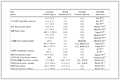
The biological activities of compounds 3a~3l in inhibiting cancer cell index proliferation were assayed against MDA-MB-231 cell line, HeLa cell line, HepG-2 cell line and normal cell line Raw-264.7 (mouse macrophages) using in vitro MTT assay. The IC50 (μmol/L) values of compounds 3a~3l and reference standard of etoposide[30] have been listed in Table 2.
下载:
导出CSV
| Compound | R | IC50/(μmol•L-1) | |||
| MBA-MD-231 | HeLa | HepG-2 | Raw264.7 | ||
| 3a | 4-ClC6H4 | 11.65±0.09 | 8.85±0.03 | 8.92±0.12 | > 50 |
| 3b | 4-BrC6H4 | 5.13±0.12 | 16.23±0.03 | 8.89±0.04 | > 50 |
| 3c | 4-FC6H4 | 7.00±0.06 | 7.40±0.03 | 8.52±0.08 | > 50 |
| 3d | 4-CH3C6H4 | 25.01±0.03 | 10.74±0.01 | 11.99±0.07 | > 50 |
| 3e | 4-CH3OC6H4 | 25.73±0.09 | 15.86±0.01 | 6.48±0.07 | > 50 |
| 3f | C6H5 | 6.94±0.06 | 7.09±0.05 | 8.17±0.02 | 32.94±0.15 |
| 3g | 2-NC5H4 | 44.28±0.02 | 4.04±0.14 | 14.94±0.04 | > 50 |
| 3h | 2-ClC6H4 | 9.02±0.17 | 22.40±0.54 | 6.35±0.12 | 13.94±0.16 |
| 3i | 2-BrC6H4 | 9.56±0.21 | 9.62±0.06 | 10.16±0.07 | 15.08±0.24 |
| 3j | 2-FC6H4 | 3.12±0.26 | 30.34±0.06 | 8.79±0.05 | 6.97±0.16 |
| 3k | 2-CH3C6H4 | 16.62±0.09 | 9.20±0.03 | 5.43±0.08 | ND |
| 3l | 2- CH3OC6H4 | 18.27±0.10 | 12.21±0.06 | 7.922±0.10 | ND |
| Etoposide | 8.66±0.03 | 5.48±0.04 | 2.444±0.09 | 10.74±0.03 | |
The antitumor activities of compounds 3b, 3c, 3f and 3j against MDA-MB-231 cells were better than the antitumor activity of the positive drug etoposide (IC50=8.66 μmol/ L). Among them, compound 3j showed the best anti-proliferative activity on MDA-MB-231 cells with an IC50 value of 3.12 μmol/L. In addition, compound 3g exhibited the strongest antiproliferative activity on HeLa cells (IC50=4.04 μmol/L). Most of the target compounds (3a~3c, 3e, 3f, 3h, 3j~3l) showed good biological activity against HepG-2 cells (IC50 < 10 μmol/L), and compound 3k showed the best antiproliferative activity on HepG-2 cells (IC50=5.43 μmol/L). It was worth noting that this class of compounds with para-substituents had no obvious cytotoxicity effect on normal cell mouse macrophages (RAW-264.7) with IC50 > 50 μmol/L.
It was known from the results of in vitro antitumor activity tests that when the ortho- or para-position of the R group contained Cl, Br, F, NO2 etc. electron-withdrawing groups, compounds 3a~3c and 3h~3j had better inhibitory activity against MDA-MB-231 cells than compounds 3d, 3e, 3k, 3l which had electron-donating groups (CH3, OCH3). Whereas, the compounds showed better antitumor activities against MDA-MB-231 cells when the substituents in ortho-position (3h, 3j, 3k, 3l). Interestingly, compounds 3b and 3i did not follow the rule. It could be found that compounds 3a, 3c with electron-withdrawing groups in para-position were conferred better antitumor activities against HeLa cells than compounds 3d, 3e with electron-donating groups in para-position. Compounds 3h, 3j with electron-withdraw- ing groups in ortho-position have greatly reduced the activity against HeLa cells compared with compounds 3k, 3l bearing electron-donating groups in ortho-position. When the compounds have the same electron-withdrawing groups (Cl, F), compounds 3a, 3c whose substituents in para-position have better anti-proliferative activity against HeLa cells than compounds 3h, 3j with substituents in ortho-position. The target compounds have generally good anti-proliferative activities against HepG-2 cells.
To probe whether cell apoptosis of MDA-MB-231 cells induced by compound 3j, the cell apoptosis was evaluated by flow cytometric analysis. As illustrated in Figure 2, compound 3j caused cell apoptosis in a dose-dependent manner. The cells in the control group were in good condition, normal cells accounted for 90.8%. After treatment with different doses of compound 3j (0, 2, 5, 10 μmol/L), the percentage of early apoptotic cells increased from 8.50% to 42.3% significantly. These results explored that compound 3j might induce dose-dependent apoptosis of MDA-MB-231 cells efficiently.
To investigate whether the antitumor effects on MDA- MB-231 cells growth of compound 3j was caused by cell cycle arrest, MDA-MB-231 cells was treated with different doses of compound 3j. The percentage of cells in each cell cycle phase was evaluated by flow cytometry (Figure 3). In the control group, cell populations in the G0/G1, S and G2/M phases were 55.71%, 26.51% and 16.77%. 5 μmol/L of compound 3j reduced the percentage of MDA-MB-231 cells at the G2/M phase and induced an accumulation of MDA-MB-231 cells in G0/G1 phase. The percentage of cells in G2/M phase decreased to 8.72%, while the G0/G1 phase cells increased to 65.07%. Those phenomena in the cell cycle distribution on 3j treatment indicated that it induced cell cycle arrest at the G0/G1 phase.
12 new isolongifolanone-based dihydropyrimidinethione derivatives 3a~3l have been synthesized, and their biological activity in inhibiting cancer cell proliferation were evaluated. The compounds in large part showed favorable growth inhibitory activity against three cancer cell lines breast (MDA-MB-231), cervix (HeLa) and liver (HepG-2). It was found that compound 3j showed potent cytotoxicity on MDA-MB-231 cells (IC50=3.12 μmol/), compound 3g exhibited best antitumor activity against HeLa cells (IC50=4.04 μmol/L), while compound 3k showed most potent cytotoxicity on HepG-2 cells (IC50=5.43 μmol/). In addition, compound 3j arrested the cells in the G0/G1 phase of the MDA-MB-231 cell cycle and induced the apoptosis of MDA-MB-231 cells. The above discoveries emphasized the potential of the series of derivatives as new antitumor drugs. More study will be proceeded to explore the in-depth structure-activity relationships and the anticancer mechanisms.
The reactions were monitored by chromatography and observed under a UV lamp at a wavelength of 254 nm. UV-visible absorption spectra were investigated by PerkinElmer Lambda 950. 1H NMR (400 MHz, CDCl3) and 13C NMR (100 MHz, CDCl3) spectra were recorded in CDCl3 on a Bruker AV 400 MHz Spectrometer. Purities were measured on an America Agilent 1260 Liquid Chromatography (The type of column was C18 and the ratio of water to acetonitrile in the mobile phase was 95:5). High-resolution mass data were obtained on QSTAR Elite High-resolution liquid tandem mass spectrometer. Single-crystal X-ray diffraction measurements were done on a Bruker D8 Venture Area Diffractometer. Melting points were performed with X-6 Micro Melting Point Detector from Beijing Tektronix. The cell apoptosis and cell cycle were evaluated by Flow Cytometer (C6).
Unless otherwise stated, all the reagents and solvents were purchased from commercial suppliers without further purification. Isolongifolanone was purchased from Jianyang Flavor Company, purity 80%. Cells: Human breast cancer MDA-MB-231 cells, human cervical cancer Hela cells, Human hepatoma HepG-2 cells and mouse macrophages RAW-264.7 were provided by Chinese Academy of Sciences Cell Bank.
To a solution of isolongifolanone (0.05 mol) in ethanol (120 mL) was added substituted benzaldehyde (0.065 mol) and potassium tert-butoxide (5 mmol), then the reaction mixture was stirred for 4~24 h at reflux temperature. When the reaction was completed (monitored by TLC), the reaction solvent was removed off, and 50 mL saturated brine was added into the mixture, and then extracted three times with ethyl acetate (50 mL×3), the organic layers were washed to neutrality, dried by Na2SO4, filtered and concentrated under reduced pressure. The resulted residues were then purified by recrystallization from methanol to afford 2a~2l.
7-(4'-Chlorobenzylidene)-isolongifolanone (2a): Yellow crystal, yield 93.5%. m.p. 159.1~159.9 ℃ (lit.[26] 158.4~159.1 ℃); 1H NMR (600 MHz, CDCl3) δ: 0.85 (s, 3H), 0.87 (s, 3H), 1.06 (s, 3H), 1.08~1.13 (m, 1H), 1.24 (s, 3H), 1.31~1.32 (m, 1H), 1.49~1.55 (m, 1H), 1.63~1.68 (m, 1H), 1.78~1.81 (m, 2H), 1.83~1.87 (m, 1H), 1.99 (d, J=2.0 Hz, 1H), 2.55~2.58 (m, 1H), 2.81~2.84 (m, 1H), 7.37 (d, J=8.6 Hz, 2H), 7.41 (d, J=8.6 Hz, 2H), 7.47 (s, 1H); 13C NMR (150 MHz, CDCl3) δ: 24.1, 24.7, 25.5, 25.7, 28.4, 30.3, 31.7, 37.6, 41.7, 44.8, 48.1, 55.6, 63.0, 128.7, 131.8, 134.4, 134.5, 135.2, 135.8, 202.6; MS (70 eV) m/z (%): 342 (M+, 90), 327 (23), 299 (100).
7-(4'-Bromobenzylidene)-isolongifolanone (2b): Yellow crystal, yield 91.8%. m.p. 131.7~132.2 ℃ (lit.[26] 129.7~130.2 ℃); 1H NMR (600 MHz, CDCl3) δ: 0.85 (s, 3H), 0.87 (s, 3H), 1.08 (s, 3H), 1.09~1.13 (m, 1H), 1.24 (s, 3H), 1.31 (d, J=10.3 Hz, 1H), 1.49~1.55 (m, 1H), 1.63~1.68 (m, 1H), 1.78~1.80 (m, 2H), 1.82~1.87 (m, 1H), 1.99 (d, J=1.8 Hz, 1H), 2.54~2.57 (m, 1H), 2.79~2.82 (m, 1H), 7.33 (d, J=8.4 Hz, 2H), 7.44 (s, 1H), 7.52 (d, J=8.4 Hz, 2H); 13C NMR (150 MHz, CDCl3) δ: 24.1, 24.7, 25.5, 25.7, 28.4, 30.3, 31.7, 37.6, 41.6, 44.8, 48.1, 55.5, 63.0, 122.8, 131.6, 131.9, 132.0, 132.2, 134.8, 135.2, 136.0, 202.6; MS (70 eV) m/z (%): 387 (M+, 42), 372 (5), 345 (100).
7-(4'-Fluorobenzylidene)-isolongifolanone (2c): White crystal, yield 92.4%. m.p. 141.7~142.3 ℃ (lit.[26] 139.7~140.3 ℃); 1H NMR (500 MHz, CDCl3) δ: 0.85 (s, 3H), 0.87 (s, 3H), 1.07 (s, 3H), 1.10~1.13 (m, 1H), 1.24 (s, 3H), 1.31 (d, J=10.0 Hz, 1H), 1.48~1.55 (m, 1H), 1.63~1.68 (m, 1H), 1.78~1.81 (m, 2H), 1.83~1.87 (m, 1H), 1.99 (d, J=1.9 Hz, 1H), 2.56~2.59 (m, 1H), 2.81~2.84 (m, 1H), 7.08 (t, J=9.1 Hz, 2H), 7.47 (dd, J=8.7, 6.1 Hz, 2H), 7.49 (s, 1H); 13C NMR (125 MHz, CDCl3) δ: 24.1, 24.6, 25.5, 25.7, 28.3, 30.3, 31.7, 37.6, 41.6, 44.7, 48.1, 55.5, 62.9, 115.4 (d, JC—F=10.6 Hz, 1C), 132.1 (d, JC—F=3.7 Hz, 1C), 132.4 (d, JC—F=8.6 Hz, 1C), 135.0 (d, JC—F=2.2 Hz, 1C), 135.3 (d, JC—F=3.3 Hz, 1C), 162.6 (d, JC—F=248.7 Hz, 1C), 202.4; MS (70 eV) m/z (%): 326 (M+, 84), 311 (23), 283 (100).
7-(4'-Methylbenzylidene)-isolongifolanone (2d): Yellow crystal, yield 92.3%. m.p. 121.4~122.1 ℃ (lit.[26] 120.4~121.2 ℃); 1H NMR (600 MHz, CDCl3) δ: 0.85 (s, 3H), 0.88 (s, 3H), 1.06 (s, 3H), 1.09~1.13 (m, 1H), 1.24 (s, 3H), 1.30 (d, J=9.9 Hz, 1H), 1.48~1.54 (m, 1H), 1.63~1.65 (m, 1H), 1.77 (d, J=4.1 Hz, 1H), 1.80~1.87 (m, 2H), 1.98 (d, J=1.9 Hz, 1H), 2.38 (s, 3H), 2.61~2.64 (m, 1H), 2.83~2.87 (m, 1H), 7.21 (d, J=8.0 Hz, 2H), 7.40 (d, J=8.0 Hz, 2H), 7.50 (s, 1H); 13C NMR (150 MHz, CDCl3) δ: 21.4, 24.1, 24.7, 25.5, 25.8, 28.4, 30.3, 31.7, 37.6, 41.8, 44.8, 48.1, 55.6, 63.0, 129.2, 130.7, 133.1, 134.6, 136.6, 138.9, 202.9; MS (70 eV) m/z (%): 322 (M+, 59), 307 (100), 279 (37).
7-(4'-Methoxybenzylidene)-isolongifolanone (2e): Yellow crystal, yield 86.8%. m.p. 113.5~114.2 ℃ (lit.[26] 112.4~113.1 ℃); 1H NMR (600 MHz, CDCl3) δ: 0.86 (s, 3H), 0.87 (s, 3H), 1.07 (s, 3H), 1.09~1.13 (m, 1H), 1.24 (s, 3H), 1.30 (d, J=9.9 Hz, 1H), 1.48~1.54 (m, 1H), 1.63~1.68 (m, 1H), 1.77 (d, J=4.0 Hz, 1H), 1.80~1.86 (m, 2H), 1.98 (d, J=1.5 Hz, 1H), 2.60~2.63 (m, 1H), 2.83~2.86 (m, 1H), 3.85 (s, 3H, Ar-OCH3), 6.93 (d, J=8.7 Hz, 2H), 7.47 (s, 1H), 7.48~7.49 (m, 2H); 13C NMR (150 MHz, CDCl3) δ: 24.2, 24.7, 25.5, 25.8, 28.4, 30.2, 31.7, 37.6, 41.9, 44.7, 48.1, 55.3, 55.5, 62.9, 113.9, 128.6, 132.5, 133.3, 136.4, 159.9, 202.8; MS (70 eV) m/z (%): 338 (M+, 100), 323 (21), 295 (31).
7-Benzylidene-isolongifolanone (2f): Yellow crystal, yield 88.1%. m.p. 96.1~96.8 ℃ (lit.[26] 94.1~95.0 ℃); 1H NMR (600 MHz, CDCl3) δ: 0.86 (s, 3H), 0.88 (s, 3H), 1.06 (s, 3H), 1.09~1.13 (m, 1H), 1.24 (s, 3H), 1.31 (d, J=9.9 Hz, 1H), 1.48~1.55 (m, 1H), 1.63~1.67 (m, 1H), 1.78 (d, J=4.2 Hz, 1H), 1.80~1.87 (m, 2H), 1.99 (d, J=1.9 Hz, 1H), 2.61~2.64 (m, 1H), 2.85~2.88 (m, 1H), 7.32~7.35 (m, 1H), 7.39~7.42 (m, 2H), 7.49 (s, J=7.5 Hz, 2H), 7.53 (s, 1H); 13C NMR (150 MHz, CDCl3) δ: 24.1, 24.7, 25.5, 25.7, 28.4, 30.3, 31.7, 37.6, 41.7, 44.8, 48.1, 55.6, 63.0, 128.4, 128.6, 130.6, 135.4, 136.0, 136.6, 202.8; EIMS m/z (%): 308 (M+, 100), 293 (17), 279 (4), 265 (64), 251 (21), 197 (13), 128 (10), 116 (45), 91 (35), 77 (14), 55 (15).
7-(Pyridine-2'-ylmethylene)-isolongifolanone (2g): Yellow crystal, yield 67.5%. m.p. 101.2~102.0 ℃ (lit.[28] 102.5~102.6 ℃); 1H NMR (400 MHz, CDCl3) δ: 0.85 (s, 2H), 1.06 (s, 3H), 1.09~1.16 (m, 1H), 1.22 (s, 3H), 1.26~1.30 (m, 1H), 1.45~1.53(m, 1H), 1.61~1.68 (m, 1H), 1.74 (d, J=4 Hz), 1.80~1.83 (m, 2H), 1.99 (s, 1H), 2.97~3.02 (m, 1H), 3.10~3.15 (m, 1H), 7.15 (t, J=4 Hz, 1H), 7.39 (d, J=4 Hz, 2H), 7.66 (t, J=8 Hz, 1H), 8.67 (d, J=4 Hz, 1H); 13C NMR (100 MHz, CDCl3) δ: 24.1, 24.5, 25.3, 25.4, 28.1, 30.1, 31.1, 37.5, 41.6, 44.6, 47.9, 55.5, 62.9, 122.1, 126.9, 133.4, 135.9, 139.4, 149.3, 155.4, 203.4; HRMS calcd for C21H28NO [M+H]+ 310.2171, found 310.2178.
7-(2'-Chlorobenzylidene)-isolongifolanone (2h): White solid, yield 90.5%. m.p. 88.2~89.1 ℃; 1H NMR (400 MHz, CDCl3) δ: 7.66 (s, 1H), 7.46~7.43 (m, 1H), 7.36~7.33 (m, 1H), 7.28 (s, 2H), 2.69 (d, J=16.56 Hz, 1H), 2.42 (d, J=16.6 Hz, 1H), 2.01 (s, 1H), 1.89~1.82 (m, 1H), 1.82 (s, 1H), 1.65 (dd, J=11.76, 3.56 Hz, 1H), 1.59 (s, 1H), 1.56~1.50 (m, 1H), 1.32 (s, 1H), 1.27 (s, 3H), 1.16~1.09 (m, 1H), 1.01 (s, 3H), 0.96 (s, 3H), 0.87 (s, 3H); 13C NMR (100 MHz, CDCl3) δ: 202.7, 137.5, 135.1, 134.7, 133.8, 130.4, 129.8, 129.5, 126.4, 63.3, 55.9, 48.4, 45.0, 40.9, 37.8, 32.0, 30.6, 28.5, 25.8, 25.7, 24.8, 24.2; HRMS calcd for C22H28ClO [M+H]+ 343.1829, found 343.1833.
7-(2'-Bromobenzylidene)-isolongifolanone (2i): White solid, yield 95.6%. m.p. 97.4~98.0 ℃; 1H NMR (400 MHz, CDCl3) δ: 7.64 (d, J=8.0 Hz, 1H), 7.57 (s, 1H), 7.33 (d, J=7.32 Hz, 1H), 7.28 (s, 1H), 7.20 (t, J=7.04 Hz, 1H), 2.64 (d, J=16.72 Hz, 1H), 2.39 (d, J=16.6 Hz, 1H), 2.01 (s, 1H), 1.87~1.84 (m, 1H), 1.82 (s, 1H), 1.69~1.63 (m, 1H), 1.59 (s, 1H), 1.56~1.49 (m, 1H), 1.32 (s, 1H), 1.27 (s, 3H), 1.16-~1.09 (m, 1H), 1.00 (s, 3H), 0.97 (s, 3H), 0.88 (s, 3H); 13C NMR (100 MHz, CDCl3) δ: 202.8, 137.3, 136.6, 136.2, 133.0, 130.4, 129.6, 127.0, 125.1, 63.3, 55.9, 48.3, 45.0, 40.7, 37.8, 32.0, 30.6, 28.5, 25.8, 25.7, 24.8, 24.2; HRMS calcd for C22H28BrO [M+H]+ 387.1324, found 387.1326.
7-(2'-Fluorobenzylidene)-isolongifolanone (2j): White solid, yield 93%. m.p. 106.4~107.1 ℃; 1H NMR (400 MHz, CDCl3) δ: 7.65 (s, 1H), 7.43 (t, J=7.48 Hz, 1H), 7.34 (q, J=7.4 Hz, 1H), 7.18 (t, J=7.44 Hz, 1H), 7.11 (t, J=8.76 Hz, 1H), 2.79 (d, J=16.84 Hz, 1H), 2.48 (d, J=16.76 Hz, 1H), 2.01 (s, 1H), 1.87~1.85 (m, 1H), 1.81 (d, J=3.84 Hz, 1H), 1.67 (td, J=3.6, 3.56 Hz, 1H), 1.60 (s, 1H), 1.58~1.51 (m, 1H), 1.32 (d, J=9.84 Hz, 1H), 1.27 (s, 3H), 1.16~1.10 (m, 1H), 1.05 (s, 3H), 0.93 (s, 3H), 0.87 (s, 3H); 13C NMR (100 MHz, CDCl3) δ: 202.3, 161.2 (d, JC—F=249.57 Hz, 1C), 137.5, 130.6 (d, JC—F=2.82 Hz, 1C), 130.3 (d, JC—F=8.48 Hz, 1C), 129.2 (d, JC—F=4.07 Hz, 1C), 124.1 (d, JC—F=13.3 Hz, 1C), 123.8 (d, JC—F=3.63 Hz, 1C), 115.9 (d, JC—F=22.01 Hz, 1C), 63.2, 55.9, 48.3, 45.0, 41.4, 37.8, 31.9, 30.6, 28.5, 25.8, 25.8, 24.8, 24.2; HRMS calcd for C22H28FO [M+H]+ 327.2124, found 327.2121.
7-(2'-Methylbenzylidene)-isolongifolanone (2k): White solid, yield 90.7%. m.p. 85.2~85.9 ℃; 1H NMR (400 MHz, CDCl3) δ: 7.69 (s, 1H), 7.28 (s, 1H), 7.24 (s, 3H), 2.68 (d, J=16.52 Hz, 1H), 2.45 (d, J=16.48 Hz, 1H), 2.31 (s, 3H), 1.99 (s, 1H), 1.86 (s, 1H), 1.81 (s, 1H), 1.66 (td, J=3.56, 3.44 Hz, 1H), 1.61 (s, 1H), 1.53 (tt, J=4.6, 3.12 Hz, 1H), 1.32 (s, 1H), 1.28 (s, 3H), 1.13~1.10 (m, 1H), 1.00 (s, 3H), 0.96 (s, 3H), 0.85 (s, 3H); 13C NMR (100 MHz, CDCl3) δ: 202.8, 138.0, 136.1, 135.9, 135.3, 130.3, 128.9, 128.4, 125.5, 63.3, 55.9, 48.4, 44.9, 40.7, 37.8, 32.0, 30.7, 28.5, 25.8, 25.7, 24.8, 24.0, 20.1; HRMS calcd for C23H31O [M+H]+ 323.2375, found 323.2370.
7-(2'-Methoxybenzylidene)-isolongifolanone (2l): White solid, yield 91.3%. m.p. 102.8~103.3 ℃; 1H NMR (400 MHz, CDCl3) δ: 7.85 (s, 1H), 7.39 (d, J=7.6 Hz, 1H), 7.33 (t, J=7.52 Hz, 1H), 6.98 (t, J=7.44 Hz, 1H), 6.92 (d, J=8.28 Hz, 1H), 3.86 (s, 3H), 2.80 (d, J=16.64 Hz, 1H), 2.56 (d, J=16.64 Hz, 1H), 1.99 (s, 1H), 1.85 (d, J=10.28 Hz, 2H), 1.79 (d, J=3.96 Hz, 1H), 1.67~1.63 (m, 1H), 1.57~1.50 (m, 1H), 1.31 (d, J=9.88 Hz, 1H), 1.27 (s, 3H), 1.15~1.09 (m, 1H), 1.04 (s, 3H), 0.93 (s, 3H), 0.86 (s, 3H); 13C NMR (100 MHz, CDCl3) δ: 202.7, 158.7, 135.1, 132.3, 130.2, 130.1, 125.1, 120.0, 110.8, 63.2, 55.8, 55.7, 48.3, 44.9, 41.4, 37.8, 32.00, 30.6, 28.5, 25.8, 25.8, 24.8, 24.1; HRMS calcd for C23H31O2 [M+H]+ 339.2324, found 339.2325.
To a solution of 6 mmol of 2a~2l in 40 mL of ethanol and 60 mL of tert-butyl alcohol were added 7 mmol of thiourea and potassium tert-butoxide, then the mixture was refluxed and stirred for 30 h. After the reaction was completed, the 50 mL of saturated brine was poured into mixture, and then extracted three times with ethyl acetate (50 mL×3) to neutrality, dried by anhydrous Na2SO4. After filtered and concentrated under reduced pressure, the residues were purified by chromatography on silica gel to afford 3a~3l.
(4S, 6aR, 9R, 10aR)-4-(4-Chlorophenyl)-6, 6, 10, 10-tetra-methyl-4, 5, 6, 7, 8, 9, 10, 10a-octahydro-1H-6a, 9-methano-benzo[h]quinazoline-2(3H)-thione (3a): White powder, yield 65.4%, purity 98.8%. m.p. 208.4~209.1 ℃; 1H NMR (400 MHz, CDCl3) δ: 7.32 (s, 1H), 7.30 (s, 1H), 7.27 (s, 1H), 7.19 (s, 1H), 7.17 (s, 1H), 6.85 (s, 1H), 4.72 (s, 1H), 2.18 (s, 1H), 1.83 (s, 1H), 1.65 (t, J=10.08 Hz, 1H), 1.51 (dd, J=3.72, 3.68 Hz, 1H), 1.41 (d, J=9.32 Hz, 1H), 1.35 (d, J=12.04 Hz, 1H), 1.30 (s, 1H), 1.26~1.20 (m, 2H), 1.14 (s, 3H), 1.13 (s, 3H), 1.01 (d, J=11.84 Hz, 1H), 0.89 (s, 3H), 0.83 (s, 3H); 13C NMR (100 MHz, CDCl3) δ: 173.0 (s, 1C, C=S), 140.4, 134.3, 129.3, 128.4, 127.4, 108.1, 60.9, 55.7, 51.1, 50.9, 40.4, 37.2, 36.0, 34.0, 32.8, 26.2, 24.6, 24.4, 24.1, 22.8; HRMS calcd for C23H30ClN2S [M+H]+ 401.1818, found 401.1818.
(4S, 6aR, 9R, 10aR)-4-(4-Bromophenyl)-6, 6, 10, 10-tetra-methyl-4, 5, 6, 7, 8, 9, 10, 10a-octahydro-1H-6a, 9-methano-benzo[h]quinazoline-2(3H)-thione (3b): White powder, yield 66.7%, purity 99.0%. m.p. 218.2~218.9 ℃; 1H NMR (400 MHz, CDCl3) δ: 7.50 (s, 1H), 7.48 (s, 1H), 7.15 (s, 1H), 7.13 (s, 1H), 6.91 (s, 1H), 6.77 (s, 1H), 4.72 (s, 1H), 2.20 (s, 1H), 1.85 (s, 1H), 1.52 (dd, J=3.88, 3.76 Hz, 1H), 1.42 (d, J=9.28 Hz, 1H), 1.38-~1.32 (m, 2H), 1.26 (d, J=11.72 Hz, 2H), 1.22 (s, 1H), 1.16 (s, 3H), 1.15 (s, 3H), 1.04 (d, J=10.32 Hz, 1H), 0.91 (s, 3H), 0.84 (s, 3H); 13C NMR (100 MHz, CDCl3) δ: 173.4 (s, 1C, C=S), 141.0, 132.3, 128.7, 127.5, 122.7, 108.1, 61.2, 55.7, 51.2, 51.0, 40.5, 37.3, 36.1, 34.1, 32.9, 26.3, 24.6, 24.5, 24.1, 22.9; HRMS calcd for C23H30BrN2S [M+H]+ 445.1313, found 445.1317.
(4S, 6aR, 9R, 10aR)-4-(4-Fluorophenyl)-6, 6, 10, 10-tetra-methyl-4, 5, 6, 7, 8, 9, 10, 10a-octahydro-1H-6a, 9-methano-benzo[h]quinazoline-2(3H)-thione (3c): White powder, yield 65.8%, purity 98.3%. m.p. 168.2~169.0 ℃; 1H NMR (400 MHz, CDCl3) δ: 7.25~7.22 (m, 2H), 7.06 (t, J=8.56 Hz, 2H), 6.94 (s, 1H), 6.48 (s, 1H), 4.75 (s, 1H), 2.21 (s, 1H), 1.86 (s, 1H), 1.68 (t, J=11.28 Hz, 1H), 1.50 (d, J=4.0 Hz, 1H), 1.44 (s, 1H), 1.37 (d, J=12.0 Hz, 1H), 1.32 (s, 1H), 1.28~1.24 (m, 2H), 1.17 (s, 6H), 1.11 (d, J=19.2 Hz, 1H), 0.92 (s, 3H), 0.85 (s, 3H); 13C NMR (100 MHz, CDCl3) δ: 173.2 (s, 1C, C=S), 162.8 (d, JC—F=245.81 Hz, 1C), 137.9, 128.8 (d, JC—F=8.17 Hz, 1C), 127.4, 116.1 (d, JC—F=21.61 Hz, 1C), 108.4, 61.1, 55.7, 51.2, 51.0, 40.5, 37.2, 36.1, 34.0, 32.9, 26.3, 24.6, 24.5, 24.1, 22.9; HRMS calcd for C23H30FN2S [M+H]+ 385.2114, found 385.2112.
(4S, 6aR, 9R, 10aR)-4-(4-Methylphenyl)-6, 6, 10, 10-tetra-methyl-4, 5, 6, 7, 8, 9, 10, 10a-octahydro-1H-6a, 9-methano-benzo[h]quinazoline-2(3H)-thione (3d): White powder, yield 60.2%, purity 97.5%. m.p. 205.2~205.8 ℃; 1H NMR (400 MHz, CDCl3) δ: 7.14 (s, 4H), 6.9 (m, 1H), 6.86 (s, 1H), 4.70 (s, 1H), 2.32 (s, 3H), 2.19 (s, 1H), 1.83 (s, 1H), 1.66 (t, J=9.80 Hz, 1H), 1.54 (dd, J=3.64, 3.60 Hz, 1H), 1.41 (d, J=9.16 Hz, 1H), 1.32 (d, J=11.96 Hz, 2H), 1.26~1.20 (m, 2H), 1.16 (s, 3H), 1.15 (s, 3H), 1.09 (d, J=9.48 Hz, 1H), 0.89 (s, 3H), 0.82 (s, 3H); 13C NMR (100 MHz, CDCl3) δ: 173.2 (s, 1C, C=S), 139.0, 138.5, 129.8, 127.1, 108.6, 61.6, 55.8, 51.2, 51.0, 40.5, 37.2, 36.1, 34.1, 32.9, 26.3, 24.6, 24.5, 24.1, 22.9, 21.3; HRMS calcd for C24H33N2S [M+H]+ 381.2364, found 381.2360.
(4S, 6aR, 9R, 10aR)-4-(4-Methoxyphenyl)-6, 6, 10, 10-tetra-methyl-4, 5, 6, 7, 8, 9, 10, 10a-octahydro-1H-6a, 9-methanoben-zo[h]quinazoline-2(3H)-thione (3e): White powder, yield 62.5%, purity 98.4%. m.p. 197.4~198.0 ℃; 1H NMR (400 MHz, CDCl3) δ: 7.17 (s, 1H), 7.15 (s, 1H), 6.92 (s, 1H), 6.86 (s, 1H), 6.84 (s, 2H), 4.69 (s, 1H), 3.78 (s, 3H), 2.18 (s, 1H), 1.83 (s, 1H), 1.66 (t, J=9.72 Hz, 1H), 1.53 (dd, J=3.68, 3.68 Hz, 1H), 1.41 (d, J=9.28 Hz, 1H), 1.34~1.29 (m, 2H), 1.24~1.20 (m, 2H), 1.15 (s, 3H), 1.14 (s, 3H), 1.10 (s, 1H), 0.89 (s, 3H), 0.82 (s, 3H); 13C NMR (100 MHz, CDCl3) δ: 172.7 (s, 1C, C=S), 159.7, 134.1, 128.3, 127.0, 114.3, 108.7, 61.0, 55.7, 55.4, 51.1, 51.0, 40.4, 37.1, 36.0, 34.0, 32.8, 26.2, 24.6, 24.4, 24.0, 22.8; HRMS calcd for C24H33N2OS [M+H]+ 397.2314, found 397.2310.
(4S, 6aR, 9R, 10aR)-6, 6, 10, 10-Tetramethyl-4-phenyl-4, 5, 6, 7, 8, 9, 10, 10a-octahydro-1H-6a, 9-methanobenzo[h]quina-zoline-2(3H)-thione (3f): White powder, yield 57.4%, purity 99.4%. m.p. 114.8~115.4 ℃; 1H NMR (400 MHz, CDCl3) δ: 7.35 (d, J=6.72 Hz, 1H), 7.31 (t, J=6.84 Hz, 2H), 7.26 (s, 1H), 7.24 (s, 1H), 6.96 (s, 1H), 6.86 (s, 1H), 4.74 (s, 1H), 2.20 (s, 1H), 1.84 (s, 1H), 1.66 (t, J=9.80 Hz, 1H), 1.54 (dd, J=3.92, 3.92 Hz, 1H), 1.41 (d, J=9.6 Hz, 1H), 1.33~1.28 (m, 2H), 1.27~1.23 (m, 1H), 1.22~1.18 (m, 1H), 1.16 (s, 3H), 1.15 (s, 3H), 1.12 (d, J=9.6 Hz, 1H), 0.90 (s, 3H), 0.82 (s, 3H); 13C NMR (100 MHz, CDCl3) δ: 173.1 (s, 1C, C=S), 141.9, 129.1, 128.5, 127.2, 127.1, 108.4, 61.7, 55.7, 51.2, 51.0, 40.4, 37.2, 36.0, 34.0, 32.8, 26.2, 24.6, 24.4, 24.0, 22.8; HRMS calcd for C23H31N2S [M+H]+ 367.2208, found 367.2203.
(4S, 6aR, 9R, 10aR)-4-(Pyridin-2'-yl)-6, 6, 10, 10-tetrame-thyl-4, 5, 6, 7, 8, 9, 10, 10a-octahydro-1H-6a, 9-methanobenzo-[h]quinazoline-2(3H)-thione (3g): Brown solid, yield 88.5%, purity 99.1%. m.p. 75.1~75.9 ℃; 1H NMR (400 MHz, CDCl3) δ: 8.48 (d, J=5.72 Hz, 1H), 7.55 (t, J=7.64 Hz, 1H), 7.27 (d, J=7.84 Hz, 1H), 7.07 (t, J=5.84 Hz, 1H), 6.52 (s, 1H), 3.82 (d, J=13.16 Hz, 1H), 3.52 (d, J=14.28 Hz, 1H), 1.92 (s, 1H), 1.83~1.78 (m, 1H), 1.69~1.65 (m, 2H), 1.59 (dd, J=3.56, 3.48 Hz, 1H), 1.50~1.41 (m, 1H), 1.26~1.18 (m, 2H), 1.16 (s, 3H), 1.12 (d, J=11.76 Hz, 1H), 1.08 (s, 3H), 0.99 (s, 3H), 0.92 (d, J=26.16 Hz, 1H), 0.55 (s, 3H); 13C NMR (100 MHz, CDCl3) δ: 200.1 (s, 1C, C=S), 160.0, 156.5, 149.2, 136.3, 135.7, 124.0, 121.2, 61.5, 55.5, 48.4, 44.6, 38.8, 38.7, 35.1, 30.0, 28.7, 27.2, 26.2, 25.0, 24.6; MS m/z: 366.2 [M-H]+. Anal. calcd for C22H29N3S C 71.89, H 7.95, N 11.43; found C 71.78, H 7.86, N 11.57.
(4S, 6aR, 9R, 10aR)-4-(2-Chlorophenyl)-6, 6, 10, 10-tetra-methyl-4, 5, 6, 7, 8, 9, 10, 10a-octahydro-1H-6a, 9-methano-benzo[h]quinazoline-2(3H)-thione (3h): White powder, yield 50.2%, purity 99.5%. m.p. 75.8~76.4 ℃; 1H NMR (400 MHz, CDCl3) δ: 7.39~7.34 (m, 2H), 7.31 (t, J=7.52 Hz, 1H), 7.26~7.22 (m, 1H), 6.91 (s, 1H), 6.82 (s, 1H), 5.35 (s, 1H), 2.24 (s, 1H), 1.86 (s, 1H), 1.71 (t, J=9.04 Hz, 1H), 1.62 (dd, J=4.0, 3.92 Hz, 1H), 1.44 (d, J=10.08 Hz, 2H), 1.38 (d, J=16.08 Hz, 1H), 1.29~1.23 (m, 2H), 1.18 (s, 3H), 1.17 (s, 3H), 1.14 (d, J=7.36 Hz, 1H), 0.93 (s, 3H), 0.86 (s, 3H); 13C NMR (100 MHz, CDCl3) δ: 202.7 (s, 1C, C=S), 137.5, 135.1, 134.7, 133.8, 130.4, 129.8, 129.5, 126.4, 63.3, 55.9, 48.4, 45.0, 40.9, 37.8, 32.0, 30.6, 28.5, 25.8, 25.7, 24.8, 24.2; HRMS calcd for C23H30ClN2S [M+H]+ 401.1818, found 401.1811.
(4S, 6aR, 9R, 10aR)-4-(2-Bromophenyl)-6, 6, 10, 10-tetra-methyl-4, 5, 6, 7, 8, 9, 10, 10a-octahydro-1H-6a, 9-methano-benzo[h]quinazoline-2(3H)-thione (3i): White powder, yield 51.7%, purity 98.0%. m.p. 211.3~211.8 ℃; 1H NMR (400 MHz, CDCl3) δ: 7.54 (d, J=7.32 Hz, 1H), 7.39 (dd, J=2.28, 2.08 Hz, 1H), 7.35 (d, J=6.92 Hz, 1H), 7.19~7.15 (m, 1H), 6.92 (s, 1H), 6.72 (s, 1H), 5.34 (s, 1H), 2.24 (s, 1H), 1.87 (s, 1H), 1.62 (dd, J=3.96, 3.92 Hz, 1H), 1.46~1.37 (m, 3H), 1.34~1.23 (m, 3H), 1.19 (s, 3H), 1.17 (s, 3H), 1.15 (s, 1H), 0.93 (s, 3H), 0.86 (s, 3H); 13C NMR (100 MHz, CDCl3) δ: 173.5 (s, 1C, C=S), 139.8, 133.3, 130.2, 129.63, 128.78, 128.72, 123.00, 107.35, 60.05, 55.80, 51.43, 50.95, 40.26, 37.27, 36.14, 34.04, 32.94, 26.32, 24.58, 24.48, 24.2, 23.1; HRMS calcd for C23H30BrN2S [M+H]+ 445.1313, found 445.1319.
(4S, 6aR, 9R, 10aR)-4-(2-Fluorophenyl)-6, 6, 10, 10-tetra- methyl-4, 5, 6, 7, 8, 9, 10, 10a-octahydro-1H-6a, 9-methano- benzo[h]quinazoline-2(3H)-thione (3j): White powder, yield 50.5%, purity 98.7%. m.p. 104.8~105.4 ℃; 1H NMR (400 MHz, CDCl3) δ: 7.33 (dd, J=1.60, 1.52 Hz, 1H), 7.30~7.28 (m, 1H), 7.16 (t, J=7.48 Hz, 1H), 7.04 (t, J=9.64 Hz, 1H), 6.97 (s, 1H), 6.91 (s, 1H), 5.16 (s, 1H), 2.22 (s, 1H), 1.85 (s, 1H), 1.62 (d, J=3.96 Hz, 1H), 1.43 (d, J=12.68 Hz, 2H), 1.38~1.33 (m, 2H), 1.29~1.22 (m, 2H), 1.16 (s, 6H), 1.10~1.04 (m, 1H), 0.93 (s, 3H), 0.86 (s, 3H); 13C NMR (100 MHz, CDCl3) δ: 173.5 (s, 1C, C=S), 160.1(JC—F=246.03 Hz, 1C), 130.1 (JC—F=8.24 Hz, 1C), 128.9 (JC—F=3.57 Hz, 1C), 128.5 (JC—F=12.97 Hz, 1C), 128.2, 125.0 (JC—F=3.55 Hz, 1C), 115.8 (JC—F=21.57 Hz, 1C), 107.0, 55.7, 54.3, 51.2, 50.9, 40.1, 37.2, 36.0, 34.0, 32.8, 26.2, 24.6, 24.4, 24.0, 22.8; HRMS calcd for C23H30FN2S [M+H]+ 385.2114, found 385.2115.
(4S, 6aR, 9R, 10aR)-4-(2-Methylphenyl)-6, 6, 10, 10-tetra-methyl-4, 5, 6, 7, 8, 9, 10, 10a-octahydro-1H-6a, 9-methano-benzo[h]quinazoline-2(3H)-thione (3k): White powder, yield 57.4%, purity 99.2%. m.p. 101.5~102.4 ℃; 1H NMR (400 MHz, CDCl3) δ: 7.25 (s, 1H), 7.21~7.19 (m, 2H), 7.14~7.12 (m, 1H), 6.85 (s, 1H), 6.71 (s, 1H), 5.10 (s, 1H), 2.40 (s, 3H), 2.20 (s, 1H), 1.85 (s, 1H), 1.69 (t, J=8.60 Hz, 1H), 1.51 (dd, J=3.84, 3.80 Hz, 1H), 1.42 (d, J=10.8 Hz, 1H), 1.37~1.34 (m, 1H), 1.27~1.24 (m, 2H), 1.23 (s, 1H), 1.17 (s, 3H), 1.16 (s, 3H), 1.11 (d, J=6.92 Hz, 1H), 0.91 (s, 3H), 0.82 (s, 3H); 13C NMR (100 MHz, CDCl3) δ: 202.8 (s, 1C, C=S), 138.0, 136.1, 135.9, 135.3, 130.3, 128.9, 128.4, 125.5, 63.3, 55.9, 48.4, 44.9, 40.7, 37.8, 32.0, 30.7, 28.5, 25.8, 25.7, 24.8, 24.0, 20.1; HRMS calcd for C24H33N2S [M+H]+ 381.2364, found 381.2367.
(4S, 6aR, 9R, 10aR)-4-(2-Methoxyphenyl)-6, 6, 10, 10-tetra-methyl-4, 5, 6, 7, 8, 9, 10, 10a-octahydro-1H-6a, 9-methano- benzo[h]quinazoline-2(3H)-thione (3l): White powder, yield 54.1%, purity 98.2%. m.p. 106.8~107.3 ℃; 1H NMR (400 MHz, CDCl3) δ: 7.30~7.28 (m, 1H), 7.19 (dd, J=1.68, 1.64 Hz, 1H), 6.96 (t, J=7.48 Hz, 1H), 6.89 (s, 1H), 6.87 (s, 1H), 6.67 (s, 1H), 5.20 (s, 1H), 3.84 (s, 3H), 2.25 (s, 1H), 1.87 (s, 1H), 1.81~1.72 (m, 3H), 1.51~1.45 (m, 2H), 1.35 (d, J=8.2 Hz, 1H), 1.32~1.30 (m, 2H), 1.18 (s, 3H), 1.17 (s, 3H), 0.93 (s, 3H), 0.87 (s, 3H); 13C NMR (100 MHz, CDCl3) δ: 173.5 (s, 1C, C=S), 157.0, 129.7, 129.0, 128.5, 127.9, 121.1, 110.8, 106.7, 55.9, 55.6, 55.1, 51.7, 51.0, 40.9, 37.2, 36.2, 34.0, 33.0, 26.4, 24.6, 24.5, 24.0, 23.3; HRMS calcd for C24H33N2OS [M+H]+ 397.2314, found 397.2317.
The tumor cells whose growth phase are logarithmic phase were digested with digestive trypsin. Then, appropriate amount of DMEM (Dulbecco's Modified Eagle Medium) serum was added in it, and counted using the hemocytometer. After that, the cell suspensions were diluted to 5×10³~1×10⁴ viable cells per well. 100 μL cell suspensions were added to each well in a 96-well culture plate, incubated for 24 h in an incubator and made the cells adhere. Then, the tumor cells were incubated with different concentrations of the target compounds. Cell viability was evaluated by measuring the metabolism of 3-(4, 5-dimethyl-2-thiazolyl)-2, 5-diphenyl-2H-tetrazolium bromide (MTT) after 72 h. Briefly, the MTT reagent (1 mg/mL) was added into each well. 4 h later, the culture medium of each well was removed and 100 mL dimethyl sulfoxide (DMSO) was added. 15 min later, the absorbance was measured at 570 nm by a plate reader. IC50 values were determined by Excel from Nanjing Forestry University. The results were summarized in Table 2.
The MDA-MB-231 cells were digested and counted to make a cell suspension of 1×10⁵ cells/mL. Then seeded them into a 6-well plate (1 mL/well) and incubated in incubator for 24 h. After that, the tumor cells were incubated with different concentrations of compound 3j. Finally, by putting the 6-well plate to incubate in the incubator for 48 h, the morphological changes in each group were observed under a microscope, and cell apoptosis and cell cycle were monitored by flow cytometry.
Supporting Information 1H NMR, 13C NMR and HRMS spectra of the target compounds 3a~3l. Supplementary data can be found at http://sioc-journal.cn/
Ferlay, J.; Soerjomataram, I.; Dikshit, R. Int. J. Cancer 2015, 136, E359. doi: 10.1002/ijc.29210
Stewart, B.; Wild, C. P. World Health Organization 2017.
Jain, K. S.; Chitre, T. S.; Miniyar, P. B. Curr. Sci. 2006, 90, 793. https://www.ncbi.nlm.nih.gov/pubmed/24835633
Maga, G.; Radi, M.; Gerard, M.A.; Botta, M. Viruses 2010, 2, 880. doi: 10.3390/v2040880
Deshmukh, M. B.; Salunkhe, S. M.; Patil, D.R.; Anbhule, P. V. Eur. J. Med. Chem. 2009, 44, 2651. doi: 10.1016/j.ejmech.2008.10.018
Masoud, M. S.; Ibrahim, A. A.; Khalil, A. E.; Marghany, E. Spectrochim. Acta, Part A 2007, 67, 662. doi: 10.1016/j.saa.2006.07.046
Fathalla, O. A.; Awad, S. M.; Mohamed, M. S. Arch. Pharm. Res. 2005, 28, 1205. doi: 10.1007/BF02978199
Odani, A.; Kozlowski, H.; Swiatek Kozlowska, J.; Brasun, J.; Operschall, B. P.; Sigel, H. J. Inorg. Biochem. 2007, 101, 727. doi: 10.1016/j.jinorgbio.2006.12.014
Moustafa, H.; Shibl, M. F.; Hilal, R. Phosphorus Sulfur 2005, 180, 459. doi: 10.1080/104265090517181
Palumbo, A.; D'Ischia, M. Biochem. Bioph. Res. Commun. 2001, 282, 793. doi: 10.1006/bbrc.2001.4640
Smith, J.; Liras, J. L.; Schneider, S. E.; Anslyn, E. V. J. Org. Chem. 1996, 61, 8811. doi: 10.1021/jo9614102
Yan, Z. K.; Song, B. A.; Yang, X.; Hu, D. Y.; Yang, S.; Jin, L. H.; Chen, G. M. Agrochemicals 2008, 47, 706.
Fathalla, O. A.; Zaghary, W. A.; Radwan, H. H.; Awad, S. M.; Mohamed, M. S. Arch. Pharm. Res. 2002, 25, 258. doi: 10.1007/BF02976623
Okabe, N.; Fujiwara, T.; Yamagata, Y.; Tomita, K. I. Chem. Soc. Jpn. 1983, 56, 1543. doi: 10.1246/bcsj.56.1543
Hu, Y. S.; Li, M.; Zhong, G. X. Zhejiang Chem. 2010, 41, 8.
Padro, T.; Vandenhoogen, C. M.; Emeis, J. J. Blood. Coagullation Fibrinolysis 1993, 4, 797. doi: 10.1097/00001721-199304050-00018
Peebles, E. D.; Miller, E. H.; Boyle, C. R.; Brake, J. D.; Latour, M. A.; Thaxton, J. P. Poult. Sci. 1997, 76, 236. doi: 10.1093/ps/76.2.236
RamdasNayak, U.; Sukh, D. Tetrahedron 1960, 8, 42. doi: 10.1016/S0040-4020(01)93329-0
Prahlad, J. R.; Nayak, U. R.; Dev, S. Tetrahedron 1970, 26, 663. doi: 10.1016/S0040-4020(01)97860-3
Sell, D. H.; Pybus, C.; Sell, C. S. Cambridge 1999, 81, 24.
Panten, J.; Bertram, H. J.; Surburg, H. Chem. Biodiversity 2004, 1, 1936. doi: 10.1002/(ISSN)1612-1880
Jain, A. K.; Vaidya, A.; Ravichandran, V. Bioorg. Med. Chem. 2012, 20, 3378. doi: 10.1016/j.bmc.2012.03.069
Khan, S. A.; Yusuf, M. Eur. J. Med. Chem. 2009, 44, 2597. doi: 10.1016/j.ejmech.2008.09.004
Verma, A.; Saraf, S. K. Eur. J. Med. Chem. 2008, 43, 897. doi: 10.1016/j.ejmech.2007.07.017
Vicini, P.; Geronikaki, A.; Incerti, M. Bioorg. Med. Chem. 2008, 16, 3714. doi: 10.1016/j.bmc.2008.02.001
芮坚, 杨金来, 黄建峰, 有机化学, 2016, 36, 2183. http://sioc-journal.cn/Jwk_yjhx/CN/abstract/abstract345543.shtmlRui, J.; Yang, J. L.; Huang, J. F. Chin. J. Org. Chem. 2016, 36, 2183(in Chinese). http://sioc-journal.cn/Jwk_yjhx/CN/abstract/abstract345543.shtml
Wang, Z.; Yang, J.; Liu, P. Tetrahedron 2017, 73, 5912. doi: 10.1016/j.tet.2017.08.033
Wang, Z. L; Yang, J. L; Yang, Y. Q. RSC Adv. 2017, 7, 33263. doi: 10.1039/C7RA04484D
Rui, J.; Cai, T.; Yang, J. L. J. Nanjing For. Univ. 2016.
Wang, Y. Y.; Gu, W.; Shan, Y. Bioorg. Med. Chem. Lett. 2017, 27, 2360. doi: 10.1016/j.bmcl.2017.04.024

Scheme 1 Synthesis of compounds 3a~3l
Reagents and conditions: (a) substituted benzaldehyde, potassium tert-butoxide, tert-butanol/ethanol, reflux, 4~12 h; (b) thiourea, potassium tert-butoxide, tert-butanol and ethanol, reflux, 30 h
Table 1. Crystal data, diffraction data, and refinement data of compound 3e
| Moiety formula | CHCl3, C24H32N2OS |
| Mr | 515.94 |
| Bond precision/ | C—C 0.0063 |
| Wavelength/ | 0.71076 |
| a/ | 13.3915(8) |
| b/ | 8.8877(5) |
| c/ | 22.5152(14) |
| α/(°) | 90 |
| β/(°) | 105.765(2) |
| γ/(°) | 90 |
| T/K | 283 |
| Volume | 2578.9(3) |
| Space group | P 1 21/n 1 |
| Hall group | -P 2yn |
| Z | 4 |
| Mu/m-1 | 0.457 |
| Dx/(g•cm-3) | 1.329 |
| F(000) | 1088.0 |
| h, k, l (max) | 15, 10, 26 |
| Nref | 4551 |
| Tmin, Tmax | 0.656, 0.746 |
| Data completeness | 0.999 |
| θ (max) | 25.000 |
| R (reflections) | 0.0749 (2848) |
| wR2 | 0.1975 (4551) |
| S | 1.021 |
| Npar | 294 |
 下载: 导出CSV
Table 2. The anticancer activity and cytotoxicity of compounds 3a~3l
| Compound | R | IC50/(μmol•L-1) | |||
| MBA-MD-231 | HeLa | HepG-2 | Raw264.7 | ||
| 3a | 4-ClC6H4 | 11.65±0.09 | 8.85±0.03 | 8.92±0.12 | > 50 |
| 3b | 4-BrC6H4 | 5.13±0.12 | 16.23±0.03 | 8.89±0.04 | > 50 |
| 3c | 4-FC6H4 | 7.00±0.06 | 7.40±0.03 | 8.52±0.08 | > 50 |
| 3d | 4-CH3C6H4 | 25.01±0.03 | 10.74±0.01 | 11.99±0.07 | > 50 |
| 3e | 4-CH3OC6H4 | 25.73±0.09 | 15.86±0.01 | 6.48±0.07 | > 50 |
| 3f | C6H5 | 6.94±0.06 | 7.09±0.05 | 8.17±0.02 | 32.94±0.15 |
| 3g | 2-NC5H4 | 44.28±0.02 | 4.04±0.14 | 14.94±0.04 | > 50 |
| 3h | 2-ClC6H4 | 9.02±0.17 | 22.40±0.54 | 6.35±0.12 | 13.94±0.16 |
| 3i | 2-BrC6H4 | 9.56±0.21 | 9.62±0.06 | 10.16±0.07 | 15.08±0.24 |
| 3j | 2-FC6H4 | 3.12±0.26 | 30.34±0.06 | 8.79±0.05 | 6.97±0.16 |
| 3k | 2-CH3C6H4 | 16.62±0.09 | 9.20±0.03 | 5.43±0.08 | ND |
| 3l | 2- CH3OC6H4 | 18.27±0.10 | 12.21±0.06 | 7.922±0.10 | ND |
| Etoposide | 8.66±0.03 | 5.48±0.04 | 2.444±0.09 | 10.74±0.03 | |
下载: 导出CSV

 扫一扫看文章


扫一扫关注我们


 下载: