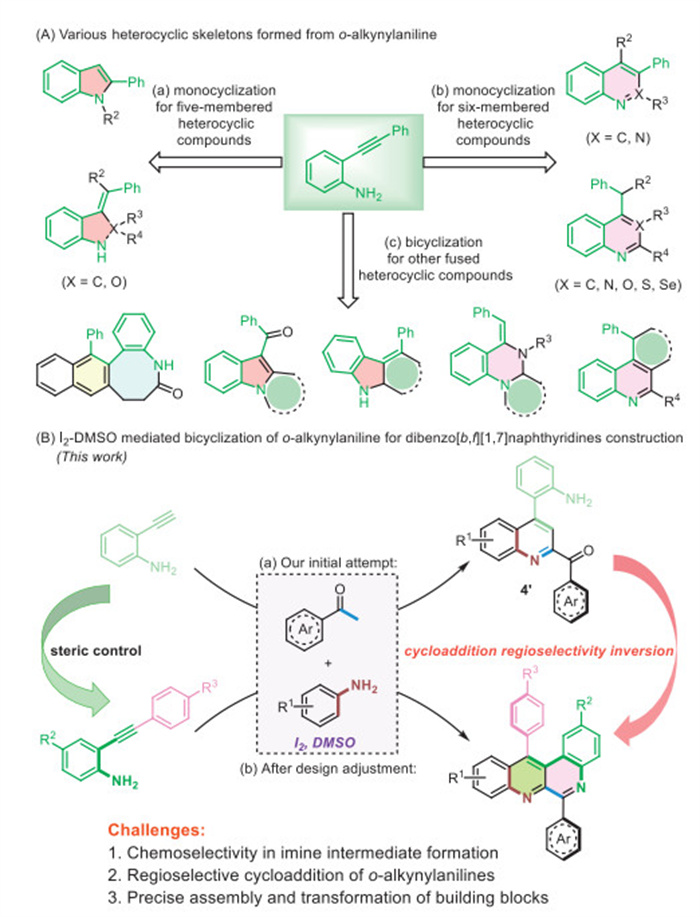
Figure 1.
Background and synopsis of the current work.

I2-DMSO mediated bicyclization of o-alkynylanilines: Chemo- and regioselective construction of fused tetracyclic N-heterocycles
Yong-Xing Tang , Yi-Ran Wu , Li-Sheng Wang , Chun-Yan Wu , Yu-Man Song , You Zhou , An-Xin Wu


o-Alkynylaniline, as a multifunctional building blocks, have drawn widespread attention from chemists, owing to their unique molecular structure and excellent reactivity [1–4]. The coexistence of two active functional groups, amino (-NH2) and alkynyl (-C≡C-), at the ortho-position within the molecule, providing multiple possibilities for heterocyclic skeleton construction. Leveraging the unique reaction characteristics of these compounds, significant research progress has been made to date, facilitating the successful assembly of a broad range of nitrogen-containing heterocyclic derivatives. For example, under the catalysis of transition metals like Pd, Cu, and Au, o-alkynylaniline can undergo intramolecular monocyclization, enabling efficient synthesis of various five-membered heterocyclic derivatives including indoles [5–13] and benzisoxazoles [14–16] (Fig. 1A-a). In intermolecular monocyclization, through formal intermolecular [5 + 1] or [4 + 2] cycloadditions with electrophilic reagents such as aldehydes, ketones, and imines, allow for the construction of diverse six-membered heterocyclic parent nuclei, among them quinolines [17–23], quinolinones [24–27], cinnolines [28–31], benzothiazines [32–35], and quinazolines [36, 37] (Fig. 1A–b). Additionally, they are capable of undergoing bicyclization to form a variety of fused nitrogen-containing heterocycles (Fig. 1A–c) [38–47].
In our previous work, our group successfully constructed disubstituted quinoline scaffolds by utilizing the key C-acyl imine intermediates generated in situ from anilines and aryl methyl ketones or arylacetylenes [48, 49]. Driven by our sustained research interest in heterocycle synthesis within the I2-DMSO system [50–52], we envisioned employing this reactive intermediate to further construct more complex heterocyclic scaffolds. To this end, we attempted to introduce o-ethynylaniline bearing two active functional groups as substrates. Preliminary results showed that the expected tetracyclic product was not obtained; instead, the 2, 4-disubstituted quinoline derivative 4′ was formed (Fig. 1B-a). We therefore further designed and introduced sterically hindered functional groups onto the o-ethynylaniline substrates, aiming to reverse the cycloaddition regioselectivity of the original terminal alkyne through steric balance between the two benzene rings. This would enable the construction of the target product under precise steric control. Fortunately, when commercially available aryl methyl ketones, arylamines, and o-alkynylanilines were used as substrates, dibenzo[b,f][1,7]naphthyridine derivatives were efficiently obtained with excellent chemo- and regioselectivity (Fig. 1B–b). This bicyclization process not only expands the application scope of o-alkynylanilines but also provides a novel method for the synthesis of dibenzonaphthyridine derivatives, which may possess potential application value in medicinal chemistry [53–58].
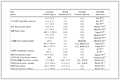
The research began by selecting acetophenone (1a), p-toluidine (2a), and 2-(phenylethynyl)aniline (3a) as model reactants, conducting trials in I2-DMSO system at 100 ℃ (Table 1). Promisingly, the tetracyclic product 4a was successfully isolated with a 54% yield (Table 1, entry 1). Motivated by this initial outcome, various reaction parameters were proceeded to boost the yield. Initially, a range of oxidizing agents were assessed, with DTBP emerging as the most effective choice (Table 1, entries 2–7). Following this, investigations into the iodine equivalent revealed that 1.2 equiv. yielded the best results (Table 1, entries 8–10). Ultimately, raising the reaction temperature to 120 ℃ proved beneficial, increasing the product yield to 71% (Table 1, entries 11–13).
 DownLoad:
CSV
 |
||||
| Entry | I2 (equiv.) | Additives | Temp (℃) | Yield (%)b |
| 1 | 1.6 | - | 100 | 54 |
| 2 | 1.6 | TBHP (65%) | 100 | 41 |
| 3 | 1.6 | DTBP | 100 | 64 |
| 4 | 1.6 | Na2S2O8 | 100 | 58 |
| 5 | 1.6 | MnO2 | 100 | 23 |
| 6 | 1.6 | PhI(OAc)2 | 100 | 37 |
| 7 | 1.6 | NaIO4 | 100 | 18 |
| 8 | 0.8 | DTBP | 100 | 63 |
| 9 | 1.2 | DTBP | 100 | 68 |
| 10 | 2.0 | DTBP | 100 | 60 |
| 11 | 1.2 | DTBP | 80 | 61 |
| 12 | 1.2 | DTBP | 120 | 71 |
| 13 | 1.2 | DTBP | 140 | 67 |
| a Reaction conditions: 1a (0.5 mmol, 1.0 equiv.), 2a (0.5 mmol), 3a (0.5 mmol), I2 (x equiv.), additive (0.5 mmol) and DMSO (5.0 mL) were added to a pressure vessel under indicated temperature for 4 h. b Isolated yield. |
||||
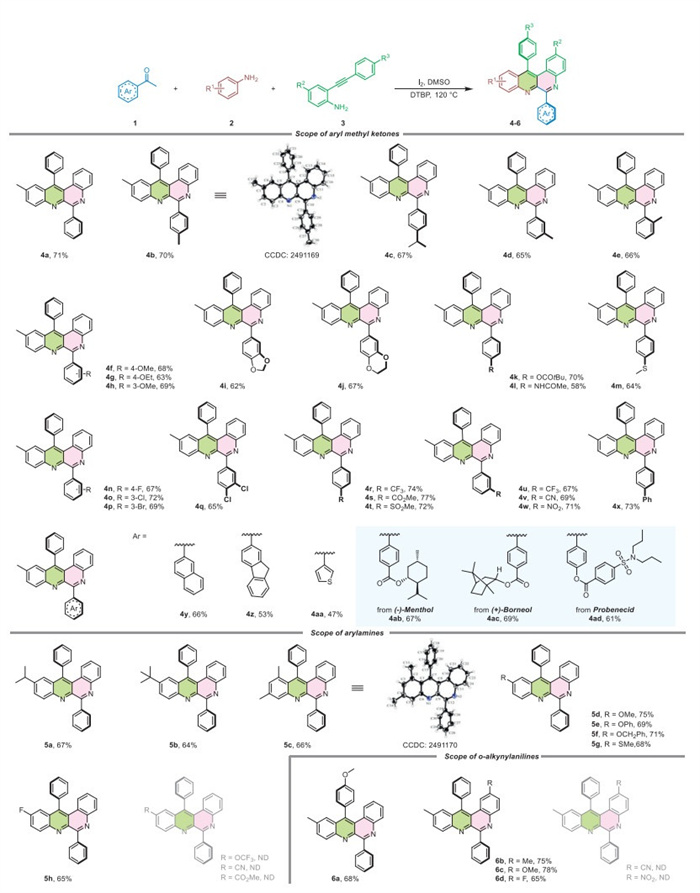
After establishing the optimal reaction conditions, we next evaluated the generality of this bicyclization process (Fig. 2). Gratifyingly, the target dibenzo[b,f][1,7]naphthyridine products were obtained in moderate yields (4a–4m) regardless of whether substituents were positioned at the para, meta, or ortho sites on the benzene ring, including aliphatic groups and electron-donating moieties such as alkoxy, acetamide, and thiomethyl. Additionally, the electronic properties of aromatic ketones had no effect on reaction efficiency. Specifically, substrates carrying electron-withdrawing groups (halogens, esters, sulfonyl, cyano, and nitro groups) consistently furnished target products with 65%–77% yields (4n–4w). Notably, this reaction system exhibited good tolerance toward sterically hindered ketones and heteroaryl ketones (phenyl, naphthyl, fluorenyl, and thienyl), with corresponding products 4x–4aa obtained in moderate yields. Arylmethyl ketones decorated with pharmaceutical molecular fragments, such as menthol, borneol, and probenecid, underwent smooth conversion in this reaction system (4ab–4ad). We then explored the scope of arylamines. Substrates 2 featuring various electron-donating groups on the aromatic ring proved compatible under optimized conditions, yielding target products in 64%–75% yields. Employing 3, 5-dimethyl-substituted arylamine specifically generated the regioselective product 5c. Fluorine-substituted aniline also performed well, affording product 5h in 65% yield. Finally, pre-synthesized o-alkynylanilines substituted with methyl, methoxy, or fluorine groups reacted efficiently, providing the target products 6a–6d with 65%–78% yields. Unfortunately, arylamines or o-alkynylanilines bearing electron-withdrawing substituents were incompatible with this reaction, limiting the generality of this transformation. Furthermore, the molecular structure of 4b and 5c were confirmed by X-ray crystallography (see Supporting information for details).
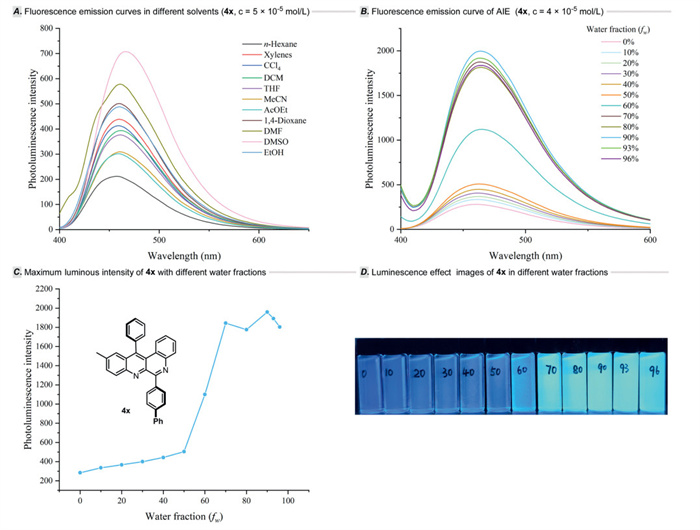
The dibenzo[b,f][1,7]naphthyridine scaffold synthesized herein possesses a π-conjugated tetracyclic framework, emitting bright blue luminescence upon 365 nm UV irradiation. Photophysical characterization of compound 4x (see pages S6 and S7 in Supporting information for details) revealed a distinct solvent dependence of its fluorescence intensity, with the highest emission efficiency observed in DMSO and the lowest in n-hexane. And the emission maximum is concentrated around 460 nm, indicative of a weak polarity-sensitive response for 4x (Fig. 3A) [59, 60]. Further investigations uncovered distinct aggregation-induced emission (AIE) properties: in MeCN/H2O mixed solvent systems, the fluorescence intensity escalates with increasing water fraction (fw). When fw exceeds 60%, molecular aggregation is remarkably enhanced, strongly activating the AIE effect and the fluorescence intensity enhances sharply, reaching a maximum at fw = 90% (Figs. 3B and C). This observation confirms that 4x exhibits typical AIE characteristics, rendering it promising for applications in fluorescent sensing and bioimaging [61–63]. Additionally, Fig. 3D presents the photographs of compound 4x in different fw under 365 nm UV irradiation.
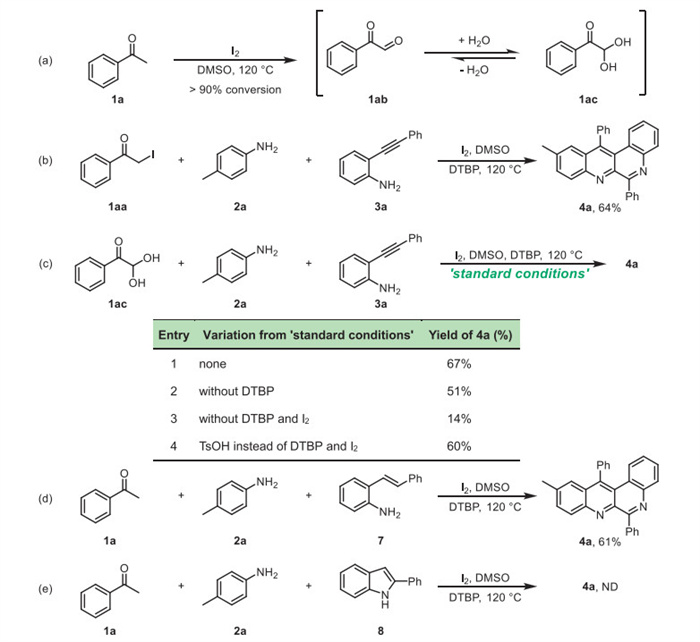
To clarify the inherent mechanism of the bicyclization process, we conducted a set of control experiments (Fig. 4). To begin with, under the I2-DMSO system, acetophenone (1a) underwent transformation to phenylglyoxal (1ab) and its corresponding hydrated species (1ac), with a yield exceeding 90% (Fig. 4a). Next, substituting acetophenone (1a) with α-iodoacetophenone (1aa) or phenylglyoxal monohydrate (1ac), furnished the product 4a in 64% and 67% yield, respectively. In contrast, the target product 4a was obtained at only 14% yield when iodine and DTBP were omitted. Significantly, introducing p-toluenesulfonic increased this yield to 60%. These observations implied that 1aa and 1ac were plausible intermediates in this transformation, and an acidic environment was vital for the subsequent cyclization (Fig. 4, Fig. 4). Furthermore, treating 2-styrylaniline 7 with 1a and 2a under standard conditions, the target product was also obtained successfully in moderate yield (Fig. 4d). Conversely, no product was detected when 2-phenyl-1H-indole 8 was used, demonstrating that the reaction did not proceed through the pathway wherein compound 3a first underwent intramolecular cyclization to generate the intermediate 8, which was subsequently converted to the target product 4a (Fig. 4e).
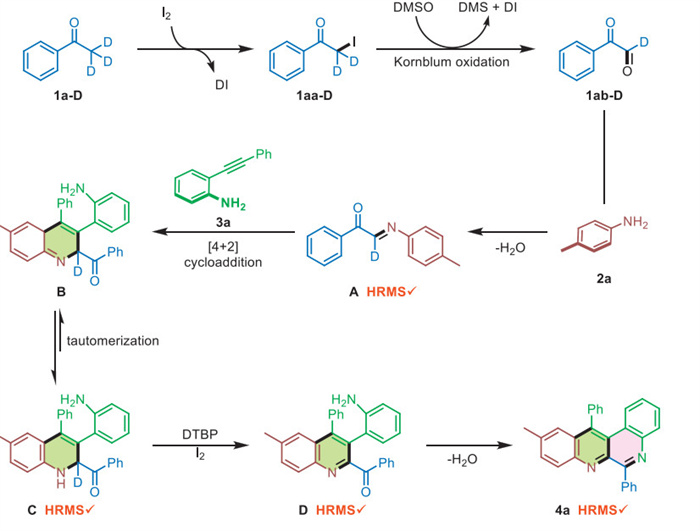
In light of the current findings and relevant literatures [64–68], a reasonable mechanism is put forward in Fig. 5. The bicyclization process initiates with iodine substitution, followed by Kornblum oxidation of the deuterated acetophenone-d3 (1a-D), which generates the phenylglyoxal intermediate-d1 (1ab-D). This intermediate then combines with p-toluidine to generate the C-acylimine intermediate A, with the concomitant release of H2O. Subsequently, the in situ generate intermediate A is captured by 3a and undergoes a regioselective [4 + 2] cycloaddition, yielding the first cyclized intermediate B. After intermediate B undergoes tautomerization to form intermediate C, oxidation proceeds to produce the quinoline intermediate D. Finally, an intramolecular dehydration condensation occurs to complete the second cyclization and afford the target product 4a. Notably, the formation of intermediate A, C, D and the product 4a are all detected by HRMS.
In summary, a sequential annulation reaction mediated by I2-DMSO system has been established for the assembly of dibenzo[b,f][1,7]naphthyridine skeletons, with commercially available starting materials employed. Within this one-pot transformation, N-H/α,β-C(sp)−H trifunctionalization of o-alkynylanilines is realized, accompanied by the generation of multiple new bonds and rings. Additionally, this bicyclization process exhibits favorable chemo- and regioselectivity, which not only broadens the application range of o-alkynylanilines but also delivers an efficient route to access dibenzonaphthyridine derivatives. Further investigations focused on the synthesis of novel fused heterocyclic frameworks are currently underway in our laboratory.
Yong-Xing Tang: Writing – review & editing, Writing – original draft, Visualization, Validation, Project administration, Investigation, Formal analysis, Data curation, Conceptualization. Yi-Ran Wu: Writing – review & editing, Data curation. Li-Sheng Wang: Writing – review & editing, Formal analysis, Data curation. Chun-Yan Wu: Writing – review & editing, Formal analysis, Data curation. Yu-Man Song: Writing – review & editing, Formal analysis, Data curation. You Zhou: Writing – review & editing, Supervision, Project administration, Investigation, Formal analysis, Data curation, Conceptualization. An-Xin Wu: Writing – review & editing, Visualization, Validation, Supervision, Software, Resources, Project administration, Methodology, Investigation, Funding acquisition, Data curation, Conceptualization.
The authors declare that they have no known competing financial interests or personal relationships that could have appeared to influence the work reported in this paper.
This work was supported by the National Natural Science Foundation of China (Nos. 22171098, 22571111). This work was also supported by Chengdu Guibao Science & Technology Co., Ltd. and the 111 Project B17019.
Supplementary material associated with this article can be found, in the online version, at doi:
K. Schofield, T. Swain, J. Chem. Soc. 1949 (1949) 2393–2399.
J.E. Perea-Buceta, T. Wirtanen, O. Laukkanen, et al., Angew. Chem. Int. Ed. 52 (2013) 11835–11839. doi: 10.1002/anie.201305579
S. Karmakar, P. Das, D. Ray, et al., Org. Lett. 18 (2016) 5200–5203. doi: 10.1021/acs.orglett.6b02321
X. Wang, J. Li, Y. Huang, et al., J. Org. Chem. 83 (2018) 10453–10464. doi: 10.1021/acs.joc.8b01494
A.L. Rodriguez, C. Koradin, W. Dohle, et al., Angew. Chem. Int. Ed. 39 (2000) 2488–2490. doi: 10.1002/1521-3773(20000717)39:14<2488::AID-ANIE2488>3.0.CO;2-E
Y. Zhang, J.P. Donahue, C.J. Li, Org. Lett. 9 (2007) 627–630. doi: 10.1021/ol062918m
V. Reddy, R. Vijaya Anand, Org. Lett. 17 (2015) 3390–3393. doi: 10.1021/acs.orglett.5b01030
J. Li, C. Li, S. Yang, Y. An, et al., J. Org. Chem. 81 (2016) 2875–2887. doi: 10.1021/acs.joc.6b00162
S.W. Tao, J.Y. Zhou, R.Q. Liu, et al., J. Org. Chem. 84 (2019) 8121–8130. doi: 10.1021/acs.joc.9b00990
D. Wang, S. Wang, W. Hao, et al., Chin. J. Chem. 39 (2021) 106–114. doi: 10.1002/cjoc.202000304
K. Xie, X. Nie, P. Zhou, et al., Org. Lett. 27 (2025) 4806–4810. doi: 10.1021/acs.orglett.5c01381
S. Tang, Q.F. Yu, P. Peng, et al., Org. Lett. 9 (2007) 3413–3416. doi: 10.1021/ol701450n
S. Zhao, Y. He, F. Gao, et al., Chem. Commun. 59 (2023) 3099–3102. doi: 10.1039/d2cc06281j
A. Arcadi, M. Chiarini, L.D. Vecchio, et al., Chem. Commun. 52 (2016) 1458–1461. doi: 10.1039/C5CC08543H
A. Arcadi, M. Chiarini, L. Del Vecchio, et al., Eur. J. Org. Chem. 2017 (2017) 2214–2222. doi: 10.1002/ejoc.201601600
S. Chonradeenitchakul, K. Punjajom, K. Koekon, et al., Asian J. Org. Chem. 14 (2025) e202500366. doi: 10.1002/ajoc.202500366
B. Liu, H. Gao, Y. Yu, et al., J. Org. Chem. 78 (2013) 10319–10328. doi: 10.1021/jo401707j
Y. Wang, Y. Zhou, X. Ma, et al., Org. Lett. 23 (2021) 5599–5604. doi: 10.1021/acs.orglett.1c01484
D. Lu, S. Chen, N. Tang, et al., Org. Lett. 25 (2023) 676–681. doi: 10.1021/acs.orglett.2c04314
C. Peng, Y. Wang, L. Liu, et al., Eur. J. Org. Chem. 2010 (2010) 818–822. doi: 10.1002/ejoc.200901257
X.F. Xia, L.L. Zhang, X.R. Song, et al., Org. Lett. 14 (2012) 2480–2483. doi: 10.1021/ol300896h
G.K. Dhandabani, C.L. Shih, J.J. Wang, Org. Lett. 22 (2020) 1955–1960. doi: 10.1021/acs.orglett.0c00304
R. Jia, B. Li, X. Zhang, et al., Org. Lett. 22 (2020) 6810–6815. doi: 10.1021/acs.orglett.0c02323
T. Ishida, S. Kikuchi, T. Yamada, Org. Lett. 15 (2013) 3710–3713. doi: 10.1021/ol401571r
C.X. Guo, W.Z. Zhang, S. Liu, et al., Catal. Sci. Technol. 4 (2014) 1570–1577. doi: 10.1039/c3cy00858d
C.L. Vonnegut, A.M. Shonkwiler, M.M. Khalifa, et al., Angew. Chem. Int. Ed. 54 (2015) 13318–13322. doi: 10.1002/anie.201507696
B. Wang, S. Sun, J.T. Yu, et al., Org. Lett. 19 (2017) 4319–4322. doi: 10.1021/acs.orglett.7b01989
S.F. Vasilevsky, E.V. Tretyakov, H.D. Verkruijsse, Synth. Commun. 24 (1994) 1733–1736. doi: 10.1080/00397919408010177
G.C. Senadi, B.S. Gore, W.P. Hu, et al., Org. Lett. 18 (2016) 2890–2893. doi: 10.1021/acs.orglett.6b01207
X. Fang, J. Cao, W. Ding, et al., Org. Lett. 23 (2021) 1228–1233. doi: 10.1021/acs.orglett.0c04186
M. Kumar, A. Goswami, Org. Biomol. Chem. 22 (2024) 2608–2619. doi: 10.1039/d4ob00058g
Q. Ding, J. Wu, J. Comb. Chem. 10 (2008) 541–545. doi: 10.1021/cc800043r
K.M. Saini, R.K. Saunthwal, S. Kumar, et al., Org. Biomol. Chem. 17 (2019) 2657–2662. doi: 10.1039/c9ob00128j
H. Sashida, C. Pan, M. Kaname, et al., Synthesis 2010 (2010) 3091–3096. doi: 10.1055/s-0030-1258171
Q. Wang, L. Yao, J.S. Wang, et al., J. Org. Chem. 87 (2022) 3874–3882. doi: 10.1021/acs.joc.2c00006
X. Wang, D. He, Y. Huang, et al., J. Org. Chem. 83 (2018) 5458–5466. doi: 10.1021/acs.joc.8b00378
S. Chen, Y.S. Ji, Y. Choi, et al., J. Org. Chem. 89 (2024) 6428–6443. doi: 10.1021/acs.joc.4c00458
X. Gong, M. Chen, L. Yao, et al., Chem. Asian J. 11 (2016) 1613–1617. doi: 10.1002/asia.201600211
R. Baidya, P. Das, P. Pratihar, et al., Chem. Commun. 59 (2023) 7978–7981. doi: 10.1039/d3cc01429k
P.J. Arandhara, A. Chutia, S. Biswas, et al., J. Org. Chem. 89 (2024) 12128–12142. doi: 10.1021/acs.joc.4c01038
Q. Gao, P. Zhou, F. Liu, et al., Chem. Commun. 51 (2015) 9519–9522. doi: 10.1039/C5CC02754C
M. Zhang, Y. Zheng, Y. Jin, et al., Chem. Commun. 60 (2024) 2950–2953. doi: 10.1039/D3CC05387C
R.C. Das, P. Gupta, S. Chakraborty, et al., Angew. Chem. Int. Ed. 64 (2025) e202416519. doi: 10.1002/anie.202416519
M.L. Yang, L. Zhao, H.R. Chen, et al., J. Org. Chem. 88 (2023) 1898–1906. doi: 10.1021/acs.joc.2c02621
A. Fayol, J. Zhu, Angew. Chem. Int. Ed. 41 (2002) 3633–3635. doi: 10.1002/1521-3773(20021004)41:19<3633::AID-ANIE3633>3.0.CO;2-T
X. Liu, R. Mao, C. Ma, Org. Lett. 19 (2017) 6704–6707. doi: 10.1021/acs.orglett.7b03427
R. Jia, B. Li, R. Liang, et al., Org. Lett. 21 (2019) 4996–5001. doi: 10.1021/acs.orglett.9b01534
X. Geng, X. Wu, P. Zhao, et al., Org. Lett. 19 (2017) 4179–4182. doi: 10.1021/acs.orglett.7b01686
X.X. Yu, P. Zhao, Y. Zhou, et al., J. Org. Chem. 86 (2021) 8381–8388. doi: 10.1021/acs.joc.1c00793
Y.X. Tang, Y. Zhou, H.X. Wu, et al., Chem. Commun. 60 (2024) 7180–7183. doi: 10.1039/d4cc02105c
Y.X. Tang, S.Y. Zhuang, J.Y. Liu, et al., Org. Chem. Front. 10 (2023) 4080–4085. doi: 10.1039/d3qo00724c
Y.X. Tang, A.X. Wu, Tetrahedron 166 (2024) 134210. doi: 10.1016/j.tet.2024.134210
Q. Li, Y. Zhu, Y. Wang, et al., Chin. Chem. Lett. 35 (2024) 109494. doi: 10.1016/j.cclet.2024.109494
M.F. Li, S.Q. Shi, T. Xu, et al., Chin. Chem. Lett. 34 (2023) 107751. doi: 10.1016/j.cclet.2022.107751
X. Mi, C. Wang, J. Zhang, et al., Chin. Chem. Lett. 36 (2025) 111485. doi: 10.1016/j.cclet.2025.111485
Y. Liu, H. Wang, Chin. J. Org. Chem. 44 (2024) 2384–2386. doi: 10.6023/cjoc202400036
N.P. Buu-Hoï, P. Jacquignon, M. Mangane, J. Chem. Soc. 10 (1971) 1991–1993.
S. Sultan, V. Gupta, B.A. Shah, ChemPhotoChem 1 (2017) 120–124. doi: 10.1002/cptc.201700028
A. Bahadur, S. Iqbal, R. Ujan, et al., Luminescence 36 (2021) 1189–1197. doi: 10.1002/bio.4044
S.G. Lei, Y. Zhou, L.S. Wang, et al., Org. Chem. Front. 10 (2023) 4843–4847. doi: 10.1039/d3qo01149f
Z. Zhao, H. Zhang, B.Z. Tang, et al., Angew. Chem. Int. Ed. 59 (2020) 9888–9907. doi: 10.1002/anie.201916729
D. Yan, Q. Wu, B.Z. Tang, et al., Angew. Chem. Int. Ed. 60 (2021) 15724–15742. doi: 10.1002/anie.202006191
Y. Zhou, L.S. Wang, S.G. Lei, et al., Chin. Chem. Lett. 36 (2025) 109799. doi: 10.1016/j.cclet.2024.109799
X. Pan, Y. Luo, J. Wu, Chem. Commun. 47 (2011) 8967–8969. doi: 10.1039/c1cc12747k
Q. Cai, M.C. Liu, B.M. Mao, et al., Chin. Chem. Lett. 26 (2015) 881–884. doi: 10.1016/j.cclet.2014.12.016
X. Geng, C. Wang, P. Zhao, et al., Org. Lett. 21 (2019) 4939–4943. doi: 10.1021/acs.orglett.9b01277
D.S. Yang, X.L. Chen, A.X. Wu, Org. Chem. Front. 11 (2024) 2665–2692. doi: 10.1039/d4qo00396a
Y. Zhou, L.S. Wang, Z.H. Li, et al., Org. Lett. 27 (2025) 11848–11853. doi: 10.1021/acs.orglett.5c03710

Figure 2 Reaction scope for the synthesis of dibenzo[b,f][1,7]naphthyridine. Reaction conditions: 1 (0.5 mmol), 2 (0.5 mmol), 3 (0.5 mmol), I2 (0.6 mmol), DTBP (0.5 mmol) in DMSO (5.0 mL) at 120 ℃ for 4 h. Isolated yield.

Figure 3 Photophysical properties of 4x. (A) Photoluminescence (PL) spectra of 4x in different solvents; c = 5.0 × 10⁻⁵ mol/L. (B) PL spectra of 4x in MeCN/H2O mixtures with different water fractions (fw); c = 4.0 × 10⁻⁵ mol/L. (C) Plots of the maximum PL intensity change with different fw. (D) Photos of 4x in different fw under UV irradiation (λ = 365 nm).
Table 1. Optimization of the reaction conditions.a
|
||||
| Entry | I2 (equiv.) | Additives | Temp (℃) | Yield (%)b |
| 1 | 1.6 | - | 100 | 54 |
| 2 | 1.6 | TBHP (65%) | 100 | 41 |
| 3 | 1.6 | DTBP | 100 | 64 |
| 4 | 1.6 | Na2S2O8 | 100 | 58 |
| 5 | 1.6 | MnO2 | 100 | 23 |
| 6 | 1.6 | PhI(OAc)2 | 100 | 37 |
| 7 | 1.6 | NaIO4 | 100 | 18 |
| 8 | 0.8 | DTBP | 100 | 63 |
| 9 | 1.2 | DTBP | 100 | 68 |
| 10 | 2.0 | DTBP | 100 | 60 |
| 11 | 1.2 | DTBP | 80 | 61 |
| 12 | 1.2 | DTBP | 120 | 71 |
| 13 | 1.2 | DTBP | 140 | 67 |
| a Reaction conditions: 1a (0.5 mmol, 1.0 equiv.), 2a (0.5 mmol), 3a (0.5 mmol), I2 (x equiv.), additive (0.5 mmol) and DMSO (5.0 mL) were added to a pressure vessel under indicated temperature for 4 h. b Isolated yield. |
||||
 下载: 导出CSV

 扫一扫看文章


扫一扫关注我们


 下载: