

Figure 1.
Several biologically active compounds containing 6-H-phenanthridine scaffold


Phenanthridines and their derivatives are a class of important heterocyclic compounds that occur frequently in natural products as well as synthetic molecules, exhibiting a broad spectrum of biological activities, such as antimalarial, antitumor, cytotoxicity, antimycobacterial, etc.[1, 2] Besides, they have been found wide application in materials science due to their unique optoelectronic properties.[3] Among the phenanthridine family, 6H-phenanthridines have received special attention due to their unique biological properties and pharmaceutical applications.[2] Several representative and biologically active compounds containing 6H-phenanthridine scaffold are presented in Figure 1. To date, numerous methods have been established for the construction of 6-substituted phenanthridines[4~8] involving the classic Pictet-Hubert condensation, [5] metal-catalyzed cross-coupling/cyclization, [6] radical-mediated cyclization of ortho-substituted biphenyls, [4, 7] and others.[8] In contrast, efficient and convenient methods for the preparation of 6H-phenanthridines have been relatively underexplored.[9] In addition, most of the existing methods for the synthesis of 6H-phenanthridines have one or more limitations with respect to harsh reaction conditions, [9a~9e] expensive catalysts, [9b~9d, 9f~9h] multisteps, [9i~9k] narrow scope of substrates, [9i, 9k~9n] and the starting materials being not readily available.[9o] Therefore, it is still highly desirable to develop novel and efficient methods for the construction of 6H-phenanthridines from readily available starting materials by using inexpensive catalysts under mild conditions.
On the other hand, in the past decades, the nucleometallation-triggered difunctionalization of carbon-carbon multiple bonds has received great attention and became one of the most powerful tools for the construction of useful molecules including cyclic compounds.[10] In this field, we independently disclosed that the combination of the copper powder and Selectfluor [1-(chloromethyl)-4-fluoro-1, 4- diazoniabicyclo[2.2.2]octane bis(tetrafluoroborate), F-TEDA-BF4] in the presence of water enabled in situ generation of XCuOH species (X=F or BF4) which is very active to undergo oxycupration and successive difunctionalization of carbon-carbon multiple bonds (Scheme 1a).[11a~11e] On the basis of the above-mentioned findings, it was further envisioned that the in situ generated XCuOH might also readily undergo oxycupration towards C=N bond and thus induce successive difunctionalization of C=N bond.[11f] To the best of our knowledge, the nucleometallation-triggered difunctionalizations of C=N bond have never been reported. Herein the facile synthesis of 6H-phenanthridines involving the copper(0)/Selectfluor system-catalyzed tandem annulation/aromatization of o-aryl benzenesulfonylimides is described by using the oxycupration of C=N bond as a key step (Scheme 1b).

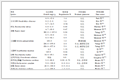
Initially, o-phenyl benzenesulfonamide 1a as the model substrate for the optimization of reaction conditions was selected (Table 1). When 1a was allowed to react with Cu(0) powder (10 mol%) and Selectfluor (2.0 equiv.) in newly purchased acetonitrile at 50 ℃ for 24 h, phenanthridine 2a was indeed formed in 63% yield (Entry 1, Table 1). When anhydrous MeCN was used, the reaction only gave 15% yield of 2a, suggesting that the residual water in solvent may play some role in the reaction (Entry 2, Table).[12] The yield of 2a could be further improved to 84% by using MeCN/H2O (V:V=500:1) solvent system (Entry 3, Table 1). It was found that either increasing or reducing the amount of water in the solvent system had no positive effect on the yield of 2a (Entries 4, 5, Table 1). A series of other solvent systems including toluene, acetone, 1, 4-dioxane, DMF, DMSO, 1, 2-dichloroethane, and methanol were investigated for the reaction, and it was found that MeCN/H2O (V:V=500:1) solvent system was the best choice (Entry 6 vs 3, Table 1). The catalytic activity of several copper salts (Cu(I) and Cu(II)) on the reaction was also investigated, and their catalytic performances were proven to be much inferior to that of Cu(0) powder (Entries 7~12 vs 3, Table 1). Control experiments indicated that both Cu(0) and Selectfluor were indispensable for the reaction (Entries 13, 14, Table 1). The screening experiments of oxidants showed that Selectfluor exhibited unique effectiveness on the formation of 2a (Entries 15, 16 vs 3, Table 1). Increasing or lowering the reaction temperature only led to a reduced yield of 2a (Entries 18, 19 vs 3, Table 1). Note that the use of 2 equiv. of Selectfluor is enough for getting satisfactory yield of 2a while a deficient use of Selectfluor (1.0 equiv.) resulted in a lower yield of 2a (Entry 20 vs 3, Table 1).
 下载:
导出CSV
 |
|||||
| Entry | Catalyst | Oxidant | Solvent | Temp./℃ | Yieldb/% |
| 1 | Cu(0) | Selectfluor | MeCNc | 50 | 63 |
| 2 | Cu(0) | Selectfluor | Anhydrous MeCN | 50 | 15 |
| 3 | Cu(0) | Selectfluor | MeCN/H2O (V:V=500:1) | 50 | 84 (80)d |
| 4 | Cu(0) | Selectfluor | MeCN/H2O (V:V=800:1) | 50 | 82 |
| 5 | Cu(0) | Selectfluor | MeCN/H2O (V:V=250:1) | 50 | 72 |
| 6 | Cu(0) | Selectfluor | Solvente/H2O (V:V=500:1) | 50 | 0 |
| 7 | CuI | Selectfluor | MeCN/H2O (V:V=500:1) | 50 | 55 |
| 8 | CuCl | Selectfluor | MeCN/H2O (V:V=500:1) | 50 | 63 |
| 9 | CuBr | Selectfluor | MeCN/H2O (V:V=500:1) | 50 | 77 |
| 10 | Cu2O | Selectfluor | MeCN/H2O (V:V=500:1) | 50 | 72 |
| 11 | CuCl2 | Selectfluor | MeCN/H2O (V:V=500:1) | 50 | 47 |
| 12 | Cu(OAc)2 | Selectfluor | MeCN/H2O (V:V=500:1) | 50 | 48 |
| 13 | — | Selectfluor | MeCN/H2O (V:V=500:1) | 50 | 0 |
| 14 | Cu(0) | — | MeCN/H2O (V:V=500:1) | 50 | 0 |
| 15 | Cu(0) | NFSIf | MeCN/H2O (V:V=500:1) | 50 | 0 |
| 16 | Cu(0) | Other oxidantg | MeCN/H2O (V:V=500:1) | 50 | 0 |
| 17 | Cu(0) | Selectfluor | MeCN/H2O (V:V=500:1) | 25 | 69 |
| 18 | Cu(0) | Selectfluor | MeCN/H2O (V:V=500:1) | 80 | 80 |
| 19 | Cu(0)h | Selectfluor | MeCN/H2O (V:V=500:1) | 50 | 76 |
| 20 | Cu(0) | Selectfluor | MeCN/H2O (V:V=500:1) | 50 | 46i, 82j |
| a Reaction conditions: 1a (0.3 mmol), Cu(0) powder (10 mol% based on 1a), oxidant (2.0 equiv.), solvent (3.5 mL), 50 ℃ under N2 atmosphere for 24 h unless otherwise noted. b GC yield by using dodecane as an internal standard. c Newly purchased CH3CN was used without dehydration. d Isolated yield. e Tested solvents include toluene, acetone, 1, 4-dioxane, DMF, DMSO, 1, 2-dichloroethane and methanol. f NFSI: N-fluorobenzenesulfonimide. g Other tested oxidants include PhI(OAc)2, DDQ and K2S2O8. h The amount of Cu(0) is 5 mol% based on 1a. i The amount of Selectfluor is 1.0 equiv. j The amount of Selectfluor is 3.0 equiv. | |||||
With the optimized reaction conditions, we then set out to investigate the reaction scope (Table 2). Firstly, the effect of functional groups in the aryl ring A (R1) on the reaction was studied. As shown in Table 2, both electron-donating and electron-withdrawing substituents in the aryl ring A of 1 were compatible with the reaction conditions, among which alkyl, halo (F, Cl, Br), and trifluoromethoxy groups were included. It seemed that the electronic nature of R1 had no obvious effect on the reaction outcome in terms of the yield. In most cases, the reaction could give moderate to good yields of desired products (60%~80%, 2a~2j, Table 2). Substrate 1j bearing a meta-chloro group in ring A provided a single product (2j, 66%) with exclusive regio-selectivity at the more steric hindrance position which was in accordance with previous report.[8h] Next, the effect of substituents (R2) in aryl ring B of 1 on the reaction was further investigated. A range of substrates bearing electron-rich or electron-deficient substituents in ring B were workable for the reaction (1k~1u, Table 2). Similarly, the electronic properties of R2 had no obvious effect on the reaction performance and the yield of products (2k~2u, Table 2). Unfortunately, 2-phenylnico- tinaldehyde derived sulfonylimide 1w failed to give the desired product while the starting material was almost recovered (2w, Table 2).
下载:
导出CSV

|
To gain insight into the mechanism of the Cu(0)/Select- fluor system-catalyzed annulation/aromatization of o-aryl benzenesulfonylimides, several mechanistic experiments were made (Scheme 2). Firstly, the measurement of the intermolecular KIE between 1a and 1a-d5 on the basis of the competitive dehydrogenative cross-coupling was carried out. The intermolecular kH/kD of 1a to 1a-d5 was determined to be 1.85, indicating that the cleavage of the C—H bond might be involved in the rate-determining step (Scheme 2). When 1a was allowed to react under the standard reaction conditions except using the preparative HOCuX (X=F or BF4)[11a, 11f] as a catalyst, the reaction could also proceed smoothly and afford 2a in 80% yield (Scheme 2). This result suggests that HOCuX (X=F or BF4) might play a key role in the catalytic cycle.
Based on the above experiments and previous literature, [11, 13, 14] a possible mechanism for the Cu(0)/Selectfluor system-catalyzed annulation/aromatization of 1a is proposed in Scheme 3. First, the redox reaction between Cu(0) and Selectfluor may produce a copper species FCuBF4 (5) and release base 6.[11a] With the aid of 6, 5 may be transferred into copper species XCuOH (X=F or BF4, 7) in the presence of water.[11] Then, an oxycupration of 7 to the C—N double bond in 1a followed by dehydrogenative cross-coupling[11e, 13] would deliver intermediate 10. Finally, 10 might undergo Julia-type olefination[14] to give the aromatization product 2a.
In summary, a facile and efficient method for the preparation of 6H-phenanthridines involving Cu(0)/Select-fluor system-catalyzed tandem oxycupration/C—H amination/ aromatization of o-aryl benzenesul-fonylimides was described. The present protocol for the synthesis of 6H-phe- nanthridines has several advantages including mild reaction conditions (50 ℃), the use of inexpensive copper catalyst, and easy availability of the starting materials.
Unless otherwise stated, all reagents were purchased from commercial suppliers and used without purifications. Melting points are uncorrected. 1H NMR and 13C NMR spectra were recorded on a Bruker ADVANCE III at 25 ℃ in CDCl3 at 500 (or 600) MHz and 125 (or 150) MHz, respectively. GC-MS experiments were performed with an Agilent 6890N GC system equipped with a 5973N mass-selective detector. High resolution mass spectra (HRMS) were obtained on a water GCT premier TOF MS with EI or ESI source. CH3CN is dehydrated by CaH2 before preparation of the combined solvent CH3CN/H2O (V:V=500:1).
All o-aryl benzenesulfonylimides (1) were synthesized from the corresponding o-aryl benzaldehydes and benzenesulfonamide according to the literature procedure.[15] The o-aryl benzaldehydes were synthesized by the standard Suzuki-Miyaura cross-coupling reaction between an ortho-bromobenzaldehyde derivative and an arylboronic acid.[16]
1 (0.3 mmol), Cu(0) powder (1.92 mg, 10 mol%), Selectfluor (212.6 mg, 0.6 mmol, 2 equiv.), and CH3CN/H2O (V:V=500:1) (3.5 mL) were added to a 15 mL flask. Then the reaction mixture was stirred at 50 ℃ for 24 h under N2 atmosphere. Upon completion, the resulting mixture was diluted with CH2Cl2 (10 mL) and filtered through Celite. After evaporation of the solvent under vacuum, the residue was purified by column chromatography on silica gel (100~200 mesh) using petroleum ether-EtOAc (V:V=10:1) as eluent to give pure 2.
Phenanthridine (2a): White solid (43.0 mg, 80%), m.p. 109~111 ℃ (lit.[17] 107~108 ℃); 1H NMR (CDCl3, 500 MHz) δ: 9.27 (s, 1H), 8.53 (t, J=8.5 Hz, 2H), 8.21 (d, J=8.5 Hz, 1H), 8.00 (d, J=7.5 Hz, 1H), 7.82~7.79 (m, 1H), 7.75~7.72 (m, 1H), 7.67~7.64 (m, 2H); 13C NMR (CDCl3, 125 MHz) δ: 153.4, 144.4, 132.4, 130.9, 130.0, 128.61, 128.57, 127.4, 127.0, 126.3, 124.0, 122.1, 121.7.
3-Methylphenanthridine (2b): Yellow solid (34.8 mg, 60%), m.p. 80~81 ℃ (lit.[18] 78~79 ℃); 1H NMR (CDCl3, 500 MHz) δ: 9.27 (s, 1H), 8.56 (d, J=8.0 Hz, 1H), 8.46 (d, J=8.5 Hz, 1H), 8.03 (d, J=8.0 Hz, 1H), 8.00 (s, 1H), 7.86~7.82 (m, 1H), 7.69~7.66 (m, 1H), 7.52 (dd, J=8.5, 1.5 Hz, 1H), 2.61 (s, 3H); 13C NMR (CDCl3, 125 MHz) δ: 153.5, 144.5, 138.9, 132.6, 131.0, 130.7, 129.6, 128.8, 128.7, 127.0, 126.1, 122.0, 121.7, 21.5.
3-Isopropylphenanthridine (2c): Yellow liquid (42.5 mg, 64%); 1H NMR (CDCl3, 500 MHz) δ: 9.27 (s, 1H), 8.55 (d, J=8.5Hz, 1H), 8.48 (d, J=8.5 Hz, 1H), 8.07 (d, J=1.5Hz, 1H), 8.01 (d, J=8.0 Hz, 1H), 7.83~7.80 (m, 1H), 7.66 (t, J=7.5 Hz, 1H), 7.58 (dd, J=8.0, 1.5 Hz, 1H), 3.22~3.14 (m, 1H), 1.41 (d, J=6.5 Hz, 6H); 13C NMR (CDCl3, 125 MHz) δ: 153.4, 149.7, 144.7, 132.6, 130.9, 128.7, 127.0, 126.9, 126.5, 126.1, 122.1, 121.7, 34.1, 23.9; HRMS (EI) calcd for C16H15N 221.1204, found 221.1199.
3-(tert-Butyl)phenanthridine (2d): Yellow liquid (45.2 mg, 64%); 1H NMR (CDCl3, 500 MHz) δ: 9.27 (s, 1H), 8.55 (d, J=8.5 Hz, 1H), 8.48 (d, J=8.5 Hz, 1H), 8.22 (d, J=2.0 Hz, 1H), 8.00 (d, J=8.0 Hz, 1H), 7.83~7.80 (m, 1H), 7.76 (d, J=8.5, 2.0 Hz, 1H), 7.67~7.64 (m, 1H), 1.49 (s, 9H); 13C NMR (CDCl3, 125 MHz) δ: 153.3, 152.0, 144.4, 132.4, 130.8, 128.6, 127.7, 126.9, 126.1, 126.0, 125.3, 121.8, 121.6, 34.9, 31.3; HRMS (EI) calcd for C17H17N 235.1361, found 235.1367.
3-Phenylphenanthridine (2e): White solid (57.4 mg, 75%); m.p. 151~153 ℃; 1H NMR(CDCl3, 500 MHz) δ: 9.33 (s, 1H), 8.63 (dd, J=8.5, 4.5 Hz, 2H), 8.46 (d, J=1.5 Hz, 1H), 8.07 (d, J=7.5 Hz, 1H), 7.96 (dd, J=8.5, 1.5 Hz, 1H), 7.90~9.87 (m, 1H), 7.82 (d, J=7.5 Hz, 2H), 7.73 (t, J=7.5Hz, 1H), 7.54 (t, J=7.5 Hz, 2H), 7.44 (t, J=7.0 Hz, 1H); 13C NMR (CDCl3, 125 MHz) δ: 154.0, 144.9, 141.4, 140.2, 132.4, 131.1, 129.0, 128.8, 128.0, 127.8, 127.5, 127.4, 126.4, 126.2, 123.1, 122.8, 121.9; HRMS (EI) calcd or C19H13N 255.1048, found 255.1043.
3-Fluorophenanthridine (2f): White solid (37.3 mg, 63%); m.p. 109~111 ℃; 1H NMR (CDCl3, 500 MHz) δ: 9.28 (s, 1H), 8.54~8.50 (m, 2H), 8.04 (d, J=8.0 Hz, 1H), 7.87~7.83 (m, 2H), 7.72~7.68 (m, 1H), 7.45~7.41 (m, 1H); 13C NMR (CDCl3, 125 MHz) δ: 162.6 (d, J=247.5 Hz), 154.7, 145, 7 (d, J=11.3 Hz), 132.3, 131.4, 128.9, 127.3, 125.9, 124.1 (d, J=8.8 Hz), 121.6, 120.8, 116.1, (d, J=23.8 Hz), 114.6 (d, J=21.3 Hz); HRMS (EI) calcd for C13H8FN 197.0641, found 197.0645.
3-Chlorophenanthridine (2g): White solid (39.7 mg, 62%); m.p. 106.8~108.2 ℃; 1H NMR (CDCl3, 500 MHz) δ: 9.21 (s, 1H), 8.43 (d, J=8.5 Hz, 1H), 8.37 (d, J=9.0 Hz, 1H), 8.12 (d, J=1.5 Hz, 1H), 7.98 (d, J=7.5 Hz, 1H), 7.82 (t, J=7.0 Hz, 1H), 7.68 (t, J=7.5 Hz, 1H), 7.56 (dd, J=9.0, 2.0 Hz, 1H); 13C NMR (CDCl3, 125 MHz) δ: 154.5, 144.9, 134.2, 131.9, 131.3, 129.2, 128.8, 127.7, 127.5, 126.1, 123.4, 122.4, 121.6; HRMS (EI) calcd for C13H8ClN 213.0345, found 213.0340.
3-Bromophenanthridine (2h): White solid (49.6 mg, 64%); m.p. 129~131 ℃ (lit.[19] 110~112 ℃); 1H NMR (CDCl3, 500 MHz) δ: 9.27 (s, 1H), 8.54 (d, J=8.0 Hz, 1H), 8.40 (d, J=8.5 Hz, 1H), 8.34 (d, J=2.0 Hz, 1H), 8.05 (d, J=8.0 Hz, 1H), 7.89~7.86 (m, 1H), 7.77~7.72 (m, 2H); 13C NMR (CDCl3, 125 MHz) δ: 154.6, 145.4, 132.6, 132.1, 131.4, 130.3, 128.9, 127.9, 126.3, 123.7, 122.9, 122.4, 121.7.
3-(Trifluoromethoxy)phenanthridine (2i): White solid (50.5 mg, 64%); m.p. 87~89 ℃; 1H NMR (CDCl3, 500 MHz) δ: 9.25 (s, 1H), 8.60 (dd, J=12.0, 9.0 Hz, 2H), 8.10 (d, J=8.0 Hz, 1H), 8.06 (s, 1H), 7.94~7.90 (m, 1H), 7.79~7.75 (m, 1H), 7.57 (m, 1H); 13C NMR (CDCl3, 125 MHz) δ: 155.0, 149.2, 145.3, 132.1, 131.6, 129.0 128.0, 126.4, 124.1, 122.7, 121.9, 120.9, 120.7 (q, J=256.7 Hz), 120.4; HRMS (EI) calcd for C14H8F3NO 263.0558, found 263.0554.
4-Chlorophenanthridine (2j): White solid (42.3 mg, 66%); m.p. 100~102 ℃ (lit.[20] 98~102 ℃); 1H NMR (CDCl3, 500 MHz) δ: 9.25 (s, 1H), 8.50 (dd, J=5.5, 3.0 Hz, 2H), 8.11 (d, J=8.5 Hz, 1H), 8.05 (d, J=8.0 Hz, 1H), 7.89~7.86 (m, 1H), 7.75 (t, J=7.5 Hz, 1H), 7.68 (dd, J=9.0, 2.5 Hz, 1H); 13C NMR (CDCl3, 125 MHz) δ: 153.8, 142.9, 133.1, 131.62, 131.56, 131.3, 129.2, 128.9, 128.2, 126.5, 125.2, 121.93, 121.90.
9-Methylphenanthridine (2k): Yellow solid (38.3 mg, 66%); m.p. 85~86 ℃ (lit.[21] 82~84 ℃); 1H NMR (CDCl3, 500 MHz) δ: 9.21 (s, 1H), 8.53 (d, J=8.5 Hz, 1H), 8.34 (s, 1H), 8.18 (dd, J=8.0, 0.5 Hz, 1H), 7.90 (d, J=8.0 Hz, 1H), 7.74~7.71 (m, 1H), 7.67~7.63 (m, 1H), 7.49 (dd, J=8.0, 0.5 Hz, 1H), 2.63 (s, 3H); 13C NMR (CDCl3, 125 MHz) δ: 153.2, 144.5, 141.4, 132.6, 133.0, 129.2, 128.52, 128.46, 126.8, 124.5, 124.0, 122.1, 121.4, 22.4.
9-Chlorophenanthridine (2l): White solid (45.5 mg, 71%); m.p. 113~115 ℃ (lit.[22] 118.5 ℃); 1H NMR (CDCl3, 500 MHz) δ: 9.16 (s, 1H), 8.43 (s, 1H), 8.36 (d, J=8.0 Hz, 1H), 8.15 (d, J=8.0 Hz, 1H), 7.88 (d, J=8.5 Hz, 1H), 7.74 (t, J=7.5 Hz, 1H), 7.64 (t, J=7.5 Hz, 1H), 7.57 (dd, J=8.5, 1.5 Hz, 1H); 13C NMR (CDCl3, 125 MHz) δ: 152.5, 144.5, 137.3, 133.5, 130.1, 130.0, 129.3, 128.0, 127.3, 124.4, 122.8, 122.1, 121.5.
9-Fluoro-3-isopropylphenanthridine (2m): White solid (46.7 mg, 65%); m.p. 57~59 ℃; 1H NMR (CDCl3, 500 MHz) δ: 9.20 (s, 1H), 8.33 (d, J=8.0 Hz, 1H), 8.11 (dd, J=10.0, 2.0 Hz, 1H), 8.04 (d, J=2.0 Hz, 1H), 8.00 (dd, J=9.0, 5.5 Hz, 1H), 7.57 (dd, J=8.5, 2.0 Hz, 1H), 7.39~7.35 (m, 1H), 3.21~3.13 (m, 1H), 1.40 (d, J=7.0 Hz, 6H); 13C NMR (CDCl3, 125 MHz) δ: 164.1 (d, J=250.0 Hz), 152.5, 150.6, 144.7, 134.8 (d, J=10.0 Hz), 131.4 (d, J=10.0 Hz), 127.0, 126.6, 123.1, 122.3, 121.6, 116.3 (d, J=25.0 Hz), 106.9 (d, J=21.3 Hz), 34.1, 23.9; HRMS (EI) calcd for C16H14FN 239.1110, found 239.1115.
9-Chloro-3-isopropylphenanthridine (2n): White solid (46.8 mg, 61%); m.p. 169~171 ℃; 1H NMR (CDCl3, 500 MHz) δ: 9.16 (s, 1H), 8.43 (s, 1H), 8.36 (d, J=8.0 Hz, 1H), 8.15 (d, J=8.0 Hz, 1H), 7.88 (d, J=8.5 Hz, 1H), 7.74 (t, J=7.5 Hz, 1H), 7.64 (t, J=7.5 Hz, 1H), 7.57 (dd, J=8.5, 1.5 Hz, 1H), 3.23~3.14 (m, 1H), 1.40 (d, J=7.0 Hz, 6H); 13C NMR (CDCl3, 125 MHz) δ: 152.5, 144.5, 137.3, 133.5, 130.1, 130.0, 129.3, 128.0, 127.3, 124.4, 122.8, 122.1, 121.5, 34.1, 23.9; HRMS (EI) calcd for C16H14ClN 255.0815, found 255.0811.
8-Chlorophenanthridine (2o): White solid (40.4 mg, 63%); m.p. 99~101 ℃; 1H NMR (CDCl3, 500 MHz) δ: 9.11 (s, 1H), 8.38 (dd, J=7.5, 5.0 Hz, 2H), 8.15 (d, J=8.0 Hz, 1H), 7.90 (d, J=2.0 Hz, 1H), 7.74~7.71 (m, 1H), 7.68 (dd, J=9.0, 2.5 Hz, 1H), 7.65~7.61 (m, 1H); 13C NMR (CDCl3, 125 MHz) δ: 152.1, 144.2, 133.2, 131.3, 130.6, 130.2, 128.9, 127.5, 127.4, 127.0, 123.5, 123.4, 121.9; HRMS (EI) calcd for C13H8ClN 213.0345, found 213.0342.
8-Chloro-3-isopropylphenanthridine (2p): White solid (46.0 mg, 60%); m.p. 49~51 ℃; 1H NMR (CDCl3, 500 MHz) δ: 9.21 (s, 1H), 8.50 (d, J=1.5 Hz, 1H), 8.38 (d, J=8.5 Hz, 1H), 8.04 (d, J=1.5 Hz, 1H), 7.94 (d, J=8.5 Hz, 1H), 7.61~7.58 (m, 2H), 3.23~3.14 (m, 1H), 1.40 (d, J=7.0 Hz, 6H); 13C NMR (CDCl3, 125 MHz) δ: 152.6, 150.6, 144.9, 132.8, 131.5, 131.0, 127.7, 127.1, 127.03, 126.94, 123.6, 122.0, 121.6, 34.1, 23.9; HRMS (EI) calcd for C16H14ClN 255.0815, found 255.0812.
N-8-Chloro-3-fluorophenanthridine (2q): White solid (47.3 mg, 68%); m.p. 144~146 ℃; 1H NMR (CDCl3, 500 MHz) δ: 9.14 (s, 1H), 8.41 (dd, J=9.0, 6.0 Hz, 1H), 8.36 (d, J=8.5 Hz, 1H), 7.94 (d, J=2.0 Hz, 1H), 7.80 (dd, J=9.5, 2.5 Hz, 1H), 7.74 (dd, J=8.5, 2.0 Hz, 2H), 7.43~7.40 (m, 1H); 13C NMR (CDCl3, 125 MHz) δ: 162.7 (d, J=247.5 Hz), 153.3, 145.6 (d, J=12.5 Hz), 133.1, 131.9, 130.5, 127.7, 126.6, 123.9 (d, J=10.0 Hz), 123.4, 120.2, 116.6 (d, J=23.8 Hz), 114.8 (d, J=21.3 Hz); HRMS (EI) calcd for C13H7ClFN 231.0251, found 231.0255.
3-Chloro-8-fluorophenanthridine (2r): White solid (44.5 mg, 64%); m.p. 165~167 ℃; 1H NMR (CDCl3, 500 MHz) δ: 9.15 (s, 1H), 8.44 (dd, J=9.0, 5.0 Hz, 1H), 8.31 (d, J=9.0 Hz, 1H), 8.10 (d, J=2.5 Hz, 1H), 7.61 (dd, J=8.0, 2.5 Hz, 1H), 7.58~7.55 (m, 2H); 13C NMR (CDCl3, 125 MHz) δ: 161.5 (d, J=248.8 Hz), 153.4 (d, J=1.3 Hz), 144.6, 134.1, 129.4, 128.6 (d, J=1.3 Hz), 127.9, 127.3 (d, J=8.8 Hz), 124.4 (d, J=8.8 Hz), 123.2, 122.1, 120.6 112.8 (d, J=21.3 Hz); HRMS (EI) calcd for C13H7ClFN 231.0251, found 231.0254.
8-Bromophenanthridine (2s): White solid (41.0 mg, 53%); m.p. 96~98 ℃; 1H NMR (CDCl3, 500 MHz) δ: 9.19 (s, 1H), 8.51 (dd, J=8.0, 1.0 Hz, 1H), 8.44 (d, J=8.5 Hz, 1H), 8.19 (dd, J=8.0, 1.0 Hz, 1H), 8.17 (d, J=2.0 Hz, 1H), 7.91 (dd, J=8.5, 2.0 Hz, 1H), 7.80~7.76 (m, 1H), 7.71~7.68 (m, 1H); 13C NMR (CDCl3, 125 MHz) δ: 152.1, 144.3, 134.1, 131.1, 130.9, 130.3, 129.1, 127.52, 127.48, 123.8, 123.5, 122.0, 121.3; HRMS (EI) calcd for C13H8BrN 256.9840, found 256.9847.
8-Methylphenanthridine (2t): Yellow solid (35.9 mg, 62%), m.p. 80~82 ℃; 1H NMR (600 MHz, CDCl3) δ: 9.23 (s, 1H), 8.55 (d, J=8.4Hz, 1H), 8.51 (d, J=8.4Hz, 1H), 8.19~8.17 (m, 1H), 7.83 (s, 1H), 7.73~7.65 (m, 3H), 2.61 (s, 3H); 13C NMR (150 MHz, CDCl3) δ: 153.3, 144.3, 137.5, 132.8, 130.5, 130.1, 128.19, 128.15, 127.0, 126.6, 124.2, 122.0, 121.8, 21.5; HRMS (EI) calcd for C14H11N 193.0891, found 193.0896.
7-Fluorophenanthridine (2u): White solid (33.1 mg, 56%); m.p. 114~116 ℃; 1H NMR (CDCl3, 500 MHz) δ: 9.49 (s, 1H), 8.37 (d, J=8.5 Hz, 1H), 8.19~8.14 (m, 2H), 7.72~7.59 (m, 3H), 7.23 (t, J=8.0 Hz, 1H); 13C NMR (CDCl3, 125 MHz) δ: 159.9 (d, J=247.5 Hz), 146.0 (d, J=6.3 Hz), 144.3, 134.0 (d, J=2.5 Hz), 131.2 (d, J=8.8 Hz), 130.2, 128.1, 127.3, 122.9, 122.3, 117.5 (d, J=3.8 Hz), 115.8 (d, J=13.8 Hz), 111.9 (d, J=18.8 Hz); HRMS (EI) calcd for C13H8FN 197.0641, found 197.0644.
Benzo[c]phenanthridine (2v)[23]: White solid (33.0 mg, 48%); m.p. 141~143 ℃ (lit.[23] 136 ℃); 1H NMR (CDCl3, 500 MHz) δ: 9.50 (s, 1H), 9.43 (d, J=8.5 Hz, 1H), 8.68 (d, J=8.5 Hz, 1H), 8.56 (d, J=9.0 Hz, 1H), 8.16 (d, J=8.0 Hz, 1H), 8.05 (d, J=9.0 Hz, 1H), 8.01 (d, J=8.0 Hz, 1H), 7.92~7.88 (m, 1H), 7.82~7.78 (m, 1H), 7.76~7.70 (m, 2H); 13C NMR (CDCl3, 125 MHz) δ: 152.0, 141.5, 133.3, 132.9, 132.1, 130.8, 128.7, 127.9, 127.7, 127.4, 127.1, 127.0, 126.9, 124.8, 122.2, 121.1, 119.9; HRMS (EI) calcd for C17H11N 229.0891, found 229.0896.
1a (64.3 mg, 0.2 mmol), 1a-d5 (65.3 mg, 0.2 mmol), Cu(0) powder (2.56 mg, 10 mol%), Selectfluor (283.5 mg, 0.8 mmol, 2 equiv.), and CH3CN/H2O (V:V=500:1, 4.5 mL) were added to a 15 mL flask. Then the reaction mixture was stirred at 50 ℃ for 12 h. Upon completion, the resulting mixture was diluted with CH2Cl2 (10 mL) and filtered through Celite. After evaporation of the solvent under vacuum, the residue was purified by column chromatography on silica gel (100~200 mesh) using petroleum ether-EtOAc (V:V=10:1) as eluent to give pure products. On the basis of 1H NMR spectra analysis, the intermolecular competitive KIE was calculated as kH/kD≈1.85.
1a (0.3 mmol), HOCuX (X=F or BF4, 10 mol%, prepared according to our previous work[11a]), Selectfluor (212.6 mg, 0.6 mmol, 2 equiv.), and CH3CN/H2O (V:V=500:1) solvent (3.5 mL) were added to a 15 mL flask. Then the reaction mixture was stirred at 50 ℃ for 24 h. Upon completion, the resulting mixture was diluted with CH2Cl2 (10 mL) and filtered through Celite. After evaporation of the solvent under vacuum, the residue was purified by column chromatography on silica gel (100~200 mesh) using petroleum ether-EtOAc (V:V=10:1) as eluent to give pure 2a (43.0 mg, 80%).
Supporting Information 1H NMR, 13C NMR and HRMS of the products 2a~2w. The Supporting Information is available free of charge via the Internet at http://sioc-journal.cn.
(a) Cushman, M.; Mohan, P.; Smith, E. C. R. J. Med. Chem. 1984, 27, 544.
(b) Fang, S. D.; Wang, L. K.; Hecht, S. M. J. Org. Chem. 1993, 58, 5025.
(c) Lynch, M. A.; Duval, O.; Sukhanova, A.; Devy, J.; Mackay, S. P.; Waigh, R. D.; Nabiev, I. Bioorg. Med. Chem. Lett. 2001, 11, 2643.
(d) Bernardo, P. H.; Wan, K. F.; Sivaraman, T.; Xu, J.; Moore, F. K.; Hung, A. W.; Mok, H. Y. K.; Yu, V. C.; Chai, C. L. L. J. Med. Chem. 2008, 51, 6699.
(e) Zhu, S.; Ruchelman, A. L.; Zhou, N.; Liu, A.; Liu, L. F.; LaVoie, E. J. Bioorg. Med. Chem. 2005, 1, 6782.
(f) Li, D.; Zhao, B.; Sim, S.-P.; Li, T.-K.; Liu, A.; Liu, L. F.; Edmond, J.; LaVoie, E. J. Bioorg. Med. Chem. 2003, 11, 521.
(g) Tsukamoto, H.; Kondo, S.; Mukudai, Y.; Nagumo, T.; Yasuda, A.; Kurihara, Y.; Kamatani, T.; Shintani, S. Anticancer Res. 2011, 31, 2841.
(a) Cushman, M.; Mohan, P.; Smith, E. C. R. J. Med. Chem. 1984, 27, 544.
(b) Fang, S. D.; Wang, L. K.; Hecht, S. M. J. Org. Chem. 1993, 58, 5025.
(c) Lynch, M. A.; Duval, O.; Sukhanova, A.; Devy, J.; Mackay, S. P.; Waigh, R. D.; Nabiev, I. Bioorg. Med. Chem. Lett. 2001, 11, 2643.
(d) Bernardo, P. H.; Wan, K. F.; Sivaraman, T.; Xu, J.; Moore, F. K.; Hung, A. W.; Mok, H. Y. K.; Yu, V. C.; Chai, C. L. L. J. Med. Chem. 2008, 51, 6699.
(e) Zhu, S.; Ruchelman, A. L.; Zhou, N.; Liu, A.; Liu, L. F.; LaVoie, E. J. Bioorg. Med. Chem. 2005, 13, 6782.
(f) Li, D.; Zhao, B.; Sim, S.-P.; Li, T.-K.; Liu, A.; Liu, L. F.; Edmond, J.; LaVoie, E. J. Bioorg. Med. Chem. 2003, 11, 521.
(g) Tsukamoto, H.; Kondo, S.; Mukudai, Y.; Nagumo, T.; Yasuda, A.; Kurihara, Y.; Kamatani, T.; Shintani, S. Anticancer Res. 2011, 31, 2841.
(a) Stevens, N.; O'Connor, N.; Vishwasrao, H.; Samaroo, D.; Kandel, E. R.; Akins, D. L.; Drain, C. M.; Rurro, N. J. J. Am. Chem. Soc. 2008, 130, 7182.
(b) Bondarev, S. L.; Knyukshto, V. N.; Tikhomirov, S. A.; Pyrko, A. N. Opt. Spectrosc. 2006, 100, 386.
(c) Zhang, J.; Lakowicz, J. R. J. Phys. Chem. B 2005, 109, 8701.
For selected recent reviews, see: (a) Zhang, B.; Studer, A. Chem. Soc. Rev. 2015, 44, 3505.
(b) Hayashi, H.; Kaga, A.; Chiba, S. J. Org. Chem. 2017, 82, 11981.
(c) Hu, B.; DiMagno, S. G. Org. Biomol. Chem. 2015, 13, 3844.
(a) Pictet, A.; Hubert, A. Ber. Dtsch. Chem. Ges. 1896, 29, 1182.
(b) Morgan, T.; Walls, L. P. J. Chem. Soc., 1931, 2447.
(c) Chinnagolla, R. K.; Jeganmohan, M. Chem. Commun. 2014, 50, 2442.
(a) Ge, J.; Wang, X.; Liu, T.; Shi, Z.; Xiao, Q.; Yin, D. RSC Adv. 2016, 6, 19571.
(b) Sahoo, M. K.; Midya, S. P.; Landge, V. G.; Balaraman, E. Green Chem. 2017, 19, 2111.
(c) Candito, D. A.; Lautens, M. Angew. Chem. Int. Ed. 2009, 48, 6713.
(d) Xu, Z.; Hang, Z.; Liu, Z.-Q. Org. Lett. 2016, 18, 4470.
(e) Li, Z.; Fan, F.; Yang, J.; Liu, Z.-Q. Org. Lett. 2014, 16, 3396.
(f) Xu, Z.; Yan, C.; Liu, Z.-Q. Org. Lett. 2014, 16, 5670.
(a) Dai, Q.; Yun, J.-T.; Feng, X.; Jiang, Y.; Yang, H.; Cheng, J. Adv. Synth. Catal. 2014, 356, 3341.
(b) Sha, W.; Yu, J.-T.; Jiang, Y.; Yang, H.; Cheng, J. Chem. Commun. 2014, 50, 9179.
(c) Tu, H.-Y.; Liu, Y.-R.; Chu, J.-J.; Hu, B.-L.; Zhang, X.-G. J. Org. Chem. 2014, 79, 9907.
(d) Jiang, H.; An, X.; Tong, K.; Zhang Y.; Yu, S. Angew. Chem. Int. Ed. 2015, 54, 4055.
(e) Cao, J.-J.; Zhu, T.-H.; Wang, S.-Y.; Gu, Z.-Y.; Wang, X.; Ji, S.-J. Chem. Commun. 2014, 50, 6439.
(f) Zhang, B.; Mück-Lichtenfeld, C.; Daniliuc, C. G.; Studer, A. Angew. Chem. Int. Ed. 2013, 52, 10792.
(g) Sun, X.; Yu, S. Chem. Commun. 2016, 52, 10898.
(h) Wang, Y.-F.; Lonca, G. H.; Runigo, M. L.; Chiba, S. Org. Lett., 2014, 16, 4272.
(i) Lu, L.; Zhou, B.; Jin H.; Liu, Y. Chin. J. Org. Chem. 2019, 39, 515(in Chinese).
(陆露露, 周丙伟, 金红卫, 刘运奎, 有机化学, 2019, 39, 515.)
(j) Shi, D.; Bao, H.; Xu, Z.; Liu, Y. Chin. J. Org. Chem. 2017, 37, 1290(in Chinese).
(施冬冬, 鲍汉扬, 徐峥, 刘运奎, 有机化学, 2017, 37, 1290.)
(a) Evoniuk, C. J.; dos Passos Gomes, Hill, G.; S. P.; Fujita, S.; Hanson, K.; Alabugin, I. V. J. Am. Chem. Soc. 2017, 139, 16210.
(b) Evoniuk, C. J.; Hill, S. P.; Hanson, K.; Alabugin, I. V. Chem. Commun. 2016, 52, 7138.
(c) Zhang, L.; Ang, G. Y.; Chiba, S. Org. Lett. 2010, 12, 3682.
(a) Liu, Y.-Y.; Song, R.-J.; Wu, C.-Y.; Gong, L.-B.; Hu, M.; Wang, Z.-Q.; Xie, Y.-X.; Li, J.-H. Adv. Synth. Catal. 2012 354, 347.
(b) Borah, A.; Gogoi, P. Eur. J. Org. Chem. 2016, 2200.
(c) Han, W.; Zhou, X.; Yang, S.; Xiang, G.; Cui, B.; Chen, Y. J. Org. Chem. 2015, 80, 11580.
(d) Maestri, G.; Larraufie, M.-H.; Derat, É .; Ollivier, C.; Fensterbank, L.; Lacȏte, E.; Malacria, M. Org. Lett. 2010, 12, 5692.
(e) Portela-Cubillo, F.; Scott, J. S.; Walton, J. C. J. Org. Chem. 2008, 73, 5558.
(f) Jiang, H.; An, X.; Tong, K.; Zheng, T.; Zhang, Y.; Yu, S. Angew. Chem. Int. Ed. 2015, 54, 4055.
(g) An, X.-D.; Yu, S. Org. Lett. 2015, 17, 2692.
(h) Ghosh, M.; Ahmed, A.; Singha, R.; Ray, J. K. Tetrahedron Lett. 2015, 56, 353.
(i) Portela, C. F.; Scanlan, E. M.; Scott, J. S.; Walton, J. C. Chem. Commun. 2008, 4189.
(j) Tummatorn, J.; Krajangsri, S.; Norseeda, K.; Thongsornkleeb, C.; Ruchirawat, S. Org. Biomol. Chem. 2014, 12, 5077.
(k) Budén, M.; Dorn, V. B.; Gamba, M.; Píerini, A. B.; Rossi, R. A. J. Org. Chem. 2010, 75, 2206.
(l) Linsenmeier, A. M.; Williams, C. M.; Brä se, S. J. Org. Chem. 2011, 76, 9127.
(m) McBurney, R. T.; Slawin, A. M. Z.; Smart, L. A.; Yu, Y.; Walton, J. C. Chem. Commun. 2011, 47, 7974.
(n) Hofstra, J. L.; Grassbaugh, B. R.; Tran, Q. M.; Armada, N. R.; de Lijser, H. J. P. J. Org. Chem. 2015, 80, 256.
(o) Chen, W.-L.; Chen, C.-Y.; Chen, Y.-F.; Hsieh, J.-C. Org. Lett. 2015, 17, 1613.
Selected reviews: (a) Yin, G.; Mu, X.; Liu, G. Acc. Chem. Res. 2016, 49, 2413.
(b) Egami, H.; Sodeoka, M. Angew. Chem. Int. Ed. 2014, 53, 8294.
(c) Shimizu, Y.; Kanai, M. Tetrahedron Lett. 2014, 55, 3727.
(d) McDonald, R.; Liu, G.; Stahl, S. S. Chem. Rev. 2011, 111, 2981.
(e) Zeni, G.; Larock, R. C. Chem. Rev. 2006, 106, 4644.
(f) Vlaar, T.; Ruijter, E.; Orru, R. Adv. Synth. Catal. 2011, 353, 809.
(g) Giri, R.; Shekhar, K. C. J. Org. Chem. 2018, 83, 3013. (h) Chemler, S. R.; Bovino, M. T. ACS Catal. 2013, 3, 1076.
Addition of XCuOH to carbon-carbon multiple bonds, see: (a) Zhang, W.; Zhang, J.; Liu, Y.; Xu, Z. Synlett 2013, 24, 2709.
(b) Zhang, J.; Wu, D.; Chen, X.; Liu, Y.; Xu, Z. J. Org. Chem. 2014, 79, 4799.
(c) Zhang, J.; Wang, H.; Ren, S.; Zhang, W.; Liu, Y. Org. Lett. 2015, 17, 2920.
(d) Zhang, J.; Zhang, H.; Shi, D.; Jin, H.; Liu, Y. Eur. J. Org. Chem. 2016, 5545.
(e) Bao, H.; Xu, Z.; Wu, D.; Zhang, H.; Jin, H.; Liu, Y. J. Org. Chem. 2017, 82, 109.
Addition of XCuOH to C=O bonds, see: (f) Zhang, J.; Shi, D.; Zhang, H.; Xu, Z.; Bao, H.; Jin, H.; Liu, Y. Tetrahedron 2017, 73, 154.
(a) Takamatsu, K.; Hirano, K.; Satoh, T.; Miura, M. J. Org. Chem. 2015, 80, 3243.
(b) Takamatsu, K.; Hirano, K.; Satoh, T.; Miura, M. Org. Lett. 2014, 16, 2892.
(c) Zhou, W.; Liu, Y.; Yang, Y.; Deng, G.-J. Chem. Commun. 2012, 48, 10678.
(a) Srimani, D.; Leitus, G.; Ben-David, Y.; Milstein, D. Angew. Chem. Int. Ed. 2014, 53, 11092, and references cited therein.
(b) Julia, M.; Paris, J.-M. Tetrahedron Lett. 1973, 14, 4833.
(c) Blakemore, P. R. J. Chem. Soc. Perkin Trans 2002, 2563.
(d) Chatterjee, B.; Bera, S.; Mondal, D. Tetrahedron: Asymmetry 2014, 25, 1.
Yamanaka, M.; Nishida, A.; Nakagawa, M. J. Org. Chem. 2003, 68, 3112.
Qiu, J.; Wang, L.; Liu, M.; Shen, Q.; Tang, J. Tetrahedron Lett. 2011, 52, 6489. doi: 10.1016/j.tetlet.2011.09.115
Siddiqui, M. A.; Snieckus, V. Tetrahedron Lett. 1988, 29, 5463. doi: 10.1016/S0040-4039(00)80787-X
Keene, B. R. T. J. Chem. Soc. 1965, 3032.
Badger, G. M.; Sasse, W. F. H. J. Chem. Soc. 1957, 4.
Maestri, G.; Larraufie, M.-H.; Derat, E.; Ollivier, C.; Fensterbank, L.; Lacote, E.; Malacria, M. Org. Lett. 2010, 12, 5692. doi: 10.1021/ol102509n
Coombs, M. M. J. Chem. Soc. 1958, 3454. doi: 10.1039/jr9580003454
Arcus, C. L.; Coombs, M. M.; Evans, J. V. J. Chem. Soc. 1956, 1498. doi: 10.1039/jr9560001498
Kessar, S. V.; Grupta, Y. P.; Balakrishnan, P.; Sawal, K. K.; Mohammad, T.; Dutt, M. J. Org. Chem. 1988, 53, 1708. doi: 10.1021/jo00243a020

Scheme 1 Cu(0)/Selectfluor system-catalyzed difunctionalization of carbon-carbon multiple bonds and carbon-nitrogen double bond
Table 1. Optimization of the reaction conditionsa
| |
|||||
| Entry | Catalyst | Oxidant | Solvent | Temp./℃ | Yieldb/% |
| 1 | Cu(0) | Selectfluor | MeCNc | 50 | 63 |
| 2 | Cu(0) | Selectfluor | Anhydrous MeCN | 50 | 15 |
| 3 | Cu(0) | Selectfluor | MeCN/H2O (V:V=500:1) | 50 | 84 (80)d |
| 4 | Cu(0) | Selectfluor | MeCN/H2O (V:V=800:1) | 50 | 82 |
| 5 | Cu(0) | Selectfluor | MeCN/H2O (V:V=250:1) | 50 | 72 |
| 6 | Cu(0) | Selectfluor | Solvente/H2O (V:V=500:1) | 50 | 0 |
| 7 | CuI | Selectfluor | MeCN/H2O (V:V=500:1) | 50 | 55 |
| 8 | CuCl | Selectfluor | MeCN/H2O (V:V=500:1) | 50 | 63 |
| 9 | CuBr | Selectfluor | MeCN/H2O (V:V=500:1) | 50 | 77 |
| 10 | Cu2O | Selectfluor | MeCN/H2O (V:V=500:1) | 50 | 72 |
| 11 | CuCl2 | Selectfluor | MeCN/H2O (V:V=500:1) | 50 | 47 |
| 12 | Cu(OAc)2 | Selectfluor | MeCN/H2O (V:V=500:1) | 50 | 48 |
| 13 | — | Selectfluor | MeCN/H2O (V:V=500:1) | 50 | 0 |
| 14 | Cu(0) | — | MeCN/H2O (V:V=500:1) | 50 | 0 |
| 15 | Cu(0) | NFSIf | MeCN/H2O (V:V=500:1) | 50 | 0 |
| 16 | Cu(0) | Other oxidantg | MeCN/H2O (V:V=500:1) | 50 | 0 |
| 17 | Cu(0) | Selectfluor | MeCN/H2O (V:V=500:1) | 25 | 69 |
| 18 | Cu(0) | Selectfluor | MeCN/H2O (V:V=500:1) | 80 | 80 |
| 19 | Cu(0)h | Selectfluor | MeCN/H2O (V:V=500:1) | 50 | 76 |
| 20 | Cu(0) | Selectfluor | MeCN/H2O (V:V=500:1) | 50 | 46i, 82j |
| a Reaction conditions: 1a (0.3 mmol), Cu(0) powder (10 mol% based on 1a), oxidant (2.0 equiv.), solvent (3.5 mL), 50 ℃ under N2 atmosphere for 24 h unless otherwise noted. b GC yield by using dodecane as an internal standard. c Newly purchased CH3CN was used without dehydration. d Isolated yield. e Tested solvents include toluene, acetone, 1, 4-dioxane, DMF, DMSO, 1, 2-dichloroethane and methanol. f NFSI: N-fluorobenzenesulfonimide. g Other tested oxidants include PhI(OAc)2, DDQ and K2S2O8. h The amount of Cu(0) is 5 mol% based on 1a. i The amount of Selectfluor is 1.0 equiv. j The amount of Selectfluor is 3.0 equiv. | |||||
 下载: 导出CSV
Table 2. Synthesis of 2 via Cu(0)/Selecfluor system-catalyzed annulation/aromatization of o-aryl benzenesulfonylimides 1a, b
|
|
下载: 导出CSV

 扫一扫看文章


扫一扫关注我们


 下载: