Received Date:
12 April 2019 Revised Date:
26 May 2019 Available Online:
25 October 2019
Abstract:
An iodine-dimethyl sulfoxide (I2-DMSO) promoted efficient method is described for the synthesis of thiazolo-[3', 2':2, 3]pyrido[4, 5-d]pyrido[1, 2-a]pyrimidin-5-ones (5) via Pictet-Spengler cyclization. The key intermediate, 2-(3-amino-5-phenylaminothiazolo-2-yl)-4H-pyrido[1, 2-a]pyrimidin-4-one (3), was readily prepared from 2-chloromethyl-4H-pyrido-[1, 2-a]pyrimidin-4-one (1) and potassium N-phenyl-N'-cyano-imido-thiocarbonate (2) by Thorpe-Ziegler isomerization. The novel synthetic method offers the advantage of mild reaction conditions, operational simplicity and higher yields.
Polyheterocycles are vital structural motifs with numerous applications in pharmaceutical and material science.[1] Among them, pyrido[1, 2-a]pyrimidines were classified as natural and non-natural products, which exhibited potential biological properties, [2] such as tranquilizer, [3] analgesics, [4] antipsychotics, [5] and anti-HIV agents.[6] In particular, the 4H-pyrido[1, 2-a]pyrimidin-4- one skeleton is a privileged scaffold in medicinal chemistry, which has shown broad biological activities.[7] For example, this structural pattern is present in the known antiallergic agent ramastine[8] and human leukocyte elastase inhibitor SSR69071.[9] Therefore, search for new biologically active compounds in this series seems to be quite promising. Owing to these remarkably broad pharmacological properties, a variety of synthetic methods have been reported for the preparation of pyrido[1, 2-a]- pyrimidinone derivatives.[10]
Molecular iodine is mild Lewis acid used in plethora of functional group transformations in organic synthesis as a catalyst in stoichiometric amount, and many reviews have documented its applications.[11] Iodine has gained considerable attention as it is readily available, non-toxic cheap, easy to handle. It has become a preferred alternative for toxic and expensive acid catalysts. Because of numerous advantages associated with this ecofriendly element, iodine has been explored as a powerful catalyst for various organic transformations.[12]
As part of our studies on construction of biologically important heterocycles, [13] herein we report the synthesis of some new fused heterocyclic compounds thiazolo[3', 2': 2, 3]pyrido[4, 5-d]pyrido[1, 2-a]pyrimidines by Pictet-Spen- gler reaction (Scheme 1).
Scheme 1
Scheme 1.
Syntheses of thiazolopyrido-fused pyridopyrimidines
To access the thiazolo[3', 2':2, 3]pyrido[4, 5-d]pyrido- [1, 2-a]pyrimidin-5-ones, we envisioned a strategy by which the key reaction step of Pictet-Spengler cyclization consists of the condensation reaction of amine 3 with aromatic aldehydes. The key intermediate amine, 2-(3-amino- 5-phenylaminothiazolo-2-yl)-4H-pyrido[1, 2-a]pyrimidin-4-one (3) was readily obtained by the condensation of 2-chloromethyl-4H-pyrido[1, 2-a] pyrimidin-4-one (1) with potassium (2, 2-dicyano-1-phenylamino-ethen-1-yl)thiolate (2) via Thorpe-Ziegler isomerization[14] in 85% yield. Elemental analysis (C19H13N5OS) and spectral data supported its structure.
In an initial endeavor, benzaldehyde 4a as model aromatic aldehyde to react with equimolar amounts of intermediate amine 3 for the preparation of 6-phenyl-9-phenyl- amino-5H-thiazolo[3', 2':2, 3]pyrido[4, 5-d]pyrido[1, 2-a]py- rimidin-5-one (5a) was selected and the optimal reaction conditions was investigated.
The reaction was conducted by using 10 mol% of I2 as catalyst in dimethyl sulfoxide (DMSO) at 80 ℃ to give unexpected 5a in 67% yield (Table 1, Entry 1). Increasing loading of I2 catalyst to 20 mol% facilitated reaction rate and gave a higher yield (78%, Entry 2), whereas a visible drop in the yield was observed when the amount of I2 was further increased to 30 mol% (Entry 3). The subsequent evaluation of reaction temperatures was conducted (Entries 2, 4 and 5). The reaction worked more effectively at 90 ℃ delivering the product 5a in 86% yield (Entry 4). The yield leveled off when the temperature was further elevated to 100 ℃ (Entry 5). Afterward, other solvents, such as HOAC DMF and MeCN were utilized to investigate the solvent effect on the reaction outcomes in this cyclization (Entries 6~8), and it was found that all these solvents were inferior to DMSO in terms of reaction yields (Entry 4).
Table 1
Table 1.
Optimization of reaction conditions on the synthesis of 5aa
In addition, different catalysts such as sulfamic acid (SA), trifluoroacetic acid (TFA), and p-toluenesulfonic acid (p-TsOH) were screened for the optimal reaction conditions. The best catalytic activity was observed using I2 in DMSO compared to other catalysts (Table 1, Entries 9~11).
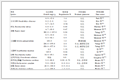
With these optimized reaction conditions, the versatility of the methodology for the preparation of thiazolopyridine- fused pyrido[1, 2-a]pyrimidines was examined. The substrate scope of the I2-DMSO catalyzed coupling of 1 with aromatic aldehydes 4 is shown in Table 2.
Table 2
Table 2.
Synthesis of thiazolo[3', 2':2, 3]pyrido[4, 5-d]pyrido- [1, 2-a]pyrimidin-5-ones5
It was found that protocol could be applied not only to the aromatic aldehydes with either electron-donating groups (e.g., methyl, methoxy, hydroxy) or electron-with- drawing groups (e.g., fluoro, chloro, and nitro groups), but also to heterocyclic aldehydes. Therefore, it is concluded that the electronic nature of the substituents of aldehydes has no significant effect on this reaction.
When this methodology was applied to aliphatic aldehyde (such as butyraldehyde, 4m) or ethyl glyoxylate (4n), no little product (5m or 4n) was obtained after 24 h under the reaction conditions.
On the basis of these results, a plausible mechanism for the construction of fused pyrido[1, 2-a]pyrimidinones is proposed (Scheme 2). The formation of ether A occurs through S-alkylation of 2-chloromethyl-4H-pyrido[1, 2-a]- pyrimidin-4-one (1) and potassium N-phenyl-N'-cyano- imido-thio-carbonate (2). Then, the ether A occurred via Thorpe-Ziegler isomerization reaction to generate 2-(3- amino-5-phenylaminothiazolo-2-yl)-4H-pyrido[1, 2-a]pyri- midin-4-one (3). Next, the intermediate amine 3 underwent cationic π-cyclization with aldehyde (4) under Pictet- Spengler cyclization promoted by I2 to form C which is further oxidized by DMSO to give tetracyclic product 5.
Scheme 2
Scheme 2.
Proposed reaction mechanism for the formation of compound 5
Based on 6, 6, 6, 5-tetracyclic systems, an efficient and versatile method for the preparation of thiazolopyridine- fused pyrido[1, 2-a]pyrimidines was developed by using the modified Pictet-Spengler reaction promoted by molecular iodine in DMSO. This method has the advantages of readily available starting materials, mild reaction conditions and operational simplicity.
4.
Experimental section
Melting points were determined in open capillaries and are uncorrected. The NMR spectra were recorded with a Bruker Avance 400 spectrometer (400 MHz for 1H and 100 MHz for 13C) using TMS an internal reference. IR spectra were measured on Shimadzu FTIR-8300 spectro photometer. C, H and N analyses were performed by a HP-MOD 1106 microanalyzer. The preparation of 2-chloromethyl- 4H-pyrido[1, 2-a]pyrimidin-4-one (1)[15] and potassium N-phenyl-N'-cyano-imido-thiocarbonate (2)[16] were according to the literature procedure. All other chemicals used in this study were commercially available.
4.1
Synthesis of 2-(3-amino-5-phenylaminothiazolo- 2-yl)-4H-pyrido[1, 2-a]pyrimidin-4-one (3)
To a solution of 2-chloromethyl-4H-pyrido[1, 2-a]-pyri- midin-4-one (1) (1.94 g, 10.0 mmol) in DMF (25 mL) was added potassium N-phenyl-N'-cyanoimido-thiocarbonate (2) (2.15 g, 10.0 mmol), andanhydrous potassium carbonate (2.76 g, 20.0 mmol). The mixture was heated at 100 ℃ for 5 h (monitored by TLC). After cooling to room temperature, water (50 mL) was added and stirred for 20 min. The solid was filtered and recrystallized from HOAc to give 3 2.84 g, yield 85%. Yellow crystals. m.p. > 300 ℃; 1H NMR (400 MHz, DMSO-d6) δ: 5.67 (s, 1H), 7.03~7.06 (m, 1H), 711~7.14 (m, 1H), 7.34~7.38 (m, 2H), 7.58~7.70 (m, 5H), 7.84 (t, J=8.0 Hz, 1H), 8.82 (d, J=8.4 Hz, 1H), 10.63 (s, 1H); IR (KBr) νmax: 3438, 3361 (N—H), 1680 (C=O) cm-1. Anal. calcd for C17H13N5OS: C 60.88, H 3.91, N 20.88; found C 60.93, H 3.96, N 20.93.
4.2
General method for synthesis of 6-aryl-9-phe- nylamino-5H-thiazolo[3', 2':2, 3]pyrido[4, 5-d]pyrido[1, 2-a] pyrimidin-5-one derivatives (5a~5l)
To a stirred solution of 2-(3-amino-5-phenylaminothia- zolo-2-yl)-4H-pyrido[1, 2-a]pyrimidin-4-one (3) (335 mg, 1.0 mmol), aromatic aldehyde (1.0 mmol), and molecular iodine (50 mg, 0.2 mmol) in DMSO (10 mL) was heated at 90 ℃ (monitored by TLC). At the end of the reaction, the reaction mixture was cooled to room temperature, filtered and recrystallized from DMF to afford the corresponding products 5a~5l.
Phenyl-9-phenylamino-5H-thiazolo[3', 2':2, 3]pyrido-[4, 5-d]pyrido[1, 2-a]pyrimidin-5-one (5a): Yellow crystals. m.p. > 300 ℃; 1H NMR (400 MHz, CF3CO2D) δ: 7.28~7.31 (m, 2H), 7.43~7.56 (m, 8H), 7.76~7.79 (m, 1H), 7.93~7.97 (m, 1H), 8.10~8.13 (m, 1H), 8.53~8.57 (m, 1H), 9.15 (s, 1H); 13C NMR (100 MHz, CF3CO2D) δ: 171.8, 152.9, 151.4, 150.1, 149.8, 147.2, 146.9, 145.4, 135.4, 131.4, 131.1, 129.8, 128.8, 128.1, 127.9, 121.6, 120.8, 118.1, 117.4, 102.8; IR (KBr) νmax: 3341 (N—H), 1682 (C=O) cm-1. Anal. calcd for C24H15N5OS: C 68.39, H 3.59, N 16.62; found C 68.43, H 3.65, N 16.68.
6-(2-Furyl)-9-phenylamino-5H-thiazolo[3', 2':2, 3]pyrido-[4, 5-d]pyrido[1, 2-a]pyrimidin-5-one (5k): Yellow crystals. m.p. > 300 ℃; 1H NMR (400 MHz, CF3CO2D) δ: 7.05~7.06 (m, 1H), 7.54~7.68 (m, 6H), 7.81~7.83 (m, 1H), 8.09~8.10 (m, 2H), 8.68~8.71 (m, 2H), 9.51 (s, 1H); 13C NMR (100 MHz, CF3CO2D) δ: 184.8, 177.8, 163.9, 154.2, 147.9, 146.4, 134.9, 133.7, 130.2, 129.9, 129.7, 129.3, 128.8, 128.3, 122.9, 121.6, 121.1, 120.3, 117.8, 103.3; IR (KBr) νmax: 3345 (N—H), 1682 (C=O) cm-1. Anal. calcd for C22H13N5O2S: C 64.22, H 3.18, N 17.02; found C 64.28, H 3.25, N 17.07.
6-(2-Thienyl)-9-phenylamino-5H-thiazolo[3', 2':2, 3]pyri-do[4, 5-d]pyrido[1, 2-a]pyrimidin-5-one (5l): Yellow cry- stals. m.p. > 300 ℃; 1H NMR (400 MHz, CF3CO2D) δ: 7.14~7.30 (m, 7H), 7.61~7.64 (m, 2H), 7.75~7.78 (m, 1H), 7.89~7.91 (m, 1H), 8.43~8.46 (m, 1H), 9.08 (s, 1H); 13C NMR (100 MHz, CF3CO2D) δ: 177.1, 157.2, 152.4, 151.3, 149.6, 146.9, 141.4, 135.3, 135.2, 134.4, 134.4, 131.1, 130.4, 130.1, 128.5, 127.9, 123.1, 120.7, 117.2, 101.5; IR (KBr) νmax: 3343 (N—H), 1684 (C=O) cm-1. Anal. calcd for C22H13N5OS2: C 61.81, H 3.07, N 16.38; found C 61.85, H 3.12, N 16.40.
Supporting Information All Compounds NMR spectra were provided as supplementary data. The Supporting Information is available free of charge via the Internet at http://sioc-journal.cn.
[1]
(a) Miller, C. M.; McCarthy, F. O. RSC Adv. 2012, 2, 8883. (b) Izuhra, D.; Swager, T. M. J. Am. Chem. Soc. 2009, 131, 17724. (c) Palmer, A. M.; Grobbel, B.; Jecke, C.; Brehm, C.; Zimmermann, P. J.; Buhr, W.; Feth, M.P.; Simon, W. A.; Kromer, W. J. Med. Chem. 2007, 50, 6240.
[2]
Swinbourne, F. J.; Hunt, J. H.; Klinkert, G. Adv. Heterocycl. Chem. 1979, 23, 103. doi: 10.1016/S0065-2725(08)60842-9
[3]
Smith, R. L.; Barrett, R. J.; Sanders-Bush, E. J. Pharmacol. Exp. Ther. 1995, 275, 1050.
Colpaert, F. C. Nat. Rev. DrugDiscovery2003, 2, 315. doi: 10.1038/nrd1062
[6]
Donghi, M.; Kinzel, O. D.; Summa, V. Bioorg. Med. Chem. Lett. 2009, 19, 1930. doi: 10.1016/j.bmcl.2009.02.055
[7]
(a) Katritzky, A. R.; Rogers, J. W.; Witek, R. M.; Nair, S. K. ARKIVOC 2004, viii, 52. (b) Knight, Z. A.; Chiang, G. G.; Alaimo, P. J.; Kenski, D. M.; Ho, C. B.; Coan, K.; Abraham, R. T.; Shokat, K. M. Bioorg. Med. Chem. 2004, 12, 4749.
[8]
Awouters, F.; Vermeire, J.; Smeyers, F.; Vermote, P.; Van Beek, R.; Niemegeers, C. J. E. DrugDev. Res. 1986, 8, 95. doi: 10.1002/ddr.430080112
[9]
Kapui, Z.; Varga, M.; Urban-Szabo, K.; Mikus, E.; Szabo, T.; Szeredi, J.; Batori, S.; Finance, O.; Armani, P. J. Pharmacol. Exper. Ther. 2003, 305, 451. doi: 10.1124/jpet.102.044263
[10]
(a) Chen, Z. W.; Wen, Y. L.; Ding, H.; Luo, G. T.; Ye, M.; Liu, L. X.; Xue, J. Tetrahedron Lett. 2017, 58, 13. (b) Lee, H. J.; Song, Y. H. Heterocycl. Commun. 2016, 22, 59. (c) Guchhait, S.; Priyadarshani, G. J. Org. Chem. 2015, 80, 8482. (d) Del Turco, S.; Sartini, S.; Sentieri, C.; Saponaro, C.; Navarra, T.; Dario, B.; Settimo, F. D.; Motta, C. L.; Basta, G. Eur. J. Med. Chem. 2014, 72, 102. (e) Djekou, S.; Gellis, A.; Maldonado, J.; Crozet, M.P.; Vanelle, P. Heterocycles2000, 55, 535.
[11]
(a) Togo, H.; Iida, S. Synlett2006, 2159. (b) Shen, S. S.; Xu, X. P.; Ji, S. J. Chin. J. Org. Chem. 2009, 29, 806(in Chinese). (沈舒苏, 徐小平, 纪顺俊, 有机化学, 2009, 29, 806.) (c) Jereb, M.; VraziC D.; Zupan, M. Tetrahedron2011, 67, 1355. (d) Parvatkar, P. T.; Parameswaran, P. S.; Tilve, S. G. Chem.-Eur. J. 2012, 18, 5460.
[12]
(a) Yin, G.; Fan, L.; Ren, T.; Zheng, C.; Tao, Q.; Wu, A.; She, N. Org. Biomol. Chem. 2012, 10, 8877. (b) Ahmed, N.; Babu, B. V. Synth. Commun. 2013, 43, 3044. (c) Wu, X.; Gao, Q.; Liu, S.; Wu, A. Org. Lett. 2014, 16, 2888. (d) Hu, F.; Gao, W. C.; Chang, H. H.; Li, X.; Wei, W. L. Chin. J. Org. Chem. 2015, 35, 1848(in Chinese). (胡飞, 高文超, 常宏宏, 李兴, 魏文珑, 有机化学, 2015, 35, 1848.) (e) Wang, D. Y.; Zhang, R. X.; Lin, S.; Deng, R. H.; Yan, Z. H. Chin. J. Org. Chem. 2016, 36, 2757(in Chinese). (王丁意, 张荣兴, 林森, 邓瑞红, 严兆华, 有机化学, 2016, 36, 2757.) (f) Wang, Y. F.; Yang, Y. J.; Huang, L.; Jie, K.; Guo, S. M.; Cai, H. Chin. J. Org. Chem. 2017, 37, 3220(in Chinese). (王玉凤, 杨雅杰, 黄玲, 揭坤, 郭生梅, 蔡琥, 有机化学, 2017, 37, 3220.)
[13]
(a) Tang, Y. X.; Wang, D. L.; Qiang, J. H. Heterocycles2017, 94, 1351. (b) Wang, D. L.; Wang, D.; Yan, L.; Pan, G. Y.; Yang, J. N. Heterocycles2016, 92, 552. (c) Wang, D. L.; Wang, D.; Yan, L.; Pan, G. Y.; Yang, J. N. Chin. Chem. Lett. 2016, 27, 953. (d) Wang, D. L.; Zhou, T.; Xing, J. J.; Qiang, J. H.; Liu, L. Heterocycles2016, 92, 733.
[14]
(a) Gefenas, V.; Stankevičūte, Ž.; Malinauskas, A. Chem. Heterocycl. Compd. 2010, 46, 372. (b) Shestopalov, A. M.; Fedorov, A. E.; Belyakov, P. A. Chem. Heterocycl. Compd. 2000, 36, 609.


 下载:


 下载:


 下载:

