
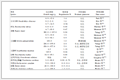
Table 1.
Optimization of the condensation of D-ribose and o-aminobenzamide


4-(3H)-Quinazolinone and its derivatives have attracted many attentions due to their diverse biological activities, [1] such as anti-cancer, [2] anti-bacterial, [3] anti-virus, [4] anti- diabetes, [5] and anti-glucosidase activities.[6] As an important nitrogen-containing pharmacophore, 4-(3H)-quinazolinone has been made many efforts to develop the synthetic strategies and structural diversities to meet the ever-growing requirements for the new drug discovery.[7, 8] So far, a vast number of 4-(3H)-quinazolinone derivatives have been prepared and evaluated for their various biological activities.[9] Owing to their widespread applications, the development of novel quinazoliniones has been a long-standing interest for chemists.[10~12]
There are two main strategies for constructing the skeleton of 4-(3H)-quinazolinone. One is the direct condensation of aldehyde and o-aminobenzamide, [13, 14] the other is the ammonolysis reaction of aromatic amine and isatoic anhydride derived from anthranilic acid.[15, 16] The former is the most common protocol as its simple and efficient.[17, 18] The condensation reactions were generally catalyzed by Lewis acids, such as FeCl3, [19] CuCl2, [20] and I2.[21~23] The starting reactants could be the precursors of aldehyde and o-aminobenzamide, respectively, such as benzyl alcohol, [24] benzyl amine, [25] and o-aminobenzonitrile.[26] Although there are several literatures to describe the preparation of 4-(3H)-quinazolinone from the aliphatic aldehydes, [27~29] aldoses as reactants weren't studied yet. As a continuation of our researches on novel 4-(3H)-quinazolinone derivatives, [30~32] herein, we would like to report the synthesis of the aldo-quinazolinone by a one-pot iodine-induced reaction.
We initiated our experiment by examining the reaction of D-ribose (1a) with o-aminobenzamide (2a) in dimethyl sulfoxide (DMSO) solution at 60 ℃ (Table 1, Entry 1) according to the method for the aromatic aldehydes.[13] However, the reaction didn't occur. Subsequently, the reaction was carried out in methanol solution at 40 ℃ in the presence of some Lewis acids FeCl3[19] or CuCl2[20] (Table 1, Entries 2, 3), but the reactions still didn't proceed. When using AcOH as the catalyst, [33] the reaction could yield small amount of the intermediate A (Scheme 1, two pairs of inseparable amino glycosides including α/β-furanosides and α/β-pyranosides) (Table 1, Entry 4). Finally, iodine (I2) was added to promote the reaction (Table 1, Entry 5).[21] The reaction could succeed in generating the target ribo-quinazolinone 3a with a low yield of 12%, although the iodine-induced reaction was very complicated.
 下载:
导出CSV
 |
||||
| Entry | Conditiona | I2/equiv. | Product | Yield/% |
| 1 | DMSO, 60 ℃, 24 h | —b | ||
| 2 | FeCl3 (2 mmol), CH3OH, 40 ℃, 24 h | — | ||
| 3 | CuCl2 (2 mmol), CH3OH, 40 ℃, 24 h | — | ||
| 4 | AcOH (0.1 mL), CH3OH, 40 ℃, 24 h | Intermediate A | 28 | |
| 5 | I2, CH3OH, 40 ℃, 24 h | 0.15 | Intermediate B and 3a | 12c |
| 6 | I2, CH3OH, 40 ℃, 8 h | 0.02 | Intermediate A | 62 |
| 7 | I2, CH3OH, 40 ℃, 8 h | 0.1 | Intermediate B and 3a | 6c |
| 8 | I2, CH3OH, 40 ℃, 24 h | 0.23 | 3a | 46 |
| a The molar ratio of D-ribose (180 mg, 1 mmol) and o-aminobenzamide is 1.0:1.2, the solvent is 5 mL. b No reaction. c Yield of 3a. | ||||

The condensation conditions were further optimized. The results showed that the amount of iodine had an important effect on the reaction. Adjusting the amount of iodine could control the synthesis in its different stages to give the different products. For example, adding the catalytic amount of iodine (0.02 equiv.) would lead to the reaction which only afford the intermediate A (Table 1, Entry 6). When the amount of I2 increased to 0.1 equiv., intermediate A decreased slowly, another key intermediate B (ribo-dihydroquinazolinones, a pair of inseparable isomers) was greatly produced, and 3a was synthesized a little simultaneously (Table 1, Entry 7). Further improving the amount of I2 to 0.23 equiv., the intermediate B could be oxidized to 3a completely (Table 1, Entry 8).
The possible mechanism for the synthesis of 3a was summarized in Scheme 1.[21, 34] It was likely that the Schiff base was firstly formed between D-ribose and o-aminoben-amide. Theoretically, 4-/5-hydroxyl on the ribose could attack the imine to generate the intermediate A, while the amino on the amide could attack the imine to produce the intermediate B, respectively. In the presence of iodine, the synthesis of B was predominant, and A could transform to B at the same time. Finally, the ribo-dihydroquinazolinone B was oxidized to 3a by iodine, which was identified by its X-ray crystallographic structure (Figure 1).[35] To confirm the rationality of the mechanism, the reaction was carried out using the pure intermediate A, which afforded B and 3a as expected in the presence of I2. Additionally, the pure intermediate B could greatly convert to 3a (70% yield) by the I2-catalyzed reaction at 70 ℃.
To simplify the synthetic progress, we could directly add 0.23 equiv. of I2 into the methanol solution of D-ribose and o-aminobenzamide at 40 ℃ for 24 h. After simple workup and silica gel column chromatography, aldo- quinazolinone 3a would precipitate from the eluent in the yield of 46% (Table 2, Entry 1). Under the similar conditions using different equivalents of I2, the corresponding aldo-quinazolinones 3b~3g (Table 2, Entries 2~7) were successfully obtained from seven saccharides with o-aminobenzamides in the satisfactory yields of 30%~59%. The used saccharides included five monosaccharides, D-xylose (1b), D-arabinose (1c), D-glucose (1d), D- mannose (1e) and D-galactose (1f), and one disaccharide, D-maltose (1g), respectively. To demonstrate the generality of the reaction, the substituted o-aminobenzamides were also used to react with D-arabinose (1c), D-mannose (1e), and D-maltose (1g) to prepare the corresponding aldoquinazolinones 3c-1~3c-3, 3f-1~3f-3, and 3g-1~3g-2 (Table 3, Entries 1~8) in the moderate yields of 38%-80%, respectively. However, the production of 3g-2 was accompanied by a side reaction leading to an inseparable I-substuitued byproduct 3g-2-1 (Table 3, Entry 8), as the same as the literature described.[36] Its molecular formula was deduced to be C20H27IN2O11 by using HRESIMS.
下载:
导出CSV

|
下载:
导出CSV

|
It was worth noting that the fluorescent characteristics of the quinazolinone analogs were interesting. For example, the intermediate A exhibited blue fluorescence, the intermediate B appeared green fluorescence, while the aldo-quinazolinones showed no fluorescence in the fluorescent examination. The significant change of the fluorescence color of the compounds could help us to easily monitor the one-pot multistep transformation in the thin layer chromatography (TLC) detection.
In conclusion, a serials of novel aldo-quinazolinones were synthesized by the iodine-induced condensation of the monosaccharides and o-aminobenzamides, providing an effective protocol for the preparation of aldo-quinazo-linones.
Melting points were measured on an SGWⓇ X-4 micro melting point apparatus and were uncorrected. Optical rotations were determined on an SGWⓇ-1 automatic polarimeter. 1H NMR, and 13C NMR spectra were measured on a RT-NMR Bruker AVANCE 600 (600 MHz) and AVANCE 400 (400 MHz), NMR spectrometer using tetramethylsilane (Me4Si) as an internal standard. Mass Spectra (MS) and High Resolution Mass Spectra (HRMS) were carried out on a FTICR-MS (Ionspec 7.0T) mass spectrometer with electrospray ionization (ESI). X-Ray crystallographic measurements were made on a Bruker SMART CCD Diffractometer. Thin-layer chromatography (TLC) was performed on precoated plates (Qingdao GF254) with detection with phosphomolybdic acid in EtOH/H2O followed by heating. Column chromatography was performed using SiO2 (Qingdao 300~400 mesh).
A mixture of D-ribose (1.8 g, 12.0 mmol) and o-aminobenzamide (2.0 g, 1.2 equiv.) in 60 mL methanol was stirred at 40 ℃ under N2 atmosphere for 10 min, then iodine (0.1 g, 0.02 equiv.) was added into the solution. The mixture was continued to stir at 40 ℃ for 8 h, the reaction finished (monitored by TLC). After the solution cooled down, methanol was evaporated under vacuum to afford the crude product. The residue was purified using flash column chromatography (dichloromethane-methanol V:V=2:1) to afford the intermediate A (two pairs of inseparable isomers, four compounds). The 1H and 13C NMR spectra of A could be seen in the supporting materials. HR-ESI-MS calcd for C12H16N2O5Na ([M+Na]+) 291.0957, found 291.0956.
A mixture of D-ribose (1.8 g, 12.0 mmol) and 2-amino- benzamide (2.0 g, 1.2 equiv.) in 60 mL methanol was stirred at 40 ℃ under N2 atmosphere for 10 min, then iodine (0.5 g, 0.1 equiv.) was added into the solution. The mixture was stirred for 8 h, the reaction completed (the intermediate A disappeared on TLC). After the solution cooled down, methanol was evaporated under vacuum to afford the crude product. The residue was purified using flash column chromatography (dichloromethane-methanol V:V=6:1) to afford the intermediate B.
((2S, 3R)-1, 2, 3, 4-tetrahydroxybutyl)-2, 3-dihydro-quin-azolin-4(1H)-one (intermediate B, a pair of inseparable isomers): White solid, yield 17%; m.p. 165.9~169.6 ℃, 1H NMR (600 MHz, CD3OD) δ: 7.69~7.67 (m, 1H), 7.28~7.25 (m, 1H), 6.78 (d, J=8.4 Hz, 0.6H), 6.74~6.71 (m, 1.4H), 5.03 (d, J=4.8 Hz, 0.4H), 4.97 (d, J=5.4 Hz, 1H), 3.88 (t, J=4.2 Hz, 0.5H), 3.84~3.81 (m, 1H), 3.79~3.76 (m, 1.5H), 3.67 (dd, J=11.4, 6.0 Hz, 1H); 13C NMR (150 MHz, CD3OD) δ: 167.4, 167.3, 149.9, 149.5, 135.2, 128.7, 128.6, 118.9, 116.1, 115.8, 115.7, 74.7, 74.4, 73.9, 73.8, 73.7, 68.0, 67.9, 64.6, 64.5; HR-ESI-MS calcd for C12H17N2O5 ([M+H]+) 269.1137, found 269.1132.
A mixture of D-ribose (1.8 g, 12.0 mmol) and 2-aminobenzamide (2.0 g, 1.2 equiv.) in 60 mL methanol was stirred at 40 ℃ under N2 atmosphere for 10 min, then iodine (0.9 g, 0.23 equiv.) was added into the solution. The mixture was stirred for 24 h till the reaction completed. After the solution cooled down, methanol was evaporated under vacuum to afford the crude product. The residue was purified using flash column chromatography (dichloromethane-methanol V:V=6:1). White solid could precipitate from the eluent and was washed with ethyl acetate (5 mL×3) to afford compound 3a.
Under the similar conditions with different amounts of I2, the corresponding aldo-quinazolinones 3 were obtained in satisfactory yields.
2-((1S, 2S, 3R)-1, 2, 3, 4-Ttetrahydroxybutyl)quinazolin-4(3H)-one (3a): White solid, yield 46%. m.p. 183.9~185.6 ℃; [α]D25-8.0 (c 0.01, H2O); 1H NMR (600 MHz, DMSO-d6) δ: 11.36 (s, 1H), 8.11 (d, J=7.8 Hz, 1H), 7.79 (t, J=7.2 Hz, 1H), 7.64 (d, J=7.8 Hz, 1H), 7.48 (t, J=7.2 Hz, 1H), 5.92 (s, 1H), 5.08 (s, 1H), 4.71 (s, 1H), 4.64 (s, 1H), 4.40 (t, J=5.4 Hz, 1H), 3.86 (t, J=5.4 Hz, 1H), 3.61~3.58 (m, 2H), 3.45~3.41 (m, 1H); 13C NMR (150 MHz, DMSO-d6) δ: 161.1, 157.7, 148.5, 134.3, 126.9, 126.2, 125.8, 121.3, 74.2, 72.7, 72.0, 62.9; HR-ESI-MS calcd for C12H14N2O5Na ([M+Na]+) 289.0800, found 289.0802.
2-((1S, 2R, 3R)-1, 2, 3, 4-Tetrahydroxybutyl)quinazolin-4(3H)-one (3b): White solid, yield 43%. m.p. 115.4~117.0 ℃; [α]D25 +36.8 (c 0.04, H2O), 1H NMR (600 MHz, CD3OD) δ: 8.15 (d, J=7.8 Hz, 1H), 7.71 (t, J=7.8 Hz, 1H), 7.63 (d, J=7.8 Hz, 1H), 7.41 (t, J=7.8 Hz, 1H), 4.783 (s, 1H), 4.045 (s, 1H), 3.88 (d, J=4.2 Hz, 1H), 3.75~3.69 (m, 2H); 13C NMR (150 MHz, CD3OD) δ: 167.8, 162.2, 150.3, 135.1, 127.1, 127.1, 127.1, 122.2, 74.4, 74.4, 74.0, 64.2; HR-ESI-MS calcd for C12H14N2O5Na ([M+Na]+) 289.0800, found 289.0804.
2-((1R, 2S, 3R)-1, 2, 3, 4-tetrahydroxybutyl)quinazolin-4(3H)-one (3c): White solid, yield 48%, m.p. 206.0~207.7 ℃, [α]D25 -15.6 (c 0.04, H2O), 1H NMR (600 MHz, DMSO-d6) δ: 11.20 (s, 1H, NH), 8.11 (d, J=7.8 Hz, 1H), 7.79 (t, J=7.2 Hz, 1H), 7.63 (d, J=7.2 Hz, 1H), 7.48 (t, J=7.8 Hz, 1H), 5.56 (d, J=6.0 Hz, 1H), 4.81 (d, J=5.4 Hz, 2H), 4.73 (d, J=4.8 Hz, 1H), 4.44 (s, 1H), 3.76~3.73(m, 1H), 3.64 (d, J=10.8 Hz, 1H), 3.57 (s, 1H), 3.48~3.46 (m, 1H); 13C NMR (150 MHz, DMSO-d6) δ: 161.1, 159.1, 148.6, 134.4, 126.8, 126.1, 125.1, 121.1, 73.4, 70.8, 70.5, 63.3; HR-ESI-MS calcd for C12H14N2O5Na ([M+ Na]+) 289.0800, found 289.0802.
2-((1S, 2R, 3R, 4R)-1, 2, 3, 4, 5-pentahydroxypentyl)quina-zolin-4(3H)-one (3d): White solid, yield 45%, m.p. 166.9~168.7 ℃, [α]D25 16.5 (c 0.04, H2O), 1H NMR (600 MHz, DMSO-d6) δ: 11.50 (s, 1H), 8.11 (d, J=7.8 Hz, 1H), 7.80 (t, J=7.2 Hz, 1H), 7.65 (d, J=7.8 Hz, 1H), 7.49 (t, J=7.8 Hz, 1H), 4.71~4.37 (m, 5H), 4.09 (d, J=2.4 Hz, 1H), 3.58 (dd, J=10.8, 3.0 Hz, 1H), 3.53~3.50 (m, 1H), 3.47 (d, J=8.4, 1H), 3.39 (q, J=5.4 Hz, 1H); 13C NMR (150 MHz, DMSO-d6) δ: 161.2, 157.8, 148.4, 134.4, 126.9, 126.3, 125.8, 121.2, 73.3, 71.6, 71.4, 71.3, 63.2; HR-ESI-MS calcd for C13H16N2O6Na ([M+Na]+) 319.0906, found 319.0908.
2-((1S, 2R, 3S, 4R)-1, 2, 3, 4, 5-pentahydroxypentyl)quina-zolin-4(3H)-one (3e): White solid, yield 41%, m.p. 211.4~212.3 ℃, [α]D25 22.6 (c 0.04, H2O), 1H NMR (600 MHz, DMSO-d6) δ: 11.21 (s, 1H), 8.11 (d, J=7.8 Hz, 1H), 7.79 (t, J=7.8 Hz, 1H), 7.64 (d, J=7.8 Hz, 1H), 7.48 (t, J=7.2 Hz, 1H), 5.52 (s, 1H), 4.84 (s, 1H), 4.74 (s, 1H), 4.52 (s, 1H), 4.28 (s, 2H), 3.88 (d, J=9.0 Hz, 1H), 3.74 (t, J=6.0 Hz, 1H), 3.59 (d, J=9.0 Hz, 1H) 3.47~3.41 (m, 3H); 13C NMR (150 MHz, DMSO-d6) δ: 161.1, 159.5, 148.5, 134.4, 126.6, 126.0, 125.8, 121.0, 72.6, 70.5, 69.6, 69.0, 63.1; HR-ESI- MS calcd for C13H16N2O6Na ([M+Na]+) 319.0906, found 319.0903.
2-((1R, 2R, 3R, 4R)-1, 2, 3, 4, 5-pentahydroxypentyl)quinazolin-4(3H)-one (3f): White solid, yield 59%, m.p. 209.9~211.5 ℃, [α]D25 -16.6 (c 0.04, H2O), 1H NMR (600 MHz, DMSO-d6) δ: 11.93 (s, 1H), 8.10 (d, J=7.8 Hz, 1H), 7.79 (t, J=7.8 Hz, 1H), 7.64 (d, J=7.8 Hz, 1H), 7.48 (t, J=7.2 Hz, 1H), 5.60 (d, J=4.8 Hz, 1H), 4.50 (s, 1H), 4.46 (q, J=6.0 Hz, 1H), 4.40 (s, 3H), 4.10 (t, J=6.6 Hz, 1H), 3.67~3.62 (m, 2H), 3.51 (s, 1H), 3.45~3.42 (m, 1H); 13C NMR (150 MHz, DMSO-d6) δ: 161.5, 158.9, 148.6, 134.2, 126.9, 126.1, 125.7, 121.4, 71.9, 71.2, 70.9, 69.5, 63.8; HR-ESI-MS calcd for C13H16N2O6Na ([M+Na]+) 319.0906, found 319.0907.
2-((1S, 2R, 3R, 4R)-1, 2, 4, 5-tetrahydroxy-3-(((2S, 3R, 4S, 5S, 6R)-3, 4, 5-trihydroxy-6-(hydroxymethyl)tetrahydro-2H-pyran-2-yl)oxy)pentyl)quinazolin-4(3H)-one (3g): White solid, yield 30%, m.p. 172.6~173.8 ℃, [α]D25 114.3 (c 0.04, H2O), 1H NMR (400 MHz, DMSO-d6) δ: 11.31 (s, 1H), 8.11 (d, J=7.6 Hz, 1H), 7.81 (t, J=7.2 Hz, 1H), 7.64 (d, J=8.0 Hz, 1H), 7.49 (t, J=7.2 Hz, 1H), 5.75 (s, 1H), 5.56 (d, J=4.8 Hz, 1H), 5.06 (s, 1H), 4.95~4.92 (m, 3H), 4.69 (s, 1H), 4.60 (d, J=5.2 Hz, 1H), 4.54 (t, J=5.2 Hz, 1H), 4.48 (t, J=5.2 Hz, 1H), 4.14 (s, 1H), 3.72 (s, 2H), 3.65~3.61 (m, 3H), 3.50~3.39 (m, 3H), 3.27 (d, J=8.8 Hz, 1H), 3.13~3.08 (m, 1H); 13C NMR (150 MHz, DMSO-d6) δ: 161.0, 157.8, 148.4, 134.5, 126.8, 126.3, 125.8, 121.1, 100.8, 82.2, 73.4, 73.2, 73.1, 72.3, 72.2, 71.6, 69.8, 62.6, 60.6; HR-ESI-MS calcd for C19H26N2-O11Na ([M+Na]+) 481.1434, found 481.1437.
6-Chloro-2-((1R, 2S, 3R)-1, 2, 3, 4-tetrahydroxybutyl)-quinazolin-4(3H)-one (3c-1): White solid, yield 57%, m.p. 201.9~203.1 ℃, [α]D25 -14.5 (c 0.04, H2O), 1H NMR (400 MHz, DMSO-d6) δ: 11.41~11.36 (m, 1H), 8.02 (d, J=2.4 Hz, 1H), 7.81 (dd, J=8.8 Hz, 2.4 Hz, 1H), 7.65 (d, J=8.4 Hz, 1H), 5.53 (d, J=0.4 Hz, 1H), 4.77~4.68 (m, 3H), 4.39 (t, J=4.8 Hz, 1H), 3.72~3.54 (m, 3H), 3.43 (m, 1H); 13C NMR (150 MHz, DMSO-d6) δ: 160.1, 159.8, 147.4, 134.5, 130.3, 129.0, 124.8, 122.4, 73.4, 70.8, 70.6, 63.3; HR-ESI-MS calcd for C12H13ClN2O5Na ([M+Na]+) 323.0410, found 323.0407.
7-Chloro-2-((1R, 2S, 3R)-1, 2, 3, 4-tetrahydroxybutyl)-quinazolin-4(3H)-one (3c-2): White solid, yield 50%, m.p. 168.9~169.8 ℃, [α]D25 -32.2 (c 0.04, H2O), 1H NMR (600 MHz, DMSO-d6) δ: 11.33 (s, 1H), 8.10 (d, J=8.4 Hz, 1H), 7.68 (s, 1H), 7.50 (d, J=8.4 Hz, 1H), 5.55 (s, 1H), 4.79 (s, 2H), 4.70 (s, 1H), 4.40 (s, 1H), 3.73 (d, J=7.2 Hz, 1H), 3.64 (dd, J=11.4, 2.4 Hz, 1H), 3.56 (s, 1H), 3.45 (dd, J=11.4, 6.0 Hz, 1H); 13C NMR (150 MHz, DMSO-d6) δ: 160.9, 160.5, 149.8, 139.0, 127.9, 126.3, 125.9, 120.0, 73.4, 70.8, 70.7, 63.3; HR-ESI-MS calcd for C12H13ClN2O5Na ([M+Na]+) 323.0410, found 323.0415.
7-Methyl-2-((1R, 2S, 3R)-1, 2, 3, 4-tetrahydroxybutyl)-quinazolin-4(3H)-one (3c-3): Yellow solid, yield 45%, m.p. 211.0~212.0 ℃, [α]D25 -72.5 (c 0.04, H2O), 1H NMR (400 MHz, DMSO-d6) δ: 11.05~11.03 (m, 1H), 7.98 (d, J=8.0 Hz, 1H), 7.43 (s, 1H), 7.30 (d, J=8.0 Hz, 1H), 5.54 (d, J=1.2 Hz, 1H), 4.77~4.69 (m, 3H), 4.41 (t, J=5.2 Hz, 2H), 3.70~3.55 (m, 3H), 3.47~3.40 (m, 1H), 2.44 (s, 3H); 13C NMR (150 MHz, DMSO-d6) δ: 160.9, 159.1, 148.8, 144.8, 127.5, 126.4, 125.7, 118.7, 73.4, 70.8, 70.5, 63.3, 21.3; HR-ESI-MS calcd for C13H16N2O5Na ([M+Na]+) 303.0957, found 303.0962.
6-Chloro-2-((1R, 2R, 3R, 4R)-1, 2, 3, 4, 5-pentahydroxypent-yl)quinazolin-4(3H)-one (3f-1): White solid, yield 78%, m.p. 232.6~233.4 ℃, [α]D25 -13.5 (c 0.04, H2O), 1H NMR (400 MHz, DMSO-d6) δ: 8.03 (d, J=2.4 Hz, 1H), 7.79 (d, J=2.4 Hz, 1H), 7.66 (d, J=8.8 Hz, 1H), 4.50~4.33 (m, 3H), 4.06 (d, J=8.8 Hz, 1H), 3.65~3.60 (m, 2H), 3.51~3.42 (m, 2H); 13C NMR (150 MHz, DMSO-d6) δ: 160.8, 159.9, 147.2, 134.3, 130.3, 129.1, 124.7, 122.6, 71.9, 71.1, 70.9, 69.5, 63.7; HR-ESI-MS calcd for C13H15Cl-N2O6Na ([M+Na]+) 353.0516, found 353.0515.
7-Chloro-2-((1R, 2R, 3R, 4R)-1, 2, 3, 4, 5-pentahydroxypentyl)quinazolin-4(3H)-one (3f-2): White solid, yield 57%, m.p. 182.9~183.8 ℃, [α]D25 -33.5 (c 0.04, H2O), 1H NMR (400 MHz, DMSO-d6) δ: 8.09 (d, J=8.4 Hz, 1H), 7.68 (d, J=2.0 Hz, 1H), 7.51 (dd, J=8.4 Hz, 2.0 Hz, 1H), 4.53~4.41 (m, 4H), 4.07 (d, J=8.8 Hz, 1H), 3.65~3.60 (m, 2H), 3.49 (d, J=5.2 Hz, 1H); 13C NMR (150 MHz, DMSO-d6) δ: 161.0, 160.7, 149.7, 138.8, 127.9, 126.4, 126.1, 120.2, 71.9, 71.1, 70.8, 69.4, 63.7; HR-ESI-MS calcd for C13H15ClN2O6Na ([M+Na]+) 353.0516, found 353.0518.
7-Methyl-2-((1R, 2R, 3R, 4R)-1, 2, 3, 4, 5-pentahydroxypentyl)quinazolin-4(3H)-one (3f-3): Yellow solid, yield 80%, m.p. 191.8~192.7 ℃, [α]D25 -66.0 (c 0.04, H2O), 1H NMR (400 MHz, DMSO-d6) δ: 7.98 (d, J=8.0 Hz, 1H), 7.43 (s, 1H), 7.30 (d, J=8.0 Hz, 1H), 4.48~4.37 (m, 4H), 4.07 (d, J=8.8 Hz, 1H), 3.65~3.60 (m, 2H), 3.48 (d, J=6.0 Hz, 1H), 3.44~3.35 (m, 1H), 2.45 (s, 3H); 13C NMR (150 MHz, DMSO-d6) δ: 161.4, 158.9, 148.7, 144.6, 127.6, 126.6, 125.6, 119.0, 71.9, 71.1, 70.9, 69.5, 63.7, 21.3; HR-ESI-MS calcd for C14H18N2O6Na ([M+Na]+) 333.1062, found 333.1064.
6-Chloro-2-((1S, 2R, 3R, 4R)-1, 2, 4, 5-tetrahydroxy-3-(((2R, 3R, 4S, 5S, 6R)-3, 4, 5-trihydroxy-6-(hydroxymethyl)tetrahydro-2H-pyran-2-yl)oxy)pentyl)quinazolin-4(3H)-one (3g-1): White solid, yield 38%, m.p. 198.4~198.8 ℃, [α]D25 97.6 (c 0.04, H2O), 1H NMR (600 MHz, DMSO-d6) δ: 11.55 (d, J=0.8 Hz, 1H), 8.04 (s, 1H), 7.83 (dd, J=8.8, 2.0 Hz, 1H), 7.67 (d, J=8.4 Hz, 1H), 5.77 (d, J=0.8 Hz, 1H), 5.55 (s, 1H), 5.06 (s, 1H), 4.92 (d, J=2.8 Hz, 3H), 4.69 (s, 1H), 4.60~4.46 (m, 3H), 4.13 (s, 1H), 3.72 (s, 2H), 3.63~3.61 (m, 3H), 3.49~3.38 (m, 3H), 3.28 (s, 1H), 3.13~3.07 (m, 1H); 13C NMR (150 MHz, DMSO-d6) δ: 160.1, 158.6, 147.1, 134.6, 130.5, 129.1, 124.8, 122.4, 100.8, 82.2, 73.3, 73.2, 73.0, 72.3, 72.2, 71.7, 69.8, 62.6, 60.6; HR-ESI-MS calcd for C19H25ClN2O11Na ([M+Na]+) 515.1044, found 515.1049.
7-Methyl-2-((1S, 2R, 3R, 4R)-1, 2, 4, 5-tetrahydroxy-3-(((2R, 3R, 4S, 5S, 6R)-3, 4, 5-trihydroxy-6-(hydroxymethyl)tetrahydro-2H-pyran-2-yl)oxy)pentyl)quinazolin-4(3H)-one (3g-2) and 6-iodo-7-methyl-2-((1S, 2R, 3R, 4R)-1, 2, 4, 5-tetrahydroxy-3-(((2R, 3R, 4S, 5S, 6R)-3, 4, 5-trihydroxy-6-(hydroxymethyl)tetrahydro-2H-pyran-2-yl)oxy)pentyl)-quinazolin-4(3H)-one (3g-2-1): White solid (mixture), total yields 35%, 1H NMR (400 MHz, DMSO-d6) δ: 11.34 (s, 0.5H), 11.14 (s, 0.8H), 8.46 (s, 0.5H), 8.00~7.99 (m, 0.8H), 7.62 (s, 0.5H), 7.45 (s, 0.8H), 7.33~7.31 (m, 0.8H), 5.71 (s, 1.5H), 5.49 (s, 1.5H), 5.03~4.85 (m, 6.0H), 4.68 (s, 1.7H), 4.55~4.42 (m, 4.7H), 4.14 (s, 1.4H), 3.73~3.63 (m, 7.8H), 3.54~3.37 (m, 5.0H), 3.18~3.11 (m, 2.0H), 2.45 (s, 3.0H) 13C NMR (100 MHz, DMSO-d6) δ: 162.5, 162.1, 159.3, 159.2, 149.2, 148.8, 146.6, 145.1, 135.1, 127.9, 127.3, 126.6, 126.2, 121.4, 119.2, 101.3, 97.4, 82.8, 82.7, 73.9, 73.8, 73.7, 73.6, 73.0, 72.9, 72.7, 72.6, 72.3, 70.0, 63.0, 61.0, 28.4, 21.9; HR-ESI-MS calcd for C20H29N2O11 ([M+H]+), 473.1766, found 473.1772; and HR-ESI-MS calcd for C20H28IN2O11 ([M+H]+) 599.0732, found 599.0738.
Supporting Information he NMR characterization data for compounds A, B, 3a~3g, 3c-1~3c-3, 3f-1~3f-3, and 3g-1~3g-2 are available. Supplementary data associated with this article can be found, in the online version, at doi:
Alagarsamy, V.; Chitra, K.; Saravanan, G.; Raja Solomon, V.; Sulthana, M. T.; Narendhar, B. Eur. J. Med. Chem. 2018, 151, 628. doi: 10.1016/j.ejmech.2018.03.076
Dohle, W.; Jourdan, F. L.; Menchon, G.; Prota, A. E.; Foster, P. A.; Mannion, P.; Hamel, E.; Thomas, M. P.; Kasprzyk, P. G.; Ferrandis, E.; Steinmetz, M. O.; Leese, M. P.; Potter, B. V. L. J. Med. Chem. 2018, 61, 1031. doi: 10.1021/acs.jmedchem.7b01474
Bouley, R.; Ding, D. R.; Peng, Z. H.; Bastian, M.; Lastochkin, E.; Song, W.; Suckow, M. A.; Schroeder, V. A.; Wolter, W. R.; Mobashery, S.; Chang, M. J. Med. Chem. 2016, 59, 5011. doi: 10.1021/acs.jmedchem.6b00372
Leivers, A. L.; Tallant, M.; Brad Shotwell, J.; Dickerson, S.; Leivers, M. R.; McDonald, O. B.; Gobel, J.; Creech, K. L.; Strum, S. L.; Mathis, A.; Rogers, S.; Moore, C. B.; Botyanszki, J. J. Med. Chem. 2014, 57, 2091. doi: 10.1021/jm400781h
Kerru, N.; Singh-Pillay, A.; Awolade, P.; Singh, P. Eur. J. Med. Chem. 2018, 152, 436. doi: 10.1016/j.ejmech.2018.04.061
Wei, M. K.; Chai, W. M.; Wang, R.; Yang, Q.; Deng, Z. H.; Peng, Y. Y. Bioorg. Med. Chem. 2017, 25, 1303. doi: 10.1016/j.bmc.2016.09.042
Khan, I.; Ibrar, A.; Ahmed, W.; Saeed, A. Eur. J. Med. Chem. 2015, 90, 124. doi: 10.1016/j.ejmech.2014.10.084
Khan, I.; Ibrar, A.; Abbas, N.; Saeed, A. Eur. J. Med. Chem. 2014, 76, 193. doi: 10.1016/j.ejmech.2014.02.005
Khan, I.; Zaib, S.; Batool, S.; Abbas, N.; Ashraf, Z.; Iqbal, J.; Saeed, A. Bioorg. Med. Chem. 2016, 24, 2361. doi: 10.1016/j.bmc.2016.03.031
Hou, J.; Kovacs, M. S.; Dhanvantari, S.; Luyt, L. G. J. Med. Chem. 2018, 61, 1261. doi: 10.1021/acs.jmedchem.7b01754
Wang, J. P.; Chang, Y. J.; Dong, X. Y.; Zhang, R. S.; Tang, Y.; Zhang, M. Carbohydr. Res. 2018, 463, 4.
Ma, C. C.; Zhang, C. M.; Tang, L. Q.; Liu, Z. P. Eur. J. Med. Chem. 2018, 151, 9. doi: 10.1016/j.ejmech.2018.03.068
Kim, N. Y.; Cheon, C. H. Tetrahedron Lett. 2014, 55, 2340. doi: 10.1016/j.tetlet.2014.02.065
Wang, Z. Z.; Tang, Y. Tetrahedron 2016, 72, 1330. doi: 10.1016/j.tet.2016.01.027
Yu, C. W.; Chang, P. T.; Hsin, L. W; Chern, J. W. J. Med. Chem. 2013, 56, 6775.
Che, T.; Chen, S. B.; Tu, J. L.; Wang, B.; Wang, Y. Q.; Zhang, Y.; Wang, J.; Wang, Z. Q.; Zhang, Z. P.; Ou, T. M.; Zhao, Y.; Tan, J. H.; Huang, Z. S. J. Med. Chem. 2018, 61, 3436. doi: 10.1021/acs.jmedchem.7b01615
Saleeb, M.; Sundin, C.; Aglar, .; Pinto, A. F.; Ebrahimi, M.; Forsberg, .; Schüler, H.; Elofsson, M. Eur. J. Med. Chem. 2018, 143, 568. doi: 10.1016/j.ejmech.2017.11.036
Sales, Z. S.; Mani, N. S.; Allison, B. D. Tetrahedron Lett. 2018, 59, 1623. doi: 10.1016/j.tetlet.2018.03.034
Shen, G. S.; Zhou, H. F.; Sui, Y. B.; Liu, Q. X.; Zou, K. Tetrahedron Lett. 2016, 57, 587. doi: 10.1016/j.tetlet.2015.12.094
Khan, K. M.; Saad, S. M.; Shaikh, N. N.; Hussain, S.; Fakhri, M. I.; Perveen, S.; Taha, M.; Choudhary, M. I. Bioorg. Med. Chem. 2014, 22, 3449. doi: 10.1016/j.bmc.2014.04.039
Ge, W.; Zhu, X.; Wei, Y. RSC Adv. 2013, 3, 10817. doi: 10.1039/c3ra40872h
Yan, Y. Z.; Xu, Y.; Niu, B.; Xie, H. F.; Liu, Y. Q. J. Org. Chem. 2015, 80, 5581. doi: 10.1021/acs.joc.5b00474
Tian, X. H.; Song, L. N.; Li, E. T.; Wang, Q.; Yu, W. Q; Chang, J. B. RSC Adv. 2015, 76, 62194.
Sun, J. W.; Tao, T.; Xu, D.; Cao, H.; Kong, Q. G.; Wang, X. Y.; Liu, Y.; Zhao, J. L.; Wang, Y.; Pan, Y. Tetrahedron Lett. 2018, 59, 2099. doi: 10.1016/j.tetlet.2018.04.054
Qi, X. X; Song, Z. Z.; Gong, J. L.; Fang, Z. Y.; Wu, X. F. Chin. Chem. Lett. 2016, 27, 21. doi: 10.1016/j.cclet.2015.08.003
Kabri, Y.; Croze, M. D.; Terme, T.; Vanelle, P. Eur. J. Org. Chem. 2015, 3806.
Adib, M.; Ansari, S.; Mohammadi, A.; Bijanzadeh, H. R. Tetrahedron Lett. 2010, 51, 30. doi: 10.1016/j.tetlet.2009.06.034
Ren, Z. L.; Kong, H. H.; Lu, W. T.; Sun, M.; Ding, M. W. Tetrahedron 2018, 74, 184. doi: 10.1016/j.tet.2017.11.060
Ramesh, K.; Karnakar, K.; Satish, G.; Anil Kumar, B. S. P.; Nageswar, Y. V. D. Tetrahedron Lett. 2012, 53, 6936. doi: 10.1016/j.tetlet.2012.10.029
王淑霞, 高梦颖, 谭官海, 马海霞, 赵莹莹, 杜鸿源, 王总帅, 陈华, 李小六, 有机化学, 2017, 37, 385. http://manu19.magtech.com.cn/Jwk_yjhx/CN/abstract/abstract345789.shtmlWang, S. X.; Gao, M. Y.; Tan, G. H.; Ma, H. X.; Zhao, Y. Y.; Du, H. Y.; Wang, Z. S.; Chen, H.; Li, X. L. Chin. J. Org. Chem. 2017, 37, 385(in Chinese). http://manu19.magtech.com.cn/Jwk_yjhx/CN/abstract/abstract345789.shtml
冯玉欣, 谭官海, 周利凯, 王淑霞, 陈华, 李小六, 有机化学, 2017, 37, 429.Feng, Y. X.; Tan, G. H.; Zhou, L. K.; Wang, S. X.; Chen, H.; Li, X. L. Chin. J. Org. Chem. 2017, 37, 429(in Chinese).
孙佳婧, 周利凯, 谭官海, 李帅, 王淑霞, 陈华, 李小六, 有机化学, 2017, 37, 455.Sun, J. J.; Zhou, L. K.; Tan, G.H.; Li, S.; Wang, S. X; Chen, H.; Li, X. L. Chin. J. Org. Chem. 2017, 37, 455(in Chinese).
Cheng, R.; Tang, L.; Guo, T.; Zhang, N.; Zhang, N. D.; Du, Y. RSC Adv. 2015, 5, 26434.
Lin, C.; Lai, P. T.; Liao, K. S.; Hung, W. T.; Yang, W. B.; Fang, J. M. J. Org. Chem. 2008, 73, 3848. doi: 10.1021/jo800234x
CCDC-1851215(for 3a) contain the supplementary crystallographic data for this paper. These data can be obtained free of charge from The Cambridge Crystallographic Data Centre via www.ccdc.cam.ac.uk/data_request/cif.
Rambabu, D.; Kumar, S. K.; Sreenivas, B. Y.; Sandra, S.; Kandale, A.; Misra, P.; Basaveswara Rao, M. V.; Pal, M. Tetrahedron Lett. 2013, 54, 495.

Scheme 1 Synthesis of the ribo-quinazolinone 3a through the condensation of D-ribose and o-aminobenzamide using iodine as catalyst
Table 1. Optimization of the condensation of D-ribose and o-aminobenzamide
|
|
||||
| Entry | Conditiona | I2/equiv. | Product | Yield/% |
| 1 | DMSO, 60 ℃, 24 h | —b | ||
| 2 | FeCl3 (2 mmol), CH3OH, 40 ℃, 24 h | — | ||
| 3 | CuCl2 (2 mmol), CH3OH, 40 ℃, 24 h | — | ||
| 4 | AcOH (0.1 mL), CH3OH, 40 ℃, 24 h | Intermediate A | 28 | |
| 5 | I2, CH3OH, 40 ℃, 24 h | 0.15 | Intermediate B and 3a | 12c |
| 6 | I2, CH3OH, 40 ℃, 8 h | 0.02 | Intermediate A | 62 |
| 7 | I2, CH3OH, 40 ℃, 8 h | 0.1 | Intermediate B and 3a | 6c |
| 8 | I2, CH3OH, 40 ℃, 24 h | 0.23 | 3a | 46 |
| a The molar ratio of D-ribose (180 mg, 1 mmol) and o-aminobenzamide is 1.0:1.2, the solvent is 5 mL. b No reaction. c Yield of 3a. | ||||
 下载: 导出CSV
Table 2. Synthesis of the aldo-quinazolinones 3a~3g through the condensation of the unprotected saccharides and o-aminobenzamide
|
|
下载: 导出CSV
Table 3. Synthesis of the aldo-quinazolinones 3c-1~3c-3, 3f-1~3f-3, and 3g-1~3g-2 through the condensation of the unprotected saccharides and the substituted o-aminobenzamides
|
|
下载: 导出CSV

 扫一扫看文章


扫一扫关注我们


 下载: