

Figure 1.
Chemical structure of CoA and Pantothenamide 1


The N-substituted pantothenamide antimetabolites are analogs of pantothenic acid, the coenzyme A (CoA) precursor (Figure 1).[1] These compounds had been utilized as antimicrobial agents, and as probe of the active site of pantothenate kinase. N-Pentylpantothenamide (N5-Pan), the benchmark molecule in this field, had been shown to participate in several steps of CoA synthetic reactions, leading to the formation of the inactive CoA analog ethyldethia-CoA, which irreversibly inhibited the acyl carrier protein (ACP) of the fatty acid biosynthetic machinery.[2] One of the promising derivatives reported was methyl-allyl-N-pantothenamide 1 with the minimum inhibitory concentration (MIC) of 3.2 μmol/L against S. aureus and MRSA, which had clear superiority in antibacterial activity assays.[3, 4] The intriguing chemical structure and potential biological activity of N-pentylpantothenamide have spurred considerable interests among the chemistry community.
Auclair et al. [3, 4] have recently disclosed the stereochemical synthetic route to pantothenamides 1 by employing Baker's yeast to reduce the dialkyl substituted α-ketomalonates (Scheme 1). As shown below, the Frater-Seebach method[5] of alkylating chiral β-hydroxy esters was used to generate the geminal dialkyl groups. Followed by Swern oxidation of the resulting secondary alcohol, Baker's yeast was utilized to reduce the oxosuccinate, leading to the desired quaternary carbon with vicinal secondary alcohol moiety. Although Baker's yeast gave excellent diastereoselectivity (dr > 98:2, with one exception at 80:20), the most significant limitations of this methodology consist in specific condition (Baker's yeast), difficulties in operation (precise temperature control), as well as the moderate yield and the decreased diastereoselcetivity by replacing of the bulky alkyl substitutes (hexyl, isobutyl and ethyl groups).
With control of both absolute and relative configurations, the solution was challenging, so an urgent transformation need to exploit to restore the new bonds onto a bulky steric skeleton. Asymmetric [2,3]-Wittig rearrangement was an intriguing method by which to provide chiral building blocks for synthesis of natural products.[6~8] This type of asymmetric version destroys the original chirality while simultaneously creating new ones, with considerable stereopredictability. These valuable features exactly satisfy our requirement to create the chiral quaternary carbon with vicinal secondary alcohol moiety in one step, by virtue of the proper choice of trisubstituted allylic ethers. Actually, several asymmetric versions of the enolate [2,3]-Wittig process have been developed, whereas the trisubstituted allylic ethers has been rarely reported to be a precursor yet.[8]
Inspired by our recent advances in the enantioselective synthesis of tertiary alcohol via [2,3]-Meisenheimer rearrangement, [9] we envisioned that [2,3]-Wittig rearrangement would be potentially served to assemble this sterically congested tertiary carbon. Herein we report our efforts on the development of the facile strategy that allowed the total synthesis of 1 in 10 steps (Scheme 2).
The desired (E)-olefin 3 was generated from comer-cially available (S)-glyceraldehye acetonide in 91% yield via Wittig coupling. Deprotection of olefin 3 and subsequent selective TBS protection of 1, 2-diol 4 afforded alcohol 5, which was treated with alkyl 2-bromoacetate to provide ether 6, the precursor of [2,3]-Wittig rearrangement, in 68% yield (R=Me) (Scheme 3).
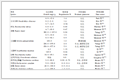
In an attempt to access the key rearrangement interme-diate, 4-(2-methoxyl-2-oxoethoxy)-enoate (6) (R=Me) was selected as the model substrate. Initially, 2.2 equiv. of lithium diisopropylamide was added into ester 6 in THF solution in the present of hexamethylphosphoric triamide (HMPA) while the reaction mixture turned from yellow to dark red. We were pleased to found that the rearrangement product 7 bearing quaternary carbon was obtained in 47.1% isolated yield with the 27:73 dr (Table 1, Entry 1), whereas this value was much lower than that achieved by Baker's yeast.[3] The moderate yield maybe caused by sort of byproducts which couldn't be identified by NMR. The screening of strong bases showed that lithium 2, 2, 6, 6-tetra-methylpiperidine (TMPLi), the more sterically hindered base, led to a slightly higher diastereoselectivity and isolated yield than other achiral base (LDA, NaHMDS) (Table 1, Entries 2, 3). When switching achiral bases to chiral lithium (S)-bis((S)-1-phenylethyl)amine and lithium (S)-bis((S)-1-phenylpropyl), [10] unfortunately, the yield and diastereoselectivity slightly decreased (Table 1, Entries 4, 5) and lithium (S)-2-(methoxymethyl)pyrrolidine (Table 1, Entry 6) also failed to furnish any product at low temperature and caused decomposition of the starting material at higher temperature. We then explored the influence of additives and demonstrated that the reactions work well in the presence of chiral bis(oxazoline) as external chiral ligand (ECL) with a desired diastereoselectivity (13:87) (Table 1, Entries 7, 8).[11]
 下载:
导出CSV
 |
||||||
| Entry | R | R1 | Base | Additives | Yieldb/% | drd |
| 1 | Me | Me | LDA | HMPA | 47.1 | 27:73 |
| 2 | Me | Me | NaHMDS | HMPA | NRe | — |
| 3 | Me | Me | TMPLi | HMPA | 57.4 | 25:75 |
| 4 | Me | Me | Base a | HMPA | 53.3 | 43:56 |
| 5 | Me | Me | Base b | HMPA | 66.5 | 32:67 |
| 6 | Me | Me | Base c | HMPA | NRe | — |
| 7 | Me | Me | LDA | HMPA/Ligand d | 48.1 | 13:87 |
| 8 | Me | Me | LDA | HMPA/Ligand e | 51.2 | 29:71 |
| 9 | tBu | Me | LDA | HMPA | 53.6 | 14:86 |
| 10 | Ph | Me | LDA | HMPA | 24.2 (undesired) | — |
| 11 | Tr | Me | LDA | HMPA | NRe | — |
| 12 | tBu | Et | LDA | HMPA | 41.1 | 16:84 |
| 13 | tBu | tBu | LDA | HMPA | 50.2 | 14:86 |
| a Reaction conditions, unless otherwise specified: 1 mmol of precursor 6, 2.2 mmol of LDA (lithium diisopropylamide), 1 mL dry HMPA (hexamethylphosphoramide) in 10 mL of THF at -78 ℃. b Isolated yields after purification by silica gel column chromatography. c The absolute configuration of products was determined by analyzing the 1H NMR of its MPA ester. d Diastereoslective ratios (dr) were determined by 1H NMR spectroscopy. e NR=no reaction. | ||||||
The presence of a large ester group on the allyloxy moiety was supposed to play some important role in producing high diastereoselectivity, [7] so [2,3]-Wittig rearrangement of substrate with phenyl, tert-butyl and triphenyl ester was next examined in the absence of chiral ligand (Table 1, Entries 9~11). To this end, 4-(2-tert-butoxyl-2-oxoeth-oxy)enoate exhibit moderate yield and considerable dr value (14:86), compared with the reaction conducted in the presence of the stoichiometric external chiral ligand (3 equiv.).[11] The influences of the unsaturated ester group on [2,3]-Wittig rearrangement that variations of unsaturated ester group (R1=Et, tBu) had slightly decreased yield were also tested (Table 1, Entries 12, 13).
The absolute and relative configuration of 7 was confirmed by combined analysis of the NOESY spectra of 7 (R=tBu) and 1H NMR spectra of (S)/(R)-MPA 7a, a method reported by Riguera et.al.[12] (Scheme 4).
Although we have no definitive explanation at present for the unusual threo selection owing to the great complexities of this process, the observed sense of enantioselection (2S) might be interpreted as follows. The enolization leads to the metal-chelated (E)-enolate which undergoes the [2,3]-shift preferentially from the Re-face as depicted in Scheme 5, where the steric repulsion between the hydrogen and ester group would be minimized (Scheme 5).[13]
With the optimization of the [2,3]-Wittig rearrangement step, substrate 7 (R=tBu, R1=Me) was chosen as the intermediate to be extended to pantothenamides 1. As outlined in Table 2, we focus on the C—O cleavage and olefin migration of substrate 9 which was achieved by removal of TBS group of 7 and subsequent benzoylation of the resulting diol 8. Following procedures adapted from Barrero's works (Table 2, Entry 1), we utilized Nugent's reagent [Cp2Ti(Ⅲ)Cl][14] to induce the deoxygenation-reduction transformation at the first attempt, however, only about 20% corresponding olefin 10 was obtained, with 48% recovered starting material. Enlightened by a novel palladium-catalyzed formate reduction sequence, [15] to our delight, the palladium/P(n-Bu3)-catalyzed debenzoylation and reduction of allylic benzoylate 9 produced the desired olefin 10 in good yield (68%), in sharp contrast to the corresponding PPh3 as ligand (trace) (Table 2, Entries 2, 3).
|
|
下载:
导出CSV
 |
|||
| Entry | R | Condition | Yield/% |
| 1 | H | Cp2TiCl2/Mn/THF | 20 |
| 2 | Bz | Pd2(dba)3/PPh3/HCO2NH4, toluene, reflux | Trace |
| 3 | Bz | Pd2(dba)3/P(n-Bu)3/HCO2NH4, toluene, reflux | 68 |
Olefin 10 was then submitted deprotection to give the crude acid 11 (Scheme 6). Due to its instability, the crude acid 11[3] was carried into coupling with deprotected amine 12 without further purification. Amine 12 was synthesized from Cbz-protected β-alanine and n-pentylamine according to literature procedure[16] and the ester reduction of amide 13 ultimately give the desired pantothenamide 1 in moderate yield.
We had conducted a new synthetic route that exploits the known alkyl methyl N-pantothenamides derivative 1, allowing for the installation of quaternary carbon moiety via [2,3]-Wittig rearrangement. The synthetic route feature two key elements, including [2,3]-Wittig rearrangement and palladium catalyzed formate reduction sequence. For the introduction of the requisite quaternary carbon, [2,3]-Wittig rearrangement of ester 6 had been well studied for screening out the optimal condition. The above endeavors represent the diastereoselective synthetic route of allyl methyl N-pantothenamide 1 and further investigation of enantiomeric rich [2,3]-Wittig rearrangement is underway in our laboratory, and these results will be reported in time.
1H NMR and 13C NMR spectra were acquired on a Bruker AVANCE Ⅲ-400 spectrometer with chemical shifts (δ) relative to tetramethylsilane as the internal standard (δ 0.00). Purification by flash chromatography on silica gel (300~400 mesh) and ethyl acetate (EA)-petrol ether (PE) as eluents. Solvents were purified and dried by standard procedures prior to use. TLC was performed on silica gel GF254 plates and detected by charring with 5% ethanolic phosphomolybdic acid hydrate or by placing under the UV (254, 364 nm) lamp.
To a solution of LDA (or other metalated dialkylamides) (2 equiv., 2.57 mL (2.0 mol/L), 5.14 mmol in THF (5 mL) at -78 ℃ was added a mixture of THF/HMPA solution (2.57 mL/2.57 mL) and additives (3 equiv.) under Ar atmosphere. The reaction mixture was then stirred at this temperature for 30 min and ester 6 (1 g, 2.57 mmol) in THF (2.5 mL) was then injected into the reaction mixture while the color of solution turned into dark red. After the reaction was stirred at -78 ℃ for 4 h, the reaction mixture was then poured into a cool saturated NH4Cl and extracted with EtOAc (10 mL×3). The combined extracts were washed with brine, dried over MgSO4 and removed the solvent under reduced pressure. The residue was purified by chromatography on silica gel (petroleum ether/EtOAc, V:V=10:1) to afford the product as light yellow oil or colorless oil.
Methyl (S, E)-3-(2, 2-dimethyl-1, 3-dioxolan-4-yl)-2-methylacrylate (3): To a solution of (S)-glyceraldehyde acetonide 2 (10 g, 76.9 mmol) in 100 mL of CH2Cl2 was added 27.8 g (79.8 mmol) methyl 2-(triphenyl-λ5-phosph-anylidene)propanoate at 0 ℃. The mixture was allowed to reach room temperature and stirred for 4 h. The solvent was removed under reduced pressure and then added petrol ether (80 mL) to remove triphenyl phosphorus oxide (Ph3PO) by filtration. After evaporation of the solvent, The residue was purified by chromatography on silica gel (petroleum ether/EtOAc, V:V=20:1) to afforded 3 (13.3 g, 91%) as a colorless oil. Rf=0.53 (petroleum ether/EtOAc, V:V=10:1). [α]D28.8+23.3 (c 0.5, CH3OH), 1H NMR (400 MHz, CDCl3) δ: 6.70 (dd, J=8.1, 1.4 Hz, 1H), 4.86 (dd, J=14.2, 7.7 Hz, 1H), 4.16 (dd, J=8.2, 6.3 Hz, 1H), 3.76 (s, 3H), 3.66~3.60 (t, J=7.6 Hz, 1H), 1.90 (d, J=1.3 Hz, 3H), 1.43 (d, J=14.3 Hz, 6H); 13C NMR (101 M Hz, CDCl3) δ: 167.84, 138.54, 130.73, 109.85, 72.71, 68.73, 52.02, 26.61, 25.84, 13.01; IR (KBr) ν: 2975, 1718, 1689 cm-1. HRMS (ESI-TOF) calcd for C10H16O4Na [M+Na]+ 223.1049, found 223.1125.
Methyl (S, E)-5-((tert-butyldimethylsilyl)oxy)-4-hydro-xy-2-methylpent-2-enoate (5): To a solution of 3 (1 g, 5.37 mmol) in mixed solvent (MeOH-H2O: 18 mL/2.5 mL) at ice bath was added 1 mL of conc. HCl. The mixture was stirred at this temperature for 2 h. The reaction mixture was then added solid 1 g of NaHCO3 to neutralization and evaporated the solvent under reduced pressure. The residue was extracted by EtOAc (10 mL×3) and the combined extracts were washed with water (10 mL), brine (10 mL), dried over MgSO4 and concentrated under reduced pressure. The residue was subjected to next step without further purification. Added TBSCl (1.16 g, 7.7 mmol) to a mixed solution of crude 4 and imidazol (1.61 g, 19.2 mmol) in 20 mL of CH2Cl2 at 0 ℃. The mixture was then stirred at room temperature for 2 h. The reaction mixture was quenched with methanol (0.3 mL), diluted with DCM (30 mL) and washed with 1 mol/L HCl (20 mL), saturated NaHCO3 solution (20 mL), brine (10 mL) and dried over MgSO4. The solvent was then removed under reduced pressure. The residue was purified by chromatography on silica gel (petroleum ether/EtOAc, V:V=10:1) to afford 5 (1.2 g, 81%) as colorless oil. Rf=0.24 (petroleum ether/EtOAc, V:V=10:1); [α]D28.8 -14 (c, 1, CH3OH). 1H NMR (400 MHz, CDCl3) δ: 6.54 (dd, J=8.1, 1.6 Hz, 1H), 4.38~4.50 (m, 1H), 3.66 (s, 3H), 3.55 (dd, J=10.1, 3.8 Hz, 1H), 3.44~3.38 (m, 1H), 2.57 (d, J=3.3 Hz, 1H), 1.82 (d, J=1.3 Hz, 3H), 0.82 (s, 9H), 0.00 (s, 6H); 13C NMR (101 MHz, CDCl3) δ: 168.06, 139.10, 130.31, 69.36, 65.68, 51.96, 25.85, 18.31, 13.13; IR (KBr) ν: 3432, 1728, 1455 cm-1. HRMS (ESI-TOF) calcd for C13H27O4Si [M+H]+ 275.1600, found 275.1625.
Methyl (S, E)-4-(2-(tert-butoxy)-2-oxoethoxy)-5-((tert- butyldimethylsilyl)oxy)-2-methylpent-2-enoate (6): To a stirred solution of 5 (1 g, 3.47 mmol) and tert-butyl 2-bromoacetate (1.42 g, 7.3 mmol) in dry DMF (16.5 mL) at ice bath was added NaH (60%, 175.2 mg) under Ar atmosphere. The stirred solution was allowed to room temperature for overnight. After the starting material was consumed, the mixture was poured into a cool saturated NH4Cl solution and extracted with EtOAc (10 mL×3). The organic phase was washed with brine and dried over MgSO4. After evaporation of the solvent, the residue was purified by chromatography on silica gel (petroleum ether/EtOAc, V:V=15:1) to afforded 6 (1.16 g, 82%) as colorless oil. Rf=0.41 (petroleum ether/EtOAc, V:V=10:1). [α]D28.8-4.3 (c 1, CH3OH). 1H NMR (400 MHz, CDCl3) δ: 6.54 (dd, J=9.1, 1.4 Hz, 1H), 4.34 (dd, J=9.4, 5.6 Hz, 1H), 3.98 (d, J=16.2 Hz, 1H), 3.92~3.85 (d, J=16.2 Hz, 1H), 3.79 (dd, J=10.5, 5.8 Hz, 1H), 3.70 (s, 3H), 3.59 (dd, J=10.5, 5.8 Hz, 1H), 1.85 (s, 3H), 1.41 (s, 10H), 0.82 (s, 9H), 0.00 (d, J=3.3 Hz, 6H); 13C NMR (101 MHz, CDCl3) δ: 169.33, 167.86, 138.68, 131.84, 81.55, 66.86, 65.36, 51.89, 28.06, 25.83, 18.30, 13.22; IR (KBr) ν: 3422, 1768, 1683, 1442 cm-1. HRMS (ESI-TOF) calcd for C19H37O6Si [M+H]+ 388.2281, found 388.2256.
4-(tert-Butyl)-1-methyl-(2S, 3S)-2-((E)-3-((tert-butyl-dimethylsilyl)oxy)prop-1-en-1-yl)-3-hydroxy-2-methyl-succinate (7): The tert-butyl ester 6 was subjected to the general procedure of [2,3]-Wittig rearrangement to afford 7 as light yellow oil. Rf=0.35 (petroleum ether/EtOAc, V: V=10:1). [α]D28.8+28.3 (c, 1, CH3OH); 1H NMR (400 MHz, CDCl3) δ: 5.90 (d, J=15.7 Hz, 1H), 5.77 (d, J=4.9 Hz, 1H), 4.36 (dd, J=12.5, 5.6 Hz, 1H), 4.14 (d, J=4.8 Hz, 2H), 3.67 (s, 3H), 3.06 (t, J=7.4 Hz, 1H), 1.40 (s, 11H), 1.29 (s, 2H), 1.20 (m, 1H), 0.84 (s, 9H), -0.00 (s, 6H); IR (KBr) ν: 3425, 1772, 1490 cm-1. HRMS (ESI-TOF) calcd for C19H36O6SiNa [M+Na]+ 411.2281, found 411.2256.
4-(tert-Butyl)-1-methyl (2S, 3S)-3-(benzoyloxy)-2-((E)-3-(benzoyloxy)prop-1-en-1-yl)-2-methylsuccinate (9): To a solution of alcohol 7 (100 mg, 0.257 mmol) in THF was added TBAF (74 mg, 0.283 mmol) at room temperature. After the reaction mixture was stirred for 4 h. The solution was passed through a pot of silica gel and evaporated under reduced pressure to afforded light yellow oil which was directly subjected to next step. To a solution of crude diol in CH2Cl2 (5 mL) at ice bath was added triethyl amine (110 mg, 10.9 mmol), 4-dimethylaminepyridine (5 mg, 0.03 mmol) and benzoyl chloride (112 mg, 0.803 mmol). The reaction mixture was stirred for overnight at room temperature. The mixture was then diluted with CH2Cl2 (10 mL) and washed with 1 mol/L HCl (5 mL), saturated NaHCO3 (5 mL), brine (5 mL) and dried over MgSO4. After the evaporation of the solvent, the residue was purified by chromatography on silica gel (petroleum ether/EtOAc, V:V=20:1) to afforded 9 (85 mg, two stpes: 68%) as colorless oil Rf=0.56 (petroleum ether/EtOAc, V:V=10:1); 1H NMR (400 MHz, CDCl3) δ: 7.97~8.19 (m, 5H), 7.31~7.70 (m, 7H), 6.14 (d, J=15.8 Hz, 1H), 5.92 (m, 1H), 5.65 (s, 1H), 4.83 (dd, J=12.1 Hz, 2H), 3.74 (s, 3H), 1.60 (s, 3H), 1.43 (d, J=7.3 Hz, 9H); 13C NMR (101 MHz, CDCl3) δ: 172.28, 166.14, 134.05, 133.34, 132.95, 129.82, 129.77, 129.67, 129.59, 128.50, 128.44, 128.40, 128.31, 126.21, 126.10, 83.22, 75.41, 64.82, 52.55, 51.11, 27.89, 16.21; IR (KBr) ν: 2958, 1772, 1689, 1677, 1455 cm-1. HRMS (ESI-TOF) calcd for C27H31O8 [M+H]+ 482.1941, found 482.2047.
4-(tert-Butyl)-1-methyl-(2S, 3S)-2-allyl-3-(benzoyloxy)-2-methylsuccinate (10): Under Ar atmosphere, a mixture of Pd2(dba)3 (5.7 mg, 0.0062 mmol), P(nBu)3 (10 mg, 0.05 mmol) and HCO2NH4 (28.7 mg, 0.455 mmol) in toluene (5 mL) was stirred for 10 min at room temperature and 9 (100 mg) in dry toluene (1 mL) was then injected into the reaction mixture. The stirred mixture was allowed to reflux for 3~5 h and then diluted with EtOAc (10 mL). The organic phase was washed with water (10 mL), brine (8 mL), dried over MgSO4 and the solvent was evaporated under reduced pressure. The residue was then purified by chromatography on silica gel (petroleum ether-EtOAc, V:V=20:1) to afford the desired product 10 (62 mg, 68%) as colorless oil: Rf=0.63 (petroleum ether/EtOAc, V:V=10:1). 1H NMR (400 MHz, CDCl3) δ: 8.05 (d, J=7.1 Hz, 2H), 7.60 (t, J=7.4 Hz, 1H), 7.47 (t, J=7.4 Hz, 2H), 5.69~5.81 (m, 1H), 5.48 (s, 1H), 5.10 (dd, J=18.1, 8.3 Hz, 2H), 3.71 (s, 3H), 2.32~2.73 (m, 2H), 1.44 (s, 9H), 1.32 (s, 3H); 13C NMR (101 M Hz, CDCl3) δ: 173.33, 166.69, 165.62, 133.36, 132.90, 132.57, 129.79, 128.50, 119.13, 83.04, 76.05, 52.07, 51.94, 49.24, 48.95, 41.22, 39.79, 27.98, 27.86, 18.12, 16.38; IR (KBr)ν: 2957, 1712, 1450 cm-1. HRMS (ESI-TOF) calcd for C20H27O6 [M+H]+ 363.1729, found 363.1697.
(2S, 3S)-3-(Methoxycarbonyl)-3-methyl-1-oxo-1-((3-oxo-3-(pentylamino)propyl)amino)hex-5-en-2-ylbenzoate (13): Allylic 10 (100 mg, 0.276 mmol) in 1 mL of CH2Cl2 was added into 20% TFA/CH2Cl2 (V/V, 5 mL) solution and stirred at room temperature for overnight. The solvent were evaporated under reduced pressure to obtained a yellow oil which subjected to next step without further purification. In a separated three necked, round-bottomed flask, EDCI (190 mg, 0.99 mmol) and HOBt (89.4 mg, 0.66 mmol) was added in 10 mL of THF while the crude acid was dissolved in 2 mL of THF, and then added into the reaction mixture. The amine 12 in 1 mL of THF and DIPEA (214 mg, 1.65 mmol) was subsequently added the solution. The reaction was stirred at room temperature for overnight and diluted with 10 mL of CH2Cl2, and then washed with 1 mol/L HCl (5 mL), saturated NaHCO3 solution (5 mL) and brine, dried over MgSO4. After evaporation of solvent, the residue was purified by chromatography on silica gel (petroleum ether:EtOAc=1:1) to afford the desired product 13 (49 mg, 41%) as colorless oil Rf=0.45 (petroleum ether/EtOAc, V:V=2:3); 1H NMR (400 MHz, CDCl3) δ: 8.09 (d, J=8.5 Hz, 2H), 7.63 (t, J=7.4 Hz, 1H), 7.50 (t, J=7.8 Hz, 2H), 6.94 (t, J=5.7 Hz, 1H), 5.80 (s, 1H), 5.10~5.75 (m, 2H), 5.04 (t, J=8.2 Hz, 2H), 3.77 (s, 3H), 3.41~3.60 (m, 2H), 3.03~3.25 (m, 2H), 2.57 (dd, J=13.5, 7.4 Hz, 1H), 2.18~2.51 (m, 3H), 1.31~1.50 (m, 3H), 1.16~1.32 (m, 9H), 0.89 (t, J=7.1 Hz, 3H); 13C NMR (101 M Hz, CDCl3) δ: 173.77, 171.04, 168.00, 165.21, 133.85, 132.45, 129.93, 129.89, 128.82, 128.74, 128.69, 119.08, 52.21, 49.81, 41.12, 39.57, 35.56, 35.49, 29.67, 28.94, 24.43, 23.95, 22.30, 16.62, 13.95; IR (KBr) ν: 3446, 1789, 1658, 1457 cm-1. HRMS (ESI-TOF) calcd for C24H35N2O6 [M+H]+ 447.2417, found 447.2443.
(2S, 3R)-N-(3-(Butylamino)-3-oxopropyl)-2-hydroxy-3-(hydroxymethyl)-3-methylhex-5-enamide (1): To a solution of ester 13 (50 mg, 0.112 mmol) in THF at -15 ℃ was added LiAlH4 (18 mg, 0.45 mmol) under Ar atmosphere. The mixture stirred at this temperature for 4 hours, and then added 1 mL of saturated Na2SO4, 10 mL of EtOAc into this mixture. The solution was passed through a pot of celatom and the organic phase was washed with brine and dried over MgSO4. After evaporation of the solvent, the residue was purified by chromatography (petroleum ether/EtOAc, V: V=1:2) on silica gel to afforded the desired 1 (17 mg, 45%) as colorless oil. Rf=0.14 (petroleum ether/EtOAc, V:V=1:2). 1H NMR (400 M Hz, CDCl3) δ: 5.52~5.71 (m, 2H), 5.13 (d, J=5.4 Hz, 1H), 5.09 (s, 1H), 4.35 (s, 1H), 3.63~3.71 (m, 2H), 3.13 (q, J=6.9 Hz, 2H), 2.44 (t, J=7.1 Hz, 3H), 2.36~2.27 (m, 1H), 1.41 (s, 2H), 1.15~1.30 (m, 6H), 1.16 (s, 3H), 0.82 (t, J=6.8 Hz, 3H); 13C NMR (101 MHz, CDCl3) δ: 178.84, 176.31, 131.22, 119.16, 75.69, 71.10, 47.51, 38.92, 38.68, 34.05, 32.82, 28.68, 28.11, 28.01, 21.30, 17.41, 12.94; IR (KBr) ν: 3459, 1766, 1623, 1453 cm-1. HRMS (ESI-TOF) calcd for C24H35N2O6 [M+H]+ 301.2049, found 301.2122.
Supporting Information The 1H NMR and 13C NMR spectrum of compounds 1~13, and the NOESY spectra of compound 7 (R=Me)]. The Supporting Information is available free of charge via the Internet at http://sioc-journal.cn/.
Clifton, G.; Bryant, S. R.; Skinner, C. G. Arch. Biochem. Bioph. 1970, 137, 523. doi: 10.1016/0003-9861(70)90470-4
(a) Zhang, Y.-M.; Frank, M. W.; Virga, K. G.; Lee, R. E.; Rock, C. O.; Jackowski, S. J. Biolog. Chem. 2004, 279, 50969.
(b) Maršavelski, A. RSC Adv. 2016, 6, 44888.
Hoegl, A.; Darabi, H.; Tran, E.; Awuah, E.; Kerdo, E. S. C.; Habib, E. Biorg. Med. Chem. Lett. 2014, 24, 3274. doi: 10.1016/j.bmcl.2014.06.013
Akinnusi, T. O.; Vong, K.; Auclair, K. Bioorg. Med. Chem. 2011, 19, 2696. doi: 10.1016/j.bmc.2011.02.053
Fráter, G. Tetrahedron Lett. 1981, 22, 425 doi: 10.1016/0040-4039(81)80116-5
Tsao, K.-W.; Cheng, C.-Y.; Isobe, M. Org. Lett. 2012, 14, 5274 doi: 10.1021/ol302432d
Hiersemann, M.; Lauterbach, C.; Pollex, A. Eur. J. Org. Chem. 1999, 2713.
Hiersemann, M.; Abraham, L.; Pollex, A. Synlett 2003, 1088.
(a) Yang, H.; Sun, M.; Zhao, S.; Zhu, M.; Xie, Y.; Niu, C. J. Org. Chem. 2013, 78, 339.
(b) Sun, M.; Dai, L; Yang, H.; Liu, H.; Yu, D. Chin. J. Org. Chem. 2018, 38, 2443(in Chinese).
(孙默然, 代磊, 杨华, 刘宏民, 于德泉, 有机化学, 2018, 38, 2443.)
(c) Zhou, H.; Sun, M.; Cao, Q.; Bai, L.; Xie, Y.; Yang, H. Chin. J. Org. Chem. 2013, 33, 2515(in Chinese).
(周航, 孙默然, 曹其伟, 朱明, 白磊阳, 谢阳娜, 杨华, 有机化学, 2013, 33, 2515.)
Marshall, J. A.; Lebreton, J. J. Am. Chem. Soc. 1988, 110, 2925. doi: 10.1021/ja00217a039
(a) Hirokawa, Y.; Kitamura, M.; Maezaki, N. Tetrahedron: Asymmetry 2008, 19, 1167.
(b) Barrett, I. M.; Breeden, S. W. Tetrahedron: Asymmetry 2004, 15, 3015.
Seco, J. M.; Quiñoá, E.; Riguera, R. Tetrahedron:Asymmetry 2001, 12, 2915. doi: 10.1016/S0957-4166(01)00508-0
(a) Osamu, T.; Koichi, M.; Takeshi, N. Chem. Lett. 1987, 16, 69.
(b) Fujimoto, K, Nakai, T. Tetrahedron Lett. 1994, 35, 5019.
Diéguez, H. R.; López, A.; Domingo, V.; Arteaga, J. F.; Dobado, J. A.; Herrador, M. M. J. Am. Chem. Soc. 2010, 132, 254. doi: 10.1021/ja906083c
Hughes, G.; Lautens, M.; Wen, C. Org. Lett. 2000, 2, 107. doi: 10.1021/ol991170n
Vong, K. K. H.; Maeda, S.; Tanaka, K. Chem.-Eur. J. 2016, 22, 18865. doi: 10.1002/chem.201604247
Table 1. Optimizations of [2,3]-Wittig rearrangement of precursor 6a
|
||||||
| Entry | R | R1 | Base | Additives | Yieldb/% | drd |
| 1 | Me | Me | LDA | HMPA | 47.1 | 27:73 |
| 2 | Me | Me | NaHMDS | HMPA | NRe | — |
| 3 | Me | Me | TMPLi | HMPA | 57.4 | 25:75 |
| 4 | Me | Me | Base a | HMPA | 53.3 | 43:56 |
| 5 | Me | Me | Base b | HMPA | 66.5 | 32:67 |
| 6 | Me | Me | Base c | HMPA | NRe | — |
| 7 | Me | Me | LDA | HMPA/Ligand d | 48.1 | 13:87 |
| 8 | Me | Me | LDA | HMPA/Ligand e | 51.2 | 29:71 |
| 9 | tBu | Me | LDA | HMPA | 53.6 | 14:86 |
| 10 | Ph | Me | LDA | HMPA | 24.2 (undesired) | — |
| 11 | Tr | Me | LDA | HMPA | NRe | — |
| 12 | tBu | Et | LDA | HMPA | 41.1 | 16:84 |
| 13 | tBu | tBu | LDA | HMPA | 50.2 | 14:86 |
| a Reaction conditions, unless otherwise specified: 1 mmol of precursor 6, 2.2 mmol of LDA (lithium diisopropylamide), 1 mL dry HMPA (hexamethylphosphoramide) in 10 mL of THF at -78 ℃. b Isolated yields after purification by silica gel column chromatography. c The absolute configuration of products was determined by analyzing the 1H NMR of its MPA ester. d Diastereoslective ratios (dr) were determined by 1H NMR spectroscopy. e NR=no reaction. | ||||||
 下载: 导出CSV
Table 2. C—O cleavage and olefin migration sequence
|
|||
| Entry | R | Condition | Yield/% |
| 1 | H | Cp2TiCl2/Mn/THF | 20 |
| 2 | Bz | Pd2(dba)3/PPh3/HCO2NH4, toluene, reflux | Trace |
| 3 | Bz | Pd2(dba)3/P(n-Bu)3/HCO2NH4, toluene, reflux | 68 |
下载: 导出CSV

 扫一扫看文章


扫一扫关注我们


 下载: