
Scheme 1.
Synthesis of β-substituted α, β-unsaturated carbonyl TPP

Solvent-Free Aldol Reaction of β-Porphyrin Formaldehyde with Ketone
Xiang Zhou , Fei Zhou , Xiaoliang Jia , Jiawei Yu , Qi Shen , Yunxiao Zhang , Weimin Shi


Porphyrins are importantly ubiquitous molecular constructs because of their potential biomedical applications such as photodynamic therapy[1, 2] and the ability to incorporate their electronic properties into optical devices.[3] Furthermore, a variety of modes of porphyrinoid-α, β- unsaturated carbonyl connectivity provides sufficiently strong interchromophore electronic interactions to facilitate extensive electronic delocalization.
Tetraarylporphyrins (TPPs) are easily achievable, which could be functionalized at the β-pyrrolic position by relatively few synthetic steps. The use of large or electron-withdrawing substituents and the halogenation of the β-pyrrolic positions over the basic skeleton of TPP have been recognized[4~6] and the use of elaborated porphyrin structures has also been studied. The β-substituted TPP are interesting compounds and have been used in many recent studies, namely, as starting units for the synthesis of elaborated porphyrins or as precursors of photodynamic pharmaceuticals.[7~10] Following our own research in this field, [11] in this paper we present a new method of the aldol reaction of designed β-substituted TPP with α, β-unsatura- ted carbonyl compound (Scheme 1), which is a more efficient and economical way to get β-substituted α, β-unsa- turated carbonyl porphyrin compounds.
Since its discovery by Borodin[12, 13] and Wurtz, [14] the aldol addition reaction has become one of the most important transformations in organic synthesis.[15] To the reaction of TPP formaldehyde with excess acetone in chloroform as a previous model, [16] the yield was not high, and the catalyst needed to be prepared in advance. Even more unfortunately, the metalloporphyrin derivatives could not be carried out under this condition. Responsing to the disadvantage above, we decided to change the model reaction.[17] Mixing TPP formaldehyde and α, β-unsaturated carbonyl reagent without solvent (keep the rest of condition), the desired product was obtained in a high yield (Scheme 1). More interesting, the metalloporphyrins formaldehyde (metal-TPP formaldehydes) reacted smoothly with α, β-unsaturated carbonyl compound and the desired product was obtained with good to excellent yields.
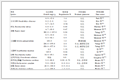
Initially, equimolar cyclohexanone and β-TPP formaldehyde were crushed with NaOH in a mortar at room temperature for 15 min, but no reaction occurred. We suspected that solid aldehydes and ketone could not be mixed thoroughly under this condition. Following a modified procedure, a viscous liquid of NaOH in excessive cyclohexanone and TPP formaldehyde was stirred vigorously for 12 h at room temperature. Thin-layer chromatography (TLC) results showed that only trace product was formed (Table 1, Entry 1). Screening the reaction temperature, the yield will increase along with enhanced temperature. The yield improved to 55% at 75 ℃ for 6 h, and up to 82% at 85 ℃ (Table 1, Entries 3, 4). Further rising temperature will not continuously increase the yield but lead to the increase of by-products (Table 1, Entries 5, 6). So 85 ℃ was the better choice of reaction temperature. For base, NaOH was good for this transformation. Table 1, Entries 6~8 showed that less or more base will lead to reduced yield. 0.5 equiv. of NaOH was suitable for the aldol addition.
 下载:
导出CSV
 |
||||
| Entry | Base (mol%) | T/℃ | Time/h | Yieldb/% |
| 1 | NaOH (50) | r.t. | 12 | Trace |
| 2 | NaOH (50) | 50 | 6 | 20 |
| 3 | NaOH (50) | 75 | 6 | 55 |
| 4 | NaOH (50) | 85 | 6 | 75 |
| 5 | NaOH (50) | 90 | 6 | 75 |
| 6 | NaOH (50) | 110 | 6 | 70 |
| 7 | NaOH (30) | 110 | 6 | 63 |
| 8 | NaOH (70) | 110 | 6 | 71 |
| 9 | Na2CO3 (50) | 110 | 6 | Trace |
| 10 | TEA (50) | 85 | 6 | 10 |
| 11 | CH3CH2ONa (50) | 85 | 4 | 14 |
| 12 | KOH (50) | 85 | 6 | 78 |
| 13c | KOH (50) | 85 | 6 | 65 |
| 14c | NaOH (50) | 85 | 6 | 69 |
| 15d | KOH (50) | 85 | 6 | 79 |
| 16d | NaOH (50) | 85 | 6 | 82 |
| a The reaction was carried out with 1 (7.788 mmol), ketone was added dropwise until the system is viscous. b Isolated yield. c Ketone is cyclopentanone. d Ketone is 3-pentanone. | ||||
Next, different bases such as Na2CO3, triethylamine (TEA), sodium ethoxide and KOH were tested. Na2CO3 gave a very low yield even up to 110 ℃, and TEA also gave a low yield (Table 1, Entries 9 and 10). As to sodium ethoxide, because of its strong basicity, the reaction resulted in destruction of most of raw materials within 4 h (Table 1, Entry 11). Interestingly, KOH was little better than NaOH in the addition with cyclohexanone, but it's just the opposite in the addition with cyclopentanone and 3-pentanone (Table 1, Entries 13~16). The results showed that the addition of β-TPP formaldehyde with different ketone had slightly difference in their transition state.
To further expand application of this method, a variety of metal-TPP formaldehydes and ketones were investigated, and the results were summarized in Table 2. In general, the aldol reaction of metalloporphyrin formaldehyde with ketone was good efficient with a medium or high yield up to 87% (Table 2, Entries 9). Same as above, KOH was more suitable for addition with cyclohexanone but NaOH was better for cyclopentanone and 3-pentanone, and more, cyclopentanone showed lower activity than other ketones (Table 2, Entries 2, 5, 8). Among these metalloporphyrins, Zn(Ⅱ)-TPP-CHO showed the lowest reaction activity (Table 2, Entries 4~6). It was known that Zn(Ⅱ) has the largest ionic radius and the weakest binding force to the outer electrons, which improve the electron density of the porphyrin ring and reduce addition activity of the TPP formaldehyde. The synthesized β-substituted α, β-unsa- turated carbonyl porphyrin compounds were shown in Figure 1.
下载:
导出CSV
 |
||||
| Entry | M | Ketone | Base | Yieldb/% |
| 1 | Co(Ⅱ) | Cyclohexanone | KOH | 82 |
| 2 | Co(Ⅱ) | Cyclopentanone | NaOH | 63 |
| 3 | Co(Ⅱ) | 3-Pentanone | NaOH | 82 |
| 4 | Zn(Ⅱ) | Cyclohexanone | KOH | 76 |
| 5 | Zn(Ⅱ) | Cyclopentanone | NaOH | 59 |
| 6 | Zn(Ⅱ) | 3-Pentanone | NaOH | 77 |
| 7 | Ni(Ⅱ) | Cyclohexanone | KOH | 80 |
| 8 | Ni(Ⅱ) | Cyclopentanone | NaOH | 72 |
| 9 | Ni(Ⅱ) | 3-Pentanone | NaOH | 87 |
| a The reaction was carried out with metal-TPP-CHO (7.788 mmol), ketone was added dropwise until the system is viscous. b Isolated yield. | ||||
A solvent-free procedure to carry on the aldol addition of TPP formaldehyde including metal-TPP formaldehydes with ketones was successfully developed. A series of β-substituted α, β-unsaturated carbonyl porphyrin compounds were obtained with moderate to excellent yields under mild reaction conditions. This method is concise and efficient for the synthesis of porphyrin derivatives.
NMR spectra were recorded on a Bruker AVIII-400 spectrometer at 400 MHz for 1H NMR. All new products were further characterized by high resolution mass spectrometry (HRMS) with an APEX Ⅳ Fourier Transform Ion Cyclotron Resonance Mass Spectrometer equipped with an ESI source. All absorption spectra were measured on a Hewlett-Packard 8453 UV/vis spectrophotometer. Melting points were uncorrected. Column chromatography (CC) was performed on a silica gel (300 mesh) column. Thin layer Chromatography (TLC) was performed using glass plates coated with silica gel GF254. All reactions were run in 15 mL sealed tubes. Solvents were used as received. Other reagents were commercially available and used without further purification.
TPP formaldehyde (7.788 mmol) and excess cyclohexanone were added to a 35 mL sealed tube under stirring until the mixture is viscous. Then NaOH (3.894 mmol) was added and the mixture was stirred at 85 ℃ for 6 h under seal. The progress of the reactions was monitored by TLC. The mixture was cooled and washed with a saturated sodium bicarbonate solution, then extracted with dichloromethane (DCM). The solvent was removed under vacuum. The residue was purified via column chromatography in silica gel eluted with cyclohexane/CH2Cl2 (V:V=1:2.5) to afford the corresponding purified products.
(5, 10, 15, 20-Tetraphenylporphyrin-2-yl)-3-buten-2-one (a)[16]: purple solid, 70% yield. m.p. 202~204 ℃ (dec.); UV-Vis (CH2Cl2) λmax: 444, 526, 566, 603, 661 nm; 1H NMR (400 MHz, CDCl3) δ: -2.45 (s, 2H, inner NH), 2.16 (s, 3H, CH3), 6.90 (d, J=16 Hz, 1H, TPP-CH=), 7.43 (d, J=16 Hz, 1H, =CHCO), 7.65~7.96 (m, 12H, m- and p-ArH), 8.20~8.43 (m, 8H, o-ArH), 8.82~9.12 (m, 7H, β-pyrrole-H); IR (KBr) ν: 3430, 1668, 1627, 1520, 1452 cm-1; HRMS calcd for C48H35N4O [M+H]+ 683.2416, found 683.2431.
(5, 10, 15, 20-Tetraphenylporphyrin-2-yl)-2-methylene-cyclohexanone (1a): purple solid, 82% yield. m.p. 205~206 ℃ (dec.); UV-Vis (CH2Cl2) λmax: 432, 521, 568, 615, 653 nm; 1H NMR (400 MHz, CDCl3) δ: -2.69 (s, 2H, inner NH), 1.74~1.80 (m, 2H, CH2CH2C=CH), 1.90~1.96 (m, 2H, CH2CH2C=O), 2.48 (t, J=6 Hz, 2H, CH2C=CH), 2.86 (t, J=6 Hz, 2H, CH2C=O), 7.37 (s, 1H, TPPCH=), 7.65~7.76 (m, 12H, m- and p-ArH), 8.03~8.22 (m, 8H, o-ArH), 8.59~8.86 (m, 7H, β-pyrrole-H); 13C NMR (100 MHz, CDCl3) δ: 23.9, 24.3, 26.9, 40.6, 120.0, 120.2, 120.2, 120.5, 126.7, 126.7, 126.8, 127.1, 127.8, 128.5, 131.8, 133.9, 134.6, 134.6, 134.7, 141.7, 141.9, 142.1, 142.2, 201.4; IR (KBr) ν: 3458, 1675, 1638, 1525, 1453 cm-1; HRMS calcd for C51H39N4O [M+H]+ 723.3124, found 723.3120.
(5, 10, 15, 20-Tetraphenylporphyrin-2-yl)-2-methylene-cyclopentanone (1b): purple solid, 85% yield. m.p. 205~206 ℃ (dec.); UV-Vis (CH2Cl2) λmax: 428, 520, 567, 612, 650 nm; 1H NMR (400 MHz, CDCl3) δ: -2.61 (s, 2H, inner NH), 1.99~2.07 (m, 2H, CH2CH2CH2), 2.38 (t, J=8 Hz, 2H, CH2C=), 3.00 (t, J=8 Hz, 2H, CH2CO), 7.24 (s, 1H, TPPCH=), 7.70~7.83 (m, 12H, m- and p-ArH), 8.08~8.23 (m, 8H, o-ArH), 8.79~8.86 (m, 7H, β-pyrrole-H); 13C NMR (100 MHz, CDCl3) δ: 20.5, 29.5, 38.2, 120.2, 120.2, 120.4, 120.5, 126.7, 126.7, 126.8, 127.2, 127.8, 127.9, 128.9, 134.0, 134.5, 134.6, 134.6, 136.3, 141.4, 142.1, 142.4, 206.8; IR (KBr) ν: 3455, 1676, 1638, 1520, 1446 cm-1; HRMS calcd for C50H37N4O [M+H]+ 709.2967, found 709.2963.
(5, 10, 15, 20-Tetraphenylporphyrin-2-yl)-2-methylene-3-pentanone (1c): purple solid, 87% yield. m.p. 204~206 ℃ (dec.); UV-Vis (CH2Cl2) λmax: 431, 520, 569, 610, 653 nm; 1H NMR (400 MHz, CDCl3) δ: -2.67 (s, 2H, inner NH), 1.08 (t, J=8 Hz, 3H, CH2CH3), 2.11 (s, 3H, CH3), 2.38 (q, J=8 Hz, 2H, CH2CH3), 7.57 (s, 1H, TPPCH=), 7.65~7.78 (m, 12H, m- and p-ArH), 8.07~8.21 (m, 8H, o-ArH), 8.68~8.87 (m, 7H, β-pyrrole-H); 13C NMR (100 MHz, CDCl3) δ: 8.6, 13.2, 29.9, 119.9, 120.1, 120.3, 120.6, 126.7, 126.8, 127.2, 127.8, 127.9, 128.4, 134.1, 134.5, 134.6, 135.3, 136.2, 141.8, 142.1, 142.2, 142.2, 203.0; IR (KBr) ν: 3448, 1677, 1630, 1527, 1450 cm-1; HRMS calcd for C50H39N4O [M+H]+ 711.3124, found 711.3119.
Co(Ⅱ)-(5, 10, 15, 20-Tetraphenylporphyrin-2-yl)-2-methyl-enecyclohexanone (2a): purple solid, 83% yield. m.p. 205~206 ℃ (dec.); UV-Vis (CH2Cl2) λmax: 418, 535, 585 nm; IR (KBr) ν: 3434, 3335, 3144, 2957, 2922, 2851, 1740, 1661, 1615, 1455, 1400, 1350, 1215, 1073, 1039, 1005, 796, 751, 701 cm-1; HRMS calcd for C51H36N4OCo [M+H]+ 779.2221, found 779.2217.
Co(Ⅱ)-(5, 10, 15, 20-Tetraphenylporphyrin-2-yl)-2-methyl-ene-cyclopentanone (2b): purple solid, 63% yield. m.p. 205~206 ℃ (dec.); UV-Vis (CH2Cl2) λmax: 437, 535, 583 nm; IR (KBr) ν: 2954, 2871, 2362, 2334, 1705, 1638, 1452, 1251, 1222, 1166, 1070 cm-1; HRMS calcd for C50H34N4OCo [M+H]+ 765.2065, found 765.2096.
Co(Ⅱ)-(5, 10, 15, 20-Tetraphenylporphyrin-2-yl)-2-methyl-ene-3-pentanone (2c): purple solid, 85% yield. m.p. 204~206 ℃ (dec.); UV-Vis (CH2Cl2) λmax: 417, 534, 569 nm; IR (KBr) ν: 3384, 2948, 2836, 2370, 1638, 1592, 1473, 1402, 1111, 1025 cm-1; HRMS calcd for C50H36N4OCo [M+H]+ 767.2221, found 767.2218.
Zn(Ⅱ)-(5, 10, 15, 20-Tetraphenylporphyrin-2-yl)-2-methyl-enecyclohexanone (3a): purple solid, 75% yield. m.p. 205~206 ℃ (dec.); UV-Vis (CH2Cl2) λmax: 441, 567, 654 nm; 1H NMR (400 MHz, CDCl3) δ: 1.74~1.80 (m, 2H, CH2CH2C=CH), 1.90~1.96 (m, 2H, CH2CH2C=O), 2.48 (t, J=6 Hz, 2H, CH2C=CH), 2.86 (t, J=6 Hz, 2H, CH2C=O), 7.37 (s, 1H, TPPCH=), 7.65~7.76 (m, 12H, m- and p-ArH), 8.03~8.23 (m, 8H, o-ArH), 8.69~8.74 (m, 7H, β-pyrroleH); 13C NMR (100 MHz, CDCl3) δ: 23.9, 24.4, 26.9, 40.6, 120.0, 120.3, 120.2, 120.5, 126.7, 126.6, 126.8, 127.1, 127.8, 128.5, 131.8, 133.9, 134.7, 134.6, 134.7, 141.7, 141.9, 142.0, 142.2, 201.4; HRMS calcd for C51H37N4OZn [M+H]+ 785.2259, found 785.2253.
Zn(Ⅱ)-(5, 10, 15, 20-Tetraphenylporphyrin-2-yl)-2-methyl-Ene-cyclopentanone (3b): purple solid, 80% yield. m.p. 205~206 ℃ (dec.); UV-Vis (CH2Cl2) λmax: 437, 565, 649 nm; 1H NMR (400 MHz, CDCl3) δ: 1.92~2.02 (m, 2H, CH2CH2CH2), 2.32 (t, J=8 Hz, 2H, CH2C=), 2.99 (t, J=8 Hz, 2H, CH2CO), 7.16 (s, 1H, TPPCH=), 7.67~7.71 (m, 12H, m- and p-ArH), 8.00~8.16 (m, 8H, o-ArH), 8.60~8.80 (m, 7H, β-pyrroleH); 13C NMR (100 MHz, CDCl3) δ: 20.5, 29.5, 38.2, 120.3, 120.2, 120.4, 120.5, 126.7, 126.8, 126.8, 127.2, 127.8, 127.8, 128.9, 134.0, 134.5, 134.5, 134.6, 136.3, 141.3, 142.1, 142.4, 206.8; HRMS calcd for C50H35N4OZn [M+H]+ 771.2102, found 771.2009.
Zn(Ⅱ)-(5, 10, 15, 20-Tetraphenylporphyrin-2-yl)-2-methyl-ene-3-pentanone (3c): purple solid, 67% yield. m.p. 204~206 ℃ (dec.); UV-Vis (CH2Cl2) λmax: 440, 568, 653 nm; 1H NMR (400 MHz, CDCl3) δ: 1.02 (t, J=8 Hz, 3H, CH2CH3), 2.06 (s, 3H, CH3), 2.33 (q, J=8 Hz, 2H, CH2CH3), 7.50 (s, 1H, TPPCH=), 7.67~7.71 (m, 12H, m- and p-ArH), 8.00~8.12 (m, 8H, o-ArH), 8.70~8.78 (m, 7H, β-pyrrole-H); 13C NMR (100 MHz, CDCl3) δ: 8.5, 13.2, 29.9, 119.9, 120.1, 120.3, 120.7, 126.7, 126.8, 127.3, 127.8, 127.9, 128.3, 134.1, 134.5, 134.7, 135.3, 136.2, 141.8, 142.2, 142.2, 142.1, 203.0; HRMS calcd for C50H37N4OZn [M+H]+ 773.2295, found 773.2293.
Ni(Ⅱ)-(5, 10, 15, 20-Tetraphenylporphyrin-2-yl)-2-methyl-enecyclohexanone (4a): purple solid, 70% yield. m.p. 205~206 ℃ (dec.); UV-Vis (CH2Cl2) λmax: 430, 546, 594 nm; 1H NMR (400 MHz, CDCl3) δ: 1.74~1.80 (m, 2H, CH2CH2C=CH), 1.90~1.96 (m, 2H, CH2CH2C=O), 2.48 (t, J=6 Hz, 2H, CH2C=CH), 2.86 (t, J=6 Hz, 2H, CH2C=O), 7.36 (s, 1H, TPPCH=), 7.65~7.76 (m, 12H, m- and p-ArH), 8.03~8.22 (m, 8H, o-ArH), 8.59~8.76 (m, 7H, β-pyrroleH); 13C NMR (100 MHz, CDCl3) δ: 23.8, 24.3, 26.9, 40.5, 120.0, 120.2, 120.2, 120.5, 126.8, 126.7, 126.8, 127.1, 127.9, 128.5, 131.7, 133.9, 134.6, 134.6, 134.8, 141.7, 141.9, 142.2, 142.2, 201.4; HRMS calcd for C51H37N4ONi [M+H]+ 779.2321, found 779.2316.
Ni(Ⅱ)-(5, 10, 15, 20-Tetraphenylporphyrin-2-yl)-2-methyl-ene-cyclopentanone (4b): purple solid, 75% yield. m.p. 205~206 ℃ (dec.); UV-Vis (CH2Cl2) λmax: 425, 549, 588 nm; 1H NMR (400 MHz, CDCl3) δ: 1.93~2.09 (m, 2H, CH2-CH2-CH2), 2.31 (t, J=8 Hz, 2H, -CH2-C=), 2.93 (t, J=8 Hz, 2H, -CH2-CO), 7.14 (s, 1H, TPP-CH=), 7.64~7.67 (m, 12H, m- and p-ArH), 7.97~8.13 (m, 8H, o-ArH), 8.57~8.77 (m, 7H, β-pyrroleH); 13C NMR (100 MHz, CDCl3) δ: 20.5, 29.5, 38.3, 120.2, 120.2, 120.3, 120.5, 126.7, 126.7, 126.9, 127.2, 127.8, 127.9, 128.9, 134.1, 134.5, 134.6, 134.7, 136.3, 141.4, 142.1, 142.5, 206.8; HRMS calcd for C50H35N4ONi [M+H]+ 765.2164, found 765.2160.
Ni(Ⅱ)-(5, 10, 15, 20-Tetraphenylporphyrin-2-yl)-2-methyl-ene-3-pentanone (4c): purple solid, 67% yield. m.p. 204~206 ℃ (dec.); UV-Vis (CH2Cl2) λmax: 428, 547, 593 nm; 1H NMR (400 MHz, CDCl3) δ: 1.02 (t, J=8 Hz, 3H, CH2CH3), 2.04 (s, 3H, CH3), 2.33 (q, J=8 Hz, 2H, CH2CH3), 7.47 (s, 1H, TPPCH=), 7.55~7.67 (m, 12H, m- and p-ArH), 8.00~8.11 (m, 8H, o-ArH), 8.69~8.75 (m, 7H, β-pyrroleH); 13C NMR (100 MHz, CDCl3) δ: 8.6, 13.2, 29.8, 119.9, 120.1, 120.2, 120.6, 126.7, 126.8, 127.3, 127.7, 127.9, 128.4, 134.1, 134.4, 134.6, 135.3, 136.3, 141.8, 142.1, 142.1, 142.2, 203.1; HRMS calcd for C50H37N4ONi [M+H]+ 767.2321, found 767.2308.
Hammerer, F.; Garcia, G.; Chen, S.; Poyer, F.; Achelle, S.; Fiorini-Debuisschert, C.; Teulade-Fichou, M. P.; Maillard, P. J. Org. Chem. 2014, 79, 1406. doi: 10.1021/jo402658h
Hammerer, F.; Poyer, F.; Fourmois, L.; Chen, S.; Garcia, G.; Teulade-Fichou, M. P.; Maillard, P.; Mahuteau-Betzer, F. Bioorg. Med. Chem. 2018, 26, 107. doi: 10.1016/j.bmc.2017.11.024
Wen, D. D.; Yue, F. Y.; Liu, W. W.; Chen, S. Q.; Chen, X. Z. J. Alloys Compd. 2018, 3, 217.
Temelli, B.; Ozasik, O.; Yüksel, D. Eur. J. Org. Chem. 2017, 2017, 4905. doi: 10.1002/ejoc.201700896
Sean, A. V.; David, I. S.; Dirk, M. G.; Marja, I.; Nikolai, T.; Lemmetyinen, H.; Palkar, A.; Echegoyen, L.; Chen, X. H.; John, Z.; Zhang, H. J. Phys. Chem. B 2006, 110. 14155. doi: 10.1021/jp061844t
Yedukondalu, M.; Maity, D. K.; Ravikanth, M. Eur. J. Org. Chem. 2010, 1544. doi: 10.1002/ejoc.200901362
Zeng, J. F.; Yang, W. D.; Shi, D. J.; Li, X. J.; Zhang, H. J.; Chen, M. Q. ACS Biomater. Sci. Eng. 2018, 4, 963. doi: 10.1021/acsbiomaterials.7b00886
Zhao, R. R.; Liang, X. L.; Zhao, B.; Chen, M.; Liu, R. F.; Sun, S. J.; Yue, X. L.; Wang, S. M. Biomaterials 2018, 173, 58. doi: 10.1016/j.biomaterials.2018.04.054
Kadish, K. M.; Shao, J.; Ou, Z.; Comte, C.; Gros, C. P.; Guilard, R. J. Porphyrins Phthalocyanines 2000, 4, 639. doi: 10.1002/1099-1409(200011)4:7<639::AID-JPP305>3.0.CO;2-#
Sutton, J. M.; Fernandez, N.; Boyle, R. W. J. Porphyrins Phthalocyanines 2000, 4, 655. doi: 10.1002/1099-1409(200011)4:7<655::AID-JPP245>3.0.CO;2-8
Jiang, X. L.; Li, P. L.; Wang, Y. C.; Shen, Q.; Tao, J. C.; Shi, W. M. Chin. J. Chem. 2012, 30, 405. doi: 10.1002/cjoc.201180490
Borodin, A. J. Prakt. Chem. 1864, 93, 413. doi: 10.1002/prac.18640930168
Wurtz, A. J. Prakt. Chem. 1872, 5, 457. doi: 10.1002/prac.18720050148
Johnson, J. S.; Evans, D. A. Acc. Chem. Res. 2000, 33, 325. doi: 10.1021/ar960062n
(a) Moura, N. M. M.; Mariz, I. F. A.; Cavaleiro, J. A. S.; Silva, A. M. S.; Lodeiro, C.; Martinho, J. M. G.; Macoas, E. M. S.; Neves, M. G. P. M. S. J. Org. Chem. 2018, 83, 5282.
(b) Zhang, Q.; Jia, X. S.; Yin, L. Tetrahedron 2018, 11, 041.
(c) Kan, S. B. J.; Ng, K. K. H.; Paterson, I. Angew. Chem., Int. Ed. 2013, 52, 9097.
(a) Ishkov, Y. V.; Zhilina, I. Z.; Barday, L. P. J. Porphyrins Phthalocyanines 2003, 7, 761.
(b) Ishkov, Y. V.; Zhilina I. Z.; Bardai, L. P.; Vodzinskii, S. V. Russ. J. Org. Chem. 2004, 40, 434.
于佳伟, 硕士论文, 郑州大学, 郑州, 2014.Yu, J. W. M.S. Thesis, Zhengzhou University, Zhengzhou, 2014 (in Chinese).
Table 1. Optimization of reaction conditionsa
|
|
||||
| Entry | Base (mol%) | T/℃ | Time/h | Yieldb/% |
| 1 | NaOH (50) | r.t. | 12 | Trace |
| 2 | NaOH (50) | 50 | 6 | 20 |
| 3 | NaOH (50) | 75 | 6 | 55 |
| 4 | NaOH (50) | 85 | 6 | 75 |
| 5 | NaOH (50) | 90 | 6 | 75 |
| 6 | NaOH (50) | 110 | 6 | 70 |
| 7 | NaOH (30) | 110 | 6 | 63 |
| 8 | NaOH (70) | 110 | 6 | 71 |
| 9 | Na2CO3 (50) | 110 | 6 | Trace |
| 10 | TEA (50) | 85 | 6 | 10 |
| 11 | CH3CH2ONa (50) | 85 | 4 | 14 |
| 12 | KOH (50) | 85 | 6 | 78 |
| 13c | KOH (50) | 85 | 6 | 65 |
| 14c | NaOH (50) | 85 | 6 | 69 |
| 15d | KOH (50) | 85 | 6 | 79 |
| 16d | NaOH (50) | 85 | 6 | 82 |
| a The reaction was carried out with 1 (7.788 mmol), ketone was added dropwise until the system is viscous. b Isolated yield. c Ketone is cyclopentanone. d Ketone is 3-pentanone. | ||||
 下载: 导出CSV
Table 2. Different ketones react with metalloporphyrinsa
|
|
||||
| Entry | M | Ketone | Base | Yieldb/% |
| 1 | Co(Ⅱ) | Cyclohexanone | KOH | 82 |
| 2 | Co(Ⅱ) | Cyclopentanone | NaOH | 63 |
| 3 | Co(Ⅱ) | 3-Pentanone | NaOH | 82 |
| 4 | Zn(Ⅱ) | Cyclohexanone | KOH | 76 |
| 5 | Zn(Ⅱ) | Cyclopentanone | NaOH | 59 |
| 6 | Zn(Ⅱ) | 3-Pentanone | NaOH | 77 |
| 7 | Ni(Ⅱ) | Cyclohexanone | KOH | 80 |
| 8 | Ni(Ⅱ) | Cyclopentanone | NaOH | 72 |
| 9 | Ni(Ⅱ) | 3-Pentanone | NaOH | 87 |
| a The reaction was carried out with metal-TPP-CHO (7.788 mmol), ketone was added dropwise until the system is viscous. b Isolated yield. | ||||
下载: 导出CSV

 扫一扫看文章


扫一扫关注我们


 下载: