

Scheme 1.
Strategies for synthesis of α, α-dibromoacetophe- nones


Halogenated organic compounds are widely used as starting materials and intermediates in organic and organometallic synthesis. This includes irreplaceable applications of α, α-dibromoacetophenones in the construction of heterocyclic structures[1] or other small rings, [2] the preparation of compounds with a double[3] or triple[4] bonds, the synthesis of unsaturated acids and ynols, [5] and the preparation of cyclic compounds.[6]
The synthesis of 2, 2-dibromo-1-arylethanones is traditionally based on the bromination of acetophenones with molecular bromine, [7] with N-halosuccinimides (NXS), [8] hexabromocyclopen tadiene, [9] and the H2O2-HBr system, [10] or through an oxyhalogenation of alkynes using oxone-KX, [11] Selectfluor/KBr, [12] 48% HBr (aq), [13] and 1, 3-dibromo-5, 5-dimethylhydantoin (DBH)[14] in an oxy-1, 1-dihalogenation of alkynes with NaX mediated by K2S2O8 in an aqueous system.[15] The widely-known synthetic methods of α, α-dibromoacetophenones do not meet the requirements for green chemistry because of several elements. They use low-atom-efficiency reagents or non-environmentally friendly organic solvents. In addition, the critical reaction conditions require high temperatures or a complex operation. Finally, they only provide low yields.
Recent research[16] showed that radical reactions can be easily realized under visible light with a catalytic amount of thiophenols or mercaptans. On the basis of the earlier work of the project group, [17] our results showed that a similar situation occurred for the reaction of α, α, α-tribromomethyl ketones in the presence of thiophenols or mercaptans. Furthermore, among various possible radical stimulators (AIBN, RSH, NBS), thiophenol was the optimal choice.[18] The preparation of dibromomethyl ketones from tribromomethyl ketones to produce sulfur radicals was simpler and more environment-friendly in the presence of thiophenol in a sodium bromide solution (0.1 mmol/mL).
Another difficulty arose from the intense and increasing interest in developing "greener" chemistry in the laboratory and in the industry. Green synthesis is difficult to achieve for halogenated organic compounds because of the unavoidable use of organic solvents because of their insolubility in aqueous solutions. To meet this requirement, aqueous alcohol solvent mixtures were tested.
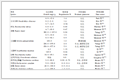
Using α, α, α-tribromomethyl ketone 1a and thiophenol compound 2a as the starting materials in a 1:2 molar ratio, various solvents were tested at room temperature (Table 1). Studying the effects of different solvents such as ethanol, CH2Cl2, CH3CN, PhCH3 and H2O:EtOH (Table 1, Entries 2~6), solvent screening revealed that ethanol was the best reaction media since it produced 3a with 87% yield (Entry 2).
 下载:
导出CSV
 | ||||
| Entry | 2a | Solvent | Time/h | Yiedb/% of 3a |
| 1 | PhCH2SH | EtOH | 10 | 73 |
| 2 | p-CH3C6H4SH | EtOH | 1/4 | 87 |
| 3 | p-CH3C6H4SH | CH2Cl2 | 1/4 | 88 |
| 4 | p-CH3C6H4SH | CH3CN | 1 | 82 |
| 5 | p-CH3C6H4SH | PhCH3 | 1 | 82 |
| 6 | p-CH3C6H4SH | H2O/EtOH (V:V=9:1) | 1/4 | 64 |
| 7 | p-CH3C6H4SH | NaCl (saturated)/EtOH (V:V=9:1) | 1/4 | 73 |
| 8 | p-CH3C6H4SH | KBr (saturated)/EtOH (V:V=9:1) | 1/4 | 68 |
| 9 | p-CH3C6H4SH | Na2CO3 (saturated)/EtOH (V:V=9:1) | 1/4 | 77 |
| 10 | p-CH3C6H4SH | K2CO3 (saturated)/EtOH (V:V=9:1) | 1/4 | 79 |
| 11 | p-CH3C6H4SH | NH4Cl (saturated)/EtOH (V:V=9:1) | 1/4 | 82 |
| 12 | p-CH3C6H4SH | NaBr (saturated)/EtOH (V:V=9:1) | 1/4 | 83 |
| 13 | p-CH3C6H4SH | NaBr (1.0 mmol/mL)/EtOH (V:V=9:1) | 1/4 | 86 |
| 14 | p-CH3C6H4SH | NaBr (0.5 mmol/mL)/EtOH (V:V=9:1) | 1/4 | 90 |
| 15 | p-CH3C6H4SH | NaBr (0.2 mmol/mL)/EtOH (V:V=9:1) | 1/4 | 93 |
| 16 | p-CH3C6H4SH | NaBr (0.1 mmol/mL)/EtOH (V:V=9:1) | 1/4 | 95 |
| 17 | p-CH3C6H4SH | NaBr (0.1 mmol/mL)/EtOH (V:V=9:1) | 1/4 | 96c |
| 18 | p-CH3C6H4SH | NaBr (0.1 mmol/mL)/EtOH (V:V=9:1) | 1/2 | 65d |
| a The reactions of 1a (0.10 mmol) and 2a (0.2 mmol) were carried out in 2 mL of solvent at room temperature. b Isolated yield. c 2a (2.05 equiv.). d 2a (1.5 equiv.). | ||||
Environment-friendly aqueous solutions are preferred over organic solvents because they are safe, benign, non-toxic, inexpensive, and easily separable.
Another optimization of the H2O/EtOH system was investigated (Table 1, Entries 6~18). The concentrations of inorganic salts were also tested in H2O:EtOH systems (Entries 7~18). Among NaCl, KBr, Na2CO3, K2CO3, NH4Cl and NaBr (Entries 7~12), the saturated solution of sodium bromide (Entry 12) corresponded to the best choice by producing α, α-tribromomethyl ketone 3a with 83% yield. A detailed study on the concentration of sodium bromide showed that a 0.1 mol/L solution resulted in the highest yield for producing α, α-tribromomethyl ketone 3a with 96% (Entry 17).
Under the optimized reaction conditions established inTable 1, various substrates of tribromomethyl ketones were screened (Table 2). The results showed that this methodology could be used for a variety of aromatic, aliphatic, and heterocyclic tribromomethyl ketones. Meanwhile, changing the position of the substituent in the substrate had no influence on the reaction time and the yield. As shown in Entries 2~4, the corresponding α, α-dibromo acetophenones 3b, 3c, and 3d were obtained with 96%, 97% and 95%, respectively. When an electron-withdrawing group like bromine was introduced in the benzene ring in 1e and 1f, 93% and 95% yields were obtained (Entries 5 and 6). Additionally, an electron-donating group like methyl also resulted in good yields of 96%, 90% and 91% (Entries 7~9). The introduction of strong electron-absorption groups had a negative effect and resulted in lower yields (Entry 11). Aliphatic tribromomethyl ketones also performed well in the same conditions, producing the relevant products with 83%~94% yields (Entries 12~14). For the heterocyclic tribromomethyl ketone 3o, the yield could reach up to 92% (Entry 15). Good isolation yields were also obtained for the synthesis of 3p and 3q (Entries 16 and 17).
下载:
导出CSV
 | ||||
| Entry | Substrate | Product | Time/min | Yieldb/% |
| 1 |  |
 |
15 | 96 |
| 2 |  |
 |
60 | 96c |
| 3 |  |
 |
25 | 97 |
| 4 |  |
 |
15 | 95 |
| 5 |  |
 |
60 | 93c |
| 6 |  |
 |
40 | 95 |
| 7 |  |
 |
35 | 96 |
| 8 |  |
 |
40 | 90 |
| 9 |  |  |
15 | 91 |
| 10 |  |
 |
35 | 93 |
| 11 |  |
 |
60 | 75 |
| 12 |  |
 |
40 | 94 |
| 13 |  |
 |
60 | 94 |
| 14 |  |
 |
30 | 83 |
| 15 |  |
 |
30 | 92 |
| 16 |  |
 |
45 | 85 |
| 17 |  |
 |
30 | 85 |
| a The reactions of 1a (0.10 mmol) and 2a (2.05 mmol) were carried out in 2 mL of NaBr (0.1 mmol/mL)/EtOH (V:V=9:1) at the room temperature. b Isolated yield. c At 0 ℃. | ||||
Controlled experiments were designed to study the reaction mechanism. As an initial step, 3 equiv. 2, 2, 6, 6- tetramethyl-1-pyrroline N-oxide (TEMPO) was added to the reaction system, the yield of 3a was suppressed to 10%, and most of the starting substrate 1a was recovered. In addition, this reaction was conducted to 3 equiv. benzoyl peroxide gave a similar result. It indicates that this reaction involves free radical initiated mechanism (Scheme 2).
An efficient method that easily convert tribromomethyl ketones to α, α-dibromo acetophenones at room temperature was developed and produced a series of α, α-dibromo acetophenones with high yields. Investigating the reaction mechanism showed that it was a radical reaction and it could be used in the reduction of aliphatic, aromatic, and heterocyclic tribromomethyl ketones. Our research innovatively used thiophenols as the radical reaction stimulator and tested aqueous/alcohol solvent systems. To our best knowledge, this is the first time attempt to reduce multi-halogenated compounds that use radical reactions.
Visualization on thin-layer chromatography (TLC) was achieved by use of UV light (254 nm) or iodine. 1H NMR (400 MHz) and 13C NMR (100 MHz) spectra were recorded on a Varian-400 MHz spectrometer. The spectra were recorded in CDCl3 as solvent at room temperature, 1H NMR and 13C NMR chemical shifts are reported relative to either the residual solvent peak (13C) (δ 77.00 or 52.00) or TMS (1H) (δ 0) as an internal standard. ESI-MS spectra were recorded on a BioTOF Q. Infrared spectra were recorded on a Nicolet MX-1E FT-IR spectrometer.
α, α, α-Tribromomethyl ketone (0.1 mmol, 1 equiv.) was added to 0.2 mL of ethanol and mixed at room temperature. After 5 min, 1.8 mL of sodium bromide solution (0.1 mmol/mL) and thiophenol (2.05 equiv.) were introduced. The reaction mixture was then stirred at room temperature and monitored by TLC. The reaction mixture was extracted with EtOAc, washed with brine, dried with Na2SO4 and then concentrated. A further purification by column chromatography ethyl acetate and petroleum ether (V:V=1:9) as the eluent afforded pure products.
2, 2-Dibromo-1-phenyl-ethanone (3a): Reaction time 15 min, white solid (0.0264 g, 96% yield), m.p. 36 ℃ (Ref.[15] yellow oil); 1H NMR (CDCl3, 400 MHz) δ: 8.07 (t, J=4.0 Hz, 2H), 7.63 (t, J=8 Hz, 1H), 7.50 (t, J=8 Hz, 2H), 6.70 (s, 1H); 13C NMR (100 MHz, CDCl3) δ: 185.92, 134.41, 130.84, 129.68, 128.91, 39.64; IR (KBr) ν: 3064, 3015, 2975, 2850, 1697, 1579, 1418, 1270, 1192, 1161, 981, 801, 782, 684 cm-1.
2, 2-Dibromo-1-(4-chloro-phenyl)-ethanone (3b): Reaction time 60 min, white solid (0.0288 g, 96% yield). m.p. 91~92 ℃ (Ref.[10a] 92.5~93.5 ℃); 1H NMR (CDCl3, 400 MHz) δ: 8.07 (d, J=12.0 Hz, 2H) 7.50 (d, J=8.0 Hz 2H), 6.60 (s, 1H); 13C NMR (100 MHz, CDCl3) δ: 184.85, 141.04, 131.17, 129.26, 129.05, 39.20; IR (KBr) ν: 3059, 3037, 2926, 2853, 1695, 1587, 1567, 1487, 1401, 1275, 1206, 1093, 989, 845, 728 cm-1.
2, 2-Dibromo-1-(3-chloro-phenyl)-ethanone (3c): Reaction time 25 min; colorless oil (0.0302 g, 97% yield). 1HNMR (CDCl3, 400 MHz) δ: 8.05 (d, J=4.0 Hz, 1H), 7.98 (d, J=8.0 Hz, 1H), 7.61~7.58 (m, 1H), 7.45 (t, J=8.0 Hz, 1H), 6.60 (s, 1H); 13C NMR (100 MHz, CDCl3) δ: 184.77, 135.26, 134.32, 132.37, 130.13, 129.72, 127.74, 39.05; IR (KBr) ν: 3068, 3021, 2927, 2850, 1703, 1572, 1421, 1280, 1192, 990, 803, 749, 677 cm-1; ESI HRMS calcd for C8H6Br2ClO [M+H]+ 310.84684, found 310.84644.
2, 2-Dibromo-1-(2-chloro-phenyl)-ethanone (3d): Reaction time 15 min, colorless oil (0.0282 g, 95% yield). 1H NMR (CDCl3, 400 MHz) δ: 7.62 (d, J=8.0 Hz, 1H), 7.50~7.44 (m, 2H), 7.40~7.36 (m, 1H), 6.76 (s, 1H); 13C NMR (100 MHz, CDCl3) δ: 188.72, 134.02, 132.96, 131.07, 130.87, 130.43, 127.18, 42.06; IR (KBr) ν: 3019, 2925, 2849, 1720, 1588, 1434, 1282, 1184, 980, 782, 748, 672 cm-1; ESI HRMS calcd for C8H6Br2ClO [M+H]+ 310.84684, found 310.84601.
2, 2-Dibromo-1-(4-bromo-phenyl)-ethanone (3e): Reaction time 60 min, white solid (0.0332 g, 93% yield). m.p. 90~91 ℃ (Ref.[10a] 92~93 ℃); 1H NMR (CDCl3, 400 MHz) δ: 7.98 (d, J=8.0 Hz, 2H), 7.67 (d, J=8.0 Hz, 2H), 6.60 (s, 1H); 13C NMR (100 MHz, CDCl3) δ: 185.07, 132.26, 131.19, 129.86, 129.48, 39.19; IR (KBr) ν: 3034, 1693, 1582, 1484, 1395, 1273, 1203, 987, 820, 719 cm-1.
2, 2-Dibromo-1-(2-bromo-phenyl)-ethanone (3f): Reaction time 40 min, colorless oil (0.0339 g, 95% yield). 1HNMR (CDCl3, 400 MHz) δ: 7.65 (d, J=8.0 Hz, 1H), 7.57 (d, J=8.0 Hz, 1H), 7.45~7.36 (m, 2H), 6.73 (s, 1H); 13C NMR (100 MHz, CDCl3) δ: 189.32, 136.38, 133.48, 132.79, 130.72, 127.60, 119.04, 41.69; IR (KBr) ν: 3012, 2920, 2850, 2310, 1721, 1564, 1464, 1428, 1278, 1250, 1184, 1132, 1053, 1207, 978, 781, 724, 668 cm-1; ESI HRMS calcd for C8H6Br3O [M+H]+ 354.79633, found 354.79553.
2, 2-Dibromo-1-p-tolyl-ethanone (3g): Reaction time 35 min, white solid (0.0316 g, 96% yield). m.p. 95~96 ℃ (Ref.[10b] 97~98 ℃); 1H NMR (CDCl3, 400 MHz) δ: 7.98 (d, J=8.0 Hz, 2H), 7.30 (d, J=8.0 Hz, 2H), 6.68 (s, 1H), 2.43 (s, 1H); 13C NMR (100 MHz, CDCl3) δ: 185.61, 145.69, 129.79, 129.62, 128.18, 39.48, 21.81; IR (KBr) ν: 3028, 2920, 2851, 1685, 1603, 1409, 1319, 1274, 1224, 1195, 1124, 960, 833, 752, 697 cm-1.
2, 2-Dibromo-1-o-tolyl-ethanone (3h): Reaction time 40 min, colorless oil (0.0288 g, 90% yield). 1HNMR (CDCl3, 400 MHz) δ: 7.69 (d, J=8.0 Hz, 1H), 7.47~7.43 (m, 1H), 7.33~7.26 (m, 2H), 6.67 (s, 1H), 2.51 (s, 3H); 13C NMR (100 MHz, CDCl3) δ: 188.52, 140.21, 132.66, 132.25, 132.22, 128.05, 125.72, 42.18, 21.06; IR (KBr) ν: 3064, 3021, 2927, 1704, 1599, 1569, 1456, 1291, 1255, 1209, 1178, 970, 769, 738 cm-1; ESI HRMS calcd for C9H9Br2O [M+H]+ 290.90147, found 290.90076.
2, 2-Dibromo-1-(4-tert-butyl-phenyl)-ethanon (3i): Reaction time 15 min, colorless oil (0.0280 g, 91% yield). 1H NMR (CDCl3, 400 MHz) δ: 8.03 (d, J=8.0 Hz, 2H), 7.52 (d, J=8.0 Hz, 2H), 6.68 (s, 1H), 1.34 (s, 9H); 13C NMR (100 MHz, CDCl3) δ: 185.55, 158.55, 129.70, 128.06, 125.92, 39.85, 35.33, 30.97; IR (KBr) ν: 2964, 2905, 2869, 1697, 1676, 1603, 1564, 1462, 1408, 1364, 1271, 1194, 1107, 982, 850 cm-1; ESI HRMS calcd for C12H15Br2O [M+H]+ 332.94842, found 332.9476.
2, 2-Dibromo-1-(4-fluoro-phenyl)-ethanone (3j): Reaction time 35 min, white solid (0.0265 g, 93% yield). m.p. 36 ℃ (Ref.[15] yellow oil); 1H NMR (CDCl3, 400 MHz) δ: 8.17~8.14 (m, 2H), 7.21~7.17 (m, 2H), 6.62 (s, 1H); 13C NMR (100 MHz, CDCl3) δ: 184.51, 167.59~165.02 (d, J=257 Hz), 132.71~132.61 (d, J=10.0 Hz), 127.07~127.05 (d, J=2.0 Hz), 116.30~116.08 (d, J=22.0 Hz), 39.31; IR (KBr) ν: 3016, 2927, 2851, 1697, 1597, 1507, 1270, 1241, 1189, 1160, 984, 850, 765 cm-1.
4-(2, 2-Dibromo-acetyl)-benzonitrile (3k): Reaction time 60 min, white solid (0.0255 g, 75% yield). m.p. 97~98 ℃; 1H NMR (CDCl3, 400 MHz) δ: 8.23 (d, J=4.0 Hz, 2H), 7.83 (d, J=8.0 Hz, 2H), 6.58 (s, 1H); 13C NMR (100 MHz, CDCl3) δ: 184.65, 134.06, 132.56, 130.26, 117.51, 117.47, 38.74; IR (KBr) ν: 3092, 3049, 3008, 2924, 2334, 1692, 1605, 1566, 1408, 1266, 1171, 1113, 991, 857, 766, 704, 678, 554, 523 cm-1; ESI HRMS calcd for C9H6Br2NO [M+H]+ 300.87324, found 300.87356.
1, 1-Dibromo-4-phenyl-butan-2-one (3l): Reaction time 40 min, colorless oil (0.0271 g, 94% yield). 1H NMR (CDCl3, 400 MHz) δ: 7.31~7.28 (m, 2H), 7.23~7.20 (m, 3H), 5.74 (s, 1H), 3.24 (t, J=8.0 Hz, 2H), 2.98 (t, J=8.0 Hz, 3H); 13C NMR (100 MHz, CDCl3) δ: 195.88, 139.95, 128.58, 128.34, 126.44, 42.68, 36.68, 30.44; IR (KBr) ν: 3027, 2927, 2852, 2378, 2310, 1721, 1604, 1584, 1496, 1453, 1362, 1154, 1076, 751, 700 cm-1; ESI HRMS calcd for C10H11Br2O [M+H]+ 303.90929, found 303.90955.
1, 1-Dibromo-nonan-2-one (3m): Reaction time 60 min, colorless oil (0.0278 g, 94% yield). 1H NMR (CDCl3, 400 MHz) δ: 5.72 (s, 1H), 2.94~2.88 (m, 1H), 2.82~2.76 (m, 1H), 2.21~2.14 (m, 1H), 1.30~1.14 (m, 4H), 1.10 (d, J=8.0 Hz, 3H), 0.92 (s, 9H); 13C NMR (100 MHz, CDCl3) δ: 196.15, 50.57, 44.34, 43.40, 29.95, 25.86, 22.41; IR (KBr) ν: 2927, 2856, 1723, 1465, 1405, 1376, 1149, 1094, 1056, 722, 659, 596, 507 cm-1; ESI HRMS calcd for C9H17Br2O [M+H]+ 298.96407, found 298.96357.
1, 1-Dibromo-4, 6, 6-trimethyl-heptan-2-one (3n): Reaction time 30 min, colorless oil (0.0259 g, 83% yield). 1H NMR (CDCl3, 400 MHz) δ: 5.78 (s, 1H), 2.94 (t, J=8.0 Hz, 2H), 1.71~1.64 (m, 2H), 1.32~1.29 (m, 9H), 0.90~0.87 (m, 4H); 13C NMR (100 MHz, CDCl3) δ: 197.01, 42.96, 34.09, 31.61, 29.92, 28.85, 24.34, 22.57, 14.05; IR (KBr) ν: 2957, 2956, 2360, 1722, 1472, 1364, 1111, 668 cm-1; ESI HRMS calcd for C10H19Br2O [M+ H]+ 312.97972, found 312.97997.
2, 2-Dibromo-1-thiophen-2-yl-ethanone (3o): Reactiontime 30 min, colorless oil (0.0260 g, 92% yield). 1H NMR (CDCl3, 400 MHz) δ: 8.00 (t, J=4.0 Hz, 1H), 7.78 (t, J=4.0 Hz, 1H), 7.20 (t, J=4.0 Hz, 1H), 6.48 (s, 1H); 13C NMR (100 MHz, CDCl3) δ: 179.71, 136.51, 136.27, 134.64, 128.48, 38.91; IR (KBr) ν: 3099, 3013, 2918, 2850, 2378, 2320, 1673, 1515, 1410, 1354, 1279, 1181, 1065, 860, 728 cm-1; ESI HRMS calcd for C6H5Br2SO [M+H]+ 281.83441, found 281.83438.
2, 2-Dibromo-1-naphthalen-1-yl-ethanone (3p): Reaction time 45 min, colorless oil (0.0277 g, 85% yield). 1H NMR (CDCl3, 400 MHz) δ: 8.42 (d, J=8.0 Hz, 1H), 8.07 (d, J=8.0 Hz, 1H), 7.94~7.89 (m, 2H), 7.65 (t, J=4.0 Hz, 1H), 7.58 (t, J=4.0 Hz, 1H), 7.51 (t, J=4.0 Hz, 1H), 6.83 (s, 1H); 13C NMR (100 MHz, CDCl3) δ: 188.59, 134.14, 133.92, 130.93, 130.31, 128.67, 127.50, 127.48, 127.04, 125.41, 124.10, 42.35; IR (KBr) ν: 3013, 2961, 2852, 1693, 1592, 1461, 1367, 1276, 1214, 1045, 1023, 940, 865, 760, 731, 643, 497, 441 cm-1; ESI HRMS calcd for C12H9Br2O [M+H]+ 325.89364, found 325.89387.
2, 2-Dibromo-1-naphthalen-2-yl-ethanone (3q): Reaction time 30 min, white solid (0.0269 g, 85% yield). m.p. 97~98 ℃ (Ref.[10b] 100~101.5 ℃); 1H NMR (CDCl3, 400 MHz) δ: 8.63 (s, 1H), 8.09 (d, J=4.0 Hz, 1H), 7.99 (d, J=4.0 Hz, 1H), 7.94~7.89 (m, 2H), 7.65 (t, J=4.0 Hz, 1H), 7.59 (t, J=4.0 Hz, 1H), 6.86 (s, 1H); 13C NMR (100 MHz, CDCl3) δ: 185.98, 136.01, 132.27, 131.77, 129.82, 129.43, 128.92, 128.07, 127.86, 127.23, 124.68, 39.79; IR (KBr) ν: 3025, 2953, 2056, 2269, 1684, 1625, 1541, 1469, 1388, 1277, 1185, 1043, 917, 774, 732, 688, 625, 591, 471, 419 cm-1.
Supporting Information 1H NMR and 13C NMR spectra of all products 3a~3q. The Supporting Information is available free of charge via the Internet at http://sioc-journal.cn.
(a) Kim, K.; Cho, J.; Yoon, S. C. J. Chem. Soc., Perkin Trans. 11995, 253.
(b) Maglioli, P.; de, L. O.; Delogu, G.; Valle, G. Tetrahedron 1992, 3, 365.
(c) Nemeryuk, M. P.; Likhovidova, M. M.; Mitsev, I. D.; Safonova, T. S. Chem. Heterocycl. Compd. (Engl. Transl.) 1986, 22, 468.
Araki, S.; Hirashita, T.; Shimizu, K.; Ikeda, T.; Butsugan, Y. Tetrahedron 1996, 52, 2803. doi: 10.1016/0040-4020(96)00002-6
Kowalski, C. J.; Reddy, R. E. J. Org. Chem. 1992, 57, 7194. doi: 10.1021/jo00052a038
Zhdankin, V. V.; Stang, P. J. Tetrahedron Lett. 1993, 34, 1461. doi: 10.1016/S0040-4039(00)60318-0
Kowalski, C. J.; Fields, K. W. J. Am. Chem. Soc. 1982, 104, 321. doi: 10.1021/ja00365a073
(a) Fujiwara, J.; Matsumura, A.; Matsuoka, Y. K. J. Bull. Chem. Soc. Jpn. 1976, 49, 829.
(b) Kawabata, N.; Fuji, T.; Naka, M.; Yamashita, S. J. Bull. Chem. Soc. Jpn. 1977, 50, 1005.
(a) Kowalski, C. J.; Fields, K. W. J. Am. Chem. Soc. 1982, 104, 321.
(b) Ding, Y.; Huang, X. Heteroat. Chem. 2003, 14, 304.
(c) Ghiaci, M.; Asgsarl, J. Bull. Chem. Soc. Jpn. 2001, 74, 1151.
(d) Taylor, W. J. Chem. Soc. 1937, 304.
(a) Pravst, I.; Zupan, M.; Stavber, S. Tetrahedron 2008, 64, 5191.
(b) Liu, J.-H.; Li, W.-J.; Wang, C.; Li, Y.; Li, Z. Tetrahedron 2011, 52, 4320.
(c) Kotek, V.; Polak, P.; Tobrman, T. Monatsh. Chem. 2016, 147, 405.
(d) Catano, B.; Lee, J.; Kim, C.; Farrell, D.; Petersen, J. L.; Xin, Y. Tetrahedron Lett. 2015, 56, 4124.
Magen, S.; Oren, J.; Fuchs, B. Tetrahedron Lett. 1984, 25, 3369. doi: 10.1016/S0040-4039(01)81387-3
(a) Terent'ev, A. O.; Khodykin, S. V.; Krylov, I. B.; Ogibin, Y. N.; Nikishin, G. I. Synthesis 2006, 1087.
(b) Terent'ev, A. O.; Krylov, I. B.; Vil, V. A.; Yu, Z.; Nikishin, G. I. Cent. Eur. J. Chem. 2012, 10, 360.
Madabhushi, S.; Jillella, R.; Mallu, K. K. R.; Godala, K. R.; Vangipuram, V. S. Tetrahedron Lett. 2013, 54, 3993. doi: 10.1016/j.tetlet.2013.05.072
Ye, C.-F.; Shreeve, J. M. J. Org. Chem. 2004, 69, 8561. doi: 10.1021/jo048383x
(a) Nobuta, T.; Hirashima, S.; Tada, N.; Miura, T.; Itoh, A. Tetrahedron Lett. 2010, 51, 4576.
(b) Tada, N.; Ban, K.; Ishigami, T.; Nobuta, T.; Miura, T.; Itoh, A. Tetrahedron Lett. 2011, 52, 3821.
Wu, P.; Xu, S.-H.; Xu, H.; Hu, H.-Y.; Zhang, W. Tetrahedron Lett. 2017, 58, 618. doi: 10.1016/j.tetlet.2016.12.088
Wang, J.-Y.; Jiang, Q.; Guo, C.-C. Synth. Commun. 2014. 3130.
(a) Qvortrup, K.; Rankic, D. A.; Mac Millan, D. W. C. J. Am. Chem. Soc. 2014, 136, 626.
(b) Hager, D.; MacMillan, D. W. C. J. Am. Chem. Soc. 2014, 136, 16986.
(c) Cuthbertson, J. D.; MacMillan, D. W. C. Nature 2015, 519, 74.
Balati, H.; Zeng, J.; Zhang, Y.-H.; Abulikemu, A. R. Synth. Commun. 2018, 887.
(a) Dhakshinamoorthy, A.; Alvaro, M.; Garcia, H. Chem. Commun. 2010, 46, 6476.
(b) Liu, Y.; Wang, H.; Wang, C.-P.; Wan, J.-P.; Wen, C.-P. RSC Adv. 2013, 3, 21368.
Table 1. Optimization of the reaction conditionsa
| | ||||
| Entry | 2a | Solvent | Time/h | Yiedb/% of 3a |
| 1 | PhCH2SH | EtOH | 10 | 73 |
| 2 | p-CH3C6H4SH | EtOH | 1/4 | 87 |
| 3 | p-CH3C6H4SH | CH2Cl2 | 1/4 | 88 |
| 4 | p-CH3C6H4SH | CH3CN | 1 | 82 |
| 5 | p-CH3C6H4SH | PhCH3 | 1 | 82 |
| 6 | p-CH3C6H4SH | H2O/EtOH (V:V=9:1) | 1/4 | 64 |
| 7 | p-CH3C6H4SH | NaCl (saturated)/EtOH (V:V=9:1) | 1/4 | 73 |
| 8 | p-CH3C6H4SH | KBr (saturated)/EtOH (V:V=9:1) | 1/4 | 68 |
| 9 | p-CH3C6H4SH | Na2CO3 (saturated)/EtOH (V:V=9:1) | 1/4 | 77 |
| 10 | p-CH3C6H4SH | K2CO3 (saturated)/EtOH (V:V=9:1) | 1/4 | 79 |
| 11 | p-CH3C6H4SH | NH4Cl (saturated)/EtOH (V:V=9:1) | 1/4 | 82 |
| 12 | p-CH3C6H4SH | NaBr (saturated)/EtOH (V:V=9:1) | 1/4 | 83 |
| 13 | p-CH3C6H4SH | NaBr (1.0 mmol/mL)/EtOH (V:V=9:1) | 1/4 | 86 |
| 14 | p-CH3C6H4SH | NaBr (0.5 mmol/mL)/EtOH (V:V=9:1) | 1/4 | 90 |
| 15 | p-CH3C6H4SH | NaBr (0.2 mmol/mL)/EtOH (V:V=9:1) | 1/4 | 93 |
| 16 | p-CH3C6H4SH | NaBr (0.1 mmol/mL)/EtOH (V:V=9:1) | 1/4 | 95 |
| 17 | p-CH3C6H4SH | NaBr (0.1 mmol/mL)/EtOH (V:V=9:1) | 1/4 | 96c |
| 18 | p-CH3C6H4SH | NaBr (0.1 mmol/mL)/EtOH (V:V=9:1) | 1/2 | 65d |
| a The reactions of 1a (0.10 mmol) and 2a (0.2 mmol) were carried out in 2 mL of solvent at room temperature. b Isolated yield. c 2a (2.05 equiv.). d 2a (1.5 equiv.). | ||||
 下载: 导出CSV
Table 2. Synthesis of α, α-dibromoacetophenones from tribromomethyl ketonesa
| | ||||
| Entry | Substrate | Product | Time/min | Yieldb/% |
| 1 | |
|
15 | 96 |
| 2 | |
|
60 | 96c |
| 3 | |
|
25 | 97 |
| 4 | |
|
15 | 95 |
| 5 | |
|
60 | 93c |
| 6 | |
|
40 | 95 |
| 7 | |
|
35 | 96 |
| 8 | |
|
40 | 90 |
| 9 | | |
15 | 91 |
| 10 | |
|
35 | 93 |
| 11 | |
|
60 | 75 |
| 12 | |
|
40 | 94 |
| 13 | |
|
60 | 94 |
| 14 | |
|
30 | 83 |
| 15 | |
|
30 | 92 |
| 16 | |
|
45 | 85 |
| 17 | |
|
30 | 85 |
| a The reactions of 1a (0.10 mmol) and 2a (2.05 mmol) were carried out in 2 mL of NaBr (0.1 mmol/mL)/EtOH (V:V=9:1) at the room temperature. b Isolated yield. c At 0 ℃. | ||||
下载: 导出CSV

 扫一扫看文章


扫一扫关注我们


 下载: