

Figure 1.
Spiroacetals as insect pheromones 1~3 and proposed unsaturated spiroacetals 4 and 5


The oriental fruit fly, Bactrocera dorsalis (Hendel) (Diptera: Tephritidae), is a notorious pest of agricultural crops across East Asia, India and the Pacific.[1] It attacks a broad range of tropical, subtropical, and temperate species of suitable host plants including many types of commercial fruits, such as carambola, peach, citrus, mandarin and mango, as well as a wide variety of other agricultural products such as coffee, chilli pepper, and wild hosts.[2] Its infestation can cause severe crop losses if not well controlled.
Present approaches to suppress the oriental fruit fly populations depend mainly on broad-spectrum pesticide sprays.[3] However, this fly has been found to evolve apparent resistance and cross-resistance to many insecticides.[4] For example, flies in southern China have developed resistance to organophosphate-, pyrethroid- and antibiotic-based pesticides.[5] Pheromone traps along with annihilation are found to be effective to control this pest. Methyleugenol (ME) is an extremely potent and specific attractant for the oriental fruit fly, but only effective to male flies.[6]
Spiroacetals structures are widely distributed in numerous bioactive natural products of different origins including plants, fungi, and marine organisms. These natural products vary greatly in structural complexity and biological activity, acting as insect pheromones, antibacterial, antifungal, and anti-proliferative agents.[7] To date, more than 30 different structures with spiroacetal moiety represent volatile, less polar constituents of insect secretions. The spiroacetal moiety essentially contributes to the bioactivities as insect sex pheromones.[8] For example, chalcogran (2S, 5R)-2- ethyl-1, 6-dioxaspiro[4.4]nonane (1) is a key component of male produced aggregation pheromones of the spruce bark beetle, Pityogenes chalcographus.[9] Racemic olean (1, 7- dioxaspiro[5.5]undecane) (2) is a female produced sex pheromone of the olive fly, Bactrocera (Dacus) oleae.[10] (2S, 6R, 8S)-2, 8-Dimethyl-1, 7-dioxaspiro[5.5]undecane (3) serves as an aggregation pheromone of solitary bee, Andrena wilkella.[11] Three spiroacetals, (E, E)-2, 8-dimethyl- l, 7-dioxaspiro-[5.5]undecane, (E, E)-2-ethyl-8-methyl-l, 7- dioxaspiro-[5.5]undecane and 2-n-propyl-8-methyl-1, 7- dioxaspiro-[5.5]undecane, have been identified from the volatile secretions of sexually mature female B. dorsalis.[12] In this paper, we would like to report the synthesis, biological evaluation, and structure-activity relationship study of an unprecedented unsaturated spiroacetal 4 and 5 as potential sex attractant with similar function to sex pheromones of B. dorsalis.
The synthetic route to the unsaturated 4 was outlined in Table 1. A series of novel unsaturated [5.6]spiroacetals 4 was synthesized in 20%~49% isolated yields by Pd-catalyzed coupling of boronic acids with biomass-derived α-hydroxyalkylfurans using O2 as the terminal oxidant. The two diasteroisomers of 4 are separable by silica flash chromatography. The ratios of 4-trans/4-cis range from 1:1 to 2.1:1. The chemical structures of the target compounds were confirmed by 1H NMR and 13C NMR, HRMS and NOESY experiments. Spiroacetals 5 were synthesized according to reference.[13]
 下载:
导出CSV
 |
||||
| R1 | Ar | 4 | Yieldb% | trans/cisc |
| Me | Ph | 4a | (44) | 1.3:1 |
| Me | 4-MeC6H4 | 4b | (45) | 1:1 |
| Me | 4-MeOC6H4 | 4c | (49) | 1.5:1 |
| Me | 3-MeC6H4 | 4d | (45) | 1.1:1 |
| Me | 3-MeOC6H4 | 4e | (39) | 1:1 |
| Me | 3, 5-Me2C6H3 | 4f | (36) | 1.3:1 |
| Et | Ph | 4g | (37) | 2.1:1 |
| Me | 4-FC6H4 | 4h | (37) | 1:1 |
| Me | 3-FC6H4 | 4i | (51) | 1.1:1 |
| Me | 4-ClC6H4 | 4j | (35) | 1.2:1 |
| Me | 4-BrC6H4 | 4k | (44) | 1:1 |
| Me | 4-OHCC6H4 | 4l | (27) | 1.1:1 |
| Me | 3-Me-4-FC6H3 | 4m | (45) | 1.3:1 |
| Me | 4-FC6H4 | 4n | (37) | 1:1 |
| a The cis isomer is the isomer in which the phenyl group is on the same side of dihydrofuran ring as the oxygen group. b Isolated yields. c trans/cis ratios were determined by 1H NMR spectroscopy of the crude products. | ||||
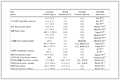
A series of diastereoisomeric [5, 6]spiroacetals 4-cis and 4-trans were tested for the antennal activity of male and female Bactrocera dorsalis (Table 2), respectively. Quite a few compounds elicited moderate responses in male and female flies compared with ME as the standard. Antennal responses to spiroacetals varied between 0.05 and 0.67 mV for male fly and between 0.06 and 1.05 mV for female fly at a dose of 100 μg. In general, female flies showed slightly greater sensitivity than male flies to the same compound. Among the tested spiroacetals, compound 4d-trans elicited the greatest responses. The stereochemistry and the substituent(s) on the phenyl ring of the spiroacetals influenced electrophysiological responses to a certain extent. In general, trans-isomers elicited greater responses than the corresponding cis isomers although the difference might not be statistically significant. The spiroacetals (cis- and trans-isomers) in which the phenyl ring was unsubstituted (4a-cis, 4g-cis), or substituted with 4-formyl (4l-cis), 3-Me-4-F (4m-cis) triggered slightly higher responses in both male and female flies. Furthermore, the responses to the trans-isomers with phenyl ring substituted with moderate electron-donating group of Me (4b-trans and 4d-trans) were relatively high (> 0.30 mV). In contrast, the responses to spiroacetals with phenyl ring substituted with halide group of F (4h-trans, 4i-trans), Cl (4j-trans) or Br (4k- trans) were relatively low (< 0.30 mV). The endo-cyclic double bond plays an important role in triggering significant EAG response. Compound 8a-cis, the hydrogenated product of 4a-cis, elicited much lower EAG response than compound 4a-cis. Among the 27 compounds tested, 4d-trans elicited greatest responses from both male and female flies. Compounds 4d-cis, 4d-trans, 4i-trans, 8a-cis triggered significantly greater EAG response in female flies than that in male flies. In contrast, compounds 4b-cis, 4c-cis, 4c-trans triggered significantly greater EAG response in male flies than that in female flies. These sexual differences at electrophysiological level suggest possibility to develop sex attractant from these compounds, such as compound 4d-trans, for management of B. dorsalis.[14]
下载:
导出CSV
| Compound | EAG/mV | ||
| Male fly | Female fly | Significance | |
| 4a-cis | 0.25±0.051 | 0.31±0.031 | |
| 4b-cis | 0.44±0.038 | 0.28±0.027 | * |
| 4c-cis | 0.13±0.012 | 0.04±0.012 | * |
| 4d-cis | 0.11±0.016 | 0.23±0.016 | * |
| 4e-cis | 0.23±0.036 | 0.19±0.020 | |
| 4f-cis | 0.13±0.033 | 0.19±0.019 | |
| 4g-cis | 0.28±0.069 | 0.36±0.029 | |
| 4h-cis | 0.09±0.030 | 0.08±0.030 | |
| 4i-cis | 0.15±0.030 | 0.15±0.021 | |
| 4j-cis | 0.20±0.044 | 0.13±0.025 | |
| 4k-cis | 0.08±0.028 | 0.03±0.017 | |
| 4l-cis | 0.27±0.059 | 0.37±0.031 | |
| 4m-cis | 0.27±0.018 | 0.28±0.033 | |
| 8a-cis | 0.06±0.018 | 0.11±0.008 | * |
| ME | 1.89±0.079 | ||
| 4a-trans | 0.38±0.032 | 0.45±0.025 | |
| 4b-trans | 0.19±0.052 | 0.11±0.042 | |
| 4c-trans | 0.19±0.049 | 0.05±0.008 | * |
| 4d-trans | 0.67±0.090 | 1.05±0.141 | * |
| 4e-trans | 0.19±0.036 | 0.16±0.018 | |
| 4f-trans | 0.17±0.036 | 0.18±0.038 | |
| 4g-trans | 0.15±0.031 | 0.07±0.030 | |
| 4h-trans | 0.16±0.040 | 0.10±0.028 | |
| 4i-trans | 0.13±0.037 | 0.24±0.013 | * |
| 4j-trans | 0.12±0.033 | 0.09±0.023 | |
| 4k-trans | 0.04±0.016 | 0.06±0.026 | |
| 4l-trans | 0.27±0.074 | 0.46±0.065 | |
| 4m-trans | 0.24±0.029 | 0.17±0.027 | |
The synthesis of [5.5]-spiroacetals 5 was performed according to reference.[15] Due to the failure in separating two diasteroisomers by silica flash chromatography, compound 5 as a mixture of two diastereoisomers was tested for EAG response from both male and female B. dorsalis flies. As shown in Table 3, most of the tested compounds 5 elicited significant responses varied between 0.14 and 0.40 mV for male fly and between 0.21 and 0.75 mV for female fly at a dose of 100 μg. All compounds elicited much higher responses in female flies than that in male flies. The differences in EAG responses between female and male flies to 5a, 5c, 5d were statistically significant. Furthermore, the differences to 5b, 5j and 5n were marginally significant as their P values ranged 0.05~0.1, i.e., 0.0901, 0.0575, 0.0548, respectively.
下载:
导出CSV
 |
|||
| Compound (trans:cis)a | EAG/mV | ||
| Male fly | Female fly | Significance | |
| 5a (1.6:1) | 0.20±0.053 | 0.72±0.117 | * |
| 5b (1.5:1) | 0.45±0.115 | 0.96±0.154 | |
| 5c (1.4:1) | 0.61±0.121 | 1.13±0.104 | * |
| 5d (2.4:1) | 0.35±0.076 | 0.81±0.136 | * |
| 5e (1.4:1) | 0.31±0.053 | 0.70±0.138 | |
| 5f (1.8:1) | 0.21±0.065 | 0.32±0.063 | |
| 5g (1.5:1) | 0.49±0.130 | 0.46±0.082 | |
| 5i (1.3:1) | 0.50±0.122 | 0.35±0.077 | |
| 5j (1.9:1) | 0.23±0.106 | 0.73±0.133 | |
| 5m (1.4:1) | 0.29±0.144 | 0.47±0.101 | |
| 5n (3.3:1) | 0.28±0.061 | 0.72±0.115 | |
| 5o (1.2:1) | 0.32±0.138 | 0.61±0.090 | |
| ME | 1.89±0.079 | ||
| a Ratios in parentheses refer to trans/cis ratios determined by 1H NMR spectroscopy of the crude products. | |||
In summary, we reported the synthesis, biological evaluation, and structure-activity relationship study of unprecedented unsaturated spiroacetals as potential sex attractant or oriental fruit flies (Bactrocera dorsalis). A large part of the tested compounds demonstrated apparent responses from both male and female fruit flies. Convenient synthesis from sustainable furan derivative along with moderate to good biological-activities suggests the potential of unsaturated spiroacetal as a lead compound for further exploration of insect sexual attractants.
All reactions were performed under a nitrogen atmosphere. Unless specified otherwise, all reagents and starting materials were purchased from commercial suppliers and used as received. Solvents were purified by means of standard literature procedures. 1H NMR (400 MHz) and 13C NMR (101 MHz) spectra were recorded using CDCl3 as a solvent, and product ratios were determined from 1H NMR spectra. Analytical thin-layer chromatography was performed on silica gel with a mixture of petroleum ether and ethyl acetate as the eluent. High-resolution mass spectra (HRMS) were obtained with an LC/MS-IT-TOF mass spectrometer.
To a solution of furfuryl alcohol (12.5 mmol), NaOH (2.5 mL, 40%, 31.0 mmol) in dimethyl sulfoxide (DMSO, 30 mL) under nitrogen atmosphere was added slowly a solution of 2-bromoethanol (2.16 g, 18.8 mmol) in dimethyl sulfoxide (DMSO, 5 mL) at room temperature. After stirring for 2 h, H2O (10 mL) was added to the reaction mixture. The resulting mixture was extracted with ethyl acetate (10 mL×3). The combined organic extracts were washed with brine, dried over Na2SO4, filtered and concentrated. The residue was purified by flash chromatography (using ethyl acetate/petroleum ether (V:V=1:2) as the eluent) to give 7[15].
2-((5-Methylfuran-2-yl)methoxy)ethanol (7a): Slight yellow oil (1.5 g, 78%). 1H NMR (400 MHz, CDCl3) δ: 6.18 (d, J=15.9 Hz, 1H, C=CH), 5.89 (d, J=15.3 Hz, 1H, C=CH), 4.43 (s, 2H, OCH2), 3.71 (s, 2H, OCH2), 3.58 (d, J=3.7 Hz, 2H, OCH2), 2.53 (s, 1H, OH), 2.28 (s, 3H, CH3); 13C NMR (100 MHz, CDCl3) δ: 152.7, 149.7, 110.4, 106.2, 71.1, 65.1, 61.7, 13.5; IR (KBr film) ν: 3366, 3061, 3029, 2937, 1692, 1649, 1447, 1428, 1366, 1254, 1159, 1057, 1014 cm-1; HRMS (ESI) calcd for C8H12NaO3 [M+Na]+ 179.0786, found 179.0674.
2-((5-Ethylfuran-2-yl)methoxy)ethanol (7b): Slight yellow oil (1 g, 75%). 1H NMR (400 MHz, CDCl3) δ: 6.21 (d, J=3.0 Hz, 1H, C=CH), 5.92 (d, J=2.8 Hz, 1H, C=CH), 4.49~4.40 (m, 2H, OCH2), 3.71~3.72 (m, 2H, OCH2), 3.60~3.56 (m, 2H, OCH2), 2.63 (q, J=7.6 Hz, 2H, CH2CH3), 2.55 (s, 1H, OH), 1.22 (t, J=7.6 Hz, 3H, CH3); 13C NMR (100 MHz, CDCl3) δ: 158.4, 149.5, 110.3, 104.6, 71.1, 65.1, 61.7, 21.4, 12.0; IR (KBr film) ν: 3368, 3065, 3032, 2943, 1695, 1649, 1446, 1426, 1368, 1252, 1160, 1059, 1014 cm-1; HRMS (ESI) calcd for C9H14NaO3 [M+Na]+ 193.0843, found 193.0832.
7 (0.6 mmol) was added to an 25-mL dried Schlenk tube charged with aryl boronic acids (1.5 mmol), Pd(OAc)2 (0.3 mmol, 26.9 mg), 1, 10-phenanthroline (0.375 mmol, 29.7 mg), Na2CO3 (1.2 mmol, 127.2 mg), 1, 1'-binaphthyl-2, 2'- diylhydrogenphosphate (0.12 mmol, 41.8 mg) and 1, 2- dichloroethane (3.5 mL). The resulting solution was heated to 70 ℃ for 40 h under O2 atmosphere (in balloon) until the disappearance of 7 detected by thin-layer chromatography (TLC). H2O (5 mL) was added to quench the reaction. The resulting mixture was extracted with AcOEt (5 mL×3). The combined organic extracts were washed with brine, dried over Na2SO4, filtered and concentrated. The residue was purified by neutral aluminium oxide chromatography (using ethyl acetate/petroleum ether (V/V=30/1) as the eluent) to afford 4.
cis-2-Methyl-2-phenyl-1, 6, 9-trioxaspiro[4.5]dec-3-ene (4a-cis): Yellow oil (26.4 mg, 19%). 1H NMR (400 MHz, CDCl3) δ: 7.42~7.38 (m, 2H, C6H5), 7.38~7.32 (m, 2H, C6H5), 7.29~7.25 (m, 1H, C6H5), 6.39 (d, J=5.8 Hz, 1H, CH=CH), 5.77 (d, J=5.8 Hz, 1H, CH=CH), 4.10~3.90 (m, 4H, OCH2), 3.73~3.67 (m, 1H, OCH2), 3.59~3.63 (m, 1H, OCH2), 1.61 (s, 3H, CH3); 13C NMR (100 MHz, CDCl3) δ: 140.7, 136.9, 129.4, 128.5, 127.5, 125.0, 112.4, 93.3, 77.9, 74.3, 67.2, 27.4; HRMS (ESI) calcd for C14H17O3 [M+H]+ 233.1099, found 233.1168.
trans-2-Methyl-2-phenyl-1, 6, 9-trioxaspiro[4.5]dec-3-ene (4a-trans): Yellow oil (34.8 mg, 25%). 1H NMR (400 MHz, CDCl3) δ: 7.44~7.40 (m, 2H, C6H5), 7.36~7.31 (m, 2H, C6H5), 7.26~7.22 (m, 1H, C6H5), 6.37 (d, J=5.8 Hz, 1H, CH=CH), 5.77 (d, J=5.8 Hz, 1H, CH=CH), 4.36~4.27 (m, 1H, OCH2), 3.82~3.70 (m, 5H, OCH2), 1.77 (s, 3H, CH3); 13C NMR (100 MHz, CDCl3) δ: 144.5, 141.3, 128.4, 127.1, 124.8, 124.8, 107.6, 91.5, 71.8, 66.0, 62.3, 29.4; HRMS (ESI) calcd for C14H17O3 [M+H]+ 233.1099, found 233.1170.
cis-2-Methyl-2-(p-tolyl)-1, 6, 9-trioxaspiro[4.5]dec-3-ene(4b-cis): Yellow oil (32.5 mg, 22%). 1H NMR (400 MHz, CDCl3) δ: 7.29 (d, J=8.1 Hz, 2H, C6H4), 7.17 (d, J=8.0 Hz, 2H, C6H4), 6.37 (d, J=5.8 Hz, 1H, CH=CH), 5.76 (d, J=5.8 Hz, 1H, CH=CH), 4.08~3.89 (m, 4H, OCH2), 3.70 (dd, J=4.7, 4.5 Hz, 1H, OCH2), 3.58~3.60 (m, 1H, OCH2), 2.33 (s, 3H, C6H4CH3), 1.60 (s, 3H, CH3); 13C NMR (100 MHz, CDCl3) δ: 137.8, 137.2, 137.0, 129.2, 125.0, 112.4, 93.2, 77.9, 74.3, 67.2, 27.4, 21.0; HRMS (ESI) calcd for C15H19O3 [M+H]+ 247.1256, found 247.1326.
trans-2-Methyl-2-(p-tolyl)-1, 6, 9-trioxaspiro[4.5]dec-3-ene (4b-trans): Yellow oil (33.9 mg, 23%). 1H NMR (400 MHz, CDCl3) δ: 7.33 (d, J=8.1 Hz, 2H, C6H4), 7.17 (d, J=8.1 Hz, 2H, C6H4), 6.38 (d, J=5.8 Hz, 1H, CH=CH), 5.79 (d, J=5.8 Hz, 1H, CH=CH), 4.37~4.29 (m, 1H, OCH2), 3.84~3.72 (m, 5H, OCH2), 2.35 (s, 3H, C6H4CH3), 1.78 (s, 3H, CH3); 13C NMR (100 MHz, CDCl3) δ: 141.6, 141.4, 136.8, 129.0, 124.7, 124.6, 107.6, 91.4, 71.8, 66.0, 62.3, 29.4, 21.0; HRMS (ESI) calcd for C15H18NaO3 [M+Na]+ 269.1148, found 269.1148.
cis-2-(4-Methoxyphenyl)-2-methyl-1, 6, 9-trioxaspiro-[4.5]dec-3-ene (4c-cis): White solid (31.4 mg, 20%), m.p. 125 ℃; 1H NMR (400 MHz, CDCl3) δ: 7.36~7.31 (m, 2H, C6H4), 6.93~6.89 (m, 2H, C6H4), 6.39 (d, J=5.8 Hz, 1H, CH=CH), 5.78 (d, J=5.8 Hz, 1H, CH=CH), 4.09~3.92 (m, 4H, OCH2), 3.82 (s, 3H, OCH3), 3.75~3.69 (m, 1H, OCH2), 3.61~3.63 (m, 1H, OCH2), 1.62 (s, 3H, CH3); 13C NMR (100 MHz, CDCl3) δ: 159.0, 137.0, 132.9, 129.2, 126.2, 113.9, 112.4, 92.9, 77.9, 74.2, 67.2, 55.3, 27.4; HRMS (ESI) calcd for C15H19O4 [M+H]+ 263.1205, found 263.1275.
trans-2-(4-Methoxyphenyl)-2-methyl-1, 6, 9-trioxaspiro-[4.5]dec-3-ene (4c-trans): White solid (45.6 mg, 29%), m.p. 121 ℃; 1H NMR (400 MHz, CDCl3) δ: 7.33 (d, J=8.6 Hz, 2H, C6H4), 6.86 (d, J=8.7 Hz, 2H, C6H4), 6.34 (d, J=5.8 Hz, 1H, CH=CH), 5.77 (d, J=5.8 Hz, 1H, CH=CH), 4.37~4.19 (m, 1H, OCH2), 3.82~3.66 (m, 8H, OCH2, OCH3), 1.75 (s, 3H, CH3); 13C NMR (100MHz, CDCl3) δ: 158.7, 141.5, 136.5, 126.1, 124.6, 113.7, 107.5, 91.2, 71.9, 66.0, 62.3, 55.3, 29.1; HRMS (ESI) calcd for C15H19O4 [M+H]+ 263.1205, found 263.1275.
cis-2-Methyl-2-(m-tolyl)-1, 6, 9-trioxaspiro[4.5]dec-3-ene (4d-cis): Yellow oil (31.0 mg, 21%). 1H NMR (400 MHz, CDCl3) δ: 7.25 (d, J=4.8 Hz, 1H, C6H4), 7.23~7.19 (m, 2H, C6H4), 7.09 (d, J=7.3 Hz, 1H, C6H4), 6.39 (d, J=5.8 Hz, 1H, CH=CH), 5.77 (d, J=5.8 Hz, 1H, CH=CH), 4.08~3.89 (m, 4H, OCH2), 3.70 (dd, J=4.7, 4.6 Hz, 1H, OCH2), 3.58~3.60 (m, 1H, OCH2), 2.36 (s, 3H, C6H4CH3), 1.61 (s, 3H, CH3); 13C NMR (100 MHz, CDCl3) δ: 140.7, 138.2, 136.9, 129.3, 128.4, 128.2, 125.7, 122.1, 112.4, 93.3, 78.0, 74.3, 67.2, 27.4, 21.6; HRMS (ESI) calcd for C15H19O3 [M+H]+ 247.1256, found 247.1327.
trans-2-Methyl-2-(m-tolyl)-1, 6, 9-trioxaspiro[4.5]dec-3-ene (4d-trans): Yellow oil (35.4 mg, 24%). 1H NMR (400 MHz, CDCl3) δ: 7.22 (d, J=4.6 Hz, 3H, C6H4), 7.08~7.02 (m, 1H, C6H4), 6.37 (d, J=5.8 Hz, 1H, CH=CH), 5.76 (d, J=5.8 Hz, 1H, CH=CH), 4.35~4.28 (m, 1H, OCH2), 3.82~3.69 (m, 5H, OCH2), 2.35 (s, 3H, C6H4CH3), 1.75 (s, 3H, CH3); 13C NMR (100 MHz, CDCl3) δ: 144.4, 141.4, 138.0, 128.3, 127.9, 125.5, 124.7, 121.9, 107.6, 91.5, 71.8, 66.0, 62.3, 29.5, 21.6; HRMS (ESI) calcd for C15H19O3 [M+H]+ 247.1256, found 247.1331.
cis-2-(3-Methoxyphenyl)-2-methyl-1, 6, 9-trioxaspiro-[4.5]dec-3-ene (4e-cis): Yellow oil (29.9 mg, 19%). 1H NMR (400 MHz, CDCl3) δ: 7.27~7.29 (m, 1H, C6H4), 7.03 (s, 1H, C6H4), 6.96 (d, J=7.7 Hz, 1H, C6H4), 6.83~6.85 (m, 1H, C6H4), 6.39 (d, J=5.9 Hz, 1H, CH=CH), 5.79 (d, J=5.8 Hz, 1H, CH=CH), 4.13~3.91 (m, 4H, OCH2), 3.83 (d, J=3.2 Hz, 3H, C6H4OCH3), 3.73 (dd, J=4.7, 4.5 Hz, 1H, OCH2), 3.61~3.63 (m, 1H, OCH2), 1.64 (s, 3H, CH3); 13C NMR (100 MHz, CDCl3) δ: 159.8, 142.4, 136.8, 129.5, 129.4, 117.3, 112.7, 112.4, 111.1, 93.2, 77.9, 74.3, 67.2, 55.2, 27.4; HRMS (ESI) calcd for C15H19O4 [M+H]+ 263.1205, found 263.1277.
trans-2-(3-Methoxyphenyl)-2-methyl-1, 6, 9-trioxaspiro-[4.5]dec-3-ene (4e-trans): Yellow oil (31.4 mg, 20%). 1H NMR (400 MHz, CDCl3) δ: 7.28~7.24 (m, 1H, C6H4), 6.99 (dd, J=4.3, 2.2 Hz, 2H, C6H4), 6.78 (dd, J=8.0, 2.2 Hz, 1H, C6H4), 6.35 (d, J=5.8 Hz, 1H, CH=CH), 5.77 (d, J=5.8 Hz, 1H, CH=CH), 4.33~4.25 (m, 1H, OCH2), 3.80 (s, 3H, C6H4OCH3), 3.79~3.69 (m, 5H, OCH2), 1.75 (s, 3H, CH3); 13C NMR (100 MHz, CDCl3) δ: 159.7, 146.2, 141.1, 129.4, 124.8, 117.2, 112.2, 111.0, 107.6, 91.4, 71.8, 65.9, 62.3, 55.2, 29.4; HRMS (ESI) calcd for C15H19O4 [M+H]+ 263.1205, found 263.1276.
cis-2-(3, 5-Dimethylphenyl)-2-methyl-1, 6, 9-trioxaspiro-[4.5]dec-3-ene (4f-cis): Yellow oil (25.0 mg, 16%). 1H NMR (400 MHz, CDCl3) δ: 7.00 (s, 2H, C6H3), 6.92 (s, 1H, C6H3), 6.39 (d, J=5.8 Hz, 1H, CH=CH), 5.76 (d, J=5.8 Hz, 1H, CH=CH), 4.08~3.89 (m, 4H, OCH2), 3.70 (dd, J=4.6, 4.4 Hz, 1H, OCH2), 3.57~3.59 (m, 1H, OCH2), 2.32 (s, 6H, C6H3C2H6), 1.61 (s, 3H, CH3); 13C NMR (100 MHz, CDCl3) δ: 140.7, 138.1, 137.0, 129.2, 122.8, 112.3, 93.3, 78.1, 74.3, 67.21, 27.4, 21.4; HRMS (ESI) calcd for C16H21O3 [M+H]+ 261.1412, found 261.1484.
trans-2-(3, 5-Dimethylphenyl)-2-methyl-1, 6, 9-trioxas-piro[4.5]dec-3-ene (4f-trans): Yellow oil (31.2 mg, 20%). 1H NMR (400 MHz, CDCl3) δ: 7.02 (s, 2H, C6H3), 6.88 (s, 1H, C6H3), 6.36 (d, J=5.8 Hz, 1H, CH=CH), 5.74 (d, J=5.8 Hz, 1H, CH=CH), 4.36~4.27 (m, 1H, OCH2), 3.82~3.69 (m, 5H, OCH2), 2.31 (s, 6H, C6H3C2H6), 1.74 (s, 3H, CH3); 13C NMR (100 MHz, CDCl3) δ: 144.4, 141.5, 137.9, 128.8, 124.6, 122.5, 107.5, 91.5, 71.8, 66.0, 62.2, 29.5, 21.5; HRMS (ESI) calcd for C16H21O3 [M+H]+ 261.1412, found 261.1483.
cis-2-Ethyl-2-phenyl-1, 6, 9-trioxaspiro[4.5]dec-3-ene(4g-cis): Yellow oil (17.7 mg, 12%). 1H NMR (400 MHz, CDCl3) δ: 7.42 (d, J=7.5 Hz, 2H, C6H5), 7.35 (t, J=7.6 Hz, 2H, C6H5), 7.29~7.26 (m, 1H, C6H5), 6.50 (d, J=5.9 Hz, 1H, CH=CH), 5.77 (d, J=5.9 Hz, 1H, CH=CH), 4.09~3.90 (m, 4H, OCH2), 3.72 (dd, J=4.6, 4.5 Hz, 1H, OCH2), 3.60~3.61 (m, 1H, OCH2), 1.90~1.81 (m, 2H, CH3CH2), 0.80 (t, J=7.5 Hz, 3H, CH3CH2); 13C NMR (100 MHz, CDCl3) δ: 140.7, 137.2, 128.5, 128.4, 127.4, 125.3, 115.2, 93.3, 78.4, 74.4, 67.1, 32.8, 8.5; HRMS (ESI) calcd for C15H19O3 [M+H]+ 247.1256, found 247.1325.
trans-2-Ethyl-2-phenyl-1, 6, 9-trioxaspiro[4.5]dec-3-ene(4g-trans): Yellow oil (36.9 mg, 25%). 1H NMR (400 MHz, CDCl3) δ: 7.41 (d, J=7.9 Hz, 2H, C6H5), 7.33 (t, J=7.6 Hz, 2H, C6H5), 7.23 (t, J=7.3 Hz, 1H, C6H5), 6.37 (d, J=5.8 Hz, 1H, CH=CH), 5.72 (d, J=5.8 Hz, 1H, CH=CH), 4.40~4.30 (m, 1H, OCH2), 3.84~3.64 (m, 5H, OCH2), 2.04~1.87 (m, 2H, CH3CH2), 0.88 (t, J=7.4 Hz, 3H, CH3CH2); 13C NMR (100 MHz, CDCl3) δ: 144.0, 139.8, 128.3, 126.8, 125.2, 125.0, 107.4, 94.8, 71.9, 66.0, 62.3, 35.0, 8.7; HRMS (ESI) calcd for C15H19O3 [M+H]+ 247.1256, found 247.1325.
cis-2-(4-Fluorophenyl)-2-methyl-1, 6, 9-trioxaspiro[4.5]-dec-3-ene (4h-cis): Yellow oil (27.0 mg, 18%). 1H NMR (400 MHz, CDCl3) δ: 7.39~7.34 (m, 2H, C6H4), 7.07~7.01 (m, 2H, C6H4), 6.36 (d, J=5.8 Hz, 1H, CH=CH), 5.79 (d, J=5.8 Hz, 1H, CH=CH), 4.07~3.88 (m, 4H, OCH2), 3.70 (dd, J=4.7, 4.5 Hz, 1H, OCH2), 3.57~3.59 (m, 1H, OCH2), 1.60 (s, 3H, CH3); 13C NMR (100 MHz, CDCl3) δ: 163.4, 160.9, 136.6, 129.6, 126.8, 126.7, 115.4, 115.2, 112.5, 92.9, 77.8, 74.3, 67.2, 27.4; HRMS (ESI) calcd for C14H16FO3 [M+H]+ 251.1005, found 251.1076.
trans-2-(4-Fluorophenyl)-2-methyl-1, 6, 9-trioxaspiro-[4.5]dec-3-ene (4h-trans): Yellow oil (28.5 mg, 19%). 1H NMR (400 MHz, CDCl3) δ: 7.43~7.37 (m, 2H, C6H4), 7.06~6.99 (m, 2H, C6H4), 6.36 (d, J=5.8 Hz, 1H, CH=CH), 5.80 (d, J=5.8 Hz, 1H, CH=CH), 4.36~4.29 (m, 1H, OCH2), 3.84~3.71 (m, 5H, OCH2), 1.77 (s, 3H, CH3); 13C NMR (100 MHz, CDCl3) δ: 163.1, 160.7, 141.1, 140.3, 126.6, 126.6, 125.0, 115.2, 115.0, 107.6, 91.0, 71.8, 65.9, 62.2, 29.3; HRMS (ESI) calcd for C14H16FO3 [M+H]+ 251.1005, found 251.1075.
cis-2-(3-Fluorophenyl)-2-methyl-1, 6, 9-trioxaspiro[4.5]-dec-3-ene (4i-cis): Yellow oil (36.0 mg, 24%). 1H NMR (400 MHz, CDCl3) δ: 7.35~7.28 (m, 1H, C6H4), 7.18~7.11 (m, 2H, C6H4), 7.00~6.93 (m, 1H, C6H4), 6.35 (d, J=5.8 Hz, 1H, CH=CH), 5.79 (d, J=5.8 Hz, 1H, CH=CH), 4.07~3.88 (m, 4H, OCH2), 3.71 (dd, J=4.7, 4.5 Hz, 1H, OCH2), 3.58~3.59 (m, 1H, OCH2), 1.61 (s, 3H, CH3); 13C NMR (100 MHz, CDCl3) δ 164.2, 161.7, 143.5, 143.4, 136.3, 130.0, 130.0, 129.8, 120.6, 120.6, 114.5, 114.2, 112.5, 112.5, 112.3, 92.9, 77.7, 74.3, 67.2, 27.4; HRMS (ESI) calcd for C14H16FO3 [M+H]+ 251.1005, found 251.1074.
trans-2-(3-Fluorophenyl)-2-methyl-1, 6, 9-trioxaspiro-[4.5]dec-3-ene (4i-trans): Yellow oil (40.5 mg, 27%). 1H NMR (400 MHz, CDCl3) δ: 7.34~7.27 (m, 1H, C6H4), 7.20~7.12 (m, 2H, C6H4), 6.96~6.90 (m, 1H, C6H4), 6.34 (d, J=5.8 Hz, 1H, CH=CH), 5.79 (d, J=5.8 Hz, 1H, CH=CH), 4.34~4.28 (m, 1H, OCH2), 3.83~3.69 (m, 5H, OCH2), 1.75 (s, 3H, CH3); 13C NMR (100 MHz, CDCl3) δ: 164.1, 161.7, 147.2, 147.2, 140.7, 129.9, 129.9, 125.3, 120.4, 120.4, 114.1, 113.8, 112.2, 112.0, 107.7, 91.0, 71.7, 65.9, 62.3, 29.3; HRMS (ESI) calcd for C14H16FO3 [M+ H]+ 251.1005, found 251.1077.
cis-2-(4-Chlorophenyl)-2-methyl-1, 6, 9-trioxaspiro[4.5]-dec-3-ene (4j-cis): Yellow oil (25.6 mg, 16%). 1H NMR (400 MHz, CDCl3) δ: 7.36~7.30 (m, 4H, C6H4), 6.35 (d, J=5.8 Hz, 1H, CH=CH), 5.79 (d, J=5.8 Hz, 1H, CH=CH), 4.06~3.88 (m, 4H, OCH2), 3.70 (dd, J=4.7, 4.5 Hz, 1H, OCH2), 3.56~3.58 (m, 1H, OCH2), 1.59 (s, 3H, CH3); 13C NMR (100 MHz, CDCl3) δ: 139.3, 136.4, 133.4, 129.8, 128.6, 126.5, 112.5, 92.9, 77.7, 74.3, 67.2, 27.4; HRMS (ESI) calcd for C14H16ClO3 [M+H]+ 267.0710, found 267.0780.
trans-2-(4-Chlorophenyl)-2-methyl-1, 6, 9-trioxaspiro-[4.5]dec-3-ene (4j-trans): Yellow oil (30.3 mg, 19%). 1H NMR (400 MHz, CDCl3) δ: 7.35 (d, J=8.6 Hz, 2H, C6H4), 7.29 (d, J=8.7 Hz, 2H, C6H4), 6.33 (d, J=5.8 Hz, 1H, CH=CH), 5.77 (d, J=5.8 Hz, 1H, CH=CH), 4.34~4.26 (m, 1H, OCH2), 3.82~3.68 (m, 5H, OCH2), 1.74 (s, 3H, CH3); 13C NMR (100 MHz, CDCl3) δ: 143.1, 140.8, 132.9, 128.5, 126.3, 125.2, 107.7, 91.0, 71.7, 65.9, 62.3, 29.4; HRMS (ESI) calcd for C14H15ClNaO3 [M+Na]+ 289.0710, found 289.0602.
cis-2-(4-Bromophenyl)-2-methyl-1, 6, 9-trioxaspiro[4.5]-dec-3-ene (4k-cis): Yellow oil (40.9 mg, 22%). 1H NMR (400 MHz, CDCl3) δ: 7.51~7.46 (m, 2H, C6H4), 7.30~7.26 (m, 2H, C6H4), 6.34 (d, J=5.8 Hz, 1H, CH=CH), 5.79 (d, J=5.8 Hz, 1H, CH=CH), 4.06~3.88 (m, 4H, OCH2), 3.70 (dd, J=4.7, 4.5 Hz, 1H, OCH2), 3.55~3.57 (m, 1H, OCH2), 1.59 (s, 3H, CH3); 13C NMR (100 MHz, CDCl3) δ: 139.8, 136.3, 131.6, 129.8, 126.9, 121.5, 112.5, 92.9, 77.7, 74.3, 67.2, 27.4; HRMS (ESI) calcd for C14H16BrO3 [M+H]+ 311.0205, found 311.0274.
trans-2-(4-Bromophenyl)-2-methyl-1, 6, 9-trioxaspiro-[4.5]dec-3-ene (4k-trans): Yellow oil (40.9 mg, 22%). 1H NMR (400 MHz, CDCl3) δ: 7.47 (d, J=8.6 Hz, 2H, C6H4), 7.32 (d, J=8.6 Hz, 2H, C6H4), 6.35 (d, J=5.8 Hz, 1H, CH=CH), 5.79 (d, J=5.8 Hz, 1H, CH=CH), 4.36~4.29 (m, 1H, OCH2), 3.85~3.70 (m, 5H, OCH2), 1.75 (s, 3H, CH3); 13C NMR (100 MHz, CDCl3) δ: 143.6, 140.7, 131.5, 126.7, 125.2, 121.1, 107.7, 91.0, 71.7, 65.9, 62.3, 29.4; HRMS (ESI) calcd for C14H16BrO3 [M+H]+ 311.0205, found 311.0273.
cis-2-Methyl-1, 6, 9-trioxaspiro[4.5]dec-3-en-2-yl)benz-aldehyde (4l-cis): Yellow oil (20.3 mg, 13%). 1H NMR (400 MHz, CDCl3) δ: 10.03 (s, 1H, CHO), 7.90 (d, J=8.3 Hz, 2H, C6H4), 7.61 (d, J=8.2 Hz, 2H, C6H4), 6.42 (d, J=5.8 Hz, 1H, CH=CH), 5.85 (d, J=5.8 Hz, 1H, CH=CH), 4.13~3.91 (m, 4H, OCH2), 3.74 (dd, J=4.7, 4.4 Hz, 1H, OCH2), 3.60~3.62 (m, 1H, OCH2), 1.64 (s, 3H, CH3); 13C NMR (100 MHz, CDCl3) δ: 191.8, 147.4, 135.9, 135.7, 130.3, 130.0, 125.80, 112.6, 93.3, 77.6, 74.3, 67.2, 27.4; HRMS (ESI) calcd for C15H17O4 [M+H]+ 261.1049, found 261.1117.
trans-2-Methyl-1, 6, 9-trioxaspiro[4.5]dec-3-en-2-yl)-benzaldehyde (4l-trans): Yellow oil (21.8 mg, 14%). 1H NMR (400 MHz, CDCl3) δ: 10.04~9.95 (m, 1H, CHO), 7.86 (d, J=8.3 Hz, 2H, C6H4), 7.61 (d, J=8.3 Hz, 2H, C6H4), 6.39 (d, J=5.8 Hz, 1H, CH=CH), 5.80 (d, J=5.8 Hz, 1H, CH=CH), 4.37~4.29 (m, 1H, OCH2), 3.85~3.70 (m, 5H, OCH2), 1.78 (s, 3H, CH3); 13C NMR (100 MHz, CDCl3) δ: 191.9, 151.3, 140.2, 135.4, 130.0, 125.7, 125.4, 107.8, 91.28, 71.7, 66.0, 62.3, 29.6; HRMS (ESI) calcd for C15H17O4 [M+H]+ 261.1049, found 261.1118.
cis-2-(4-Fluoro-3-methylphenyl)-2-methyl-1, 6, 9-trioxaspiro[4.5]dec-3-ene (4m-cis): Yellow oil (31.8 mg, 20%). 1H NMR (400 MHz, CDCl3) δ: 7.23~7.14 (m, 2H, C6H3), 6.97 (t, J=8.9 Hz, 1H, C6H3), 6.36 (d, J=5.9 Hz, 1H, CH=CH), 5.78 (d, J=5.8 Hz, 1H, CH=CH), 4.06~3.88 (m, 4H, OCH2), 3.70 (dd, J=4.7, 4.5 Hz, 1H, OCH2), 3.55~3.58 (m, 1H, OCH2), 2.28 (d, J=1.5 Hz, 3H, C6H3CH3), 1.60 (s, 3H, CH3); 13C NMR (100 MHz, CDCl3) δ: 161.9, 159.4, 136.7, 136.3, 129.5, 128.2, 125.0, 124.8, 124.0, 115.0, 114.8, 112.4, 92.8, 77.9, 74.3, 67.2, 27.4, 14.7; HRMS (ESI) calcd for C15H18FO3 [M+H]+ 265.1162, found 265.1233.
trans-2-(4-Fluoro-3-methylphenyl)-2-methyl-1, 6, 9-trioxaspiro[4.5]dec-3-ene (4m-trans): Yellow oil (39.6 mg, 25%). 1H NMR (400 MHz, CDCl3) δ: 7.23~7.16 (m, 2H, C6H3), 6.94 (t, J=8.9 Hz, 1H, C6H3), 6.33 (d, J=5.8 Hz, 1H, CH=CH), 5.77 (d, J=5.8 Hz, 1H, CH=CH), 4.34~4.26 (m, 1H, OCH2), 3.82~3.69 (m, 5H, OCH2), 2.26 (d, J=1.3 Hz, 3H, C6H3CH3), 1.74 (s, 3H, CH3); 13C NMR (100 MHz, CDCl3) δ: 161.7, 159.2, 141.2, 139.9, 130.9, 128.8, 128.1, 128.0, 124.9, 124.7, 124.5, 123.8, 114.8, 114.6, 107.6, 91.0, 71.8, 65.9, 62.2, 29.3, 14.7; HRMS (ESI) calcd for C15H18FO3 [M+H]+ 265.1162, found 265.1236.
The EAG sensitivity of male and female flies was determined by conventional EAG methods.[16] Briefly, the reference glass electrode was connected to the neck of an isolated head of a fly, and the recording electrode was connected to the cut tip of the arista. The analogue signal was detected through a PRG-3 probe, amplified with a data acquisition controller IDAC-4, and analyzed with software EAG 2000 (all from Syntech, Kirchzarten, Germany). Each synthesized spiroacetal as well as the standard compound, ME, was diluted in hexane to give a 10 μg/μL solution. A 10 μL aliquot of each test compound impregnated to a piece of filter paper (40 mm×4 mm, Whatman no. 1) was delivered as 0.2 s puffs at a humidified flow rate of 1000 mL/min generated by an air stimulus controller CS-55 (Syntech, Kirchzarten, Germany). Hexane was used as the solvent control.
EAG recordings were obtained from eight antennal preparations for each test compound. For analyses, EAG response to the solvent control was deducted from the EAG amplitudes elicited by the test compounds. The corrected EAG data were analyzed using one-way analysis of variance (ANOVA) to establish significant differences among the test compounds. Means across all compounds were compared by the Tukey-Kramer honestly significant difference (HSD) comparison test (P < 0.05).
Supporting Information Spectra copies of 7a, 7b, 4a~4m, and HMQC, HMBS spectra for 4a-trans. The Supporting Information is available free of charge via the Internet at http://sioc-journal.cn.
(a) White, I. M.; Elson-Harris, M. M. Fruit Flies of Economic Significance: Their Identification and Bionomics, CAB International, Wallingford, U. K. 1992.
(b) Clarke, A. R.; Armstrong, K. F.; Carmichael, A. E.; Milne, J. R.; Raghu, S.; Roderick, G. K.; Yeates, D. K. Annu. Rev. Entomol. 2005, 50, 293.
(c) United States Department of Agriculture Host List: Oriental Fruit Fly; Biological Assessment Support Staff, Plant Protection and Quarantine, USDA-APHIS, Hyattsville, MD, 1983.
(a) Allwood, A. J.; Chinajariyawong, A.; Kritsaneepaiboon, S.; Drew, R. A. I.; Hamacek, E. L.; Hancock, D. L.; Hengsawad, C.; Jipanin, J. C.; Jirasurat, M.; Krong, C. K.; Leong, C. T. S.; Vijaysegaran, S. Raffles Bull. Zool. 1999, 47(Suppl. 7), 1.
(b) Clarke, A. R.; Allwood, A.; Chinajariyawong, A.; Drew, R. A. I.; Hengsawad, C.; Jirasurat, M.; Krong, C. K.; Kritsaneepaiboon, S.; Vijaysegaran, S. Raffles Bull. Zool. 2001, 49, 207.
(c) Ye, H.; Liu, J.-H. Insect Sci. 2005, 12, 387.
Verghese, A.; Tandon, P. L.; Stonehouse, J. M. Crop Prot. 2004, 23, 61. doi: 10.1016/S0261-2194(03)00087-5
(a) Jin, T.; Zeng, L.; Lin, Y. Y.; Lu, Y. Y.; Liang, G. W. Pest Manage. Sci. 2011, 67, 370.
(b) Hsu, J. C.; Feng, H. T.; Wu, W. J. J. Econ. Entomol. 2004, 97, 1682.
(c) Hsu, J. C.; Feng, H. T. J. Econ. Entomol. 2006, 99, 931.
(d) Zhang, R. M.; He, S. Y.; Chen, J. H. J. Econ. Entomol. 2014, 107, 1233.
(a) Pan, Z. P.; Lu, Y. Y.; Zeng, L.; Zeng, X. N. Acta Entomol. Sin. 2008, 51, 609(in Chinese).
(b) Jean-Charles, B.; Thomas, B.; Dominique, B.; Benoit, S. Arch. Insect Biochem. Physiol. 2002, 51, 55.
(a) Howlett, F. M. B. Entomol. Res. 1915, 6, 297.
(b) Metcalf, R. L.; Mitchell, W. C.; Fukuto, T. R.; Metcalf, E. R. Proc. Natl. Acad. Sci. U. S. A. 1975, 72, 2501.
For reviews on spiroacetal-containing natural products, see: (a) Franke, W.; Kitching, W. Curr. Org. Chem. 2001, 5, 233.
(b) Jacobs, M. F.; Kitching, W. Curr. Org. Chem. 1998, 2, 395.
(c) Fletcher, M. T.; Kitching, W. Chem. Rev. 1995, 95, 789.
(d) Perron, F.; Albizati, K. F. Chem. Rev. 1989, 89, 1617.
(e) Boivin, T. L. B. Tetrahedron 1987, 43, 3309.
For reviews on the bioactivities and syntheses of spiroacetals, see: (a) Aho, J. E.; Pihko, P. M.; Rissa, T. K. Chem. Rev. 2005, 105, 4406.
(b) Mead, K. T.; Brewer, B. N. Curr. Org. Chem. 2003, 7, 227.
(c) Booth, Y. K.; Kitching, W.; De Voss, J. J. Nat. Prod. Rep. 2009, 26, 490.
Francke, W.; Heemann, V.; Gerken, B.; Renwick, J. A. A.; Vité, J. P. Naturwissenschaften 1977, 64, 590. doi: 10.1007/BF00450651
Baker, R.; Herbert, R.; Howse, P. E.; Jones, O. T.; Francke, W.; Reith, W. J. Chem. Soc., Chem. Commun. 1980, 52.
Tengö, J.; Ågren, L.; Baur, B.; Isaksson, R.; Liljefors, T.; Mori, K.; König, W. A.; Francke, W. J. Chem. Ecol. 1990, 16, 429. doi: 10.1007/BF01021775
Baker, R.; Bacon, A. J. Experientia 1985, 41, 1484.
Li, J.; Peng, H.; Wang, F.; Wang, X.; Jiang, H.; Yin, B. Org. Lett. 2016, 18, 3226. doi: 10.1021/acs.orglett.6b01472
Mazomenos, B. E.; Haniotakis, G. E. J. Chem. Ecol. 1985, 11, 397. doi: 10.1007/BF01411425
范俊发, 尹标林, 张瑜峰, 吴毓林, 伍贻康, 化学学报, 2001, 59, 1756.Fan, J.-F.; Yin, B.-L.; Zhang, Y.-F.; Wu, Y.-L.; Wu, Y.-K. Acta Chim. Sinica 2001, 59, 1756(in Chinese).
Chen, L.; Fadamiro, H. Y. J. Insect Behav. 2007, 20, 267. doi: 10.1007/s10905-007-9079-y

Figure 1 Spiroacetals as insect pheromones 1~3 and proposed unsaturated spiroacetals 4 and 5
Table 1. Synthesis of unsaturated spiroacetals 4a
|
||||
| R1 | Ar | 4 | Yieldb% | trans/cisc |
| Me | Ph | 4a | (44) | 1.3:1 |
| Me | 4-MeC6H4 | 4b | (45) | 1:1 |
| Me | 4-MeOC6H4 | 4c | (49) | 1.5:1 |
| Me | 3-MeC6H4 | 4d | (45) | 1.1:1 |
| Me | 3-MeOC6H4 | 4e | (39) | 1:1 |
| Me | 3, 5-Me2C6H3 | 4f | (36) | 1.3:1 |
| Et | Ph | 4g | (37) | 2.1:1 |
| Me | 4-FC6H4 | 4h | (37) | 1:1 |
| Me | 3-FC6H4 | 4i | (51) | 1.1:1 |
| Me | 4-ClC6H4 | 4j | (35) | 1.2:1 |
| Me | 4-BrC6H4 | 4k | (44) | 1:1 |
| Me | 4-OHCC6H4 | 4l | (27) | 1.1:1 |
| Me | 3-Me-4-FC6H3 | 4m | (45) | 1.3:1 |
| Me | 4-FC6H4 | 4n | (37) | 1:1 |
| a The cis isomer is the isomer in which the phenyl group is on the same side of dihydrofuran ring as the oxygen group. b Isolated yields. c trans/cis ratios were determined by 1H NMR spectroscopy of the crude products. | ||||
 下载: 导出CSV
Table 2. The EAG response of B. dorsalis flies to Compounds 4 and 8a (* indicates significant difference in EAG response between male and female flies)
| Compound | EAG/mV | ||
| Male fly | Female fly | Significance | |
| 4a-cis | 0.25±0.051 | 0.31±0.031 | |
| 4b-cis | 0.44±0.038 | 0.28±0.027 | * |
| 4c-cis | 0.13±0.012 | 0.04±0.012 | * |
| 4d-cis | 0.11±0.016 | 0.23±0.016 | * |
| 4e-cis | 0.23±0.036 | 0.19±0.020 | |
| 4f-cis | 0.13±0.033 | 0.19±0.019 | |
| 4g-cis | 0.28±0.069 | 0.36±0.029 | |
| 4h-cis | 0.09±0.030 | 0.08±0.030 | |
| 4i-cis | 0.15±0.030 | 0.15±0.021 | |
| 4j-cis | 0.20±0.044 | 0.13±0.025 | |
| 4k-cis | 0.08±0.028 | 0.03±0.017 | |
| 4l-cis | 0.27±0.059 | 0.37±0.031 | |
| 4m-cis | 0.27±0.018 | 0.28±0.033 | |
| 8a-cis | 0.06±0.018 | 0.11±0.008 | * |
| ME | 1.89±0.079 | ||
| 4a-trans | 0.38±0.032 | 0.45±0.025 | |
| 4b-trans | 0.19±0.052 | 0.11±0.042 | |
| 4c-trans | 0.19±0.049 | 0.05±0.008 | * |
| 4d-trans | 0.67±0.090 | 1.05±0.141 | * |
| 4e-trans | 0.19±0.036 | 0.16±0.018 | |
| 4f-trans | 0.17±0.036 | 0.18±0.038 | |
| 4g-trans | 0.15±0.031 | 0.07±0.030 | |
| 4h-trans | 0.16±0.040 | 0.10±0.028 | |
| 4i-trans | 0.13±0.037 | 0.24±0.013 | * |
| 4j-trans | 0.12±0.033 | 0.09±0.023 | |
| 4k-trans | 0.04±0.016 | 0.06±0.026 | |
| 4l-trans | 0.27±0.074 | 0.46±0.065 | |
| 4m-trans | 0.24±0.029 | 0.17±0.027 | |
下载: 导出CSV
Table 3. The EAG response of 5 from both the male and female antennae of Bactrocera dorsalis (* indicates significant difference in EAG response between male and female flies)
|
|||
| Compound (trans:cis)a | EAG/mV | ||
| Male fly | Female fly | Significance | |
| 5a (1.6:1) | 0.20±0.053 | 0.72±0.117 | * |
| 5b (1.5:1) | 0.45±0.115 | 0.96±0.154 | |
| 5c (1.4:1) | 0.61±0.121 | 1.13±0.104 | * |
| 5d (2.4:1) | 0.35±0.076 | 0.81±0.136 | * |
| 5e (1.4:1) | 0.31±0.053 | 0.70±0.138 | |
| 5f (1.8:1) | 0.21±0.065 | 0.32±0.063 | |
| 5g (1.5:1) | 0.49±0.130 | 0.46±0.082 | |
| 5i (1.3:1) | 0.50±0.122 | 0.35±0.077 | |
| 5j (1.9:1) | 0.23±0.106 | 0.73±0.133 | |
| 5m (1.4:1) | 0.29±0.144 | 0.47±0.101 | |
| 5n (3.3:1) | 0.28±0.061 | 0.72±0.115 | |
| 5o (1.2:1) | 0.32±0.138 | 0.61±0.090 | |
| ME | 1.89±0.079 | ||
| a Ratios in parentheses refer to trans/cis ratios determined by 1H NMR spectroscopy of the crude products. | |||
下载: 导出CSV

 扫一扫看文章


扫一扫关注我们
 下载: