
Figure 1.
Some examples of sulfone containing products.

Recent advances in visible-light-mediated C–S(Ⅵ) bond construction
Mingpeng Li , Yule Liu , Ziheng Jin , Zhiting Zhao , Bingbing Yan , Ziwen Wang , Qingmin Wang


C–S bonds are ubiquitous in organosulfur compounds, which exist widely in biomolecules such as amino acids [1-4], polypeptides [5], proteins [6], and enzymes [7], and are essential for biological functions [8]. Owing to the unique properties of the C–S bond, organosulfur compounds serve as key scaffolds in natural products [9], pharmaceuticals [10], functional materials [11], and other numerous fields [12-14]. Sulfones, the highest-valence sulfur derivatives, serve as critical synthetic intermediates [15] and exhibit promising bioactivities and optoelectronic properties, thus finding broad applications in medicine [16], materials science [17], agrochemistry [18], and pharmaceutical manufacturing [19] (Fig. 1). As isosteres of sulfones, sulfonimides feature high stability, desirable physicochemical properties, and structural diversity, rendering them advantageous building blocks in pharmaceutical synthesis and diverse interdisciplinary fields [20].
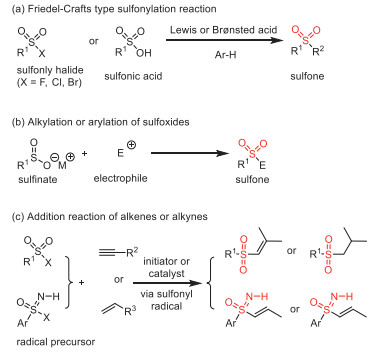
Conventional methodologies for the construction of C–S(Ⅵ) bonds predominantly encompass three major categories (Fig. 2): (a) Friedel-Crafts type sulfonylation reactions [21]; (b) Alkylation or arylation of sulfoxides [22-24]; (c) Addition reactions involving alkenes or alkynes [25-28]. Nevertheless, these traditional strategies are plagued by inherent drawbacks, including the pungent odor of starting materials, harsh oxidative environments, and strongly acidic reaction conditions. Such limitations not only pose potential hazards to experimental operators and induce environmental contamination, but also impede the practicality of large-scale synthetic operations. Accordingly, the exploitation of facile and sustainable novel strategies for C–S(Ⅵ) bond formation has emerged as a prominent research hotspot in the contemporary synthetic chemistry field.
In line with the core requirements of green chemistry and the global imperative to address environmental pollution and energy shortage crises, the development of low-toxic, high-efficiency and eco-friendly synthetic protocols has gradually become the mainstream focus of chemical research. As a ubiquitous, renewable and clean natural energy source, visible light has attracted extensive attention from synthetic chemists, and has rapidly emerged as a key research focus in the field of sustainable organic synthesis.
With the deepening of related research, photocatalytic reactions have undergone rapid development and gained increasing prominence in organic synthesis, playing an increasingly pivotal role in modern synthetic strategies [29-31]. Benefiting from the intrinsic merits of photocatalysis including sustainability [32], environmental benignity [33], cost-effectiveness [34], high catalytic efficiency [35] and renewable energy utilization [36], photoredox catalysis research pioneered by representative groups including MacMillan [37], Stephenson [38] Yoon [39] and others [40-47] has garnered widespread academic attention worldwide. In contrast to conventional organic synthetic approaches, photocatalytic reactions employ visible light as the driving force to trigger electron transfer and achieve molecular activation [48-50]. To date, this strategy has evolved into a mild yet powerful synthetic tool for the construction of sulfone compounds [51-53].
Based on the above research context, this review systematically summarizes the visible-light-mediated construction of C–S(Ⅵ) bonds reported in recent years, with a specific focus on categorization of such bonds according to the hybridization states of the corresponding carbon atoms.
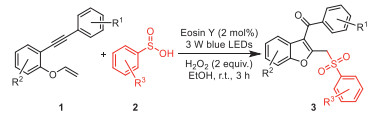
In 2020, Wei’s group [54] reported a transition-metal-free catalytic method for the synthesis of sulfone compounds (Scheme 1). Employing low-cost ethanol as the solvent and hydrogen peroxid as the oxidant, this method not only features simple operation and environmental friendliness, but also successfully constructs chemical bonds such as C–S(Ⅵ), C–C, and C=O through a one-pot reaction, thus exhibiting great application potential in chemical synthesis.
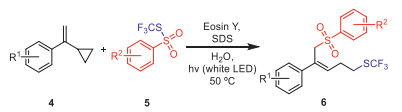
In 2020, Xu and co-workers [55] reported a visible light-catalyzed sulfonylation reaction of vinylcyclopropanes in an aqueous phase (Scheme 2). This method proceeds without the need for a metal catalyst and exhibits good functional group tolerance, as well as high regioselectivity and stereoselectivity. Furthermore, it expands the scope of 1,5-difunctionalization reactions, specifically, the simultaneous introduction of –SCF3 and –SO2Ar groups, thus holding application value in the field of pharmaceutical synthesis.
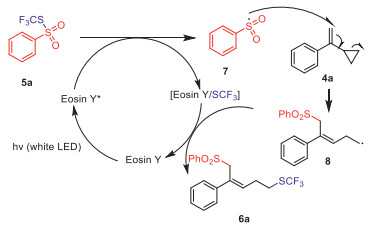
Based on mechanistic studies, the authors proposed a plausible mechanism for this reaction (Scheme 3): Under light irradiation, the photocatalyst is excited and undergoes a single-electron transfer (SET) process with the reaction substrate 5a, generating a sulfonyl radical 7 and one molecule of a complex intermediate. Subsequently, 7 combines with 4a via radical addition, and further interacts with the complex intermediate to yield the target product 6a.
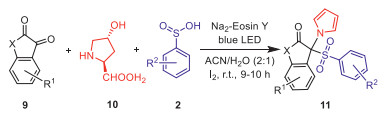
In 2021, Kumar and his colleagues [56] for the first time reported a visible light-induced sulfonylation of C(sp3)–H bonds, with indoline-2,3-dione, 4-hydroxyproline, and sulfinic acids as model substrates, which enabled the one-pot synthesis of sterically hindered tertiary sulfones and the construction of C–S(Ⅵ) bonds (Scheme 4). This method exhibits a broad substrate scope and has been applied to the synthesis and structural modification of selective Eg5 inhibitors, holding promise for preparing drug molecules with analogous structures in pharmaceutical synthesis. Studies indicate that the absence of iodine in the reaction or sequential addition of reactants leads to the formation of thiosulfonic acid derivatives; this observation may facilitate the synthesis of compounds with similar structures by regulating reaction conditions.
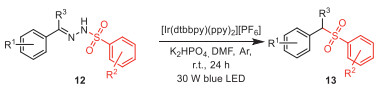
In 2021, Zeng’s group [57] designed a visible light-catalyzed reaction for the in-situ denitrogenation to form sulfone compounds (Scheme 5). During the reaction, one molecule of nitrogen is released, and the carbon atom utilization efficiency is high. Meanwhile, this method does not require strong oxidants and proceeds under mild reaction conditions. Notably, the presence of oxygen inhibits the progression of the reaction.
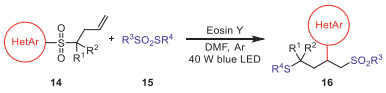
In 2021, Wang [58] utilized 14 as the starting material and 15 as the sulfur dioxide source to achieve a visible light-induced radical cascade reaction (Scheme 6). This reaction not only involves the formation of C–S(Ⅵ) bonds, but also constructs C–C bonds and C–S(Ⅱ) bonds through a rearrangement reaction, thereby efficiently realizing the 1,2,4-trifunctionalization of butenylbenzothiazole sulfone derivatives. This breakthrough overcomes the limitation of traditional alkene functionalization, which mostly relies on 1,2- or 1,6-difunctionalization. However, this method exhibits poor reactivity for 15 substituted with strong electron-withdrawing groups or sterically bulky groups; meanwhile, the low quantum efficiency of the photoreaction is another urgent issue to be addressed for this method.
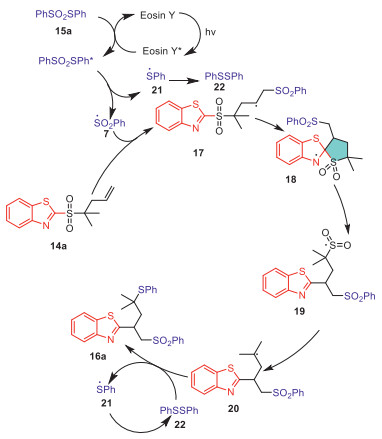
The reaction mechanism is as follows (Scheme 7): Under light irradiation, the photocatalyst is excited and induces 15a to generate sulfonyl radical 7 and radical 21 through an energy transfer (ET) process. Among these radicals, two molecules of 21 couple to produce 22. The reaction substrate 14a combines with 7 to form a C-centered radical intermediate 17. This intermediate undergoes a five-membered ring transition state to yield the rearranged product 19, which further eliminates one molecule of sulfur dioxide to generate 20. Finally, the sulfur radical produced by disulfide cleavage couples with the 20 to afford the target product 16a.
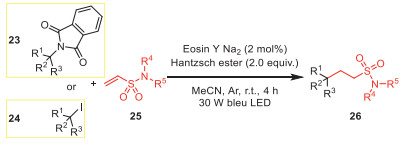
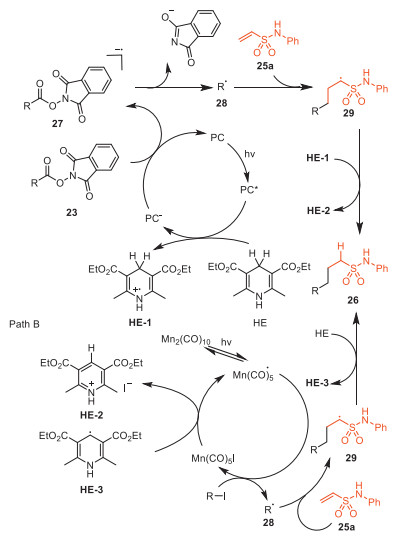
In 2022, Wang [59] and co-workers successfully constructed C–S(Ⅵ) bonds using alkenyl sulfonamides as the sulfur source (Scheme 8). The proposed mechanism is shown in Scheme 9. Initially, excited eosin Y-Na2 undergoes SET to generate anionic radicals and HE-1. The anionic radicals then reduce the substrate 23 to form 27, which further undergoes cleavage to produce 28. Subsequently, 28 reacts with 25a to generate a radical 29, and 29 interacts with the HE-1 via a hydrogen atom transfer (HAT) process to afford the target product 26. An alternative reaction mechanism suggests that if the reaction substrate is switched from an ester to an iodide, the excited photocatalyst induces the iodide to generate 28. Then, 28 reacts with 25a to form a radical 29, which subsequently undergoes an HAT process with HE to yield the target product 26. This method features mild reaction conditions and a diverse range of substrates, making it favorable for the synthesis and late-stage modification of natural products and drug molecules.
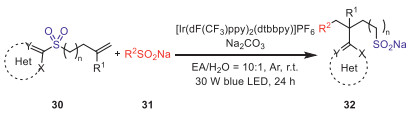
In 2022, Wang et al. [60] reported a method for constructing C–S(Ⅵ) bonds via Smiles rearrangement without sulfur dioxide emission (Scheme 10). Using a mixed solution of ethyl acetate/water (10:1, v/v) as the solvent, this method involves rearrangement to form sodium sulfonate under light irradiation and argon atmosphere protection. Subsequently, the sodium sulfonate reacts with benzyl bromide in the presence of sodium carbonate to generate benzyl sulfone compounds.
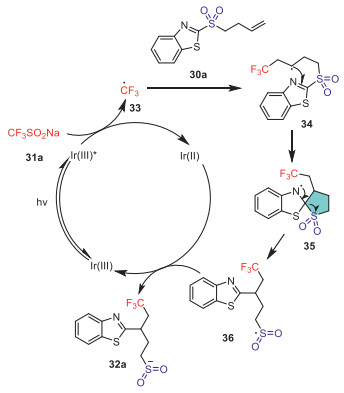
The authors proposed a plausible mechanism for this reaction (Scheme 11): First, iridium(Ⅲ) is excited under light irradiation and undergoes SET with sodium sulfonate to produce radical 33. Then, 33 combines with the C=C bond in 30a to form a radical 34, which further undergoes rearrangement to yield a sulfonyl radical 36. Finally, the 36 undergoes SET with iridium(Ⅱ) to afford the target compound 32a. Notably, when the substituent of sodium sulfonate is a trifluoromethyl or difluoromethyl group, the generated radicals are trifluoromethyl radicals or difluoromethyl radicals, respectively; in contrast, when the substituent is an aryl group, the generated radical is an aromatic sulfonyl radical. This method exhibits excellent functional group tolerance and involves no sulfur dioxide emission during the reaction, which is in line with the concept of modern green chemistry and facilitates the construction of a series of valuable organosulfur compounds.
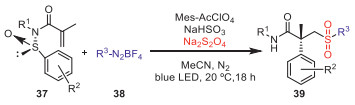
In 2022, the Wu research group [61] used Na2S2O4 as the SO2 source to prepare sulfone compounds with quaternary carbon chiral centers through the Truce-Smiles rearrangement reaction under visible light irradiation, realizing the construction of C(sp3)–S(Ⅵ) bonds (Scheme 12). This method for preparing sulfone compounds has a specific stereoconfiguration and potential value in the field of pharmaceutical synthesis. In addition, under gram-scale reaction conditions, although the yield of the product decreased slightly, the stereochemical integrity was completely retained. This indicates that the method also has application potential in large-scale synthesis.
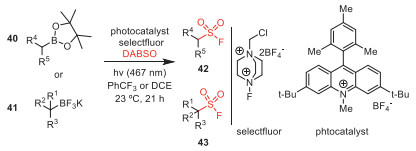
In 2023, Tambar’s group [62] developed a photochemical sulfonyl fluorination reaction (Scheme 13). Using organotrifluoroborates as alkyl radical precursors, and with selectfluor and DABSO as the fluorinating reagent and sulfur source respectively, this reaction enables the conversion of potassium alkyltrifluoroborates into alkyl-substituted sulfonyl fluorides. This method exhibits excellent functional group tolerance and is compatible with various compounds, including Boc-protected amines, tert-butyl esters, ketones, and nitriles. However, when organobenzyl fluoroborates were used as the reaction substrates, the corresponding sulfonyl fluorides were not obtained.
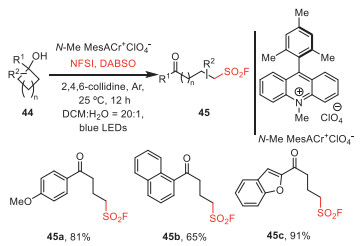
In 2023, Li and co-workers [63] reported a photocatalytic ring-opening sulfonyl fluorination reaction for the synthesis of carbonyl-containing aliphatic sulfonyl fluorides (Scheme 14). This reaction uses strained cycloalkanols as raw materials, with sulfur dioxide and NFSI (N-fluorobenzenesulfonimide) as reactants, and proceeds under mild conditions. After optimizing and confirming the optimal reaction conditions, the authors expanded the scope of reaction substrates. They found that the presence of electron-rich aromatic rings on the cyclobutanol substrates is crucial for the smooth progression of the reaction, enabling the obtainment of target products with moderate to high yields. However, cyclobutanol substrates substituted with phenyl, 4-bromophenyl, or butyl groups hardly undergo the reaction. In addition, the research group also tested fused-ring compounds formed by cyclobutanol and different heterocycles, and the yields of the resulting target compounds were all considerable.
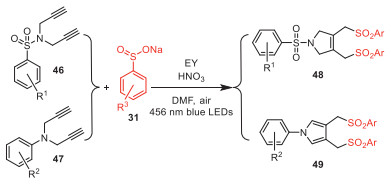
In 2024, Srimani et al. [64] selectively synthesized non-aromatic and aromatic heterocyclic sulfone compounds under visible-light catalysis (Scheme 15). When the reaction substrate has an electron-withdrawing group connected to nitrogen atom, the reaction yields non-aromatic heterocyclic sulfone compounds; when there is an electron-donating group connected to nitrogen atom, aromatic heterocyclic sulfone compounds are mainly produced. This is because for non-aromatic heterocyclic sulfone compounds, the electron-withdrawing group is not conducive to the stability of the amine cation radical, thus hindering the photocatalytic dehydro- aromatization process. This method breaks through the selectivity problem in traditional visible-light synthesis and is conducive to the efficient construction of complex molecular frameworks.
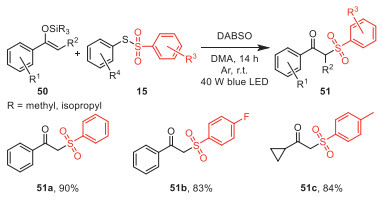
In 2024, Sharma and co-workers [65] used ketone-derived silyl enol ethers as raw materials and a sulfur source to construct C–S(Ⅵ) under light-irradiation conditions (Scheme 16). The characteristic of the target products is the presence of a carbonyl group at the β-position of the sulfonyl group. This method does not require the catalysis of transition metals or photocatalysts, and the reaction time is relatively short. The sulfide by-products generated during the reaction can be reused as a sulfur source, which is in line with the concept of green chemistry. This method has strong functional group compatibility. Whether there are electron-withdrawing groups or electron-donating groups, alkyl groups or aromatic rings, the yields are all considerable, which is conducive to practical production.
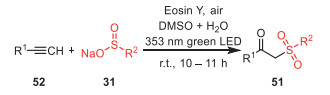
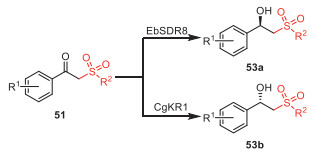
In 2024, Srivastava and co-workers [66] reported a photocatalytic method for the synthesis of β-ketosulfones, utilizing visible light and oxygen as the oxidant, which distinguishes it from traditional methods for synthesizing β-ketosulfones (Scheme 17). This method employs phenylacetylene and sodium sulfinate as starting materials, with Eosin-Y as the photocatalyst. In 2025, Jia and co-workers [67] reported a visible-light-driven biocatalytic cascade reaction for the synthesis of β-hydroxysulfones using a similar approach (Scheme 18). The authors modified the reaction by changing the photocatalyst and adding anthraquinone-2-sulfonate as a catalyst, which enabled the successful synthesis of β-ketosulfones from sodium benzenesulfonate and the reaction substrate. Subsequently, β-hydroxysulfones with different stereoconfigurations were obtained under various reduction conditions.
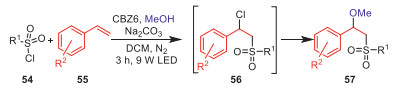
In 2025, Qu et al. [68] reported a method for constructing C–S(Ⅵ) bonds through a photoredox neutral alkenes (Scheme 19). This method uses sulfonyl chlorides and aryl alkenes as starting materials, and synthesizes sulfone compounds with β-alkoxy structures through a SET process. In this method, the neutral organic photocatalyst CBZ6 can effectively promote the generation of sulfonyl radicals, and facilitate the subsequent oxidation process of phenyl radicals to intermediate phenyl cations, further forming the target sulfone compounds. The authors found that under the optimal reaction conditions, the yield of the target compound was as high as 84%, accompanied by 6% of by-products. Moreover, as the amount of methanol decreases, the content of by-products increases. After control experiments, the authors believe that this process is a stepwise reaction process, that is, the by-products are first formed, and then the target compounds are generated through redox and nucleophilic substitution reactions. This reaction has mild conditions, a wide substrate scope, and good functional group compatibility, and has successfully achieved gram-scale synthesis.
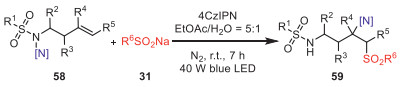
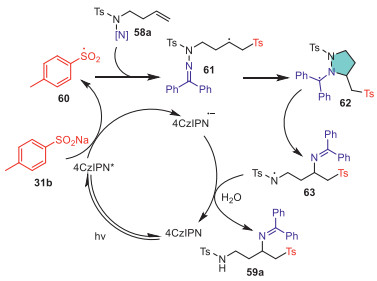
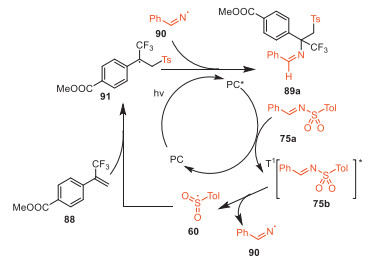
In 2025, Zhang’s group [69] reported a photoinduced aminosulfonylation reaction of unactivated alkenes involving N–N bond cleavage and distal migration of imine (Scheme 20). This method proceeds without metal catalysis and features high atom economy and good functional group tolerance. Mechanistic studies shown in Scheme 21 revealed that the photocatalyst is excited under visible light irradiation and undergoes a SET process with sodium p-toluenesulfonate, generating 60 and an anionic radical. 60 combines with the substrate 58a, producing 61 via radical addition. Subsequently, 61 undergoes rearrangement through a five-membered ring intermediate and undergoes a single-electron transfer process with the radical anion to yield the target compound 59a. Stern-Volmer quenching experiments indicated that the excitation of the photocatalyst under light irradiation is a crucial step in this process.
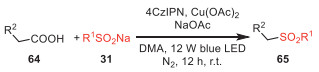
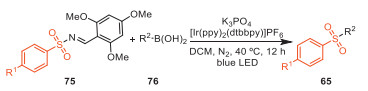
In 2025, the Tang’s group [70] reported a photoinduced decarboxylative sulfonylation between carboxylic acids and sodium sulfonates (Scheme 22). Using carboxylic acids as starting materials, copper(Ⅱ) acetate as the oxidant, and sodium acetate as the base, this group achieved the direct one-pot synthesis of sulfone compounds under room temperature and light irradiation conditions, thereby realizing the construction of C–S(Ⅵ) bonds. The group found that the yield of the target compound remained high even in the absence of a photocatalyst during the reaction. Therefore, the authors speculated that this process is realized through a charge transfer process between the ligand and the metal. In addition, the authors also found that the oxidant plays a crucial role in the reaction; reducing the amount of the oxidant or the base will lead to a decrease in the yield of the final product.
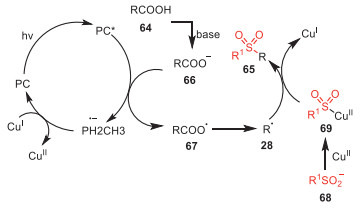
The proposed mechanism for this reaction (Scheme 23) suggests that the carboxylic acid first undergoes deprotonation to form a carboxylate anion 66, which is then gradually oxidized by the excited-state photocatalyst to generate radical 67. A series of experimental results indicate that this oxidation process is kinetically favorable. 67 eliminates one molecule of carbon dioxide to form 28. Meanwhile, sodium sulfonate combines with Cu2+ to form intermediate 69. Finally, 28 is captured by 69 to form sulfone compounds 65 and Cu+.
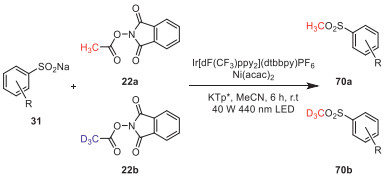
In 2025, Zhang’s group [71] reported a photo-driven radical coupling between sodium sulfonates and N-hydroxyphthalimide esters mediated by metallic nickel (Scheme 24). The group used commercially available sodium 4-methylbenzenesulfonate and 1,3-dioxoisoindolin-2-yl acetate as model substrates to investigate the reaction conditions, yielding a series of methyl sulfone compounds. To suppress the formation of alkyl radical self-coupling by-products under an inert atmosphere, the authors employed a combination of nickel acetylacetonate (a catalyst with a chelating ligand) and KTp* (a bulky ligand). The results showed that the reaction proceeded smoothly in this dual-catalyst system consisting of a metal catalyst and a photocatalyst. Furthermore, they also synthesized a series of trideuterated methyl derivatives using this method. This approach features high functional group tolerance, and for different sodium sulfonates, the target products were obtained with high yields. However, the group did not investigate the effect of different methylating agents on the reaction. This may serve as a new research direction and contribute to the simplification of this method.
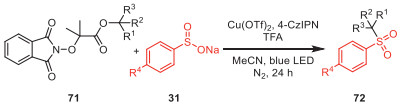
In 2025, Wang and co-workers [72] reported a strategy for the synthesis of sulfones via radical cross-coupling between NPIB esters and sodium sulfonates (Scheme 25). Some target compound derivatives exhibited relatively high yields, which is attributed to the fact that acyclic alkyl radicals can be more easily generated from their corresponding NPIBs. In contrast, the dissociation of non-aromatic cyclic alkyl radicals is relatively difficult, resulting in lower yields of the corresponding target products compared to those derived from acyclic alkyl radicals. Additionally, when the benzene ring of sodium sulfonates bears activating groups, the reactivity of sodium sulfonates is enhanced, and the yields of the target products increase accordingly.
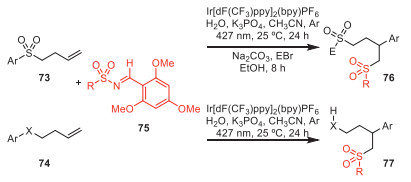
In 2025, Wang’s group [73] obtained sulfone compounds through the Smiles-Truce rearrangement reaction using sulfonimide as the raw material (Scheme 26). This method can efficiently transform the functional groups of olefins, and there is no release of sulfur dioxide during the reaction process, which is in line with the concept of contemporary green chemistry. Studies have shown that when the imine substrate is connected with electron-donating groups, the yield of the target compound is increased, while when it is connected with electron-withdrawing groups, the yield decreases. It is worth noting that when the imine has multiple electron donors, the yield is significantly increased. A possible mechanism is that a heteroatom radical is formed during the reaction process, and the heteroatom radical can further extract hydrogen atoms from the solvent or the activating group. This may be the key reason why the reaction cannot proceed in a non-protic solvent.
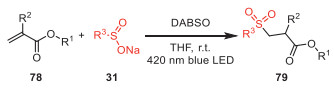
In 2025, Shu et al. [74] reported a photocatalytic sulfonylation reaction of activated olefins mediated by DABSO to construct C–S(Ⅵ) bonds (Scheme 27). This method uses α,β-unsaturated compounds and substituted sodium sulfinates as raw materials. The reaction process involves a Michael addition between ions and radicals, and uses an alternative strategy to the anti-Markovnikov hydrosulfonylation reaction, effectively overcoming the limitations reported by previous researchers. It has the advantages of being free of transition metals and photocatalysts, as well as having simple operating conditions. This method has a wide substrate scope, can well accommodate some active functional groups, and can be used for late-stage modification. It is worth noting that this method also overcomes the challenges faced by alkyl-substituted sodium sulfinates as substrates in previous reports. Mechanistic studies have shown that the key to the success of this reaction lies in DABSO. In addition, the research group has applied this method to the synthesis of bioactive compounds, indicating its great potential in the field of drug research.
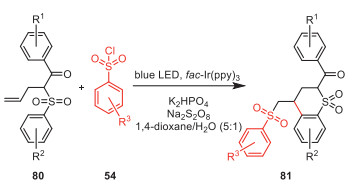
In 2025, Huang and co-workers [75] utilized visible-light-catalyzed cyclization reaction of arylsulfonyl chlorides and sulfone compounds to construct C–S(Ⅵ) bonds (Scheme 28). In this work, the researchers found that for the reaction substrate arylsulfone compounds, the electronic effect of R1 had no obvious influence on the reaction activity. As for R2, both electron-donating groups and electron-withdrawing groups had good reaction adaptability. However, if R2 was a weak electron-withdrawing group, the reaction yield would decrease significantly. For the substrate sulfonyl chloride, when there were substituents on the benzene ring, the reaction yields were very considerable. Due to the broad spectrum nature of the reaction substrates, this method may have potential applications in the synthesis of bioactive skeleton compounds. It is expected to discover and synthesize selective enzyme inhibitors in future structure-activity relationship (SAR) studies.
In 2025, Lu et al. [76] adopted a nickel-catalyzed method under visible-light conditions to selectively synthesize α-C chiral sulfone compounds and construct C–S(Ⅵ) bonds by using photoactive electron donor-acceptor complexes (Scheme 29). This method does not require the addition of a photocatalyst and has excellent enantioselectivity. Experimental results show that Ni/L catalysis, photocatalysis, and Hantzsch ester play crucial roles in the reaction process. This process has good adaptability to reaction substrates, and the position of substituents and their electronic effects have little impact on enantioselectivity. Due to the good functional group compatibility of this reaction, it has good applications in the fields of synthesis and medicinal chemistry.
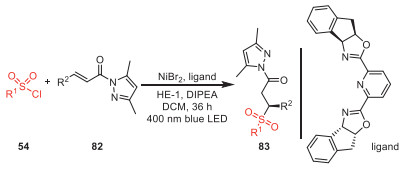
The authors first used this method in the four-step asymmetric catalytic synthesis of MMP–3 inhibitors for the treatment of heart failure and cancer, overcoming the difficulties of complex reaction steps and low yield in traditional synthesis. In addition, this method not only overcomes the problems related to radical stereocontrol but also has a wide substrate range in the absence of a photocatalyst, and is expected to become a new direction for asymmetric radical reactions.
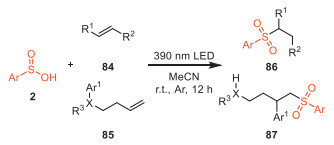
In 2025, Jiang and co-workers [77] achieved the direct synthesis of hydrogensulfonylation and arylsulfonylation products of alkenes via the photocatalysis of sulfinic acids (Scheme 30). This process is straightforward and features atom economy. No additional reactants are required apart from the starting materials, and the method exhibits a broad substrate scope and excellent functional group tolerance. Under light irradiation, some sulfinic acids undergo a disproportionation reaction to generate sulfur radicals and the key intermediate—sulfonyl radicals. The sulfonyl radicals can proceed along two pathways: hydrogensulfonylation and arylsulfonylation, which form the corresponding target products. Notably, the arylsulfonylation process involves aryl migration via a five-membered ring transition state.
In 2025, Ding and co-workers [78] reported a photocatalytically activated selective aldehydoamidosulfonylation reaction of styrenes using sulfonyl aldamines (Scheme 31). This reaction employs sulfonamides and alkenes as starting materials, and under a nitrogen atmosphere with photocatalyst catalysis, sulfone compounds are generated upon light irradiation, enabling the construction of C–S(Ⅵ) bonds.
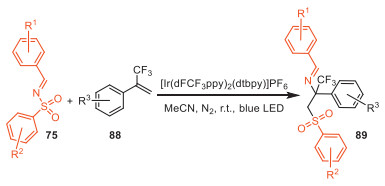
The reaction mechanism (Scheme 32) involves the formation of a triplet intermediate via a triplet-triplet energy transfer process between the reaction substrate and the excited-state photocatalyst. Due to the instability of this intermediate, the N–S bond undergoes homolysis to generate sulfonyl radicals and amine radicals. The sulfonyl radicals then interact with alkenes to form carbon-centered radicals, which further undergo a radical/radical cross-coupling reaction to yield the target compound. This method exhibits excellent atom economy, and the successful realization of the radical/radical coupling process is expected to spark a research upsurge in this field.
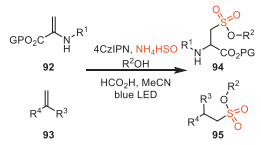
In 2025, Shu et al. [79] reported a modular synthesis of aliphatic sulfonates mediated by bisulfite radicals (Scheme 33). This reaction not only constructs a C–S(Ⅵ) bond but also represents a rare example of forming bisulfite radicals and achieving sulfonylation through the regulation of acid additives in the system. Moreover, this reaction simplifies and improves the synthesis of some traditional drug molecules through post-modification, holding great promise in the fields of chemical synthesis and biology.
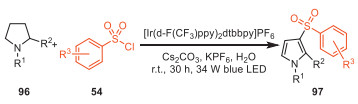
In 2018, Rueping and co-workers [80] constructed C–S(Ⅵ) bonds through the aromatization and sulfonylation of pyrrolidine-based pharmaceutical compounds via photoredox catalysis (Scheme 34). The reaction yield depends on the electronic effect of the substituent on the N atom of pyrrolidine; the presence of electron-withdrawing groups leads to a decrease in reaction yield. This reaction features mild conditions and good functional group tolerance, and achieves selective sulfonylation at the C-3 position of pyrrole. It provides a new approach for the synthesis of selectively substituted heterocycles.
In 2019, Wang et al. [81] pioneered the report on a visible-light-driven C-2 sulfonylation reaction of quinolines (Scheme 35). This method exhibits excellent functional group tolerance, achieving high yields whether the substituents are electron-withdrawing or electron-donating. Moreover, studies have shown that the steric hindrance effect has no significant impact on the reaction.
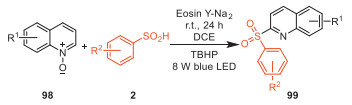
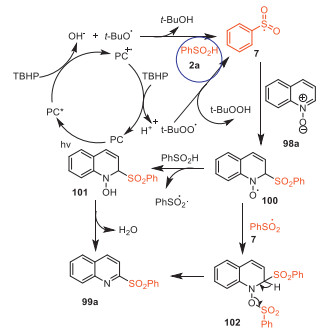
The reaction mechanism is shown in Scheme 36: Under light irradiation, the photocatalyst is excited and interacts with tert-butyl hydroperoxide (TBHP) via a SET process to generate tert-butoxy radical. The tert-butoxy radical abstracts a hydrogen atom from benzenesulfinic acid to form 7. Subsequently, 7 reacts with 98a to produce intermediate 100; 100 then further reacts with 7 to form 102, which undergoes aromatization to yield the target product. In addition, intermediate 100 can also abstract a hydrogen atom from benzenesulfonic acid and undergo dehydration to form the target product. Given the importance of 2-sulfonylquinoline derivatives in the agricultural and pharmaceutical fields, this method can serve as a feasible option for synthesizing agricultural and pharmaceutical compounds.
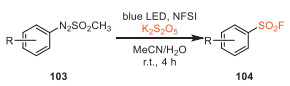
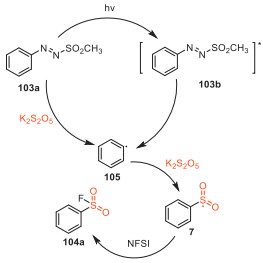
In 2021, Kim’s [82] group constructed aromatic sulfonyl fluorides under light irradiation using sulfonyl hydrazides as the starting materials (Scheme 37). And the proposed mechanism is shown in Scheme 38. First, the starting material aromatic sulfonyl hydrazide is excited under light irradiation, and then the cleavage of N-S bond leads to provide 105. Besides, single-electron reduction of 103a using K2S2O5 also provide 105. Subsequently, 105 reacts with K2S2O5 to form 7. Finally, 7 abstracts a fluorine atom from NFSI to synthesize 104a. Different from previous photocatalytic reactions, this reaction does not use transition metals as photocatalysts; instead, it employs expensive fluorides and requires relatively high temperatures. This may limit the subsequent application of this strategy in click chemistry or late-stage functionalization.
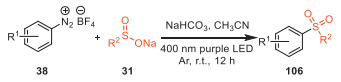
In 2021, Wang et al. [83] used aryl diazonium salts or heterocyclic diazonium salts and sulfinates as raw materials (Scheme 39). The electron-rich sulfinate anions combined with electron-deficient diazonium salts to form electron donor-acceptor complexes, and successfully achieved the construction of C–S(Ⅵ) bonds under visible light irradiation. This method features simple operation and does not require transition metals, ligands, catalysts, or oxidants, making it an economically friendly reaction. Owing to its excellent compatibility with functional groups, pharmaceutical intermediates, and natural product derivatives, this method is expected to play a role in the field of drug development.
In 2021, He’s group [84] reported a metal-free visible-light sulfonylation reaction involving three components, thiols, aryl diazonium salts, and sodium metabisulfite, as reactants, for the synthesis of asymmetric thiosulfonates (Scheme 40). In this method, sodium metabisulfite replaces DABSO as the sulfur dioxide source, offering advantages such as low cost and mild reaction conditions.
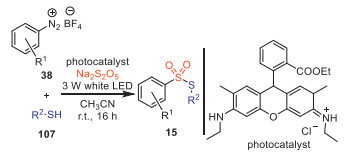
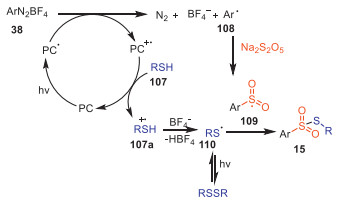
This approach addresses, to a certain extent, the problem of complex steps in the traditional synthesis of asymmetric thiosulfonates, making it a milder and greener synthetic method. The mechanism of this process is illustrated in Scheme 41: First, 38 undergo an SET process with the excited-state photocatalyst to generate aryl radicals 108 and cationic radicals. Then, 108 interacts with Na2S2O5 to form 109. On the other hand, 107 react with the cationic radicals to produce 107a, which is deprotonated by BF4- to produce 110. Finally, 110 combines with 109 to yield the target product 15.
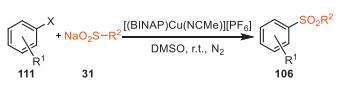
In 2021, Yang’s group [85] designed a sulfonylation reaction combining visible light with metallic copper, which catalyzes aryl halides to synthesize sulfones (Scheme 42). In this method, organocopper reagents are used as photocatalysts to replace the Ir/Ru complexes in traditional methods, featuring cost-effectiveness, environmental protection, and eco-friendliness.
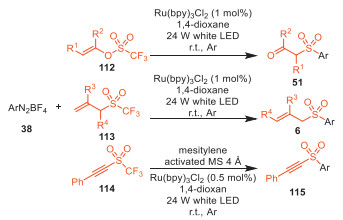
In 2021, Lu and co-workers [86] reported a visible-light-catalyzed sulfur dioxide capture reaction of aryl radicals (Scheme 43). Using aryl diazonium salts as reaction substrates, this method can selectively generate different types of C–S bonds, including β-ketosulfones, alkynyl sulfones, and allyl sulfones, by varying the ratio of different sulfur dioxide sources and catalysts. This method eliminates the need for the direct use of sulfur dioxide, making it an environmentally friendly reaction. Meanwhile, the reaction products are important synthons, so it is expected to play a significant role in late-stage synthesis and modification.
In 2022, Zhang and co-workers [87] developed a method for constructing C–S(Ⅵ) bonds using terminal alkynes and aryl sulfonates as starting materials (Scheme 44). The reaction is carried out at room temperature under nitrogen protection and light irradiation, with DMA as the solvent and cesium carbonate as the additive.
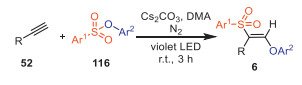
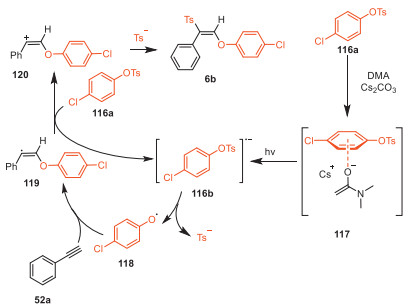
The authors proposed a plausible mechanism (Scheme 45) for this process: Under the action of cesium carbonate, DMA interacts with sulfonates to form an electron donor-acceptor complex 117. Subsequently, an SET process occurs to generate the anion radical 116b, which further undergoes cleavage to form 118. Then, 118 combines with the substrate 52a to generate the radical 119. 119 transfers an electron to 116a via single-electron transfer to form 120. Finally, 120 undergoes a sulfonylation reaction to yield the target compound. Probably because sulfonates need to accept electrons to form anion radicals during the reaction, the presence of electron-donating groups on the benzene ring of sulfonates reduces the stability of these anion radicals, which is unfavorable for the reaction. As a result, the yield of products with electron-donating groups is only 20% using this method. Notably, this study represents the first report of aryl sulfonate phenol esters being used as bifunctional reagents, pioneering this application.
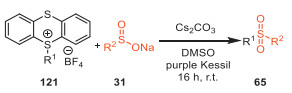
In 2022, Molander and co-workers [88] successfully constructed C–S(Ⅵ) bonds through a photoactive sulfur-containing acylation reaction involving electron donor-acceptor complexes (Scheme 46). The intermediate electron donor-acceptor complexes, upon excitation under visible light irradiation, generate transient aryl radicals and persistent sulfonyl radicals. These radicals can undergo selective coupling to produce the corresponding sulfone compounds. This reaction outlines a blueprint for thianthrenium salt activation reactions catalyzed by exogenous metal complexes or photocatalysts.
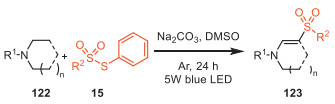
In 2022, the Sun’s group [89] synthesized alkenyl sulfones via visible-light induction using tertiary amines and thiosulfonates as starting materials, achieving the construction of C–S(Ⅵ) bonds without metals or photocatalysts (Scheme 47). This method features a relatively broad substrate scope, with various cyclic/acyclic tertiary amines and aromatic thiosulfonate substrates showing good reactivity. Research results indicate that the formation of an electron donor-acceptor complex between thiosulfonates and tertiary amines is crucial to the reaction. This method not only enriches the synthetic approaches for β-functionalized amines but also advances the application of intermolecular hydrogen transfer strategies in organic synthesis.
In 2022, Luo and co-workers [90] realized the visible-light-catalyzed construction of C–S(Ⅵ) bonds by activating the N–S bonds of sulfonimides (Scheme 48). The byproduct aldehyde generated during the reaction can be recycled, thus endowing the reaction with high atom economy. This method uses sulfonimides as the sulfur dioxide source and achieves the direct functionalization of the N–S bonds in sulfonimides. The resulting target sulfone compounds are relatively stable and can be used for the late-stage modification of complex molecules.
In the same year, Luo and co-workers [91] achieved the sulfonylation modification of anilines using sulfonamides as the sulfur dioxide source (Scheme 49). This method does not require the addition of strong oxidants, and compared with the traditional method of synthesizing sulfonanilines via oxidized sulfides, it features milder reaction conditions. Meanwhile, the reaction exhibits excellent functional group tolerance, showing good compatibility with various functional groups such as ester groups, amide groups, hydroxyl groups, and heterocycles. The research team first synthesized pharmaceutical derivatives including Celecoxib, Glybenclamide, and Valdecoxib through pre-functionalization. On this basis, they cleaved the N–S bond and formed the C–S bond. Therefore, this method holds application value in the late-stage modification of pharmaceuticals.
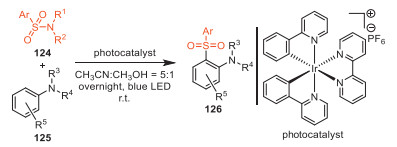
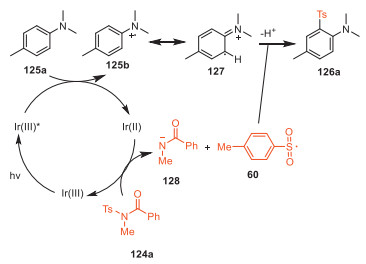
The feasible mechanism of this reaction is illustrated in Scheme 50: The iridium catalyst is excited under light irradiation and oxidizes the substrate 125a, generating the cationic radical 125b and the iridium(Ⅱ) catalyst. The iridium(Ⅱ) catalyst reduces 124a to form 128 and 60, while itself is oxidized to the iridium(Ⅲ) catalyst. Due to the persistent radical effect, 60 couples with 127 to yield the target compound.
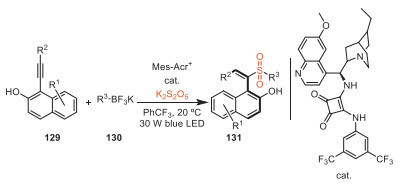
In 2022, the Wu research group [92] reported a photoinduced asymmetric radical sulfur dioxide insertion reaction, which successfully achieved the construction of C(sp2)–S(Ⅵ) bonds (Scheme 51). Using potassium alkyltrifluoroborate, K2S2O5 and alkynylnaphthalene as starting materials, the reaction successfully synthesized the target sulfone compounds with axial chirality through a three-component asymmetric radical process. Studies have shown that weak interactions and steric hindrance dominate enantioselectivity and E/Z selectivity, respectively. This work not only constructed axially chiral styrenes through an asymmetric radical pathway for the first time, but also represented an important breakthrough in the field of asymmetric SO2 insertion. With mild reaction conditions and a wide substrate scope, it provides a new method for the synthesis of sulfonyl-substituted axially chiral alkenes.
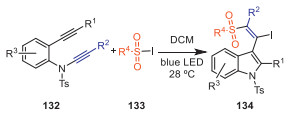
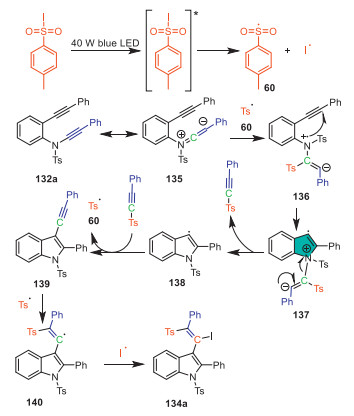
In 2022, Wang et al. [93] synthesized indole derivatives bearing C(sp2)–S(Ⅵ) bonds via visible-light-catalyzed reactions of ynamides (Scheme 52). Using various sulfur-containing compounds as radical precursors, this method requires no photocatalysts, metal catalysts, or oxidants, making it an efficient, green, and environmentally friendly synthetic approach with excellent atom economy. The reaction involves the formation of multiple chemical bonds, including C(sp2)–N, C(sp2)–C(sp2), and C(sp2)–SO2R bonds, thus holding great potential in the field of compound synthesis.
Mechanistic studies (Scheme 53) revealed that the radical species 60, generated from the radical precursor, can selectively attach to the nitrogen atom of 135 to form a nitrogen-centered radical. Subsequently, this radical undergoes a cyclization reaction to construct the indole scaffold, followed by rearrangement and radical addition to yield the target compound.
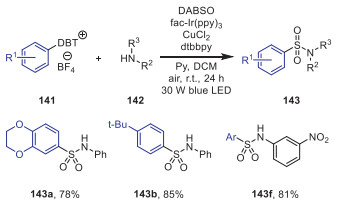
In 2023, Wang and co-workers [94] reported a method for constructing aryl sulfonamide compounds via visible-light catalysis (Scheme 54). This method features high functional group compatibility and mild reaction conditions. The reaction substrates range from primary amines to secondary amines, and from electron-rich aromatic compounds to electron-deficient aromatic compounds, indicating a wide substrate scope. After determining the optimal reaction conditions, the authors used this method to synthesize some related drug molecules and biomolecules, with yields ranging from 38% to 85%. This method may have application prospects in the fields of chemical biology research and drug discovery.
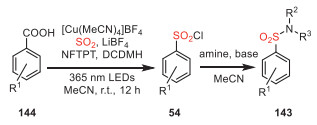
In 2023, Macmillan et al. [95] reported a cascade reaction for the preparation of sulfonamides from carboxylic acids under photocatalysis (Scheme 55). First, the reaction undergoes decarboxylation of carboxylic acids, which then react with sulfur dioxide and halides to generate the corresponding sulfonyl halide compounds. Subsequently, the sulfonyl halide compounds are converted into the corresponding sulfonamides in the same vessel. The substrates of this reaction are low in price; meanwhile, in most cases, the corresponding sulfonyl halide compounds are either unavailable for purchase or expensive. Therefore, this reaction is an efficient method for the synthesis of sulfonamides.
In 2024, Sureshkumar et al. [96] synthesized cyclopropenes with sulfonyl functional groups via a visible-light photoredox process (Scheme 56). This method utilizes the elimination process of iodine as a leaving group to tandemly generate sulfonyl and cyclopropene modules. The reaction conditions are mild, overcoming the problems of harsh reaction conditions, difficult operation, and instability of sulfonyl iodide reagents in the reported methods. This process has good functional group compatibility. However, when the sulfonyl group is connected with an aliphatic substituent, only the cyclopropyl substituent can react. This is because the bent bond in cyclopropane can form an extended conjugate with the p-orbital of the radical, improving the stability of the intermediate radical. This method still has certain substrate limitations, and the reaction time is long. Perhaps it can be further optimized in the future.
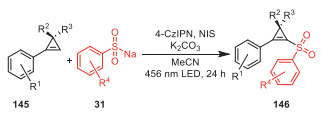
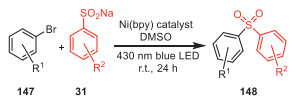
In 2024, Zhu and co-workers [97] combined the photosensitizer N-aryl phenoxazine with a Ni(bpy) (nickel-bipyridine) catalyst to synthesize a polymer support, aiming to enhance the photocatalytic activity (Scheme 57). The research group used the polymer as a support to promote the sulfonylation reaction through photocatalysis, and synthesized a series of sulfone compounds. This method has a wide substrate scope and shows good compatibility with functional groups such as trifluoromethyl and ester groups. Compared with the traditional synthesis of sulfone compounds, this method is easy to operate and has mild reaction conditions, which can be carried out at room temperature, and the loading of the photocatalyst is low. The recyclability of the catalyst is a major advantage of this method, and with the increase of the number of cycles, the loss of reaction activity is small. When re-metallized, the reaction activity is completely restored.
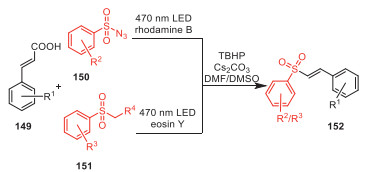
In 2024, Singh and co-workers [98] synthesized alkenyl sulfones via a visible-light-catalyzed decarboxylation reaction (Scheme 58). This method involves three types of sulfur sources as reaction substrates, namely sulfonyl azides, p-toluenesulfonylmethyl isocyanate, and β-ketosulfones, and two catalytic mechanisms are proposed. When sulfonyl azides are used as the sulfur source, the reaction substrate interacts with the excited-state photocatalyst and dissociates via a single-electron transfer process to generate sulfonamide radicals. Subsequently, sulfonyl radicals are obtained through radical coupling and oxidation processes. These sulfonyl radicals serve as key intermediates in both reaction mechanisms. When p-toluenesulfonylmethyl isocyanate or β-ketosulfones are used as the sulfur source, the sulfone compounds first form carbanions under the action of cesium carbonate. Then, under the influence of the excited-state photocatalyst, these carbanions form carbon-centered radicals, which further undergo cleavage to generate sulfonyl radicals. At this point, the sulfonyl radicals generated through the two aforementioned pathways undergo radical addition with cinnamic acid, and then lose one molecule of carbon dioxide under the action of the corresponding photocatalytic radicals to yield the target product, alkenyl sulfones.
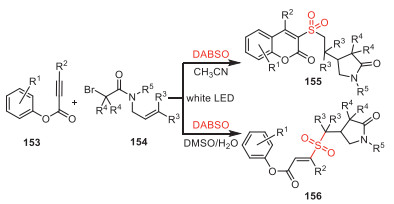
In 2024, the Li et al. [99] reported an efficient and mild multicomponent reaction for the synthesis of alkenyl sulfones (Scheme 59). This reaction does not require the addition of photocatalysts or metal catalysts; instead, it enables the selective synthesis of vinyl sulfones or coumarin derivatives by controlling the presence or absence of water. Therefore, it holds potential application value in the field of pharmaceutical synthesis. Mechanistic studies revealed that during the reaction, an electron donor-acceptor complex is formed between N-allyldifluoroacetamide and DABSO. Through a series of processes, the key intermediate, alkenyl radical, is generated. When water is present in the reaction system, the alkenyl radical undergoes a hydrogen atom transfer process to form vinyl sulfones; in the absence of water, the alkenyl radical undergoes a rearrangement via a five-membered ring transition state to yield coumarin derivatives.
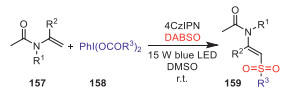
In 2025, Lu et al. [100] synthesized vinyl sulfone compounds with β-amide structure under light irradiation using amides, iodine(Ⅲ) dicarboxylates, and DABCO (Scheme 60). The process features mild conditions and is metal-free, representing a green and convenient strategy for the synthesis of β-amide vinyl sulfone compounds.
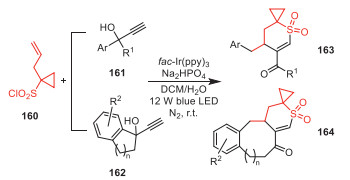
In 2025, Zhu et al. [101] prepared alkenyl sulfone compounds with spirocyclic structures through radical cyclization and functional group migration processes under light irradiation (Scheme 61). This reaction is initiated by the excitation of a photocatalyst under light conditions. This method features mild reaction conditions and good functional group compatibility. It not only overcomes the challenges in the synthesis of spirocyclic alkenyl sulfones but also further expands their applications in the field of pharmaceutical synthesis.
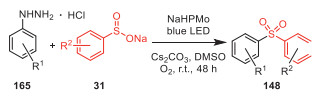
In 2025, Xu and co-workers [102] successfully synthesized aryl sulfone compounds via the oxidative coupling of aryl hydrazines and sulfonates under light irradiation, using polyoxometalates (POMs) as catalysts (Scheme 62). This method employs aryl hydrazines, by-products from the synthesis of pharmaceuticals, dyes, agricultural products, and other compounds, as starting materials. This not only addresses the toxicity and pollution issues associated with aryl hydrazines but also produces sulfone compounds with pharmaceutical activity, thus boasting broad application prospects. Compared with the synthesis of the same pharmaceutical compounds, this method adopts a one-pot synthesis approach, simplifying the synthetic steps. In terms of reactivity, the reaction exhibits excellent functional group tolerance: regardless of whether the reaction substrate bears electron-donating groups or electron-withdrawing groups, the yields are quite considerable. The electronic effect of substituents only influences the reaction rate. However, the yield decreases when the POM is substituted with electron-donating groups. This is because an increase in electron-withdrawing groups raises the energy barrier for the cleavage of the C–N bond in aryl hydrazines.
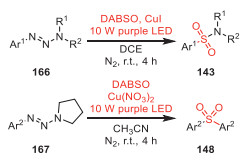
In 2025, Wang et al. [103] constructed C–S(Ⅵ) through a copper-catalyzed controllable denitration/SO2 insertion reaction under visible-light irradiation. This work involves the synthesis of two types of compounds, sulfonamides and diaryl sulfones (Scheme 63). The research results show that light irradiation and the copper catalyst play a crucial role in the formation of the compounds. For the synthesis of sulfonamides, whether the reaction substrate phenylhydrazine is connected with electron-withdrawing groups or electron-donating groups can well adapt to the reaction conditions, and the reaction yield is between 40% and 77%. Moreover, the electronic effect of the substituents has little obvious influence on the reaction yield. When the benzene ring is replaced with a heterocycle, the corresponding product can also be obtained. For the synthesis of diaryl sulfones, the situation of the electronic effect of the substituents is similar to that of sulfonamide compounds, and the reaction has good compatibility with both electron-withdrawing groups and electron-donating groups. At the same time, when there are di-substituents or tri-substituents on the benzene ring, the corresponding products can also be obtained. This indicates that the steric hindrance effect is not the key factor affecting the reaction. The reaction does not require a photocatalyst, and the reaction conditions are mild and the operation is simple, which has potential application value for the later structural modification and the synthesis of compounds with specific structures.
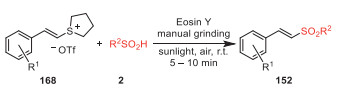
In 2025, Xie and co-workers [104] promoted the sulfonylation reaction of alkenyl sulfonates and sulfinic acids to construct C–S(Ⅵ) bonds through the synergistic effect of manual grinding and sunlight (Scheme 64). The results show that this method has the characteristic of a wide reaction substrate scope and has good compatibility with both electron-donating groups and electron-withdrawing groups. In addition, the team also found that the sulfonate substrate with a C=C bond is the key to the reaction.
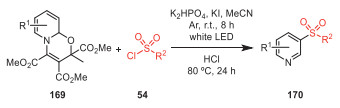
In 2025, Yang’s group [105] reported a visible-light-driven regioselective sulfonylation reaction at the meta-position of pyridines through the formation of electron donor-acceptor (EDA) complexes (Scheme 65). The success of this reaction is crucially dependent on light irradiation and iodide ions. Meanwhile, substituents on the pyridine ring of the substrate also affect the yield of the target product; in the absence of substituents on the pyridine ring, difunctionalization may occur, resulting in C-3 and C-5 disubstituted by-products. The reaction is initiated by the formation of an EDA complex between sulfonyl chloride and iodine, followed by processes such as radical addition, single-electron transfer, deprotonation, and hydrolysis to yield the target compound. This method features high selectivity, mild reaction conditions, and no need for catalysts. It not only expands the range of pyridine derivatives in medicinal chemistry but also lays a foundation for more reaction modes based on the EDA strategy.
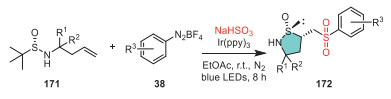
In 2025, the Wu research group [106] used NaHSO3 as the SO2 source, aryl diazonium salts and alkenes as reaction substrates to synthesize β-chiral sulfone compounds containing sulfur chiral center cyclic sulfinamides, successfully constructing C(sp2)–S(Ⅵ) bonds (Scheme 66). This method has good functional group compatibility; diazonium salts with coumarin, benzofuran and thiophene structures can all synthesize the corresponding target products under photocatalysis; however, when the aryl ring part of the diazonium salt is replaced with naphthalene or other heterocycles, the target products cannot be obtained. Nevertheless, this method still enriches the synthetic methods of sulfone compounds with chiral centers. Meanwhile, as synthetic intermediates, cyclic sulfinamides have a wide range of uses, so this method also has potential application value in the modification of biologically active structures.
In 2020, Wu et al. [107] achieved a metal-free sulfur dioxide insertion reaction under light conditions, synthesizing alkyl alkynyl sulfones (Scheme 67). This method has mild reaction conditions and is a one-step reaction, breaking through the limitation of traditional preparation of alkynyl sulfones, which could only produce aryl/heteroaryl alkynyl sulfones. It provides an efficient synthesis method for alkyl alkynyl sulfones. This method has good functional group compatibility and high chemical selectivity. However, in the reaction process, it depends on a specific photocatalyst and a specific light source, and the range of reaction substrates of alkynes is limited to a certain extent, which greatly limits the universality of this synthesis method.
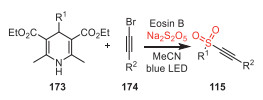
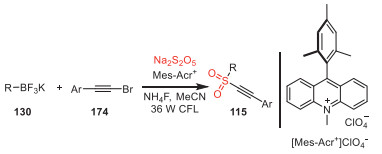
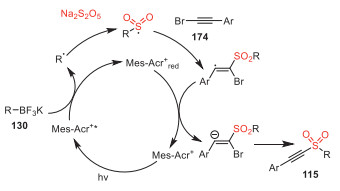
In the same year, Wu and co-workers [108] achieved the synthesis of alkynyl sulfones using potassium trifluoroborate, sodium metabisulfite, and alkynyl bromide as raw materials under room temperature and visible light irradiation (Scheme 68). Based on mechanistic studies, the authors proposed a reaction mechanism as shown in Scheme 69. This method also expands the variety of alkynyl sulfone compounds and provides an efficient and green synthetic approach for the synthesis of alkyl alkynyl sulfones.
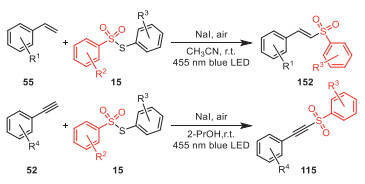
In 2023, Li et al. [109] synthesized (E)-alkenyl sulfones and alkynyl sulfones through visible-light-light-induced formation of electron donor-acceptor complexes, constructing C(sp2)–S(Ⅵ) and C(sp3)–S(Ⅵ) bonds respectively (Scheme 70). This method uses thiosulfonates as the sulfur source, which effectively avoids the pungent odor of traditional sulfur source compounds, making it an environmentally friendly approach for constructing C–S bonds. Meanwhile, this method features mild reaction conditions, requiring no transition metals or photocatalysts. It also has a wide substrate applicability and can be used to construct various sulfone compounds including naphthalene rings, heterocycles, and aromatic rings.
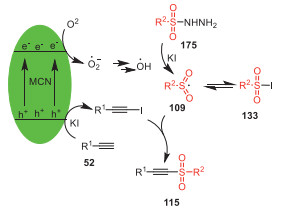
In 2024, Cheng and co-workers [110] improved the C–S coupling reaction by regulating photogenerated redox species using highly crystalline carbon nitride (Scheme 71). This reaction employs terminal alkynes and sulfonyl hydrazides as starting materials, with carbon nitride prepared via the molten salt method (MCN) serving as the photocatalyst, and catalyzes the sulfonylation reaction under 420 nm visible-light irradiation. This method overcomes the drawbacks of traditional alkenyl sulfone synthesis, such as the requirement for pre-functionalized substrates, cumbersome reaction steps, and reliance on oxidants and metal catalysts. It features high reaction efficiency, green sustainability, and the recyclability of the photocatalyst in the reaction system. The research team not only successfully constructed C–S(Ⅵ) bonds but also expanded the reaction substrates to terminal alkynes, achieving the construction of C–S(Ⅱ) bonds. However, the cumbersome synthesis process of the photocatalyst is a prominent drawback of this reaction, which may serve as a direction for future research.
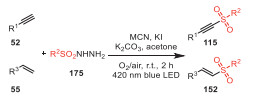
Based on relevant studies, the authors proposed a plausible mechanism for the reaction (Scheme 72): First, MCN generates photogenerated carriers under visible-light irradiation. The vacancy in the conduction band oxidize iodide ions, which then interact with alkynes to form iodoalkynes. Meanwhile, the reaction substrate sulfonyl hydrazide is also oxidized to generate sulfonyl radicals. These sulfonyl radicals interact with iodoalkynes to yield the target product, alkynyl sulfones. On the other hand, the photogenerated electrons in the conduction band combine with oxygen to maintain the entire redox process.
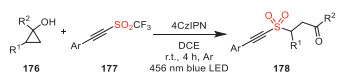
In 2024, Liu and co-workers [111] reported a photocatalytic method for constructing C–S(Ⅵ) bonds via an energy transfer process, involving the reaction of cyclopropanols with alkynyl trifluoromethanesulfonates (Scheme 73). This method incorporates multiple reaction processes, including the ring-opening of cyclopropanols, in-situ trapping of sulfur dioxide, and alkynylation. It requires no metal catalysts, thus providing a direct and atom-economical approach for the synthesis of alkynyl-substituted γ-ketosulfones. Among the components, alkynyl trifluoromethanesulfonates not only act as radical acceptors but also serve as both the source of alkynyl groups and sulfur dioxide in the reaction.
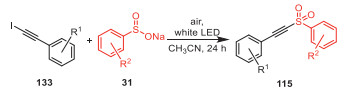
In 2024, Chen and co-workers [112] reported a synthesis method for the direct coupling of alkynyl iodides and sodium sulfinates to construct alkynyl sulfones promoted by visible light (Scheme 74). This method is simple to operate, environmentally friendly, and does not require the participation of photocatalysts or metal catalysts.
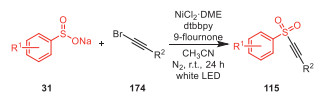
In 2025, Sun et al. [113] developed a visible-light-driven and Ni(Ⅱ)-catalyzed C–S cross-coupling reaction (Scheme 75). The reaction uses aryl sulfonates and corresponding propargyl bromides as reactants to obtain sulfone compounds with α-C≡C structure. The reaction process involves the radical oxidative addition of the Ni(Ⅲ) catalyst, the oxidative addition of sulfonyl radicals, and the reductive elimination of the metal catalyst. In addition, the research group also utilized α-alkynyl sulfones and aryl azides to construct C(sp2)-S(Ⅵ) bonds through click reactions.
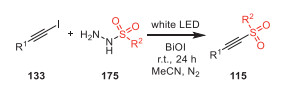
In 2025, Chen and co-workers [114] utilized the nanomaterial BiOI with oxygen vacancies to photocatalytically synthesize alkynyl sulfone compounds (Scheme 76). BiOI with oxygen vacancies has a narrower bandgap structure, so it can more easily generate photogenerated carriers under visible light conditions, thus exhibiting higher photocatalytic activity. The research results show that trace amounts of water play a crucial role in the progress of the reaction. This method not only provides a feasible scheme for the formation of C–S bonds but also develops the application of semiconductor photocatalysts in the field of organic synthesis.
In summary, this review summarizes the research progress in the construction of photocatalytic C–S(Ⅵ) bonds in recent years, mainly involving the synthesis of sulfone compounds, which are classified according to the hybridization mode of carbon atoms in the C–S(Ⅵ) bonds. Looking at the synthetic methods of photocatalytic sulfone compounds in recent years, they can be roughly divided into the following categories: (1) Photoredox processes co-catalyzed by metal catalysts and ligands; (2) Photocatalytic synthesis using organic dyes as photocatalysts; (3) Photocatalytic processes of EDA complexes; (4) Synthesis using semiconductors as photocatalysts. Each method has its own advantages and disadvantages.
Among the various synthetic methods of photocatalytic sulfone compounds reported in recent years, the photoredox processes dominated by metal catalysts occupy a dominant position in the construction of C–S(Ⅵ) bonds. The metal catalysts possess a higher oxidation potential, which is higher than that of most sulfur precursors, and the empty orbitals of transition metals can better accommodate excited electrons under light irradiation. These characteristics make metal catalysts widely favored by researchers in organic synthesis processes. However, due to their high price and difficulty in recovery during the reaction process, this may limit the application of metal catalysts in large-scale reactions.
Compared with metal catalysts, organic dyes are relatively low in price and have strong catalytic effects, making them more suitable for application in large-scale reactions. Nevertheless, the pollution of organic dyes to the environment and their hazards to living organisms as pollutants should not be underestimated. Therefore, if organic dyes are used as photocatalysts for synthesis, their degradation and residues in various compounds such as pharmaceuticals remain urgent problems to be solved.
The EDA photocatalytic process also has obvious advantages. First of all, no photocatalyst needs to be added in this process, resulting in low reaction cost. Secondly, EDA complexes are easily affected by various factors such as solvent, reaction concentration and temperature, providing multiple reaction regulation methods. At the same time, with the formation of EDA complexes, the absorption wavelength of the corresponding substances undergoes a red shift, making the utilization of visible light easier. However, the electrical matching of reaction substrates in the formation of EDA is the key to the success of the reaction, which also greatly limits its application.
Semiconductors not only have strong electrical conductivity in practical applications, but also have wide applications in the field of photocatalysis. Due to the narrow band gap of semiconductor materials, they have a wider range of optical response. In addition, as photocatalysts, the recyclability after the reaction is a major feature of semiconductor materials, and the catalytic effect after repeated use is still considerable. Therefore, the use of semiconductors as photocatalysts in more economical synthetic methods has potential value in large-scale reactions. Nevertheless, the preparation of semiconductor photocatalysts remains a major challenge.
In addition, the selection of reaction substrates is also the key to constructing C–S(Ⅵ) bonds. Although the reaction substrates in the process of C–S(Ⅵ) bond construction are diverse, most of them are concentrated on precursor substances with sulfonyl and sulfinyl structures. The preparation of precursor substances is also a major problem. In contrast, synthetic methods using inorganic sulfur compounds as sulfur sources are simpler and cheaper. The accompanying generation of SO2 during the reaction is also a major feature of C–S(Ⅵ) bond construction. Therefore, if the release of SO2 during the reaction can be reduced, it will be an environmentally friendly synthetic method, which is in line with the concept of green chemistry.
In summary, certain progress has been made in the construction of C–S(Ⅵ) bonds, but there are more or less certain problems. The future research direction should focus on developing more economically applicable reactions and creating environmentally friendly photocatalytic reactions, which is the development trend. In various fields such as medicine, the synthesis of chiral drugs is still a major research hotspot. Therefore, we look forward to a deeper research on the mechanism of photocatalytic synthesis to realize the asymmetric synthesis of drugs and the scale-up synthesis of cascade reactions. At the same time, the development of more sustainable photocatalysts is a problem that should be solved in future research.
Mingpeng Li: Writing – original draft, Methodology, Data curation. Yule Liu: Formal analysis, Data curation. Ziheng Jin: Formal analysis, Data curation. Zhiting Zhao: Methodology, Formal analysis, Data curation. Bingbing Yan: Formal analysis, Data curation. Ziwen Wang: Writing – review & editing, Supervision, Investigation, Funding acquisition, Conceptualization. Qingmin Wang: Supervision, Conceptualization.
The authors declare that they have no known competing financial interests or personal relationships that could have appeared to influence the work reported in this paper.
This study was supported by Tianjin Natural Science Foundation Project (No. 25JCYBJC00460).
X. Chen, J. Jin, R. Chang, et al., Amino Acids. 56 (2024) 47. doi: 10.1007/s00726-024-03402-9
B. Heinemann, T.M. Hildebrandt, J. Exp. Bot. 72 (2021) 4634-4645. doi: 10.1093/jxb/erab182
Z. Zhou, P.Q. Tran, E.S. Cowley, et al., Nat. Rev. Microbiol. 23 (2025) 122-140. doi: 10.1038/s41579-024-01104-3
M.A. Moran, B.P. Durham, Nat. Rev. Microbiol. 17 (2019) 665-678. doi: 10.1038/s41579-019-0250-1
M.C. Bagley, J.W. Dale, E.A. Merritt, et al., Chem. Rev. 105 (2005) 685-714. doi: 10.1021/cr0300441
O.P. Narayan, P. Kumar, B. Yadav, et al., Plant Signal. Behav. 18 (2023) 2030082. doi: 10.1080/15592324.2022.2030082
D.B. Tiz, O. Rosati, L. Sancineto, Phosphorus, Sulfur, Silicon. Relat. Elem. (2025) 1–39, doi: 10.1080/10426507.2025.2496521.
N. Wang, P. Saidhareddy, X. Jiang, Nat. Prod. Rep. 37 (2020) 246-275. doi: 10.1039/c8np00093j
H. Zhu, V. Dronamraju, W. Xie, et al., Med. Chem. Res. 30 (2021) 305-352. doi: 10.1007/s00044-020-02687-1
M. Feng, B. Tang, S.H. Liang, et al., Curr. Top. Med. Chem. 16 (2016) 1200-1216. doi: 10.2174/1568026615666150915111741
D.A. Boyd, Angew. Chem. Int. Ed. 55 (2016) 15486-15502. doi: 10.1002/anie.201604615
L. Xiao, G. Liu, P. Ren, et al., Chin. J. Org. Chem. 42 (2022) 1002-1012. doi: 10.6023/cjoc202109038
J. Xie, B. Liao, R.Y. Tang, J. Agric. Food Chem. 68 (2020) 12505-12526. doi: 10.1021/acs.jafc.0c05002
M. Mustafa, J.Y. Winum, Expert Opin. Drug Discov. 17 (2022) 501-512. doi: 10.1080/17460441.2022.2044783
Z. Yu, Z. Zou, Z. Yuan, et al., Chin. J. Org. Chem. 44 (2024) 2682-2699. doi: 10.6023/cjoc202403042
B. Zhang, A.M. Wassermann, M. Vogt, et al., J. Chem. Inf. Model. 52 (2012) 3138-3143. doi: 10.1021/ci300481d
J.S. Scott, A.M. Birch, K.J. Brocklehurst, et al., J. Med. Chem. 55 (2012) 5361-5379. doi: 10.1021/jm300310c
W.M. Xu, F.F. Han, M. He, et al., J. Agric. Food Chem. 60 (2012) 1036-1041. doi: 10.1021/jf203772d
G. Casiraghi, F. Zanardi, G. Rassu, et al., Chem. Rev. 95 (1995) 1677-1716. doi: 10.1021/cr00038a001
U. Lücking, Org. Chem. Front. 6 (2019) 1319-1324. doi: 10.1039/c8qo01233d
D.O. Jang, K.S. Moon, D.H. Cho, et al., Tetrahedron Lett. 47 (2006) 6063-6066. doi: 10.1016/j.tetlet.2006.06.099
V.G. Pandya, S.B. Mhaske, Org. Lett. 16 (2014) 3836-3839. doi: 10.1021/ol5018646
Y. Meng, M. Wang, X. Jiang, CCS Chem. 3 (2021) 17-24. doi: 10.31635/ccschem.021.202000638
D. Zeng, Y. Ma, W.P. Deng, et al., Angew. Chem. Int. Ed. 61 (2022) e202207100. doi: 10.1002/anie.202207100
J.J. Wang, W. Yu, Org. Lett. 21 (2019) 9236-9240. doi: 10.1021/acs.orglett.9b03636
V.K.K. Pampana, V.P. Charpe, A. Sagadevan, et al., Green Chem. 23 (2021) 3569-3574. doi: 10.1039/d1gc00736j
Y. Zheng, Y. You, Q. Shen, et al., Org. Chem. Front. 7 (2020) 2069-2074. doi: 10.1039/d0qo00497a
D. Zeng, Y. Ma, W.P. Deng, et al., Nat. Synth. 1 (2022) 455-463. doi: 10.1038/s44160-022-00060-1
Y. Guo, J. Xia, K. Chen, et al., Org. Chem. Front. 13 (2026) 202-209. doi: 10.1039/D5QO01163A
I. Sliusarevskyi, J. Diaz, S. Senapati, et al., Angew. Chem. Int. Ed. 64 (2025) e202509870. doi: 10.1002/anie.202509870
W. Xiao, J.Q. Chen, J. Wu, Chem. Soc. Rev. 54 (2025) 6832-6926. doi: 10.1039/d4cs01312c
J.D. Bell, J.A. Murphy, Chem. Soc. Rev. 50 (2021) 9540-9685. doi: 10.1039/d1cs00311a
S. He, X. Chen, F. Zeng, et al., Chin. Chem. Lett. 31 (2020) 1863-1867. doi: 10.1016/j.cclet.2019.12.031
M.H. Shaw, J. Twilton, D.W.C. MacMillan, J. Org. Chem. 81 (2016) 6898-6926. doi: 10.1021/acs.joc.6b01449
P.V. Pham, D.A. Nagib, D.W.C. MacMillan, Angew. Chem. Int. Ed. 50 (2011) 6119-6122. doi: 10.1002/anie.201101861
J.D. Nguyen, J.W. Tucker, M.D. Konieczynska, et al., J. Am. Chem. Soc. 133 (2011) 4160-4163. doi: 10.1021/ja108560e
D.A. Nicewicz, D.W.C. MacMillan, Science 322 (2008) 77-80. doi: 10.1126/science.1161976
J.M.R. Narayanam, C.R.J. Stephenson, Chem. Soc. Rev. 40 (2011) 102-113. doi: 10.1039/B913880N
T.P. Yoon, M.A. Ischay, J. Du, Nat. Chem. 2 (2010) 527-532. doi: 10.1038/nchem.687
L. Shi, W. Xia, Chem. Soc. Rev. 41 (2012) 7687-7697. doi: 10.1039/c2cs35203f
J. Xuan, W.J. Xiao, Angew. Chem. Int. Ed. 51 (2012) 6828-6838. doi: 10.1002/anie.201200223
D.P. Hari, B. König, Angew. Chem. Int. Ed. 52 (2013) 4734-4743. doi: 10.1002/anie.201210276
X. Jiang, W. Xiong, S. Deng, et al., Nat. Catal. 5 (2022) 788-797. doi: 10.1038/s41929-022-00831-1
H. Jiang, X.K. He, X. Jiang, et al., J. Am. Chem. Soc. 145 (2023) 6944-6952. doi: 10.1021/jacs.3c00462
W. Xiong, X. Jiang, W.C. Wang, et al., J. Am. Chem. Soc., 145 (2023) 7983-7991. doi: 10.1021/jacs.2c13538
X.K. He, L.Q. Lu, B.R. Yuan, et al., J. Am. Chem. Soc. 146 (2024) 18892-18898. doi: 10.1021/jacs.4c07096
X. Jiang, X. Han, F.D. Lu, et al., CCS Chem. 7 (2025) 1567-1602. doi: 10.31635/ccschem.025.202505512
L. Revathi, L. Ravindar, W.Y. Fang, et al., Adv. Synth. Catal. 360 (2018) 4652-4698. doi: 10.1002/adsc.201800736
L. Marzo, S.K. Pagire, O. Reiser, et al. Angew. Chem. Int. Ed. 57 (2018) 10034-10072. doi: 10.1002/anie.201709766
Y. Kong, W. Xu, X. Liu, et al., Chin. Chem. Lett. 31 (2020) 3245-3249. doi: 10.1016/j.cclet.2020.05.022
A. Hossain, S. Engl, E. Lutsker, et al., ACS Catal. 9 (2019) 1103-1109. doi: 10.1021/acscatal.8b04188
A.U. Meyer, S. Jäger, D.P. Hari, et al., Adv. Synth. Catal. 357 (2015) 2050-2054. doi: 10.1002/adsc.201500142
J.L. Tu, A.M. Hu, L. Guo, et al., J. Am. Chem. Soc. 145 (2023) 7600-7611. doi: 10.1021/jacs.3c01082
L. Wang, M. Zhang, Y. Zhang, et al., Chin. Chem. Lett. 31 (2020) 67-70. doi: 10.1016/j.cclet.2019.05.041
J. Liu, H. Yao, X. Li, et al., Org. Chem. Front. 7 (2020) 1314-1320. doi: 10.1039/d0qo00343c
S. Swarnkar, M.Y. Ansari, A. Kumar, Org. Lett. 23 (2021) 1163-1168. doi: 10.1021/acs.orglett.0c03898
X. Huang, X. Chen, H. Xie, et al., Org. Lett. 23 (2021) 6784-6788. doi: 10.1021/acs.orglett.1c02369
X.Y. Liu, S.Y. Tian, Y.F. Jiang, et al., Org. Lett. 23 (2021) 8246-8251. doi: 10.1021/acs.orglett.1c02981
M. Zhang, M. Yu, Z. Wang, et al., Org. Lett. 24 (2022) 3932-3937. doi: 10.1021/acs.orglett.2c01236
Y. Cao, X. Wang, H. Jiao, et al., Green Chem. 24 (2022) 4789-4793. doi: 10.1039/d2gc01509a
J. Huang, F. Liu, L.H. Zeng, et al., Nat. Commun. 13 (2022) 7081-7089. doi: 10.1038/s41467-022-34836-y
C.A. Vincent, M.I. Chiriac, L. Troian-Gautier, et al., ACS Catal. 13 (2023) 3668-3675. doi: 10.1021/acscatal.3c00107
Z.M. Yan, L. Qi, H.J. Du, et al., Org. Lett. 25 (2023) 7051-7056. doi: 10.1021/acs.orglett.3c02727
M. Roy, I. Mallick, M. Mahapatra, et al., Org. Lett. 26 (2024) 9357-9362. doi: 10.1021/acs.orglett.4c03587
B. Saxena, R.I. Patel, A. Sharma, Green Chem. 26 (2024) 11650-11661.
B. Yadav, S.K. Srivastava, Russ. J. Org. Chem. 60 (2024) 2422-2429. doi: 10.1134/s1070428024120169
D. E, J. You, Y. Zong, et al., Mol. Catal., 572 (2025) 114778-114785.
J. Gong, F. Wang, Y.B. Kang, et al., J. Org. Chem. 90 (2025) 8596-8600. doi: 10.1021/acs.joc.5c00648
X. Liu, L. Wang, M. Zhang, et al., Org. Lett. 27 (2025) 6743-6748. doi: 10.1021/acs.orglett.5c01861
W. Kong, J. Wang, C. Chen, et al., J. Org. Chem. 90 (2025) 7865-7876. doi: 10.1021/acs.joc.5c00800
L. Zheng, L. Wang, M. Zhang, et al., J. Org. Chem. 90 (2025) 7449-7457. doi: 10.1021/acs.joc.5c00793
S.A.A. Shah, B.X. Liu, M. Hasan, et al., J. Org. Chem. 90 (2025) 9200-9209. doi: 10.1021/acs.joc.5c01135
F. Yue, M. Li, J. Li, et al., Org. Lett. 27 (2025) 5394-5398. doi: 10.1021/acs.orglett.5c01346
X. Yang, S. Lu, Y. Zhang, et al., Org. Lett. 27 (2025) 4927-4932. doi: 10.1021/acs.orglett.5c01170
S. Li, Y. Liu, Y.Q. Shi, et al., Chem. Asian J. 20 (2025) e202401940. doi: 10.1002/asia.202401940
Z.M. Lai, Y. Xie, L.L. Huang, et al., Chem. Sci. 16 (2025) 4352-4359. doi: 10.1039/d4sc07264b
Y.X. Zhang, X.R. Xia, S.Y. Guo, et al., J. Org. Chem. 90 (2025) 5047-5051. doi: 10.1021/acs.joc.5c00399
J. Huang, N. Nuermaimaiti, Q. Ding, et al., J. Org. Chem. 90 (2025) 7775-7785. doi: 10.1021/acs.joc.5c00646
Y. Zhang, H. Xu, L. Huang, et al., ACS Catal. 15 (2025) 13145-13156. doi: 10.1021/acscatal.5c02630
K. Muralirajan, R. Kancherla, M. Rueping, Angew. Chem. Int. Ed. 57 (2018) 14787-14791. doi: 10.1002/anie.201808427
D.Q. Dong, L.X. Li, G.H. Li, et al., Chin. J. Catal., 40 (2019) 1494-1498. doi: 10.1016/S1872-2067(19)63420-0
T.T. Bui, V.H. Tran, H.K. Kim, Adv. Synth. Catal. 364 (2022) 341-347. doi: 10.1002/adsc.202100951
X. Liang, Y. Li, Q. Xia, et al., Green Chem. 23 (2021) 8865-8870. doi: 10.1039/d1gc03239a
Y. Lv, J. Luo, Y. Ma, et al., Org. Chem. Front. 8 (2021) 2461-2467. doi: 10.1039/d1qo00112d
Q. Yan, W. Cui, X. Song, et al., Org. Lett. 23 (2021) 3663-3668. doi: 10.1021/acs.orglett.1c01050
M. Zheng, K. Gao, Y. Zhang, et al., Org. Chem. Front. 8 (2021) 1830-1835. doi: 10.1039/d1qo00099c
W. Xie, P. Ma, Y. Zhang, et al., Org. Lett. 24 (2022) 6099-6104. doi: 10.1021/acs.orglett.2c02512
A. Granados, M.J. Cabrera-Afonso, M. Escolano, et al., Chem Catal. 2 (2022) 898-907.
J. Tong, H. Li, Y. Zhu, et al., Green Chem. 24 (2022) 1995-1999. doi: 10.1039/d1gc04703e
J. Zhen, X. Du, X. Xu, et al., ACS Catal. 12 (2022) 1986-1991. doi: 10.1021/acscatal.1c05669
X.H. Xu, J.S. Zhen, X. Du, et al., Org. Lett. 24 (2022) 853-858. doi: 10.1021/acs.orglett.1c04144
C. Zhang, Z. Tang, Y. Qiu, et al., Chem Catal. 2 (2022) 164-177.
M.R. Mutra, J.J. Wang, Nat. Commun. 13 (2022) 2345-2359. doi: 10.1038/s41467-022-30001-7
M. Zhang, L. Liu, B. Wang, et al., ACS Catal. 13 (2023) 11580-11588. doi: 10.1021/acscatal.3c03096
P.S. Pedersen, D.C. Blakemore, G.M. Chinigo, et al., J. Am. Chem. Soc. 145 (2023) 21189-21196. doi: 10.1021/jacs.3c08218
S. Biswas, M. Mallick, G. Nanda K S, et al., Org. Lett. 26 (2024) 10207-10212. doi: 10.1021/acs.orglett.4c03278
C. Zhu, Y.X. Li, C.H. Liu, et al., ACS Catal. 14 (2024) 17609-17621. doi: 10.1021/acscatal.4c04920
K. Ishu, M. Kumar, K.N. Singh, J. Org. Chem. 89 (2024) 10919-10928. doi: 10.1021/acs.joc.4c01252
J. Sun, C. Wang, C. Wu, et al., Green Chem. 26 (2024) 3301-3307. doi: 10.1039/d3gc04960d
T. Xu, X. Chen, X. Zhao, et al., Tetrahedron Lett. 167 (2025) 155663. doi: 10.1016/j.tetlet.2025.155663
S. Yang, Y. Chen, C. Zhu, Chem. Sci. 16 (2025) 9715-9719. doi: 10.1039/d5sc02555a
A.T. Abdulghaffar, C. Zhang, J. Yu, et al., Chem. Commun. 61 (2025) 9630-9633. doi: 10.1039/d4cc06571a
B. Wang, C. Wang, T. Zhang, et al., Org. Chem. Front. 12 (2025) 3256-3263. doi: 10.1039/d4qo02382j
L.H. Yang, L. Chen, W.S. Yao, et al., J. Org. Chem. 90 (2025) 5407-5418. doi: 10.1021/acs.joc.4c03097
Y. Ye, Z. Ye, M. Guo, et al., Chem. Commun. 61 (2025) 6368-6371. doi: 10.1039/d5cc00725a
J. Huang, C. Wang, X. Wang, et al., Sci. China Chem. 68 (2025) 257-263. doi: 10.1007/s11426-024-2151-x
X. Gong, M. Yang, J.B. Liu, et al., Green Chem. 22 (2020) 1906-1910. doi: 10.1039/d0gc00332h
X. Gong, M. Yang, J.B. Liu, et al., Org. Chem. Front. 7 (2020) 938-943. doi: 10.1039/d0qo00100g
K. Cao, N. Zhang, L. Lin, et al., Adv. Synth. Catal. 366 (2024) 207-213. doi: 10.1002/adsc.202300991
C. Liu, Y. Ma, R. Lian, et al., ChemSusChem. 17 (2024) e202301882. doi: 10.1002/cssc.202301882
G. Fan, C. Wu, X. Liu, et al., J. Org. Chem. 89 (2024) 7656-7661. doi: 10.1021/acs.joc.4c00341
W. Chen, Q. Zhang, S. Zhang, et al., Chin. J. Org. Chem. 44 (2024) 584-592. doi: 10.6023/cjoc202306023
X. Sun, M.Y. Jin, Y.L. He, et al., ChemistrySelect. 10 (2025) e02284. doi: 10.1002/slct.202502284
W. Chen, X. Liang, S. Guan, et al., Nano Res. 18 (2025) 94907348. doi: 10.26599/nr.2025.94907348

Scheme 58 The synthesis of alkenyl sulfones via a visible-light-catalyzed decarboxylation.

Scheme 59 The efficient and mild multicomponent reaction for the synthesis of alkenyl sulfones.

 扫一扫看文章


扫一扫关注我们
 DownLoad:

 下载:


 下载: