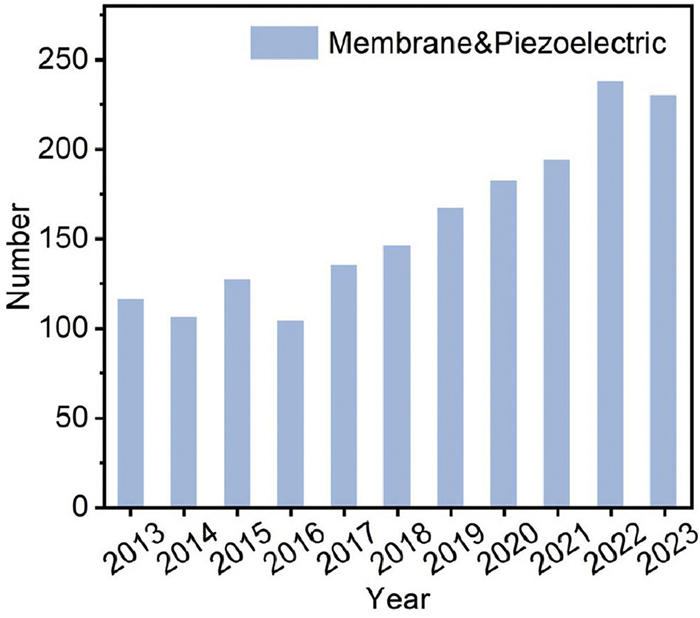
Figure 1.
According to the Web of Science (29 July 2024), publications based on the combination of membrane separation and piezoelectric catalysis were counted by searching for "Membrane" and "Piezoelectric" as keywords.

Piezoelectric membrane for revolutionizing water purification: A review
Zi Yang , Zhen Qiu , Liguo Shen , Cheng Chen , Mingzhu Zhou , Bisheng Li , Leihong Zhao , Hongjun Lin , Zhongyi Jiang


With the rapid progression of industrialization and urbanization, environmental pollution and resource depletion have intensified. Among these, water pollution poses a particularly critical threat to both human health and ecological systems. The growing scarcity of clean water and the deterioration of water quality have emerged as urgent global challenges [1,2]. Traditional water treatment technologies are increasingly inadequate to address the severe pressure on water resources and complex water quality issues, necessitating efficient, sustainable, and advanced methods [3,4]. In this context, membrane-based water treatment technology emerges as a key solution to water resource and environmental problems. Membrane separation technology offers high separation efficiency, minimal energy usage, no phase transition, and recyclable equipment, making it an environmentally sustainable option for water purification [5–10]. However, membrane fouling caused by various foulants accumulation on membrane surfaces and within pores limits its effectiveness by decreasing water permeability, filtration performance, separation efficiency, and membrane lifespan while increasing operational costs [11]. To combat this, techniques such as advanced oxidation processes (AOPs) [12], electrostatic fields [13], and ultrasound [14–17] are employed to effectively mitigate fouling, extend membrane lifespan, and improve operational efficiency. The complexity of membrane fouling necessitates the development of novel multifunctional membranes for more efficient and sustainable water treatment. Continuous innovation and optimization will yield new membrane materials, enhancing overall water treatment performance.
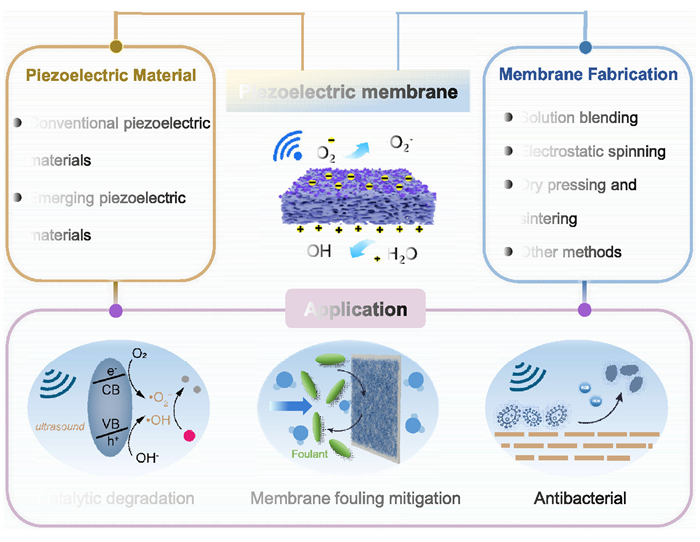
The piezoelectric effect was initially discovered by the Curie brothers (Pierre Curie and Jacques Curie) in 1880, which occurred when certain materials generate electric charges under mechanical stress [18]. Common piezoelectric materials include single crystals, piezoelectric ceramics, and polymers. The fast advancement of piezoelectric materials has given rise to piezoelectric catalysis. Piezoelectric catalysis is an emerging technology that converts mechanical energy (such as kinetic energy, tidal energy, and wind energy) into piezoelectric potential, promoting efficient electron-hole separation and redox reactions, thereby providing a potential solution for in-situ wastewater treatment [19]. Piezoelectric catalysis does not require additional chemical reagents and only needs mechanical stress to produce a catalytic effect, resulting in low energy consumption and minimal environmental impact, aligning with green sustainable development requirements [20]. Under vibration, piezoelectric materials can enhance the production of reactive oxygen species (ROS), inducing efficient pollutant degradation without introducing any additional chemical reagents [21]. Nevertheless, the recovery of powdery piezoelectric catalysts presents challenges and may result in secondary pollution. Notably, this concern can be mitigated by utilizing membranes as carriers for these catalysts [22]. By incorporating piezoelectric materials into membranes using advanced methods such as blending, electrospinning, or solution casting, these materials can be uniformly distributed on the membrane surface or within its matrix [23]. The substrate membrane serves as a carrier, offering a large specific surface area and exposed active sites for enhanced contact with pollutants nearby. The selectivity and permeability of the membrane can also be optimized through the piezoelectric effect, leading to enhanced separation efficiency and excellent catalytic degradation capabilities [24–26]. Integrating the piezoelectric effect with membrane separation technology presents an innovative solution to the issue of membrane fouling [27–30]. When subjected to water flow pressure or other mechanical stresses, these modified piezoelectric materials can generate localized electric fields that prevent contaminant attachment and deposition through charge repulsion and electrolysis [31]. Furthermore, the electric field can facilitate the dissociation of water molecules, leading to the formation of highly reactive hydroxyl radicals, thus enabling in situ membrane cleaning [32]. In conclusion, the amalgamation of the piezoelectric effect with membrane technology efficiently tackles membrane fouling issues, enhancing the overall performance of membranes and presenting a hopeful strategy for sustainable water treatment (Fig. 1).
Up to now, extensive research has been conducted on the applications of piezoelectric catalysis and membrane separation technologies. Although several high-quality reviews have been published, addressing various aspects of piezoelectric catalysis and advanced membrane separation techniques, they primarily focus on the underlying principles of piezoelectric catalysis and catalytic membranes. A comprehensive analysis of the combination of membrane separation and piezoelectric effect, particularly in the realm of water purification, remains absent. A thorough exploration of the coupling strategies and applications of piezoelectric membranes could illuminate future advancements in both material science and water treatment methodologies. Hence, the main objective of this review is to investigate the fusion of the piezoelectric effect with separation membranes through a thorough examination of existing literature, offering novel insights for the advancement of water treatment technologies based on piezoelectric membranes (Fig. 2). The exploration commences by delving into the principles and mechanisms underlying the piezoelectric effect and piezocatalysis (Section 2). Following this, the piezoelectric properties and regulation strategies of both conventional and emerging piezoelectric catalytic materials are delineated (Section 3). Then, the commonly used fabrication strategies for high-performance piezoelectric membranes are introduced (Section 4). Afterward, a comprehensive analysis of the energy sources, operating mechanisms, and multifunctional applications of piezoelectric membranes in catalytic degradation, antifouling, and antibacterial processes is presented (5 Energy source of piezoelectric membrane, 6 Application and mechanism of piezoelectric membrane). Lastly, Section 7 indicates fresh perspectives on the potential opportunities, obstacles, and avenues for further advancements in this fascinating area.
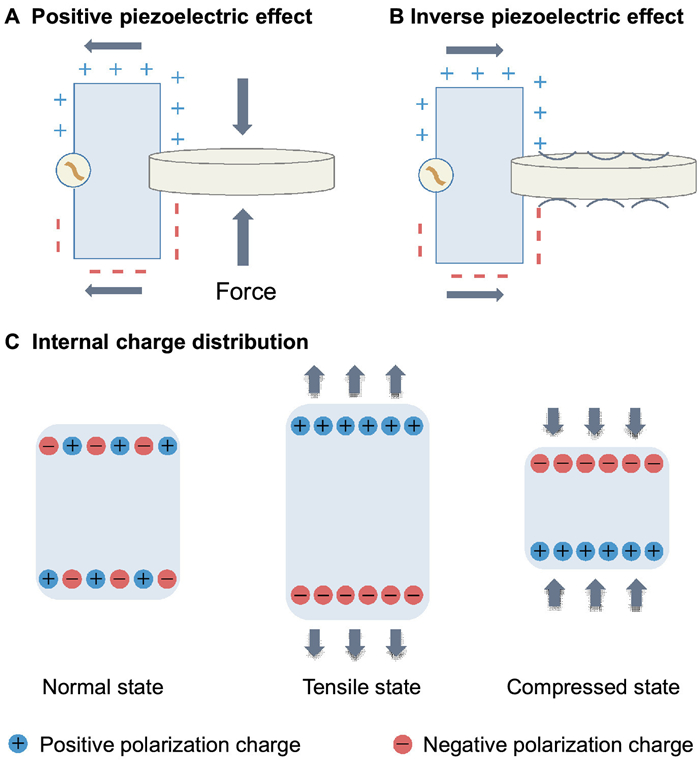
The term "piezoelectric" originates from the combination of "pressure" and "electricity, " reflecting its association with both pressure and electrical phenomena. In 1880, Curies first observed the piezoelectric effect and subsequently, confirmed the reverse piezoelectric effect, also determining the positive and inverse piezoelectric constants [33]. The piezoelectric effect, originating from the non-centrosymmetric attribute of piezoelectric materials, is primarily categorized into two phenomena: the positive piezoelectric effect and the inverse piezoelectric effect. The positive piezoelectric effect entails the transduction of mechanical energy into electrical energy [34]. Specifically, the application of mechanical stress to a piezoelectric material induces compression, leading to a shortening of the internal dipole moment. In response to this alteration, the material generates equivalent amounts of positive and negative charges on its surface, establishing electrical polarization. Upon removal of the mechanical stress, the material reverts to its initial electrically neutral state. This phenomenon, wherein electrical polarization arises from mechanical deformation, is denominated as the positive piezoelectric effect [35]. Conversely, the inverse piezoelectric effect describes the conversion of electrical energy into mechanical energy. In this case, an external electric field prompts the piezoelectric material to undergo continuous deformation along the field's direction. Once the electric field is removed, the deformation ceases to exist [36]. Collectively, these effects underscore the bidirectional proficiency of piezoelectric materials in energy conversion, enabling efficient energy transformation and control tailored to diverse application requirements (Fig. 3) [18].
Piezocatalysis refers to the process of promoting a catalytic reaction by applying pressure (mechanical stress) [37]. In conventional catalytic reactions, the reaction system is typically placed under external conditions, such as temperature and light, to enhance the reaction rate. The basic principle of piezoelectric catalysis is that when a piezoelectric material is subjected to mechanical stress, it creates charge separation. This separation then alters the crystal structure and promotes the catalytic reaction. This process involves the conversion of mechanical energy into electrical energy, resulting in structural changes and an enhancement of catalytic activity. In general, piezoelectric catalysis represents an innovative catalytic approach that offers a novel avenue for enhancing catalytic efficiency and lowering reaction temperatures by modulating the catalytic system through mechanical pressure. This method can achieve precise control of catalytic reactions at room temperature, thus reducing energy consumption [38]. Applications of piezoelectric catalysis include, but are not limited to, energy conversion, environmental protection, chemical synthesis, and catalytic material design [39]. Research in this domain holds significant promise for advancing the development of green and efficient catalytic processes.
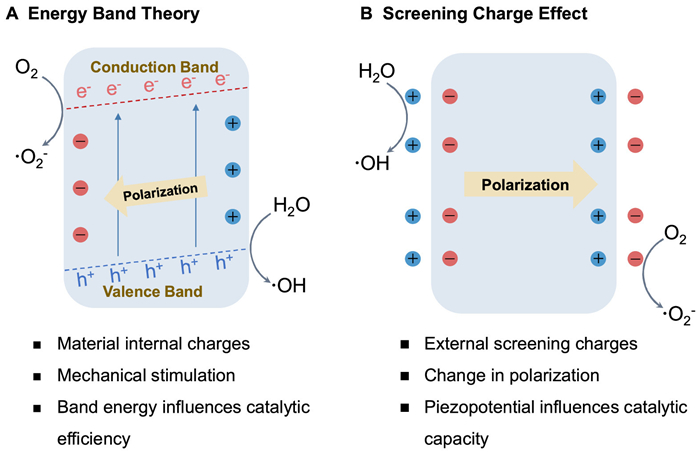
Currently, the two predominant mechanisms discussed in piezocatalysis are band theory and the screening charge effect (Fig. 4) [40]. The band theory emphasizes that the performance of piezoelectric catalysts is primarily governed by the positions of their bands [41,42], specifically the valence and conduction bands. The piezoelectric potential serves as a "switch, " modulating the band structure and directing internal carriers toward the catalyst surface, ultimately initiating the reaction [43]. Conversely, the screening charge effect highlights the importance of piezoelectricity and the related external screening charges, suggesting that the piezoelectric potential directly affects the energy characteristics of the reaction, similar to an electrolytic process [44]. The interplay between band positions, piezoelectric potential, and screening charges plays a pivotal role in determining the catalytic activity and reaction dynamics [45–47]. In both theories, the piezoelectric potential plays a crucial role in governing the piezocatalytic process, though it does so in distinct ways. In the band theory, the piezoelectric potential indirectly adjusts semiconductor properties, including manipulating band bending and facilitating carrier separation and transport, thus lowering activation energies and inhibiting electron-hole pair recombination [48,49]. While in shielding charge theory, the piezoelectric potential has a direct effect on the energy of the carrier [50]. For the reaction to begin, the piezoelectric potential must meet or exceed the redox potential, underscoring the critical role of the piezoelectric potential in determining the energetics and dynamics of carrier-mediated reactions within the piezoelectric catalytic framework. Moreover, the origin of reactive charge carriers differs between the two theories: Band theory primarily attributes it to internal charges, while screening charge effects emphasize the role of external screening charges. Thus, the mechanical coupling of piezoelectrically induced internal electric fields with surface-induced electrical properties is closely linked, further emphasizing the significance of screening charges in the piezocatalytic process.
Piezoelectric materials are a crucial component in the preparation of piezoelectric membranes. Their performance and characteristics directly influence the application effectiveness of piezoelectric membranes in fields such as water purification. Piezoelectric materials can be divided into traditional piezoelectric materials and emerging piezoelectric materials, each with its own unique properties and application advantages (Fig. 5) [51–56].
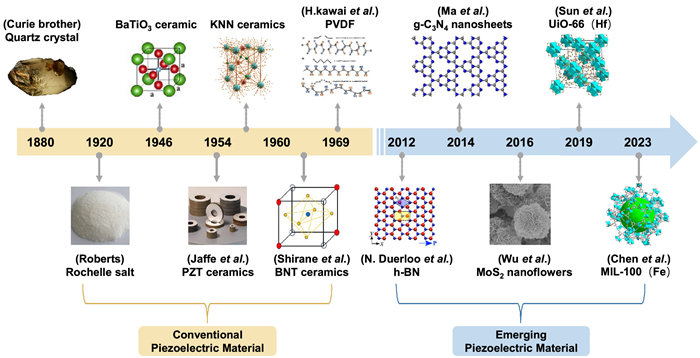
Piezoelectric single crystals are characterized by a long-range ordered lattice structure lacking a center of symmetry, which gives rise to their piezoelectric properties. Representative examples include quartz, Rochelle salt, potassium dihydrogen phosphate (KDP), and ammonium dihydrogen phosphate (ADP). The discovery of the piezoelectric effect in quartz by the Curie brothers in 1880 marked the inception of piezoelectric material research. Quartz exhibits excellent resistivity, a high mechanical quality factor (Qm), and stable temperature-dependent performance along specific crystallographic orientations [57]. In 1921, Valasek discovered ferroelectric and piezoelectric properties in Rochelle salt [58]; however, its hygroscopicity and strong temperature dependence limit practical applications. Later, in the 1930s–1940s, KDP and ADP were studied, showing piezoelectric coefficients of 23 pC/N and 49 pC/N, respectively. A significant breakthrough came in 1947 when Von Hippel and Goldman identified barium titanate (BaTiO3) as the first ferroelectric single crystal, with a piezoelectric coefficient of 86 pC/N [59]. Despite its current use in electronic components due to its high Qm and low-frequency temperature stability, quartz is less suitable for fabricating controllable membrane structures owing to its weak piezoelectricity, low dielectric constant, and poor processability.
In contrast to single crystals, piezoelectric ceramics are polycrystalline aggregates that offer higher piezoelectric coefficients, dielectric constants, controllable porosity, good durability, and stability in harsh environments, making them suitable for designing multifunctional membranes [60]. Their internal structure consists of irregularly arranged fine grains, conferring distinct piezoelectric characteristics. A landmark achievement was the synthesis of lead zirconate titanate (Pb(Zr, Ti)O3, or PZT) in 1952 at the Tokyo Institute of Technology. PZT exhibits excellent piezoelectric, dielectric, and pyroelectric properties. Soft PZT ceramics, characterized by high domain wall mobility, possess high piezoelectric coefficients and dielectric constants [61], making them effective for piezocatalytic generation of reactive oxygen species to degrade persistent organic pollutants under flow-induced vibration [62]. Hard PZT ceramics, with restricted domain motion, exhibit outstanding mechanical quality factors [63,64], rendering them ideal for membrane applications requiring long-term durability and stable electrostatic antifouling effects under high-flow conditions [65,66]. The softness or hardness of PZT can be effectively tuned by doping with ions such as La3+ [67], Ta5+ [68], Nb5+ [69], and Sb5+ [70]. Driven by environmental concerns, research has increasingly shifted toward lead-free alternatives such as BaTiO3 (BT), K0.5Na0.5NbO3 (KNN), Bi0.5Na0.5TiO3 (BNT), and BiFeO3 (BFO) [71], which show promising physical properties and application potential.
The confirmation of piezoelectricity in polyvinylidene fluoride (PVDF) by Kawai (1969) [72], and Kepler (1978) [73] spurred significant advances in polymer-based piezoelectric materials. PVDF exists in several crystalline phases (α, β, γ, δ, ε) [51], among which the β-phase exhibits the strongest piezoelectric response (d33 = −33 pC/N) and is therefore most suitable for applications requiring electrical output or mechanical deformation (Fig. S1A in Supporting information). Various methods, including electrospinning, spin-coating, and phase inversion, have been employed to induce the β-phase in PVDF membranes. For example, during the phase inversion process (Fig. S1B in Supporting information), immersing an α-phase-dominated PVDF membrane into a non-solvent (e.g., water) promotes a transition to the piezoelectric β-phase driven by intermolecular interactions [74]. Additional methods to obtain the β-phase include crystallization in polar solvents below 70 ℃, mechanical stretching, thermal annealing, and the use of additives (Fig. S1C in Supporting information). Despite their advantages in flexibility and processability for separation membranes, piezoelectric polymers like PVDF generally suffer from low piezoelectric coefficients due to limited crystallinity and polarity. Consequently, they are often composited with other catalysts to enhance the piezoelectric field and charge carrier mobility.
Recent advances in nanotechnology and functional materials have led to the emergence of novel piezoelectric materials [75]. Transition metal dichalcogenides (TMDCs), carbon-based materials, and metal-organic frameworks (MOFs) are particularly promising due to their high specific surface area, unique physicochemical properties, and ease of assembly into membranes, making them ideal candidates for high-efficiency piezoelectric membranes.
TMDCs, with a general formula of MX2 (M = transition metal, X = chalcogen), possess a layered X-M-X structure that confers unique electronic, optical, and mechanical properties [76]. Their piezoelectricity arises from the polarization of M–X dipoles in non-centrosymmetric structures [77]. For instance, MoS2, one of the most studied TMDCs, consists of 2S–Mo units whose spatial asymmetry leads to in-plane piezoelectricity (Fig. S2A in Supporting information) [55]. The piezocatalytic ability of MoS2 was first reported by Wu et al. in 2016, who demonstrated that nanoflowers of single- and multi-layer MoS2 could degrade 93% of Rhodamine B (RhB) within 60 s under ultrasound [55]. While early studies indicated that piezoelectricity was confined to the edges of odd-numbered layers [78], Ren et al. (2021) later found that 1T/3R–MoS2 with a low number of layers could completely degrade bisphenol A (BPA) within 45 min, outperforming other phases (Fig. S2B in Supporting information). Recently, Wang et al. synthesized a novel sail-like molybdenum disulfide, which exhibited enhanced piezoelectric constants and dipole moments compared to conventional nanosheets [79]. In addition, other TMDCs, such as WS2, WSe2, and MoSe2 (Fig. S2C in Supporting information), also show remarkable piezoelectricity [80].
Although pristine graphene is non-piezoelectric due to its inversion symmetry, strategies such as layer-thickness adjustment and defect introduction can break this symmetry and induce piezoelectricity. In 2012, Mitchell et al. [81] used density functional theory to show that atomic doping in single-layer graphene could induce piezoelectric effects (Fig. S3A in Supporting information). Experimental work by Xu et al. [82] revealed a positive piezoelectric effect in suspended bilayer and multilayer graphene, with the strongest response in trilayer graphene. In 2018, Javvaji et al. [83] found that triangular and trapezoidal defects, but not circular ones, were primary sources of graphene's piezoelectric activity. A recent study by Hu et al. [84] significantly enhanced the piezoelectric effect of graphene by introducing single-atom Zn to modulate the local dipole moment, achieving piezocatalytic hydrogen production under low-frequency vibration (Fig. S3B in Supporting information). Single-layer graphitic carbon nitride (g-C3N4) is another 2D material with piezoelectric potential. In 2014, Zelisko et al. [56] reported that a g-C3N4 superlattice exhibited a remarkable volumetric piezoelectric coefficient (0.758 C/m2), surpassing that of α-quartz and other atomically thin materials (Fig. S3C in Supporting information). Morphology significantly influences its activity; for example, Wu et al. [85] found that porous tubular g-C3N4 (PTCN) enhanced visible light absorption and mechanical vibration response, improving the degradation of RhB and methylene blue (MB). Constructing heterojunctions is an effective strategy to enhance polarity and piezoelectric performance. For instance, Guo et al. [86] prepared a NaNbO3/g-C3N4 heterojunction via ball-milling that efficiently degraded organic pollutants (Fig. S3D in Supporting information). Tang et al. [80] developed a g-C3N4/PDI-g-C3N4 homojunction with excellent atrazine (ATZ) degradation performance under optimized pH conditions.
MOFs are attractive due to their structural designability, high surface area, porosity, and stability. Their piezoelectric properties can be tailored via organic ligands, metal clusters, and host-guest interactions. The field gained momentum in 2019 when Sun et al. [52] first reported the piezoelectric/ferroelectric response of UiO-66 nanocrystals. While initially explored for hydrogen production, piezoelectric MOFs are now widely studied for the mechanical degradation of organic pollutants, especially under light and ultrasound synergy. For instance, Zhang et al. [87] found that UiO-66-NH2(Hf) showed significantly higher piezoelectric activity than its zirconium analogue, with a 2.2-fold activity increase under dual light/ultrasound exposure (Fig. S4A in Supporting information). Since pure UiO-66 has low piezoelectricity due to symmetry, modifications such as doping, post-synthetic treatment, and compositing are employed. Guo et al. [88] enhanced the asymmetry and piezoelectricity of UiO-66 by incorporating an adenine linker, achieving 93% degradation of RhB and 98% of diclofenac sodium (DCF). Additionally, in 2023, Zhao et al. [89] prepared a series of UiO-66 variants and found that UiO-66-F4 exhibited the strongest polarization and piezoresponse (Fig. S4B in Supporting information). The piezocatalytic mechanism of MOFs involves strain-induced internal polarization and free charge generation. Under ultrasound, mechanical deformation drives charge separation; electrons reduce oxygen to generate reactive oxygen species (e.g., superoxide radicals, singlet oxygen), while holes directly oxidize pollutants [89]. Beyond UiO-66, other MOFs like rod-like CAU-17 (studied by Dong et al. [90]) show enhanced piezoresponse due to easier deformation. Chen et al. [91] reported that the iron-based MIL-100(Fe) could remove 92% of carbamazepine (CBZ) within 30 min under ultrasonic vibration.
Over the past decade, the field of piezoelectric catalysis has experienced substantial growth, emerging as a key research area with a plethora of significant outcomes. Beyond the aforementioned innovative piezoelectric catalysts, extensive studies have been conducted on other materials such as h-BN, bismuth layer-structured materials, wurtzite-based piezoelectric semiconductors, and various new composite piezoelectric catalysts. ZnO is the most thoroughly researched wurtzite-type piezoelectric catalytic semiconductor. In 2010, Hong et al. [92] made a significant advancement by synthesizing ZnO microfibers and applying them in piezoelectric catalytic hydrogen evolution reactions. They demonstrated that when ZnO nanofibers were subjected to ultrasonic vibrations, charges were generated on their surfaces. These charges facilitated the redox reactions of water, resulting in the production of hydrogen and oxygen gases. This breakthrough highlighted the crucial role of ZnO in the field of piezoelectric catalysis and underscored its potential in clean energy generation. In 2020, Ares and colleagues utilized electrostatic force microscopy (EFM) to visually confirm the presence of strain-induced electric fields in monolayers of h-BN, thereby providing empirical evidence of piezoelectric properties in single-layer h-BN [93]. Bi2WO6, a rudimentary member of the Aurivillius oxides, consists of alternating layers of bismuth oxide (Bi2O2)2+ and octahedral (WO4)2- sheets. A study by Hua et al. in 2021 [94] revealed that the synergistic piezo-photocatalytic activity of Bi2WO6 markedly improved the degradation of organic dyes compared to either photocatalysis or piezocatalysis alone. It also demonstrated enduring stability and reusability, preserving 99% of its piezo-photocatalytic efficacy after five cycles.
Solution blending is a prevalent technique for preparing composite piezoelectric membranes. This method enables precise control of functional piezoelectric filler distribution within the polymer matrix, enhancing membrane performance while preventing the efficacy loss often encountered with direct powder use. The process involves dissolving/dispersing polymers and piezoelectric fillers in organic solvents, casting the uniform mixture via spin coating, doctor blading, or casting, and finally evaporating or replacing the solvent through phase inversion or thermal treatment to form the piezoelectric membrane. The technique's efficacy depends critically on material ratios, dispersion methods, and drying parameters, which profoundly influence membrane uniformity and functionality. Typical piezoelectric polymers readily form membranes via conventional solution processing—a well-established and easily scalable approach. For instance, Cardoso et al. [95] produced P(VDF-CTFE) membranes by solution blending (Fig. S5A in Supporting information): A homogeneous P(VDF-CTFE)/DMF solution was cast on glass, exposed to air, immersed in a coagulation bath (water/ethanol), solidified, and solvent-exchanged in deionized water before drying. The addition of piezoelectric nanomaterials can further enhance piezoelectric response. Rahul et al. [96] fabricated Ag@LiNbO3/PVDF composite membranes by solvent casting: A transparent PVDF/DMSO solution was mixed with Ag-loaded LiNbO3 powder, cast, and dried (Fig. S5B in Supporting information). Cui et al. [97] developed a frozen phase transformation method to synthesize β-phase PVDF membranes containing g-C3N4/LiNbO3 heterojunctions, significantly improving membrane hydrophilicity. More recently, Zhao et al. [98] prepared Ca-PVDF membranes by phase inversion, achieving high piezoelectric properties through Ca-atom-anchored nitrogen-doped carbon (Ca-NC) incorporation. Solution blending offers significant advantages for precise membrane architecture control, making it ideal for integrating filtration membranes with piezoelectric materials. It enables tailored design of pore size, piezoelectric filler distribution, and structural integrity—key factors affecting both separation efficiency and piezoelectric response. This fine-tuning capability allows optimization of separation performance while enhancing energy harvesting or sensing functionality. Moreover, uniform dispersion of piezoelectric catalysts throughout the membrane matrix is crucial, as heterogeneous distribution can compromise permeability and mechanical stability.
Electrospun nanofiber membranes represent a highly promising technology for mitigating key challenges in membrane filtration, including high cost, low flux, and severe fouling [99]. The electrospinning technique is particularly advantageous for fabricating high-performance piezoelectric membranes due to its precise control over fiber diameter at the nanoscale, which confers a high specific surface area to enhance water flux and separation efficiency. Furthermore, the pore structure can be meticulously optimized by adjusting processing parameters. This, coupled with the inherent flexibility and scalability of electrospun membranes, renders them adaptable to diverse water treatment applications. A significant application of electrospinning lies in preparing piezoelectric polymer membranes with a high content of the electroactive β-phase, which typically exhibit excellent piezoelectric properties. A study by Johnson et al. [100] in 2018 demonstrated that the β-phase content in PVDF membranes could be enhanced by optimizing electrospinning parameters, with dimethylformamide (DMF) identified as the most effective solvent for preparation and filtration performance. Subsequently, in 2019, Wang et al. [101] discovered that electrospun polyacrylonitrile (PAN) nanofiber membranes also exhibited an exceptionally strong piezoelectric effect (Fig. S6A in Supporting information). Building on this, Ma et al. [24] employed electrospinning in 2021 to create a novel piezoelectric catalytic membrane by incorporating exfoliated multi-defect MoS2 nanoparticles (E-MoS2) into a PVDF matrix (Fig. S6B in Supporting information). While PVDF, PAN, and nylon-11 are common sources, research continues to explore new materials. In a groundbreaking 2023 study, Bai et al. [102] reported that electrospun polyamide-imide (PAI) nanofibers, after heat treatment and corona polarization, achieved a high piezoelectric coefficient (d33 of 116 pC/N) with exceptional thermal stability, highlighting PAI's potential for future development (Fig. S6C in Supporting information). The successful preparation of piezoelectric membranes via electrospinning, as evidenced by the cited studies, hinges on precise control over parameters such as voltage, flow rate, and needle-to-collector distance to ensure uniform fiber morphology. The piezoelectric performance can be further enhanced through several strategies: doping with nanomaterials possessing high piezoelectric coefficients, optimizing fiber orientation, implementing additional polarization steps, and introducing specific functional groups. For instance, incorporating anionic or cationic fluorinated surfactants into PVDF solutions can promote the complete transition from the α- to the β-phase through interactions between the polymer's atoms and the surfactant's charge groups. These methods collectively enhance the overall performance of piezoelectric catalytic membranes for various applications [103].
The dry pressing and sintering method are widely used to fabricate piezoelectric ceramic membranes. As illustrated in Fig. S7A (Supporting information) [114], the process typically involves several key steps: first, piezoelectric ceramic powders are homogeneously mixed with functional catalysts, often via ball milling; the blended powder is then dry-pressed into a specific shape; the resulting green body is degreased to remove organics, followed by high-temperature sintering (typically 1000–1300 ℃) to form a dense ceramic structure. Due to sintering-induced shrinkage, the membrane often requires final grinding or cutting to achieve precise dimensions. Lastly, polarization under an electric field at elevated temperatures activates the piezoelectric properties. This method is suitable for processing various piezoelectric ceramics. For instance, in 2015, Krinks et al. [104] developed porous PZT ceramic membranes via dry pressing APC840 powder and sintering at 950 ℃, with polarization activating the piezoelectric properties. In 2018, Mao et al. [15] fabricated porous PZT membranes exhibiting notable self-cleaning performance using similar techniques; although polarization in mineral oil initially occluded the pores, subsequent treatment with ethanol and water restored the pore structure (Fig. S7B in Supporting information). More recently, Zhao et al. [32] developed Mn/BaTiO3 ceramic membranes in 2024 by mixing, calcining, and sintering BaCO3, TiO2, and Mn2O3 powders, followed by pressing with a PVA binder and final sintering. Polarization under a DC electric field significantly enhanced the membrane's antifouling efficiency from 38.3% to 91.0% with increasing AC voltage (Fig. S7C in Supporting information). The co-sintering of functional catalysts with piezoelectric ceramics can yield structurally stable inorganic piezoelectric membranes. This method is straightforward and requires minimal equipment; by merely adjusting pressure and sintering conditions, high-density ceramic membranes can be effectively produced. However, during the pressing process, the poor flowability of the powder may lead to the formation of pores or cracks within the green body, adversely affecting the density after sintering [105]. Furthermore, the significant volumetric shrinkage that occurs during sintering complicates the precise control of the final product dimensions, particularly in membrane fabrication. Additionally, sintered ceramic membranes necessitate a complex polarization process to achieve optimal piezoelectric properties. There is an urgent need for more in-depth research focused on controlling the fine structure of piezoelectric ceramic membranes.
Several alternative techniques, including screen printing [106], electrodeposition [107], and sol-gel [108], have been successfully employed for fabricating piezoelectric thick films and membranes. For instance, Fu et al. [109] demonstrated the screen printing of grain-oriented barium titanate (BT) thick films in 2014. Their process involved mixing BT powder with plate-like templates and an organic carrier to form a paste, which was subsequently screen-printed onto a platinum-coated substrate and dried. This printing and drying cycle was repeated multiple times to build up the thickness, followed by a final high-temperature sintering step at 1250 ℃ to achieve a dense structure. In a more recent example, Guo et al. [110] synthesized ferroelectric lead zirconate titanate (PZT) thin films via the sol-gel method in 2024. A clear PZT precursor solution was prepared, aged, and then spin-coated onto a silicon substrate. Each deposited layer was subjected to an annealing process, and by repeating the coating and annealing cycle five times, a final PZT film with a uniform thickness of approximately 200 nm, composed of densely packed grains and exhibiting strong piezoelectric properties, was obtained. Beyond these established methods, emerging fabrication techniques offer unique advantages. In 2023, Le et al. [2] developed a flexible piezoelectric membrane using the solution blow spinning (SBS) method with PVDF/TPU nanofibers. A homogeneous polymer solution was prepared and then blown through a concentric nozzle using compressed air, depositing fibers onto a rotating collector to form the membrane. The resulting PVDF/TPU membranes exhibited high piezoelectric response and sensitivity. A key advantage of SBS over traditional electrospinning is its suitability for large-scale, rapid production, owing to simpler equipment, enhanced safety without high voltage, and higher production rates, albeit with potentially less control over ultrafine fiber structures. Also in 2023, Frick et al. [111] employed 3D printing to fabricate piezoelectric membranes in a single step using a custom PVDF-TrFE resin. The entire printing process was remarkably fast, taking only 2 s, and the membranes demonstrated a consistent and strong piezoelectric response across their entire area. The 3D-printed membranes were predominantly in the piezoelectric β-phase without requiring any additional polarization or post-treatment, nearly doubling the piezoelectric performance compared to cast films. This 3D printing technique represents an additive manufacturing approach that simplifies the fabrication process significantly.
In this section, we examine various preparation methods for piezoelectric membranes, including solution blending, electrospinning, dry pressing and sintering, screen printing, electrodeposition, sol-gel, and 3D printing. Each method has its distinct advantages and limitations (Table S1 in Supporting information), and the choice should be tailored to meet specific application requirements. For instance, the solution blending method is appropriate for both large-scale production and laboratory research, while the electrospinning technique is better suited for creating high-performance piezoelectric membrane materials. The dry pressing and sintering method is ideal for ceramic membranes, whereas the 3D printing approach offers significant benefits for custom production and complex structural devices. Future research can further enhance the properties of piezoelectric membranes by integrating various preparation methods and broadening their applications in water treatment, energy, and sensing.
The performance of piezoelectric membranes is critically dependent on the energy source utilized to activate the piezoelectric effect. These energy sources, broadly categorized as natural or artificial mechanical energy, directly influence the feasibility and efficiency of piezocatalytic processes in various application scenarios, from water treatment to other fields.
Natural mechanical energy offers a green and sustainable input for piezoelectric membranes, holding promise for distributed water treatment in remote areas. Hydrodynamic energy from flowing water represents a sustainable and abundant natural source, where the continuous flow in rivers induces deformation in flexible piezoelectric membranes to generate built-in electric fields that drive catalytic reactions without additional energy consumption. For instance, Wu et al. [112] developed a ZnO@PVDF piezocatalytic membrane utilizing both solar and hydrodynamic energy (Fig. S8A in Supporting information), while Wang et al. [113] fabricated a porous PANI/BCZT/PVDF composite membrane achieving 90.6% methylene blue degradation under real-world conditions, highlighting its practical potential (Fig. S8B in Supporting information). Nevertheless, the efficiency of hydrodynamic energy depends heavily on water flow velocity and turbulence, posing challenges to performance stability. Similarly, wind or wave energy can power piezoelectric membranes in resource-abundant regions like coastal areas, as demonstrated by Meng et al. [114] (2022), who designed an integrated evaporator using a light-absorbing hydrogel and piezoelectric fiber membrane to harness wave energy under solar irradiation for continuous electrical generation and high evaporation rates (Fig. S8C in Supporting information). Although renewable and eco-friendly, the reliability of wind or wave energy is highly dependent on natural conditions such as wind speed and wave intensity, necessitating further optimization for consistent operation.
Artificial mechanical energy, offering superior controllability and flexibility, plays a vital role in laboratory research, industrial wastewater treatment, and high-precision water purification. Among the primary artificial sources, ultrasound is highly effective for piezocatalysis, enhancing the piezoelectric effect through high-frequency vibrations and improving mass transfer via cavitation to promote pollutant degradation (Fig. S8D in Supporting information) [115]. It induces a piezoelectric potential that drives surface reactions [116], though its high energy consumption and need for specialized equipment limit large-scale application. Mechanical vibration, applied via devices like stirrers, provides strong control over frequency and intensity to excite charge separation; simulations by Li et al. [47] on a PVDF/PVP/a-MoSX membrane showed that increased stirring enhances the piezoelectric field and carrier migration, despite risks of splashing at high rates (Fig. S8E in Supporting information). While useful for degrading refractory pollutants, it requires extra equipment, adding complexity and cost. Pressure variation, such as from pulsed water flow, constitutes another significant source, harnessed to induce an electroactive antifouling effect by converting hydraulic pulses into electrical signals that generate reactive oxygen species and dielectrophoretic forces [117]. This method integrates well with existing systems and offers sustainable operation, but its limited energy input may reduce effectiveness against high-concentration pollutants, and material stability in water remains a challenge, necessitating further research to improve energy conversion efficiency.
Piezoelectric membranes can be activated by diverse energy sources, including natural (e.g., hydrodynamic, wind/wave) and artificial (e.g., ultrasound, mechanical vibration, pressure variation) mechanical energy. Each source has distinct advantages and limitations, as summarized in Table S2 (Supporting information). From a sustainability perspective, leveraging low-frequency natural energy is crucial. Future advancements through energy coupling, intelligent regulation, and material optimization are expected to significantly enhance energy utilization efficiency, promoting broader applications in distributed water treatment, industrial wastewater purification, and portable devices.
Piezoelectric catalytic membranes provide a groundbreaking solution to water pollution, excelling at degrading organic micropollutants under mechanical stress. Table S3 summarizes typical catalysts' fabrication and applications. Via the piezoelectric effect, they convert mechanical energy to electricity and act as catalysts, degrading diverse wastewater pollutants. Most operate without extra reagents [21], generating ROS like •OH and •O2- through polarization-driven water splitting or oxygen reduction to decompose organics. However, advanced systems may use oxidants (e.g., PMS [47], H2O2 [43]) for refractory pollutants via synergistic piezocatalytic activation. With low energy needs, they suit energy-scarce or strictly regulated areas. Effective in solving complex water issues (persistent/emerging pollutants), they hold great potential. Integrating them into existing systems could revolutionize the industry, and boost effluent purity while reduce reliance on traditional methods (high chemical use, significant environmental impact).
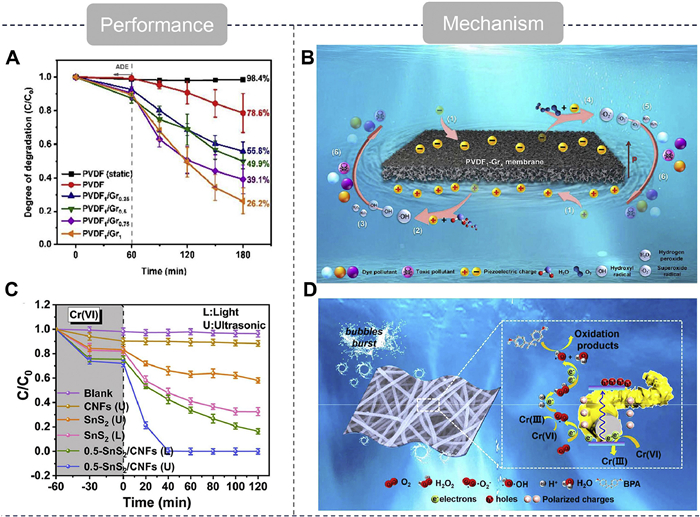
Recent studies highlight the practical potential of piezoelectric membranes for trace pollutant removal. For example, Tong et al. [118] fabricated a sandwich-structured PVDF-HFP@rGO membrane using phase-inversion and self-assembly, achieving 98% methylene blue (MB) degradation within 60 min, significantly outperforming conventional composites (75%) and pure PVDF-HFP (8%). The enhanced performance was attributed to the synergistic effect of rGO, which provides conductive pathways, and the PVDF-HFP matrix, which supplies a strong piezoelectric field. In another approach, Huang et al. [119] developed an asymmetric PVDF/graphene membrane via non-solvent induced phase separation (NIPS), where graphene induced β-phase formation in PVDF. The membrane demonstrated high degradation efficiency for both cationic (MB: 80.2%; crystal violet: 85.6%) and anionic dyes (methyl orange: 73.8%; rhodamine B: 96.1%) within 2 h (Fig. 6A). The degradation mechanism involves piezoelectric potential-driven generation of ROS under mechanical stress (Fig. 6B). In 2022, Wan et al. designed a double-potential piezoelectric membrane by embedding BaTiO3 nanocubes into PVDF, enhancing the piezoelectric response. The resulting membrane showed a 14-fold increase in bisphenol A (BPA) degradation under ultrasound compared to pure PVDF, and effectively removed BPA under impeller stirring at 900 rpm, demonstrating feasibility for natural mechanical energy utilization. Beyond organic pollutant degradation, piezoelectric membranes have shown promise for heavy metal reduction. Tian et al. [120] prepared SnS2/CNF membranes that effectively reduced Cr(Ⅵ) under ultrasonic irradiation, with a 4-fold increase in removal rate under piezocatalysis compared to photocatalysis alone (Fig. 6C). Under 800 rpm magnetic stirring, 94.9% Cr(Ⅵ) was removed within 2 h, primarily via •OH radicals generated from the piezoelectric effect. This demonstrates the potential of piezoelectric catalysis as an efficient technology for pollutant removal, where mechanical vibration induces •O2- and •OH radicals that oxidize or reduce contaminants (Fig. 6D).
Piezoelectric catalytic membranes show considerable promise for the effective removal of environmental pollutants; however, several limitations require thorough investigation. A primary concern is that most existing research has been conducted mainly at the laboratory scale, while practical applications often demand higher mechanical energy inputs, which can lead to operational challenges. Furthermore, the long-term stability and durability of these membrane systems during actual use represent a critical area for further study, as inadequate performance may result in reduced efficiency and increased maintenance costs. Additionally, to comprehensively evaluate the membranes' versatility and effectiveness, it is essential to expand the research scope to include a broader range of contaminants, particularly focusing on complex mixtures and various emerging pollutants.
Membrane fouling remains a major challenge in separation processes, leading to performance decline, structural damage, increased operational costs, and shortened lifespan. Piezoelectric membranes offer a promising solution to mitigate fouling through three primary mechanisms: Piezoelectric catalytic self-cleaning, in-situ polarization-induced dielectrophoresis, and inverse-piezoelectric-effect-induced vibration [121]. Piezoelectric catalytic self-cleaning utilizes reactive oxygen species (ROS) generated on the membrane surface under mechanical stress. When water flow or vibration induces charge separation, ROS such as hydroxyl radicals (•OH) are produced, effectively disrupting the structural integrity of biological pollutants like bacteria and algae. This process inhibits microbial growth and biofilm formation, a primary cause of fouling, while simultaneously degrading organic pollutants to prevent their accumulation.
In-situ polarization charge-induced dielectrophoretic force provides another possibility for membrane fouling mitigation. Piezoelectric materials can convert small amounts of mechanical energy into electrical energy, a trait that has led to their widespread use in water treatment membranes. Researchers have harnessed this unique property by periodically applying hydraulic pressure during membrane operation, which can occur either continuously or in pulses, depending on the membrane's specific design and the level of cleaning required. This application of pressure induces microscopic deformations in the piezoelectric membrane throughout the separation process, resulting in a continuous generation of induced charge. This mechanism effectively addresses the issue of charge neutralization and significantly enhances the membrane's anti-fouling capabilities through electric repulsion. Furthermore, certain piezoelectric materials can release electrons upon stimulation, which can trigger redox reactions in water, oxygen, and other media, leading to the production of ROS. The synergistic effect of the piezoelectric catalytic degradation process, combined with the electrostatic effect, further boosts the membrane's resistance to fouling, improving its overall performance in water treatment applications. For instance, in 2022, Zhao et al. [122] engineered a piezoelectric membrane composed of MnO/BTO (Mn2O3/BaTiO3) through a sintering method. This innovative Piezoelectric membrane could convert periodic transient zero pulses from hydraulic driving pressure into corresponding current pulses and rapid voltage oscillations, which, in turn, produced near-surface ROS and dielectrophoretic forces. These electroactive effects facilitated a comprehensive antifouling mechanism that proved effective against a diverse array of foulant types. A similar anti-fouling mechanism was also demonstrated in PVDF membranes. Zhang et al. [123] developed a self-powered Pi-UFM PVDF membrane that responded to ultrafiltration pressure, exhibiting remarkable anti-fouling through combined electrostatic repulsion and hydration effects. Yan et al. [31] further demonstrated this mechanism with a super-hydrophilic electroactive membrane (SPM) that generated pulsed voltages up to −7.6 V, achieving 98.85% separation efficiency and nearly 100% flux recovery by enhancing oil droplet deformation and coalescence (Figs. 7A and B). Both electrostatic repulsion and ROS degradation played significant roles in mitigating oil-water emulsion fouling on the membrane surface. Consequently, this membrane not only achieved an impressive separation efficiency of 98.85% but also boasted a nearly complete flux recovery rate of close to 100%.
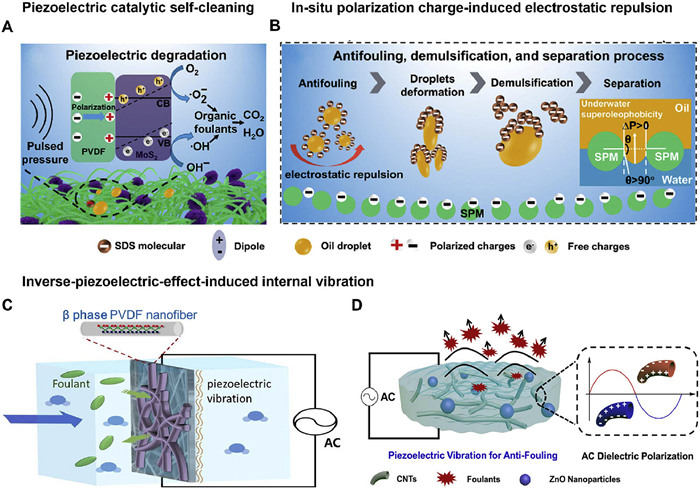
The inverse piezoelectric effect leverages mechanical deformation under an applied electric field to create in-situ vibrations that prevent pollutant adhesion. For example, Pei et al. [121] fabricated a piezoelectric nanofiber membrane (pENM) whose vibrations, induced by fluid instability, reduced flux decline by 15% by creating local turbulence to delay pore blockage and cake layer formation (Fig. 7C). Pu et al. [124] later developed a ZnO—CNT/PVDF membrane activated by an AC signal, which used inverse piezoelectric vibrations to achieve a 98.0% permeation recovery rate, effectively preventing dirt adherence and enabling self-cleaning (Fig. 7D). The anti-fouling performance improves significantly with an increase in AC frequency, achieving a permeation recovery rate of up to 98.0%. Piezoelectric vibrations not only enhance the membrane's anti-fouling capabilities but also reduce filtration resistance caused by concentration polarization and membrane fouling. Additionally, this cleaning method is effective against various charged contaminants, offering a novel and efficient strategy for piezoelectric membrane self-cleaning. In summary, piezoelectric membranes play a multifaceted role in advancing water treatment technologies. They harness the direct piezoelectric effect to generate voltage for enhanced catalytic pollutant degradation, while the inverse effect facilitates anti-fouling through mechanical deformation and vibration. By generating polarized charges, these membranes reduce pollutant adhesion, mitigate fouling, and extend operational lifespan. This dynamic cleaning mechanism minimizes manual maintenance and ensures sustained performance, showcasing the significant potential of piezoelectric membranes in integrated water treatment applications.
In addition to their use for pollutant degradation and membrane fouling alleviation, piezoelectric catalytic membranes have also been demonstrated to have certain advantages in antibacterial applications. For instance, in 2022, Mondal et al. [29] developed a multifunctional piezoelectric membrane from PVDF-HFP incorporated with kaolinite and MWCNTs, which achieved 99% eradication of Escherichia coli within 60 min under ultrasound, demonstrating strong antibacterial effects (Fig. 8A). Moreover, these membranes feature dynamic characteristics that can be activated through mechanical pressure or electrical stimuli, ensuring prolonged antibacterial action [125]. This functionality not only supports continuous microbial control but also contributes to the extended operational lifespan of the membranes across diverse water treatment contexts.
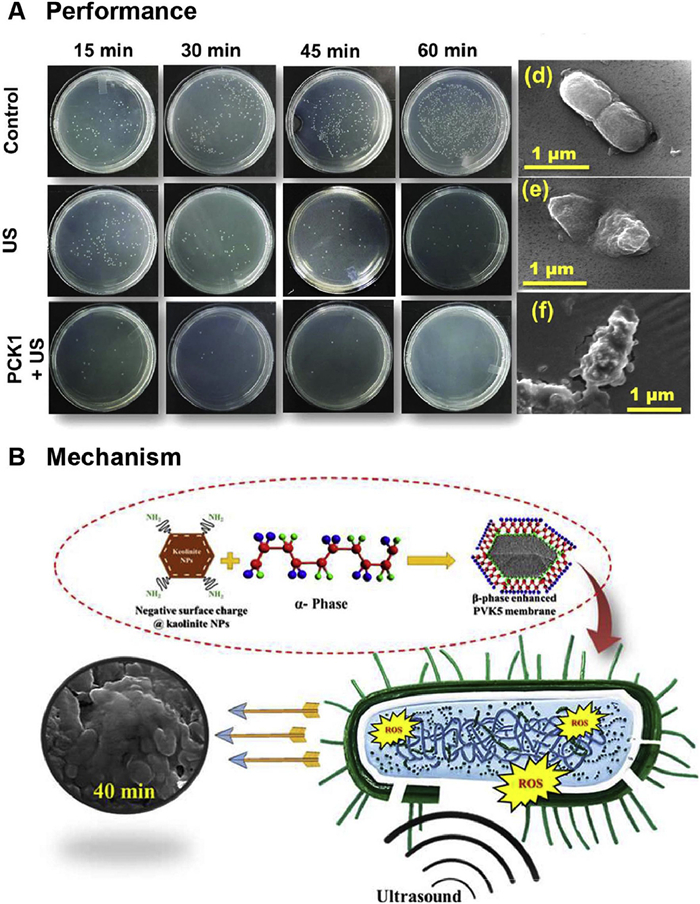
The antibacterial mechanism of piezoelectric membranes primarily involves their unique physical effects and the biological responses of microbial cells to these effects. Firstly, under ultrasonic stress, piezoelectric membranes cause significant deformation and perforation of bacterial cells, ultimately leading to membrane rupture and severe damage. This damage further promotes the leakage of intracellular components and the release of cytoplasmic substances, resulting in the loss of cell membrane integrity [127]. More importantly, when voltage is applied or mechanical vibrations are induced, the piezoelectric effect causes deformation of the membrane surface, leading to local changes in the electric field and redistribution of surface charges [128]. The electrons result in the formation of ROS, including hydroxyl radicals, singlet oxygen, and superoxide. These ROS are critical in deactivating bacterial cells by interfering with transmembrane electron transfer, causing protein and nucleic acid denaturation, inhibiting DNA replication, and triggering lipid membrane peroxidation (Fig. 8B) [126]. Collectively, these actions lead to the effective inactivation of bacterial cells. As a typical example, Zhao et al. [98] studied the antibacterial properties of Ca-PVDF membrane by using the pavement method in 2024. First, the control group without catalyst, Ca-NC powder, PVDF, and Ca-PVDF membrane was ultrasonically treated in E. coli suspension for 60 min, respectively. The antimicrobial performance of the Ca-PVDF group was compared under different piezoelectric treatment times. The first 20 min of the ultrasound had already killed most bacteria. The antibacterial efficiency of Ca-NC+US, PVDF+US, and Ca-PVDF+US groups were 69.3%, 85.4%, and 99.8%, respectively. When the Ca-PVDF membrane was subjected to bacterial experiments under ultrasound, the voltage generated on the Ca-PVDF side made it an excellent electron donor that could disrupt the normal electron transport process. Therefore, electron transfer effectively disrupted metabolic processes and induce membrane stress in bacteria, while also producing intracellular ROS. This electrical interaction caused damage to the cell membrane. Subsequently, the cascade and accumulation of ROS within the cell became the ultimate executioner, causing the bacteria to die. The action of PVDF enhanced the rate of electron transfer between the material and the bacteria, which absorbed more electrons from the Ca-PVDF, further accelerating the death of the bacteria. In summary, piezoelectric membranes possess distinct advantages for antibacterial applications, primarily due to their ability to self-generate charge and ROS through mechanical stimuli without chemical additives [129]. This self-driven mechanism provides an efficient, continuous, and environmentally friendly approach to bacterial inactivation.
The integration of piezoelectric materials with separation membranes offers a novel strategy for efficient, energy-saving catalytic processes and environmental remediation. This technology operates without chemical additives under mild conditions, aligning with green chemistry principles. Incorporating piezoelectric materials enables precise reaction control via charge generation under mechanical/electrical stress, enhancing selectivity and activity while reducing membrane fouling. Despite its potential, the field faces key challenges (Fig. S9 in Supporting information) as follows:
(1) Mechanistic understanding: While promising, the underlying mechanisms of piezoelectric membranes require deeper investigation. Key questions involve how stress-generated charges participate in catalytic charge transfer and how electric fields influence reaction pathways and intermediates. Multi-scale computational simulations (including density functional theory (DFT) for atomic-scale charge distribution, molecular dynamics for material behavior under stress, and finite element analysis for macroscopic field distribution) are needed. Furthermore, current research often neglects the coupling between piezoelectricity and separation processes. Understanding how piezoelectric charge generation interacts with membrane separation functionality is crucial. A comprehensive approach integrating physicochemical properties, stress distribution, and molecular dynamics is essential for designing efficient systems.
(2) Development of efficient and stable piezoelectric catalysts: Creating efficient and stable piezoelectric catalysts is paramount. Long-term durability under mechanical stress, environmental factors, and electric fields remains a major hurdle. Future focus should be on discovering new materials or modifying existing ones via high piezoelectric coefficients or nanostructure engineering. Surface functionalization and morphology control (e.g., microspheres, nanorods, nanowires) significantly impact activity and require systematic study. Defect presence and density also critically influence performance, necessitating careful design. Synthesis methods must balance performance with reproducibility and scalability. Machine learning and data mining are promising for accelerating material discovery and optimization.
(3) Innovative fabrication techniques and microstructural regulation: Current methods have limitations. Solution casting is simple but lacks uniformity; electrospinning offers high surface area but has scalability issues. Advanced techniques like microcontact printing, laser etching, and 3D printing provide superior architectural control and multifunctional integration. Precise pore regulation at micro/nanoscale is a key performance determinant, influencing ion transport and catalytic behavior. Future studies should elucidate pore formation mechanisms (e.g., phase separation, crystallization). Techniques like templating and in situ pore generation are promising. Coupling real-time characterization with modeling will deepen understanding of structure-function relationships.
(4) Practical applications: Lab-scale success faces challenges in real wastewater, where complex matrices (inorganic ions, organic content, pH variations) impair performance. Studying the impact of these parameters and the degradation process is urgent to guide the application. Research should expand to new fields like wearables and biosensing. Developing integrated systems is key to green chemistry. Most studies use simulated wastewater; testing in real water samples, considering component competition for active sites and ROS stability, is essential. Material stability in real environments must be evaluated.
In conclusion, piezoelectric membranes offer great potential for sustainable and efficient water treatment, but significant research is still required to address current limitations. Integrating these membranes with advanced nanomaterials could yield hybrid systems with enhanced performance. The incorporation of AI and machine learning can enable real-time monitoring and optimization, while coupling with renewable energy sources may create self-powered purification systems ideal for remote areas. Future studies should focus on harnessing low-intensity environmental vibrations, as current research mainly relies on ultrasonic excitation. Understanding the reaction mechanisms under ultrasonic fields, including the effects of mechanical forces on degradation kinetics and mineralization, also remains crucial. Through innovative materials, advanced fabrication, and interdisciplinary integration, piezoelectric membrane technology can achieve transformative progress toward a cleaner and more sustainable future.
The authors declare that they have no known competing financial interests or personal relationships that could have appeared to influence the work reported in this paper.
Zi Yang: Writing – review & editing, Writing – original draft, Formal analysis, Data curation, Conceptualization. Zhen Qiu: Formal analysis, Data curation, Conceptualization. Liguo Shen: Formal analysis, Data curation, Conceptualization. Cheng Chen: Writing – review & editing, Funding acquisition, Formal analysis, Data curation, Conceptualization. Mingzhu Zhou: Formal analysis, Data curation, Conceptualization. Bisheng Li: Formal analysis, Data curation, Conceptualization. Leihong Zhao: Formal analysis, Data curation, Conceptualization. Hongjun Lin: Formal analysis, Data curation, Conceptualization. Zhongyi Jiang: Writing – original draft, Formal analysis, Data curation, Conceptualization.
This work was financially supported by the Zhejiang Provincial Natural Science Foundation of China (Nos. LY23E080003 and LQ23E080007), National Natural Science Foundation of China (No. 22306172), "Pioneer" and "Leading Goose" R&D Program of Zhejiang (No. 2025C02240), and the Jinhua City Science and Technology Project (No. 2023-1-058).
Supplementary material associated with this article can be found, in the online version, at doi:
M. Salehi, Environ. Int. 158 (2022) 106936. doi: 10.1016/j.envint.2021.106936
B. Le, N. Omran, A.H. Hassanin, et al., J. Mater. Res. Technol. 24 (2023) 5032–5041. doi: 10.1016/j.jmrt.2023.04.051
G. Crini, E. Lichtfouse, Environ. Chem. Lett. 17 (2019) 145–155. doi: 10.1007/s10311-018-0785-9
C.Y. Tang, Z. Yang, H. Guo, et al., Environ. Sci. Technol. 52 (2018) 10215–10223. doi: 10.1021/acs.est.8b00562
N.H. Othman, N.H. Alias, N.S. Fuzil, et al., Membranes 12 (2022) 30.
X.H. Han, S.Q. Ding, H.Y. Hu, et al., J. Mater. Chem. A 10 (2022) 18509–18541. doi: 10.1039/D2TA05666F
M. Aslam, A. Charfi, G. Lesage, et al., Chem. Eng. J. 307 (2017) 897–913. doi: 10.1016/j.cej.2016.08.144
P. Tripathy, H. Kulkarni, S. Kalla, Desalination 614 (2025) 119133. doi: 10.1016/j.desal.2025.119133
M. Yi, Q. Xia, J.L. Tan, et al., Chem. Eng. J. 493 (2024) 152568. doi: 10.1016/j.cej.2024.152568
Y. Mou, X.Z. Yuan, H.Y. Chen, et al., J. Mater. Chem. A 11 (2023) 22631–22655. doi: 10.1039/D3TA04885C
Z. Zhu, L. Zhong, Z. Zhang, et al., J. Mater. Chem. A 5 (2017) 25266–25275. doi: 10.1039/C7TA08529J
Y. Mi, N. Wang, X. Fang, et al., Sep. Purif. Technol. 277 (2021) 119500. doi: 10.1016/j.seppur.2021.119500
B. Jiang, Q. Zeng, J. Li, et al., Bioresour. Technol. 361 (2022) 127725. doi: 10.1016/j.biortech.2022.127725
H.Y. Mao, W. Fan, H.Q. Cao, et al., Sep. Purif. Technol. 282 (2022) 120031. doi: 10.1016/j.seppur.2021.120031
H.Y. Mao, M.H. Qiu, J.W. Bu, et al., ACS Appl. Mater. Interfaces 10 (2018) 18093–18103. doi: 10.1021/acsami.8b03951
Y.H. Huang, M.J. Wang, T.S. Chung, Nat. Commun. 15 (2024) 1092. doi: 10.1038/s41467-024-45414-9
M. Al-Hasani, H. Doan, N. Zhu, et al., Sep. Purif. Technol. 303 (2022) 122249. doi: 10.1016/j.seppur.2022.122249
J. Liu, W. Qi, M. Xu, et al., Angew. Chem. Int. Ed. 62 (2023) e202213927. doi: 10.1002/anie.202213927
W. Amdouni, M. Fricaudet, M. Otoničar, et al., Adv. Mater. 35 (2023) 2301841. doi: 10.1002/adma.202301841
S. Tu, Y. Guo, Y. Zhang, et al., Adv. Funct. Mater. 30 (2020) 2005158. doi: 10.1002/adfm.202005158
F. Bössl, I. Tudela, Curr. Opin. Green Sustain. Chem. 32 (2021) 100537. doi: 10.1016/j.cogsc.2021.100537
E. Lin, N. Qin, J. Wu, et al., ACS Appl. Mater. Interfaces 12 (2020) 14005–14015. doi: 10.1021/acsami.0c00962
F. Mushtaq, X. Chen, M. Hoop, et al., iScience 4 (2018) 236–246. doi: 10.1016/j.isci.2018.06.003
W. Ma, B.H. Yao, W. Zhang, et al., Chem. Eng. J. 415 (2021) 129000. doi: 10.1016/j.cej.2021.129000
L.C. Wan, W.R. Tian, N.J. Li, et al., Nano Energy 94 (2022) 106930. doi: 10.1016/j.nanoen.2022.106930
F. Orudzhev, S. Ramazanov, D. Sobola, et al., Nano Energy 90 (2021) 106586. doi: 10.1016/j.nanoen.2021.106586
M.T. Darestani, H.G.L. Coster, T.C. Chilcott, J. Membr. Sci. 435 (2013) 226–232. doi: 10.1016/j.memsci.2013.02.024
H.G.L. Coster, T.D. Farahani, T.C. Chilcott, Desalination 283 (2011) 52–57. doi: 10.1016/j.desal.2011.04.071
D. Mondal, S. Bardhan, N. Das, et al., Nano Energy 104 (2022) 107893. doi: 10.1016/j.nanoen.2022.107893
B. Bagchi, N.A. Hoque, N. Janowicz, et al., Nano Energy 78 (2020) 105339. doi: 10.1016/j.nanoen.2020.105339
Y. Yan, P. Zhou, Y. Zhou, et al., J. Am. Chem. Soc. 146 (2024) 13306–13316. doi: 10.1021/jacs.4c01655
Y. Zhao, F. Yang, H. Jiang, et al., Nat. Commun. 15 (2024) 4845. doi: 10.1038/s41467-024-49266-1
Z. Liang, C. -F. Yan, S. Rtimi, et al., Appl. Catal. B 241 (2019) 256–269. doi: 10.1016/j.apcatb.2018.09.028
T. Yang, D. Jia, B. Xu, et al., eScience 4 (2024) 100273. doi: 10.1016/j.esci.2024.100273
M.M. Yang, Z.D. Luo, Z. Mi, et al., Nature 584 (2020) 377–381. doi: 10.1038/s41586-020-2602-4
W. Wu, L. Wang, Y. Li, et al., Nature 514 (2014) 470–474. doi: 10.1038/nature13792
A. Wang, H. Xu, C. Chen, et al., Chem. Eng. J. 482 (2024) 148873. doi: 10.1016/j.cej.2024.148873
K. Wang, C. Han, J. Li, et al., Angew. Chem. Int. Ed. 61 (2022) e202110429. doi: 10.1002/anie.202110429
Z. Ren, Y. Peng, H. He, et al., Chin. J. Chem. 41 (2023) 111–128. doi: 10.1002/cjoc.202200443
L. Zhou, L. Meng, H. Jia, et al., Adv. Sustain. Syst. 8 (2024) 2300652. doi: 10.1002/adsu.202300652
Y.H. Zhang, G.D. Shen, C.H. Sheng, et al., Appl. Surf. Sci. 562 (2021) 150164. doi: 10.1016/j.apsusc.2021.150164
R. Lei, X.Z. Fu, N.X. Chen, et al., Catal. Sci. Technol. 12 (2022) 7361–7368. doi: 10.1039/D2CY01422J
E. Wu, Y. Yu, J. Hu, et al., J. Hazard. Mater. 458 (2023) 131885. doi: 10.1016/j.jhazmat.2023.131885
J. Ma, X. Xiong, D. Wu, et al., Adv. Mater. 35 (2023) 2300027. doi: 10.1002/adma.202300027
L. Yang, B.S. Tian, Y. Xie, et al., Adv. Mater. 35 (2023) 2300648. doi: 10.1002/adma.202300648
M.D. Zhu, B.R. Liao, Y. Tang, et al., Appl. Surf. Sci. 628 (2023) 157366. doi: 10.1016/j.apsusc.2023.157366
Y. Li, C.H. Wang, M.H. Fan, et al., Chem. Eng. J. 498 (2024) 155584. doi: 10.1016/j.cej.2024.155584
L.S. Du, B. Zhang, Y.D. Zhang, et al., J. Alloys. Compd. 1021 (2025) 179669. doi: 10.1016/j.jallcom.2025.179669
M.Q. Zhang, K. Wang, C. Han, et al., Adv. Funct. Mater. 35 (2025) 2412258. doi: 10.1002/adfm.202412258
X. Ning, A.Z. Hao, R.Q. Chen, et al., Carbon 218 (2024) 118772. doi: 10.1016/j.carbon.2023.118772
C.M. Costa, V.F. Cardoso, P. Martins, et al., Chem. Rev. 123 (2023) 11392–11487. doi: 10.1021/acs.chemrev.3c00196
Y. Sun, J.F. Gao, Y. Cheng, et al., J. Phys. Chem. C 123 (2019) 3122–3129. doi: 10.1021/acs.jpcc.8b08442
K.A.N. Duerloo, M.T. Ong, E.J. Reed, J. Phys. Chem. Lett. 3 (2012) 2871–2876. doi: 10.1021/jz3012436
P. Singh, P. Sharma, J. Kolte, J. Phys. Chem. C 128 (2024) 11915–11923. doi: 10.1021/acs.jpcc.4c02702
J.M. Wu, W.E. Chang, Y.T. Chang, et al., Adv. Mater. 28 (2016) 3718–3725. doi: 10.1002/adma.201505785
M. Zelisko, Y. Hanlumyuang, S.B. Yang, et al., Nat. Commun. 5 (2014) 4284. doi: 10.1038/ncomms5284
Y.I. Sohn, R. Miller, V. Venkataraman, et al., Appl. Phys. Lett. 111 (2017) 263103. doi: 10.1063/1.5008759
W.P. Mason, Phys. Rev. 55 (1939) 775–789. doi: 10.1103/PhysRev.55.775
S.J. Zhang, F. Li, F.P. Yu, et al., J. Korean Ceram. Soc. 55 (2018) 419–439. doi: 10.4191/kcers.2018.55.5.12
M. Habib, I. Lantgios, K. Hornbostel, J. Phys. D: Appl. Phys. 55 (2022) 423002. doi: 10.1088/1361-6463/ac8687
A.V. Skrylev, A.I. Burkhanov, G.M. Akbaeva, et al., Ferroelectrics 538 (2019) 145–151.
L. Amarande, M.C. Cioangher, V. Toma, et al., Ceram. Int. 47 (2021) 33382–33389. doi: 10.1016/j.ceramint.2021.08.243
X.D. Yan, M.P. Zheng, M.K. Zhu, et al., Crystals 10 (2020) 907. doi: 10.3390/cryst10100907
S. Shahab, S.H. Zhao, A. Erturk, Energy Technol 6 (2018) 935–942. doi: 10.1002/ente.201700873
D. Zou, H.Y. Mao, Z.X. Zhong, Ceram. Int. 48 (2022) 7362–7373. doi: 10.1016/j.ceramint.2021.12.086
Y.C. Dong, H. Wu, F.L. Yang, et al., Water. Res. 220 (2022) 118629. doi: 10.1016/j.watres.2022.118629
L. Pdungsap, N. Udomkan, S. Boonyuen, et al., Sens. Actuators A: Phys. 122 (2005) 250–256. doi: 10.1016/j.sna.2005.06.002
T. Promjun, N. Funsueb, A. Ngamjarurojana, Mater. Today Proc. 17 (2019) 1602–1606. doi: 10.1016/j.matpr.2019.06.188
M.M.S. Pojucan, M.C.C. Santos, F.R. Pereira, et al., Ceram. Int. 36 (2010) 1851–1855. doi: 10.1016/j.ceramint.2010.03.025
J. Zhang, W. Hao, Y. Gao, et al., Appl. Phys. Lett. 101 (2012) 252905. doi: 10.1063/1.4773023
D.W. Wang, Z.M. Fan, G.H. Rao, et al., Nano Energy 76 (2020) 104944. doi: 10.1016/j.nanoen.2020.104944
B. Ameduri, Chem. Rev. 109 (2009) 6632–6686. doi: 10.1021/cr800187m
R.G. Kepler, R.A. Anderson, J. Appl. Phys. 49 (1978) 1232–1235. doi: 10.1063/1.325011
Z. Qiu, T. Lei, S. Li, et al., Macromolecules 57 (2024) 1159–1168. doi: 10.1021/acs.macromol.3c02394
C.C. Jin, D.M. Liu, L.X. Zhang, Small 19 (2023) 2303586. doi: 10.1002/smll.202303586
S. Manzeli, D. Ovchinnikov, D. Pasquier, et al., Nat. Rev. Mater. 2 (2017) 17033. doi: 10.1038/natrevmats.2017.33
D. Thakur, C. Porwal, V. Singh Chauhan, et al., Sep. Purif. Technol. 337 (2024) 126462. doi: 10.1016/j.seppur.2024.126462
H. Zhu, Y. Wang, J. Xiao, et al., Nat. Nanotechnol. 10 (2015) 151–155. doi: 10.1038/nnano.2014.309
Y. Wang, H. Ma, J. Liu, et al., J. Colloid. Interface Sci. 642 (2023) 304–320. doi: 10.1016/j.jcis.2023.03.159
S. Li, Z.C. Zhao, D.F. Yu, et al., Nano Energy 66 (2019) 104083. doi: 10.1016/j.nanoen.2019.104083
M.T. Ong, E.J. Reed, ACS Nano 6 (2012) 1387–1394. doi: 10.1021/nn204198g
K. Xu, K. Wang, W. Zhao, et al., Nat. Commun. 6 (2015) 8119. doi: 10.1038/ncomms9119
B. Javvaji, B. He, X. Zhuang, Nanotechnology 29 (2018) 225702. doi: 10.1088/1361-6528/aab5ad
P. Hu, Y. Xu, Y. Lei, et al., J. Energy Chem. 69 (2022) 115–122. doi: 10.1016/j.jechem.2022.01.009
T. Wu, Z. Liu, B. Shao, et al., Nano Energy 120 (2024) 109137. doi: 10.1016/j.nanoen.2023.109137
L. Guo, C. Hu, S. Tu, et al., Chem. Eng. J. 476 (2023) 146541. doi: 10.1016/j.cej.2023.146541
C.X. Zhang, D. Lei, C.F. Xie, et al., Adv. Mater. 33 (2021) 2106308. doi: 10.1002/adma.202106308
Z. Guo, N. Li, S. Zuo, et al., Sep. Purif. Technol. 289 (2022) 120743. doi: 10.1016/j.seppur.2022.120743
S. Zhao, Y. Liu, Y. Li, et al., Mater. Today Sustain. 24 (2023) 100597.
S. Dong, L. Wang, W. Lou, et al., Ultrason. Sonochem. 91 (2022) 106223. doi: 10.1016/j.ultsonch.2022.106223
Q. Chen, H. Wu, J. Hu, et al., Chem. Eng. J. 460 (2023) 141839. doi: 10.1016/j.cej.2023.141839
K.S. Hong, H. Xu, H. Konishi, et al., J. Phys. Chem. Lett. 1 (2010) 997–1002. doi: 10.1021/jz100027t
P. Ares, T. Cea, M. Holwill, et al., Adv. Mater. 32 (2020) 1905504. doi: 10.1002/adma.201905504
H. Lei, M. Wu, Y. Liu, et al., Chin. Chem. Lett. 32 (2021) 2317–2321. doi: 10.1016/j.cclet.2020.12.019
V.F. Cardoso, G. Botelho, S. Lanceros-Méndez, Mater. Des. 88 (2015) 390–397. doi: 10.1016/j.matdes.2015.09.018
G. Singh, M. Sharma, R. Vaish, ACS Appl. Mater. Interfaces 13 (2021) 22914–22925. doi: 10.1021/acsami.1c01314
Y. Cui, Z. Wang, B. Li, et al., Nano Energy 99 (2022) 107429. doi: 10.1016/j.nanoen.2022.107429
Q. Zhao, Y. Yang, G. Xiong, et al., J. Am. Chem. Soc. 146 (2024) 16648–16658. doi: 10.1021/jacs.4c03851
R.K. Mishra, P. Mishra, K. Verma, et al., Environ. Chem. Lett. 17 (2019) 767–800. doi: 10.1007/s10311-018-00838-w
S. Gee, B. Johnson, A.L. Smith, J. Membr. Sci. 563 (2018) 804–812. doi: 10.1016/j.memsci.2018.06.050
W. Wang, Y. Zheng, X. Jin, et al., Nano Energy 56 (2019) 588–594. doi: 10.1016/j.nanoen.2018.11.082
R. Bai, H. Shao, H. Chang, et al., J. Mater. Chem. A 11 (2023) 26230–26241. doi: 10.1039/D3TA05734H
M. Khalifa, H. Lammer, S. Anandhan, Fibers Polym 25 (2024) 2805–2816. doi: 10.1007/s12221-024-00603-7
J.K. Krinks, M.H. Qiu, I.A. Mergos, et al., J. Membr. Sci. 494 (2015) 130–135. doi: 10.1016/j.memsci.2015.07.058
W. Zhu, Y. Liu, K. Guan, et al., Ceram. Int. 47 (2021) 12357–12365. doi: 10.1016/j.ceramint.2021.01.088
H. Zhang, S. Jiang, J. Xiao, et al., J. Eur. Ceram. Soc. 30 (2010) 3157–3165. doi: 10.1016/j.jeurceramsoc.2010.07.012
L. Sarkar, B.P. Yelagala, S.G. Singh, et al., Int. J. Energy Res. 46 (2022) 3443–3457. doi: 10.1002/er.7393
A. Bardaine, P. Boy, P. Belleville, et al., J. Eur. Ceram. Soc. 28 (2008) 1649–1655. doi: 10.1016/j.jeurceramsoc.2007.10.014
F. Fu, B. Shen, Z. Xu, et al., J. Electroceram. 33 (2014) 208–213. doi: 10.1007/s10832-014-9952-y
D. Guo, Z. Wu, X. Shu, et al., Ceram. Int. 50 (2024) 2514–2520. doi: 10.1016/j.ceramint.2023.10.350
A. Frick, W.A. van Vliet, A. Žukauskaitė, et al., Adv. Mater. Technol. 9 (2024) 2301469. doi: 10.1002/admt.202301469
W. Wu, X. Yin, B. Dai, et al., Appl. Surf. Sci. 517 (2020) 146119. doi: 10.1016/j.apsusc.2020.146119
C.M. Wang, Y. Jia, H.Y. Zhou, et al., Chem. Eng. J. 506 (2025) 159263. doi: 10.1016/j.cej.2025.159263
S. Meng, C.Y. Tang, J. Yang, et al., Adv. Sci. 9 (2022) 2204187. doi: 10.1002/advs.202204187
J. Wu, Q. Xu, E. Lin, et al., ACS Appl. Mater. Interfaces 10 (2018) 17842–17849. doi: 10.1021/acsami.8b01991
Y. Zhang, H. Khanbareh, S. Dunn, et al., Adv. Sci. 9 (2022) 2105248. doi: 10.1002/advs.202105248
Y. Zhao, Y. Gu, G. Gao, Water Res. 215 (2022) 118245. doi: 10.1016/j.watres.2022.118245
Y. Liu, W. Tong, W. Song, et al., J. Mater. Chem. A 11 (2023) 4280–4291. doi: 10.1039/D2TA08651D
T.H. Huang, F.K.C. Espino, X.Y. Tian, et al., Chem. Eng. J. 487 (2024) 150569. doi: 10.1016/j.cej.2024.150569
W. Tian, J. Qiu, N. Li, et al., Nano Energy 86 (2021) 106036. doi: 10.1016/j.nanoen.2021.106036
J. Bae, I. Baek, H. Choi, Chem. Eng. J. 307 (2017) 670–678. doi: 10.1016/j.cej.2016.08.125
Y. Zhao, Y. Gu, B. Liu, et al., Nature 608 (2022) 69–73. doi: 10.1038/s41586-022-04942-4
X. Zhang, S. Zhang, Y. Tang, et al., Compos. Part B: Eng. 230 (2022) 109532. doi: 10.1016/j.compositesb.2021.109532
L.T. Pu, J. Zhang, C. Wang, et al., J. Membr. Sci. 638 (2021) 119722. doi: 10.1016/j.memsci.2021.119722
Z. Li, C. Wang, C. Dai, et al., Biomaterials 287 (2022) 121668. doi: 10.1016/j.biomaterials.2022.121668
D. Mondal, N. Bag, J. Roy, et al., Langmuir 40 (2024) 5785–5798. doi: 10.1021/acs.langmuir.3c03560
X. Yang, Z. Yang, X. Wang, et al., Appl. Mater. Today 40 (2024) 102419. doi: 10.1016/j.apmt.2024.102419
L. Gazvoda, M. Perišić Nanut, M. Spreitzer, et al., Biomater. Sci. 10 (2022) 4933–4948. doi: 10.1039/D2BM00644H
T. Sakthivel, A. Rajendran, J.W. Chang, Sep. Purif. Technol. 342 (2024) 127021. doi: 10.1016/j.seppur.2024.127021

Figure 1 According to the Web of Science (29 July 2024), publications based on the combination of membrane separation and piezoelectric catalysis were counted by searching for "Membrane" and "Piezoelectric" as keywords.

Figure 3 The schematic diagram illustrates three aspects related to the piezoelectric effect: (A) Positive piezoelectric effect, (B) inverse piezoelectric effect, and (C) the internal charge distribution of piezoelectric materials under different states.

Figure 4 Schematic representation of piezocatalysis mechanisms: (A) Energy band theory and (B) screening charge effect.

Figure 5 An overview of the historical development of piezoelectric materials is presented. Reproduced with permission [51–54]. Copyright 2012, 2019, 2023, 2024, American Chemical Society; Reproduced with permission [55]. Copyright 2016, Wiley; Reproduced with permission [56]. Copyright 2014, Nature.

Figure 6 (A) PVDF-HFP@rGO Degradation efficiency of different dyes in 60 min. (B) Schematic diagram of the mechanism of piezoelectric catalysis for dye degradation. Reproduced with permission [119]. Copyright 2024, Elsevier. (C) The reduction efficiency of Cr(Ⅵ) by CNFs, SnS2, and 0.5-SnS2/CNFs under different conditions. (D) Schematic diagram of piezoelectric catalytic reduction of Cr(Ⅵ). Reproduced with permission [120]. Copyright 2021, Elsevier.

Figure 7 (A) Piezoelectric catalytic generation of ROS to degrade organic pollutants on the surface of SPM membranes. (B) Schematic diagram of SPM's anti-fouling, demulsification, and separation mechanism for oil-water emulsion. Reproduced with permission [31]. Copyright 2024, American Chemical Society. (C) Schematic diagram of anti-fouling mechanism induced by pENM vibration. Reproduced with permission [121]. Copyright 2017, Elsevier. (D) Diagram of ZnO—CNT/PVDF membrane fouling resistance through the inverse piezoelectric effect. Reproduced with permission [124]. Copyright 2021, Elsevier.

Figure 8 (A) AGAR plate data of nano kaolinite-MWCNT/PVDF composite membrane degradation of colon bacteria over time. Reproduced with permission [29]. Copyright 2022, Elsevier. (B) Diagram of antibacterial mechanism of the clay-modified piezoelectric catalytic membrane. Reproduced with permission [126]. Copyright 2024, American Chemical Society.

 扫一扫看文章


扫一扫关注我们
 DownLoad:
 下载:
下载:

 下载:
下载: