Citation:
Lewa Zhang, Quan Zhou, Chenyuan Zhu, Yizhao Li, Shihan Zhang, Fan Dong. Rational Cu-based catalyst and electrolyte design for electrochemical nitrate reduction towards ammonia[J]. Chinese Chemical Letters,
2026, 37(8): 112325.
doi:
10.1016/j.cclet.2025.112325
Rational Cu-based catalyst and electrolyte design for electrochemical nitrate reduction towards ammonia
English
Rational Cu-based catalyst and electrolyte design for electrochemical nitrate reduction towards ammonia
Yangtze Delta Region Institute (Huzhou), University of Electronic Science and Technology of China, Huzhou 313001, China
b.
Department of Chemistry, The University of Hong Kong, Hong Kong, China
c.
Key Laboratory of Microbial Technology for Industrial Pollution Control of Zhejiang Province, College of Environment, Zhejiang University of Technology, Hangzhou 310014, China
d.
Research Center for Environmental and Energy Catalysis, Institute of Fundamental and Frontier Sciences, University of Electronic Science and Technology of China, Chengdu 611731, China
Received Date:
05 May 2025 Accepted Date:
24 December 2025 Revised Date:
24 December 2025 Available Online:
15 August 2026
Abstract:
Ammonia (NH3) is a pivotal industrial chemical extensively utilized in agricultural production, energy storage systems, and chemical manufacturing processes. However, the conventional NH3 synthesis method, the Haber-Bosch process, is not only highly energy-intensive but also produces substantial greenhouse gas emissions. On the other hand, a sustainable alternative is offered by the ambient electrocatalytic nitrate (NO3−) reduction reaction (NO3RR) to NH3, which utilizes renewable electricity. This process not only converts NO3− pollutants into valuable NH3 but also addresses environmental concerns by effectively utilizing NO3− waste. In this review, we focus on the electrocatalytic synthesis of NH3via NO3RR, systematically outlining the background of NO3RR, the fundamental reaction pathways, and the methods for detecting products and intermediates. We also highlight the advantages of copper (Cu)-based catalysts in this reaction. We explore various strategies to enhance Cu catalysis, including nanoparticle synthesis, facet engineering, alloying, oxidation state tuning, and single-atom dispersion. Additionally, we provide an overview of how electrolyte composition and characteristics affect NO3− reduction efficiency and clarify the processes that underlie these effects. We delve into NO3RR's challenges and the likelihood of NH3 synthesis in the future. The goal of this work is to shed light on how to achieve environmental sustainability and create more effective NH3 synthesis strategies.
Ammonia (NH3) is an essential industrial chemical utilized in numerous fields [1,2]. As the main ingredient in nitrogen-based fertilizers, it is essential to agriculture and has a direct effect on the production and security of food worldwide. In the pharmaceutical industry, NH3 is a basic precursor for synthesizing a variety of drugs, including antibiotics and anticancer agents, as well as other life-science applications. Furthermore, NH3 is extensively utilized in the manufacturing of fine chemicals, including rubber, plastics, dyes, and other chemical additives. Given its extensive applications, the production and supply of NH3 have far-reaching implications for the global economy, environment, and human quality of life. Currently, the annual production of NH3 has reached 175 million tons, and its market value is on an annual rise [3–6].
Industrial-scale NH3 synthesis predominantly utilizes the Haber-Bosch process [7], which operates under essential parameters of 400–600 ℃ and 150–300 atm [8–10]. Several million tons of CO2 are released annually as a result of this process, which uses a lot of energy [11]. With the advancement of industrialization and increasing agricultural demand, the market for NH3 is expected to continue growing, driving innovations in technology and improvements in production efficiency. In this context, methods for synthesizing NH3 using clean energy, including photocatalysis [12], electrocatalysis [6,13], and enzymatic catalysis [14], have garnered increasing attention. One of the most promising approaches to resolving the issues facing the present NH3 business is electrochemical synthesis of NH3 using electricity from renewable sources.
Two main electrochemical pathways for NH3 production are commonly explored: (1) Electrocatalytic nitrogen reduction (NRR) for NH3 synthesis under ambient conditions via cleavage of the strong N≡N triple bond in N2. However, limited by the extremely low N2 solubility and sluggish kinetics, it suffers from poor activity and selectivity [15–17]. (2) The electrochemical nitrate reduction reaction (NO3RR) for NH3 generation, utilizing water as the hydrogen (H+) donor and nitrate anions (NO3−) as the nitrogen source. The lower bond dissociation energy of the N=O bond (204 kJ/mol) compared to that of the N≡N bond (941 kJ/mol) enables NO3RR to synthesize NH3 under ambient conditions (25 ℃, 1 atm) while eliminating NO3− pollutants from wastewater without the need for secondary purification steps [18–20]. Significant benefits of this technology include affordability, great selectivity, and outstanding sustainability [21]. NO3RR not only addresses the issue of NO3− pollution but also enables the recovery of nitrogen resources by converting NO3− into value-added products such as NH3 (Fig. 1a) [4]. When coupled with renewable electricity, this process offers a near-zero-emission route for green NH3 synthesis, aligning well with national carbon neutrality goals. As a critical bridge between pollution mitigation and resource regeneration, NO3RR holds significant potential in advancing carbon neutrality and promoting a sustainable nitrogen cycle.
Figure 1
Figure 1.
(a) Schematic representation of the nitrogen cycle originating from NO3− waste. Reprinted with permission [4]. Copyright 2024, Elsevier. Relationship between the adsorption energies of (b) ΔE*NO3, (c) ΔE*NO2, (d) ΔE*NO and ΔE*H. (b-d) Reprinted with permission [39]. Copyright 2021, John Wiley and Sons.
NO3RR is a multi-electron and multi-proton-coupled reaction, where different reaction rates and potentials can lead to a variety of products, thereby reducing selectivity for NH3. Additionally, competition between the cathodic hydrogen evolution reaction (HER) and NO3RR is frequently observed. Current research aims to develop catalysts that can efficiently convert NO3− to NH3. Various metal catalysts, such as Cu, Fe, Ni, Co, Ru, Rh, Pd, Ag, Pt, In, Bi, and Sn, have been explored [22–33]. Among them, precious metals are limited by high cost, while post-transition metals such as Bi, In, Sn are frequently employed as co-catalysts or dopants to modulate the electronic properties of the host catalyst. For example, the In-Pd pair exhibits excellent catalytic performance: ordered intermetallic InPd bimetallene isolates Pd atoms in an In matrix, down-shifts the Pd d-band center, and lowers the energy barrier of the potential-determining *NO to *NHO step, thereby delivering a Faradaic efficiency (FE) of 87.2% for NH3 formation in neutral electroreduction [34]. However, such modulation is often accompanied by trade-offs: For example, while Sn modification significantly enhances the current density and catalytic activity of Rh, it concurrently impairs N—O bond cleavage capability, resulting in increased formation of N2O and NH3OH+ [35]. Bi faces a similar trade-off. When Bi is atomically dispersed within CuCo2O4 hollow nanofibers, it boosts the FE of NH3 reduction to 95.5% by facilitating *NO2 hydrogenation and accelerating NH3 desorption [36]. The inherently low surface defect density, poor conductivity, and limited *H activation capacity of Bi necessitate synergistic coupling with other metals to fully unleash its catalytic potential [37,38].
In contrast, transition metals exhibit potential catalytic activity in NO3RR. Compared with typical transition metals such as Fe and Ni, Cu-based catalysts demonstrate more balanced catalytic performance. Cu shows moderate adsorption strength toward key intermediates, while showing negligible affinity for *H (Figs. 1b-d). This behavior suppressed HER and facilitated NO3RR [39]. Kinetic analysis reveals that, compared with other metallic catalysts, Cu-based catalysts exhibit superior NO3− reduction performance [40], with faster reduction kinetics in the *NO3− to *NO2− stage and higher NO3− conversion efficiency [41]. Additionally, the partially filled d-orbitals of Cu are located near the Fermi level, enabling effective electronic interactions with the π*-type lowest unoccupied molecular orbital (LUMO) of NO3−. Upon adsorption onto the Cu surface, NO3− undergoes orbital hybridization, allowing electron donation from the Cu d-band to the vacant orbitals of NO3−. This electron transfer weakens the N—O bonds, thereby facilitating the activation [42]. Although the NH3 selectivity of Cu itself still has room for improvement, its excellent structural tunability, diverse oxidation states, and well-established synthesis strategies make it one of the most representative and efficient catalytic materials in current NO3RR research. To further unlock the application potential of Cu-based catalysts, researchers have developed diverse designs focusing on electronic structure regulation and intermediate adsorption behavior. Recently, Cu3N, as a Cu nitride with a unique electronic structure, has demonstrated balanced adsorption between NO3− and H2O, achieving a NH3 FE of 93.1% at −0.6 V vs. RHE [43]. Furthermore, a study developed a hollow square-shaped Ni-doped CuO (Ni-CuO) catalyst, which modulates the reduction pathway of NOx intermediates through synergistic interaction between Cu and Ni. In a neutral electrolyte, it exhibited an NH3 yield rate of 0.94 mmol h−1 cm−2 and selectivity exceeding 95% [44].
In summary, Cu-based catalysts have emerged as a key research focus for efficient and selective electrochemical NH3 synthesis, owing to their excellent electronic structure tunability, rich structural versatility, and strong affinity for NO3RR intermediates. In this review, we first outline the fundamental reaction processes of NO3RR, including thermodynamic and kinetic considerations. Subsequently, we enumerate in detail the methods used for detecting products and intermediates. We then discuss the application of various Cu catalyst designs in NO3− reduction, including Cu nanoparticles (NPs), facet engineering, alloys, oxidation states, and single-atom particles. Subsequently, we analyze several factors in the electrolyte that influence the catalytic performance of NO3RR, including pH, various cations and anions, and NO3− concentrations. We provide a perspective on strategies to enhance the performance of Cu-based catalysts. We explore the potential of artificial intelligence (AI)-assisted catalyst screening and address the challenges faced in this field, while also proposing the prospect of integrating this technology with other emerging reactions to synthesize high-value-added products.
2.
Fundamentals of electrochemical NO3RR to NH3
2.1
Thermodynamics of electrochemical NO3RR
Nitrogen exhibits multiple oxidation states, with the highest oxidation state being +5 in NO3− and the lowest being −3 in NH3 [45]. The NO3RR to NH3 entails an 8-electron transfer mechanism accompanied by 9 protonation events (Eq. 1), generating multiple reactive intermediates whose diversified activation pathways contribute to the increased mechanistic complexity.
The Frost-Ebsworth diagram (Fig. 2) illustrates the relative stability of different nitrogen species under various conditions and their redox trends. The thermodynamic stability of nitrogen species can be analyzed through the slopes connecting different points: A higher positive slope indicates a stronger oxidation potential. Species located above the peak of adjacent points are unstable and may undergo disproportionation reactions, while those on the horizontal line coexist in equilibrium. Species at the lowest position relative to adjacent points are the most thermodynamically stable and are likely to be the final products. The generation of products in NO3RR commonly depends on reaction conditions, catalyst characteristics, and reaction routes, with N2 and NH3 being the predominant products [46].
Figure 2
Figure 2.
An illustration of the different nitrogen species at pH 0 and 14 by Frost-Ebsworth. Reprinted with permission [46]. Copyright 2020, John Wiley and Sons.
In NO3RR, many intermediates and other products are formed, complicating the reaction mechanisms and pathways. Two primary mechanisms have been proposed for NO3RR: Indirect and direct mechanisms [19]. NO3− do not directly engage in electron transport in high-concentration NO3− electrolytes (1.0–4.0 mol/L), where the indirect pathway predominates [47]. In contrast, at low NO3− concentrations (< 1 mol/L), the direct reduction pathway becomes more prominent [48]. The direct reduction pathway can be further divided into two sub-mechanisms: Hydrogen-atom-mediated and electron-mediated pathways (Fig. 3) [49,50].
Figure 3
Figure 3.
Schematic diagram of the NO3RR mechanism.
The direct mechanism of NO3− reduction involves adsorption and diffusion of reactants, electron transfer, and desorption of products [48]. The transformation mechanism involves two sequential electrochemical pathways: Initial conversion of NO3− to NO2−, followed by subsequent proton-coupled electron transfer yielding NH3 as the terminal product.
Adsorbed water molecules on the cathode surface undergo reduction in the hydrogen-atom-mediated pathway through the Volmer process, producing active adsorbed hydrogen (H(ad)) and hydroxide ions (OH−) [51–53]. H(ad) acts as a reducing agent, reacting with adsorbed NO3− (NO3−(ad)) to form intermediate species such as NO2− and adsorbed nitrogen atom (N(ad)), ultimately reducing N(ad) to NH3 (Eqs. 2–9). The formation of N—H bonds is favored over N—N bonds due to the presence of H(ad) [54], making NH3 the dominant product [55]. It is more probable that catalysts made of metals with high affinities for H(ad) will follow the hydrogen-mediated reduction mechanism [56].
In the electron-transfer-dominated pathway for NO3− reduction, the formation of key intermediates such as adsorbed NO2− (NO2−(ad)) and adsorbed NO (NO(ad)) is of critical importance. The reaction initiates through NO3− adsorption onto the catalytic surface, followed by N—O bond cleavage, reducing NO3− to NO2− (Eq. 10), this step is considered the rate-determining step in this pathway [57]. Subsequently, NO2− is further reduced to form NO(ad) (Eq. 11). In a commonly observed pathway, NO(ad) reacts with protons to form adsorbed NOH (NOH(ad)) (Eq. 12). Subsequent steps involve the reduction of NOH(ad) to NHOH(ad) (Eq. 13), followed by its conversion to adsorbed hydroxylamine (NH2OH(ad)) (Eq. 14), and finally to NH3 ((15), (20)) [46,58,59]. In this pathway, NHOH(ad) and NH2OH(ad), formed through successive hydrogenation of NO(ad), are regarded as key intermediates in the NH3 formation process. Transition metal-based catalysts, due to their unpaired d-electrons, can effectively facilitate electron transfer to the LUMO π* orbital of NO3−, which is one of the main reasons for their high catalytic efficiency [42]. Moreover, depending on the order of deoxygenation and hydrogenation, researchers have proposed other possible NH3 formation mechanisms. For example, some studies indicate that NO(ad) can first undergo deoxygenation to generate adsorbed N(ad) (Eq. 16), which are then converted to NH3 through successive hydrogenation steps (Eqs. 18–20) [57,60]. After systematically studying the reaction pathways on the Cu(111) surface, Hu et al. proposed a more favorable pathway involving NOH(ad) as a key intermediate: NO(ad) is first hydrogenated to form NOH(ad), which is further hydrogenated to NHOH(ad), followed by dehydration to generate NH(ad) (Eq. 17), and finally converted to NH3 through successive hydrogenation steps (Eqs. 19 and 20) [61]. This pathway exhibits favorable thermodynamic and kinetic advantages and is considered the most probable NO3− reduction pathway on the Cu(111) surface.
The transition of NO3− to NH3 undergoes multiple reduction steps and different intermediate products, and there is a great probability that by-products will be generated. For example, NH2OH(ad) may desorb to produce free hydroxylamine molecules. In the Vooys-Koper pathway, NO(ad) reacts with NO(aq) to form hyponitrous acid (HN2O2), which is subsequently reduced to nitrous oxide (N2O), and eventually converted to N2 (Eqs. 21–23) [62–65]. The Duca-Feliu-Koper mechanism is also another representative pathway for N2 formation (Eqs. 24–27) [66].
In the NO3RR, numerous intermediates and side products are frequently formed. These by-products often reduce the selectivity of the reaction and may lead to catalyst deactivation. Therefore, controlling the reaction pathways to minimize by-product formation and enhance NH3 selectivity has become a crucial research direction in catalyst design. Cu stands out among various metals for NO3RR catalysis, primarily because its partially filled d-band lies energetically close to the π*-LUMO of NO3−. This alignment enhances charge transfer from the Cu surface to NO3−, thereby facilitating its activation and subsequent reduction. Although pure Cu catalysts are active toward NO3RR, they primarily generate NO2−, which strongly adsorbs onto the surface and tends to accumulate. Therefore, to mitigate NO2− accumulation on the Cu surface and enhance NH3 selectivity, rational modulation of Cu-based catalysts is of significant importance.
2.4
Fication of NO3RR products and characterization of reactive intermediates
The NO3RR involves multiple products, including NO2−, NH2OH, N2H4, NO, N2O, N2, and H2, as well as surface-adsorbed intermediates such as *NO3−, *NO2−, *NO, *NH2OH, *NH2, *NH, and *N. The formation and transformation pathways of these intermediates directly influence the distribution of final products. Therefore, comprehensive identification and quantification of both products and intermediates are crucial for deepening the understanding of reaction mechanisms, guiding catalyst design, and enhancing catalytic performance.
Conventional methods for product detection mainly include ultraviolet-visible (UV–vis) spectrophotometry, ion chromatography (IC), and gas chromatography (GC), which can be used to quantify reactants and several products.
Liquid products are primarily quantified using UV–vis spectrophotometry and IC. Both methods require the preparation of calibration curves relating concentration to absorbance, which are then used to determine the concentrations of analytes based on sample absorbance. In UV–vis analysis, the indophenol blue method or Nessler's reagent method is commonly employed for detecting NH3/NH4+, with characteristic absorption peaks at 635 nm and 420 nm, respectively [67,68]; N-(1-naphthyl)-ethylenediamine spectrophotometry is used to detect NO2− with an absorption peak at 540 nm [69]; NO3− can be directly measured at 220 nm; the Watt and Chrisp method is applied for N2H4 detection with a peak at 455 nm [70]; and NH2OH can reduce Fe3+ to Fe2+, which then forms an orange complex with 1,10-phenanthroline, and the absorbance is detected at 510 nm [71]. IC generally allows for the detection of NO3−, NO2−, and NH4+ in solution, requiring small sample volumes, no color development, and offering reliable and straightforward results. Gaseous products such as N2, NO, N2O, and H2 are quantified by GC [72]. The combined application of these conventional analytical techniques provides a robust foundation for comprehensive quantification of NO3RR products and mechanistic studies.
Conventional detection methods are straightforward and reliable. However, they lack the capability for real-time monitoring and effective identification of transient intermediates. Since these intermediates are typically unstable and short-lived, in situ characterization under actual reaction conditions is essential to gain a thorough understanding of the intermediate species on catalyst surfaces. Techniques such as in situ Fourier transform infrared spectroscopy (FTIR), differential electrochemical mass spectrometry (DEMS), and in situ Raman spectroscopy have been effectively employed to characterize these reactive intermediates.
In situ FTIR is an effective technique for identifying reaction intermediates adsorbed on the catalyst surface. In particular, attenuated total reflectance FTIR (ATR-FTIR) offers exceptional interfacial sensitivity, enabling molecular-level identification of species and real-time monitoring of dynamic interfacial changes during electrocatalytic processes.
Meanwhile, DEMS, as a highly sensitive in situ characterization technique, is widely employed for the real-time detection of volatile intermediates and products in electrochemical reactions. Its operating principle involves transporting gaseous or volatile species generated during the reaction through a hydrophilic membrane interface into a mass spectrometer, where specific molecules are identified and monitored based on their mass-to-charge ratios (m/z). In the context of NO3RR, DEMS enables effective detection of key gaseous or volatile intermediates and products, including NO (m/z 30), N2O (m/z 44), NH2OH (m/z 33), and NH3 (m/z 17), thereby providing strong support for mechanistic investigations. Despite its excellent performance in detecting gaseous and volatile species, DEMS remains limited in its ability to detect liquid-phase products such as NO2− and NH4+. As such, it is often used in combination with complementary analytical techniques to achieve a more comprehensive product analysis.
For example, Wang et al. employed in situ FTIR to dynamically identify surface-adsorbed intermediates during the NO3RR process. In a Cu-N3 single-atom catalyst system, FTIR measurements under varying potentials revealed characteristic absorption peaks corresponding to key intermediates: 1300 cm−1 for *NO3, 1228 cm−1 for *NO2, 1119 cm−1 for *NH2, and 1452 cm−1 for NH4+ (Fig. S1a in Supporting information). The intensities of these signals evolved throughout the reaction, reflecting the transformation relationships among different intermediates. Notably, the gradual decrease in *NO3 was accompanied by an increase in *NH2 and NH4+, suggesting a sequential conversion pathway. Complementary DEMS analysis further confirmed the stepwise reduction of NO3− on the catalyst surface, forming intermediates such as NO, HNO, and NH2OH before ultimately yielding NH3. These findings, consistent with the FTIR data, suggest a plausible reaction pathway of *NO → *HNO → *H2NO → *H2NOH (Fig. S1b in Supporting information) [73].
In addition, in situ Raman spectroscopy enables real-time monitoring of molecular structures, chemical bonding states, and their evolution on the electrode surface by tracking Raman shift variations under different applied potentials. This technique is particularly effective in identifying and tracking key reaction intermediates. During the NO3RR process, in situ Raman spectroscopy detects characteristic vibrational bands of several representative intermediates, as well as potential-dependent surface structural changes. For instance, Raman peaks corresponding to CuO are observed under open-circuit potential, which subsequently disappear during electroreduction, indicating the reduction of CuO to metallic Cu during the NO3RR process (Fig. S1c in Supporting information) [74].
Compared with conventional Raman techniques, in situ shell isolated nanoparticle enhanced Raman spectroscopy (SHINERS) represents a more sensitive variant of in situ Raman spectroscopy. The technique employs Au@SiO2 to effectively amplify the vibrational signals of molecules at the electrode surface, exhibiting excellent surface selectivity and signal enhancement capabilities. SHINERS is particularly suitable for identifying the adsorption behavior of molecules such as NO2− and NO on different configurations, thereby providing a more detailed analysis of intermediate structures. It is known that NO3− can bind to Cu in various ways [75,76]. For the three crystal facets of Cu(100), Cu(111), and Cu(110), researchers utilized SHINERS to analyze the behavior of adsorbed intermediates during the NO3RR process. The results indicate that all three facets exhibit similar intermediates, suggesting that they may follow the same reduction mechanism, but there are differences in the preference for the adsorption configurations of the NO2−. As shown in Figs. S1d-f (Supporting information), on the Cu(100) surface, the nitroxyl peak (O) is relatively intense, but the overall intermediate signal strength is the lowest; on the Cu(111) surface, NO2− tends to adsorb in the nitrito configuration (I), and there is also adsorption of nitroxyl (O); on the Cu(110) surface, the signal is the strongest, with NO2− favoring adsorption in both nitrito (I) and chelating nitrito configurations (J) [76]. These diverse adsorption configurations indicate that the NO3RR is far from a single pathway, and its mechanism is more complex than traditionally understood. It is inferred that the different adsorption configurations of the NO2− may lead to performance differences among different crystal facets during the reduction process.
3.
Cu electrocatalyst design for the NO3RR
In the NO3RR, unoptimized conventional Cu catalysts often exhibit low NH3 selectivity because the uncontrollable exposure of crystal facets and active sites prevents precise regulation of intermediate adsorption and conversion pathways, while the HER remains a strong competing reaction. To systematically enhance the activity and selectivity of Cu-based catalysts in NO3RR, researchers have proposed a variety of structural optimization strategies, including the control of nanoparticle size and morphology, facet engineering, alloying, modulation of oxidation states, and the construction of single-atom catalytic sites. These approaches leverage the tunable electronic structure and interfacial properties of Cu to achieve precise control over NO3RR performance. In this section, we systematically review recent advances in the rational design of Cu-based catalysts and provide mechanistic insights into their enhanced performance, aiming to deepen the understanding of the NO3RR pathway for efficient NH3 production.
3.1
Cu NPs
Due to its abundance, low cost, and excellent selectivity toward NH3 production, Cu has attracted extensive attention as an electrocatalyst for the NO3RR. In recent years, studies have demonstrated that the particle size and morphology of Cu-based catalysts significantly influence their catalytic activity and NH3 selectivity, with smaller Cu NPs being particularly favorable for enhancing NH3 yield and selectivity.
For example, Hoekx et al. synthesized monodisperse polycrystalline Cu NPs with diameters of 8.3, 10.0, and 11.9 nm through tuning the chain length of the phosphonic acid-based ligands. Among these, the 8.3 nm Cu NPs exhibited the best performance in NO3RR, with a FE of 85.4% and a current density of approximately −250 mA/cm2 (Figs. 4a and b) [77]. While the overall reaction pathway remained unchanged across different particle sizes, the improved performance of smaller particles was primarily attributed to enhanced surface properties, including increased electrochemical surface area (ECSA) and a higher density of low-coordinated active sites. These features facilitate the adsorption and activation of NO3− and key intermediates (e.g., NO2−). However, extremely small particles may suffer from structural instability during the reaction, undergoing agglomeration, pulverization, or detachment, which eventually leads to performance degradation.
Figure 4
Figure 4.
(a) Relationship between Cu NP size and NH3 production rate, and (b) the absolute current density and FE of Cu NPs with different sizes under chronoamperometry test. (a, b) Reprinted with permission [77]. Copyright 2024, American Chemical Society. (c) TEM images of Cu nanosheets and (d) nanocubes. (c, d) Reprinted with permission [78]. Copyright 2020, Elsevier. (e) Diagrammatic representation of the dr-Cu NPs’ synthesis process. Reprinted with permission [79]. Copyright 2012, Royal Society of Chemistry. (f) Charge density difference between pristine Cu and VCu-Cu after NO3− adsorption (cyan: electron depletion; yellow: electron accumulation). (g) Gibbs free energy diagram of NO3RR on Cu and VCu-Cu (U = 0 V vs. RHE). (f, g) Reprinted with permission [80]. Copyright 2023, Elsevier. Comparison of (h) NH3 FE and (i) NO2− FE for Cu-S NAs and Cu NAs at different potentials. (h, i) Reprinted with permission [83]. Copyright 2024, John Wiley and Sons. (j) Gibbs free-energy diagrams of NO3−-to-NH3 over Cu(111), 2B-doped-Cu(111) and 4B-doped-Cu(111), respectively. Reprinted with permission [85]. Copyright 2012, Royal Society of Chemistry.
In addition, the morphology of Cu catalysts determines the dominant exposed crystal facets, thereby affecting the reaction mechanism and product selectivity. Comparative studies have demonstrated significant differences in NH3 FE among various morphologies in alkaline electrolytes: Cu nanosheets (primarily exposing (111) facets) > Cu nanocubes ((100) facets) > Cu NPs (disordered crystal facets) (Figs. 4c and d) [78]. Notably, the (111) facet exhibits higher current density in the rate-determining step of NO3− to NO2− conversion, promoting N—O bond cleavage and intermediate transformation. The results underscore the significance of tailoring the size and morphology of Cu-based catalysts. Such modifications contribute to improved catalytic efficiency and enhanced selectivity in NO3RR.
Defect engineering serves as a versatile strategy to simultaneously modulate both interfacial characteristics and electronic structure of Cu NPs. The deliberate engineering of defect-rich architectures, such as vacancy clusters and strain-inducing dislocations, emerges as a potent strategy for enhancing catalytic efficacy. Xu et al. prepared defect-rich Cu NPs (dr-Cu NPs) by means of in situ electrochemical reduction of CuO nanosheets (Fig. 3e). The defect structure further enhanced the adsorption of NO3− and intermediates, inhibited side reactions, and exhibited superior catalytic performance compared to defect-free nanosheets [79]. Similarly, Zhou et al. constructed a Cu@CuTCNQ composite via an in situ electrochemical reconstruction strategy, introducing a high density of Cu vacancy defects. Theoretical calculations revealed that the VCu-Cu site exhibits a higher local electron density induced by the Cu vacancy, which drives NO3− to adopt a tridentate O-coordination mode (Fig. 4f). This adsorption step yields a free energy of −0.64 eV, markedly more exothermic than the +0.22 eV computed for the pristine Cu surface, and the VCu-Cu surface exhibits superior thermodynamic performance throughout the entire reaction pathway (Fig. 4g). As a result, the catalyst achieved a FE of 96.4% with a production rate of 144.8 μmol h−1 cm−2 at −0.6 V vs. RHE [80]. Low-coordination (LC) atom engineering on metal surfaces represents a significant form of defect engineering. Atoms with low coordination numbers possess elevated d-band centers. This unique feature endows LC surfaces with the ability to modulate the binding strength between catalysts and specific intermediates. For example, the incorporation of LC Cu sites modulates the electron density and shifts the Cu d-band center closer to the Fermi level. This enhancement in *NO2 and *NO adsorption effectively facilitates *NO2 formation and subsequent hydrogenation, significantly reducing the energy barrier of the *NO2 → *NO2H step, thereby promoting the overall efficiency of NH3 synthesis [81].
Doping alters the electrical structure of the catalyst and makes it easier for electrons to move from the metal to the dopant atoms, thereby enhancing NH3 synthesis on Cu NPs. It also has a significant effect on the active sites' surface properties and how they interact spatially with reaction intermediates [82]. For instance, sulfur (S) doping in Cu has been shown to inhibit the production of the side-product NO2− while enhancing the hydrogenation of NO3− to NH3. Yu et al. prepared S-doped Cu nanorod arrays (Cu-S NAs), where the p-orbitals of S effectively bind H+ from water to form H(ad). At the same potential, the NH3 FE of Cu-S NAs was higher than that of Cu NAs, while Cu-S NAs exhibited a lower NO2− FE (Figs. 4h and i) [83]. The metal-S interface is considered a major active site for catalytic hydrogenation reactions [84], which effectively lowered the energy barrier for water dissociation to generate H(ad), promoted the hydrogenation of NO3−, and increased the selectivity of NO2− to NH3. In addition, the doping modification of Cu with boron (B) exhibits better NH3 selectivity and stability in the NO3RR. This is because the local electronic structure of Cu has been precisely regulated through the doping of B elements. Cu atoms have a lower electron density, which results in a positive charge characteristic. As a result, the reaction energy barrier is lowered (Fig. 4j), which makes it easier for the important intermediate to develop and raises the target product's yield [85].
3.2
Cu model surfaces
The significant surface complexity of polycrystalline NPs poses a key obstacle to clarifying the intrinsic link between their structure and catalytic behavior. By employing strategies such as crystal facet adjustment, researchers can design specific atomic arrangements, coordination environments, and electronic properties. These engineered surfaces enable quantitative evaluation of how interfacial configurations affect intermediate adsorption, transition-state energetics, and multi-electron transfer steps. Selective exposure of crystal facets known to exhibit higher activity toward a given reaction can thus enable precise modulation of catalytic selectivity.
Taking the Cu(100) surface as an example, it exhibits reduced barriers in both thermodynamics and kinetics when compared with the Cu(111) crystal facet. This characteristic endows the Cu(100) surface with a distinct advantage in the NO3RR for NH3 synthesis. Specifically, the Cu(100) demonstrates a preference for the initial adsorption of NO3− and the first-step hydrogenation and has more advantages in the NH3 synthesis, exposing more Cu(100) planes can promote the formation of NH3 [86]. For instance, Ren et al. increased the content of Cu(100) on the surface of Cu foil through surface modification. In contrast to the initial electropolished Cu foil, the activity of NO3RR was increased by approximately 50%, and the FE of NH3 for the modified Cu foil electrode reached 91% at −0.2 V vs. RHE (Fig. 5a) [87]. However, recent research has further unveiled the significant advantages of the Cu(111) facet. Xu et al. utilized magneto-electrochemical deposition, harnessing the magnetohydrodynamic effect induced by magnetic fields, to successfully fabricate a Cu-based catalyst with a preferential (111) facet orientation of 94.83%. At −0.7 V (vs. SCE), its NH3 FE and yield markedly surpass those of conventional Cu microspheres. DFT reveals that the rate-determining step (*NO→*NOH) on this facet exhibits a free energy barrier of merely 0.89 eV, considerably lower than the 1.41 eV on the Cu(100) facet. Moreover, its more ordered atomic arrangement and reduced charge transfer resistance synergistically boost intrinsic catalytic activity [88]. This discovery challenges the traditional notion of absolute Cu(100) facet superiority, highlighting the pivotal role of coordinated facet engineering and preparation method optimization for efficient NH3 synthesis.
Figure 5
Figure 5.
(a) Comparison of FE for wet-etched Cu foil and electropolished Cu foil at different potentials. Reprinted with permission [87]. Copyright 2023, American Chemical Society. (b) Schematic illustration of the tandem interaction between Cu(100) and Cu(111) facets. Reprinted with permission [89]. Copyright 2023, John Wiley and Sons. In situ Raman spectra of (c) Ru1Cu10 and (d) Cu during NO3RR at selected potentials. (c, d) Reprinted with permission [93]. Copyright 2023, John Wiley and Sons. (e) Quasi in situ electrochemical EPR spectra of Rh/C, Cu NW/CF, and RhCu NW/CF in 1 mol/L KOH + 0.1 mol/L KNO3. Reprinted with permission [96]. Copyright 2025, John Wiley and Sons.
Further studies have indicated that there is a synergistic effect between the Cu(100) and Cu(111) crystal planes: Cu(100) is beneficial for the adsorption and conversion of NO3− to NO2−, while Cu(111) subsequently promotes the hydrogenation of *NO2 to *NOH, thereby favoring NH3 formation (Fig. 5b). Owing to this tandem catalysis mechanism, the Cu nanosheets achieve an NH3 FE of 88% at 665 mA/cm2, and maintain stable operation for 700 h at 365 mA/cm2 [89]. Additionally, Zhao et al. used electrochemical deposition to prepare flower-like polycrystalline Cu (FOSP-Cu) on carbon paper, with the dominant exposed surfaces being Cu(111) and Cu(100) facets. Under neutral conditions, the enhanced catalyst realized an NH3 yield of 101.4 μmol h−1 cm−2, coupled with an NH3 FE reaching 93.91% [90]. To summarize, the selection and optimization of Cu facets are crucial for the adsorption of intermediates and product selectivity in the NO3RR process. Facet engineering provides an effective means for modulating the reaction pathway of the NO3RR. The selective exposure of specific facets can enhance the catalytic activity and NH3 yield, thus achieving precise control over the catalytic performance.
3.3
Cu-based bimetallic catalysts
The challenges of elemental Cu metal in the NO3RR lie in the excessive adsorption of the NO2− intermediate and the insufficient supply of *H. These issues limit the hydrogenation process of intermediates, which is particularly evident under low overpotential conditions. By alloying Cu with metals that promote the conversion of NO2− to NH3, effective relay catalysis or synergistic electrocatalysis can be achieved. The incorporation of additional metallic elements not only modulates the electronic structure and spatial configuration between metals, but also leverages multi-metallic synergistic effects to activate the reaction system, facilitate the formation and transformation of vital reaction intermediates, and thus significantly augment the catalytic performance.
Bimetallic Cu catalysts also enhance their performance by regulating the adsorption energies of intermediates in the NO3RR. This modulation typically relies on heterometal modification of the Cu electronic structure. Specifically, Fe doping can induce charge redistribution at Cu sites, thereby creating functionally separated active sites: The introduction of Fe renders Cu sites electron-deficient, enhancing NO3− adsorption, while the Fe3—N8 clusters constitute an electron-rich region that optimizes NO3− adsorption and promotes *H generation. The resulting spatial charge polarization gradient drives a relay catalysis process. As reported by Liu et al., the Cu-N3/Fe3—N8 catalyst achieved a FE of 97.1% and an NH3 production rate of 18.83 mg h−1 under neutral conditions, fully highlighting the pivotal role of electronic structure modulation in bimetallic synergistic catalysis [91]. A single-phase nano-alloy catalyst (CFP-Cu1Ni1) was created by Zhang and colleagues. In a neutral electrolyte, the system demonstrated a FE of 95.7% with a concomitant NH3 production rate of 2550 μmol h−1 under −0.22 V vs. RHE. DFT revealed that the addition of Ni upshifted the d-band center, thereby facilitating the adsorption of intermediate while weakening the adsorption of NH3. Efficient and highly selective NO3RR to NH3 was achieved in the potential range above −0.24 V vs. RHE [92]. Gao et al. prepared a group of RuCu alloy catalysts (RuxCux/rGO). Among these alloy catalysts with different ratios, Ru1Cu10/rGO performed exceptionally well: At a potential of −0.05 V vs. RHE, it achieved an NH3 generation rate of 0.38 mmol cm−2 h−1, while FE was as high as 98%. Integrated experimental and operando Raman analyses revealed Cu preferentially drives the NO3− to NO2− reduction, whereas Ru selectively promotes the subsequent NO2− to NH3 conversion, constituting a tandem catalytic cycle (Figs. 5c and d). According to the DFT calculation results, the Cu-Ru solid solution catalyst precisely optimized the adsorption strength of the intermediates by synergistically regulating the d-band center (shifting it closer to the Fermi level) and interfacial charge transfer (0.77e from Cu to Ru). This approach effectively addressed the issues of intermediate accumulation caused by excessive *NO2− desorption on pure Cu and the sluggish reduction kinetics due to strong *NO3− adsorption on pure Ru [93]. Fang and colleagues synthesized CuCo nanosheet electrocatalysts that achieved an ampere-level current density exceeding 1 A at −0.2 V vs. RHE, along with an NH3 FE of 100% ± 1%. Similar to the previous example, synergistic interplay between Cu and Co, with Co facilitating hydrogenation through *H, was demonstrated by both DFT computations and in-situ spectroscopy to optimize reaction intermediate coverage, thereby enhancing NH3 selectivity and yield [94].
In addition to tandem catalysis, H transfer promotion serves as another important enhancement pathway. Rh exhibits excellent H adsorption-desorption properties [18,95]. In one study, RhCu alloy nanowires were supported on Cu foam (RhCu NW/CF) to construct an electrocatalyst. Electron paramagnetic resonance (EPR) measurements revealed that the incorporation of Rh significantly enhanced the catalyst's ability to adsorb H atoms (Fig. 5e). Furthermore, kinetic isotope effect analysis confirmed that the RhCu NW/CF exhibits faster proton transfer kinetics compared to Cu-based counterparts. Rh facilitates both the generation of *H and its migration to adjacent Cu sites, thereby accelerating the key hydrogenation step of *NO to *NOH, which markedly improves the overall activity and selectivity of the NO3RR [96].
Furthermore, studies have shown that Mn doping can induce a shift in the adsorption configuration of *NO from a top-site to a bridge-site. This geometric reconfiguration weakens the N—O bond order and lowers the energy barrier for the conversion of *NO to *NOH [97]. Meanwhile, the heteroatomic bonding-induced surface electronic structure reconstruction effectively suppresses the surface oxidation of the Cu catalyst, thereby stabilizing the active sites and enhancing the overall activity and durability of Cu-based catalysts in the NO3RR [98].
Collectively, these studies demonstrate that bimetallic systems can achieve synergistic enhancement through multidimensional regulation of electronic structures, H transfer, and interfacial configurations. Such cooperative effects offer an effective pathway to overcome the intrinsic limitations of Cu-based catalysts and to develop NO3RR electrocatalysts with simultaneously high activity, selectivity, and stability.
3.4
Oxide-derived Cu catalysts
Cu oxides have been recognized as highly promising candidates for the NO3RR due to their rich redox properties, tunable valence states (Cu0/Cu+/Cu2+), and strong interactions with oxygen-containing intermediates. In recent years, oxide-derived Cu catalysts have seen significant advances in NO3RR applications. Studies have focused on elucidating the intrinsic relationship between their structural features and catalytic activity, while various strategies have been proposed to modulate their electronic structures and surface properties to further enhance reaction performance and selectivity.
Researchers commonly employ metal doping strategies to modify Cu oxides. For instance, studies incorporating transition metals such as Pd and Ni into Cu oxide matrices have demonstrated efficient catalysis driven by synergistic effects between the dopant metals and the Cu oxide substrate. Specifically, the transition metal sites facilitate the generation of *H, accelerating the hydrogenation of NO3− reduction. Concurrently, the Cu oxide component governs NO3− adsorption and subsequent formation of NH3 [44,99].
For example, Li et al. developed a series of Cu-based layered double hydroxides (CuM-LDHs, where M = Ni, Co, Fe, etc.) to systematically investigate the effect of heteroatom doping on the concentration and lifetime of surface-active *H. Their study revealed that moderate *H enrichment significantly promotes the hydrogenation of key intermediates such as *NO, thereby enhancing both NH3 selectivity and yield. Specifically, Cu(OH)2 serves as the primary site for NO3− adsorption and initial activation, while the incorporated Ni facilitates water dissociation to generate *H and effectively suppresses the competing HER. As a result, CuNi-LDHs exhibited the highest NO3RR performance among the tested catalysts. This work establishes a clear structure-activity relationship between *H dynamics and NO3− reduction efficiency, offering theoretical guidance for the rational design of Cu-based composite catalysts [100].
The regulation of Cu oxidation states is of great significance. Through an electro-driven directed-evolution strategy, the Cu nanowires reconstruct into a Cu0-Cu+ (Cu2O) heterostructure enriched with oxygen vacancies (Fig. 6a), which markedly enhance NOx− intermediate adsorption and lower the initial deoxygenation barriers. Subsequent phosphorization forms surface-bound phosphate that stabilize Cu+ and promote H generation, thereby accelerating the deep hydrogenation of NO2−. Consequently, the hydrogenation capability of Cu0, acts synergistically with the strong NOx− affinity of OV-rich Cu2O, delivering a highly efficient and selective NO3RR [101]. Some studies have specifically demonstrated that the Cu/Cu2O interface promotes the formation of NOH(ads) intermediates while effectively suppressing H2 evolution [102]. The distribution of the oxidation state of Cu is closely related to NH3 generation. In another study, a series of Cu/Cu2O materials prepared by thermal decomposition of Cu(NO3)2 on hydrothermal carbon (HTC) surfaces exhibited enhanced NO3− adsorption and hydrogenation capabilities. By tuning the synthesis temperature, the optimal Cu/Cu2O ratio was achieved, leading to a maximum NH3 FE of 89.5% and a selectivity of 81.7% (Fig. 6b) [103].
Figure 6
Figure 6.
(a) Electron paramagnetic resonance spectra of Cu/Cu2O/CuO NWs and Cu/Cu2O/Pi NWs catalysts. Reprinted with permission [101]. Copyright 2024, John Wiley and Sons. (b) Comparison of the performance of catalysts with different Cu and Cu2O ratios on NH4+ FE and selectivity at a selected potential. Reprinted with permission [103]. Copyright 2024, Elsevier. (c) Calculated energy distribution of NO3RR to NH3 on CuO(111) and Cu2O(111) surfaces. (d) Calculated energy distribution of HER on CuO(111) and Cu2O(111) surfaces. (c, d) Reprinted with permission [106]. Copyright 2025, Elsevier. (e) The graph illustrates the predominant Cu phase under various potentials and reaction durations. The solid line indicates the time required for a Cu2O cube to reduce to half its original size. The vertical dashed line denotes the 2 h duration of the NO3RR. The diagonal dashed line extrapolates from 60 min at −0.5 V vs. RHE to 0 min at −0.6 V vs. RHE. (f) The FE for NO2− and NH3 production is presented at potentials of −0.2, −0.4, and −0.6 V vs. RHE. (e, f) Reprinted with permission [109]. Copyright 2025, Springer Nature.
Modulating the phase transformation behavior of Cu-based catalysts during the reaction has been demonstrated as an effective strategy to enhance the performance. For example, OV-rich spherical CuO NPs undergo in situ reconstruction into a Cu/Cu(OH)2 composite structure during NO3RR, forming a layered network that significantly increases the number of exposed active sites. In this system, the metallic Cu component exposes Cu(111) facets, which promote the hydrogenation of key intermediates, while the Cu(OH)2 component presents Cu(OH)2(021) facets with strong NO3− adsorption capability, effectively suppressing the HER. The synergistic interaction at the Cu/Cu(OH)2 interface further facilitates NO3− activation and subsequent hydrogenation steps, collectively enhancing NH3 selectivity and reaction rate [104]. A study reported the synthesis of a Cu2O/Cu(OH)2 heterojunction, in which Cu(OH)2 extracts electrons from Cu2O, thereby shifting the d-band center of Cu in Cu2O closer to the Fermi level, which facilitates the adsorption and activation of reaction intermediates [105]. Furthermore, the synergistic effect of Cu(Ⅰ) and Cu(Ⅱ) has also been demonstrated in NO3RR. In one study, CuO NPs were supported on nitrogen-doped porous carbon (CuO@NC), and the catalyst was found to form Cu(Ⅰ)-Cu(Ⅱ) pairs during the reaction. The redox cycling between Cu(Ⅰ) and Cu(Ⅱ) facilitates electron transfer, where Cu(Ⅰ) significantly reduces the energy barrier for NO3RR (Fig. 6d), while Cu(Ⅱ) effectively suppresses the competing HER (Fig. 6c), thereby enhancing the selectivity and efficiency of the NO3RR process [106].
In existing studies, there is no clear consensus on the optimal Cu oxidation state for reaction process. Some reports highlight the synergistic role of Cu+/Cu2+ redox pairs in enhancing catalytic activity, while others highlight the superior performance of Cu+ and have developed catalyst structures capable of stabilizing this valence state to further improve reaction efficiency. Recent studies show that electron-deficient Cu(Ⅰ) sites enhance NH3 production in NO3RR by promoting electron transfer and suppressing the HER [107]. Based on this, Chen et al. developed a Ti(Ⅲ)-modified Ti-Cu2O/Cu catalyst featuring a self-cycling electron donor charge compensation strategy. Ti(Ⅲ) dynamically reduces Cu to active Cu(Ⅰ) sites and regenerates itself via Ti(Ⅲ)/Ti(Ⅳ) redox cycling. DFT calculations reveal that Ti(Ⅲ) lowers the Cu positive charge (+0.26 vs. +0.34), inhibits over-oxidation, strengthens NO3− adsorption (−1.33 eV vs. −0.30 eV), and promotes electron transfer (0.69 e−vs. 0.66 e−), enhancing NO3− activation. At −0.9 V vs. RHE, the catalyst achieves 95.0% NO3− removal, 95.5% NH3 selectivity, and excellent stability, offering a promising strategy for efficient NO3RR catalyst design [108].
Cu oxides, due to their variable oxidation states and rich surface structures, are prone to phase transformations during electrocatalytic reactions. Studies have shown that the reduction of Cu oxides to metallic Cu0 during the NO3RR can significantly enhance NH3 production performance. Recently, Yoon et al. employed operando electron microscopy combined with multimodal spectroscopic techniques to systematically reveal the potential- and time-dependent structural evolution of Cu2O precatalysts under NO3RR conditions. The study found that under moderately reductive potentials, Cu2O and metallic Cu can coexist in a spatially separated manner, with their relative proportions being regulated by the electrolyte composition and the applied potential. As the potential becomes more negative, the reduction of Cu2O accelerates, leading to an increased fraction of Cu0 and a corresponding enhancement in the FE of NH3 (Figs. 6e and f). Moreover, the study pointed out that under conditions of elevated local pH, a passivating layer of Cu(OH)2 tends to form on the catalyst surface, hindering the direct contact of electrons and protons with the underlying Cu2O. This delays its reduction to metallic Cu, thereby affecting the overall phase transition kinetics and the final product selectivity of the catalyst [109]. The work demonstrates that the dynamic phase transition from Cu2O to Cu0 plays a decisive role in determining the catalytic performance of NO3RR, highlighting the critical importance of phase transformation behavior in tuning reaction activity and selectivity.
Regulating the oxidation state of Cu aims to achieve optimal synergy between NO3− activation and the hydrogenation step, thereby enabling precise control over product selectivity. Given that Cu species with different valence states exhibit markedly different catalytic behaviors under varying reaction environments (e.g., pH, potential, and electrolyte composition), the rational design of catalysts capable of stabilizing specific advantageous oxidation states is crucial for achieving both high activity and long-term stability in NO3RR.
3.5
Cu single-atom catalysts (SACs)
SACs are structurally distinct from traditional nanoparticle catalysts, with metal active components anchored on the carrier surface in the form of isolated atoms, achieving the characteristic of full exposure of metal atoms. This atomically dispersed structure not only endows the catalyst with fully exposed low-coordinated metal active centers but also effectively promotes the adsorption and activation of reactants and the interfacial mass transfer process [110]. Meanwhile, the strong coordination between single atoms and their surrounding ligands provides robust structural support for metal centers, significantly enhancing the structural stability of the catalyst [111].
Recently, Shan et al. incorporated single atoms of Mn, Fe, Co, Ni, and Cu into the defect sites of UiO-66 to construct a series of MOF-derived single-atom catalysts (M-SACs), among which Cu-SAC and Fe-SAC exhibited the most outstanding electrocatalytic performance. Characterizations confirm that Cu-SAC exhibits excellent atomic dispersion, with the single-atom structure remaining well-preserved after 16 h of continuous operation. DFT calculations revealed that Cu-SAC has lower reaction energy barriers for *NO3 adsorption and subsequent hydrogenation steps, which explains its high catalytic performance [112]. These results clearly demonstrate the superior performance and application potential of Cu SACs compared to other metal candidates.
Cu SACs typically utilize carbon-based supports due to their high specific surface area and excellent electrical conductivity. Chen et al. developed a novel Cu SAC, Cu-N-C, which produced more NH3 (Fig. 7a) and less NO2− (Fig. 7b) compared to pure Cu and other control samples. This enhanced selectivity originates from isolated Cu-N4 single-atom sites that thermodynamically inhibit N—N coupling, thereby suppressing the formation of dinitrogen byproducts. DFT calculations and in-situ DEMS respectively confirmed that the single-atom site nature lowers the potential-limiting step barrier to only 0.09 eV and that the formation of N2/N2O is negligible [113]. Furthermore, Zhu et al. controlled the aggregation state of Cu atoms by varying the annealing temperature; with increasing temperature, the isolated Cu atoms gradually aggregated into NPs or clusters. Among the catalysts, Cu-N-C-800 featured uniformly dispersed Cu atoms anchored on nitrogen-doped carbon nanosheets, exhibiting superior electrocatalytic performance compared to Cu NPs and Cu plate-800 (Fig. 7c), while effectively suppressing the formation of NO2− (Fig. 7d). DFT calculations demonstrated that the strong adsorption of NO3− and NO2− on single-atom Cu-Nx sites facilitate the reaction and suppress NO2− release [114].
Figure 7
Figure 7.
(a) The comparison of the selectivity of NO3RR to NH4+ under different catalysts at the selected voltage and (b) comparison of NO2− concentration in NO3RR over different catalysts at selected voltage. (a, b) Reprinted with permission [113]. Copyright 2022, Elsevier. (c) Comparison of mass activity of different cathode materials and (d) comparison of NO2−-N selectivity of different cathode materials. (c, d) Reprinted with permission [114]. Copyright 2020, John Wiley and Sons.
In addition, the synthesis of bimetallic single-atom catalysts (BSACs) is an effective strategy for enhancing performance. The synergistic action of two metal single atoms enhances NH3 production. For example, the Fe/Cu dual-atom catalyst (Fe/Cu-HNG) reported on porous N-doped graphene reduced the adsorption barrier of NO3−, making the NO molecule easier to activate and promoting the hydrogenation step, thereby significantly improving the catalytic activity of NO3RR from NO3− to NH3 [115]. Several studies have dispersed foreign metal atoms (e.g., Ni, Pd, Au) on the surface of Cu substrate for catalytic applications [116–118]. Yu et al. synthesized Au-Cu single-atom alloy aerogels (AumCu SAAs) that demonstrate > 90% FE across 0 to −1 V vs. RHE, and exhibit near 100% NH3 FE with 6.21 mmol h−1 cm−2 production rate at −0.8 V vs. RHE. Au site lowers the *NO2 to *NOOH hydrogenation barrier and precisely dissociates H2O to supply *H on demand; its down-shifted d-band center weakens *H adsorption to suppress HER, while simultaneously upshifting the d-band of adjacent Cu sites to strengthen NO3−/*NO2 adsorption [119]. Novel concepts for NO3RR catalyst design are generated by the synergistic impact of dual atoms.
To evaluate several Cu-based catalysts' catalytic activity in the NO3RR in more detail, we have systematically compiled representative catalysts from previous studies along with their key parameters, such as material type, electrolyte environment, operating potential, NH3 selectivity, and yield, as summarized in Table S1 (Supporting information).
Cu-based catalysts have demonstrated certain catalytic activity in NO3RR, but they still face several limitations that hinder their practical applications. Firstly, Cu-based catalysts are prone to deactivation during the reaction, as their surface often undergoes morphological and chemical state reconstruction under electrochemical conditions, leading to unstable catalytic performance [120–122]. Secondly, the intermediate or by-product species generated during the reaction tend to strongly adsorb on the catalyst surface, blocking active sites, reducing catalytic efficiency, and significantly decreasing activity [123,124]. Some modification methods involve complex structural regulation, making large-scale preparation difficult and are prone to HER under high current densities. These drawbacks limit the practical deployment of Cu-based catalysts, necessitating optimization through material design and surface engineering. In the future, it will be important to explore new regulation strategies to achieve precise control over the structure and interfacial microenvironment of Cu-based catalysts, further enhancing their activity, selectivity, and stability in NO3RR and laying the foundation for their practical application in environmental remediation and resource utilization.
4.
Electrolyte influence
Electrolytes are critical in NO3RR for NH3 synthesis, providing the environment for interactions between NO3− and catalysts and serving as the medium for the reduction process. To enhance electrocatalytic performance, while developing efficient electrocatalysts is crucial, regulating the electrolyte's microenvironment has become an equally important strategy. This microenvironment, influenced by factors such as electrolyte concentration, local pH, and cation and anion effects, significantly impacts the NO3− reduction process [125,126].
Regulating proton supply and modifying electrode surface characteristics are the primary means by which the pH of the electrolyte influences the NO3RR to NH3. Yan et al. investigated the activity and selectivity of Fe, Co, Ni, and Mn SACs supported on the same substrate under various pH conditions. The study revealed that the paths of reactions, potential-determining steps, and limiting potentials of these metal catalysts in NO3RR exhibit pH-dependent characteristics. Taking the EA-Co catalyst as an example, Figs. S2a-c (Supporting information) clearly illustrate the variations in catalytic performance under different pH conditions. Under acidic conditions (pH 0), the electrolyte presents a high chemical potential of protons, so the late-stage hydrogenation sequence operates along a markedly exothermic profile. The potential determining step (PDS) corresponds to the conversion of NH* to NH2*, with a limiting potential of −0.37 V vs. RHE, indicating high catalytic activity. When the environment shifts to neutral conditions (pH 7), the proton reservoir is largely sustained by water autoionization; the consequent scarcity of H+ markedly attenuates the driving force for the hydrogenation sequence. Although the PDS remains unchanged, its free-energy ascent turns endergonic, pushing the limiting potential to +0.40 V vs. RHE and causing a pronounced drop in catalytic throughput. Under alkaline conditions (pH 14), the virtual absence of bulk protons forces the interface to rely on water dissociation as the dominant hydrogen supplier; this shift reorders the relative stabilities of key intermediates, advancing the PDS to the NO* to NOH2*, and steering the reaction into a distinct pathway governed by a markedly different kinetic regime [127]. Generally, most catalysts exhibit superior performance in alkaline environments [128–130]. Wu et al. tested the Fe SAC in electrolytes with pH values of 1 and 13, and the results showed that the catalyst achieved higher NH3 FE in the alkaline environment [131]. In neutral environments, numerous studies have also enhanced performance by increasing local pH, promoting water dissociation, and inhibiting the combination of *H [130,132,133]. For Cu catalysts, there is a type of catalyst where Cu was encapsulated within hydrophilic hierarchical nitrogen-doped carbon nanocages (Cu@hNCNC). In this structure, the hNCNC shell effectively restricted the diffusion of generated OH−, leading to an elevated pH microenvironment surrounding the Cu NPs inside. The locally generated alkaline microenvironment within neutral electrolyte effectively suppressed parasitic HER, enabling efficient NO3−/NO2− to NH3 conversion with 99.7% FE and a record-high production rate of 4.0 mol h−1 g−1 [134]. In acidic electrolytes, protons originate from H+, and the abundance of H+ can promote the reaction of NO3− to NH3. However, excessively low pH values may corrode electrode materials or trigger oxygen evolution reaction side reactions, affecting the stability and lifespan of the electrode. Chen et al. proposed a conductive polymer protection strategy by decorating polypyrrole (PPy) on Cu NPs, enabling efficient NO3RR to NH3 under highly acidic conditions. Even in a highly acidic electrolyte containing 0.5 mol/L H2SO4, the catalyst demonstrated outstanding performance, with an NH3 yield rate of 0.55 mmol h−1 cm−2, a selectivity of 99.99%, and a FE of 96.0%. PPy enhanced the catalyst performance through multiple mechanisms, including protecting Cu NPs from corrosion, enhancing the adsorption capacity of NO3− and NO2− at the interface, stabilizing the intermediate valence states of Cu active centers, and establishing efficient electron transport pathways, thereby facilitating efficient NH3 generation [135]. At the same time, in acidic media, HER inevitably becomes a competitive reaction of NO3RR [136]. Most of the reported NO3RR catalysts suitable for alkaline environments are unstable under acidic conditions [137]. These electrocatalysts may undergo significant HER in acidic media, resulting in a decrease in the selectivity of the target product. TiO2 has HER inertness and significant corrosion resistance [138]. In a study, the properties of TiO2 under acidic, neutral and alkaline conditions were tested: Under acidic conditions, TiO2 showed a more positive starting point and a higher current density (Figs. S2d and e in Supporting information), and the FE of NO3− reduction to NH3 was the highest, up to 82%. The main reason is that high concentration of H+ and NO3− help to improve selectivity and inhibit side reactions. As an electrode material, Ti has good corrosion resistance and can be stable in a strong acidic environment. The yield of NH3 under neutral and alkaline conditions was relatively low, which was mainly affected by the insufficient concentration of H+ or excessive OH−, resulting in the competitive reduction of NO3RR and the formation of by-products [139].
The performance of different catalysts varies significantly under different pH conditions, highlighting the critical importance of selecting an appropriate pH environment to optimize catalytic performance. For instance, TiO2 nanosheets with weak hydrogen activity can effectively suppress the HER in acidic electrolytes, thereby achieving high-selectivity to NH3 [139]. By contrast, Ni exhibits the opposite trend, displaying higher hydrogen evolution activity under alkaline conditions than in acidic media [140]. This further underscores that both the intrinsic hydrogen-evolution capability of the catalyst and the appropriate matching of pH must be considered simultaneously. Through structural modifications, such as the use of Fe-Ni tandem catalysis, enhanced performance can be achieved in alkaline environments [141]. Additionally, CuNi alloys have demonstrated excellent catalytic performance in neutral conditions [142]. These studies indicate that the hydrogen evolution capability of a catalyst, as well as its structural design, are key factors influencing catalytic performance, and the judicious selection of pH environment can further optimize the performance of the catalyst.
In addition to pH, NO3− concentration significantly influences the performance of NO3RR to NH3. Typically, most NO3RR studies are conducted under low reactant concentrations (< 1 mol/L), and the reduction process generally follows the Langmuir-Hinshelwood kinetic model, exhibiting concentration-dependent shifts in reaction order. Specifically, in different catalyst systems, as the NO3− concentration increases and the surface active sites approach saturation, the reaction rate may gradually shift from first-order to zero-order kinetics. The concentration threshold at which this transition occurs varies depending on the type of catalyst and the reaction conditions [126,143,144]. Under NO3−-deficient conditions, the mass transfer is limited and the NO3− diffusion efficiency is low, which leads to the intensification of HER competition and limits the reactants to reach the active site. The performance increases with the rise in NO3—N concentration until the active sites become saturated with adsorbed species [126]. On the contrary, at higher concentrations, the catalyst surface is covered by excessive *NOx species. This coverage not only restricts the accessibility of active sites but also decelerates the processes of electron transfer and transformation of reaction intermediates, thereby affecting subsequent hydrogenation steps and ultimately leading to the accumulation of NO2− intermediates on the catalyst surface [145]. For example, as the concentration of the diluted NO3− increased from 0.01 mol/L to 0.1 mol/L, the enhanced mass transfer led to an increase in the NH3 production rate of the Cu2O catalyst. The competitive adsorption between water molecules and NO3− at elevated concentrations (0.1–3 mol/L) induced a 32% decline in Cu2O catalytic performance, attributed to active site saturation under NO3−-dominated reaction conditions. Hu et al. adjusted the kinetic curve by introducing Ru on the surface of Cu2O. Ru/Cu2O can significantly increase the NH3 production rate by 13 times when the NO3− concentration increases from 0.01 mol/L to 1 mol/L, and also has considerable performance at 3 mol/L (Fig. S2f in Supporting information) [146]. Increasing NO3− concentration can enhance NH3 yield in NO3RR by improving mass transfer, but excessive concentrations may lead to active site saturation and hinder catalytic performance. Therefore, optimizing the NO3− concentration is crucial for balancing activity and selectivity in NO3RR systems.
The cations and anions in the electrolyte also significantly influence the NO3− reduction rate. Some anions can form competitive adsorption with NO3−, reducing the adsorption efficiency of NO3− and slowing down the removal rate [147]. At the corresponding operating voltage, the influence of anions on the NO3− reduction rate was found to follow the order: I− > Br− > Cl− > F− (Fig. S2g in Supporting information) [148], with larger radius halide anions having a smaller inhibitory effect on the reaction rate. Furthermore, the anode may oxidize a significant amount of Cl− in industrial effluent to Cl2, and Cl2 can hydrolyze to form ClO−, which can readily oxidize NH3 to N2. The introduction of Cl− into the electrolyte can increase the selectivity for N2. Studies have demonstrated that increasing the Cl− concentration from 0.01 mol/L to 0.04 mol/L facilitates the anodic electro-chlorination to generate active chlorine species (Cl2/HClO/ClO−), which subsequently promotes the further oxidation of NH4+ to N2, thereby boosting the nitrogen selectivity from approximately 45% to 98% [149]. Guo and associates also investigated the impact of oxalate ions on catalytic performance. They found that in acidic and alkaline electrolytes, a substantial fraction of Cu sites on the Cu foil surface were occupied by oxalate ions, forming competitive adsorption with NO3− and thus inhibiting the catalytic activity of the Cu foil. However, this inhibitory effect of oxalate ions was not observed in neutral electrolytes [150]. Similarly, SO42− and ClO4− also exert an inhibitory effect on NO3− adsorption [144].
Cations modulate the rate and selectivity of the NO3RR process by adjusting the catalyst's electronic configuration, impacting NO3− adsorption, modifying intermediate stability, and restructuring the electrical double layer (EDL). In this process, the impact of different alkali metal cations on the proton transfer rate within the EDL is particularly significant. Wen et al. used elemental Cu as a model electrocatalyst and found that the order of catalytic activity, FE, and selectivity for NH3 synthesis in electrolytes containing different cations was Li+ < Cs+ < Na+ < K+ (Fig. S2h in Supporting information). Theoretical calculations reveal that the presence of K+ induces a more negative shift in the electrostatic potential within the EDL, thereby reducing the energy barrier for protons to cross the EDL and reach the catalyst surface, thus accelerating proton transfer. Moreover, K+ facilitates the coupling of protons with NO3−-containing intermediates, enabling a more efficient reduction of NO3− to NH3. The experimental results further validate the superior performance of K+ in enhancing the NO3RR, especially in terms of improving NH3 generation efficiency and reducing reaction energy barriers [151]. Duarte et al. conducted experiments using a Ni cathode in electrolytes containing hexavalent chromium, and when hexavalent chromium was reduced to trivalent chromium, a layer of hydroxide chromium emerged on the cathode surface, functioning as an insulating barrier that impeded the migration of reduction electrons [152]. Furthermore, the adsorption of Ca2+ and Mg2+ on the cathode surface leads to the formation of precipitates, which subsequently poison the active sites and inhibit NO3RR [153]. Unlike reversible competitive adsorption by anions, such precipitate coverage represents irreversible surface passivation, which not only physically masks catalytic sites but also significantly enhances interfacial mass-transfer resistance, thereby diminishing the catalytic activity for NO3− reduction. Therefore, in the NO3RR, the roles of anions and cations in the electrolyte must not be overlooked, and optimizing their regulatory mechanisms is key to improving the reaction performance.
Precise regulation of electrolyte parameters plays a crucial role in optimizing electrochemical reaction conditions, thereby enhancing reaction efficiency and product selectivity during NO3RR for NH3 synthesis. Adjusting the pH of the electrolyte can significantly influence the reaction rate and pathways, while tuning the salt concentration facilitates mass transfer. Additionally, the rational selection of cations and anions helps stabilize reaction intermediates and promotes the formation of target products. Therefore, precise control of the electrolyte composition represents an important strategy for achieving efficient, energy-saving, and highly selective electrochemical synthesis.
5.
Conclusion and perspectives
5.1
Conclusion
The NO3RR is a significant electrocatalytic process with broad application prospects in various fields. It not only serves as an effective method for removing NO3− pollution from wastewater but also selectively converts NO3− into valuable nitrogen-containing compounds. This review summarizes the reaction pathways of NO3− reduction, outlines methods for detecting products and intermediates, and highlights the recent advancements in Cu-based catalysts for NO3RR, covering different material design strategies such as nanostructure control, specific crystal face exposure, alloying modification, oxidation state regulation, and the application of single-atom catalysis. These strategies influence the electronic structure and distribution of active sites of the catalysts, and to some extent, determine the reaction pathways and selectivity of the target products. Each type of catalyst has its own advantages and disadvantages. For example, single-metal Cu catalysts have a simple composition and a single type of active site, which facilitates the study of structure-activity relationships. However, pure Cu catalysts mainly produce NO2− in the reaction, and the hydrogenation reaction is limited. Composite catalysts boost NH3 synthesis efficiency by precisely regulating the adsorption-desorption kinetics of intermediates and reducing energy barriers in proton-coupled electron transfer pathways. However, issues such as catalyst passivation may arise during the catalytic process. Additionally, we explored the effect of the electrolyte environment on the catalytic performance of NO3RR, including changes in pH value, the role of different cations and anions, and the regulation of NO3− concentration on reaction kinetics, providing theoretical guidance for optimizing electrolyte conditions and improving catalytic efficiency.
5.2
Perspectives
The electrocatalytically-driven conversion of NO3− to NH3 enables sustainable nitrogen cycle remediation, offering multifunctional potential in advanced wastewater treatment, electrochemical energy reservoirs, and carbon-neutral chemical synthesis systems. However, this process involves multiple electron-proton transfers and is highly dependent on the catalyst. Current Cu-based catalysts are constrained by insufficient catalytic efficiency, inadequate durability, and dominant competition from the HER. To enable industrial implementation, future investigations must not only overcome these inherent limitations but also systematically focus on and address the following critical aspects:
(1) Prospects for multidimensional regulation strategies of Cu-based NO3RR catalysts
To further enhance the activity and selectivity of Cu-based catalysts in the NO3RR, interface microenvironment engineering holds significant promise. Organic molecule modification has emerged as an effective strategy. By introducing functional groups such as amines, imidazoles, or polyelectrolytes, the surface electronic structure of the catalyst and the adsorption behavior of key intermediates can be precisely modulated. For instance, a positively charged polyethyleneimine layer can create a favorable interfacial environment by enriching NO3−, weakening the interaction between *NO and Cu active sites, and accelerating *NO hydrogenation, resulting in a FE for NH3 exceeding 90% [154]. Furthermore, Qin et al. developed a strategy to effectively "capture" NO3− by modifying Co oxide with a protic ionic liquid to modulate the electrode surface microenvironment, mimicking the environment of the MoFe protein in nitrogenase. This approach successfully enhanced both the NH3 yield and FE in the NO3RR process [155]. Interfacial wettability regulation, a relatively novel yet highly promising strategy, has shown efficacy in electrochemical systems such as carbon dioxide reduction reaction and oxygen evolution reaction [156,157]. Future efforts could focus on constructing spatially heterogeneous wettability interfaces on Cu-based electrodes, such as alternating hydrophilic/hydrophobic domains or charged organic layers. These designs may enable the local enrichment of NO3−, suppress competing HER, and further enhance NH3 selectivity.
In addition to catalyst-centric design, regulation of the reaction environment is also critical to performance optimization. External-field-assisted modulation (e.g., electric, magnetic, photonic, and thermal fields) enhances performance [158]. Applied electric or magnetic fields can steer the transfer pathways of electrons and protons, promoting N—H bond formation while suppressing undesired N—N coupling. Meanwhile, the synergistic effects of photothermal energy and photogenerated charge carriers can influence the adsorption and transformation kinetics of key intermediates such as *NO. Integrating these fields with catalyst and interface design overcomes kinetic limitations and boosts activity and selectivity.
(2) Focus on products other than NH3
Electrochemical reduction reactions often occur under complex interfacial conditions, and in addition to NH3, other products may be generated. During the reduction process, NO3− may first be reduced to NO2−, which can accumulate if the reduction is incomplete. NO2− is an unstable compound that can further react to form products such as N2, NO, and N2O. Additionally, other possible products include nitrous acid (HNO2), NO, NO2, N2, and H2. The generation of by-products can reduce the efficiency of the main product. In the study and optimization of electrocatalytic NO3− reduction, it is necessary to systematically monitor the formation of these by-products. Gaining insights into products beyond NH3 can offer a holistic comprehension of the reaction mechanism and efficacy. By studying the generation and quantity changes of by-products, the selectivity and efficiency of the reaction can be assessed, and reaction conditions and catalyst designs can be further optimized.
(3) The potential of AI in catalyst design for NO3RR
Currently, research in this field primarily relies on traditional trial-and-error experiments combined with DFT calculations. However, these approaches exhibit low efficiency in screening high-performance catalysts and optimizing reaction parameters, making it difficult to comprehensively explore the complex parameter space [159]. Recently, AI techniques have demonstrated the potential to accelerate catalyst development and mechanistic insights in areas such as CO2RR and HER [160,161]. For example, Xu et al. employed AI-driven methods using a training set of 736 catalysts, combined with feature compression and subgroup discovery, to extract key descriptors (e.g., d-band center and formation energy), which increased the screening accuracy for high-performance single-atom catalysts for ORR from 14% to 60%. They further conducted high-throughput predictions across 10,179 candidate systems and experimentally validated the identified optimal catalysts [162]. Moreover, studies have combined the PaiNN model with multi-task genetic algorithms to achieve high-throughput screening and optimization of catalyst surface structures [163]. In the investigation of catalytic mechanisms, researchers have integrated experimental characterization techniques such as powder X-ray diffraction (PXRD), Raman spectroscopy, and in situ X-ray absorption spectroscopy (XAS) with AI-driven approaches like artificial neural networks (ANN) and Monte Carlo simulations. This multifaceted strategy has been employed to thoroughly explore the active sites and surface reconstruction mechanisms of CuO/CeO2 catalysts, thereby enhancing research efficiency and providing a more comprehensive understanding of the intricate catalytic processes [164]. Leveraging machine-learning potentials (MLPs) enables the simulation of atomic behavior at complex interfaces and during dynamic processes, thereby providing a clear elucidation of reaction pathways and the stability of intermediates [165].
Currently, the application of AI in NO3RR is still in its infancy, but the introduction of advanced computational methods holds promise for accelerating the development of catalysts, enabling efficient screening, predicting reaction pathways and the stability of intermediates, and gaining in-depth insights into how the composition of the electrolyte and the applied potential influence performance. When combined with in situ characterization techniques, these methods can rapidly identify and accurately attribute intermediates, thereby enhancing the precision of predictions and laying a solid foundation for mechanistic studies and large-scale applications. Looking ahead, the development of Interpretable data models and their integration with automated experimental platforms to create a closed-loop process from screening to validation will facilitate the rapid advancement and practical implementation of efficient catalysts and NO3RR systems.
(4) The development of co-electrolysis systems to produce high-value products
How to efficiently utilize NO3− and convert it into more valuable chemicals should be a topic of concern. Currently, there are studies that have achieved the co-electrolytic synthesis of high-value products by reducing NO3− with other substances. For example, an electrochemical synthesis of essential NH3-based amino acids driven by NO and α-keto acids has been reported, and this strategy is also applicable to the synthesis of other NH3-based amino acids from NO3− [166]. By integrating CO2 and NO3− electrolysis into a unified urea synthesis process, this strategy not only mitigates greenhouse gas emissions but also transforms NO3− pollutants from industrial effluents into valuable feedstocks, thereby facilitating the advancement of sustainable resource management. Studies have shown that vitamin B12 immobilized on carbon nanotube surfaces can catalyze the co-electrolytic synthesis of urea [167], and carbon nanotube-supported cobalt β-amino acid eye alkaloid molecular catalysts can electrocatalytically convert CO2 and NO3− into methylamine [168]. NH3-based amino acids, urea, and amines are exemplars of high-value products with extensive applications across diverse industrial sectors and a demand that is progressively increasing. NO3− is one of the common water pollutants. The advancement of electrochemical co-electrolysis systems targeting NO3− not only mitigates emissions and conserves energy but also facilitates waste management and environmental protection. Moreover, it plays a vital role in stimulating economic development.
(5) Critical challenges of Cu-Based catalysts in industrial applications and advances in electrolyzer systems and catalyst film technologies
Despite the promising NO3− reduction activity and product selectivity exhibited by Cu-based catalysts under idealized laboratory conditions, their practical application in complex industrial wastewater systems still faces multiple critical challenges.
First, NO3− concentrations in industrial effluents vary widely. These effluents are often accompanied by a multitude of inorganic ions (e.g., Cl−, SO42−) and organic contaminants. These coexisting species can block active sites or compete for electrons, markedly lowering both activity and NH3 selectivity. Second, environmental parameters such as pH, conductivity, and dissolved oxygen in real wastewater fluctuate dynamically. These conditions can intensify competing side reactions like the HER, ultimately decreasing the FE for NH3 production. Moreover, Cu-based materials exhibit limited chemical stability in strongly acidic or alkaline media, where corrosion or surface restructuring may occur, leading to catalyst deactivation over time. For example, a polymer-molecule electrode loaded with Cu (ME-Cu), developed by Su et al., demonstrated stable NO3RR operation for approximately 100 h [169]. However, this operational lifetime is far from sufficient when compared with commercial systems, such as the 2.5 kW anion exchange membrane electrolyzer from Stable Stone Hydrogen Energy, which can stably operate for over 1000 h. Third, most current studies rely on simplified, high-purity electrolyte systems, lacking long-term electrolysis validation under more realistic conditions. This is especially true at low (< 50 mg/L) or high (> 1000 mg/L) NO3− concentrations. This limits the translatability of lab-scale results to real-world applications. In real-world scenarios, NO3− concentrations in wastewater are typically low, which poses challenges for efficient mass transfer of NO3−. To enhance the mass transfer of NO3−, pre-treatment technologies such as electrodialysis, ion exchange resins, and reverse osmosis are often required to concentrate the NO3− in wastewater. However, these additional treatment steps not only increase the complexity of the process but also potentially lead to higher costs. Moreover, the underreporting of key engineering parameters, such as energy consumption, NH3 production FE, and specific energy consumption, hinders a comprehensive assessment of the economic feasibility of the process. To facilitate the transition of NO3− reduction technology from the laboratory to industrial applications, future research needs to focus more on optimizing and reporting these critical parameters, as well as conducting long-term electrolysis experiments under conditions that more closely resemble actual engineering scenarios, to ensure that research outcomes can truly meet practical engineering demands.
In addition, the design of the electrochemical reactor represents another major bottleneck toward scale-up. Conventional H-type cells or simplified three-electrode systems are inadequate to replicate industrial fluid dynamics, resistance distribution, or mass transport behaviors. Future efforts should focus on developing advanced modular electrolyzer systems capable of stable operation at high current densities (> 1 A/cm2), incorporating large-area electrodes (> 100 cm2) with optimized electric field distribution and efficient reactant/product transport. Integration of key engineering components, such as gas-liquid separation, ion-selective membranes, electrolyte recirculation, and energy recovery units, will be crucial to achieving system-level energy efficiency.
In summary, advancing Cu-based NO3RR catalysts toward practical industrial deployment requires a synergistic approach that enhances catalyst chemical and structural stability, improves interference resistance under complex aqueous environments, and simultaneously optimizes the design of scalable electrolyzer architectures and film deposition technologies.
Declaration of competing interest
The authors declare that they have no known competing financial interests or personal relationships that could have appeared to influence the work reported in this paper.
CRediT authorship contribution statement
Lewa Zhang: Writing – review & editing, Writing – original draft, Data curation. Quan Zhou: Writing – original draft. Chenyuan Zhu: Writing – review & editing, Writing – original draft, Supervision, Conceptualization. Yizhao Li: Writing – review & editing, Writing – original draft. Shihan Zhang: Supervision, Resources, Conceptualization. Fan Dong: Supervision, Resources, Data curation, Conceptualization.
Acknowledgment
This work was financially supported by the Key R&D Program of Zhejiang (No. 2024C03136).
Supplementary materials
Supplementary material associated with this article can be found, in the online version, at doi:10.1016/j.cclet.2025.112325.
[1]
Y. Ashida, K. Arashiba, K. Nakajima, Y. Nishibayashi, Nature 568 (2019) 536–540. doi: 10.1038/s41586-019-1134-2
S. Goldstein, D. Behar, T. Rajh, J. Rabani, Phys. Chem. A 120 (2016) 2307–2312. doi: 10.1021/acs.jpca.6b01761
[65]
A.C.A. de Vooys, G.L. Beltramo, B. van Riet, J.A.R. van Veen, M.T.M. Koper, Electrochim. Acta 49 (2004) 1307–1314. doi: 10.1016/j.electacta.2003.07.020
[66]
M. Duca, M.C. Figueiredo, V. Climent, et al., J. Am. Chem. Soc. 133 (2011) 10928–10939. doi: 10.1021/ja203234v
Z. Sun, H. Yin, K. Liu, et al., SmartMat 3 (2022) 68–83. doi: 10.1002/smm2.1107
[162]
L. Xu, X. Wang, X. Hu, et al., Innovation 6 (2025) 100911.
[163]
C. Ai, S. Han, X. Yang, T. Vegge, H.A. Hansen, ACS Appl. Mater. Interfaces 16 (2024) 12563–12572. doi: 10.1021/acsami.3c18734
[164]
J.S. Elias, N. Artrith, M. Bugnet, et al., ACS Catal. 6 (2016) 1675–1679. doi: 10.1021/acscatal.5b02666
[165]
A. Omranpour, J. Elsner, K.N. Lausch, J. Behler, ACS Catal. 15 (2025) 1616–1634. doi: 10.1021/acscatal.4c06717
[166]
J. Xian, S. Li, H. Su, et al., Angew. Chem. Int. Ed. 62 (2023) e202304007. doi: 10.1002/anie.202304007
[167]
M. Cong, Q. Liu, D. Wang, et al., Appl. Catal. B: Environ. Energy 351 (2024) 123941. doi: 10.1016/j.apcatb.2024.123941
[168]
Y. Wu, Z. Jiang, Z. Lin, Y. Liang, H. Wang, Nat. Sustain. 4 (2021) 725–730. doi: 10.1038/s41893-021-00705-7
[169]
X. Su, F. Hong, Y. Fang, Y. Wen, B. Shan, Angew. Chem. Int. Ed. 64 (2025) e202422072. doi: 10.1002/anie.202422072
Figure 1
(a) Schematic representation of the nitrogen cycle originating from NO3− waste. Reprinted with permission [4]. Copyright 2024, Elsevier. Relationship between the adsorption energies of (b) ΔE*NO3, (c) ΔE*NO2, (d) ΔE*NO and ΔE*H. (b-d) Reprinted with permission [39]. Copyright 2021, John Wiley and Sons.
Figure 2
An illustration of the different nitrogen species at pH 0 and 14 by Frost-Ebsworth. Reprinted with permission [46]. Copyright 2020, John Wiley and Sons.
Figure 4
(a) Relationship between Cu NP size and NH3 production rate, and (b) the absolute current density and FE of Cu NPs with different sizes under chronoamperometry test. (a, b) Reprinted with permission [77]. Copyright 2024, American Chemical Society. (c) TEM images of Cu nanosheets and (d) nanocubes. (c, d) Reprinted with permission [78]. Copyright 2020, Elsevier. (e) Diagrammatic representation of the dr-Cu NPs’ synthesis process. Reprinted with permission [79]. Copyright 2012, Royal Society of Chemistry. (f) Charge density difference between pristine Cu and VCu-Cu after NO3− adsorption (cyan: electron depletion; yellow: electron accumulation). (g) Gibbs free energy diagram of NO3RR on Cu and VCu-Cu (U = 0 V vs. RHE). (f, g) Reprinted with permission [80]. Copyright 2023, Elsevier. Comparison of (h) NH3 FE and (i) NO2− FE for Cu-S NAs and Cu NAs at different potentials. (h, i) Reprinted with permission [83]. Copyright 2024, John Wiley and Sons. (j) Gibbs free-energy diagrams of NO3−-to-NH3 over Cu(111), 2B-doped-Cu(111) and 4B-doped-Cu(111), respectively. Reprinted with permission [85]. Copyright 2012, Royal Society of Chemistry.
Figure 5
(a) Comparison of FE for wet-etched Cu foil and electropolished Cu foil at different potentials. Reprinted with permission [87]. Copyright 2023, American Chemical Society. (b) Schematic illustration of the tandem interaction between Cu(100) and Cu(111) facets. Reprinted with permission [89]. Copyright 2023, John Wiley and Sons. In situ Raman spectra of (c) Ru1Cu10 and (d) Cu during NO3RR at selected potentials. (c, d) Reprinted with permission [93]. Copyright 2023, John Wiley and Sons. (e) Quasi in situ electrochemical EPR spectra of Rh/C, Cu NW/CF, and RhCu NW/CF in 1 mol/L KOH + 0.1 mol/L KNO3. Reprinted with permission [96]. Copyright 2025, John Wiley and Sons.
Figure 6
(a) Electron paramagnetic resonance spectra of Cu/Cu2O/CuO NWs and Cu/Cu2O/Pi NWs catalysts. Reprinted with permission [101]. Copyright 2024, John Wiley and Sons. (b) Comparison of the performance of catalysts with different Cu and Cu2O ratios on NH4+ FE and selectivity at a selected potential. Reprinted with permission [103]. Copyright 2024, Elsevier. (c) Calculated energy distribution of NO3RR to NH3 on CuO(111) and Cu2O(111) surfaces. (d) Calculated energy distribution of HER on CuO(111) and Cu2O(111) surfaces. (c, d) Reprinted with permission [106]. Copyright 2025, Elsevier. (e) The graph illustrates the predominant Cu phase under various potentials and reaction durations. The solid line indicates the time required for a Cu2O cube to reduce to half its original size. The vertical dashed line denotes the 2 h duration of the NO3RR. The diagonal dashed line extrapolates from 60 min at −0.5 V vs. RHE to 0 min at −0.6 V vs. RHE. (f) The FE for NO2− and NH3 production is presented at potentials of −0.2, −0.4, and −0.6 V vs. RHE. (e, f) Reprinted with permission [109]. Copyright 2025, Springer Nature.
Figure 7
(a) The comparison of the selectivity of NO3RR to NH4+ under different catalysts at the selected voltage and (b) comparison of NO2− concentration in NO3RR over different catalysts at selected voltage. (a, b) Reprinted with permission [113]. Copyright 2022, Elsevier. (c) Comparison of mass activity of different cathode materials and (d) comparison of NO2−-N selectivity of different cathode materials. (c, d) Reprinted with permission [114]. Copyright 2020, John Wiley and Sons.


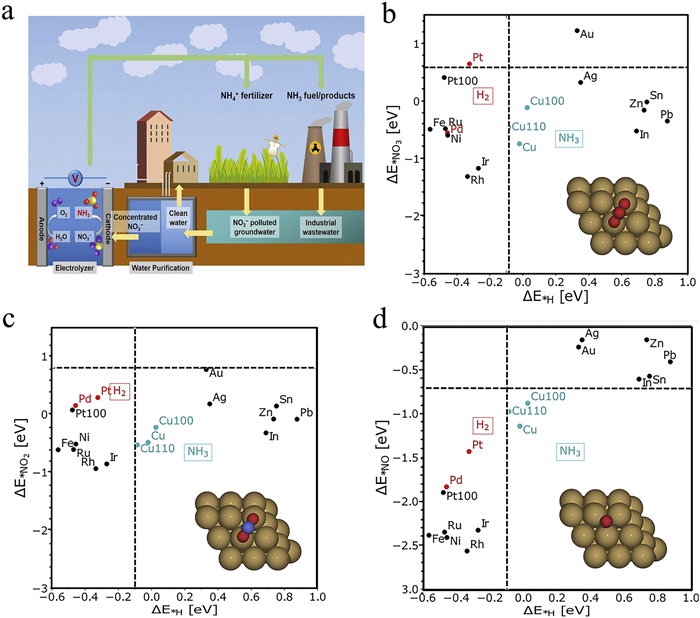
 DownLoad:
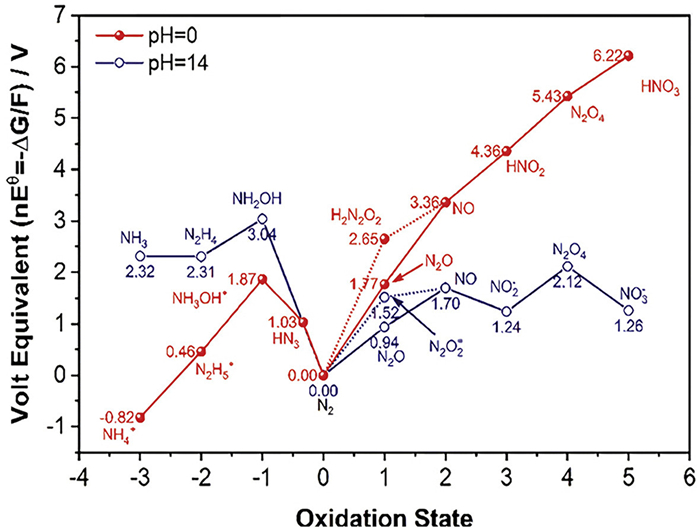
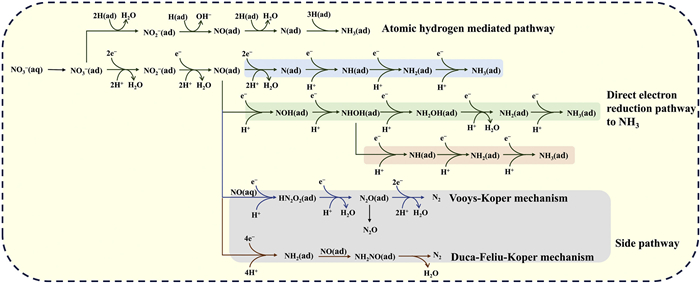
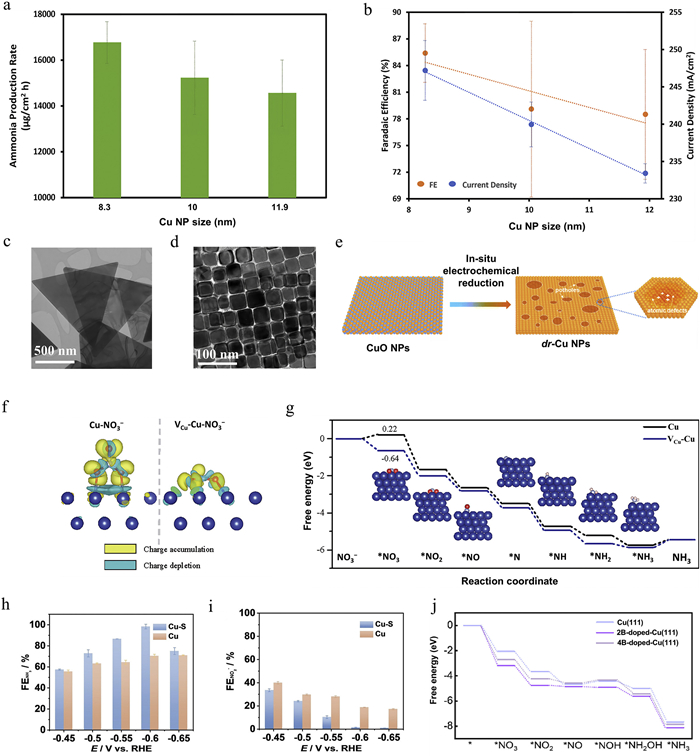
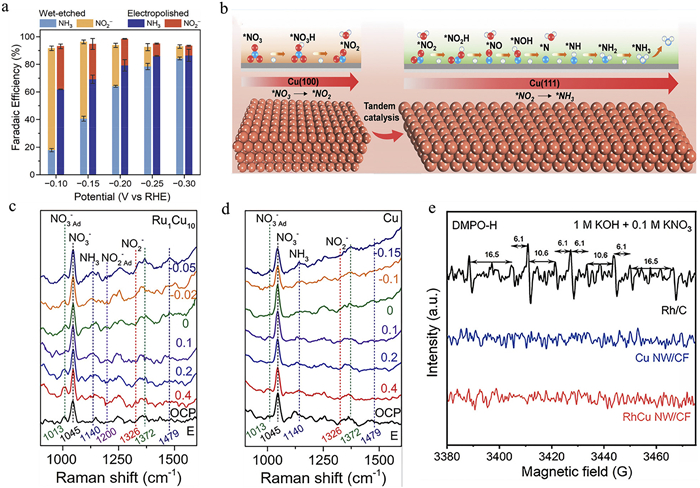
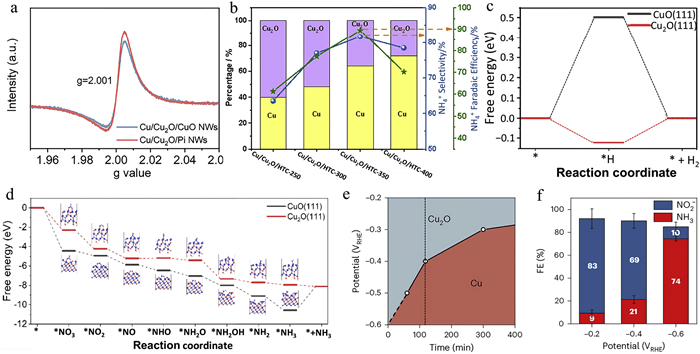
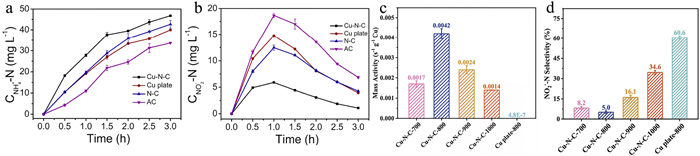

 下载:
下载:


 下载:
下载:

