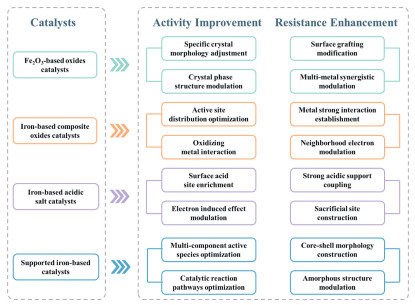
Figure 1.
Promotional strategies of catalytic activity improvement and anti-poisoning performance enhancement over iron-based metal oxide catalysts for NOx reduction.

Iron-based catalysts for NOx reduction: Reaction mechanism and anti-poisoning strategies
Zaisheng Jin , Fuli Wang , Yongjie Shen , Xiaonan Hu , Yanqi Chen , Jin Zhang , Ming Xie , Penglu Wang , Dengsong Zhang


Nitrogen oxides (NOx), as one kind of main atmospheric pollutants, have contributed to numerous environmental problems, including acid rain, photochemical smog, and haze. Selective catalytic reduction (SCR) is the most effective technique for controlling NOx emissions from both stationary and mobile sources and has been widely applied. As the key to this technique, the research and development of NH3-SCR catalysts with excellent performance has attracted continuous attention from researchers all over the world. The V2O5-WO3/TiO2 catalyst currently used in commercial applications exhibits high efficiency in the SCR reaction. However, the inherent toxicity of V2O5 and relatively narrow operating temperature window limit its broader use [1,2]. As an alternative to the V2O5-WO3/TiO2 system, iron-based catalysts have become one of the hottest spot research due to their satisfied medium and high temperature activity, high N2 selectivity, strong resistance to SO2 poisoning, environmental friendliness and low price. Iron-based catalysts are generally divided into iron-based zeolite catalysts and iron-based metal oxide catalysts. Compared to iron-based zeolite catalysts, iron-based metal oxide catalysts exhibit superior low temperature activity and sulfur resistance [3,4]. In general, iron-based metal oxide catalysts mainly include bulk iron oxides catalysts (i.e., iron oxide and iron-based/iron-containing composite oxides), iron-based acidic salt catalysts and supported iron-based catalysts.
Pure Fe2O3 exhibits excellent NH3-SCR catalytic performance, which is closely linked to its morphology and structural properties [5]. As active components or additives in NH3-SCR catalysts, FeOx can improve both catalytic activity and resistance to sulfur dioxide poisoning. Wang et al. [6] demonstrated that the formation of a Fe-O-Ce solid solution structure by doping Fe into CeO2 reduced the activation energy and improved the redox performance. Liu et al. [7] proposed the introduction of WO3 into Fe2O3 enabled the catalyst to maintain optimal redox performance, effectively reducing the non-selective catalytic oxidation of NH3, thereby improving NH3-SCR performance. Wu et al. [8] reported the preparation of Mn-Fe-Ti mixed oxide catalysts via CTAB-assisted coprecipitation, which exhibited enhanced resistance to H2O/SO2 due to strong electronic interactions and high dispersion. Xiong et al. [9,10] also found that Mn-Fe spinels rarely produced N2O side reactions in the presence of water. Liu et al. [11] prepared FeVO4/TiO2 catalysts that exhibited high activity in the medium temperature range, which is attributed to the enrichment of VOx active species on the surface of FeVO4 phase, thus accounting for the high N2 selectivity and H2O/SO2 durability. Ma et al. [12] prepared Fe2(SO4)3/TiO2 catalysts by impregnation using Fe2(SO4)3 as the precursor, which also showed excellent SCR performance in the medium to high temperature range, with NOx conversion kept above 98% between 350 ℃ and 450 ℃.
Although iron-based metal oxide catalysts offer numerous advantages that ensure their excellent SCR performance, plenty of issues including insufficient low-temperature activity and severe catalyst deactivation caused by H2O, SO2, alkaline metals, and heavy metals limit their further application in certain practical scenarios. Therefore, excellent low-temperature activity, wide temperature window, high operating stability, strong H2O/SO2 durability and significant resistance to alkaline/ heavy metal poisoning are the key challenges currently remained for the development and application of highly efficient iron-based metal oxide catalysts. This review provides a comprehensive summary of the chemical properties, reaction mechanisms and promotional strategies on both catalytic activity and anti-poisoning performance associated with various types of iron-based catalysts, such as Fe2O3-based oxide catalysts, iron-based composite oxide catalysts, iron-based acidic salt catalysts and iron-based supported catalysts. And the SCR performance of different iron-based metal oxide catalysts with different modification strategies is further aggregated and summarized in Table S1 (Supporting information). The aim of this review is to offer a comprehensive understanding of iron-based metal oxide catalysts and to provide scientific insights and design strategies for the development and application of novel iron-based catalysts with improved catalytic activity and anti-poisoning ability for NOx reduction (Fig. 1).
For Fe2O3-based catalysts, the issue of narrow operational temperature window persists, particularly with poor activity at low temperatures and suboptimal N2 selectivity at high temperatures. In response to these issues, most research has focused on modifying the crystalline phase and surface structure of Fe2O3-based oxide catalysts, as well as improving their surface acidity and redox properties, in order to improve their catalytic activity, N2 selectivity, thermal stability and resistance to H2O/SO2 poisoning.
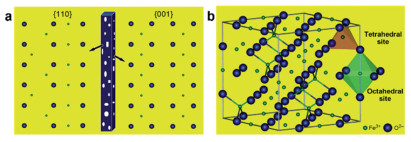
The crystal phase and morphology exhibit a significant effect on the NH3-SCR performance of Fe2O3-based catalysts. The surface structure and morphology of Fe2O3 can be controlled by adjusting the crystal phase structure and specific crystal faces. By modifying the exposed high activity crystal faces, the density of surface active sites and intrinsic activity can be significantly increased to achieve optimal catalytic performance. In more details, two types of Fe2O3 with different crystal structures are commonly used in catalytic reactions, namely hematite (α-Fe2O3) and magnetite (γ-Fe2O3), among which the magnetite γ-Fe2O3 with slightly weaker thermal stability would tend to transform into hematite α-Fe2O3 at higher temperature [13,14]. Mou et al. [15] creatively prepared α-Fe2O3 and γ-Fe2O3 nanorod catalysts by liquid precipitation method and calcination/reflux method, respectively. The hematite and magnetite materials possessed the same nanorod morphology but completely different exposed crystal facets. When the γ-Fe2O3 nanorods was preferentially exposed the active crystal planes of (110) and (100), more active Fe3+ and O2- sites were maintained simultaneously, which synergistically promoted the adsorption and activation of NO and NH3, thus achieving better NH3-SCR activity of 80% NO conversion and 98% N2 selectivity in the range of 200-400 ℃ (Fig. 2) [5].
In addition to Fe2O3 nanorod catalysts, Wang et al. [16] discovered that the as-prepared Fe2O3 nanoparticles also showed high activity in the NH3-SCR reaction over a wide temperature range of 150-270 ℃. Liu et al. [17] prepared nanoporous α-Fe2O3 with different specific surface areas via heat-treating α-FeOOH. It is interesting to find that higher heat treatment temperature increased the crystallinity of α-Fe2O3, thus reducing surface oxygen defects and impairing catalytic activity. Gong et al. [18] used MIL-100 (Fe) as precursor and template to prepare a novel porous α-Fe2O3 nanostructured catalyst with retained morphological structure through a two-step controlled calcination process, which is responsible for high BET surface area and surface oxygen content, as well as improved reducible and acid properties. Teng et al. [19] also used a hydrothermal method to control the exposed crystal faces of Fe2O3, namely (012), (014), and (113), and then loaded Fe2O3 onto TiO2. The Fe2O3/TiO2 catalyst with the (113) exposed surface exhibited the highest activity, which is attributed to its enhanced redox ability, increased surface active oxygen and acid sites, and a modified reaction pathway. Wang et al. [20] further demonstrated the influence of morphology and crystal facets of α-Fe2O3 on the activity using a combination of experimental methods and density functional theory (DFT). The researchers prepared three forms of α-Fe2O3: α-Fe2O3-S (rod-like; mainly exposed (110) and (012) facets), α-Fe2O3-R (rod-like; mainly exposed (110), (104) and (012) facets), and α-Fe2O3-C (cubic; only exposed (104) facet). DFT calculations indicated that NO and NH3 adsorb more readily on the (110) and (012) facets, while O2 dissociated more readily on the (110) facet. Furthermore, the (110) facet showed the lowest energy barrier for the decomposition of intermediate NH2NO, thus enhancing the catalytic activity of α-Fe2O3-S. In addition, due to the exposure of highly active crystalline surfaces, α-Fe2O3-S still exhibited excellent stability in cycling tests at 330 ℃ and the catalytic performance was largely unaffected by the introduction of 5% H2O and 100 ppm SO2. Gao et al. [21] used DFT calculations and experimental measurements to elucidate the NH3-SCR reaction path on α-Fe2O3 (012) surface at the atomic level. Unlike the common insight of NH3 activation acting as the rate determine step in SCR catalytic systems, the reaction tended to depend more on the NO activation process. In more details, NO was activated at Fe sites and then reacted with NH3 to generate NH2NO intermediates, which is further decomposed into N2 and H2O. Subsequently, the Fe sites on the catalyst with lower valence state was regenerated by O2 assisted surface dehydrogenation. Thus, the NO activation and NH2NO formation turned to be the rate determined steps of the entire SCR reaction (Fig. S1 in Supporting information). This study indicated that the introduction of promoters could help to facilitate the activation of NO so that the barrier of the rate-determining step was reduced and the low-temperature SCR activity of α-Fe2O3-based catalysts was effectively promoted.
In the case of α-Fe2O3, adsorbed NH3 can react with gaseous NO, and gaseous NO is more readily adsorbed on α-Fe2O3 than gaseous NH3, resulting in the formation of a stable nitrate that blocks the active sites, which subsequently leads to a decrease in catalytic activity. Compared to α-Fe2O3, γ-Fe2O3 shows a better catalytic activity in the range of 150-300 ℃, because NH3 and NOx are more easily adsorbed and reacted with each other on the surface of γ-Fe2O3 [22]. In order to study the reactive iron sites in the γ-Fe2O3 based catalysts, Qu et al. [23] replaced the octahedral Fe3+ or tetrahedral Fe3+ sites with inactive Ti4+ or Zn2+, and found that the catalytic activity of catalysts after doping Ti4+ was unchanged while that after doping Zn2+ was decreased, indicating that the tetrahedral Fe3+ sites were the real active sites among the SCR reaction. Therefore, how to increase the Fe3+ content in tetrahedra is quite necessary to the promotion of catalytic activity for γ-Fe2O3 based catalysts.
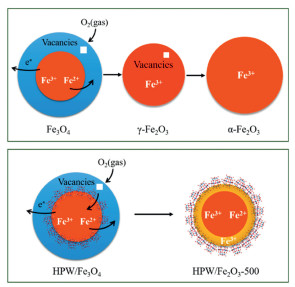
In terms of the relatively active γ-Fe2O3 catalysts, improving the thermal stability and inhibiting the catalytic oxidation of NH3 to NO at high temperature are beneficial to widen the temperature window. Therefore, it is quite necessary to modulate the crystal phase structure of Fe2O3-based catalysts to exhibiting enhanced catalytic performance. An effective way to inhibit the conversion of γ-Fe2O3 to α-Fe2O3 is to replace some Fe3+ species with other kinds of metal cations, such as Nb, Mo or La [24]. It was found that the strong interaction between Fe and Nb promotes γ-Fe2O3 formation in the presence of CTAB at suitable Fe/Nb [25]. And at high doping levels, Nb significantly increased the thermal stability of γ-Fe2O3 by occupying vacancies in the γ-Fe2O3 lattice and expelling a small amount of Fe3+ to compensate for the Nb5+ charge [26]. Moreover, La doping could effectively increase the activation energy of the phase transition of γ-Fe2O3, significantly raising its phase transition temperature from 350 ℃ to 650 ℃ [27]. In addition, the incorporation of manganese oxides has been shown to be an effective method of maintaining the γ-Fe2O3 phase at high temperatures [28]. Researchers have shown that different preparation methods can significantly improve the low-temperature activity and selectivity of Mn-modified γ-Fe2O3 [29]. Moreover, several studies have shown that grafting with heteropoly acid (HPA) can also inhibit the recrystallisation and phase transition from γ-Fe2O3 to α-Fe2O3. Geng et al. [30] grafted tungstophosphoric acid (HPW) onto γ-Fe2O3, resulting in higher catalytic activity within the wide temperature range of 250-500 ℃. Iron oxides primarily existed as Fe3O4 in the HPW/Fe2O3 catalyst, which reduced the structural strain that led to phase transitions (Fig. 3). In addition, grafting with HPW provided higher acid strength, which increased the NH3 adsorption capacity, thereby ensuring improved catalytic activity, N2 selectivity and widened the operating temperature window.
In addition, researchers also have made many attempts to structurally design and modify iron oxide catalysts with specific morphologies to improve NH3-SCR activity, SO2 resistance and N2 selectivity as well. Ren et al. [31] prepared Fe2O3 nanoring decorated by 12-tungstophosphoric acid (TPA), which exhibited high NH3-SCR activity and SO2 resistance due to the interaction between the Fe3+ of Fe2O3 nanoring and terminal oxygen of TPA. The HPW-modified circular Fe2O3 catalysts also enabled excellent NH3-SCR activity and SO2 resistance due to the synergistic effect of HPW polyoxoanion with Fe species on the external and internal surfaces of the nanosphere [32]. Except for the specific morphology modification, it was reported that Mn2O3-doped Fe2O3 hexagonal microchips maintained 98% NOx conversion at 200 ℃ for 60 h continuously. This demonstrated that Mn2O3 doping not only broadened the operating temperature window of the catalyst, but also exhibited excellent thermal stability. Among them, Mn2O3 nanocrystals played a key role in the low-temperature activity, mainly including greatly increased lattice oxygen, chemisorbed oxygen and adsorbed ammonia species [33]. Beyond that, it was reported that a novel type of core-shell catalysts with a hexagonal Fe2O3 core and a thin Fe2(SO4)3 shell promoted the reactivity due to the activation of reactants at the interface of Fe2O3 and Fe2(SO4)3 [34]. And owing to the unique hexagonal morphology structure and the protection of Fe2(SO4)3 shell layer, the catalyst could still maintain high catalytic activity and operational stability when 300 ppm SO2 and 10 vol% H2O were introduced. The following studies on the properties of surface active species and reaction mechanism of the sulfuric acid-modified nano-plate Fe2O3 catalysts by time-resolved DRIFTS showed that the N2 selectivity of modified catalysts was greatly improved and the surface NH4+ and NO2- species involved in the catalytic cycle were effective in the conversion of NH4+ + NO2- → N2 + 2H2O (Fig. S2 in Supporting information) [35].
In summary, several effective modification strategies including crystal phase structure modulation, adjustment of crystal morphology, surface grafting modification and multi-metal synergistic modulation have been reported for the modification of Fe2O3-based catalysts. These modifications not only significantly enhance NH3-SCR activity and N2 selectivity, but also improve thermal stability and resistance to SO2/H2O. As a result, all these effective promotional strategies greatly expand the applicability of iron oxide catalysts and lay a solid foundation for future research in the field heterogeneous catalysis.
In addition to the subtle design of Fe2O3 catalytic components and elaborate corresponding investigation of catalytic performance, numerous iron-based oxide catalysts and iron-containing composite oxides have been extensively considered to further improve the NOx reduction catalytic activity and anti-poisoning performance as well. FeOx can always positively enhance the catalytic activity of iron-based composite oxide catalysts, particularly improving catalytic activity within the medium to high temperature range and resistance to sulfur dioxide poisoning whether utilized as the active components or additives in iron-based composite oxide catalysts. Consequently, researchers have consistently incorporated other kinds of metal or non-metal components into iron oxides or doped Fe species into other metal oxides to enhance the redox properties and acidity of the NOx reduction catalysts. All these strategies aim to improve the low-temperature SCR performance, expand the operating temperature window, as well as enhance the N2 selectivity and resistance to SO2 poisoning.
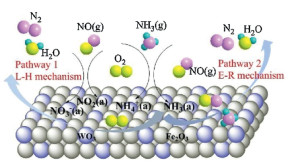
When Fe serves as the active site, metal oxides such as WO3, CuO, and MnO2 can be introduced to modulate the balance between acidity and redox properties in iron-based metal oxide catalysts [36-38]. Ma et al. [39] revealed the effects of Cu and W oxides modification on the redox properties and acidity of iron oxide catalysts and established the relationship between species composition, acidity and redox behavior of iron oxide catalysts. The results showed that appropriate doping of W and Cu oxides significantly increased the specific surface area of the catalyst, improving both Brønsted and Lewis acidities, and adjusting the surface species composition. This effective modification successfully facilitated the catalyst in achieving a high NOx conversion of 90%, a wide operational temperature window of 235-520 ℃, high N2 selectivity, and excellent resistance to water and sulfur dioxide. Similarly, Wang et al. [40] used a simple solvent-free method to synthesize WO3-FeOx catalysts with varying WO3 contents and found that the optimal catalytic performance was achieved when the WO3 content reached 30%. This is mainly attributed to the NH3-SCR reaction occurring via both the Langmuir-Hinshelwood (L-H) and Eley-Rideal (E-R) pathways, where adsorbed NO rapidly reacted with adsorbed NH3 and NH4+ to form N2 and H2O (Fig. 4).
In addition, appropriate acidification effectively inhibited the overoxidation of NH3, thereby increasing the N2 selectivity. It is found that Fe2O3 supported on hexagonal WO3 nanorods also exhibited excellent SCR performance [41]. This can be attributed to the synergistic effect between the abundant acidic sites provided by WO3 and the redox sites provided by Fe2O3, which not only effectively enhanced the low-temperature activity of the catalyst, but also imparted ideal tolerance to K, SO2, and H2O. Moreover, Fe-Ti spinel oxides exerted enhanced SCR performance as well, which is mainly resulted from the promoted acidity due to Ti incorporation. In the sight of catalytic reaction pathways, when Ti was incorporated into Fe2O3, the L-H pathway was suppressed while the E-R pathway was promoted. Beyond that, the improved catalytic activity was also greatly related to the oxidation ability of Fe3+ on the catalyst surface, the adsorbed NH3 concentration, and the reducible Fe3+ concentration [42]. When V and Mn species were added to Fe-Ti spinel, the NOx conversion increased significantly, especially within the range of 200-300 ℃. The promotional effects of adding V species to Fe-Ti spinel on the SCR reaction was more obvious than that of Mn species, so that the Fe-Ti-V spinel exhibited much higher SCR activity, N2 selectivity and H2O/SO2 durability within 250-400 ℃.
In summary, when iron oxide is used as the active components for SCR catalysts, the incorporation of Cu, W, Mn, Ti or V oxide species into the catalysts can significantly modulate the concentration of Fe3+ species as well as the acidity, thermal stability and redox properties. The addition of these modified metal oxides can effectively enhance the SCR activity of iron oxide catalysts at low temperatures and also reduce the selectivity for N2O formation. This allows the modified catalysts to exhibit effectively improved SCR activity, N2 selectivity, and H2O/SO2 durability within a certain temperature range.
Apart from acting as active components, numerous studies have investigated the promotional effects of iron species doping on the N2 selectivity and resistance to SO2 poisoning in other metal oxide catalysts, such as manganese oxides and cerium oxides. As an additive in NH3-SCR catalysts, FeOx can significantly increase the catalytic activity of metal oxide catalysts and improve their resistance to sulfur dioxide poisoning. Compared to MnOx and FeOx catalysts, FeMn composite oxides were more effective in improving the NH3-SCR performance [43,44]. Fe species doping obviously increased the specific surface area of catalysts, thereby providing more acid sites and active sites. Meanwhile, Fe doping also led to more defects, including charge imbalance, unsaturated chemical bonds and oxygen vacancies. Moreover, the introduction of iron species significantly increased the concentration of Mn4+ and adsorbed oxygen on the surface, increased the ability of adsorbing and activation to NO, thus improving catalytic performance. The Fe-doped Mn-Eu catalysts also exhibited excellent low-temperature SCR activity and H2O resistance due to the strong interaction among Mn, Eu and Fe components. The NOx conversion reached 98% at 100 ℃ and remained around 90% at 230 ℃ even under the condition of high gas hourly space velocity (GHSV) of 75,000 h-1 and the presence of 15% H2O for 50 h [45].
Additionally, it should be noted that different amounts of iron species additives give rise to two types of compensation mechanisms: vacancy compensation and dopant interstitial compensation. These compensation mechanisms can affect the structure and chemical properties of various SCR catalysts, including electronic state, reductive properties and surface acidity, thereby affecting catalytic performance. Hu et al. [46] synthesized a series of MnOx-Moy/Ce0.75Zr0.25O2 (M = Fe, Co, Ni, Cu) catalysts via an impregnation method and found that the MnOx-FeOy/Ce0.75Zr0.25O2 catalyst exhibited improved low temperature activity and a wider temperature window. In addition, the iron oxide was well dispersed on the catalyst surface, preventing agglomeration of active species and promoting strong interactions between the active species and supports. More importantly, in situ DRIFTs experiments confirmed that bidentate nitrates were the common active species on these catalysts and that the reactivity of gaseous NO2 and bridged nitrates increased with the addition of Fe species (Fig. S3 in Supporting information).
Doping of iron oxide species to form composite metal oxides can improve the structure and chemical properties of catalysts by affecting the crystallinity of metal oxides, the dispersion of surface active species, and the pore structure as well as pore size distribution. More importantly, the interaction between the doped iron species and initial metal oxide species also influenced the Fe3+ content, surface adsorbed oxygen, as well as the redox properties and acidity, ultimately improving the catalytic performance of the metal oxide composites SCR catalysts. However, for most of the iron-based metal oxide composite catalysts discussed above, the operating temperature window remains suboptimal. Therefore, further improvements in the redox properties related to low-temperature activity and the acidity properties associated with high-temperature activity are essential for enhancing the SCR performance of iron-based composite catalysts.
Different preparation methods can influence the specific surface area, microstructure, dispersion of active components, valence state distribution of elements, redox properties and surface acid sites of the iron-based composite oxides catalysts. Therefore, the performance of iron-based composite oxides SCR catalysts can be further improved by adjusting the synthesis conditions to optimize the distribution of active species on the catalyst surface without changing the composition of catalysts.
Xiong et al. [47] found that the iron-cerium composite oxide catalysts synthesized by micro-emulsion method owned excellent catalytic NOx reduction performance as a result of moderate oxidizing ability, large specific surface area and rich acidic centers. Whereas, the corresponding catalysts prepared by the sol-gel method expressed better SCR activity but poor N2 selectivity. Wang et al. [48] obtained NiFe composite oxides by calcining a hydrotalcite-like precursor and found that its catalytic performance was highly correlated with the phase composition that susceptible to the calcination temperature. The MOx phase (M = Ni or Fe) formed at a lower calcination temperature would raise the content of Fe2+ and Ni3+, which helped to improve the redox properties and low-temperature activity. The NiFe2O4 phase that formed at a higher calcination temperature made more Fe species appeared on the catalyst surface and formed a more stable structure (Fig. 5). Given all that, better SCR activity at high temperatures, resistance to SO2 and operating stability were achieved simultaneously. Chen et al. [49] calcined the MnFeAl-NOx layered double hydroxide (LDH) precursor to synthesize MnFeAlOx, which presented a higher catalytic performance than the traditional doped Mn-Fe/γ-Al2O3 catalysts in a widely low temperature range (80-250 ℃). The addition of iron species greatly increased the acidity, mobility of oxygen and amount of oxygen adsorbed on the catalyst surface. At the same time, it also significantly reduced the formation rate of SO42- thereby suppressing the sulfur dioxide poisoning of the MnFeAlOx catalysts. This allowed the catalyst not only own a wide temperature operating window, but also to maintain excellent operating stability at 150 ℃ after the introduction of 100 ppm SO2.
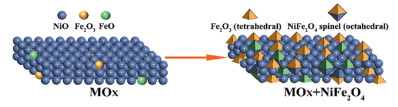
In summary, the optimization of active species distribution can be achieved by adjusting the synthesis methods and conditions of iron-based composites oxide catalysts, such as precursors and calcination temperature adjustment, which can help to improve the redox properties and low-temperature catalytic activity of catalysts. In addition, the interaction effects of active Fe species with other modified metals is confirmed to be another important factor to influence the NOx reduction catalytic performance.
Apart from the above discussion about adjusting synthesis methods to optimize the catalytic performance of iron-based composite oxides SCR catalysts, researchers also applied other kinds of active metal elements to the iron oxides or iron-based binary composite oxides to form a ternary or even quaternary mixed oxide catalytic system, aiming at establishing active metals strong interaction and further improving the catalytic activity by appropriate modulation of the preparation methods. For example, the introduction of additional metal oxides to Fe2O3/TiO2 catalysts had been shown to further enhance the low-temperature SCR activity and resistance to SO2 poisoning. Zhan et al. [50] prepared the Ce-doped FeTi catalysts by sol-gel method, whose NOx conversion efficiency could achieve more than 95% at 200 ℃. The strong interaction between CeOx, FeOx and TiO2 resulted in a larger amount of Ce3+, more active chemisorbed oxygen and Brønsted acid sites so that the catalyst expressed excellent low-temperature SCR activity. In addition, WOx-modified Fe2O3/TiO2 catalysts owned increased abundance of surface acid sites and reactive oxygen sites greatly enhanced the resistance to H2O and SO2. However, Zhao et al. [51] further found that hydrothermal aging decreased the specific surface area of the catalysts, causing agglomeration or crystallization of Fe and W species, which led to a decrease in the acid content and surface-adsorbed oxygen content of the catalysts, resulting in a decrease in low-temperature activity. The Fe-Ti-Nb catalysts with suitable acidity and reducibility yielded a higher than 90% NOx conversion efficiency within the range of 200-400 ℃. The addition of Nb species efficiently increased the acidity of Fe-O-Ti centers and certainly reduced the strong reducibility. Besides, the formation of a large amount of Lewis acids and Brønsted acids on the catalyst surface as well as the formation of active cis-N2O22- and monodentate nitrate species both promoted the improvement of the SCR reaction activity (Fig. S4 in Supporting information) [52]. The addition of Nb species would cause a double redox reaction (Ce4+ + Nb4+ ↔ Ce3+ + Nb5+ and Fe2+ + Nb5+ ↔ Ni3+ + Nb4+) to generate more oxygen vacancies and unsaturated chemical bonds on the catalyst surface, which increased the redox performance in turn.
Although extensive research has been conducted on the modification of iron-based oxides catalysts, their low-temperature activity still has significant room for improvement. Therefore, the combination of iron-based catalysts with strongly oxidative metal oxides is essential to further broaden the active low-temperature window range. Fang et al. [53] reported that the Fe0.3Mn0.5Zr0.2 catalyst exhibited significantly enhanced low-temperature catalytic activity and an extended operating temperature window due to the synergistic interactions among Zr, Fe, and Mn species. In addition, it maintained excellent thermal stability and SO2 resistance at 200 ℃, even in the presence of 200 ppm SO2. When Fe2O3 was loaded on ZrTiO4 supports with a porous structure, strong Fe-Zr-Ti interactions were also achieved. The highly dispersed active sites and abundant Lewis acid sites on the catalyst surface not only improved the low-temperature SCR performance, but also enhanced the resistance to SO2 poisoning [54]. Chen et al. synthesized single-atom Ce-modified α-Fe2O3 catalysts by a citric acid-assisted sol-gel method. The highly dispersed Ce atomic cores maximized the formation of Ce-O-Fe bonds, which facilitated the reaction between adsorbed intermediates and gas-phase reactants. In addition, in the presence of SO2, sulfate species deposited on the catalyst surface can decompose at relatively low temperatures, thus demonstrating excellent sulfur dioxide tolerance (Fig. 6) [55]. It can be concluded that the introduction of various metal oxides increases the resistance of iron-based catalysts to H2O and SO2 through two primary mechanisms: First, metal oxides can act as sacrificial sites that preferentially adsorb SO2, thereby preventing sulfation of active FeOx species. Second, metal oxides can decline the decomposition temperature of (NH4)2SO4, facilitating a balance between the formation and decomposition of poisoning species, thereby exposing more active sites for catalytic reactions.
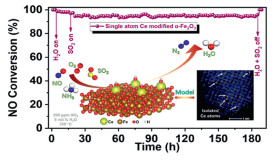
In addition, plenty of studies on the modification of iron-based catalysts by the introduction of non-metallic elements have also been widely reported. Song et al. [56] prepared FeaSbTiOx catalysts whose operating temperature window in NH3-SCR reaction was significantly expanded due to the synergistic effect between Fe and sulfur species. This is because sulfur existed as a kind of stable SO42- species, which greatly increased the stability and amount of Brønsted and Lewis acid sites and enhanced the adsorption of NH3, thus significantly inhibiting the excessive oxidation of NH3 caused by pure iron species. Moreover, with the introduction of SO42-, the electronic interaction between SO42- and TiO2 support was modulated, the Lewis acidity was enhanced, and the Fe species were more charge-deficient. The charge transfer process between Fe2O3 and SO2 was weakened while boosted that between NO/NH3 and Fe2O3 by SO42- doping, thus Fe2O3/S-TiO2 revealed excellent NOx reduction performance and SO2 tolerance (Fig. 7) [57]. Similarly, Fe-based catalysts modified with H3PO4 or H2SO4 showed significantly improved acid and NH3 adsorption capacity, which not only resulted in high SCR activity, but also significantly improved resistance to alkali metal and heavy metal poisoning [58-60].
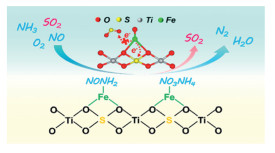
Consequently, the construction of effective multi-metal mixed oxides has been shown to significantly enhance the catalytic performance of iron-based composite catalysts. On the one hand, the strong interactions between various metal oxides significantly enhance the concentration of active oxygen and acid sites to achieve strong active metals interaction establishment; on the other hand, the dual redox cycle facilitates effective electron transfer between various catalytic components for neighboring electron modulation. In addition, certain non-metal oxides can promote catalytic cycling and alter gas adsorption behavior, thereby improving performance parameters such as low temperature SCR activity, N2 selectivity and resistance to sulfur dioxide and water.
Typically, Fe-based acidic salts can usually be classified as Fe-based metal salts and Fe-based non-metal salts. Due to the strong electron transfer between Fe species and non-metallic acidic radicals (SO42-, PO43-) or metal acidic radicals (TiOx3-, VO43-, WOx3-), the redox capacity and acidity of the Fe-based acidic salts catalysts are always greatly enhanced, resulting in excellent catalytic activity as well as tolerance to SO2 and H2O, which has led to the widespread design and application of iron-based acid salt catalysts for NOx reduction reaction.
In addition to the aforementioned iron-titanium spinel catalysts and Fe2O3/TiO2 supported catalysts previously reported, iron titanate catalysts have received extensive attention due to their special microstructure and electronic properties. A series of iron titanate catalysts named as FeaTibOx with different molar ratios of Fe/Ti and a crystallite phase proposed by Liu et al. [61] showed excellent SCR activity, N2 selectivity and operating stability within the medium temperature range. And the FeTiOx catalyst even showed more than 90% NOx conversion during 250-400 ℃ after the sulfation treatment for 48 h. Compared with TiO2 and Fe2O3, the coexistence of Fe and Ti was beneficial to the formation of microcrystals with a specific Fe-O-Ti structure [62]. After a comprehensive study including the effects of different precursors and preparation methods on the structure and activity of iron titanate catalysts, it is found that iron titanate catalysts prepared with titanium sulfate as a precursor exhibited higher catalytic activity and N2 selectivity than those prepared with titanium tetrachloride as a precursor and Fe2O3/TiO2 supported catalysts. This is mainly due to the formation of iron-titanium crystals with a specific Fe-O-Ti structure [63]. Through in-depth exploration of the reaction mechanism at a relatively low temperature (< 200 ℃), the SCR process mainly followed L-H reaction mechanism. Among which NO was oxidized by oxygen to form the monodentate nitrate at the Fe3+ site and this process was confirmed to be a rate-limiting step. At high temperatures (> 200 ℃), the SCR process mainly followed L-H reaction mechanism in which the formation of the intermediate species NH2NO was the main speed-limiting step (Fig. S5 in Supporting information) [64]. The XAFS studied on the specific microstructure of active species and deoxidation behavior of FeTiOx catalysts manifested that the enhanced reducibility of Fe3+ species in FeTiOx crystallites was due to the electronic inductive effect of Fe and Ti species existing in the homogeneous edge shared Fe3+-(O)2-Ti4+ structure [65,66].
Tungsten is widely used as a catalyst stabilizer and promoter due to its high thermal stability and acidity, which contributes to an extended operating temperature range in the NH3-SCR reaction and inhibits NH3 oxidation. Researchers have gradually elucidated the role of iron tungstate in the catalytic process and the structure-activity relationship of iron tungstate catalysts. Liu et al. [7] reported that the introduction of WO3 into Fe2O3 resulted in an increase in the content of Lewis acid sites, which inhibited the formation of inactive nitrates and made more active sites available for adsorption and activation of NH3. Meanwhile, the synergistic effect between WO3 and Fe2O3 enabled the WO3/Fe2O3 catalyst to maintain moderate redox ability to effectively weaken the non-selective catalytic oxidation of NH3, resulting in enhanced NH3-SCR performance. Additionally, Zhang et al. [67] prepared FeWOx catalysts via different methods and found that N2O was easily produced on the catalyst prepared by the impregnation method. While the catalyst prepared by the grinding method showed better catalytic activity owing to higher specific surface area, larger amount of Fe2+ and adsorbed oxygen species as well as more acidic sites. Meanwhile, the specific reaction pathways were differential as L-H mechanism dominating at low temperatures and E-R mechanism emerging at relatively high temperatures. Besides, in regard of the effects of calcination temperature, it was further confirmed that the optimal calcination condition was 500 ℃, where surface defects and coexistence of FeWO4 or WO3 were present, resulting in the optimal NOx reduction efficiency (Fig. S6 in Supporting information) [68].
Except for the discussion about iron titanates and iron tungstate catalysts mentioned above, related studies have found that utilizing the synergistic effects of iron and vanadium species can extend the operating temperature window and improve high-temperature N2 selectivity in the NH3-SCR reaction. Zhang et al. [69] found that adding certain amount of V species to form iron-vanadium mixed oxide catalysts could increase the activity and redox property of Fe2O3, which is resulted from the smaller grain size of Fe2O3 and higher redox ability. Moreover, Mu et al. [70] found that the vanadium-doped Fe2O3 catalysts presented excellent catalytic performance due to the improved redox ability and surface acidity. The NOx conversion reached more than 90% under a wide temperature window of 175-400 ℃, with the N2 selectivity and H2O/SO2 durability were also maintained at relatively high levels. Further characterization revealed that the incorporation of V species resulted in the formation of amorphous FeVO4 and Fe2O3 with smaller particle size and higher oxygen mobility. The strong interaction between FeVO4 and Fe2O3 species kept V in a higher valence state and the abundant VOx species rather than FeOx species on the catalyst surface acted as the main acid sites. The electron-inducing effects between Fe and V species promoted the charge transfer, which accelerated the oxidation of NO to NO2, further improving the low-temperature catalytic performance and reducing the apparent activation energy (Fig. S7 in Supporting information).
Sulfate containing catalytic materials have attracted much attention in the research of NH3-SCR catalysts due to their high acidity and excellent resistance to SO2 and H2O. Ma et al. [12] synthesized the Fe2(SO4)3/TiO2 catalyst using Fe2(SO4)3 as the precursor by the impregnation method and achieved a NOx conversion of more than 98% in the temperature range of 350-450 ℃. Sulfate species played a crucial role in the SCR reaction, not only facilitating the generation and enhancement of Brønsted acid sites but also influencing the dispersion of active species on the catalyst surface. However, the thermal stability of the sulfate-containing materials was typically suboptimal. In more details, Yu et al. [71] investigated the effects of thermal stability on the SCR performance of Fe2(SO4)3/TiO2 catalysts and found that the decrease in catalytic activity after heat treatment was attributed to the decomposition of Fe2(SO4)3 (the conversion of Fe2(SO4)3 to α-Fe2O3), which reduced the Brønsted acid sites on the catalyst. However, the introduction of SO2 into the gas stream resulted in the recovery of Brønsted acid sites, thus the NOx reduction efficiency could return to the state before SO2 inactivation (Fig. 8).
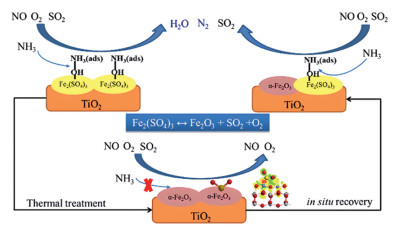
The NOx reduction activity of iron-based acidic salt catalysts at low temperatures, especially for NOx conversion below 200 ℃, still needs to be further improved. It has been shown that the low-temperature SCR performance of FeTiOx catalysts can be further enhanced by introducing additional metal oxide species to promote the modulation of electron-induced interactions between various active metal species. Liu et al. [72] reported that partial substitution of Fe with Mn in iron titanate catalysts resulted in a significant enhancement in low-temperature activity, although a slight decrease in N2 selectivity was observed. A high Mn content facilitated the oxidation of NO to NO2 and increased the formation of monodentate nitrate species (MO-NO2), which could readily react with NH4+ or NH3 adsorbed on adjacent active sites to form more active intermediates that subsequently reacted with gaseous NO to produce N2 and H2O. In addition, it was observed that after partial substitution of Fe with Cr, the catalyst retained its crystallite structure and the SCR activity was significantly improved, especially at low temperatures [73]. The partial substitution of Cr effectively modified the surface properties, porosity and the ratio of Lewis acid sites to Brønsted acid sites in the catalyst, while also increased the mobility of lattice oxygen and improved the oxidation capability of the modified catalyst. Similarly, CeO2 doping can effectively improve the low temperature performance of FeTiOx catalysts, which was due to the formation of Fe-O-Ce structures significantly improved the redox capability of the catalyst, facilitating the oxidation of NO and activation of NH3 at low temperatures [74].
Moreover, we found that the FeδCe1−δVO4 catalyst not only exhibited a strong inhibition capacity on SO2 adsorption, but also effectively inhibited the deposition of sulfate species, which endowed strong SO2 resistance at the low temperature of 240 ℃ [75]. Meanwhile, the SCR activity of FeδCe1−δVO4 was simultaneously improved by increasing the oxygen vacancy, enhancing the redox performance and improving acidity. Li et al. [76] proposed that phosphorus species exerted contrasting effects on NOx reduction catalytic performance at low and high temperatures by examining the crystal structure, surface acidity, surface adsorbed species, and redox behavior of phosphorus-poisoned FeTiOx catalysts during the SCR reaction. Phosphorus species preferentially bonded with the electron-deficient Ti4+ and Fe3+ cations to form P-O-Fe and P-O-Ti bonds, thereby blocking the Lewis acid sites (Fe-NH3 or Ti-NH3), leading to a reduction in the acidity and a consequent loss of reactivity. However, the phosphate formed introduced additional Brønsted acid sites (P-O-NH4+) that facilitated the SCR reaction via L-H mechanism, providing a new reaction pathway that enabled the catalyst to exhibit improved reactivity and thermal stability at high temperatures (Fig. S8 in Supporting information).
The iron-tungsten composite oxide catalysts proposed by Wang et al. [77] exhibited high NOx conversion and N2 selectivity over a broad temperature range, while maintaining significant stability and relatively high NOx conversion efficiency even in the presence of H2O, SO2, and CO2. The synergistic effects of α-Fe2O3 and FeWO4 species that formed after the introduction of W species greatly improved the surface acidity and electronic properties of the iron-tungsten catalyst. Additionally, FeWO4 with an octahedral structure acted as Brønsted acid sites, facilitating the formation of highly active NH4+ species, thereby promoting the enhancement of SCR activity. By studying the effects of sulfurization on FeWOx catalysts, it was found that sulfurization inhibited the SCR activity at low temperatures (< 300 ℃) but had no significant effect at high temperatures (≥300 ℃), which was caused that the formation of NO2 was hindered after sulfurization, endowing the "Fast-SCR" reaction pathway to be partially interrupted and resulting in certain inactivation at low temperatures. However, at high temperatures, the formation of nitrate species altered the reaction pathways to L-H mechanism with NH4NO3 as an intermediate, so that the catalyst maintained relatively high anti-SO2 poisoning performance (Fig. S9 in Supporting information) [78].
In summary, electron induced effect modulation can significantly enhance the redox capability of iron-based acidic salt catalysts, promoting the oxidation of NO to NO2 at low temperatures, which effectively facilitates the "fast SCR" reaction process. Furthermore, coupling with acidic metal oxides or inorganic acids can greatly improve the surface acidity and promote the enrichment of surface acid sites, which positively accelerates the NH3 adsorption and activation over iron-based acidic salt catalysts. Notably, the valid combinations of electron induced effect modulation and acidic additives coupling can significantly improve the low temperature catalytic activity as well as anti-poisoning ability against to SO2 and alkaline metals of most iron-based acidic salt catalysts.
In addition to increasing the acidity of iron-based acidic salt catalysts by acidic metal doping or inorganic acid modification, the coupling of strongly acidic supports not only increases the total acidity of catalysts, but also further help to disperse the active species. Among which FeVO4 is usually supported on various supports such as TiO2, Al2O3, and CeO2, establishing strong interactions between the support and the active phase to further enhance the SCR performance. Liu et al. [11] synthesized a FeVO4/TiO2 catalyst that demonstrated excellent catalytic activity, high N2 selectivity, and remarkable resistance to H2O/SO2 under medium-temperature conditions. The results revealed that the FeVO4 active phase was highly dispersed on the support surface and abundant surface defects were present, which facilitated the adsorption and activation of reactants on the catalyst surface. Meanwhile, the interaction between Fe and V species partially inhibited the oxidation of NH3 at elevated temperatures. Similarly, when FeVO4 was supported on CeO2, the high redox capability and acid content contributed to the enhanced SCR activity and SO2 resistance of the catalyst [79]. Casanova et al. [80] controlled the homogeneity of stoichiometric Fe/V-rich compositions by adjusting the pH during the precipitation process of iron vanadate for the preparation of FeVO4 supported on TiO2-WO3-SiO2. This modulation in turn influenced the strong interaction between the vanadate components and TiO2-WO3-SiO2, as well as the thermal stability of the catalyst. Homogeneous FeVO4 which derived from stoichiometric FeVO4 showed the optimal activity and thermal stability due to the acidity of V-O moiety and the characteristics of Fe3+-O-V5+ bonds. The effect of phase composition on the TiO2-WO3-SiO2 supported FexAl1-xVO4 catalysts was further studied by varying the calcination temperature. The active species of the TiO2-WO3-SiO2 supported FexAl1-xVO4 catalyst in the NH3-SCR reaction were verified to be VOx species instead of FeVO4. The well-dispersed VOx species formed after decomposition owned a coordination environment similar to that of VOx species on traditional vanadium-based catalysts. Meanwhile, VOx species were finely dispersed on the surface of TiO2-WO3-SiO2 support at high temperatures and then migrated to the WO3 sites to maintain high SCR performance (Fig. S10 in Supporting information) [81].
Similarly, Feng et al. [82] demonstrated that TiO2-supported Fe2(SO4)3 catalysts exhibited both high NOx reduction efficiency and alkali metal resistance over a fairly wide temperature window of 200-500 ℃. Sulfate species which tended to migrate from the bulk phase to the surface remained largely on the catalyst, effectively binding to the alkali metal K cations to release poisoning effects on the active iron sites. The adsorption capacity and rate of NH3 and NO remained steady due to the protective effects of migrating sulfate and the close coupling with the Fe active sites, so that the tightly coupled Fe metal sites and sulfate species played important roles as highly active sites and unique poisoning sites on the self-preserving TiO2-supported Fe2(SO4)3 catalysts (Fig. 9). Li et al. [83] further found that phosphate modification of Fe2O3/TiO2 catalysts significantly enhanced the resistance to alkali metal poisoning during the reduction of NOx. The introduction of phosphates led to the formation of iron phosphate species, whose tetrahedral structure provided additional Brønsted acid sites, increasing the surface acidity of the catalyst. At the same time, the formation of Fe-O-P bonds enhanced the redox capability and increased the surface adsorption of oxygen on the catalyst. Moreover, potassium preferentially interacted with the phosphate group (PO43-), which helped preserve the iron species at the active sites.
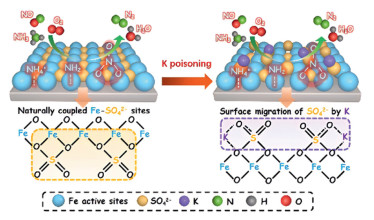
In conclusion, coupling with strong acidic supports over iron-based acidic salt catalysts can effectively modulate the interaction effects between the supports and active sites to further disperse the active iron sites and promote the adsorption activation of NH3 as well. In addition, iron-based acidic salt catalysts modified with sulfuric acid or phosphoric acid readily realize the construction of sacrificial sites that preferentially bind to the alkali metal poisons, thus releasing the active iron sites to maintain excellent redox property and reactants adsorption capacities as well, which endows the catalyst to exhibit high deNOx activity even after alkali metal poisoning. However, the thermal stability of sulfate-containing iron-based acidic salt catalysts is generally suboptimal, which should be pay more attention to further improve their thermal stability while ensuring high SCR activity, N2 selectivity, and anti-alkali metal poisoning performance.
Generally, when the active components are supported on a suitable support, it is essential that the support provides a large specific surface area, which facilitates the dispersion of active components into smaller particles. In addition, some excellent chemical properties of the support itself can also improve the SCR activity and structural stability of catalysts under the reaction conditions. Common support materials used in supported iron-based catalysts include metal oxides (such as alumina, tungsten oxide, titanium dioxide), carbon materials (such as activated carbon, carbon nanotubes) and other clay materials (such as kaolin, diatomite.).
Metal oxide supports have been extensively studied due to the strong metal-support interaction and the electron transfer between active components. TiO2 is commonly used as a support for denitration catalysts due to its high specific surface area, thermal stability, surface acidity and SO2 resistance. The Fe/TNT (titania nanotube) synthesized by hydrothermal method and wet impregnation technique exhibited above 90% NOx conversion within the temperature window range from 200 ℃ to 350 ℃ due to the high dispersion of active species on the support [84]. Moreover, adjusting the crystal planes of supports or exploiting their morphological effects to modulate the interaction between Fe2O3 and supports is beneficial to improve the catalytic activity. Through the study of Fe2O3 catalysts supported on TiO2 nanosheets (TiO2-NS) and nanospindles (TiO2-NP), Liu et al. [85] found that Fe2O3/TiO2-NS exhibited better SCR activity at low temperatures, which is attributed to the presence of more acid sites, oxygen vacancies, and reactive oxygen species in the catalyst. The DFT results further indicated that the adsorption energy of NO and NH3 on TiO2-NS (001) was lower than that on TiO2-NSP (101).
Besides, we also prepared CeO2 nanorods (CeO2-NR) and CeO2 nanospindles (CeO2-NSP) supported Fe2O3 catalysts, in which CeO2-NR mainly exposed the (110) and (100) crystal planes and CeO2-NSP mainly exposed the (111) crystal plane. It was found that Fe2O3/CeO2-NR demonstrated higher NOx reduction catalytic activity compared to Fe2O3/CeO2-NSP. The DFT results revealed that NO and NH3 presented higher reactivity on Fe2O3/CeO2-NR than Fe2O3/CeO2-NSP, which is caused that the (110) and (100) planes exposed on CeO2-NR increased the surface adsorbed oxygen, oxygen vacancies and Fe atom density, resulting in high catalytic activity [86]. Moreover, Li et al. [41] supported Fe2O3 nanoparticles on hexagonal WO3 nanorods, among where the crystal structure and morphology of Fe2O3 and WO3 remained unchanged during the preparation of Fe2O3/WO3. Due to the synergy between the redox sites provided by Fe2O3 and the acid sites provided by WO3, the catalyst exhibited excellent low-temperature SCR activity and maintained high activity as well as operating stability in the presence of K, SO2 and H2O. To further investigate the reaction mechanism of Fe2O3/WO3, Zhang et al. [87] anchored WO3 on the surface of Fe2O3 nanosheets by impregnation to strength the submonolayer interactions between W and Fe, which further confirmed that the W-O-Fe interface was closely related to the active sites and played a crucial role in the SCR reaction process (Fig. S11 in Supporting information). Furthermore, when Fe2O3 was supported on MoO3 nanobelts, it was observed that the layered structure of α-MoO3 with different oxidation states and appropriate interlayer distances could trap NH4+ from NH4HSO4, thus promoting the decomposition of NH4HSO4 and enhance the SO2 resistance [88]. When Fe2O3 was loaded on block or nanosheet MoO3, Chen et al. [89] found that the supported iron-based catalysts showed superior low-temperature performance compared to Fe2O3 catalysts. In addition, the Fe2O3/MoO3 nanosheets also exhibited higher SCR activity and N2 selectivity, which could be attributed to their stronger NH3 adsorption capacity and better redox properties. By analyzing the structural features and chemical properties of various metal oxides, we found that TiO2 can help improve the dispersion of active Fe sites and SO2 resistance due to its high specific surface area and excellent SO2 tolerant ability, while CeO2 can significantly improve the low-temperature catalytic activity of Fe-based catalysts due to its abundance of oxygen vacancies. WO3 and MoO2, as supports with abundant acid sites, can improve the SO2 resistance of the catalysts by reducing the adsorption of SO2.
In conclusion, when metal oxides are used as supports, the iron-based catalysts exhibit higher catalytic performance and SO2 resistance. However, improving the stability of metal oxide supports and preventing the phase transition during the high-temperature reaction still remain as one of the urgent issues to be solved for supported iron-based catalysts. In addition, the acidity of some metal oxides is not that insufficient to provide enough acid sites to ensure smooth NH3 adsorption and provide sacrificial sites for alkaline metal poisons. Therefore, it is also necessary to further develop effective solutions for improving the surface acidity of supported iron-based catalysts to enhance the NOx reduction catalytic performance and anti-poisoning ability as well.
In recent years, carbon-based materials (such as activated carbon and activated coke) have attracted considerable attention due to their large specific surface area and well-developed pore structure, which can positively facilitate the homogeneous dispersion of active sites for iron-based NOx reduction catalysts. Han et al. [90] anchored Fe2O3 nanoparticles onto carbon nanotubes (CNTs) by in situ ethanol-thermal method and found that the Fe2O3/CNTs catalyst exhibited a wider operating temperature window and higher SCR activity than those synthesized by impregnation and co-precipitation methods. This could be attributed to the high dispersion of Fe2O3 on the support surface, the enrichment of surface-active oxygen species, as well as stronger reducibility and acidity, which also endowed the catalyst with excellent operating stability, tolerance to H2O and SO2. Similarly, Yang et al. [91] found that when the calcination temperature of Fe2O3/activated carbon was increased from 400 ℃ to 500 ℃, the conversion of α-Fe2O3 and γ-Fe2O3 was promoted and the dispersion of γ-Fe2O3 was improved, which resulted in the enhancement of SCR activity.
Due to the presence of numerous unsaturated bonds in the structure of activated carbon, oxygen-containing functional groups, such as hydroxyl, carboxyl, and carbonyl groups can always be formed readily via the reaction with certain oxidants, which significantly alters the chemical properties of activated carbon surface. Li et al. prepared (NH4)2S2O8 modified Fe2(SO4)3/activated carbon catalysts by oxygen functionalized pretreatment of activated carbon with (NH4)2S2O8, followed by impregnation with Fe2(SO4)3. The catalyst achieved 100% NOx conversion at 170 ℃ and the NOx conversion remained unchanged at 100% after the introduction of 100 ppm SO2 at 250 ℃ for 24 h. The results indicated that after modification with (NH4)2S2O8, the number of oxygen-containing functional groups on the catalyst surface increased, which enhanced the redox properties and facilitated the improvement of SCR performance. In addition, due to the interaction between the support and active component Fe2(SO4)3, Fe2+ and SO42- were adsorbed at different sites by electrostatic interaction, which promoted the decomposition of specific Fe2(SO4)3 site to form the active Fe2(SO4)3-Fe2O3 interface. The presence of Fe2O3 further improved the NOx reduction efficiency, while the presence of Fe2(SO4)3 imparted the catalyst with excellent sulfur resistance (Fig. S12 in Supporting information) [92,93].
Although carbon-based materials own a high specific surface area that contributes to the dispersion of active components, and the interaction between the support and active iron sites can be optimized by modulating the surface oxygen-containing functional groups to improve the catalytic activity at low temperatures, there is still consider room for improvement. In addition, under high temperature and oxidative conditions, carbon-based materials can undergo oxidation or structural collapse, which present adverse effects on the NOx reduction reaction. Therefore, how to further improve the low-temperature activity and thermal stability of carbon-based material-supported iron-based catalysts still needs to be studied in depth.
In addition, some environment friendly materials have recently been explored to act as support materials, such as attapulgite (ATP) [94], kaolin [95], molecular sieves [96], halloysite [97]. Due to the advantages of cheap and easy availability, sufficient acidity, large specific surface area and facile modification, the development of such support materials is of great importance for the industrialization of supported NH3-SCR catalysts. Szymaszek et al. [98] conducted a comparative study of the utilization of natural layered clays (bentonite and vermiculite) and natural zeolite (clinoptilolite) as supports for NH3-SCR catalysts. It was showed that iron-loaded catalysts (such as Fe-Clin and Fe-Bent) exhibited high SCR activity at medium and high temperatures (> 250 ℃), but their activity was limited at low temperatures. To address this issue, the use of mixed metal oxides, especially the commonly used Fe-Mn combination as active components, can greatly improve the low temperature catalytic activity due to the synergistic interaction between the various active species. Furthermore, Wang et al. [95] synthesized Fe-Mn catalysts supported on kaolin and diatomite, with the 12Fe10Mn/kaolin catalyst exhibited superior catalytic activity over the entire temperature range compared to the diatomite-supported catalyst due to improved dispersion of active species, enhanced low-temperature reduction performance, increased number of Brønsted acid sites, and higher ratio of Mn4+ to Fe3+. Similarly, MnFeTiOx supported on attapulgite (ATP) and Fe-Mn/fly-ash-derived SBA-15 also exhibited excellent deNOx activity during relatively low temperature (< 300 ℃) [96]. With the help of in situ DRIFT technology, Li et al. [96] thoroughly investigated the reaction mechanism of Fe-Mn/SBA-15 catalysts. Due to the strong reducing ability, high Mn4+/Mn3+ atomic ratio and abundant adsorbed oxygen species, Fe-Mn/SBA-15 exhibited excellent low-temperature SCR performance. The results of in situ DRIFT indicated that the NH3-SCR process on Fe-Mn/SBA-15 followed the Mars-van Krevelen, E-R and L-H mechanisms. However, due to the strong oxidation, low acidity and high basicity of the catalyst, a large amount of nitrate was formed and spontaneously decomposed to N2O, leading to a decrease in N2 selectivity (Fig. 10).
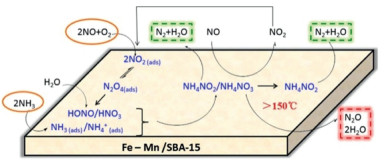
In conclusion, clay and zeolite materials contribute to the excellent catalytic performance of supported iron-based catalysts due to their abundant surface acid sites. However, their relatively weak redox properties limit the further improvement of low temperature NOx reduction catalytic activity of the supported iron-based catalysts. Although coupling with metal oxides with strong oxidizing ability can improve the low-temperature catalytic activity to some extent, the improvement remains suboptimal. In addition, there is limited research on the inhibition of SO2 and alkali metal poisoning and anti-poisoning strategies for iron-based catalysts supported on clay and zeolite materials, which requires further exploration in subsequent studies.
As previously discussed, supported iron-based catalysts exhibit excellent catalytic performance on various types of supports. However, their low-temperature activity and resistance to poisoning still require further enhancement. Common modification strategies for iron-based supported catalysts include the incorporation of transition metal or rare earth metal oxides, such as W, Mn, and Ce oxides, which modify the support or regulate the active sites to achieve multi-component active sites optimization. In addition, the synergistic interactions between active sites and active additives can effectively enhance the acidity and redox properties of iron-based supported catalysts, thereby improving the NOx reduction catalytic performance. Xu et al. [99] prepared a series of Fe2O3-WO3/CexZr1−xO2 (0 ≤ x ≤ 1) catalysts with superior low-temperature SCR activity over a wide temperature window and strong resistance to H2O and SO2. The significant improvement in catalytic performance is due to the increase of Fe3+, chemisorbed oxygen and active species on the surface via adjusting the molar ratio of W/Fe [100]. Lu et al. [101] modified Fe2O3/activated coke by incorporating Co and Ce oxides, and thoroughly investigated the reaction mechanism. The synthesized 3% Fe0.6Co0.2Ce0.2O1.57/activated coke catalyst demonstrated over 70% NOx conversion at 100 ℃ and achieved more than 90% NOx conversion within the 250-350 ℃ range. Characterization results indicated that the redox cycle involving Fe, Co, and Ce sites, the highly dispersed active components, and the abundant weak acid sites collectively contributed to the enhanced catalytic performance. Based on the above understanding, potential reactions with negative Gibbs free energy in the SCR process have been proposed, including the adsorption of NH3, the adsorption and oxidation of NO, and the reduction of both NO and NO2. Along with further studies on the reaction kinetics, they concluded that the modification of FexCoyCezOm on activated coke could accelerate the release of lattice oxygen, thereby facilitating the "fast SCR" process, which is typically limited by the oxidation of NO (Fig. S13 in Supporting information).
In addition to transition metal or rare earth metal doping, inorganic acid modification has been proved to not only increase the acidity of supported iron-based catalysts, but also effectively improve the SO2 tolerance via suppressing SO2 adsorption. Feng et al. [102] evaluated the SCR performance and SO2 resistance of Fe2(SO4)3/TiO2 and Ce2(SO4)3/TiO2 catalysts using the corresponding metal sulfate as precursors. Compared to the Ce2(SO4)3/TiO2 catalyst, Fe2(SO4)3/TiO2 expressed better low temperature SCR activity and tolerance to SO2, which was resulted from less sulfates formed on the surface. Meanwhile, the presence of NO and O2 contributed to the decomposition of NH4HSO4 on the Fe2(SO4)3/TiO2 catalyst at lower temperatures, which further made Fe2(SO4)3/TiO2 present better SO2 resistance than Ce2(SO4)3/TiO2. Zhou et al. [103] prepared a series of Fe2(SO4)3/CeO2 composite oxide catalysts for NH3-SCR and demonstrated that the strong reducibility and surface acidity were mainly attributed to the synergistic effect of Fe, Ce and SO42- species. In addition, the passivated nitrate generation was inhibited on Fe2(SO4)3/CeO2, accompanied with the adsorption of NH3 was significantly enhanced, which further ensured the catalyst exhibit excellent catalytic performance and high N2 selectivity. Meanwhile, the interaction between the sulfate groups and Fe species not only significantly broadened the operating temperature window, but also maintained the excellent stability and NOx conversion after the introduction of 50 ppm SO2 and 5% H2O.
In addition, we have thoroughly investigated the resistance to alkali metal poisoning of supported iron-based catalysts and unexpectedly observed that SO2 can induce K migration in alkali metal poisoned FeVO4/TiO2 catalysts, which greatly alleviated alkali poisoning and successfully restored the NOx reduction catalytic activity to the initial state [104]. In more details, after sulphation of K-FeVO4/TiO2 catalysts, SO42- preferentially reacting with K2O to form K2SO4, which extended the K-O-Fe and K-O-V bonds, released the active sites poisoned by K2O and replenished the redox sites, thereby significantly restoring the high SCR activity (Fig. S14 in Supporting information). In addition, the redox capacity of the newly formed active sites could be further enhanced, which also contributed to improved SCR activity at low temperatures. Therefore, in order to effectively avoid alkali metal binding to the active iron sites, we also designed a catalyst consisting of α-Fe2O3 crystals embedded in amorphous FeVO4. The embedded α-Fe2O3 crystals helped to stabilize the backbone and increase the hydrothermal stability of the catalyst, allowing the catalyst to reach 90% conversion at 270 ℃ even after hydrothermal aging at 600 ℃ and 10 vol% H2O for 10 h. Furthermore, amorphous FeVO4 provided "ionic channels" that facilitated the migration of alkali metals to internal sacrificial regions, thereby separating them from surface active sites, which imparted excellent resistance to alkali metal poisoning in the catalyst [105].
In summary, the modification of active sites and supports involving multi-metal coupling to achieve the optimization of multi-component active species not only improve the low-temperature catalytic performance of the supported iron-based catalysts, but also effectively enhance the tolerance to H2O and SO2. In addition, the electronic effects between multi-metals not only effectively increases the acid sites on the catalyst surface and promotes the adsorption of NH3, but also increases the content of reactive oxygen species on the catalyst surface, which enhances the redox capacity and the corresponding adsorption and oxidation of NO. All these positive modulations caused by the multi-component active species tuning facilitate the optimization of NOx reduction catalytic reaction pathways, among which mainly promote the "Fast-SCR" reaction pathway and consequently enhance the low-temperature SCR activity. Finally, the formation of metal acid salts by coupling Fe species and other metal oxides, combined with amorphous structure modulation, effectively prevent the binding of alkali metals with active sites, achieving high NOx reduction efficiency at low temperatures and imparting excellent resistance to alkali metal poisoning.
The core-shell structure construction has attracted considerable attention due to its unique structural and chemical properties that always can facilitate most of the heterogeneous catalytic reactions. The heterojunction between the core and shell structure usually can induce unexpected electronic interactions, greatly contributing to the enhancement of catalytic performance. In addition, the core-shell structure commonly isolates the active components of the core with the shell, thus also effectively preventing deactivation of the active components due to various poisoning, in turn increasing the operating durability of most NOx reduction catalysts.
Basically, we have conducted systematic studies on the structural and morphological modulation of supported iron-based catalysts. We adopted a steam oxidation process to construct mesoporous Al2O3 (na-Al2O3) nanoarrays in situ on the surface of Al mesh (Al-mesh) to form na-Al2O3@Al-mesh support. Subsequently, Fe2O3 and CeO2 were anchored onto the na-Al2O3@Al-mesh support via an impregnation method, and finally the Fe2O3-CeO2@na-Al2O3@Al-mesh catalyst was obtained. The strong interaction between Fe2O3 and CeO2 promoted the transfer of electrons from Fe2O3 to CeO2, thereby generating more Fe3+ and Ce3+ species and accelerating the redox cycle. Moreover, under SO2 atmosphere, SO2 preferentially reacted with CeO2 to form Ce(SO4)2 and Ce2(SO4)3, thereby alleviating the sulphation of active Fe species and enhancing the SO2 tolerance at low temperatures [106]. Additionally, we synthesized the m-TiO2@Fe2O3@Al2O3 catalyst by encapsulating Fe2O3 in mesoporous TiO2 (m-TiO2@Fe2O3) and using a titanate crosslinking agent for one-pot assembly on the custom AlOOH@Al-mesh support. Compared to the adsorption of NO and NH3, the mesoporous TiO2 shell (m-TiO2) in the mesoporous TiO2@Fe2O3@Al2O3 composite material showed weaker adsorption of SO2, along with the deposition of FeSO4 was significantly reduced. The strong electron interaction between HSO4- and the Brønsted acid sites from m-TiO2 destroyed the bond between NH4+ and HSO4-, which promoted the decomposition of NH4HSO4 on m-TiO2. Therefore, the deposition of FeSO4 and NH4HSO4 were both effectively suppressed. At the same time, the electron transfer at the interface of Fe2O3 (core) and TiO2 (shell) accelerated the redox cycle, promoted the "Fast SCR" reaction and widened the low temperature window (Fig. 11) [107].
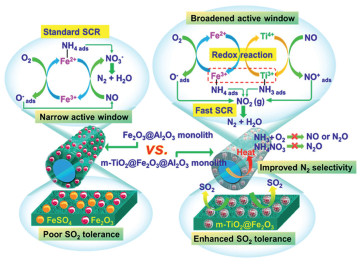
In previous researches, we found that Fe2O3 not only serving as active sites participated in the SCR reaction, but also acting as active promoter protected other active sites from SO2 poisoning. Therefore, we prepared the Fe2O3@CuOx catalyst by growing Fe2O3 nanosheets in situ on the CuOx surface using a hydrothermal method. Compared with the CuOx catalyst, Fe2O3@CuOx catalysts exhibited a wider operating temperature window and higher SCR activity. In addition, under the conditions of 350 ℃ and 250 ppm SO2 involved, the NOx conversion of Fe2O3@CuOx catalysts could be maintained at about 90%. This is because Fe2O3 not only prevented the formation of (NH4)2SO4, but also inhibited the formation of copper sulfate [108]. Furthermore, we prepared V2O5-WO3/Fe2O3/TiO2 microsphere composite oxide catalysts by modifying V2O5-WO3/TiO2 via coating Fe2O3 on the surface of TiO2 microspheres. The modified catalyst showed significant improvements in low-temperature SCR performance and improved SO2 tolerance, which is attributed to the highly dispersed active species and abundant surface-adsorbed oxygen [109]. Similarly, the halloysite-supported CeO2-WO3 catalysts coated with Fe2O3 exhibited improved Ce3+ ratio and increased content of surface oxygen vacancies. Besides, Fe2O3 additives also obviously boosted the content of Brønsted acid sites and active species. More importantly, the Fe2O3 outer layer reacted with SO2 to form Fe2(SO4)3, which effectively prevented the interaction of SO2 with the active CeO2-WO3 components, giving the catalyst with excellent SO2 resistance [110]. The formation of a multi-shell structure resulted in the enhanced adsorption of reactants and increased reactive oxygen species, which contributed to the remarkable denitrification performance.
In summary, through the construction of core-shell morphology, Fe2O3, whether serving as the active sites or protective sites, can effectively enhance the electronic interaction between active metal oxides components, adjust the electronic state of active sites, thus significantly improving the NOx reduction catalytic activity. In addition, the metal oxide shell can also reduce SO2 adsorption or act as sacrificial sites by preferentially binding SO2, thereby protecting the core active sites from poisoning, resulting in excellent SO2 tolerance of the supporting iron-based catalysts.
In summary, iron-based metal oxide catalysts have received widespread attention due to their excellent performance at medium to high temperatures and feasible industrial efficiency. However, several shortcomings including poor low-temperature performance, narrow operating temperature windows, as well as insufficient resistance to SO2/H2O and alkali metal poisoning still further limit the application of iron-based metal oxide catalysts. By reviewing plenty of related studies, we summarize the catalytic properties and structural characteristics for different types of iron-based metal oxide catalysts, and further conclude the promotional strategies of catalytic activity improvement and anti-poisoning performance enhancement over iron-based metal oxide catalysts for NOx reduction as follows:
(1) Fe2O3-based catalysts exhibit excellent catalytic performance at medium to high temperatures, but their relatively poor low-temperature SCR activity requires significant improvement. It has been concluded that the low temperature catalytic activity can be significantly improved by modulating the crystal phase structure to expose highly active crystalline surfaces (such as (110) and (100)). In addition, interfacial effects are established through specific crystal morphology adjustment to promote electron transfer between active metals and facilitate the adsorption activation of NH3 and NO. Finally, the utilization of heteropolyacids to realize surface grafting modification or doping oxidizing metals on the catalyst surface to realize multi-metal synergistic modulation both effectively inhibit the conversion of γ-Fe2O3 to α-Fe2O3, which not only improves the low temperature activity but also improves the catalyst resistance to SO2/H2O to some extent.
(2) In terms of iron-based composite oxides catalysts, the interactions between Fe2O3 and other components endow Fe2O3 superior capacity in improving the NOx reduction catalytic activity, especially within the medium and high temperature range, whether Fe2O3 species are served as active components or as promoted additives. The relatively poor low-temperature catalytic activity can be further improved by adjusting the synthesis method and optimizing the active site distribution without changing the catalyst components. In addition, doping other metal oxides to driven the oxidizing metal interaction is also considered as one of the effective strategies to improve the low-temperature catalytic activity of iron-based composite oxides catalysts. By establishing strong metal interactions between Fe species and other metal oxides such as W, Ce, Mn oxides, neighborhood electron modulation can be achieved, which can increase the redox capacity of catalysts and improve the tolerance of the iron-based composite oxides catalysts to SO2/H2O.
(3) Iron-based acidic salt catalysts can be commonly classified into iron-based metal acidic salt catalysts and iron-based non-metal acidic salt catalysts. Due to higher acid content and better redox properties, iron-based acid salt catalysts usually demonstrate superior NOx reduction catalytic performance. To further enhance the low-temperature catalytic activity and broaden the operating temperature window, the electron-induced effect modulation can be realized by doping the catalysts with additional metals such as Mn and Ce, which can significantly increase the redox capacity of catalysts. In addition, coupling with acidic metal oxides or inorganic acids can greatly increase the surface acidity and promote the enrichment of surface acid sites of iron-based acid salt catalysts, which further disperse the active iron sites and promote the adsorption activation of NH3 as well. Similarly, by coupling with strong acidic supports (such as TiO2, CeO2), the NH3 adsorption and activation can be further enhanced and the active iron sites also can be further dispersed to maintain higher catalytic activity and operating stability. In addition, alkali metal resistance can be significantly improved by modifying the active sites with sulfuric acid or phosphoric acid, due to the construction of sacrificial sites by sulfuric acid and phosphoric acid groups, which preferentially interact with alkali metals and release the active iron sites.
(4) Supported iron-based catalysts typically exhibit excellent NOx reduction catalytic activity and thermal stability, which is mainly due to the high surface area of various supports promote higher dispersion of active sites. In addition, appropriate modification of the active sites and support materials allow multi-component active species optimization is realized via coupling multi-metals (such as Mn, Ce, Zr), which improves the catalytic activity and tolerance to H2O and SO2 as well. In this process, the oxidative properties of supported iron-based catalysts are enhanced to promote NO adsorption and oxidation to optimize the catalytic reaction pathways, which results in a significant improvement in the low temperature catalytic activity. In order to improve the anti-poisoning ability of supported iron-based catalysts, the core-shell structure construction or amorphous structure modulation could effectively reduce the attachment of poisons on active sites or adjust the binding position of poisons on various sacrificial sites, thus protecting the active sites from being impaired and greatly improving the ability to resist sulfur dioxide and alkali metal poisoning.
This review summarizes the development, challenges and modification strategies of various types of iron-based metal oxide catalysts, providing researchers with insights into different promotional approaches to realize catalytic activity improvement and anti-poisoning performance enhancement over iron-based metal oxide catalysts for NOx reduction. Therefore, doping with metal oxides or coupling with metal oxide supports to establish strong metal-support interactions can effectively improve NOx conversion efficiency and extend catalyst lifetime. In addition, modification with low-cost metals or non-metallic elements allows electron-induced regulation and optimization of active site distribution to improve catalytic performance while reducing industrial costs. However, the discussion on the improvement of the sintering resistance of iron-based catalysts and the related optimization strategies is still limited. Therefore, improving the sintering resistance and NOx conversion efficiency of catalysts, extending their operating life while reducing industrial costs to achieve economic feasibility remain key challenges for the industrialization of iron-based catalysts. However, the meticulous understanding of specific catalytic mechanisms of Fe active sites regarding to improving catalytic activity and anti-poisoning ability at the atomic level remains unclear, particularly with regard to their dynamic changes during the NOx reduction reaction and anti-poisoning process. This can be further explored using advanced in situ and operando characterization techniques to investigate the dynamic changes of active sites during the reaction process, particularly under the influence of various poisons, such as the evolution of the coordination environment of Fe atoms, the formation of reaction intermediates, and changes in the catalyst structure. In addition, machine learning can also be used to predict the optimal Fe atomic coordination environment, catalyst morphology, and exposed crystal facets. This will aid researchers in formulating targeted strategies to improve the catalytic activity and poisoning resistance to multiple poisons of iron-based metal oxide catalysts. In addition, due to the complexity of flue gases in practical operating conditions, multiple poisons including SO2, HCl, HF, phosphates, alkali metal, alkaline earth metal as well as heavy metals will affect iron-based catalysts simultaneously. Therefore, probing into the complex interactions between different poisons and analyzing their superimposed inhibitory effects on catalysts will help researchers to propose targeted solutions for the design of multifunctional catalyst structures, such as the use of porous supports to physically isolate the toxicants or the introduction of multiple active components to individually counteract the different poisons, thus addressing the severe deactivation issues that most of NOx reduction catalysts encountered. Eventually, due to the advantages of adjustable redox properties, abundant surface acidity, and flexible structural design space, iron-based metal oxide catalysts can be adopted to attempt the multi-pollutants elimination that require hierarchical surface acidity and redox properties, such as the synergistic elimination of NOx and volatile organic compounds (VOCs) remain in the flue gas control among most non-electric industries including waste incineration plants, biomass burning furnaces, steel, cement as well as architectural material industries. This requires researchers to pay more attention to the catalytic performance and reaction mechanisms of iron-based catalysts in different atmospheres. Therefore, in order to adapt to the variations of different industrial flue gas compositions, it is necessary to combine experimental characterization with theoretical calculations, and to develop advanced catalyst systems such as core-shell structures and multistage pores through hierarchical acid-redox design and dynamic anti-poisoning interface construction. This will promote the large-scale industrial application of iron-based catalysts.
All authors declare that there are no conflicts of interest, financial or otherwise in this work, and there are no other relationships or activities that can appear to have influenced the submitted work.
Zaisheng Jin: Writing – original draft, Methodology, Investigation. Fuli Wang: Writing – review & editing, Methodology. Yongjie Shen: Writing – review & editing, Methodology. Xiaonan Hu: Writing – review & editing. Yanqi Chen: Methodology. Jin Zhang: Investigation. Ming Xie: Writing – review & editing. Penglu Wang: Writing – review & editing, Supervision, Funding acquisition, Conceptualization. Dengsong Zhang: Writing – review & editing, Supervision, Funding acquisition, Conceptualization.
The authors acknowledge the support of National Key R&D Program of China (No. 2023YFA1508400), National Natural Science Foundation of China (Nos. 22276119, 22476122, 22125604, 22436003), the Science & Technology Commission of Shanghai Municipality (Nos. 23230713700, 24230711600) and Shanghai Oriental Talents-Technology Platform Program (No. QNKJ2024037).
Supplementary material associated with this article can be found, in the online version, at doi:
C. Dong, J. Yao, J. Shi, et al., Fuel 381 (2025) 133311-133336. doi: 10.1016/j.fuel.2024.133311
D. Ye, S. Gao, J. Feng, X. Wang, Mol. Catal. 549 (2023) 113516.
F. Wang, P. Wang, J. Zhang, et al., Chin. Chem. Lett. 35 (2024) 108800-108811. doi: 10.1016/j.cclet.2023.108800
C. Hu, C. Liu, K. Du, et al., J. Environ. Chem. Eng. 11 (2023) 110440-110448. doi: 10.1016/j.jece.2023.110440
X. Mou, B. Zhang, Y. Li, et al., Angew. Chem. Int. Ed. 51 (2012) 2989-2993. doi: 10.1002/anie.201107113
H. Wang, Z. Qu, H. Xie, et al., J. Catal. 338 (2016) 56-67. doi: 10.1016/j.jcat.2016.02.009
Z. Liu, H. Su, B. Chen, et al., Chem. Eng. J. 299 (2016) 255-262. doi: 10.1016/j.cej.2016.04.100
S. Wu, X. Yao, L. Zhang, et al., Chem. Commun. 51 (2015) 3470-3473. doi: 10.1039/C4CC09719J
S. Yang, S. Xiong, Y. Liao, et al., Environ. Sci. Technol. 48 (2014) 10354-10362. doi: 10.1021/es502585s
S. Xiong, Y. Liao, X. Xiao, et al., Catal. Sci. Technol. 5 (2015) 2132-2140. doi: 10.1039/C4CY01599A
F. Liu, H. He, Z. Lian, et al., J. Catal. 307 (2013) 340-351. doi: 10.1016/j.jcat.2013.08.003
L. Ma, J. Li, R. Ke, L. Fu, J. Phys. Chem. C 115 (2011) 7603-7612. doi: 10.1021/jp200488p
Y. Piao, J. Kim, H.B. Na, et al., Nat. Mater. 7 (2008) 242-247. doi: 10.1038/nmat2118
L. Machala, J. i. Tuček, R. Zbořil, Chem. Mater. 23 (2011) 3255-3272. doi: 10.1021/cm200397g
X. Mou, Y. Li, B. Zhang, et al., Eur. J. Inorg. Chem. 2012 (2012) 2684-2690. doi: 10.1002/ejic.201101066
X. Wang, K. Gui, J. Environ. Sci. 25 (2013) 2469-2475. doi: 10.1016/S1001-0742(12)60331-3
H. Liu, Z. Zhang, Q. Li, et al., Aerosol Air Qual. Res. 17 (2017) 1898-1908. doi: 10.4209/aaqr.2017.05.0188
Z. Gong, S. Niu, Y. Zhang, C. Lu, Mater. Res. Bull. 123 (2020) 110693-110700. doi: 10.1016/j.materresbull.2019.110693
W. Teng, J. Li, X. Dai, et al., Appl. Surf. Sci. 647 (2024) 158938-158951. doi: 10.1016/j.apsusc.2023.158938
X. Wang, X. Zhang, X. Cao, et al., Sep. Purif. Technol. 357 (2025) 130235-130248. doi: 10.1016/j.seppur.2024.130235
M. Gao, G. He, W. Zhang, et al., Environ. Sci. Technol. 55 (2021) 10967-10974. doi: 10.1021/acs.est.1c01628
C. Liu, S. Yang, L. Ma, et al., Catal. Lett. 143 (2013) 697-704. doi: 10.1007/s10562-013-1017-3
W. Qu, Y. Chen, Z. Huang, et al., Environ. Sci. Technol. Lett. 4 (2017) 246-250. doi: 10.1021/acs.estlett.7b00124
Y. Zhou, X. Yang, C. Gong, et al., Chem. Eng. J. 475 (2023) 146198-146233. doi: 10.1016/j.cej.2023.146198
W. Zhang, X. Shi, Z. Yan, et al., ACS Catal. 11 (2021) 9825-9836. doi: 10.1021/acscatal.1c01619
H. Rahman, S. Nakashima, J. Magn. Magn. Mater. 596 (2024) 171940. doi: 10.1016/j.jmmm.2024.171940
H. Cui, W. Ren, W. Wang, J. Sol-Gel. Sci. Technol. 54 (2010) 37-41. doi: 10.1007/s10971-010-2154-4
J. Lai, K.V.P.M. Shafi, K. Loos, et al., J. Am. Chem. Soc. 125 (2003) 11470-11471. doi: 10.1021/ja035409d
D. Mo, Q. Qin, C. Huang, et al., Appl. Catal. B: Environ. Energy 349 (2024) 123869-123882. doi: 10.1016/j.apcatb.2024.123869
Y. Geng, S. Xiong, B. Li, et al., Ind. Eng. Chem. Res. 57 (2018) 13661-13670. doi: 10.1021/acs.iecr.8b03087
Z. Ren, Y. Teng, L. Zhao, R. Wang, Catal. Today. 297 (2017) 36-45. doi: 10.1016/j.cattod.2017.06.036
Z. Ren, H. Fan, R. Wang, Catal. Commun. 100 (2017) 71-75. doi: 10.1016/j.catcom.2017.06.038
Y. Li, Y. Wan, Y. Li, et al., ACS Appl. Mater. Interfaces 8 (2016) 5224-5233. doi: 10.1021/acsami.5b10264
J. Zhang, Z. Huang, Y. Du, et al., ACS Appl. Energy Mater. 1 (2018) 2385-2391. doi: 10.1021/acsaem.8b00353
Z. Huang, J. Zhang, Y. Du, et al., ChemCatChem 11 (2019) 3035-3041. doi: 10.1002/cctc.201900584
C. Shao, X. Liu, D. Meng, et al., RSC Adv. 6 (2016) 66169-66179. doi: 10.1039/C6RA12025C
C. Wang, S. Yang, H. Chang, et al., J. Mol. Catal. A: Chem. 376 (2013) 13-21. doi: 10.1007/s12665-012-1699-7
Y. Wei, P. Liang, Y. Li, et al., J. Environ. Chem. Eng. 10 (2022) 107772-107782. doi: 10.1016/j.jece.2022.107772
S. Ma, X. Zhao, Y. Li, et al., Appl. Catal. B: Environ Energy 248 (2019) 226-238. doi: 10.1016/j.apcatb.2019.02.015
H. Wang, P. Ning, Y. Zhang, et al., J. Hazard. Mater. 388 (2020) 121812-121823. doi: 10.1016/j.jhazmat.2019.121812
C. Li, Z. Huang, Y. Chen, et al., ChemCatChem 10 (2018) 3990-3994. doi: 10.1002/cctc.201801070
S. Yang, J. Li, C. Wang, et al., Appl. Catal. B: Environ. Energy 117-118 (2012) 73-80. doi: 10.1016/j.apcatb.2012.01.001
Z. Chen, F. Wang, H. Li, et al., Ind. Eng. Chem. Res. 51 (2011) 202-212.
W. Sun, X. Li, Q. Zhao, et al., Catal. Lett. 148 (2018) 227-234. doi: 10.1007/s10562-017-2209-z
M. Guo, P. Zhao, Q. Liu, et al., ChemCatChem 11 (2019) 4954-4965. doi: 10.1002/cctc.201900979
H. Hu, K. Zha, H. Li, et al., Appl. Surf. Sci. 387 (2016) 921-928. doi: 10.1016/j.apsusc.2016.07.022
X. Zhibo, L. Chunmei, G. Dongxu, et al., J. Chem. Technol. Biotechnol. 88 (2013) 1258-1265. doi: 10.1002/jctb.3966
R. Wang, X. Wu, C. Zou, et al., Catalysts. 8 (2018) 384-396. doi: 10.3390/catal8090384
S. Chen, Q. Yan, C. Zhang, Q. Wang, Catal. Today. 327 (2019) 81-89. doi: 10.1016/j.cattod.2018.06.006
S. Zhan, D. Zhu, S. Yang, et al., J. Sol-Gel Sci. Technol. 73 (2015) 443-451. doi: 10.1007/s10971-014-3556-5
K. Zhao, W. Han, Z. Tang, et al., Catal. Surv. Asia 22 (2018) 20-30. doi: 10.1007/s10563-017-9238-x
K. Cheng, B. Liu, W. Song, et al., Ind. Eng. Chem. Res. 57 (2018) 7802-7810. doi: 10.1021/acs.iecr.8b01441
N. Fang, J. Guo, S. Shu, et al., Chem. Eng. J. 325 (2017) 114-123. doi: 10.1016/j.cej.2017.05.053
L. Yuan, P. Hu, B. Hu, et al., J. Fuel Chem. Technol. 51 (2023) 1843-1855. doi: 10.1016/S1872-5813(23)60377-9
W. Chen, S. Yang, H. Liu, et al., Environ. Sci. Technol. 56 (2022) 10442-10453. doi: 10.1021/acs.est.2c02916
L. Song, H. Yue, K. Ma, et al., Ind. Eng. Chem. Res. 59 (2020) 8164-8173. doi: 10.1021/acs.iecr.0c00339
X. Liu, P. Wang, Y. Shen, et al., Environ. Sci. Technol. 56 (2022) 11646-11656. doi: 10.1021/acs.est.2c01812
M. Lyu, J. Zou, X. Liu, et al., Catal. Sci. Technol. 12 (2022) 4020-4031. doi: 10.1039/d2cy00434h
Z. Shen, P. Wang, X. Hu, et al., Environ. Sci. Technol. 57 (2023) 14472-14481. doi: 10.1021/acs.est.3c05112
K. Oshiro, M. Gao, L. Han, et al., J. Phys. Chem. C. 127 (2023) 18914-18925. doi: 10.1021/acs.jpcc.3c03644
F. Liu, H. He, C. Zhang, Chem. Commun. (2008) 2043-2045. doi: 10.1039/b800143j
F. Liu, Y. Yu, W. Shan, H. He, Sci. Sin. Chim. 42 (2012) 446-468. doi: 10.1360/032011-829
F. Liu, H. He, C. Zhang, et al., Appl. Catal. B: Environ. Energy 96 (2010) 408-420. doi: 10.1016/j.apcatb.2010.02.038
F. Liu, H. He, C. Zhang, et al., Catal. Today. 175 (2011) 18-25. doi: 10.1016/j.cattod.2011.02.049
F. Liu, K. Asakura, P. Xie, et al., Catal. Today. 201 (2013) 131-138. doi: 10.1016/j.cattod.2012.03.062
F. Liu, H. He, L. Xie, ChemCatChem 5 (2013) 3760-3769. doi: 10.1002/cctc.201300565
Q. Zhang, Y. Zhang, T. Zhang, et al., Appl. Surf. Sci. 503 (2020) 144190-144202. doi: 10.1016/j.apsusc.2019.144190
T. Zhang, Y. Zhang, P. Ning, et al., Appl. Surf. Sci. 538 (2021) 147999-148012. doi: 10.1016/j.apsusc.2020.147999
P. Zhang, D. Li, Catal. Lett. 144 (2014) 959-963. doi: 10.1007/s10562-014-1203-y
J. Mu, X. Li, W. Sun, et al., ACS Catal. 8 (2018) 6760-6774. doi: 10.1021/acscatal.8b01196
Y. Yu, C. Chen, M. Ma, et al., Chem. Eng. J. 361 (2019) 820-829. doi: 10.1016/j.cej.2018.12.149
F. Liu, H. He, Y. Ding, C. Zhang, Appl. Catal. B: Environ. Energy 93 (2009) 194-204. doi: 10.1016/j.apcatb.2009.09.029
A. Karami, V. Salehi, J. Catal. 292 (2012) 32-43. doi: 10.1016/j.jcat.2012.04.007
W. Tan, S. Xie, W. Shan, et al., Front. Environ. Sci. 16 (2022) 60-73. doi: 10.1007/s11783-022-1539-2
L. Kang, L. Han, P. Wang, et al., Environ. Sci. Technol. 54 (2020) 14066-14075. doi: 10.1021/acs.est.0c05038
X. Li, K. Li, Y. Peng, et al., Chem. Eng. J. 347 (2018) 173-183. doi: 10.4236/ijmpcero.2018.72015
H. Wang, Z. Qu, S. Dong, et al., Environ. Sci. Technol. 50 (2016) 13511-13519. doi: 10.1021/acs.est.6b03589
H. Wang, Z. Qu, S. Dong, C. Tang, ACS Appl. Mater. Interfaces 9 (2017) 7017-7028. doi: 10.1021/acsami.6b14031
L. Ding, H. Zhao, K. Cheng, et al., J. Iron. Steel Res. Int. 31 (2024) 2110-2121. doi: 10.1007/s42243-024-01203-8
M. Casanova, L. Nodari, A. Sagar, et al., Appl. Catal. B: Environ. Energy 176-177 (2015) 699-708. doi: 10.1016/j.apcatb.2015.04.056
A. Marberger, M. Elsener, D. Ferri, et al., ACS Catal. 5 (2015) 4180-4188. doi: 10.1021/acscatal.5b00738
C. Feng, P. Wang, X. Liu, et al., Environ. Sci. Technol. 55 (2021) 11255-11264. doi: 10.1021/acs.est.1c02061
Y. Li, S. Cai, P. Wang, et al., Environ. Sci. Technol. 55 (2021) 9276. doi: 10.1021/acs.est.1c01722
T. Boningari, D.K. Pappas, P.G. Smirniotis, J. Catal. 365 (2018) 320-333. doi: 10.1016/j.jcat.2018.07.010
J. Liu, J. Meeprasert, S. Namuangruk, et al., J. Phys. Chem. C 121 (2017) 4970-4979. doi: 10.1021/acs.jpcc.6b11175
J. Han, J. Meeprasert, P. Maitarad, et al., J. Phys. Chem. C 120 (2016) 1523-1533. doi: 10.1021/acs.jpcc.5b09834
J. Zhang, Z. Huang, Y. Du, et al., Chem. Eng. J. 381 (2020) 122668-122679. doi: 10.1016/j.cej.2019.122668
Y. Chen, C. Li, J. Chen, X. Tang, Environ. Sci. Technol. 52 (2018) 11796-11802.
Y. Chen, H. Yan, W. Teng, et al., Fuel 337 (2023) 127210-127223. doi: 10.1016/j.fuel.2022.127210
J. Han, D. Zhang, P. Maitarad, et al., Catal. Sci. Technol. 5 (2015) 438-446. doi: 10.1039/C4CY00789A
Z. Yang, B. Huang, G. Zhang, et al., J. Wuhan Univ. Technol. 38 (2023) 475-484. doi: 10.1007/s11595-023-2721-5
P. Li, Y. Huang, S. Li, M. Liu, Sep. Purif. Technol. 352 (2025) 128210-128224. doi: 10.1016/j.seppur.2024.128210
S. Li, Y. Huang, H. Zhu, et al., Fuel 341 (2023) 127716-127726. doi: 10.1016/j.fuel.2023.127716
Y. Tang, Y. Tao, J. Wu, et al., J. Mater. Res. 34 (2019) 1188-1199. doi: 10.1557/jmr.2019.31
X. Wang, J. Zhou, T. Zhao, et al., J Environ Sci. (China) 88 (2020) 237-247. doi: 10.1016/j.jes.2019.08.017
G. Li, B. Wang, Z. Wang, et al., J. Phys. Chem. C 122 (2018) 20210-20231. doi: 10.1021/acs.jpcc.8b03135
X. Zhang, P. Wang, X. Wu, et al., Catal. Commun. 83 (2016) 18-21. doi: 10.1016/j.catcom.2016.05.003
B.S. Agnieszka Szymaszek, Monika Motak, Physicochem. Probl. Miner. Process. 55 (2019) 1429-1441.
H. Xu, Y. Cao, Y. Wang, et al., Chin. Sci. Bull. 59 (2014) 3956-3965. doi: 10.1007/s11434-014-0393-4
H. Xu, Y. Li, B. Xu, et al., J. Ind. Eng. Chem. 36 (2016) 334-345. doi: 10.1016/j.jiec.2016.02.024
P. Lu, R. Li, Y. Xing, et al., Fuel 233 (2018) 188-199. doi: 10.1016/j.fuel.2018.05.076
C. Feng, L. Han, P. Wang, et al., J. Environ. Sci. (China) 111 (2022) 340-350. doi: 10.1016/j.jes.2021.04.015
Z. Zhou, W. Li, Z. Liu, Ind. Eng. Chem. Res. 60 (2021) 15472-15478. doi: 10.1021/acs.iecr.1c02977
Z. Si, Y. Shen, J. He, et al., Environ. Sci. Technol. 56 (2022) 605. doi: 10.1021/acs.est.1c05686
J. Deng, S. Cai, M. Gao, et al., ACS Catal. 13 (2023) 12363-12373. doi: 10.1021/acscatal.3c02571
L. Han, M. Gao, C. Feng, et al., Environ. Sci. Technol. 53 (2019) 5946-5956. doi: 10.1021/acs.est.9b01217
L. Han, M. Gao, J.Y. Hasegawa, et al., Environ. Sci. Technol. 53 (2019) 6462-6473. doi: 10.1021/acs.est.9b00435
C. Fang, L. Shi, H. Hu, et al., RSC Adv. 5 (2015) 11013-11022. doi: 10.1039/C4RA14735A
R. Gao, D. Zhang, X. Liu, et al., Catal. Sci. Technol. 3 (2013) 191-199. doi: 10.1039/C2CY20332D
L. Kang, L. Han, J. He, et al., Environ. Sci. Technol. 53 (2019) 938. doi: 10.1021/acs.est.8b05637

Figure 1 Promotional strategies of catalytic activity improvement and anti-poisoning performance enhancement over iron-based metal oxide catalysts for NOx reduction.

Figure 2 (a) The real shape of γ-Fe2O3 nanorods and surface atomic configurations of the preferentially exposed and planes. (b) Atomic illustration of a cubic symmetry and the coordination patterns of tetrahedral and octahedral Fe3+ and O2- species. Reproduced with permission [5]. Copyright 2012, Wiley.

Figure 3 Scheme of the phase transition inhibition of γ-Fe2O3 to α-Fe2O3 at 500 ℃ by HPW grafting. Reproduced with permission [30]. Copyright 2018, American Chemical Society.

Figure 4 The possible NH3-SCR reaction mechanism over the WO3-FeOx catalyst for NOx reduction. Reproduced with permission [40]. Copyright 2020, Elsevier.

Figure 5 The ideal model of catalysts with MOx (M = Ni or Fe) or multiple phases (MOx and a NiFe2O4 spinel) for NOx reduction. Reproduced with permission [48]. Copyright 2018, MDPI.

Figure 6 The possible NH3-SCR reaction mechanism over single-atom Ce-modified α-Fe2O3 catalysts for NOx reduction. Reproduced with permission [55]. Copyright 2022, American Chemical Society.

Figure 7 The proposed NH3-SCR reaction mechanism and resistance to SO2 poisoning over the Fe2O3/S-TiO2 catalyst for NOx reduction. Reproduced with permission [57]. Copyright 2022, American Chemical Society.

Figure 8 The NH3-SCR reaction mechanisms over the Fe2(SO4)3/TiO2 catalyst for NOx reduction. Reproduced with permission [71]. Copyright 2019, Elsevier.

Figure 9 Schematic illustration of the induced surface migration of SO42– by K poisoning and the proposed K resistance mechanism over TiO2-supported Fe2(SO4)3 catalysts for NOx reduction. Reproduced with permission [82]. Copyright 2021, American Chemical Society.

Figure 10 The low temperature NH3-SCR reaction mechanism over Fe-Mn/SBA-15 catalysts for NOx reduction. Reproduced with permission [96]. Copyright 2018, American Chemical Society.

 扫一扫看文章


扫一扫关注我们
 DownLoad:
 下载:
下载:

 下载:
下载: