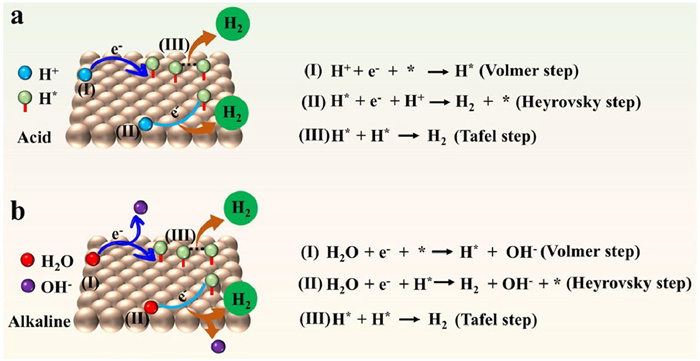
Figure 1.
Illustration for the HER mechanism in (a) acidic and (b) alkaline/neutral solutions.

Regulation strategies in ruthenium-based metal chalcogenides for enhanced electrocatalytic hydrogen evolution
Jin Li , Jiaqi Zhu , Yue Li , Nannan Tong , Guilong Liu , Yuchao Wang , Naiteng Wu , Xianming Liu , Yongpeng Lei


Recently, the quest for sustainable and renewable energy solutions has intensified amid growing concerns over climate change and environmental degradation [1-5]. Hydrogen, boasting high energy density and the potential for environmentally friendly combustion, has emerged as a hopeful solution to tackle these challenges [6-8]. However, the large-scale production of hydrogen using traditional methods, such as steam reforming of fossil fuels, is associated with significant carbon emissions and environmental impacts [9]. Electrochemical water splitting, particularly the hydrogen evolution reaction (HER), offers a sustainable alternative for hydrogen generation by utilizing renewable electricity from sources like solar and wind power.
The HER, a key process in water electrolysis, entails the conversion of protons into hydrogen gas at the surface of the electrode. Effective catalysis of this reaction is vital for attaining elevated energy conversion efficiency and reducing the expenses associated with hydrogen production [10-12]. Ru-based metal chalcogenides possess several desirable characteristics that make them attractive candidates for HER catalysis. Firstly, Ru is an abundant transition metal with favorable electronic properties, including a dense concentration of d-states proximate to the Fermi level, which facilitates efficient charge transfer during electrocatalytic reactions [13]. This inherent electronic structure of Ru enables rapid proton adsorption and subsequent hydrogen evolution, thus contributing to enhanced catalytic activity [14-16]. Furthermore, the incorporation of chalcogenides (e.g., sulfur, selenium, and tellurium) into the Ru-based catalysts introduces additional active sites for proton adsorption and catalytic activity enhancement [17,18]. The presence of chalcogenide atoms is instrumental in stabilizing reaction intermediates and aiding in the liberation of hydrogen gas, thus enhancing the overall effectiveness of the HER. Moreover, the capacity to tailor the composition, morphology, and surface structure of Ru-based chalcogenides allows for meticulous regulation of their catalytic characteristics. This tunability allows for the optimization of various factors influencing HER performance, such as active site density, surface area, and electronic structure. By tailoring these parameters, researchers can design Ru-based metal chalcogenides with tailored catalytic activity and stability, thereby addressing specific requirements for different applications in hydrogen production technologies [19]. Recently, Ru-based metal chalcogenides have garnered increasing interest as promising electrocatalysts, owing to their distinctive electronic structure, and high conductivity [20]. The ability to manipulate their properties at the atomic and nanoscale levels has led to significant advancements in understanding and optimizing their performance for practical applications. As such, these materials hold great promise for enabling efficient and sustainable hydrogen production, driving the transition towards a greener energy landscape.
While considerable advancements have been made in the creation of Ru-based metal chalcogenide electrocatalysts for the HER, there are still numerous challenges and prospects for additional research to be explored. A key hurdle lies in optimizing catalytic activity and stability under practical operating conditions, including high current densities, acidic or alkaline environments, and prolonged operation [21]. To improve the commercial viability of Ru-based chalcogenide catalysts for industrial-scale hydrogen production, it is critical to develop strategies that improve catalyst durability by addressing both surface degradation and catalyst poisoning effects. These factors are interconnected and significantly impact the overall performance and lifespan of the catalyst. Moreover, the scalability and cost-effectiveness of synthesis methods for Ru-based chalcogenide catalysts represent important considerations for their widespread adoption in hydrogen production technologies. The development of scalable and sustainable synthesis routes, utilizing earth-abundant precursors and green chemistry principles, is essential for ensuring the economic feasibility and environmental sustainability of Ru-based catalysts. Apart from tackling these technical hurdles, fostering interdisciplinary collaboration and knowledge sharing among researchers across various domains such as engineering, chemistry, electrochemistry, and material is essential for expediting advancements in HER catalysis [22,23]. Collaborative efforts aimed at integrating experimental insights with theoretical predictions, leveraging advanced characterization techniques, and exploring novel catalytic architectures will be instrumental in unlocking the full potential of Ru-based metal chalcogenide electrocatalysts for effective hydrogen generation.
Recent advances in Ru-based metal chalcogenides hold great promise for advancing sustainable hydrogen production technologies. The unique electronic properties, tunable composition, and versatile synthetic strategies of Ru-based chalcogenide offer opportunities for tailoring catalysts with enhanced activity, stability, and scalability. Through overcoming critical obstacles and fostering cross-disciplinary synergies, scientists can fully harness the capabilities of Ru-based chalcogenide electrocatalysts, thereby accelerating the transition to sustainable energy systems. Although there is a substantial body of review on Ru-based electrocatalysts, Ru-based metal chalcogenides have not received enough attention, particularly regarding the methods for improving their electrocatalytic HER. These materials possess significant potential due to their promising catalytic activity and stability for hydrogen production. However, systematic reviews focusing on their performance optimization are lacking. Therefore, further investigation into tuning methods is critical for realizing the full potential of Ru-based metal chalcogenide electrocatalysts in hydrogen evolution applications.
Herein, this review seeks to offer a thorough examination of recent advancements in Ru-based metal chalcogenide electrocatalysts for the HER, highlighting key achievements, challenges, and prospects in this domain. The engineering of Ru-based chalcogenide electrocatalytic systems offers a viable strategy for enhancing both the efficiency and environmental compatibility of hydrogen generation via the HER. To fully harness their potential, interdisciplinary collaborations, innovative methodologies, and a deeper comprehension of catalyst structure-function relationships will be indispensable. These endeavors are pivotal for propelling the transition towards a hydrogen-based economy and maximizing the efficacy of Ru-based metal chalcogenide in catalyzing the HER.
The HER is a pivotal electrochemical process responsible for the splitting of water into hydrogen gas. It predominantly occurs at electrode surfaces and boasts significant applications across diverse fields, particularly in energy conversion and catalyst design [24]. Understanding the fundamental principles governing the HER is paramount for advancing the creation of efficient energy conversion technologies. In Fig. 1, the HER requires a sufficient number of catalytically active sites on the electrode. These sites are commonly comprised of materials with strong electrical conductivity, like Pt, Pd, or composite materials containing transition metals and carbon-based materials [25]. By lowering the activation energy of the HER, these catalysts facilitate the reaction. The HER entails a series of electron transfer and proton transfer steps. Under acidic conditions, the reaction involves the reduction of hydrogen ions to produce hydrogen gas [26]. In contrast, in alkaline or neutral conditions, water molecules at the electrode surface are initially adsorbed and undergo electron transfer, forming hydrogen atom adsorption intermediates [27]. Subsequently, water molecules combine with the hydrogen atom intermediates and electrons to yield hydrogen gas [28]. These steps occur at appropriate potentials, typically provided by an external power source [29]. Lastly, several factors, including the catalyst’s activity, the morphology of the electrode surface, and the solution pH, influence the rate of the HER [30]. Effective control and optimization of the HER can thus be achieved by manipulating these factors. As a critical electrochemical process, the HER holds immense promise in energy conversion and catalysis. A profound understanding of its fundamental principles is indispensable for the advancement of efficient hydrogen energy technologies.
The comprehension of the HER encompasses both thermodynamic principles and kinetic factors. Thermodynamically, the Nernst equation serves as a fundamental tool, correlating the standard electrode potential to the standard Gibbs free energy change (∆Gθ). A negative ∆Gθ signifies the thermodynamic favorability of the reaction, indicating the spontaneity of hydrogen evolution under standard conditions [31]. Transitioning to kinetics, HER is influenced by several variables, with catalyst nature, electrolyte pH, and overpotential being pivotal among them. The Tafel equation provides insights into kinetics, where a lower Tafel slope suggests enhanced kinetics and catalytic activity, rendering catalysts with such attributes highly desirable for efficient HER [32,33]. Delving into the factors affecting HER kinetics reveals critical insights: (1) Catalyst composition plays a critical role in determining HER kinetics, with transition metal-based catalysts like Pt, Ni, and Mo being extensively utilized due to their favorable catalytic properties [34,35]. (2) The pH of the electrolyte directly impacts the proton concentration at the electrode surface, thereby influencing the HER rate, typically favoring rapid HER under acidic conditions compared to alkaline environments [36]. (3) Overpotentials represent the additional potential required to drive the reaction forward, with lower overpotentials translating to faster kinetics and heightened efficiency of HER [37]. Understanding the interplay between thermodynamics and kinetics of HER is indispensable for advancing the development of efficient electrocatalysts and renewable energy technologies, serving as a foundation for designing catalysts with enhanced performance. Further research aimed at unraveling the intricate mechanisms underlying HER will undoubtedly contribute to the quest for sustainable energy solutions.
Electrocatalysts serve as the backbone of the HER, playing a pivotal role in amplifying reaction efficiency and fostering the generation of clean energy. Their primary function lies in expediting the HER by reducing the energy threshold required for hydrogen evolution, thus rendering the reaction more accessible and economically advantageous. In essence, electrocatalysts are instrumental in ushering forth the effective and environmentally friendly generation of hydrogen via the HER mechanism. Through their multifaceted contributions, which include lowering activation energy, enhancing reaction kinetics, and ensuring long-term stability, electrocatalysts emerge as key enablers in propelling the evolution of clean energy technologies [38-40]. These advancements not only help mitigate climate change but also enhance energy sustainability, paving the way for a greener and more resilient future.
The HER serves as a linchpin in the quest for sustainable energy solutions, particularly within hydrogen-based technologies. The heart of this process lies in efficient catalysts, which are crucial in driving the HER and facilitating the production of clean hydrogen with minimal energy input [41]. However, the identification of catalysts meeting stringent criteria including high activity, long-term stability, scalability, and cost-effectiveness remains a formidable challenge. High activity stands as a paramount criterion for efficient HER catalysts, representing their ability to catalyze the HER at a rapid rate. This activity is typically quantified through metrics such as exchange current density or turnover frequency (TOF), reflecting the rate of hydrogen production per active site [42]. Catalysts exhibiting high activity demonstrate low overpotentials, enabling them to initiate the HER at lower applied potentials, thus reducing energy consumption and enhancing overall efficiency [43]. The overpotential corresponding to the current density of 10 mA/cm2 is a standard benchmark used for comparing different catalysts. To achieve optimal performance, it is often necessary to adjust the composition, electronic structure, and surface morphology of the catalyst finely [44]. This optimization aims to enhance the exposure of active sites and facilitate efficient charge transfer during the electrocatalytic process. Besides high activity, effective HER catalysts must also exhibit prolonged stability when subjected to demanding operating conditions [45]. Catalyst degradation over time can lead to decreased performance and compromised durability, ultimately jeopardizing the feasibility of large-scale hydrogen production. Factors such as catalyst corrosion, surface passivation, and aggregation of active species contribute to catalyst instability. Therefore, designing catalysts with robust structural integrity, chemical inertness, and resistance to degradation mechanisms is crucial for ensuring prolonged catalytic activity and maintaining overall system efficiency over extended operational lifetimes [46]. Furthermore, efficient HER catalysts must not only excel in laboratory settings but also demonstrate scalability and cost-effectiveness for practical implementation in large-scale hydrogen production processes [47-49]. Scalability encompasses the ability to produce catalyst materials in bulk quantities with consistent quality and reproducibility, while cost-effectiveness involves minimizing the overall cost of catalyst synthesis, processing, and integration into hydrogen generation systems.
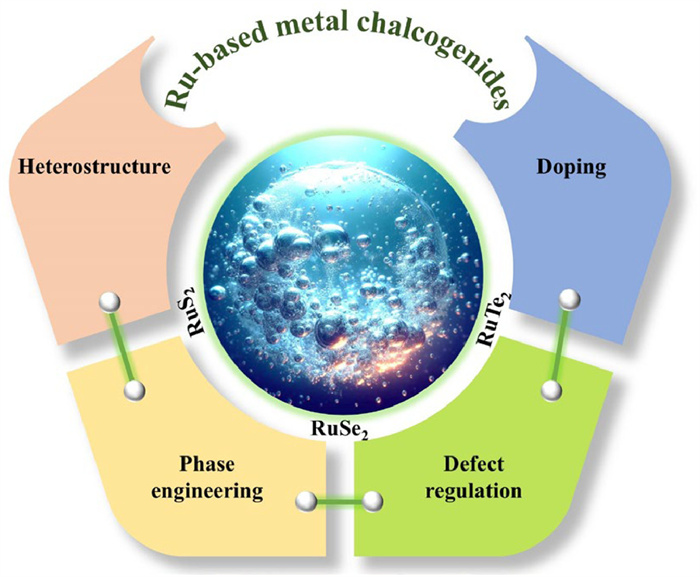
Ru-based metal chalcogenides, comprising ruthenium sulfide (RuS2), ruthenium selenide (RuSe2), and ruthenium telluride (RuTe2), stand out for their remarkable electrocatalytic prowess. RuS2, RuSe2, and RuTe2 have potential as HER electrocatalysts, which encompass techniques such as defect engineering, the development of heterostructures, doping methodologies, and phase engineering strategies (Fig. 2). These avenues offer promising pathways to elevate the performance and applicability of ruthenium chalcogenides across a spectrum of electrocatalytic applications, from energy conversion to environmental remediation.
RuS2 has attracted considerable interest in the realm of electrocatalysis because of its distinct physical and chemical attributes [50-52]. As a transition metal chalcogenide, RuS2 exhibits excellent conductivity and high stability [53-55]. In terms of its chemical properties, RuS2 is known for its robustness in acidic and alkaline environments, making it a promising candidate for electrochemical applications. Especially, pyrite-type RuS2, also known as RuS2-type sulfide, is a crystal structure type of RuS2 [56]. This structure is similar to pyrite, hence, it is also referred to as the "pyrite structure." In this structure, S atoms form closely packed layers of disulfide ions, while Ru atoms occupy the octahedral interstitial positions. Pyrite-type RuS2 possesses many unique properties, making it valuable in various fields [57]. Primarily, it showcases superb electrical and photoelectric characteristics, rendering it a prospective material for both electrocatalytic HER and photocatalytic water-splitting applications. Additionally, due to its special structural characteristics, pyrite-type RuS2 also demonstrates outstanding mechanical properties and chemical stability, enabling its use in batteries, sensors, and catalysts, among other applications. In the realm of HER, RuS2 has emerged as a highly efficient catalyst, demonstrating low overpotential and high catalytic activity. Its ability to facilitate the HER process stems from its optimized surface structure, ample active sites, as well as efficient charge transfer properties [58]. Employing RuS2 in electrocatalytic HER not only underscores its promise as a sustainable energy conversion material but also underscores its contribution to the progress of economical hydrogen production.
Defect engineering plays a pivotal role in improving the electrocatalytic activity of HER by creating additional active sites, improving charge transfer kinetics, and enhancing stability, offering a versatile strategy to tailor electrocatalytic properties for improved efficiency and stability in electrocatalysis applications [59-61]. For example, by regulating the sulphuration temperature (Fig. 3a), it was possible to simultaneously control the disorder and defects in RuS2 nanoparticles (NPs) [62]. The optimized RuS2-500, prepared at a low vulcanizing temperature to induce controllable disorder and defects, showed highly efficient electrocatalytic performance for the HER. It exhibited a 78 mV overpotential at 10 mA/cm2 (Fig. 3b), outperforming previously reported Ru-based electrocatalysts. A thorough analysis unveiled that the enhanced HER performance induced by the Ru defect in RuS2 is primarily attributed to the upward shift of the d-band center resulting in strengthened H adsorption and achieving a suitable ∆GH* (Figs. 3c-e). This study demonstrates the potential application of pyrite-type RuS2 in water splitting and advances comprehension of how to boost the performance of different electrocatalysts by combining structural and electronic adjustments synergistically.
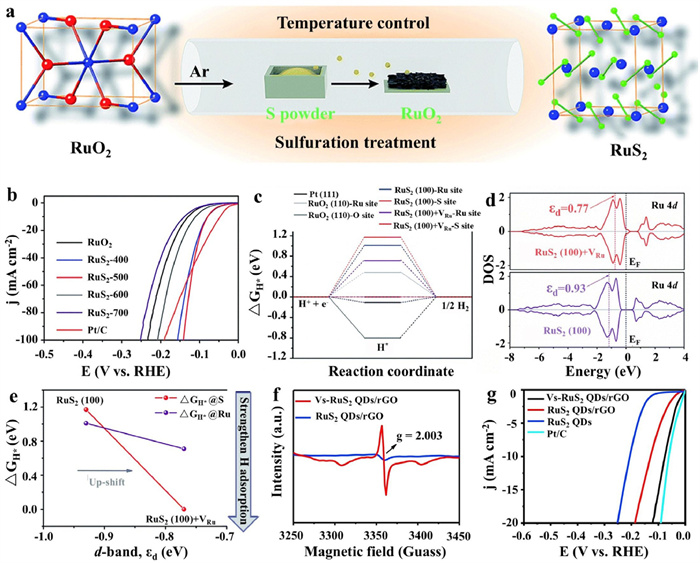
To further improve the HER activity of RuS2-based catalysts, Li et al. introduced an efficient and straightforward method for synthesizing RuS2 quantum dot nanohybrids (Vs-RuS2 QDs/rGO), distinguished by a considerable abundance of S vacancies (Fig. 3f) [63]. These innovative nanohybrids demonstrated exceptional performance in promoting the HER within acidic media (Fig. 3g), comparable to the most advanced Pt/C catalysts, and significantly enhancing the kinetics of the catalytic process. This extensive investigation, which integrated systematic electrochemical assessments with density functional theory (DFT) calculations, provided a fundamental understanding of the material’s structural dynamics and functional mechanisms. The study highlighted the concerted effects of sulfur vacancies, quantum confinement phenomena, and stable two-dimensional architectures, which collectively enhance the electronic characteristics crucial for efficient hydrogen interactions. Consequently, these characteristics position the RuS2 quantum dot nanohybrids as highly promising candidates for effective hydrogen electrocatalysis, facilitating progress in sustainable energy technologies.
Heterostructures play a crucial role in electrocatalytic hydrogen evolution, significantly influencing and impacting the performance of catalysts [64-66]. Firstly, heterostructures can introduce additional active sites, facilitating stronger interfacial interactions between the catalytic surface and reactive species, and consequently boosting the catalytic efficiency [67-69]. Moreover, heterostructures can modulate the surface adsorption capacity of the catalyst, which in turn influences the adsorption of reactants on the active sites, subsequently affecting the reaction rate [70]. Additionally, heterostructures can tune the electronic structure, adjusting its electron affinity and transport properties, thereby impacting the charge transfer process between the catalyst and reactants [71].
The development of efficient electrocatalysts based on sulfides for the HER continues to face challenges, particularly due to an incomplete understanding of the role played by sulfide heterointerfaces. Yue et al. demonstrated improved HER performance by manipulating charge transfer at the heterointerface and adjusting the ΔGH* values across multiple catalytic sites through a novel S-S bond strategy [72]. They successfully synthesized the sulfide heterostructure RuSx/NbS2 by depositing amorphous RuSx nanoparticles onto the surface of NbS2, leading to the generation of S-S bonds at the sulfide interface (Fig. 4a). DFT calculations revealed that these S-S bonds facilitate inverse charge transfer from the NbS2 substrate to the RuSx, creating an electron-rich configuration in Ru that enhances H* adsorption (Figs. 4b and c). Additionally, the presence of S-S bonds initiates electron redistribution, which amplifies the hydrogen spillover effect within the RuSx/NbS2 structure, allowing H* to migrate from Ru sites to S sites on the basal plane of the NbS2 substrate, thereby promoting rapid hydrogen desorption (Fig. 4d). By combining the effects of charge transfer reversal and hydrogen spillover, the RuSx/NbS2 heterostructure achieved a remarkably low overpotential of 38 mV at 10 mA/cm2 (Fig. 4e). The significant contribution of the S-S bond to the impressive HER performance is underscored by comparing the electrocatalytic activity of RuSx/NbS2 with that of the Ru/NbS2 composite, which lacks S-S bonds. Notably, RuSx/NbS2 also demonstrated superior intrinsic activity compared to the commercial 20 wt% Pt/C catalyst, highlighting its considerable potential for practical applications. Moreover, heterostructures can improve stability, suppress deactivation and corrosion during the electrocatalytic reaction, and prolong the catalyst’s lifespan [73]. Fu et al. have introduced a colloidal method to synthesize several novel Ru-based heterostructures [74]. Because of the plentiful creation of heterojunctions and interfaces, t-Ru-RuS2 demonstrated remarkable electrocatalytic activity, featuring an exceptional overpotential of 16 mV at 10 mA/cm2 (Fig. 4f). The performance exceeded that of commercially available Pt/C catalysts. This research not only presents a facile approach for synthesizing amorphous RuSx but also offers valuable perspectives on fabricating amorphous-crystal heterostructures. Similarly, Zhu et al. undertook a comprehensive investigation into the regulatory electronic states, activity origins, and actual catalytic activity of Ru/RuS2 heterostructures [75]. DFT calculations uncovered the superior activity and origin of activity in these heterostructures (Figs. 4g and h). The calculations revealed that Ru/RuS2 heterostructures exhibit enhanced conductivity, stemming from a greater density of states at the Fermi level. Additionally, it was observed that the adsorption patterns of essential intermediates were governed by the rearrangement of charge density near the heterointerface. Thus, the thermodynamic energy obstacles of these heterostructures are diminished [76], resulting in significant theoretical efficacy for acidic electrolytic hydrolysis. In acidic conditions, these materials demonstrated superb electrocatalytic effectiveness for HER, with a 45 mV overpotential at 10 mA/cm2, advantageous reaction kinetics, a dense population of catalytically active sites, notable inherent efficiency, rapid electron transfer, and outstanding durability over extended periods. This work offers valuable perspectives on crafting heterostructures with optimal interfacial configurations to attain superior catalytic efficiency in proton exchange membrane apparatus.
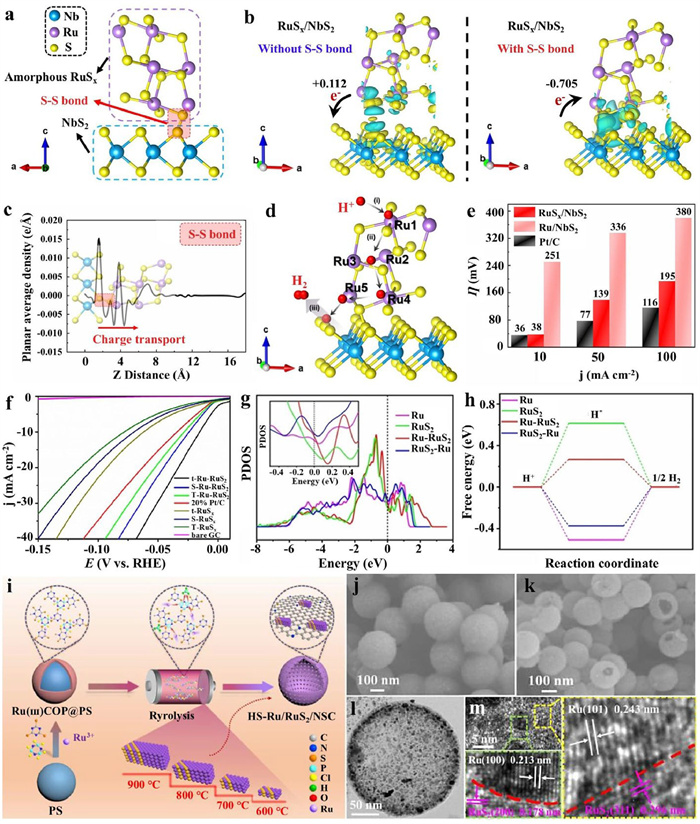
The synergy of carbon support and heterostructure plays a crucial role in electrocatalytic hydrogen evolution [77]. The carbon support serves as a catalytic framework that provides both extensive surface area and precise control over the catalyst’s morphological characteristics and crystalline architecture, thereby influencing its electrocatalytic performance [78-80]. Meanwhile, the introduction of heterostructures induces interface effects and changes the local electronic structure, further tuning the active sites and enhancing their catalytic activity [81]. Consequently, the synergistic interaction between carbon support and heterostructures promotes the efficiency and stability of electrocatalytic hydrogen evolution in multiple aspects. For example, Li et al. have devised an innovative synthetic approach to fabricate a well-defined RuP2–RuS2/NPS-C nanocomposite, comprising a finely dispersed RuP2–RuS2 heterostructure enveloped within N, P, and S co-doped porous carbon (NPS-C) nanosheets, aiming to enhance the HER [82]. Experimental findings, along with DFT calculations, elucidated the robust interfacial electronic interaction between RuP2 and RuS2 within the RuP2–RuS2 heterostructure, facilitating electron density redistribution and tailoring the electronic configuration to optimize hydrogen binding strength, thereby enhancing HER activity. Moreover, the distinctive nanostructure of the nanocomposite enhances the accessibility of active sites, promoting swift mass/charge transfer. Therefore, the RuP2–RuS2/NPS-C nanocomposite exhibited remarkable HER performance, characterized by low overpotential, a small Tafel slope, and good stability in alkaline electrolytes. This research introduces an innovative approach to crafting high-efficiency Ru-based electrocatalysts through finely tuning micro-/nano-scale structures and optimizing interface interactions. In addition, Wang’s group has introduced a novel electrocatalyst, denoted as Ru/RuS2@N-rGO, consisting of Ru and RuS2 incorporated into N-rGO, designed for highly efficient alkaline HER [83]. This catalyst was synthesized via a straightforward and low-temperature method, utilizing Na2SO4 and polypyrrole as the sulfur and nitrogen sources, respectively. By fine-tuning crystalline manipulation and adjusting the ratio of Ru to RuS2, the as-synthesized catalysts showcased outstanding HER performance, showcasing a mere 18 mV overpotential at 10 mA/cm2, while maintaining impressive durability for 24 h. Simultaneously, as shown in Figs. 4i-m, a fresh arrangement emerged, featuring Ru/RuS2 heterostructures with extensive exposure uniformly dispersed across hollow N,S-codoped carbon (Ru/RuS2@h-NSC) [84]. Harnessing the combined influence of the interfacial Ru/RuS2 and the improved reachability of active sites across the interior and exterior of mesoporous shells, paired with effective mass transfer, Ru/RuS2@h-NSC exhibits impressive catalytic efficacy. Insights from this research shed light on the creation of cutting-edge nanomaterials with modifiable shapes and diverse heterostructures, offering promising avenues for their utilization in electrocatalysis.
Phase engineering, involving the manipulation of crystal phase composition and distribution in catalyst materials, has been regarded as a potent method for modulating electrocatalytic activity in HER [85-87]. By meticulously tailoring phase composition and distribution, phase engineering enables the optimization of key catalytic properties, including activity and stability [88]. This strategy’s impact on HER performance is significant for several reasons. (1) Different crystal phases may exhibit distinct electronic structures and surface properties, leading to variations in reaction intermediate adsorption energy and subsequent catalytic activity alterations [89]. (2) Phase engineering can influence catalyst material surface area, morphology, and atomic arrangement, thereby affecting active site exposure and charge transfer efficiency during electrochemical reactions [90]. (3) Phase boundaries or interfaces between different phases may act as active sites or facilitate charge transfer, further enhancing catalytic performance [91]. (4) Phase engineering facilitates the creation of heterostructures or alloyed phases, where synergistic effects between different phases augment overall catalytic activity and stability [92,93]. For instance, introducing a second phase with different hydrogen binding energies can alter HER kinetics, resulting in improved performance [94]. Overall, phase engineering offers a versatile approach to optimize material electrocatalytic performance for HER by manipulating crystal phase composition and distribution, promising efficient and stable electrocatalyst development for renewable energy conversion and storage technologies.
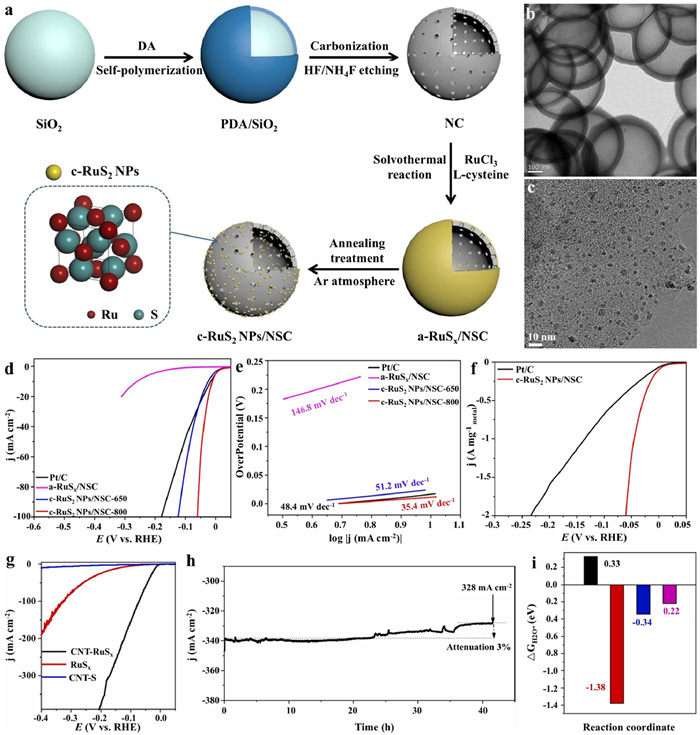
The role of carbon supports in the electrocatalytic performance of catalysts, such as their effect on the hydrogen evolution performance of metal sulfide, is a topic of interest [95-97]. In the case of RuS2, carbon supports can provide a conductive and porous structure that enhances the electron transfer kinetics and increases the effective surface area, thereby improving the HER performance [98]. For example, Xu et al. have devised a strategy aimed at enhancing the alkaline HER performance of pyrite-structured RuS2 (Fig. 5a) [99]. This strategy involves both support engineering and phase modulation. As a result, they have successfully synthesized finely distributed crystalline RuS2 nanoparticles (c-RuS2 NPs), which are bolstered by porous hollow carbon spheres doped with both N and S from Figs. 5b and c. The synthesis results in a collaborative boost of both accessible catalytic sites and inherent efficacy for RuS2. Such enhancement significantly boosts the electrocatalytic activity for the HER, while maintaining good catalytic durability. The as-formed c-RuS2 NPs/NSC demonstrated remarkable alkaline HER activity, exhibiting an overpotential of 11 mV at 10 mA/cm2, along with a modest Tafel slope of 35.4 mV/dec (Figs. 5d and e). Moreover, despite the low amount of Ru used, the c-RuS2 NPs/NSC catalyst surpassed Pt/C in the mass activity by promoting enhanced HER in alkaline media (Fig. 5f). Moreover, Cheng et al. devised a strategy for creating electrocatalysts by combining carbon nanotubes (CNTs) with RuSx through an in-situ construction approach [100]. During the material synthesis, CNTs acted as both a support and a sulfur source, facilitating the direct binding of Ru and the formation of amorphous RuSx on their surfaces to produce CNT-RuSx. In the catalytic process, the carbon element is crucial in improving the HER activity of RuSx at the C-S-Ru interface. Importantly, the plentiful presence of the C-S-Ru interface in the resulting CNT-RuSx catalyst greatly improved its catalytic activity for the HER. In alkaline media, achieving a current density of 10 mA/cm2 with the CNT-RuSx catalyst demanded merely a 17 mV overpotential (Fig. 5g). Furthermore, the stability of the CNT-RuSx catalyst was remarkable (Fig. 5h). DFT simulations confirmed the effective dissociation of H2O and the facilitation of H-H coupling by the C-S-Ru heterostructures (Fig. 5i). Offering valuable insights for the advancement of carbon-supported electrocatalysts, this research delivers a comprehensive comprehension of the catalytic mechanism occurring at the interface during electrochemical hydrogen evolution.
Metal atom doping is a frequently-used strategy to customize the electrocatalytic activity of catalysts, particularly in the HER [101-104]. This approach can affect the catalyst performance by increasing the active sites, modulating the adsorption surface, altering the electronic structure, and enhancing the stability [105,106]. Specially, p-type doping (introducing elements that create hole carriers) tends to lower the Fermi level, promoting stronger adsorption of hydrogen intermediates, which can enhance catalytic activity. However, excessive p-type doping may lead to overbinding of hydrogen, reducing HER efficiency. Conversely, n-type doping (introducing electron-donating elements) raises the Fermi level, often weakening hydrogen adsorption and improving charge transfer kinetics. An optimal balance between adsorption strength and charge mobility is crucial for maximizing HER performance. Employing transition-metal cation doping is a prevalent method to adjust the energy levels of electrocatalysts finely, enabling the adsorption and activation of reaction intermediates through the utilization of their unoccupied d-orbitals [107]. For instance, Cu has demonstrated exceptional effectiveness as a dopant, hastening the dissociation of H2O and the H adsorption/desorption by advantageous electronic regulation [108]. This improvement in the intrinsic catalytic activity underscores the significant role of transition-metal cation doping in optimizing electrocatalysts. The ability of metal atom doping to enhance catalytic activity by introducing additional active sites and tuning surface adsorption properties, while also improving stability, highlights its potential for advancing green energy conversion and storage technologies [109]. Recently, Shen et al. prepared a Cu-doped RuS2 hollow polyhedron with in-situ-formed Ru metal [110]. The Cu-incorporated RuS2/Ru heterostructure features dual structural characteristics, combining copper doping with the formation of well-defined heterointerfaces with metallic ruthenium. The engineered catalyst demonstrated outstanding HER performance, characterized by enhanced current density and exceptional durability, which stem from its optimized electronic configuration, well-defined heterointerfaces, and three-dimensional hollow architecture. Theoretical calculations indicate that Cu incorporation into RuS2 efficiently boosts water dissociation and optimizes the binding affinity for hydrogen during the HER. Furthermore, through the integration of metallic Ru, the heterostructure enhances conductivity, augments active sites, as well as elevates specific activities. The research offers both theoretical and experimental insights into the advance of high-activity RuS2-based catalysts.
In addition to directly doping RuS2, another viable approach for improving the electrocatalytic performance of RuS2 involves the incorporation of dopants into carbon carriers. Doping carbon carriers with specific elements can significantly influence the electronic properties and surface characteristics of the catalyst, thereby optimizing its activity and stability for electrocatalytic reactions [111]. Furthermore, the synergistic effects between the doped-carbon carriers and RuS2 can lead to improved catalytic efficiencies, making this approach a promising avenue for the development of advanced electrocatalysts in HER [112]. For example, Yu et al. have introduced an innovative electrocatalyst composed of RuS2 supported on S-doped reduced graphene oxide (s-RuS2/S-rGO) [113]. Across various pH levels, this catalyst displayed remarkable efficacy in promoting the HER, with a particular emphasis on alkaline conditions. In alkaline solutions, RuS2/S-rGO showcased overpotentials as low as 25 mV at 10 mA/cm2. Additionally, it maintained a small Tafel slope of 29 mV/dec and excellent durability over 100 h. This catalyst’s effectiveness rivaled or even outperformed that of extensively studied representative electrocatalysts, including the widely recognized Pt/C benchmark.
RuSe2, a burgeoning catalyst material, has recently garnered attention within the realm of electrocatalysis, specifically for its potential in HER [114-116]. As a member of the chalcogenide family, RuSe2 exhibits fascinating properties owing to its unique electronic structure and surface characteristics. The high surface-to-volume ratio and plentiful active sites of RuSe2 facilitate efficient electrochemical reactions, making it an attractive candidate for HER catalysis [117]. Additionally, RuSe2 possesses excellent electrical conductivity and chemical stability, ensuring prolonged catalytic activity under harsh operating conditions [118,119]. Despite these promising attributes, further exploration and understanding of the intrinsic properties of RuSe2 are essential to fully harness its potential as an efficient HER electrocatalyst.
To promote the presence of numerous surface defects, Zhu et al. synthesized RuSex NPs, consequently boosting HER activity [120]. DFT investigations unveiled that the high electronegativity of Se sites efficiently reduces the adsorption of reaction intermediates on Ru sites, thus augmenting the HER activity. X-ray photoelectron spectroscopy and kinetic isotope effect analyses confirmed that RuSex NPs facilitate the dissociation of H2O and enhance interactions with HER intermediates on their surface. Consequently, RuSe1.5 NPs demonstrated outstanding activity over a broad pH range, notably achieving a small overpotential for alkaline HER (12 mV@10 mA/cm2). This research underscores the significance of comprehending and harnessing elemental synergies to tailor catalysts for the HER.
Recent research indicates that constructing heterostructures using RuSe2 represents an effective strategy for enhancing its electrocatalytic performance. Heterostructures introduce abundant interfaces, defects, and active sites, consequently improving both the activity and stability of electrocatalytic reactions [121]. Strategically, Ru0.33Se nanoparticles were integrated onto TiO2 nanotube arrays (TNAs) to engineer a hybrid structure termed Ru0.33Se@TNA for the HER (Figs. 6a and b) [122]. Leveraging the expansive specific surface area (SSA), the as-synthesized catalysts disperse uniformly across the TNAs, mitigating particle aggregation and thereby enhancing the availability of active sites. The incorporation of TiO2 nanotubes establishes a direct electron transport pathway, while the interactions at the interface markedly enhance charge transfer efficiency. Relative to configurations where Ru0.33Se NPs were directly deposited onto Ti foil, the Ru0.33Se@TNA hybrid demonstrated superior performance, manifesting 57 mV overpotential to achieve 10 mA/cm2 (Fig. 6c). Moreover, the prepared electrocatalyst exhibited exceptional catalytic stability over extended operation periods. This innovative approach outlines a novel synthetic pathway for crafting high-efficient electrocatalysts customized for the HER. Megersa and colleagues successfully produced remarkably stable Ru/RuSe2 nanoparticles on carbon paper via chemical vapor deposition under mild conditions, creating a diverse heterointerface conducive to catalysis [123]. This catalyst demonstrates remarkable efficiency in HER under alkaline conditions, showcasing minimal overpotentials and rapid kinetics of hydrogen adsorption and desorption.
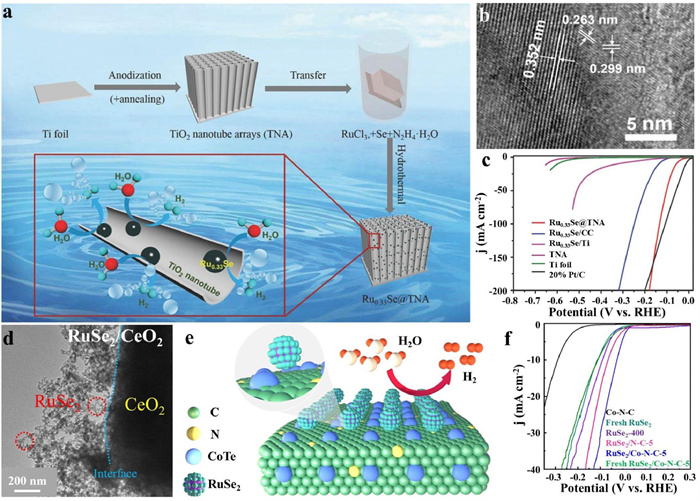
Cerium dioxide (CeO2) acts as a catalyst enhancer by leveraging its versatile attributes [124-126]. It enables a seamless transition between Ce3+ and Ce4+ states while demonstrating remarkable conductivity. This characteristic not only promotes the creation of oxygen vacancies but also encourages the formation of heterojunctions with varied structures. While the inherent catalytic performance of pure CeO2 in hydrogen evolution may be modest, its integration with other highly active materials can produce a powerful synergistic effect, consequently enhancing the overall catalytic capability for hydrogen evolution. Considering the distinct advantages offered by RuSe2 and CeO2, their combination holds the potential to yield a viable catalyst for HER. Consequently, RuSe2/CeO2 heterostructure electrocatalysts were successfully synthesized (Fig. 6d) [127]. The optimized RuSe2/CeO2 electrocatalyst demonstrated exceptional performance, requiring only 16 mV overpotential to achieve a current density of 10 mA/cm2. This performance not only rivals that of the benchmark Pt/C catalyst but also exceeds the reported efficiency of other Ru-based electrocatalytic systems in the literature. Experimental results indicated that the enhancement in electrocatalytic hydrogen evolution capacity primarily arises from the synergistic electron interaction between CeO2 and RuSe2.
Nitrogen-doped carbon (NC) matrices are characterized by outstanding electrical conductivity and a significant surface area [128-131]. These matrices, when combined with active substances, create interfaces that locally enhance the electronic structure [8]. Furthermore, the spatial confinement effects of NC matrices enable them to restrict crystal growth and regulate nanoparticle size in situ [132]. Consequently, integrating RuSe2 nanoparticles into an NC layer holds great potential for dual optimization of RuSe2’s electronic structure. By constructing composite systems of RuSe2-based heterostructures and NC supports, precise control over the catalyst’s electronic structure, active sites, as well as interface properties can be achieved, thereby enabling fine-tuning of the electrocatalytic hydrogen evolution process. Additionally, cobalt telluride (CoTe) stands out among transition-metal tellurides owing to its metallic properties, expansive lattice parameters, and strong covalent bonding within the anion metallic framework [133-135]. Fu et al. embarked on synthesizing metal-organic framework precursors incorporating cobalt onto Ni foam through a hydrothermal method. Subsequently, they introduced Te elements through anion exchange, intending to adjust the electronic structure and expose active sites [136]. The resulting NC layer exhibited exceptional electrical conductivity, facilitating efficient electron transfer. Acting as an electron donor, CoTe contributed electrons to RuSe2, thus aiding in proton capture and enhancing its conductivity, consequently improving hydrogen adsorption and the performance of the HER (Fig. 6e). Subsequently, the RuSe2-CoTe/NC was ultimately synthesized through pyrolysis in a tube furnace. Significantly, the heterojunction formed by CoTe and RuSe2 notably improved the electronic defect mitigation of Ru atoms, leading to a remarkable enhancement in the material’s HER properties. In particular, the overpotential of RuSe2-CoTe/NC was only 25.4 mV at 10 mA/cm2 in alkaline media. More significantly, the material maintained its superior catalytic efficiency through extended operational stability tests lasting 30 h. To improve HER performance, Li et al. developed RuSe2 nanospheres that were deposited on Co and N-doped carbon nanosheets (Co-N-C), considering the importance of both electronic configuration optimization and active site accessibility [8]. The incorporation of Co into the support structure leads to charge redistribution among the Co-N-C carriers. The RuSe2/Co-N-C hybrid catalyst exhibited markedly improved performance in alkaline electrolytes compared to its components, RuSe2 nanospheres and Co-N-C nanosheets. Electrochemical measurements revealed an exceptionally low overpotential of 26.4 mV at 10 mA/cm2 for the composite material, representing a significant reduction compared to the corresponding values for pristine RuSe2 nanospheres and Co-N-C nanosheets under identical conditions (Fig. 6f). This notable improvement in HER performance is primarily due to the increased exposure of active sites on RuSe2 and the enhanced active surface area resulting from the synergistic interaction between the RuSe2 and Co-N-C carriers. Furthermore, the Co-N-C phase serves as an additional electron donor, effectively modulating the electron density at the Ru atoms.
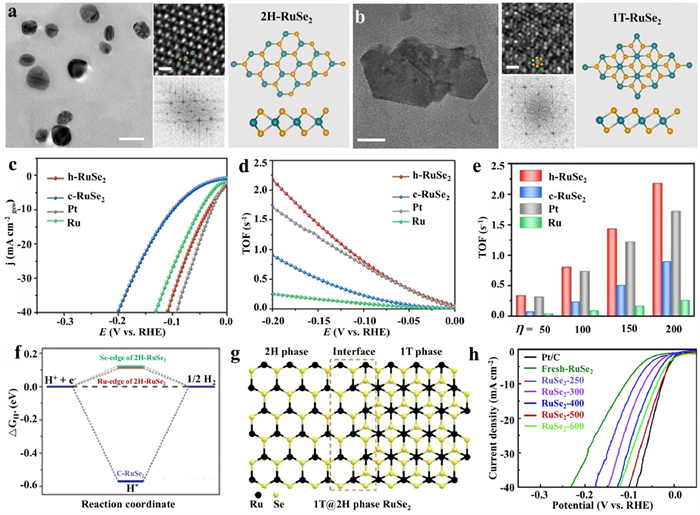
The 2H phase, which has a hexagonal structure (P63/mmc), is characterized by a layered arrangement with excellent electronic properties suitable for electronic devices and catalysis. The 1T phase, featuring a tetragonal structure (P4/mmm) that arises under specific conditions, is known for its higher electrical conductivity and density of states [137]. The ability to transition between these phases through changes in temperature, pressure, or chemical doping allows for the tuning of material properties, making RuSe2 a focus of interest in materials science and condensed matter physics. A fresh advancement in the synthesis of hexagonal RuSe2 nanosheets has been unveiled by Zhao et al. Through a novel one-pot colloidal approach, they have expanded the repertoire of layered transition metal dichalcogenides (TMDs) [138]. Confirmation of the presence of both the 2H and 1T phases of RuSe2 within the hexagonal RuSe2 nanosheets has been achieved through HRTEM images (Figs. 7a and b). Moreover, annealing hexagonal RuSe2 at elevated temperatures facilitates phase transformation to cubic RuSe2. Hexagonal RuSe2, as a result, displayed hydrogen evolution performance akin to Pt (Fig. 7c). Notably, these rates surpassed those of cubic RuSe2 by approximately five-fold and four-fold, respectively (Figs. 7d and e). Through DFT calculations, it was revealed that the enhanced hydrogen evolution performance of hexagonal RuSe2 arises from elevated ∆GH2O, optimized ∆GH*, and boosted conductivity (Fig. 7f). This study marks an important step forward in broadening the range of layered TMDs and lays the groundwork for the systematic designing excellent layered TMDs, applicable not only to the HER but also to various other uses. Furthermore, Zhan et al. have devised a simple method to synthesize mixed-phase RuSe2 nanosphere electrocatalysts containing both 1T and 2H phases for the HER (Fig. 7g). They achieved an equilibrium state with optimal crystallinity and 1T phase content at 500 ℃, leading to superior HER performance [139]. Consequently, RuSe2-500 demonstrated electrocatalytic HER performance on par with that of Pt/C catalysts, showing a mere overpotential of 29 mV (Fig. 7h), coupled with exceptional durability. The research emphasizes the promise of mixed-phase RuSe2 electrocatalysts, emphasizing their cost-effectiveness, straightforward synthesis strategy, and outstanding activity for HER. These attributes position them as strong contenders to Pt catalysts in various applications. In addition, Li et al. observed a notable enhancement in hydrogen generation performance by improving the crystallinity of cubic RuSe2 sample deposited onto CNTs (RuSe2/CNTs) [140]. Initially, freshly prepared RuSe2/CNTs with low crystallinity exhibited poor catalytic performance for the HER. However, a substantial enhancement in catalytic ability was achieved through a simple annealing process, attributed to enhanced crystallinity and electronic effects. Consequently, the catalyst displayed considerably improved activity in contrast to RuSe2/CNTs fabricated freshly. In alkaline and acidic solutions, achieving 10 mA/cm2 required overpotentials of 48 and 64 mV, respectively. Notably, these values were markedly lower than those of the newly synthesized RuSe2/CNTs. Significantly, the catalytic efficacy nearly matched that of the Pt/C catalyst.
The porous structure formed and the abundance of interfaces result in an extensive electrochemical surface area, enabling rapid charge transfer and effective gas diffusion [141,142]. Zhao et al. introduced a straightforward method involving hydrothermal treatment followed by post-annealing to produce porous RuSe2 materials [143]. RuSe2 demonstrated remarkable performance in the alkaline HER and exhibited excellent stability. According to DFT calculations, the enhanced HER performance of RuSe2 is ascribed to the advantageous ∆GH2O on the amorphous structure and the optimized ∆GH* on the crystalline structure. Moreover, this study introduces an innovative and encouraging approach to designing high-performance electrocatalysts, particularly for applications in energy storage and conversion.
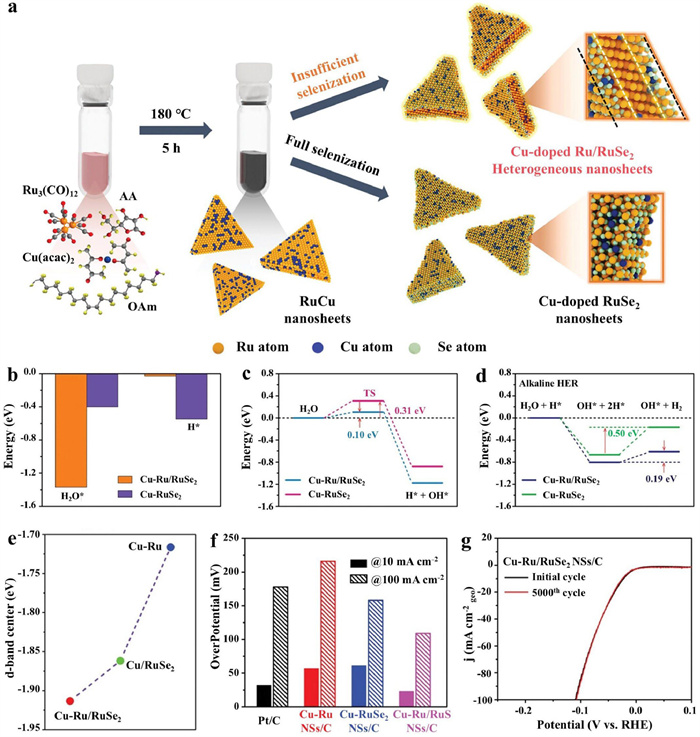
The synergy of doping and heterostructure design shows a promising approach for enhancing the catalytic performance of materials in the HER [144-146]. Doping introduces foreign atoms, altering the electronic structure to enhance catalytic activity, whereas heterostructures establish interfaces, aiding charge transfer and enabling efficient electron transfer routes [147]. Together, these strategies lead to amplified catalytic performance by optimizing active sites and charge transport, offering significant potential for utilization in renewable energy conversion and storage technologies. Wang et al. presented a pioneering approach (Fig. 8a), incorporating Cu-doped Ru/RuSe2 heterogeneous nanosheets, specifically engineered to enhance the adsorption affinity of hydrogen and water molecules, thus achieving remarkably efficient HER catalysis in alkaline conditions [148]. DFT results revealed that the remarkable alkaline HER performance arises from the synergistic interplay between the unique structure of the heterogeneous interface and the incorporation of Cu dopants. This combination not only adjusts the electronic structure by establishing an appropriate d-band center to alleviate excessive H+ binding but also lowers the energy barrier by boosting water adsorption (Figs. 8b-e). Consequently, the as-obtained catalysts exhibited a remarkably low overpotential (Fig. 8f). Moreover, the Cu-doped Ru/RuSe2 exhibited remarkable stability in HER, showing no activity decline even after subjecting it to 5000 cycles (Fig. 8g). This study highlights the promise of doping and manipulating heterogeneous interfaces as an innovative approach for creating more effective electrocatalysts.
In recent years, RuTe2 has garnered considerable interest owing to its promising applications, particularly in the field of electrocatalysis. As a TMD, it possesses intriguing physical and chemical properties that render it highly appealing for use in energy conversion and storage devices [149-151]. Physically, RuTe2 is classified as a layered material with a hexagonal crystal structure, akin to other TMDs like molybdenum disulfide and tungsten diselenide [152]. Its electronic band structure is unique, characterized by features such as a small bandgap and strong spin-orbit coupling, which are pivotal for its catalytic activity by influencing the material’s electronic properties and surface reactivity [153]. Chemically, RuTe2 displays properties conducive to catalytic applications. It boasts a high surface area, offering abundant active sites for catalysis. Furthermore, its chemical stability under a wide range of conditions makes it suitable for use in harsh environments. One of the most exciting applications of RuTe2 is in electrocatalytic hydrogen evolution, a critical process in electrolysis for hydrogen production. Considering the crucial need for efficient and economical hydrogen production, RuTe2’s remarkable catalytic activity for HER is particularly noteworthy. Its unique properties, such as high conductivity, abundant active sites, and favorable adsorption properties, contribute to its excellent performance in this application. Therefore, the combination of RuTe2’s structural characteristics and electrochemical properties positions it as a highly promising material for a broad range of applications, especially in electrocatalysis for hydrogen evolution. Further research into its synthesis methods, catalytic mechanisms, and scalability is crucial to fully realize its potential in these areas.
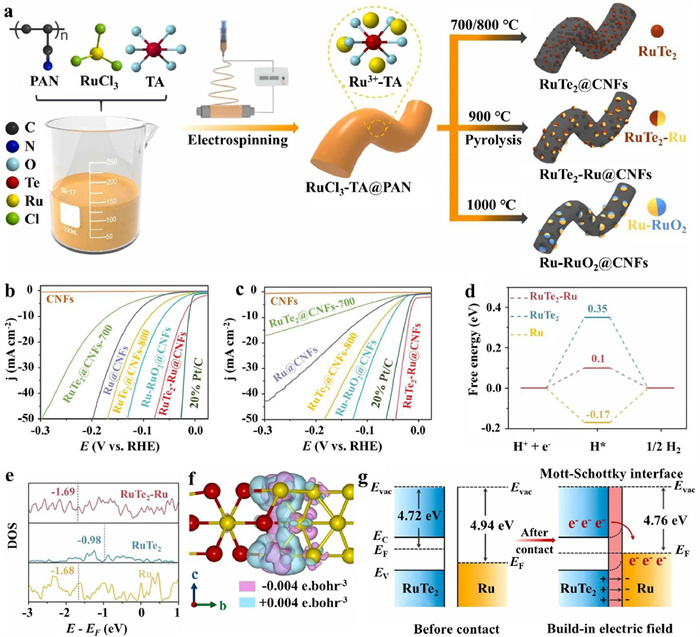
The catalytic performance of Ru-based catalysts can be significantly improved through the interfacial engineering of Ru-based heterostructures, driven by a variety of effects, including synergistic, electronic, interfacial, and strain effects [154-157]. Yang et al. developed a temperature-regulated in situ synthesis strategy for fabricating ruthenium telluride-ruthenium nanoparticles encapsulated within carbon nanofiber matrices (RuTe2-Ru@CNFs) (Fig. 9a) [158]. The synthesis process commenced with the fabrication of polyacrylonitrile-based nanofibers containing ruthenium(Ⅲ) chloride and telluric acid precursors via an electrospinning technique. Subsequent pyrolysis at 900 ℃ resulted in the formation of RuTe2-Ru@CNF composites, which were characterized by numerous well-defined RuTe2-Ru heterojunction interfaces. The investigation revealed that pyrolysis temperature played a pivotal role in controlling the final product’s phase composition. Systematic temperature elevation from 700 ℃ to 1000 ℃ induced a progressive phase transformation sequence, where the encapsulated nanoparticles evolved from pure RuTe2 to RuTe2-Ru heterostructures, and ultimately to Ru-RuO2 composites at the highest temperature. Electrochemical measurements revealed that the RuTe2-Ru@CNFs catalyst displayed superior HER activity compared to several reference materials in both acidic and alkaline electrolytes (Figs. 9b and c). Specifically, to achieve a catalytic current density of 10 mA/cm2 in an acidic solution, overpotentials were required for RuTe2-Ru@CNFs, Ru-RuO2@CNFs, RuTe2@CNFs-800, Ru@CNFs, and RuTe2@CNFs-700 of 24, 61, 88, 109 and 169 mV, respectively. To gain deeper insights into the exceptional intrinsic catalytic performance of the RuTe2-Ru@CNF composite, DFT computations were conducted to investigate its HER electrocatalytic mechanisms. As exhibited in Fig. 9d, the optimal ΔGH* for RuTe2-Ru was calculated to be 0.1 eV, which is more favorable than that of RuTe2 and Ru, indicating enhanced intrinsic HER catalytic activity. Additionally, as depicted in Fig. 9e, the d-band center of RuTe2-Ru was found to shift further from the Fermi level compared to RuTe2 and Ru. This downshift of the Ru d-band center promotes the filling of antibonding states with more electrons, which facilitates faster dehydrogenation kinetics during HER. Fig. 9f highlights significant electronic redistribution at the RuTe2-Ru heterointerface, which contributes to an optimized electronic structure and reduced energy barriers, thereby enhancing HER efficiency. The formation of a Mott-Schottky interface at the heterostructure promotes the creation of a built-in electric field, which aids electron transfer and boosts electrocatalytic performance (Fig. 9g). The RuTe2-Ru heterostructure optimizes the electronic structure through interfacial electron redistribution, resulting in more favorable bonding interactions with intermediates and enhanced intrinsic catalytic activity for HER. Moreover, the nanofibrous morphology of the material facilitates exposure to abundant active sites and improves electrolyte penetration and gas release. The electrospinning-assisted synthesis strategy demonstrated here can be extended to create various transition metal telluride- and Ru selenide-based nanofibers, highlighting the broad applicability of this innovative approach.
Amorphous catalysts offer significant advantages over crystalline counterparts owing to their high surface area, adjustable properties, uniform active sites, structural flexibility, versatility in catalyzing various reactions, ease of preparation, resistance to deactivation, and suitability for catalysis [159-161]. These catalysts exhibit enhanced catalytic activity and prolonged lifespan, making them promising candidates for diverse industrial and research applications [162]. Comprehending the impact of the non-crystalline characteristics of materials on their electrocatalytic performance is fundamental for designing and optimizing effective electrocatalysts across a diverse array of energy conversion and storage applications. Seeking to exploit the innate high electroactivity characteristic of amorphous structures, researchers have developed and synthesized bullet-like a-RuTe2 porous nanorods (a-RuTe2 PNRs) as durable electrocatalysts for water splitting [163]. DFT calculations demonstrated that a significant level of amorphization results in unique local short-range disorder, inducing a meta-stable state through the distortion-strain effect (Fig. 10a). This effect not only enables flexible bonding by facilitating variations in local Te-coordination but also promotes efficient intra- and inter-orbital electron-transfer by inducing medium-to-long range p-π coupling to counteract the well-known crystal-field-splitting effect of Ru. As a result, a-RuTe2 PNRs demonstrated superior HER activity compared to their crystalline counterparts (c-RuTe2 PNRs) and commercial Ir/C in both acidic and alkaline environments (Figs. 10b and c). Specifically, a-RuTe2 PNRs achieve low overpotentials of 32 mV in 0.5 mol/L H2SO4 and 36 mV in 1.0 mol/L KOH at a current density of 10 mA/cm2, outperforming the corresponding overpotentials for c-RuTe2 PNRs and Ir/C. Additionally, while the strain effect plays a significant role in enhancing the electrocatalytic performance of a-RuTe2 PNRs, experimental results indicated that the amorphous nature of these structures creates numerous active sites, further boosting their catalytic efficiency. When utilized in an acidic electrolyte within a two-electrode system, the a-RuTe2 PNRs required only 1.52 V potential to reach 10 mA/cm2. This research provides a promising avenue for designing and exploring amorphous catalysts, delivering valuable insights to propel the development of a new era of catalysts and broadening the landscape for future investigations into electrocatalysts for energy applications.
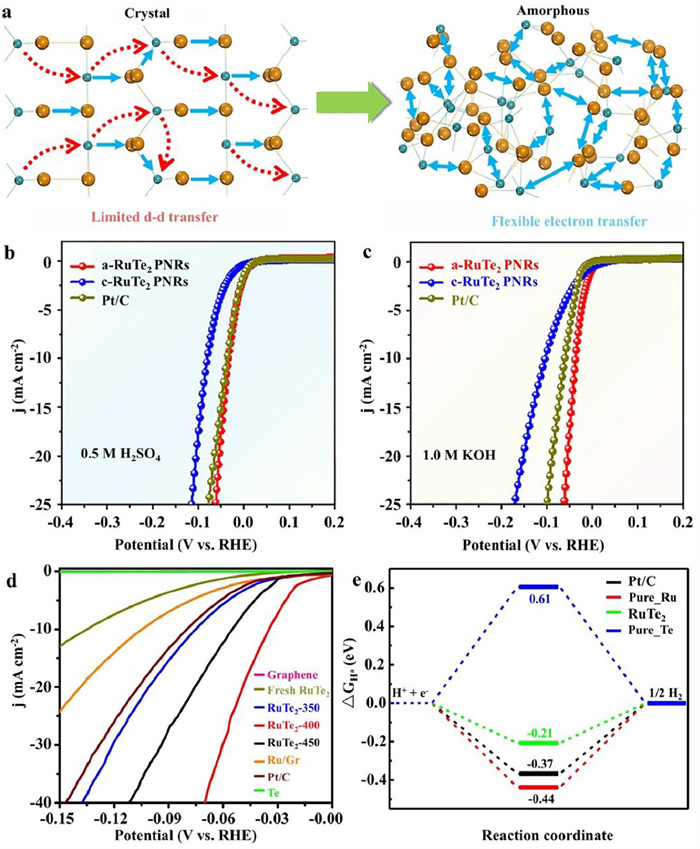
The impact of carbon materials loading RuTe2 on their electrocatalytic hydrogen evolution performance, especially graphene, is significant [164]. Graphene, known for its high conductivity and outstanding chemical stability, can effectively promote electron transfer between RuTe2 and reactants, thereby enhancing its hydrogen evolution performance [165-167]. Therefore, by loading RuTe2 on graphene, the electrocatalytic hydrogen evolution performance can be effectively modulated, providing crucial research directions for improving water splitting efficiency and other electrocatalytic reactions. Tang et al. developed ultrafine RuTe2 nanoparticles supported on a graphene surface, where the catalytic activity is notably influenced by the thermally induced crystallinity of RuTe2 [168]. The combination of high crystallinity and evenly dispersed nanoparticles, which possess excellent conductivity, facilitated RuTe2 NPs in reaching 10 mA/cm2 with only a minimal 34 mV overpotential for alkaline HER (Fig. 10d). Notably, this catalyst demonstrates remarkable durability in harsh environments. When utilized for full water electrolysis, it delivered a current density of 10 mA/cm2 at 1.57 V, showcasing exceptional stability. DFT results highlighted the advantageous adsorption properties of intermediates on the RuTe2 catalyst, with the Ru site identified as the primary active site. Simultaneously, Te facilitated charge redistribution, thereby electronically modulating the catalytic surface (Fig. 10e). This study underscores the potential of the RuTe2 to serve as an effective catalyst for electrolytic water.
Doping is instrumental in adjusting the catalytic activity of RuTe2. By introducing dopants into the RuTe2 structure, various properties such as electronic structure, surface reactivity, and catalytic activity can be tailored. Metal doping, for instance, can alter the electronic configuration of RuTe2, leading to enhanced charge transfer kinetics and improved catalytic activity. Non-metal doping, on the other hand, can influence the surface chemistry and binding energies of reactants, thereby enhancing the catalytic selectivity and durability of RuTe2 catalysts. Both doping methods are effective in enhancing the catalytic performance of RuTe2, with specific outcomes depending on factors such as the type of dopant, dopant concentration, and doping position. Therefore, when designing and optimizing RuTe2 catalysts, it is crucial to consider the impacts of metal/non-metal doping on catalytic performance to achieve enhanced catalytic efficiency. For instance, utilizing Te nanowires as a template, dendritic nanotubes of RuTe2 doped with phosphorus (RuTeP NTs) were fabricated (Fig. 11a) [169]. These RuTeP NTs exhibited remarkable catalytic efficacy for the alkaline HER, showcasing 35 mV overpotential at 10 mA/cm2 with a small Tafel slope, even exceeding the activity of the Pt/C catalyst available commercially (Figs. 11b-d). Comprehensive investigations indicated that the inclusion of phosphorus enhances both the active surface area and electron-transfer kinetics. Additionally, in conjunction with Te, it has altered the electronic configuration of Ru atoms, thereby collaboratively enhancing the HER. This study potentially paves the way for developing phosphorus-modified electrocatalysts with a well-thought-out morphological and structural design for applications such as water splitting or other electrocatalytic processes.
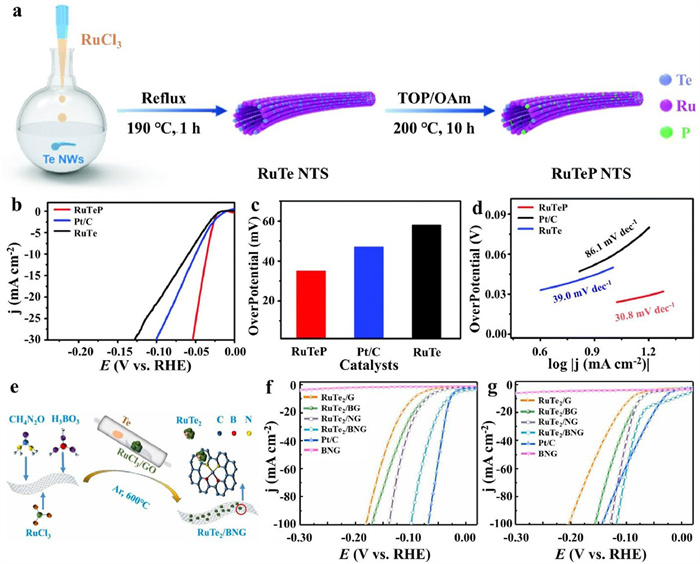
In addition to the direct doping of RuTe2, an effective approach to enhance its catalytic performance involves indirectly modulating its electronic structure by doping the supporting carrier. The incorporation of heteroatoms, such as B or N, into graphene presents an opportunity to enhance the electrocatalytic activity of the catalyst [170-172]. By modifying the graphene structure with B or N atoms, the electronic properties can be effectively altered, generating active sites that facilitate catalytic reactions. B doping enhances graphene conductivity and its interaction with metal nanoparticles, while N doping introduces functional groups that aid in reactant adsorption and catalytic activity. The synergistic combination of heteroatom-doped graphene’s unique characteristics with the catalytic prowess of RuTe2 nanoparticles results in improved performance for electrochemical water-splitting applications. This innovative catalyst system shows significant potential for the advancement of efficient and robust devices dedicated to sustainable hydrogen production. Recently, a novel catalyst system, termed RuTe2/BNG, was synthesized by anchoring RuTe2 nanoparticles onto N and B co-doped graphene, showcasing remarkable performance in the HER (Fig. 11e) [173]. The recorded overpotentials of 34 and 16 mV at 10 mA/cm2 in acid and alkaline solutions, respectively, suggest its potential as a viable replacement for commercial Pt/C in HER (Figs. 11f and g). Notably, RuTe2/BNG exhibited robust stability in HER over extended chronopotentiometry measurements. Comprehensive investigations were carried out to analyze the effects of B/N doping on the HER performance of the catalysts. Doping graphene with B and N improved its morphology and microstructure, resulting in increased carbon defects and an expanded SSA. Consequently, the introduction of heteroatoms into graphene enhances conductivity, markedly increases SSA, promotes abundant channels, and facilitates uniform dispersion of RuTe2 NPs, all contributing significantly to the electrocatalytic performance enhancement of RuTe2. Additionally, the synergistic effect between RuTe2 and graphene at the electronic level supports and enhances the charge transfer. This research not only introduces a novel method for producing high-performance electrocatalysts for HER but also highlights the potential for practical applications using non-platinum electrocatalysts, thereby advancing the industrialization of water-splitting technology on a large scale.
In brief, as detailed in Table 1, various regulatory strategies can notably enhance the HER performance of Ru-based metal chalcogenides. These advancements can be achieved through the optimization of synthesis techniques, modifications to the composition or structure, and the introduction of doping elements to alter their electronic characteristics. Additionally, the incorporation of hybrid materials can further boost catalytic activity by increasing surface area and promoting efficient charge transfer. Taken together, the data indicate that strategically fine-tuning these factors leads to significant improvements in the efficiency of Ru-based metal chalcogenides as electrocatalysts for hydrogen production, thereby advancing the development of sustainable energy technologies.

 DownLoad:
CSV
| Catalysts | Regulatory strategies | Overpotential (mV) | Tafel slope (mV/dec) | Stability (h) |
| RuS2-500 [62] | Defect regulation | 78b | 103 | 10 |
| Vs-RuS2QDs/rGO [63] | Defect regulation | 61a | 31.2 | 20 |
| RuSe1.5 NPs [120] | Defect regulation | 12b | 24 | 22 |
| RuSx/NbS2 [72] | Heterostructure | 38a | 51.05 | 10 |
| t-Ru-RuS2 [74] | Heterostructure | 16b | 29 | 12 |
| Ru/RuS2 [75] | Heterostructure | 45a | 24.4 | 24 |
| RuP2–RuS2/NPS-C [82] | Heterostructure | 53b | 48.1 | 20 |
| Ru/RuS2@N-rGO [83] | Heterostructure | 18b | 64.5 | 24 |
| Ru/RuS2@h-NSC [84] | Heterostructure | 26b | 73.6 | 15 |
| Ru0.33Se@TNA [122] | Heterostructure | 57b | 50 | 10 |
| Ru/RuSe2/C [123] | Heterostructure | 80b | 85 | 10 |
| RuSe2/CeO2 [127] | Heterostructure | 16b | 66.1 | 50 |
| RuSe2-CoTe/NC [136] | Heterostructure | 25.4b | 67.8 | 30 |
| RuSe2/Co-N-C [8] | Heterostructure | 26.4b | 53.2 | 17 |
| RuTe2-Ru@CNFs [158] | Heterostructure | 24a | 56.9 | 12 |
| c-RuS2 NPs/NSC [99] | Phase engineering | 11b | 35.4 | 10 |
| CNT-RuSx [100] | Phase engineering | 17b | 35 | 40 |
| h-RuSe2 [138] | Phase engineering | 34b | 95 | 18 |
| RuSe2-500 [139] | Phase engineering | 29b | 64 | 17 |
| RuSe2/CNTs [140] | Phase engineering | 48b | 24.73 | 12 |
| RuSe2-400 [143] | Phase engineering | 27b | 39.8 | 50 |
| a-RuTe2 PNRs [163] | Phase engineering | 32a | 47 | 24 |
| RuTe2-400 [168] | Phase engineering | 34b | 28 | 12 |
| Cu-RuS2/Ru [110] | Doping | 52b | 70 | 15 |
| s-RuS2/S-rGO [113] | Doping | 25b | 29 | 100 |
| Cu-Ru/RuSe2 NSs [148] | Doping | 23b | 58.5 | 20 |
| RuTeP NTs [169] | Doping | 35b | 30.8 | 20 |
| RuTe2/BNG [173] | Doping | 16b | 57.6 | 20 |
| a The HER performance of Ru-based metal chalcogenides in acidic conditions. b The HER performance of Ru-based metal chalcogenides in alkaline conditions. |
||||
Recent advancements in Ru-based metal chalcogenides electrocatalysts for HER signify substantial strides in improving catalytic activity, stability, and comprehension of reaction mechanisms. By pioneering innovative material design strategies encompassing structural optimization, surface modification, doping, and heterostructure, researchers have achieved noteworthy enhancements in the performance of Ru-based catalysts, positioning them as promising contenders for efficient and sustainable hydrogen production. The seamless integration of computational modeling, machine learning techniques, and advanced characterization methods has facilitated the rational design and optimization of Ru-based catalysts, resulting in the identification of novel materials engineered to exhibit exceptional HER performance. Moreover, collaborative endeavors between experimentalists and theorists have fostered a deeper understanding of the fundamental principles underlying HER catalysis on Ru-based chalcogenides, paving the way for the advancement of next-gen catalysts.
While regulatory strategies such as defect engineering, heterostructure design, phase engineering, and doping have significantly enhanced the electrocatalytic hydrogen evolution performance of Ru-based metal chalcogenides, several challenges and contentious aspects remain. Defect regulation improves electronic properties and increases active sites, but the stability and reversibility of defect states under reaction conditions remain problematic, often leading to performance degradation. Heterostructures leverage interfacial synergy to enhance charge transfer, yet interfacial instability, poor electronic coupling, and synthesis complexity limit their practical applicability. Similarly, phase engineering exploits metastable phases with superior activity, but these phases often undergo undesirable transformations or structural degradation during long-term operation, posing challenges for durability. Doping, while effective in tuning electronic structures, suffers from non- uniform dopant distribution, potential structural distortions, and difficulty in precisely controlling dopant concentration. Addressing these limitations requires the integration of advanced characterization techniques, theoretical modeling, and machine learning-assisted catalyst design to deepen the understanding of structure-property relationships.
In the foreseeable future, a multitude of promising directions for advancing research and development in the field of Ru-based metal chalcogenide electrocatalysts for the HER become apparent as displayed in Fig. 12.
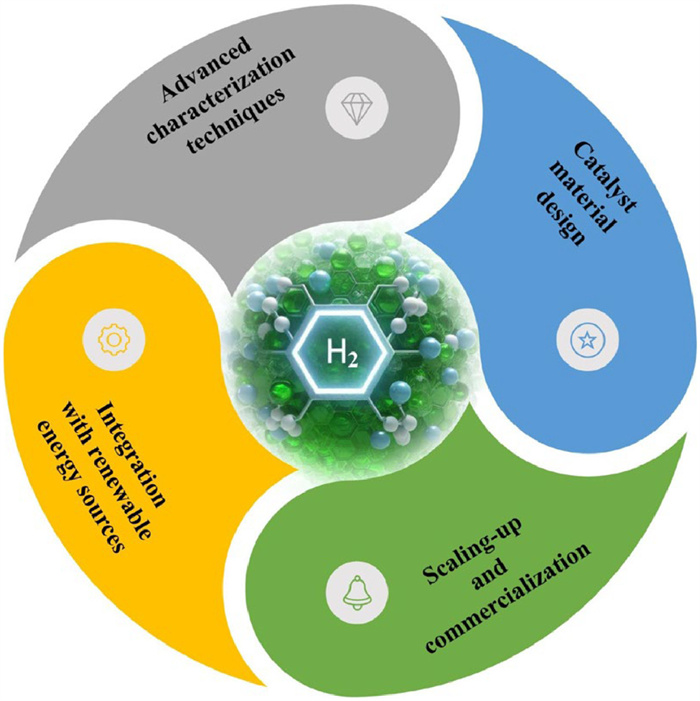
(1) Advanced characterization techniques: Exploratory endeavors are underway to investigate advanced characterization techniques, including operando microscopy and in situ spectroscopy. In particular, operando TEM allows direct observation of the morphological and phase evolution of catalysts at the nanoscale under real reaction conditions. This technique provides crucial insights into structural stability and degradation mechanisms, aiding in the design of more durable electrocatalysts. Similarly, in situ X-ray absorption spectroscopy, including X-ray absorption near-edge structure and extended X-ray absorption fine structure, enables precise tracking of oxidation state changes and local coordination environments of Ru active sites. These insights are essential for understanding the electronic structure-property relationships that govern catalytic activity.
(2) Catalyst material design: Through theoretical calculations, machine learning, synthesis optimization, and other means, efforts from researchers are focused on designing Ru-based metal chalcogenides with increased catalytic activity, thereby expanding their potential applications in various catalytic reactions. Particularly noteworthy are the advances in computational materials science and machine learning techniques. Especially, by leveraging data-driven models, machine learning can identify key structure-performance relationships, predict promising catalyst compositions, and guide experimental design, thereby complementing traditional regulatory strategies. This accelerates the discovery of novel Ru-based metal chalcogenides with tailored properties for specific catalytic applications.
(3) Scaling-up and commercialization: Creating scalable synthesis methods and cost-effective fabrication processes for Ru-based metal chalcogenide catalysts is indispensable for their practical integration into large-scale hydrogen production systems. Research efforts are increasingly focused on optimizing production techniques, exploring alternative synthesis routes, and evaluating catalyst performance under realistic operating conditions. However, the relatively high cost of ruthenium limits its large-scale application. To address this challenge, strategies such as reducing ruthenium content by incorporating highly active supports or alloying with earth-abundant elements are being explored. While many laboratory-scale synthesis methods, such as chemical vapor deposition and hydrothermal synthesis, face challenges in scalability, alternative techniques like spray pyrolysis, electrodeposition, and template-assisted synthesis offer improved scalability without compromising catalyst performance. These advancements are crucial for paving the way toward commercial deployment in electrolyzers and renewable energy technologies.
(4) Integration with renewable energy sources: Ru-based metal chalcogenides demonstrate remarkable compatibility with renewable energy sources, such as solar and wind power. This underscores their outstanding potential for sustainable applications. Integration of these catalysts into electrochemical water splitting systems can enable the efficient transformation of renewable electricity into storable hydrogen fuel, facilitating the transition towards sustainable energy systems and addressing the global challenge of climate change.
In conclusion, recent advancements in Ru-based metal chalcogenide electrocatalysts for HER have established a robust foundation for ongoing research and development endeavors aimed at achieving enhanced efficiency and sustainability in hydrogen production. To fully harness the potential of Ru-based chalcogenide catalysts and drive their widespread adoption in transitioning towards a clean and renewable energy future, sustained interdisciplinary collaboration, inventive material design, and the exploration of novel catalytic architectures are imperative.
Jin Li: Writing – original draft, Investigation, Formal analysis, Conceptualization. Jiaqi Zhu: Writing – original draft, Investigation, Formal analysis, Conceptualization. Yue Li: Validation, Methodology, Investigation. Nannan Tong: Validation, Methodology, Investigation. Guilong Liu: Writing – review & editing, Methodology. Yuchao Wang: Writing – review & editing, Methodology. Naiteng Wu: Writing – review & editing, Methodology. Xianming Liu: Supervision, Funding acquisition. Yongpeng Lei: Writing – review & editing, Funding acquisition.
The authors declare that they have no known competing financial interests or personal relationships that could have appeared to influence the work reported in this paper.
This work was supported by the Program for Science & Technology Innovation Talents in Universities of Henan Province (No. 24HASTIT006), the Natural Science Foundations of Henan Province (No. 252300420059), the Programs for Science and Technology Development of Henan Province (No. 242102240066), and the Key Scientific Research Projects of the University in Henan Province (No. 26A430024).
J. Li, J. Hu, M. Zhang, et al., Nat. Commun. 12 (2021) 3502. doi: 10.1039/d1qo00111f
D. Tonelli, L. Rosa, P. Gabrielli, et al., Nat. Commun. 14 (2023) 5532. doi: 10.1038/s41467-023-41107-x
A. Devlin, J. Kossen, H. Goldie-Jones, A. Yang, Nat. Commun. 14 (2023) 2578. doi: 10.1038/s41467-023-38123-2
D. Guan, B. Wang, J. Zhang, et al., Energy Environ. Sci. 16 (2023) 4926–4943. doi: 10.1039/d3ee02695g
D. Deng, J. Wang, M. Wang, et al., J. Mater. Sci. Technol. 227 (2025) 76–81. doi: 10.1016/j.jmst.2024.12.017
J. Li, J. Zhang, J. Zhang, et al., J. Mater. Chem. A 11 (2023) 19812–19844. doi: 10.1039/d3ta04199a
R.P. Paitandi, Y. Wan, W. Aftab, et al., Adv. Funct. Mater. 33 (2022) 2203224.
N. Li, M. Shi, W. Zhan, et al., CrystEngComm 25 (2023) 981–987. doi: 10.1039/d2ce01409b
J. Guo, Y. Zheng, Z. Hu, et al., Nat. Energy 8 (2023) 264–272.
J. Li, S. Yan, M. Du, et al., J. Colloid Interface Sci. 662 (2024) 183–191. doi: 10.1016/j.jcis.2024.02.049
Y. Da, Z. Tian, R. Jiang, et al., Sci. China Mater. 66 (2022) 1389–1397.
A. Pei, R. Xie, Y. Zhang, et al., Energy Environ. Sci. 16 (2023) 1035–1048. doi: 10.1039/d2ee02785b
J. Mahmood, F. Li, S.M. Jung, et al., Nat. Nanotechnol. 12 (2017) 441–446. doi: 10.1038/nnano.2016.304
X. Chen, X.-T. Wang, J.-B. Le, et al., Nat. Commun. 14 (2023) 5289. doi: 10.1038/s41467-023-41030-1
R. Ma, X. Wang, X. Yang, et al., Nano Res. 16 (2022) 166–173.
C. Hu, J. Xu, Y. Tan, X. Huang, Trends Chem. 5 (2023) 225–239. doi: 10.1016/j.trechm.2023.01.002
Y. He, L. Liu, C. Zhu, et al., Nat. Catal. 5 (2022) 212–221. doi: 10.1038/s41929-022-00753-y
Y. Wang, Q. Li, M. Wang, et al., Nano Lett. 24 (2024) 13653–13661. doi: 10.1021/acs.nanolett.4c03510
Y. Wang, Y. Zhao, X. Ding, L. Qiao, J. Energy Chem. 60 (2021) 451–479. doi: 10.3390/healthcare9040451
K. Sun, X. Wu, Z. Zhuang, et al., Nat. Commun. 13 (2022) 6260. doi: 10.1038/s41467-022-33984-5
N. Romero, D.A. Fenoll, L. Gil, et al., Inorg. Chem. Front. 10 (2023) 5885–5896. doi: 10.1039/d3qi00698k
J. Li, M. Zhou, H.H. Wu, et al., Adv. Energy Mater. 14 (2024) 2304480. doi: 10.1002/aenm.202304480
J. Li, N. Wu, J. Zhang, et al., Nano-Micro Lett. 15 (2023) 227. doi: 10.1007/s40820-023-01192-5
D. Liu, G. Xu, H. Yang, et al., Adv. Funct. Mater. 33 (2023) 202208358.
K. Zuo, S. Garcia-Segura, G.A. Cerrón-Calle, et al., Nat. Rev. Mater. 8 (2023) 472–490. doi: 10.1038/s41578-023-00564-y
F. Guo, T.J. Macdonald, A.J. Sobrido, et al., Adv. Sci. 10 (2023) 2301098. doi: 10.1002/advs.202301098
X. Liu, J. Chi, H. Mao, L. Wang, Adv. Energy Mater. 13 (2023) 2301438. doi: 10.1002/aenm.202301438
D. Li, B. Zhang, Y. Li, et al., Electrochem. Commun. 101 (2019) 23–27. doi: 10.1016/j.elecom.2019.01.014
J. Zhou, Y. Xie, L. Yang, et al., Inorg. Chem. Front. 10 (2023) 2842–2859. doi: 10.1039/d3qi00171g
B. Zhang, C. Zhu, Z. Wu, et al., Nano Lett. 20 (2020) 136–144. doi: 10.1021/acs.nanolett.9b03460
M. López, K.S. Exner, F. Viñes, F. Illas, J. Catal. 421 (2023) 252–263. doi: 10.1016/j.jcat.2023.03.027
Y. Zhao, X. Hu, G.D. Stucky, S.W. Boettcher, J. Am. Chem. Soc. 146 (2024) 3438–3448. doi: 10.1021/jacs.3c12980
J. Li, P. Zhang, Y. Yang, et al., Inorg. Chem. Front. 11 (2024) 3596–3606. doi: 10.1039/d4qi00834k
B.Y. Tang, R.P. Bisbey, K.M. Lodaya, et al., Nat. Catal. 6 (2023) 339–350. doi: 10.1038/s41929-023-00943-2
P. Wang, R. Qin, P. Ji, et al., Small 16 (2020) 202001642.
L. Miao, W. Jia, X. Cao, L. Jiao, Chem. Soc. Rev. 53 (2024) 2771–2807. doi: 10.1039/d2cs01068b
C. Wan, Z. Zhang, J. Dong, et al., Nat. Mater. 22 (2023) 1022–1029. doi: 10.1038/s41563-023-01584-3
Z. Chen, W. Gong, J. Wang, et al., Nat. Commun. 14 (2023) 5363. doi: 10.1038/s41467-023-41097-w
K. Bhunia, M. Chandra, S.Kumar Sharma, et al., Coord. Chem. Rev. 478 (2023) 214956. doi: 10.1016/j.ccr.2022.214956
M.L. Frisch, T.N. Thanh, A. Arinchtein, et al., ACS Energy Lett. 8 (2023) 2387–2394. doi: 10.1021/acsenergylett.3c00492
X. Huang, R. Lu, Y. Cen, et al., Nano Res. 16 (2023) 9073–9080. doi: 10.1007/s12274-023-5711-1
L. Wang, L. Song, Z. Yang, et al., Adv. Funct. Mater. 33 (2022) 2210322.
S.F. Nami-Ana, S. Zeinali, Appl. Energy 350 (2023) 121755. doi: 10.1016/j.apenergy.2023.121755
Q. Liang, W. Li, L. Xie, et al., Nano Lett. 22 (2022) 2889–2897. doi: 10.1021/acs.nanolett.2c00042
Z. Lei, P. Liu, X. Yang, et al., Small 19 (2023) e2301247. doi: 10.1002/smll.202301247
K. Hemmati, A. Kumar, A.R. Jadhav, et al., ACS Catal. 13 (2023) 5516–5528. doi: 10.1021/acscatal.3c00510
D. Chen, H. Bai, J. Zhu, et al., Adv. Energy Mater. 13 (2023) 2300499. doi: 10.1002/aenm.202300499
Y. Han, H. Duan, W. Liu, et al., Appl. Catal. B: Environ. 335 (2023) 122898. doi: 10.1016/j.apcatb.2023.122898
Y. Cheng, H. Guo, L. Zhang, et al., Adv. Funct. Mater. 33 (2023) 2208718. doi: 10.1002/adfm.202208718
Z. Lin, Z. Wang, J. Gong, et al., Adv. Funct. Mater. 33 (2023) 2307510. doi: 10.1002/adfm.202307510
X. Wang, J. You, J. Ren, et al., Appl. Catal. B: Environ. 345 (2024) 123722. doi: 10.1016/j.apcatb.2024.123722
J. Xiao, S. Zhang, Y. Sun, et al., Small 19 (2023) 2206472. doi: 10.1002/smll.202206472
Y. Liu, L. Cheng, S. Zhou, et al., J. Energy Chem. 94 (2024) 332–339. doi: 10.3390/en17020332
J.L. Liu, X.P. Dong, A.Q. Jia, et al., J. Porous Mater. 30 (2022) 175–182.
T. Li, Y. Deng, Z. Xing, et al., Small Methods 7 (2023) e2300011. doi: 10.1002/smtd.202300011
J. Ying, J.B. Chen, Y.-X. Xiao, et al., J. Mater. Chem. A 11 (2023) 1634–1650. doi: 10.1039/d2ta07196g
D. Chen, H. Zhao, R. Yu, et al., Energy Environ. Sci. 17 (2024) 1885–1893. doi: 10.1039/d3ee03396a
Z. Zhang, C. Jiang, P. Li, et al., Small 17 (2021) e2007333. doi: 10.1002/smll.202007333
B. Wang, J. Li, D. Li, et al., Adv. Mater. 36 (2024) e2305437. doi: 10.1002/adma.202305437
X. Wang, J. Wu, Y. Zhang, et al., Adv. Mater. 35 (2023) e2206576. doi: 10.1002/adma.202206576
J. Chen, Y. Lin, H. Wang, et al., Adv. Funct. Mater. 33 (2022) 2210236.
Y. Zhu, H.A. Tahini, Y. Wang, et al., J. Mater. Chem. A 7 (2019) 14222–14232. doi: 10.1039/c9ta04120f
Y. Li, J. Li, J. Chen, et al., J. Power Sources 472 (2020) 228625. doi: 10.1016/j.jpowsour.2020.228625
H.Y. Chen, L. Yang, R.X. Wang, et al., Small 19 (2023) e2304086. doi: 10.1002/smll.202304086
W. Xu, R. Zhao, Q. Li, et al., Adv. Energy Mater. 13 (2023) 2300978. doi: 10.1002/aenm.202300978
H. Zhang, A. Chen, Z. Bi, et al., ACS Nano 17 (2023) 24070–24079. doi: 10.1021/acsnano.3c09020
X. Ding, R. Jiang, J. Wu, et al., Adv. Funct. Mater. 33 (2023) 2306786. doi: 10.1002/adfm.202306786
X. Zhao, Q. Feng, M. Liu, et al., ACS Nano 18 (2024) 9678–9687. doi: 10.1021/acsnano.4c01190
B. Dong, N. Yu, Q.Y. Wang, et al., Chin. Chem. Lett. 35 (2024) 109221. doi: 10.1016/j.cclet.2023.109221
G. Li, T. Sun, H.J. Niu, et al., Adv. Funct. Mater. 33 (2023) 2212514. doi: 10.1002/adfm.202212514
X. Hao, X. Zhang, Y. Xu, et al., J. Colloid Interface Sci. 643 (2023) 282–291. doi: 10.1016/j.jcis.2023.04.023
H. Yue, Z. Guo, Z. Zhou, et al., Angew. Chem. Int. Ed. 63 (2024) e202409465. doi: 10.1002/anie.202409465
L.P. Phan, T.T.N. Tran, T.K. Truong, et al., J. Phys. Chem. Lett. 14 (2023) 7264–7273. doi: 10.1021/acs.jpclett.3c01697
Z.Y. Fu, H.M. Xu, W.H. Li, et al., Inorg. Chem. 62 (2023) 583–590. doi: 10.1021/acs.inorgchem.2c03882
J. Zhu, Y. Guo, F. Liu, et al., Angew. Chem. Int. Ed. 60 (2021) 12328–12334. doi: 10.1002/anie.202101539
P.Y. Yang, X.C. Liu, Y.C. Wang, et al., Rare Met. 43 (2024) 2758–2768. doi: 10.1007/s12598-023-02605-5
J. Xiao, S. Zhang, Y. Sun, et al., Small 19 (2023) e2206472. doi: 10.1002/smll.202206472
J. Li, Y. Hu, X. Huang, et al., Small 19 (2023) e2206533. doi: 10.1002/smll.202206533
H. Zheng, D. Deng, X. Zheng, et al., Nano Lett. 24 (2024) 4672–4681. doi: 10.1021/acs.nanolett.4c01078
N. Wu, W. He, S. Shi, et al., J. Colloid Interface Sci. 684 (2025) 658–667. doi: 10.1016/j.jcis.2025.01.071
Y. Jin, M. Zhang, L. Song, M. Zhang, Small 19 (2022) 2206081.
P. Li, W. Li, Y. Huang, et al., Nanoscale 14 (2022) 6258–6267. doi: 10.1039/d2nr00822j
X. Gao, B. Li, X. Sun, et al., Chin. Chem. Lett. 32 (2021) 3591–3595. doi: 10.1016/j.cclet.2021.03.053
N. Wang, D.D. Ma, S.H. Zhou, et al., Chin. Chem. Lett. 34 (2023) 107788. doi: 10.1016/j.cclet.2022.107788
X. Liu, H. Lu, S. Zhu, et al., Angew. Chem. Int. Ed. 62 (2023) e202300800. doi: 10.1002/anie.202300800
C.K. Hung, A.R. Thiruppathi, N. Burns, et al., ACS Catal. 14 (2024) 5416–5428. doi: 10.1021/acscatal.4c00368
J.W. Zhao, H.Y. Wang, L. Feng, et al., Chem. Rev. 124 (2024) 164–209. doi: 10.1021/acs.chemrev.3c00402
U.N. Pan, M.R. Kandel, A.K. Tomar, et al., Small 20 (2024) e2305519. doi: 10.1002/smll.202305519
H.D. Mai, S. Jeong, G.N. Bae, et al., Adv. Energy Mater. 13 (2023) 2300183. doi: 10.1002/aenm.202300183
D. Das, J. Manna, T.K. Bhattacharyya, Small Methods 7 (2023) e2201446. doi: 10.1002/smtd.202201446
Y. Du, B. Li, G. Xu, L. Wang, InfoMat 5 (2022) e12377.
D. Kim, J. Pandey, J. Jeong, et al., Chem. Rev. 123 (2023) 11230–11268. doi: 10.1021/acs.chemrev.3c00132
B. Gao, Y. Zhao, X. Du, et al., Adv. Funct. Mater. 33 (2023) 2214085. doi: 10.1002/adfm.202214085
J. Pan, X. Liu, H. Ji, et al., Chin. Chem. Lett. 35 (2024) 109515. doi: 10.1016/j.cclet.2024.109515
P. Yin, Q.Q. Yan, H.W. Liang, Angew. Chem. Int. Ed. 62 (2023) e202302819. doi: 10.1002/anie.202302819
H. Nolan, C. Schröder, M. Brunet-Cabré, et al., Carbon 202 (2023) 70–80. doi: 10.1016/j.carbon.2022.11.029
C. Yao, Q. Wang, C. Peng, et al., Chem. Eng. J. 479 (2024) 147924. doi: 10.1016/j.cej.2023.147924
M. Cheng, H. Geng, Y. Yang, et al., Chemistry 25 (2019) 8579–8584. doi: 10.1002/chem.201900790
Y. Xu, C. Du, Q. Shen, et al., Chem. Eng. J. 417 (2021) 129318. doi: 10.1016/j.cej.2021.129318
C. Cheng, W. Ao, H. Ren, et al., Appl. Catal. B: Environ. 331 (2023) 122681. doi: 10.1016/j.apcatb.2023.122681
R. Saini, F. Naaz, A.H. Bashal, et al., Green Chem. 26 (2024) 57–102. doi: 10.1039/d3gc03576j
Y. Tian, M. Wen, A. Huang, et al., Small 19 (2023) e2207569. doi: 10.1002/smll.202207569
W. Wang, Y. Song, C. Ke, et al., ACS Nano 17 (2023) 1287–1297. doi: 10.1021/acsnano.2c09423
D. Sui, R. Luo, S. Xie, et al., Chem. Eng. J. 480 (2024) 148007. doi: 10.1016/j.cej.2023.148007
Y. Zhang, T. Yang, J. Li, et al., Adv. Funct. Mater. 33 (2022) 2210939.
P. Wang, T. Wang, M. Xu, et al., Chin. Chem. Lett. 35 (2024) 108930. doi: 10.1016/j.cclet.2023.108930
Y. Song, M. Sun, S. Zhang, et al., Adv. Funct. Mater. 33 (2023) 2214081. doi: 10.1002/adfm.202214081
X. Liu, H. Mao, G. Liu, et al., Chem. Eng. J. 451 (2023) 138699. doi: 10.1016/j.cej.2022.138699
L. Jiang, M. Gu, H. Wang, et al., ChemSusChem 16 (2023) e202300592. doi: 10.1002/cssc.202300592
Q. Shen, C. Du, Q. Chen, et al., Mater. Today Phys. 23 (2022) 100625. doi: 10.1016/j.mtphys.2022.100625
C. He, Y. Wei, J. Xu, et al., Nano Res. 17 (2023) 2528–2537. doi: 10.1111/jocd.15753
Y. Kuang, F. Yang, L. Feng, Adv. Energy Mater. 14 (2024) 202402043.
J. Yu, Y. Guo, S. Miao, et al., ACS Appl. Mater. Interfaces 10 (2018) 34098–34107. doi: 10.1021/acsami.8b08239
K. Wang, B. Li, W. Wei, et al., Nanoscale 12 (2020) 23740–23747. doi: 10.1039/d0nr07111k
M. Zhu, H. Yu, C. Yang, et al., Appl. Surf. Sci. 659 (2024) 159916. doi: 10.1016/j.apsusc.2024.159916
J. Qin, Q. Shen, C. Du, et al., Fuel 361 (2024) 130752. doi: 10.1016/j.fuel.2023.130752
A. Gautam, S. Sk, U. Pal, Phys. Chem. Chem. Phys. 24 (2022) 20638–20673. doi: 10.1039/d2cp02089k
Q. Gong, P. Hu, W. Yang, et al., ACS Appl. Energy Mater. 5 (2022) 13166–13175. doi: 10.1021/acsaem.1c03990
Y. Guo, Y. Wei, L. Shu, et al., Colloids Surf. A 651 (2022) 129702. doi: 10.1016/j.colsurfa.2022.129702
T. Zhu, J. Han, T. Sun, et al., ACS Catal. 14 (2024) 1914–1921. doi: 10.1021/acscatal.3c04498
H.T.T. Nguyen, L.A. Adofo, S.H. Yang, et al., Adv. Funct. Mater. 33 (2022) 2209572.
K. Wang, Q. Chen, Y. Hu, et al., Small 14 (2018) e1802132. doi: 10.1002/smll.201802132
D.D. Megersa, G.T. Gudena, Y. Kim, H.K. Yu, Adv. Sustain. Syst. 7 (2023) 2300257. doi: 10.1002/adsu.202300257
E.A. Redina, I.B. Krylov, R.A. Novikov, et al., J. Catal. 429 (2024) 115231. doi: 10.1016/j.jcat.2023.115231
F. Hu, C. Jin, R. Wu, et al., Chem. Eng. J. 461 (2023) 142108. doi: 10.1016/j.cej.2023.142108
W. Liao, M. Yue, J. Chen, et al., ACS Catal. 13 (2023) 5767–5779. doi: 10.1021/acscatal.3c00512
Y. Li, S. Zhang, W. Xu, et al., J. Mater. Chem. A 11 (2023) 4000–4006. doi: 10.1039/d2ta09172k
C. Juan, B. Lan, C. Zhao, et al., Chem. Commun. 59 (2023) 6187–6190. doi: 10.1039/d3cc01348k
W. Ni, J.L. Meibom, N.U. Hassan, et al., Nat. Catal. 6 (2023) 773–783. doi: 10.1038/s41929-023-01007-1
D. Dhanabal, S.S. Markandaraj, S. Shanmugam, ACS Catal. 13 (2023) 9136–9149. doi: 10.1021/acscatal.3c01691
X. Li, W. Yu, Y. Wang, et al., Chinese Chem. Lett. 35 (2024) 109166. doi: 10.1016/j.cclet.2023.109166
Q. Li, L. Liu, H. Kimura, et al., J. Colloid Interface Sci. 655 (2024) 634–642. doi: 10.1016/j.jcis.2023.11.005
X. Wang, Z. Mao, X. Mao, et al., Adv. Sci. 10 (2023) e2206204. doi: 10.1002/advs.202206204
Y. Liu, Q. Gong, Y. Yin, et al., Adv. Funct. Mater. 34 (2023) 2310372.
L. Yang, X. Cao, X. Wang, et al., Appl. Catal. B: Environ. 329 (2023) 122551. doi: 10.1016/j.apcatb.2023.122551
W. Fu, N. Li, M. Shi, et al., Langmuir 39 (2023) 13189–13196. doi: 10.1021/acs.langmuir.3c01613
Z. Zhou, B. Li, C. Shen, et al., Small 16 (2020) e2004173. doi: 10.1002/smll.202004173
Y. Zhao, H. Cong, P. Li, et al., Angew. Chem. Int. Ed. 60 (2021) 7013–7017. doi: 10.1002/anie.202016207
W. Zhan, N. Li, S. Zuo, et al., CrystEngComm 24 (2022) 620–627. doi: 10.1039/d1ce01378e
D. Li, M. Zha, L. Feng, et al., Nanoscale 14 (2022) 790–796. doi: 10.1039/d1nr07254d
P. Yang, X. Liu, Z. Liu, et al., Adv. Funct. Mater. 34 (2024) 202405908.
P. Yang, T. Zhang, Y. Wang, et al., Adv. Funct. Mater. 34 (2024) 2405908. doi: 10.1002/adfm.202405908
J. Zhao, Y. Guo, S. Li, et al., Chem. Eng. J. 485 (2024) 150074. doi: 10.1016/j.cej.2024.150074
Z.M. He, C.X. Zhang, S.Q. Guo, et al., Chem. Sci. 15 (2024) 1123–1131. doi: 10.1039/d3sc05220f
S. Ge, X. Shen, J. Gao, et al., Chem. Eng. J. 485 (2024) 150161. doi: 10.1016/j.cej.2024.150161
Y. Liu, J. Ding, F. Li, et al., Adv. Mater. 35 (2023) e2207114. doi: 10.1002/adma.202207114
Z. Liu, Y. Li, H. Guo, et al., J. Mater. Chem. A 11 (2023) 24667–24677. doi: 10.1039/d3ta05082c
Z. Chen, X. Li, J. Zhao, et al., Angew. Chem. Int. Ed. 62 (2023) e202308686. doi: 10.1002/anie.202308686
A. Giri, G. Park, U. Jeong, Chem. Rev. 123 (2023) 3329–3442. doi: 10.1021/acs.chemrev.2c00455
R. Jiang, Y. Da, Z. Chen, et al., Adv. Energy Mater. 12 (2022) 2101092. doi: 10.1002/aenm.202101092
T. Li, Y. Deng, X. Rong, et al., SmartMat 4 (2022) e1142.
Y.Z. Abdullahi, A. Lawal, T.L. Lim, S. Ahmad, Mater. Today Commun. 30 (2022) 103176. doi: 10.1016/j.mtcomm.2022.103176
H. Feng, S. Huang, Z. Zhang, et al., Mater. Today Commun. 37 (2023) 107504. doi: 10.1016/j.mtcomm.2023.107504
H. Zhang, M. Cui, Y. Lv, et al., Chin. Chem. Lett. 36 (2025) 110108. doi: 10.1016/j.cclet.2024.110108
X. Wang, J. You, J. Ren, et al., Appl. Catal. B: Environ. Energy 345 (2024) 123722. doi: 10.1016/j.apcatb.2024.123722
Z. Cao, C. Wang, Y. Sun, et al., Chem. Sci. 15 (2024) 1384–1392. doi: 10.1039/d3sc05312a
W. Li, H. Zhang, M. Hong, et al., Chem. Eng. J. 431 (2022) 134072. doi: 10.1016/j.cej.2021.134072
Y. Yang, J. Xu, Y. Lai, et al., Appl. Catal. B: Environ. Energy 358 (2024) 124414. doi: 10.1016/j.apcatb.2024.124414
X. Jian, W. Zhang, Y. Yang, et al., ACS Catal. 14 (2024) 2816–2827. doi: 10.1021/acscatal.3c05820
T. Wei, G. Meng, Y. Zhou, et al., Chem. Commun. 59 (2023) 9992–9995. doi: 10.1039/d3cc02419a
M. Xing, S. Zhu, X. Zeng, et al., Adv. Energy Mater. 13 (2023) 2302376. doi: 10.1002/aenm.202302376
S. Ju, Y. Liu, M. Pei, et al., J. Colloid Interface Sci. 653 (2024) 1704–1714. doi: 10.1016/j.jcis.2023.10.002
J. Wang, L. Han, B. Huang, et al., Nat. Commun. 10 (2019) 5692. doi: 10.1038/s41467-019-13519-1
X. Gu, X. Yang, L. Feng, Chem. Asian J. 15 (2020) 2886–2891. doi: 10.1002/asia.202000734
B. Hu, K. Huang, B. Tang, et al., Nano-Micro Lett. 15 (2023) 217. doi: 10.1007/s40820-023-01182-7
Y. Qian, J. Yu, F. Zhang, et al., Chem. Eng. J. 470 (2023) 144372. doi: 10.1016/j.cej.2023.144372
W. Li, C. Liu, C. Gu, et al., J. Am. Chem. Soc. 145 (2023) 4774–4783. doi: 10.1021/jacs.2c13596
B. Tang, X. Yang, Z. Kang, L. Feng, Appl. Catal. B: Environ. 278 (2020) 119281. doi: 10.1016/j.apcatb.2020.119281
M. Liu, Y. Xu, S. Liu, et al., J. Mater. Chem. A 9 (2021) 5026–5032. doi: 10.1039/d0ta09501j
L.S. Panchakarla, K.S. Subrahmanyam, S.K. Saha, et al., Adv. Mater. 21 (2009) 4726–4730. doi: 10.1002/adma.200901285
X. Yu, P. Han, Z. Wei, et al., Joule 2 (2018) 1610–1622. doi: 10.1016/j.joule.2018.06.007
Z. Liu, M. Luo, S. Yuan, et al., J. Colloid Interface Sci. 650 (2023) 1301–1311. doi: 10.1016/j.jcis.2023.07.085
Y. Sun, H. He, D. Zheng, et al., Int. J. Hydrogen Energy 49 (2024) 955–963. doi: 10.1016/j.ijhydene.2023.10.096

Figure 1 Illustration for the HER mechanism in (a) acidic and (b) alkaline/neutral solutions.

Figure 3 (a) Schematic illustration of the synthesis procedure of RuS2 NPs. (b) HER polarization curves. (c) ∆GH* diagram. (d) DOS pattern. (e) Correlation between ΔGH* and d-band center. Reproduced with permission [62]. Copyright 2019, Royal Society of Chemistry. (f) The electron paramagnetic resonance spectra. (g) HER polarization curves for multiple samples. Reproduced with permission [63]. Copyright 2020, Elsevier B.V.

Figure 4 (a) RuSx/NbS2 heterostructure model. (b) Charge density differences. (c) Planar average charge density of RuSx/NbS2. (d) Hydrogen spillover mechanism. (e) Overpotentials. Reproduced with permission [72]. Copyright 2024, Wiley-VCH GmbH. (f) Linear sweep voltammetry (LSV) curves. Reproduced with permission [74]. Copyright 2023, American Chemical Society. (g) PDOS of surface Ru sites. (h) ΔGH* for different catalysts. Reproduced with permission [75]. Copyright 2021, Wiley-VCH GmbH. (i) Schematic depiction outlining the synthesis process for Ru/RuS2@h-NSC. (j-l) Scanning electron microscopy (SEM) and transmission electron microscopy (TEM) images. (m) High-resolution transmission electron microscopy (HRTEM) images. Reproduced with permission [84]. Copyright 2021, Elsevier B.V.

Figure 5 (a) The fabrication process of c-RuS2 NPs/NSC. (b, c) TEM images. (d) HER performance curves. (e) Tafel plots. (f) The mass activity. Reproduced with permission [99]. Copyright 2021, Elsevier B.V. (g) LSV curves of CNT-RuSx, RuSx, and CNT-S in 1.0 mol/L KOH solution. (h) Chronoamperometric curve. (i) ΔGH2O* values. Reproduced with permission [100]. Copyright 2023, Elsevier B.V.

Figure 6 (a) Procedure for fabricating Ru0.33Se@TNA materials. (b) HRTEM image. (c) LSV curves. Reproduced with permission [122]. Copyright 2018, Wiley-VCH GmbH. (d) LSV curves for RuSe2/CeO2 system. Reproduced with permission [127]. Copyright 2023, IOP Publishing Ltd. (e) LSV curves for RuSe2-CoTe/NC system. Reproduced with permission [136]. Copyright 2023, American Chemical Society. (f) LSV curves for RuSe2/Co-N-C system. Reproduced with permission [8]. Copyright 2023, Royal Society of Chemistry.

Figure 7 (a, b) Characterizations of 2H-RuSe2 and 1T-RuSe2 nanosheets. (c) LSV curves. (d) Tafel plots. (e) The correlation between TOF and overpotentials. (f) ΔGH* values. Reproduced with permission [138]. Copyright 2021, Wiley-VCH GmbH. (g) Schematic depiction of the RuSe2 with both mixed 1T and 2H phases. (h) LSV curves. Reproduced with permission [139]. Copyright 2022, Royal Society of Chemistry.

Figure 8 (a) Diagram depicting the synthesis process for Cu-doped Ru/RuSe2 and Cu-doped RuSe2 nanosheets. (b) Binding energies of H2O* and H*. (c) H2O dissociation energy. (d) Energy changes in HER. (e) d-band center changes for different catalysts. (f) Overpotentials comparison. (g) Durability test. Reproduced with permission [148]. Copyright 2023, Wiley-VCH GmbH.

Figure 9 (a) Schematic illustration of the temperature-controlled synthesis of materials. (b, c) HER performance in acidic and alkaline solutions. (d) ∆GH* values. (e) DOS. (f) Charge density difference. (g) Energy band patterns. Reproduced with permission [158]. Copyright 2024, Elsevier B.V.

Figure 10 (a) Schematic illustration of the improvement in electronic activity due to the amorphous structure. (b, c) HER performance in acidic and alkaline solutions. Reproduced under the terms of the License 4.0 (CC BY-NC) [163]. Copyright 2019, The Authors. (d) LSV curves. (e) ∆GH* values. Reproduced with permission [168]. Copyright 2020, Elsevier B.V.

Figure 11 (a) Diagram depicting the process for producing RuTeP NTs. (b) LSV curves. (c) Comparing overpotential values. (d) Tafel slopes. Reproduced with permission [169]. Copyright 2021, Royal Society of Chemistry. (e) Schematic illustration of preparing RuTe2/BNG. (f, g) LSV curves under acidic and alkaline solutions. Reproduced with permission [173]. Copyright 2024, Elsevier B.V.

Figure 12 Directions for advancing research and development of Ru-based metal chalcogenide electrocatalysts for the HER.
Table 1. Overview of the HER performance of ruthenium phosphides.
| Catalysts | Regulatory strategies | Overpotential (mV) | Tafel slope (mV/dec) | Stability (h) |
| RuS2-500 [62] | Defect regulation | 78b | 103 | 10 |
| Vs-RuS2QDs/rGO [63] | Defect regulation | 61a | 31.2 | 20 |
| RuSe1.5 NPs [120] | Defect regulation | 12b | 24 | 22 |
| RuSx/NbS2 [72] | Heterostructure | 38a | 51.05 | 10 |
| t-Ru-RuS2 [74] | Heterostructure | 16b | 29 | 12 |
| Ru/RuS2 [75] | Heterostructure | 45a | 24.4 | 24 |
| RuP2–RuS2/NPS-C [82] | Heterostructure | 53b | 48.1 | 20 |
| Ru/RuS2@N-rGO [83] | Heterostructure | 18b | 64.5 | 24 |
| Ru/RuS2@h-NSC [84] | Heterostructure | 26b | 73.6 | 15 |
| Ru0.33Se@TNA [122] | Heterostructure | 57b | 50 | 10 |
| Ru/RuSe2/C [123] | Heterostructure | 80b | 85 | 10 |
| RuSe2/CeO2 [127] | Heterostructure | 16b | 66.1 | 50 |
| RuSe2-CoTe/NC [136] | Heterostructure | 25.4b | 67.8 | 30 |
| RuSe2/Co-N-C [8] | Heterostructure | 26.4b | 53.2 | 17 |
| RuTe2-Ru@CNFs [158] | Heterostructure | 24a | 56.9 | 12 |
| c-RuS2 NPs/NSC [99] | Phase engineering | 11b | 35.4 | 10 |
| CNT-RuSx [100] | Phase engineering | 17b | 35 | 40 |
| h-RuSe2 [138] | Phase engineering | 34b | 95 | 18 |
| RuSe2-500 [139] | Phase engineering | 29b | 64 | 17 |
| RuSe2/CNTs [140] | Phase engineering | 48b | 24.73 | 12 |
| RuSe2-400 [143] | Phase engineering | 27b | 39.8 | 50 |
| a-RuTe2 PNRs [163] | Phase engineering | 32a | 47 | 24 |
| RuTe2-400 [168] | Phase engineering | 34b | 28 | 12 |
| Cu-RuS2/Ru [110] | Doping | 52b | 70 | 15 |
| s-RuS2/S-rGO [113] | Doping | 25b | 29 | 100 |
| Cu-Ru/RuSe2 NSs [148] | Doping | 23b | 58.5 | 20 |
| RuTeP NTs [169] | Doping | 35b | 30.8 | 20 |
| RuTe2/BNG [173] | Doping | 16b | 57.6 | 20 |
| a The HER performance of Ru-based metal chalcogenides in acidic conditions. b The HER performance of Ru-based metal chalcogenides in alkaline conditions. |
||||
 下载: 导出CSV

 扫一扫看文章


扫一扫关注我们

 下载: