Figure 1.
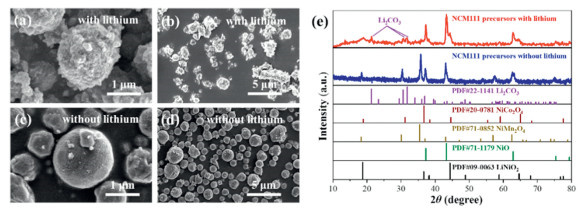
SEM images: (a, b) NCM111 precursor with lithium, (c, d) NCM111 precursor without lithium. (e) XRD patterns of NCM111 precursor with lithium and without lithium.

Transformation routes of precursor metal elements during flame-assisted spray pyrolysis and effect of Li on NCM cathode materials
Junlei Wang , Wen Du , Jinyu Li , Qianlong Wang , Shilong Li , Kun Wang


Layered oxide LiNi1-x-yCoxMnyO2 (NCM) is widely studied for lithium-ion battery cathode materials due to its high energy density, cost-effectiveness, and favorable low-temperature performance [1,2]. Enhancing NCM cathode materials performance remains a major goal, pursued through strategies such as doping [3,4], coatings [5,6], cobalt-free compositions [7,8], high-nickel formulations [9,10], single-crystal structures [11,12], and other modifications. However, the current manufacture of NCM cathode materials is primarily based on wet co-precipitation, which usually involves complex, multi-step procedures including mixing, separation, purification, and drying, requires substantial equipment investment, has long production times, and generates liquid by-products [13-17]. Recently, flame-assisted spray pyrolysis (FASP) has gained attention as a promising alternative for preparing NCM cathode materials due to its fewer steps, reduced costs achieved by utilizing low-cost salts and minimizing equipment usage, as well as enhanced environmental friendliness through the elimination of waste liquid by-products [18-20].
FASP has been successfully applied to prepare various NCM cathode materials. Ogihara et al. [21] prepared NCM111 via FASP and conducted scale-up experiments. Abram et al. [22] utilized FASP to prepare NCM111 and NCM811, examining the influence of preheating temperature and flame synthesis temperature on electrochemical performance. Yan et al. [23] used the same setup to investigate the Dy doping concentration effects on electrochemical properties and thermal stability of NCM811. Zhang et al. [24] demonstrated that urea addition during FASP synthesis of NCM811 significantly reduces required annealed time. In another study, Zhang et al. [25] established that appropriate preheating temperature helps maintain structural and electrochemical stability of NCM811 cathode materials. The above analyses show that FASP is capable of preparing NCM cathode materials. Current studies on utilizing FASP for preparing NCM cathode materials primarily focus on elucidating the effects of operational parameters such as additives [24], preheating temperature [22,25], synthesis temperature [26], annealed temperature [27], and dopant [23] on the structural, morphological, and electrochemical performance.
However, the in-depth understanding of mechanism involving FASP for preparing NCM cathode materials remains inadequate, despite its critical importance. Typically, in FASP, the fine liquid droplets containing the precursor(s) are introduced into a flame (with or without preheating), where evaporation, decomposition, nucleation, growth, and agglomeration are sequentially occurring, ultimately yielding nanostructured particles. Comparing to the earlier flame aerosol pyrolysis synthesized metal oxide nanostructured materials, for instance, SiO2 [28], TiO2 [29], ZrO2 [30], are relatively simple (though not easy), which usually involved a single metal element precursor dissolved in solution that was then converted to stable oxide by hydrolysis and thermal decomposition in the flame [31,32]. On the contrary, in the FASP synthesis process of NCM cathode materials, the precursor solution consists of a mixture of multiple metal elements, by dissolving the salts of Li, Ni, Co, and Mn [33-35]. Crucially, these four metal elements exhibit significantly different physicochemical properties, including solubility, diffusion, and precipitation behavior. For example, the solubility values of LiNO3, Ni(NO3)2, Co(NO3)2, and Mn(NO3)2 in 100 mL of water at 298 K are 1.48, 0.54, 0.56, and 0.90 mol, respectively. These differences significantly impact the FASP process. Abram et al. [22] observed that the low solubility and high concentration of nickel nitrate led to the easier formation of irregular nanoparticles from NCM811. Using molecular dynamics simulations, Hou et al. [33] demonstrated that during evaporation of Li, Ni, Co, and Mn nitrate solutions, Ni, Co, and Mn nitrates preferentially deposit at the droplet surface, generating core-shell structures, while Li distributes more evenly throughout the evaporating droplet due to its higher diffusivity. Further demonstrating the complexity, Bhat et al. [34] found that evaporating droplets containing Li, Ni, Co, and Mn multiple precursors yielded particles with radial elemental gradients, 2.5 wt% urea decomposition reaction perturbed the evaporation process, leading to particles with a uniform elemental distribution.
Furthermore, the distinct chemical reactivities and speciation of precursor metal elements significantly influence FASP processes. Lithium, as an alkali metal, exhibits high reactivity, and its salts undergo decomposition and readily react with flame components. In contrast, first-row transition metals (Ni, Co, Mn) display lower reactivity, forming stable oxides. This reactivity disparity among these four metal components may bring in great complex variations in the flame. While Zhang et al. [24] observed lithium compound nanoparticle clusters on precursor surfaces during NCM811 synthesis via FASP, though the chemical forms of Li, Ni, Co, and Mn were not yet clarified. Lithium speciation exemplifies this complexity, with multiple possible form in the flame. Studies confirm lithium salts critically impact NCM cathode materials properties. Yang et al. [36] demonstrated strong dependence of NCM111 morphology, density, and performance on lithium salt selection. Kong et al. [37] identified Li2CO3 as particularly suitable for NCM523 synthesis. Zhu et al. [38] achieved significant reduction in single-crystal NCM811 annealed temperature using LiNO3. The above studies show that lithium salts significantly affect the properties of NCM cathode materials. However, the specific role of Li on NCM cathode materials during FASP is not clear.
The main aim of the present study is to clarify the transformation routes of Li, Ni, Co, and Mn elements in multi-component precursor solutions in the flame and evaluate their impact on NCM cathode materials. The present study first employed thermogravimetric analysis and thermodynamic calculations to determine decomposition temperatures of Li, Ni, Co, and Mn nitrates. Their decomposition products in the flame were characterized to determine their forms, morphologies and transformation routes. Subsequently, NCM111 cathode materials with three different lithium salts (LiNO3-NCM111, Li2CO3-NCM111, and LiOH—NCM111) were prepared via a two-step procedure using FASP, and comprehensive characterized in structure, morphology, and electrochemical performance to clarify the effect of lithium salts.
Through the experimental procedure that was shown schematic of FASP in Fig. S1 (Supporting information), NCM111 precursors were synthesized both with and without lithium. Figs. 1a–d present comparative SEM images, revealing a key morphological distinction: NCM111 precursors with lithium exhibit significant surface roughness due to abundant nanoparticle aggregates (Figs. 1a and b), whereas NCM111 precursors without lithium show relatively smooth surfaces with minimal nanoparticle enrichment (Figs. 1c and d). Given that LiNO3 presence in the raw material solution is the sole variable, these surfaces aggregates likely represent lithium compounds. A similar phenomenon has been reported in related literature [24], though their specific form of lithium remained undetermined. XRD analysis (Fig. 1e) further elucidates this difference. Both precursors crystallize in rock-salt (analogous to NiO) and spinel (resembling NiCo2O4 and NiMn2O4) structures. Critically, the precursor with lithium displays distinct Li2CO3 characteristic peaks. This indicates that the lithium particle clusters on the surface of the NCM111 precursor with lithium may exist primarily as Li2CO3. This may be due to lithium being an alkali metal, which is more active and may react not only during thermal decomposition but also with other components in the flame. In contrast, Ni, Co, and Mn, as first-row transition metal elements, are more stable and remain as stable oxides after thermal decomposition, similar to the flame aerosol pyrolysis synthesis of SiO2 [28], TiO2 [29], and ZrO2 [30] from single-metal element precursor solutions.
Under the high temperatures of the flame, the hydrated raw metal salts Ni(NO3)2·6H2O, Co(NO3)2·6H2O, and Mn(NO3)2·4H2O undergo thermal dehydration to form anhydrous nitrates, and the following possible decomposition reactions.
|
|
|
|
|
|
|
|
M is Li, Ni, Co or Mn.
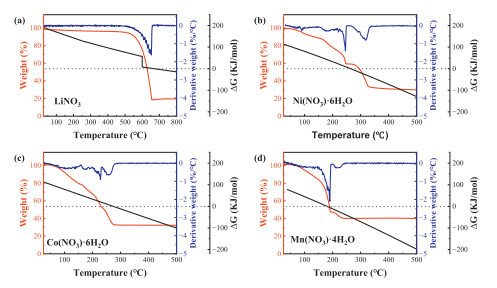
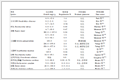
The specific decomposition reactions and temperatures of the four metal nitrates were determined by calculating the Gibbs free energy changes (∆G) and performing thermogravimetric analysis (TGA). Fig. 2 compares experimental thermogravimetric curves (red) with theoretical ∆G calculations versus temperature (black), alongside the derivative thermogravimetric (DTG) curve (blue) used to obtain the onset and end of the thermal decomposition temperature. The decomposition reactions of the four nitrates are significantly different. The decomposition reactions of LiNO3 (1), Ni(NO3)2 and Co(NO3)2 (2), and Mn(NO3)2 (3) followed the same trend as the thermogravimetric curves. As summarized in Table 1, theoretical decomposition temperatures consistently fell between experimental onset and end values. All nitrates have decomposition temperatures below the flame temperature of 1780 ℃, as measured using a type-B thermocouple, guaranteeing complete decomposed to their respective metal oxides. Particularly, the decomposition temperature of LiNO3 (660 ℃) significantly exceeds that of Ni, Co, and Mn nitrates (below 300 ℃). This distinct thermal behavior necessitates separate consideration of transformation routes: Ni, Co, and Mn nitrates can be treated as a group, while LiNO3 requires independent analysis in the flame.
 DownLoad:
CSV
| Sample | Theoretical decomposition temperature (℃) | Experimental onset decomposition temperature (℃) | Experimental end decomposition temperature (℃) |
| LiNO3 | 660.0 | 506.1 | 696.2 |
| Ni(NO3)2·6H2O | 264.0 | 268.3 | 345.1 |
| Co(NO3)2·6H2O | 275.0 | 223.9 | 300.8 |
| Mn(NO3)2·4H2O | 180.0 | 186.8 | 255.8 |
TGA confirms that Li, Ni, Co, and Mn nitrates decomposed completely in the flame, yielding their respective oxides as the primary decomposition products. This section delves into the subsequent transformation routes of these four elements, Li, Ni, Co, and Mn, commencing from their oxide states. The present study utilizes a non-premixed CH4nullO2 flame, producing predominantly CO2 and H2O as combustion products. The potential reactions involving Li2O, NiO, CoO, and MnO2 with CO2 and H2O are outlined as follows:
|
|
|
|
|
|
|
|
|
|
M is Li, Ni, Co or Mn.
Fig. 3a illustrates the hypothesized transformation route of the lithium element in the flame. As shown in reaction (1), LiNO3 decomposes thermally into Li2O and NO. Consequently, the possible reactions (5–9) involving Li2O as a reactant were proposed. Fig. 3b presents the calculated ∆G for the above reactions from 0 ℃ to 2000 ℃, indicating thermodynamic feasibility (ΔG < 0) for all reactions below approximately 1050 ℃. CO2 and H2O, produced by the combustion of methane, can react with Li2O, to form Li2CO3 and LiOH, respectively [39]. To validate the accuracy of the transformation route LiNO3 in the flame, FASP and spray pyrolysis experiments were conducted using neat LiNO3 solutions. Figs. 3c and d and Fig. S4a (Supporting information) present the characterization results obtained under the same conditions as the NCM111 precursors with and without lithium, with carrier gas (N2), CH4, and O2 flow rates of 1.5, 0.25, and 1.00 L/min, respectively. Fig. 3c shows the XRD pattern where only the characteristic peak of Li2CO3 is present, indicating that Li2O is completely converted to Li2CO3. The SEM images in Fig. 3d and Fig. S4a reveal that the Li2CO3 particle size is significantly smaller than that of NCM111 precursors, matching the size of nanoclusters observed on NCM111 precursors with lithium, suggesting these nanoclusters are Li2CO3. When the dilution gas (N2 at 2.25 L/min) was introduced into the CH4 line to lower the flame temperature, the XRD patterns of the yielded products (Fig. 3e) were dominated by Li2CO3 characteristic peaks, with LiNO3 lower intensity characteristic peaks also present. This indicates that even at reduced temperatures, Li2O can still be converted to Li2CO3. Minor residual LiNO3 results from incomplete thermal decomposition at lower temperature. These experimental findings essentially confirm the transformation route of LiNO3-Li2O-Li2CO3, corresponding to reaction (6). So does LiOH, the intermediate product of the transformation route of LiNO3 in the flame (Fig. 3a), exist? In the CH4nullO2 flame, where there is a large amount of CO2, LiOH would react rapidly with CO2, making it difficult to detect in the products of FASP. To address this challenge, we designed a spray pyrolysis experiment. By using N2 as the carrier gas, we avoided contact with CO2. We fed neat LiNO3 aerosol into a tube furnace set at 680 ℃ to ensure the pyrolysis of LiNO3 (Fig. S2 in Supporting information). Fig. 3f shows the XRD pattern of the product from this experiment. Prominent LiOH peaks and weak LiNO3 peaks are visible, indicating that Li2O reacts with H2O to form LiOH. This confirms the transformation route of LiNO3-Li2O-LiOH, corresponding to reactions (5) and (7).
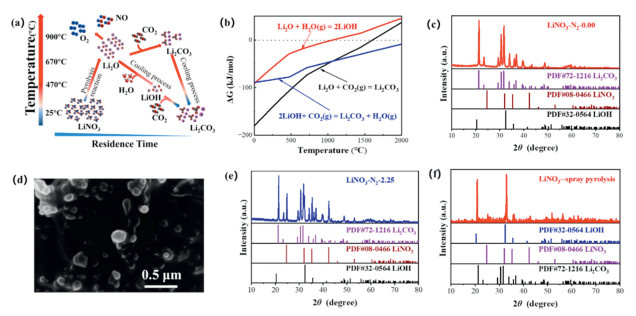
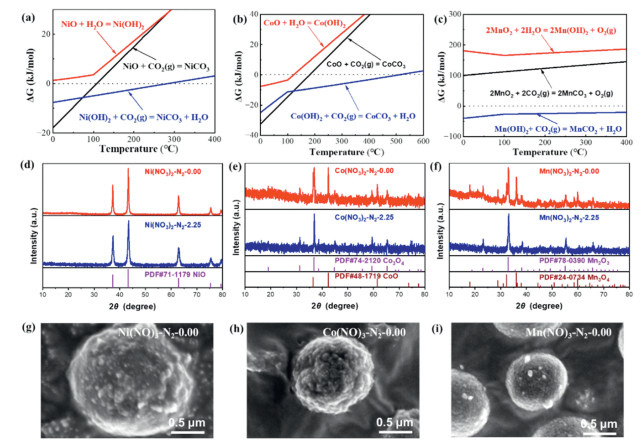
Fig. 4a illustrates the ΔG varies with temperature for NiO reactions with CO2 and H2O. For reaction (5) of NiO, ΔG > 0 across the temperature range, indicating thermodynamic infeasibility. While NiO reaction (6) exhibits ΔG < 0 below 100 ℃, the low reaction temperature relative to the Li2O results in negligible reaction kinetics, preventing equilibrium attainment. A similar trend is observed for CoO (Fig. 4b), although reactions (5) and (6) exhibit ΔG < 0 below approximately 180 ℃, kinetic limitations preclude significant reaction progress. For MnO2 (Fig. 4c), ΔG > 0 for reactions (8) and (9) confirms thermodynamic non-spontaneity. FASP experiments were conducted for the neat Ni, Co, and Mn nitrates with (N2 = 2.25 L/min) and without (N2 = 0.00 L/min) diluent gas. The XRD patterns of the products are displayed in Figs. 4d-f. Specifically, Ni(NO3)2 decomposes to NiO, which remains thermally stable in the flame without further transformation. Co(NO3)2 decomposes to cobalt(Ⅱ) oxide (CoO), which undergoes partial oxidation to form cobalt(Ⅲ) oxide (Co3O4) under the high-temperature flame conditions. Mn(NO3)2 initially decomposes to manganese(Ⅳ) oxide (MnO2), followed by its reduction to manganese(Ⅲ) oxide (Mn2O3) and ultimately to manganese (Ⅱ, Ⅲ) oxide (Mn3O4). A summary of the transformation routes of the three nitrates (Ni, Co, and Mn) obtained in the experiment is shown in Fig. S3 (Supporting information). Critically, these experiments confirm that the thermal decomposition of the Ni, Co, and Mn nitrates leads to non-reactive oxides. This is corroborated by the XRD pattern of the NCM111 precursor without lithium (Fig. 1e), which shows only complex oxide phases without carbonate or hydroxide signatures. Figs. 4g–i and Figs. S4b-d (Supporting information) show the SEM images of Ni, Co, and Mn nitrate FASP products. Co(NO3)2 and Mn(NO3)2 products have smoother surfaces, which is consistent with the SEM results of the NCM111 precursor without lithium, supporting the conclusion that Co and Mn oxides dominate the morphology of NCM111 precursor without lithium.
In summary, the transformation routes of the four nitrates can be categorized into two groups: Ni, Co, and Mn nitrates decompose at lower temperatures (<300 ℃), producing non-reactive composite oxides; While LiNO3 decomposes at a significantly higher temperature (660 ℃), producing reactive Li2O, eventually forming LiOH and Li2CO3 under the environment of CO2 and H2O, as well as the unconverted LiNO3. Different lithium salts have distinct physicochemical properties, such as melting point, decomposition temperature, and chemical composition, critically governing NCM cathode material structure and electrochemical performance. The influence of lithium on the NCM material properties is evident not only in the post-annealing treatment but also during the FASP of precursor. Since the carbonate ions (CO32-) in Li2CO3 and hydroxide ions (OH-) in LiOH can precipitate with metal ions like Ni2+, obtaining a well-mixed precursor solution is difficult [40]. To isolate and elucidate the specific role of lithium, the present study prepared Ni, Co, and Mn oxide precursor, added lithium salts (LiNO3, Li2CO3, LiOH·H2O), and explored their impact on NCM cathode material properties during FASP.
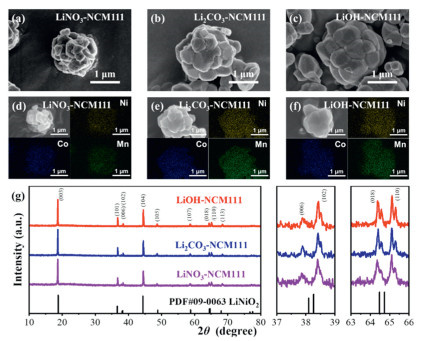
Figs. 5a–c and Figs. S5a–c (Supporting information) show that Li2CO3-NCM111 and LiOH—NCM111 maintain the spherical structure with significantly larger primary particles, whereas the LiNO3-NCM111 tends to agglomerate, forming irregular particles with smaller primary particles. This morphological divergence persists after post-annealing in Fig. S6 (Supporting information), LiNO3-NCM111 solidified, whereas Li2CO3-NCM111 and LiOH—NCM111 retains the powder states. The more uniform spherical morphology and larger primary particles of Li2CO3-NCM111 and LiOH—NCM111 suggest better electrochemical performance compared to LiNO3-NCM111. The elemental distribution in Figs. 5d–f and Figs. S5d–f (Supporting information) for NCM111 cathode materials prepared with different lithium salts are also homogeneous, and the elemental ratios listed in Table S1 (Supporting information), Ni:Co:Mn ≈ 0.33:0.33:0.33, are consistent with the NCM111 precursor without lithium, indicating no significant elemental segregation during post-annealing treatment. Fig. 5g presents the XRD patterns of NCM111 cathode materials prepared with different lithium salts. All the samples adopt the α-NaFeO2 layered structure (space group R-3m, PDF #06–0063), with sharp diffraction peaks indicating good crystallinity [12]. No extraneous phases were observed, demonstrating material purity. Clear (006)/(102) and (108)/(110) peak splitting confirms a well-ordered layered structure. This splitting is more distinct in Li2CO3-NCM111 and LiOH—NCM111 than in LiNO3-NCM111. (003)/(104) peak intensity ratios (Table 2) assess Li/Ni cation disorder in layered structures. I(003)/I(104) > 1.2 indicates low cation disorder and developed layered structure [41]. LiOH—NCM111 exhibits the highest ratio (1.356), signifying the lowest cation disorder degree. To evaluate precise crystal structure information, Rietveld refinement in GSAS-Ⅱ was performed, the results are shown in Fig. S7 (Supporting information) and Table 2 [42]. The c/a ratio typically characterizes triangular distortion. The differences in the values of a and c are small for all samples, leading to minimal variation in the c/a ratio, which indicates that the lithium salts do not significantly influence this parameter [43].
 DownLoad:
CSV
| Sample | a (Å) | c (Å) | c/a | I(003)/I(104) | Rp (%) | Rwp (%) |
| LiNO3-NCM111 | 2.8631 | 14.2495 | 4.9769 | 1.290 | 5.64 | 3.46 |
| Li2CO3-NCM111 | 2.8624 | 14.2418 | 4.9754 | 1.321 | 4.84 | 3.14 |
| LiOH–NCM111 | 2.8621 | 14.2418 | 4.9760 | 1.356 | 4.78 | 3.16 |
The initial charge/discharge curves of NCM111 cathode materials prepared with different lithium salts at 0.1 C rate (1 C = 160 mA/g) between 2.8 V and 4.3 V are shown in Fig. 6a. The initial discharge specific capacities and Coulombic efficiencies are 161.5 mAh/g and 90.78% for Li2CO3-NCM111, and 162.6 mAh/g and 90.13% for LiOH—NCM111. In contrast, LiNO3-NCM111 exhibits significantly lower values of 158.4 mAh/g and 90.57%. The melting points of LiOH, Li2CO3, and LiNO3 are 471, 618, and 264 ℃, respectively. The lower initial discharge capacity of LiNO3-NCM111 is attributed to lithium loss during annealing, resulting from its low melting point. The rate performance of the NCM111 cathode materials at 0.1–1 C, is compared in Fig. 6b. At a current density of 1 C, the discharge specific capacities of Li2CO3-NCM111 and LiOH—NCM111 were 134.7 mAh/g and 130.1 mAh/g respectively, while that of LiNO3-NCM111 was significantly lower at 95.6 mAh/g. Fig. 6c shows the cycling performance of NCM111 cathode materials at 0.33 C rate between 2.8 V and 4.3 V at 25 ℃. After 200 cycles, the discharge specific capacities of Li2CO3-NCM111 (125.0 mAh/g) and LiOH—NCM111 (129.8 mAh/g) are significantly higher than that of LiNO3-NCM111 (118.7 mAh/g), and similar trends are observed in capacity retention. The Coulombic efficiencies of LiNO3-NCM111, Li2CO3-NCM111, and LiOH—NCM111 are lower during the first 3 cycles, likely due to residual alkali on the sample surfaces, as these three samples have not undergone washing.
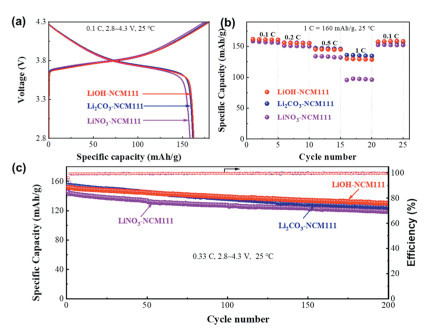
Table 3 summarizes the electrochemical performances of NCM111 cathode materials, with LiOH—NCM111 exhibiting superior electrochemical performance. This results from its well-ordered layered structures, very low degree of Li/Ni disorder, uniform elemental distribution, stable spherical structures, and larger primary particles as detailed in Fig. 5 and Table 2. Fig. S8 (Supporting information) shows the dQ/dV curves for NCM111 cathode materials during cycling. All exhibit similar redox peak pairs, indicating identical charge/discharge mechanism attributed to Ni2+/4+ and Co3+/4+ reactions [44,45]. However, the voltage differences of redox peaks (H1-M) between LiOH—NCM111, Li2CO3-NCM111 and LiNO3-NCM111 increases sequentially during cycling. The smaller the voltage difference of redox peaks, the smaller the polarization and the better the reversibility of the sample. Therefore, LiOH—NCM111 shows enhanced reversibility [46]. Finally, Table S2 (Supporting information) compares the electrochemical performance of LiOH—NCM111 with those from typical synthesis methods and commercial NCM111. Overall, the electrochemical performance of NCM111 cathode materials prepared by FASP by the present study is either equivalent to or superior to these of materials prepared by typical methods or from commercial materials.
DownLoad:
CSV
| Sample | Initial discharge capacity (mAh/g) | Initial coulomb efficiency (%) | Discharge specific capacity after 200 cycles (mAh/g) | Capacity retention after 200 cycles (%) |
| LiNO3-NCM111 | 158.4 | 90.57 | 118.7 | 81.5 |
| Li2CO3-NCM111 | 161.5 | 90.78 | 125.0 | 81.0 |
| LiOH–NCM111 | 162.6 | 90.13 | 129.8 | 85.6 |
In the present study, the transformation routes of the Li, Ni, Co, and Mn metal elements in FASP and the effects of the lithium salts on NCM cathode material were investigated. For Li, Ni, Co, and Mn nitrates commonly used in FASP, thermodynamic calculations and thermogravimetric analyses were performed, showing that the decomposition temperature of LiNO3 (660 ℃) was significantly higher than that of Ni, Co, and Mn nitrates (less than 300 ℃). Therefore, to simplify the analysis of the transformation routes of Li, Ni, Co, and Mn elements in the flame, Ni, Co, and Mn nitrates could be studied as a group. The results suggested that Ni, Co, and Mn nitrates were converted to non-reactive stable oxides such as NiO. while LiNO3 was converted to the reactive Li2O, eventually leading to form LiOH and Li2CO3 under the environment of CO2 and H2O in the flame. Then, to clarify the effects of the three lithium salts on the NCM cathode material, NCM111 cathode materials with three different lithium salts (LiNO3-NCM111, Li2CO3-NCM111, and LiOH—NCM111) were prepared by FASP. Characterization results showed that the lithium salts significantly influenced the structure of NCM111 cathode materials; LiOH—NCM111 had the lowest degree of Li/Ni disorder; Li2CO3-NCM111 and LiOH—NCM111 maintained a stable spherical structure with larger primary particles, whereas LiNO3-NCM111 generated irregular particles. Electrochemical tests indicated that electrochemical performance of LiOH—NCM111, such as initial discharge specific capacity, cycling performance, rate performance, and reversibility were overall good.
Junlei Wang: Writing – original draft, Resources, Investigation, Funding acquisition, Data curation. Wen Du: Software, Methodology, Data curation. Jinyu Li: Investigation, Data curation. Qianlong Wang: Validation, Supervision, Resources, Funding acquisition. Shilong Li: Writing – review & editing, Supervision, Project administration. Kun Wang: Writing – review & editing, Supervision, Resources, Funding acquisition, Conceptualization.
The authors declare that they have no known competing financial interests or personal relationships that could have appeared to influence the work reported in this paper.
This work was financially supported by the Tianjin Research Innovation Project for Postgraduate Students (No. 2022BKY057) and the National Natural Science Foundation of China (No. 52176124).
Supplementary material associated with this article can be found, in the online version, at doi:
M.A. Kebede, Curr. Opin. Electrochem. 39 (2023) 101261. doi: 10.1016/j.coelec.2023.101261
H. Xie, H. Peng, D. Jiang, et al., Chem. Eng. J. 470 (2023) 144051. doi: 10.1016/j.cej.2023.144051
J. Huang, Y. Wang, W. Ling, et al., J. Energy Storage 106 (2025) 114926. doi: 10.1016/j.est.2024.114926
J. Dai, Z. He, X. Li, et al., Chin. Chem. Lett. 36 (2025) 110063. doi: 10.1016/j.cclet.2024.110063
G. Yang, K. Pan, Z. Yan, et al., Chem. Eng. J. 452 (2023) 139405. doi: 10.1016/j.cej.2022.139405
H. Tang, D. Liu, J. Huang, et al., Chin. Chem. Lett. 36 (2025) 109987. doi: 10.1016/j.cclet.2024.109987
T.C. Liu, L. Yu, J.J. Liu, et al., Nat. Energy 6 (2021) 277–286. doi: 10.1038/s41560-021-00776-y
H. Zhao, W.Y.A. Lam, L. Sheng, et al., Adv. Energy Mater. 12 (2022) 2103894. doi: 10.1002/aenm.202103894
W. Liu, P. Oh, X. Liu, et al., Angew. Chem. Int. Ed. 54 (2015) 4440–4457. doi: 10.1002/anie.201409262
J. Kim, H. Lee, H. Cha, et al., Adv. Energy Mater. 8 (2018) 1702028. doi: 10.1002/aenm.201702028
C.H. Jo, N. Voronina, S.T. Myung, Energy Storage Mater. 51 (2022) 568–587. doi: 10.1016/j.ensm.2022.06.024
J. Wang, X. Lu, Y. Zhang, et al., J. Energy Chem. 65 (2022) 681–687. doi: 10.1016/j.jechem.2021.06.017
W. Du, J.L. Wang, Y.F. Xu, et al., J. Cleaner Prod. 472 (2024) 143499. doi: 10.1016/j.jclepro.2024.143499
H. Zheng, Y. Zhang, Z. Xu, et al., J. Energy Inst. 117 (2024) 101804. doi: 10.1016/j.joei.2024.101804
L. Lou, X. Liu, Y. Wang, et al., Chin. Chem. Lett. 36 (2025) 109726. doi: 10.1016/j.cclet.2024.109726
C. Chen, W. Du, Y. Xu, et al., Prog. Nat. Sci. Mater. 35 (2025) 814–821. doi: 10.1016/j.pnsc.2025.06.001
J. Wang, S. Li, W. Du, et al., Powder Technol. 464 (2025) 121233. doi: 10.1016/j.powtec.2025.121233
G.Y. Zang, J.A. Zhang, S.Q. Xu, et al., Energy 218 (2021) 119504. doi: 10.1016/j.energy.2020.119504
H. Chen, H.K. Mulmudi, A. Tricoli, Chin. Chem. Lett. 31 (2020) 601–604. doi: 10.1016/j.cclet.2019.05.016
J.L. Wang, J.Y. Li, S.L. Li, et al., Prog. Nat. Sci. Mater. 35 (2025) 485–491. doi: 10.1145/3760269.3760346
T. Ogihara, T. Kodera, K. Myoujin, et al., Mater. Sci. Eng. B: Adv. 161 (2009) 109–114. doi: 10.1016/j.mseb.2009.01.013
C. Abram, J.N. Shan, X.F. Yang, et al., ACS Appl. Energy Mater. 2 (2019) 1319–1329. doi: 10.1021/acsaem.8b01892
C. Yan, X.F. Yang, H. Zhao, et al., Proc. Combust. Inst. 38 (2021) 6623–6630. doi: 10.1016/j.proci.2020.06.332
J.N. Zhang, V.L. Muldoon, S.L. Deng, J. Power Sources 528 (2022) 231244. doi: 10.1016/j.jpowsour.2022.231244
J.N. Zhang, V.L. Muldoon, S.L. Deng, Proc. Combust. Inst. 39 (2023) 1165–1173. doi: 10.1016/j.proci.2022.10.014
J.E. Madero, J. Li, K.Y. Shen, et al., Appl. Energy Combust. Sci. 5 (2021) 100020.
J.H. Kim, J.H. Yi, Y.N. Ko, et al., Mater. Chem. Phys. 134 (2012) 254–259. doi: 10.1016/j.matchemphys.2012.02.060
H.K. Kammler, L. Mädler, S.E. Pratsinis, Chem. Eng. Technol. 24 (2001) 583–596. doi: 10.1002/1521-4125(200106)24:6<583::AID-CEAT583>3.0.CO;2-H
D. Hou, Q. Mao, Y. Ren, et al., Carbon 201 (2023) 189–199. doi: 10.1016/j.carbon.2022.09.002
W.Y. Teoh, R. Amal, L. Madler, Nanoscale 2 (2010) 1324–1347. doi: 10.1039/c0nr00017e
S. Tsantilis, H.K. Kammler, S.E. Pratsinis, Chem. Eng. Sci. 57 (2002) 2139–2156. doi: 10.1016/S0009-2509(02)00107-0
K. Okuyama, R. Ushio, Y. Kousaka, et al., AlChE J. 36 (2004) 409–419.
D. Hou, G. Wang, J. Gao, et al., Nanoscale 15 (2023) 5877–5890. doi: 10.1039/d3nr00060e
M. Bhat, S. Luo, J. Zhang, et al., Chem. Eng. J. 479 (2024) 147417. doi: 10.1016/j.cej.2023.147417
Y. Liang, K. Ku, Y. Lin, et al., ACS Appl. Mater. 13 (2021) 26915–26923. doi: 10.1021/acsami.1c03930
S. Yang, X. Wang, X. Yang, et al., J. Solid State Electrochem. 16 (2011) 1229–1237.
J.Z. Kong, F. Zhou, C.B. Wang, et al., J. Alloys Compd. 554 (2013) 221–226. doi: 10.1016/j.jallcom.2012.11.090
J. Zhu, J.C. Zheng, G.L. Cao, et al., J. Power Sources 464 (2020) 228207. doi: 10.1016/j.jpowsour.2020.228207
K. Matsumoto, R. Kuzuo, K. Takeya, et al., J. Power Sources 81-82 (1999) 558–561. doi: 10.1016/S0378-7753(99)00216-5
M. Ihalainen, M. Kortelainen, A. Mesceriakovas, et al., Adv. Powder Technol. 34 (2023) 104187. doi: 10.1016/j.apt.2023.104187
M. Jiang, P. Wang, Q. Chen, et al., Chin. Chem. Lett. 36 (2025) 110040. doi: 10.1016/j.cclet.2024.110040
B.H. Toby, R.B. Von Dreele, J. Appl. Crystallogr. 46 (2013) 544–549. doi: 10.1107/S0021889813003531
Z.D. Huang, X.M. Liu, S.W. Oh, et al., J. Mater. Chem. 21 (2011) 10777–10784. doi: 10.1039/c1jm00059d
Y. Wang, J. Roller, R. Maric, ACS Omega 3 (2018) 3966–3973. doi: 10.1021/acsomega.8b00380
K. Fröhlich, E. Legotin, F. Bärhold, et al., J. Solid State Electrochem. 21 (2017) 3403–3410. doi: 10.1007/s10008-017-3644-x
H. Sclar, D. Kovacheva, E. Zhecheva, et al., J. Electrochem. Soc. 156 (2009) A938–A948. doi: 10.1149/1.3212850

Figure 1 SEM images: (a, b) NCM111 precursor with lithium, (c, d) NCM111 precursor without lithium. (e) XRD patterns of NCM111 precursor with lithium and without lithium.

Figure 2 Experimental TGA curves, DTG curves and theoretical ∆G calculations of the raw nitrate salts: (a) LiNO3, (b) Ni(NO3)2·6H2O, (c) Co(NO3)2·6H2O, (d) Mn(NO3)2·4H2O.

Figure 3 (a) Transformation route of LiNO3 in the flame. (b) ΔG variation with temperature for reactions of Li2O with CO2 or H2O. (c) XRD pattern of LiNO3-N2–0.00. (d) SEM image of LiNO3-N2–0.00. (e) XRD pattern of LiNO3-N2–2.25. (f) XRD pattern of LiNO3-spray pyrolysis.

Figure 4 The ΔG variation with temperature for reactions of Ni, Co, and Mn oxides with CO2 or H2O: (a) NiO, (b) CoO, (c) MnO2. XRD pattern of (d) Ni(NO3)2-N2–0.00 and Ni(NO3)2-N2–2.25, (e) Co(NO3)2-N2–0.00 and Co(NO3)2-N2–2.25, (f) Mn(NO3)2-N2–0.00 and Mn(NO3)2-N2–2.25. SEM image of (g) Ni(NO3)2-N2–0.00, (h) Co(NO3)2-N2–0.00, (i) Mn(NO3)2-N2–0.00.

Figure 5 SEM images of the NCM111 cathode materials of (a) LiNO3-NCM111, (b) Li2CO3-NCM111, and (c) LiOH–NCM111. EDS mapping images of the NCM111 cathode materials of (d) LiNO3-NCM111, (e) Li2CO3-NCM111, and (f) LiOH–NCM111. (g) XRD patterns of NCM111 prepared with different lithium salts.

Figure 6 Electrochemical performance of NCM111 cathode materials prepared with different lithium salts: (a) Initial charge/discharge curves (0.1 C, 1 C = 160 mA/g). (b) Rate performance from 0.1 C to 1 C. (c) Cycling performance at 0.33 C within a potential range of 2.8–4.3 V at 25 ℃.
Table 1. Theoretical (∆G < 0) and experimental decomposition temperatures of LiNO3, Ni(NO3)2·6H2O, Co(NO3)2·6H2O, Mn(NO3)2·4H2O.
| Sample | Theoretical decomposition temperature (℃) | Experimental onset decomposition temperature (℃) | Experimental end decomposition temperature (℃) |
| LiNO3 | 660.0 | 506.1 | 696.2 |
| Ni(NO3)2·6H2O | 264.0 | 268.3 | 345.1 |
| Co(NO3)2·6H2O | 275.0 | 223.9 | 300.8 |
| Mn(NO3)2·4H2O | 180.0 | 186.8 | 255.8 |
 下载: 导出CSV
Table 2. Structural parameters obtained from the Rietveld refinement of XRD patterns.
| Sample | a (Å) | c (Å) | c/a | I(003)/I(104) | Rp (%) | Rwp (%) |
| LiNO3-NCM111 | 2.8631 | 14.2495 | 4.9769 | 1.290 | 5.64 | 3.46 |
| Li2CO3-NCM111 | 2.8624 | 14.2418 | 4.9754 | 1.321 | 4.84 | 3.14 |
| LiOH–NCM111 | 2.8621 | 14.2418 | 4.9760 | 1.356 | 4.78 | 3.16 |
下载: 导出CSV
Table 3. Summary of electrochemical performance of NCM111 cathode materials prepared with different lithium salts.
| Sample | Initial discharge capacity (mAh/g) | Initial coulomb efficiency (%) | Discharge specific capacity after 200 cycles (mAh/g) | Capacity retention after 200 cycles (%) |
| LiNO3-NCM111 | 158.4 | 90.57 | 118.7 | 81.5 |
| Li2CO3-NCM111 | 161.5 | 90.78 | 125.0 | 81.0 |
| LiOH–NCM111 | 162.6 | 90.13 | 129.8 | 85.6 |
下载: 导出CSV

 扫一扫看文章


扫一扫关注我们
 下载: