Login In

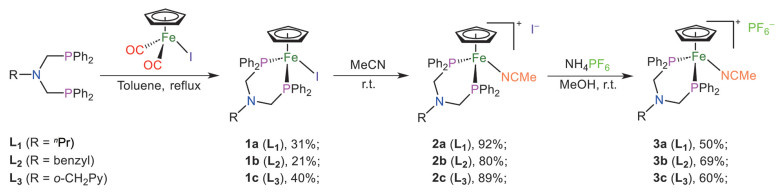
Influence of the pendant amine base in iron complexes on the ligand exchange reaction and electrocatalytic activity for proton reduction
- Corresponding author: Zhiyin XIAO, zhiyin.xiao@zjxu.edu.cn Wei ZHONG, weizhong@zjxu.edu.cn
Figures(10)
Citation:
Mengdan YU, Hailong WANG, Mookan NATARAJAN, Kangyu LOU, Zhiyin XIAO, Chunxin LU, Wei ZHONG, Xiaoming LIU. Influence of the pendant amine base in iron complexes on the ligand exchange reaction and electrocatalytic activity for proton reduction[J]. Chinese Journal of Inorganic Chemistry,
;2026, 42(11): 2459-2474.
doi:
10.11862/CJIC.20260129

Figures(10)


LUBITZ W, OGATA H, RÜDIGER O, REIJERSE E. Hydrogenases[J]. Chem. Rev., 2014, 114(8): 4081-4148
doi: 10.1021/cr4005814
CRACKNELL J A, VINCENT K A, ARMSTRONG F A. Enzymes as working or inspirational electrocatalysts for fuel cells and electrolysis[J]. Chem. Rev., 2008, 108(7): 2439-2461
doi: 10.1021/cr0680639
FREY M. Hydrogenases: Hydrogen-activating enzymes[J]. ChemBioChem, 2002, 3(2-3): 153-160
BRITT R D, RAUCHFUSS T B, RAO G. The H-cluster of [FeFe] hydrogenases: Its enzymatic synthesis and parallel inorganic semisynthesis[J]. Accounts Chem. Res., 2024, 57(14): 1941-1950
doi: 10.1021/acs.accounts.4c00231
BERGGREN G, ADAMSKA A, LAMBERTZ C, SIMMONS T R, ESSELBORN J, ATTA M, GAMBARELLI S, MOUESCA J M, REIJERSE E, LUBITZ W, HAPPE T, ARTERO V, FONTECAVE M. Biomimetic assembly and activation of [FeFe]-hydrogenases[J]. Nature, 2013, 499(7456): 66-69
doi: 10.1038/nature12239
YU M D, CUI C G, MOOKAN N, XIAO Z Y, ZHONG W. A rotational isomerization of diiron complexes of ferrole type involved in the catalytic hydroboration of aldehydes under mild conditions[J]. J. Mol. Struct., 2024, 1296: 136840
doi: 10.1016/j.molstruc.2023.136840
XIAO Z Y, ZHONG W, LIU X M. Recent developments in electrochemical investigations into iron carbonyl complexes relevant to the iron centres of hydrogenases[J]. Dalton Trans., 2022, 51(1): 40-47
doi: 10.1039/D1DT02705K
JIANG X J, XIAO Z Y, ZHONG W, LIU X M. Brief survey of diiron and monoiron carbonyl complexes and their potentials as CO-releasing molecules (CORMs)[J]. Coord. Chem. Rev., 2021, 429: 213634
doi: 10.1016/j.ccr.2020.213634
ZHONG W, XIAO Z Y, QIAN G F, LIU X M. The influence of a peripheral functional group of diiron hexacarbonyl complexes on their electrochemistry and electrocatalytic reduction of proton[J]. Electrochim. Acta, 2017, 247: 779-786
doi: 10.1016/j.electacta.2017.07.072
XIAO Z Y, WEI Z H, LONG L, WANG Y L, EVANS D J, LIU X M. Diiron carbonyl complexes possessing a {Fe(Ⅱ)Fe(Ⅱ)} core: Synthesis, characterisation, and electrochemical investigation[J]. Dalton Trans., 2011, 40(16): 4291-4299
doi: 10.1039/c0dt01465f
SCHILTER D, CAMARA J M, HUYNH M T, HAMMES-SCHIFFER S, RAUCHFUSS T B. Hydrogenase enzymes and their synthetic models: The role of metal hydrides[J]. Chem. Rev., 2016, 116(15): 8693-8749
doi: 10.1021/acs.chemrev.6b00180
LI Y L, RAUCHFUSS T B. Synthesis of diiron(Ⅰ) dithiolato carbonyl complexes[J]. Chem. Rev., 2016, 116(12): 7043-7077
doi: 10.1021/acs.chemrev.5b00669
KLEINHAUS J T, WITTKAMP F, YADAV S, SIEGMUND D, APFEL U P. [FeFe]-hydrogenases: Maturation and reactivity of enzymatic systems and overview of biomimetic models[J]. Chem. Soc. Rev., 2021, 50(3): 1668-1784
doi: 10.1039/D0CS01089H
ARRIGONI F, de GIOIA L, ELLEOUET C, PÉTILLON F Y, SCHOLLHAMMER P, TALARMIN J, ZAMPELLA G. Normal vs. inverted ordering of reduction potentials in [FeFe]-hydrogenases biomimetics: Effect of the dithiolate bulk[J]. Chem.‒Eur. J., 2023, 29(38): e202300569
doi: 10.1002/chem.202300569
KUMAR P, TYAGI V P, GHOSH M. Exploring the multifarious role of the ligand in electrocatalytic hydrogen evolution reaction pathways[J]. Chem.‒Eur. J., 2023, 29(71): e202302195
doi: 10.1002/chem.202302195
LIU X F, WANG S J, ZHAO P H. Di-iron dithiolato complexes with 3-bromothiophene moiety: Preparation, structures, and electrochemistry[J]. J. Mol. Struct., 2023, 1294: 136454
doi: 10.1016/j.molstruc.2023.136454
LÜ S, BAI S F, GAO X P, WANG Y L, LI Q L. Aminodiphosphine substituted 2Fe2Se complex as new precursor to single and double butterfly Fe/Se models related to FeFe hydrogenase models[J]. J. Mol. Struct., 2023, 1290: 135939
doi: 10.1016/j.molstruc.2023.135939
BASMA I, ABUL-FUTOUH H, ABAALKHAIL S J, LIEBING P, WEIGAND W. FeFe-hydrogenase H-cluster mimics mediated by ferrocenyl hetaryl thioketone derivatives[J]. J. Mol. Struct., 2024, 1295: 136630
doi: 10.1016/j.molstruc.2023.136630
GAO X P, LI S X, HU K, DENG C L, BAI S F, WANG Y L, XIE H T, LU S, LI Y L, LI Q L. Diiron azadithiolate models with bulky bridgehead moiety: Synthesis, structure and electrochemistry[J]. J. Mol. Struct., 2024, 1306: 137881
doi: 10.1016/j.molstruc.2024.137881
GAO Y, JIN B, ZHANG J L, JING X B, ZHAO P H. Tertiary phosphine-supported diiron model complexes relevant to FeFe-hydrogenases[J]. Appl. Organomet. Chem., 2024, 38(9): e7608
doi: 10.1002/aoc.7608
WANG R L, MAO J L, JIN G X, MA J P, WANG H Y, QIN J. 2-Cyanobenzyl-substituted FeFe-hydrogenase compounds: Preparation, characterization, and photocatalytic H2-production performance[J]. Chinese J. Inorg. Chem., 2026, 42(4): 817-825
JIANG C Y, LIU X F. Synthesis, structural characterization, electrocatalytic proton reduction, and fungicidal activity of thiazole-containing di-iron complexes[J]. Chinese J. Inorg. Chem., 2026, 42(2): 355-364
ZHU L J, LIU X F. Synthesis, characterization and electrocatalytic hydrogen evolution of two di-iron complexes containing a phosphine ligand with a pendant amine[J]. Chinese J. Inorg. Chem., 2025, 41(5): 939-947
LU L X, LIU S X, XU J, JIN Z Q, CHENG J J, ZHAO J Y, WANG F B, WANG H Y. FeFe-hydrogenase-containing compound and its photocatalytic H2-production performance[J]. Chinese J. Inorg. Chem., 2025, 41(12): 2584-2590
LIU X F, WANG S J, ZHAO P H. Ligand substitution of diiron hexacarbonyl complex with aminodiphosphine to prepare diiron aminophosphine complexes relevant to FeFe-hydrogenases[J]. Chinese J. Inorg. Chem., 2025, 41(9): 1851-1858
KIM C A, WU J, ZHU J, LI H, KE Z. Computational modeling and experimental approaches for understanding the mechanisms of FeFe-hydrogenase[J]. Adv. Sci., 2025, 12(21): 2408297
doi: 10.1002/advs.202408297
MANDAL S K, RAY S, CHOUDHURY J. The key role of proton-responsive groups in electrochemical hydrogen evolution reaction[J]. ChemCatChem, 2024, 16(23): e202401149
doi: 10.1002/cctc.202401149
HOGARTH G. An unexpected leading role for Fe2(CO)6(μ-pdt) in our understanding of FeFe-H2ases and the search for clean hydrogen production[J]. Coord. Chem. Rev., 2023, 490: 215174
doi: 10.1016/j.ccr.2023.215174
AGARWAL T, KUMAR N, RITU, KAUR-GHUMAAN S. Homogeneous HER electrocatalysis using monothiolate ligand-based {FeS} complexes: A review[J]. Electrochim. Acta, 2024, 507: 144852
doi: 10.1016/j.electacta.2024.144852
CHEAH M H, TARD C, BORG S J, LIU X M, IBRAHIM S K, PICKETT C J, BEST S P. Modeling [Fe-Fe] hydrogenase: Evidence for bridging carbonyl and distal iron coordination vacancy in an electrocatalytically competent proton reduction by an iron thiolate assembly that operates through Fe(0)-Fe(Ⅱ) levels[J]. J. Am. Chem. Soc., 2007, 129(36): 11085-11092
doi: 10.1021/ja071331f
WEBER K, WEYHERMUELLER T, BILL E, ERDEM O F, LUBITZ W. Design and characterization of phosphine iron hydrides: Toward hydrogen-producing catalysts[J]. Inorg. Chem., 2015, 54(14): 6928-6937
doi: 10.1021/acs.inorgchem.5b00911
BEYLER M, EZZAHER S, KARNAHL M, SANTONI M P, LOMOTH R, OTT S. Pentacoordinate iron complexes as functional models of the distal iron in [FeFe] hydrogenases[J]. Chem. Commun., 2011, 47(42): 11662-11664
doi: 10.1039/c1cc14449a
ORTHABER A, KARNAHL M, TSCHIERLEI S, STREICH D, STEIN M, OTT S. Coordination and conformational isomers in mononuclear iron complexes with pertinence to the [FeFe] hydrogenase active site[J]. Dalton Trans., 2014, 43(11): 4537-4549
doi: 10.1039/C3DT53268B
ROY S, MAZINANI S K S, GROY T L, GAN L, TARAKESHWAR P, MUJICA V, JONES A K. Catalytic hydrogen evolution by Fe(Ⅱ) carbonyls featuring a dithiolate and a chelating phosphine[J]. Inorg. Chem., 2014, 53(17): 8919-8929
doi: 10.1021/ic5012988
AGARWAL T, KAUR-GHUMAAN S. HER catalysed by iron complexes without a Fe2S2 core: A review[J]. Coord. Chem. Rev., 2019, 397: 188-219
doi: 10.1016/j.ccr.2019.06.019
HUANG D Y, HE B, ZHAO Y P, LIU M Q, WANG L K. Homogeneous electrocatalytic hydrogen evolution by a N2P2Fe(Ⅱ) complex: Structural characterization of iron-hydride intermediate[J]. J. Mol. Struct., 2025, 1325: 141021
doi: 10.1016/j.molstruc.2024.141021
KRAMARZ K W, NORTON J R. Slow proton-transfer reactions in organometallic and bioinorganic chemistry[C]//KARLIN K D. Progress in inorganic chemistry: Vol. 42. New York: John Wiley & Sons, 1994: 1-65
RAUCHFUSS T B. Diiron azadithiolates as models for the [FeFe]-hydrogenase active site and paradigm for the role of the second coordination sphere[J]. Accounts Chem. Res., 2015, 48(7): 2107-2116
doi: 10.1021/acs.accounts.5b00177
BULLOCK R M, HELM M L. Molecular electrocatalysts for oxidation of hydrogen using earth-abundant metals: Shoving protons around with proton relays[J]. Accounts Chem. Res., 2015, 48(7): 2017-2026
doi: 10.1021/acs.accounts.5b00069
WIEDNER E S, APPEL A M, RAUGEI S, SHAW W J, BULLOCK R M. Molecular catalysts with diphosphine ligands containing pendant amines[J]. Chem. Rev., 2022, 122(14): 12427-12474
doi: 10.1021/acs.chemrev.1c01001
ELVERS B J, FISCHER C, SCHULZKE C. Dynamics and coordination of a P2N2 ligand-From twisted conformation to chelation[J]. Chem.‒Eur. J., 2024, 30(24): e202304103
doi: 10.1002/chem.202304103
ARTERO V, FONTECAVE M. Hydrogen evolution catalyzed by {CpFe(CO)2}-based complexes[J]. C. R. Chim., 2008, 11(8): 926-931
doi: 10.1016/j.crci.2008.03.006
RONG B Y, ZHONG W, GU E X, LONG L, SONG L J, LIU X M. Probing the electron transfer mechanism of the half-sandwich iron(Ⅱ)-carbonyl complexes and their catalysis on proton reduction[J]. Electrochim. Acta, 2018, 283: 27-35
doi: 10.1016/j.electacta.2018.06.144
HEMMING E B, CHAN B, TURNER P, CORCILIUS L, PRICE J R, GARDINER M G, MASTERS A F, MASCHMEYER T. [Fe(C5Ar5)(CO)2Br] complexes as hydrogenase mimics for the catalytic hydrogen evolution reaction[J]. Appl. Catal. B‒Environ., 2018, 223: 234-241
doi: 10.1016/j.apcatb.2017.04.053
NATARAJAN M, LI X M, ZHONG W, WANG W, XIAO Z Y, JIANG X J, LU C X, LIU X M. Three half-sandwiched iron(Ⅱ) monocarbonyl complexes with PNP ligands: Their chemistry upon reduction and catalysis on proton reduction[J]. Electrochim. Acta, 2022, 433: 141207
doi: 10.1016/j.electacta.2022.141207
LIU T B, CHEN S T, O'HAGAN M J, DUBOIS M R, BULLOCK R M, DUBOIS D L. Synthesis, characterization, and reactivity of Fe complexes containing cyclic diazadiphosphine ligands: The role of the pendant base in heterolytic cleavage of H2[J]. J. Am. Chem. Soc., 2012, 134(14): 6257-6272
doi: 10.1021/ja211193j
LIU T B, DUBOIS D L, BULLOCK R M. An iron complex with pendent amines as a molecular electrocatalyst for oxidation of hydrogen[J]. Nat. Chem., 2013, 5(3): 228-233
doi: 10.1038/nchem.1571
DARMON J M, RAUGEI S, LIU T, HULLEY E B, WEISS C J, BULLOCK R M, HELM M L. Iron complexes for the electrocatalytic oxidation of hydrogen: Tuning primary and secondary coordination spheres[J]. ACS Catal., 2014, 4(4): 1246-1260
doi: 10.1021/cs500290w
LIU T B, WANG X P, HOFFMANN C, DUBOIS D L, BULLOCK R M. Heterolytic cleavage of hydrogen by an iron hydrogenase model: An Fe—H…H—N dihydrogen bond characterized by neutron diffraction[J]. Angew. Chem.‒Int. Edit., 2014, 53(21): 5300-5304
doi: 10.1002/anie.201402090
DARMON J M, KUMAR N, HULLEY E B, WEISS C J, RAUGEI S, BULLOCK R M, HELM M L. Increasing the rate of hydrogen oxidation without increasing the overpotential: A bio-inspired iron molecular electrocatalyst with an outer coordination sphere proton relay[J]. Chem. Sci., 2015, 6(5): 2737-2745
doi: 10.1039/C5SC00398A
LIU T B, LIAO Q, O'HAGAN M, HULLEY E B, DUBOIS D L, BULLOCK R M. Iron complexes bearing diphosphine ligands with positioned pendant amines as electrocatalysts for the oxidation of H2[J]. Organometallics, 2015, 34(12): 2747-2764
doi: 10.1021/om501289f
RAWAT K S, MAHATA A, PATHAK B. Catalytic hydrogenation of CO2 by Fe complexes containing pendant amines: Role of water and base[J]. J. Phys. Chem. C, 2016, 120(47): 26652-26662
doi: 10.1021/acs.jpcc.6b09333
KUMAR N, DARMON J M, WEISS C J, HELM M L, RAUGEI S, BULLOCK R M. Outer coordination sphere proton relay base and proximity effects on hydrogen oxidation with iron electrocatalysts[J]. Organometallics, 2019, 38(6): 1391-1396
doi: 10.1021/acs.organomet.8b00805
WILLOCQ C, VIDICK D, TINANT B, DELCORTE A, BERTRAND P, DEVILLERS M, HERMANS S. Anchoring of Ru-Pt and Ru-Au clusters onto a phosphane-functionalized carbon support[J]. Eur. J. Inorg. Chem., 2011(30): 4721-4729
LIU Y, LI J Y, BAI Y, PENG J J. Highly active cobalt complex catalysts used for alkene hydrosilylation[J]. Appl. Organomet. Chem., 2021, 35(9): e6315
doi: 10.1002/aoc.6315
JIANG X J, CHEN L M, WANG X, LONG L, XIAO Z Y, LIU X M. Photoinduced carbon monoxide release from half-sandwich iron(Ⅱ) carbonyl complexes by visible irradiation: Kinetic analysis and mechanistic investigation[J]. Chem.‒Eur. J., 2015, 21(37): 13065-13072
doi: 10.1002/chem.201501348
VAN RIJN J A, GOURE E, SIEGLER M A, SPEK A L, DRENT E, BOUWMAN E. The intriguing substitution behavior of CO with bidentate phosphine ligands induced by a gem-dialkyl effect[J]. J. Organomet. Chem., 2011, 696(9): 1899-1903
doi: 10.1016/j.jorganchem.2010.12.024
MILLETTI F, STORCHI L, GORACCI L, BENDELS S, WAGNER B, KANSY M, CRUCIANI G. Extending pKa prediction accuracy: High-throughput pKa measurements to understand pKa modulation of new chemical series[J]. Eur. J. Med. Chem., 2010, 45(9): 4270-4279
doi: 10.1016/j.ejmech.2010.06.026
MCSKIMMING A, SHRESTHA S, BHADBHADE M M, THORDARSON P, COLBRAN S B. Macrocyclic bis(phenanthroline-pyrrole): A convenient one-pot synthesis, structure(s), spectroscopic, and redox properties, and the binding of amine guests, protons, and lanthanide ions[J]. Chem.‒Asian J., 2014, 9(1): 136-145
doi: 10.1002/asia.201301053
MAO C, WANG Z, JI P, CHENG J P. Is amine a stronger base in ionic liquid than in common molecular solvent? An accurate basicity scale of amines[J]. J. Org. Chem., 2015, 80(16): 8384-8389
doi: 10.1021/acs.joc.5b01200
ZENG X H, LI Z M, XIAO Z Y, WANG Y W, LIU X M. Using pendant ferrocenyl group(s) as an intramolecular standard to probe the reduction of diiron hexacarbonyl model complexes for the sub-unit of FeFe-hydrogenase[J]. Electrochem. Commun., 2010, 12(3): 342-345
doi: 10.1016/j.elecom.2009.12.023
LI Y, HOU Z G, XIAO Z Y, LU C X, JIN J, HE Y, JIN J, SUNTHARALINGAM K. Modulating the anticancer activity of square-planar platinum(Ⅱ) complex by its chelated diphosphine[J]. Appl. Organomet. Chem., 2025, 39(2): e7803
doi: 10.1002/aoc.7803
JACOBSEN G M, SHOEMAKER R K, MCNEVIN M J, DUBOIS M R, DUBOIS D L. Syntheses and structural characterizations of iron(Ⅱ) complexes containing cyclic diphosphine ligands with positioned pendant nitrogen bases[J]. Organometallics, 2007, 26(20): 5003-5009
doi: 10.1021/om700601h
WILSON A D, SHOEMAKER R K, MIEDANER A, MUCKERMAN J T, DUBOIS D L, DUBOIS M R. Nature of hydrogen interactions with Ni(Ⅱ) complexes containing cyclic phosphine ligands with pendant nitrogen bases[J]. Proc. Natl. Acad. Sci. U. S. A., 2007, 104(17): 6951-6956
doi: 10.1073/pnas.0608928104
Chengyu JIANG , Xufeng LIU . Synthesis, structural characterization, electrocatalytic proton reduction, and fungicidal activity of thiazole-containing di-iron complexes. Chinese Journal of Inorganic Chemistry, 2026, 42(2): 355-364. doi: 10.11862/CJIC.20250253
Linjie ZHU , Xufeng LIU . Synthesis, characterization and electrocatalytic hydrogen evolution of two di-iron complexes containing a phosphine ligand with a pendant amine. Chinese Journal of Inorganic Chemistry, 2025, 41(5): 939-947. doi: 10.11862/CJIC.20240416
Longxiang LUO , Xiaoguo CAO , Yannan QIAN . Interface engineering with NH4PF6 for CsPbI2Br quantum dots for enhancing the performance of carbon-based all-inorganic perovskite solar cells. Chinese Journal of Inorganic Chemistry, 2026, 42(2): 227-236. doi: 10.11862/CJIC.20250279
Zhenfei Tang , Yunwu Zhang , Zhiyuan Yang , Haifeng Yuan , Tong Wu , Yue Li , Guixiang Zhang , Xingzhi Wang , Bin Chang , Dehui Sun , Hong Liu , Lili Zhao , Weijia Zhou . Iron-doping regulated light absorption and active sites in LiTaO3 single crystal for photocatalytic nitrogen reduction. Chinese Chemical Letters, 2025, 36(3): 110107-. doi: 10.1016/j.cclet.2024.110107
Zaisheng Jin , Fuli Wang , Yongjie Shen , Xiaonan Hu , Yanqi Chen , Jin Zhang , Ming Xie , Penglu Wang , Dengsong Zhang . Iron-based catalysts for NOx reduction: Reaction mechanism and anti-poisoning strategies. Chinese Chemical Letters, 2026, 37(4): 111733-. doi: 10.1016/j.cclet.2025.111733
Yunfa Dong , Shijie Zhong , Yuhui He , Zhezhi Liu , Shengyu Zhou , Qun Li , Yashuai Pang , Haodong Xie , Yuanpeng Ji , Yuanpeng Liu , Jiecai Han , Weidong He . Modification strategies for non-aqueous, highly proton-conductive benzimidazole-based high-temperature proton exchange membranes. Chinese Chemical Letters, 2024, 35(4): 109261-. doi: 10.1016/j.cclet.2023.109261
Jiaqi Lin , Pupu Yang , Yimin Jiang , Shiqian Du , Dongcai Zhang , Gen Huang , Jinbo Wang , Jun Wang , Qie Liu , Miaoyu Li , Yujie Wu , Peng Long , Yangyang Zhou , Li Tao , Shuangyin Wang . Surface decoration prompting the decontamination of active sites in high-temperature proton exchange membrane fuel cells. Chinese Chemical Letters, 2024, 35(11): 109435-. doi: 10.1016/j.cclet.2023.109435
Jiawei Ge , Xian Wang , Heyuan Tian , Hao Wan , Wei Ma , Jiangying Qu , Junjie Ge . Iridium-based catalysts for oxygen evolution reaction in proton exchange membrane water electrolysis. Chinese Chemical Letters, 2025, 36(5): 109906-. doi: 10.1016/j.cclet.2024.109906
Yuetong Gao , Tong Mu , Xinyue Hu , Yang Pang , Chengji Zhao . Facile synthesis of all-carbon fluorinated backbone polymers containing sulfide linkage as proton exchange membranes for fuel cells. Chinese Chemical Letters, 2025, 36(6): 110763-. doi: 10.1016/j.cclet.2024.110763
Jianhong Jiang , Xianming Xia , Hongbo He . Novel vinylene-linked COF ruthenium catalyst design achieves record performance in proton exchange membrane water electrolyzers. Chinese Journal of Structural Chemistry, 2025, 44(9): 100656-100656. doi: 10.1016/j.cjsc.2025.100656
Juan Zhu , Jingxiang Xia , Wei Luo . Oxophilic support mediated interfacial water reconstruction on RuO2 for high-efficiency proton exchange membrane electrolysis. Chinese Journal of Structural Chemistry, 2026, 45(4): 100857-100857. doi: 10.1016/j.cjsc.2025.100857
Linghai Han , Xue Gong , Yupeng Wang , Dan Wang , Chunyu Ru , Xian Wang , Donglai Guo , Fangbing Liu , Xia Sheng , Junjie Ge . Structure, design, and advanced characterization techniques of catalyst layers in proton exchange membrane fuel cells. Chinese Chemical Letters, 2026, 37(10): 111432-. doi: 10.1016/j.cclet.2025.111432
Zijie Lin , Qing Li . Covalent organic framework ionomers enable synergistic efficient transport of protons and oxygen in medium-temperature proton exchange membrane fuel cells. Chinese Chemical Letters, 2026, 37(1): 111784-. doi: 10.1016/j.cclet.2025.111784
Min Chen , Yu Zhou , Peng Rao , Xinlong Tian , Ruisong Li , Jing Li , Zhengpei Miao . Interface−morphology synergy in TiN nanotube−supported Pt catalyst layers enables durable proton-exchange-membrane fuel cells. Chinese Chemical Letters, 2026, 37(4): 111899-. doi: 10.1016/j.cclet.2025.111899
Qianqian Liu , Jianxin Ma , Lian Xiao , Shilei Liu , Yongzhen Chen , Liying Wang , Yunzuo Cui , Song Liang , Hong-Ying Zang . Controlled assembly of phosphonic acid ligand covalently modified [TeMo6O21]2- polyanions for proton conduction. Chinese Chemical Letters, 2026, 37(9): 111413-. doi: 10.1016/j.cclet.2025.111413
Liying Wang , Jiajia Li , Xin Liu , Qianqian Liu , Jiaxin Li , Song Liang , Hong-Ying Zang . Ligand-directed assembly of [Mo2O2S2]2+ into interlocked architectures with efficient proton conduction. Chinese Chemical Letters, 2026, 37(11): 111698-. doi: 10.1016/j.cclet.2025.111698
Yi ZHANG , Guang LI , Wenxuan FAN , Qingfeng YI . Influence of bismuth trisulfide on the electrochemical performance of iron electrode. Chinese Journal of Inorganic Chemistry, 2025, 41(6): 1196-1206. doi: 10.11862/CJIC.20240445
Zhongsen Wang , Lijun Qiu , Yunhua Huang , Meng Zhang , Xi Cai , Fanyu Wang , Yang Lin , Yanbiao Shi , Xiao Liu . Alcohothermal synthesis of sulfidated zero-valent iron for enhanced Cr(Ⅵ) removal. Chinese Chemical Letters, 2024, 35(7): 109195-. doi: 10.1016/j.cclet.2023.109195
Jiangshan Xu , Weifei Zhang , Zhengwen Cai , Yong Li , Long Bai , Shaojingya Gao , Qiang Sun , Yunfeng Lin . Tetrahedron DNA nanostructure/iron-based nanomaterials for combined tumor therapy. Chinese Chemical Letters, 2024, 35(11): 109620-. doi: 10.1016/j.cclet.2024.109620
Chunhui Wang , Xinyi Ji , Puyong He , Chaoyue Fan , Yuan Gao , Zhe Han , Jie Qiu . β-Anderson-type antiferromagnetic iron oxo clusters for catalysis in Aldehyde Cyanosilylation. Chinese Chemical Letters, 2026, 37(11): 111755-. doi: 10.1016/j.cclet.2025.111755
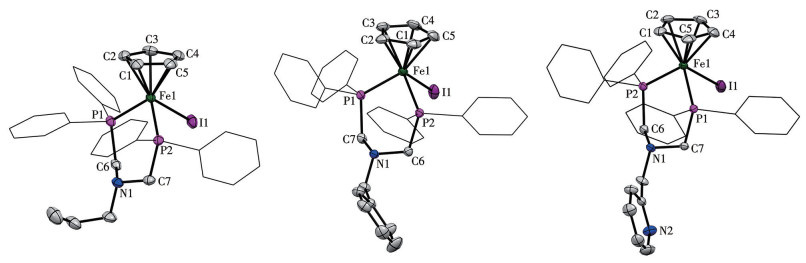
The phenyl group is viewed in a wireframe, and all hydrogen atoms are omitted for clarity.
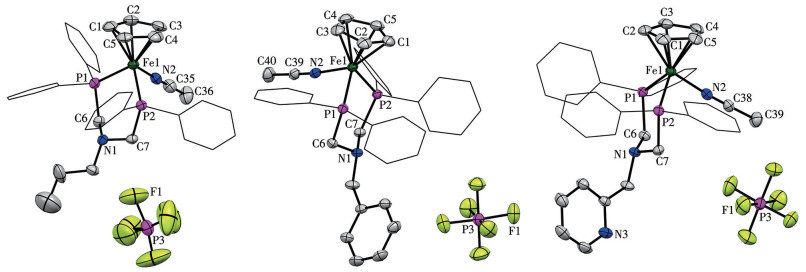
The phenyl group is viewed in a wireframe, and all hydrogen atoms are omitted for clarity.
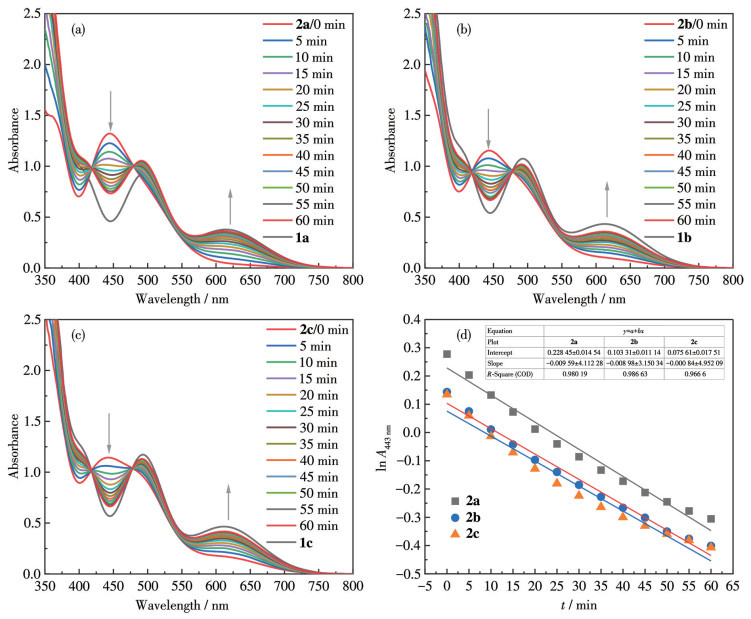
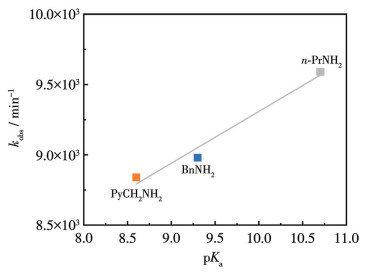
Pearson correlation coefficient (r)=0.99.
 DownLoad: