Login In
Metal-support interaction effects on CO activation over Con/SiO2 catalysts
- Corresponding author: Tong CHANG, luodan@ycu.edu.cn
Figures(8)
Citation:
Dan LUO, Xingcheng LIU, Dong LI, Tong CHANG. Metal-support interaction effects on CO activation over Con/SiO2 catalysts[J]. Chinese Journal of Inorganic Chemistry,
;2025, 41(11): 2337-2344.
doi:
10.11862/CJIC.20250003

Figures(8)


SCHULZ H. Short history and present trends of Fischer-Tropsch synthesis[J]. Appl. Catal. A‒Gen., 1999,186:3-12. doi: 10.1016/S0926-860X(99)00160-X
DE KLERK A. Thermal upgrading of Fischer-Tropsch olefins[J]. Energy Fuels, 2005,19:1462-1467. doi: 10.1021/ef050049w
BRADY R C, PETTIT R. Mechanism of the Fischer-Tropsch reaction. The chain propagation step[J]. J. Am. Chem. Soc., 1981,103:1287-1289. doi: 10.1021/ja00395a081
IGLESIA E. Design, synthesis, and use of cobalt-based Fischer-Tropsch synthesis catalysts[J]. Appl. Catal. A‒Gen., 1997,161:59-78. doi: 10.1016/S0926-860X(97)00186-5
DEN OTTER J H, NIJVELD S R, DE JONG K P. Synergistic promotion of Co/SiO2 Fischer-Tropsch catalysts by niobia and platinum[J]. ACS Catal., 2016,6:1616-1623. doi: 10.1021/acscatal.5b02418
SUBRAMANIAN V, CHENG K, LANCELOT C, SVETLANA H, SéBASTIEN P, SIMONA M, OVIDIU E, MAYA M, VITALY V O, ANDREI Y K. Nanoreactors: An efficient tool to control the chain-length distribution in Fischer-Tropsch synthesis[J]. ACS Catal., 2016,6:1785-1792. doi: 10.1021/acscatal.5b01596
DONG C, LI R T, QU Z P, FAN Y M, WANG J Y, DU X Z, LIU C X, FENG X H, NING Y X, MU R T, FU Q, BAO X H. Oxide support inert in its interaction with metal but active in its interaction with oxide and vice versa[J]. J. Am. Chem. Soc., 2025,147(16):13210-13219. doi: 10.1021/jacs.4c17075
RENATA S, KAROLINA A C, PAWEL M, JACEK R, YANNICK M, LAETITIA V, SANDRA C, STANISLAW D. Fischer-Tropsch reaction on Co-containing microporous and mesoporous beta zeolite catalysts: The effect of porous size and acidity[J]. Catal. Today, 2020,354:109-122. doi: 10.1016/j.cattod.2019.05.004
BEPARI S, LI X, ABROKWAH R, MOHAMMAD N, ARSLAN M, KUILA D. Co-Ru catalysts with different composite oxide supports for fischer-tropsch studies in 3D-printed stainless steel microreactors[J]. Appl. Catal. A‒Gen., 2020,608117838. doi: 10.1016/j.apcata.2020.117838
OHYAMA J, ABE D, HIRAYAMA A, IWAI H, TSUCHIMURA Y, SAKAMOTO K, IRIKURA M, NAKAMURA Y, YOSHIDA H, MACHIDA M, NISHIMURA S, YAMAMOTO T, MATSUMURA S, TAKAHASHI K. Selective oxidation of methane to formaldehyde over a silica-supported cobalt single-atom catalyst[J]. J. Phys. Chem. C, 2022,126:1785-1792. doi: 10.1021/acs.jpcc.1c08739
SAIB A M, CLAEYS M, VAN STEEN E. Silica supported cobalt Fischer-Tropsch catalysts: Effect of pore diameter of support[J]. Catal. Today, 2002,71(3/4):395-402.
ELBASHIR N O, DUTTA P, MANIVANNAN A, SEEHRA M S, ROBERTS C B. Impact of cobalt-based catalyst characteristics on the performance of conventional gas-phase and supercritical-phase Fischer-Tropsch synthesis[J]. Appl. Catal. A‒Gen., 2005,285:169-180. doi: 10.1016/j.apcata.2005.02.023
KRESSE G, FURTHMüLLER J. Efficiency of ab-initio total energy calculations for metals and semiconductors using a plane-wave basis set[J]. Comp. Mater. Sci., 1996,6:15-50. doi: 10.1016/0927-0256(96)00008-0
KRESSE G, FURTHMüLLER J. Efficient iterative schemes for ab initio total-energy calculations using a plane-wave basis set[J]. Phys. Rev. B, 1996,54:11169-11186. doi: 10.1103/PhysRevB.54.11169
BLOCH P E. Projector augmented-wave method[J]. Phys. Rev. B, 1994,50:17953-17979. doi: 10.1103/PhysRevB.50.17953
KRESSE G. From ultrasoft pseudopotentials to the projector augmented-wave method[J]. Phys. Rev. B, 1999,59:1758-1775.
PERDEW J P, BURKE K, ERNZERHOF M. Generalized gradient approximation made simple[J]. Phys. Rev. Lett., 1996,77:3865-3868. doi: 10.1103/PhysRevLett.77.3865
HENKELMAN G, JóNSSON H. Improved tangent estimate in the nudged elastic band method for finding minimum energy paths and saddle points[J]. J. Chem. Phys., 2000,113:9978-9985. doi: 10.1063/1.1323224
MAO F, GAO C, WANG F, ZHANG C, ZHANG F S. Ab initio study of ferromagnetism induced by electronic hole localization in Al-doped α-SiO2[J]. J. Phys. Chem. C, 2017,121:23055-23061. doi: 10.1021/acs.jpcc.7b06680
WANG H, CHAI Z F, WANG D Q. Adsorption of uranyl on hydroxylated α-SiO2(001): A first-principle study[J]. Dalton. Trans., 2015,44:1646-1654. doi: 10.1039/C4DT02872D
LIU P, WANG Q S, LI X, ZHANG C C. Investigation of the states of water and OH groups on the surface of silica[J]. Colloid. Surf. Physicochem. Eng. Asp., 2009,334:112-115. doi: 10.1016/j.colsurfa.2008.10.028
MURASHOV V V. Reconstruction of pristine and hydrolyzed quartz surfaces[J]. J. Phys. Chem. B, 2005,109:4144-4151. doi: 10.1021/jp0402075
RUBAN A, HAMMER B, STOLTZE P, SKRIVER H L, NóRSKOV J K. Surface electronic structure and reactivity of transition and noble metals[J]. J. Mol. Catal. A‒Chem, 1997,115(3):421-429. doi: 10.1016/S1381-1169(96)00348-2
HAMMER B, NORSKOV J K. Why gold is the noblest of all the metals[J]. Nature, 1995,376(6537):238-240. doi: 10.1038/376238a0
HUO C F, LI Y W, WANG J G, JIAO H J. Formation of CHx species from CO dissociation on double-stepped Co(0001): Exploring fischer-tropsch mechanism[J]. J. Phys. Chem. C, 2008,112:14108-14116.
ZHANG R, LIU F, WANG Q, WANG B J, LI D B. Insight into CHx formation in Fischer-Tropsch synthesis on the hexahedron Co catalyst: Effect of surface structure on the preferential mechanism and existence form[J]. Appl. Catal. A‒Gen., 2016,525:76-84. doi: 10.1016/j.apcata.2016.07.007
HERRANZ T, DENG X Y, CABOT A, GUO J G, SALMERON M. Influence of the cobalt particle size in the CO hydrogenation reaction studied by in situ X-ray absorption spectroscopy[J]. J. Phys. Chem. B, 2009,113(31):10721-10727. doi: 10.1021/jp901602s
TUXEN A, CARENCO S, CHINTAPALLI M, CHUANG C H, ESCUDERO C, PACH E, JIANG P, BORONDICS F, BEBERWYCK B, ALIVISATOS A P, THORNTON G, PONG W F, GUO J H, PEREZ R, BESENBACHER F, SALMERON M. Size-dependent dissociation of carbon monoxide on cobalt nanoparticles[J]. J. Am. Chem. Soc., 2013,135(6):2273-2278. doi: 10.1021/ja3105889
BEZEMER G L, BITTER J H, KUIPERS H P C E, OOSTERBEEK H, HOLEWIjN J E, XU X D, KAPTEIjN F, DILLEN A J, DE JONG K P. Cobalt particle size effects in the Fischer-Tropsch reaction studied with carbon nanofiber supported catalysts[J]. J. Am. Chem. Soc., 2006,128(12):3956-3964. doi: 10.1021/ja058282w
ZHAO J J, QUAN X, CHEN S, LIU Y M, YU H T. Cobalt nanoparticles encapsulated in porous carbons derived from core‐shell ZIF67@ZIF8 as efficient electrocatalysts for oxygen evolution reaction[J]. ACS Appl. Mater. Interfaces, 2017,9(34):28685-28694. doi: 10.1021/acsami.7b10138
QIN C, HOU B, WANG J G, WANG G, MA Z Y, JIA L T, LI D B. Stabilizing optimal crystalline facet of cobalt catalysts for Fischer-Tropsch synthesis[J]. ACS Appl. Mater. Interfaces, 2019,11(37):33886-33893. doi: 10.1021/acsami.9b10174
Chengyan Ge , Jiawei Hu , Xingyu Liu , Yuxi Song , Chao Liu , Zhigang Zou . Self-integrated black NiO clusters with ZnIn2S4 microspheres for photothermal-assisted hydrogen evolution by S-scheme electron transfer mechanism. Acta Physico-Chimica Sinica, 2026, 42(1): 100154-0. doi: 10.1016/j.actphy.2025.100154
Xiaohang JIN , Qi LIU , Jianping LANG . Room‑temperature solid‑state synthesis, structure, and third‑order nonlinear optical properties of phosphine‑ligand‑protected silver thiolate clusters. Chinese Journal of Inorganic Chemistry, 2025, 41(8): 1505-1512. doi: 10.11862/CJIC.20250125
Ximeng CHI , Jianwei WEI , Yunyun WANG , Wenxin DENG , Jiayi DAI , Xu ZHOU . First-principles study of the electronic structure and optical properties of Au and I doped-inorganic lead-free double perovskite Cs2NaBiCl6. Chinese Journal of Inorganic Chemistry, 2025, 41(7): 1371-1379. doi: 10.11862/CJIC.20240401
Ning CHEN , Jingle CHEN , Hongyuan ZHU , Huali CHEN , Liguang WU , Ting WANG . Mechanism and performance regulation of Co/Zr-doped mesoporous TiO2 catalysts in activating sodium persulfate for tetracycline degradation. Chinese Journal of Inorganic Chemistry, 2026, 42(3): 507-518. doi: 10.11862/CJIC.20250275
Jianfang QIN , Yuying ZHANG , Lijuan JIA , Jiaqi LIANG , Yuxing YANG , Haiying YANG , Xu LIU . Accurate determination of profenofos by Au25-xAgx(PET)18 (PET=2-phenylethanethiol) nanocluster-based electrochemical sensors. Chinese Journal of Inorganic Chemistry, 2026, 42(6): 1164-1174. doi: 10.11862/CJIC.20250378
Peng ZHOU , Xiao CAI , Qingxiang MA , Xu LIU . Effects of Cu doping on the structure and optical properties of Au11(dppf)4Cl2 nanocluster. Chinese Journal of Inorganic Chemistry, 2024, 40(7): 1254-1260. doi: 10.11862/CJIC.20240047
Yifeng TAN , Ping CAO , Kai MA , Jingtong LI , Yuheng WANG . Synthesis of pentaerythritol tetra(2-ethylthylhexoate) catalyzed by h-MoO3/SiO2. Chinese Journal of Inorganic Chemistry, 2024, 40(11): 2155-2162. doi: 10.11862/CJIC.20240147
Guang-Xu Duan , Queting Chen , Rui-Rui Shao , Hui-Huang Sun , Tong Yuan , Dong-Hao Zhang . Encapsulating lipase on the surface of magnetic ZIF-8 nanosphers with mesoporous SiO2 nano-membrane for enhancing catalytic performance. Chinese Chemical Letters, 2025, 36(2): 109751-. doi: 10.1016/j.cclet.2024.109751
Ke Qiu , Fengmei Wang , Mochou Liao , Kerun Zhu , Jiawei Chen , Wei Zhang , Yongyao Xia , Xiaoli Dong , Fei Wang . A Fumed SiO2-based Composite Hydrogel Polymer Electrolyte for Near-Neutral Zinc-Air Batteries. Acta Physico-Chimica Sinica, 2024, 40(3): 2304036-0. doi: 10.3866/PKU.WHXB202304036
Xinpin Pan , Yongjian Cui , Zhe Wang , Bowen Li , Hailong Wang , Jian Hao , Feng Li , Jing Li . Robust chemo-mechanical stability of additives-free SiO2 anode realized by honeycomb nanolattice for high performance Li-ion batteries. Chinese Chemical Letters, 2024, 35(10): 109567-. doi: 10.1016/j.cclet.2024.109567
Yulian Hu , Xin Zhou , Xiaojun Han . A Virtual Simulation Experiment on the Design and Property Analysis of CO2 Reduction Photocatalyst. University Chemistry, 2025, 40(3): 30-35. doi: 10.12461/PKU.DXHX202403088
Jingwen Wang , Minghao Wu , Xing Zuo , Yaofeng Yuan , Yahao Wang , Xiaoshun Zhou , Jianfeng Yan . Advances in the Application of Electrochemical Regulation in Investigating the Electron Transport Properties of Single-Molecule Junctions. University Chemistry, 2025, 40(3): 291-301. doi: 10.12461/PKU.DXHX202406023
Chen LU , Qinlong HONG , Haixia ZHANG , Jian ZHANG . Syntheses, structures, and properties of copper-iodine cluster-based boron imidazolate framework materials. Chinese Journal of Inorganic Chemistry, 2025, 41(1): 149-154. doi: 10.11862/CJIC.20240407
Huan LI , Shengyan WANG , Long Zhang , Yue CAO , Xiaohan YANG , Ziliang WANG , Wenjuan ZHU , Wenlei ZHU , Yang ZHOU . Growth mechanisms and application potentials of magic-size clusters of groups Ⅱ-Ⅵ semiconductors. Chinese Journal of Inorganic Chemistry, 2024, 40(8): 1425-1441. doi: 10.11862/CJIC.20240088
Yuxin LI , Mengqi ZHOU , Feifan LANG , Chunyan NI , Bing WU , Jianping LANG . Pyridine ligand-regulated structural diversity of W/Cu/S cluster-based supramolecules. Chinese Journal of Inorganic Chemistry, 2026, 42(7): 1429-1436. doi: 10.11862/CJIC.20260126
Wenxu Liu , Feng Han , Boxuan Wang , Huayi Liu , Xiaobin Gu , Xin Zhang , Yao Liu . Comprehensive Chemical Experiment: Design, Synthesis, and Photoelectronic Properties Study of Fully Non-Fused Ring Electron Acceptors. University Chemistry, 2025, 40(10): 263-275. doi: 10.12461/PKU.DXHX202412021
Mingbao Liu , Tian Zhang , Heng Liu , Baoyue Cao , Chengfang Qiao . ds区元素电子结构赋予的特殊物理化学性质及生理作用. University Chemistry, 2026, 41(8): 176-193. doi: 10.12461/PKU.DXHX202507120
Zhiwen HUANG , Qi LIU , Jianping LANG . W/Cu/S cluster-based supramolecular macrocycles and their third-order nonlinear optical responses. Chinese Journal of Inorganic Chemistry, 2025, 41(1): 79-87. doi: 10.11862/CJIC.20240184
Yuchen ZHANG , Jingliang LIU , Xiaobo WANG , Jingjing CAO , Jingya SUN . Degradation of tannic acid on activation of peroxymonosulfate mediated by β-MnO2. Chinese Journal of Inorganic Chemistry, 2026, 42(7): 1505-1512. doi: 10.11862/CJIC.20260003
Shengwen XU , Longlong YANG , Houji CAO , Deshuang TU , Xing WEI , Changsheng LU , Hong YAN . Research progress on light-induced functionalization of polyhedral carborane clusters. Chinese Journal of Inorganic Chemistry, 2025, 41(11): 2187-2200. doi: 10.11862/CJIC.20250192
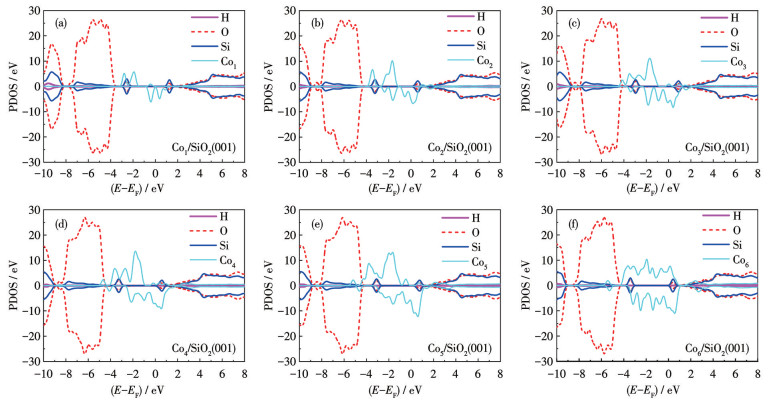
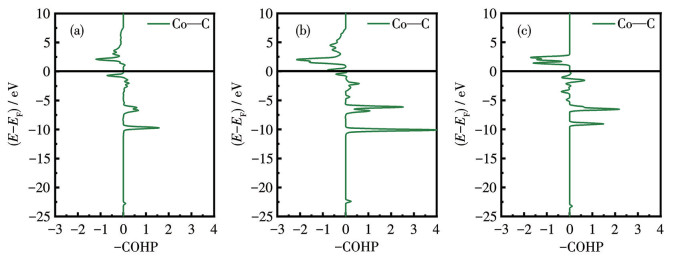
E-EF represents the energy difference between the electron energy E and the Fermi level EF.
 DownLoad: