Login In
Photothermal toxicity of Prussian blue nanoparticles to cervical cancer cells
- Corresponding author: Fei LI, lifei@zknu.edu.cn
Figures(10)
Citation:
Jie WEI, Qing ZHOU, Dandan DING, Xiang JING, Fei LI. Photothermal toxicity of Prussian blue nanoparticles to cervical cancer cells[J]. Chinese Journal of Inorganic Chemistry,
;2025, 41(11): 2345-2357.
doi:
10.11862/CJIC.20240435

Figures(10)


BRAY F, LAVERSANNE M, SUNG H, Ferlay J, Siegel R L, Soerjomataram I, Jemal A. Global cancer statistics 2022: GLOBOCAN estimates of incidence and mortality worldwide for 36 cancers in 185 countries[J]. CA‒Cancer J. Clin., 2024,74(3):229-263. doi: 10.3322/caac.21834
DASH S R, KUNDU C N. Photothermal therapy: A new approach to eradicate cancer[J]. Curr. Nanosci., 2022,18(1):31-47. doi: 10.2174/1573413717666210301112058
LI X S, LOVELL J F, YOON J. Clinical development and potential of photothermal and photodynamic therapies for cancer[J]. Nat. Rev. Clin. Oncol., 2020,17(11):657-674. doi: 10.1038/s41571-020-0410-2
ZHU L J, XIONG J B, DU Z, MA R, ZHANG X L, NUERNISHA A. Application of near-infrared fluorescence-photothermal nanoparticles in photothermal therapy for cervical cancer[J]. Chinese Journal of Biomedical Engineering, 2024,43(4):499-507.
GU Y L, ZHU J Y, XIONG J B, NUERNISHA A. Application of Prussian blue nanoparticles in biomedical diagnosis and therapy[J]. Chinese Journal of Medical Physics, 2023,40(9):1161-1166.
GAO X R, WANG Q W, CHENG C, LIN S J, LIN T, TING LIN, LIU C, HAN X. The application of Prussian blue nanoparticles in tumor diagnosis and treatment[J]. Sensors, 2020,20(23):1-22. doi: 10.1109/JSEN.2020.3032359
FU G L, LIU W, FENG S S, YUE X L. Prussian blue nanoparticles operate as a new generation of photothermal ablation agents for cancer therapy[J]. Chem. Commun., 2012,48(94)11567. doi: 10.1039/c2cc36456e
ZHANG S P, CHENG Y X, REN L, WEN K, Lü X L, YE S F, ZHOU X. Synthesis and photothermal properties of morphology-controlled Prussian blue nanoparticles[J]. Chem. J. Chinese Universities, 2018,39(2):359-366.
TANG K Y, LI X, HU Y L, ZHANG X N, NAN L, QIANG F, SHAO J J, LI S K, XIU W J, SONG Y N, YANG D L, ZHANG J J. Recent advances in Prussian blue-based photothermal therapy in cancer treatment[J]. Biomater. Sci., 2023,11(13):4411-4429. doi: 10.1039/D3BM00509G
HUANG Y F, SEFAH K, BAMRUNGSAP S, CHANG H T, TAN W. Selective photothermal therapy for mixed cancer cells using aptamer-conjugated nanorods[J]. Langmuir, 2008,24(20):11860-11865. doi: 10.1021/la801969c
LIU T, TIAN Y T, GAO K, HAN X W, MIN R A, ZHAO W J, YIN C X. A photothermal agent with high photothermal conversion efficiency and high stability for cancer therapy[J]. Chinese J. Inorg. Chem., 2024,40(8):1622-1632. doi: 10.11862/CJIC.20240107
TIAN Q W, JIANG F R, ZOU R J, LIU Q, CHEN Z G, ZHU M F, YANG S P, WANG J L, WANG J H, HU J Q. Hydrophilic Cu9S5 nanocrystals: A photothermal agent with a 25.7% heat conversion efficiency for photothermal ablation of cancer cells in vivo[J]. ACS Nano, 2011,5(12):9761-9771. doi: 10.1021/nn203293t
KE H T, WANG J R, DAI Z F, JIN Y S, QU E Z, XING Z W, GUO C X, YUE X L, LIU J B. Gold-nanoshelled microcapsules: A theranostic agent for ultrasound contrast imaging and photothermal therapy[J]. Angew. Chem.‒Int. Edit., 2011,50(13):3017-3021. doi: 10.1002/anie.201008286
ZHANG X M, LI J Y, MA B, LI B S, SHI L L, GAO S G. Photothermal therapy effect and mechanism of Prussian blue nanoparticles on esophageal squamous cell carcinoma[J]. Chinese Journal of Cancer Prevention and Treatment, 2025,32(14):850-861.
ESTELRICH J, BUSQUETS M. Prussian Blue: A nanozyme with versatile catalytic properties[J]. Int. J. Mol. Sci., 2021,22(11)5993. doi: 10.3390/ijms22115993
WANG Q, LIU X, SUN Y J, YANG C. Prussian blue-loaded CoOOH nanosheets for antioxidant activity detection[J]. Modern Chemical Industry, 2023,43(2):234-238.
BEI Y, LI W J, LI M Y, SU M, ZHANG J, HUANG Y, ZHU Y Z, LI J L, WU Y. Prussian blue nanoparticles promote diabetic skin wound healing[J]. Chinese Journal of Tissue Engineering Research, 2024,28(10):1526-1532.
YE J J, ZHANG W X, NI J C, HU S R. Detection of hydrogen peroxide and glutathione by Fe-Co Prussian blue colorimetric method[J]. Journal of Minnan Normal University (Natural Science Edition), 2024,37(2):52-63.
ZENG X M, YAN S G, CHEN P, DU W, LIU B F. Modulation of tumor microenvironment by metal-organic-framework-derived nanoenzyme for enhancing nucleus-targeted photodynamic therapy[J]. Nano Res., 2020,13(6):1527-1535. doi: 10.1007/s12274-020-2746-4
ZHAO Q, LIU Z. Research progress on tumor hypoxia regulation and radiotherapy enhancement based on nano-biomaterials[J]. Cancer Research on Prevention and Treatment, 2021,48(2):109-114.
XIAO J J, LI Y, LIANG J. Hypoxic microenvironment and tumor immune response[J]. Journal of International Oncology, 2017,44(1):31-33.
PARK J E, DUTTA B, TSE S W, GUPTA N, TAN C F, LOW J K, YEOH K W, KON O L, TAM J P, SZE S K. Hypoxia-induced tumor exosomes promote M2-like macrophage polarization of infiltrating myeloid cells and microRNA-mediated metabolic shift[J]. Oncogene, 2019,38(26):5158-5173. doi: 10.1038/s41388-019-0782-x
YU C, ZHOU Z G, WANG J, SUN J, LIU W, SUN Y N, KONG B, YANG H, YANG S P. In depth analysis of apoptosis induced by silica coated manganese oxide nanoparticles in vitro[J]. J. Hazard. Mater., 2014,283:519-528.
PANAGOPOULOS A, ALTMEYER M. The hammer and the dance of cell cycle control[J]. Trends Biochem. Sci., 2021,46(4):301-314. doi: 10.1016/j.tibs.2020.11.002
WANG X, CHEN S T, HOU Z H, YANG R, ZHANG R W. The effects of curcumin on prostate cancer cell proliferation, invasion, and cell cycle[J]. Journal of Beihua University(Natural Science Edition), 2024,25(6):770-775.
WANG C, ZHOU H M, KURBONIYON M S, TANG Y P, CAI Z M, NING S F, ZHANG L T, LIANG X Q. Chemodynamic PtMn nanocubes for effective photothermal ROS storm a key anti-tumor therapy in-vivo[J]. Int. J. Nanomed., 2024,19:5045-5056. doi: 10.2147/IJN.S455936
LI S S, SHANG L, XU B L, WANG S H, GU K, WU Q Y, SUN Y, ZHANG Q H, YANG H L, ZHANG F R, GU L, ZHANG T R, LIU H Y. A nanozyme with photo‐enhanced dual enzyme‐like activities for deep pancreatic cancer therapy[J]. Angew. Chem.‒Int. Edit., 2019,58(36):12624-12631. doi: 10.1002/anie.201904751
ZHAO Y Y, YANG J, SHAN G, LIU Z Y, CUI A N, WANG A L, CHEN Y W, LIU Y C. Photothermal-enhanced tandem enzyme-like activity of Ag2-xCuxS nanoparticles for one-step colorimetric glucose detection in unprocessed human urine[J]. Sens. Actuator B‒Chem., 2020,305127420. doi: 10.1016/j.snb.2019.127420
ZHANG W X, LI W Y, SHU Y, WANG J H. Manganese-enriched Prussian blue nanohybrids with smaller electrode potential and lower charge transfer resistance to enhance combination therapy[J]. Colloid Surf. B‒Biointerfaces, 2024,241114045. doi: 10.1016/j.colsurfb.2024.114045
YAO J L, QIU Y, XING J, LI Z H, ZHANG A, TU K, PENG M J, WU X X, YANG F, WU A. Highly-efficient gallium-interference tumor therapy mediated by gallium-enriched Prussian blue nanomedicine[J]. ACS Nano, 2024,18(7):5556-5570.
LIU Y, QUAN X, LI J, HUO J W, LI X, ZHAO Z P, LI S M, WAN J, LI J, LIU S, WANG T, ZHANG X, GUAN B, WEN R, ZHAO Z W, WANG C R, BAI C L. Liposomes embedded with PEGylated iron oxide nanoparticles enable ferroptosis and combination therapy in cancer[J]. Natl. Sci. Rev., 2023,10(1):246-258.
WANG P F, SUN S H, BAI G S, ZHANG R Q, LIANG F, ZHANG Y Z. Nano-sized Prussian blue and its analogs for bioimaging and cancer theranostics[J]. Acta Biomater., 2024,176:77-98. doi: 10.1016/j.actbio.2023.12.047
ZHANG Y J, FENG Y Y, HUANG Y Q, WANG Y F, QIU L, LIU Y L, PENG S S, LI R, KUANG N Z, SHI Q F, SHI Y M, CHEN Y J, JOSHI R, WANG Z G, YUAN K, MIM W P. Tumor-targeted gene silencing IDO synergizes PTT-induced apoptosis and enhances anti-tumor immunity[J]. Front. Immunol., 2020,11968. doi: 10.3389/fimmu.2020.00968
TAO L, FU R, WANG X P. LL-202, A newly synthesized flavonoid, inhibits tumor growth via inducing G2/M phase arrest and cell apoptosis in MCF-7 human breast cancer cells in vitro and in vivo[J]. Toxicol. Lett., 2014,228(1):1-12. doi: 10.1016/j.toxlet.2014.04.002
MUENYI C S, TRIVEDI A P, HELM C W, STATES J C. Cisplatin plus sodium arsenite and hyperthermia induces pseudo-G1 associated apoptotic cell death in ovarian cancer cells[J]. Toxicol. Sci., 2014,139(1):74-82. doi: 10.1093/toxsci/kfu029
XIE M Z, GONG T J, WANG Y T, LI Z Z, LU M X, LUO Y, MIN L, TU C Q, ZHANG X D, ZENG Q, ZHOU Y. Advancements in photothermal therapy using near-infrared light for bone tumors[J]. Int. J. Mol. Sci., 2024,25(8)4139. doi: 10.3390/ijms25084139
Zhuoya WANG , Le HE , Zhiquan LIN , Yingxi WANG , Ling LI . Multifunctional nanozyme Prussian blue modified copper peroxide: Synthesis and photothermal enhanced catalytic therapy of self-provided hydrogen peroxide. Chinese Journal of Inorganic Chemistry, 2024, 40(12): 2445-2454. doi: 10.11862/CJIC.20240194
Zijian Jiang , Yuang Liu , Yijian Zong , Yong Fan , Wanchun Zhu , Yupeng Guo . Preparation of Nano Zinc Oxide by Microemulsion Method and Study on Its Photocatalytic Activity. University Chemistry, 2024, 39(5): 266-273. doi: 10.3866/PKU.DXHX202311101
Siwei Lv , Tantian Tan , Xinyue Li , Siyan Zhang , Mingyuan Zhang , Minghao Li , Hangshuo Guo , Zhaorong Li , Liangjie Dong , Fengshuo Zhang , Junlong Zhao . Competition of the “King of Transboundary Medicine”. University Chemistry, 2024, 39(9): 102-108. doi: 10.12461/PKU.DXHX202403034
Yongming Guo , Jie Li , Chaoyong Liu . Green Improvement and Educational Design in the Synthesis and Characterization of Silver Nanoparticles. University Chemistry, 2024, 39(3): 258-265. doi: 10.3866/PKU.DXHX202309057
Guo CHENG , Yuxin SHI , Gang YANG , Huan PANG . Research progress on applications of Prussian blue analogues in aqueous multivalent metal-ion batteries. Chinese Journal of Inorganic Chemistry, 2026, 42(9): 1793-1806. doi: 10.11862/CJIC.20260035
Gaopeng Liu , Lina Li , Bin Wang , Ningjie Shan , Jintao Dong , Mengxia Ji , Wenshuai Zhu , Paul K. Chu , Jiexiang Xia , Huaming Li . Construction of Bi Nanoparticles Loaded BiOCl Nanosheets Ohmic Junction for Photocatalytic CO2 Reduction. Acta Physico-Chimica Sinica, 2024, 40(7): 2306041-0. doi: 10.3866/PKU.WHXB202306041
Zuoyong Li , Haoxiang Tu , Mingwei Ding , Meijun Liu , Ting Yang . Innovative Teaching Reform Study on the Synthesis of Silver Nanoparticles Based on Machine Learning and Microfluidic Technology. University Chemistry, 2026, 41(1): 64-75. doi: 10.12461/PKU.DXHX202505088
Xinyu Xu , Changjin Ou , Chunxia Kong , Weiliang Tian , Huaming Wang , Haijiao Wang , Tao Tao . 近红外有机纳米粒子的合成及性质研究虚拟仿真实验. University Chemistry, 2026, 41(8): 350-362. doi: 10.12461/PKU.DXHX202507032
Lina Liu , Xiaolan Wei , Jianqiang Hu . Exploration of Subject-Oriented Undergraduate Comprehensive Chemistry Experimental Teaching Based on the “STS Concept”: Taking the Experiment of Gold Nanoparticles as an Example. University Chemistry, 2024, 39(10): 337-343. doi: 10.12461/PKU.DXHX202405112
Kezhen Qi , Bei Cheng , Kaiqiang Xu . Ultrafast interfacial charge transfer promoted by the LSPR of Au nanoparticles for photocatalytic H2 evolution. Acta Physico-Chimica Sinica, 2026, 42(3): 100205-0. doi: 10.1016/j.actphy.2025.100205
Di WU , Ruimeng SHI , Zhaoyang WANG , Yuehua SHI , Fan YANG , Leyong ZENG . Construction of pH/photothermal dual-responsive delivery nanosystem for combination therapy of drug-resistant bladder cancer cell. Chinese Journal of Inorganic Chemistry, 2024, 40(9): 1679-1688. doi: 10.11862/CJIC.20240135
Jiahui CHEN , Tingting ZHENG , Xiuyun ZHANG , Wei LÜ . Research progress of near-infrared absorption inorganic nanomaterials in photothermal and photodynamic therapy of tumors. Chinese Journal of Inorganic Chemistry, 2024, 40(12): 2396-2414. doi: 10.11862/CJIC.20240106
Tianyang Yu , Hao Wei . “Illness Enters through the Mouth”: A Brief Overview of Toxic Chemical Substances in Common Foods. University Chemistry, 2025, 40(7): 225-231. doi: 10.12461/PKU.DXHX202409083
Junjie Zhang , Chaochao Dong , Jinke Li , Jiawen Guo , Yingxin Shui , Yue Wang , Xinhua Duan . 共轭聚合物探针的设计及其对藻蓝蛋白的智能检测. University Chemistry, 2026, 41(5): 285-293. doi: 10.12461/PKU.DXHX202509114
Wenjing ZHANG , Xiaoqing WANG , Zhipeng LIU . Recent developments of inorganic metal complex-based photothermal materials and their applications in photothermal therapy. Chinese Journal of Inorganic Chemistry, 2024, 40(12): 2356-2372. doi: 10.11862/CJIC.20240254
Anbang Du , Yuanfan Wang , Zhihong Wei , Dongxu Zhang , Li Li , Weiqing Yang , Qianlu Sun , Lili Zhao , Weigao Xu , Yuxi Tian . Photothermal Microscopy of Graphene Flakes with Different Thicknesses. Acta Physico-Chimica Sinica, 2024, 40(5): 2304027-0. doi: 10.3866/PKU.WHXB202304027
Bing LIU , Huang ZHANG , Hongliang HAN , Changwen HU , Yinglei ZHANG . Visible light degradation of methylene blue from water by triangle Au@TiO2 mesoporous catalyst. Chinese Journal of Inorganic Chemistry, 2024, 40(5): 941-952. doi: 10.11862/CJIC.20230398
Yichang Liu , Li An , Dan Qu , Zaicheng Sun . “双碳”背景下的综合设计实验——以PbCrO4催化甲基蓝的光降解速率常数测定为例. University Chemistry, 2025, 40(6): 222-229. doi: 10.12461/PKU.DXHX202407105
Shengyuan Zhong , Jing Zhong , Yuyao Zhou , Lifeng Ruan , Weitai Wu , Bin Ren . 胶体粒子粒径测量的改进实验. University Chemistry, 2026, 41(5): 1-13. doi: 10.12461/PKU.DXHX202511149
Wenlong LI , Xinyu JIA , Jie LING , Mengdan MA , Anning ZHOU . Photothermal catalytic CO2 hydrogenation over a Mg-doped In2O3-x catalyst. Chinese Journal of Inorganic Chemistry, 2024, 40(5): 919-929. doi: 10.11862/CJIC.20230421
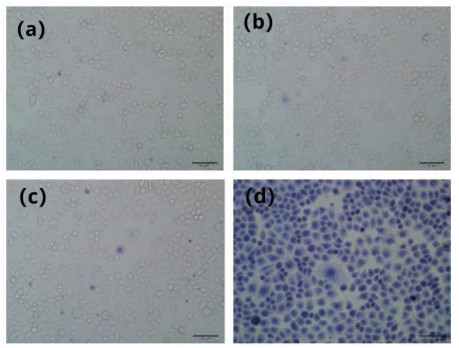
(a) Control group, (b) laser group, (c) 50 µg·mL-1 PB NPs, (d) 50 µg·mL-1 PB NPs+laser.
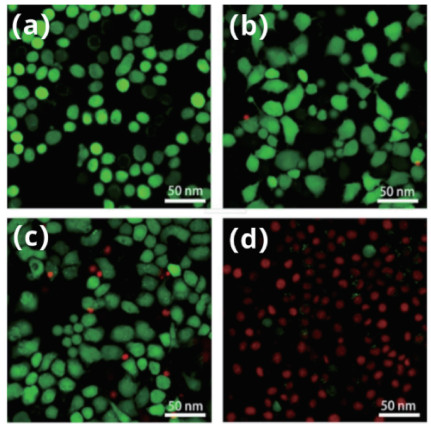
(a) Control group, (b) laser group, (c) 50 µg·mL-1 PB NPs, (d) 50 µg·mL-1 PB NPs+laser.
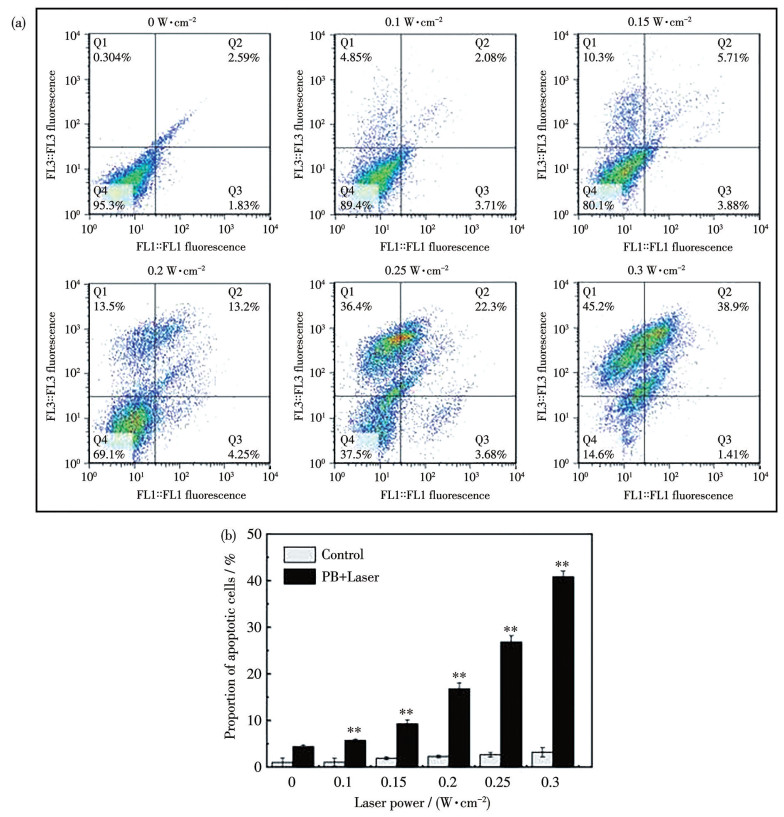
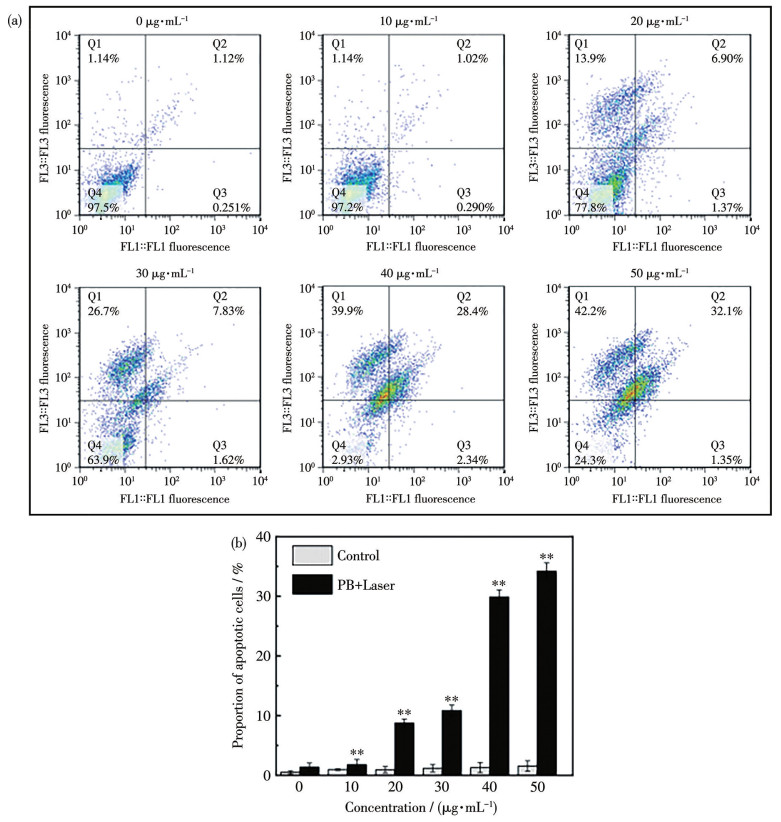
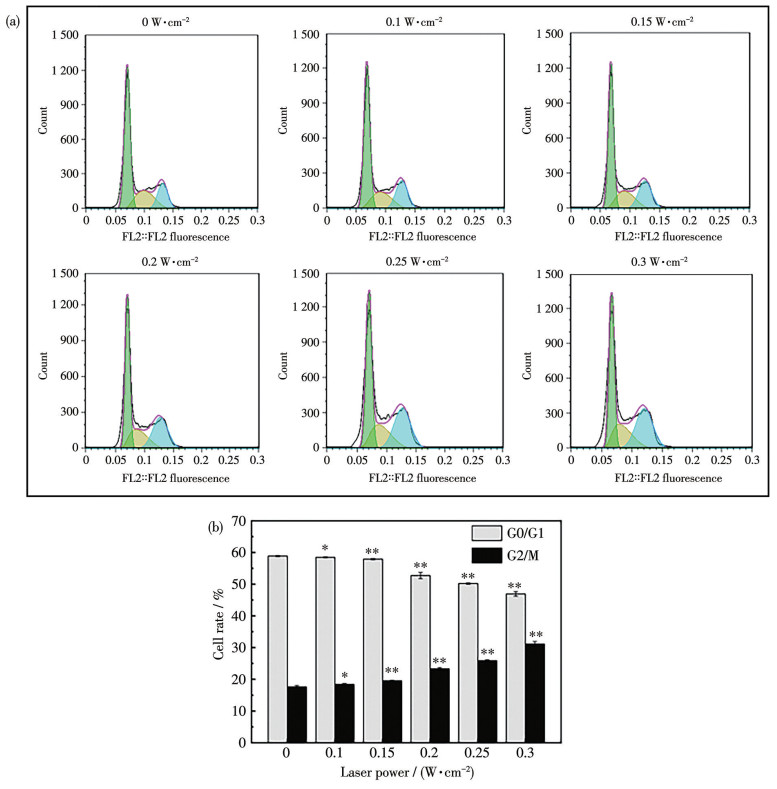
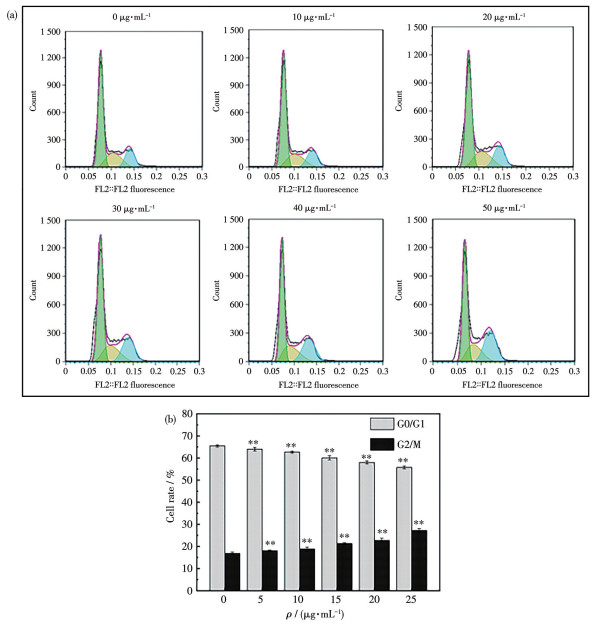
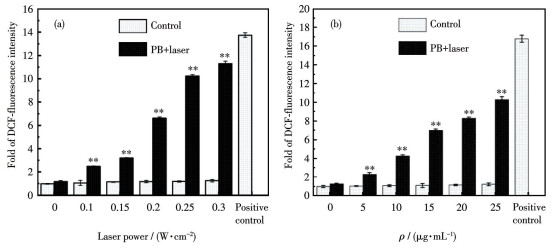
** represents the comparison with the corresponding control group, p < 0.01.
** represents the comparison with the corresponding control group, p < 0.01.
** represents the comparison with the corresponding control group, p < 0.01.
** represents the comparison with the corresponding control group, p < 0.01.
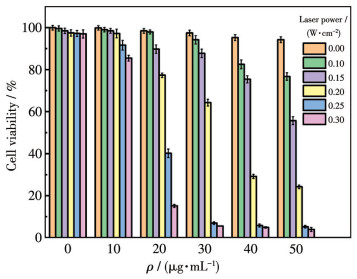
λlaser=808 nm; ** represents the comparison with the corresponding control group, p < 0.01.
 DownLoad: