Login In

2026 Volume 42 Issue 11
2026, 42(11): 100363
doi: 10.1016/j.actphy.2026.100363
Abstract:
Polymer cathodes have attracted growing interest for potassium-ion batteries (PIBs) due to their tunable molecular structures, abundant redox-active sites, and sustainable elemental compositions. Compared with inorganic intercalation-type cathodes, polymer cathodes typically store charge through reversible redox reactions between K+ ions or electrolyte anions and organic functional groups, including carbonyl, imide, quinone, azo, imine, and nitrogen-containing heterocyclic units. Their electrochemical performance is governed not only by the intrinsic redox chemistry of the active sites, but also by the polymer backbone configuration, π-conjugation degree, aggregation behavior, pore structure, and the stability of the electrode/electrolyte interface. This review summarizes recent progress in polymer cathodes for PIBs, with a focus on potassium-storage mechanisms and structural optimization strategies. Representative mechanisms, such as carbonyl coordination, imide chelation, multielectron redox processes, bipolar charge compensation, and pseudocapacitive behavior, are discussed from the perspectives of molecular structure, ion–electrode interactions, and charge-transfer kinetics. In addition, the ion-specific differences among K+, Li+, and Na+ are analyzed in terms of solvation/desolvation behavior, local coordination environments, and redox-site utilization. Key optimization strategies, including polymerization-degree control, rigid π-conjugated backbone design, porous or three-dimensional network construction, conductive compositing, and electrolyte matching, are highlighted. Finally, the remaining challenges and future research directions are discussed to guide the rational design of high-performance polymer cathodes for PIBs.
Polymer cathodes have attracted growing interest for potassium-ion batteries (PIBs) due to their tunable molecular structures, abundant redox-active sites, and sustainable elemental compositions. Compared with inorganic intercalation-type cathodes, polymer cathodes typically store charge through reversible redox reactions between K+ ions or electrolyte anions and organic functional groups, including carbonyl, imide, quinone, azo, imine, and nitrogen-containing heterocyclic units. Their electrochemical performance is governed not only by the intrinsic redox chemistry of the active sites, but also by the polymer backbone configuration, π-conjugation degree, aggregation behavior, pore structure, and the stability of the electrode/electrolyte interface. This review summarizes recent progress in polymer cathodes for PIBs, with a focus on potassium-storage mechanisms and structural optimization strategies. Representative mechanisms, such as carbonyl coordination, imide chelation, multielectron redox processes, bipolar charge compensation, and pseudocapacitive behavior, are discussed from the perspectives of molecular structure, ion–electrode interactions, and charge-transfer kinetics. In addition, the ion-specific differences among K+, Li+, and Na+ are analyzed in terms of solvation/desolvation behavior, local coordination environments, and redox-site utilization. Key optimization strategies, including polymerization-degree control, rigid π-conjugated backbone design, porous or three-dimensional network construction, conductive compositing, and electrolyte matching, are highlighted. Finally, the remaining challenges and future research directions are discussed to guide the rational design of high-performance polymer cathodes for PIBs.
2026, 42(11): 100253
doi: 10.1016/j.actphy.2026.100253
Abstract:
Dual-mode photomultiplication model organic photodetectors (PMOPDs) were fabricated with an architecture of poly (9,9-dioctylfluorene-alt-benzothiadiazole) (F8BT): poly [4,8-bis(5-(2-ethylhexyl) thiophen-2-yl)benzo[1,2-b;4,5-b']dithiophene-2,6-diyl-alt-(4-(2-ethylhexyl)-3-fluorothieno [3,4-b] thiophene-)-2-carboxylate-2-6-diyl] (PTB7-Th) (3 : 1, w/w)/Glass/indium tin oxide (ITO)/poly[(9,9-bis(3'-(N,N-dimethylamino)propyl)-2,7-fluorene)-alt-5,5'-bis(2,2'-thiophene)-2,6-naphthalene-1,4,5,8-tetracaboxylic-N,N'-di(2-ethylhexyl)imide] (PNDIT-F3N)/poly(3-hexylthiophene) (P3HT):[6,6]-phenylC71-butyric acid methyl ester (PC71BM) (100 : 1, w/w)/Aluminum (Al). To modulate the optical field distribution, an external layer of F8BT:PTB7-Th acts as an organic filter layer (OFL) in PMOPDs. Dual-mode characteristics can be achieved from PMOPDs under forward and reverse bias, which is individually determined by the trapped electron distribution near ITO and Al electrode. The PMOPDs achieve a green narrowband response under 8 V bias, with peak external quantum efficiency (EQE) of 8880% at 545 nm and full width at half maximum (FWHM) of 85 nm. Conversely, a red narrowband response is registered under −8 V bias of PMOPDs, centered at 620 nm with peak EQE of 750% and FWHM of 60 nm. The operating mechanism for the switchable mode of PMOPDs involves the modulation of trapped electron distribution, which shifts between the vicinity of ITO electrode under forward bias and Al electrode under reverse bias. A photoplethysmography (PPG) measurement system based on the optimal dual-mode PMOPDs was developed to enable the successful monitoring of heart rate across different conditions. The velocity plethysmography and acceleration plethysmography can be obtained from original PPG signals to estimate arteriosclerosis for vascular disease diagnosis.
Dual-mode photomultiplication model organic photodetectors (PMOPDs) were fabricated with an architecture of poly (9,9-dioctylfluorene-alt-benzothiadiazole) (F8BT): poly [4,8-bis(5-(2-ethylhexyl) thiophen-2-yl)benzo[1,2-b;4,5-b']dithiophene-2,6-diyl-alt-(4-(2-ethylhexyl)-3-fluorothieno [3,4-b] thiophene-)-2-carboxylate-2-6-diyl] (PTB7-Th) (3 : 1, w/w)/Glass/indium tin oxide (ITO)/poly[(9,9-bis(3'-(N,N-dimethylamino)propyl)-2,7-fluorene)-alt-5,5'-bis(2,2'-thiophene)-2,6-naphthalene-1,4,5,8-tetracaboxylic-N,N'-di(2-ethylhexyl)imide] (PNDIT-F3N)/poly(3-hexylthiophene) (P3HT):[6,6]-phenylC71-butyric acid methyl ester (PC71BM) (100 : 1, w/w)/Aluminum (Al). To modulate the optical field distribution, an external layer of F8BT:PTB7-Th acts as an organic filter layer (OFL) in PMOPDs. Dual-mode characteristics can be achieved from PMOPDs under forward and reverse bias, which is individually determined by the trapped electron distribution near ITO and Al electrode. The PMOPDs achieve a green narrowband response under 8 V bias, with peak external quantum efficiency (EQE) of 8880% at 545 nm and full width at half maximum (FWHM) of 85 nm. Conversely, a red narrowband response is registered under −8 V bias of PMOPDs, centered at 620 nm with peak EQE of 750% and FWHM of 60 nm. The operating mechanism for the switchable mode of PMOPDs involves the modulation of trapped electron distribution, which shifts between the vicinity of ITO electrode under forward bias and Al electrode under reverse bias. A photoplethysmography (PPG) measurement system based on the optimal dual-mode PMOPDs was developed to enable the successful monitoring of heart rate across different conditions. The velocity plethysmography and acceleration plethysmography can be obtained from original PPG signals to estimate arteriosclerosis for vascular disease diagnosis.
2026, 42(11): 100292
doi: 10.1016/j.actphy.2026.100292
Abstract:
Carbonyl iron powder (CIP) is a typical magnetic loss-type microwave absorbing material. However, its susceptibility to electrochemical corrosion in harsh marine environments (characterized by high humidity and salinity) leads to performance degradation, limiting long-term applications. In this study, core-shell particles (CIP@PFOTES) were fabricated via a sol-gel method, encapsulating CIP with a perfluorodecyltrimethoxysilane (PFOTES) shell. These particles were then incorporated into a fluorosilicone resin (FSR-ZY220L) to produce a multifunctional CIP@PFOTES-ZY coating. The coating exhibited superhydrophobicity with a water contact angle of 158°. A drag reduction exceeding 70% was achieved at shear rates ranging from 0.1 to 100 s−1. The coating demonstrated excellent long-term corrosion resistance in a neutral salt spray environment. Electrochemical impedance spectroscopy (EIS) indicated that after 40 d of immersion in a 3.5 wt.% NaCl solution, the low-frequency impedance modulus (|Z|0.01 Hz) remained above 107 Ω cm2. Furthermore, with a thickness of 1.3 mm, the coating achieved an effective absorption bandwidth (EAB, RL ≤ −10 dB) of 7.52 GHz, demonstrating significantly superior microwave absorption performance compared to the unmodified counterpart. This study provides an effective material design strategy for developing high-performance, multifunctional protective coatings for marine applications.
Carbonyl iron powder (CIP) is a typical magnetic loss-type microwave absorbing material. However, its susceptibility to electrochemical corrosion in harsh marine environments (characterized by high humidity and salinity) leads to performance degradation, limiting long-term applications. In this study, core-shell particles (CIP@PFOTES) were fabricated via a sol-gel method, encapsulating CIP with a perfluorodecyltrimethoxysilane (PFOTES) shell. These particles were then incorporated into a fluorosilicone resin (FSR-ZY220L) to produce a multifunctional CIP@PFOTES-ZY coating. The coating exhibited superhydrophobicity with a water contact angle of 158°. A drag reduction exceeding 70% was achieved at shear rates ranging from 0.1 to 100 s−1. The coating demonstrated excellent long-term corrosion resistance in a neutral salt spray environment. Electrochemical impedance spectroscopy (EIS) indicated that after 40 d of immersion in a 3.5 wt.% NaCl solution, the low-frequency impedance modulus (|Z|0.01 Hz) remained above 107 Ω cm2. Furthermore, with a thickness of 1.3 mm, the coating achieved an effective absorption bandwidth (EAB, RL ≤ −10 dB) of 7.52 GHz, demonstrating significantly superior microwave absorption performance compared to the unmodified counterpart. This study provides an effective material design strategy for developing high-performance, multifunctional protective coatings for marine applications.
2026, 42(11): 100306
doi: 10.1016/j.actphy.2026.100306
Abstract:
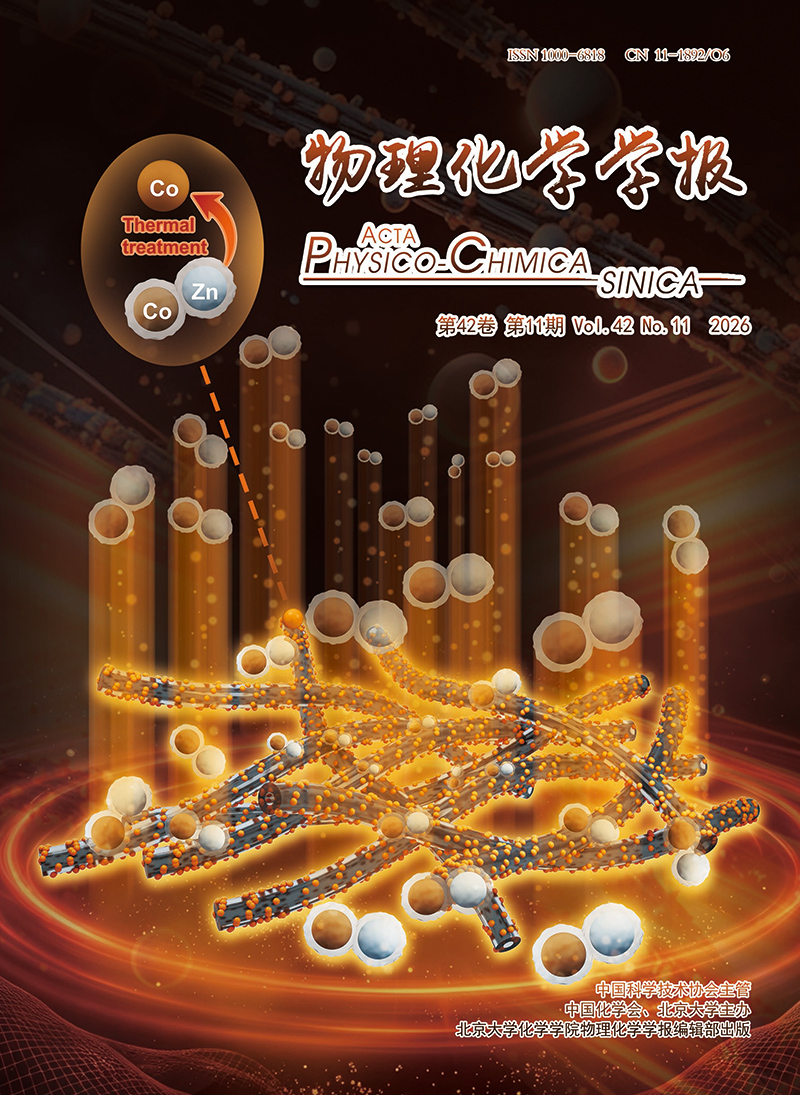
Compositing magnetic nanoparticles onto one-dimensional (1D) porous carbon matrices is of significant research value. This strategy is essential for fabricating high-efficiency and functionally synergistic microwave absorbers. In this work, 1D carbon materials are derived from tubular porous fibers via hyper-crosslinked polymerization. These materials serve as precursors to construct a series of composite fibers coated with Co/Zn metal-organic frameworks (C-CCNFs@Co/Zn-MOFs). The coating process is optimized, and the regulatory mechanism of Zn2+ ions on MOF grain size is revealed. Subsequent carbonization yields magnetic nitrogen-doped carbon-encapsulated cobalt/tubular carbon nanofibers (TCF/Co@NC). The TCF/Co@NC possesses a porous core-shell architecture and 1D morphology with abundant hetero-interfaces. These features facilitate the establishment of conductive loss networks and multiple reflections, resulting in strong energy dissipation capabilities. By adjusting the Co/Zn molar ratio, the electromagnetic parameters of the composite fibers can be optimized, thereby modulating their microwave absorption performance. The as-prepared NCT-3 (Co/Zn = 1 : 1) achieves a minimum reflection loss (RLmin) of −55.5 dB at a thickness of 2.7 mm. Meanwhile, NCT-2 (Co/Zn = 3 : 1) exhibits an effective absorption bandwidth (EAB) of 7.3 GHz at 2.4 mm. This study provides a versatile and referable methodology for designing high-performance magnetic carbon-based microwave absorbing materials.
Compositing magnetic nanoparticles onto one-dimensional (1D) porous carbon matrices is of significant research value. This strategy is essential for fabricating high-efficiency and functionally synergistic microwave absorbers. In this work, 1D carbon materials are derived from tubular porous fibers via hyper-crosslinked polymerization. These materials serve as precursors to construct a series of composite fibers coated with Co/Zn metal-organic frameworks (C-CCNFs@Co/Zn-MOFs). The coating process is optimized, and the regulatory mechanism of Zn2+ ions on MOF grain size is revealed. Subsequent carbonization yields magnetic nitrogen-doped carbon-encapsulated cobalt/tubular carbon nanofibers (TCF/Co@NC). The TCF/Co@NC possesses a porous core-shell architecture and 1D morphology with abundant hetero-interfaces. These features facilitate the establishment of conductive loss networks and multiple reflections, resulting in strong energy dissipation capabilities. By adjusting the Co/Zn molar ratio, the electromagnetic parameters of the composite fibers can be optimized, thereby modulating their microwave absorption performance. The as-prepared NCT-3 (Co/Zn = 1 : 1) achieves a minimum reflection loss (RLmin) of −55.5 dB at a thickness of 2.7 mm. Meanwhile, NCT-2 (Co/Zn = 3 : 1) exhibits an effective absorption bandwidth (EAB) of 7.3 GHz at 2.4 mm. This study provides a versatile and referable methodology for designing high-performance magnetic carbon-based microwave absorbing materials.
2026, 42(11): 100329
doi: 10.1016/j.actphy.2026.100329
Abstract:
Despite hydrogen-bonded organic frameworks (HOFs) and metal-organic framework (MOFs) exhibit distinct advantages in photocatalysis, the fabrication of HOFs/MOFs heterojunction remains scarcely explored. In particular, the deep-seated charge transfer dynamics in such heterojunctions remain unclear. Herein, in situ coupling HOFs (SA-TCPP) and MOFs (ZnTCPP) through π–π interaction to fabricate the porphyrin-based HOFs/MOFs (SA-TCPP/ZnTCPP) S-scheme heterojunction with strong built-in electric field (IEF), in which the optimal IEF intensity for SA-TCPP/ZnTCPP was increased by 11.5 and 4.9 times compared to individual SA-TCPP and ZnTCPP, respectively. Within the SA-TCPP/ZnTCPP S-scheme heterojunction system, the contact interface serves as the charge carriers regulation centers to promote IEF pumps strength via π–π stacking HOMO-LOMO charge-transfer channels, which adjusts the precise direction of spatial separation for photogenerated charge carriers and triggers a sophisticated cascade reactions via "photoexcitation-migration channel-pump acceleration" strategy. Compared with the individual SA-TCPP and ZnTCPP, the photocatalytic rate of H2 (2307 μmol g−1 h−1) and H2O2 (295.2 μmol g−1 h−1) for SA-TCPP/ZnTCPP increased 7.02 times, 5.6 times and 3.09 times, 2.85 times, respectively. The significant improvement can be ascribed to the efficient separation efficiency of charge carriers, which has been elucidated by femtosecond transient absorption spectroscopy (fs-TAS), kelvin probe force microscopy (KPFM), in situ X-ray photoelectron spectroscopy (in situ XPS) and density functional theory (DFT). This work achieves the cross-functional integration of frameworks, providing a novel design strategy for developing excellent and multifunctional artificial photosynthesis systems.
Despite hydrogen-bonded organic frameworks (HOFs) and metal-organic framework (MOFs) exhibit distinct advantages in photocatalysis, the fabrication of HOFs/MOFs heterojunction remains scarcely explored. In particular, the deep-seated charge transfer dynamics in such heterojunctions remain unclear. Herein, in situ coupling HOFs (SA-TCPP) and MOFs (ZnTCPP) through π–π interaction to fabricate the porphyrin-based HOFs/MOFs (SA-TCPP/ZnTCPP) S-scheme heterojunction with strong built-in electric field (IEF), in which the optimal IEF intensity for SA-TCPP/ZnTCPP was increased by 11.5 and 4.9 times compared to individual SA-TCPP and ZnTCPP, respectively. Within the SA-TCPP/ZnTCPP S-scheme heterojunction system, the contact interface serves as the charge carriers regulation centers to promote IEF pumps strength via π–π stacking HOMO-LOMO charge-transfer channels, which adjusts the precise direction of spatial separation for photogenerated charge carriers and triggers a sophisticated cascade reactions via "photoexcitation-migration channel-pump acceleration" strategy. Compared with the individual SA-TCPP and ZnTCPP, the photocatalytic rate of H2 (2307 μmol g−1 h−1) and H2O2 (295.2 μmol g−1 h−1) for SA-TCPP/ZnTCPP increased 7.02 times, 5.6 times and 3.09 times, 2.85 times, respectively. The significant improvement can be ascribed to the efficient separation efficiency of charge carriers, which has been elucidated by femtosecond transient absorption spectroscopy (fs-TAS), kelvin probe force microscopy (KPFM), in situ X-ray photoelectron spectroscopy (in situ XPS) and density functional theory (DFT). This work achieves the cross-functional integration of frameworks, providing a novel design strategy for developing excellent and multifunctional artificial photosynthesis systems.
2026, 42(11): 100339
doi: 10.1016/j.actphy.2026.100339
Abstract:
The low cost and high theoretical capacity of Na4Fe3(PO4)2P2O7 (NFPP) make it an ideal candidate material for sodium-ion battery cathodes; however, the presence of NaFePO4, which is electrochemically inactive and exhibits poor electronic conductivity, is a common issue during synthesis, limiting the application of NFPP. Herein, we report a synergistic La-Ce dual-doping strategy that simultaneously addresses both critical challenges by engineering the electronic structure and stabilizing the crystal lattice of NFPP. First-principles density functional theory (DFT) simulations indicate the La3+ and Ce3+ ions preferentially substitute Fe sites in the NFPP lattice. This substitution suppresses the nucleation and growth of NaFePO4 impurities effectively via modification of the local thermodynamic environment, while simultaneously bringing about substantial changes in the electronic structure. Specifically, the hybridization between La/Ce 4f orbitals and Fe 3d-O 2p orbitals dramatically narrows the band gap, while simultaneously strengthening the Fe–O covalent bonds to enhance structural stability. Na4Fe2.91La0.03Ce0.03(PO4)2P2O7 (La-Ce-NFPP) exhibited a high-rate capacity of 92.47 mAh g–1 at 20C, and reached 93.76% capacity retention after 3000 cycles at 10C. La-Ce dual-doping reduces the unit cell volume variation from 4.63% (NFPP) to 3.05% (La-Ce-NFPP), as evidenced by in situ XRD testing, this confirms that the doping optimizes Na+ diffusion pathways and mitigates structural strain during phase transitions. Furthermore, the La-Ce-NFPP//hard carbon full cell shows superior cycling stability, achieving 94.9% capacity preservation after 200 cycles, demonstrating great potential for practical applications.
The low cost and high theoretical capacity of Na4Fe3(PO4)2P2O7 (NFPP) make it an ideal candidate material for sodium-ion battery cathodes; however, the presence of NaFePO4, which is electrochemically inactive and exhibits poor electronic conductivity, is a common issue during synthesis, limiting the application of NFPP. Herein, we report a synergistic La-Ce dual-doping strategy that simultaneously addresses both critical challenges by engineering the electronic structure and stabilizing the crystal lattice of NFPP. First-principles density functional theory (DFT) simulations indicate the La3+ and Ce3+ ions preferentially substitute Fe sites in the NFPP lattice. This substitution suppresses the nucleation and growth of NaFePO4 impurities effectively via modification of the local thermodynamic environment, while simultaneously bringing about substantial changes in the electronic structure. Specifically, the hybridization between La/Ce 4f orbitals and Fe 3d-O 2p orbitals dramatically narrows the band gap, while simultaneously strengthening the Fe–O covalent bonds to enhance structural stability. Na4Fe2.91La0.03Ce0.03(PO4)2P2O7 (La-Ce-NFPP) exhibited a high-rate capacity of 92.47 mAh g–1 at 20C, and reached 93.76% capacity retention after 3000 cycles at 10C. La-Ce dual-doping reduces the unit cell volume variation from 4.63% (NFPP) to 3.05% (La-Ce-NFPP), as evidenced by in situ XRD testing, this confirms that the doping optimizes Na+ diffusion pathways and mitigates structural strain during phase transitions. Furthermore, the La-Ce-NFPP//hard carbon full cell shows superior cycling stability, achieving 94.9% capacity preservation after 200 cycles, demonstrating great potential for practical applications.
2026, 42(11): 100345
doi: 10.1016/j.actphy.2026.100345
Abstract:
For non-magnetic metal-organic framework (MOF) derivatives, the core challenge in current research is how to overcome impedance mismatch and enhance microwave absorption performance through precise control of the material's micro-morphology and dielectric properties without introducing magnetic components. The incorporation of MoS2, a two-dimensional material with semiconductor properties and a layered structure, can significantly enhance the absorptive performance of such materials. In this work, a novel Ti-MOF derivative absorber material (TiO2/C@MoS2) with hydrangea-like morphology is proposed by in situ growing MoS2 with varying loadings on Ti-MOFs to overcome the aforementioned challenges. Specifically, the TiO2/C@MoS2 composite material TM72 achieves a minimum reflection loss (RLmin) of −62.1 dB at a thickness of 2.05 mm, a maximum effective absorption bandwidth (EABmax) of 5.88 GHz (corresponding to a thickness of 2.18 mm), and a radar cross-section (RCS) reduction of 16.6 dB m2. For TM71, the RLmin is −52.82 dB at a matching thickness of 2.47 mm, with an EABmax of 6.93 GHz corresponding to a matching thickness of 2.28 mm, and it also achieves a radar cross-section (RCS) reduction of 17.95 dB m2. This enables TiO2/C@MoS2 to fulfill the critical demands of electromagnetic wave absorbing materials (EMWAMs): "strong, broad, thin, and lightweight". Furthermore, RCS simulations validate the actual applicability of this composite material. Consequently, this effort provides an innovative strategy for constructing next-generation EMWAMs featuring ultrathin structures, outstanding absorption performance, and broadband absorption capabilities.
For non-magnetic metal-organic framework (MOF) derivatives, the core challenge in current research is how to overcome impedance mismatch and enhance microwave absorption performance through precise control of the material's micro-morphology and dielectric properties without introducing magnetic components. The incorporation of MoS2, a two-dimensional material with semiconductor properties and a layered structure, can significantly enhance the absorptive performance of such materials. In this work, a novel Ti-MOF derivative absorber material (TiO2/C@MoS2) with hydrangea-like morphology is proposed by in situ growing MoS2 with varying loadings on Ti-MOFs to overcome the aforementioned challenges. Specifically, the TiO2/C@MoS2 composite material TM72 achieves a minimum reflection loss (RLmin) of −62.1 dB at a thickness of 2.05 mm, a maximum effective absorption bandwidth (EABmax) of 5.88 GHz (corresponding to a thickness of 2.18 mm), and a radar cross-section (RCS) reduction of 16.6 dB m2. For TM71, the RLmin is −52.82 dB at a matching thickness of 2.47 mm, with an EABmax of 6.93 GHz corresponding to a matching thickness of 2.28 mm, and it also achieves a radar cross-section (RCS) reduction of 17.95 dB m2. This enables TiO2/C@MoS2 to fulfill the critical demands of electromagnetic wave absorbing materials (EMWAMs): "strong, broad, thin, and lightweight". Furthermore, RCS simulations validate the actual applicability of this composite material. Consequently, this effort provides an innovative strategy for constructing next-generation EMWAMs featuring ultrathin structures, outstanding absorption performance, and broadband absorption capabilities.
2026, 42(11): 100352
doi: 10.1016/j.actphy.2026.100352
Abstract:
Chronic rhinosinusitis (CRS), often complicated by detection of Staphylococcus aureus (S. aureus) pathogens, poses a significant clinical challenge to conventional treatment methods. Meanwhile, the electromagnetic interference (EMI) and radiation concerns have caused potential threats to not only wearable medical device functionality but also to human health. Herein, a multifunctional melamine foam (MF) composite is developed for efficient bacterial eradication, which is fabricated through integrating Ti3C2Tx MXene and Ag nanowires (AgNWs) onto melamine foam skeleton, followed by encapsulation with a polydimethylsiloxane (PDMS) layer to increase the biocompatibility and self-cleaning property. The resulting melamine foam/MXene/AgNWs/PDMS (MMAP) composite exhibits outstanding photothermal conversion under near-infrared (NIR) irradiation. When combined with the sustained release of Ag+ ions, excellent antibacterial action against S. aureus with 99.86% sterilization rate was achieved. Simultaneously, the interconnected MXene/AgNWs network confers excellent electrical conductivity and and EMI shielding effectiveness of 30.1 dB. This study offers a potential method for designing integrated bio-materials that combine electromagnetic shielding, photothermal bactericidal activity and self-cleaning property, offering potential applications in preventing bacterial related infections, as well as suppressing EM radiation.
Chronic rhinosinusitis (CRS), often complicated by detection of Staphylococcus aureus (S. aureus) pathogens, poses a significant clinical challenge to conventional treatment methods. Meanwhile, the electromagnetic interference (EMI) and radiation concerns have caused potential threats to not only wearable medical device functionality but also to human health. Herein, a multifunctional melamine foam (MF) composite is developed for efficient bacterial eradication, which is fabricated through integrating Ti3C2Tx MXene and Ag nanowires (AgNWs) onto melamine foam skeleton, followed by encapsulation with a polydimethylsiloxane (PDMS) layer to increase the biocompatibility and self-cleaning property. The resulting melamine foam/MXene/AgNWs/PDMS (MMAP) composite exhibits outstanding photothermal conversion under near-infrared (NIR) irradiation. When combined with the sustained release of Ag+ ions, excellent antibacterial action against S. aureus with 99.86% sterilization rate was achieved. Simultaneously, the interconnected MXene/AgNWs network confers excellent electrical conductivity and and EMI shielding effectiveness of 30.1 dB. This study offers a potential method for designing integrated bio-materials that combine electromagnetic shielding, photothermal bactericidal activity and self-cleaning property, offering potential applications in preventing bacterial related infections, as well as suppressing EM radiation.
2026, 42(11): 100357
doi: 10.1016/j.actphy.2026.100357
Abstract:
Step-scheme (S-scheme) heterojunctions stand out owing to their unique charge transfer mechanism and the maximized redox capacities of photoexcited electrons and holes, and have been widely exploited to address the ever-growing energy crisis and environmental challenges. Herein, noble-metal-free WO3/In2S3 S-scheme heterojunctions have been developed by growing In2S3 nanosheets on porous WO3 nanofibers via interfacial W−S coordination bonds. The W−S bonds formed at the WO3/In2S3 heterointerface construct rapid charge transport channels, accelerate carrier separation, and boost photocatalytic H2O2 evolution. The optimized WO3/In2S3 composite (WI-25) delivers an outstanding photocatalytic H2O2 yield of 1349.2 μmol g−1 h−1. In situ irradiated X-ray photoelectron spectroscopy (ISI-XPS), partial density of states (PDOS) calculations, electron paramagnetic resonance (EPR), and femtosecond transient absorption spectroscopy (fs-TAS) collectively verify the S-scheme charge transfer pathway mediated by interfacial coordination bonds. This work offers a rational strategy for constructing S-scheme heterojunctions with interfacial coordination bonds to improve photocatalytic performance.
Step-scheme (S-scheme) heterojunctions stand out owing to their unique charge transfer mechanism and the maximized redox capacities of photoexcited electrons and holes, and have been widely exploited to address the ever-growing energy crisis and environmental challenges. Herein, noble-metal-free WO3/In2S3 S-scheme heterojunctions have been developed by growing In2S3 nanosheets on porous WO3 nanofibers via interfacial W−S coordination bonds. The W−S bonds formed at the WO3/In2S3 heterointerface construct rapid charge transport channels, accelerate carrier separation, and boost photocatalytic H2O2 evolution. The optimized WO3/In2S3 composite (WI-25) delivers an outstanding photocatalytic H2O2 yield of 1349.2 μmol g−1 h−1. In situ irradiated X-ray photoelectron spectroscopy (ISI-XPS), partial density of states (PDOS) calculations, electron paramagnetic resonance (EPR), and femtosecond transient absorption spectroscopy (fs-TAS) collectively verify the S-scheme charge transfer pathway mediated by interfacial coordination bonds. This work offers a rational strategy for constructing S-scheme heterojunctions with interfacial coordination bonds to improve photocatalytic performance.
2026, 42(11): 100367
doi: 10.1016/j.actphy.2026.100367
Abstract:
Hydrogen peroxide (H2O2) serves as an environmentally benign oxidant, and its photocatalytic synthesis coupled with environmental remediation is an extremely attractive strategy. To address sluggish charge dynamics and surface reaction in conventional photocatalysts, two-dimensional tantalum carbide (Ta2C) MXene was explored as an effective cocatalyst to engineer the interfacial electronic structure of graphitic carbon nitride (g-C3N4), enabling highly efficient H2O2 production and simultaneous tetracycline hydrochloride (TCH) degradation. Systematic characterization and theoretical calculations revealed that the significant work function difference between the two components induces Fermi level equilibration and facilitates built-in electric field formation, which drives directional photogenerated electron migration from g-C3N4 to Ta2C, accelerating charge separation and suppressing charge recombination. The optimized g-C3N4/Ta2C-6 (CT-6) composite achieved an H2O2 production rate of 4584.7 μmol g−1 h−1, together with 86.56% of TCH degradation within 1 h, markedly outperforming pristine g-C3N4. Mechanistic studies show that H2O2 is mainly produced through a two-step one-electron oxygen reduction pathway, and the reactive oxygen species generated in the reaction play a key role in TCH degradation. This study demonstrates the potential of Ta2C as a non-noble-metal cocatalyst and establishes a clear correlation between interfacial electronic structure, charge transfer dynamics and photocatalytic reaction pathways in MXene-based heterojunctions, offering atomic-level insights and theoretical basis for the design of high–performance, multifunctional photocatalysts.
Hydrogen peroxide (H2O2) serves as an environmentally benign oxidant, and its photocatalytic synthesis coupled with environmental remediation is an extremely attractive strategy. To address sluggish charge dynamics and surface reaction in conventional photocatalysts, two-dimensional tantalum carbide (Ta2C) MXene was explored as an effective cocatalyst to engineer the interfacial electronic structure of graphitic carbon nitride (g-C3N4), enabling highly efficient H2O2 production and simultaneous tetracycline hydrochloride (TCH) degradation. Systematic characterization and theoretical calculations revealed that the significant work function difference between the two components induces Fermi level equilibration and facilitates built-in electric field formation, which drives directional photogenerated electron migration from g-C3N4 to Ta2C, accelerating charge separation and suppressing charge recombination. The optimized g-C3N4/Ta2C-6 (CT-6) composite achieved an H2O2 production rate of 4584.7 μmol g−1 h−1, together with 86.56% of TCH degradation within 1 h, markedly outperforming pristine g-C3N4. Mechanistic studies show that H2O2 is mainly produced through a two-step one-electron oxygen reduction pathway, and the reactive oxygen species generated in the reaction play a key role in TCH degradation. This study demonstrates the potential of Ta2C as a non-noble-metal cocatalyst and establishes a clear correlation between interfacial electronic structure, charge transfer dynamics and photocatalytic reaction pathways in MXene-based heterojunctions, offering atomic-level insights and theoretical basis for the design of high–performance, multifunctional photocatalysts.
2026, 42(11): 100368
doi: 10.1016/j.actphy.2026.100368
Abstract:
Tin-based electrode materials have emerged as one of the most promising anode candidates for high-energy-density battery systems due to their high theoretical capacity. However, their large volume expansion and rapid capacity fading during cycling have severely impeded their commercialization. To address these critical challenges, this work ingeniously integrates the high stability of bismuth-based materials with the high capacity of tin-based materials, designing and fabricating a one-dimensional nanorod-structured tin oxide-encapsulated bismuth sulfide (Bi2S3@Sn0.904O2) nanocomposite. Through process regulation, cationic tin vacancies and anionic sulfur vacancies are rationally introduced, which act in synergy with the heterojunction structure to jointly enhance the lithium storage performance of the electrode. As an anode for lithium-ion batteries, the as-prepared Bi2S3@Sn0.904O2 electrode delivers a reversible capacity of 737.3 mA h g−1 at a current density of 500 mA g−1, and maintains a capacity of 656.8 mA h g−1 after 1500 cycles at 2 A g−1. More importantly, the underlying mechanism has been systematically elucidated via density functional theory (DFT) calculations. This unique structural design strategy provides important guidance for the construction of high-performance tin-based electrode materials and other metal-based anode materials.
Tin-based electrode materials have emerged as one of the most promising anode candidates for high-energy-density battery systems due to their high theoretical capacity. However, their large volume expansion and rapid capacity fading during cycling have severely impeded their commercialization. To address these critical challenges, this work ingeniously integrates the high stability of bismuth-based materials with the high capacity of tin-based materials, designing and fabricating a one-dimensional nanorod-structured tin oxide-encapsulated bismuth sulfide (Bi2S3@Sn0.904O2) nanocomposite. Through process regulation, cationic tin vacancies and anionic sulfur vacancies are rationally introduced, which act in synergy with the heterojunction structure to jointly enhance the lithium storage performance of the electrode. As an anode for lithium-ion batteries, the as-prepared Bi2S3@Sn0.904O2 electrode delivers a reversible capacity of 737.3 mA h g−1 at a current density of 500 mA g−1, and maintains a capacity of 656.8 mA h g−1 after 1500 cycles at 2 A g−1. More importantly, the underlying mechanism has been systematically elucidated via density functional theory (DFT) calculations. This unique structural design strategy provides important guidance for the construction of high-performance tin-based electrode materials and other metal-based anode materials.
2026, 42(11): 100369
doi: 10.1016/j.actphy.2026.100369
Abstract:
This study innovatively proposes a matrix proportion regulation strategy to synthesize tunable white room-temperature phosphorescent (RTP) carbon dots embedded B2O3-cyanuric acid (CA) dual-confinement composites (denoted W-CD@B2O3-CA) via a one-step hydrothermal method. By modulating the matrix ratio and utilizing the multiple confinement effect, the obtained W-CD@B2O3-CA achieve wide-range chromaticity tuning from warm white light to neutral white light, and further to cold white light. The color rendering index is elevated from 85.6 to 91.1. Systematic characterizations indicate that the white afterglow emission originates from the synergistic contribution of carbon core size, surface functional groups, and B/N co-doping within the matrix. Based on their unique optical properties, high-contrast fingerprint recognition and multi-level information encryption applications have been successfully developed. Furthermore, by optimizing the synthesis process, kilogram-scale preparation has been achieved with low cost and high yield, offering a novel pathway for the practical exploration of new, efficient white-light RTP materials.
This study innovatively proposes a matrix proportion regulation strategy to synthesize tunable white room-temperature phosphorescent (RTP) carbon dots embedded B2O3-cyanuric acid (CA) dual-confinement composites (denoted W-CD@B2O3-CA) via a one-step hydrothermal method. By modulating the matrix ratio and utilizing the multiple confinement effect, the obtained W-CD@B2O3-CA achieve wide-range chromaticity tuning from warm white light to neutral white light, and further to cold white light. The color rendering index is elevated from 85.6 to 91.1. Systematic characterizations indicate that the white afterglow emission originates from the synergistic contribution of carbon core size, surface functional groups, and B/N co-doping within the matrix. Based on their unique optical properties, high-contrast fingerprint recognition and multi-level information encryption applications have been successfully developed. Furthermore, by optimizing the synthesis process, kilogram-scale preparation has been achieved with low cost and high yield, offering a novel pathway for the practical exploration of new, efficient white-light RTP materials.
2026, 42(11): 100370
doi: 10.1016/j.actphy.2026.100370
Abstract:
Hydrogen-bonded organic frameworks (HOFs) hold substantial potential for application in photocatalysis. However, their practical application in photocatalytic H2O2 generation and antibacterial activity remains hampered by intrinsically inefficient electron-hole separation and inadequate structural stability. Herein, a Py-HOF photocatalyst was prepared by employing 1, 3, 6, 8-tetrakis (p-benzoic acid) pyrene (H4TBAPy) as precursor via self-assembly method, and the titanium dioxide/Hydrogen-bonded organic framework (TiO2/Py-HOF, T/Py-HOF) S-scheme heterojunction was rationally fabricated via an in situ synthesis. Due to the strong hydrogen bonds and π–π interactions of H4TBAPy, the T/Py-HOF S-scheme heterojunction displays super stability. Furthermore, in situ irradiated X-ray photoelectron spectroscopy (ISXPS), femtosecond transient absorption spectroscopy (fs-TAS), and density functional theory (DFT) calculations verify the S-scheme carrier migration mechanism within the T/Py-HOF heterojunction. Thanks to the ultrafast charge-transfer and excellent redox ability of the T/Py-HOF S-scheme photocatalyst, the optimally formulated T/Py-HOF-5% achieves a remarkable H2O2 production rate of 1890 μmol g−1 h−1, corresponding to approximately 15.24 and 6.19-fold enhancements compare to the pure TiO2 and bare Py-HOF, respectively, along with excellent stability. Furthermore, the T/Py-HOF heterojunction also exhibits superior photocatalytic sterilization activity against Escherichia coli (E. coli), achieving almost 100% of E. coli inactivation after 90 min light irradiation. Collectively, this work offers a novel insight for designing high-efficiency HOF-based S-scheme photocatalysts in energy and environment applications.
Hydrogen-bonded organic frameworks (HOFs) hold substantial potential for application in photocatalysis. However, their practical application in photocatalytic H2O2 generation and antibacterial activity remains hampered by intrinsically inefficient electron-hole separation and inadequate structural stability. Herein, a Py-HOF photocatalyst was prepared by employing 1, 3, 6, 8-tetrakis (p-benzoic acid) pyrene (H4TBAPy) as precursor via self-assembly method, and the titanium dioxide/Hydrogen-bonded organic framework (TiO2/Py-HOF, T/Py-HOF) S-scheme heterojunction was rationally fabricated via an in situ synthesis. Due to the strong hydrogen bonds and π–π interactions of H4TBAPy, the T/Py-HOF S-scheme heterojunction displays super stability. Furthermore, in situ irradiated X-ray photoelectron spectroscopy (ISXPS), femtosecond transient absorption spectroscopy (fs-TAS), and density functional theory (DFT) calculations verify the S-scheme carrier migration mechanism within the T/Py-HOF heterojunction. Thanks to the ultrafast charge-transfer and excellent redox ability of the T/Py-HOF S-scheme photocatalyst, the optimally formulated T/Py-HOF-5% achieves a remarkable H2O2 production rate of 1890 μmol g−1 h−1, corresponding to approximately 15.24 and 6.19-fold enhancements compare to the pure TiO2 and bare Py-HOF, respectively, along with excellent stability. Furthermore, the T/Py-HOF heterojunction also exhibits superior photocatalytic sterilization activity against Escherichia coli (E. coli), achieving almost 100% of E. coli inactivation after 90 min light irradiation. Collectively, this work offers a novel insight for designing high-efficiency HOF-based S-scheme photocatalysts in energy and environment applications.
2026, 42(11): 100372
doi: 10.1016/j.actphy.2026.100372
Abstract:
Mo2C MXene (Mo2CTx) has been recognized as one of the most effective cocatalysts for photocatalytic H2 production, but its intrinsic cocatalytic performance are usually impeded by the strong H intermediates (H*) adsorption on catalytic Mo atoms. In this case, an ingenious strategy to modulate H* adsorption affinity of active Mo atoms in Mo2CTx is developed to effectively weaken Mo–Hads bond by fabricating Mo2CTx-MoSe2−ySy heterojunction cocatalyst, achieving efficient photocatalytic H2 production. Herein, the Mo2CTx-MoSe2−ySy heterojunction is skillfully synthesized via a facile NaBH4-assisted solvothermal approach, followed by coupling with TiO2 through a ultrasonication-assisted method to prepare TiO2/Mo2CTx-MoSe2−ySy composite photocatalyst. As expected, the resultant TiO2/Mo2CTx-MoSe1.5S0.5 sample demonstrates a superior photocatalytic H2-production rate of 1142.76 μmol g−1 h−1, surpassing TiO2/Mo2CTx and TiO2/Mo2CTx-MoSe2 by 4.76 and 1.95 times. Characterization results and density functional theory (DFT) calculation reveal a directional free-electron transfer from MoSe1.5S0.5 to Mo2CTx, thus essentially charging electrons to d orbitals of Mo atoms on Mo2CTx to generate electron-rich Moδ− sites. The electron-rich Moδ− sites can increase the antibonding-orbital occupancy of Mo–Hads, ultimately weakening the Mo–Hads bond for acquiring the near-balanced H* adsorption/desorption dynamics on Mo2CTx to boost H2 production performance. This study opens new avenues for the rational design of Mo2CTx-based cocatalysts for optimizing the efficiency of active sites.
Mo2C MXene (Mo2CTx) has been recognized as one of the most effective cocatalysts for photocatalytic H2 production, but its intrinsic cocatalytic performance are usually impeded by the strong H intermediates (H*) adsorption on catalytic Mo atoms. In this case, an ingenious strategy to modulate H* adsorption affinity of active Mo atoms in Mo2CTx is developed to effectively weaken Mo–Hads bond by fabricating Mo2CTx-MoSe2−ySy heterojunction cocatalyst, achieving efficient photocatalytic H2 production. Herein, the Mo2CTx-MoSe2−ySy heterojunction is skillfully synthesized via a facile NaBH4-assisted solvothermal approach, followed by coupling with TiO2 through a ultrasonication-assisted method to prepare TiO2/Mo2CTx-MoSe2−ySy composite photocatalyst. As expected, the resultant TiO2/Mo2CTx-MoSe1.5S0.5 sample demonstrates a superior photocatalytic H2-production rate of 1142.76 μmol g−1 h−1, surpassing TiO2/Mo2CTx and TiO2/Mo2CTx-MoSe2 by 4.76 and 1.95 times. Characterization results and density functional theory (DFT) calculation reveal a directional free-electron transfer from MoSe1.5S0.5 to Mo2CTx, thus essentially charging electrons to d orbitals of Mo atoms on Mo2CTx to generate electron-rich Moδ− sites. The electron-rich Moδ− sites can increase the antibonding-orbital occupancy of Mo–Hads, ultimately weakening the Mo–Hads bond for acquiring the near-balanced H* adsorption/desorption dynamics on Mo2CTx to boost H2 production performance. This study opens new avenues for the rational design of Mo2CTx-based cocatalysts for optimizing the efficiency of active sites.
2026, 42(11): 100376
doi: 10.1016/j.actphy.2026.100376
Abstract:
Heteroatom doping-induced breaking of the intrinsic electronic symmetry in metal sulfides is an attractive strategy for promoting charge separation. In this work, Co-doped CdS (CoCdS) nanoparticles were synthesized via a hydrothermal method and coupled with 2D graphdiyne (GDY) to construct GDY/CoCdS S-scheme heterojunctions for efficient broad-spectrum photocatalytic hydrogen evolution. Co doping induces local asymmetric charge redistribution in CdS, weakens S–H interaction, and lowers the hydrogen desorption energy barrier, thereby accelerating the surface hydrogen evolution reaction. Meanwhile, Co doping also creates a local built-in electric field that significantly enhances the intrinsic charge separation within CdS and synergistically facilitates interfacial charge transfer in the S-scheme heterojunction. In situ X-ray Photoelectron Spectroscopy (XPS) analysis and differential charge density calculations confirm the S-scheme charge transfer mechanism at the GDY/CoCdS heterointerface, which greatly accelerates the separation and migration of photogenerated carriers. Moreover, GDY endows the composite with extended light response and enhanced reaction kinetics owing to its broad-spectrum light harvesting and photothermal effect. As a result, the 15%GDY/CoCdS exhibits a prominent hydrogen evolution amount of 4.8 mmol g-1 within 4 h under visible light irradiation, which is approximately 9.6 and 48 times higher than that of pure CoCdS and GDY. This work offers a reliable strategy of Co-doping induced asymmetric charge modulation in S-scheme heterojunction toward highly efficient broad-spectrum photocatalytic hydrogen evolution.
Heteroatom doping-induced breaking of the intrinsic electronic symmetry in metal sulfides is an attractive strategy for promoting charge separation. In this work, Co-doped CdS (CoCdS) nanoparticles were synthesized via a hydrothermal method and coupled with 2D graphdiyne (GDY) to construct GDY/CoCdS S-scheme heterojunctions for efficient broad-spectrum photocatalytic hydrogen evolution. Co doping induces local asymmetric charge redistribution in CdS, weakens S–H interaction, and lowers the hydrogen desorption energy barrier, thereby accelerating the surface hydrogen evolution reaction. Meanwhile, Co doping also creates a local built-in electric field that significantly enhances the intrinsic charge separation within CdS and synergistically facilitates interfacial charge transfer in the S-scheme heterojunction. In situ X-ray Photoelectron Spectroscopy (XPS) analysis and differential charge density calculations confirm the S-scheme charge transfer mechanism at the GDY/CoCdS heterointerface, which greatly accelerates the separation and migration of photogenerated carriers. Moreover, GDY endows the composite with extended light response and enhanced reaction kinetics owing to its broad-spectrum light harvesting and photothermal effect. As a result, the 15%GDY/CoCdS exhibits a prominent hydrogen evolution amount of 4.8 mmol g-1 within 4 h under visible light irradiation, which is approximately 9.6 and 48 times higher than that of pure CoCdS and GDY. This work offers a reliable strategy of Co-doping induced asymmetric charge modulation in S-scheme heterojunction toward highly efficient broad-spectrum photocatalytic hydrogen evolution.
2026, 42(11): 100381
doi: 10.1016/j.actphy.2026.100381
Abstract:
The sluggish kinetics of the Volmer step (H2O + e– → H* + OH–) in alkaline hydrogen evolution reaction (HER) and the corrosive chloride ions in seawater pose dual challenges for efficient seawater electrolysis. Here a MoNi4 alloy/amorphous NiMoOx (MoNi4/NiMoOx) catalyst is synthesized by one-step electrodeposition, delivering an overpotential of only 28 mV at 10 mA cm–2 and stably running at 500 mA cm–2 in alkaline natural seawater for 800 h. The electrode can be scaled up to 15 cm × 15 cm, and a cut piece (110 cm2) works stably in an industrial electrolyzer at 2 A cm–2 for 750 h. X-ray photoelectron spectroscopy (XPS) and X-ray absorption fine structure (XAFS) reveal that MoNi4/NiMoOx generates electron-rich low-valent Niδ+ (0 < δ < 1) species through electron transfer from MoNi4 to NiMoOx. In situ Raman spectroscopy, bode phase analysis, and local pH measurements demonstrate that this interfacial electronic effect in MoNi4/NiMoOx accelerates the Volmer rate-determining step by facilitating interfacial water dissociation, and maintains a lower local pH that is thermodynamically more favorable for HER. Theoretical calculations show that MoNi4/NiMoOx possesses a d-band center shifted closer to the Fermi level, which provides stronger H* adsorption, a nearly thermoneutral Volmer dissociation step, and intrinsic Cl– repulsion, leading to the good stability in seawater. This strategy provides a simple and scalable route to high-performance non-noble metal catalysts for direct seawater electrolysis.
The sluggish kinetics of the Volmer step (H2O + e– → H* + OH–) in alkaline hydrogen evolution reaction (HER) and the corrosive chloride ions in seawater pose dual challenges for efficient seawater electrolysis. Here a MoNi4 alloy/amorphous NiMoOx (MoNi4/NiMoOx) catalyst is synthesized by one-step electrodeposition, delivering an overpotential of only 28 mV at 10 mA cm–2 and stably running at 500 mA cm–2 in alkaline natural seawater for 800 h. The electrode can be scaled up to 15 cm × 15 cm, and a cut piece (110 cm2) works stably in an industrial electrolyzer at 2 A cm–2 for 750 h. X-ray photoelectron spectroscopy (XPS) and X-ray absorption fine structure (XAFS) reveal that MoNi4/NiMoOx generates electron-rich low-valent Niδ+ (0 < δ < 1) species through electron transfer from MoNi4 to NiMoOx. In situ Raman spectroscopy, bode phase analysis, and local pH measurements demonstrate that this interfacial electronic effect in MoNi4/NiMoOx accelerates the Volmer rate-determining step by facilitating interfacial water dissociation, and maintains a lower local pH that is thermodynamically more favorable for HER. Theoretical calculations show that MoNi4/NiMoOx possesses a d-band center shifted closer to the Fermi level, which provides stronger H* adsorption, a nearly thermoneutral Volmer dissociation step, and intrinsic Cl– repulsion, leading to the good stability in seawater. This strategy provides a simple and scalable route to high-performance non-noble metal catalysts for direct seawater electrolysis.
2026, 42(11): 100384
doi: 10.1016/j.actphy.2026.100384
Abstract:
Solar-driven catalysis provides an environmentally benign and energy-sustainable pathway to address pressing global energy and environmental challenges. However, its practical application remains hindered by the suboptimal performance of available photocatalysts. Herein, we report a novel organic/inorganic heterojunction photocatalyst, 5, 10, 15, 20-tetrakis(4-sulfophenyl)porphyrin (TPPS)/Bi2WO6 (BWO), fabricated by anchoring TPPS onto BWO microspheres. This unique architecture substantially amplifies the internal electric field (IEF) at the heterointerface, thereby promoting efficient charge carrier migration between the two components. Notably, photogenerated holes with strong oxidizing ability accumulate on the BWO surface and participate in hydroxyl radical (•OH) generation. Concurrently, the highly reductive electrons separated on the TPPS component are rapidly captured by molecular oxygen, reducing it to superoxide radicals (•O2–). This synergistic charge partitioning accelerates both the separation and the functional utilization of the strongest reducing and oxidizing species within the system. The resultant reactive radicals, together with the surface-accumulated holes, serve as the primary active species, driving an exceptional degradation efficiency of 90.2%. Consequently, the TPPS/BWO heterojunction achieves a tetracycline abatement rate constant approximately 3.2 folds greater than that of pristine BWO. Mechanistic investigations, integrating experimental characterization with density functional theory (DFT) calculations, reveal that the elevated activity stems from the formation of an organic/inorganic S-scheme heterojunction between TPPS and BWO. This configuration effectively preserves the superior redox capability of the heterojunction system. Overall, this work offers fresh insights into the rational design of organic/inorganic heterointerfaces for photocatalytic environmental remediation.
Solar-driven catalysis provides an environmentally benign and energy-sustainable pathway to address pressing global energy and environmental challenges. However, its practical application remains hindered by the suboptimal performance of available photocatalysts. Herein, we report a novel organic/inorganic heterojunction photocatalyst, 5, 10, 15, 20-tetrakis(4-sulfophenyl)porphyrin (TPPS)/Bi2WO6 (BWO), fabricated by anchoring TPPS onto BWO microspheres. This unique architecture substantially amplifies the internal electric field (IEF) at the heterointerface, thereby promoting efficient charge carrier migration between the two components. Notably, photogenerated holes with strong oxidizing ability accumulate on the BWO surface and participate in hydroxyl radical (•OH) generation. Concurrently, the highly reductive electrons separated on the TPPS component are rapidly captured by molecular oxygen, reducing it to superoxide radicals (•O2–). This synergistic charge partitioning accelerates both the separation and the functional utilization of the strongest reducing and oxidizing species within the system. The resultant reactive radicals, together with the surface-accumulated holes, serve as the primary active species, driving an exceptional degradation efficiency of 90.2%. Consequently, the TPPS/BWO heterojunction achieves a tetracycline abatement rate constant approximately 3.2 folds greater than that of pristine BWO. Mechanistic investigations, integrating experimental characterization with density functional theory (DFT) calculations, reveal that the elevated activity stems from the formation of an organic/inorganic S-scheme heterojunction between TPPS and BWO. This configuration effectively preserves the superior redox capability of the heterojunction system. Overall, this work offers fresh insights into the rational design of organic/inorganic heterointerfaces for photocatalytic environmental remediation.
2026, 42(11): 100385
doi: 10.1016/j.actphy.2026.100385
Abstract:
Covalent organic frameworks (COFs) show promise for solar-driven hydrogen peroxide (H2O2) photosynthesis, but are limited by inefficient interlayer charge transport. Here, this study leverages non-covalent interactions arising from steric hindrance to gradually replace alternating C atoms in the central aryl ring of a triphenylarene platform with N atoms, thereby designing and synthesizing a series of tetrazine-based COFs (Tz-COF-Nx). The results show that as the number of N atoms in the COFs backbone increases, the dihedral angle between adjacent aromatic rings progressively decreases. The strengthened interlayer π–π interactions shorten the electron migration distance between layers and significantly improve the separation and migration efficiency of photogenerated charge carriers. The interlayer electron transfer numbers follow the trend: Tz-COF-N3 (0.021 e-) > Tz-COF-N2 (0.011 e-) > Tz-COF-N1 (0.006 e-) > Tz-COF-N0 (0.001 e-). Consequently, Tz-COF-N3 achieves a photocatalytic H2O2 production rate of 6316.4 μmol g-1 h-1 in pure water, which is 5.3 times higher than that of the benzene-tetrazine COF (Tz-COF-N0). This study provides a feasible strategy for designing efficient COF-based photocatalysts by tuning the spatial configuration to optimize interlayer interactions and promote interlayer charge transport.
Covalent organic frameworks (COFs) show promise for solar-driven hydrogen peroxide (H2O2) photosynthesis, but are limited by inefficient interlayer charge transport. Here, this study leverages non-covalent interactions arising from steric hindrance to gradually replace alternating C atoms in the central aryl ring of a triphenylarene platform with N atoms, thereby designing and synthesizing a series of tetrazine-based COFs (Tz-COF-Nx). The results show that as the number of N atoms in the COFs backbone increases, the dihedral angle between adjacent aromatic rings progressively decreases. The strengthened interlayer π–π interactions shorten the electron migration distance between layers and significantly improve the separation and migration efficiency of photogenerated charge carriers. The interlayer electron transfer numbers follow the trend: Tz-COF-N3 (0.021 e-) > Tz-COF-N2 (0.011 e-) > Tz-COF-N1 (0.006 e-) > Tz-COF-N0 (0.001 e-). Consequently, Tz-COF-N3 achieves a photocatalytic H2O2 production rate of 6316.4 μmol g-1 h-1 in pure water, which is 5.3 times higher than that of the benzene-tetrazine COF (Tz-COF-N0). This study provides a feasible strategy for designing efficient COF-based photocatalysts by tuning the spatial configuration to optimize interlayer interactions and promote interlayer charge transport.
2026, 42(11): 100405
doi: 10.1016/j.actphy.2026.100405
Abstract:
For communication and radar stealth applications, microwave absorbing materials urgently need to achieve efficient attenuation and stable operation within limited thickness. However, while continuous conductive networks or high-load loss phases can enhance attenuation, they are prone to impedance mismatch due to excessively high surface dielectric response; simply using low-polarity polymers for coverage may weaken the internal active interface, making it difficult to coordinate wave entry and energy conversion. To address this, we propose a "fluorocarbon-gating–buried-interface dissipation" strategy to construct polytetrafluoroethylene (PTFE)/poly(vinyl alcohol) (PVA)-based porous composite foams containing short carbon fibers (CFs) and cobalt oxide (CoOx) domains, hereafter denoted PPCFCs. Following the immobilization of Co2+ precursors on acidified short carbon fibers, PTFE/PVA foaming, and N2/air stepwise thermal reconstruction, the resulting composite exhibits an F-rich surface composition and a low-order carbonaceous matrix containing embedded, locally dispersed CoOx/CFs-related nanocrystalline domains. The fluorocarbon surface helps mitigate impedance abrupt changes at the air/material interface and reduces liquid-phase wetting, while the porous framework extends the propagation path. Internally, non-penetrating CFs microcurrent units and CoOx nanodomains synergistically induce confined charge migration, multi-level polarization relaxation, and auxiliary magnetic response. The optimal PPCFC-3 achieves a minimum reflection loss of −52.61 dB at 2.8 mm and effective X-band coverage at 3.4 mm. Simultaneously, this material exhibits high apparent hydrophobicity and effective barrier against corrosive media penetration. This study provides a spatial partitioning design approach for optimizing porous microwave absorbing materials through the synergistic effect of surface impedance tuning and internal interface dissipation.
For communication and radar stealth applications, microwave absorbing materials urgently need to achieve efficient attenuation and stable operation within limited thickness. However, while continuous conductive networks or high-load loss phases can enhance attenuation, they are prone to impedance mismatch due to excessively high surface dielectric response; simply using low-polarity polymers for coverage may weaken the internal active interface, making it difficult to coordinate wave entry and energy conversion. To address this, we propose a "fluorocarbon-gating–buried-interface dissipation" strategy to construct polytetrafluoroethylene (PTFE)/poly(vinyl alcohol) (PVA)-based porous composite foams containing short carbon fibers (CFs) and cobalt oxide (CoOx) domains, hereafter denoted PPCFCs. Following the immobilization of Co2+ precursors on acidified short carbon fibers, PTFE/PVA foaming, and N2/air stepwise thermal reconstruction, the resulting composite exhibits an F-rich surface composition and a low-order carbonaceous matrix containing embedded, locally dispersed CoOx/CFs-related nanocrystalline domains. The fluorocarbon surface helps mitigate impedance abrupt changes at the air/material interface and reduces liquid-phase wetting, while the porous framework extends the propagation path. Internally, non-penetrating CFs microcurrent units and CoOx nanodomains synergistically induce confined charge migration, multi-level polarization relaxation, and auxiliary magnetic response. The optimal PPCFC-3 achieves a minimum reflection loss of −52.61 dB at 2.8 mm and effective X-band coverage at 3.4 mm. Simultaneously, this material exhibits high apparent hydrophobicity and effective barrier against corrosive media penetration. This study provides a spatial partitioning design approach for optimizing porous microwave absorbing materials through the synergistic effect of surface impedance tuning and internal interface dissipation.
2026, 42(11): 100407
doi: 10.1016/j.actphy.2026.100407
Abstract:
The development of high-performance electromagnetic wave (EMW) absorbing materials with both strong attenuation capability and favorable biocompatibility is increasingly important for emerging applications in wearable electronics, implantable devices, and portable medical equipment. In this study, we present a class of hollow magnetic carbon nanofibers (Ni/HCNFs) with precisely controlled curvature, fabricated via electrospinning combined with sacrificial template method and subsequent high-temperature carbonization. By tuning the diameter of SiO2 nanospheres, the internal cavity size and geometric curvature of the nanofibers are systematically regulated. The optimized Ni/HCNFs with 300 nm cavities exhibit an outstanding minimum reflection loss of −58.7 dB and an effective absorption bandwidth of 5.28 GHz. The enhanced EMW absorption is attributed to the synergistic effects of impedance matching optimization, multiple reflections within hollow cavities, and intensified interfacial/dipolar polarization losses originating from curvature-induced lattice strain gradients and surface stress fields, as verified by density functional theory calculations and finite element simulations. Furthermore, preliminary biocompatibility assessments indicate that the Ni/HCNFs exhibit low cytotoxicity and good cell viability when co-cultured with fibroblast cells, suggesting their potential as safe and efficient EMW absorbers for future bio-integrated electronic systems. This work not only provides a robust strategy for designing lightweight and high-performance EMW absorbing materials but also opens a new avenue for their application in biocompatible, targeting microwave hyperthermia carrier and environmentally adaptive scenarios.
The development of high-performance electromagnetic wave (EMW) absorbing materials with both strong attenuation capability and favorable biocompatibility is increasingly important for emerging applications in wearable electronics, implantable devices, and portable medical equipment. In this study, we present a class of hollow magnetic carbon nanofibers (Ni/HCNFs) with precisely controlled curvature, fabricated via electrospinning combined with sacrificial template method and subsequent high-temperature carbonization. By tuning the diameter of SiO2 nanospheres, the internal cavity size and geometric curvature of the nanofibers are systematically regulated. The optimized Ni/HCNFs with 300 nm cavities exhibit an outstanding minimum reflection loss of −58.7 dB and an effective absorption bandwidth of 5.28 GHz. The enhanced EMW absorption is attributed to the synergistic effects of impedance matching optimization, multiple reflections within hollow cavities, and intensified interfacial/dipolar polarization losses originating from curvature-induced lattice strain gradients and surface stress fields, as verified by density functional theory calculations and finite element simulations. Furthermore, preliminary biocompatibility assessments indicate that the Ni/HCNFs exhibit low cytotoxicity and good cell viability when co-cultured with fibroblast cells, suggesting their potential as safe and efficient EMW absorbers for future bio-integrated electronic systems. This work not only provides a robust strategy for designing lightweight and high-performance EMW absorbing materials but also opens a new avenue for their application in biocompatible, targeting microwave hyperthermia carrier and environmentally adaptive scenarios.
2026, 42(11): 100417
doi: 10.1016/j.actphy.2026.100417
Abstract:
Biomass-derived magnetic-dielectric synergistic composites have drawn extensive attention for microwave absorption (MA) due to their wide sources, low-cost, and unique structures. In this work, Ni-modified carbon/silica (Ni/C/SiO2) composites from paper mill sludge (PMS) were successfully synthesized using a combination of demineralization, impregnation, and sintering processes. By regulating the sintering temperature, the Ni particle distribution and the compositing of the porous carbon skeleton with SiO2 present in internal ash were optimized, enhancing the magnetic-dielectric synergy and yielding superior impedance matching and electromagnetic wave attenuation. In particular, Ni/C/SiO2 composite sintering at 700 ℃ (NCS-700) demonstrated excellent microwave absorption performance, achieving an effective absorption bandwidth (EAB) of 5.6 GHz and a minimum reflection loss (RLmin) of −39.2 dB at a matching thickness of 2.0 mm. This superior performance originates from the synergistic enhancement of multiple loss mechanisms, including dipole/interface polarization relaxation, conductive loss, and magnetic loss. This work not only opens up new prospects for PMS recycling but also provides a facile and cost-effective route to designing broadband microwave absorbers.
Biomass-derived magnetic-dielectric synergistic composites have drawn extensive attention for microwave absorption (MA) due to their wide sources, low-cost, and unique structures. In this work, Ni-modified carbon/silica (Ni/C/SiO2) composites from paper mill sludge (PMS) were successfully synthesized using a combination of demineralization, impregnation, and sintering processes. By regulating the sintering temperature, the Ni particle distribution and the compositing of the porous carbon skeleton with SiO2 present in internal ash were optimized, enhancing the magnetic-dielectric synergy and yielding superior impedance matching and electromagnetic wave attenuation. In particular, Ni/C/SiO2 composite sintering at 700 ℃ (NCS-700) demonstrated excellent microwave absorption performance, achieving an effective absorption bandwidth (EAB) of 5.6 GHz and a minimum reflection loss (RLmin) of −39.2 dB at a matching thickness of 2.0 mm. This superior performance originates from the synergistic enhancement of multiple loss mechanisms, including dipole/interface polarization relaxation, conductive loss, and magnetic loss. This work not only opens up new prospects for PMS recycling but also provides a facile and cost-effective route to designing broadband microwave absorbers.