Login In
2026 Volume 42 Issue 10
2026, 42(10):
Abstract:
2026, 42(10): 100221
doi: 10.1016/j.actphy.2025.100221
Abstract:
Low-temperature KSCN molten salt method has been used for one-pot fabrication of decorated sulfide-based photocatalysts. However, the reaction system is actually short of S precursor, as it is determined by the decomposition of relatively stable KSCN, which may not be conducive to the production of high-performance catalysts. To this end, a modified KSCN flux route with a dosage of external S source was developed and used for the one-pot preparation of sulfide photocatalyst with 1% MoS2/CdS as the prototype. The results indicated that, compared with the sample (MC) prepared in conventional KSCN flux, a highly efficient sample enriched with seldom reported Cd vacancy (VCd, MC-S) could be readily fabricated under the S2--rich environment. Furthermore, both the size of CdS and MoS2 could be substantially reduced from micrometer to nanometer scale as more nuclei could be introduced in the flux, which leads to a few-layer MoS2 that can be uniformly and tightly anchored on CdS with the average size of only ~33 nm. Consequently, the resulting MC-S demonstrated an exceptional H2 evolution activity of 15.01 mmol h-1 g-1, a significant 6.5-fold improvement over its counterpart (MC) prepared through traditional KSCN molten salt method. The high activity can be mainly ascribed to the introduction of VCd and the close interface between small CdS and few-layer MoS2, which both benefit electron-hole separation. The preparation mechanism of the samples was tentatively compared and discussed from the difference in the nucleation and the development of crystals. We believe that this improved preparation method will also benefit the synthesis of other high-performance sulfide-based photocatalysts.
Low-temperature KSCN molten salt method has been used for one-pot fabrication of decorated sulfide-based photocatalysts. However, the reaction system is actually short of S precursor, as it is determined by the decomposition of relatively stable KSCN, which may not be conducive to the production of high-performance catalysts. To this end, a modified KSCN flux route with a dosage of external S source was developed and used for the one-pot preparation of sulfide photocatalyst with 1% MoS2/CdS as the prototype. The results indicated that, compared with the sample (MC) prepared in conventional KSCN flux, a highly efficient sample enriched with seldom reported Cd vacancy (VCd, MC-S) could be readily fabricated under the S2--rich environment. Furthermore, both the size of CdS and MoS2 could be substantially reduced from micrometer to nanometer scale as more nuclei could be introduced in the flux, which leads to a few-layer MoS2 that can be uniformly and tightly anchored on CdS with the average size of only ~33 nm. Consequently, the resulting MC-S demonstrated an exceptional H2 evolution activity of 15.01 mmol h-1 g-1, a significant 6.5-fold improvement over its counterpart (MC) prepared through traditional KSCN molten salt method. The high activity can be mainly ascribed to the introduction of VCd and the close interface between small CdS and few-layer MoS2, which both benefit electron-hole separation. The preparation mechanism of the samples was tentatively compared and discussed from the difference in the nucleation and the development of crystals. We believe that this improved preparation method will also benefit the synthesis of other high-performance sulfide-based photocatalysts.
2026, 42(10): 100229
doi: 10.1016/j.actphy.2025.100229
Abstract:
Double-cable conjugated polymers consist of a donor backbone and acceptor side chains linked by a long, flexible spacer. While this molecular design offers a promising solution to address the thermal instability and phase separation issues inherent in conventional binary blend systems, the development of high-performance double-cable polymers faces multiple significant challenges. The synthetic complexity is considerably high, requiring multi-step functionalization to attach the spacer to the acceptor unit, which often results in low yields and difficulties in purification. Moreover, the selection of suitable acceptor materials is severely limited, as only a narrow range of acceptors possess appropriate sites for spacer attachment while maintaining their intrinsic electronic properties. This limitation greatly restricts the exploration of material combinations and the potential for performance breakthroughs. Another critical yet underexplored challenge lies in the precise engineering of the spacer itself. Although studies have investigated the effect of spacer length, the role of spacer attachment position—a subtle but crucial structural parameter—remains poorly understood. This study designed and synthesized two such polymers, ZP-1 (with the spacer attached at the para-positions of the indenone benzene ring) and ZP-2 (at the ortho-positions), through spacer isomerization engineering. Investigations reveal that shifting the substitution from the ortho-(ZP-2) to the para-position (ZP-1) optimizes favorable molecular packing and enhances film crystallinity. This structural optimization facilitates exciton dissociation and charge transport, resulting in a significant improvement in the short-circuit current density and fill factor for ZP-1-based devices. Consequently, a power conversion efficiency (PCE) of 10.43% has been achieved, outperforming ZP-2 (9.44%). Furthermore, both polymers exhibit excellent thermal stability, retaining over 80% of their initial PCE after 8,000 h of continuous thermal aging. Notably, when incorporated as a third component into the D18:BTP-eC9 binary blend, ZP-1 effectively optimizes the donor-acceptor interface, leading to a simultaneous enhancement in short-circuit current density (JSC) and fill factor (FF) and a high PCE of 19.81%. This improvement is attributed to its templating effect during film formation and the promotion of charge generation at the optimized interface. The ternary device also demonstrates significantly enhanced thermal stability compared to the binary counterpart. This work provides valuable insights for the rational design of efficient and stable single-component organic solar cells, as well as novel ternary systems, by highlighting spacer isomerization engineering—specifically, the precise control of linkage position—as a powerful strategy to tailor molecular packing, crystallinity, and ultimate device performance.
Double-cable conjugated polymers consist of a donor backbone and acceptor side chains linked by a long, flexible spacer. While this molecular design offers a promising solution to address the thermal instability and phase separation issues inherent in conventional binary blend systems, the development of high-performance double-cable polymers faces multiple significant challenges. The synthetic complexity is considerably high, requiring multi-step functionalization to attach the spacer to the acceptor unit, which often results in low yields and difficulties in purification. Moreover, the selection of suitable acceptor materials is severely limited, as only a narrow range of acceptors possess appropriate sites for spacer attachment while maintaining their intrinsic electronic properties. This limitation greatly restricts the exploration of material combinations and the potential for performance breakthroughs. Another critical yet underexplored challenge lies in the precise engineering of the spacer itself. Although studies have investigated the effect of spacer length, the role of spacer attachment position—a subtle but crucial structural parameter—remains poorly understood. This study designed and synthesized two such polymers, ZP-1 (with the spacer attached at the para-positions of the indenone benzene ring) and ZP-2 (at the ortho-positions), through spacer isomerization engineering. Investigations reveal that shifting the substitution from the ortho-(ZP-2) to the para-position (ZP-1) optimizes favorable molecular packing and enhances film crystallinity. This structural optimization facilitates exciton dissociation and charge transport, resulting in a significant improvement in the short-circuit current density and fill factor for ZP-1-based devices. Consequently, a power conversion efficiency (PCE) of 10.43% has been achieved, outperforming ZP-2 (9.44%). Furthermore, both polymers exhibit excellent thermal stability, retaining over 80% of their initial PCE after 8,000 h of continuous thermal aging. Notably, when incorporated as a third component into the D18:BTP-eC9 binary blend, ZP-1 effectively optimizes the donor-acceptor interface, leading to a simultaneous enhancement in short-circuit current density (JSC) and fill factor (FF) and a high PCE of 19.81%. This improvement is attributed to its templating effect during film formation and the promotion of charge generation at the optimized interface. The ternary device also demonstrates significantly enhanced thermal stability compared to the binary counterpart. This work provides valuable insights for the rational design of efficient and stable single-component organic solar cells, as well as novel ternary systems, by highlighting spacer isomerization engineering—specifically, the precise control of linkage position—as a powerful strategy to tailor molecular packing, crystallinity, and ultimate device performance.
2026, 42(10): 100237
doi: 10.1016/j.actphy.2026.100237
Abstract:
Hydrogen peroxide (H2O2) is widely utilised as a green chemical across numerous industries. Photocatalytic synthesis of H2O2 represents a highly promising green synthetic pathway. However, the application of single semiconductors is constrained by limitations in photogenerated charge separation and low photocatalytic reaction efficiency. Constructing heterojunctions to enhance interfacial electron transfer and improve charge separation is crucial for enhancing photocatalytic activity. Here, a two-step approach is employed to construct a Type-II heterojunction ZnIn2S4/SCN, forming a directional and high-speed e-/h+ transport channel. The built-in electric field (BEF) provides the driving force for the transport and separation of e-/h+ at the interface. Thanks to a well-designed interface, the high recombination rate of photo-generated electron-hole pairs within a single photocatalyst and its relatively low photocatalytic activity have been effectively overcome. The ZnIn2S4/SCN heterojunction achieves a hydrogen peroxide yield of 257.0 μmol g-1 h-1 under air conditions via the oxygen reduction reaction (ORR) mechanism in pure water medium, realising highly efficient photocatalytic H2O2 synthesis. Based on a heterojunction design, this study provides an important reference for the highly efficient photocatalytic synthesis of hydrogen peroxide.
Hydrogen peroxide (H2O2) is widely utilised as a green chemical across numerous industries. Photocatalytic synthesis of H2O2 represents a highly promising green synthetic pathway. However, the application of single semiconductors is constrained by limitations in photogenerated charge separation and low photocatalytic reaction efficiency. Constructing heterojunctions to enhance interfacial electron transfer and improve charge separation is crucial for enhancing photocatalytic activity. Here, a two-step approach is employed to construct a Type-II heterojunction ZnIn2S4/SCN, forming a directional and high-speed e-/h+ transport channel. The built-in electric field (BEF) provides the driving force for the transport and separation of e-/h+ at the interface. Thanks to a well-designed interface, the high recombination rate of photo-generated electron-hole pairs within a single photocatalyst and its relatively low photocatalytic activity have been effectively overcome. The ZnIn2S4/SCN heterojunction achieves a hydrogen peroxide yield of 257.0 μmol g-1 h-1 under air conditions via the oxygen reduction reaction (ORR) mechanism in pure water medium, realising highly efficient photocatalytic H2O2 synthesis. Based on a heterojunction design, this study provides an important reference for the highly efficient photocatalytic synthesis of hydrogen peroxide.
2026, 42(10): 100248
doi: 10.1016/j.actphy.2026.100248
Abstract:
Ti3C2Tx MXene’s application as an efficient electromagnetic wave absorber (EWA) is hindered by its high reflection, low absorption, and poor mechanical strength. Inspired by structural engineering, we propose a heterogeneous assembly strategy to construct a novel ‘reinforced concrete’ structured Fe3O4/Ti3C2Tx MXene/CF@PANI (CPFT) composite. Through multi-scale structural design and interface regulation, the integration of mechanical enhancement and electromagnetic functionality has been achieved. The in-situ polymerized CF@PANI core-shell unit acts as both a reinforcing skeleton and a conductive bridge, enhancing mechanical stability and conductive loss. Simultaneously, mediated by polydopamine, Fe3O4 grows in-situ between the interlayers and on the surface of Ti3C2Tx MXene, forming a concrete-like matrix. The components self-assemble through electrostatic and hydrogen bonding interactions, resulting in a heterostructure with excellent interfacial compatibility. This significantly promotes interfacial charge accumulation and multiple polarization effects, optimizes impedance matching, extends the propagation and dissipation path of electromagnetic waves within the material, and achieves effective synergy between dielectric and magnetic losses. As a result, at 13.76 GHz, the CPFT-0.75 exhibits a minimum reflection loss of -37.34 dB and an effective absorption bandwidth of 3.28 GHz at a thickness of only 1.5 mm. Additionally, the CPFT-1.0 possesses good mechanical properties, with a measured Young’s modulus of 20.8 MPa, tensile strength of 3.63 MPa, and elongation at break of 10.98%. This study presents a novel MXene-based functional material design through the integration of magnetic, conductive, and 2D nanomaterials within a hierarchical architecture that delivers a dual enhancement in both EWA and mechanical performance.
Ti3C2Tx MXene’s application as an efficient electromagnetic wave absorber (EWA) is hindered by its high reflection, low absorption, and poor mechanical strength. Inspired by structural engineering, we propose a heterogeneous assembly strategy to construct a novel ‘reinforced concrete’ structured Fe3O4/Ti3C2Tx MXene/CF@PANI (CPFT) composite. Through multi-scale structural design and interface regulation, the integration of mechanical enhancement and electromagnetic functionality has been achieved. The in-situ polymerized CF@PANI core-shell unit acts as both a reinforcing skeleton and a conductive bridge, enhancing mechanical stability and conductive loss. Simultaneously, mediated by polydopamine, Fe3O4 grows in-situ between the interlayers and on the surface of Ti3C2Tx MXene, forming a concrete-like matrix. The components self-assemble through electrostatic and hydrogen bonding interactions, resulting in a heterostructure with excellent interfacial compatibility. This significantly promotes interfacial charge accumulation and multiple polarization effects, optimizes impedance matching, extends the propagation and dissipation path of electromagnetic waves within the material, and achieves effective synergy between dielectric and magnetic losses. As a result, at 13.76 GHz, the CPFT-0.75 exhibits a minimum reflection loss of -37.34 dB and an effective absorption bandwidth of 3.28 GHz at a thickness of only 1.5 mm. Additionally, the CPFT-1.0 possesses good mechanical properties, with a measured Young’s modulus of 20.8 MPa, tensile strength of 3.63 MPa, and elongation at break of 10.98%. This study presents a novel MXene-based functional material design through the integration of magnetic, conductive, and 2D nanomaterials within a hierarchical architecture that delivers a dual enhancement in both EWA and mechanical performance.
2026, 42(10): 100256
doi: 10.1016/j.actphy.2026.100256
Abstract:
Hierarchical chiral nanostructures with controllable chirality are highly desirable due to their novel chirality-related applications. They predominantly rely on chiral molecules; however, the intrinsic chirality interference problem for applications such as chiral separation cannot be ignored. Herein, we report the synthesis of hierarchical chiral nanoribbons from achiral oligoanilines through a facile but effective route, where the oxidation of aniline in achiral system leads to the formation helically twisted nanoribbons through a hierarchical self-assembly process involving intermediate nanowires. Remarkably, both the torsion direction and supramolecular chirality can be modulated and even reversed by simply adjusting the reaction temperature. Mechanistic investigations revealed that achiral oligoaniline of triphenylamine derivative was generated during the oxidation process, where the asymmetrical self-assembly was modulated by intermolecular interactions with temperature. The resulting hierarchical chiral nanoribbons were successfully employed to induce enantioselective crystallization of amino acids from racemic mixtures, enabling effective chiral resolution without the introduction of any extrinsic chiral species. This work presents a feasible strategy for achieving hierarchical chiral nanostructures in an achiral system and showcases its practical application in chiral separation using exclusively achiral materials.
Hierarchical chiral nanostructures with controllable chirality are highly desirable due to their novel chirality-related applications. They predominantly rely on chiral molecules; however, the intrinsic chirality interference problem for applications such as chiral separation cannot be ignored. Herein, we report the synthesis of hierarchical chiral nanoribbons from achiral oligoanilines through a facile but effective route, where the oxidation of aniline in achiral system leads to the formation helically twisted nanoribbons through a hierarchical self-assembly process involving intermediate nanowires. Remarkably, both the torsion direction and supramolecular chirality can be modulated and even reversed by simply adjusting the reaction temperature. Mechanistic investigations revealed that achiral oligoaniline of triphenylamine derivative was generated during the oxidation process, where the asymmetrical self-assembly was modulated by intermolecular interactions with temperature. The resulting hierarchical chiral nanoribbons were successfully employed to induce enantioselective crystallization of amino acids from racemic mixtures, enabling effective chiral resolution without the introduction of any extrinsic chiral species. This work presents a feasible strategy for achieving hierarchical chiral nanostructures in an achiral system and showcases its practical application in chiral separation using exclusively achiral materials.
2026, 42(10): 100264
doi: 10.1016/j.actphy.2026.100264
Abstract:
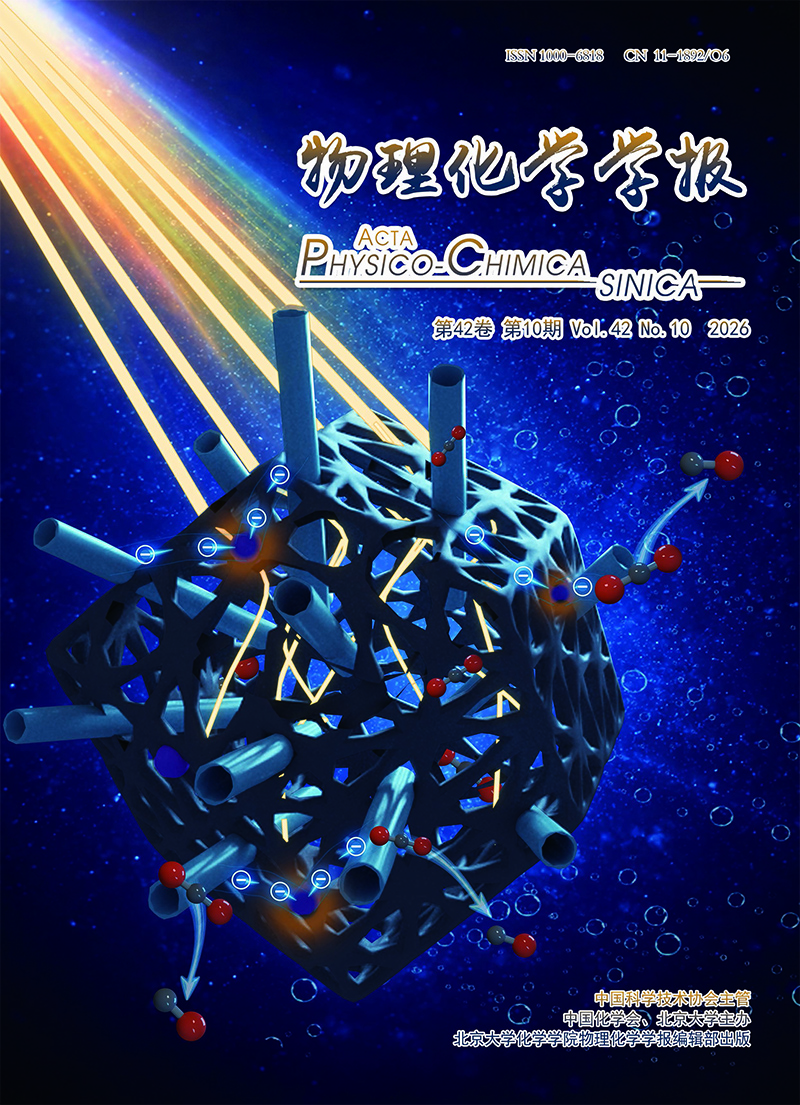
Conventional Bi12O17Cl2 photocatalyst suffer from narrow solar harvesting, weak CO2 adsorption and poor charge utilization. Herein, an intimate hierarchical heterojunction was constructed by embedding Bi12O17Cl2 ultrathin nanotubes into hierarchical Co-ZIF-derived porous carbon (Co-PC/BOC). Multi-cavity reflection within Co-PC nanocages and localized surface plasmon resonance of in situ generated Co3O4 domains synergistically enhance the light harvest ability of the Co-PC/BOC in the full spectral range. In pure water without any photosensitizers or sacrificial agents, the optimal composite exhibits a CO yield of 34.16 μmol g-1 h-1 with 100% selectivity, 2.9-fold higher than bare BOC. In situ DRIFTS and photo/electrochemical characterizations demonstrate that Co-PC serves as a dual-function platform of plasmonic hot-electron injector and charge separation hub, whereas BOC provide abundant surface sites for *COOH formation and *CO cleavage. Our work highlights the promising potential of metal-organic frameworks and their derivatives in developing efficient artificial photosynthesis systems.
Conventional Bi12O17Cl2 photocatalyst suffer from narrow solar harvesting, weak CO2 adsorption and poor charge utilization. Herein, an intimate hierarchical heterojunction was constructed by embedding Bi12O17Cl2 ultrathin nanotubes into hierarchical Co-ZIF-derived porous carbon (Co-PC/BOC). Multi-cavity reflection within Co-PC nanocages and localized surface plasmon resonance of in situ generated Co3O4 domains synergistically enhance the light harvest ability of the Co-PC/BOC in the full spectral range. In pure water without any photosensitizers or sacrificial agents, the optimal composite exhibits a CO yield of 34.16 μmol g-1 h-1 with 100% selectivity, 2.9-fold higher than bare BOC. In situ DRIFTS and photo/electrochemical characterizations demonstrate that Co-PC serves as a dual-function platform of plasmonic hot-electron injector and charge separation hub, whereas BOC provide abundant surface sites for *COOH formation and *CO cleavage. Our work highlights the promising potential of metal-organic frameworks and their derivatives in developing efficient artificial photosynthesis systems.
2026, 42(10): 100265
doi: 10.1016/j.actphy.2026.100265
Abstract:
Globally, irreversible blindness caused by corneal scarring, stromal defects, and trauma continues to rise. Shortages of donor corneas, the high cost of amniotic membrane and collagen patches, and complex ethical oversight have made the development of an abundant, low-cost, and scalable alternative a pressing clinical need. Herein, an “alkaline-transparency” protocol was developed to render “phoenix garment” (chicken eggshell membrane, ESM), transparent, hydrophilicity, and high saturated water content, while preserving its flexibility and suture compatibility. The membrane gradually degraded in the physiological environment, adapting to the pace of tissue repair. In a rabbit anterior-lamellar defect model, the patch rapidly integrated with host stroma, achieving complete re-epithelialization within one week and restoring a smooth, transparent corneal surface within eight weeks, with neatly aligned collagen and no scar formation, indicating effective suppression of myofibroblast activation and reliable restoration of the epithelial barrier. ESM is abundantly available, easy to prepare, and storable at room temperature, offering a safe, economical, and clinically translatable strategy for corneal stromal replacement.
Globally, irreversible blindness caused by corneal scarring, stromal defects, and trauma continues to rise. Shortages of donor corneas, the high cost of amniotic membrane and collagen patches, and complex ethical oversight have made the development of an abundant, low-cost, and scalable alternative a pressing clinical need. Herein, an “alkaline-transparency” protocol was developed to render “phoenix garment” (chicken eggshell membrane, ESM), transparent, hydrophilicity, and high saturated water content, while preserving its flexibility and suture compatibility. The membrane gradually degraded in the physiological environment, adapting to the pace of tissue repair. In a rabbit anterior-lamellar defect model, the patch rapidly integrated with host stroma, achieving complete re-epithelialization within one week and restoring a smooth, transparent corneal surface within eight weeks, with neatly aligned collagen and no scar formation, indicating effective suppression of myofibroblast activation and reliable restoration of the epithelial barrier. ESM is abundantly available, easy to prepare, and storable at room temperature, offering a safe, economical, and clinically translatable strategy for corneal stromal replacement.
2026, 42(10): 100280
doi: 10.1016/j.actphy.2026.100280
Abstract:
Three isostructural Ti6-oxo clusters with the formular of Ti6O4(PhPO3)2(L)2(OiPr)10, where L is 2-dimethylamine benzoate for Ti6-1, 3-dimethylamine benzoate for Ti6-2, and 4-dimethylamine benzoate for Ti6-3, were successfully synthesized and characterized. Thereinto, Ti6-3 displayed novel solvent dependent light absorption property. When dissolved in trifluoroethanol related solvent, evident visible light absorption was observed for Ti6-3, which was quite different from its absorption limited within the ultraviolate region in isopropanol related solvent. However, Ti6-1 and Ti6-2 displayed consistent absorption behavior in both of these solvents, respectively. It is worth noting that the solvent dependent absorption property remains quite rare for Ti-oxo cluster materials to date, although this has been commonly observed for organic conjugated materials. Nuclear magnetic resonance measurements revealed that the surface isopropoxide ligands on Ti6-3 were replaced by analogus trifluoroethoxide ligands on the cluster surface, resulting in Ti6-3-F. The solvatochromic effect was further illustrated by density functional theory calculation revealing the tuned energy levels between Ti6-3 and Ti6-3-F. Finally, Ti6-3-F was demonstrated able to serve as excellent cathode interlayer (CIL) in PM6:BO-4Cl and PM6:L8-BO based organic solar cells (OSCs), which achieved high efficiencies of 17.89% and 18.09%, respectively, suggesting its excellence as new CIL materials for high performance OSCs.
Three isostructural Ti6-oxo clusters with the formular of Ti6O4(PhPO3)2(L)2(OiPr)10, where L is 2-dimethylamine benzoate for Ti6-1, 3-dimethylamine benzoate for Ti6-2, and 4-dimethylamine benzoate for Ti6-3, were successfully synthesized and characterized. Thereinto, Ti6-3 displayed novel solvent dependent light absorption property. When dissolved in trifluoroethanol related solvent, evident visible light absorption was observed for Ti6-3, which was quite different from its absorption limited within the ultraviolate region in isopropanol related solvent. However, Ti6-1 and Ti6-2 displayed consistent absorption behavior in both of these solvents, respectively. It is worth noting that the solvent dependent absorption property remains quite rare for Ti-oxo cluster materials to date, although this has been commonly observed for organic conjugated materials. Nuclear magnetic resonance measurements revealed that the surface isopropoxide ligands on Ti6-3 were replaced by analogus trifluoroethoxide ligands on the cluster surface, resulting in Ti6-3-F. The solvatochromic effect was further illustrated by density functional theory calculation revealing the tuned energy levels between Ti6-3 and Ti6-3-F. Finally, Ti6-3-F was demonstrated able to serve as excellent cathode interlayer (CIL) in PM6:BO-4Cl and PM6:L8-BO based organic solar cells (OSCs), which achieved high efficiencies of 17.89% and 18.09%, respectively, suggesting its excellence as new CIL materials for high performance OSCs.
2026, 42(10): 100281
doi: 10.1016/j.actphy.2026.100281
Abstract:
Electromagnetic interference (EMI) increasingly constrains the development of flexible and multifunctional electronics materials, yet asymmetric structural design and functional integration remain limited. Here we report a Janus hierarchical membrane, liquid metal@polydopamine-MXene/Fe3O4@cellulose polyacrylonitrile nanofibers (LM@PDA-MXene/Fe3O4@CPNF), fabricated by electrospinning a Fe3O4-doped cellulose/Polyacrylonitrile nanofiber scaffold and vacuum-assisted assembly of MXene intercalated with core-shell LM@PDA nanoparticles. The multiscale architecture couples three loss pathways: a percolated MXene network for conductive loss, LM@PDA spacers that suppress restacking and form microcapacitors for interfacial and dipolar polarization, and a porous magnetic entrance that improves impedance matching. In the X-band, a single 70 μm layer achieved an average EMI shielding effectiveness (SET) of 45.1 dB and a thickness-normalised specific shielding effectiveness (SSE/t) = 8.87 × 10³ dB·cm2 g-1, stacking four layers raised SET to 70.8 dB. The membrane also provided orientation-dependent thermal functions, this ultrathin, eco-friendly, and lightweight membrane integrates absorption-dominant EMI shielding with bidirectional thermal management in a single platform, offering a practical route toward electromagnetic protection and infrared control in next-generation wearable electronics.
Electromagnetic interference (EMI) increasingly constrains the development of flexible and multifunctional electronics materials, yet asymmetric structural design and functional integration remain limited. Here we report a Janus hierarchical membrane, liquid metal@polydopamine-MXene/Fe3O4@cellulose polyacrylonitrile nanofibers (LM@PDA-MXene/Fe3O4@CPNF), fabricated by electrospinning a Fe3O4-doped cellulose/Polyacrylonitrile nanofiber scaffold and vacuum-assisted assembly of MXene intercalated with core-shell LM@PDA nanoparticles. The multiscale architecture couples three loss pathways: a percolated MXene network for conductive loss, LM@PDA spacers that suppress restacking and form microcapacitors for interfacial and dipolar polarization, and a porous magnetic entrance that improves impedance matching. In the X-band, a single 70 μm layer achieved an average EMI shielding effectiveness (SET) of 45.1 dB and a thickness-normalised specific shielding effectiveness (SSE/t) = 8.87 × 10³ dB·cm2 g-1, stacking four layers raised SET to 70.8 dB. The membrane also provided orientation-dependent thermal functions, this ultrathin, eco-friendly, and lightweight membrane integrates absorption-dominant EMI shielding with bidirectional thermal management in a single platform, offering a practical route toward electromagnetic protection and infrared control in next-generation wearable electronics.
2026, 42(10): 100293
doi: 10.1016/j.actphy.2026.100293
Abstract:
In response to the growing demands of advanced electronics with integrated electromagnetic interference (EMI) shielding and efficient thermal management, this study develops a multifunctional carbon fiber reinforced polymer composite (CFRP) through a biomimetic hierarchical interface design. A multi-level interfacial engineering approach is employed: first, polydopamine activation improves interfacial adhesion; second, vertically-aligned ZnO nanorod (NRs) arrays are grown in situ to provide mechanical interlocking, dielectric loss, and radial heat conduction pathways; finally, a sheet-like carbon nanotube (CNT) network bridges adjacent fibers, forming a densified, continuous conductive framework. This organic-inorganic, “line-plane” coupled architecture results in remarkable multifunctional enhancement: the composite achieves an EMI shielding effectiveness of 30.8 dB in the X-band, a through-plane thermal conductivity of 0.71 W m-1 K-1, and significant mechanical improvements—interlaminar shear strength and flexural strength increased by 57.4% and 84.3%, respectively. Efficient Joule heating and photothermal response are also demonstrated. This work presents a scalable hierarchical interface strategy that synergistically integrates structural, thermal, and electromagnetic functions, offering a viable design pathway for next-generation structural materials in EMI-sensitive applications.
In response to the growing demands of advanced electronics with integrated electromagnetic interference (EMI) shielding and efficient thermal management, this study develops a multifunctional carbon fiber reinforced polymer composite (CFRP) through a biomimetic hierarchical interface design. A multi-level interfacial engineering approach is employed: first, polydopamine activation improves interfacial adhesion; second, vertically-aligned ZnO nanorod (NRs) arrays are grown in situ to provide mechanical interlocking, dielectric loss, and radial heat conduction pathways; finally, a sheet-like carbon nanotube (CNT) network bridges adjacent fibers, forming a densified, continuous conductive framework. This organic-inorganic, “line-plane” coupled architecture results in remarkable multifunctional enhancement: the composite achieves an EMI shielding effectiveness of 30.8 dB in the X-band, a through-plane thermal conductivity of 0.71 W m-1 K-1, and significant mechanical improvements—interlaminar shear strength and flexural strength increased by 57.4% and 84.3%, respectively. Efficient Joule heating and photothermal response are also demonstrated. This work presents a scalable hierarchical interface strategy that synergistically integrates structural, thermal, and electromagnetic functions, offering a viable design pathway for next-generation structural materials in EMI-sensitive applications.
2026, 42(10): 100299
doi: 10.1016/j.actphy.2026.100299
Abstract:
The electrocatalytic reduction of nitrate to ammonia (NO3-RR) represents a promising strategy for sustainable nitrogen cycling and the valorisation of wastewater. Its practical implementation, however, is limited by sluggish kinetics, stemming from inefficient proton delivery during the multi-step electron/proton transfer, which restricts both ammonia selectivity and yield. In this work, we report a Pd-Ru bimetallic catalyst supported on nickel foam (Pd-Ru/NF), which functions through a hydrogen shuttle relay mechanism between dual-function sites. Combined experimental and theoretical analyses indicate that Pd sites are principally responsible for nitrate activation and hydrogenation, while adjacent Ru sites efficiently cleave water to supply active hydrogen species (H*). This cooperative interaction creates a dynamic hydrogen-transfer network, enabling rapid and directed proton delivery to reaction intermediates. The relay process not only accelerates the critical hydrogenation steps but also effectively suppresses the competing hydrogen evolution reaction (HER). Consequently, the Pd-Ru/NF electrode attains a notable ammonia yield of 1.77 mmol cm-2 h-1 with a Faradaic efficiency of 85.95% at -1.4 V vs. RHE. This study establishes a novel catalyst design paradigm based on the management of interfacial hydrogen transfer, providing a general strategy to enhance the efficiency of proton-coupled electrocatalytic transformations.
The electrocatalytic reduction of nitrate to ammonia (NO3-RR) represents a promising strategy for sustainable nitrogen cycling and the valorisation of wastewater. Its practical implementation, however, is limited by sluggish kinetics, stemming from inefficient proton delivery during the multi-step electron/proton transfer, which restricts both ammonia selectivity and yield. In this work, we report a Pd-Ru bimetallic catalyst supported on nickel foam (Pd-Ru/NF), which functions through a hydrogen shuttle relay mechanism between dual-function sites. Combined experimental and theoretical analyses indicate that Pd sites are principally responsible for nitrate activation and hydrogenation, while adjacent Ru sites efficiently cleave water to supply active hydrogen species (H*). This cooperative interaction creates a dynamic hydrogen-transfer network, enabling rapid and directed proton delivery to reaction intermediates. The relay process not only accelerates the critical hydrogenation steps but also effectively suppresses the competing hydrogen evolution reaction (HER). Consequently, the Pd-Ru/NF electrode attains a notable ammonia yield of 1.77 mmol cm-2 h-1 with a Faradaic efficiency of 85.95% at -1.4 V vs. RHE. This study establishes a novel catalyst design paradigm based on the management of interfacial hydrogen transfer, providing a general strategy to enhance the efficiency of proton-coupled electrocatalytic transformations.
2026, 42(10): 100330
doi: 10.1016/j.actphy.2026.100330
Abstract:
Uncontrolled discharge of phosphate-containing wastewater causes severe aquatic eutrophication, posing a critical challenge to global water security. Electrochemical deionization (EDI) is a promising approach for phosphate removal, but its practical application is hindered by limited electrode capacity and capacity mismatch in asymmetric systems. Herein, cubic CoFe-layered double hydroxide (LDH) and nanospike coaxial CoAl LDH were in-situ grown on conductive carbon cloth (CC) via a one-step hydrothermal method as freestanding anodes for asymmetric EDI systems. The CoAl LDH electrode exhibits superior electrochemical performance and phosphate adsorption capacity compared to CoFe LDH, owing to its unique hierarchical structure and crystal structure that enables faster ion transport kinetics and richer active sites. By optimizing the cathode/anode mass ratio to 2 : 1, the capacity mismatch issue of the asymmetric system is effectively mitigated, and the optimized EDI system with CoAl LDH/CC anode delivers a high phosphate adsorption capacity of 41.9 mg P g-1 at 1.2 V, along with excellent long-term stability (87% capacity retention after 120 h continuous operation). This work provides valuable insights for the development of high-performance EDI systems for phosphate removal.
Uncontrolled discharge of phosphate-containing wastewater causes severe aquatic eutrophication, posing a critical challenge to global water security. Electrochemical deionization (EDI) is a promising approach for phosphate removal, but its practical application is hindered by limited electrode capacity and capacity mismatch in asymmetric systems. Herein, cubic CoFe-layered double hydroxide (LDH) and nanospike coaxial CoAl LDH were in-situ grown on conductive carbon cloth (CC) via a one-step hydrothermal method as freestanding anodes for asymmetric EDI systems. The CoAl LDH electrode exhibits superior electrochemical performance and phosphate adsorption capacity compared to CoFe LDH, owing to its unique hierarchical structure and crystal structure that enables faster ion transport kinetics and richer active sites. By optimizing the cathode/anode mass ratio to 2 : 1, the capacity mismatch issue of the asymmetric system is effectively mitigated, and the optimized EDI system with CoAl LDH/CC anode delivers a high phosphate adsorption capacity of 41.9 mg P g-1 at 1.2 V, along with excellent long-term stability (87% capacity retention after 120 h continuous operation). This work provides valuable insights for the development of high-performance EDI systems for phosphate removal.
2026, 42(10): 100333
doi: 10.1016/j.actphy.2026.100333
Abstract:
Phase change materials (PCMs) with efficient photothermal conversion and energy storage capabilities show great potential in the capture, conversion, and storage of solar energy. However, although pristine PCMs possess high latent heat, they suffer from issues such as low efficiency in light capture and absorption, poor thermal conductivity, phase leakage, and poor shape stability. Therefore, by integrating PCMs with photothermal conversion materials and inspired by the “root hair” structure of plants, we designed a novel biomimetic phase change material. This material employs a dual-carbon structure composed of carbonized PBO fiber (CPF) and in-situ generated nickel nanoparticles (NPs) confined within carbon nanotubes (CNTs), denoted as CPF@Ni/CNTs, as a three-dimensional porous carbon skeleton support. Using nickel nanoparticles as functional fillers and paraffin wax (PW) as the phase change material, the PW-CPF@Ni/CNTs composite PCM was successfully fabricated. Benefiting from the physical adsorption of the 3D network porous structure, a high PW loading ratio of 254% was achieved, and leakage was effectively suppressed during phase change (leakage rate ≤ 0.17% after 300 thermal cycles). The introduction of nickel nanoparticles not only constructed abundant thermal conduction pathways, but also, through the synergistic effect of localized surface plasmon resonance (LSPR) and the graphitized carbon structure with high broadband light absorption, significantly enhanced the light capture and energy conversion efficiency of the composite PCM. Consequently, the PW-CPF@Ni/CNTs composite PCM exhibited a latent heat of 183.6 J g-1, a thermal conductivity of 0.77 W (m K)-1 (2.6 times higher than pure PW), and a photothermal conversion efficiency of 96.69% (100 mW cm-2). Furthermore, the composite PCM maintained excellent thermal reliability after 300 photothermal cycles. This study proposes a novel biomimetic root-hair-like nickel-induced dual-carbon 3D network porous structure for the controlled fabrication of multifunctional, high-performance composite PCMs and provides a detailed analysis of their photothermal conversion mechanism. This new composite PCM holds significant application potential in solar energy storage, solar water heating, and thermal management of electronic devices.
Phase change materials (PCMs) with efficient photothermal conversion and energy storage capabilities show great potential in the capture, conversion, and storage of solar energy. However, although pristine PCMs possess high latent heat, they suffer from issues such as low efficiency in light capture and absorption, poor thermal conductivity, phase leakage, and poor shape stability. Therefore, by integrating PCMs with photothermal conversion materials and inspired by the “root hair” structure of plants, we designed a novel biomimetic phase change material. This material employs a dual-carbon structure composed of carbonized PBO fiber (CPF) and in-situ generated nickel nanoparticles (NPs) confined within carbon nanotubes (CNTs), denoted as CPF@Ni/CNTs, as a three-dimensional porous carbon skeleton support. Using nickel nanoparticles as functional fillers and paraffin wax (PW) as the phase change material, the PW-CPF@Ni/CNTs composite PCM was successfully fabricated. Benefiting from the physical adsorption of the 3D network porous structure, a high PW loading ratio of 254% was achieved, and leakage was effectively suppressed during phase change (leakage rate ≤ 0.17% after 300 thermal cycles). The introduction of nickel nanoparticles not only constructed abundant thermal conduction pathways, but also, through the synergistic effect of localized surface plasmon resonance (LSPR) and the graphitized carbon structure with high broadband light absorption, significantly enhanced the light capture and energy conversion efficiency of the composite PCM. Consequently, the PW-CPF@Ni/CNTs composite PCM exhibited a latent heat of 183.6 J g-1, a thermal conductivity of 0.77 W (m K)-1 (2.6 times higher than pure PW), and a photothermal conversion efficiency of 96.69% (100 mW cm-2). Furthermore, the composite PCM maintained excellent thermal reliability after 300 photothermal cycles. This study proposes a novel biomimetic root-hair-like nickel-induced dual-carbon 3D network porous structure for the controlled fabrication of multifunctional, high-performance composite PCMs and provides a detailed analysis of their photothermal conversion mechanism. This new composite PCM holds significant application potential in solar energy storage, solar water heating, and thermal management of electronic devices.
2026, 42(10): 100337
doi: 10.1016/j.actphy.2026.100337
Abstract:
The conflict between high-efficiency algal inactivation and ecological safety represents a critical bottleneck in the photocatalytic control of harmful algal blooms (HABs). Conventional copper-based photocatalysts, although effective, often cause severe secondary pollution and aquatic toxicity. To address this trade-off, we constructed a biologically safe S-scheme heterojunction by covalently anchoring LaCoO3 (LCO) octahedrons onto PTP-DABDT amide-imine functional polymers, which were fabricated via solvothermal polymerization of 2,4,6-trihydroxybenzene-1,3,5-tricarbaldehyde (TP) and 2,5-diamino-1,4-benzenedithiol dihydrochloride. Unambiguous spectroscopic evidence, including femtosecond transient absorption (fs-TA) spectroscopy and in-situ irradiated X-ray photoelectron spectroscopy (XPS), confirms the formation of an internal electric field (IEF). This field drives ultrafast S-scheme charge transfer, effectively suppressing charge-carrier recombination while preserving strong redox potentials. Consequently, the optimized 20LCO/PTP-DABDT composite exhibits a remarkable “Kill-and-Clean” effect, achieving 64.39% degradation of chlorophyll-a in Microcystis aeruginosa to suppress algal blooms while simultaneously degrading the released microcystins. More importantly, comparative toxicity analysis reveals a paradigm shift: unlike conventional Cu-based algicides, which induce 100% mortality in non-target organisms (Lateolabrax japonicus), our system maintains a survival rate exceeding 90%. This study presents a pioneering “ecological regulation” strategy, offering a sustainable solution that balances efficient algal inactivation with intrinsic environmental biosafety.
The conflict between high-efficiency algal inactivation and ecological safety represents a critical bottleneck in the photocatalytic control of harmful algal blooms (HABs). Conventional copper-based photocatalysts, although effective, often cause severe secondary pollution and aquatic toxicity. To address this trade-off, we constructed a biologically safe S-scheme heterojunction by covalently anchoring LaCoO3 (LCO) octahedrons onto PTP-DABDT amide-imine functional polymers, which were fabricated via solvothermal polymerization of 2,4,6-trihydroxybenzene-1,3,5-tricarbaldehyde (TP) and 2,5-diamino-1,4-benzenedithiol dihydrochloride. Unambiguous spectroscopic evidence, including femtosecond transient absorption (fs-TA) spectroscopy and in-situ irradiated X-ray photoelectron spectroscopy (XPS), confirms the formation of an internal electric field (IEF). This field drives ultrafast S-scheme charge transfer, effectively suppressing charge-carrier recombination while preserving strong redox potentials. Consequently, the optimized 20LCO/PTP-DABDT composite exhibits a remarkable “Kill-and-Clean” effect, achieving 64.39% degradation of chlorophyll-a in Microcystis aeruginosa to suppress algal blooms while simultaneously degrading the released microcystins. More importantly, comparative toxicity analysis reveals a paradigm shift: unlike conventional Cu-based algicides, which induce 100% mortality in non-target organisms (Lateolabrax japonicus), our system maintains a survival rate exceeding 90%. This study presents a pioneering “ecological regulation” strategy, offering a sustainable solution that balances efficient algal inactivation with intrinsic environmental biosafety.
2026, 42(10): 100338
doi: 10.1016/j.actphy.2026.100338
Abstract:
Covalent organic frameworks (COFs) are widely studied as photocatalysts for the hydrogen evolution reaction (HER), yet most design strategies target light absorption or charge separation rather than the H* desorption barrier at the catalytic site itself. We re-examine the problem from a bond-resolved view: the crystal orbital Hamilton population (COHP) is used to treat the occupancy of the N-H antibonding manifold as a quantitative descriptor of how strongly the imine nitrogen of a Schiff-base COF binds H*. Two pyrene-based COFs, PY-BD and PY-DHBD, are synthesized to test the descriptor. Adding two phenolic -OH groups to the dialdehyde linker raises the antibonding occupancy (ICOHP from -7.52 to -7.18 eV), weakens the N-H bond, and shifts ΔGH* from -0.22 to 0.04 eV, close to thermoneutrality. The visible-light HS2-evolution rate accordingly rises from 450 to 1127 μmol g-1 h-1, 2.5-fold the rate of PY-BD. The work places COHP-resolved antibonding occupancy alongside the d-band-centre framework familiar from metal catalysis as a quantitative descriptor for tuning HER on N-rich COF active sites.
Covalent organic frameworks (COFs) are widely studied as photocatalysts for the hydrogen evolution reaction (HER), yet most design strategies target light absorption or charge separation rather than the H* desorption barrier at the catalytic site itself. We re-examine the problem from a bond-resolved view: the crystal orbital Hamilton population (COHP) is used to treat the occupancy of the N-H antibonding manifold as a quantitative descriptor of how strongly the imine nitrogen of a Schiff-base COF binds H*. Two pyrene-based COFs, PY-BD and PY-DHBD, are synthesized to test the descriptor. Adding two phenolic -OH groups to the dialdehyde linker raises the antibonding occupancy (ICOHP from -7.52 to -7.18 eV), weakens the N-H bond, and shifts ΔGH* from -0.22 to 0.04 eV, close to thermoneutrality. The visible-light HS2-evolution rate accordingly rises from 450 to 1127 μmol g-1 h-1, 2.5-fold the rate of PY-BD. The work places COHP-resolved antibonding occupancy alongside the d-band-centre framework familiar from metal catalysis as a quantitative descriptor for tuning HER on N-rich COF active sites.
2026, 42(10): 100350
Abstract:
Chiral photocatalysts show significant promise for photocatalytic hydrogen evolution. However, chirality-regulated cadmium sulfide (CCdS) continues to suffer from insufficient photogenerated charge separation, which restricts its practical application and further advancement. Herein, we construct a novel Schottky heterojunction photocatalyst (CCdS/CTC) composed of CCdS and Co-doped Ti3C2 (CTC) via a simple physical mixing method. Notably, the photocatalyst achieves a hydrogen yield of 21937 μmol g-1 from polylactic acid (PLA) microplastics within 5 h, accompanied by simultaneous conversion of PLA into pyruvic acid (PA) small molecules. X-ray photoelectron spectroscopy (XPS) and density functional theory (DFT) calculations demonstrate the interfacial charge transfer between CCdS and CTC upon contact, and in situ XPS confirms the charge transfer under illumination. Photoelectrochemical measurements demonstrate that the chirality regulation of CCdS works synergistically with the constructed heterojunction to effectively promote photogenerated charge separation and transport. The Schottky heterojunction formed at the CCdS/CTC interface further enhances the photogenerated carrier separation efficiency of CCdS. The synergy between chirality regulation and elemental doping markedly suppresses photogenerated charge recombination and optimizes surface reaction kinetics. This work presents a promising approach for converting plastic waste into H2 fuel, offering critical insights into the rational design of sustainable photocatalysts for environmental remediation and renewable energy production.
Chiral photocatalysts show significant promise for photocatalytic hydrogen evolution. However, chirality-regulated cadmium sulfide (CCdS) continues to suffer from insufficient photogenerated charge separation, which restricts its practical application and further advancement. Herein, we construct a novel Schottky heterojunction photocatalyst (CCdS/CTC) composed of CCdS and Co-doped Ti3C2 (CTC) via a simple physical mixing method. Notably, the photocatalyst achieves a hydrogen yield of 21937 μmol g-1 from polylactic acid (PLA) microplastics within 5 h, accompanied by simultaneous conversion of PLA into pyruvic acid (PA) small molecules. X-ray photoelectron spectroscopy (XPS) and density functional theory (DFT) calculations demonstrate the interfacial charge transfer between CCdS and CTC upon contact, and in situ XPS confirms the charge transfer under illumination. Photoelectrochemical measurements demonstrate that the chirality regulation of CCdS works synergistically with the constructed heterojunction to effectively promote photogenerated charge separation and transport. The Schottky heterojunction formed at the CCdS/CTC interface further enhances the photogenerated carrier separation efficiency of CCdS. The synergy between chirality regulation and elemental doping markedly suppresses photogenerated charge recombination and optimizes surface reaction kinetics. This work presents a promising approach for converting plastic waste into H2 fuel, offering critical insights into the rational design of sustainable photocatalysts for environmental remediation and renewable energy production.
2026, 42(10): 100354
doi: 10.1016/j.actphy.2026.100354
Abstract:
Traditional electromagnetic shielding materials can no longer meet the rapidly growing demands of modern flexible electronic devices and advanced information technologies. Owing to their excellent flexibility, adhesion, stimuli responsiveness, and ease of processing and functional modification, hydrogels offer promising opportunities for developing flexible wearable electronic devices. In this study, PAM/CMC/Fe3O4@ZIF-67 multifunctional composite hydrogels were fabricated through a reverse-growth strategy combined with a one-pot polymerization method. First, flower-like Fe3O4 microspheres were prepared via an ethylene glycol-assisted solvothermal method and subsequently coupled with ZIF-67 through a reverse-growth strategy to obtain the Fe3O4@ZIF-67 composite. Subsequently, the composites were introduced into a PAM/CMC-based three-dimensional network, forming a multifunctional hydrogel that integrates flexibility, high water content, and synergistic conductive-magnetic effects. The experimental results showed that the 3 mm-thick PCZF-2 hydrogels achieved an average EMI SE of 36.08 dB. It also exhibited a conductivity of 0.93 S m-1, a compressive modulus of 398.0 kPa, a compressive strain of 64.1%, a water content of 625.72%, and a swelling ratio of 240.82%. The hydrogel also exhibited excellent adhesion capability and high sensitivity (GF = 1.40 within the strain range of 0-100%, R2 = 0.995), enabling human-machine-interaction-friendly strain sensing. This study provides an effective strategy for constructing tough multifunctional materials with integrated electromagnetic interference shielding and strain-sensing functionalities.
Traditional electromagnetic shielding materials can no longer meet the rapidly growing demands of modern flexible electronic devices and advanced information technologies. Owing to their excellent flexibility, adhesion, stimuli responsiveness, and ease of processing and functional modification, hydrogels offer promising opportunities for developing flexible wearable electronic devices. In this study, PAM/CMC/Fe3O4@ZIF-67 multifunctional composite hydrogels were fabricated through a reverse-growth strategy combined with a one-pot polymerization method. First, flower-like Fe3O4 microspheres were prepared via an ethylene glycol-assisted solvothermal method and subsequently coupled with ZIF-67 through a reverse-growth strategy to obtain the Fe3O4@ZIF-67 composite. Subsequently, the composites were introduced into a PAM/CMC-based three-dimensional network, forming a multifunctional hydrogel that integrates flexibility, high water content, and synergistic conductive-magnetic effects. The experimental results showed that the 3 mm-thick PCZF-2 hydrogels achieved an average EMI SE of 36.08 dB. It also exhibited a conductivity of 0.93 S m-1, a compressive modulus of 398.0 kPa, a compressive strain of 64.1%, a water content of 625.72%, and a swelling ratio of 240.82%. The hydrogel also exhibited excellent adhesion capability and high sensitivity (GF = 1.40 within the strain range of 0-100%, R2 = 0.995), enabling human-machine-interaction-friendly strain sensing. This study provides an effective strategy for constructing tough multifunctional materials with integrated electromagnetic interference shielding and strain-sensing functionalities.
2026, 42(10): 100226
doi: 10.1016/j.actphy.2025.100226
Abstract:
Advancing electrochemical energy storage beyond lithium-ion technologies has become increasingly critical in response to sustainable development. Rechargeable magnesium metal batteries (RMBs), recognized for their inherent advantages in resource abundance, potential for higher volumetric capacity, and enhanced safety characteristics due to the dendrite-free plating of magnesium, stand out as highly promising for next-generation energy storage. Recent breakthroughs in magnesium-compatible electrolytes have effectively overcome longstanding issues of anode passivation and low coulombic efficiency, thereby accelerating RMB research into a new stage of development. However, the practical application of RMBs continues to face significant challenges, predominantly centered on cathode materials. These challenges primarily stem from the strong polarization and high charge density of divalent Mg2+ ions, which lead to strong electrostatic interactions with the host cathode materials, resulting in sluggish solid-state diffusion kinetics that limit achievable energy density and cycling stability. To systematically address these hurdles and promote the development of cathode materials, this review provides a comprehensive summary of recent progress in inorganic cathode materials for RMBs, focusing on four major categories: polyanionic compounds, oxides, sulfides, and selenides. For each class, we delve into the relationships between crystal structure, electrochemical performance, and Mg2+ storage mechanism, discussing both significant advances and persistent issues. Each material class faces distinct limitations, from short lifespan in polyanionic compounds to kinetic barriers in oxides and shuttle effects in chalcogenides. From this survey, we summarize effective material engineering strategies to address these challenges, which include nanostructural design to shorten diffusion pathways, composite engineering to enhance conductivity, interlayer expansion to facilitate ion transport, defect modulation to create active sites, amorphization, and elemental doping to stabilize crystal structures. The rational integration of these strategies tailored to specific material limitations is crucial for breaking the current performance ceiling. Future research should emphasize advanced in situ/operando characterization, explore new cathode design paradigms, and pursue synergistic electrode-electrolyte pairings. This review aims to provide theoretical fundamentals for the rational design of high-performance cathode materials, promoting the technological advancement and practical application of RMBs.
Advancing electrochemical energy storage beyond lithium-ion technologies has become increasingly critical in response to sustainable development. Rechargeable magnesium metal batteries (RMBs), recognized for their inherent advantages in resource abundance, potential for higher volumetric capacity, and enhanced safety characteristics due to the dendrite-free plating of magnesium, stand out as highly promising for next-generation energy storage. Recent breakthroughs in magnesium-compatible electrolytes have effectively overcome longstanding issues of anode passivation and low coulombic efficiency, thereby accelerating RMB research into a new stage of development. However, the practical application of RMBs continues to face significant challenges, predominantly centered on cathode materials. These challenges primarily stem from the strong polarization and high charge density of divalent Mg2+ ions, which lead to strong electrostatic interactions with the host cathode materials, resulting in sluggish solid-state diffusion kinetics that limit achievable energy density and cycling stability. To systematically address these hurdles and promote the development of cathode materials, this review provides a comprehensive summary of recent progress in inorganic cathode materials for RMBs, focusing on four major categories: polyanionic compounds, oxides, sulfides, and selenides. For each class, we delve into the relationships between crystal structure, electrochemical performance, and Mg2+ storage mechanism, discussing both significant advances and persistent issues. Each material class faces distinct limitations, from short lifespan in polyanionic compounds to kinetic barriers in oxides and shuttle effects in chalcogenides. From this survey, we summarize effective material engineering strategies to address these challenges, which include nanostructural design to shorten diffusion pathways, composite engineering to enhance conductivity, interlayer expansion to facilitate ion transport, defect modulation to create active sites, amorphization, and elemental doping to stabilize crystal structures. The rational integration of these strategies tailored to specific material limitations is crucial for breaking the current performance ceiling. Future research should emphasize advanced in situ/operando characterization, explore new cathode design paradigms, and pursue synergistic electrode-electrolyte pairings. This review aims to provide theoretical fundamentals for the rational design of high-performance cathode materials, promoting the technological advancement and practical application of RMBs.
2026, 42(10): 100300
doi: 10.1016/j.actphy.2026.100300
Abstract:
Cellular architecture, which dictates the spatial distribution of polymer matrices and functional networks, is a critical determinant in optimizing the interaction between materials and electromagnetic waves. Recently, supercritical carbon dioxide (scCO2) foaming technology has emerged as a transformative fabrication strategy in the field of electromagnetic protection, since its unique gas-templated molecular and filler reorganization capabilities enable the synthesis of lightweight porous materials with precise microstructural control that are superior to conventional solid composites or chemically blown counterparts. Therefore, scCO2 foaming provides a versatile platform for developing high-performance electromagnetic interference (EMI) shielding and microwave absorption materials with tunable dielectric properties and enhanced impedance matching. This review focuses on the recent advances in scCOS2-foamed polymer composites for electromagnetic protection. It provides a comprehensive summary of fundamental foaming mechanisms, systematically examines the structural evolution of both flexible and rigid foam systems, ranging from single-layer nanocomposites to sophisticated gradient and multilayered architectures, and demonstrates their enhanced dissipation capabilities through mechanisms such as multiple internal reflections and scattering. Finally, we discuss the challenges and future directions for this field, including establishing rigorous “structure-process-property” correlations, integrating multiphysics simulations for inverse structural design, and developing sustainable, closed-loop material lifecycles. These efforts aim to provide theoretical and technical guidance on the rational design of next-generation, absorption-dominated electromagnetic protective materials.
Cellular architecture, which dictates the spatial distribution of polymer matrices and functional networks, is a critical determinant in optimizing the interaction between materials and electromagnetic waves. Recently, supercritical carbon dioxide (scCO2) foaming technology has emerged as a transformative fabrication strategy in the field of electromagnetic protection, since its unique gas-templated molecular and filler reorganization capabilities enable the synthesis of lightweight porous materials with precise microstructural control that are superior to conventional solid composites or chemically blown counterparts. Therefore, scCO2 foaming provides a versatile platform for developing high-performance electromagnetic interference (EMI) shielding and microwave absorption materials with tunable dielectric properties and enhanced impedance matching. This review focuses on the recent advances in scCOS2-foamed polymer composites for electromagnetic protection. It provides a comprehensive summary of fundamental foaming mechanisms, systematically examines the structural evolution of both flexible and rigid foam systems, ranging from single-layer nanocomposites to sophisticated gradient and multilayered architectures, and demonstrates their enhanced dissipation capabilities through mechanisms such as multiple internal reflections and scattering. Finally, we discuss the challenges and future directions for this field, including establishing rigorous “structure-process-property” correlations, integrating multiphysics simulations for inverse structural design, and developing sustainable, closed-loop material lifecycles. These efforts aim to provide theoretical and technical guidance on the rational design of next-generation, absorption-dominated electromagnetic protective materials.