
Figure 1.
Design of Ir-CNP complexes with high activity and excellent stability for efficient CO2 hydrogenation into formate

Hydrogenation of CO2 to formate catalyzed by N-heterocyclic carbene-nitrogen-phosphine chelated iridium(Ⅰ) complexes
Huihua GONG , Tianhua CUI , Li JI , Jichuan ZHANG , Liyuan ZHANG , Yan CHEN , Zhenye WANG , Jiaqi XU , Ruixiang LI


The increasing global energy demand and the overconsumption of fossil fuels, which have led to rising carbon dioxide (CO2) concentration in the atmosphere, have drawn significant concern from the global community. CO2 is not only a greenhouse gas, but also an important C1 feedstock for producing chemicals and fuels due to its abundant, renewable, low-cost, and non-toxic nature[1-2]. Thus, the conversion of CO2 into valuable fuel-related C1 chemicals, such as formic acid, formate, formaldehyde, methanol, and methane, provides a pathway to a sustainable society[1-7]. Among various CO2-derived products, formate is a particularly promising target, serving as a chemical feedstock, a commodity chemical for food and agriculture, a liquid fuel, and a potential hydrogen (H2) storage medium[8-10]. By utilizing CO2 as an energy vector for H2 storage, the hydrogenation of CO2 into formate using transition-metal complexes is one of the most attractive approaches to simultaneously address both CO2 chemical fixation and hydrogen storage problems[11-12].
Since the pioneering work by Inoue et al. in 1976[13], the homogeneous catalytic hydrogenation of CO2 to formic acid/formate, catalyzed by transition- metal complexes based on Ru[14-16], Rh[17-18], Ir[19-22], Fe[23], Co[24], and Ni[25], has been extensively investigated. To date, the state-of-the-art in homogeneous hydrogenation of CO2 remains dominated by noble metal catalysts, particularly phosphorus (P)-containing ruthenium and iridium complexes, which are the most active[16,19-20,26-27]. Significantly, Pidko′s group reported an exceptional turnover frequency (TOF) of 1.89×10⁶ h-1 by Ru-PNP complex[16]. Nozaki and coworkers developed an unprecedentedly high activity, achieving a turnover number (TON) of 3.5×10⁶ by an iridium complex with tridentate pyridine-based pincer phosphine ligands (Ir-PNP)[19]. However, most Ir-based complexes do not give a satisfying TON due to the rapid deactivation of the catalyst[28-32]. In order to meet the requirements for industrial applications, there remains a strong demand for the development of a catalytic system that is both highly active and stable in the hydrogenation of CO2. N-heterocyclic carbenes (NHCs) are one of the most promising ligands due to their strong σ‑ donating property, which enables the formation of strong coordination bonds with metal centers, therefore stabilizing the active metal species and enhancing the stability of metal complexes during CO2 hydrogenation[27,33-38]. Recently, our group reported that unsymmetric Ru-CNP and Ru-CNN complexes[34,37], incorporating functionalized NHC ligands (CNP and CNN), exhibited high activity and excellent stability in CO2 hydrogenation to formate, with high TONs of 1.7×10⁵ and 6.5×10⁵, respectively. To further explore stable and efficient catalysts and improve the catalytic performance of CO2 hydrogenation based on NHC metal complexes, we developed a new class of iridium(Ⅰ) complexes bearing nitrogen-phosphine functionalized NHC ligands (CNP) and 1, 5-cyclooctadiene molecule (cod), which exhibit high activity and long catalytic lifetime for the hydrogenation of CO2 (Fig. 1).
All operations were carried out under a nitrogen atmosphere or in a glovebox. All solvents were purified with standard methods. Reagents and [Ir(cod)Cl]2 were purchased from commercial suppliers and used as received. 3-(2-{[2-(diphenylphosphaneyl)benzylidene]amino}ethyl)-1-methyl-1H-imidazol-3-ium chloride (L1-Cl)[39], 3-(2-{[2-(diphenylphosphaneyl)benzylidene]amino}ethyl)-1-methyl-1H-imidazol-3-ium hexafluorophosphate (L1-PF6)[39], and 3-(2-{[2-(diphenylphosphaneyl)benzyl]amino}ethyl)-1-methyl-1H-imidazol-3-ium chloride (L2) were synthesized according to the reported methods[34]. 1H NMR, 13C NMR, and 31P NMR spectra were measured on the Bruker AVANCE Ⅲ HD-400 MHz in DMSO-d6 or CD2Cl2. HRMS spectra were recorded on a SHIMADZU LCMS-IT-TOF mass spectrometer.
The addition of [Ir(cod)Cl]2 to the silver-NHC complexes generated from L1-Cl, L1-PF6, and L2 with Ag2O, without isolation, afforded the corresponding NHC‑based iridium(Ⅰ) complexes, respectively (Scheme 1).
Ligand L1-Cl (0.30 mmol, 129.9 mg), silver oxide (0.15 mmol, 34.8 mg), and dichloromethane (20 mL) were added to a two-necked flask in a glovebox. The mixture was stirred in the dark at room temperature for 10 h, then filtered through celite to remove a small amount of unreacted Ag2O. Subsequently, [Ir(cod)Cl]2 (0.15 mmol, 101 mg) and toluene (30 mL) were added to the filtrate and stirred at 60 ℃ for 9 h. At the end of the reaction, the mixture was filtered, and the solvent of the filtrate was concentrated to about 10 mL. Ether (10 mL) was then added to the solution to precipitate the desired product. The precipitate was filtered, washed with ether (5 mL×2), and dried under vacuum to obtain complex 1-Cl as a bright yellow solid (141 mg, 64% yield). 1H NMR (600 MHz, DMSO-d6): δ 8.82 (s, 1H), 7.96 (dd, J=7.7, 3.9 Hz, 1H), 7.92-7.88 (m, 2H), 7.74-7.71 (m, 3H), 7.67 (t, J=7.5 Hz, 1H), 7.60 (t, J=7.6 Hz, 1H), 7.26-7.01 (m, 6H), 6.51 (t, J=5.56 Hz, 2H), 4.71 (t, J=10.9 Hz, 1H), 4.39 (dd, J=12.1, 2.9 Hz, 1H), 4.31 (dt, J=13.8, 3.6 Hz, 1H), 3.87 (s, 3H), 2.93-2.81 (m, 4H), 2.33-1.93 (m, 7H), 1.75 (m, 2H). 31P NMR (162 MHz, DMSO-d6): δ 2.39 (s). HRMS (ESI-TOF) m/z: Calcd. for C33H36N3Pir ([M-Cl]+) 698.227 6, Found 698.223 4.
Ligand L1-PF6 (0.30 mmol, 162.9 mg), silver oxide (0.15 mmol, 34.8 mg), and dichloromethane (20 mL) were added to a two-necked flask in a glovebox. The mixture was stirred in the dark at room temperature for 10 h, then filtered through celite. Subsequently, [Ir(cod)Cl]2 (0.15 mmol, 101 mg) and toluene (30 mL) were added to the filtrate and stirred at 60 ℃ for 9 h. The reaction mixture was then filtered, and the solvent of the filtrate was reduced to about 10 mL under vacuum, and ether (10 mL) was added to it to precipitate the desired product. The precipitate was filtered, washed with ether (5 mL×2), and dried under vacuum to yield complex 1-PF6 as a brick-red solid (167 mg, 66% yield). 1H NMR (400 MHz, CD2Cl2): δ 8.69 (s, 1H), 8.03-7.93 (m, 2H), 7.89 (ddd, J=7.6, 4.0, 1.3 Hz, 1H), 7.75-7.58 (m, 4H), 7.57-7.50 (m, 1H), 7.23-7.14(m, 2H), 7.09 (td, J=7.8, 2.2 Hz, 2H), 6.92 (d, J=2.1 Hz, 1H), 6.69 (d, J=2.0 Hz, 1H), 6.60-6.52 (m, 2H), 4.96-4.80 (m, 1H), 4.55-4.40 (m, 1H), 4.25 (dt, J=13.8, 3.4 Hz, 1H), 3.95 (s, 3H), 3.10-2.91 (m, 4H), 2.36-1.70 (m, 8H), 1.41-1.23 (m, 1H). 31P NMR (162 MHz, CD2Cl2): δ 2.64 (s), -144.41 (hept, J=711.0 Hz). 13C{1H} NMR (100.6 MHz, CD2Cl2): δ 166.44, 159.24 (d, JC—P=11.4 Hz, carbon atom of the NHC), 137.35 (d, J=9.6 Hz), 136.72 (d, J=15.5 Hz), 134.95 (d, J=42.7 Hz), 134.23 (d, J=6.9 Hz), 132.21 (d, J=6.1 Hz), 131.87, 131.85, 131.21 (d, J=1.6 Hz), 130.02 (d, J=10.7 Hz), 129.27 (d, J=2.1 Hz), 128.98 (d, J=10.3 Hz), 128.41 (d, J=9.0 Hz), 127.85 (d, J=32.3 Hz), 126.92 (d, J=35.7 Hz), 123.3, 122.2, 64.40 (d, J=3.3 Hz), 51.04, 39.27, 0.76. HRMS (ESI‑TOF) m/z: Calcd. for C33H36N3PIr ([M-PF6]+) 698.227 6, Found 698.223 2.
Ligand L2 (0.30 mmol, 130.6 mg), silver oxide (0.15 mmol, 34.8 mg), and dichloromethane (20 mL) were added to a two-necked flask in a glovebox. The mixture was stirred in the dark at room temperature for 10 h, and then was filtered with celite. [Ir(cod)Cl]2 (0.15 mmol, 101 mg) and toluene (30 mL) were added to the filtrate and stirred at 60 ℃ for 9 h. Then, the reaction mixture was filtered, and the filtrate was concentrated to about 10 mL under vacuum. The addition of 10 mL of ether to the filtrate generated the desired product. The precipitate was filtered, washed with ether (5 mL×2), and dried under vacuum to give complex 2 as a yellow-brown solid (110.3 mg, 50% yield). 1H NMR (400 MHz, DMSO-d6): δ 8.11-7.93 (m, 2H), 7.76-7.58 (m, 3H), 7.46-7.34 (m, 5H), 7.29-7.12 (m, 3H), 6.92-6.79 (m, 1H), 6.65 (t, J=8.76 Hz, 2H), 6.27 (brs, 1H), 4.15-4.10 (m, 1H), 4.05-3.93 (m, 3H), 3.72 (s, 3H), 3.40-3.35 (m, 1H), 2.98 (dd, J=13.2, 10.2 Hz, 1H), 2.68-2.60 (m, 3H), 2.21-2.05 (m, 6H), 1.98-1.83 (m, 1H), 1.57 (d, J=8.1 Hz, 2H). 31P NMR (162 MHz, DMSO-d6): δ 2.00 (s). HRMS (ESI-TOF) m/z: Calcd. for C33H38N3PIr ([M-Cl]+) 700.243 3, Found 700.239 4.
A fresh stock solution of the Ir complexes was prepared before the experiment. For example, the catalyst (40 μmol) was dissolved in degassed EtOH (100.0 mL) and diluted to 0.10 μmol·mL-1 with EtOH. Catalytic CO2 hydrogenation was carried out in a Hastelloy Autoclave Reactor system equipped with a 50 mL cylinder. Under a nitrogen atmosphere, 1 mL of a stock solution of the complex and 10 mL of KOH aqueous solution (or other base aqueous solution) were added to the 50 mL autoclave. The autoclave was then sealed, pressurized with CO2, and stirred at room temperature until the pressure of CO2 no longer dropped, after which the CO2 pressure was adjusted to the required level. Then, H2 was filled to the desired pressure. The reaction mixture was vigorously stirred and heated to the desired temperature (50-170 ℃) for the appropriate time (5-150 h). After the reaction, the mixture was cooled to room temperature, and slowly released the pressure. 50-1 000 μL of DMF (N,N-dimethylformamide) was added as an internal standard. Then, the formate was quantified by 1H NMR spectroscopy with D2O (formate was the only product; no CO or other gas-phase products were detected by gas chromatography from the residual gas after the reaction). The reactions were run three times, and the average amount of formate (mmol) was used.
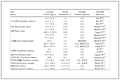
A suitable quality single crystal with a dimension of 0.35 mm×0.3 mm×0.25 mm was obtained by slow expanding evaporation of n-hexane into the saturated dichloromethane solution of complex 1-PF6 at 2 ℃. Single crystal X-ray diffraction data were collected on a Xcalibur Eos diffractometer (Mo Kα, λ=0.071 073 nm) at 293(2) K. The structure was solved by Olex2[40] with the ShelXT[41] structure solution program using Intrinsic Phasing and refined with the ShelXL[42] refinement package using Least Squares minimisation. All non- hydrogen atoms were refined anisotropically. All the hydrogen atoms were positioned geometrically and refined using a riding model. The details of single‑ crystal diffraction data and structure refinement parameters for 1‑PF6 are provided in Table 1. Selected bond lengths (nm) and angles (°) are displayed in Table 2.
 下载:
导出CSV
下载:
导出CSV
| Parameter | 1-PF6 | Parameter | 1-PF6 | |
| Empirical formula | C33H36F6IrN3P2 | Dc / (g·cm-3) | 1.743 | |
| Formula weight | 842.79 | μ / mm-1 | 4.320 | |
| Crystal system | Triclinic | F(000) | 832.0 | |
| Space group | P1 | 2θ range for data collection / (°) | 5.854-58.536 | |
| a / nm | 0.960 81(7) | Index ranges | -10 ≤ h ≤ 13, -16 ≤ k ≤ 16, -18 ≤ l ≤ 18 | |
| b / nm | 1.226 27(7) | Reflection collected | 14 343 | |
| c / nm | 1.398 78(8) | Independent reflection | 7 366 (Rint=0.045 0, Rσ=0.077 6) | |
| α / (°) | 89.612(5) | Data, restraints, number of parameters | 7 366, 3, 421 | |
| β / (°) | 86.094(5) | Goodness-of-fit on F 2 | 1.095 | |
| γ / (°) | 77.638(5) | Final R indexes [I≥2σ(I)] | R1=0.058 2, wR2=0.137 0 | |
| Volume / nm3 | 1.606 06(18) | Final R indexes (all data) | R1=0.078 0, wR2=0.152 0 | |
| Z | 2 |
下载:
导出CSV
| Ir1—P1 | 0.232 4(2) | Ir1—N3 | 0.220 2(6) | Ir1—C1 | 0.203 9(8) |
| Ir1—C26 | 0.213 8(8) | Ir1—C27 | 0.210 7(8) | Ir1—C30 | 0.222 9(7) |
| Ir1—C31 | 0.219 9(8) | ||||
| N3—Ir1—P1 | 80.55(17) | N3—Ir1—C30 | 117.4(3) | C1—Ir1—P1 | 90.8(2) |
| C1—Ir1—N3 | 86.5(3) | C1—Ir1—C26 | 90.8(3) | C1—Ir1—C27 | 86.5(4) |
| C1—Ir1—C30 | 155.5(4) | C1—Ir1—C31 | 165.1(3) | C26—Ir1—P1 | 177.0(2) |
The transmetallation reaction via a silver-carbene intermediate (Ag-NHC) was employed to prepare iridium (Ⅰ) complexes: [Ir(cod)(κ3-CNimP)]Cl (1-Cl), [Ir(cod)(κ3-CNimP)]PF6 (1-PF6), and [Ir(cod)(κ3-CNHP)]Cl (2) (Scheme 1). The silver-NHC complexes generated from L1-Cl, L1-PF6, and L2 with Ag2O reacted with [Ir(cod)Cl]2 in a mixed solvent of dichloromethane and toluene at 60 ℃ to form the corresponding NHC-based iridium(Ⅰ) complexes 1-Cl, 1-PF6, and 2, respectively. 1H NMR, 31P NMR, 13C NMR, HRMS, and single crystal X-ray diffraction analyses were performed to verify the successful synthesis of iridium(Ⅰ) complexes 1-Cl, 1-PF6, and 2. In the 1H NMR spectrum of 1-Cl (Fig. S2, Supporting information), the proton of the imine moiety (—CH=N—) on the ligand backbone produced a broad singlet at δ 8.82. Meanwhile, only one singlet at δ 2.39 was observed in the 31P NMR spectrum of complex 1-Cl (Fig. S3), while its HRMS spectrum (Fig. S4) displayed the exact molecular ion peak of [M-Cl]+ (C33H36N3PIr) at m/z 698.223 4. The 1H NMR spectrum of complex 1-PF6 (Fig. S5) in CD2Cl2 showed a characteristic signal at δ 8.69, which was assigned to the proton of the imine moiety (—CH=N—) on the ligand backbone. The 31P NMR spectrum (Fig. S6) in CD2Cl2 exhibited a singlet at δ 2.64, while the counterion hexafluorophosphate (PF6-) gave rise to a septet at δ= -144.41 (J=711.0 Hz). In the 13C NMR spectrum of 1-PF6 (Fig. S7), a doublet signal at δ 159.24 with a small coupling constant of phosphorus to carbene carbon (JC—P=11.4 Hz), corresponding to the Ir-C{NHC} resonance, was observed. The intense signal at m/z 698.223 2 corresponds well to the cationic fragment [M-PF6]+ of complex 1-PF6 (Fig. S8). For complex 2, the 1H NMR spectrum (Fig. S9) in DMSO-d6 exhibited a broad resonance at δ 6.27 for the proton of the NH moiety. The 31P NMR spectrum of complex 2 in DMSO-d6 exhibited a singlet at δ 2.00 (Fig. S10), with an exact molecular ion peak at m/z 700.239 4 ([M-Cl]+, C33H38N3PIr) in the HRMS spectrum (Fig. S11), which was consistent with that of the desired complex 2.
The molecular structure of complex 1-PF6 was determined by single-crystal X-ray diffraction. Complex 1-PF6 belong to triclinic crystal system with space group P1 (Table 1), and its asymmetric unit consists of one Ir(Ⅰ) ion, one L1 ligand and one cod ligand (Fig. 2). As shown in Fig. 2, the coordination geometry around the Ir(Ⅰ) center adopts a slightly distorted trigonal bipyramidal configuration with two olefinic bonds of a cod molecule and three coordination atoms of the CNP ligand. The Ir1—C1(NHC) bond shows a shorter bond length of 0.203 9(8) nm (Table 2), which is similar to those iridium-carbene bond distances of NHC iridium complexes[27,33]. This strong Ir1—C1(NHC) bond indicates that the carbene carbon plays a better anchoring role to iridium due to the strong σ-donating character of the NHC moiety, which helps stabilize the active metal species during CO2 hydrogenation.

The counterion is omitted for clarity.
Initially, the catalytic hydrogenation of CO2 by iridium complexes 1-Cl, 1-PF6, and 2 was investigated under 6.0 MPa of H2/CO2 (3∶1, V/V) in K2CO3 aqueous solution with 0.1 μmol of the Ir complexes (1-Cl, 1-PF6, and 2) at 150 ℃ for 5 h (Table 3). Changing the counterion from Cl- in 1-Cl to PF6- in 1-PF6 did not significantly influence the observed catalytic activity (Table 3, entries 1 and 2). Complex 1-Cl showed the same catalytic activity in terms of TON and TOF as complex 2, reaching a TON of 6 340 (Table 3, entries 1 and 3). This result suggested that the N—H structure in Ir-CNP complexes 2 does not influence the performance for the CO2 hydrogenation reaction. Therefore, complex 1-Cl was chosen for the following catalytic experiments.
下载:
导出CSV
| Entry | Ir cat. | Base | TON | TOF/h-1 |
| 1 | 1-Cl | K2CO3 | 6 340 | 1 268 |
| 2 | 1-PF6 | K2CO3 | 5 820 | 1 164 |
| 3 | 2 | K2CO3 | 6 340 | 1 268 |
| * Reaction conditions: 0.1 μmol Ir complexes in 1 mL EtOH, 6.0 MPa H2/CO2 (3∶1, V/V), K2CO3 (12 mmol), H2O (10 mL), 150 ℃, 5 h; TON=nHCOO-/nIr; TOF=TON/treaction; Reported values are the average of three trials. | ||||
Then, we studied the influence of the total pressure of H2/CO2 (1∶1, V/V) on the reaction in a 1.2 mol·L-1 KOH aqueous solution at 150 ℃ for 5 h. As shown in Table 4, a higher total pressure is beneficial for the CO2 hydrogenation reaction. Increasing the total pressure of H2/CO2 (1∶1, V/V) from 2.0 MPa to 6.0 MPa greatly increased the TON, with a high TON of 4150 achieved at 6.0 MPa (Table 4, entry 5). Moreover, the partial pressures of H2 and CO2 also influenced the hydrogenation of CO2. As shown in Table 5, when the CO2 pressure was kept at 1.5 MPa, the TON of formate increased significantly with the increasing pressure of H2 (Table 5, entries 1-4). Conversely, when the H2 pressure was maintained at 1.5 MPa, the TON showed a slow increase as the CO2 partial pressure rose (Table 5, entries 1, 5-7). These results indicated a strong dependency of the catalyst activity on the total pressure of the H2/CO2 mixture and the partial pressures of H2 and CO2. As a result, a high TON of 8 950 was achieved at the optimum ratio of 1∶3 (V/V) of CO2/H2 mixture (Table 5, entry 4).
下载:
导出CSV
| Entry | ptotal / MPa | TON | TOF / h-1 |
| 1 | 2.0 | 1 520 | 304 |
| 2 | 3.0 | 2 130 | 426 |
| 3 | 4.0 | 3 180 | 636 |
| 4 | 5.0 | 3 760 | 752 |
| 5 | 6.0 | 4 150 | 830 |
| * Reaction conditions: 0.1 μmol complex 1-Cl in 1 mL EtOH, pCO2∶pH2=1∶1, 1.2 mol·L-1 aqueous solution of KOH (10 mL), 150 ℃, 5 h. | |||
下载:
导出CSV
| Entry | TON | TOF / h-1 | ||
| 1 | 1.5 | 1.5 | 2 130 | 426 |
| 2 | 1.5 | 2.5 | 3 630 | 726 |
| 3 | 1.5 | 3.5 | 7 240 | 1 448 |
| 4 | 1.5 | 4.5 | 8 950 | 1 790 |
| 5 | 2.5 | 1.5 | 2 720 | 544 |
| 6 | 3.5 | 1.5 | 3 100 | 620 |
| 7 | 4.5 | 1.5 | 3 490 | 698 |
| *Reaction conditions: 0.1 μmol complex 1-Cl in 1 mL EtOH, 1.2 mol·L-1 aqueous solution of KOH (10 mL), 150 ℃, 5 h. | ||||
The choice of base can potentially impact the catalytic activity of CO2 hydrogenation. So, the catalytic activity of complex 1-Cl for the hydrogenation of CO2 was tested using several different bases (Table 6). Organic bases, including triethylamine (TEOA), triethanolamine (NEt3), and 1, 8-diazabicyclo[5.4.0]undec-7-ene (DBU), as well as inorganic bases such as Na2CO3, K2CO3, Cs2CO3, NaOH, and KOH, were all effective in promoting the CO2 hydrogenation. Remarkably, Cs2CO3 exhibited the best promoting effect, achieving a TON of 11 400 and a TOF of 2 280 h-1.
下载:
导出CSV
| Entry | Base | TON | TOF / h-1 |
| 1 | KOH | 8 950 | 1 790 |
| 2 | NaOH | 3 502 | 700 |
| 3 | CsOH | 3 360 | 672 |
| 4 | Na2CO3 | 4 540 | 908 |
| 5 | Cs2CO3 | 11 400 | 2 280 |
| 6 | Na3PO4 | 2 840 | 568 |
| 7 | TEOA | 3 890 | 778 |
| 8 | NEt3 | 3 370 | 674 |
| 9 | DBU | 7 055 | 1 411 |
| *Reaction conditions: 0.1 μmol 1-Cl complexes in 1 mL EtOH, 6.0 MPa H2/CO2 (3∶1, V/V), 12 mmol base in 10 mL H2O (1.2 mol·L-1), 150 ℃, 5 h. | |||
The effect of temperature on CO2 hydrogenation was studied at temperatures ranging from 50 to 170 ℃ under 6.0 MPa H2/CO2 (3∶1, V/V) in Cs2CO3 aqueous solution (Table 7). The catalytic performance of complex 1-Cl was largely dependent on temperature, with higher reaction temperatures being favorable for the reaction. The TON of formate significantly improved from 564 to 30 700 as the reaction temperature increased from 70 to 170 ℃ (Table 7, entries 2-7). The introduction of a strong σ bonded carbene moiety and the tris-chelating nature of the CNP ligand endows the Ir(Ⅰ)-CNP complex with high thermal stability and catalytic activity. The effect of Cs2CO3 concentration on the TON was also investigated at 170 ℃ for the initial 5 h. As the Cs2CO3 concentration increased from 1.2 to 3.6 mol·L-1, there was a sharp increase in TON of formate from 23 900 to 66 700 (Table 7, entries 7-10). Control experiments showed that the TON of formate was 9 570 when the reaction was performed in the absence of CO2 gas (Table 7, entry 11), which manifested a ca. 84% decrease compared to the results at H2/CO2 mixture (Table 7, entry 9). These findings suggested that Cs2CO3 can also act as the carbon source to afford formate with low activity, while CO2 serves as the primary source of formate.
下载:
导出CSV
| Entry | T / ℃ | TON | TOF / h-1 | |
| 1 | 1.2 | 50 | trace | trace |
| 2 | 1.2 | 70 | 564 | 113 |
| 3 | 1.2 | 90 | 1 820 | 364 |
| 4 | 1.2 | 110 | 2 970 | 594 |
| 5 | 1.2 | 130 | 5 450 | 1 090 |
| 6 | 1.2 | 150 | 11 400 | 2 280 |
| 7 | 1.2 | 170 | 30 700 | 6 140 |
| 8 | 0.6 | 170 | 23 900 | 4 780 |
| 9 | 2.4 | 170 | 60 200 | 12 040 |
| 10 | 3.6 | 170 | 66 700 | 13 340 |
| 11b | 2.4 | 170 | 9 570 | 1 910 |
| a Reaction conditions for entries 1‑10: 0.1 μmol complex 1-Cl in 1 mL EtOH, 6.0 MPa H2/CO2 (3∶1, V/V), 5 h, 10 mL Cs2CO3 aqueous solution; b The H2/CO2 mixture was changed into 4.5 MPa H2, and other reaction conditions were the same as those in entries 1-10. | ||||
In further experiments, we investigated the influence of the catalyst loading for the CO2 hydrogenation reaction in 3.6 mol·L-1 Cs2CO3 aqueous solution at 170 ℃. An increase in activity for complex 1-Cl was observed by reducing the catalyst loading from 0.2 to 0.025 μmol (Table 8, entries 1-4). A TON of 71 600 and an average TOF of 14 320 h-1 were achieved with 0.025 μmol of complex 1-Cl after 5 h. The catalytic efficiency of complex 1-Cl was comparable to that of complex 2 at a catalyst loading of 0.025 μmol (Table 8, entries 4 and 5), which was consistent with the results from entries 1-3 in Table 3. For the following experiments, we chose a catalyst loading of 0.025 μmol. The Ir(Ⅰ)-CNP complex 1-Cl exhibited high activity and excellent stability for the hydrogenation of CO2 in a high-concentration base aqueous solution at a high temperature. For instance, the formate production was significantly enhanced by further prolonging the catalytic reaction time in 3.6 mol·L-1 Cs2CO3 aqueous solution at 170 ℃ with 0.025 μmol of complex 1-Cl (Table 8, entries 4, 6-9), with the values of TON increasing to 9.25×10⁵ after 100 h (Table 8, entry 9). For comparison, the TON of formate was 7.47×10⁵ when the reaction was conducted in KOH aqueous solution after 100 h, indicating that Cs2CO3 aqueous solution is more suitable for CO2 hydrogenation, consistent with our previous results (Table 6). The complex 1-Cl showed excellent stability (Table 8, entry 9) with a long catalytic lifetime of over 100 h at 170 ℃. Furthermore, a maximum TON value of 1.16×10⁶ was achieved after prolonging the reaction time to 150 h in 3.6 mol·L-1 Cs2CO3 aqueous solution (Table 8, entry 12), which represents a relatively high value in the reported hydrogenation of CO2 catalyzed by iridium and ruthenium complexes (Fig. 3)[14,19,27,29,34,36,43-48]. Besides the activity, the stability of a catalyst is crucial in the reaction. For the sake of comparing the stability of some representative Ru and Ir complexes with our system, we use TOFaverage/TOFstart to reflect the stability of a catalyst system. The TOFaverage/TOFstart of many highly active Ru and Ir complexes decreased rapidly with extending the reaction time until the catalysts were completely deactivated within a few hours (Fig. 4)[14,29,34,43-47]. In our system, when the reaction time was extended to 150 h, the TOFaverage/TOFstart showed a decrease of 46%. In other words, the complex 1-Cl could keep about 54% of its initial activity and had moderate activity with a TOF of 7730 h-1 after 150 h, achieving a high TON of 1.16×10⁶. The high catalytic activity and excellent stability of the Ir-CNP complex are attributed to the design strategy of the CNP ligand. The anchoring role of the NHC moiety and the chelating effect of the polydentate ligand help stabilize the active metal species and then enhance the stability of metal complexes during CO2 hydrogenation. In addition, the strong σ electron‑ donating ability of the NHC and phosphine moiety can enhance the electronic density of the Ir metal center, which is beneficial to CO2 hydrogenation.
下载:
导出CSV
| Entry | Complex | ncomplex / μmol | t / h | TON | TOF / h-1 | |
| 1 | 1-Cl | 0.2 | 5 | 11.34 | 56 700 | 11 340 |
| 2 | 1-Cl | 0.1 | 5 | 6.67 | 66 700 | 13 340 |
| 3 | 1-Cl | 0.05 | 5 | 3.53 | 70 500 | 14 100 |
| 4 | 1-Cl | 0.025 | 5 | 1.79 | 71 600 | 14 320 |
| 5 | 2 | 0.025 | 5 | 1.82 | 72 600 | 14 520 |
| 6 | 1-Cl | 0.025 | 10 | 3.47 | 139 000 | 13 900 |
| 7 | 1-Cl | 0.025 | 20 | 6.82 | 273 000 | 13 650 |
| 8 | 1-Cl | 0.025 | 50 | 15.93 | 637 000 | 12 740 |
| 9 | 1-Cl | 0.025 | 100 | 23.12 | 925 000 | 9 250 |
| 10b | 1-Cl | 0.025 | 100 | 18.68 | 747 000 | 7 470 |
| 11 | 1-Cl | 0.025 | 130 | 26.76 | 1 070 000 | 8 230 |
| 12 | 1-Cl | 0.025 | 150 | 28.92 | 1 160 000 | 7 730 |
| a Reaction conditions for entries 1-9, 11-12: complex in 1 mL EtOH, 6.0 MPa H2/CO2 (3∶1, V/V), 36 mmol Cs2CO3 in 10 mL H2O (3.6 mol·L-1), T=170 ℃; b The base was changed into 72 mmol KOH, and other reaction conditions were the same as those in entries 1-9, 11-12. | ||||||


To further elucidate the catalytic mechanism, we employed in situ techniques to detect reaction intermediates. Quasi in situ HPLC-HRMS analysis (Fig. S12) during CO2 hydrogenation identified a key active iridium species fragment, C25H26IrN3P+, corresponding to the iridium dihydride species Ir-CNP-(H)2. Complementary quasi in situ 1H NMR spectroscopy revealed two doublets at δ=-6.76 and -6.93 (Fig. S13), exhibiting identical coupling constants (J=18.4 Hz), which supports the formation of a novel iridium intermediate characterized by two chemically equivalent hydride ligands coordinated to the iridium center. Based on the identification and analysis of these potential intermediates, we propose a plausible catalytic mechanism for hydrogen storage mediated by complex [Ir(cod)(κ3-CNimP)]+ (1) (Fig. 5). Considering the H2 hydrogenation process as a representative example, the COD ligand in complex 1 undergoes stepwise dissociation and subsequently reacts with H2 in the presence of a base, yielding the iridium dihydride species (Ⅱ). Subsequently, the hydride ion executes a nucleophilic attack on the carbon atom of CO2, generating the Ir-OCHO intermediate (Ⅲ). The HCOO- moiety in intermediate Ⅲ then dissociates, releasing free formate, while H2 coordinates to the iridium center, forming intermediate Ⅳ. Finally, intermediate Ⅳ regenerates the iridium dihydride species Ⅱ under basic conditions, thereby completing the catalytic cycle. This proposed mechanism underscores the critical roles of both Ir-H intermediates and ligand dynamics in facilitating CO2 hydrogenation and subsequent formate production.
In summary, three new iridium(Ⅰ) complexes containing N-heterocyclic carbene-nitrogen-phosphine ligands were developed for the efficient hydrogenation of CO2 to formate. The introduction of a strongly bonded carbene moiety dramatically improved the stability of P-containing complexes and maintained their high activity over a long period. As a result, the Ir(Ⅰ)-CNP complex emerged as one of the most effective CO2 hydrogenation catalysts, achieving a maximum TON of 1.16×10⁶ for formate production after 150 h at 170 ℃. We also proposed a plausible reaction mechanism through quasi in situ HRMS and quasi in situ NMR spectroscopy analyses. This work provides a strategy for developing new and efficient CO2 hydrogenation systems with exceptional activity and stability.
SORDAKIS K, TANG C H, VOGT L K, JUNGE H, DYSON P J, BELLER M, LAURENCZY G. Homogeneous catalysis for sustainable hydrogen storage in formic acid and alcohols[J]. Chem. Rev., 2018, 118(2): 372-433 doi: 10.1021/acs.chemrev.7b00182
BAI S T, DE SMET G, LIAO Y H, SUN R Y, ZHOU C, BELLER M, MAES B U W, SELS B F. Homogeneous and heterogeneous catalysts for hydrogenation of CO2 to methanol under mild conditions[J]. Chem. Soc. Rev., 2021, 50(7): 4259-4298 doi: 10.1039/D0CS01331E
ESPINOSA M R, CHARBONEAU D J, GARCIA DE OLIVEIRA A, HAZARI N. Controlling selectivity in the hydroboration of carbon dioxide to the formic acid, formaldehyde, and methanol oxidation levels[J]. ACS Catal., 2018, 9(1): 301-314
SIEBERT M, SEIBICKE M, SIEGLE A F, KRÄH S, TRAPP O. Selective ruthenium-catalyzed transformation of carbon dioxide: An alternative approach toward formaldehyde[J]. J. Am. Chem. Soc., 2018, 141(1): 334-341
KOSTERA S, GONSALVI L. Manganese(Ⅰ) catalyzed CO2 reduction processes in homogenous phase[J]. ChemCatChem, 2024, 16(7): e202301391 doi: 10.1002/cctc.202301391
MIRZAKHANI S, YIN B H, MASTERI‐FARAHANI M, YIP A C K. Heterogeneous catalytic systems for carbon dioxide hydrogenation to value‐added chemicals[J]. ChemPlusChem, 2023, 88(7): e202300157 doi: 10.1002/cplu.202300157
KOCH C J, GOEPPERT A, SURYA PRAKASH G K. Addition of imidazolium‐based ionic liquid to improve methanol production in polyamine‐assisted CO2 capture and conversion systems using pincer catalysts[J]. ChemSusChem, 2024, 17: e202301789 doi: 10.1002/cssc.202301789
MA W T, HU J L, ZHOU L, WU Y T, GENG J, HU X B. Efficient hydrogenation of CO2 to formic acid in water without consumption of a base[J]. Green Chem., 2022, 24(17): 6727-6732 doi: 10.1039/D2GC02694E
VAN PUTTEN R, WISSINK T, SWINKELS T, PIDKO E A. Fuelling the hydrogen economy: Scale-up of an integrated formic acid-to-power system[J]. Int. J. Hydrog. Energy, 2019, 44(53): 28533-28541 doi: 10.1016/j.ijhydene.2019.01.153
WANG A F, HE P, WU J, CHEN N C, PAN C Y, SHI E Q, JIA H D, HU T Y, HE K S, CAI Q, SHEN R. Reviews on homogeneous and heterogeneous catalysts for dehydrogenation and recycling of formic acid: Progress and perspectives[J]. Energy Fuels, 2023, 37(22): 17075-17093 doi: 10.1021/acs.energyfuels.3c02595
WEI D, SANG R, MOAZEZBARABADI A, JUNGE H, BELLER M. Homogeneous carbon capture and catalytic hydrogenation: Toward a chemical hydrogen battery system[J]. JACS Au, 2022, 2(5): 1020-1031 doi: 10.1021/jacsau.1c00489
ONISHI N, KANEGA R, FUJITA E, HIMEDA Y. Carbon dioxide hydrogenation and formic acid dehydrogenation catalyzed by iridium complexes bearing pyridyl‐pyrazole ligands: Effect of an electron‐ donating substituent on the pyrazole ring on the catalytic activity and durability[J]. Adv. Synth. Catal., 2019, 361(2): 289-296 doi: 10.1002/adsc.201801323
INOUE Y, IZUMIDA H, SASAKI Y, HASHIMOTO H. Catalytic fixation of carbon dioxide to formic acid by transition-metal complexes under mild conditions[J]. Chem. Lett., 1976, 5(8): 863-864 doi: 10.1246/cl.1976.863
WEILHARD A, ARGENT S P, SANS V. Efficient carbon dioxide hydrogenation to formic acid with buffering ionic liquids[J]. Nat. Commun. 2021, 12(1): 231 doi: 10.1038/s41467-020-20291-0
GUAN C, PAN Y P, ANG E P L, HU J S, YAO C G, HUANG M H, LI H F, LAI Z P, HUANG K W. Conversion of CO2 from air into formate using amines and phosphorus-nitrogen PN3P-Ru(Ⅱ) pincer complexes[J]. Green Chem., 2018, 20(18): 4201-4205 doi: 10.1039/C8GC02186D
FILONENKO G A, HENSEN E J M, PIDKO E A. Mechanism of CO2 hydrogenation to formates by homogeneous Ru-PNP pincer catalyst: From a theoretical description to performance optimization[J]. Catal. Sci. Technol., 2014, 4(10): 3474-3485 doi: 10.1039/C4CY00568F
BAYS J T, PRIYADARSHANI N, JELETIC M S, HULLEY E B, MILLER D L, LINEHAN J C, SHAW W J. The influence of the second and outer coordination spheres on Rh(diphosphine)2 CO2 hydrogenation catalysts[J]. ACS Catal., 2014, 4(10): 3663-3670 doi: 10.1021/cs5009199
TODOROVA T K, HUAN T N, WANG X, AGARWALA H, FONTECAVE M. Controlling hydrogen evolution during photoreduction of CO2 to formic acid using [Rh(R-bpy)(Cp*)Cl]+ catalysts: A structure-activity study[J]. Inorg. Chem., 2019, 58(10): 6893-6903 doi: 10.1021/acs.inorgchem.9b00371
TANAKA R, YAMASHITA M, NOZAKI K. Catalytic hydrogenation of carbon dioxide using Ir(Ⅲ)-pincer complexes[J]. J. Am. Chem. Soc., 2009, 131(40): 14168-14169 doi: 10.1021/ja903574e
KANEGA R, ONISHI R, TANAKA S, KISHIMOTO H, HIMEDA Y. Catalytic hydrogenation of CO2 to methanol using multinuclear iridium complexes in a gas-solid phase reaction[J]. J. Am. Chem. Soc., 2021, 143(3): 1570-1576 doi: 10.1021/jacs.0c11927
MO X F, LIU C, CHEN Z W, MA F, HE P, YI X Y. Metal-ligand cooperation in Cp*Ir-pyridylpyrrole complexes: Rational design and catalytic activity in formic acid dehydrogenation and CO2 hydrogenation under ambient conditions[J]. Inorg. Chem., 2021, 60(21): 16584-16592 doi: 10.1021/acs.inorgchem.1c02487
SIANGWATA S, HAMILTON A, TIZZARD G, J, COLES S J, OWEN G R. Room temperature hydrogenation of CO2 utilizing a cooperative phosphorus pyridone‑based iridium complex[J]. ChemCatChem, 2024, 16(8): e202301627 doi: 10.1002/cctc.202301627
ZHANG Y Y, MACINTOSH A D, WONG J L, BIELINSKI E A, WILLIARD P G, MERCADO B Q, HAZARI N, BERNSKOETTER W H. Iron catalyzed CO2 hydrogenation to formate enhanced by Lewis acid co-catalysts[J]. Chem. Sci., 2015, 6(7): 4291-4299 doi: 10.1039/C5SC01467K
JELETIC M S, MOCK M T, APPEL A M, LINEHAN J C. A cobalt-based catalyst for the hydrogenation of CO2 under ambient conditions[J]. J. Am. Chem. Soc., 2013, 135(31): 11533-11536 doi: 10.1021/ja406601v
BURGESS S A, KENDALL A J, TYLER D R, LINEHAN J C, APPEL A M. Hydrogenation of CO2 in water using a bis(diphosphine) Ni-H complex[J]. ACS Catal., 2017, 7(4): 3089-3096 doi: 10.1021/acscatal.7b00350
GRØMER B, SAITO S. Hydrogenation of CO2 to MeOH catalyzed by highly robust (PNNP)Ir complexes activated by alkali bases in alcohol[J]. Inorg. Chem., 2023, 62(34): 14116-14123 doi: 10.1021/acs.inorgchem.3c02412
TAKAOKA S, EIZAWA A, KUSUMOTO S, NAKAJIMA K, NISHIBAYASHI Y, NOZAKI K. Hydrogenation of carbon dioxide with organic base by PCⅡP-Ir catalysts[J]. Organometallics, 2018, 37(18): 3001-3009 doi: 10.1021/acs.organomet.8b00377
ONISHI N, XU S A, MANAKA Y, SUNA Y, WANG W H, MUCKERMAN J T, FUJITA E, HIMEDA Y. CO2 hydrogenation catalyzed by iridium complexes with a proton-responsive ligand[J]. Inorg. Chem., 2015, 54(11): 5114-5123 doi: 10.1021/ic502904q
GUNASEKAR G H, YOON Y, BAEK I, YOON S. Catalytic reactivity of an iridium complex with a proton responsive N-donor ligand in CO2 hydrogenation to formate[J]. RSC Adv., 2018, 8(3): 1346-1350 doi: 10.1039/C7RA12343D
OCANSEY E, DARKWA J, MAKHUBELA B C E. Iridium and palladium CO2 hydrogenation in water by catalyst precursors with electron-rich tetrazole ligands[J]. Organometallics, 2020, 39(17): 3088-3098 doi: 10.1021/acs.organomet.0c00276
FIDALGO J, RUIZ-CASTANEDA M, GARCIA-HERBOSA G, CARBAYO A, JALON F A, RODRIGUEZ A M, MANZANO B R, ESPINO G. Versatile Rh- and Ir-based catalysts for CO2 hydrogenation, formic acid dehydrogenation, and transfer hydrogenation of quinolines[J]. Inorg. Chem., 2018, 57(22): 14186-14198 doi: 10.1021/acs.inorgchem.8b02164
MAJUMDER S, DAS R K, SAMANTA C, THOTA C, NEWALKAR B L. Hydrogenation of CO2 into formate using an iridium catalyst containing proton-responsive imidazoline-amide ligands[J]. Catal. Sci. Technol., 2025, 15(11): 3406-3411 doi: 10.1039/D5CY00013K
AINEMBABAZI D, WANG K, FINN M, RIDENOUR J, VOUTCHKOVA-KOSTAL A. Efficient transfer hydrogenation of carbonate salts from glycerol using water-soluble iridium N-heterocyclic carbene catalysts[J]. Green Chem., 2020, 22(18): 6093-6104 doi: 10.1039/D0GC01958E
JI L, CUI T H, NIE X F, ZHENG Y L, ZHENG X L, FU H Y, YUAN M L, CHEN H, XU J Q, LI R X. Catalytic hydrogenation of CO2 with unsymmetric N-heterocyclic carbene-nitrogen-phosphine ruthenium complexes[J]. Catal. Sci. Technol., 2021, 11(21): 6965-6969 doi: 10.1039/D1CY01713F
KUMAR A, SEMWAL S, CHOUDHURY J. Catalytic conversion of CO2 to formate with renewable hydrogen donors: An ambient-pressure and H2-independent strategy[J]. ACS Catal., 2019, 9(3): 2164-2168 doi: 10.1021/acscatal.8b04430
AZUA A, SANZ S, PERIS E. Water-soluble IrⅢ N-heterocyclic carbene based catalysts for the reduction of CO2 to formate by transfer hydrogenation and the deuteration of aryl amines in water[J]. Chem. ‒Eur. J., 2011, 17(14): 3963-3967 doi: 10.1002/chem.201002907
GONG H H, CUI T H, LIU Z Y, ZHENG Y L, ZHENG X L, FU H Y, YUAN M L, CHEN H, XU J Q, LI R X. Nitrogen-nitrogen-functionalized N-heterocyclic carbene ruthenium(Ⅱ) complexes realized efficient CO2 hydrogenation to formate[J]. Catal. Sci. Technol., 2022, 12(20): 6213-6218 doi: 10.1039/D2CY00741J
JOHNSON M C, ROGERS D, KAMINSKY W, COSSAIRT B M. CO2 hydrogenation catalyzed by a ruthenium protic N-heterocyclic carbene complex[J]. Inorg. Chem., 2021, 60(8): 5996-6003 doi: 10.1021/acs.inorgchem.1c00417
LI Y Q, YU X J, WANG Y D D, FU H Y, ZHENG X L, CHEN H, LI R X. Unsymmetrical pincer N-heterocyclic carbene-nitrogen-phosphine chelated palladium(Ⅱ) complexes: Synthesis, structure, and reactivity in direct Csp2-H arylation of benzoxazoles[J]. Organometallics, 2018, 37(6): 979-988 doi: 10.1021/acs.organomet.8b00005
DOLOMANOV O V, BOURHIS L J, GILDEA R J, HOWARD J A K, PUSCHMANN H. OLEX2: A complete structure solution, refinement and analysis program[J]. J. Appl. Crystallogr., 2009, 42(2): 339-341 doi: 10.1107/S0021889808042726
SHELDRICK G M. SHELXT-integrated space-group and crystal-structure determination[J]. Acta Crystallogr. Sect. A, 2015, A71: 3-8
SHELDRICK G M. Crystal structure refinement with SHELXL[J]. Acta Crystallogr. Sect. C, 2015, C71: 3-8
SCHMEIER T J, DOBEREINER G E, CRABTREE R H, HAZARI N. Secondary coordination sphere interactions facilitate the insertion step in an iridium(Ⅲ) CO2 reduction catalyst[J]. J. Am. Chem. Soc., 2011, 133(24): 9274-9277 doi: 10.1021/ja2035514
PUERTA-OTEO R, HÖLSCHER M, JIMÉNEZ M V, LEITNER W, PASSARELLI V, PÉREZ-TORRENTE J J. Experimental and theoretical mechanistic investigation on the catalytic CO2 hydrogenation to formate by a carboxylate-functionalized bis(N-heterocyclic carbene) zwitterionic iridium(Ⅰ) compound[J]. Organometallics, 2017, 37(5): 684-696
WANG W H, MUCKERMAN J T, FUJITA E, HIMEDA Y. Mechanistic insight through factors controlling effective hydrogenation of CO2 catalyzed by bioinspired proton-responsive iridium(Ⅲ) complexes[J]. ACS Catal., 2013, 3(5): 856-860 doi: 10.1021/cs400172j
SANZ S, AZUA A, PERIS E. '(η6-arene)Ru(bis-NHC)' complexes for the reduction of CO2 to formate with hydrogen and by transfer hydrogenation with iPrOH[J]. Dalton Trans., 2010, 39(27): 6339-6343 doi: 10.1039/c003220d
HUFF C A, SANFORD M S. Catalytic CO2 hydrogenation to formate by a ruthenium pincer complex[J]. ACS Catal., 2013, 3(10): 2412-2416 doi: 10.1021/cs400609u
LIU C, XIE J H, TIAN G L, LI W, ZHOU Q L. Highly efficient hydrogenation of carbon dioxide to formate catalyzed by iridium(Ⅲ) complexes of imine-diphosphine ligands[J]. Chem. Sci., 2015, 6(5): 2928-2931 doi: 10.1039/C5SC00248F

Figure 1 Design of Ir-CNP complexes with high activity and excellent stability for efficient CO2 hydrogenation into formate

Figure 2 Crystal structure of complex 1-PF6 with an ellipsoid probability of 50%
The counterion is omitted for clarity.


Table 1. Crystal data and structure refinement for complex 1-PF6
| Parameter | 1-PF6 | Parameter | 1-PF6 | |
| Empirical formula | C33H36F6IrN3P2 | Dc / (g·cm-3) | 1.743 | |
| Formula weight | 842.79 | μ / mm-1 | 4.320 | |
| Crystal system | Triclinic | F(000) | 832.0 | |
| Space group | P1 | 2θ range for data collection / (°) | 5.854-58.536 | |
| a / nm | 0.960 81(7) | Index ranges | -10 ≤ h ≤ 13, -16 ≤ k ≤ 16, -18 ≤ l ≤ 18 | |
| b / nm | 1.226 27(7) | Reflection collected | 14 343 | |
| c / nm | 1.398 78(8) | Independent reflection | 7 366 (Rint=0.045 0, Rσ=0.077 6) | |
| α / (°) | 89.612(5) | Data, restraints, number of parameters | 7 366, 3, 421 | |
| β / (°) | 86.094(5) | Goodness-of-fit on F 2 | 1.095 | |
| γ / (°) | 77.638(5) | Final R indexes [I≥2σ(I)] | R1=0.058 2, wR2=0.137 0 | |
| Volume / nm3 | 1.606 06(18) | Final R indexes (all data) | R1=0.078 0, wR2=0.152 0 | |
| Z | 2 |
 下载: 导出CSV
Table 2. Selected bond lengths (nm) and angles (°) for complex 1-PF6
| Ir1—P1 | 0.232 4(2) | Ir1—N3 | 0.220 2(6) | Ir1—C1 | 0.203 9(8) |
| Ir1—C26 | 0.213 8(8) | Ir1—C27 | 0.210 7(8) | Ir1—C30 | 0.222 9(7) |
| Ir1—C31 | 0.219 9(8) | ||||
| N3—Ir1—P1 | 80.55(17) | N3—Ir1—C30 | 117.4(3) | C1—Ir1—P1 | 90.8(2) |
| C1—Ir1—N3 | 86.5(3) | C1—Ir1—C26 | 90.8(3) | C1—Ir1—C27 | 86.5(4) |
| C1—Ir1—C30 | 155.5(4) | C1—Ir1—C31 | 165.1(3) | C26—Ir1—P1 | 177.0(2) |
下载: 导出CSV
Table 3. Hydrogenation of CO2 catalyzed by the Ir complexes*
| Entry | Ir cat. | Base | TON | TOF/h-1 |
| 1 | 1-Cl | K2CO3 | 6 340 | 1 268 |
| 2 | 1-PF6 | K2CO3 | 5 820 | 1 164 |
| 3 | 2 | K2CO3 | 6 340 | 1 268 |
| * Reaction conditions: 0.1 μmol Ir complexes in 1 mL EtOH, 6.0 MPa H2/CO2 (3∶1, V/V), K2CO3 (12 mmol), H2O (10 mL), 150 ℃, 5 h; TON=nHCOO-/nIr; TOF=TON/treaction; Reported values are the average of three trials. | ||||
下载: 导出CSV
Table 4. Effect of total pressure on catalytic CO2 hydrogenation*
| Entry | ptotal / MPa | TON | TOF / h-1 |
| 1 | 2.0 | 1 520 | 304 |
| 2 | 3.0 | 2 130 | 426 |
| 3 | 4.0 | 3 180 | 636 |
| 4 | 5.0 | 3 760 | 752 |
| 5 | 6.0 | 4 150 | 830 |
| * Reaction conditions: 0.1 μmol complex 1-Cl in 1 mL EtOH, pCO2∶pH2=1∶1, 1.2 mol·L-1 aqueous solution of KOH (10 mL), 150 ℃, 5 h. | |||
下载: 导出CSV
Table 5. Effect of H2 and CO2 partial pressure on catalytic CO2 hydrogenation*
| Entry | TON | TOF / h-1 | ||
| 1 | 1.5 | 1.5 | 2 130 | 426 |
| 2 | 1.5 | 2.5 | 3 630 | 726 |
| 3 | 1.5 | 3.5 | 7 240 | 1 448 |
| 4 | 1.5 | 4.5 | 8 950 | 1 790 |
| 5 | 2.5 | 1.5 | 2 720 | 544 |
| 6 | 3.5 | 1.5 | 3 100 | 620 |
| 7 | 4.5 | 1.5 | 3 490 | 698 |
| *Reaction conditions: 0.1 μmol complex 1-Cl in 1 mL EtOH, 1.2 mol·L-1 aqueous solution of KOH (10 mL), 150 ℃, 5 h. | ||||
下载: 导出CSV
Table 6. Catalytic hydrogenation of CO2 with different bases*
| Entry | Base | TON | TOF / h-1 |
| 1 | KOH | 8 950 | 1 790 |
| 2 | NaOH | 3 502 | 700 |
| 3 | CsOH | 3 360 | 672 |
| 4 | Na2CO3 | 4 540 | 908 |
| 5 | Cs2CO3 | 11 400 | 2 280 |
| 6 | Na3PO4 | 2 840 | 568 |
| 7 | TEOA | 3 890 | 778 |
| 8 | NEt3 | 3 370 | 674 |
| 9 | DBU | 7 055 | 1 411 |
| *Reaction conditions: 0.1 μmol 1-Cl complexes in 1 mL EtOH, 6.0 MPa H2/CO2 (3∶1, V/V), 12 mmol base in 10 mL H2O (1.2 mol·L-1), 150 ℃, 5 h. | |||
下载: 导出CSV
Table 7. Influence of temperature and Cs2CO3 concentration on catalytic CO2 hydrogenationa
| Entry | T / ℃ | TON | TOF / h-1 | |
| 1 | 1.2 | 50 | trace | trace |
| 2 | 1.2 | 70 | 564 | 113 |
| 3 | 1.2 | 90 | 1 820 | 364 |
| 4 | 1.2 | 110 | 2 970 | 594 |
| 5 | 1.2 | 130 | 5 450 | 1 090 |
| 6 | 1.2 | 150 | 11 400 | 2 280 |
| 7 | 1.2 | 170 | 30 700 | 6 140 |
| 8 | 0.6 | 170 | 23 900 | 4 780 |
| 9 | 2.4 | 170 | 60 200 | 12 040 |
| 10 | 3.6 | 170 | 66 700 | 13 340 |
| 11b | 2.4 | 170 | 9 570 | 1 910 |
| a Reaction conditions for entries 1‑10: 0.1 μmol complex 1-Cl in 1 mL EtOH, 6.0 MPa H2/CO2 (3∶1, V/V), 5 h, 10 mL Cs2CO3 aqueous solution; b The H2/CO2 mixture was changed into 4.5 MPa H2, and other reaction conditions were the same as those in entries 1-10. | ||||
下载: 导出CSV
Table 8. Catalytic Hydrogenation of CO2 over the Ir complexes under various conditionsa
| Entry | Complex | ncomplex / μmol | t / h | TON | TOF / h-1 | |
| 1 | 1-Cl | 0.2 | 5 | 11.34 | 56 700 | 11 340 |
| 2 | 1-Cl | 0.1 | 5 | 6.67 | 66 700 | 13 340 |
| 3 | 1-Cl | 0.05 | 5 | 3.53 | 70 500 | 14 100 |
| 4 | 1-Cl | 0.025 | 5 | 1.79 | 71 600 | 14 320 |
| 5 | 2 | 0.025 | 5 | 1.82 | 72 600 | 14 520 |
| 6 | 1-Cl | 0.025 | 10 | 3.47 | 139 000 | 13 900 |
| 7 | 1-Cl | 0.025 | 20 | 6.82 | 273 000 | 13 650 |
| 8 | 1-Cl | 0.025 | 50 | 15.93 | 637 000 | 12 740 |
| 9 | 1-Cl | 0.025 | 100 | 23.12 | 925 000 | 9 250 |
| 10b | 1-Cl | 0.025 | 100 | 18.68 | 747 000 | 7 470 |
| 11 | 1-Cl | 0.025 | 130 | 26.76 | 1 070 000 | 8 230 |
| 12 | 1-Cl | 0.025 | 150 | 28.92 | 1 160 000 | 7 730 |
| a Reaction conditions for entries 1-9, 11-12: complex in 1 mL EtOH, 6.0 MPa H2/CO2 (3∶1, V/V), 36 mmol Cs2CO3 in 10 mL H2O (3.6 mol·L-1), T=170 ℃; b The base was changed into 72 mmol KOH, and other reaction conditions were the same as those in entries 1-9, 11-12. | ||||||
下载: 导出CSV

 扫一扫看文章


扫一扫关注我们


 下载:
下载: