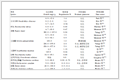
Table 1.
Proximate and ultimate analyses of PS coal and KD-9

In-situ catalytic upgrading of tar from integrated process of coal pyrolysis with steam reforming of methane over carbon based Ni catalyst
Zheng-wei WANG , Bao-yong WEI , Jian-nan LÜ , Yi-ming WANG , Yun-fei WU , He YANG , Hao-quan HU


Low-rank coal (LRC), such as lignite and subbituminous coal, has large reserves with characteristics of high content of volatiles. To date, numerous efforts have been made to exploit LRC cleanly and effectively[1–3]. Pyrolysis is a representative thermochemical process that converts coal into gas, tar, and char. In addition, it has been recognized as a highly efficient technology to realize the goal of clean and efficient utilization of LRC[4–6]. Nevertheless, high content of asphalt components in tar from coal pyrolysis results in lower H/C molar ratio [7–9]. Heavy components in tar are likely to cause pipeline blockage of downstream equipment and affect the stability of the pyrolysis process[8]. Consequently, it is essential to upgrade asphalt components for high-grade light tar.
In this regard, catalytic hydrogenation and catalytic cracking have been widely considered to upgrade heavy components in tar from coal pyrolysis. During catalytic hydrogenation, the external free radicals can stabilize the radical fragments produced from coal pyrolysis, and restrain the primary volatiles condensation, thus improving the tar quality[10]. Kan et al.[11] carried out the catalytic hydrogenation experiment with two fixed bed reactors in series. They found that a relatively low hydrogen pressure of 6 MPa can be used to obtain high-grade light tar. Majka et al.[12] employed five different catalysts to investigate hydrocracking of coal tar. They reported that Y zeolite possessed the highest activity in producing light aromatic hydrocarbon. However, the Y zeolite limited the mass transfer of macromolecules due to its narrow channels (0.74 nm) in microporous material. In addition, harsh experimental conditions and high hydrogen cost did not contributed to the development of catalytic hydrogenation technology in tar upgrading.
Catalytic cracking, as a promising technology, can effectively increase the content of light tar in nitrogen atmosphere. Jin et al.[13] found that the yield of light tar over active carbon catalyst increased by 18% in contrast to that of without catalysts. They explained that the main factors for tar upgrading in carbon catalysts seemed to be the high specific surface area and many defects. Lei et al.[14] studied the effect of coke-based catalyst on tar catalytic cracking, and the results showed that the light components obtained over coke-based catalyst increased from 26.8% to 36.6%. Wei et al.[15] reported that USY zeolites leached by HNO3 and hydrochloric acid showed an excellent selectivity and catalytic activity in enhancing light aromatic hydrocarbon, and light tar content increased dramatically from 55.5% to 81.5% and 82.0%, respectively. However, catalytic cracking is an expense approach, despite it improves tar quality.
In order to increase the tar yield, various processes of combining coal pyrolysis with hydrocarbon reforming have been reported, including coal pyrolysis coupled with CO2 reforming of CH4 (CP-CRM)[16], steam reforming of CH4 (CP-SRM)[17], steam reforming of C2H6 (CP-SRE)[18] and steam reforming of C3H8 (CP-SRP)[19]. These methods of improving tar yield are based on the interaction of free radicals formed from the light alkane reforming process, such as ·CHx, ·H, and those from the cracking of coal chemical structure in pyrolysis[18-20]. Although the above processes effectively increase the tar yield, the light tar content does not show much significant difference. Dong et al.[17] found that at 650 °C, the tar yield from CP-SRM is 1.5–1.6 times and 1.3–1.4 times higher than those from CP-N2 and CP-H2, respectively, while the content of light tar barely changes. Herein, in-situ catalytic upgrading of tar from CP-SRM was investigated over carbon based Ni catalysts to increase the light tar content on the premise of ensuring high tar yield.
In this study, coal pyrolysis was carried out under atmosphere of SRM (CP-SRM) to improve tar yield, meanwhile, the volatiles from coal pyrolysis were further underwent in-situ catalytic upgrading to improve tar quality. Firstly, carbon (KD-9) based Ni catalysts (Ni/KD-9) with different loadings of Ni was employed for in-situ catalytic upgrading of coal pyrolysis tar under steam and methane (S&M) atmospheres to determine the optimum loading of Ni. Then, in-situ catalytic upgrading of tar from the integrated process of CP-SRM was investigated over Ni/KD-9 catalysts. Besides, several characterizations were also conducted to understand the physicochemical properties changes of fresh and spent catalysts. In addition, the tars before and after upgrading were systematically analyzed to reveal the effect of Ni/KD-9 on the tar from coal pyrolysis under mixed atmosphere of steam and methane (CP-S&M). Finally, isotopic tracer tests were conducted to reveal the possible mechanism of the upgrading process.
Pingshuo coal (PS, from Shanxi, China), a low-rank coal, was ground and sieved to below 80 mesh (<0.178 mm), then dried in a vacuum oven at 65 °C for 24 h. Table 1 shows the proximate and ultimate analyses of PS coal.
 下载:
导出CSV
下载:
导出CSV
| Sample | Proximate analysis w/% | Ultimate analysis wdaf/% | |||||||
| Mad | Ad | Vdaf | C | H | N | S | O* | ||
| PS coal | 1.26 | 23.52 | 42.65 | 78.42 | 5.08 | 1.38 | 0.77 | 14.35 | |
| KD-9 | 3.86 | 1.22 | 14.19 | 94.08 | 1.11 | 0.32 | 4.16 | 0.33 | |
| * : by difference | |||||||||
KD-9, a kind of activated carbon, which was prepared from ion exchange resin by Dalian Institute of Chemical Physics, Chinese Academy of Sciences, was selected as a support for upgrading catalyst. Its proximate and ultimate analysis results are also shown in Table 1. Wet impregnation method was used to prepare Ni/KD-9 catalysts. In general, firstly, KD-9 was ground and sieved to below 80 mesh. Secondly, a desired amount of nickel nitrate was added into deionized water with KD-9. After 6 h of mixing and stirring at 60 ℃, the precursor of the catalyst was dried at 105 °C for 12 h and heated from room temperature to 800 °C at 5 °C/min, then kept at 800 °C for 4 h and finally cooled to room temperature. The whole heating and cooling process was performed in a tube furnace at a flow rate of 200 mL/min under nitrogen atmosphere. NiO can be reduced to Ni by KD-9 during calcination. The unloaded catalyst was also prepared by the same procedure as above without adding nickel nitrate. Here, Ni loaded catalysts were named as xNi/KD-9 (x=2, 5, 10, 15), where x denotes the weight percent of Ni in the catalyst. Unloaded catalyst was denoted as KD-9.
In the integrated process of CP-SRM, a Ni/MgO-Al2O3 catalyst derived from layered double hydroxide (LDH) according to our previous work[21] was used as catalyst for SRM. This catalyst has been demonstrated with high catalytic activity and stability for methane steam reforming[22–25].
X-ray diffraction (XRD) of catalyst was characterized on D/Max 2400 diffractometer (Rigaku) at 40 kV and 100 mA. The grain size of nickel was calculated by using Scherrer formula. Textural properties were determined by N2 adsorption/desorption on JW-BK 200A at −196 °C. The specific surface area and pore volume were calculated by Brunauer-Emmett-Teller and Barrett-Joyner-Halenda methods, respectively.
In-situ catalytic upgrading of coal pyrolysis tar was carried out in a vertical fixed-bed reactor as shown in Figure 1. For coal pyrolysis in mixed steam with methane (CP-S&M) or steam reforming of methane over Ni/MgO-Al2O3 (CP-SRM), the flow rate of methane was measured to be 120 mL/min at room temperature, and the molar ratio of water to methane was set to be 1. The total flow rate of the gas mixture was 300 mL/min, which was balanced by N2. In CP-SRM with tar upgrading, xNi/KD-9 catalyst (1 g), PS coal (5 g) and Ni/MgO-Al2O3 catalyst (1 g), were placed in the reactor tube from bottom to top separated by quartz wool, and the layout is shown in Figure 1 (II). In CP-S&M, the Ni/MgO-Al2O3 catalyst was omitted (Figure 1(I)). In this work, all experiments of CP-S&M and CP-SRM were carried out at 650 °C. Typically, the reactor was purged with 300 mL/min N2 for about 10 min to remove air and other undesired gases. After that, the reactant gas mixture was introduced into the reactor before the pyrolysis experiment. By moving the preheated furnace up to the reactor outside, the reactor was heated to the setting temperature (i.e., 650 °C) in 10 min and kept at the target temperature for 30 min. The liquid products were condensed in a cold trap (−20 °C) and the non-condensable gas was measured by wet type gas meter and collected in an aluminum foil bag.
The liquid products from pyrolysis contain tar and water. The water was separated from tar to obtain the weight of water according to ASTM D95-05e1 (2005), and the weight of tar was obtained by difference. The compositions of gaseous products were obtained by gas chromatography (GC7890 II).
The fraction distribution of tar was obtained by simulated distillation GC (SCION 456-GC with CP-SimDist column), according to ASTM D2887. The treatment of tar sample and the detailed analysis procedure were referred from the literature[26]. Tar components were determined by gas chromatography/mass spectrometry (GC/MS) using an Agilent 6890N gas chromatograph coupled with Agilent 5975 mass detector[17], and each compound was matched with the standard spectrum in NIST 2000 spectral library. The content of each compound was obtained by GC through an area normalization method[17].
The dry and ash-free basis tar yield (Ytar), light tar yield (Ylight tar) and gas component yield (Yi, mL/g) were calculated by the following formulas.
|
|
(1) |
|
|
(2) |
|
|
(3) |
|
|
(4) |
where, Wtar and Wc is the weight of tar and coal. Clight tar is the content of light tar. Vi (mL) is the volume of each gas component.
The conversion xi of CH4 and H2O was calculated by the following formulas.
|
|
(5) |
|
|
(6) |
where
Using CDCl3 as solvent and TMS as chemical shift reference, the distribution of hydrogen and carbon in tar was obtained by 1H NMR and 13C NMR analysis (Bruker AvanceII400M). The concentration of tar sample was about 0.1 g/mL.
To explore the mechanism of tar upgrading over Ni/KD-9, isotope trace method was used to study tar formation using CD4, D2O and H218O instead of CH4, H2O, respectively. 2H (D) NMR analysis of the tar samples was carried out by Bruker Avance II 400 NMR spectrometer. D and 18O in tar were also determined by Agilent 5975 mass detector. The treatment of tar sample for these characterization methods has been described in our previous work[26] .
In-situ catalytic upgrading of coal pyrolysis tar was investigated under S&M atmosphere using xNi/KD-9 catalysts to determine the optimum loading of Ni. In order to understand the effect of different Ni loading in Ni/KD-9 on the yield of light tar, the fraction distribution of tar and the yield of gas, simulated distillation and gas chromatograph were performed.
Figure 2(a) shows the yields of heavy and light tar. Catalytic upgrading of tar over KD-9 has lower tar yield in contrast to that of without Ni/KD-9, which could be attributed to cracking of pitch components. The total tar yield decreases, whereas the light tar yield increases first and then decreases with the increasing loading of Ni. The highest light tar yield is 12.2% obtained over 5Ni/KD-9, which is 21% higher than that of without using catalyst (10.1%). In addition, Figure 2(b) shows that the tar over xNi/KD-9 has higher light tar content than that of without upgraded. The highest light tar content obtained over 5Ni/KD-9 is 73.5%, which is 20.0% higher than that of without upgraded (53.5%). The results can be explained that Ni/KD-9 can promote the cracking of heavy oil components, leading to decrease of tar yield and increase of light tar yield. Jin et al.[13] reported that high specific surface areas and defects in the carbon catalysts seem to be the primary factors for upgrading tar. Nevertheless, tar maybe excessively cracked with the increasing loading of Ni, resulting in an increase in gas and a decrease in the yield of total tar and light tar. Furthermore, the tar yield over Ni/KD-9 is higher than that of KD-9, which may result from the fact that more free radicals produced from SRM over Ni/KD-9 stabilize fragments from tar cracking. According to above results, 5Ni/KD-9 is an optimal catalyst to obtain the highest yield of light tar.
Figure 3(a) displays typical simulation distillation curves of tar obtained with or without xNi/KD-9 under S&M atmosphere. The curves of tar over xNi/KD-9 are shifted to the left (lower temperature) as compared to that of tar produced without catalyst, indicating that the products contain more low-boiling point components. The amount of low boiling components presents a tendency to increase first and then decrease as the Ni loading increases. Tar upgraded by 5Ni/KD-9 contains largest amount of low boiling components.
Figure 3(b) shows the changes of each distillation fraction content in the tar with Ni loading under S&M atmosphere. The composition of tar upgraded without catalyst is shown for comparison. The pitch was decomposed over the catalyst, producing lighter fraction, such as light oil, phenol oil and so on. Significant amounts of lighter fraction are recovered and pitch decreases significantly with 5Ni/KD-9 as catalyst. The content of light oil, phenol oil, and naphthalene oil in the tar from CP-S&M with 5Ni/KD-9 increases by 166%, 46% and 50%, respectively, compared to that of without 5Ni/KD-9 and pitch decreases by 50%. Wang et al.[27] suggested that Ni/AC catalyst can catalyze the heavy oil components, such as pitch, cracking into fragments and methane reforming at the same time. And the light tar is remarkably increased when these small radicals, like ·H, ·OH and ·CHx, react with free radical fragments generated from coal pyrolysis.


Figure 4 shows gas yield (a) and average conversion of feed gas (b) in CP-S&M over xNi/KD-9. The negative value of methane yield means that the consumption is more than the production. It can be seen from Figure 4(a) that gaseous products mainly include H2, CO2, CO and C2–C3 hydrocarbons. The yields of H2 and CO increase dramatically with the increase of Ni loading, while the yields of CO2 and C2–C3 show little change. Ni catalysts have been widely employed to promote tar cracking in the steam reforming process as they are favorable for gaseous generation[28]. Figure 4(b) shows that the conversion of CH4 and H2O in CP-S&M increases with the increasing Ni loading. This behavior can be explained that the higher Ni loading increases catalytic activity towards CH4 and H2O conversion in SRM[28].

In our previous work, high tar yield was achieved from CP-SRM, but the tar has high content of pitch. It can be seen from the above analysis that the highest yield of light tar can be obtained over 5Ni/KD-9. Herein, the experiment was carried out to couple the CP-SRM with tar upgrading over 5Ni/KD-9. Figure 5 shows the tar and light tar yields, CH4 and H2O conversion and light tar content with and without Ni/KD-9 under S&M and SRM atmospheres. The tar yield of CP-SRM over 5Ni/KD-9 is 24.4%, which is only 1.2% lower than that of CP-SRM without 5Ni/KD-9, and 1.5 times higher than that of CP-S&M in presence of 5Ni/KD-9. Besides, the light tar yield of CP-SRM over 5Ni/KD-9 is 18.9%, which is 1.5 and 1.4 times that of CP-S&M over 5Ni/KD-9 and CP-SRM without 5Ni/KD-9. Moreover, the light tar content of CP-SRM over 5Ni/KD-9 is 77.5%, which is 1.5 times higher than that of CP-SRM. The function of the reforming catalyst Ni/MgO-Al2O3 is to increase the total tar yield, and the upgrading catalyst 5Ni/KD-9 can enhance the content of light tar. This is consistent with our previous results[26]. Therefore, the highest yield of light tar can be obtained with the use of reforming catalyst and upgrading catalyst.

In addition, the conversion of CH4 and H2O under SRM atmosphere is distinctly higher than that of CP-S&M whether 5Ni/KD-9 is used as upgrading catalyst or not. In detail, the conversion of CH4 and H2O for CP-SRM over 5Ni/KD-9 is 49.1% and 62.7%, respectively, which is 5.4 and 6.5 times higher than that of CP-S&M over 5Ni/KD-9. This also illustrates that the catalyst in the upper layer is conducive to the conversion of CH4 and H2O, thereby generating more free radicals that react with the radical fragments generated from coal pyrolysis and increasing the tar yield. While the catalyst in bottom layer is conducive to tar upgrading. The conversion of CH4 and H2O for CP-SRM over 5Ni/KD-9 is slightly higher compared with that of CP-SRM, which indicates that 5Ni/KD-9 can also catalyze SRM.
To explore more about the changes of tar components over 5Ni/KD-9 under CP-SRM, the tar was analyzed by GC/MS. Figure 6 shows the compositions of tars classified into four categories, including benzenes, phenols, naphthalenes, and aliphatic hydrocarbons[26]. Compared with the tar composition of CP-SRM without 5Ni/KD-9, the content of C2, C3 and C4 alkyl substituted benzene considerably increase by 0.5, 0.6 and 4.0 times, respectively, with the use of 5Ni/KD-9. This mainly results from the break of alkyl side chains in tar over Ni/KD-9, which is consistent with the result of 1H-NMR and 13C-NMR of tar. In addition, the content of phenols and naphthalenes remarkably increases with 5Ni/KD-9. The above results also further confirm that 5Ni/KD-9 can activate CH4 and H2O to participate in the formation of tar[27] . As can be seen from Figure 6 (d), the content of alkanes and olefins in tar are significantly reduced, which is resulted from the low dissociation energy of C−C bonds in aliphatic hydrocarbons[7]. After catalytic cracking, some become small molecule gas, and some react with benzene, phenols and naphthalenes to form alkyl substituted benzene.
To study the changes of crystal structure of the fresh (xNi/KD-9) and spent (xNi/KD-9-S) catalysts, XRD characterization was carried out and shown in Figure 7. The peak at 2θ of 24.4° is attributed to the amorphous carbon of KD-9 support and the peaks around 44.3°, 51.3° and 76.4° of 2θ are assigned to the metallic Ni phase. In the case of 2Ni/KD-9, no peak related to nickel is detected, which could be of due to highly dispersion or the low crystallinity of Ni[7]. With the increase of nickel content, the intensity of nickel diffraction peak becomes stronger by degrees. No peaks of nickel oxide are detected, suggesting that nickel is entirely reduced. Furthermore, Table 2 shows that the Ni grain size of xNi/KD-9-S increases slightly compared to xNi/KD-9.
 下载:
导出CSV
下载:
导出CSV
| Sample | SBET/(m2·g−1) | Smic/(m2·g−1) | vt/(cm3·g−1) | dave/nm | Ni grain size /nm* |
| KD-9 | 530 | 463 | 0.504 | 3.8 | – |
| 2Ni/KD-9 | 526 | 449 | 0.502 | 3.8 | – |
| 5Ni/KD-9 | 521 | 455 | 0.503 | 3.9 | 26.5 |
| 10Ni/KD-9 | 516 | 449 | 0.512 | 4.0 | 27.1 |
| 15Ni/KD-9 | 506 | 435 | 0.491 | 3.9 | 28.1 |
| KD-9-S | 90 | 30 | 0.273 | 12.1 | – |
| 2Ni/KD-9-S | 92 | 32 | 0.247 | 10.7 | – |
| 5Ni/KD-9-S | 118 | 54 | 0.248 | 8.4 | 29.2 |
| 10Ni/KD-9-S | 143 | 80 | 0.265 | 7.4 | 30.6 |
| 15Ni/KD-9-S | 193 | 126 | 0.274 | 5.7 | 29.8 |
| * : Calculated by Scherrer formula from XRD patterns | |||||
To explore the changes of catalyst structure and properties during tar upgrading process, N2 adsorption/desorption of xNi/KD-9 and xNi/KD-9-S catalysts was carried out. Figure 8 shows the N2 adsorption/desorption isotherms and the pore size distribution of the catalysts. All the isotherms of xNi/KD-9 have hysteresis loops at the relative pressure up to 0.85, which are of type I/IV as defined by IUPAC, characteristics of microporous and mesoporous materials. The existence of micro-mesoporous structure is favorable to mass transfer during the catalytic chemical reaction. Figures 8(b) and Figure8(d) show that pore size distribution of xNi/KD-9 concentrated in the range of 2–4 nm and 20–30 nm.

The textural parameters are shown in Table 2. The KD-9 shows a high SBET, which can enhance the dispersion of nickel. When Ni was supported on KD-9, the SBET and microporous surface area is obviously reduced because nickel particles block the micropores in the impregnation and drying steps[29]. Obviously, 15Ni/KD-9 sample has the lowest SBET and vt, owing to the high filling of pores containing nickel particles. In addition, the mesoporous and microporous surface area of xNi/KD-9-S exhibit a notable decreasing trend as compared with xNi/KD-9 due to the carbon deposition[30]. Further research will be optimized the catalyst that has good performance in carbon deposition resistance and regeneration.
Based on the above results, 5Ni/KD-9 was chosen as the catalyst due to its best upgrading effect. To further understand the effect of upgrading on the properties of tar, the compound distribution of coal tar over 5Ni/KD-9 and without the catalyst under S&M atmosphere was analyzed by GC/MS. Furthermore, 1H-NMR and 13C-NMR were employed to understand the distribution of hydrogen and carbon.
Figure 9 shows the compositions of tars classified into six categories, including benzenes, phenols, naphthalenes, aliphatic hydrocarbons, 3-ring aromatics[26] and 4-ring aromatics (including fluoranthenes, pyrenes and chrysenes). Especially, the C1–C3 alkyl substituted benzene content increases from 0.4%, 1.5% and 1.4% to 2.0%, 3.6% and 4.1%, respectively. 5Ni/KD-9 also facilitates to increase the content of phenols and naphthalenes. Above analysis is in agreement with the result of simulated distillation. As shown in Figure 9(d), the C8–C20 alkanes and alkenes content significantly decrease over 5Ni/KD-9, although the C11−C13 alkanes and alkenes content does not change distinctly. It is because that the C–C bonds in long chain aliphatic hydrocarbons are easy to crack[26]. Figure 9(e) and Figure9(f) shows that the 3-ring and 4-ring aromatics content decrease in various degrees, which indicates that benzenes, phenols and naphthalenes have relatively stable structure, while 3-ring and 4-ring arenes may undergo ring-opening reaction in the catalytic upgrading process of coal pyrolysis volatiles[31, 32]. Fluorene, pyrene, chrysene and their alkyl-substituted aromatic hydrocarbons are easy to crack over 5Ni/KD-9. When the radicals generated by SRM combine with cracking fragments, more 1-ring or 2-ring aromatic hydrocarbons will be produced.
The tar obtained from coal pyrolysis at 650 °C in S&M atmosphere with or without 5Ni/KD-9 was determined by 1H-NMR and 13C-NMR to understand the distribution of hydrogen and carbon. Figures 10 and 11 show their spectra.

Table 3 shows the proton distribution of tars that can be classified into several categories of protons on the basis of chemical shift[33]. The proportion of aliphatic proton Hal (0.5−6.3) is higher than that of aromatic proton Har (6.3−9.3) for two tar samples, illustrating that pyrolysis tar is abundant in aliphatic hydrocarbon compound and/or alkyl substituents. Har content of upgraded tar is higher than that of un-upgraded tar, which is attributed to the increase in benzenes, phenols, and naphthalenes content in coal tar after upgrading. Moreover, the proportion of Hα to Hal (Hα/Hal) increases from 0.33 to 0.37 and the proportion of Hγ to Hal (Hγ/Hal) decreases from 0.24 to 0.15, indicating that the aromatic rings branches or alkanes chains in upgraded tar become shorter[26]. This can be attributed to the 5Ni/KD-9 to promote tar cracking and catalyze SRM, where produced radicals as a result of cracking of long side-chain aromatic hydrocarbons can react with ·H, ·OH and ·CHx generated from SRM to form short branches. The content of protons in phenolic hydroxyl also increases, indicating phenolic compounds increase over 5Ni/KD-9, which is in accordance with the GC/MS results.
下载:
导出CSV
| Proton type | Assignments | Without catalyst | 5Ni/KD-9 |
| Har (6.3–9.3) | aromatic protons | 22.36 | 27.51 |
| Hu (6.3–7.2) | uncondensed Har | 63.42 | 42.73 |
| Hc (7.2–9.3) | condensed Har | 36.58 | 57.27 |
| Hal (0.5–6.3) | aliphatic protons | 77.64 | 72.49 |
| Hγ (0.5–1.2) | protons of CH3 in the γ position or further away from aromatic rings; protons of alkanes | 24.07 | 15.18 |
| Hβ (1.2–2.1) | protons of CH2 or CH in β position or further away from aromatic rings; protons of CH3 in the β position of aromatic rings | 38.17 | 33.24 |
| Hα (2.1–4.3) | protons of CH, CH2 or CH3 in the α position to aromatic rings | 33.10 | 37.26 |
| Ho (4.3–6.3) | protons of OH, OCHx and alkenyl of aromatic rings; protons of alkenes | 4.66 | 14.32 |
| Har/Hal | 0.29 | 0.38 | |
| Hu/Hc | 1.73 | 0.75 |
The carbon distribution of tar is listed in Table 4. Carbon is divided into two categories, aromatic and aliphatic carbons [34]. The upgraded tar with 5Ni/KD-9 has lower fa than un-upgraded tar, which indicates that the aromatic carbon content decreases in the upgrading process. In the catalytic upgrading process, the content of Car decreases while Cal content increases in the ring-opening reaction of polycyclic aromatic hydrocarbons. In case of aliphatic carbons, the ratio of CH3 in un-upgraded tar is evidently lower than that of upgraded tar, while CH+CH2 proportion is the opposite, which indicates that the longer aliphatic branches of aromatic rings are broken over 5Ni/KD-9, and stabilized by radicals, like ·H, ·OH and ·CHx produced by SRM to form shorter aliphatic branches.
下载:
导出CSV
| Carbon type | Assignments | Without catalyst | 5Ni/KD-9 |
| Car (108–160) | aromatic carbons | 53.55 | 47.08 |
| Car1 (130–160) | aromatic carbons connected to aliphatic chains, heteroatomic or aromatic substituents, and condensed aromatic rings shared by two rings | 10.17 | 8.11 |
| Car2 (108–130) | condensed aromatic rings shared by three rings and protonated aromatic carbons | 89.83 | 91.89 |
| Cal (10–41) | aliphatic carbons | 46.45 | 52.92 |
| CH+CH2 (23–41) | aliphatic carbons CH2+CH | 59.58 | 53.67 |
| CH3 (10–23) | aliphatic carbons CH3 | 40.42 | 46.33 |
| fa=Car/Ctotal | 0.54 | 0.47 |
The above result shows that 5Ni/KD-9 catalyzes cracking of coal tar and SRM at the same time, and small free radicals generated by SRM can combine with free radicals from tar cracking. To explore the upgrading mechanism of 5Ni/KD-9, CP-S&M experiment was carried out using deuterated methane (CD4), deuterated water (D2O) or H218O instead of CH4 or H2O, respectively. D-NMR analysis of tar and MS analysis for typical compounds were performed. Ni/MgO-Al2O3, which is used for SRM in the upper reactor was not added to exclude the influence on the reforming process in this section.
To investigate whether CH4 and H2O participated in the tar formation, D-NMR analysis of tar from CP-S&M using deuterated methane (CD4) and deuterated water (D2O), respectively, was conducted. The distribution of D atoms in tar can be obtained by integrating D-NMR spectrum according to their chemical characteristics. The deuterium in tar can be divided into two types, aromatic deuterium (Dar, 6.0–10.0) and aliphatic deuterium (Dal, 0.2–4.5)[35, 36].
Figure 12 shows that there are obvious absorption peaks of tars from coal pyrolysis in CH4/D2O and CD4/H2O atmosphere with 5Ni/KD-9 upgrading, while no peak is found in the absence of 5Ni/KD-9. This indicates that D2O and CD4 are involved in tar formation by reacting with radical fragments produced by coal pyrolysis in presence of Ni/KD-9. As shown in Table 5, the D in uncondensed aromatic hydrocarbon DUar accounts for more than 95% in DAr when D2O or CD4 is used as tracers, which demonstrates that free radicals produced by methane reforming mainly react with radical fragments comprising phenyl and naphthyl groups[37]. Among deuterium type in DAl, Dα has the highest proportion, which is 69.20% in CH4/D2O atmosphere, while Dγ and Dβ account for the majority of DAl in CD4/H2O atmosphere, with 53.76% and 40.43%, respectively. These results indicate that ·D produced by D2O is heavily bound to the first carbon atom connected to the aromatic ring, such as the benzyl group, while ·CDx radical produced by CD4 tends to bound to the first, second, third, or further carbon atoms connected to the aromatic ring because of the larger volume of ·CDx. Given all that, 5Ni/KD-9 is a dual-functional catalyst, which can promote the cracking of coal tar and reaction of SRM at the same time.
 下载:
导出CSV
下载:
导出CSV
| Deuterium type | Assignments | CH4+D2O | CD4+H2O |
| DAr (6.0–10.0) | total aromatic deuterium | 61.73 | 41.73 |
| DUar (6.0–8.0) | uncondensed aromatic D | 96.43 | 96.83 |
| DCar (8.0–10.0) | condensed aromatic D | 3.57 | 3.17 |
| DAl (0.2–4.5) | total aliphatic deuterium | 38.27 | 58.27 |
| Dγ (0.2–1.5) | γ or further sites of aromatic rings and CH3 alkyl | 19.83 | 53.76 |
| Dβ (1.5–2.0) | β sites of aromatic rings | 10.77 | 40.43 |
| Dα (2.0–3.2) | α sites of aromatic rings | 69.20 | 5.81 |
| Dδ (3.2–4.5) | deuterium associated with heteroatom functionality | 0.20 | 0.00 |
To infer the mechanism of tar formation in the process of upgrading, o-xylene, phenol, p-cresol, 1,5-dimethylnaphthalene and 1-decene were chosen as typical compounds for MS analysis. Figure 13 illustrates their mass spectra results of tars under different atmospheres. They are almost the same as their corresponding standard spectra, illustrating the reliability of analysis methods for tar samples [27].
Figure 13(a) shows the mass spectra of o-xylene under different atmospheres with isotopic reagents. The base peak of o-xylene is m/z 91 and m/z 106 is the molecular ion peak. For the reason of isotope in nature, m/z 107 appears in the spectrum under CH4/H2O atmosphere. Compared with the blank sample (under CH4/H2O atmosphere), when D2O substitutes for H2O, the intensity ratio of m/z 107 to m/z 91 increases, indicating that D from D2O participate in the tar formation. The peaks such as m/z 111 and 112 appear distinctly when using CD4 in place of CH4, which suggests that several H atoms in o-xylene are replaced by D atoms. This can be explained by the fact that the radicals generated from coal pyrolysis are stabilized by ·CDx. Wang et al.[27] found a similar phenomenon when he chose ethylbenzene as representative components of light tar for MS analysis in CD4/CO2 atmosphere.
Figure 13(b) shows the mass spectra of phenol under different atmospheres with different isotopic reagents. Interestingly, while substituting CD4 with CH4, almost no change is noticed compared to standard spectrum. In case of replacing D2O with H2O, the intensity of m/z 95 increases significantly, and m/z 96 peak appears. This indicates that the ·D or ·OD produced by D2O participates in the formation of phenol, while CD4 hardly participates in the formation of phenol. When H218O replaces H2O, the peak intensity change of m/z 95 is not obvious, and the m/z 96 peak enhances obviously compared with the standard spectrum of phenol, which strongly proves ·18OH production as a result of H218O duringthe formation of phenol.

Similarly, the above mode of radical binding can also be useful to explain the formation mechanism of p-cresol when using isotope reagents. The intensity of m/z 109 and 110 increase when using isotope reagent as can be seen in Figure 13(c), which illustrates that ·D, ·CDx or ·18OH participates in the formation of p-cresol.
As for the 1,5-dimethylnaphthalene, m/z 156 is the base peak, and m/z 157 results from isotope in nature (Figure 13(d)). The intensity of m/z 157 increases significantly, and peaks of m/z 158 and 159 appearing when D2O is added, indicating that ·D and ·CDx are involved in stabilizing free radical fragments from coal pyrolysis. Peaks of m/z 158 and 159 also emerging under CD4/H2O atmosphere, which indicates ·CDx is involved in the formation of 1,5-dimethylnaphthalene during the upgrading process. However, as shown in Figure 13(e), there is no any obvious change between mass spectra of 1-decene under different atmospheres, which indicates that ·D has little effect on the formation of 1-decene.
Summarily, it can be concluded that SRM can increase the content of benzenes, phenols and naphthalenes because the free radicals, such as ·H, ·OH and ·CHx generated from SRM, can stabilize the free radical fragments produced by tar cracking[27].
An innovative process to combine in-situ catalytic upgrading of coal pyrolysis tar with SRM was proposed. Based on the obtained results, following conclusions can be reached:
During the tar upgrading process, 5Ni/KD-9 catalyst shows the best performance to enhance the light tar yield. The content of benzenes, phenols and naphthalenes increase dramatically, while aliphatic hydrocarbons, 3-ring and 4-ring aromatics drop to varying degrees.
The light tar yield of CP-SRM in presence of 5Ni/KD-9 is 1.4 times higher that of CP-SRM without upgrading catalyst at 650 °C. Meanwhile, the content of C2, C3 and C4 alkyl as a substitute of benzene significantly increases by 0.5, 0.6 and 4.0 times, respectively, in presence of 5Ni/KD-9.
When deuterated methane (CD4), deuterated water (D2O) or heavy-oxygen water (H218O) was used instead of CH4 and H2O, the compounds in tar with D or 18O can be detected. This indicates that Ni/KD-9 catalyzes tar cracking and SRM at the same time, so small radicals, like ·CHx, ·H and ·OH produced by SRM, can react with radical fragments from tar cracking, thus avoiding excessive cracking of tar and significantly improving tar quality.
The authors thank Prof. Chenglin Sun in Dalian Institute of Chemical Physics, Chinese Academy of Sciences, for his providing the active carbon KD-9.
LI W, WANG H, LI X, LIANG Y, WANG Y, ZHANG H. Effect of mixed cationic/anionic surfactants on the low-rank coal wettability by an experimental and molecular dynamics simulation[J]. Fuel,2021,289:119886. doi: 10.1016/j.fuel.2020.119886
JIAN Y, LI X, ZHU X, ASHIDA R, WORASUWANNARAK N, HU Z, LUO G, YAO H, ZHONG M, LIU J, MA F, MIURA K. Interaction between low-rank coal and biomass during degradative solvent extraction[J]. J Fuel Chem Technol,2019,47(1):14−22. doi: 10.1016/S1872-5813(19)30003-9
HE Z, SUN Y, CHENG S, JIA Z, TU R, WU Y, SHEN X, ZHANG F, JIANG E, XU X. The enhanced rich H2 from co-gasification of torrefied biomass and low rank coal: The comparison of dry/wet torrefaction, synergetic effect and prediction[J]. Fuel,2021,287:119473. doi: 10.1016/j.fuel.2020.119473
FAN Y, ZHANG S, LI X, XU J, WU Z, YANG B. Process intensification on suspension pyrolysis of ultra-fine low-rank pulverized coal via conveyor bed on pilot scale: Distribution and characteristics of products[J]. Fuel,2021,286:119341. doi: 10.1016/j.fuel.2020.119341
LI T, WANG Q, SHEN Y, JIN X, KONG J, WANG M, CHANG L. Effect of filter media on gaseous tar reaction during low-rank coal pyrolysis[J]. J Fuel Chem Technol,2021,49(03):257−264.
ZHANG K, WU Y, WANG D, JIN L, HU H. Synergistic effect of co-pyrolysis of pre-dechlorination treated PVC residue and Pingshuo coal[J]. J Fuel Chem Technol: 1-9[2021-05-21]. http://kns.cnki.net/kcms/detail/14.1140.TQ.20210413.1003.045.html.
CAO S, WANG D, WANG M, ZHU J, JIN L, LI Y, HU H. In-situ upgrading of coal pyrolysis tar with steam catalytic cracking over Ni/Al2O3 catalysts[J]. ChemistrySelect,2020,5(16):4905−4912. doi: 10.1002/slct.202000476
FU D, LI X, LI W, FENG J. Catalytic upgrading of coal pyrolysis products over bio-char[J]. Fuel Process Technol,2018,176:240−248. doi: 10.1016/j.fuproc.2018.04.001
ZHAO J, CAO J, WEI F, ZHAO X, FENG X, HUANG X, ZHAO M, WEI X. Sulfation-acidified HZSM-5 catalyst for in-situ catalytic conversion of lignite pyrolysis volatiles to light aromatics[J]. Fuel,2019,255:115784. doi: 10.1016/j.fuel.2019.115784
LIU P, LE J, ZHANG D, WANG S, PAN T. Free radical reaction mechanism on improving tar yield and quality derived from lignite after hydrothermal treatment[J]. Fuel,2017,207:244−252. doi: 10.1016/j.fuel.2017.06.081
KAN T, SUN X, WANG H, LI C, MUHAMMAD U. Production of gasoline and diesel from coal tar via its catalytic hydrogenation in serial fixed beds[J]. Energy Fuels,2012,26(6):3604−3611. doi: 10.1021/ef3004398
MAJKA M, TOMASZEWICZ G, MIANOWSKI A. Experimental study on the coal tar hydrocracking process over different catalysts[J]. J Energy Inst,2018,91(6):1164−1176. doi: 10.1016/j.joei.2017.06.007
JIN L, BAI X, LI Y, DONG C, HU H, LI X. In-situ catalytic upgrading of coal pyrolysis tar on carbon-based catalyst in a fixed-bed reactor[J]. Fuel Process Technol,2016,147:41−46. doi: 10.1016/j.fuproc.2015.12.028
LEI Z, HAO S, YANG J, LEI Z, DAN X. Study on solid waste pyrolysis coke catalyst for catalytic cracking of coal tar[J]. Int J Hydrogen Energy,2020,45(38):19280−19290. doi: 10.1016/j.ijhydene.2020.05.075
WEI B, JIN L, WANG D, SHI H, HU H. Catalytic upgrading of lignite pyrolysis volatiles over modified HY zeolites[J]. Fuel,2020,259:116234. doi: 10.1016/j.fuel.2019.116234
LIU J, HU H, JIN L, WANG P, ZHU S. Integrated coal pyrolysis with CO2 reforming of methane over Ni/MgO catalyst for improving tar yield[J]. Fuel Process Technol,2010,91(4):419−423. doi: 10.1016/j.fuproc.2009.05.003
DONG C, JIN L, LI Y, ZHOU Y, ZOU L, HU H. Integrated Process of coal pyrolysis with steam reforming of methane for improving the tar yield[J]. Energy Fuels,2014,28(12):7377−7384. doi: 10.1021/ef501796a
WU Y, LI Y, JIN L, HU H. Integrated process of coal pyrolysis with steam reforming of ethane for improving the tar yield[J]. Energy Fuels,2018,32(12):12268−12276. doi: 10.1021/acs.energyfuels.8b02964
JIANG H, WANG M, LI Y, JIN L, HU H. Integrated coal pyrolysis with steam reforming of propane to improve tar yield[J]. J Anal Appl Pyrolysis,2020,147:104805. doi: 10.1016/j.jaap.2020.104805
WANG P, JIN L, LIU J, ZHU S, HU H. Isotope analysis for understanding the tar formation in the integrated process of coal pyrolysis with CO2 reforming of methane[J]. Energy Fuels,2010,24(8):4402−4407. doi: 10.1021/ef100637k
JIN L, XIE T, MA B, LI Y, HU H. Preparation of carbon-Ni/MgO-Al2O3 composite catalysts for CO2 reforming of methane[J]. Int J Hydrogen Energy,2017,42(8):5047−5055. doi: 10.1016/j.ijhydene.2016.11.130
NAWFAL M, GENNEQUIN C, LABAKI M, NSOULI B, ABOUKAÏS A, ABI-AAD E. Hydrogen production by methane steam reforming over Ru supported on Ni-Mg-Al mixed oxides prepared via hydrotalcite route[J]. Int J Hydrogen Energy,2015,40(2):1269−1277. doi: 10.1016/j.ijhydene.2014.09.166
ZHAN Y, LI D, NISHIDA K, SHISHIDO T, OUMI Y, SANO T, TAKEHIRA K. Preparation of “intelligent” Pt/Ni/Mg(Al)O catalysts starting from commercial Mg-Al LDHs for daily start-up and shut-down steam reforming of methane[J]. Appl Clay Sci,2009,45(3):147−154. doi: 10.1016/j.clay.2009.05.002
COMAS J, DIEUZEIDE M L, BARONETTI G, LABORDE M, AMADEO N. Methane steam reforming and ethanol steam reforming using a Ni(II)-Al(III) catalyst prepared from lamellar double hydroxides[J]. Chem Eng J,2006,118(1):11−15.
FONSECA A, ASSAF E M. Production of the hydrogen by methane steam reforming over nickel catalysts prepared from hydrotalcite precursors[J]. J Power Sources,2005,142(1):154−159.
WANG M, JIN L, LI Y, LV J, WEI B, HU H. In-situ catalytic upgrading of coal pyrolysis tar coupled with CO2 reforming of methane over Ni-based catalysts[J]. Fuel Process Technol,2018,177:119−128. doi: 10.1016/j.fuproc.2018.04.022
WANG M, JIN L, ZHAO H, YANG X, LI Y, HU H, BAI Z. In-situ catalytic upgrading of coal pyrolysis tar over activated carbon supported nickel in CO2 reforming of methane[J]. Fuel,2019,250:203−210. doi: 10.1016/j.fuel.2019.03.153
BLANCO P H, WU C, ONWUDILI J A, WILLIAMS P T. Characterization and evaluation of Ni/SiO2 catalysts for hydrogen production and tar reduction from catalytic steam pyrolysis-reforming of refuse derived fuel[J]. Appl Catal B: Environ,2013,134−135:238−250. doi: 10.1016/j.apcatb.2013.01.016
RASTEGARPANAH A, MESHKANI F, REZAEI M. Thermocatalytic decomposition of methane over mesoporous nanocrystalline promoted Ni/MgO·Al2O3 catalysts[J]. Int J Hydrogen Energy,2017,42(26):16476−16488. doi: 10.1016/j.ijhydene.2017.05.044
CHENG S, WEI L, ZHAO X, KADIS E, CAO Y, JULSON J, GU Z. Hydrodeoxygenation of prairie cordgrass bio-oil over Ni based activated carbon synergistic catalysts combined with different metals[J]. New Biotechnol,2016,33(4):440−448. doi: 10.1016/j.nbt.2016.02.004
YAN L, KONG X, ZHAO R, LI F, XIE K. Catalytic upgrading of gaseous tars over zeolite catalysts during coal pyrolysis[J]. Fuel Process Technol,2015,138:424−429. doi: 10.1016/j.fuproc.2015.05.030
YAN L, BAI Y, LIU Y, HE Y, LI F. Effects of low molecular compounds in coal on the catalytic upgrading of gaseous tar[J]. Fuel,2018,226:316−321. doi: 10.1016/j.fuel.2018.03.191
IGLESIAS M J, CUESTA M J, SUÁREZ-RUIZ I. Structure of tars derived from low-temperature pyrolysis of pure vitrinites: influence of rank and composition of vitrinites[J]. J Anal Appl Pyrolysis,2001,58−59:255−284. doi: 10.1016/S0165-2370(00)00140-6
MORGAN T J, GEORGE A, DAVIS D B, HEROD A A, KANDIYOTI R. Optimization of 1H and 13C NMR methods for structural characterization of acetone and pyridine soluble/insoluble fractions of a coal tar pitch[J]. Energy Fuels,2008,22(3):1824−1835. doi: 10.1021/ef700715w
DABBAGH H A, SHI B, DAVIS B H, HUGHES C G. Deuterium incorporation during coal liquefaction in donor and nondonor solvents[J]. Energy Fuels,1994,8(1):219−226. doi: 10.1021/ef00043a034
CRONAUER D C, MCNEIL R I, YOUNG D C, RUBERTO R G. Hydrogen/deuterium transfer in coal liquefaction[J]. Fuel,1982,61(7):610−619. doi: 10.1016/0016-2361(82)90005-9
DI M, WANG M, JIN L, LI Y, HU H. In-situ catalytic cracking of coal pyrolysis tar coupled with steam reforming of ethane over carbon based catalyst[J]. Fuel Process Technol,2020,209:106551. doi: 10.1016/j.fuproc.2020.106551

Figure 1 Schematic diagram of the fixed-bed reactor system
1: Mass flowmeter; 2: Steam generator; 3: Electric furnace; 4: T.C. system; 5: Constant-flux pump; 6: Refrigerator; 7: Cold trap; 8: Wet type flow meter; 9: Gas bag; 10: Fixed reactor

Figure 2 Yields of tar and light tar (a) light tar content (b) over Ni/KD-9 with different Ni loading under S&M atmosphere

Figure 3 Distillation curves (a) and changes in each distillation fraction content (b) of tar obtained under S&M atmosphere with and without Ni/KD-9 with different Ni loading

Figure 5 Tar and light tar yield, CH4 and H2O conversion and light tar content under CP-S&M and CP-SRM with and without 5Ni/KD-9

Figure 6 Benzenes (a), phenols (b), naphthalenes (c) and aliphatic hydrocarbons (d) in tars from CP-SRM with or without 5Ni/KD-9

Figure 8 N2 adsorption/desorption isotherms of fresh (a) and spent (c) xNi/KD-9 catalysts, and corresponding pore size distribution (b) and (d)

Figure 9 Benzenes (a), phenols (b), naphthalenes (c), aliphatic hydrocarbons (d), 3-ring aromatics (e) and 4-ring aromatics (f) in tars obtained from CP-S&M with or without 5Ni/KD-9

Figure 12 D-NMR spectra of tars obtained by using D2O (a) or CD4 (b) with and without 5Ni/KD-9

Figure 13 Mass spectra of o-xylene(a), phenol(b), p-cresol(c), 1,5-dimethylnaphthalene(d) and 1-decene(e) in tars from different atmospheres
Table 1. Proximate and ultimate analyses of PS coal and KD-9
| Sample | Proximate analysis w/% | Ultimate analysis wdaf/% | |||||||
| Mad | Ad | Vdaf | C | H | N | S | O* | ||
| PS coal | 1.26 | 23.52 | 42.65 | 78.42 | 5.08 | 1.38 | 0.77 | 14.35 | |
| KD-9 | 3.86 | 1.22 | 14.19 | 94.08 | 1.11 | 0.32 | 4.16 | 0.33 | |
| * : by difference | |||||||||
 下载: 导出CSV
Table 2. Textural properties of the fresh and spent xNi/KD-9 catalysts
| Sample | SBET/(m2·g−1) | Smic/(m2·g−1) | vt/(cm3·g−1) | dave/nm | Ni grain size /nm* |
| KD-9 | 530 | 463 | 0.504 | 3.8 | – |
| 2Ni/KD-9 | 526 | 449 | 0.502 | 3.8 | – |
| 5Ni/KD-9 | 521 | 455 | 0.503 | 3.9 | 26.5 |
| 10Ni/KD-9 | 516 | 449 | 0.512 | 4.0 | 27.1 |
| 15Ni/KD-9 | 506 | 435 | 0.491 | 3.9 | 28.1 |
| KD-9-S | 90 | 30 | 0.273 | 12.1 | – |
| 2Ni/KD-9-S | 92 | 32 | 0.247 | 10.7 | – |
| 5Ni/KD-9-S | 118 | 54 | 0.248 | 8.4 | 29.2 |
| 10Ni/KD-9-S | 143 | 80 | 0.265 | 7.4 | 30.6 |
| 15Ni/KD-9-S | 193 | 126 | 0.274 | 5.7 | 29.8 |
| * : Calculated by Scherrer formula from XRD patterns | |||||
下载: 导出CSV
Table 3. Proton distribution of tars from CP-S&M with or without 5Ni/KD-9 (%)
| Proton type | Assignments | Without catalyst | 5Ni/KD-9 |
| Har (6.3–9.3) | aromatic protons | 22.36 | 27.51 |
| Hu (6.3–7.2) | uncondensed Har | 63.42 | 42.73 |
| Hc (7.2–9.3) | condensed Har | 36.58 | 57.27 |
| Hal (0.5–6.3) | aliphatic protons | 77.64 | 72.49 |
| Hγ (0.5–1.2) | protons of CH3 in the γ position or further away from aromatic rings; protons of alkanes | 24.07 | 15.18 |
| Hβ (1.2–2.1) | protons of CH2 or CH in β position or further away from aromatic rings; protons of CH3 in the β position of aromatic rings | 38.17 | 33.24 |
| Hα (2.1–4.3) | protons of CH, CH2 or CH3 in the α position to aromatic rings | 33.10 | 37.26 |
| Ho (4.3–6.3) | protons of OH, OCHx and alkenyl of aromatic rings; protons of alkenes | 4.66 | 14.32 |
| Har/Hal | 0.29 | 0.38 | |
| Hu/Hc | 1.73 | 0.75 |
下载: 导出CSV
Table 4. Carbon distribution of tars from CP-S&M with or without 5Ni/KD-9 (%)
| Carbon type | Assignments | Without catalyst | 5Ni/KD-9 |
| Car (108–160) | aromatic carbons | 53.55 | 47.08 |
| Car1 (130–160) | aromatic carbons connected to aliphatic chains, heteroatomic or aromatic substituents, and condensed aromatic rings shared by two rings | 10.17 | 8.11 |
| Car2 (108–130) | condensed aromatic rings shared by three rings and protonated aromatic carbons | 89.83 | 91.89 |
| Cal (10–41) | aliphatic carbons | 46.45 | 52.92 |
| CH+CH2 (23–41) | aliphatic carbons CH2+CH | 59.58 | 53.67 |
| CH3 (10–23) | aliphatic carbons CH3 | 40.42 | 46.33 |
| fa=Car/Ctotal | 0.54 | 0.47 |
下载: 导出CSV
Table 5. Deuterium distribution of tar by using CD4 and D2O as tracer (%) with 5Ni/KD-9
| Deuterium type | Assignments | CH4+D2O | CD4+H2O |
| DAr (6.0–10.0) | total aromatic deuterium | 61.73 | 41.73 |
| DUar (6.0–8.0) | uncondensed aromatic D | 96.43 | 96.83 |
| DCar (8.0–10.0) | condensed aromatic D | 3.57 | 3.17 |
| DAl (0.2–4.5) | total aliphatic deuterium | 38.27 | 58.27 |
| Dγ (0.2–1.5) | γ or further sites of aromatic rings and CH3 alkyl | 19.83 | 53.76 |
| Dβ (1.5–2.0) | β sites of aromatic rings | 10.77 | 40.43 |
| Dα (2.0–3.2) | α sites of aromatic rings | 69.20 | 5.81 |
| Dδ (3.2–4.5) | deuterium associated with heteroatom functionality | 0.20 | 0.00 |
下载: 导出CSV

 扫一扫看文章


扫一扫关注我们


 下载:
下载: