

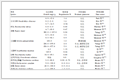
 Table 1.
Literature overview on LA hydrogenation in batch set-ups by using supported ruthenium catalysts
Table 1.
Literature overview on LA hydrogenation in batch set-ups by using supported ruthenium catalysts
Citation:
LI Chuang, NI Xiao-juan, DI Xin, LIANG Chang-hai. Aqueous phase hydrogenation of levulinic acid to γ-valerolactone on supported Ru catalysts prepared by microwave-assisted thermolytic method[J]. Journal of Fuel Chemistry and Technology,
2018, 46(2): 161-170.

炭载钌催化剂的微波制备及其水相乙酰丙酸加氢性能
摘要:
生物质衍生物乙酰丙酸是生物质转化过程中重要的平台分子,对其进行催化加氢可以得到高附加值的产物,是连接生物质转化和石油化工的重要途径。本实验研究了无溶剂微波辅助热解法绿色制备负载型钌基催化剂,以Ru3(CO)12为金属前体,碳纳米管、椰壳活性炭和活性氧化铝为催化剂载体,该制备方法简单易操作,环保高效低能耗,不使用溶剂,避免了杂质的引入和对催化剂的污染,是一种新型负载型贵金属催化剂的制备方法。同样采取传统浸渍法制备Ru/γ-Al2O3-IM。在乙酰丙酸水相催化加氢反应中的催化活性顺序为Ru/AC > Ru/CNT ≈ Ru/FCNT > Ru/γ-Al2O3-MW ≈ Ru/γ-Al2O3-IM。比较不同反应溶液水、甲醇、乙醇、苯甲醚、环己烷和丙酮等对于乙酰丙酸催化加氢反应的影响,并通过考察反应温度、反应压力和反应物初始浓度等因素对加氢反应的影响,确定最佳实验条件为:反应温度为90℃,反应压力2.0 MPa,适宜反应物浓度为0.10 g/mL,产品GVL收率大于99%。
English
Aqueous phase hydrogenation of levulinic acid to γ-valerolactone on supported Ru catalysts prepared by microwave-assisted thermolytic method
Abstract:
γ-Valerolactone (GVL), as a sustainable platform chemical, were produced through an aqueous phase hydrogenation of biomass-derived levulinic acid (LA) in the presence of supported ruthenium catalysts, in which the catalysts were prepared by solvent-free microwave-assisted thermolytic method. The effects of catalyst support, reaction media, pressure, temperature and LA initial concentration were investigated to obtain the optimum conditions for high γ-valerolactone yield. 5% Ru/AC catalyst exhibits a more superior catalytic performance compared with Ru/CNT, Ru/FCNT, Ru/γ-Al2O3-MW and Ru/γ-Al2O3-IM at 100℃ and 2.0 MPa of 0.10 g/mL LA concentration in water solution. This superior performance is attributed to the higher dispersion of metallic Ru over coconut shell activated carbon. GVL can be produced with a good yield of > 99% under optimum conditions, and has the potential to provide a green, renewable platform for biotransformation.
-
A substantial amount of research is currently being carried out worldwide to identify attractive chemical transformations for the conversion of biomass to bio-fuels and green value-added chemicals. The conversion of lignocellulosic biomass to levulinic acid (LA) through an acid-catalyzed hydrolysis process can promote wide use of renewable biomass for energy and chemical production[1].LA has been firmly identified as an intermediate molecule for synthesis of various single organic chemicals instead of producing compound mixtures. The combination of low cost with new catalytic technology has opened up new opportunities for LA as a green chemical feedstock. The hydrogenation of biomass-derived LA to γ-valerolactone (GVL) is a chemical bridge connecting biomass and petroleum processing[2, 3].GVL produced from abundant and inexpensive lignocellulosic biomass has drawn enormous attention because of its environmentally benign properties and versatile functions. It is also considered as a potential fuel additive for replacing ethanol in gasoline-ethanol blends, and as a reaction medium in biocatalysis. These applications thus open up a new area for the use of GVL in biotransformation[4, 5].
An efficient method for the synthesis of GVL involves the catalytic hydrogenation of levulinic acid (LA) and has been investigated by several groups. Most studies involve the use of Ru on a carbon support in various solvents (among others such as water, dioxane, alcohols, dimethyl sulfoxide (DMSO), and various solvent combinations) and excellent yields of GVL have been reported[6-10]. Other forms of carbon, like carbon nanotubes and few-layer graphene have also been identified as promising support materials for many metal catalysts[11, 12]. Advantages of CNTs as a support compared to active carbons are a higher catalyst stability and lower intra-particle diffusion limitations of reactants[13]. Inorganic oxides (SiO2, Al2O3, and TiO2) have also been tested as a support for LA hydrogenation with Ru as the active metal (Table 1).
Table 1.
Literature overview on LA hydrogenation in batch set-ups by using supported ruthenium catalysts
Catalyst Solvent t/℃ H2 p/MPa Time t/h LA
Con.x/%GVL
Sel.s/%Ref. Ru/C (5%) dioxane 150 5.5 2 80 92 [6] Ru/C (5%) H2O 130 1.2 2.7 99.5 86.6 [7] methanol 99 85 ethanol 76 81 1-butanol 49 82 dioxane 99 98 Ru/C (5%) H2O 180 3.0 12 100 57 [8] Ru/C (5%) methanol 130 1.2 2.7 92 99 [9] Ru/starbon(5% Ru) ethanol + H2O 100 1.0 2.2 99 5 [10] Ru/SiO2 (5%) ethanol + H2O 130 1.2 2.7 98 77 [7] Ru/Al2O3 (5%) 95 80 Ru/TiO2 (5%) 81 88 Over half century ago, Leonard summarized the principal reactions of LA and the relationship among its derivatives[14]. Firstly, LA was turned into pseudo-LA, and then it was dehydrated to α-angelica lactone and β-angelica lactone. Subsequently, hydrogenation reactions of α(β)-angelica lactone take place, which generate GVL[15]. Alternatively, the first step during the hydrogenation reaction is that hydrogen is first added to LA to form γ-hydroxyvaleric acid, which then loses one molecule of water to rapidly generate GVL (shown in Figure 1)[16]. Recently, extensive research has been carried out on the hydrogenation of LA to GVL using homogeneous catalysts. However, besides the inherent limitation of homogeneous catalysis for a sustainable catalytic process, this system requires strict absence of water and addition of liquid base to improve reduction and minimize deactivation[17-19]. Although the use of formic acid (FA) as a hydrogen donor in hydrogenation reactions is a well-established method, the reported process of effective LA reduction with FA requires large excess of FA or external hydrogen source to enhance catalytic activity[20, 21]. Serrano-ruiz et al[22, 23] reported a catalytic process for the conversion of LA to GVL using Ru/C and RuRe/C catalysts, respectively, and a RuRe/C catalyst is significantly more active than a traditional Ru/C catalyst.
 Figure1.
Reaction pathways of levulinic acid
Figure1.
Reaction pathways of levulinic acid
In our recent study, supported Ru catalysts prepared by a microwave assisted thermolytic method were investigated for hydrogenation of cinnamaldehyde, where the catalytic performance was found to depend on both the Ru loading and the surface properties of the support[24]. Supported Ru catalysts have been extensively studied and applied in various fields. However, various conventional preparation methods for Ru-based catalysts required modify supports, and use solvents in the process, which generated a lot of contaminants. Most importantly, there are difficulties in controlling preparation steps and in obtaining highly dispersed metal particles due to the effects of the solvent on the adsorption and drying process[25]. The purpose of the present work is to report an efficient synthesis of supported Ru catalysts through a green microwave-assisted thermolytic method. These catalysts are employed for GVL production from the aqueous phase hydrogenation of biomass-derived LA under optimum reaction conditions. Microwave radiation has been demonstrated to be useful for the preparation of a wide variety of nanomaterials (e.g., metals, metal oxides, bimetallic alloys, carbides and semiconductors) with controlled size and shape, without the need of high temperature or pressure. It therefore has great potential as a new green synthesis technique[24, 26-29].
1 Experimental
1.1 Catalyst preparation
The 5% Ru supported catalysts were prepared via one-step microwave-assisted thermolytic process with dodecacarbonyltriruthenium [Ru3(CO)12] as the precursor. Typically, the support and Ru3(CO)12 were put in an agate mortar and mixed for 20 min. The precursor mixture was then put in a quartz-tube reactor with inner diameter of about 10 mm and fluidized with argon for 2 h at room temperature in order to remove oxygen in the reactor and conduct the reaction under inert atmosphere. Then, the reactor was placed in a domestic microwave oven operating at 2.45 GHz with a power of 800 W. Finally, the resulting products were cooled to room temperature under argon. Coconut shell activated carbons (AC), carbon nanotubes (CNT), functionalized carbon nanotubes (FCNT) and γ-Al2O3 were used as supports, and the respective samples called Ru/AC, Ru/CNT, Ru/FCNT, and Ru/γ-Al2O3-MW. The reactant levulinic acid, the organometallic precursor Ru3(CO)12 and the support γ-Al2O3 was purchased from Shanghai Aladdin Reagent Co., Ltd. The supports CNT was purchased from Shenzhen Nanotech Port Co., Ltd. The FCNT was achieved according to the procedure described by Ni et al[24] with some modifacations. The supports AC was purchased from Fujian Xinsen carbon Co., Ltd.
Another sample was prepared by incipient wetness impregnation of γ-Al2O3 using solution of ruthenium chloride in adequate concentration such as to obtain solids containing 5% Ru. The sample was vacuum dried at 100 ℃ during 10 h. This catalyst was then reduced in a hydrogen stream at atmosphere pressure and 400 ℃ for 4 h. This material was denoted as Ru/γ-Al2O3-IM.
1.2 Catalyst characterization
Nitrogen adsorption-desorption isotherms were measured with an autosorb iQ automated gas sorption analyzer. Prior to the measurements, all samples were degassed at 300 ℃ for a minimum of 3 h. The surface areas were calculated from the linear part of the Brunauer-Emmett-Teller (BET) plots. X-ray diffraction analysis of the samples was carried out using a Rigaku D/Max-RB diffractometer with Cu Kα monochromatized radiation source (λ=0.154178 nm), operated at 40 kV and 100 mA. The particle size and morphology were determined by transmission electron microscopy in a Philips CM200 FEG electron microscope, operating at 200 kV and equipped with a Gatan imaging filter, GIF100.
1.3 Catalytic evaluation
The catalytic performances of these materials in aqueous-phase LA conversion to GVL were tested. The reaction was performed in a 50 mL stainless steel autoclave with a mechanical stirrer and an electric temperature controller. Prior to reaction, the obtained catalysts were reactivated with H2 at 250 ℃ for 2 h, in order to form the active catalytic species. In a typical catalytic run, the reaction mixture containing 25.00 mL of LA aqueous solution, and 0.1000 g catalysts were charged into the autoclave under Ar atmosphere. The reactor was sealed and pressurized to the required hydrogen pressure, a stirring speed of 500 r/min, and then heated to the desired temperature. Samples (0.50 mL) were withdrawn at regular intervals through a sample loop. The analysis of products was performed by a 7980 F gas chromatograph equipped with a flame ionization detectorand a FFAP GC column.
2 Results and discussion
2.1 Catalyst characterization
On the basis of the available literature, we can conclude that a large number of supports have been tested for the hydrogenation of LA to GVL in water and organic solvents. However, a proper comparison is difficult as most studies are focused on one support only and only a limited number of systematic studies with different supports is available. We herein report an experimental study on the catalytic hydrogenation of LA with Ru based catalysts on various supports in water in a batch set-up. Reactions were performed at similar conditions, allowing for a proper comparison of catalyst performance. The Ru/AC, Ru/CNT, Ru/FCNT, and Ru/γ-Al2O3-MW samples with a 5% Ru loading were prepared by a thermolytic molecular precursor method under microwave irradiation at atmospheric pressure. 5% Ru/γ-Al2O3-IM was prepared by incipient wetness impregnation. The BET surface area of coconut shell AC, CNT, FCNT and γ-Al2O3 are 1404, 103, 138 and 274 m2/g, respectively.
XRD patterns of Ru/CNT (Figure 2a) and Ru/FCNT (Figure 2b) only show graphite (002) and (101) diffraction peaks, which are characteristics for the presence of carbon nanotubes. No diffraction peaks assigned to metallic Ru are observed, indicating a high dispersion of Ru nanoparticles on the surface of CNT and FCNT, which is consistent with the TEM images (Figure 3). The AC support consists wholly or principally of amorphous carbon, and there are therefore no diffraction peaks present (Figure 2c). XRD results of Ru/γ-Al2O3-MW (Figure 2d) and Ru/γ-Al2O3-IM (Figure 2e) with a 5% Ru loading are similar to that of Ru/AC with no characteristic peaks of Ru nanoparticles, indicating highly dispersed or amorphous Ru clusters on the supports.
 Figure2.
XRD patterns of catalysts
Figure2.
XRD patterns of catalysts
 Figure3.
TEM images of Ru/AC (a), EDS and SAED patterns of Ru/AC (b), TEM images of Ru/CNT (c), Ru/FCNT (d), Ru/γ-Al2O3-MW (e), Ru/γ-Al2O3-IM (f)
Figure3.
TEM images of Ru/AC (a), EDS and SAED patterns of Ru/AC (b), TEM images of Ru/CNT (c), Ru/FCNT (d), Ru/γ-Al2O3-MW (e), Ru/γ-Al2O3-IM (f)
TEM characterization of the as-prepared catalysts was carried out to further study their structures and composition distributions. The TEM image of Ru/AC shows good dispersion of the Ru nanoparticles (marked with white circles) with very small size, as shown in Figure 3(a). The Energy Dispersive X-ray Spectroscopy (EDS) pattern confirms the presence of Ru in this sample and the Selected Area Electron Diffraction (SAED) pattern indicates that the Ru particles have a polycrystalline structure without preferred crystal orientation (Figure 3(b)). Ru nanoparticles of Ru/CNT are uniformly dispersed on CNT in Figure 3(c). In contrast, the Ru/FCNT sample presents much larger Ru particles that are poorly dispersed on FCNT support (Figure 3(d)). Evidently, the surface functionalization of CNT results in closely packed and more unevenly dispersed Ru particles. It is well known that the functional groups such as -COOH and -OH on the surface of FCNT not only improve the dispersion and stability of FCNT in solvents, but also help anchoring metal nucleus and lead to formation of uniform small Runanoparticles[30, 31]. Interestingly, the present observation is opposite to the literature reports, which may be due to the unusual mechanism of microwave heating in catalysts preparation. It is proposed that the Ru particles deposited on the defective area of FCNT surface grow larger by attracting other surrounding Ru particles during rapid microwave heating. On the contrary, the intermolecular forces between Ru particles and the pristine CNT surface will be stronger from rapid heating, so that the particles cannot move, which leads to highly dispersed Ru particles. There is minor agglomeration of Ru particles in Ru/γ-Al2O3-MW (Figure 3(e)) and Ru/γ-Al2O3-IM (Figure 3(f)), and the particles (marked with white circles) are oriented in clusters without any clear fringes. Both Ru/γ-Al2O3-MW and Ru/γ-Al2O3-IM present nonuniform particle dispersions though the γ-Al2O3 support has larger surface area than both CNT and FCNT. This could be due to the amorphous nature of γ-Al2O3, such that Ru particles are not well anchored on the surface, leading to facile formation of Ru clusters.
2.2 Catalytic reaction
2.2.1 Effects of catalysts support
Results from the experiments on hydrogenation of LA indicate that almost no hydrogenation reactions occur in the presence of the supports (AC, CNT, FCNT and γ-Al2O3) at 100 ℃, 2.0 MPa for 2 h. Thus, little noncatalytic reaction takes place on blank support materials.
Initial screening for hydrogenation of LA involve the series of catalysts with AC, CNT, FCNT and γ-Al2O3 as supports. The catalytic performances of these samples are shown in Figure 4. The hydrogenation performances of the five catalysts decrease in the order: Ru/AC > Ru/CNT ≈ Ru/FCNT > Ru/γ-Al2O3-MW ≈ Ru/γ-Al2O3-IM. Given the limitations on experimental analysis, some products (γ-hydroxyvaleric, α-angelica lactone or β-angelica lactone) are not detected, which also means that the sum of two detected substance relative concentration is not equal to 1. This interpretation coincides with experimental results.
 Figure4.
Effects of catalysts support Ru/AC (a), Ru/CNT(b), Ru/FCNT(c), Ru/γ-Al2O3-MW(d), and Ru/γ-Al2O3-IM(e) on LA hydrogenation at 100 ℃ and 2.0 MPa
Figure4.
Effects of catalysts support Ru/AC (a), Ru/CNT(b), Ru/FCNT(c), Ru/γ-Al2O3-MW(d), and Ru/γ-Al2O3-IM(e) on LA hydrogenation at 100 ℃ and 2.0 MPa
The distribution of Ru nanoparticles on the various supports plays an important role in hydrogenation of LA to GVL. From the TEM images, the Ru particles in the 5% Ru/AC are more highly dispersed than the other four catalysts. Such a distribution provides a high number of surface sites for the LA adsorption necessary for hydrogenation to GVL. In addition, AC gives a larger specific surface area as mentioned before. Hence, AC is the promising support material for aqueous phase hydrogenation of LA, and thus Ru/AC is clearly the most suitable catalyst chosen. By prolonging the reaction time to 10 h, there is still no deep hydrogenation product.
One point worth emphasizing is that though Ru/γ-Al2O3 prepared by microwave-assisted thermolytic shows almost the same results as that by the conventional impregnation method, the former preparation method does not need solvent, and saves a lot more time due to uniform heating. Meanwhile less energy is required than the conventional impregnation approach.
2.2.2 Effect of reaction solvent
A series of reactions were carried out to investigate solvent (water, cyclohexane, anisole, methanol and ethanol) effects upon the hydrogenation of LA. Two important performance criteria, catalyst activity (in terms of reaction rate) and the selectivity to GVL, were determined and the best catalyst for subsequent studies was selected. As seen in Table 2, the reaction rate is approximately 2 times as fast in water and cyclohexane than in anisole, 3 times as fast in methanol and 4 times as fast in ethanol. Cyclohexane is able to achieve high conversion and selectivity, though the issue of separating the product from the solvent is challenging. There are a lot of by-products when anisole is used as the solvent. Reaction takes places between LA and either methanol or ethanol, which is evident by the formation of the homologous ester and its subsequent hydrogenation to GVL involving the elimination step of methanol. In contrast, with in water the first step is the direct hydrogenation of the keto group to give 4-hydroxy levulinic acid followed by dehydration to GVL[32]. Compared with the above solvents, water can minimize by-products formation and avoid the resulting separation problems. Since GVL does not form an azeotrope with water, the latter can be removed by regular distillation to obtain high purity GVL. Therefore water is the most suitable reaction solvent for LA hydrogenation.
Table 2.
Effect of reaction solvent upon the hydrogenation of LAa
Solvent Con.x/% Sel.s/%b By product Reaction rate/(10-3 mol·L-1·min-1)c Water 100 100 17.25 Cyclohexane 96 100 16.21 Anisole 52 41 phenol, methanol 8.82 Methanol 32 86 levulinic acid methyl ester 5.94 Ethanol 27 75 ethyl levulinate 4.29 a: reaction conditions: 0.1000 g 5% Ru/AC catalyst; cLA, 0 = 0.10 g/mL, 100 ℃, 2.0 MPa for 2 h; b : selectivity for GVL; c: the reaction rates were calculated through the slope of the profile to each reaction 2.2.3 Effect of reaction time and reaction temperature
A kinetic study is essential for the analysis of the production efficiency. The reaction time was varied from 0 to 120 min with sampling interval of 20 min. The effects of reaction temperature, pressure and LA initial concentration (cLA, 0) were investigated in our work to get optimum reaction conditions for LA hydrogenation. The reaction rates were calculated through the slope of the profile to each reaction (LA relative concentration from 1.0 to 0.6), as shown in Table 3.
Table 3.
Reaction rate calculated through the slope of the profile to each reaction conditiona
Entry t/℃ p/MPa cLA, 0/(g·mL-1) Reaction rate/(10-3 mol·L-1·min-1) 1 70 2.0 0.10 6.03 2 80 2.0 0.10 8.12 3 90 2.0 0.10 10.85 4 100 2.0 0.10 17.25 5 90 1.0 0.10 7.01 6 90 3.0 0.10 29.13 7 90 2.0 0.15 8.89 8 90 2.0 0.20 5.98 a: reaction conditions: 0.1000 g 5% Ru/AC catalyst, 25.00 mL aqueous solution (LA relative concentration from 1.0 to 0.6) The effects of changing temperature are shown in Figure 5. 5% Ru/AC catalyst still works effectively when temperature is reduced to 70 ℃, and gives a conversion of 88% after 2 h. With increase in temperature, 100% LA conversion is first observed at 90 ℃ (marked with red line) with a reasonable reaction rate of 1.085×10⁻² mol/(L·min). When reaction time exceeds 80 min at 100 ℃, the reaction reaches a plateau with nearly 100% LA conversion. Through calculation, the reaction rate is 1.725×10⁻² mol/(L·min) at 100 ℃, which is too fast to investigate other parameters. Therefore, 90 ℃ is chosen as the reaction temperature to investigate the effects of reaction pressure.
 Figure5.
Effect of reaction temperatures 70 ℃ (a), 80 ℃ (b), 90 ℃ (c) and 100 ℃ (d), with cLA, 0 = 0.1 g/mL at 2.0 MPa(a): 70 ℃; (b): 80 ℃; (c): 90 ℃; (d): 100 ℃
Figure5.
Effect of reaction temperatures 70 ℃ (a), 80 ℃ (b), 90 ℃ (c) and 100 ℃ (d), with cLA, 0 = 0.1 g/mL at 2.0 MPa(a): 70 ℃; (b): 80 ℃; (c): 90 ℃; (d): 100 ℃
With the increase of pressure and hydrogen concentration, it clearly leads to an increase of reaction rate (Figure 6). Even at lower pressure of 1.0 MPa, Ru/AC yields the product with nearly 100% conversion after 2 h, which indicates that the hydrogen is almost consumed completely. The solvent water cannot be hydrogenated, however some solvents (such as acetone and anisole) mentioned above might consume hydrogen which can affect significantly the results. The pressure of 1.0 MPa is then not suitable for LA hydrogenation in some solvents which may consume hydrogen under current reaction conditions. Moreover, when cLA, 0 increases to 0.15 and 0.20 g/mL, 1.0 MPa pressure cannot supply sufficient hydrogen for reaction owing to the batch reactor where hydrogen cannot be supplied continuously. When the pressure is raised to 3.0 MPa, the conversion to GVL goes to completion in 80 min at a faster reaction rate of 2.913×10⁻² mol/(L·min). The reaction rate at 3.0 MPa is too fast to investigate the hydrogenation of LA within 2 h. So, after taking all these factors into consideration, the optimum hydrogen pressure is 2.0 MPa.
 Figure6.
Effect of reaction pressures 1.0 MPa (a), 2.0 MPa (b) and 3.0 MPa(c) with cLA, 0 = 0.1 g/mL at 90 ℃
Figure6.
Effect of reaction pressures 1.0 MPa (a), 2.0 MPa (b) and 3.0 MPa(c) with cLA, 0 = 0.1 g/mL at 90 ℃
2.2.4 Effect of substrate concentration
The influence of cLA, 0 on the reaction rate has also been investigated. These results further demonstrate the remarkable catalytic performance of 5% Ru/AC for LA hydrogenation, as shown in Figure 7.
 Figure7.
Effect of cLA, 0 at 90 ℃, 2.0 MPa
Figure7.
Effect of cLA, 0 at 90 ℃, 2.0 MPa
It is apparent that the conversion decreases when cLA, 0 increases in the liquid phase. When cLA, 0 increases from 0.10 g/mL to 0.20 g/mL, the reaction rate decreases from 1.085 ×10⁻² mol/(L·min) to 5.98 ×10⁻³ mol/(L·min). This is most likely due to various amount of hydrogen during the reaction. In the process of the reaction, higher cLA, 0 consumes more hydrogen. According to the effect of pressure and hydrogen concentration, the reaction rate decreases with the decrease in the amount of hydrogen.
2.2.5 Stability of the Ru/AC catalyst
Complete conversion of LA to GVL with > 99% selectivity can be achieved on Ru/AC catalyst by the microwave-assisted method under optimum reaction conditions (100 ℃, 2.0 MPa, 2 h) with water as solvent, which superior to Ru/AC catalyst under 100 ℃, 1.2 MPa with the highest 86.6% GVL yields in literature[7]. To evaluate the reusability of the Ru/AC catalyst, the used catalyst was washed by deionized water for several times and then the catalyst was used in second round under the same reaction conditions. After being used 5 times, the catalyst still possesses almost the same selectivity of γ-valerolactone. What the difference is that the conversion of levulinic acid decrease to 90%, the cause may be due to the oxidation of the metal Ru surface.
3 Conclusions
GVL was produced in high yield through aqueous phase hydrogenation of LA in the presence of supported Ru catalysts. The effects of catalyst support, reaction solvent, temperature, pressure and initial LA concentration on the hydrogenation of LA were investigated. 5% Ru/AC prepared by microwave-assisted thermolytic method exhibtits the best catalytic performance compared among other systems such as, Ru/CNT, Ru/FCNT, Ru/γ-Al2O3-MW and Ru/γ-Al2O3-IM, at 100 ℃, 2.0 MPa with cLA, 0 = 0.10 g/mL in water. This can be attributed to the high dispersion of Ru particles on support AC. Complete conversion of LA to GVL with > 99% selectivity can be achieved on Ru/AC catalyst under optimum reaction conditions, which could provide a renewable platform for biomass transformation.
-
-
[1]
GIRISUTA B, JANSSEN L P B M, HEERES H J. Green chemicals:A kinetic study on the conversion of glucose to levulinic acid[J]. Chem Eng Res Des, 2006, 84(5): 339-349. doi: 10.1205/cherd05038
-
[2]
BOZELL J J. Connecting biomass and petroleum processing with a chemical bridge[J]. Science, 2010, 329(5991): 522-523. doi: 10.1126/science.1191662
-
[3]
PALKOVITS R. Pentenoic acid pathways for cellulosic biofuels[J]. Angew Chem Int Ed, 2010, 49(26): 4336-4338. doi: 10.1002/anie.201002061
-
[4]
HORVATH I T, MEHDI H, FABOS V, BODA L, MIKAIKA L T. γ-Valerolactone-a sustainable liquid for energy and carbon-based chemicals[J]. Green Chem, 2008, 10(2): 238-242. doi: 10.1039/B712863K
-
[5]
LANGEANGE J P, PRICE R, AYOUB P M, LOUIS J, PETRUS L, CLARKE L, GOSSELINK H. Valeric Biofuels:A platform of cellulosic transportation fuels[J]. Angew Chem Int Ed, 2010, 49: 4479-4483. doi: 10.1002/anie.201000655
-
[6]
MANZER L E. Catalytic synthesis of α-methylene-γ-valerolactone:A biomass-derived acrylic monomer[J]. Appl Catal A:Gen, 2004, 272(1/2): 249-256.
-
[7]
AL-SHAAL M G, WRIGHT W R H, PALKOVITS R. Exploring the ruthenium catalysed synthesis of γ-valerolactone in alcohols and utilisation of mild solvent-free reaction conditions[J]. Green Chem, 2012, 14(5): 1260-1263. doi: 10.1039/c2gc16631c
-
[8]
DING D Q, WANG J J, XI J X, LIU X H, LU G Z, WANG Y Q. High-yield production of levulinic acid from cellulose and its upgrading to γ-valerolactone[J]. Green Chem, 2014, 16(8): 3846-3853. doi: 10.1039/C4GC00737A
-
[9]
YAN Z P, LIN L, LIU S. Synthesis of γ-valerolactone by hydrogenation of biomass-derived levulinic acid over Ru/C catalyst[J]. Energy Fuels, 2009, 23(8): 3853-3858. doi: 10.1021/ef900259h
-
[10]
LUQUE R, CLARK J H. Water-tolerant Ru-starbon® materials for the hydrogenation of organic acids in aqueous ethanol[J]. Catal Commun, 2010, 11(10): 928-931.
-
[11]
ABDELRAHMAN O A, LUO H Y, HEYDEN A, ROMAN-LESHKOV Y, BOND J Q. Toward rational design of stable, supported metal catalysts for aqueous-phase processing:Insights from the hydrogenation of levulinic acid[J]. J Catal, 2015, 329: 10-20. doi: 10.1016/j.jcat.2015.04.026
-
[12]
DU X L, LIU Y M, WANG J Q, CAO Y, FAN K N. Catalytic conversion of biomass-derived levulinic acid into γ-valerolactone using iridium nanoparticles supported on carbon nanotubes[J]. Chin J Catal, 2013, 34(5): 993-1001. doi: 10.1016/S1872-2067(11)60522-6
-
[13]
XIAO C X, GOH T W, QI Z Y, GOES S, BRASHLER K, PEREZ C, HUANG W Y. Conversion of levulinic acid to γ-valerolactone over few-layer graphene-supported ruthenium catalysts[J]. ACS Catal, 2016, 6(2): 593-599. doi: 10.1021/acscatal.5b02673
-
[14]
LEONARD R H. Levulinic acid as a basic chemical raw material[J]. Ind Eng Chem, 1956, 48(8): 1330-1341. doi: 10.1021/ie50560a033
-
[15]
UPARE P P, LEE J M, HWANG D W, HALLIGUDI S B, HWANG Y K, CHANG J S J. Selective hydrogenation of levulinic acid to γ-valerolactone over carbon-supported noble metal catalysts[J]. Ind Eng Chem, 2011, 17(2): 287-292.
-
[16]
YAN Z P, LIN L, LIU S J. Synthesis of γ-valerolactone by hydrogenation of biomass-derived levulinic acid over Ru/C catalyst[J]. Energy Fuels, 2009, 23(8): 3853-3858. doi: 10.1021/ef900259h
-
[17]
DENG L, LI J, LAI D M, FU Y, GUO Q X. Catalytic conversion of biomass-derived carbohydrates into γ-valerolactone without using an external H2 supply[J]. Angew Chem Int Ed, 2009, 48(35): 6529-6532. doi: 10.1002/anie.v48:35
-
[18]
DENG L, ZHAO Y, LI J, FU Y, LIAO B, GUO Q X. Conversion of levulinic acid and formic acid into γ-valerolactone over heterogeneous catalysts[J]. ChemSusChem, 2010, 3(10): 1172-1175. doi: 10.1002/cssc.v3:10
-
[19]
LIGUORI F, MORENO-MARRODAN C, BARBARO P. Environmentally friendly synthesis of γ-valerolactone by direct catalytic conversion of renewable sources[J]. ACS Catal, 2015, 5(3): 1882-1894. doi: 10.1021/cs501922e
-
[20]
HEERES H, HANDRARA R, DAI C N, RASRENDRA C B, GIRISUTA B, HEERE H J. Combined dehydration/(transfer)-hydrogenation of C6-sugars (D-glucose and D-fructose) to γ-valerolactone using ruthenium catalysts[J]. Green Chem, 2009, 11(8): 1247-1255. doi: 10.1039/b904693c
-
[21]
MEHDI H, FABOS V, TUBE R, BODOR A, MIKA L T, HORVATH I T. Integration of homogeneous and heterogeneous catalytic processes for a multi-step conversion of biomass:from sucrose to levulinic acid, γ-valerolactone, 1, 4-pentanediol, 2-methyl-tetrahydrofuran, and alkanes[J]. Top Catal, 2008, 48(1/4): 49-54.
-
[22]
SERRANO-RUIZ J C, BRADEN D J, WEST R M, DUMESIC J A. Conversion of cellulose to hydrocarbon fuels by progressive removal of oxygen[J]. Appl Catal B:Environ, 2010, 100(1/2): 184-189.
-
[23]
BRADEN D J, HENAO C A, HELTZEL J, MARAVELIAS C C, DUMESIC J A. Production of liquid hydrocarbon fuels by catalytic conversion of biomass-derived levulinic acid[J]. Green Chem, 2011, 13(7): 1755-1765. doi: 10.1039/c1gc15047b
-
[24]
NI X J, ZHANG B S, LI C, PANG M, SU D S, WILLIAMS C T, LIANG C H. Microwave-assisted green synthesis of uniform Ru nanoparticles supported on non-functional carbon nanotubes for cinnamaldehyde hydrogenation[J]. Catal Commun, 2012, 24: 65-69. doi: 10.1016/j.catcom.2012.03.035
-
[25]
DELHOMME C, WEUSTER-BOTZ D, KUHN F E. Succinic acid from renewable resources as a C4 building-block chemical-a review of the catalytic possibilities in aqueous media[J]. Green Chem, 2009, 11(1): 13-26. doi: 10.1039/B810684C
-
[26]
HU X, YU J C, GONG J, LI Q, LI G. α-Fe2O3 nanorings prepared by a microwave-assisted hydrothermal process and their sensing properties[J]. Adv Mater, 2007, 19(17): 2324-2329. doi: 10.1002/(ISSN)1521-4095
-
[27]
DI X, LI C, ZHANG B S, QI J, LIANG C H. Role of Re and Ru in Re-Ru/C bimetallic catalysts for the aqueous hydrogenation of succinic acid[J]. Ind Eng Chem Res, 2017, 56(16): 4672-4683. doi: 10.1021/acs.iecr.6b04875
-
[28]
LIANG C H, DING L, LI C, PANG M, SU D S, LI W Z, WANG Y M. Nanostructured WCx/CNTs as highly efficient support of electrocatalysts with low Pt loading for oxygen reduction reaction[J]. Energy Environ Sci, 2010, 3(8): 1121-1127. doi: 10.1039/c001423k
-
[29]
LANDRY C C, BARRON A R. The synthesis of polycrystalline chalcopyrite semiconductors by microwave irradiation[J]. Science, 1993, 260(5114): 1653-1655. doi: 10.1126/science.260.5114.1653
-
[30]
SATISHKUMAR B C, GOVINDARAJ A, MOFOKENG J, SUBBANNA G N, RAO C N R J. Novel experiments with carbon nanotubes:Opening, filling, closing and functionalizing nanotubes[J]. J Phys B:At Mol Opt Phys, 1996, 29(21): 4925-4934. doi: 10.1088/0953-4075/29/21/006
-
[31]
LU J S. Effect of surface modifications on the decoration of multi-walled carbon nanotubes with ruthenium nanoparticles[J]. Carbon, 2007, 45(8): 1599-1605. doi: 10.1016/j.carbon.2007.04.013
-
[32]
HENGNE A M, RODE C V. Cu-ZrO2 nanocomposite catalyst for selective hydrogenation of levulinic acid and its ester to γ-valerolactone[J]. Green Chem, 2012, 14(4): 1064-1072. doi: 10.1039/c2gc16558a
-
[1]
-

Figure 2 XRD patterns of catalysts
a: Ru/CNT; b: Ru/FCNT; c: Ru/AC; d: Ru/γ-Al2O3-MW; e: Ru/γ-Al2O3-IM

Figure 3 TEM images of Ru/AC (a), EDS and SAED patterns of Ru/AC (b), TEM images of Ru/CNT (c), Ru/FCNT (d), Ru/γ-Al2O3-MW (e), Ru/γ-Al2O3-IM (f)

Figure 4 Effects of catalysts support Ru/AC (a), Ru/CNT(b), Ru/FCNT(c), Ru/γ-Al2O3-MW(d), and Ru/γ-Al2O3-IM(e) on LA hydrogenation at 100 ℃ and 2.0 MPa
■: LA; ●: GVL

Figure 5 Effect of reaction temperatures 70 ℃ (a), 80 ℃ (b), 90 ℃ (c) and 100 ℃ (d), with cLA, 0 = 0.1 g/mL at 2.0 MPa(a): 70 ℃; (b): 80 ℃; (c): 90 ℃; (d): 100 ℃
■: LA; ●: GAL

Figure 6 Effect of reaction pressures 1.0 MPa (a), 2.0 MPa (b) and 3.0 MPa(c) with cLA, 0 = 0.1 g/mL at 90 ℃
■: LA; ●: GVL
Table 1. Literature overview on LA hydrogenation in batch set-ups by using supported ruthenium catalysts
Catalyst Solvent t/℃ H2 p/MPa Time t/h LA
Con.x/%GVL
Sel.s/%Ref. Ru/C (5%) dioxane 150 5.5 2 80 92 [6] Ru/C (5%) H2O 130 1.2 2.7 99.5 86.6 [7] methanol 99 85 ethanol 76 81 1-butanol 49 82 dioxane 99 98 Ru/C (5%) H2O 180 3.0 12 100 57 [8] Ru/C (5%) methanol 130 1.2 2.7 92 99 [9] Ru/starbon(5% Ru) ethanol + H2O 100 1.0 2.2 99 5 [10] Ru/SiO2 (5%) ethanol + H2O 130 1.2 2.7 98 77 [7] Ru/Al2O3 (5%) 95 80 Ru/TiO2 (5%) 81 88  下载: 导出CSV
Table 2. Effect of reaction solvent upon the hydrogenation of LAa
Solvent Con.x/% Sel.s/%b By product Reaction rate/(10-3 mol·L-1·min-1)c Water 100 100 17.25 Cyclohexane 96 100 16.21 Anisole 52 41 phenol, methanol 8.82 Methanol 32 86 levulinic acid methyl ester 5.94 Ethanol 27 75 ethyl levulinate 4.29 a: reaction conditions: 0.1000 g 5% Ru/AC catalyst; cLA, 0 = 0.10 g/mL, 100 ℃, 2.0 MPa for 2 h; b : selectivity for GVL; c: the reaction rates were calculated through the slope of the profile to each reaction
下载: 导出CSV
Table 3. Reaction rate calculated through the slope of the profile to each reaction conditiona
Entry t/℃ p/MPa cLA, 0/(g·mL-1) Reaction rate/(10-3 mol·L-1·min-1) 1 70 2.0 0.10 6.03 2 80 2.0 0.10 8.12 3 90 2.0 0.10 10.85 4 100 2.0 0.10 17.25 5 90 1.0 0.10 7.01 6 90 3.0 0.10 29.13 7 90 2.0 0.15 8.89 8 90 2.0 0.20 5.98 a: reaction conditions: 0.1000 g 5% Ru/AC catalyst, 25.00 mL aqueous solution (LA relative concentration from 1.0 to 0.6)
下载: 导出CSV
-


 扫一扫看文章
计量
- PDF下载量: 0
- 文章访问数: 0
- HTML全文浏览量: 0
 下载:
下载:

